


table of contents
A complete comparison of five-finger socks to support comfortable running
Today's running socks come in a wide variety of colors, are fashionable, and offer increasingly high functionality to help you achieve even better performance. While it's tempting to choose socks based on appearance, trail running, which involves running freely through the mountains, puts a considerable strain on your feet. For a comfortable trail running life, you can't compromise on the choice of socks
Among the various types of running socks available, five-finger running socks are becoming increasingly popular among runners due to their breathability and ease of traction. I know many friends who don't usually wear them, but who wear five-finger running socks when trail running, especially when it's wet and the impact of downhill runs is intense. Of course, they're also great for hiking and fastpacking, which involve the same terrain
So this time, we've picked out some interesting models, including high-performance models that average around 2,000 yen per pair, and super-cheap models that cost just 980 yen for three pairs, and as always, compared them from a variety of perspectives. Differences that aren't obvious from the outside, but when you actually try them on and run, can make a big difference in comfort and ease of running, depending on the material, how they're fastened, and whether or not they have anti-slip features. We'll introduce the features of each pair, so we hope it will help you find your best buy
table of contents
- About the items tested this time
- Test Results & Spec Comparison Table
- Overall Review - Recommended Models by Type -
- Detailed review of each item (Page:2)
- Summary (Page 2)
About the five-toe socks we compared this time
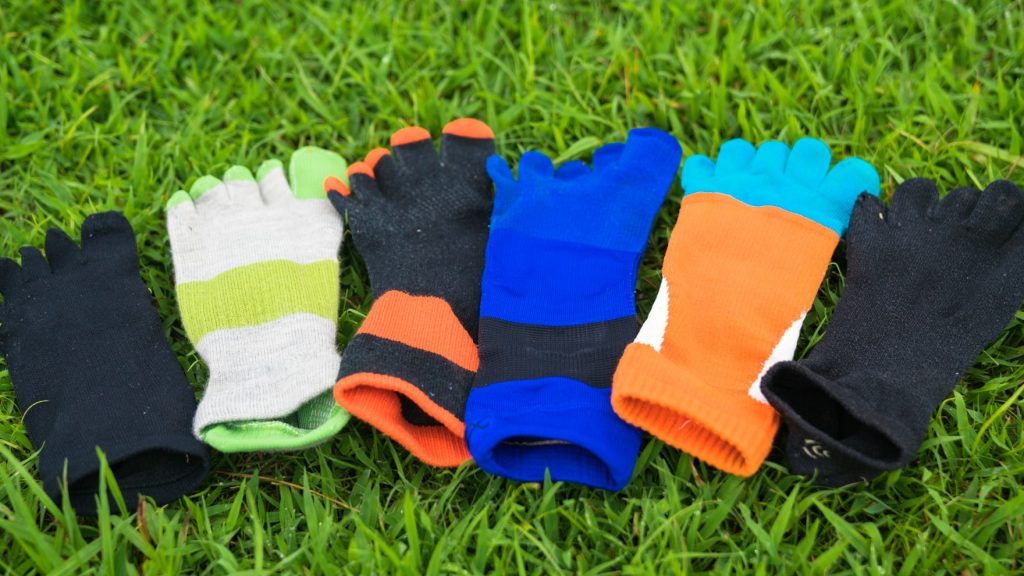
The six five-finger socks we compared this time are as follows:
- Tabio Trail Running Five-Toe Short Socks
- R×L SOCKS TRR-35G Merino Wool Five-Toe Socks [Short Length/Non-Slip]
- ITOITEX Running Socks, Five-Toe, Short
- CW-X CW-X Parts Five-Toe Socks (Short)
- C3fit Paper Fiber 5 Finger Socks
- Workman Arch Power Assist Short Five-Toe Socks
This comparison offered a wide variety of choices in terms of materials alone, including synthetic fibers, cotton and synthetic blends, merino wool, and, most notably, a blend of washi fibers. Performance differs depending on the construction and stitching, whether or not there's a non-slip feature (Tabio, RxL, and Workman's three models have non-slip features), odor resistance, and other factors, and we evaluated them from multiple angles, focusing on the following seven points:
- Barefoot feeling (comfort): Rather than general "comfort," we place emphasis on the barefoot feeling (how much it makes you forget you're wearing socks)
- Quick-drying: Ability to quickly dissipate large amounts of sweat
- Breathability: Not only does it quickly wick away sweat, but it also helps you forget about stuffiness
- Resistance to slipping (holding feeling) - whether your feet move around easily inside the shoes when braking or stepping down
- Shock absorption: How well does it absorb shock, especially when braking?
- Fatigue resistance: Degree of contribution to reducing fatigue and preventing injuries to the arch of the foot and ankles
- Durability: How resistant to wear and tear from vigorous movement and prolonged use
Test environment
The test was conducted from June to July 2018. To ensure uniformity, the course and shoes were matched to the same environment. The test consisted of three laps per pair of Altra shoes on a 10km trail circuit. Other tests included running through rivers, bushes, and frequent sidesteps, intentionally pushing the shoes too hard
Test Results & Spec Comparison Table
| comprehensive evaluation | ★★★ | ★★ | ★★ | ★★ | ★★ | ★ |
|---|---|---|---|---|---|---|
| item |  |
![C3fit Training Paper Fiber 5-Finger Socks (3F66305) [Unisex]](https://images-fe.ssl-images-amazon.com/images/I/91AdhLiV6OL._SS300_.jpg) |
 |
 |
![CW-X Five-Toe Short Socks, Antibacterial and Odor-Resistant (Toe and Heel), BCR610 [Unisex]](https://images-fe.ssl-images-amazon.com/images/I/91y5MBbAKaL._SS300_.jpg) |
 |
| Reference price | 2,376 yen | 2,160 yen | 1,944 yen | 2,376 yen | 2,484 yen | 980 yen |
| Here is ◎ | Good overall balance | A balance of quick-drying, breathability, and durability | Quick-drying, breathable, and feels barefoot (lightweight) | Comfortable and sweat-wicking, well-balanced, and soft and non-slip | Arch and ankle support, quick drying, and durable | Cost performance, slip-resistant, cushioning |
| Here is △ | Nothing in particular | It may slip off easily depending on the compatibility with your shoes | Durability (especially the toes) and ease of slipping depending on compatibility with shoes | quick drying | It may slip off easily depending on the compatibility with your shoes | Breathable, quick-drying |
| Barefoot feeling | ★★★☆☆ | ★★★★★ | ★★★★★ | ★★★★☆ | ★★★☆☆ | ★★★☆☆ |
| Ease of drying | ★★★★☆ | ★★★★★ | ★★★★★ | ★★☆☆☆ | ★★★★☆ | ★★☆☆☆ |
| Stuffiness | ★★★★☆ | ★★★★★ | ★★★★★ | ★★★☆☆ | ★★★☆☆ | ★★☆☆☆ |
| Difficult to slip | ★★★★☆ | ★★☆☆☆ | ★★☆☆☆ | ★★★☆☆ | ★★☆☆☆ | ★★★★☆ |
| shock absorption | ★★★★☆ | ★★★☆☆ | ★★★☆☆ | ★★★★☆ | ★★★☆☆ | ★★★★☆ |
| Less fatigue | ★★★★★ | ★★★★☆ | ★★☆☆☆ | ★★★★☆ | ★★★★★ | ★★★☆☆ |
| durability | ★★★★★ | ★★★★☆ | ★★☆☆☆ | ★★★★☆ | ★★★★☆ | ★★★☆☆ |
| material | 33% polyester, 22% cotton, 15% non-designated fiber (Deocel), 14% nylon, 13% wool, 3% polyurethane | Nylon, unclassified fibers (paper), others |
|
Merino wool, nylon, polyester, polyurethane | Polyester, cotton, etc | Cotton, polyester, nylon, polyurethane |


Overall Review - Recommended Models by Type -
After extensive testing, the Tabio Trail Running Five-Toe Short Socks of performance overall. They offer excellent comfort, quick-drying and breathability, arch and ankle support, a non-slip sole, and reinforced toes. Personally, I think the reinforced arch is outstanding. They can be used for training, racing, and any season, from summer to winter, so I recommend having a pair.




For a one-off race, the ITOITEX 5-finger short running socks are a good choice. They're incredibly quick-drying and breathable, staying dry even when wet. They're also incredibly durable for rainy days or races with poor drainage. They're also incredibly light, making them the most comfortable pair to wear barefoot (you can even wear them with Vibram Five Fingers). However, they're not very durable, especially at the toes, and any extra space inside the shoe can lead to holes. Don't forget to bring a spare pair for long-distance races.
If you're looking for a quick-drying, comfortable, and durable sock, try the C3fit Paper Fiber 5-Finger Socks . the ITOITEX , making them ideal for short races in the summer. However, because they don't have a non-slip surface, they may cause foot fatigue depending on the compatibility with your shoes.
If you're planning on using them heavily for training, Workman offers the best value for money . They're a great pair for races up to 50km. However, because they're primarily made of a cotton blend, they feel natural when dry, but become more uncomfortable when wet, and you can't expect them to be breathable or quick-drying. I'd recommend them for training only.
The CW-X CW-X Parts Five-Toe Socks (Short) are gentle on beginners and those with insufficient training . The brand is known for its athletic tights, but these socks utilize that same compression technology to provide excellent support for the ankles and arches. I'd like to use them as a spare sock for the second half of an ultra-long distance race.
Finally, if you're looking for a comfortable run in mild weather rather than speed or durability, try the RxL SOCKS TRR-35G . The comfortable fit and soft feel of the merino wool make these a great pair to wear every day. The soft, non-slip material is even more effective with longer laces. However, because the fabric is thick, it doesn't dry quickly, so you'll want to avoid wearing them in rainy weather.
Next page: Detailed review of each item
On the previous page, we introduced the ratings and specs of each of the five-toe socks we compared, as well as our recommended models based on those ratings. From here, we will explain the criteria used for the ratings and why we came to those ratings
Detailed review of each item
Barefoot feeling (comfort)
The key to sock comfort in trail running is whether the information from the soles of your feet is transmitted to your brain accurately and quickly, allowing you to take the next step safely. Therefore, the criteria for judging comfort are slightly different from those for everyday socks. The thin C3fit and ITOITEX socks feel very barefoot, so even when wearing shoes, they allow you to gather trail information with your eyes and the soles of your feet, making running a joy. On the other hand, thick socks provide safety and stability, which means they have a higher limit for running, which may actually be a disadvantage in races.
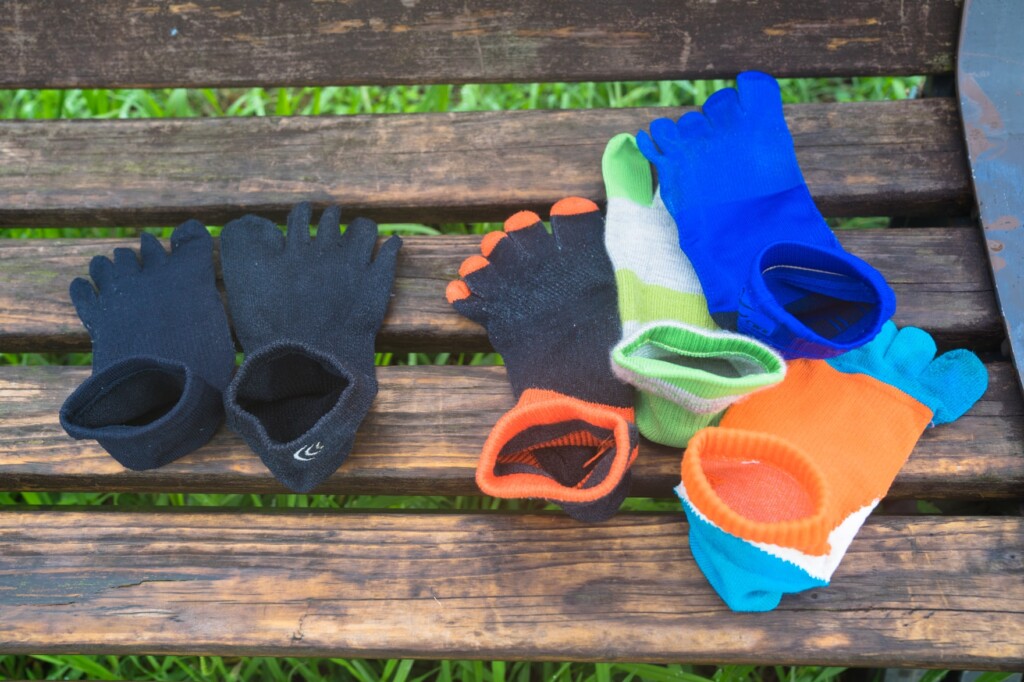
The two models on the left (ITOITEX, C3fit) are so thin they're almost like mesh, allowing you to run while feeling information directly from the soles of your feet
Ease of drying (quick drying)
The test was conducted during the hot season, when people splashed in rivers and got their shoes soaked with sweat, making it the perfect season for testing quick-drying properties. Without quick-drying properties, the soles of the feet would get sweaty and cause blisters. In races, you don't take your shoes on and off frequently, so quick-drying is an essential feature to prevent accidents. Naturally, thin socks generally dry quickly. the C3fit and ITOITEX socks used in this test use "washi" (Japanese paper) material, which further enhances their quick-drying properties. Even though they are thick, the TABIO and CW-X socks should be fine outside of summer. Quick-drying is especially important in winter, so it is a feature that should be given priority.
Breathability
The ability to release heat and sweat from the soles of the feet, along with quick-drying properties, helps prevent accidents. Trail running, in particular, is a sport that makes full use of the plantar muscles. Because the temperature of the soles of the feet is higher than in road running, socks that can maintain a dry feeling are best. The thin C3fit and ITOITEX socks were comfortable and allowed me to concentrate on running without feeling any sweat on the soles of my feet. Even though they are thick, the TABIO socks have mesh in the forefoot for breathability, so they do a good job of wicking away sweat. the RxL and Workman socks , the fabric on the soles of my feet sometimes became wrinkled due to sweat.
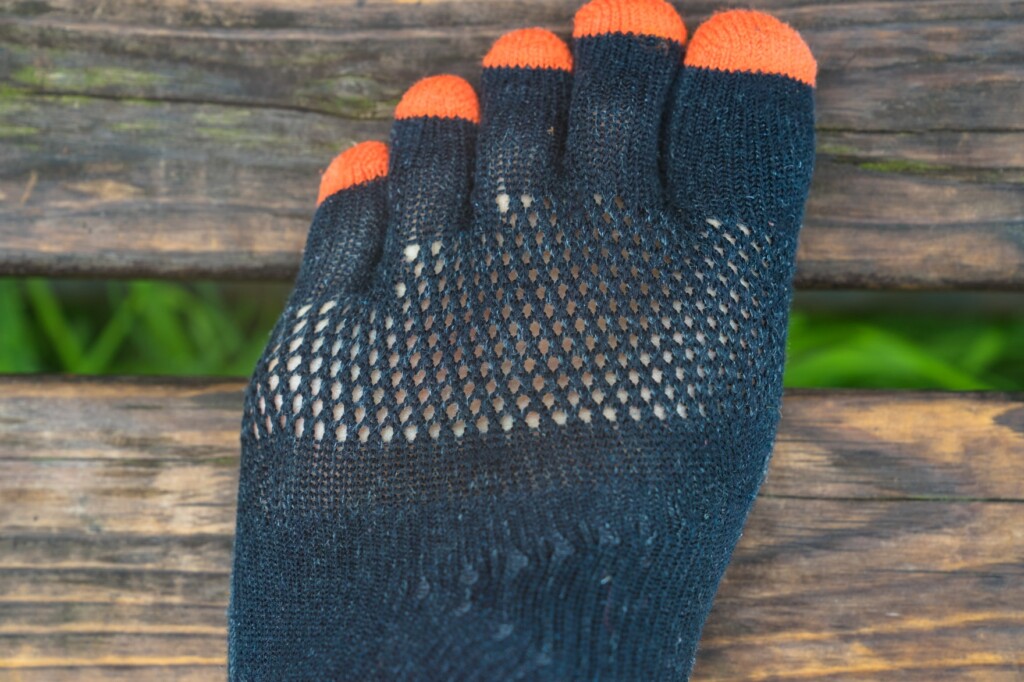
Tabio has a mesh design in the forefoot, which makes it thick yet highly breathable
Difficulty in slipping (holding feeling)
Generally, anti-slip shoes hold your feet in place, improving stability and reducing fatigue. However, if the shape, thickness, and placement of the anti-slip rubber don't match your running style, there's a rare chance that the socks and soles will separate, leading to accidents. It's important to note that they're not a panacea. The key is to make sure your feet don't move around inside the shoes, and the most important thing is that the size and shape of the shoes match your feet. With that in mind, TABIO shoes feature soft silicone rubber in the forefoot and heel, providing stability and seeming safe for long races. RxL shoes feature a softer anti-slip rubber in the forefoot to prevent chafing inside the socks, a well-thought-out anti-slip feature, but the hard rubber material makes them more slippery than expected. Workman shoes feature softer rubber on the front, back, and toes, but the thickness of the rubber is a concern, making them more suitable for short races.
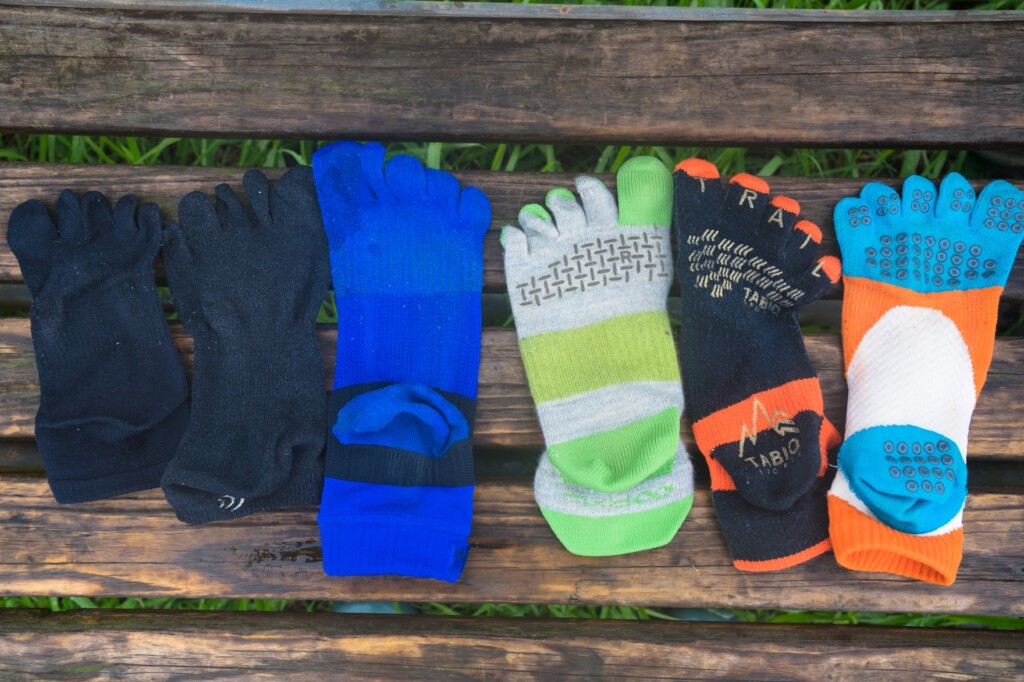
This type (the three models on the right) is often seen in trail running shoes and has anti-slip soles. It's not a good thing to have them, so it's important to try out a few to see if you need them
Cushioning
Beginners are prone to damage from the impact of the trail. This is an important criterion when selecting socks for practice. Thick socks are a safe choice. RxL socks are made of merino wool, which wraps around the entire foot and is fluffy, giving a sense of security on uneven ground. TABIO and Workman socks are also thick, which helps reduce pain when landing on rocky areas.
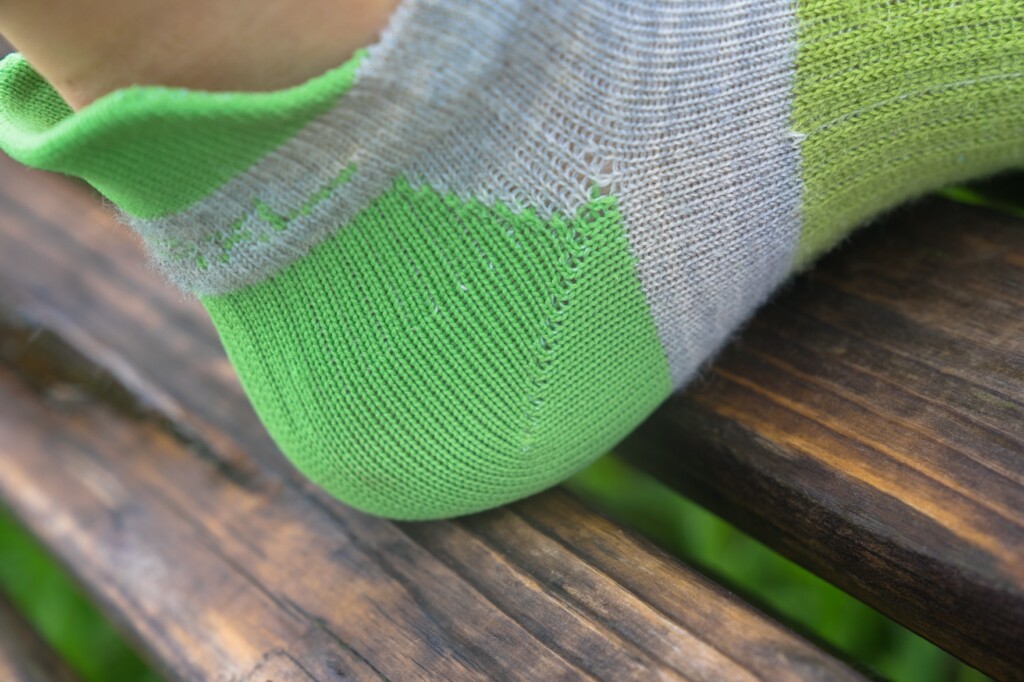
Cushioning reduces damage, but too much cushioning can make the ball less stable. It's important to find a balance between your skill level and your goals
Support
The CW-X stands out for its running support function, and it felt like I was wearing lightly tightening tape. The ankle reinforcement in particular was noticeable the moment I put them on. Many people use tape to prevent injuries when trail running, but being able to reinforce with socks saves me the trouble, so it's great. When I actually ran, I found that it wasn't as strong as tape, so I shouldn't expect too much, but people who don't usually use tape will probably feel the effect. The TABIO provided particularly solid support in the arch area, and the tightness was comfortable. This time I only did a test run of about 30km, and because it definitely supports the plantar muscles, I think I'll feel the effect in the latter half of the long run.
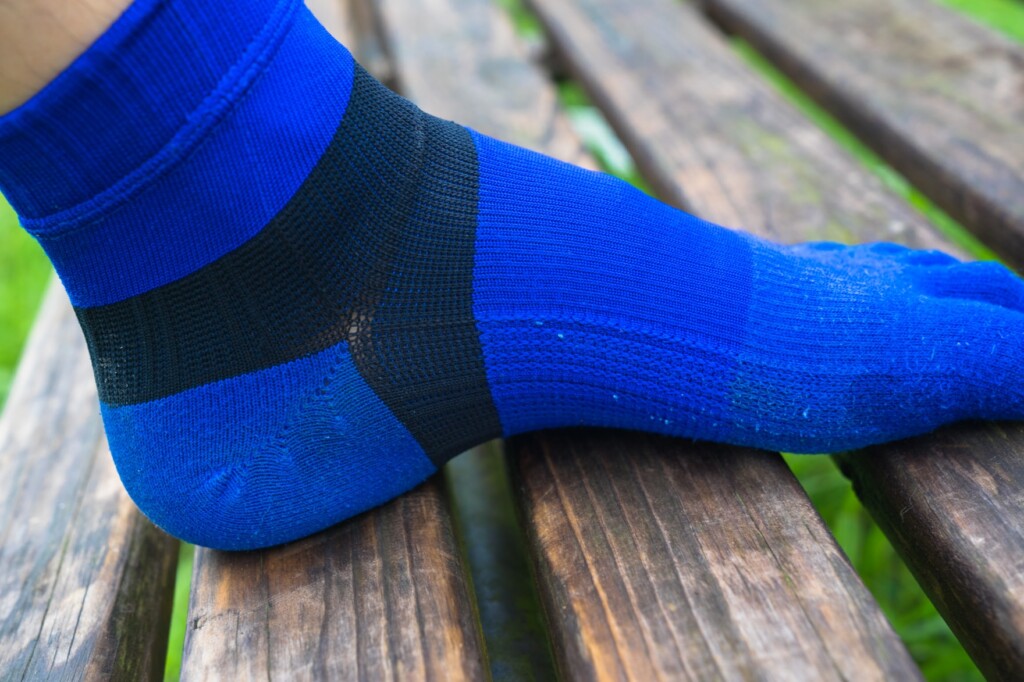
CW-X provides support similar to that of lightly wrapping tape around the ankle and instep, but prolonged constriction can lead to fatigue
durability
Although thin, the C3fit is surprisingly comfortable. With the previous model, I didn't experience any holes in the toes even after three 100km races. The ITOITEX is lightweight, uses a lot of washi paper, and is a sharp model with excellent quick-drying properties, but it is less durable, but I would recommend it, especially for rainy races. Among the thicker models, the TABIO is exceptionally durable. I washed them repeatedly and found they had minimal pilling, allowing for continued use. Other models do pill, so if you don't remove the pilling, you risk blisters due to friction. The RxL has reinforced toes and heels, but because it's made of merino wool, wear was evident in the arch and other areas.

Socks made from washi paper are extremely quick-drying, but you need to be prepared to wear them out after just one race
summary
Here's a summary of my conclusions after trying them all out for a run. TABIO C3fit is enjoying the barefoot feeling for long periods of time . Workman ITOITEX is for one-off races CW-X is for those worried about not practicing enough RxL is for long, leisurely runs . There were many unique models in my impressions this time. Please use this information to help you make your selection based on the situation in which you will be using them.
We also recommend this article about socks
- 5 reasons why you shouldn't underestimate hiking socks and how to choose the best ones
- Comparison Review: Trying out different hiking socks [Which are the most comfortable and least tiring hiking socks?]
Kazuya Tojo


We are looking for reviewers
Outdoor Gearzine is always looking for members who love the outdoors and want to write reviews about outdoor gear. For more information, please visit the REVIEWERS page here !