The recent boom in marathons and the popularity of speed hiking and fastpacking seem to be the catalyst for many people to take up trail running, which involves running freely through mountains and fields. With increasing opportunities for media coverage, such as TV programs featuring trail running competitions across the vast world, famous trail runners appearing in TV commercials, and specialized magazines being published, it seems that trail running is becoming increasingly trendy
I myself am a trail running enthusiast who started out in rural areas and has become so addicted that I've even completed a 100-mile race. This time, I'll be reviewing backpacks, an essential item for trail running. From the latest trends to classics, I'll be introducing them in a ranking format for those who want to get started on trail running
table of contents
A carefully selected comparison of 10L-class models perfect for those just starting out in trail running
Trail running involves unrestricted movement. A backpack's functionality is essential for running safely, and just like shoes, it's an item you'll want to be particular about. While the range of items to choose from has expanded in recent years based on race distances and regulations, if you're just starting out on trail running, we recommend a backpack with a capacity and size of around 10L, which can be used for a wide range of activities, from 100-mile races to everyday road training
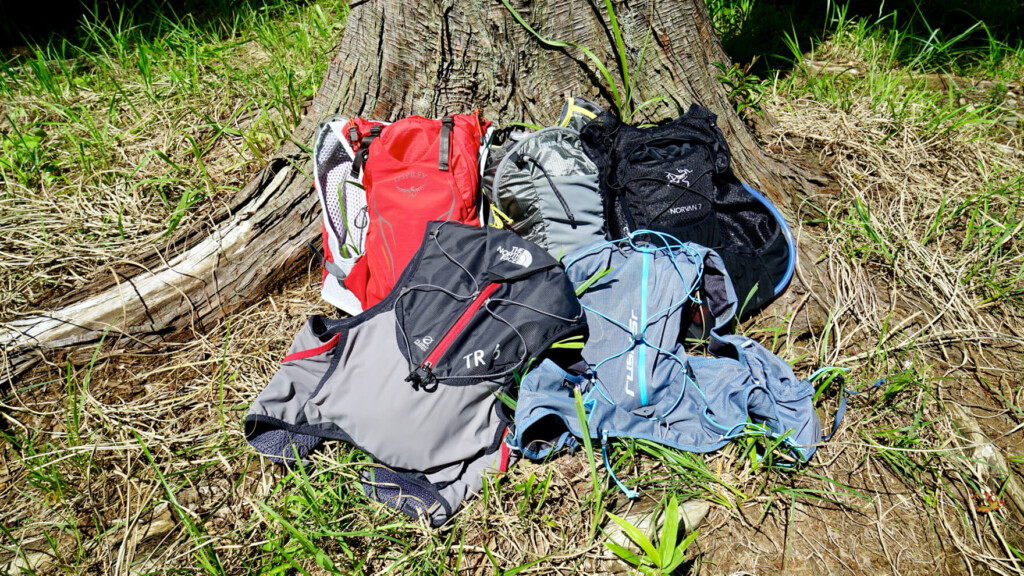
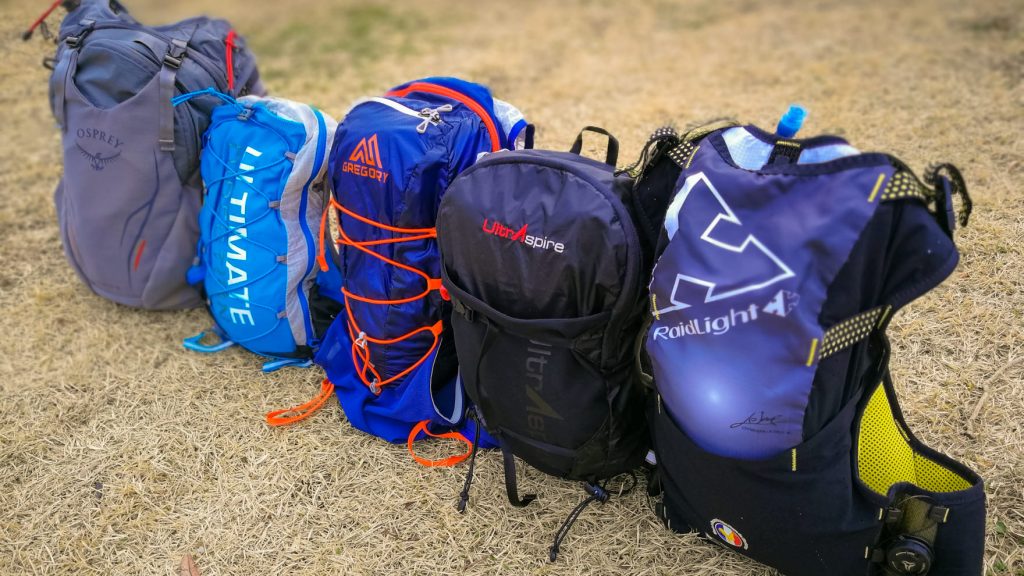
So this time, we carefully selected five backpacks (2017 models, excluding models with only color changes) from major brands, each around 10L in size. We compared them under the same conditions and from various perspectives to select recommended models for different purposes, making them easy to understand for beginners who are just starting to take on trail running
Although it's said that trying on a backpack is essential when choosing one, even just trying one on in the store doesn't really tell you the whole story. I hope that this comparison, combined with the actual feel, will help you choose a backpack you won't regret. Although it's for mountain climbing, I've written in detail about the basics of how to choose a backpack in this article , so if you want to learn from scratch, please refer to it.
table of contents
- About the items tested this time
- Test Results & Spec Comparison Table
- Evaluation results - Recommended models by type -
- summary
About the backpacks we compared this time
First, when selecting the bags for comparison, we took into consideration the following general criteria: A versatile model with a capacity of roughly 10L. This capacity is large enough to pack all the essential equipment for a mid-range race of around 50km to 70km. For longer races, it is a sufficient size as long as you can refuel at deposit points. Also, even if you pack a bathing suitcase and a change of clothes, it will be able to handle trail running practice on a day trip to the countryside without any worries
Based on the above criteria, I narrowed down the list to some extent using information from catalogs and other sources, and then went to the store to see and try on the actual models before narrowing it down to the five candidates for comparison. Of course, my personal interests and preferences are not completely off the table, but I would like to point out that the candidates listed here are undoubtedly recommended models that met a certain standard at the time
- RaidLight Responsiv Gilet 10L
- GREGORY RUFOUS 8
- UltrAspire Zygos 2.5 (The successor model, Zygos 3.0, is currently on sale)
- Ultimate Direction AK Mountain Vest 3.0 (The successor model, the Mountain Vest 4.0, is now on sale)
- OSPREY Duro 6
Based on the reviews of fellow trail runners, information from catalogs and websites, and my experience using packs so far, I made the following predictions for the top rankings. In first place is Ultimate Direction. Gregory and Ultraspire are highly mature, with good designs and numerous updates. Next comes the Raid Lite, a vest-type pack with a dial mechanism for a better fit, and the Osprey, which is robustly built. So, what are the results?
Test environment
The tester was the author (20 years of experience as a trail runner, 167cm tall, 67kg)
The basic equipment is
- mobile phone
- Portable cup
- 1L hydration pack (or water bottle on the front)
- Snacks for travel (bread, rice balls, and other solid foods)
- Two lights (headlamp and flashlight)
- Survival blanket (130cm x 200cm or larger)
- Course Map
- Rainwear top and bottoms
- Gloves, cap
- First aid kit (bandages, disinfectant, etc.)
The tests were conducted in January and February in the Satoyama area, mainly in the towns of Ogose and Tokigawa in Saitama Prefecture. Scoring was based on impressions from use and observation of the detailed construction.
Each model was evaluated based on the following five items, weighted according to their importance, with the scoring criteria set as follows:
- Ease of use (40 points): Scored based on ease of use, access to pockets and attachments, opening and closing of zippers and buckles, and practicality of pockets
- Comfort (30 points): Scored based on the stretch and fit when worn, breathability, and stability when riding at high speeds
- Main compartment (back) storage capacity (10 points): Rating the storage capacity of gear that is not frequently used, such as rain gear and lights
- Durability (10 points) - Rating the durability of belts and fabrics
- Weight (10 points) - Not just the weight, but the feeling of packing and carrying it on your back
Test Results & Spec Comparison Table
| Overall ranking | 1st place | 2nd place | 3rd place | 4th place | 5th place |
|---|---|---|---|---|---|
| item |  |
 |
 |
 |
 |
| Overall score (out of 100) |
89 | 86 | 76 | 75 | 74 |
| Reference price | 22,680 yen | 19,980 yen | 11,880 yen | 16,200 yen | 25,704 yen (3.0 is 22,680 yen) |
| Here is ◎ | Comfort, ease of use, reflectors |
Weight and excellent fit |
Durability, storage, price | Easy-to-run form, storage capacity, reflectors |
Compact and highly storable |
| Here is △ | price | Price, durability | Weight | Belt storage | Chest belt hardware, unique storage, price |
| Ease of use (40 points) | 36 | 34 | 29 | 30 | 26 |
| Comfort (30 points) |
27 | 28 | 23 | 23 | 23 |
| Storage capacity (10 points) |
9 | 7 | 8 | 8 | 8 |
| Durability (10 points) |
8 | 7 | 9 | 7 | 8 |
| Weight (10 points) |
9 | 10 | 7 | 7 | 9 |
| Specifications | |||||
| item | Ultimate Direction AK Mountain Vest 3.0 (latest is 4.0) | RaidLight Responsiv Gilet 10L | OSPREY Duro 6 | GREGORY RUFOUS 8 | UltrAspire Zygos 2.5 (latest is 3.0) |
| Weight (g) | 310 | 230 | 510 | 460 | 310 |
| material |
|
|
|||
| Reflector | ◯ | × | × | ◯ | × |
| Included | 500ml Body Bottle x 2 | 600ml softflasks x 2 | LT Reservoir 1.5L | Ultra Flask 550ml x 2 (not included in 3.0) | |

Evaluation results - Recommendations by type -
The items I selected this time are all models that are fully functional for use in trail running practice. Many trail running backpacks are expensive, and I would like to use them not only for practice but also for races. I think that this is the key point when making a choice. The results I will share below are the result of a detailed comparison and consideration with the assumption that they will be used in races. I hope that this will be helpful for those of you who want to choose a model that is versatile for both practice and races
Ultimate Direction AK Mountain Vest 3.0 (currently available as a successor model, the 4.0)
An all-purpose model that can be used for everything from races to practice




Here's what I like about it
- Sweat-wicking and comfortable back
- More durable than it looks
- Pockets are perfectly positioned for easy access without removing the pack
Here's △
- price
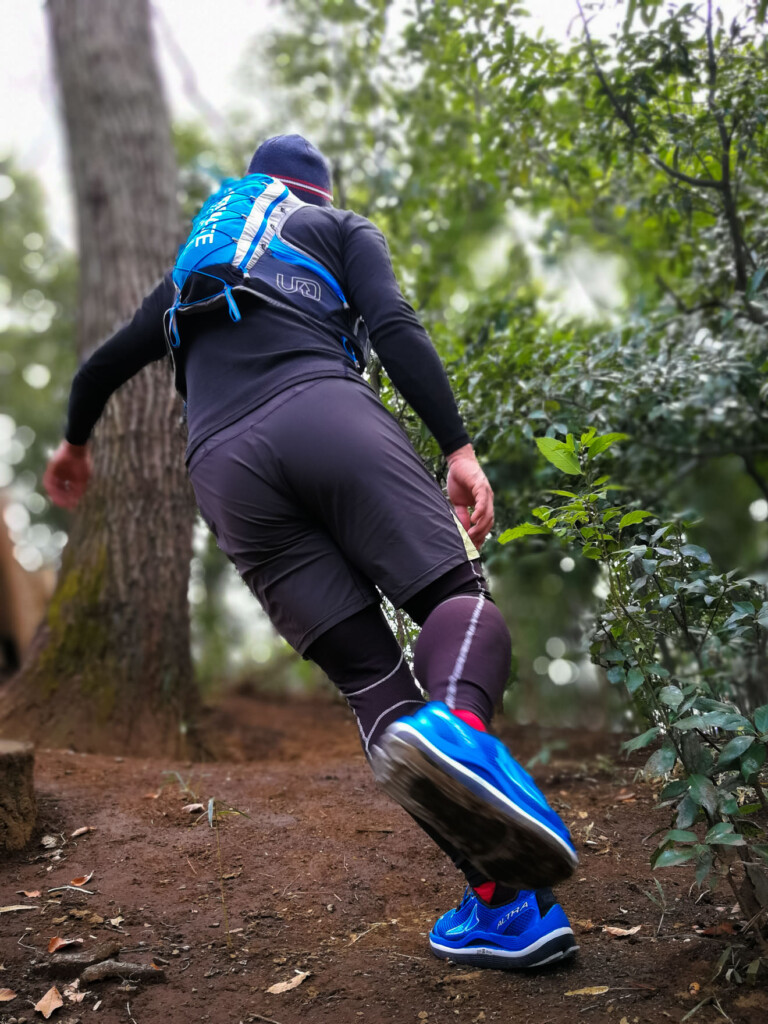
The backpack is designed for comfort and ease of use, with a thorough design that anticipates continuous running without removing the backpack. 0.5L bottles can be placed on either side of the shoulder harness, making hydration easy. This placement is exquisite and does not interfere with arm swing at all. There are also two pockets on each side for storing gels (trail snacks). There's also a zippered pocket on the lower right for versatility. The lower left has a deep, zipperless pocket for storing trash from trail snacks. There are also side pockets on both sides that can be used while running, and these have zippers and can hold smartphones up to 6 inches. These side pockets are located on the flanks, making them easy to reach even when fatigued. The abundance of storage that's accessible while running gives you peace of mind, allowing you to concentrate on your trail running. It's a model that you'll grow to love even more with use
RaidLight Gillette Responsive 10 Liter
Ultra-lightweight model with a perfect fit
Here's what I like about it
- lightweight
- Excellent fit
Here's △
- Size adjustment is difficult (selecting the right size is important)
- durability
- Some pockets and luggage compartments that are difficult to reach
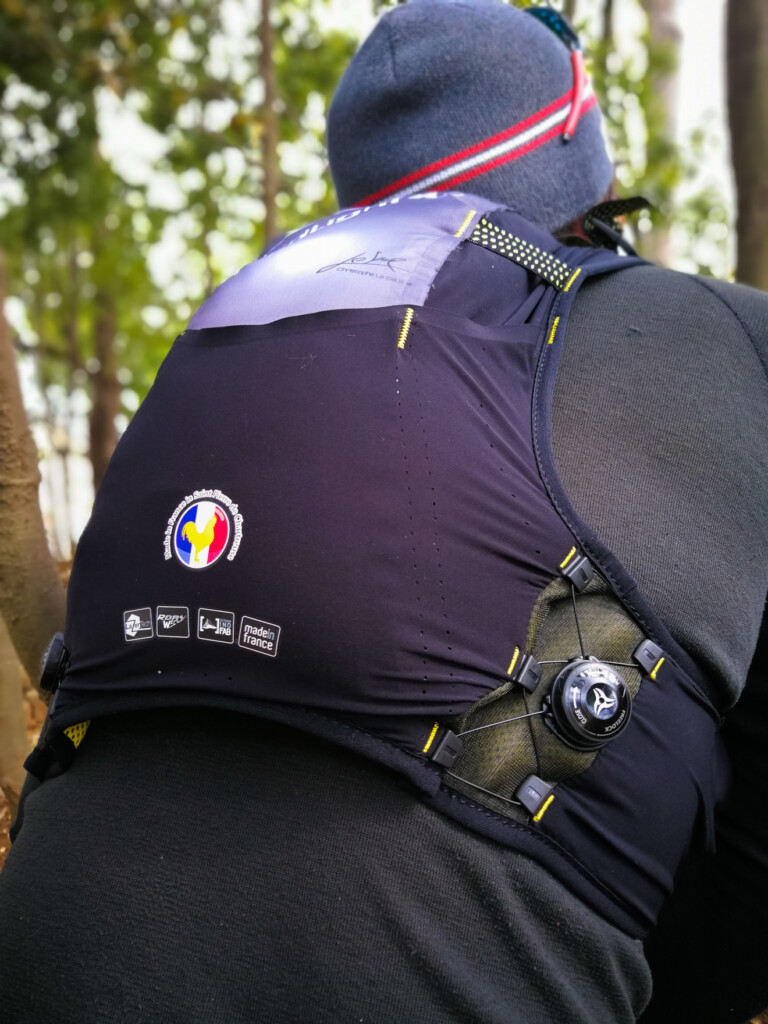
The only downside is that one of the main compartments has a layer to protect your gear from sweat and other moisture, but it's unnecessarily deep and difficult to reach. Also, there are two pockets on the front, one on each side, but these are also unnecessarily deep
Because it has a simple design, I think its possibilities will expand with use. It is expensive for its simplicity, so I don't recommend it as a first backpack, but if you have the running ability, it is a model you'll want to use actively
OSPREY DURO 6
If you're looking for cost performance, this is it
Here's what I like about it
- Large, easy-to-use storage
- Shoulder harness with strong holding power
- durability
Here's △
- Lack of storage space in the front
- The weight is heavy
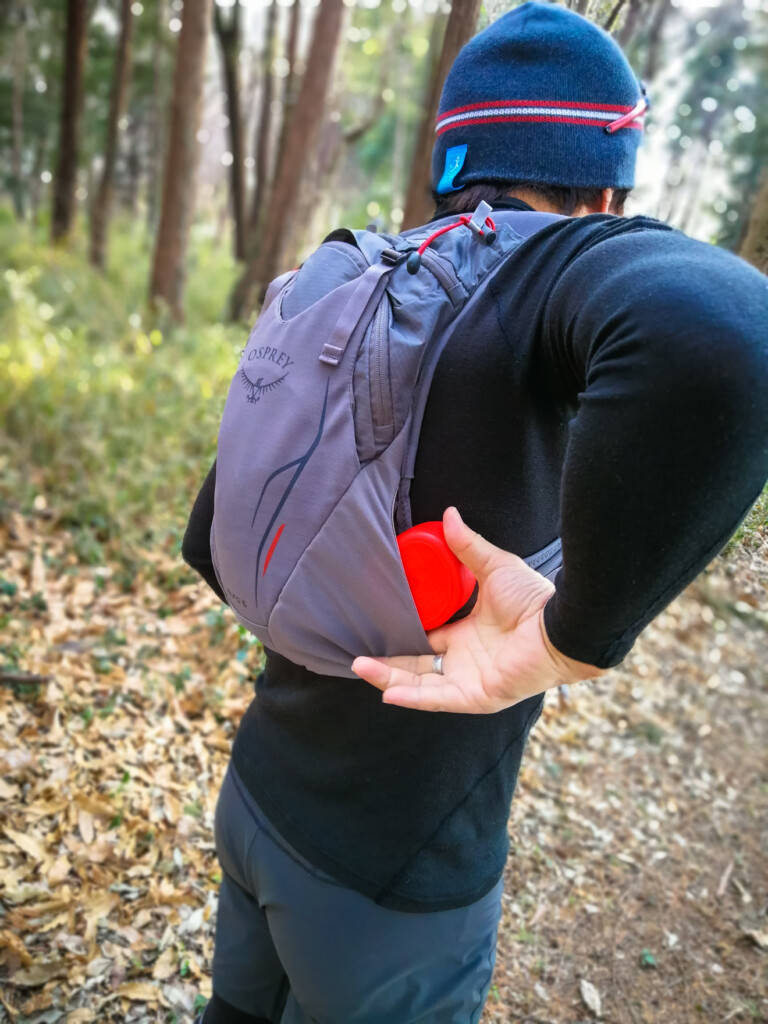
If I had to point out a weakness, it would be the limited storage space in the front, which is a problem when it comes to racing. It's also unfortunate that it's heavy for its size due to its robust construction
GREGORY Rufus 8
Popular stylish design and storage capacity
Here's what I like about it
- A form that takes into consideration a stable center of gravity and ease of riding
- Large hydration tank for long distance comfort
- Easy-to-use shoulder harness with many pockets
Here's △
- Sizing is a little difficult
- If you're not careful with the drink storage on the back, bottles can easily fall out

One weak point is the distinctive pocket at the bottom of the back that can hold a drink bottle. Although it has a non-elastic string to prevent the bottle from falling out, it's still possible to drop the bottle while riding downhill. I'd like to see this modified, perhaps with a bungee belt
UltrAspire Zygos 2.5 (currently the successor model 3.0 is on sale)
Aiming for the perfect form through repeated brush-ups
Here's what I like about it
- Chest belt that easily follows the movement of your running
- Pockets are efficiently placed to store water and small items without getting in the way of your run
Here's △
- The fabric of the chest belt is prone to rubbing
- Unique mesh pocket that is difficult to fit anything other than the dedicated flask
- Side pockets that are difficult to open and close
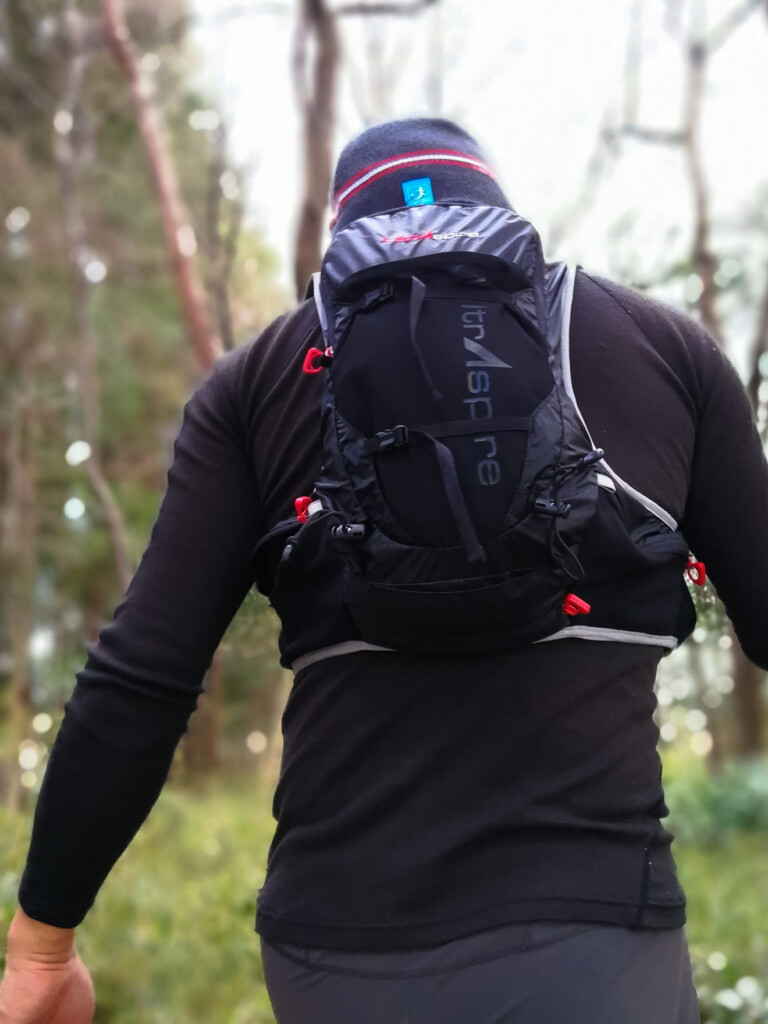
One thing that concerns me is that the chest strap is made of a hard material, which can rub against the skin. Also, the mesh pocket for the dedicated flask has a unique shape, which makes it difficult to match with other companies' products
One drawback is that the fabric around the side pockets sags, making it difficult to open and close the zipper with one hand. I hope this will be improved in the next version
summary
Recent advances in trail running gear have boosted the popularity of trail running and made speed races a reality. Vest-type backpacks with a well-balanced front and back have become mainstream. Furthermore, the widespread use of breathable and stretchy materials has reduced skin irritation. Overall, the comparison models in this article all stand out for their high level of refinement compared to backpacks from three years ago
The most inspiring impression I got this time was the Raidlite Gillette, which weighs just 200g and is 10L in size. Even though the difference is slight, it's noticeable when you put it on. Running is a sport that uses your legs, but trail running also puts a lot of strain on the upper body, so in that sense, I felt that a lightweight backpack was more important than I thought
Also, the Ultimate Direction and Gregory were the only models with reflectors, but I felt that they were necessary because Japanese trail running often involves riding on public roads. It's a small detail, but a key ring would be useful. It was a shame that the Raid Lite and Ultra Spire didn't have one
That's all for now. I hope this article helps you to have a more comfortable trail running life
Kazuya Tojo

We are looking for reviewers
Outdoor Gearzine is always looking for members who love the outdoors and want to write reviews about outdoor gear. For more information, please visit the REVIEWERS page here !
We also recommend this article about backpacking and trail running
- This season's must-have ultra-lightweight rainwear [for trail running and fastpacking]
- Comparison Review: Ultra-lightweight rainwear perfect for hiking and running
- Comparison Review: The Best Base Layers for Winter Trail Running [RUN+TRAIL Collaboration]
- How to Choose the Right Mountaineering Backpack and 10 Recommended Backpacks for Beginners
- Comparison Review: What are the recommended trail running shoes for conquering Hasetsune? [Aim for a sub-10 marathon]
- Comparison Review: Comparing lightweight backpacks perfect for light hiking and fastpacking
Related reading