table of contents
Are you sure that slope is safe for those snowshoes?
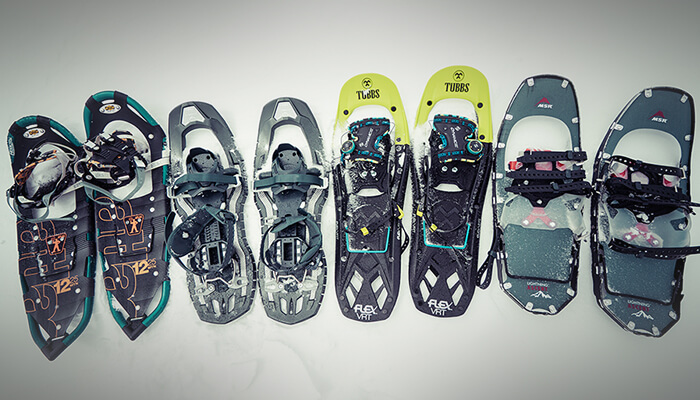
As we explained in our previous article on how to choose snowshoes, in Japan, snowshoes from a variety of manufacturers, including North American and European, are available, in addition to traditional snowshoes that each product has its own strengths and weaknesses depending on the intended terrain and field, as well as its intended use and purpose . In other words, to put it bluntly, just because something is more expensive doesn't necessarily mean it's better. In this article, we'll compare snowshoes from representative manufacturers with different characteristics in the same conditions, thereby clarifying the differences between each snowshoe's features and hopefully helping you choose the best snowshoes.
Other related articles about snowshoeing can be found here
- Once you try it, you won't be able to stop! 3 things you need to know when choosing snowshoes ~How to choose snowshoes~
- Lineup Comparison: I tried out MSR snowshoes and will introduce the recommended models
- Lineup Comparison: We tried out the snowshoes from TSL, a brand known only to those in the know, and we'll introduce our recommended models.Lineup
Comparison: We tried out the snowshoes from TUBBS, a long-established brand that never stops innovating, and we'll introduce our recommended models.
About the snowshoes we compared this time
First of all, all the snowshoes compared here are mountain or backcountry models . However, I chose models that can handle all kinds of situations, rather than models with a specific purpose. As for the size, I chose the smaller size between 22 and 25 inches . The reason is that in steep, wet snow conditions like those in Japan, huge sizes of 28 inches or more like those found in North America are excessive and actually difficult to use. Also, for someone like me who weighs 61 kg and plans to stay in Japan for a few nights, the 22-inch size (MSR Lightning Ascent) is just the right weight. Even if I were concerned about this, there is a "flotation tail" that can be added to the heel to increase buoyancy, sold separately. Overall, the 22-inch size is the most user-friendly and affordable.
This comparison item
- MSR LIGHTNING ASCENT (22 inches) 41,040 yen


- ATLAS 1225 28,500 yen + tax
These are high-end snowshoes for mountain hiking from North American snowshoe manufacturer ATLAS. Because ATLAS snowshoes are sold by Montbell, they seem to be as popular in Japan as MSR snowshoes (they seem to be particularly common among the snowshoes rented by mountain huts). The biggest selling point of this high-end model is the ease of use of the bindings, which can be fastened instantly by simply putting your feet in and pulling the band, and the fact that they are the longest size at 25 inches in this comparison test. They're a likely contender for the top spot for hiking in fresh snow
- TSL SYMBIOZ EXPERT 38,000 yen + tax

- TUBBS FLEX VRT 26,000 yen + tax

Detailed evaluation through practical testing
From December 2014 to early March 2015, we tested multiple items simultaneously on a variety of slopes, snow conditions, and weather conditions, mainly in Yatsugatake, Nasu, and Joetsu
| Overall ranking | 1st place | 2nd place | 3rd place | 4th place |
|---|---|---|---|---|
| item | MSR Lighting Ascent 22 | TSL SYMBIOZ EXPERT(M) | TUBBS FLEX VRT 24 | ATLAS 1225 |
| image | |
 |
|
|
| Here is ◎ |
|
|
|
|
| Here is △ |
|
|
|
|
| Ease of wear (15 points) |
12 | 13 | 14 | 14 |
| Fixing force (10 points) |
8 | 7 | 9 | 8 |
| Walkability (15 points) |
14 | 15 | 11 | 10 |
| Buoyancy (15 points) |
13 | 12 | 13 | 14 |
| Grip strength (15 points) |
15 | 14 | 12 | 11 |
| Weight (10 points) |
8 | 9 | 6 | 7 |
| Storage capacity (10 points) |
9 | 7 | 7 | 7 |
| Price (10 points) |
5 | 6 | 7 | 7 |
| Overall score (out of 100) | 84 | 83 | 79 | 78 |
| Specifications | ||||
| weight | 1.76 kg (22 inches) | 1.72kg (M size) | 2.04kg (24 inches) | 1.82 kg (25 inches) |
| Size type | 22/25 inches | S (20.5) / M (23.5) / L (27) inches | 24/28 inch | 25/30 inch |
| Size | 20×56cm | 21×57cm | 22×61cm | 22×64cm |
| frame | aluminum alloy | Specialty Plastics | plastic | aluminum alloy |
| Crampons | Powder coated steel | Stainless steel | carbon steel | Stainless steel |
| binding | Pozilock AT bindings | Ratchet Buckle | DynamicFit binding | RapPro Bindings |
| Floatation Tail | ◯ | × | × | × |
| Female Model | ◯ | - | ◯ | ◯ |

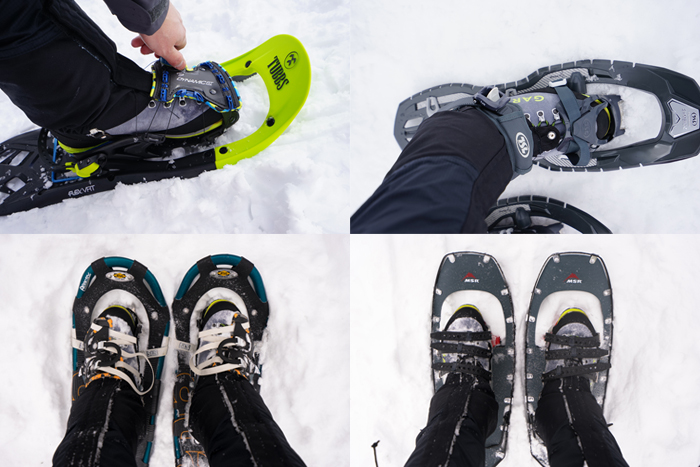
Binding (ease of wearing & fixation)...FLEX VRT & 1225
FLEX VRT>1225>LIGHTNING ASCENT=SYMBIOZ EXPERT
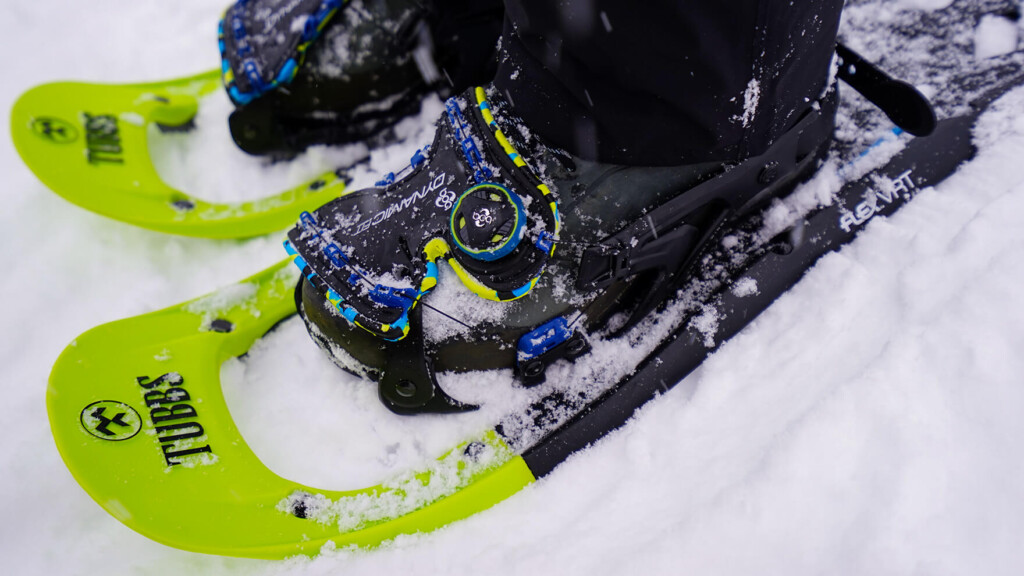
The ease of putting on snowshoes is an important factor that greatly affects their usability. Furthermore, if they don't hold up well and loosen quickly after you start walking, it increases the risk of falling and slows you down by constantly having to retighten them—nothing good at all. Most fake snowshoes are sloppy in this area, making them unsuitable for the harsh winter mountains. The ease of putting on and the level of hold depend largely on the performance of the bindings. Having tried all four, the easiest to put on were the FLEX VRT's Boa closure system and the 1225's LapPro bindings. Both were surprisingly easy to put on—just put your foot in, turn the dial, or pull the band—even with gloves on. The FLEX VRT bindings, in particular, applied even pressure to the entire instep, preventing slippage and preventing overtightening, making them extremely comfortable. Neither the TSL nor the MSR are bad, but the TSL has weak toe-holding power, and while the MSR provides firm support, it requires fine adjustments to get the position of your feet and the tightness of the band just right, making it difficult to fasten them in a stable position and with a stable strength every time
Ease of walking...SYMBIOZ EXPERT
SYMBIOZ EXPERT>LIGHTNING ASCENT>FLEX VRT>1225
This section mainly compares snowshoes in terms of ease of walking on relatively shallow snow and gently undulating terrain. Because snowshoes widen your foot and also move your heel, walking naturally requires some care and getting used to them. While this discomfort is present to some degree with all snowshoes, SYMBIOZ is by far the easiest to walk in, allowing you to walk lightly on snowy mountains. A major factor in this is the special plastic frame (see photo below) that can bend (curve) significantly. This allows for natural foot movement without dragging your heel when walking, and the slim heel frame makes them less likely to get caught, as well as being lighter in weight, making them superior to other snowshoes in many ways
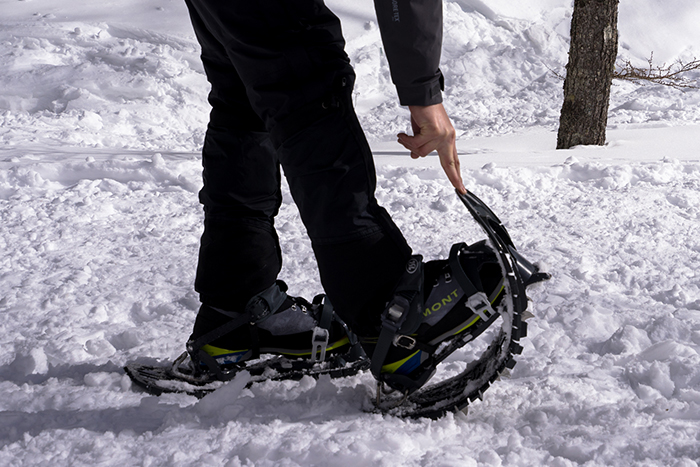
This flexibility allows for natural foot movement whether you push off with your toes or when your heel hits the ground
Buoyancy...1225
1225>FLEX VRT=LIGHTNING ASCENT>SYMBIOZ EXPERT
In terms of buoyancy, snowshoes with a larger frame surface area were found to be more comfortable to walk in, in line with the laws of physics. In addition to that buoyancy, the 1225's V-shaped tail and aluminum frame make walking in deep fresh snow even easier. However, to be honest, the difference wasn't that great, and even the SYMBIOZ, which has the weakest buoyancy, won't get completely buried in powder
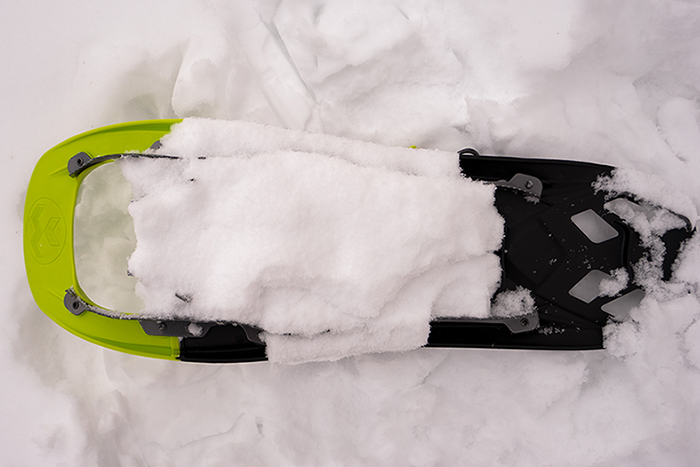
On a warm day, only the TUBBS had snow stuck to the bottom
However, there is one thing that, strictly speaking, is not a buoyancy issue, but when I walked on fresh, wet snow, the snow clumped together just under my feet in the FLEX VRT, making it incredibly difficult to walk. This may not be an issue in North America, but caution is needed when using these in Japan, especially on low mountains or when snow remains
Grip: Lightning Ascent
LIGHTNING ASCENT>SYMBIOZ EXPERT>FLEX VRT>1225
Grip here refers to the ease of walking in situations where you need to use your edges, such as when climbing or traversing steep slopes, or even walking on frozen ground. In that sense, the LIGHTNING ASCENT and SYMBIOZ had the best grip overall in all conditions. Comparing the two, the LIGHTNING ASCENT has the advantage when climbing steep slopes. As you can see from the photo below, the wide, sharp edges that use the entire frame and the high heel lift allowed me to climb easily while the snowshoe runner struggled. On the other hand, when traversing a slope, it is safer and easier to walk if your ankles and snowshoes are as parallel to the slope as possible, so the SYMBIOZ has the advantage, with its spiked edges evenly applying pressure to the soles of your feet and providing a good balance with the frame's flexibility
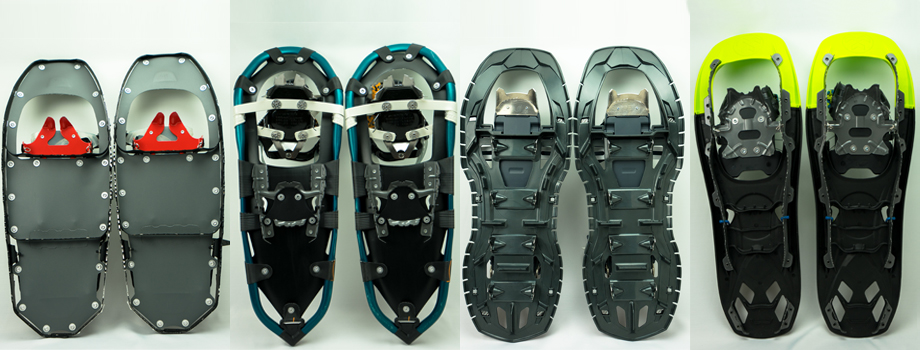
Comparing crampons: The entire frame of the MSR is a crampon, so the edge has a wider and more versatile range than other models
Ease of handling (weight & storage) - LIGHTNING ASCENT
LIGHTNING ASCENT>SYMBIOZ EXPERT>1225>FLEX VRT
The downside of easy-to-wear, secure bindings is that they are inevitably structurally complex and bulky. However, the LIGHTNING ASCENT's binding structure is simple, allowing it to collapse when removed and easily attach to a backpack. Its lightness also contributes to its excellent packability, making it the most storable of the four, making it the clear winner in this category. On the other hand, the other three bindings stick out, making them difficult to attach to a pack and requiring you to carry them in a bag, which makes it a hassle. In this situation, there are often moments when you think that a more compact snowshoe would be better, no matter how much buoyancy they offer
summary
As we've seen, all of them have high basic performance, but each has its own advantages and disadvantages, and it's hard to say that any one is simply superior. For this reason, opinions will likely differ in each field, so we'd like to conclude by sharing the OG editorial team's recommendations
Recommendation 1: Best all-purpose snowshoes: MSR Lightning Ascent
The excellent grip, satisfactory buoyancy, and ease of walking made these shoes a much safer choice for winter mountaineering than other shoes. They're relatively easy to carry, and I can confidently say that a pair of these will get you through most terrain in Japan's snowy season. However, be aware of the high price and the risk of getting caught on the sharp edges. Because they're such a great product, I wish they came with a dedicated cover that could be attached to a pack for safe and compact transportation





Recommendation 2: TSL SYMBIOZ EXPERT: Perfect for technical terrain
This seemed like almost the best option for use in Japan. However, it lost out by a small margin in terms of climbing performance due to the small heel lift (relatively speaking), flexibility, and buoyancy in fresh snow, but only those who have tried it can understand the light and nimble walking sensation that doesn't require you to be conscious of the wider foot width. The crampons, which allow for an exquisite sense of unity between the body and snowshoes and fine edging, will be most effective when climbing speedily through more technical terrain rather than breaking through deep fresh snow. The retail price seems to have dropped considerably, so in that sense, these will surely provide a different kind of satisfaction than the MSR
![TSL SYMBIOZ EXPERT Snowshoes, Size M [SYEX]](https://images-fe.ssl-images-amazon.com/images/I/410GoLC5TaL._SS300_.jpg)
Related reading