


table of contents
The power of sunglasses can only be understood by using high-quality models
When it comes to gathering mountaineering gear, many people probably first think of backpacks, clothing, shoes, etc. That's certainly true, but the depth of mountain gear is that it doesn't end there. Among outdoor gear, there are quite a few items that may seem unassuming, but just having them can have a world-changing effect. The sunglasses we'll introduce today are exactly such hidden necessities
To be honest, there was a time when I thought that sunglasses only served to reduce glare. Because you're exposed to more UV rays when climbing mountains than on the ground, it's said that there's a higher risk of developing cataracts and keratitis. Strong winds also pose a risk of foreign objects like dust and insects getting in. Protecting your eyes from these elements is an important role of sunglasses. But that's not all they do. Wearing quality sunglasses can ensure better visibility than you can with the naked eye
So, this time we tried out sunglasses specialized for each sport to see what elements are necessary for sunglasses that can be used in the mountains, such as for hiking and trail running
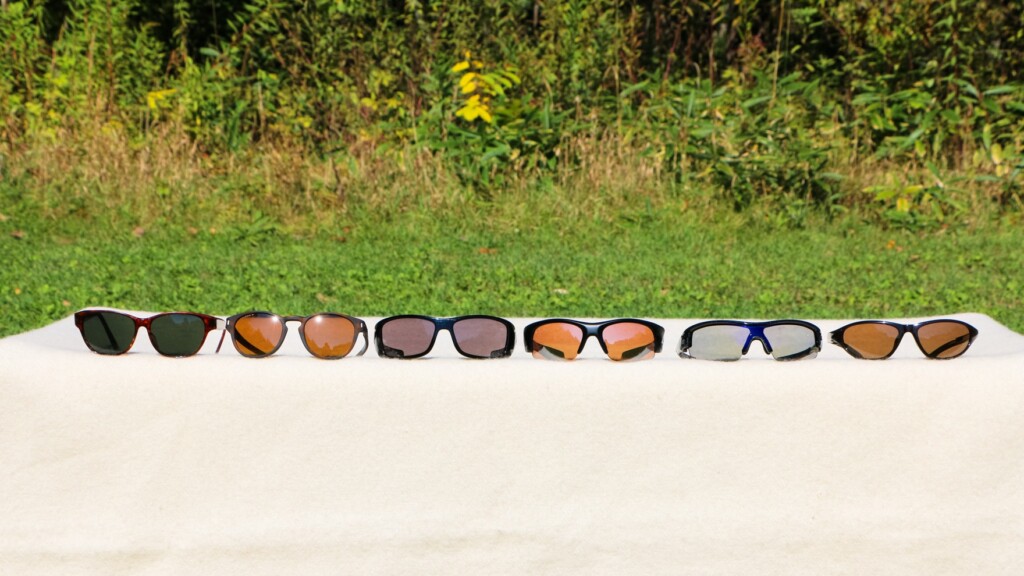
table of contents
- About the items tested this time
- Test Results & Spec Comparison Table
- Impressions of each model
- Detailed review of each item (Page:2)
- Summary (Page 2)
About the sunglasses we compared this time
If you look at the sunglasses sold by various brands, you will find that there are actually many models specialized for various sports such as running, cycling, golf, fishing, etc. This time, I will somewhat forcibly broaden the range and select candidates, from models that are strictly for mountain climbing to models that are just barely suitable for mountain climbing, and not only will I examine the optimal model, but I will also consider the criteria for whether or not a model can be used for mountain climbing, trail running, etc
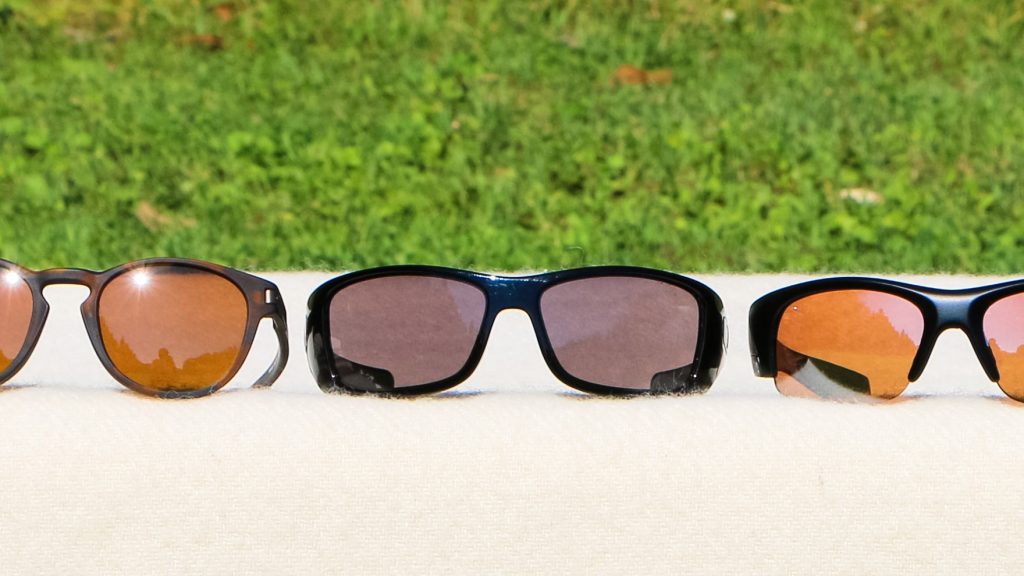
We'll explain the types of lenses later, but all four sunglasses are "polarized lens" models that block over 99% of UV rays and also cut reflected light from above, below, and at an angle, making the everyday world appear clearer. The effect varies greatly depending on the lens color and shade, but this time we chose brown (red) lenses that emphasize the shadows and contrasts of the scenery and trails, and lenses that are not too dark so that they don't make it difficult to see in the shade. So, the four sunglasses models we compared this time are as follows:
- KAENON HARD KORE (Matte Black, C28 Silver Mirror)
- Mont-Bell PL Trekking Glasses (Brown x Light Brown)
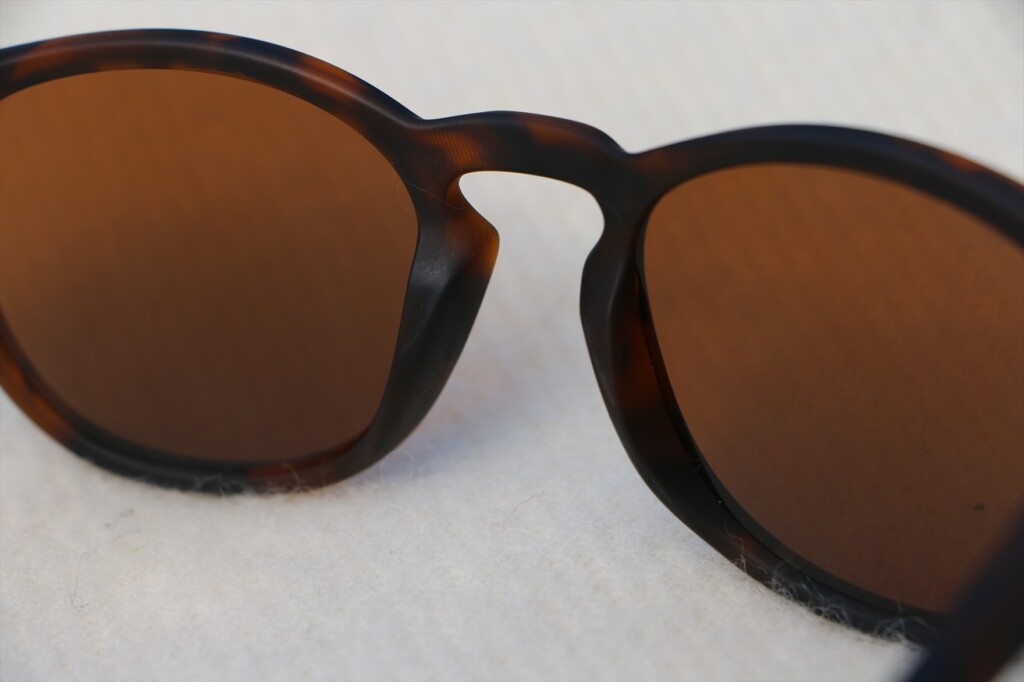
- Oakley latch (Asia fit) Prizm Tungsten Polarized
- SWANS STRIX I-0151
Montbell 's models are designed for trekking. SWANS , a major brand of Japanese sports glasses, is positioned as a benchmark, focusing on typical shape and performance. Oakley , of course, also offers many models specialized for sports, but at the same time, they are also known for their fashion sense, so I chose this popular model for everyday use, although I apologize to Oakley fans for that. Finally, KAENON , a brand you may not have heard of, is a California-based brand known only to those in the know, famous in the world of yachting and sailing. Even in Japan, it is only available in small quantities at select outdoor shops with a strong focus on quality, and it is a model I have been interested in for some time. This site previously featured it in a TOAD3 report.
The following six items were set as evaluation items
- Visibility: The ease of viewing through the lens. Evaluated based on UV transmittance, visible light transmittance, and stray light blocking rate (polarization degree)
- Wide field of vision: Of course, the wider the field of vision, the better. When driving off-road, visibility under your feet is especially important
- Storage: How compact can it be? Is it stress-free to store?
- Durability: This time, we did not conduct any impact tests, but instead evaluated the glasses based on impressions such as the frame thickness and lens thickness
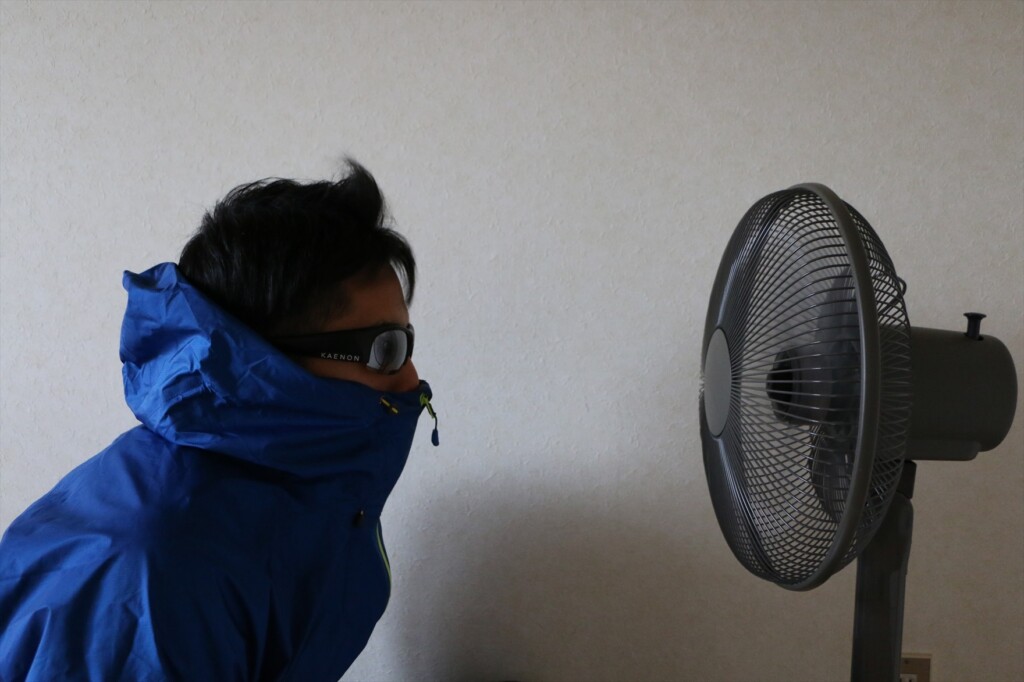
- Holding power and fit: We performed vigorous exercise and running while wearing the sunglasses. We also used a fan to test the strength of the wind blowing in during strong winds
- Weight: Evaluated based on catalogue value and actual weight
Test Results & Spec Comparison Table
| comprehensive evaluation | ★★★ | ★★ | ★★ | ★ |
|---|---|---|---|---|
| item |  |
 |
 |
 |
| Visibility | ★★★★★ | ★★★☆☆ | ★★★☆☆ | ★★★★☆ |
| Wide field of vision | ★★★★★ | ★★★☆☆ | ★★★★☆ | ★★☆☆☆ |
| Storage capacity | ★★☆☆☆ | ★★★★★ | ★★★☆☆ | ★★★☆☆ |
| durability | ★★★★☆ | ★★★☆☆ | ★★★☆☆ | ★★☆☆☆ |
| Holding power and fit | ★★★★★ | ★★★★☆ | ★★★★★ | ★★☆☆☆ |
| weight | ★★☆☆☆ | ★★★★★ | ★★★★☆ | ★★★★☆ |
| Specifications | ||||
| item | KAENON HARD KORE (Matte Black, C28 Silver Mirror) | Mont-Bell PL Trekking Glasses (Brown x Light Brown) | SWANS STRIX I-0151 | Oakley latch (Asia fit)?Prizm Tungsten Polarized |
| Frame material | Lightweight, flexible TR-90 frame material | nylon resin | nylon | O Matter |
| Lens material | Kaenon SR-91 Lens, Kaenon SR-91R Polarized Lens | Polycarbonate | Polycarbonate | Plutonite (high-purity polycarbonate) |
| weight | 42g | 23g | 35g | 25g |
| color | Frame: Matte Black Lens: C28 Silver Mirror |
Frame: Brown Lens: Light Brown |
Frame: Pearl Black x Gunmetal x Black Lens: Polarized Smoke (double-sided multi-coated) |
Frame: Matte Brown Tortoiseshell Lens: Prism Tungsten Polarized |
| UV protection rate | Over 99% | Over 99% | Over 99.9% | Over 99% |
| Visible light transmittance | 28% | 18% | 29% (Polarization: 97% or more) | 14% |
| accessories | Hard case, soft case | Storage case, cleaning cloth | Semi-hard case (can store spare lenses), instruction manual | Genuine lens cloth pouch |


Impressions of each model
This week's recommended sunglasses: KAENON HARD KORE




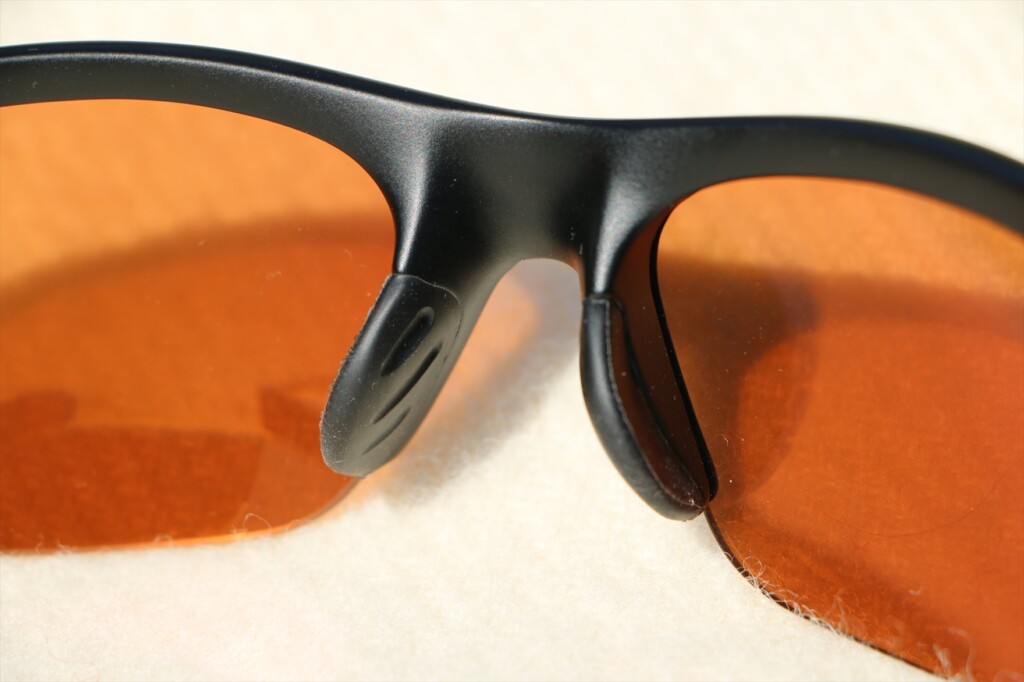
What I liked most about these glasses was how dramatically clearer my vision became. The enhanced contrast made it easier to distinguish between objects and scenery, and they cut out all stray light and reflected light, providing significantly better visibility than with bare eyes. These glasses are not just for when it's too bright, but make you want to wear them all the time during activities. KEANON's proprietary lens material, SR-91, and the polarized film, Glare86, developed at just 30 microns thick. Both the frame and lenses are sturdy, scratch-resistant, and durable, allowing for stress-free use. While they're not particularly light at 42g, the non-slip nose pads and temples hold them securely to the head, and the good front-to-back balance means they didn't slip off even when running, unless you lowered your head to look at your feet or engaged in strenuous exercise that required vigorously shaking your head. The large frame and lenses completely cover your eyes, providing a snug fit and protecting them from wind, dust, insects, and UV rays. KAENON sunglasses were originally developed in the United States for sailing competitions, so they are designed to withstand intense exercise.
With good visibility, a sturdy construction, and a good hold, I think these sunglasses are perfect for mountain climbing. Seeing is believing, so please give them a try
Mont-bell PL Trekking Glasses: Easy to use for mountain climbing and great value for money
SWANS STRIX I-0151: Perfect for both hiking and running
For everyday use: Oakley latch (Asia fit) Prizm Tungsten Polarized
Next page: Detailed review of each item
On the previous page, we introduced the ratings and specs of each item we compared, as well as our recommended models based on that. From here, we will explain the criteria used for the ratings and why we came to those ratings
Detailed review of each item
Visibility
When choosing lenses, the important factors to consider are UV transmittance, visible light transmittance, and stray light blocking rate (polarization degree)
Visible light transmittance
This refers to the percentage of light that passes through. Of course, a low transmittance will block out light, and a high transmittance will allow light to pass through
Visible light transmittance varies depending on the lens color. The higher the transmittance, the lighter the lens color. Lower transmittance means the lens color is darker, which blocks out strong sunlight, but inevitably darkens the field of view. Incidentally, the visible light transmittance of all four models mentioned here is in the range of 10-30%. This is generally considered suitable for use during the day or on sunny days. In other words, it is thought to be the ideal range for mountain climbing
UV transmittance
When UV transmittance is 1.0% or less, it means that over 99% of UV rays are blocked. Incidentally, there is no relationship between UV transmittance and lens color. I'm ashamed to say that I thought that darker lens colors would block UV rays. The four models we reviewed here block over 99% of UV rays. I think that most sunglasses these days have a UV transmittance of 1% or less, but it's still one item you should always check when choosing
Light blocking rate (polarization degree)
This refers to the percentage of stray light that is cut, such as glare from the water surface or glare from asphalt. The higher the percentage, the clearer your field of vision will be. Since simply darkening the lens color is not enough to cut out stray light, a special polarized filter is placed between the lenses to cut out stray light. The inexpensive sunglasses I tried this time were not polarized, so the stray light was stressful. Also, when I looked at the water surface, light was reflected, clearly showing the difference in effectiveness compared to polarized lenses
The above three ratios are the key to creating good visibility
Since the weather can change easily while hiking, sunglasses that ensure good visibility in any weather are very helpful. As mentioned above, the visibility of the KAENON HARD KORE is overwhelming. They reduce glare and increase contrast even in dull, cloudy weather, making the boundaries of objects clearer and creating a clear view. I also felt that my Oakley Latch glasses provided a clearer view than when I was wearing my bare eyes. The experience was beyond surprising; it was truly moving
Wide field of vision
The field of view is determined by the size and curve of the lens. The KAENON HARD KORE had the widest field of view. With its large lenses and moderate lens curve, you can see everything through the lenses, so much so that you almost forget you're wearing sunglasses. Also, with models that have an under-rim, your field of view is inevitably obstructed when looking at your feet. Needless to say, the Oakley latch has a Boston-type lens shape and no lens curve, so your eyes don't feel covered and your field of view is narrower
Storage capacity
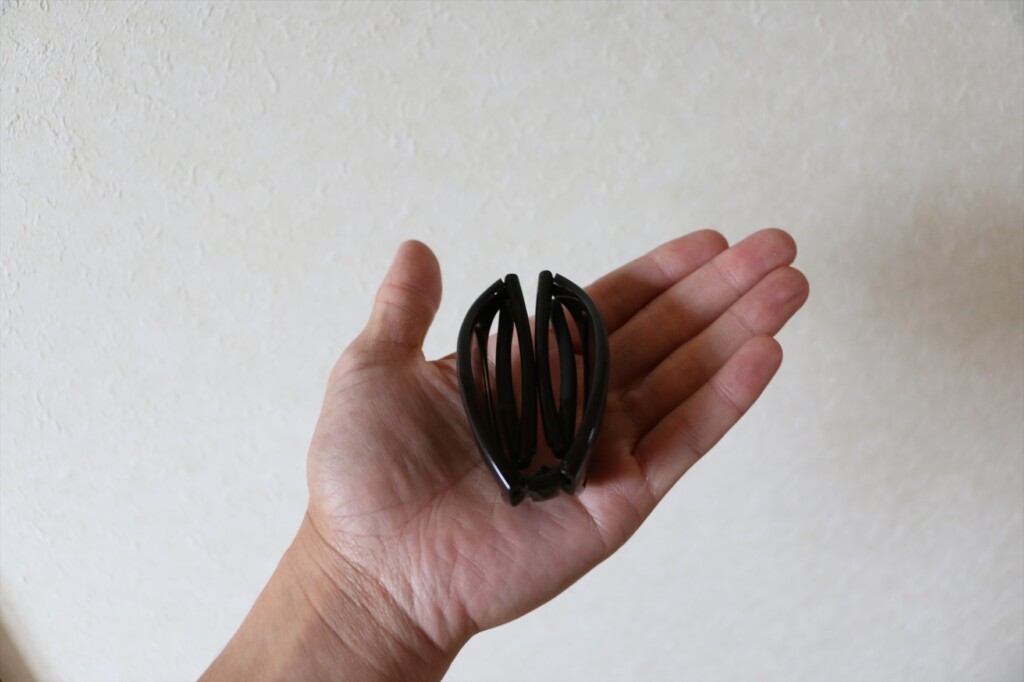
This time, Montbell was by far the best in terms of storage. It can be folded up to palm-sized, making it surprisingly compact and even fitting in a pocket, which is a big plus. When you need to take off your sunglasses while hiking, many people probably put them in the hard case provided and store them in their backpack. I used to do this too, but it can be quite a hassle and stressful. On the other hand, storing them in a backpack without the case is also a bit hesitant as it could get scratched. With that in mind, having a size that can be stored in a pocket after putting them in the case makes it much easier to move around
It would be extremely helpful if there was a sturdy hard case included
durability
As expected, a thick frame gives you a sense of security even when handling them roughly. This is an important factor in the field. I think a thicker frame is easier to handle, especially since you will likely be handling them while wearing gloves. The KAENON HARD KORE and SWANS STRIX I-0151 have thick frames and thick lenses, which gave me a sense of security. On the other hand, the mont-bell PL trekking glasses and Oakley latch have thin frames, so I had to be careful when operating them
Holding power and fit
If your sunglasses are not held firmly to your head and fit your face properly, they will slip off during exercise, allowing wind and foreign objects to get in through the gaps
This time, we tested the inflow of wind with the fan set to "high." While no model was able to completely block the inflow of wind, the KAENON HARD KORE , SWANS STRIX I-0151 (with under-rim) , and Mont-Bell PL trekking glasses all fared quite well. Oakley latches are not recommended for windy days. Models with under-rims improve the fit and prevent wind from entering from below. The KAENON HARD KORE does not have an under-rim, but its larger lenses provide a secure fit, preventing wind from entering.
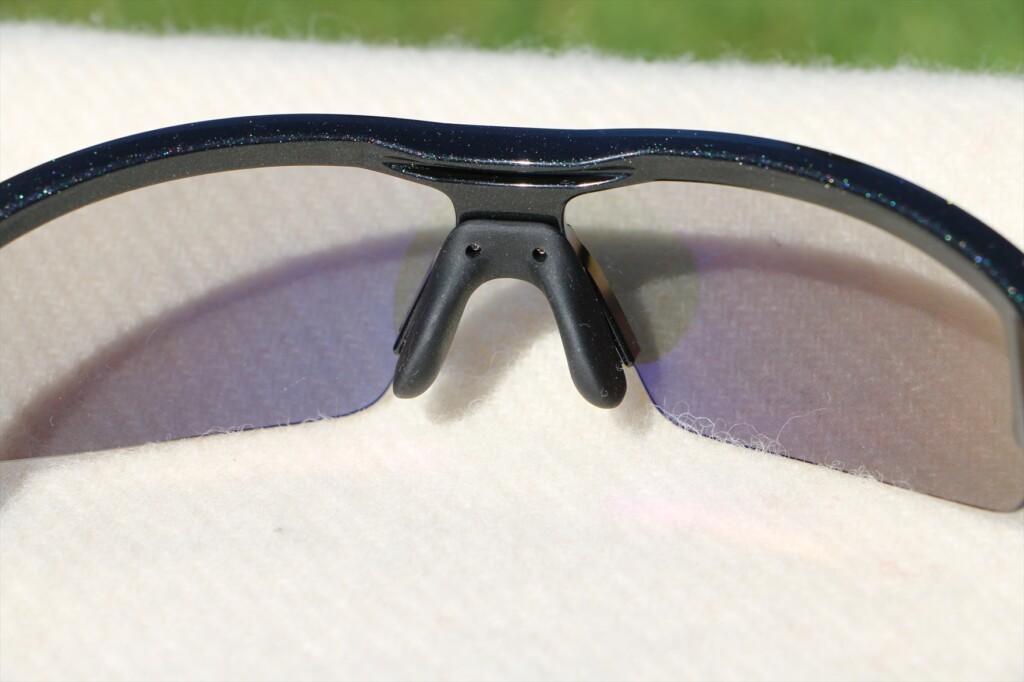
Additionally, the anti-slip feature on the nose and temples is extremely important, enhancing the hold. Lightweight models, in particular, require a tight fit at the nose and temples, otherwise the sunglasses will slip off during strenuous exercise. In this respect, I liked the Mont-Bell PL Trekking Glasses . They weigh just 23g, and the nose and temples hold the head firmly, so they don't feel stressful or heavy. The SWANS STRIX I-0151 also offers excellent hold. The anti-slip feature on the nose, made of rubber, can be adjusted to fit the shape of your nose, which was a big plus.
On the other hand, the Oakey latch is light at 25g, but since there is no anti-slip material on the nose or temples, the sunglasses would move when I looked down or ran, which was stressful.
weight
Heavy sunglasses put strain on your nose and ears, causing stress. Lightweight models put less strain on your nose and ears, but as mentioned above, they may slip off if not held securely in place. The Mont-Bell PL trekking glasses , SWANS STRIX I-0151 (no under-rim) , Oakey latch did not feel heavy even when worn for long periods of time. The KAENON HARD KORE is the heaviest of the four models, weighing 42g. However, I did feel strain on my nose and ears after wearing them for long periods of time. Lightweight sunglasses are definitely a better choice.
summary
After using these sunglasses for a long time, I realized that it is not enough for sunglasses to be used for mountain climbing to simply have good lenses; it is also important that they have all the following elements in place
- Lightweight and with anti-slip treatment on the nose and temples to hold the head firmly
- A large lens that covers the entire eye without any gaps
- UV transmittance is 1% or less
- Polarized lenses
- The lens must have a visible light transmittance of 30% or less, and must be able to enhance contrast and maintain good visibility on both sunny and cloudy days
- The case must be a hard case
When choosing sunglasses, I usually choose based on their cool appearance and the lens color I like, but if you take these factors into consideration when making your selection, I think you'll be able to find sunglasses that are more practical and will come in handy for mountain climbing. I hope you'll use this as a reference
TAC
We are looking for reviewers
Outdoor Gearzine is always looking for members who love the outdoors and want to write reviews about outdoor gear. For more information, please visit the REVIEWERS page here !