Waterproofing is the ability to "keep water out," while water repellency is the ability to "repel water."
Anyone who has some experience with mountain gear is probably aware that the two are similar but not the same. Simply put, waterproofing is the ability to prevent water from passing through the fabric up to a certain pressure, while water-repellent functionality makes it difficult for water to remain on the surface of the fabric
In other words, if a fabric only has water-repellent properties, water will pass through it relatively easily if you press it slightly, so it does not directly improve the waterproof performance of the clothing. However, it is necessary to improve the overall comfort of the clothing by preventing the wet feeling of the clothing by making it difficult for water to penetrate the surface of the fabric and by maintaining breathability (resistance to flocking)
table of contents
- Water-repellent properties, essential for comfortable rainwear, deteriorate over time
- Sprays just aren't enough. We compare the best of the best water repellents in our specialized testing facilities
- Introduction of the samples (items) used in the experiment
- Introduction of the compared water repellents
- Pretreatment
- Water-repellent comparison (1) Water-repellent test
- Water-repellent comparison (2) Randomometer treatment + water-repellent test
- Ease of use comparison
- Cost performance comparison
- Environmental comparison
- Summary and Conclusion
Water-repellent properties, essential for comfortable rainwear, deteriorate over time
Rainwear is generally treated with a durable water-repellent finish known as DWR. As the name suggests, durable water-repellent finishes retain their water-repellent properties to a certain extent even after multiple wears and washings, but there is still a limit. How long the water-repellent properties last depends on the quality of the water-repellent agent and treatment, and it is said that the ease with which the water-repellent agent adheres also varies depending on the fabric. Furthermore, the biggest enemy of water-repellent is dirt, and as dirt accumulates with use, the water-repellent properties of the surface are diminished. For this reason, rainwear will gradually lose its water-repellent properties, more or less, with repeated use and washing. Incidentally, even if the water-repellent properties wear off and soak into the surface fabric, this does not mean that the rainwear is no longer waterproof
Water repellents are available commercially from a variety of manufacturers to restore water repellency that has decreased over time. Most of these products are suitable for outdoor wear and can be used on waterproof and breathable fabrics
The easiest type of water repellent to use is the spray-type "water repellent spray," but from experience, I have the impression that the more convenient it is, the shorter the effect lasts. I've tried it a few times, and although it does restore the water repellency at first, it quickly loses it again after a few uses. It's also quite difficult to apply evenly, and it's prone to unevenness, so it's not as easy to use as you might think. So, to fully restore the water repellency, a "wash-in (liquid) type" is effective, but there is currently little information on which manufacturer's product is the best, based on thorough testing
Sprays just aren't enough. We compare the best of the best water repellents in our specialized testing facilities
However, it is quite difficult to measure and compare this water-repellent power through objective experiments using ordinary equipment, and this has been an obstacle that has prevented this question from being resolved
I was talking about this to various people whenever I had the chance, and just the other day, I received an invitation from the outdoor brand Millet, who asked me if I would like to conduct an experiment on their rainwear using their appropriate facilities. Millet also wanted to have a firm grasp of the facts in order to respond to customer inquiries. This was a godsend, so with the cooperation of Millet, I decided to use their full-scale testing facilities to find out which of the major water repellents currently on the market are the best
Before viewing the experimental results: Apologies and cautions regarding the experimental results
Regarding the test method used here, we have endeavored to ensure that it is as similar as possible to the official water repellency test conditions, taking into account actual home use. However, compared to the official test methods conducted responsibly by testing laboratories, there are some physical limitations that make it less rigorous. We apologize for the initial description of this article, which may have led some readers to believe that it was a comparison based on official testing. Please note that the test and evaluation methods used here do not accurately evaluate the functionality of each company's product. In particular, we have received feedback that the following points differ specifically from the official test methods. Therefore, please note that the experimental results here should be considered as reference results based on the conditions and methods specified in this article
- The number of samples in this experiment was two, which is fewer than the number of samples in a formal test
- The water-repellent test is not evaluated by a professional examiner, but is a visual relative evaluation by the article writer (reviewer)
- Normally, when conducting washing durability tests, we use JIS-specified detergents or general laundry detergents, but this time we used a neutral detergent (EMAL (Kao Corporation)).EMAL contains silicone (a textile lubricant), which makes it easy for detergent ingredients to remain on the textiles, so there is a possibility that the test results may not be reproducible
Introduction of the samples (items) used in the experiment
First of all, in this experiment, it is necessary to measure the effect of "how much water repellency has been achieved on fabric using commercially available water repellent agents."
At this point, rainwear and other products have already been treated with some kind of water-repellent treatment during the manufacturing process, so it is not possible to measure the effectiveness of the pure water-repellent agent
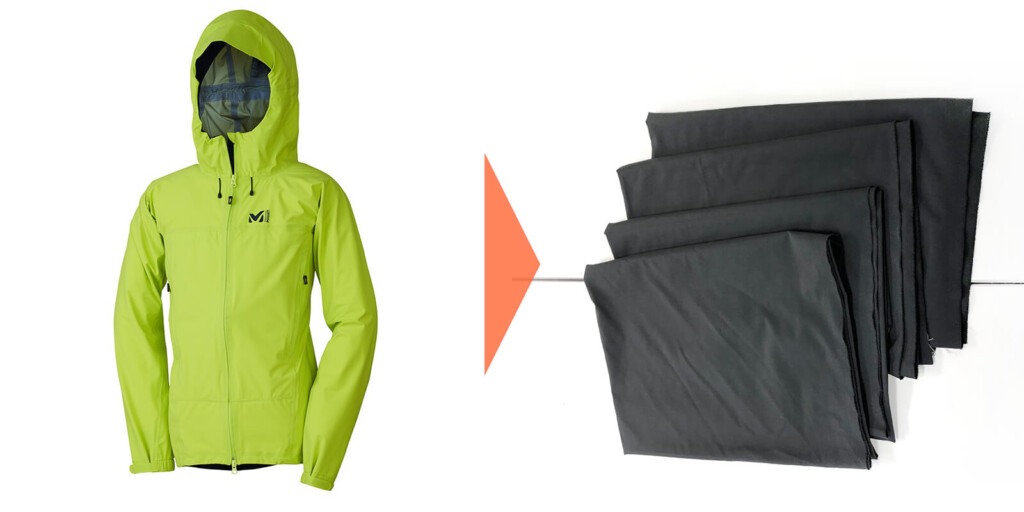
The first thing I prepared was a 100% nylon fabric (approximately 150cm wide x 30cm long) that is the same as the one used in Millet's Typhon 50000 Stretch Jacket. Of course, it is not water-repellent and has no lining

Introduction of the compared water repellents
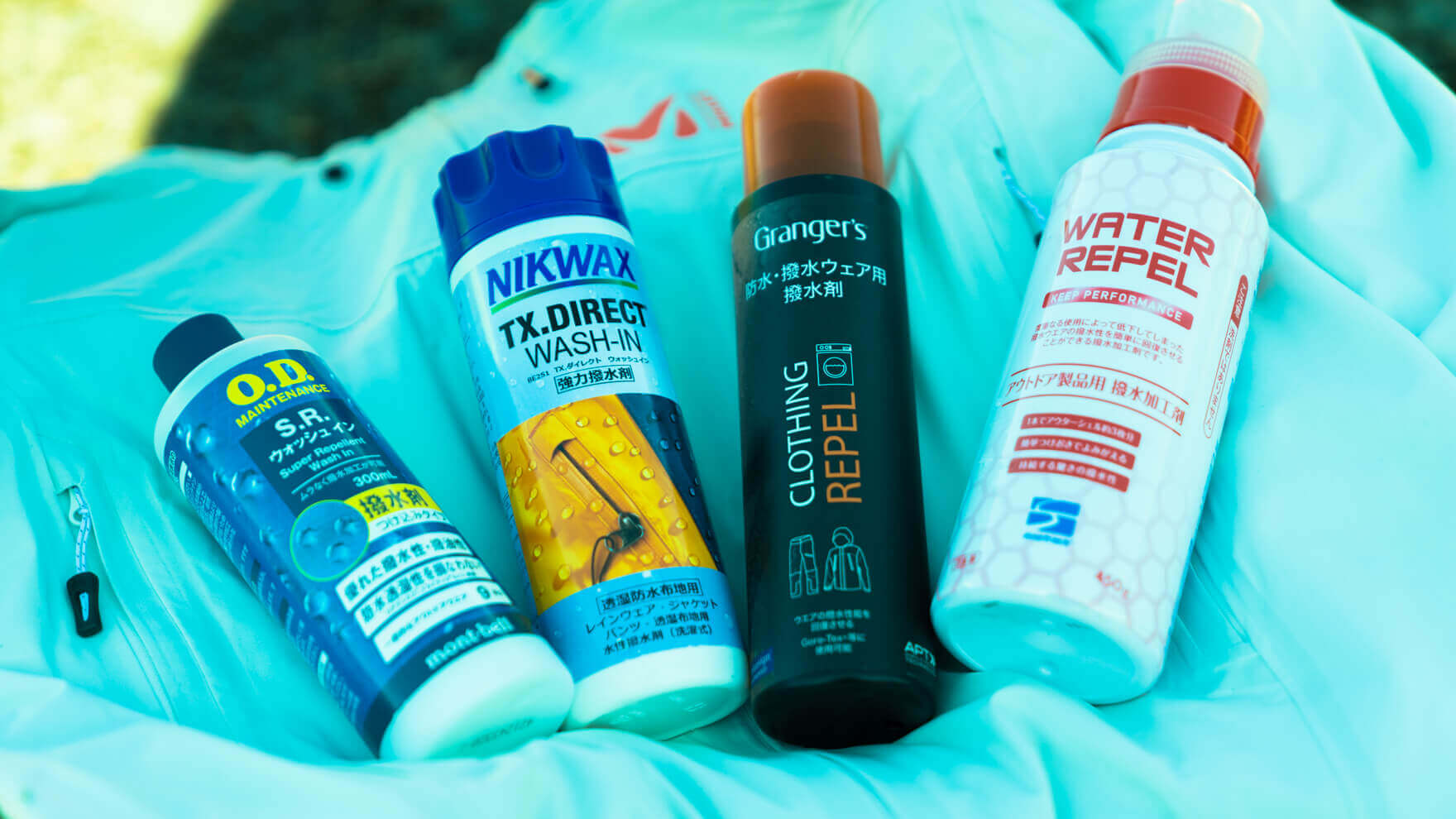
Next up for comparison are water repellents for outdoor wear that can be used on waterproof and breathable materials. Below, we have picked out four well-known brands of water repellents
The test consisted of two samples (4 x 2) for each of the four brands, plus two samples without any water repellent treatment, for a total of 10 samples
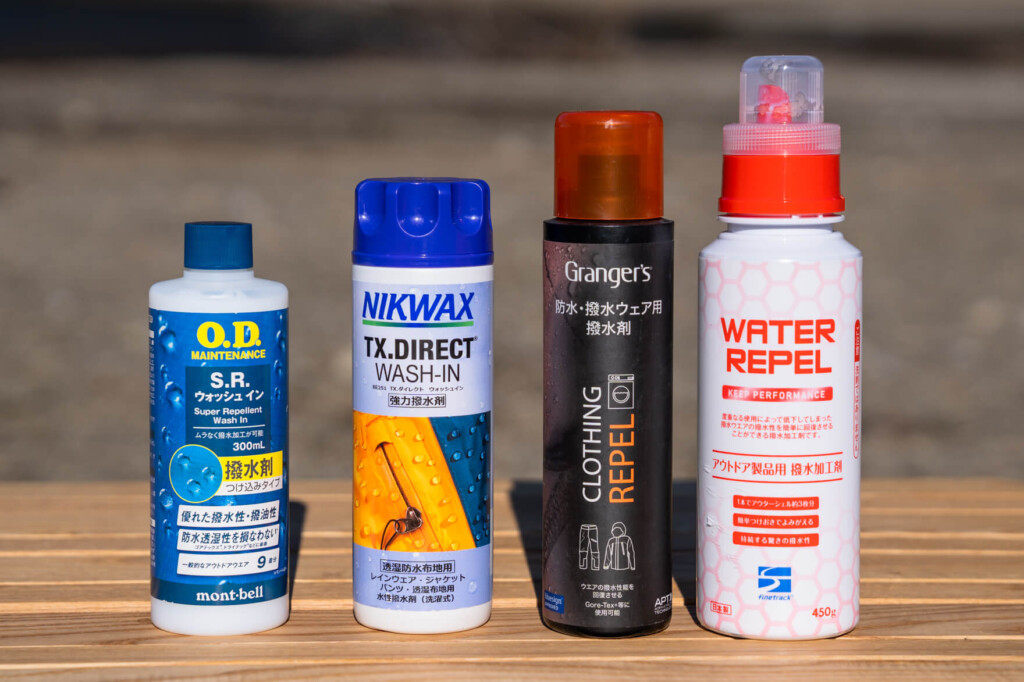

- Mont-bell OD MT SR Wash-in*
- NIKWAX TX.DIRECT WASH-IN
- Grangers Clothing Repellent for Waterproof and Water-Repellent Clothing
- Finetrack Water Repel
*As of March 30, 2020, "mont-bell OD Maintenance SR Wash-in" has been redesigned to be a water repellent made with non-fluorine-based ingredients. Since the test was conducted in January 2020, only the mont-bell product was tested using the older model. For this reason, the test results should be used as a reference only
Pretreatment
This is the preparation before starting the experiment
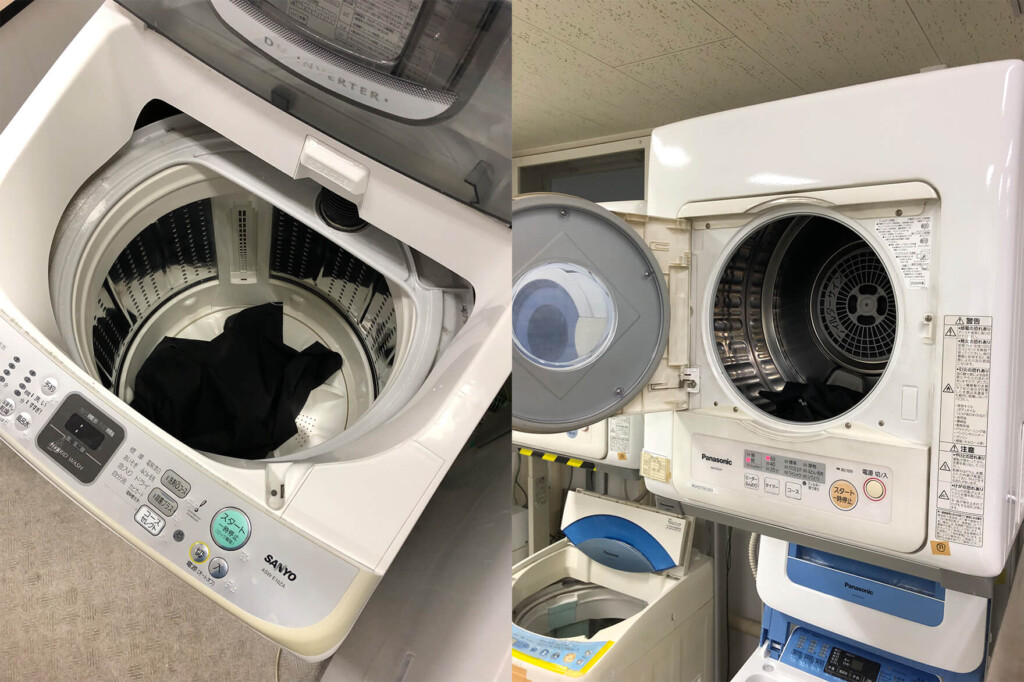
Following the handling instructions of each water repellent manufacturer, we attach the water repellent to the fabric in each method and create samples

Water-repellent comparison (1) Water-repellent test
We arrived at a quality testing facility in Tokyo
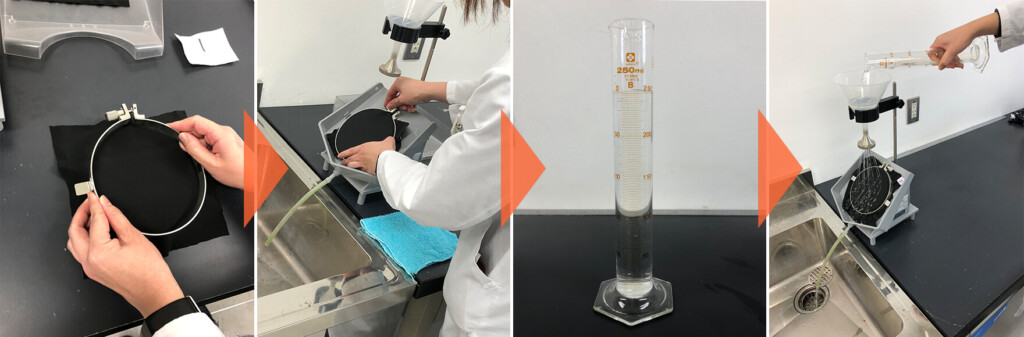
The test was conducted using the same testing equipment as in "JIS L 1092 Waterproofing Test Method for Textile Products: Water Repellency Test (Spray Test)." Simply put, the test involves the following steps:
- The sample is placed on the testing device with the table tilted at a 45-degree angle (leftmost, second from the left in the photo below)
- 250 mL of water is sprayed from the spray nozzle onto the sample surface for 25 to 30 seconds (right end of photo below)
- After spraying, lightly drop some water and compare the sample surface with a wet comparison sample, rating it on a 5-point scale. The higher the rating, the better the water repellency (although as this was a comparison, we did not rate it on a 5-point scale)


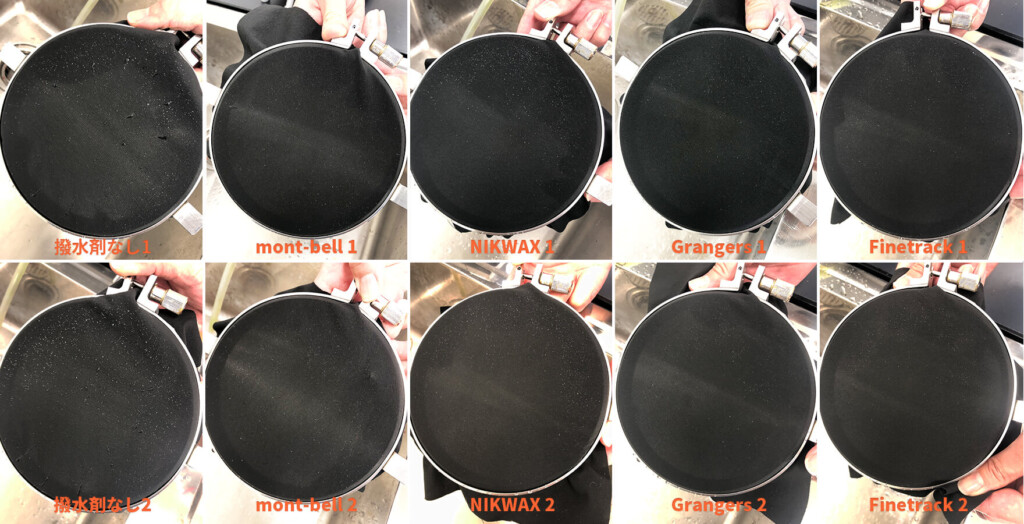
Water repellency test results: Overall excellent (Montbell has a slight advantage?)
The long-awaited results of the water-repellent test are shown in the photos below. To be honest, the differences may appear quite subtle in the photos, but when observed in the field, including the way water seeps in beyond the surface droplets, Montbell appears to be a cut above the rest. Next came Grangers and Finetrack, with NIKWAX leaving slightly more water droplets than the original. However, when compared to the leftmost sample without water repellent, it's clear that any water repellent will provide satisfactory water-repellent performance on the first use if you follow the instructions carefully
Water-repellent comparison (2) Randomometer treatment + water-repellent test
Even if the item works well immediately after soaking in the water repellent, if the water repellency quickly fades after a little use or washing, then we have to say that the product is not satisfactory
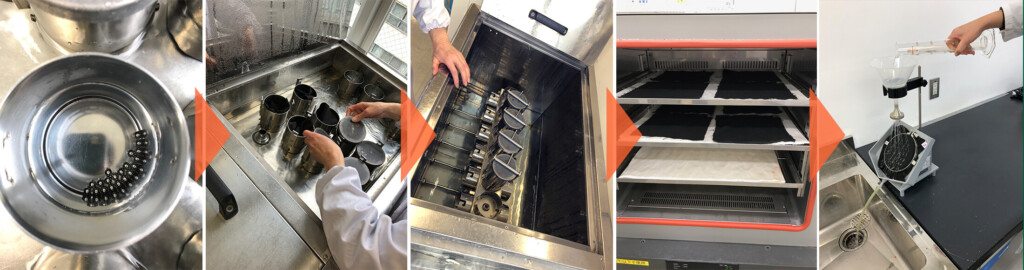
So, the next thing we did was to use a "washing fastness JIS L 0844 randaometer" to wash the samples repeatedly and then conduct a water-repellency test again to compare how long the water-repellent properties lasted
[Random meter processing conditions]
- Detergent: Emeral test solution 300ml
- Stainless steel balls: 20 pieces
- Temperature: 40±2℃
[Test method]
- After 2 hours of operation, rinse twice with 3L of water for 1 minute
- Change the test solution
- After running for another 2 hours, rinse as above
- Dry in a dryer at 40°C for 10 minutes
- After that, we conducted the same water repellency test as the first time


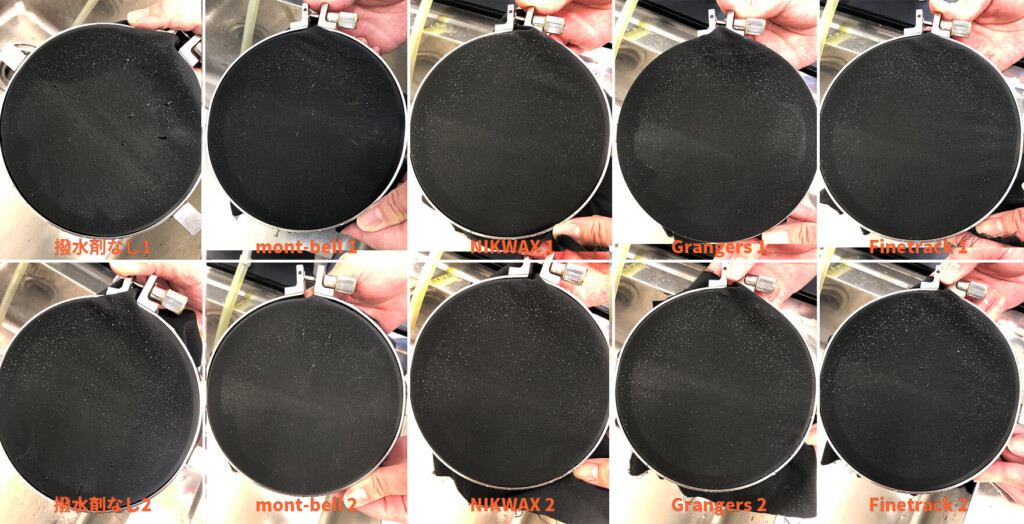
Randomometer treatment + water repellency test results: Montbell's strength is even more evident
The photo below shows the results of the Randomometer treatment + water-repellent test (the leftmost image is the same as the first test). At this point, the differences between Montbell's water-repellent agent and those of other manufacturers became relatively clear. The differences between the water-repellent agents of manufacturers other than Montbell were subtle, but Grangers had a slight advantage, while NIKWAX and Finetrack seemed to have significantly decreased in water-repellent power
Ease of use comparison
Now that we've looked at water-repellent power, let's compare other factors. Of course, the most important thing about a water repellent is its water-repellent power, but some products require a lot of care, or emit a strong odor during washing, so they all require a lot of effort, so we'll also include these as factors in the comparison
| Water repellent | Mont-Bell OD MT SR Wash-in |
NIKWAX TX.DIRECT WASH-IN |
Grangers Clothing Repellant for Waterproof and Water-Repellent Clothing |
Finetrack Water Repel |
|---|---|---|---|---|
| Product quantity | Per sheet | Per 1-2 pieces | Per sheet | Per sheet |
| Amount of water repellent | 32ml | 300ml total amount | 100ml | 150ml |
| amount of water | 15L | 35L | 25-35L | 1350ml |
| handling | Pre-wash with the recommended detergent (sold separately), then add the water repellent before spin-drying | Pre-wash with the designated detergent (required) sold separately, then add the water repellent agent while the item is still wet and wash | The garments were pre-washed with a designated detergent (sold separately), and then washed with the water repellent agent | Soak for 1 hour. Press gently to distribute the water repellent evenly |
| Can I use a washing machine? | can | can | can | I can't |
| Is heat treatment (dryer or iron) required (recommended)? | Recommended in the package | Not particularly recommended | Recommended in guidebooks | Recommended on the website for those who feel weak |
| odor | 〇 | × | △ | 〇 |
| evaluation | △ | 〇 | △ | × |
Cost performance comparison
It goes without saying that if you are paying the same price, it is better to process more. Below is a comparison of cost performance based on the manufacturer's official figures
| Water repellent | Mont-Bell OD MT SR Wash-in |
NIKWAX TX.DIRECT WASH-IN |
Grangers Clothing Repellant for Waterproof and Water-Repellent Clothing |
Finetrack Water Repel |
|---|---|---|---|---|
| Estimated number of arrivals | 9 clothes | 1-2 pieces | 3-4 pieces | 3 pieces |
| Unit price excluding tax | 1,500 yen | 1,700 yen | 1,800 yen | 2,000 yen |
| Per wear | 167 yen | 850-1,700 yen | 450-600 yen | 667 yen |
Environmental comparison
Water repellents are a type of chemical. The days when it was okay to only consider effectiveness are over. Of course, it is up to the individual whether or not to include this point in their evaluation, but as a human being who enjoys nature, from now on we must think as much as possible about the impact on the environment
| Water repellent | Mont-Bell OD MT SR Wash-in |
NIKWAX TX.DIRECT WASH-IN |
Grangers Clothing Repellant for Waterproof and Water-Repellent Clothing |
Finetrack Water Repel |
|---|---|---|---|---|
| Water repellent type | Fluorine-based* | "TX.10i" (NIKWAX patented ingredient) | acrylic material | Non-fluorinated |
| environment | ×※ | 〇 | ◎ | 〇 |
*As of March 30, 2020, "mont-bell OD Maintenance SR Wash-in" has been redesigned to be a water repellent made with non-fluorine-based ingredients. Since the test was conducted in January 2020, only the mont-bell product was tested using the older model. For this reason, the test results should be used as a reference only
Summary and Conclusion
Taking all the above factors into consideration, the following conclusions can be drawn. While I personally find the Montbell water repellent excellent, I don't feel like continuing to use fluorine-based water repellents, which are known to have a negative impact on the environment.* Therefore, I concluded that Grangers, which offered the best balance, was the best option. Of course, this test merely simulated real-world usage conditions, and it cannot be denied that the water repellency after extended use, especially in the mountains, was not actually tested. Despite this, it's important to remember that this information is for reference only when dealing with mountain gear. With this in mind, I encourage readers to carefully consider each aspect and choose the appropriate product for their own purposes and uses
- If we look solely at water repellency and cost performance, Mont-Bell seems to be a cut above the rest.
- Grangers had the fewest overall flaws .
- If you don't mind the smell, NIKWAX is the easiest way to care for your leather (although in the end, heat treatment using a dryer or iron seems to be more effective in achieving strong water-repellent properties).
- Mont-Bell uses fluorine-based raw materials, which have recently come under scrutiny due to their environmental impact.* Grangers is also the only brand to have the Bluesign certification, which is given to products that have been produced through a sustainable supply chain in the textile industry from the perspectives of the environment, labor, and consumers.
| Water repellent | Mont-Bell OD MT SR Wash-in |
NIKWAX TX.DIRECT WASH-IN |
Grangers Clothing Repellant for Waterproof and Water-Repellent Clothing |
Finetrack Water Repel |
|---|---|---|---|---|
| comprehensive evaluation | ★★★★☆ | ★★★☆☆ | ★★★★☆ | ★★★☆☆ |
| Water repellency | ★★★★★ | ★★★★☆ | ★★★★★ | ★★★★★ |
| Durable water repellency | ★★★★☆ | ★★☆☆☆ | ★★★☆☆ | ★★☆☆☆ |
| Ease of handling | ★★★☆☆ | ★★★★☆ | ★★★☆☆ | ★★☆☆☆ |
| Cost performance | ★★★★★ | ★★☆☆☆ | ★★★☆☆ | ★★★☆☆ |
| Environmental friendliness | ★★☆☆☆※ | ★★★★☆ | ★★★★★ | ★★★★☆ |
*As of March 30, 2020, "mont-bell OD Maintenance SR Wash-in" has been redesigned to be a water repellent made with non-fluorine-based ingredients. Since the test was conducted in January 2020, only the mont-bell product was tested using the older model. For this reason, the test results should be used as a reference only
Related reading