table of contents
- Experienced travelers know how to use a stuff sack effectively
- table of contents
- Introduction: Packing Basics, Tips, and Stuff Sacks
- Checkpoint 1: Waterproof or not?
- Checkpoint 2: Material, shape, and size
- Recommendation 1: Editor's Favorite Stuff Sack
- Recommendation 2: Convenient stuff sacks for specific uses
Experienced travelers know how to use a stuff sack effectively
The best way to tell if someone is a seasoned traveler is to look at the beauty of their backpack. This is just my opinion, but I don't think it's too far off the mark
The form is completely free of dents or distortions, the surface is elegantly taut, and there is no unnecessary external gear, giving it a clean appearance.The people I have passed by in the past, all wearing simple and beautiful backpacks, were, without exception, experienced travelers or people with good legs who were used to hiking in the mountains
There may be various reasons for this, but one thing is for sure: they understand the importance of packing for a safe and comfortable journey. Packing the maximum amount of content into the minimum amount of space, making sure there is no gap inside the backpack that can cause it to shift, and optimal weight distribution to make walking easier and less tiring - each of these is not just for appearance reasons, but is an important skill for a safe journey, and it is not something that can be mastered overnight, and it can be said that expert travelers have naturally acquired these skills through their packing experiences in a variety of situations
The stuff sack we'll be introducing today is an essential piece of gear for packing, which is important for such trips and mountain climbing. People who can pack quickly and beautifully are, without exception, using stuff sacks effectively. So, in this article, we'll delve into these pieces of gear, which have recently become very functional and convenient, and introduce the various types, their subtle differences, tips on how to use them, and recommended models
table of contents
Introduction: Packing Basics, Tips, and Stuff Sacks
Checkpoint 1: Waterproof or not?
Checkpoint 2: Material, shape, and size
Recommendation 1: Editor's Favorite Stuff Sack
Recommendation 2: Convenient stuff sacks for specific uses
Introduction: Packing Basics, Tips, and Stuff Sacks
As I mentioned at the beginning, good packing is not just for appearances; it is essentially technique necessary for mountaineering that is "safe, efficient, easy to walk in, and less tiring ." So what is needed for safe, efficient, and less tiring packing? The four basic points are summarized below.
- Compress it and store it in your backpack so that it doesn't take up too much space.
- Sort and store your belongings in the right places so that you can easily access what you need at any given time.
- The weight is so as not to interfere with walking , and the center of gravity is stored close to the body and above.
- should be protected with appropriate materials.
Stuff sacks make these tasks easier and more convenient, but their basic function is to divide your luggage into smaller pieces, so some people may think that regular plastic bags would be sufficient. To be honest, plastic bags are a viable substitute, and I did the same 20 years ago. However, as you can see from the comparison table below, in the long run, they still can't beat the convenience of a stuff sack .
| item | plastic bags | stuff sack |
|---|---|---|
| image |
|
|
| merit |
|
|
| Disadvantages |
|
|


Tips for safe and beautiful packing
- A stuff sack is useful for making mountain climbing safer, more
- When packing, the center of gravity should ideally be closer to the body, from the shoulders to the back , with lighter, bulkier items at the bottom and heavier items near the top .
- Pack the bag while as evenly as possible
- frequently used items in easy-to-access locations (such as canopy pockets, side or hip belt pockets, or shoulder pouches).
Checkpoint 1: Waterproof or not?
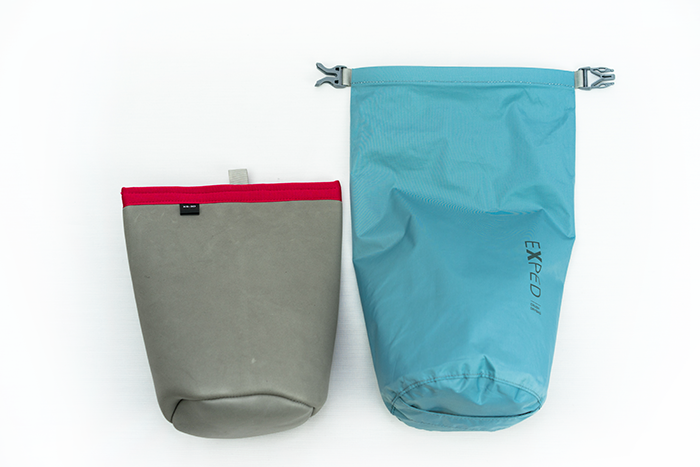
Now, let's look at the key points to consider when choosing a stuff sack. The first thing to consider is a completely waterproof dry sack is useful for luggage that must not get wet. The entrance to a dry sack has a roll-top design, as shown in the photo on the left, where you roll up the opening and then secure it with a strap. Of course, the fabric of the bag itself is also waterproof, and the seams are taped to prevent water from seeping in even when submerged, so it's a rule of thumb to use this bag for items that absolutely must not get wet.
This dry sack also comes in a large-capacity pack that is about the same size as a backpack, and when used in conjunction with these smaller packs, the waterproofing of each pack plus the overall waterproofing effect of the luggage makes it very effective when more rigorous waterproof packing is required (for example, when climbing a stream)
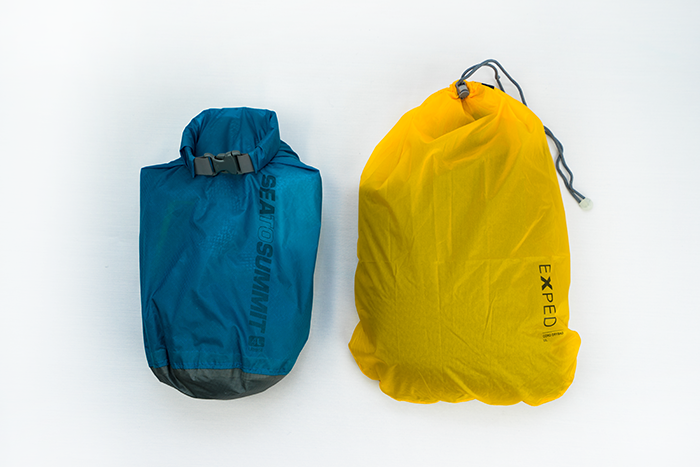
The dry sack (left) is completely waterproof but heavy and bulky due to the components, while the drawstring stuff sack is less waterproof but simpler, lighter, and easier to use
Tips for safe and beautiful packing
- Pack items you absolutely must not get wet, such as clothing, sleeping bags, and down jackets, in waterproof stuff sacks。
- Dry sacks are relatively heavy, bulky, and expensive, so for normal hiking, there is no need to put all of your gear in a dry sack; it is recommended to use only the right gear for the right place.
Checkpoint 2: Material, shape, and size
The materials used for stuff sacks have changed from the traditional nylon lining with a waterproof material attached, to a new material Silnylon , which is made by impregnating nylon with silicone. It is thin, lightweight, and has a certain strength, and is becoming more and more popular. It is therefore more expensive, but it is extremely easy to use.
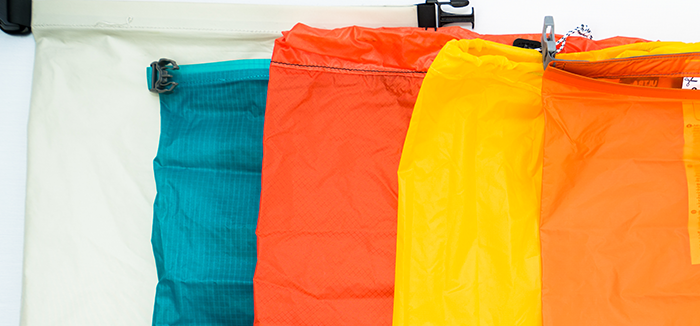
The two on the left are made of nylon, and the three on the right are made of Silnylon. In recent years, they have become thinner and lighter, and with the added convenience of being able to see the contents, they are extremely easy to use
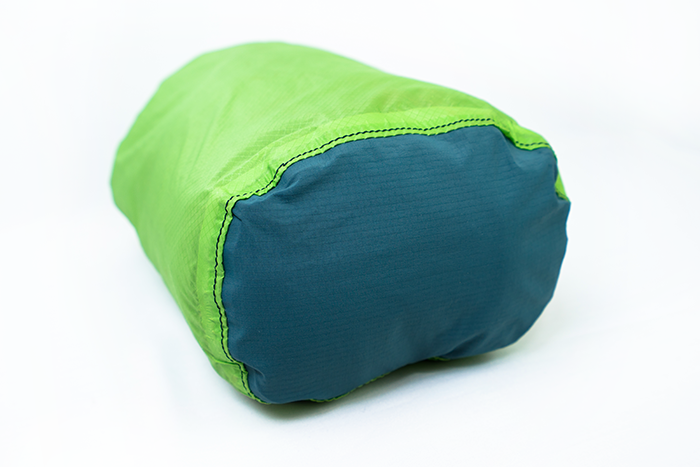
The shape of the stuff sack is a hidden key point. Until now, most stuff sacks have had a round bottom, making them cylindrical in shape, but when considering the shape of a backpack, a loose rectangular shape often works better for storage , and in recent years, many models have been designed with this in mind.
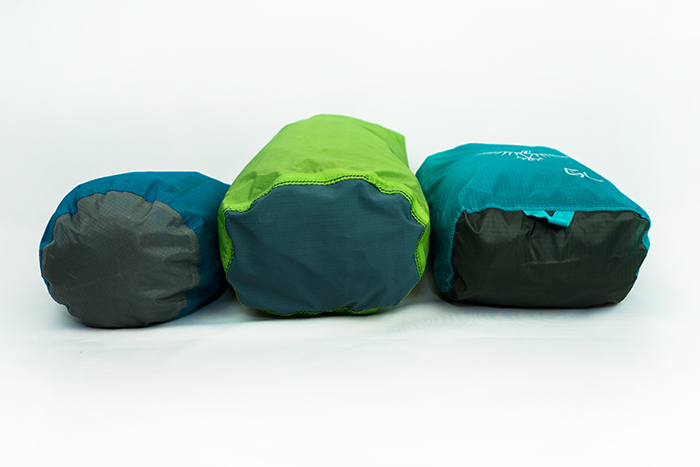
The shape of the bottom of the stuff sack. The one on the left is a perfect circle, the middle is a slightly rounded rectangle, and the one on the right is almost a rectangle. The rectangle on the right is the best for ease of packing
Stuff sacks come in a variety of sizes, both large and small, and it's important to choose a size that minimizes waste based on the contents. The tricky question here is how small to divide your items into smaller portions. While dividing your items into smaller portions certainly increases your packing flexibility, dividing them into smaller portions can make the bag heavier and make it harder to keep track of what's in each portion, so you need to be careful . On the other hand, storing everything in a bag that's too large in an effort to save money is not a good idea, as it wastes space . From experience, I think the most convenient size is to have several in the 4L to 10L range. As with anything, it's important to find your own balance.
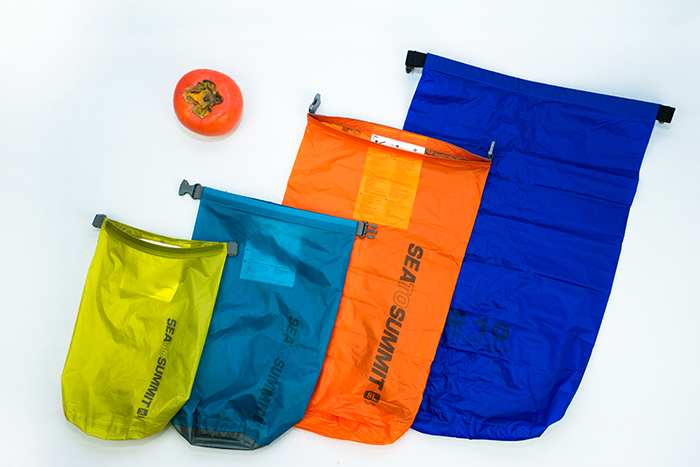
From the left, the stuff sacks are 2L, 4L, 8L, and 10L. Stuff sacks that are too big are heavy and bulky, so it's best to think of bigger as not better
Tips for safe and beautiful packing
- If you don't need particularly durable bags, we recommend Silnylon, which is light, thin, and allows you to see what's inside .
- We recommend a loose, rectangular stuff sack, which makes packing easy .
- Be careful not to divide your stuff sacks too small or too large. Even when camping in a tent, it is best to pack your main storage in 3 to 5 4L to 10L sacks .
Recommendation 1: Editor's Favorite Stuff Sack
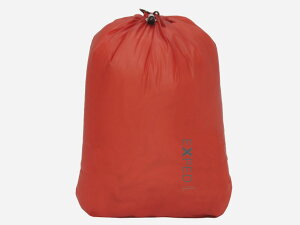
EXPED Cord Drybag UL Drawstring Stuff Sack
Not only is it one of the lightest in its class, but the 15D ultra-thin nylon is also completely waterproof except for the opening thanks to the PU coating on the lining and taped seams. The unique drawcord makes it easy to open and close. There are several size variations, but it would be even better if there were variations in shape


[Dry Sack] SEA TO SUMMIT Ultra-SIL Nano Dry Sack / OSPREY UL Dry Sack
The SEA TO SUMMIT Ultra SIL Nano Dry Sack is made of 15D ultra-thin and ultra-lightweight fabric. Its smooth, see-through construction makes it easy to store and extremely user-friendly. Meanwhile, the OSPREY UL Dry Sack has a unique rectangular shape that makes it perfect for packing, and you can even stuff it with clothes and use it as a pillow inside your tent
| SEA TO SUMMIT Ultra-SIL Nano Dry Sack | OSPREY UL Dry Sack |
|---|---|
    |
 |
Recommendation 2: Convenient stuff sacks for specific uses
From here on, as an extra feature, we will introduce some useful stuff sacks that are specialized for specific purposes and are a departure from basic stuff sacks
See-through stuff sack
As you can see, some of the bag is made of vinyl, making it easy to see what's inside. This might be useful for storing miscellaneous items like ingredients and kitchen sets


compression sack
Clothing, sleeping bags, and other items tend to be thick and bulky, making luggage often bulky. A compression sack is a stuff sack that can compress and reduce the size of such bulky items by tightening the drawcord (see photo). These stuff sacks not only have a compression function, but also come in fully waterproof compression types with roll-top openings, which are especially useful for bulky items like down sleeping bags that you don't want to get wet
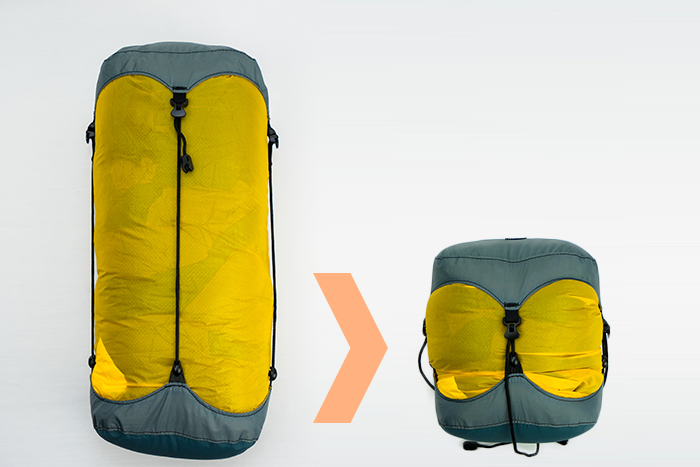
By the way, if you compress it too much and make it extremely hard, it will lose flexibility and be difficult to fit into the space, so the trick to packing wisely is to compress it just enough to give it a moderate amount of elasticity .


EVA foam stuff sack
This is a waterproof stuff sack that comes with an inner lining made of EVA closed-cell foam, which acts as a cushion to protect precision equipment such as cameras. The one in the photo below (EXPED?CRUSH DRYBAG XS/3D) is just large enough to fit a mirrorless single-lens camera, but unfortunately it's hard to find one any larger
![EXPED Crush Drybag 3XS [Travel Goods] [Men's] [Women's]](https://images-fe.ssl-images-amazon.com/images/I/312QVQVH2RL._SS300_.jpg)
Pair-shaped stuff sack
This is a unique bag. It is divided in the middle and has openings on both sides, so you can put your clothes in one bag at first and then throw them in the other bag when you're done. Of course, you can also use it normally by putting things in both bags

Waterproof and breathable stuff sack
The bottom of the stuff sack is made of a waterproof, breathable material such as eVent, which keeps out water but allows air to pass through . Regular waterproof bags are airtight, so if you don't properly remove the air when closing them, the remaining air inside can get in the way when packing. However, this "air-removing" waterproof stuff sack eliminates this packing issue while maintaining waterproof functionality. The only drawback is that it's quite expensive, given its high functionality.

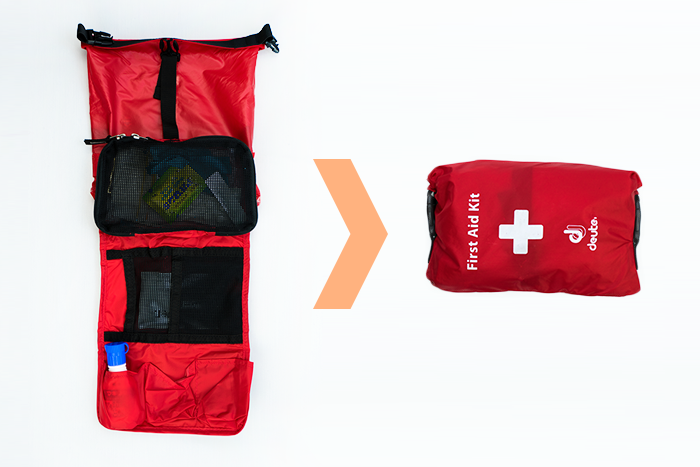
Emergency Dry Bag
Waterproofing an emergency kit is surprisingly important so that you don't end up with a rusty sewing kit or soaked medicines that are unusable in an emergency. However, the reality is that it's rare to find an emergency bag with waterproof functionality, so this one is very useful. It has small pockets that make it easy to organize, and the Deuter First Aid Kit Dry is my favorite in this category.
Stuff sack that turns into a pillow
Finally, we have the most unusual sack of this article. People who take the trouble to bring a dedicated pillow when camping in a tent are probably in the minority. Until recently, I used a rectangular stuff sack as a pillow, but it was always quite slippery and only comfortable to sleep on. Having a pillow is definitely more comfortable. The "Dream Sack Pillow " perfectly solves the problem of how to bring a comfortable pillow without increasing the amount of luggage you have. It's a stuff sack with one side made of soft fleece, and while it may seem a bit out of place, the good thing about this type of item is that you end up growing attached to it.

Related reading