table of contents
- A serious look at trekking pants, which are often chosen solely based on appearance
- table of contents
- Features of trekking pants
- Checkpoint 1: Type
- Checkpoint 2: Thickness of the fabric
- Checkpoint 3: Fit and ease of movement
- Check point 4: Material (water repellency, breathability, quick-drying, UPF, durability, weight)
- Checkpoint 5: Details (waist, pockets, hem)
- summary
A serious look at trekking pants, which are often chosen solely based on appearance
Many people spend a lot of time choosing backpacks and trekking shoes, but few spend time carefully choosing trekking pants. Thinking back to my own experience, most of the pants I've purchased up until now have been on sale, and when I was a beginner a dozen years ago, I always bought a jersey. So I understand how you feel, but the truth is, trekking pants, like shoes, are an essential part of a comfortable trek. It may seem hard to believe, but back in my days as a keen mountain stream climber, I had terrible experiences where I ended up chafing my crotch in a cheap jersey. It's clear that they shouldn't be taken lightly. So, in this article, I'll introduce five little-known points for choosing the perfect trekking pants
table of contents
Characteristics of trekking pants: What makes them different from regular pants?
Checkpoint 2: Thickness of the fabric
Checkpoint 3: Fit and ease of movement
Checkpoint 4: Material (UV protection, water repellency, breathability, durability, weight)
Checkpoint 5: Details (waist, pockets, hem)
Check out our editor's recommended trekking pants for each season here
- Lightweight and comfortable! 5 recommended trekking pants for spring and summer mountain climbing
- 5 Recommended Trekking Pants Perfect for Hiking in Low Mountains in Autumn and Winter!
Features of trekking pants
First, let's clarify what trekking pants are and how they differ from pants you wear every day. Roughly speaking, trekking pants have the following advantages over pants you wear every day:
- Breathable to reduce discomfort caused by sweat
- Mobility that doesn't strain even when lifting or bending your thighs
- Durable and protects from scratches caused by trees, rocks, etc.
- Quick-drying, even when wet
- Lightweight and easy to move around
- Windproof and cold-resistant to prevent wind and cold from the outside air
- Water-repellent, repels some water and dirt
However, in reality, no single pair of pants can do everything, and there is a gradation of products with different emphasis depending on the purpose. For this reason, when choosing pants, it is important to consider what activity you mainly do. For example, for activities that involve a lot of movement, such as climbing, you want lightness and stretch that doesn't restrict your movement, but for summer hiking, what you need above all is breathability and quick-drying to keep your skin dry. On the other hand, for canyoning, an activity that involves getting wet and a lot of climbing, so both are required
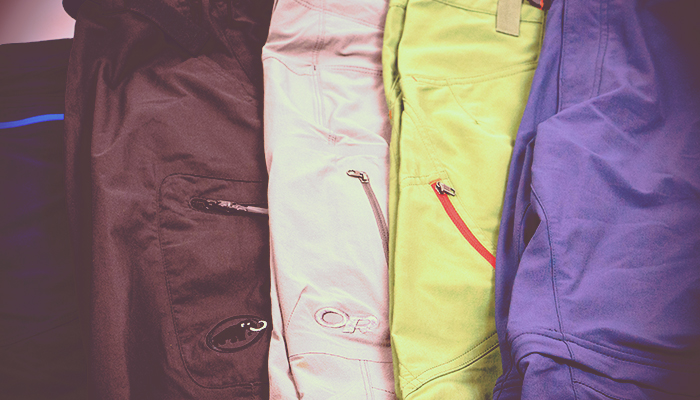
Trekking pants come in a wide variety of models, from materials to designs and details
Checkpoint 1: Type
When exploring the outdoors, you need to avoid various risks, including scratches, dirt, sun, cold, and insect bites, so long pants are the standard for trekking pants . However, long pants aren't necessary in every situation. For speed-focused hikes or short courses in midsummer, shorter styles like shorts, half pants, or capri pants may be more appropriate. Furthermore, the number of convertible trekking pants available these days is on the rise, with zippers connecting the allowing you to switch between long and short styles . When choosing pants, first consider which type best suits your purpose. Below, we've summarized the pros and cons of each type to help you make your decision.
| kinds | long pants | Shorts (half pants, capri pants) |
convertible pants |
|---|---|---|---|
| image | ![Arc'teryx Palisade Pant Graphite 30 [Men's]](https://images-fe.ssl-images-amazon.com/images/I/41vaF43ZTfL._SS100_.jpg) |
 |
 |
| merit |
|
|
|
| Disadvantages |
|
|
|

Points to consider when choosing
- If you don't mind the overall silhouette or the feel of the zipper, we highly recommend the more versatile convertible type .
- climbing , and many of their functions overlap, making them suitable for trekking as well (assuming the material does not contain cotton).
- If you choose shorts, you must take precautions against sunburn, injury, and cold weather . In that case, we recommend pairing them with supportive (functional) tights.

This convertible style can be adjusted to suit a variety of situations, and comes in a variety of lengths, including half-length and capri pants
Checkpoint 2: Thickness of the fabric
Once you've decided on the type of pants that's right for you, the next step is to consider how thick (volume) they should be. If you chose the short type in point 1, you'll probably only need to consider wearing them during the hot summer months, but long pants can be roughly divided into spring/summer, year-round, and snowy season models depending on the thickness of the fabric (although the snowy season models are technically different in terms of their construction) . If you choose a year-round model, you'll be safe (except during the harsh winter), but they may be too hot for low-lying mountains in the summer and be a bit over-specced. Below we've summarized the general strengths and weaknesses of each model for your reference (they all have the same stretch and breathability of the fabric).
| type | For spring and summer | For all year round | For snowy season |
|---|---|---|---|
| Strengths |
|
|
|
| weakness |
|
|
|
Points to consider when choosing
- For first-time buyers, we recommend a versatile (convertible) year-round model . However, our best recommendation is to use both a spring/summer model and a year-round model .
- The spring/summer model is lightweight and quick-drying, and with some .
Checkpoint 3: Fit and ease of movement
Form (draping)
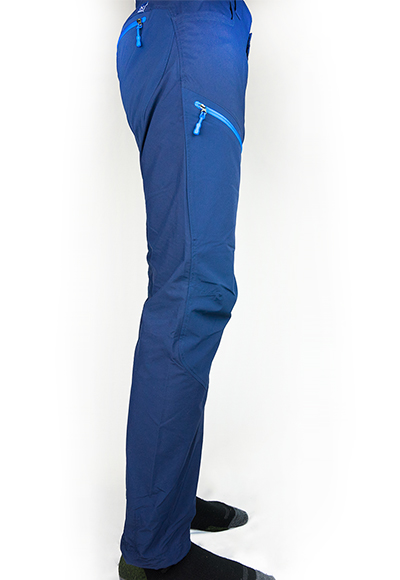
The most important thing about trekking pants is that they allow for a wide range of motion and are easy to move in. However, if they're too loose, you risk tripping over the hem and falling, and if they're too tight, they'll feel tight when you bend or stretch. For this reason, many trekking pants are ergonomically designed with a three-dimensional cut. As you can see from the knee area in the photo on the right, they're designed to leave some room in the knee area so they don't feel tight when you bend or stretch. Depending on the manufacturer and model, various other features, such as hip shape and crotch gussets, are incorporated to allow for unrestricted movement , so try them on and compare them to find the model that best fits your body and movements.
Stretchability
Another factor that allows for natural movement of the body the high degree of stretch in the fabric. Highly stretchy trekking pants contain materials such as polyurethane (spandex), and many models are now available that are surprisingly easy to move in. This allows for natural freedom of movement even in a relatively tight silhouette, ensuring safe and comfortable walking . When choosing pants, the strength of the stretch and the direction of stretch (stretch in only one direction, vertically or horizontally, etc.) will vary depending on the manufacturer and model, so it's a good idea to try them on to see how they feel.
Points to consider when choosing
- Try it on and move your body around, bending and stretching, to check how easy it is to move in .
- We recommend pants that are not too loose, have good stretch (so they don't restrict movement), and have a three-dimensional cut, so that your feet won't get caught in the pants . Pants that are too tight and tend to get stuffy are a no-no.
- Be careful, as too much stretch tends to make the fabric thicker, which can have disadvantages such as reduced durability
Check point 4: Material (water repellency, breathability, quick-drying, UPF, durability, weight)
In addition to the stretch function mentioned above, there are various other characteristics depending on the material, so be sure to check the following
water repellency
Fabrics with a DWR (durable water repellent) finish are very useful as they will repel light rain and snow , but they are not "waterproof," so be sure to take precautions against heavy rain.
Moisture permeability, breathability, and quick drying
When you're active for long periods of time, your pants will absorb a lot of moisture, not only from sweating in your lower body but also from sweat dripping down from your upper body. Getting wet can be fatal in outdoor activities, so choose trekking pants that are highly breathable, quick-drying, and have moderate breathability Some pants also have ventilation holes on the sides to ensure greater breathability than the material itself .
UPF material
UPF stands for "ultraviolet protection factor," which indicates how well a garment protects your skin from UV rays and sunburn . The higher the number, the better the UV protection, but regular clothing naturally also blocks a certain amount of UV rays. If you're really concerned about sunburn, choose pants made from a material with this property .
Durability/weight
Pants, which involve a lot of movement and friction with the outside world, are actually among the most susceptible to wear out of all clothing. In my case, I seem to often scrape the inside of the hem with my heels, and I often notice rips in the hem that have appeared without me noticing while walking. Naturally, therefore, durability is an important factor for trekking pants. The ideal material would be lightweight yet highly durable, but in reality, thin, lightweight materials will mean sacrificing some durability. The best choice is to to make your pants last longer is to use multiple pairs of pants specialized for different purposes
Checkpoint 5: Details (waist, pockets, hem)
West
Trekking pants' waists can be broadly adjustable and non-adjustable types . Non-adjustable types have belt loops, so you'll need to bring your own belt, but they offer greater versatility. On the other hand, adjustable types have a variety of adjustment methods, and the ease of use and range of adjustment vary, so you'll need to try them on to make sure. Another thing to be careful of, based on experience, is that if the central button (buckle) is made of thick metal, some people may feel painful pressure from the hip belt of their backpack, so it's a good idea to check that the belt area is not excessively uneven.
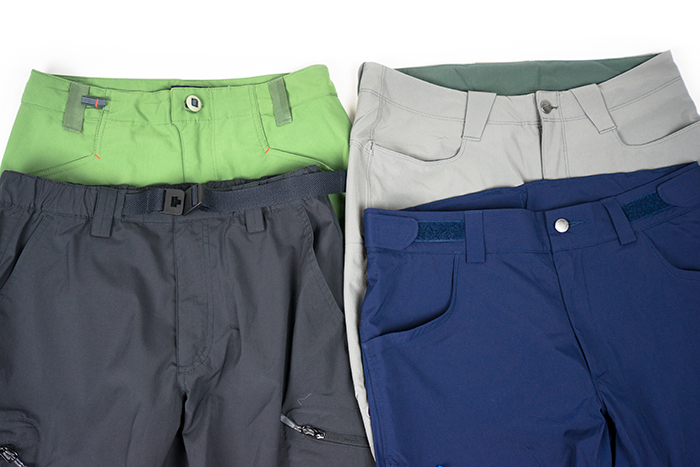
Various adjustment functions. The upper left one can be adjusted by pulling the tape on the left side, the lower left one can be adjusted with the attached belt inside. The upper right one has only belt loops, and the lower right one can be adjusted with the belt loops and hook-and-loop fasteners on both sides
- The simpler the waist adjustment , the more comfortable it is. Choose a waistband with a simple adjustment mechanism that allows you to easily adjust the size .
- Try it on and see if it fits。
Pocket specifications greatly influence the usability of pants, but in reality, pocket location, number, size, and whether or not they have zippers vary greatly depending on the pants. Pockets also serve more than just as pockets; they also reinforce the durability of the hip area and provide ventilation (increased breathability), so there are many aspects to consider before trying them on to determine whether they will actually satisfy you. However, one thing can be said: in terms of ease of use, more is better . Sometimes, there are modest models that prioritize weight and style, but as a result, the pockets can be just there and you don't know what to put in them, so be sure to check this carefully.
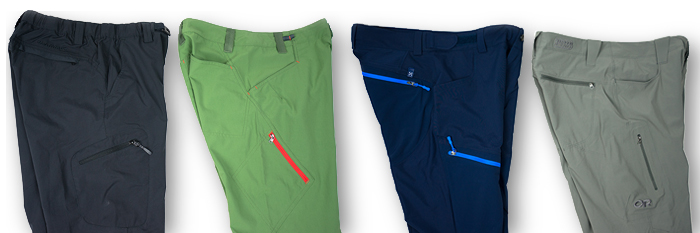
Pockets are generally located on the hips, waist, or thighs, but the size and number vary
- If you don't consider weight or shape, it is generally recommended to have larger and more pockets as they are easier to use .
- Pockets with zippers are safer to prevent items from falling out .
- If you are also using it for climbing, make sure it does not overlap the belt position of your harness .
Drawcord hem
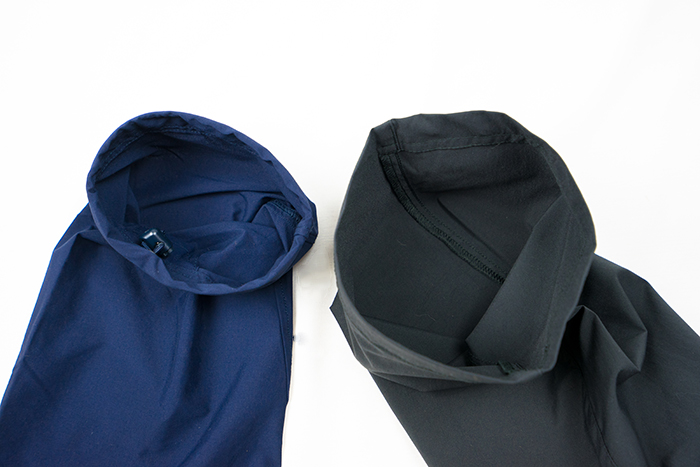
Drawstring hem (photo left), a common feature in modern trekking pants
Recently, models with drawstrings at the hem have become more common, and they are often convenient, but they don't interfere with trekking, so I think they're not a high priority. There are three main reasons why they're convenient
- This prevents the hem from spreading out and makes it less likely to get caught on your legs .
- Tighten it over your shoes as a simple gaiter (preventing pebbles and water from getting in) .
- You can roll up your long pants and wear them as shorts
summary
If you choose trekking pants in the same way as you would for everyday pants, you might be satisfied with just the shape and ease of movement, but upon investigation, you'll find that there are surprisingly large differences in functionality when it comes to trekking pants. We hope this summary will be helpful when choosing the perfect pair of pants depending on the situation, season, and location. Have a wonderful outdoor life!
Related reading