


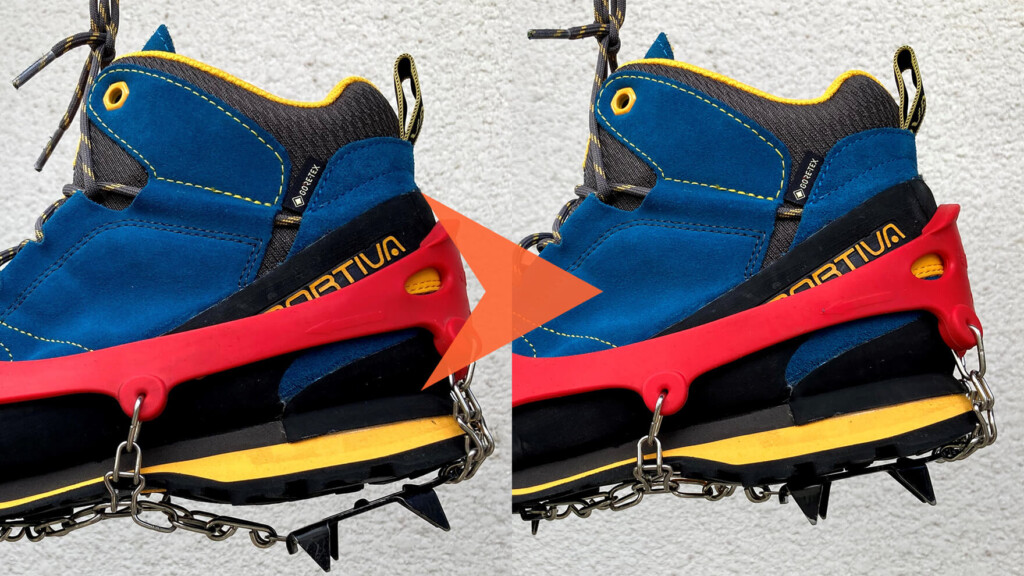
Chain spikes are great for walking on ice and snow, but do they fit your shoes perfectly?
Chain spikes are extremely useful when walking on ice, snow, or snowy valleys. I started using them a few years ago and have found them to be extremely convenient, but at the same time, I also think they can be quite tricky gear
One day during the green season, I decided to walk on the snowy slopes of Mt. Hakuba, and when I tried to attach my favorite approach shoes with my chain spikes (size L), even though they were attached securely, the chain on the heel side was slightly loose and it felt like it might slip off. Thinking that maybe the size was too big, I bought the same model, one size smaller (size M), but this time it was too small and I couldn't get it to fit no matter what I did
I had no choice but to put on the large-sized chain spikes I already had and headed for the snowfields of Mt. Shirouma. As expected, the chain spikes kept shifting back and forth and side to side, both when going up and down, making it very difficult to walk, and I ended up having to put them back on multiple times. Has anyone else had a similar experience?
So this time, I tried out a DIY "Cinderella fit tuning for chain spikes" and would like to introduce it to you
table of contents
Why do chain spikes become misaligned or loose?
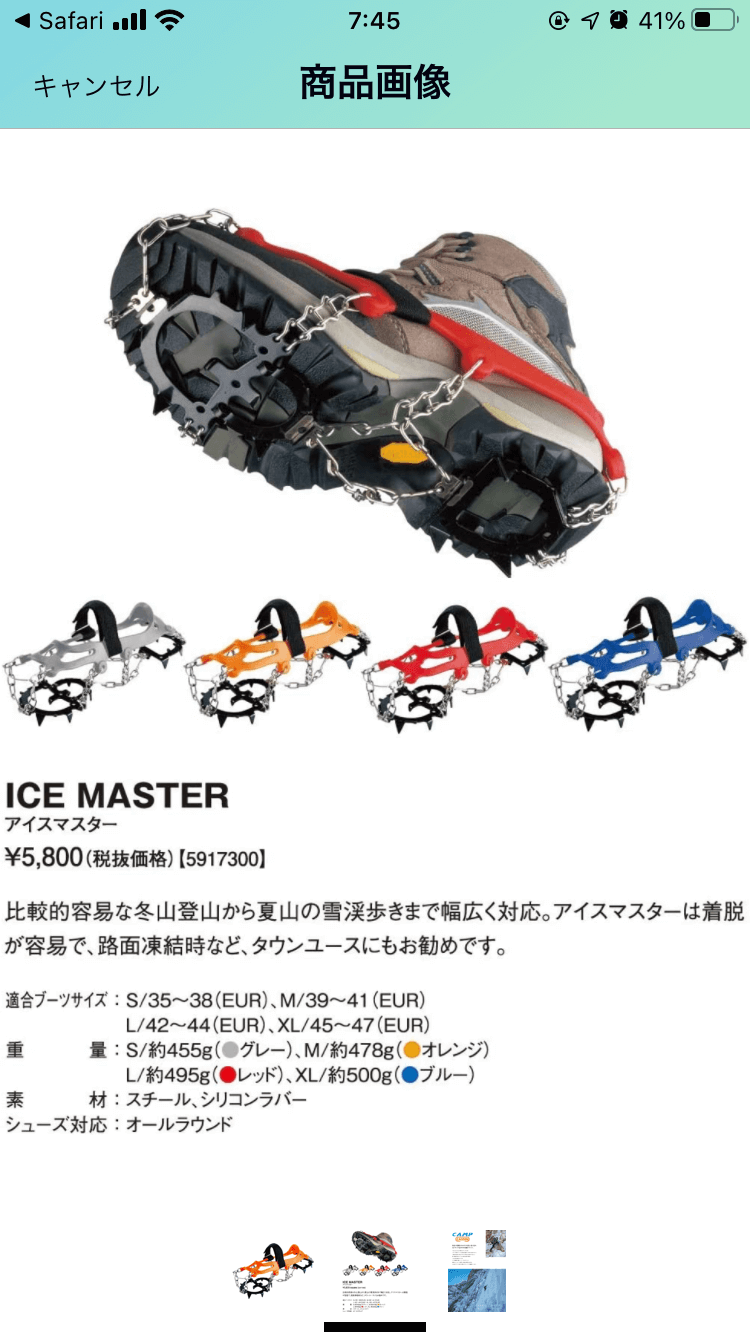
One reason is that while shoes come in minute size variations in 0.5cm increments, chain spikes only have 3-4 size variations that cover a wide range of shoe sizes. Of course, they don't have to be in 0.5cm increments like shoes, but as you can see from the 12-prong crampons, it's always better to have as many size adjustment options as possible.
Another reason is that, because of their convenience, they can be attached to a variety of shoes and boots. For example, even if the size of a pair of shoes is the same (26.0 cm), the shapes and sizes of trekking shoes, approach shoes, and trail running shoes are all different. Therefore, even if you purchase the size recommended by the chain spike manufacturer, the fit will vary greatly depending on the type of shoe you use them on. For these reasons, unless you're extremely lucky, it's very difficult to find a chain spike that fits perfectly with your existing shoes.
For example, my favorite CAMP ICE MASTER comes in S size for shoe sizes EU 36-38 (23.0-24.0cm), M size for EU 39-41 (24.5-25.5cm), L size for EU 42-44 (26.0-28.0cm), and XL size for EU 45-47 (29.0-31.0cm). In other words, with just four sizes, each size covers a 1.0-2.0cm difference in shoe size, regardless of the type of shoe, such as trail running shoes or hiking boots
By the way, in my case, my shoes are EU size 45, so the recommended chain spikes would be XL size, but even with L size chain spikes there was still sagging
Overcome the weaknesses of chain spikes, which have a wide range of sizes, with DIY
If your shoes are 1.0 to 2.0 cm larger or smaller than your feet, you won't get the fit you want. The same goes for chain spikes. Conversely, the focus of this article is that if you can adjust your chain spikes to fit the shape and size of your shoes, you may be able to get the ideal fit
Outdoor gear is expensive and comes across as being meticulously designed, so you might be reluctant to try DIY modifications. However, if you end up with problems like your shoes slipping when you walk or not fitting perfectly, that means there are areas where you can improve safety and functionality. We recommend DIY tuning for a safer and more comfortable mountain climbing experience
*DIY is done at your own risk. Always make sure to thoroughly check that there are no safety or functionality issues before using it in the field
How to tune your chain spikes to fit your bike
Now, let's take a look at how to tune your chain spikes to a perfect fit using DIY methods
1: Diagnosis
Try putting chain spikes on your shoes. Look at them from the side, and if there is any slack in the sole, we recommend cutting a link of the chain to adjust it. When doing so, it's a good idea to identify the link (chain) you need to remove and mark it with a permanent marker or similar so you can easily identify it


2: Adjustment
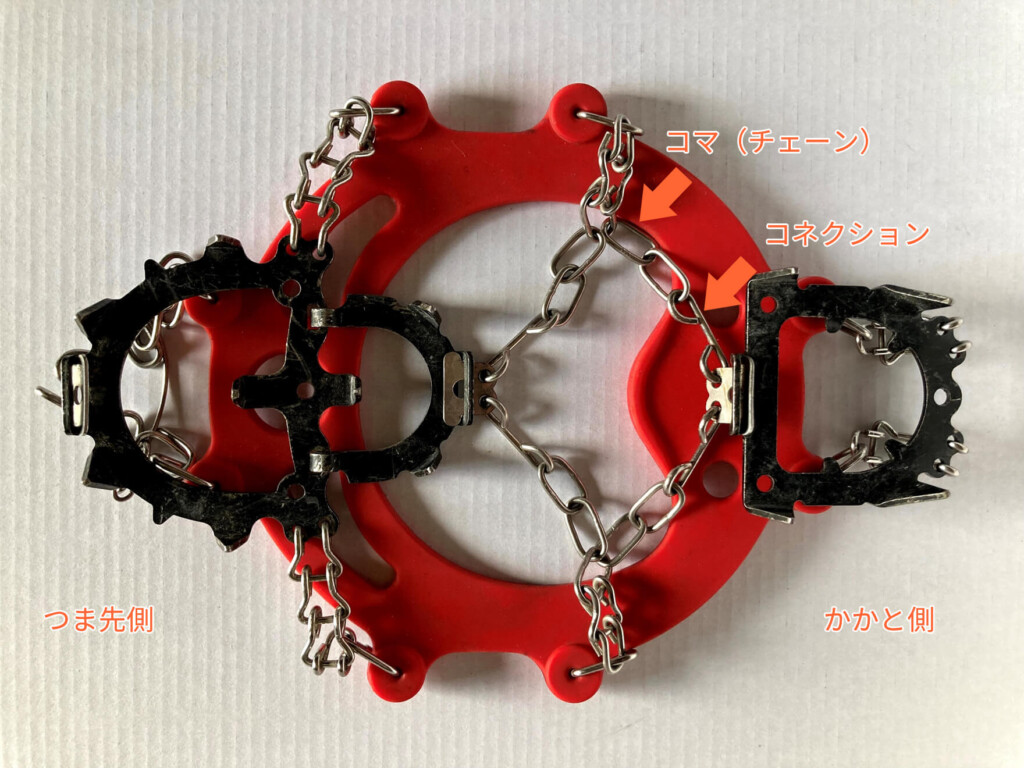
The only tools required for adjustment are two pairs of pliers and a pair of nippers. As an example, we will explain how to remove one link on the heel side
The photo below shows the chain spikes from the sole side

Use two pliers to deform the connection part,
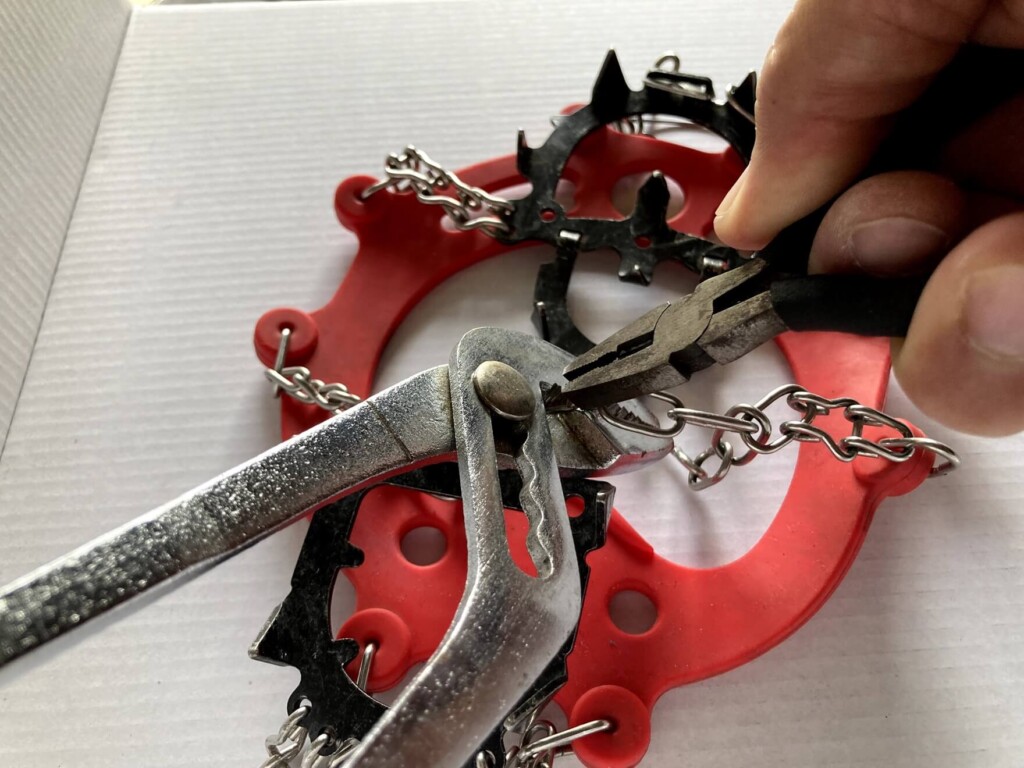
Leave enough space so that the piece can be removed
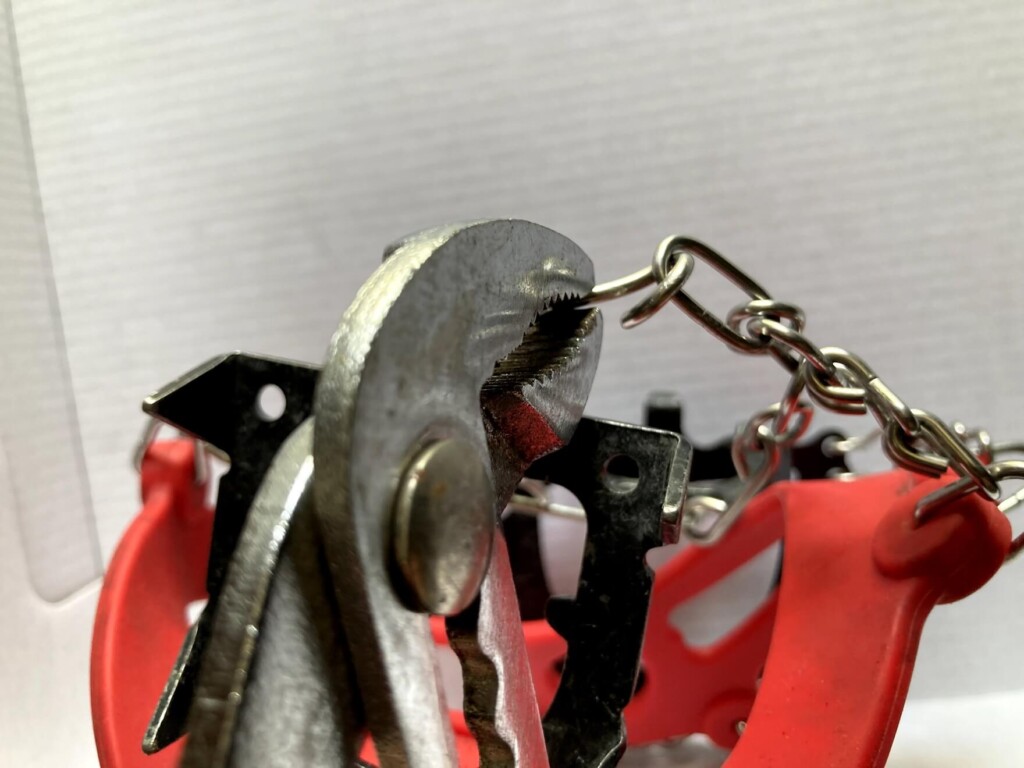
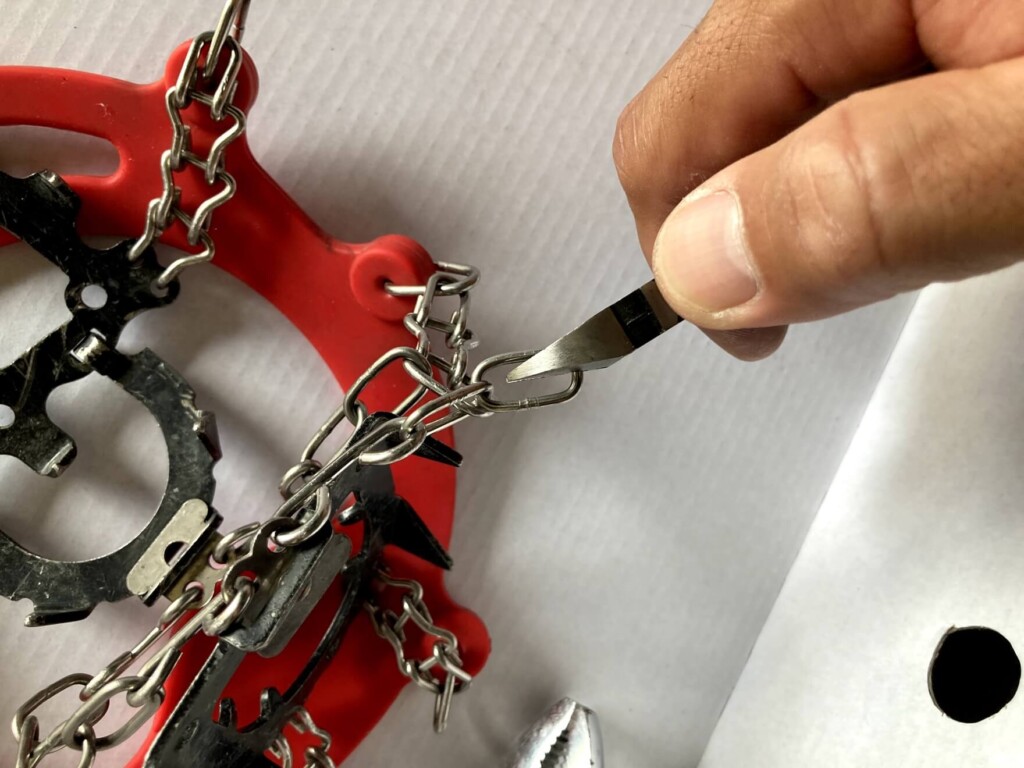
Cut and remove any unnecessary pieces
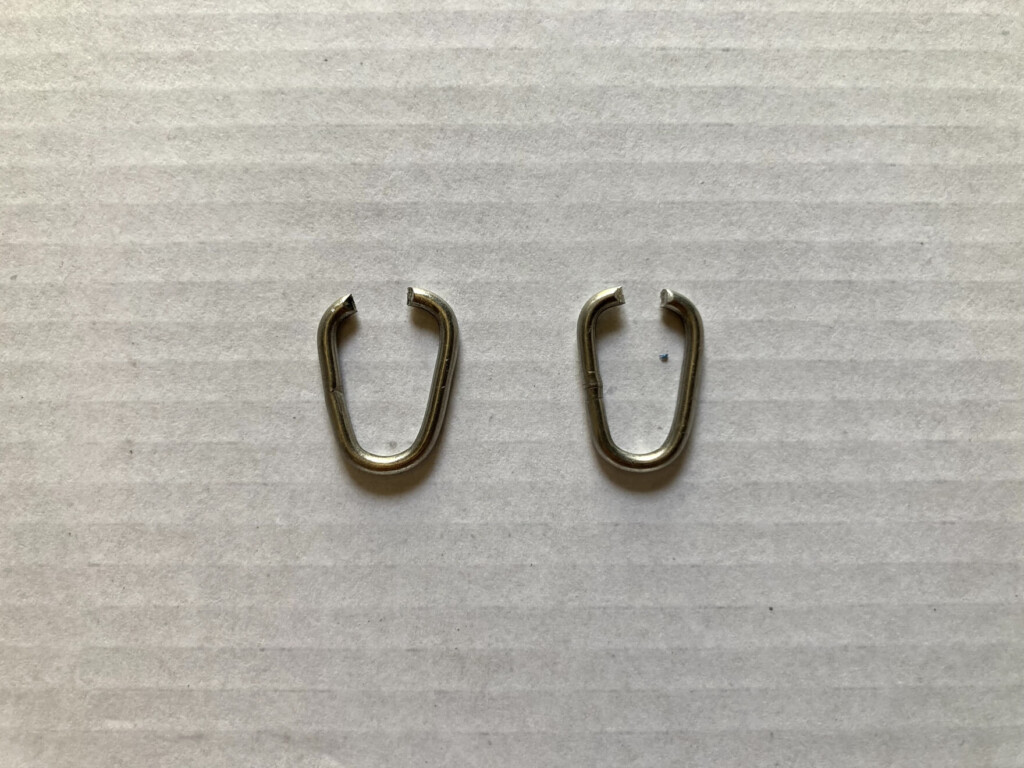
Removed link (one leg). Each link is 15mm long
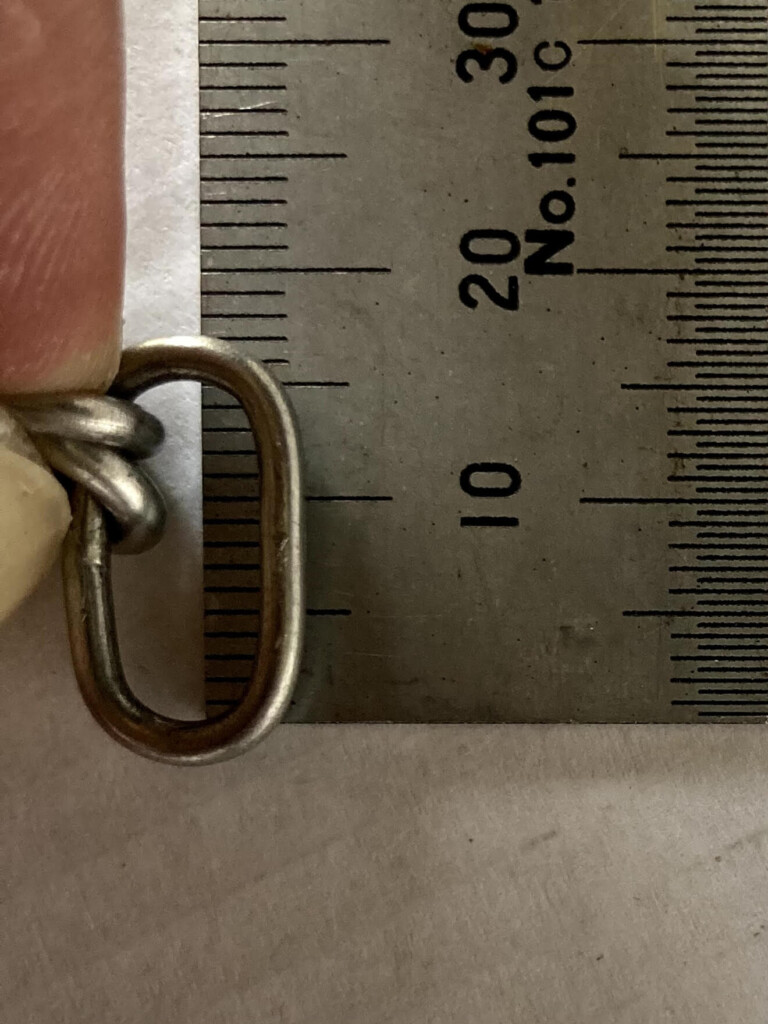

Finally, bend the connection back to its original shape and you're done
3: Confirm
By removing one link under the heel, the chain became shorter as shown below
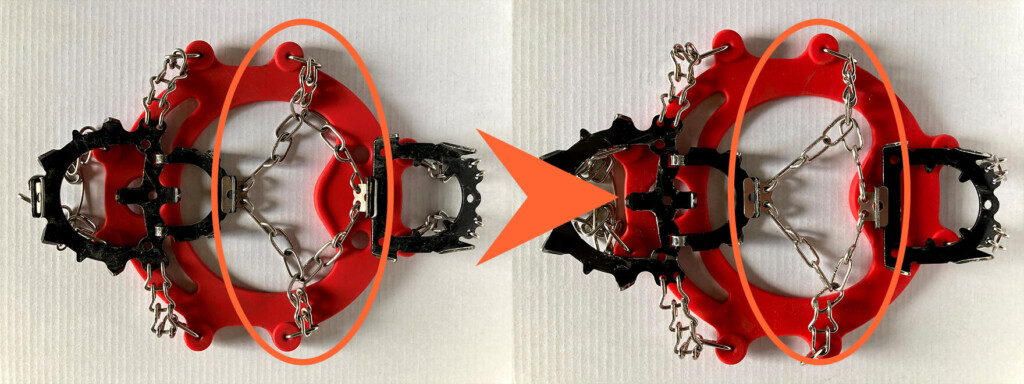

Try putting the chain spikes back on your shoes. If there is no slack in the soles, you're done. If there is still slack, adjust it again
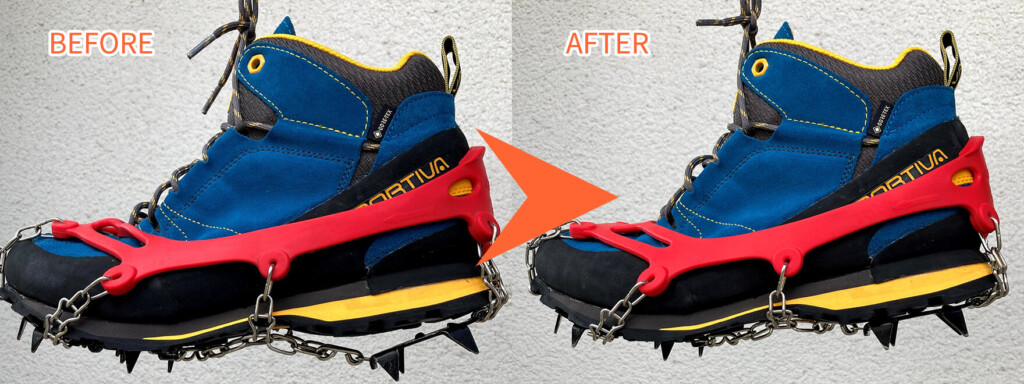
summary
This time, we introduced Cinderella Fit Tuning for chain spikes. By removing the chain links on the sole of commercially available chain spikes, we were able to achieve a "Cinderella Fit" that perfectly fits our shoes. If you're interested or have trouble fitting, please give it a try
Again, DIY is done at your own risk. Always make sure to thoroughly check that there are no safety or functionality issues before using it in the field
We will continue to introduce know-how and methods for DIY improvements to commercially available outdoor equipment and items you already own to make them more comfortable and safer, so please look forward to it
Koichiro Awano
Freelance engineer and consultant. Born March 4, 1978 (age 43). 18 years of experience as a development engineer for automotive parts (suspension, steering, electrical components, etc.). Also active as a mountaineering guide and journal writer. Having started mountaineering in college, he has over 25 years of experience. In recent years, he has been immersed in backcountry skiing, snowboarding, and rock climbing, and is familiar with a variety of outdoor sports. He often goes camping with family and friends. He also has extensive experience in motocross and mountain biking, and in 2016 won the Downhill Masters Class (30 and over) of the All Japan Mountain Bike Championships