table of contents
I want to sleep soundly and warmly even in the freezing cold!
When camping in a tent in the winter mountains, where luggage tends to be extremely heavy and bulky, one piece of gear you don't want to compromise on is your sleeping bag. It goes without saying that restoring your energy through sleep is important in the winter mountains, where physical exhaustion is intense, but it's also a season where the cold can make it difficult to sleep comfortably. However, if you choose a high-quality sleeping bag, you'll be amazed at how light and comfortable it feels, like you're floating, even in a tent at sub-zero temperatures. It could even be far better than the environment you usually sleep in
Choosing the right winter sleeping bag is not only expensive, but it also requires knowledge of two things: knowledge about good materials, which is necessary when choosing a duvet, and knowledge about good tools, which is necessary when choosing excellent outdoor gear, making it a fairly difficult task
So, in this article, we will introduce winter sleeping bags, which are such high-end mountain gear, in the first half we will introduce some points to consider in winter, and in the second half we will introduce 8 gems recommended by our editorial team
We also recommend this article about sleeping bags
- Stay warm from the inside out with the perfect sleeping bag: How to choose and our top 8 recommendations
- Seven reasons why I decided to switch to a quilted sleeping bag for spring, summer, and fall, and two recommended models
table of contents
Things to consider when choosing a winter sleeping bag
8 Recommended Sleeping Bags from Our Editors
Things to consider when choosing a winter sleeping bag
Point 1: What shape should it be?
When it comes to choosing a sleeping bag in general, many beginners' books and guidebooks explain the differences between different styles such as "mummy style" and "envelope style," but when it comes to choosing a winter sleeping bag, there's no need to worry. In winter, the mummy style is the obvious choice . The reason is simple: the mummy style is the best in terms of warmth and weight, which are the most important points no matter how you look at it. In fact, it's rare to find a model labeled as a winter sleeping bag (for camping in a tent or other mountain climbing) that comes in any other shape, so let's just go with the mummy style without thinking too much about it.
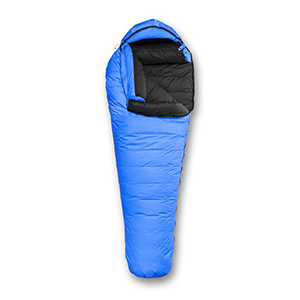
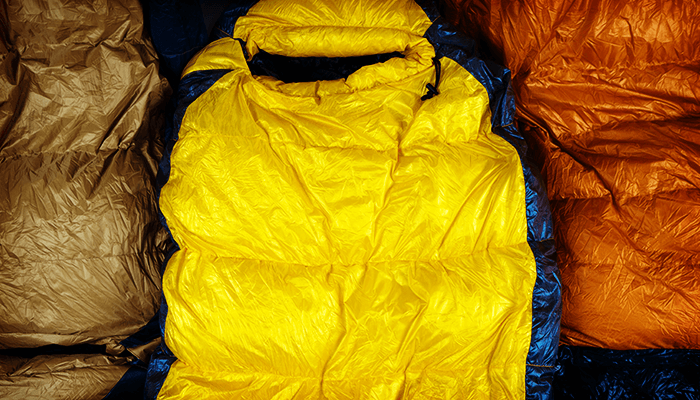
Mummy style blankets are perfect for winter as they are light and compact and don't take up too much space, following the lines of your body
Point 2: What kind of padding material should you use?
There are two main options for insulating materials used as padding in sleeping bags. One is natural down, and the other is synthetic insulation that replicates the characteristics of down. Again, down is by far the best choice for winter. Of course, from spring to autumn, there are plenty of cases where synthetic fibers are better to choose, due to their strength against getting wet, quick-drying properties, and ease of care (I'll explain this in a separate article on how to choose a sleeping bag later). However, when it comes to winter, unless you plan to use it for long periods in a particularly wet and humid environment, or have a very specific preference, it's safe to say that down is the best choice for warmth, comfort, and compactness . Of course, when you do, be sure to take careful precautions to prevent it from getting wet.
If you decide to choose down, you'll want to be particular about the quality of the down if possible. European goose down, which has large down balls and is very bulky, is . It has a high heat retention per weight, so it's surprisingly warmer than regular down, yet lighter and fluffier. Of course, you'll need to be prepared to pay more for it.
Tip 3: How warm should it be?
Many people who grew up in the city, including myself, cannot imagine how bitterly cold it may or may not be during the night in a tent in the mountains in winter. In order to choose the right sleeping bag for such a situation, the first thing you can do is to understand as much as possible the minimum temperature of the place and time of year you will be staying . Incidentally, the temperature drops by about 0.6°C for every 100m increase in altitude, so if the minimum temperature on the plains is 6°C, then at the same time of year, it should be 0°C at an altitude of 1,000m.
the recommended temperature label , which is displayed on most sleeping bags . There are two types of based on the manufacturer's own experience and standards , and labeling on sleeping bags in the EU
While both are certainly useful, it's important to remember that standard values and indications are merely guidelines and are for reference only . Someone who is sensitive to the cold may not be able to tolerate the standard, while someone who is sensitive to heat or who is fully decked out in all sorts of cold weather gear may be able to sleep comfortably in a place colder than the standard. Naturally, other factors that affect the temperature include the performance of the sleeping pad (mat), the size and fit of the sleeping bag, and environmental factors such as the outside temperature and humidity.
This is just for reference, but from my experience, I feel that the EN standard values are much more conservative than the manufacturer's own standard values. Sometimes, a model with a limit temperature of "-10" according to the EN standard may seem warmer than a model with a limit temperature of "-15" according to the manufacturer's own standard. I haven't looked at all the manufacturer's standard values, so this is just my personal opinion
What I'm trying to say here is that it's best to assume that there's a wide range of standard values. Choosing the right sleeping bag is important, but what's even more important is to have a variety of ideas at your disposal to survive the cold in the unlikely event that it gets too cold to sleep, such as wearing all the necessary cold weather gear, throwing gloves you can't wear into your sleeping bag to fill the extra space, or wearing a backpack over your sleeping bag . If you're a beginner and have no experience, it's a good idea to hedge your risks by bringing extra cold weather gear as much as possible, and by experimenting and expanding your own knowledge base through trial and error, which is the safest and most realistic way to find out what your optimal standards and limits are.
Point 4: Water-repellent or waterproof? The necessity of a sleeping bag cover
One of the troublesome things about tents in winter mountains is that they tend to get wet inside. One of the causes is condensation. The humidity inside a tent is higher than outside due to steam from cooking and moisture from people's breathing. When this is cooled by the outside air, condensation forms on the tent's inner walls, turning into droplets and frost that soak your sleeping bag. Another common problem on snowy mountains is that snow melts inside the tent to create water, or snow seeps in when you get in and out, which can lead to puddles forming on the tent floor before you know it. If your precious down jacket gets wet, you're in trouble, so make sure to take thorough measures to waterproof your sleeping bag .
The first thing that is essential for this a sleeping bag cover made of waterproof and breathable material . If you completely cover your sleeping bag with the sleeping bag cover when you go to sleep, it will almost never get wet. In this case, it is important that the sleeping bag cover is made of breathable material, otherwise, while you sleep, the moisture from the evaporation of your sweat will cause the sleeping bag to get wet, which is a ridiculous situation. Another good thing is that by putting on a sleeping bag cover, you can expect a slight increase in warmth .
That said, I'm sure I'm not the only one who thinks it would be best to avoid having to carry a sleeping bag cover, which is a burden and can be quite expensive. So, below I'll look at two other ways to protect your sleeping bag from water that have become possible thanks to recent technological innovations
First of all, you might think that a water-repellent down sleeping bag doesn't need a sleeping bag cover because the down doesn't absorb water, but unfortunately, this is only "water-repellent" and doesn't completely prevent the bag from getting wet . Therefore, a waterproof sleeping bag cover is necessary. However, since the water-repellent properties of the outer fabric will keep out a certain amount of water, you should make a comprehensive decision based on the location, weather, and dates (personally, I often skip the cover if I'm staying at a low altitude for just one night).
Another option is a sleeping bag that uses a waterproof and breathable material for the outer fabric. In this case, it can be said that a sleeping bag cover is not necessary. However, simply using a "waterproof and breathable sleeping bag" will not prevent water from seeping in through the seams and zippers. For this reason, if you need a sleeping bag that is truly waterproof, you should keep in mind that it must have full waterproof functionality, such as waterproof zippers and seam tape.


A sleeping bag cover is a basic essential piece of equipment for down sleeping bags, which must not get wet
Point 5: What other features would be nice to have?
Weight and storage
A sleeping bag for use in the harsh winter can be as large as a two- or three-person tent, so it's best to choose a model that is as light and compact as possible. However, since the weight and size are largely determined by the performance of the down, being too concerned with packability can be hard on your wallet
One thing to keep in mind is that the storage size listed in the catalog is only the size when packed in the included stuff sack. As shown in the photo below, some products may be large when purchased, but can be packed quite compactly by using a compression sack (sold separately) .
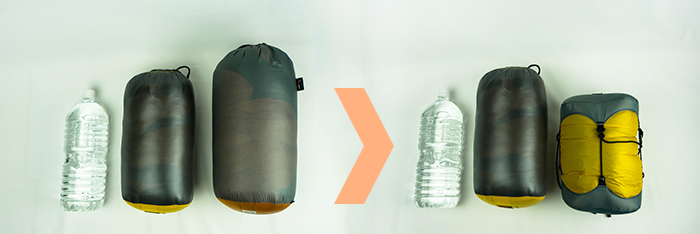
If the included bag is a little too spacious, you can make it much more compact by using the compression stuff sack (far right)
Food
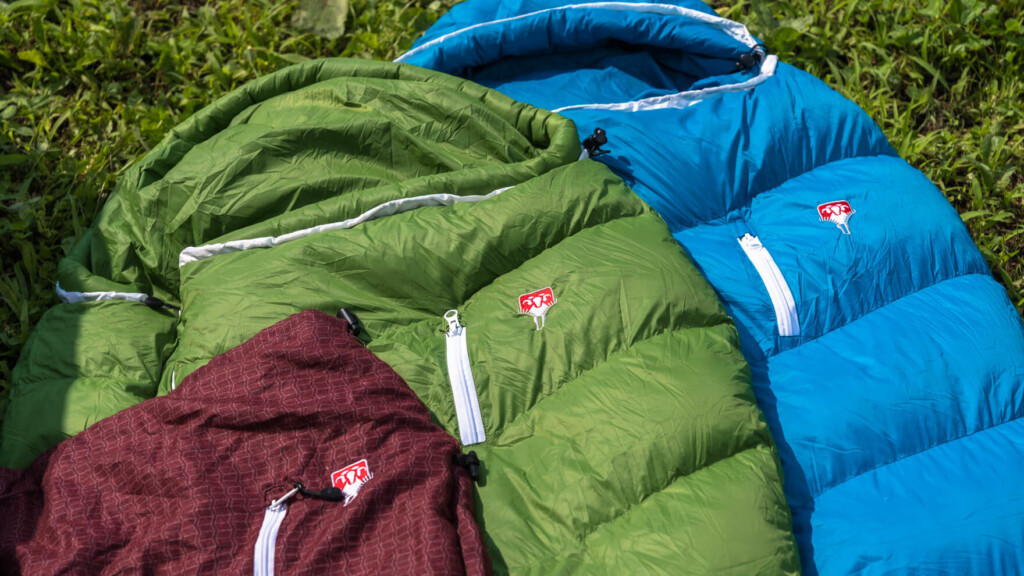
It's said that about 80% of body heat is released from the neck and head, so it's important to check how well this area is made. Whether the jacket has a three-dimensional shape that envelops the head, is filled with plenty of down, and has a sealed opening for the face that doesn't feel constricting can make a big difference in how warm you actually feel
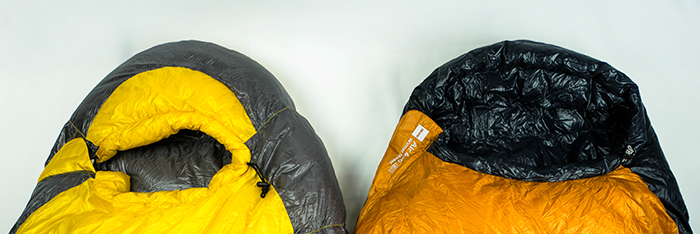
The shape and thickness of the hood vary slightly depending on the brand. They're all warm, but some people may like or dislike the way the drawcord is fastened and how much of their face they cover
shoulder
The neck and shoulders need to be kept warm just as well as the head, so a tubular or U-shaped shoulder warmer like a scarf will keep the heat inside and provide much more comfort. The shapes vary depending on the model
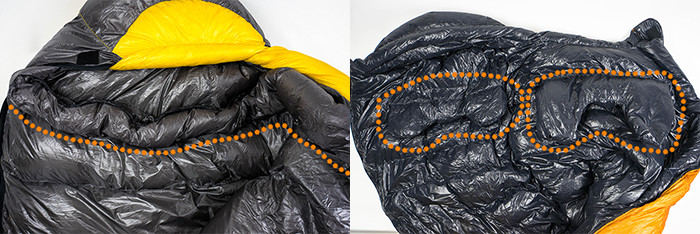
There are various types of insulation for the neck and shoulders. The type that tightens the tube with a drawcord is easy to adjust, but there are pros and cons to each type, such as the fact that it has more parts than the U-shaped type and is therefore heavier
zipper
There are two things to check for in the zipper area: First, is there a padded draft tube located along the inside of the zipper to prevent heat from escaping?
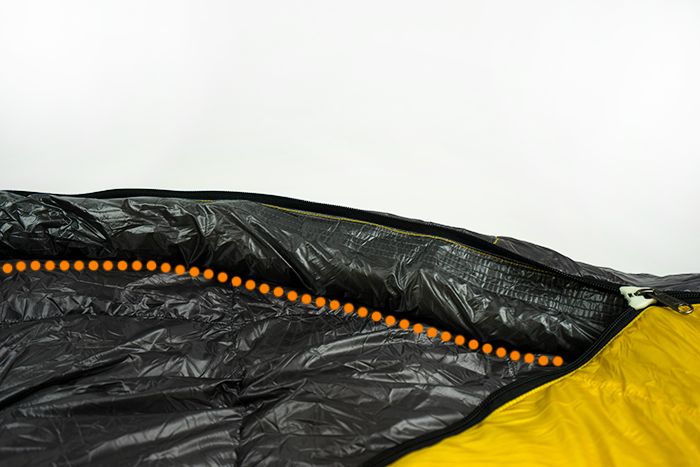
Another thing to consider is whether the zipper has an anti-snap mechanism to prevent it from catching on the extremely thin fabric when you open and close it, causing damage to the fabric
In any case, this feature will become the standard for safer and more comfortable sleeping bags
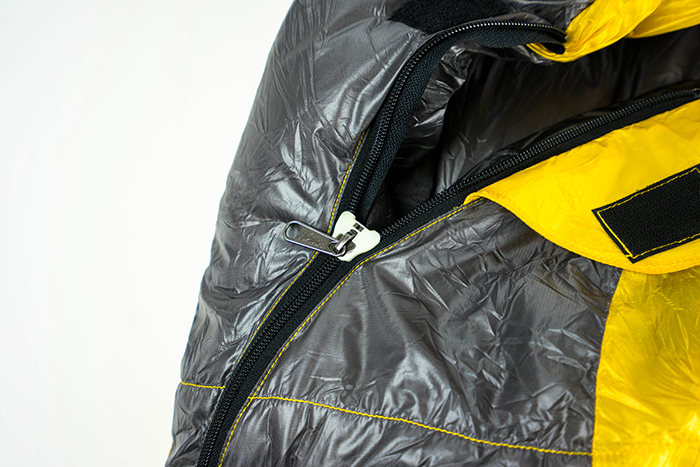
The photo shows a zipper jointly developed by NANGA and YKK that reduces snagging. It is smooth and easy to open and close, and even if it does get caught, it is less likely to damage the fabric
Silhouette and structure of the feet
Whether or not the jacket has special attention paid to keeping your feet warm is an important point, as it can be a source of great concern for some people. If you are particularly concerned about this, it is a good idea to choose one that has a 3D structure that fits your body shape well overall, as well as special features such as increased down volume in the foot area
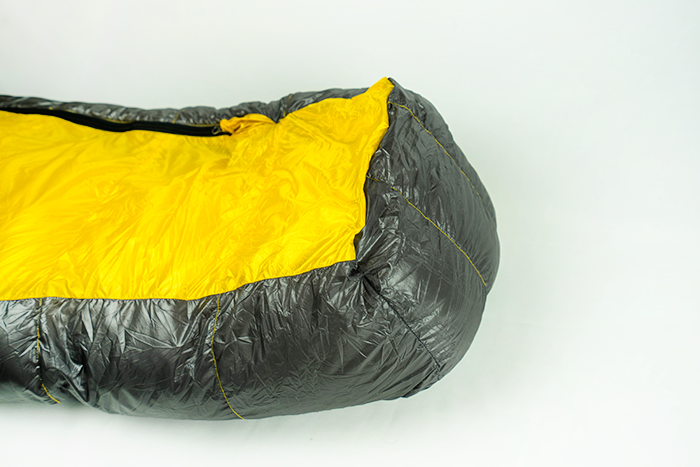
The down is generously packed into the feet, where it's most likely to feel cold, and the three-dimensional construction that conforms to the shape of your feet keeps the entire foot warm evenly and efficiently
Size variations
The key to sleeping warmly is to avoid any excess gaps (dead space) between you and the sleeping bag, so it's important to choose a sleeping bag that suits your height and body type. When purchasing, check to see if there are models available that are suitable for tall or short people, as well as variations for women
Side zipper position
Generally speaking, it's easier for right-handed people to have the side zipper on the left side, so it doesn't matter which side you choose, but it's still a good idea to check for perfect comfort
8 Recommended Winter Sleeping Bags by Our Editors
Based on the above checkpoints, we will now introduce recommended winter sleeping bags, including models that you may have already tried and models that you would like to try someday. Most models have a lineup of suitable temperatures, but as a guideline (depending on where you will be staying), the models introduced here temperature of the lowest winter temperatures in the 2,000m-class mountains of Honshu (around -10 to -15°C) . Of course, this is only a guideline, so when purchasing, please adjust the temperature to suit you.
ISUKA Air 630EX



This long-established sleeping bag brand has long been a leader in Japanese mountaineering. Since its founding, its reputation for high reliability has remained unchanged, thanks to meticulous craftsmanship and strict, proprietary standards in both the lab and the field. Made with lightweight, exceptionally warm 800FP white goose down, its three-dimensional construction for excellent insulation, and shoulder warmers that combine lightweight warmth, demonstrate the brand's commitment to lightweight, warmth, and compactness in every detail
NANGA UDD BAG 630DX

This model uses UDD ultra-water-repellent down from a sleeping bag specialist renowned for its uncompromising commitment to high-quality down. The down's unique water-repellent treatment allows moisture to pass through but prevents water absorption, eliminating the risk of accidentally getting wet in rain or condensation. Other features include incredibly high loft (bulk) thanks to the reliable quality of domestically refined down, a three-dimensional structure that combines efficient warmth with a comfortable fit, and a lifetime warranty with no repair costs, demonstrating the company's uncompromising commitment to high quality
NANGA AURORA light 600DX

This is a high-performance, compact sleeping bag that does not require a sleeping bag cover, with the waterproof, breathable Auroratex outer fabric used to encase the down. If it were bulkier than a regular sleeping bag, you might think about it, but it remains lightweight and compact without adding any volume. Because it does not require a sleeping bag cover, it is extremely lightweight and compact. If you have the budget, we also recommend the SPDX model, which uses even higher quality down
Mont-Bell Alpine Down Hugger 800 #0
![Mont-bell UL. Spiral Alpine Down Hugger 800 #0 Sleeping Bag, Sunrise Red [Minimum Use Temperature: -31°C], 1121788 SURD](https://images-fe.ssl-images-amazon.com/images/I/413KxgFQUnL._SS300_.jpg)
Montbell is already renowned for its wide range of down products, including down jackets, so you can be sure of the warmth and comfort of the 800FP high-quality goose down. And best of all, it's ultra-lightweight and compact, yet boasts a spiral stretch system that provides a great fit and comfort. This system ensures a secure fit even when you move around inside the sleeping bag, preventing air gaps and improving heat retention. It's also great that you can wear the sleeping bag while sitting cross-legged
Western Mountaineering Antelope MF




Western Mountaineering, a California-based company known as one of the world's leading down manufacturers, continues to handcraft its down products in its San Jose factory for over 45 years, and its quality continues to be recognized by outdoor enthusiasts worldwide. Using the finest quality white goose down, Western Mountaineering offers exceptional comfort while utilizing a lightweight, water-repellent outer fabric for added versatility
Valandre Bloody Mary

Valandre, a leading down manufacturer not only in France but in Europe, is known for its exceptional quality, using only the finest down from grey geese bred in the south of France, at 21 weeks old. This top-quality down is trapped in 83 anatomically shaped baffles, and innovative features such as interchangeable collars have resulted in a lightweight, warm, and highly versatile model
Feathered Friends Snowbunting EX 0

The following models are extremely difficult to obtain from Japan, but we still recommend the winter sleeping bags from down specialist manufacturer Feather Friends. Their high-quality goose down provides lightweight warmth and insulation, while the waterproof and breathable outer layer, Pertex® Shield EX, ensures excellent waterproofing. These sleeping bags are so reliable that they have even earned top rankings on trusted overseas review sites .
Rab NEUTRINO ENDURANCE 600
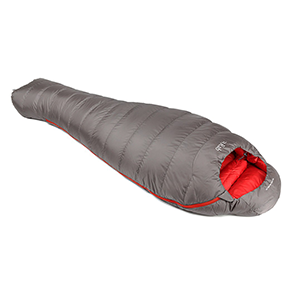
Rab is now one of the UK's leading manufacturers of comprehensive outdoor apparel, producing a wide range of products, but they are actually known for starting out by making down sleeping bags that can withstand the world's harshest environments. The company's signature sleeping bags are uncompromising in quality. The combination of ultra-water-repellent down and a waterproof, breathable outer fabric provides complete protection from getting wet. The baffle structure that allows for the effective placement of high-quality down, the close-fitting neck baffle that fits snugly around the neck, and other mechanisms that enhance comfort throughout the entire range are the result of years of experience and technology
Related reading