When you hear the phrase "a sleeping bag to take to the mountains," what do you think of?
I'm sure that most people will think of models that use feathers (down). Lightweight, compact, and warm, these jackets have become an indispensable item for modern mountaineering and hiking
On the other hand, although sleeping bags made from synthetic fibers have the advantage of being easy to maintain and inexpensive, they require a lot of mass to provide warmth, which makes them heavy and bulky, so they are often not an option for people to take to the mountains
However, Finetrack, a Japanese manufacturer that continues to develop innovative gear, has developed a new heat-retaining material called Fine Polygon, and with its Polygon Nest series of sleeping bags that use this material, it has come up with a completely new style that goes beyond the conventional wisdom of synthetic fiber sleeping bags. This time, we will take a closer look at sleeping bags that use Fine Polygon
table of contents
Detailed Review
finetrack Polygon Nest (4x3)





Main specifications and evaluation
| item | Specifications and evaluation (mainly 4x3 models) |
|---|---|
| material |
|
| color |
|
| Supported temperature |
|
| weight |
|
| size |
|
| Variations |
|
| Features |
|
| Heat retention | ★★★★☆ |
| weight | ★★★★★ |
| Comfort | ★★★☆☆ |
| Portability | ★★★★★ |
| Functionality | ★★★★★ |
| Overall score | ★★★★☆ |
*The ★ rating is an impression rating before conducting a comparison test, so please use it for reference only
What's great about this
Weight and portability
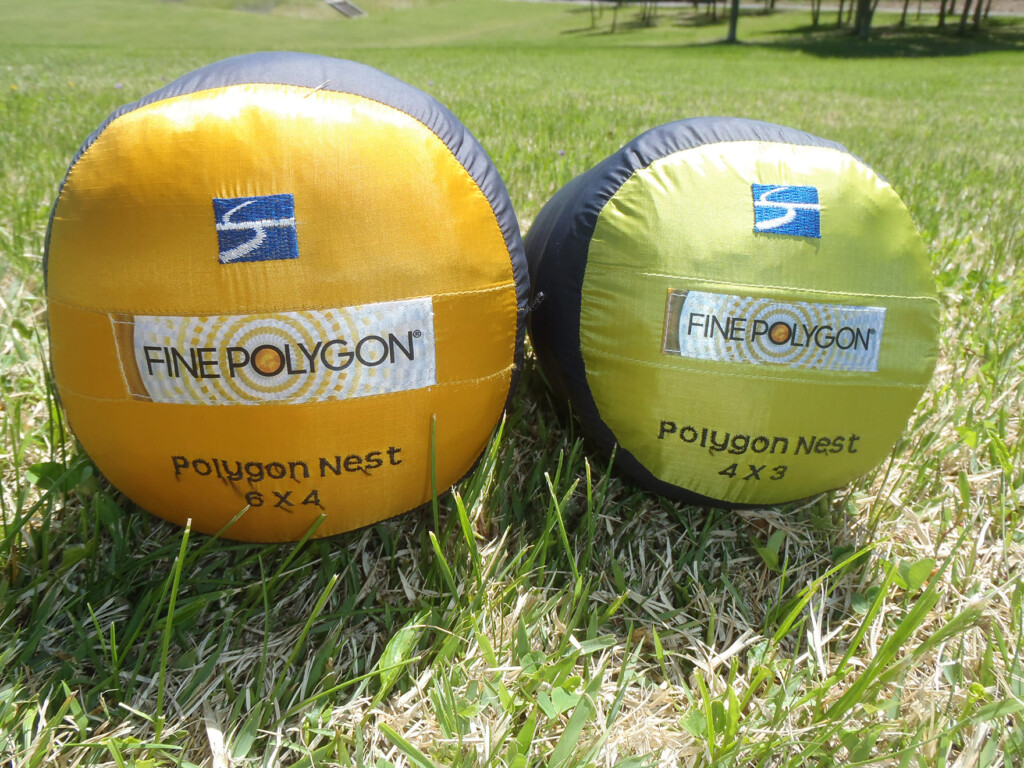
First, here is the model in the back, which is the standard size of a traditional synthetic sleeping bag
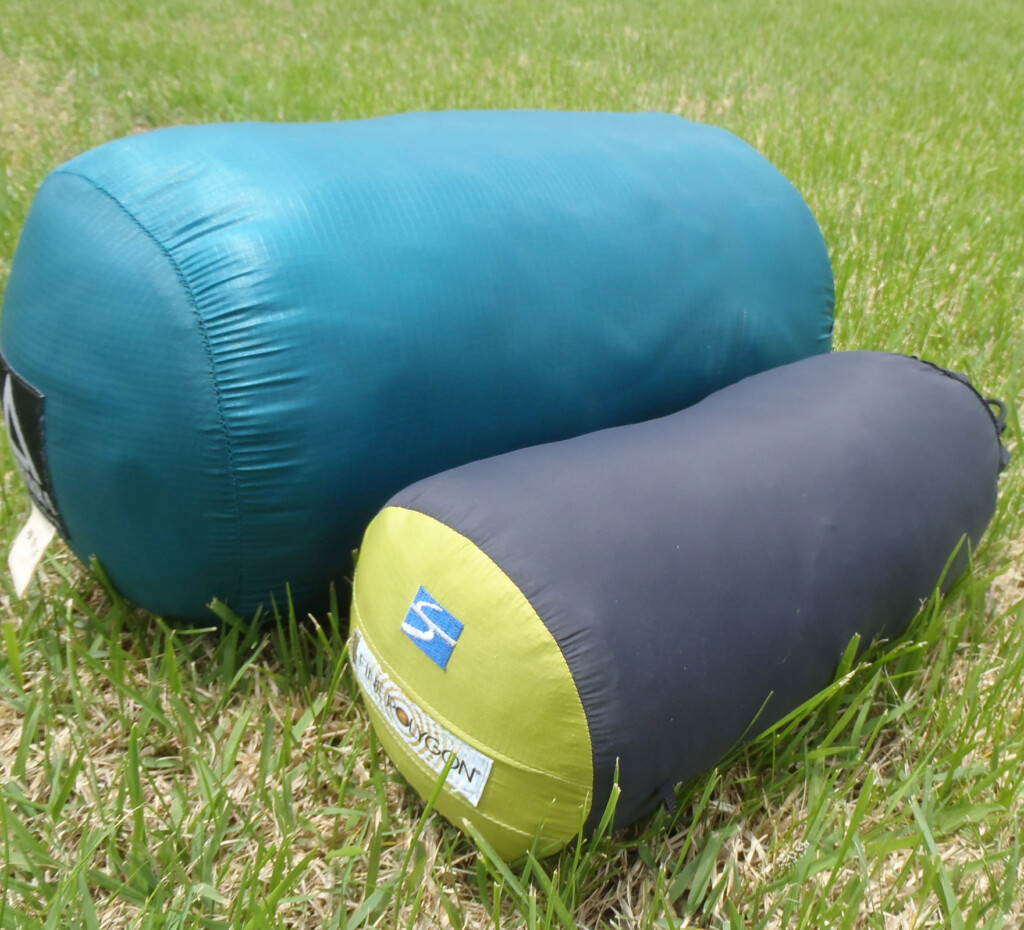
You can see the difference in size at a glance. The optimum temperature range for both is almost the same, but the size is almost twice as large
The weight and specifications are as follows, excerpted from the manufacturer's data:
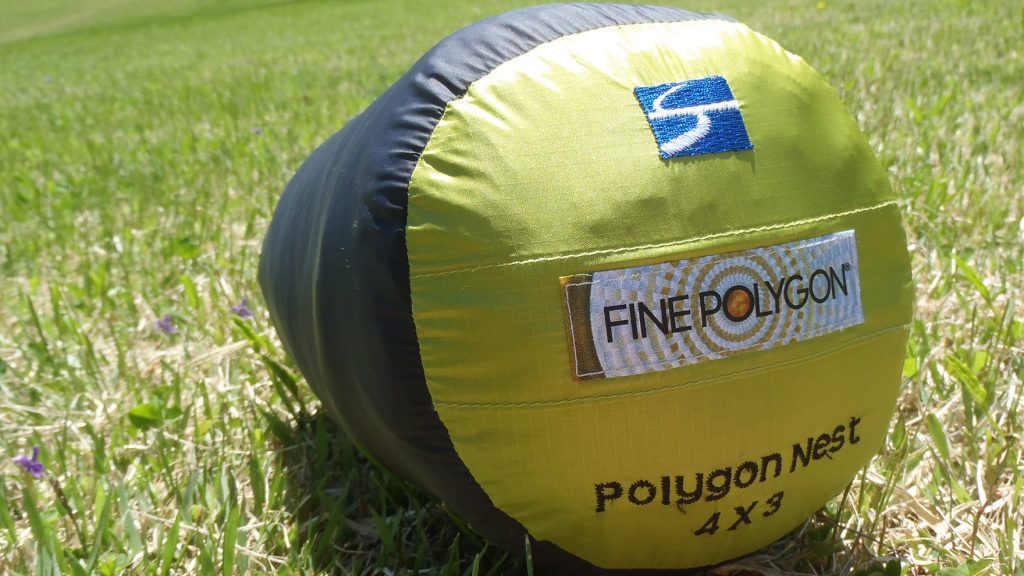
[Polygon nest 4x3]
- Weight: 450g
- Usable lower limit temperature: 7℃
- Height: up to 185cm
- Storage size: Φ13cm x 26cm
[Polygon Nest 4x3 Short]
- Weight: 410g
- Usable lower limit temperature: 7℃
- Height: Up to 165cm (for women)
- Storage size: Φ12cm x 24cm
A typical synthetic sleeping bag with a similar temperature range weighs nearly 1kg, so this is about 40% lighter than conventional sleeping bags and has a more compact storage size
The reason why such a lightweight design is possible lies in the big difference in the heat-retaining material and structure. Conventional synthetic fibers mainly use cotton-like materials stuffed like down, but Polygon Nest uses a special sheet with an uneven structure called Fine Polygon, which is layered to create a layer of air and create a heat-retaining structure, which is why it is made with the minimum necessary weight
When you understand the theory behind it, it makes sense, but when you touch it, you realize that the sheet itself is so thin that you wonder if it's even possible. That's why it's so innovative
Heat retention
So how does it actually work? I've been using the next-level model, which I've owned since it was first released, for about three years, so I have plenty of data. It looks a little big, but it's a 6x4 (lowest limit temperature 0°C). Even with this, it weighs just 600g
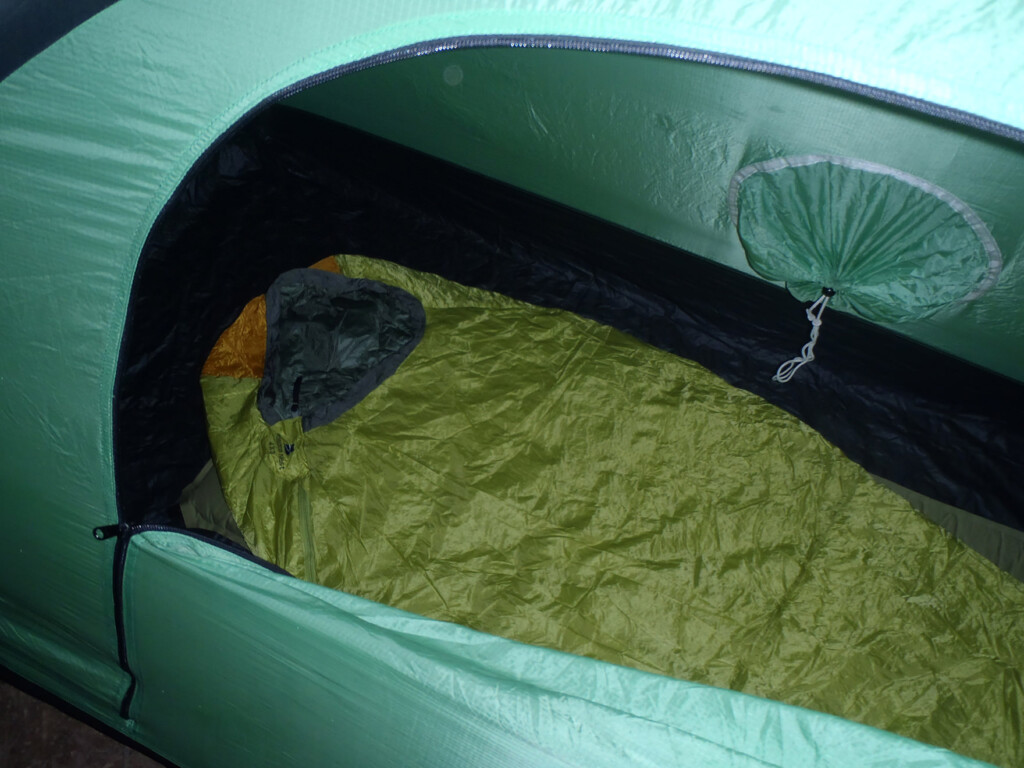
This time, I used a 4x3 in the mountains at an altitude of 1,000m in May. The morning temperature was below 10°C
In conclusion, although the insulation in dry conditions is slightly inferior to down of the same weight, I personally don't think it's that noticeable . In my previous use, I've never had an experience where I couldn't sleep because it was unexpectedly cold. The lineup is also detailed by temperature, with products for everything from low mountains to severe winters, so you can find one that suits the season and your constitution.
Functionality, comfort, and portability
Next, we will focus on three points: water resistance, comfort, and ease of storage
Water resistance
This is an important point for those who participate in water activities such as streams. Down sleeping bags, the standard for mountaineering sleeping bags, have the drawback of being weak against water; when they get wet, the loft (fluffiness) of the feathers inside is crushed, and they lose their heat-retaining properties. To compensate for this risk, it is necessary to use various methods to cover up wetness, such as treating the feathers themselves with a water-repellent coating, using fabric equivalent to that used in rainwear for the outer layer, or using a sleeping bag cover
On the other hand, traditional synthetic sleeping bags generally have the major advantage of being more water-resistant and less prone to losing heat than down. The Polygon Nest's sheet structure also makes it less likely to retain water, so it retains heat less and dries quickly, which is another feature
In fact, in the past I have used a down sleeping bag in a situation where it had gotten wet from condensation, and the surface felt cold to the touch, making it difficult to sleep. However, when I used the Polygon Nest in the same situation, although I did feel a bit cold, it wasn't to the point where it affected my sleep, and its heat retention even when wet was impressive
The manufacturer has data that shows that even if it gets wet, it will dry to a level that is safe to use in about half the time of conventional synthetic cotton.I actually did get it very wet due to condensation, and when I left it in the sun on top of a tent or hanging it on a rope to dry, I was surprised to see that it dried to a level that was safe to use in such a short time.
Also, anything gets dirty with continued use. Dirty bedding reduces its performance and prevents a good night's sleep. Washing a down sleeping bag is delicate and somewhat time-consuming, so it's not something you can wash every time. Synthetic sleeping bags, on the other hand, are made from synthetic fibers, making them easy to wash, and their water resistance is a useful feature even outside of use
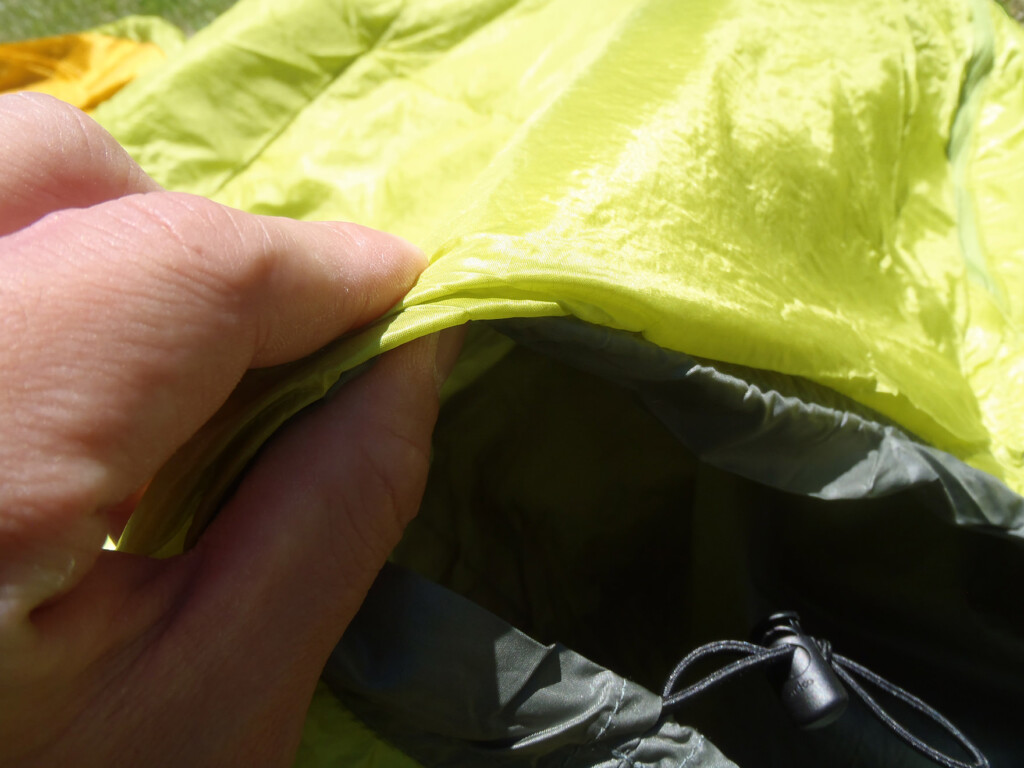
As shown in the photo below, a hanging loop has been created so that the product can be hung on site using a carabiner or similar to make it easy to dry
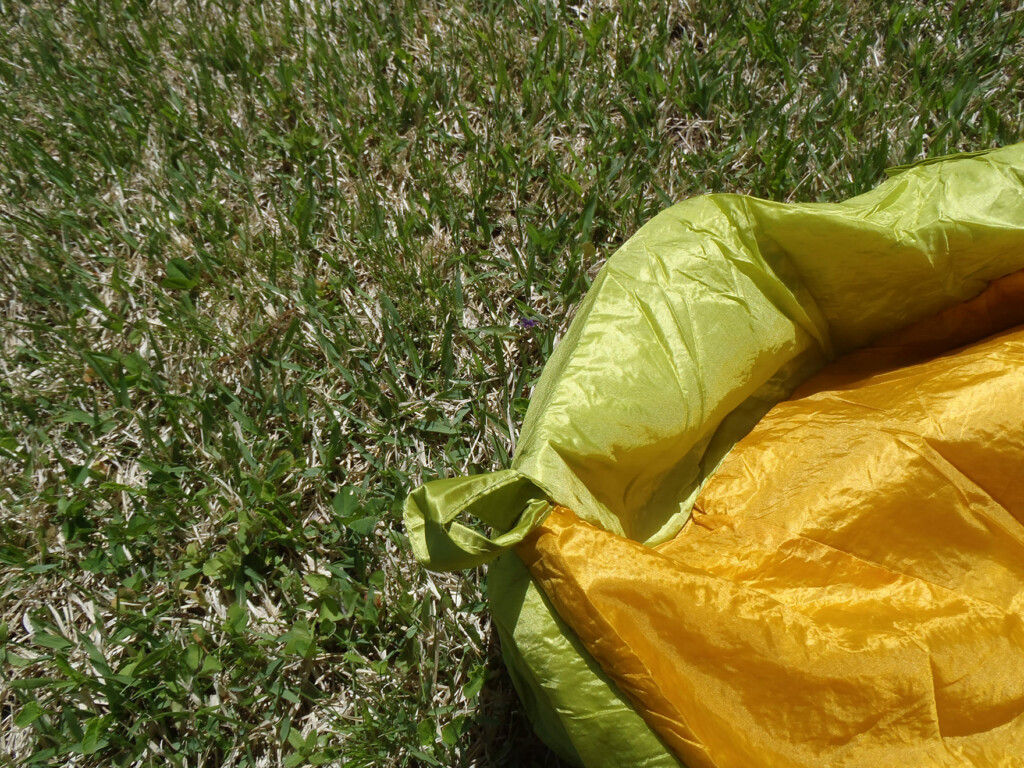
The storage bag also has detailed instructions on how to wash and handle the product. It's a nice touch to see such small details
Sleeping comfort
The next thing I'm curious about is how comfortable it is to sleep on. I understand that it keeps you warm, but what is it actually like to use it? The bottom of the mattress is wide, so it's very easy to move your arms and legs. It doesn't feel like it's too tight
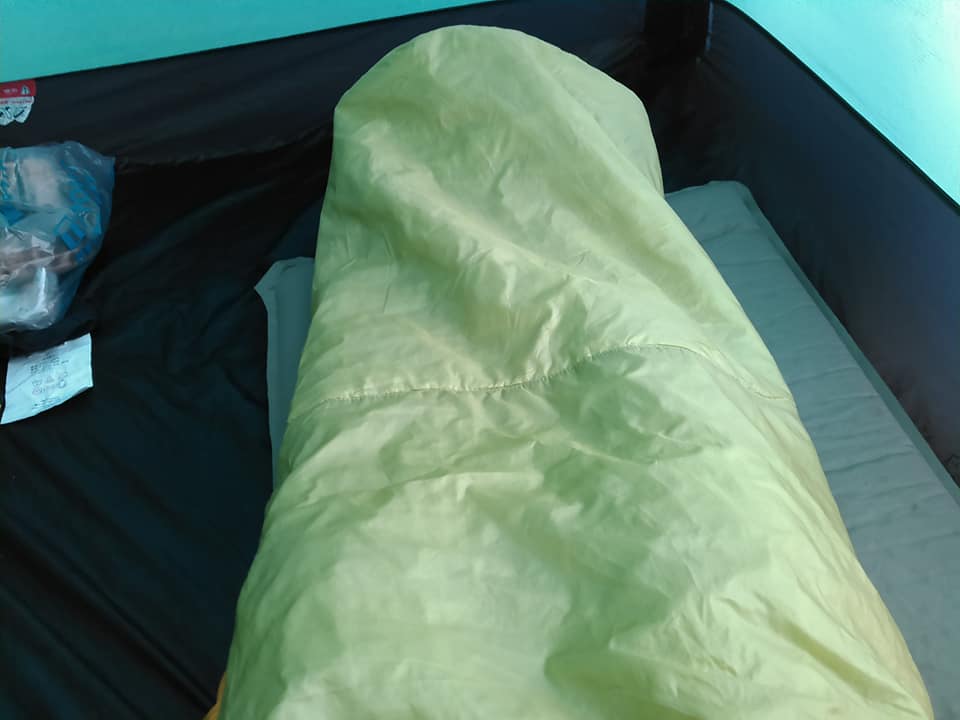
The zipper flap is also magnetic, making it extremely easy to open and close
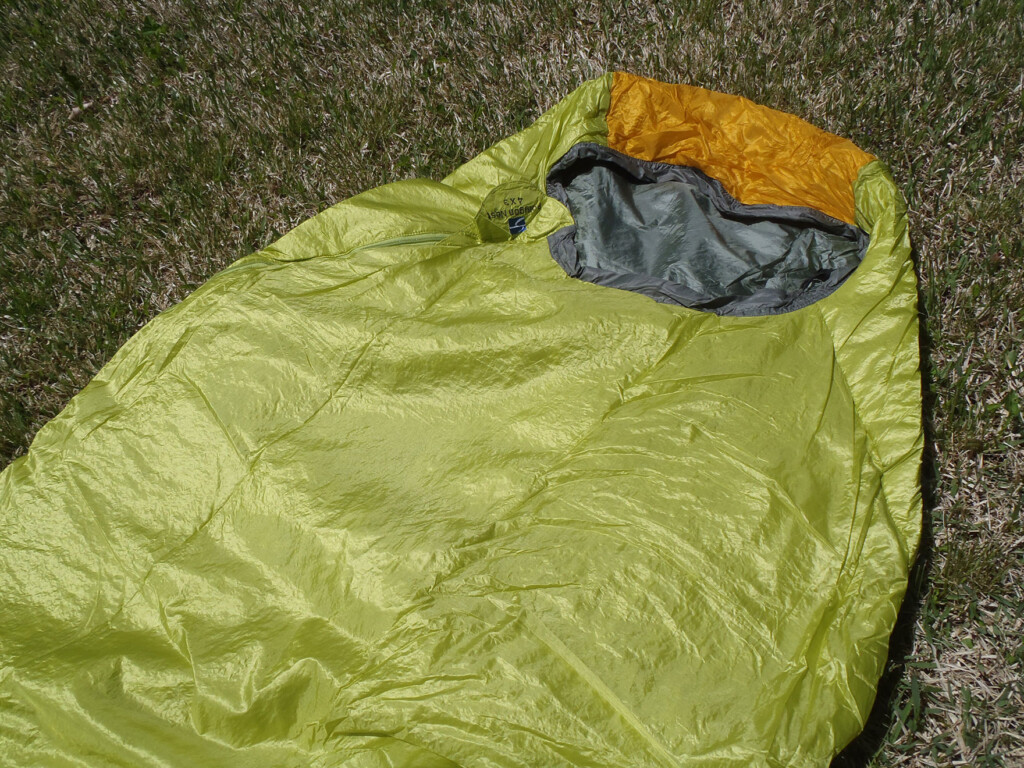
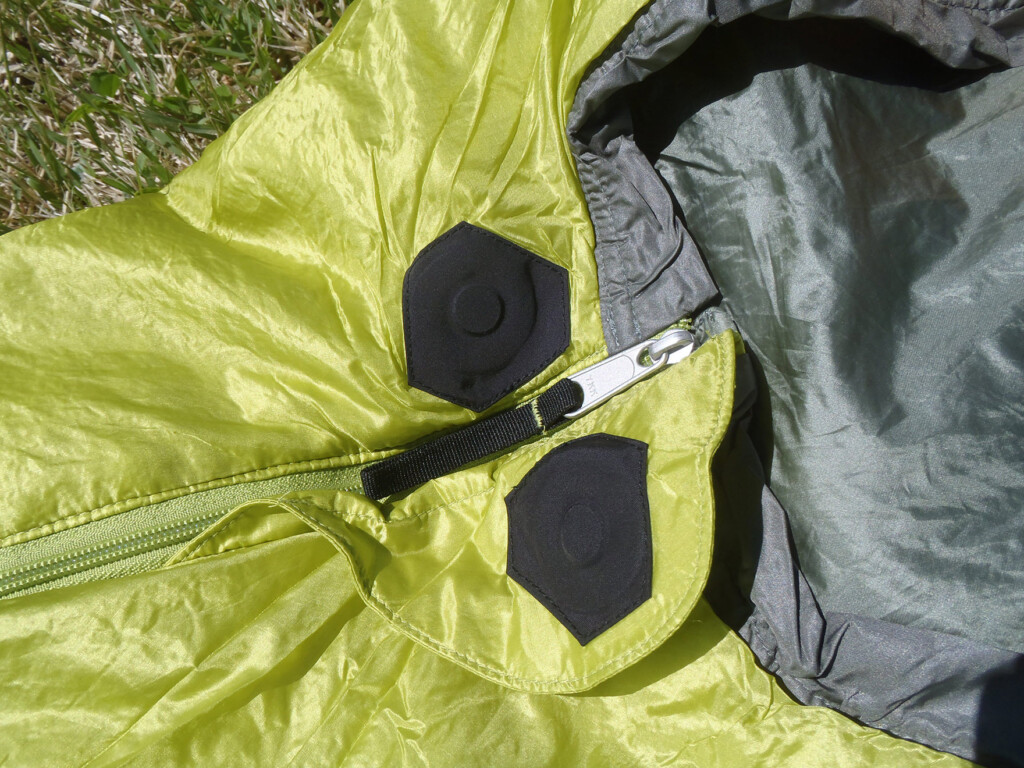
The only thing that bothered me was the unique texture of the material. It felt like it made a slight rustling noise when I moved. This was more noticeable when I turned over in bed. It didn't bother me, but I think it depends on the individual
About storage
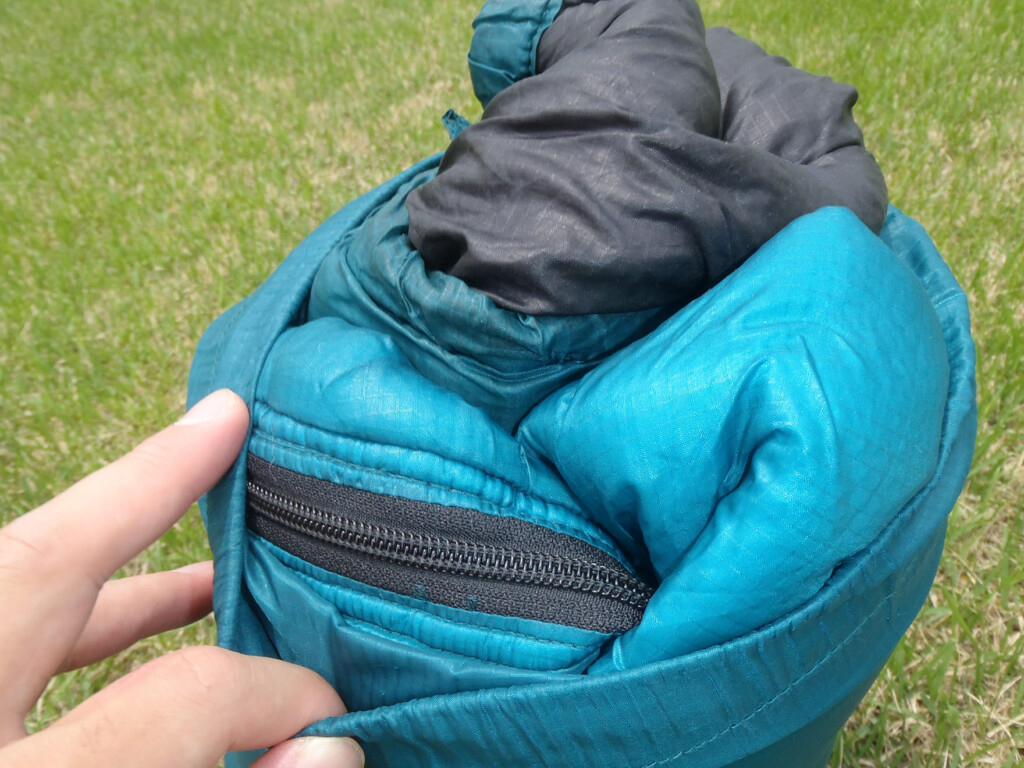
What about the Polygon Nest? There's no problem even if you push it in from the feet up. It feels the same as a down sleeping bag, and I was shocked to find that this can be done with a synthetic sleeping bag. It's a great point as it saves a lot of time and effort

Price
Many traditional synthetic sleeping bags are priced in the 10,000 yen range, so this is certainly a bit pricey for a synthetic sleeping bag, and is close to the price range of down. However, given the performance that traditional synthetic sleeping bags cannot offer, this price is not bad value for money
Summary of recommended points
- Water-resistant, lightweight, and warm, it dries quickly and is portable, making it an all-around choice for a wide range of activities, from water sports where you get wet to mountain climbing, lightweight hiking, and climbing
- Maintenance, such as washing, is easier than down
- Storage is just as easy as a down sleeping bag
This is what I'm curious about
- The unique texture and sound when you get inside may be something some people will love and some will hate. It may not be suitable for those who are particular about their sleep or who want the same feel as a down sleeping bag
- The cost (price) is a bit high for a synthetic fiber, so it may be a bit tough for those looking for something cheap. However, if you consider the overall functionality, it is good value for money. It depends on how you judge that point
Summary: What activities is it recommended for?
First of all, it will be a reliable companion for long-distance mountaineering trips and long-distance trail hikes, where functionality and durability are required. Its lightweight and compact design also makes it ideal for activities where you want to reduce the weight of your luggage, such as overnight climbing, ultra-low-temperature hiking, and bicycle trips. Its quick-drying properties and ability to retain heat even when wet make it ideal for activities involving frequent water activities, such as stream climbing. If you don't have any particular sleeping bag preferences, this bag seems like it would be a good fit for almost anything. It
also offers advantages that are different from down sleeping bags, so it would be a good choice for those who already own multiple sleeping bags to use depending on the season and activity. Furthermore, its ease of use makes it a good choice for beginners as their first choice.
This model combines the best features of down and synthetic fibers. Synthetic insulation materials, created with human ingenuity and passion, are full of potential and are a very interesting genre. And within this, the Polygon Nest is a new-generation sleeping bag with innovative performance. This is a recommended gear that is suitable for any active activity and has appeal to a wide range of people, from advanced to beginners!
Takashi Irisawa

He has experience as a mountain hut manager and shop staff member, and is also a qualified mountain guide, so he is well versed in the world of mountains. He has a track record of handling and advising on many types of gear. He is an unrivaled (especially maniacal) gear geek
We are looking for reviewers
Outdoor Gearzine is always looking for members who love the outdoors and want to write reviews about outdoor gear. For more information, please visit the REVIEWERS page here !
Related reading