Hokkaido is in the middle of the tourist season, but the weather has been unstable this year. Even the author, who lives in Hokkaido, has not been able to enjoy the clear skies he hopes for. So, in preparation for the weather not being what he had hoped for, he traveled along the "Ororo Line" with the OM SYSTEM Big Three lens, and here is his report
table of contents
- What is the "Oloron Line" driving course that is highly praised by Hokkaido residents?
- Why are the OM SYSTEM Big Three lenses recommended?
- Furano and Biei - I was planning to photograph pikas
- The Ororon Line is a beautiful place with roadside stations, hot springs, and campsites
- Must-see points on the Ororon Line
- Tomamae "Sankebetsu Brown Bear Incident Reconstruction Site" - Site of Japan's worst wild animal attack in which seven people died
- Shosanbetsu "Konpira Shrine" - Beautiful torii gates in the daytime, at sunset, and under the stars
- Wakkanai "Cape Soya" The northernmost cape on Hokkaido's main island
- The night view of Wakkanai's "North Breakwater Dome" has a fantastic atmosphere that I love
- Enjoy both the sunset and sunrise at Cape Soya in Wakkanai
- We also visited Teuri Island, a remote island in Hokkaido known as a paradise for wild birds
- A visit to Teuri Island, a remote island in Hokkaido, a paradise for wild birds
- A second-class ferry will take you to the outlying islands from Haboro for about 2,500 yen one way
- Walking around Teuri Island, which is about 12km in circumference, with the OM SYSTEM "OM-1 Mark II" and the Big Three lenses
- I also managed to photograph the Ororon bird (a common murre), which is apparently on the verge of extinction
- It was so much fun that I want to come back next season around June and stay overnight
- Summary: The OM SYSTEM "OM-1 Mark II" + Big Three lenses are perfect for adult adventures
- For details and purchasing information on OM SYSTEM cameras and lenses, please see here
What is the "Oloron Line" driving course that is highly praised by Hokkaido residents?
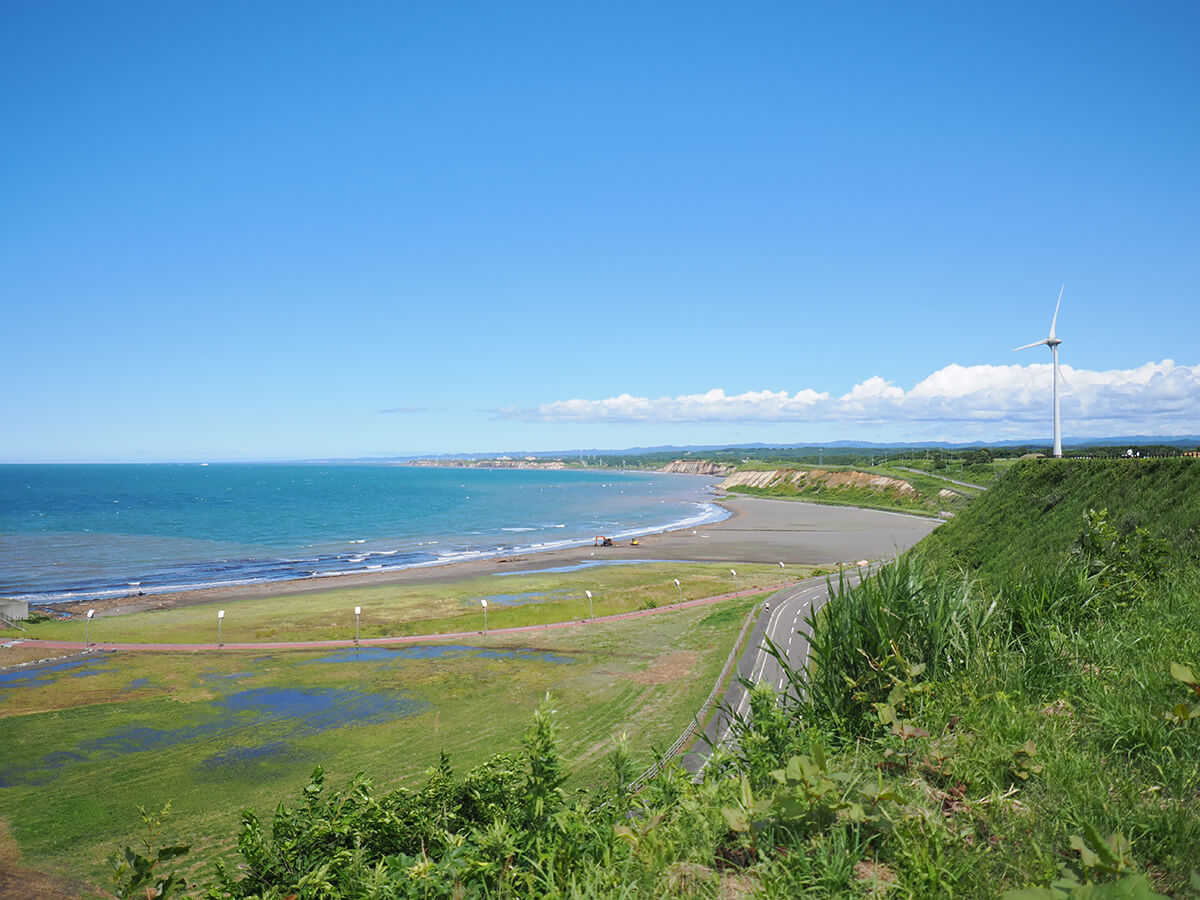
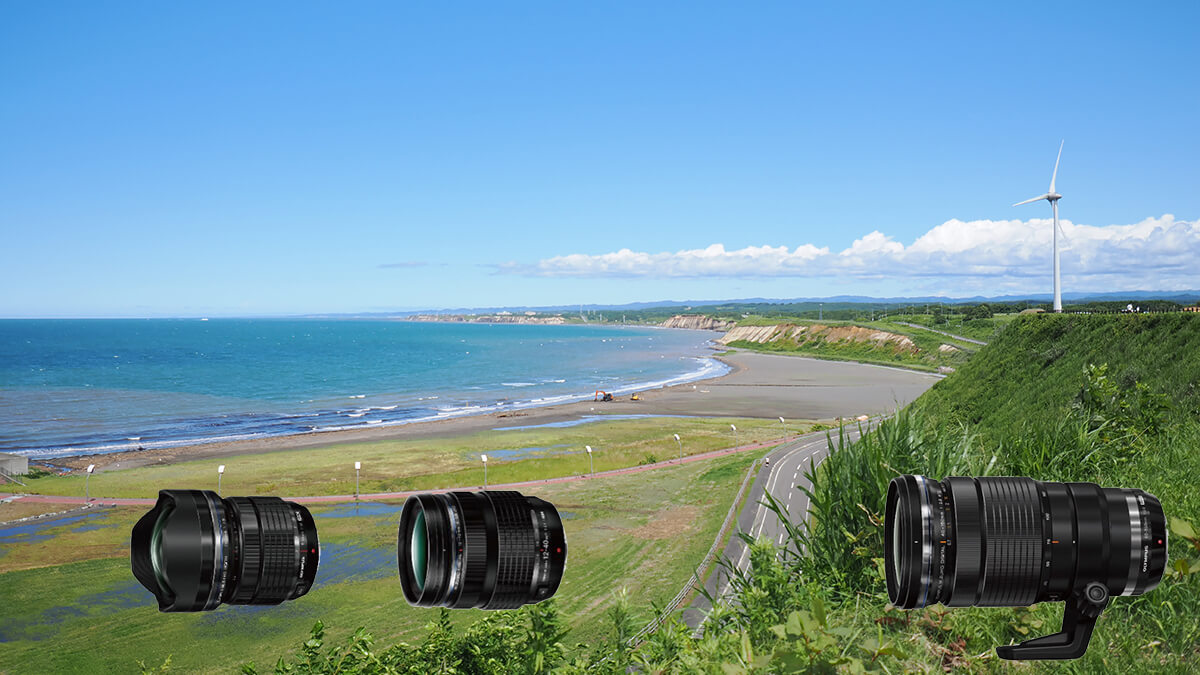
M.ZUIKO DIGITAL ED 7-14mm F2.8 PRO / OM SYSTEM OM-1 Mark II / 28mm equivalent (35mm equivalent) / Aperture-priority AE (F2.8, 1/3,200 sec) / ISO 200 / Exposure compensation: +0.7EV / WB: Clear sky / Picture mode: Vivid
The Ororon Line, which runs along the beautiful Japan Sea coast, is truly refreshing in the summer.
A route that runs along the Sea of Japan from Otaru and Ishikari to Cape Soya
Most people probably haven't heard of the "Ororo Line." However, many Hokkaido residents say, "Driving the Ororon Line in the summer is the best!" It is one of Hokkaido's most popular driving courses
If you think of Hokkaido (excluding the southern part) as roughly diamond-shaped, the Ororon Line runs along the top left edge. It runs along the Sea of Japan from Otaru or Ishikari, just north of Sapporo, to Cape Soya in Wakkanai, the northernmost point of Hokkaido's main island
The Ororon Line is a beautiful coastal route that runs for approximately 350 km along the Sea of Japan, and even Hokkaido residents who are used to driving in Hokkaido say that "driving the Ororon Line on a clear summer day makes you keenly aware of the richness and vastness of Hokkaido's nature." It is a majestic driving route
The reason why I want you to remember the Ororon Line is that the weather has been unstable recently, whether nationwide or globally, and the weather in Hokkaido in 2024 will also be unstable. However, Hokkaido is said to be larger than a small European country, so if you change your destination within the prefecture, you can move to a place with good weather. In such cases, I recommend remembering the Ororon Line as an option for a driving route in northern Hokkaido on the Sea of Japan side
Why are the OM SYSTEM Big Three lenses recommended?
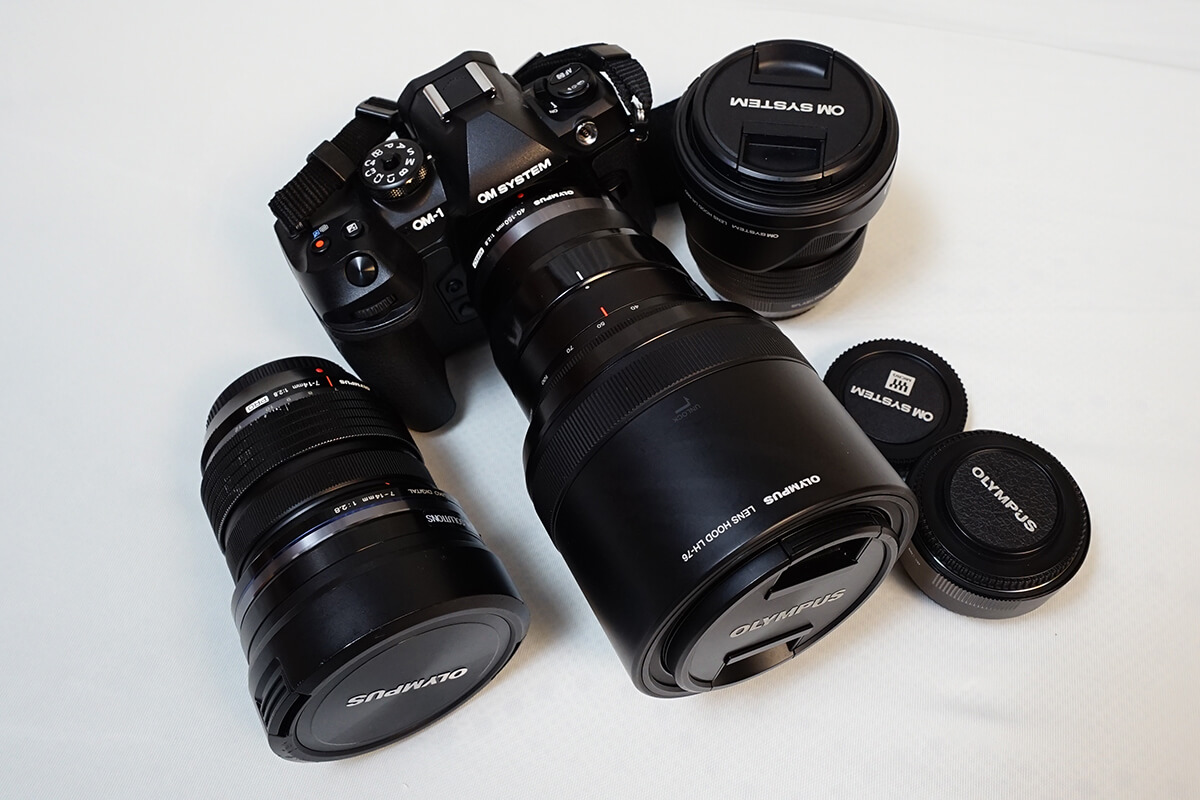
Even with the OM-1 Mark II, the three big three lenses, and a 2x teleconverter, the camera and lenses weigh in at around 2kg. Its incredible lightness is an appealing feature
Fully equipped to cover 14mm to 600mm equivalents, it's ultra-lightweight and compact, weighing less than 3kg
As a photographer and writer, I overwhelmingly trust the OM SYSTEM camera and lens system when it comes to mobility. Incidentally, the OM SYSTEM is a brand that inherits the DNA of OLYMPUS, which was formed in 2021 when the imaging division was spun off from OLYMPUS. The big three lenses are generally the basis of many professional photographers' camera and lens systems. These three lenses are bright, F2.8 constant zoom lenses: a wide-angle zoom lens equivalent to around 15mm to 35mm, a standard zoom lens equivalent to around 24mm to 70mm, and a telephoto zoom lens equivalent to around 70mm to 200mm. Regardless of camera manufacturer or system, many professional photographers and advanced amateurs base their camera and lens systems on these lenses, adding a macro lens or an ultra-telephoto lens to these lenses
Naturally, when I go on photography trips or location shoots, I choose a camera system based on this professional camera body and the big three lenses. However, in reality, it is quite heavy. A high-end professional 35mm full-frame camera body typically weighs over 1kg, and each of the big three lenses weighs around 1kg, so this alone weighs about 4kg. On top of that, you also need accessories such as lens caps, lens hoods, and tripod mounts, so the weight is around 5kg
In comparison, the OM SYSTEM's high-end camera body "OM-1 Mark II" (599g), the wide-angle zoom "M.ZUIKO DIGITAL ED 7-14mm F2.8 PRO" (534g), the standard zoom "M.ZUIKO DIGITAL ED 12-40mm F2.8 PRO II" (382g), and the telephoto zoom "M.ZUIKO DIGITAL ED 40-150mm F2.8 PRO" (760g) all weigh just over 2kg and cover the wide-angle end from 14mm equivalent to 300mm equivalent at F2.8. This is extremely important when you consider carrying them around on your back
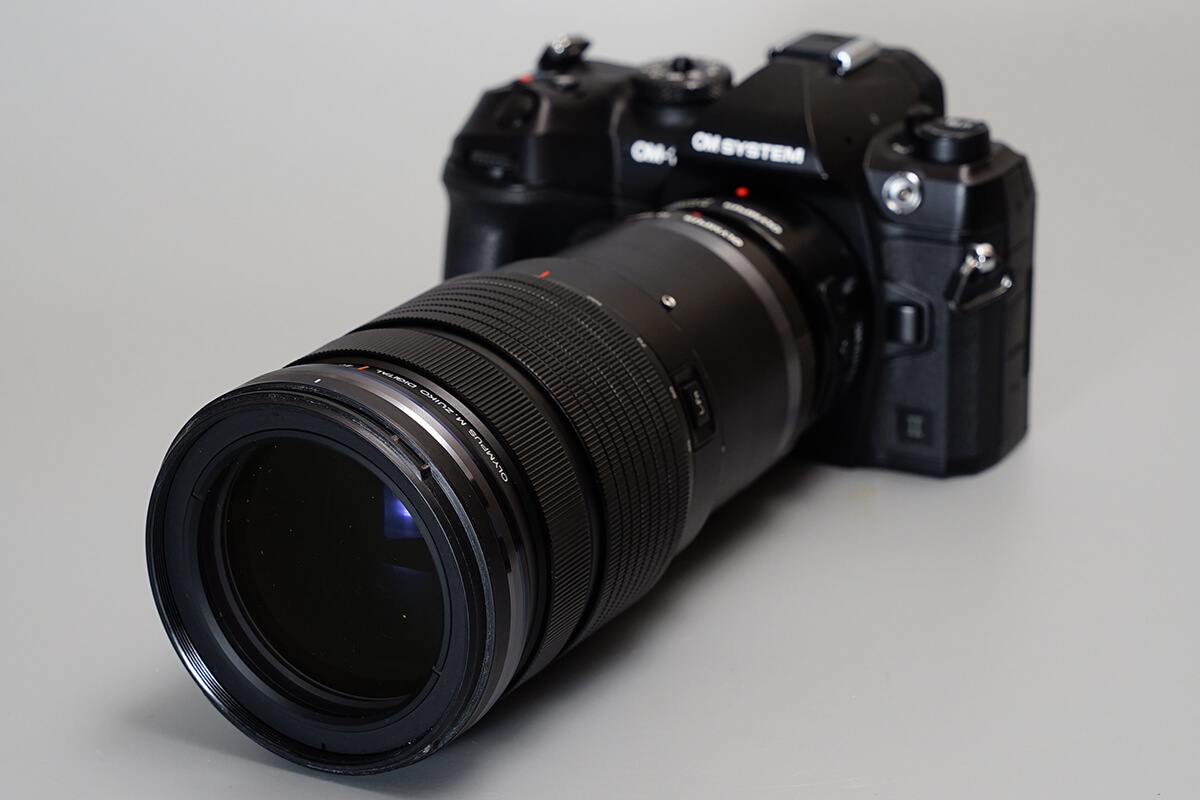
Although it's an added bonus among the OM SYSTEM's big three lens systems, my personal favorite is the M.ZUIKO DIGITAL ED 40-150mm F2.8 PRO + M.ZUIKO DIGITAL 2x Teleconverter MC-20 with the OM SYSTEM OM-1 Mark II. It's surprisingly lightweight and compact
Also, when considering photographing wild birds and animals in Hokkaido, a telephoto lens equivalent to 300mm, let alone 200mm, is not enough. However, when using the M.ZUIKO DIGITAL ED 40-150mm F2.8 PRO with the M.ZUIKO DIGITAL 2x Teleconverter MC-20 (150g), the telephoto end can be extended to 600mm equivalent, giving you a huge advantage of 600mm equivalent F5.6 even when it's two stops darker
For me, who planned to photograph the summer landscapes of Hokkaido and eventually climb the mountains of the Daisetsuzan mountain range to photograph pikas, the incredibly lightweight OM SYSTEM OM-1 Mark II and the Big Three lens, which easily enables shooting like a prime super telephoto lens at f/5.6 equivalent, were an extremely attractive camera and lens system. The camera, lens, and teleconverter are all extremely tough, with dust and water resistance equivalent to IP53, making them a highly capable partner not only for Hokkaido photography, but also for outdoor adventures and adult adventures. And in an era when high-end camera bodies alone can cost over ¥1 million, the price of the camera body, Big Three lens, and teleconverter, at around ¥700,000, is quite reasonable
By the way, OM SYSTEM is holding its 2024 "Summer Lens Fair" until August 28th, and is running a cashback campaign worth up to 40,000 yen per product when you purchase eligible products. Please check the campaign page here
Recommended points of the OM SYSTEM "OM-1 Mark II" and the big three lenses
- Lightweight and compact enough for trekking around 15km in the hot sun
- System weight is less than 3kg and covers 14mm to 600mm equivalents
- The camera, lens, and teleconverter are all dustproof and water-resistant to IP53 standards
- High image quality unique to the M.ZUIKO DIGITAL PRO series
- Reasonable price and high performance satisfaction that are within the realm of common sense
OM SYSTEM "OM-1 Mark II" and the Big Three Lenses: What I Noticed
- The MF clutch mechanism that switches between AF and MF sometimes moves on its own
Main specifications and evaluation
| item | OM-1 Mark II |
|---|---|
| Effective pixels | Approximately 20.37 million pixels |
| Silent Continuous Shooting SH1 | Approximately 120 frames per second |
| AI Subject Recognition AF | People / Cars, Motorcycles / Airplanes, Helicopters / Trains / Birds / Animals (Dogs, Cats) |
| Size and mass | Approximately 134.8mm x 91.6mm x 72.7mm, 511g (body only) |
| item | M.ZUIKO DIGITAL ED 7-14mm F2.8 PRO |
| focal length | 7-14mm (equivalent to 14-28mm in 35mm format) |
| Lens construction | 14 elements in 11 groups |
| Maximum magnification | 0.12x (equivalent to 0.24x in 35mm format) |
| Size and mass | Φ78.9×105.8mm・534g |
| item | M.ZUIKO DIGITAL ED 12-40mm F2.8 PRO II |
| focal length | 12-40mm (equivalent to 24-80mm in 35mm format) |
| Lens construction | 14 elements in 9 groups |
| Maximum magnification | 0.3x (equivalent to 0.6x in 35mm format) |
| Size and mass | Φ69.9×84mm・382g |
| item | M.ZUIKO DIGITAL ED 40-150mm F2.8 PRO |
| focal length | 40-150mm (equivalent to 80-300mm in 35mm format) |
| Lens construction | 16 elements in 10 groups |
| Maximum magnification | 0.21x (equivalent to 0.42x in 35mm format) |
| Size and mass | Φ79.4×160mm・760g (excluding tripod mount) |
| item | M.ZUIKO DIGITAL 2x Teleconverter MC-20 |
| Lens construction | 4 groups 9 elements |
| magnification | 2x |
| Size and mass | Φ59.8×25.90mm・150g (excluding tripod mount) |
| Evaluation of the OM SYSTEM "OM-1 Mark II" and the Big Three Lenses | |
| Lightweight and portable | ★★★★★ |
| Coverage focal length | ★★★★☆ |
| AF performance | ★★★★☆ |
| toughness | ★★★★★ |
| High sensitivity noise | ★★★☆☆ |
| Cost performance | ★★★★☆ |
Furano and Biei - I was planning to photograph pikas
Considering mountain hiking, the OM SYSTEM "OM-1 Mark II" and the big three lenses are the best
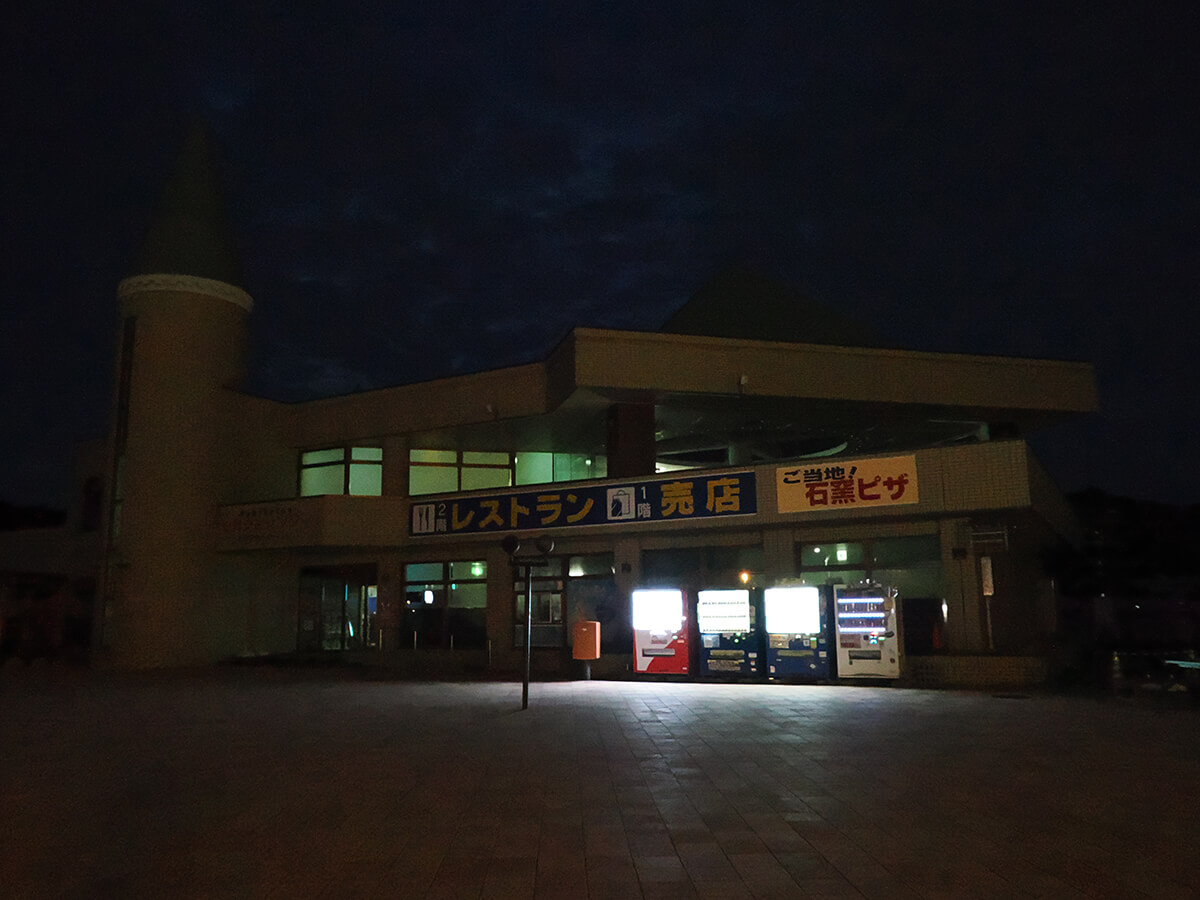
M.ZUIKO DIGITAL ED 12-40mm F2.8 PRO II / OM SYSTEM OM-1 Mark II / 24mm equivalent (35mm equivalent) / Shutter speed priority AE (F2.8, 1/50 sec) / ISO 25600 / Exposure compensation: +0.7EV / WB: Auto / Picture mode: Vivid
Roadside Station Star Plaza Ashibetsu. The roadside station is large, so there is ample parking.
I travel to various places in Hokkaido to take examples for my lens articles and to test filters and cameras, and several times a year I go on photography trips that last for several days. I spend most of my time in eastern Hokkaido in the winter, but in 2024, I was planning to photograph the scenery of Furano and Biei, and then photograph pikas in the mountains of the Daisetsuzan mountain range
However, the weather in Hokkaido has been surprisingly unstable this summer. Normally in July or August, it's not uncommon to see sunny days for three days in a row, but this year the forecast has mostly been cloudy, or cloudy with occasional rain, or sunny with occasional cloudy spells - it's been an uncertain weather pattern. Despite having to juggle my schedule with work, I headed to Furano from my hometown of Chitose City on a day when the forecast predicted a relatively high probability of sunny skies
On photography trips, I like to capture the dramatic sunrise and sunset times, so I set out the night before. I travel overnight and start photographing the dramatic sunrise scenery. This time, I set out for a three-day, two-night trip, departing from Chitose City, where the airport is located, on Friday night and returning to Chitose City on Sunday night. I think this will also be helpful for those who plan to arrive at New Chitose Airport on Friday night and travel around Hokkaido in a rental car from there
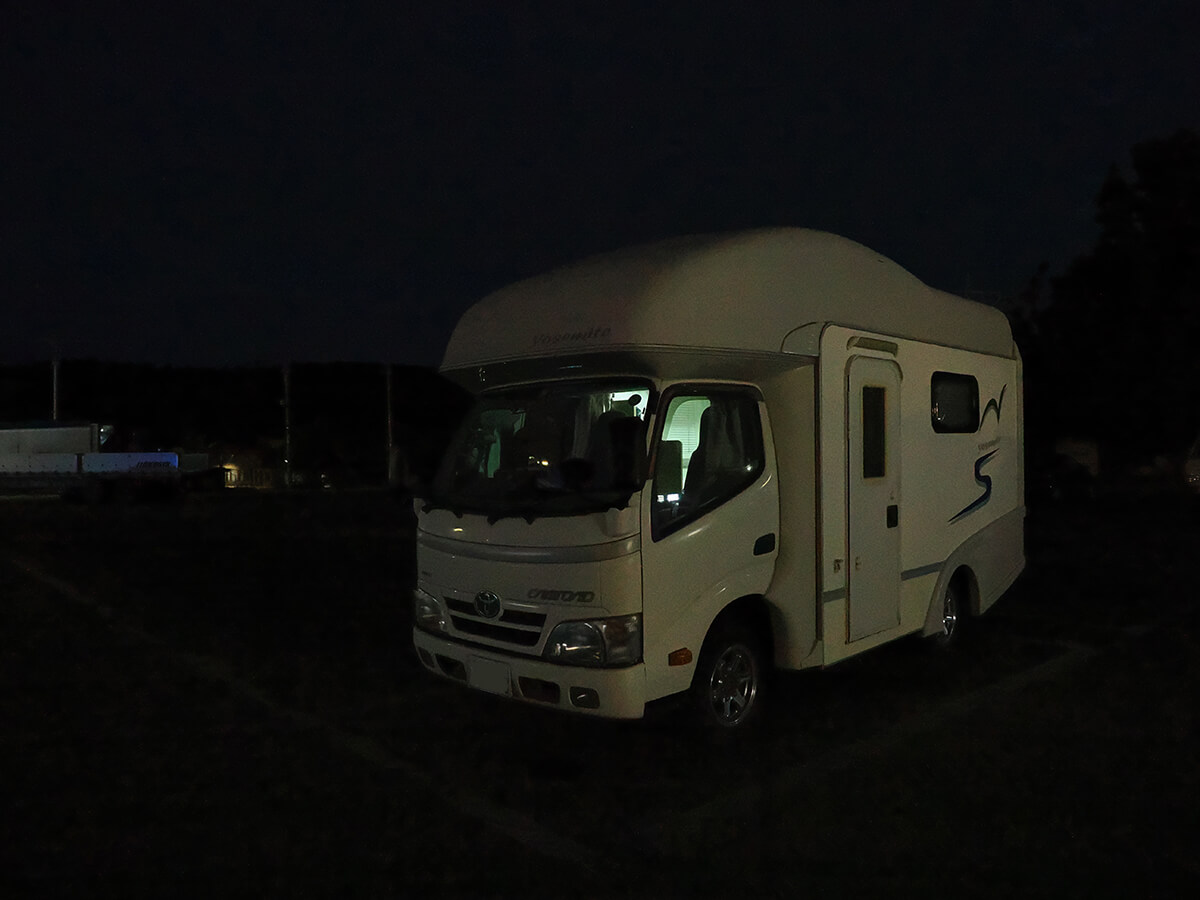
M.ZUIKO DIGITAL ED 12-40mm F2.8 PRO II / OM SYSTEM OM-1 Mark II / 24mm equivalent (35mm equivalent) / Shutter speed priority AE (F2.8, 1/50 sec) / ISO 25600 / Exposure compensation: +0.7EV / White balance: Auto / Picture mode: Vivid.
It was late July, and the summer vacation had already begun in the Tokyo metropolitan area, but there was plenty of space in the parking lot at Roadside Station Star Plaza Ashibetsu. Thanks to that, I was able to get a good night's sleep.
By the way, the plan is to travel to the Furano area the night before and photograph the sunrise and lavender fields at Hinode Park Lavender Garden in Kamifurano Town. Since I use a camper van for photography trips, I'll be traveling by car, sleeping in the car. For this reason, I select a nearby roadside station where I can take a nap until sunrise, but I personally don't recommend the Biei "Oka no Kura" roadside station during peak season. For Hokkaido roadside stations, the parking lot is relatively small, with space for 21 standard-sized cars and 2 large vehicles, so it's often full and not ideal for a nap. Therefore, I took a nap at the Star Plaza Ashibetsu roadside station in neighboring Ashibetsu City, before heading to Hinode Park Lavender Garden before sunrise
The roadside station Star Plaza Ashibetsu has a fairly large parking lot with space for 114 standard cars and 12 large cars, so I recommend it. If you don't need to enter Furano or Biei before sunrise, the roadside station Utashinai Tyrol no Yu, located just before it, also has a wide range of hot spring facilities, making it my personal favorite roadside station
The morning sun at Hinode Park Lavender Garden in Kamifurano Town is cloudy and the weather forecast is not good
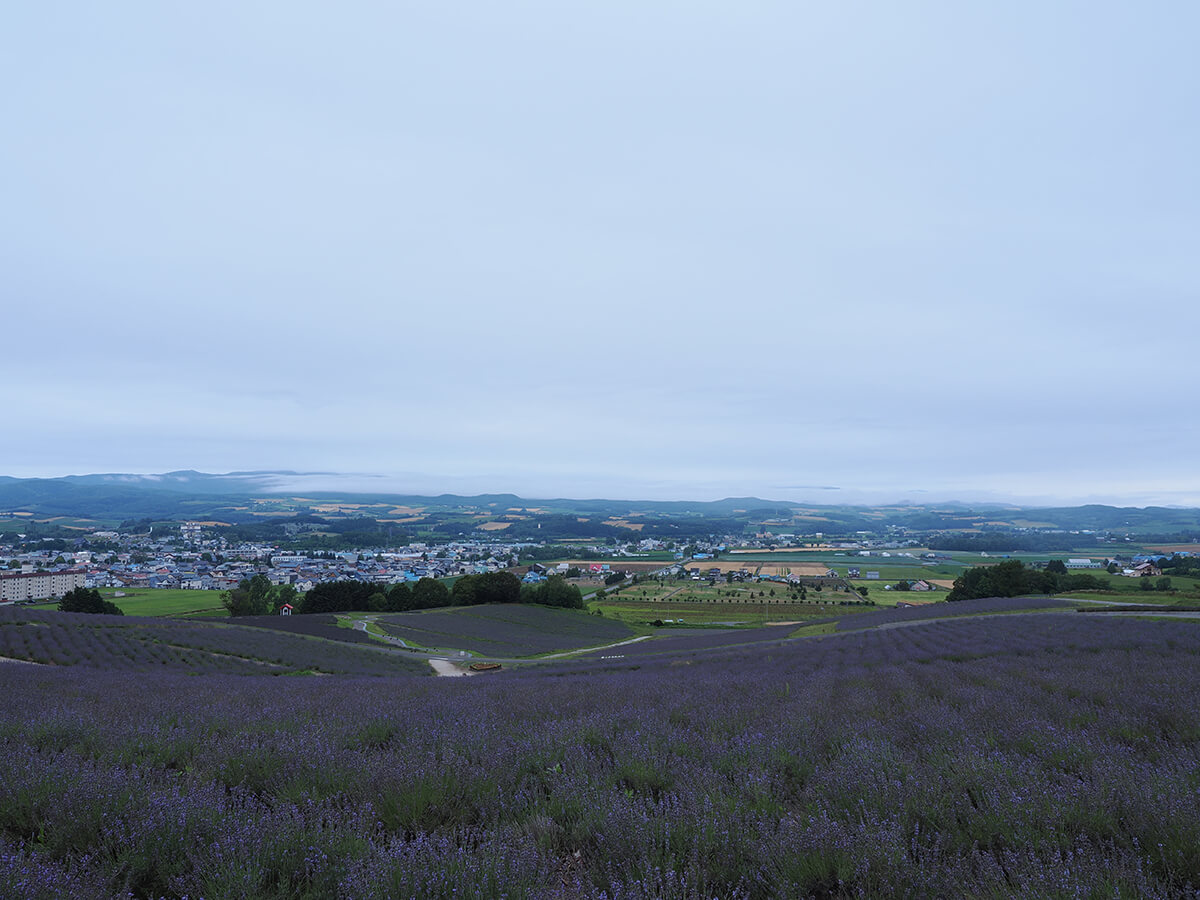
M.ZUIKO DIGITAL ED 12-40mm F2.8 PRO II / OM SYSTEM OM-1 Mark II / 24mm equivalent (35mm equivalent) / Aperture-priority AE (F8.0, 1/13 sec) / ISO 200 / Exposure compensation: +0.7EV / White Balance: Sunny / Picture mode: Vivid
It's a beautiful view of the lavender fields, but of course, if it were cloudy, it wouldn't be able to recreate the refreshing Hokkaido summer atmosphere.
I arrived at Hinode Park Lavender Garden in Kamifurano before sunrise to start shooting the view of the lavender fields illuminated by the morning sun, but there was not a single other car there, and it was cloudy, just as I had feared. In fact, no matter where I was, there was no use for photo examples of cloudy skies in Hokkaido in the summer
Feeling disheartened, I checked the weather forecast again, but it seemed there would be no sunny spells in the Furano/Biei area for the next few days. Still, I couldn't give up on the hope of clear skies, so I set off from Furano/Biei to see if there was anywhere expected to be sunny. Hokkaido, said to be larger than a small European country, often experiences weather that varies from region to region. As a result, the forecast predicted sunny skies for the Sea of Japan side of northern Hokkaido. While less well-known than Furano/Biei, the driving route that runs along the Sea of Japan in northern Hokkaido is called the Ororon Line. I've driven it many times for photography, and even Hokkaido residents rave about the Ororon Line on a clear summer day, saying, "Driving the Ororon Line is the best!"
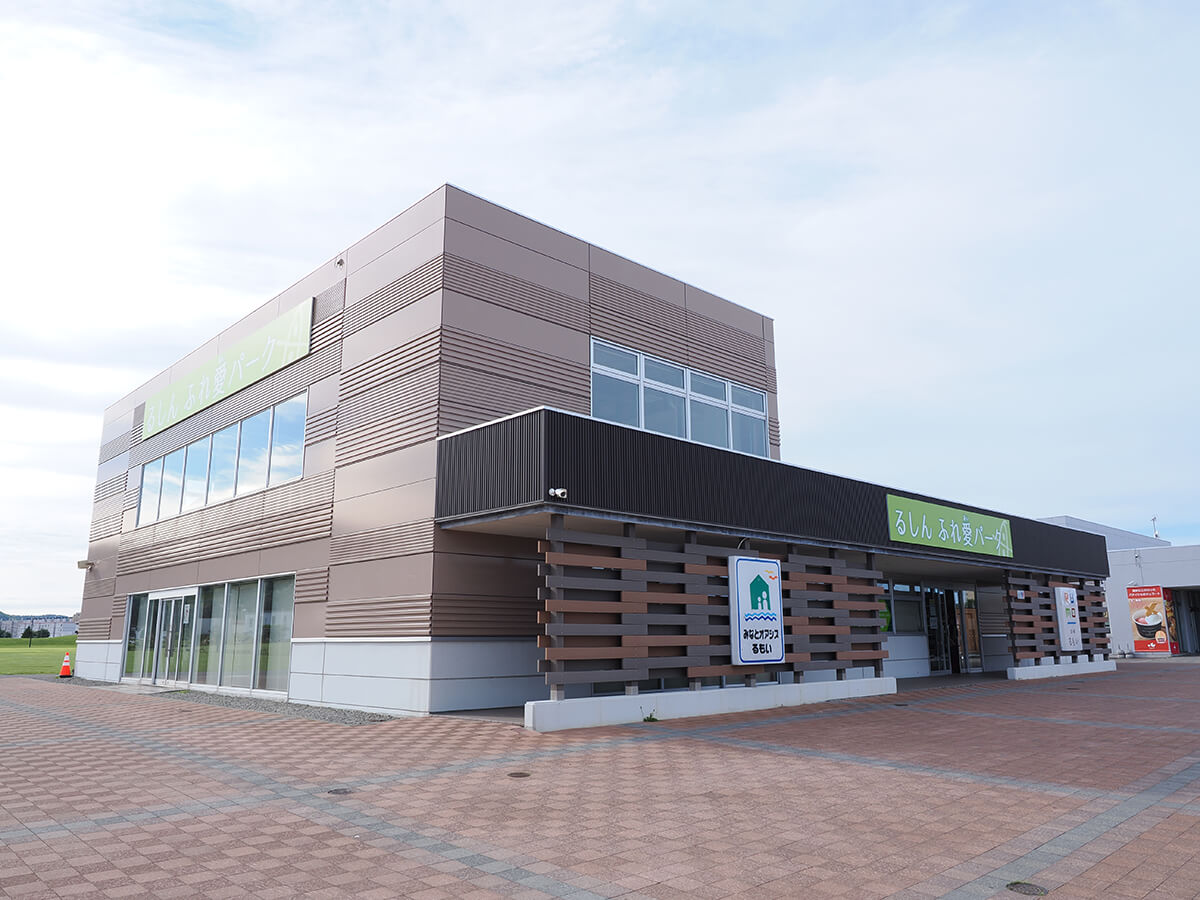
M.ZUIKO DIGITAL ED 12-40mm F2.8 PRO II / OM SYSTEM OM-1 Mark II / 24mm equivalent (35mm equivalent) / Shutter speed priority AE (F10, 1/160 sec) / ISO 200 / Exposure compensation: +0.3EV / White balance: Sunny / Picture mode: Vivid.
The first roadside station on the Ororon Line was Rumoi. I came to the Ororon Line to escape the cloudy skies, but the sky still looked cloudy.
In fact, you can enjoy the Ororon Line by heading northwest from Asahikawa, as well as from Furano and Biei, so it depends on the weather, but when the weather is unstable like it was this year, we recommend keeping the Ororon Line in mind as an option for when the weather in Furano and Biei is bad. Today, we'll be introducing our Ororon Line trip with the OM SYSTEM OM-1 Mark II and the Big Three lenses
The Ororon Line is a beautiful place with roadside stations, hot springs, and campsites
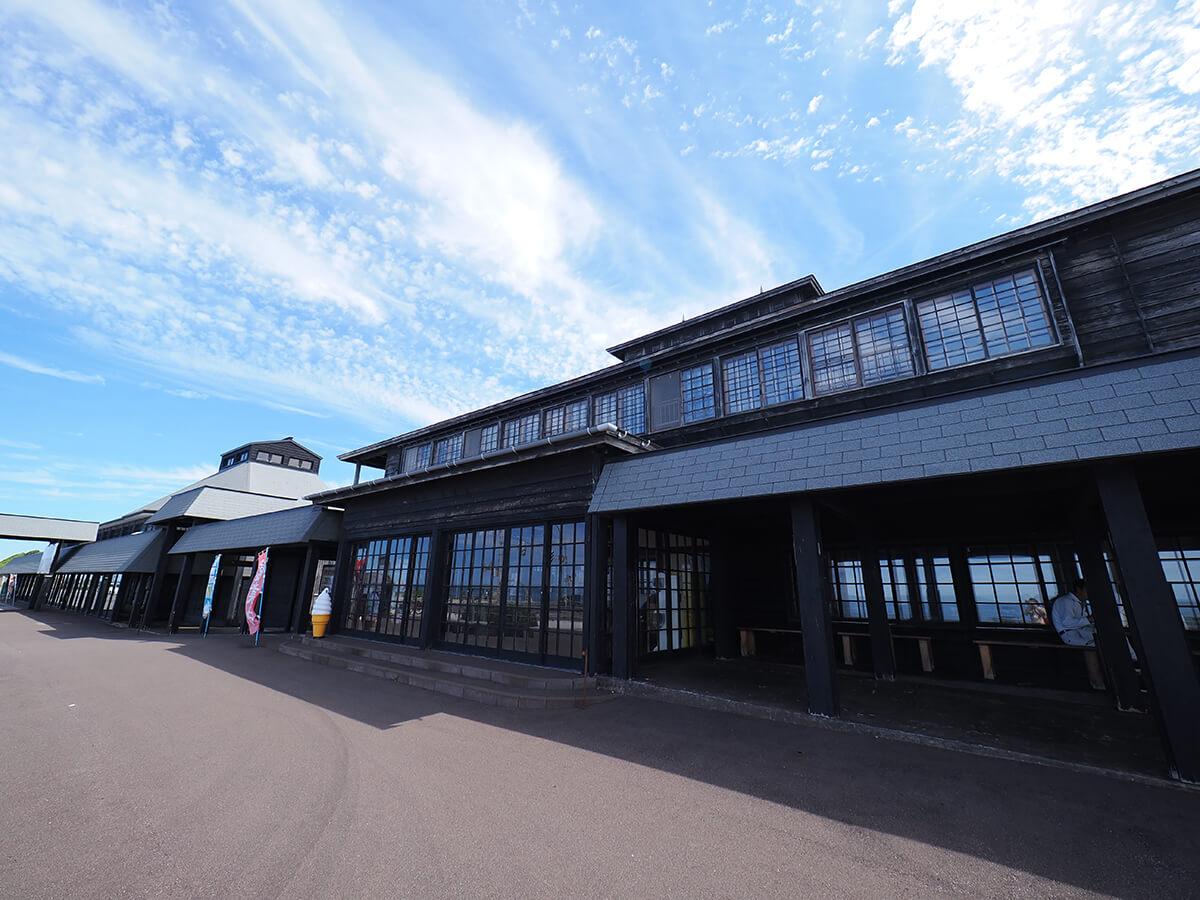
M.ZUIKO DIGITAL ED 7-14mm F2.8 PRO / OM SYSTEM OM-1 Mark II / 14mm equivalent (35mm equivalent) / Aperture-priority AE (F3.5, 1/1,000 sec) / ISO 200 / Exposure compensation: +0.3EV / WB: Sunny / Picture mode: Vivid The
Ororon Line is lined with large, new roadside stations. The photo shows Obira Herring Station in Obira Town. Next door, there is an authentic herring station that has been preserved and is open to the public.
There are approximately 10 roadside stations along the 200km stretch from Rumoi to Cape Soya
The Ororon Line itself is located just north of Sapporo, stretching for approximately 320km from Otaru and Ishikari to Wakkanai and Cape Soya, the northernmost point of Hokkaido's main island, but if you head northwest from Asahikawa, Furano, or Biei, you will start in Rumoi
If you head north from Rumoi, you will pass through 10 cities and towns: Obira, Tomamae, Haboro, Shosanbetsu, Enbetsu, Teshio, Horonobe, Toyotomi, and Wakkanai. However, there is one roadside station a little off the route called Wakakanai, which has 24-hour toilets and free parking, but is not a roadside station. In addition to Soya Misaki, there are eight other roadside stations
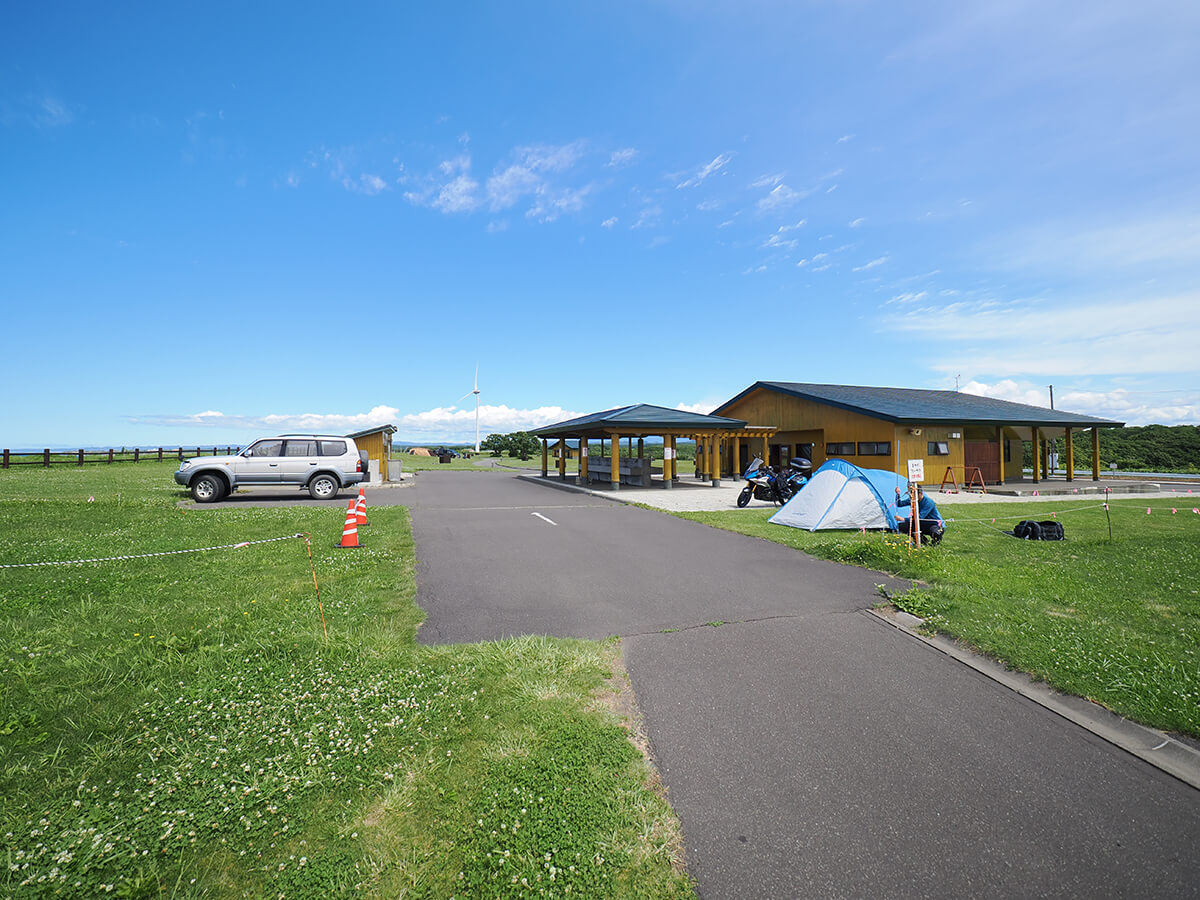
M.ZUIKO DIGITAL ED 7-14mm F2.8 PRO / OM SYSTEM OM-1 Mark II / 14mm equivalent (35mm equivalent) / Aperture-priority AE (F2.8, 1/2,500 sec) / ISO 200 / Exposure compensation: +0.7EV / White Balance: Clear sky / Picture mode: Vivid.
The photo was taken at Tomamae Yuhigaoka Auto Campground. The ultra-wide-angle lens (equivalent to a 14mm) is effective, but there are also many spacious campgrounds along the Ororon Line.
The distance between Rumoi and Cape Soya is about 200km, and there is a roadside station with toilets, parking, and rest areas about every 20km, which is quite a good thing for a driving course in Hokkaido. Therefore, you will almost never have trouble finding a place to sleep or a toilet while sleeping in your car
Another feature is that each city, town, and village has its own hot springs where you can take a day trip to bathe, as well as a wide selection of campsites. Campsites are generally open during the summer season, and most are closed during the winter. There are also quite a few swimming beaches during the summer season, so you can enjoy the sea during Hokkaido's short summer
Must-see points on the Ororon Line
Tomamae "Sankebetsu Brown Bear Incident Reconstruction Site" - Site of Japan's worst wild animal attack in which seven people died
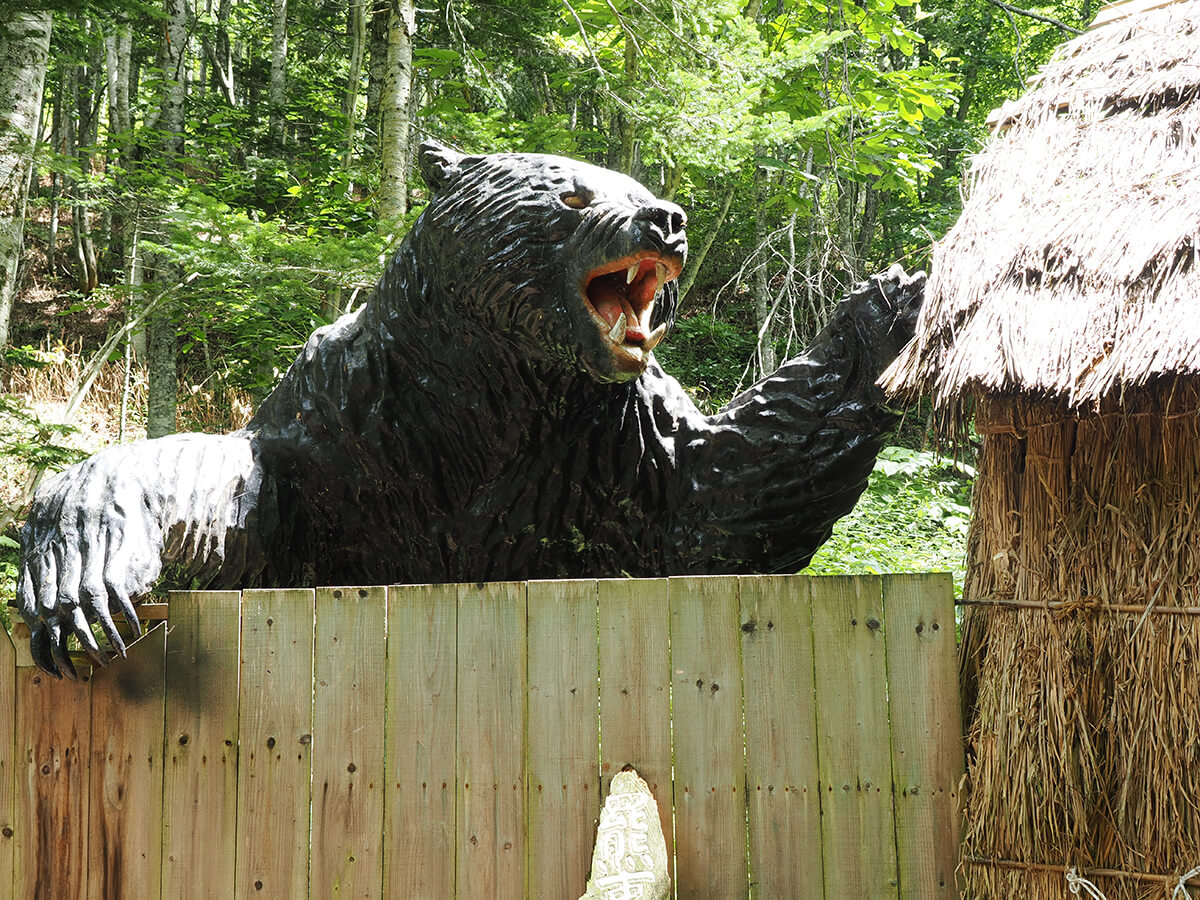
M.ZUIKO DIGITAL ED 12-40mm F2.8 PRO II / OM SYSTEM OM-1 Mark II / 38mm equivalent (35mm equivalent) / Aperture priority AE (F5.6, 1/30 sec) / ISO 200 / WB: Clear sky / Picture mode: Vivid
In the Sankebetsu brown bear incident, a brown bear measuring 2.7m in length and weighing 340kg is said to have attacked the village, so the restored brown bear in the photograph may not be an exaggeration.
Here are a few places I recommend stopping by when riding the Ororon Line. The first is the Sankebetsu Brown Bear Incident Reconstruction Site in Tomamae Town. Many people may be familiar with this from Akira Yoshimura's documentary "Bear Storm," but this was the worst animal attack in Japanese history, which occurred in 1915 (Taisho 4), resulting in a tragic tragedy in which seven people, including a fetus that was dragged out by a brown bear, were killed and three were injured
Although over 100 years have passed, the Sankebetsu Brown Bear Incident Restoration Site has not forgotten this tragic incident, and according to the Tomamae Town website, "it was restored with the strong enthusiasm of the Sankei area residents, who wanted to pass on to future generations the indomitable pioneering spirit and great achievements of their ancestors through the tragic story of pioneering." The site is open from May 1st to the end of October, and although there are no set opening hours, visitors are warned not to visit at night as it is dangerous due to the possibility of brown bears appearing in the area
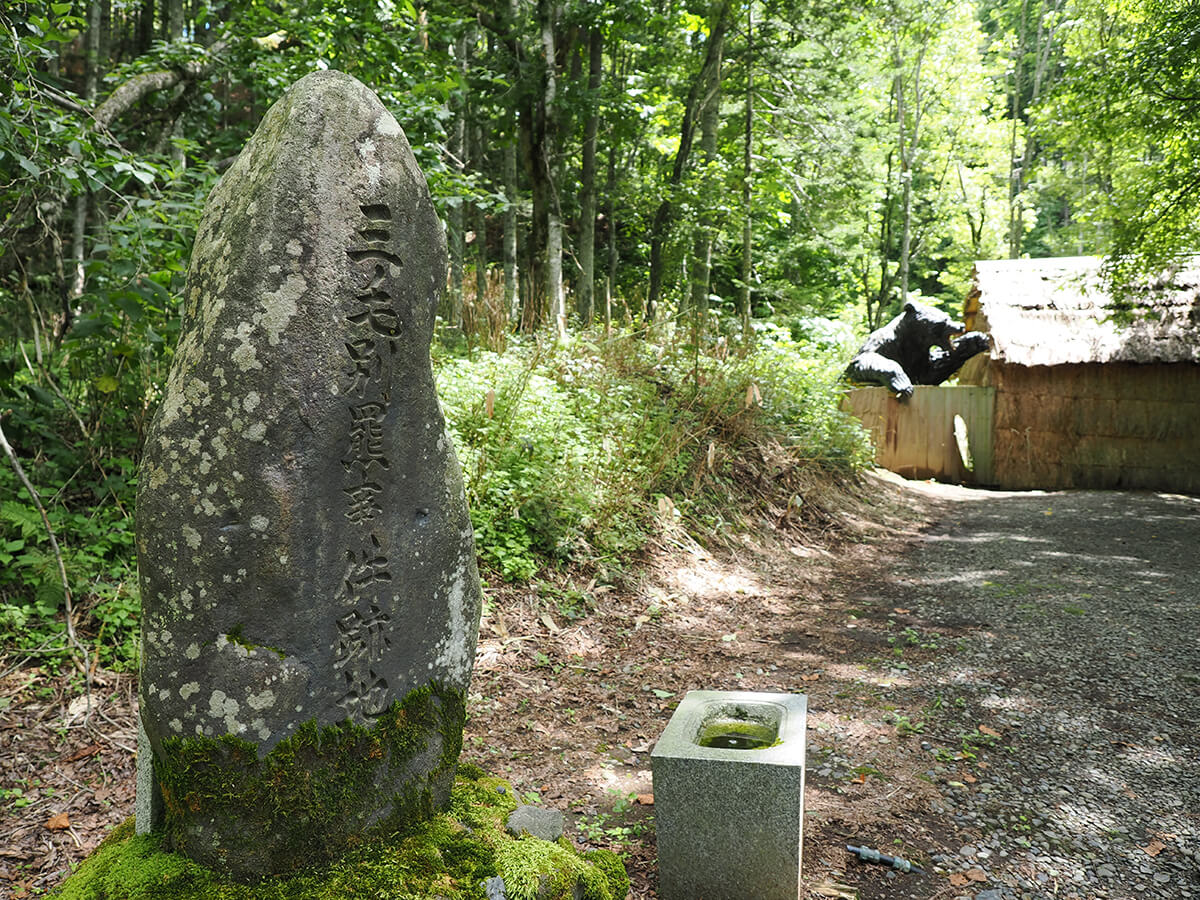
M.ZUIKO DIGITAL ED 12-40mm F2.8 PRO II / OM SYSTEM OM-1 Mark II / 24mm equivalent (35mm equivalent) / Aperture-priority AE (F2.8, 1/200 sec) / ISO 200 / White Balance: Clear sky / Picture mode: Vivid.
A stone monument bearing the inscription "Site of the Sankebetsu Brown Bear Incident." Every time I visit this place, I feel the terror of nature firsthand. It's definitely worth a visit.
I have visited the Sankebetsu Brown Bear Incident Reconstruction Site several times, and the roads are no longer paved, there is no cell phone reception, and for some reason there are a lot of bees, making it a spot that gives off an indescribable sense of fear. And every time I visit, I am reminded of the dangers that can be found in another face of Hokkaido's majestic nature
Shosanbetsu "Konpira Shrine" - Beautiful torii gates in the daytime, at sunset, and under the stars
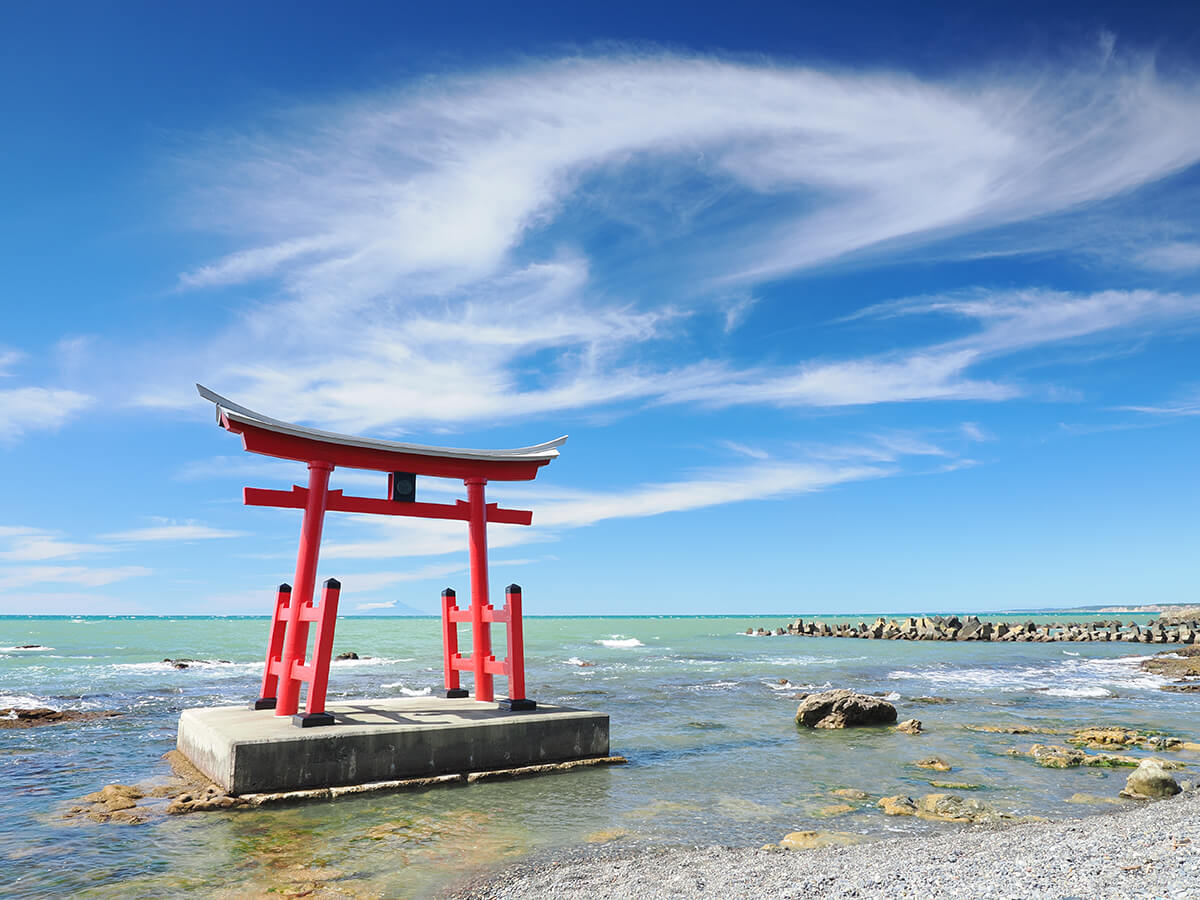
M.ZUIKO DIGITAL ED 12-40mm F2.8 PRO II / OM SYSTEM OM-1 Mark II / 24mm equivalent (35mm equivalent) / Aperture priority AE (F8.0, 1/60 sec) / ISO 200 / Exposure compensation: +1.0EV / WB: Sunny / Picture mode: Vivid / GND + PL filter The
pleasant blue sky typical of Hokkaido made me glad to have escaped the cloudy skies, and the clarity of the M.ZUIKO DIGITAL ED 12-40mm F2.8 PRO II really stood out.
The Ororon Line is a road lined with beautiful scenery, but one of the must-see photo spots for photography enthusiasts is the underwater torii gate at Konpira Shrine in Shosanbetsu Village. The photo shown here was taken during the day
If the weather is good, the underwater torii gate of Konpira Shrine is picturesque even during the day, but because it is located on the coast facing west, it naturally becomes even more dramatic at sunset. If you visit at sunset, you may find many photographers lined up
Also nearby are the roadside station ☆Roman Kaido Shosanbetsu, the hot spring facility Misaki no Yu, the Shosanbetsu Observatory, the Konpira Lighthouse, a campsite, and a go-kart course, so if you stay overnight at Shosanbetsu, you can enjoy the daytime, sunset, and the underwater torii gate of Konpira Shrine with the starry sky as a backdrop. The starry sky also looks amazing, making it a recommended spot for starry sky photography
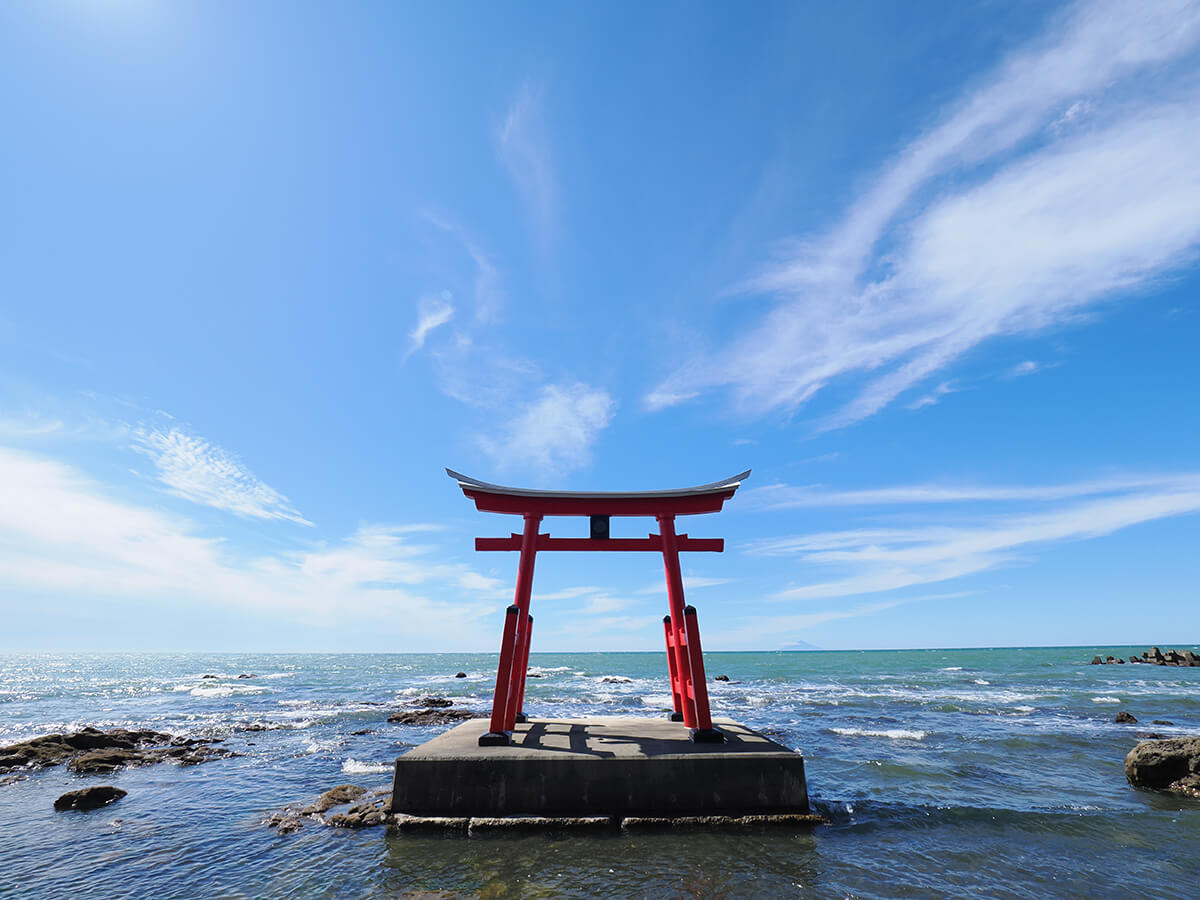
M.ZUIKO DIGITAL ED 7-14mm F2.8 PRO / OM SYSTEM OM-1 Mark II / 14mm equivalent (35mm equivalent) / Aperture-priority AE (F8.0, 1/400 sec) / ISO 200 / Exposure compensation: +1.0EV / WB: Sunny / Picture mode: Vivid.
Shot from different angles with the wide-angle zoom M.ZUIKO DIGITAL ED 7-14mm F2.8 PRO. Different angles, lenses, and time of day can create a variety of looks.
Wakkanai "Cape Soya" The northernmost cape on Hokkaido's main island
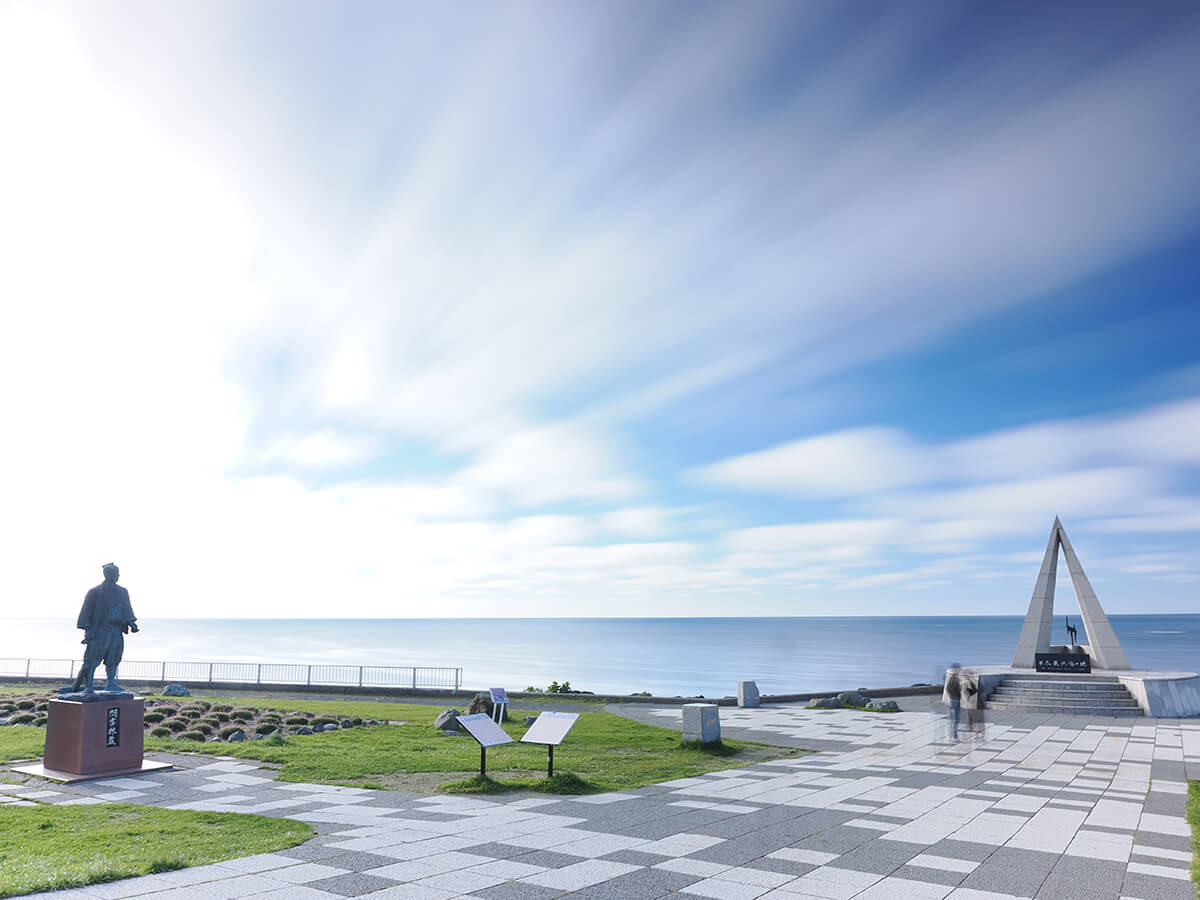
M.ZUIKO DIGITAL ED 12-40mm F2.8 PRO II / OM SYSTEM OM-1 Mark II / 24mm equivalent (35mm equivalent) / Aperture-priority AE (F9.0, 30 seconds) / ISO 200 / WB: Sunny / Picture mode: Vivid / ND filter.
Considering that I'll be using this for web articles and the like, it's better not to have many people in the photo, so I used an ND filter to slow down the shutter speed and blur people.
Cape Soya, the northernmost point of Hokkaido's main island, is a must-see spot if you go to Wakkanai. Naturally, taking a commemorative photo at Cape Soya, the de facto northernmost point of Japan, is also an event you should not forget
I've been there many times, and no matter how many times I visit, it's still quite a moving experience to be at the northernmost point of Japan. In the summer, tourists, including those on tour buses, come nonstop, and there are often long queues in front of the monument to take commemorative photos. Since I'm taking photos for stock photography, I use long exposure with an ND filter to minimize the number of other people in the photo
One of my goals for coming to Cape Soya was to take in the view of the windmills and white roads in the neighboring Soya Hills, and if possible, to photograph the starry sky. However, the weather deteriorated after the evening, and I was unable to capture the scenery I had hoped for
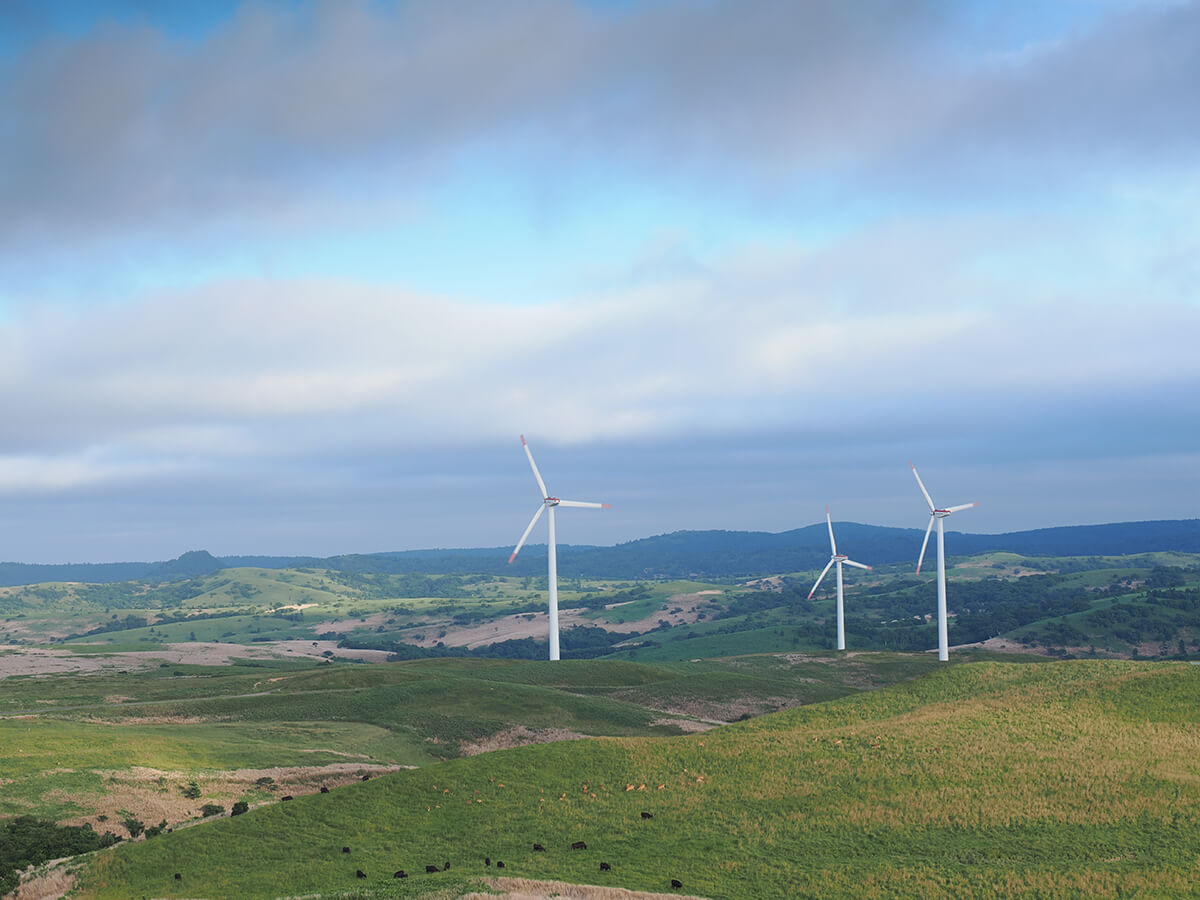
M.ZUIKO DIGITAL ED 12-40mm F2.8 PRO II / OM SYSTEM OM-1 Mark II / 24mm equivalent (35mm equivalent) / Aperture-priority AE (F8.0, 1/50 sec) / ISO 200 / Exposure compensation: +1.0EV / WB: Clear sky / Picture mode: Vivid
Can you see how the clouds high in the sky look dark? This clearly shows how the impression of a landscape is greatly influenced by the weather.
The night view of Wakkanai's "North Breakwater Dome" has a fantastic atmosphere that I love
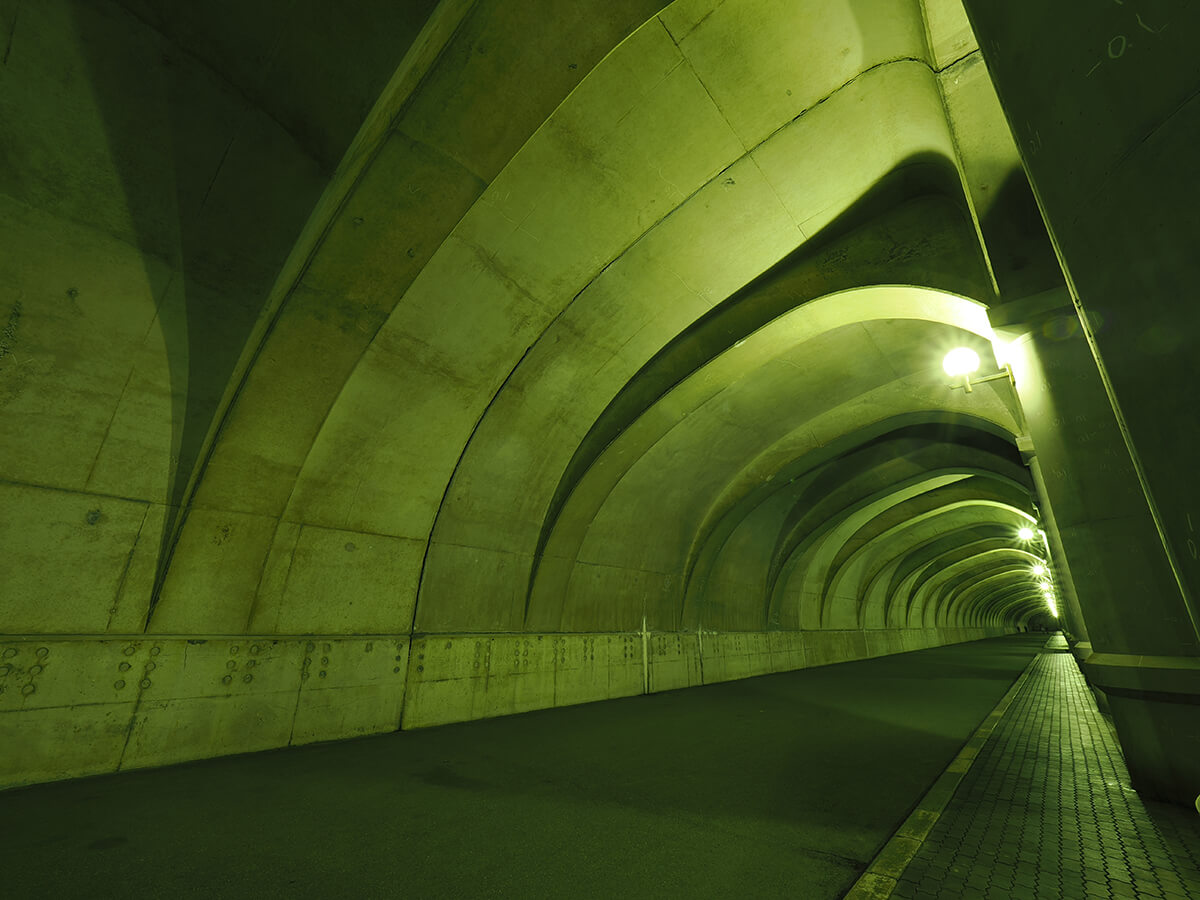
M.ZUIKO DIGITAL ED 7-14mm F2.8 PRO / OM SYSTEM OM-1 Mark II / 14mm equivalent (35mm equivalent) / Aperture-priority AE (F8.0, 2.5 seconds) / ISO 200 / Exposure compensation: -0.3EV / WB: Sunny / Picture mode: Vivid I tried to emphasize the sense of depth with the ultra-wide-angle 14mm equivalent of the M.ZUIKO DIGITAL ED 7-14mm F2.8 PRO. I think the result gives the impression that the image continues forever
When I arrive in Wakkanai city, the first thing I always do at night is photograph the North Breakwater Dome. This breakwater was constructed between 1931 and 1936, and is a beautiful structure characterized by thick columns and gently curving corridors reminiscent of ancient Roman architecture
The designer was Minoru Tsuchiya, a 26-year-old engineer working for the Hokkaido Prefectural Government, just three years after graduating from Hokkaido University. When Wakkanai North Wharf was used as a terminal for the old Sakhalin sea route, the pier was built to prevent wave spray from hitting the railway and roads leading to the area, where strong winds blow throughout the year
The current North Breakwater Dome was renovated over a three-year period starting in 1978. It was designated a Hokkaido Heritage Site in 2001. I personally enjoy taking photos of the North Breakwater Dome at night. The unique landscape of the 70 pillars and 427m length creates a fantastical atmosphere, making it a great photo spot
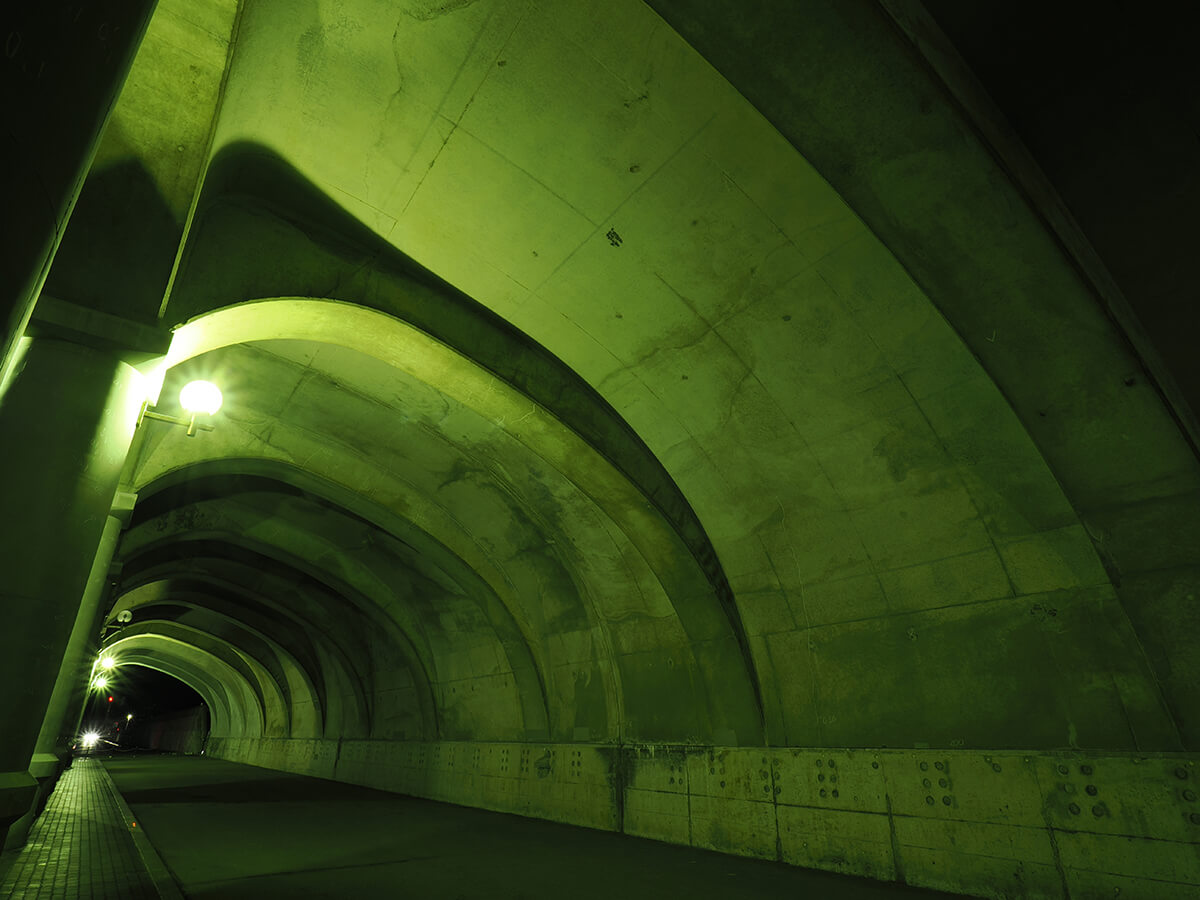
M.ZUIKO DIGITAL ED 7-14mm F2.8 PRO / OM SYSTEM OM-1 Mark II / 18mm equivalent (35mm equivalent) / Aperture-priority AE (F8.0, 3.2 seconds) / ISO 200 / Exposure compensation: -0.3EV / WB: Sunny / Picture mode: Vivid.
I tilted it to the opposite side, deliberately creating a more open feel. Which is better is a matter of personal preference. I recommend taking both.
Enjoy both the sunset and sunrise at Cape Soya in Wakkanai
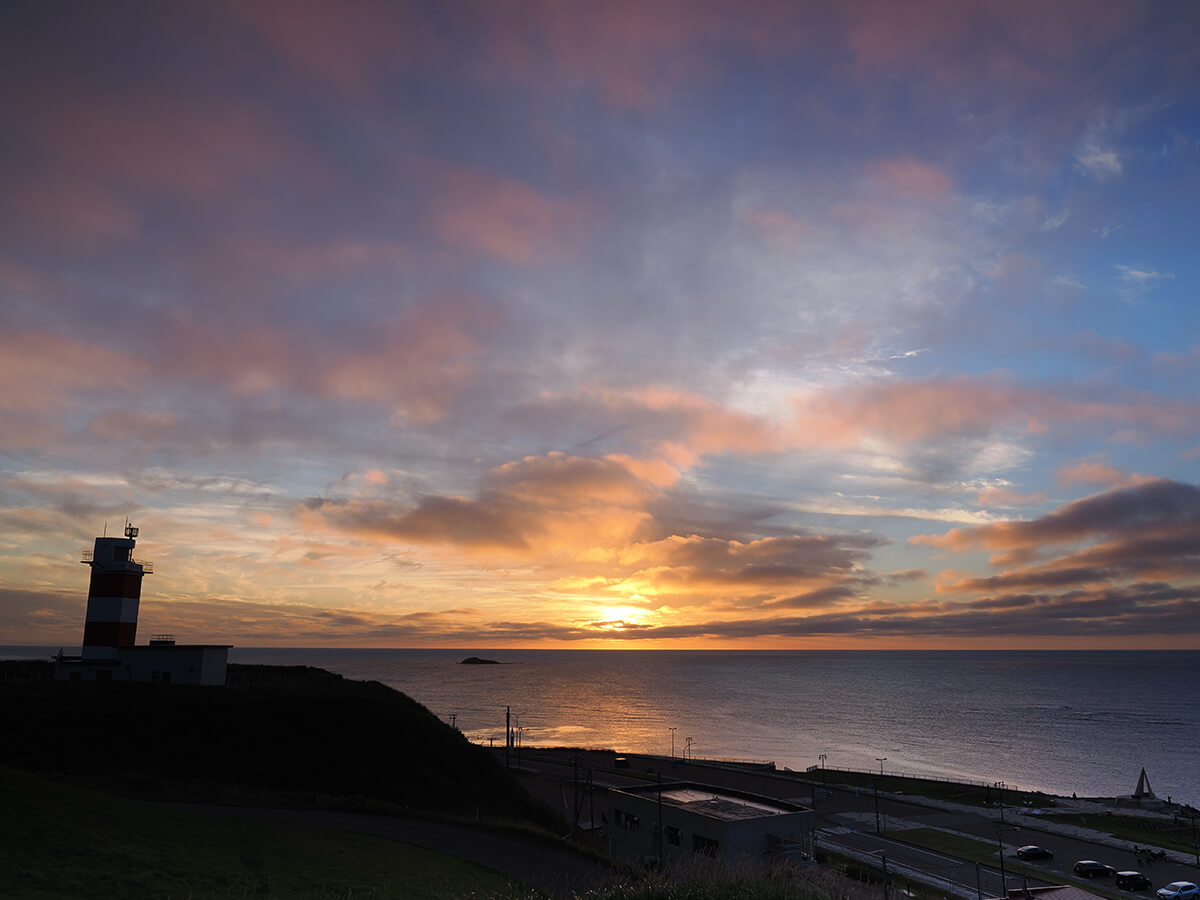
M.ZUIKO DIGITAL ED 12-40mm F2.8 PRO II / OM SYSTEM OM-1 Mark II / 24mm equivalent (35mm equivalent) / Aperture-priority AE (F8.0, 1/10 sec) / ISO 200 / Exposure compensation: +0.3EV / White Balance: Clear sky / Picture mode: Vivid / GND filter
The sunset over Cape Soya, the northernmost point of Hokkaido's main island. It's a deeply moving and memorable sight in itself. Since I'm here, I'll also try to capture the sunrise from the same spot.
When I arrive at Cape Soya, which in a sense is the finish line of the Ororon Line, I usually take pictures of the sunset there, then try my hand at starry sky photography in the Soya Hills, then photograph the North Breakwater Dome in Wakkanai city, then take a nap at Wakkanai Roadside Station, and the next morning I often take pictures of the sunrise from Wakkanai Port or Cape Nosampu
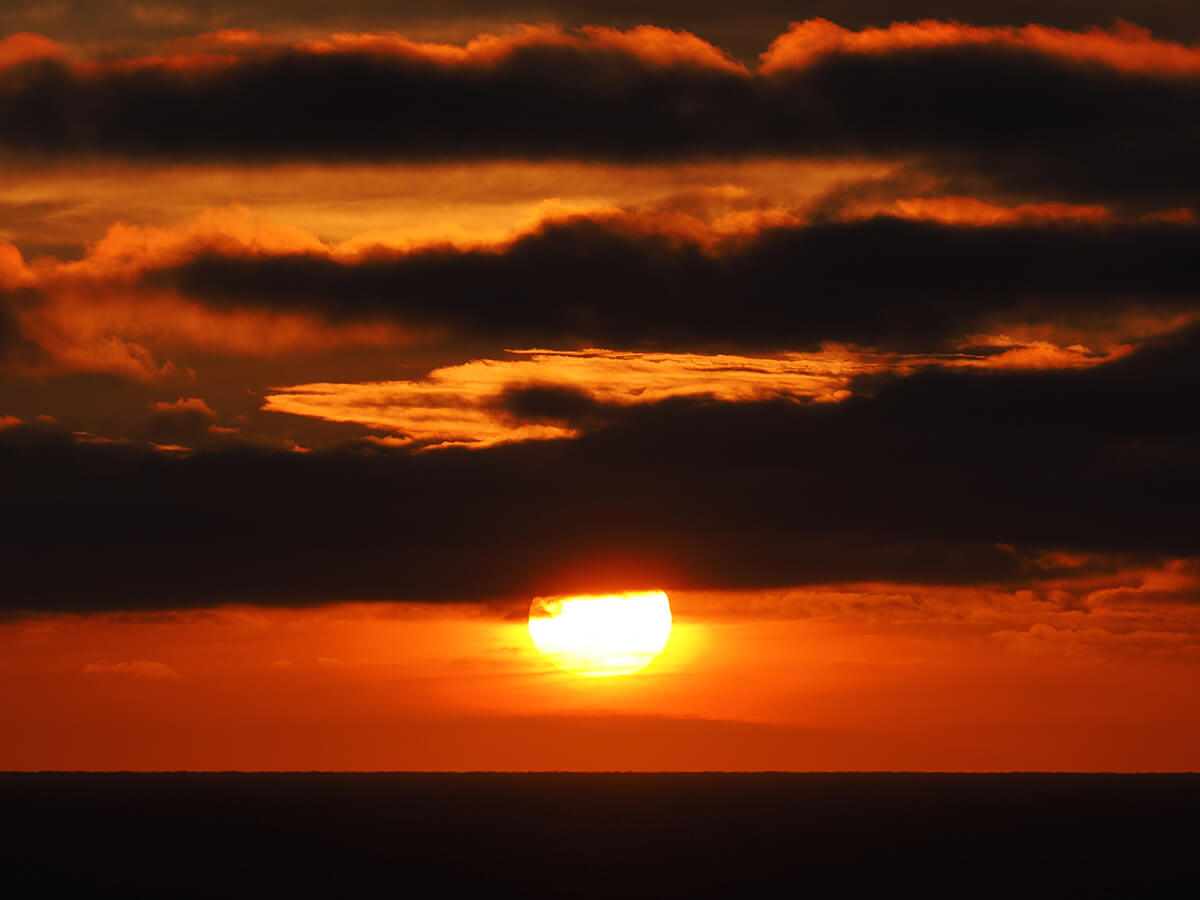
M.ZUIKO DIGITAL ED 40-150mm F2.8 PRO + M.ZUIKO DIGITAL 2x Teleconverter MC-20 / OM SYSTEM OM-1 Mark II / 441mm equivalent (35mm equivalent) / Aperture-priority AE (F8.0, 1/400 sec) / ISO 200 / Exposure compensation: -1.0EV / WB: Sunny / Picture mode: Vivid I
don't take many photos because it's hard to tell what's going on, but it's nice to have a super telephoto lens so you can enjoy taking photos of spectacular sunsets like this one.
However, this time I decided to take advantage of the fact that Cape Soya is the northernmost cape on Hokkaido's main island and photograph the sunrise from the same spot where I had photographed the sunset. After photographing the sunset, I tried my hand at starry sky photography in the Soya Hills and photographed the North Breakwater Dome at Wakkanai Port, so I didn't stay at Cape Soya the whole time..
By the way, in July and August, the sunrise is between 3 and 4 a.m., so there is almost no time to take a nap. Therefore, after finishing all the shooting, I took a few hours of nap time at Cape Soya, which has a 24-hour toilet, and then continued photographing the sunrise
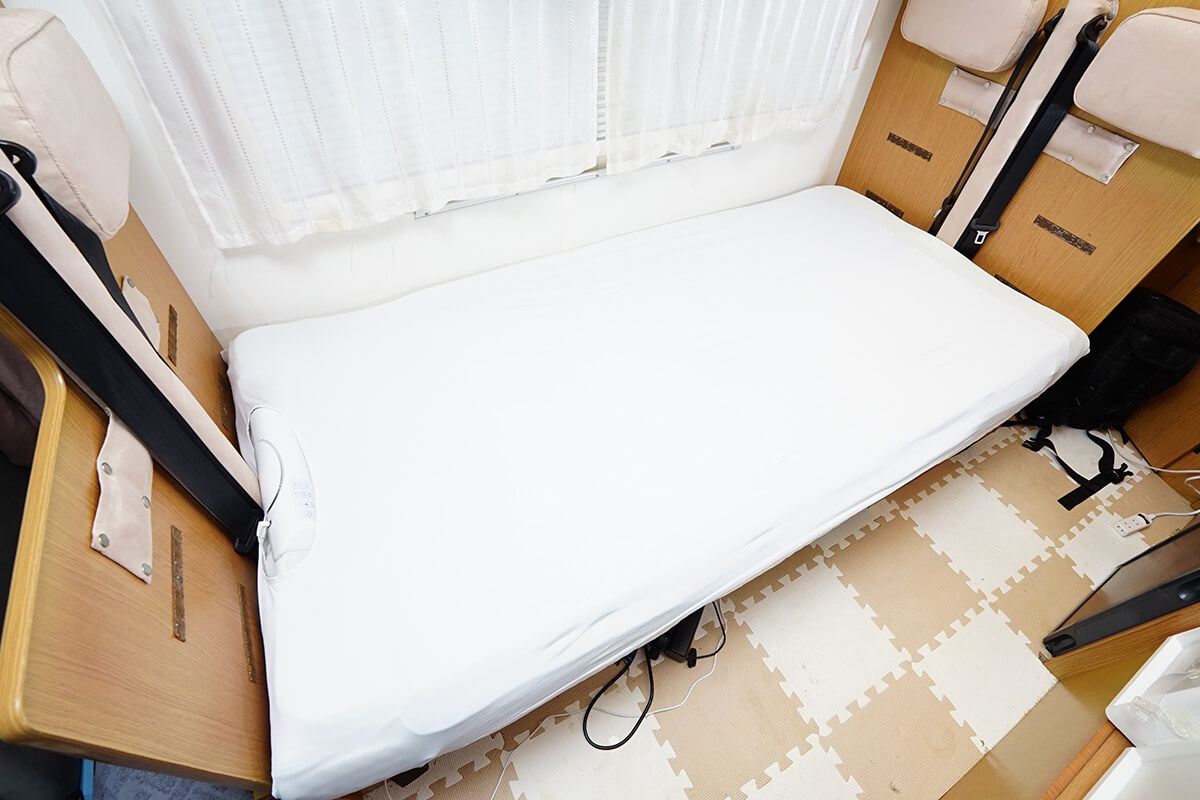
ATEX's "SOYO Single Sleep Mat AX-BS632" + dedicated cooling box sheet consumes very little power and the electric fan prevents moisture from building up in the bedding, making it very comfortable
Even though it's Hokkaido, it's been extremely hot recently, so I've been sleeping on the ATEX "SOYO Single Sleep Mat AX-BS632," which I also introduced in an OUTDOOR GEARZINE article, with a special cooling box sheet (sold separately) to beat the heat. You can read more about it in a separate article, but it's incredibly comfortable, as it prevents moisture from building up in the bedding. I slept very soundly, but unfortunately the weather wasn't kind enough to catch the next morning's sunrise
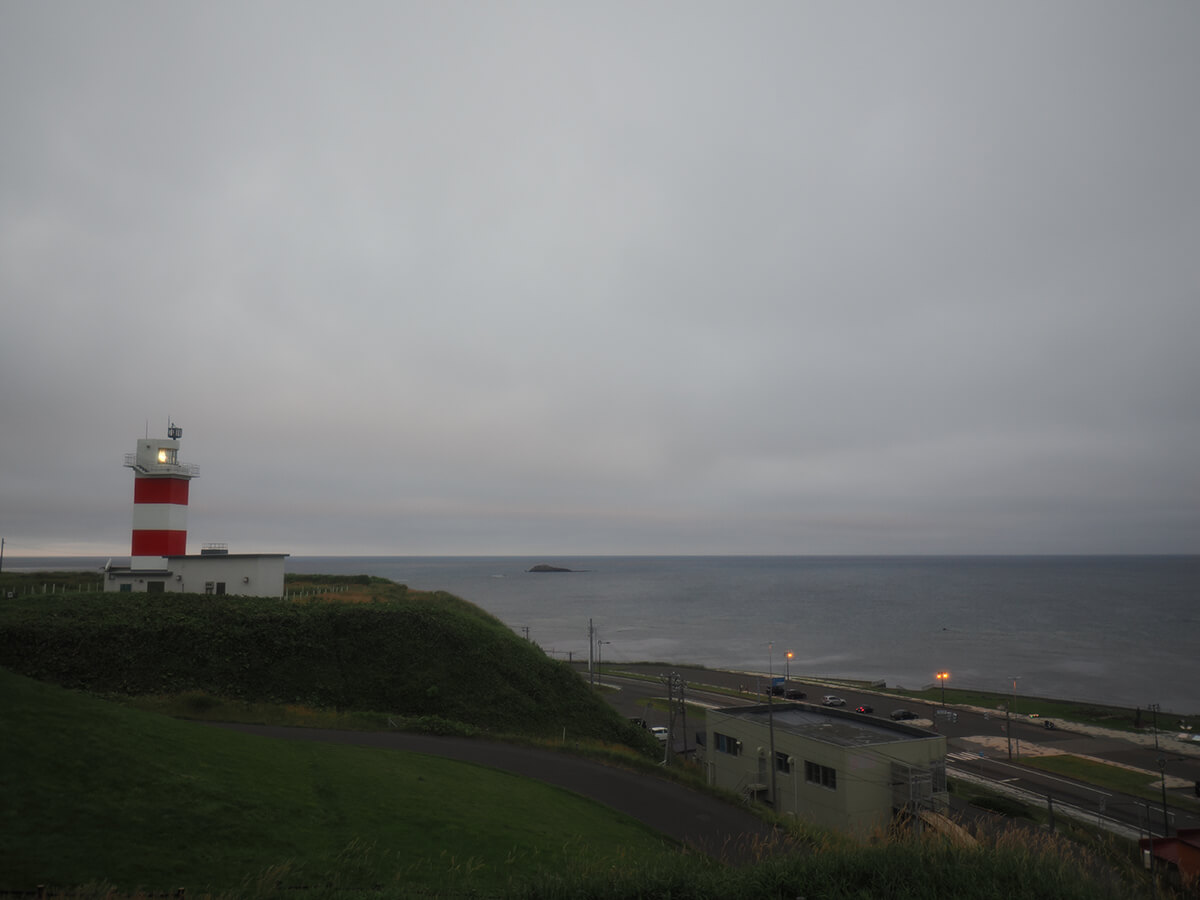
M.ZUIKO DIGITAL ED 7-14mm F2.8 PRO / OM SYSTEM OM-1 Mark II / 28mm equivalent (35mm equivalent) / Aperture-priority AE (F2.8, 1/100 sec) / ISO 200 / Exposure compensation: +0.3EV / WB: Auto / Picture mode: Vivid
Cape Soya at sunrise the next day. This is a photo of weather that I wouldn't normally post. No matter how hard you try, you can't beat the weather.
We also visited Teuri Island, a remote island in Hokkaido known as a paradise for wild birds
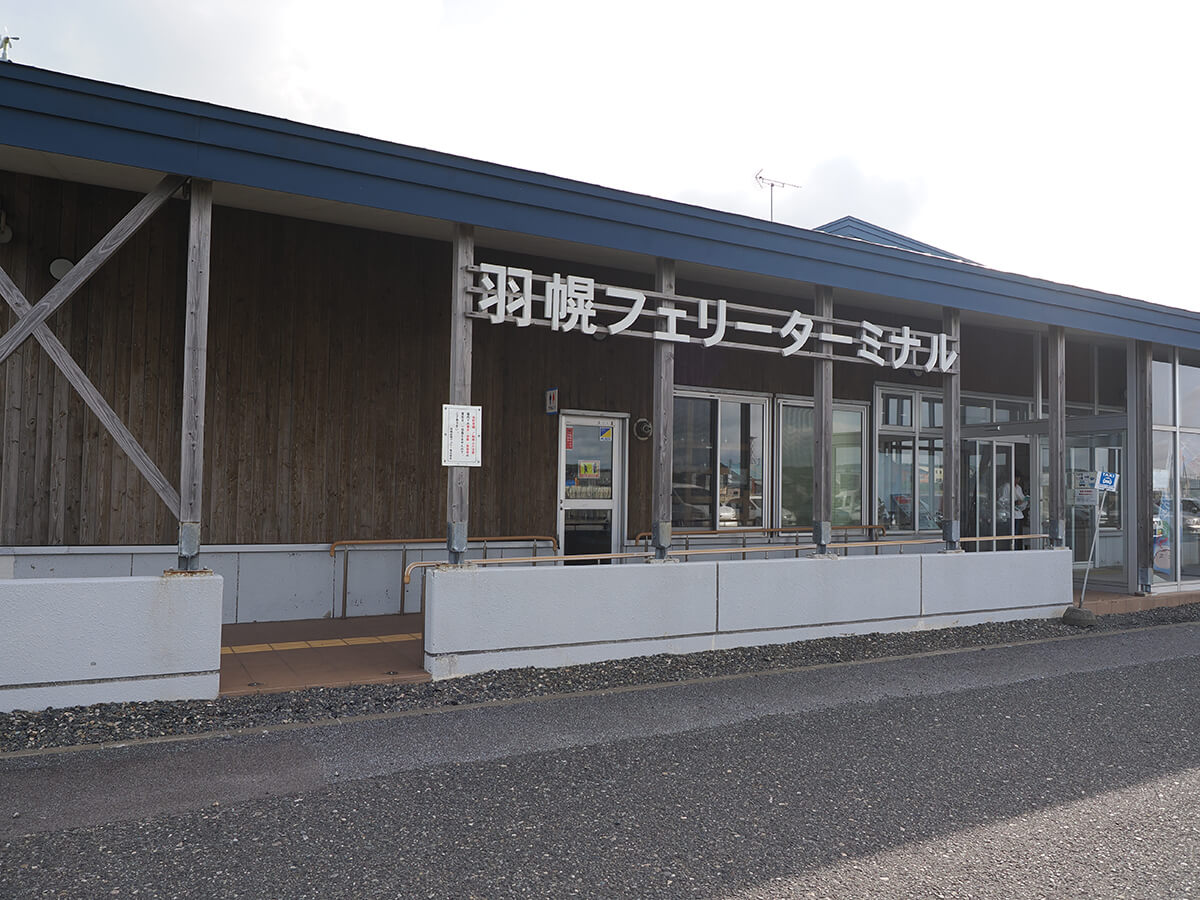
M.ZUIKO DIGITAL ED 12-40mm F2.8 PRO II / OM SYSTEM OM-1 Mark II / 24mm equivalent (35mm equivalent) / Aperture-priority AE (F4.0, 1/1,000 sec) / ISO 200 / White Balance: Auto / Picture mode: Vivid
Haboro Ferry Terminal is where high-speed boats and ferries depart for Teuri Island and Yagishiri Island. I arrived early in the morning to catch the first flight.
A visit to Teuri Island, a remote island in Hokkaido, a paradise for wild birds
It takes about 6 to 7 hours nonstop from Otaru or Ishikari to Wakkanai or Cape Soya. Even if you take a few breaks at roadside stations, you can complete the journey in around 10 hours. The drive along this route is one of the best in the prefecture, even for Hokkaido residents, with its clear roads and beautiful scenery. I highly recommend you experience it
That being said, I've ridden the Ororon Line quite a few times, and my goal this time was a photography trip. I intended to take pictures of the scenery in Furano and Biei, and also photograph pikas in the Daisetsuzan mountain range. The scenery along the Ororon Line, which runs along the Sea of Japan, was also beautiful enough, and my shots with wide-angle and standard zoom lenses were quite successful
However, the ultra-telephoto shooting using the M.ZUIKO DIGITAL ED 40-150mm f2.8 PRO with the 2x teleconverter M.ZUIKO DIGITAL 2x Teleconverter MC-20 was not satisfactory. Photographing birds and animals with the AI subject recognition AF, one of the major features of the OM-1 Mark II, is so much fun that I lose track of time, and I was also looking forward to hiking in the Daisetsu mountain range
One of the things I decided to do was visit Teuri Island, a remote island in Hokkaido. Located 30km offshore from Haboro Town in the Sea of Japan, Teuri Island has a population of about 250 people and is home to 1 million seabirds of eight species that use it as a breeding ground, making it an island that is envied by birdwatchers from all over the world. Its circumference is 12km, and it is said that it is possible to walk around it
A second-class ferry will take you to the outlying islands from Haboro for about 2,500 yen one way
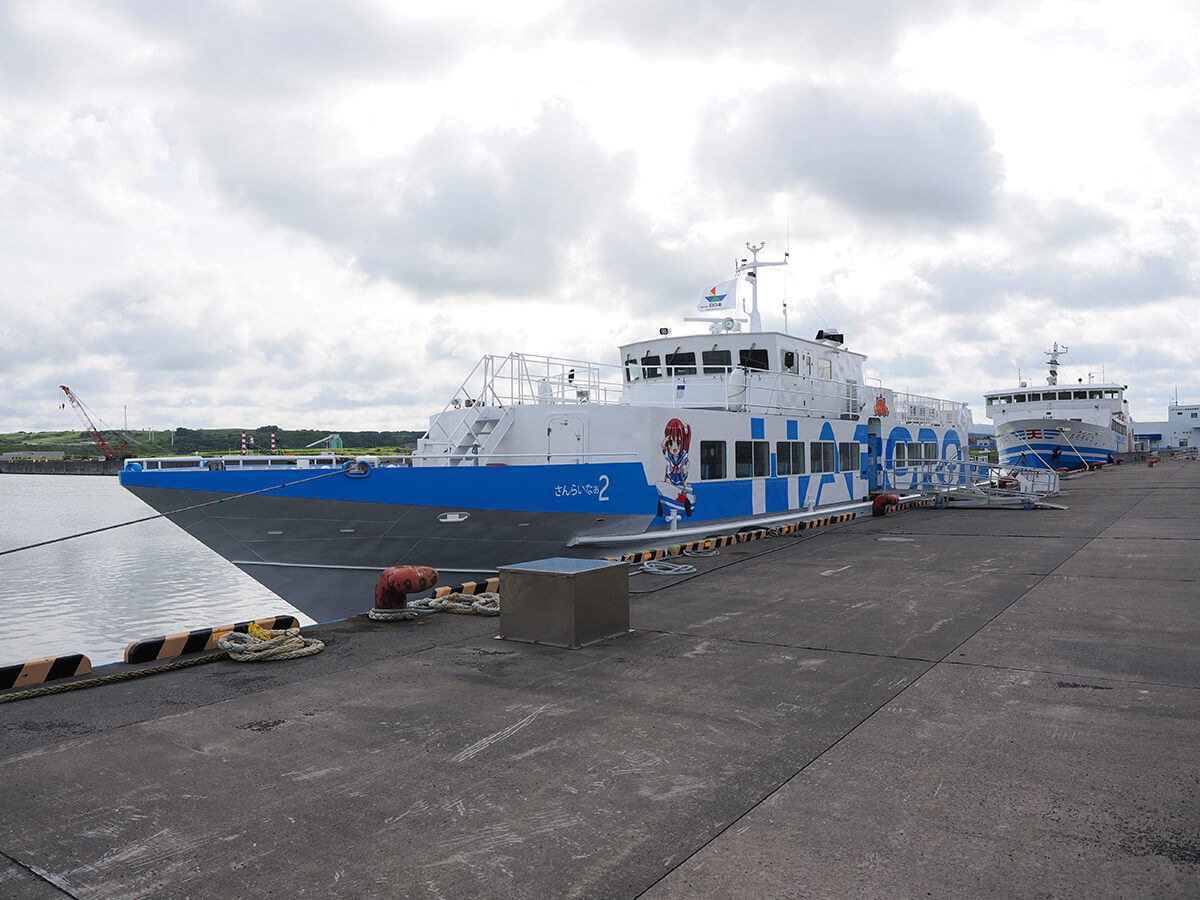
M.ZUIKO DIGITAL ED 12-40mm F2.8 PRO II / OM SYSTEM OM-1 Mark II / 24mm equivalent (35mm equivalent) / Aperture-priority AE (F4.0, 1/1,600 sec) / ISO 200 / White Balance: Auto / Picture mode: Vivid. The
author boarded the first morning high-speed ferry, the Sunlighter 2. The ferry, Ororon 2, can be seen in the background of the photo.
Teuri Island is a place where you can observe rare seabirds such as the spectacled guillemot, which lives only in Hokkaido and along the coast of the Sea of Okhotsk, the common murre (an endangered species) whose cry gives the Ororon Line its name, and the Rhinoceros Auklet, of which Teuri Island boasts the world's largest breeding population.In fact, it is quite easy to get there by taking the Haboro Enkai Ferry in Haboro, which is on the Ororon Line
Depending on the season, there are between one and six round trips per day by high-speed boat or ferry, and the trip from Haboro to Yagishiri Island to Teuri Island takes about 35 to 60 minutes, and from Haboro to Teuri Island takes about 60 to 100 minutes. For details on the schedule and fares, it is best to check with Haboro Enkai Ferry
Another noteworthy point is that you can get to Teuri Island for just 2,500 yen if you take a one-way second-class ferry seat. I went in July and August during the high season, so it cost 2,520 yen, but the cheapest fare from June to September is apparently 2,330 yen (as of August 2024). It depends on the schedule, but if you take the first ferry in the morning during the high season and return on the last ferry, it's possible to make a day trip
Walking around Teuri Island, which is about 12km in circumference, with the OM SYSTEM "OM-1 Mark II" and the Big Three lenses
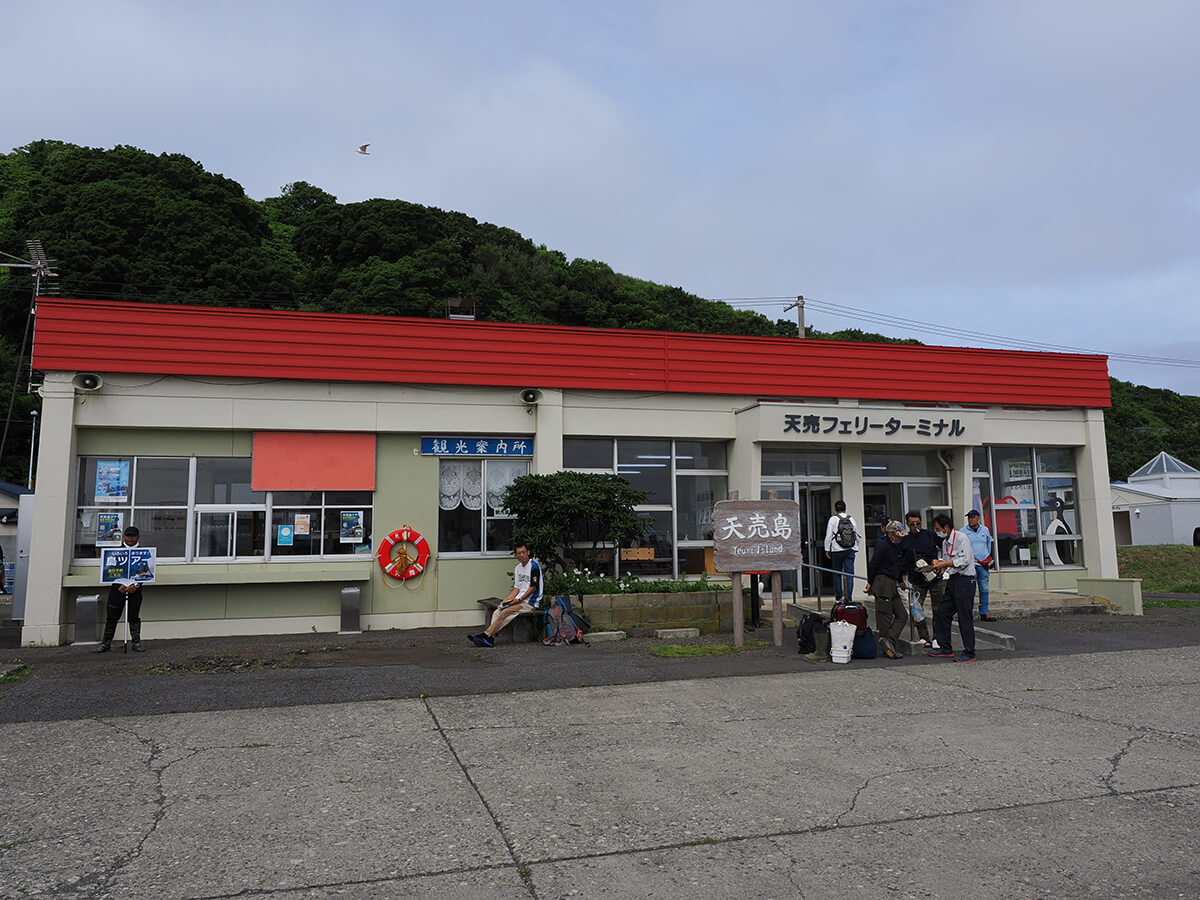
M.ZUIKO DIGITAL ED 12-40mm F2.8 PRO II / OM SYSTEM OM-1 Mark II / 24mm equivalent (35mm equivalent) / Aperture-priority AE (F7.1, 1/1,000 sec) / ISO 200 / White Balance: Auto / Picture Mode: Vivid
Teuri Ferry Terminal. I haven't visited many remote islands, but the extraordinary feeling is just like being overseas. It gets me excited.
Teuri Island is known as a paradise for seabirds, and it's about 12km long to go around in one go. Most brochures say it takes about three hours, but as I walked around taking photos, I expected it to take about twice as long. This time, I brought my OM SYSTEM OM-1 Mark II, which I trust immensely for its portability, plus a large trio of lenses and a 2x teleconverter, and even with the lens hood and caps, the camera and lenses weighed less than 3kg
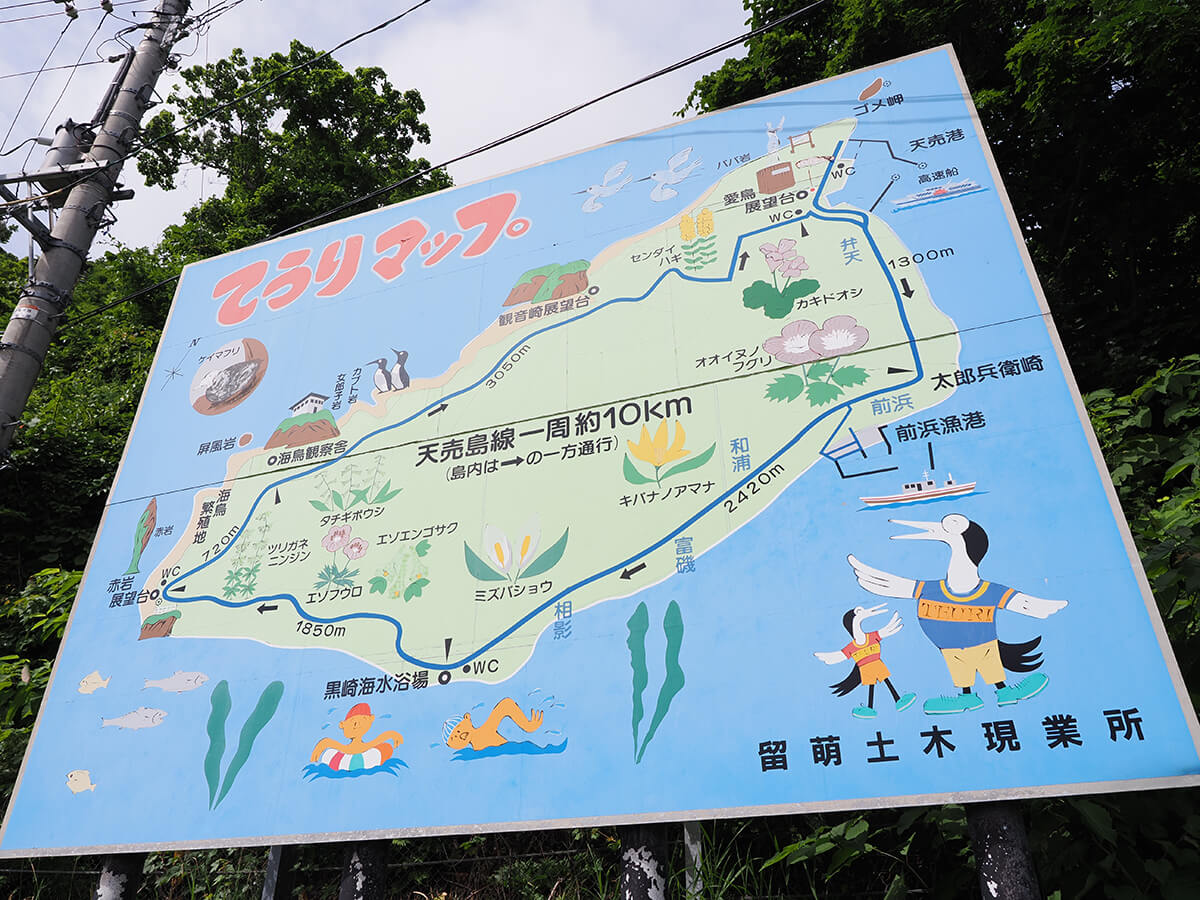
M.ZUIKO DIGITAL ED 12-40mm F2.8 PRO II / OM SYSTEM OM-1 Mark II / 24mm equivalent (35mm equivalent) / Aperture-priority AE (F4.0, 1/3,200 sec) / ISO 200 / Exposure compensation: +0.3EV / White Balance: Auto / Picture mode: Vivid
A Teuri map was posted prominently on the road. The Teuri Line appears to be about 10km in circumference. After walking around the island, my smartwatch finally showed a distance of about 15km.
If you have equipment covering the equivalent of 14mm to 600mm for a 35mm full-frame system, it will easily exceed 5kg, so this weight advantage is significant. Also, if you add not only the camera and lenses but also a tripod and photographic filters, in my case, I also have rain gear and snacks, and the entire camera bag weighs about 8kg
It sounds like a tough trek over 12km in midsummer while carrying an 8kg load. However, with a full-frame 35mm system, the size of the camera bag and other equipment will be large, easily exceeding 10kg, and in some cases 12kg. Therefore, I personally feel that the OM SYSTEM OM-1 Mark II + Big Three lens system offers an overwhelming advantage when it comes to walking photography
I also managed to photograph the Ororon bird (a common murre), which is apparently on the verge of extinction
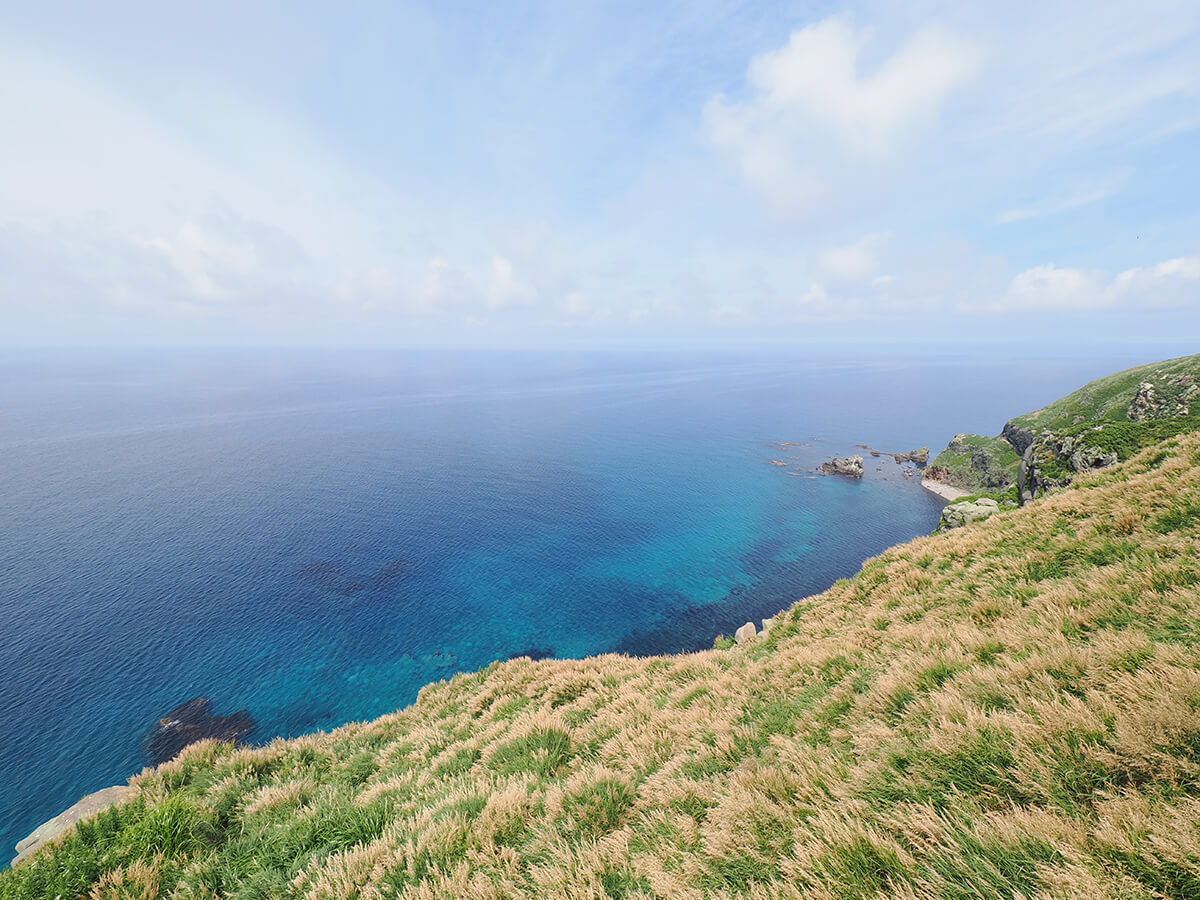
M.ZUIKO DIGITAL ED 7-14mm F2.8 PRO / OM SYSTEM OM-1 Mark II / 14mm equivalent (35mm equivalent) / Aperture priority AE (F8.0, 1/320 sec) / ISO 200 / Exposure compensation: +0.7EV / WB: Auto / Picture mode: Vivid
. The view from Akaiwa Observatory is so spectacular that it's worth coming to Teuri Island just to see it. The feeling of exhilaration is incredible.
This writer visited Teuri Island, also known as a paradise for seabirds, thinking it was just a reconnaissance trip, but was surprised by the number of birds there were even during the trek. Moreover, at the observation deck overlooking Akaiwa, one of the highlights of Teuri Island, he succeeded in photographing an endangered common murre, the only breeding ground for which Teuri Island is the only one in Japan, and in 2010 less than 20 birds had been spotted
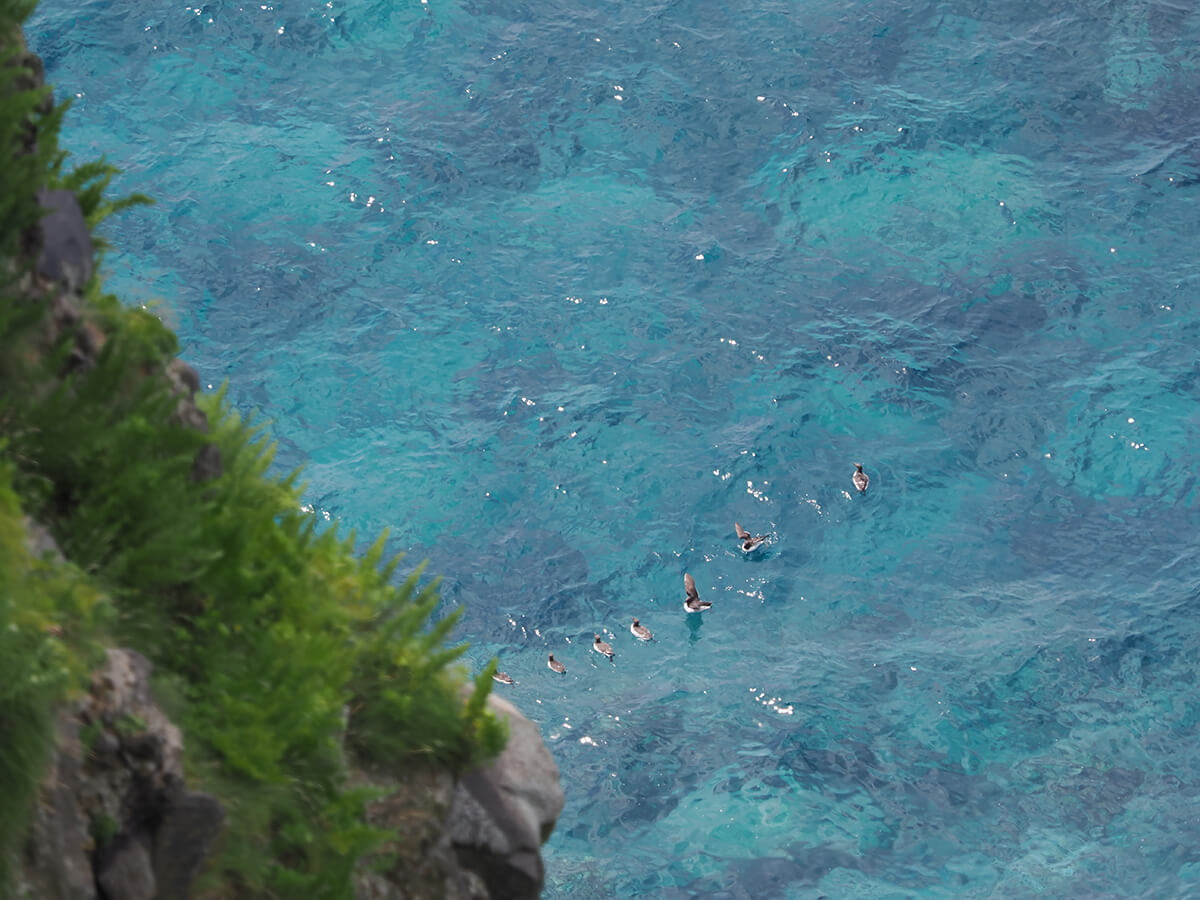
M.ZUIKO DIGITAL ED 40-150mm F2.8 PRO + M.ZUIKO DIGITAL 2x Teleconverter MC-20 / OM SYSTEM OM-1 Mark II / 600mm equivalent (35mm equivalent) / Shutter speed priority AE (F5.6, 1/500 sec) / ISO 200 / WB: Auto / Picture mode: Vivid
. I was able to capture a bird that I've never seen before, and it's probably a common murre. It's an extremely rare and endangered species.
I happened to be taking photos at Akaiwa Observatory when I noticed a bird I'd never seen before and thought, "I might as well take a photo of it," and it turned out to be a common murre. I don't have the ability to identify common murres, but a nature guide who happened to be there saw the same flock of birds and explained that they were common murres, so I'm pretty sure it was a common murre
I visited Teuri Island in the latter half of July, so it was a little out of season, but I was still able to enjoy the sight of Ororon birds and young black-tailed gulls. I was also able to observe many swifts and slaty-backed gulls, making it a wonderful environment
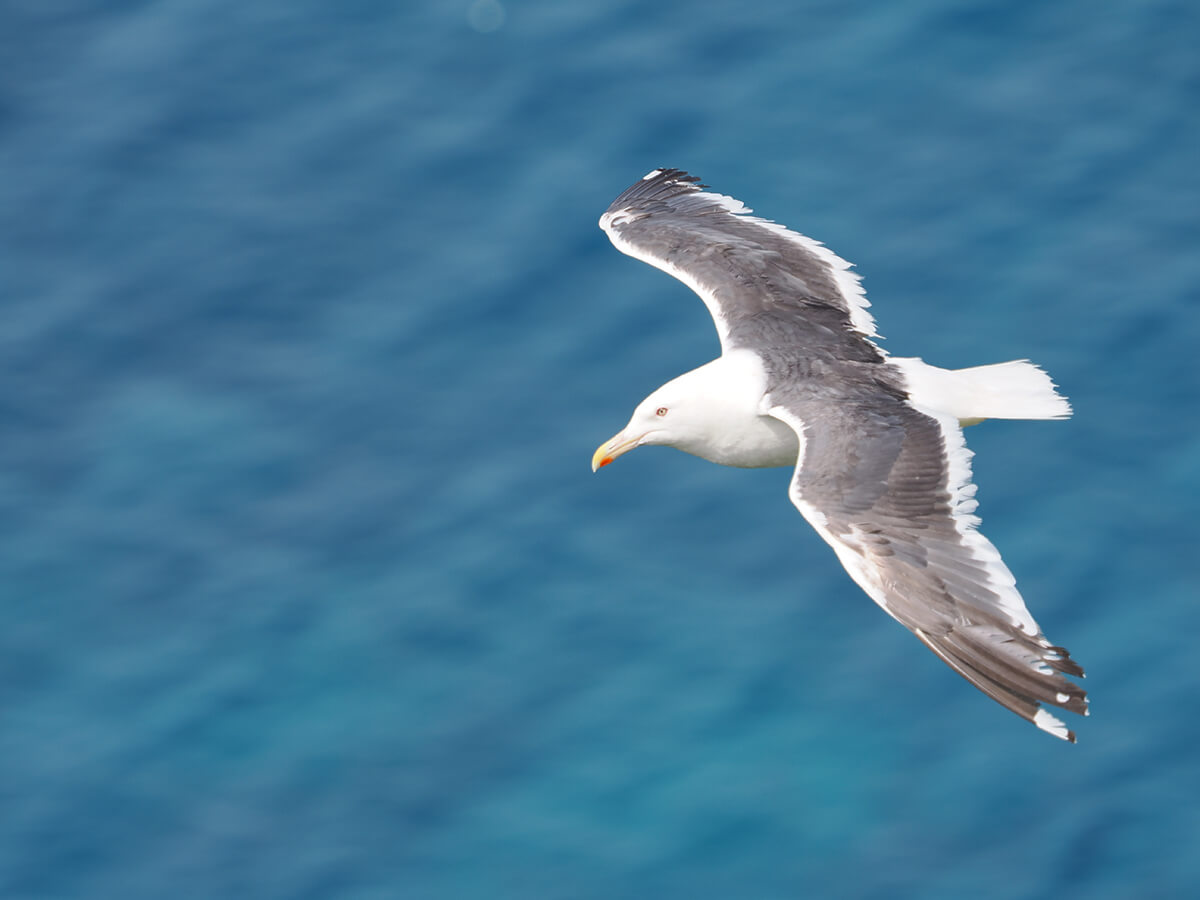
M.ZUIKO DIGITAL ED 40-150mm F2.8 PRO + M.ZUIKO DIGITAL 2x Teleconverter MC-20 / OM SYSTEM OM-1 Mark II / 600mm equivalent (35mm equivalent) / Shutter Speed Priority AE (F5.6, 1/1,000 sec) / ISO 320 / White Balance: Auto / Picture Mode: Vivid
. This shot is equivalent to 600mm and uncropped. Since there were many birds, I was able to use a telephoto lens to capture them from various angles. The AI Subject Recognition AF tracking is a pleasure to use.
It was so much fun that I want to come back next season around June and stay overnight
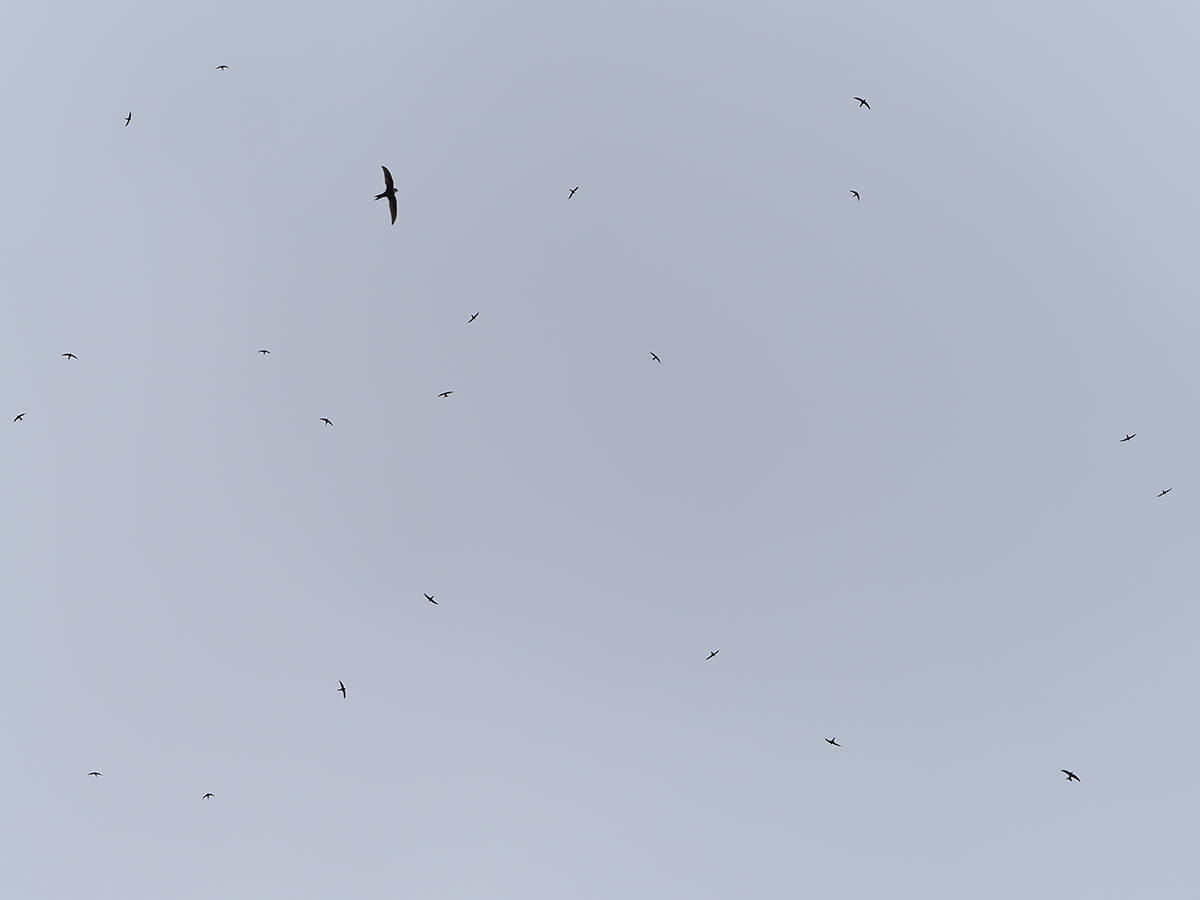
M.ZUIKO DIGITAL ED 40-150mm F2.8 PRO + M.ZUIKO DIGITAL 2x Teleconverter MC-20 / OM SYSTEM OM-1 Mark II / 160mm equivalent (35mm equivalent) / Shutter speed priority AE (F10, 1/1,000 sec) / ISO 200 / WB: Auto / Picture mode: Vivid
Even when shooting at a telephoto lens equivalent to 160mm, more than 20 swifts appear in the frame. Teuri Island has an astonishingly high bird density.
The view from Akaiwa Observatory, located near the southwestern tip of the island, about 5km from the Teuri Ferry Terminal, is truly spectacular, and after taking some photos of the scenery, the writer enjoyed photographing the astonishing number of seagulls and swifts flying about
The OM SYSTEM "OM-1 Mark II" that I used this time is equipped with features that are ideal for photographing birds and wildlife, such as AI subject recognition AF, which allows you to target the eyes of birds, and a Pro Capture function that can record up to 99 frames between half-pressing the shutter button and fully pressing it at 50 frames per second with AF and AE tracking, although you can choose a lens such as the "M.ZUIKO DIGITAL ED 40-150mm F2.8 PRO" that I brought with me this time
The main subjects were the Ororon birds and seagulls that I happened to be able to photograph, and using the OM-1 Mark II with the M.ZUIKO DIGITAL ED 40-150mm F2.8 PRO and M.ZUIKO DIGITAL 2x Teleconverter MC-20 allowed me to capture the decisive moment with ease
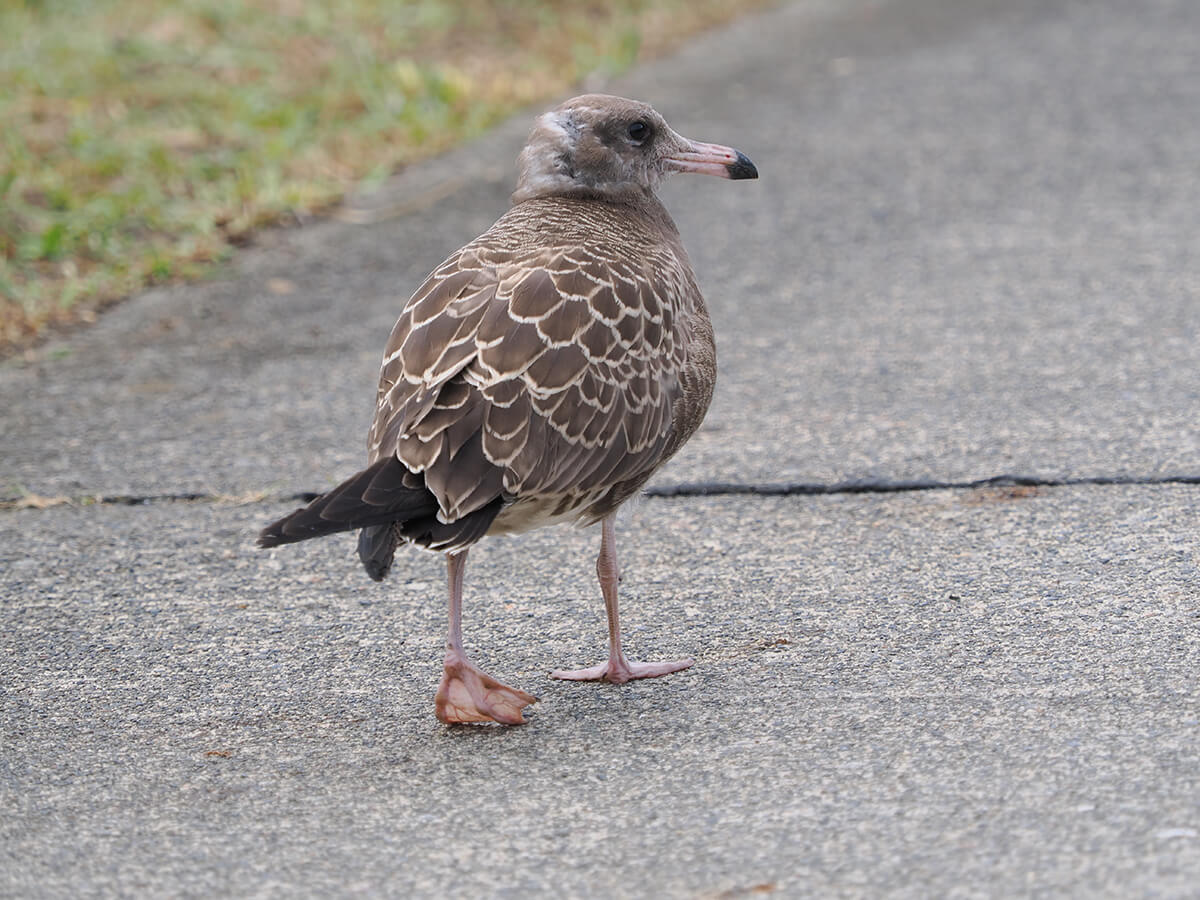
M.ZUIKO DIGITAL ED 40-150mm F2.8 PRO + M.ZUIKO DIGITAL 2x Teleconverter MC-20 / OM SYSTEM OM-1 Mark II / 160mm equivalent (35mm equivalent) / Shutter speed priority AE (F5.6, 1/1,000 sec) / ISO 500 / Exposure compensation: +0.3EV / WB: Auto / Picture mode: Vivid
Perhaps the young seagulls don't like flying, as I frequently saw them hopping around in front of me as I walked around the island.
Unfortunately, the timing was a little outside the breeding season for the rare Ororon bird, the Spotted Spectacled Rhinoceros and the Rhinoceros Auklet, and the Rhinoceros Auklet returns to its nest after the last ferry, so I regret not being able to join the tour. As a resident of Hokkaido, I am planning to try again next season, but for those visiting from outside Hokkaido, I think it would be better to join a tour and stay overnight so you can encounter rare seabirds
I'm planning to take my family to Teuri Island next season and stay overnight, including Yagishiri Island. Even though I live in Hokkaido, this was my first time visiting the remote island of Hokkaido, and I was so impressed that I thought it was a completely different world. I highly recommend it
Summary: The OM SYSTEM "OM-1 Mark II" + Big Three lenses are perfect for adult adventures
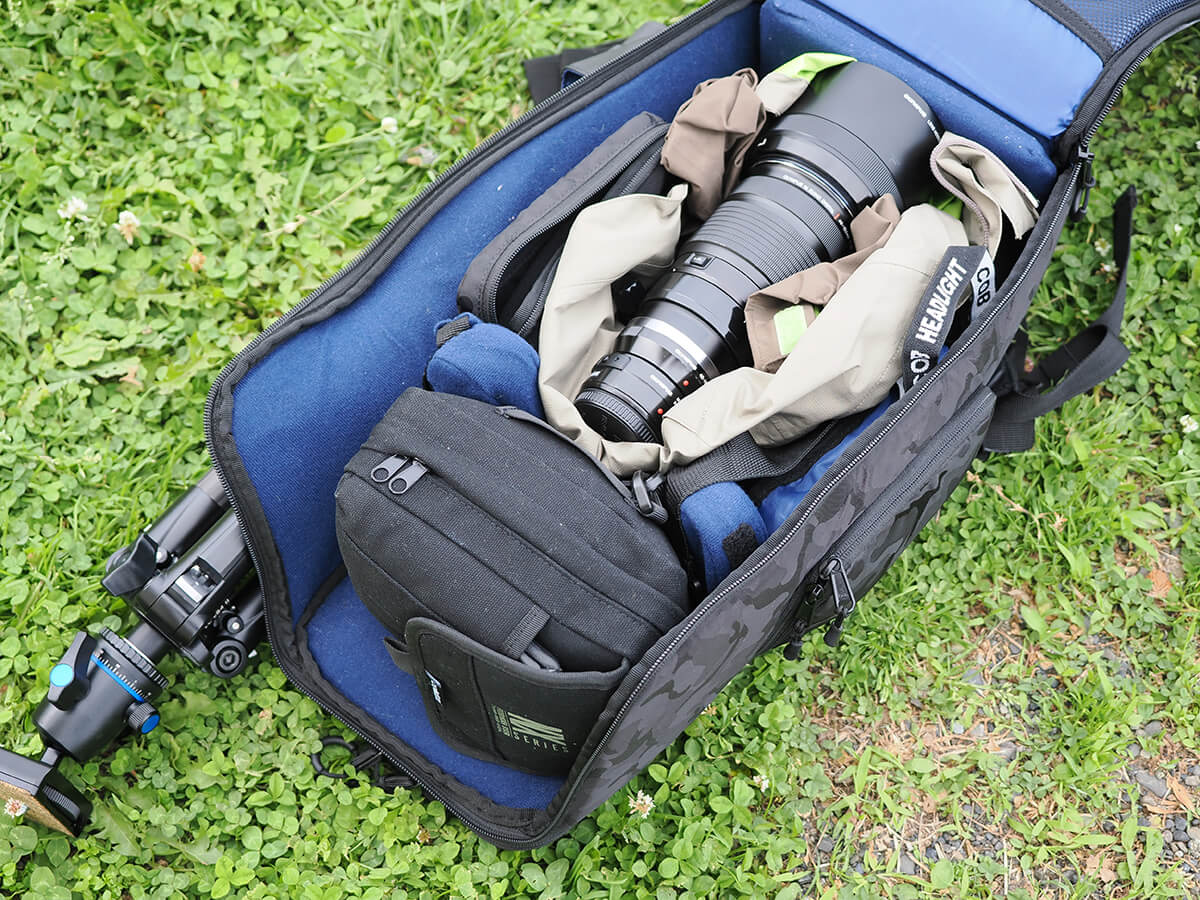
This camera bag is designed to hold one 35mm full-frame telephoto zoom lens. What's great is that it can also hold the camera, lens, and even rain gear
When you think about carrying it on your back, lightness is the overwhelming advantage
While there are likely individual and experience differences, it is said that luggage for day hikes or trekking should be 10-15% of your body weight, or 6-9kg for a 60kg person, and 10-15kg for someone camping out on a summer mountain traverse. Even excluding the weight of tripods, filters, and the camera bag itself, if you choose a high-performance lens such as a big three-lens that covers 14mm to 600mm for a 35mm full-frame camera system, it will be nearly impossible to weigh less than 5kg
However, the OM SYSTEM OM-1 Mark II, the Big Three lens, and the 2x teleconverter I brought with me this time weighed less than 3kg, even with lens hoods and caps, and covered a range from 14mm to 600mm equivalent. Even with a tripod, filters, camera bag, rainwear, snacks, and water, I was able to comfortably keep my total load under 9kg, allowing me to enjoy adventure, mountain climbing, and trekking in comfort. If this weight hadn't covered the ultra-telephoto 600mm equivalent, I probably wouldn't have gone to Teuri Island this trip. In a sense, the combination of the M.ZUIKO DIGITAL ED 40-150mm f/2.8 PRO + M.ZUIKO DIGITAL 2x Teleconverter MC-20 with the OM SYSTEM OM-1 Mark II would have convinced me to head to the unknown island of Teuri
In everyday life, even a 10kg bag of rice feels heavy, so unless you're in great shape, it's probably a bit reckless to go mountain climbing or long-distance trekking carrying a camera system with a 35mm full-frame trio of lenses, which would weigh a total of over 15kg. I normally run to keep myself fit, but even so, walking over 15km around Teuri Island plus a little extra while carrying a load of about 8kg was quite exhausting. Adding another 1.5 times that weight to my load is a bit tough, even though I walk for work
Unfortunately, the recent rise in prices has pushed up the prices of cameras and lenses, and high-end cameras and lenses are also becoming larger. In this climate, the OM SYSTEM camera and lens system, centered around the OM-1 Mark II, offers just the right size, weight, and price point for a partner in adult adventures. While there seems to be a tendency to insist on 35mm full-frame cameras, I recommend adding the Micro Four Thirds OM SYSTEM to your camera system options. I believe it will greatly broaden the scope of your adult adventures
After returning to Haboro on the last ferry from Teuri Island, I checked the weather forecast to decide my plans for the rest of the trip, and unfortunately, it predicted a high probability of rain across the entire prefecture. I returned to Chitose City that night, but if you're traveling, it might be a good idea to take your time on the way back and sample local specialties at roadside stations. The Ororon Line in summer is a driving course that you should definitely experience at least once. If you're visiting Hokkaido, be sure to keep it in mind as an option
For details and purchasing information on OM SYSTEM cameras and lenses, please see here
For more product details, please visit the OM SYSTEM official website
Please consider a paid membership to support the site while enjoying exclusive offers and content!
Chitose Saito


Related reading