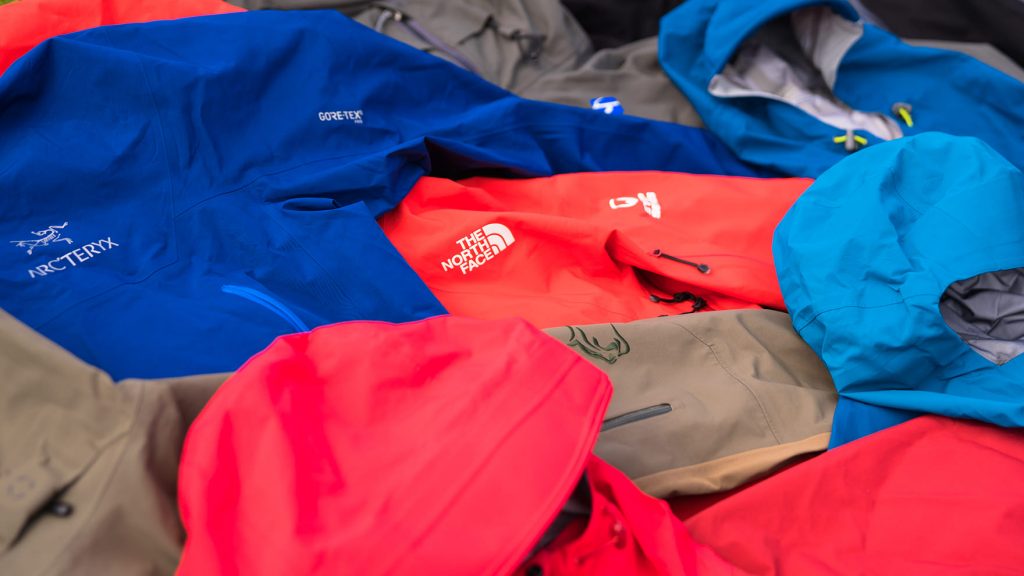
Hard shells are winter outer jackets designed to withstand harsh natural environments covered in wind and snow. I've been trying out a variety of them over the course of two years. At the beginning of the season, I looked over the latest models and picked out some noteworthy ones, but this time I've tried out some of those and other top models in the field, sort of checking my results.
table of contents
What we want is not the "strongest" but the "optimal"
If you look at the lineups of each hard shell brand these days, you'll see that they range from broad categories like alpine and backcountry to more specific categories like long-distance hiking, ice climbing, ski touring, and freeskiing, and even seasonal differences like midwinter and remaining snow. The era has shifted from a competition to offer the "best" with higher specs to one that's "best" for specific uses. As a result, even within the same brand, there are now a wide variety of models with subtle differences in their lineup, and in order to choose the perfect one, you need to discern the differences in the features and consider how you'll use the product
Since most people will buy it and use it for several years, you want to choose a piece that is not only stylish but also perfectly suited to your needs. So, this time, we will report on the results of a comparative evaluation of nine recommended pieces selected by our editorial team from various angles
About the hard shells compared this time
In this comparison, we have selected the following major manufacturers, both domestic and international:
- A model designed primarily for standard snow-covered mountain traverses or backcountry use
With these points in mind, we roughly screened dozens of models, and after making sure to include variations in various aspects such as brand, year of release, material type, fabric thickness, pockets, ventilation, and shape, we narrowed it down to the following nine items for our comparative review
- Arc'teryx Beta LT Jacket
- finetrack Ever Breath Glide
- finetrack Everbreath Acro
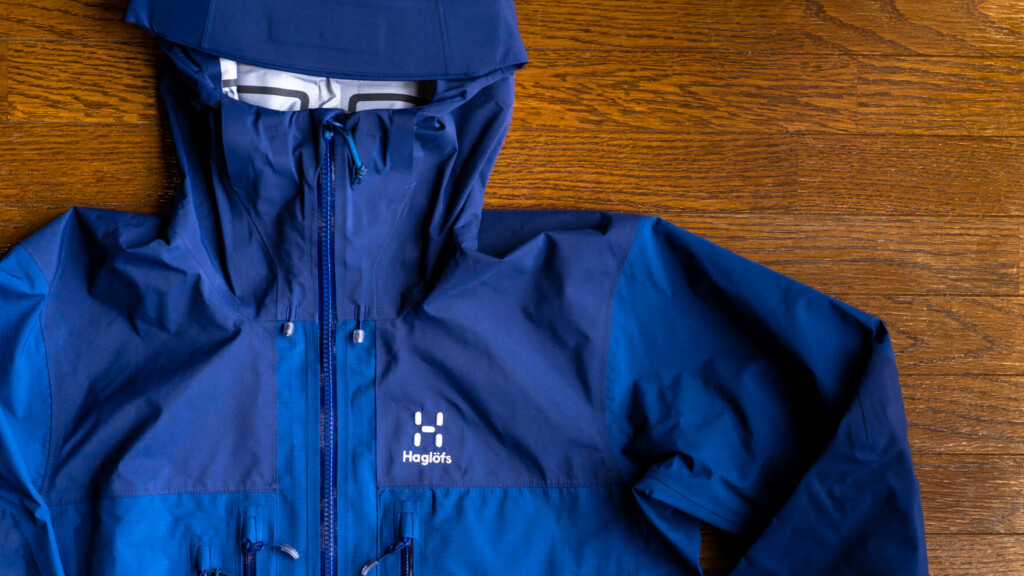
- Haglöfs Spitz Jacket (Tested on the Roc High II Jacket)
- Patagonia Refugitive Jacket
- Rab Latok Alpine Jacket
- Teton Bros. TB Jacket
- THE NORTH FACE Obsession RTG Jacket
- THE NORTH FACE RTG Flight Jacket
Of course, there is some personal preference involved, but it is certain that all of them have a high reputation and are very popular
Test environment
I wore this jacket from December 2016 to early March 2018 on traverses and backcountry skiing in Yatsugatake, Okuchichibu, Tanigawa, and the Alps. I wore it in a variety of conditions, from sunny to cloudy, snowy, and rainy. I always wore a merino wool base layer and synthetic insulation underneath to keep me from feeling the cold directly
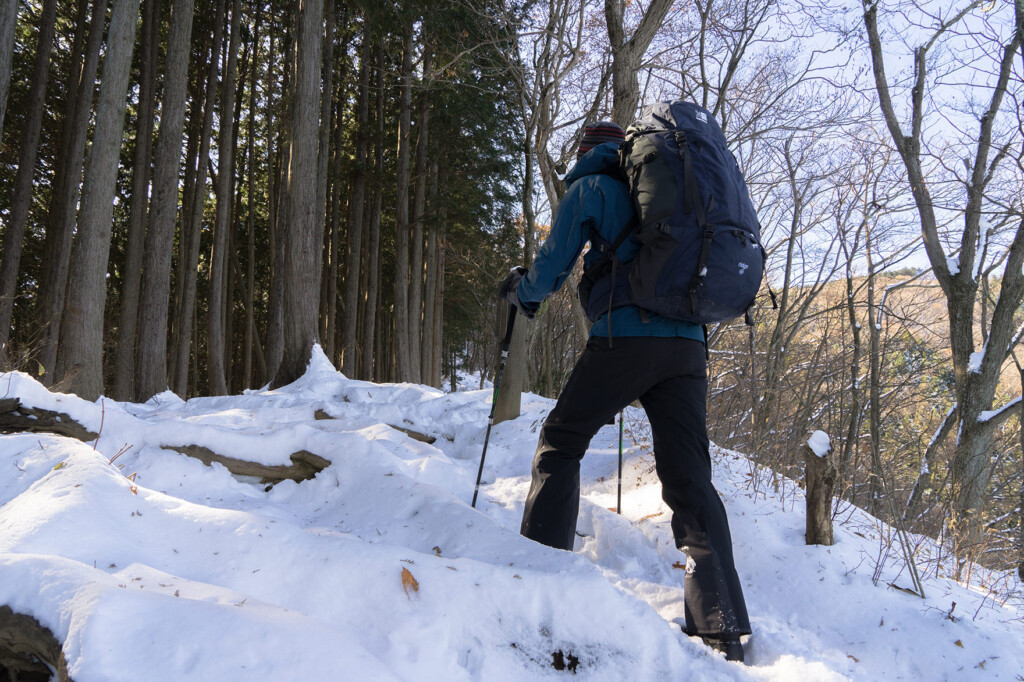
As the basis for this test, I will write about the performance (evaluation items) required of a hard shell
First of all, hard shells must be able to withstand hard activities like skiing and climbing in all kinds of weather conditions, including snow, wind, rain, and cold, so they must be weather resistant . For the sake of convenience, we will also include durability, which refers to the resistance of the fabric to abrasion, tearing, and ripping.
Furthermore, winter outdoor activities involve surprisingly active movements, such as ski pole work, hammering in axes when climbing, and shoveling snow when breaking through snow, so clothing needs to be shaped and comfortable enough to handle intense movements. In that sense, comfort and mobility are important elements.
Furthermore, no matter how cold it is, vigorous movement inevitably leads to sweating. Whether or not there is a system in place to expel sweat from the entire body as water vapor and prevent the body from getting wet is crucial. Two factors play a major role in determining this. One is ventilation , and the other the breathability .
And don't forget about lightness. When it comes to hard shells, the thicker the material, the better it is at blocking out the outside air, but with advances in technology, thinner and lighter materials with the same performance have appeared, so weight is also an important factor to consider.
Furthermore, aspects related to functionality and ease of use, such as the shape and ease of adjustment of the hood, and the number, position and size of pockets, are important elements that bring out the concept and individuality of each model, whether it is specialized for the intended activity or a general-purpose design. Simply having more functions is not always better, but having too few functions also makes it less user-friendly. These points were taken into account when evaluating functionality
Test Results & Spec Comparison Table
| Overall ranking | 1st place | 1st place | 3rd place | 4th place | 4th place | 6th place | 6th place | 8th place | 9th place |
|---|---|---|---|---|---|---|---|---|---|
| item |  |
 |
 |
 |
 |
 |
 |
 |
 |
| Overall score (out of 100) |
81 | 81 | 80 | 79 | 78 | 77 | 77 | 76 | 74 |
| Reference price | 49,680 yen | 70,200 yen | 68,040 yen | 59,400 yen | 66,960 yen | 46,440 yen | 73,440 yen | 67,500 yen | 51,840 yen |
| Here is ◎ | Ease of movement, comfort, ventilation, and plenty of pockets | A balance of weather resistance, lightness, functionality, and ease of movement | Lightweight and easy to move | Comfort, ventilation, light weight, optimal pockets, design | Weatherproof and features rich functionality for BC | Ease of movement | Ventilation, breathability, and ease of movement | Lightweight, breathable and ventilated, | Rich functionality for BC |
| Here is △ | weight | Zipper stiffness, hood adjustment, price | No ventilation, few pockets, price | Weatherproof, adjustable hood | Comfort, mobility, and weight | Comfort | Comfort, functionality, price | Weather resistance, functionality, price | Weather resistance, weight |
| Weather resistance (30 points) |
23 | 25 | 22 | 22 | 25 | 23 | 24 | 21 | 21 |
| Comfort and mobility (25 points) |
23 | 21 | 21 | 22 | 18 | 20 | 17 | 20 | 19 |
| Breathability and ventilation (15 points) |
12 | 11 | 11 | 13 | 11 | 11 | 13 | 12 | 11 |
| Weight (15 points) |
10 | 12 | 15 | 11 | 9 | 11 | 12 | 13 | 9 |
| Functionality (15 points) |
13 | 12 | 11 | 11 | 15 | 12 | 11 | 10 | 14 |
| Specifications | |||||||||
| item | finetrack Ever Breath Glide | Haglöfs Spitz Jacket | Arc'teryx Beta LT Jacket | Teton Bros. TB Jacket | THE NORTH FACE Obsession RTG Jacket | finetrack Everbreath Acro | Rab Latok Alpine Jacket | Patagonia Refugitive Jacket | THE NORTH FACE RTG Flight Jacket |
| Weight (measured in g) | 552(M) | 475(S) | 332(S) | 515(M) | 639(M) | 535(L) | 469(S) | 405(S) | 685(M) |
| material | Outer: 50D 4W stretch nylon ripstop, Inner: 20D polyester knit, Middle layer: Everbreath | GORE-TEX® Pro 3 layer, 100% Nylon, 40D GORE-TEX® Pro 3 layer, 100% Nylon 70D |
N40p-X 3L GORE-TEX® Pro | Polartec NeoShell | 80D GORE-TEX® Pro (3-layer) (Outer: 100% nylon, Middle layer: ePTFE, Lining: 100% nylon) | Outer: 50D 4-way stretch nylon taffeta, Inner: 20D knit, Middle: Everbreath | eVent® 3L fabric | 30D GORE-TEX® C-KNIT BACKER (3 layers) 40D GORE-TEX® C-KNIT BACKER (3 layers) |
40d GORE-TEX® C-KNIT BACKER (3 layers) |
|
|
|
|
|
|
|
|
|
|
| Ventilation | flank | armpits | none | flank | armpits | flank | Armpit to wrist | armpits | armpits |
| Powder skirt | ◯ | × | × | × | ◯ | × | × | × | ◯Removable |
| Other features |
|
|
|
|
|
|
|
||


Evaluation results - Recommendations by type -
Recommended hard shells for comfort in the backcountry
First, we'll introduce a ranking of hard shell models with the best performance and features for backcountry skiing and snowboarding. This type of jacket tends to prioritize breathability and comfort over fabric durability and weight. Other features include more pockets to accommodate the increased amount of gear you'll be carrying, longer lengths to prevent snow from getting in, and an internal snow skirt. While these models are not completely unsuitable for winter mountaineering, their long lengths and thicker bodies can get in the way during strenuous climbs that require frequent use of a harness
1st place: finetrack Ever Breath Glide




Here's what I like about it
- Durable, flexible, breathable, and stretchy fabric for a comfortable fit
- A snow skirt that won't ride up
- Unobtrusive yet effective ventilation
Here's △
- It would be even more convenient if there was a large inner pocket net
- There is a slight weight
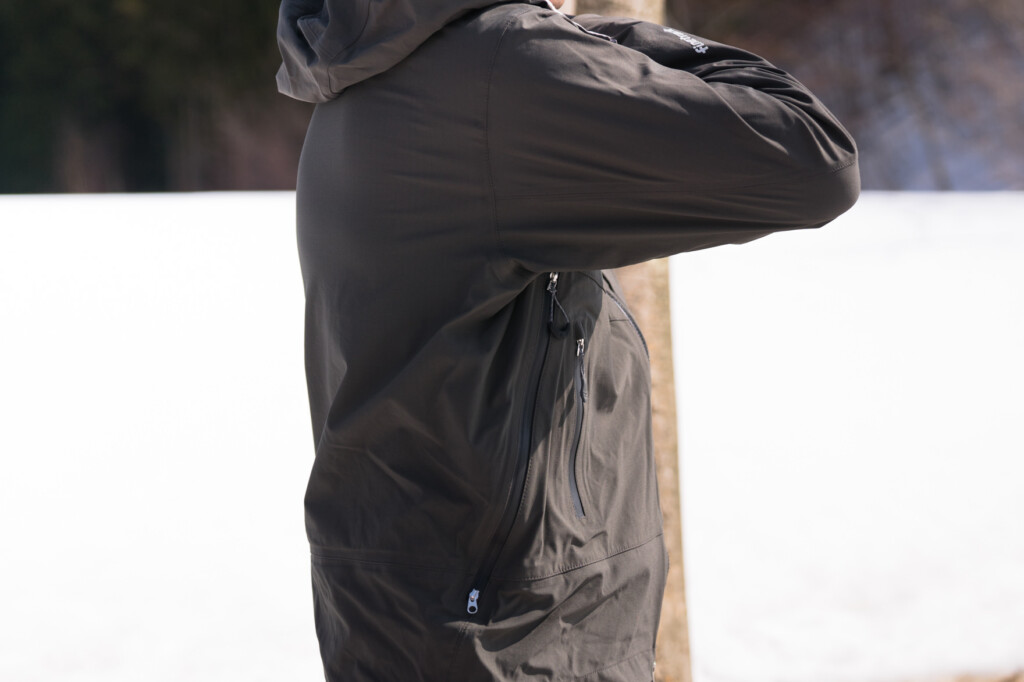
The entire garment is made from four-way stretch material for excellent mobility
Finetrack is a Japanese brand that releases ambitious new items every year, and this is their latest model for 2017/18. I had expected this to be the most talked about item in recent times , and it lived up to my expectations.
The soft, soft-shell-like, supple fabric is not too stiff. Made with the proven waterproof and breathable Everbreath 3-layer material, its durability and breathability make it perfectly comfortable for short stays in the backcountry. Furthermore, the company's signature ventilation located on both sides of the ribs provides excellent ventilation and less clutter than underarm ventilation. And best of all, the highly stretchable fabric stretches both vertically and horizontally, providing greater freedom of movement than any other model, making it suitable for a wide range of activities involving significant movement. The hood is neither too large nor too small, easily adjustable, and features sound vents for maximum comfort. And best of all, it's surprisingly cost-effective
If I were to be greedy, I would like a large elastic inner pocket large enough to hold goggles, gloves, stickers, etc. It would also have to be a balance with the weight, but the current model is a bit basic in terms of functionality, so I think it would be better to make it more specialized for backcountry use
2nd place: Teton Bros. TB Jacket
Here's what I like about it
- Lightweight, flexible, and breathable, it's comfortable to wear
- Pockets and accessories carefully selected for backcountry use
- design
Here's △
- The hood is difficult to adjust
- Slightly stiff zipper
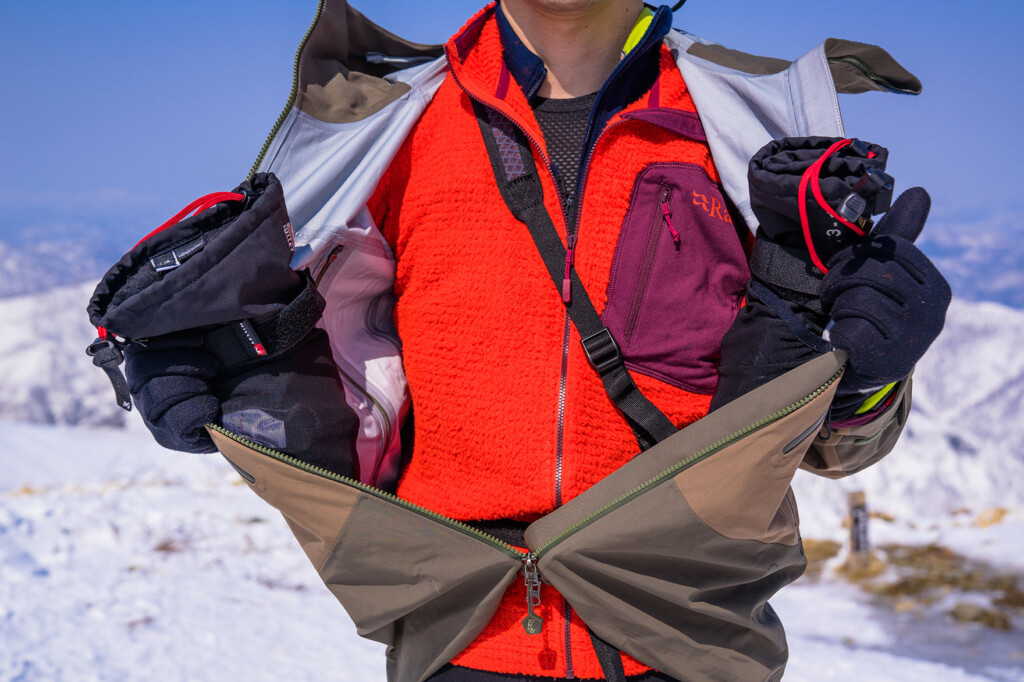
Not only is it comfortable to wear, but it is also very easy to use, with large pockets on both the left and right inner pockets
Teton Bros., a domestic brand with outstanding popularity and recognition in the backcountry, is known for its classic outerwear, which is well-known to those in the know. It was one of the first to adopt the waterproof and breathable Polartec Neoshell material, maximizing breathability and supple comfort while minimizing weather resistance. It was a model that led the current trend in backcountry outerwear. Although it has been several years since its release, it has been continuously improved in small details and is still going strong
The three-dimensional cut provides an excellent fit, making it stress-free even when worn for long periods of time. The sophisticated form and coloring make it appealing, making it something you'll want to wear on the slopes or during your hike. With a hood that's not too large, ventilation in a strategic location, Velcro cuffs for easy tightening, and the perfect number and size of pockets, it combines simplicity (lightness) with ease of use, making it impossible not to appreciate the maker's good taste
However, in recent years, there have been some areas that could be improved as other models have followed suit. For example, the hood is just the right shape, but when you try to adjust it, it's a little difficult to figure out how to do it using just your cheeks, which can be a hassle. Also, while this may vary from model to model, the zipper requires a little more force to slide smoothly, which I feel could still be improved
3rd place: THE NORTH FACE Obsession RTG Jacket
Here's what I like about it
- Highest level of durability and weather resistance
- Tailored and functional for backcountry use
- A zipper that combines design and ease of use
Here's △
- Rough and stiff fabric
- Weight comes at the cost of durability and functionality
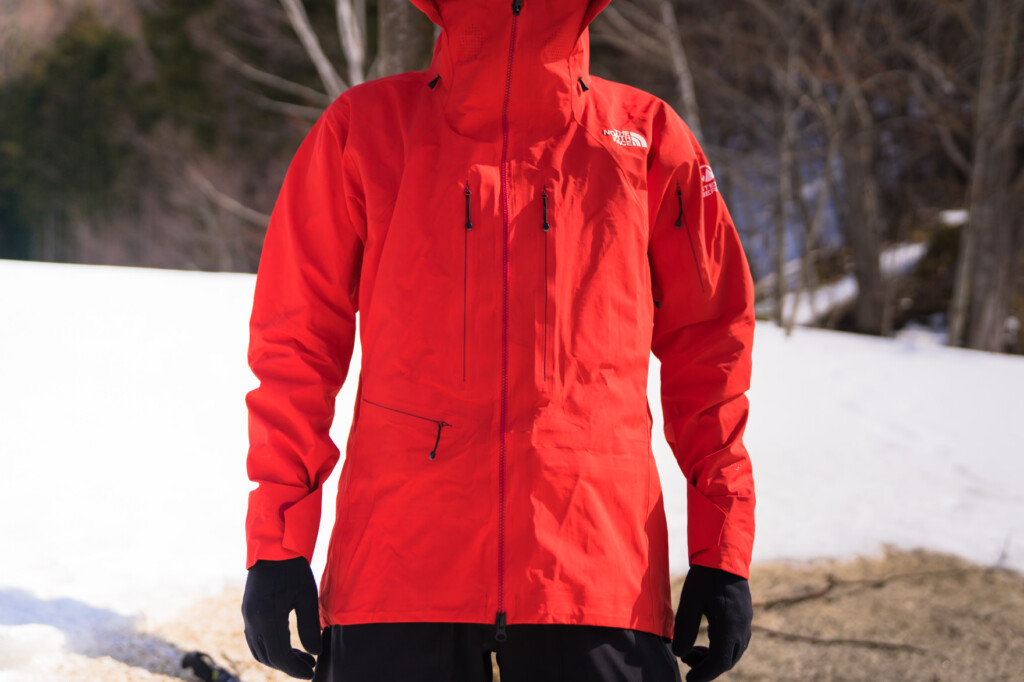
It has the most pockets on the front and back, but the newly developed zippers and other features keep the design clean
This season was packed with new products for BC, and TNF was particularly enthusiastic, releasing several collaboration models with various contracted skiers, but this was my favorite of the bunch
What's most impressive is the front zipper, which was developed in collaboration with YKK. The zipper teeth are placed directly on the fabric, giving it an incredibly clean look. Not only that, but it's incredibly smooth! I've made a lot of impulse purchases in the past, but I never thought I'd make a "zipper purchase."
It's no surprise that the front zippers on winter jackets are stiff, and if you're not careful, the back flap can get caught, which can be a source of frustration, but perhaps this will finally become a thing of the past. I sincerely hope that this innovative technology will become more widely used in the future
As for other features, as you would expect from a product that reflects the opinions of skiers, there are many detailed (and sometimes quirky) features scattered throughout the bag. In particular, the more than sufficient number of pockets is a feature that any skier will appreciate
On the other hand, while I understand the intention behind the unique features not seen in other models, such as the large hood, the roomy and comfortable mouth area that makes it easy to stand up, the slightly stiffer nape that provides padding around the helmet and neck, and the thumbholes on the sleeves, I honestly wasn't that impressed. With the high level of design typical of North recently, this is a one-of-a-kind piece for those who can love everything about it, including its quirky features
An all-around hard shell that emphasizes weather resistance and lightweight properties
From here on, we'll introduce models designed primarily for snow-covered mountain trekking and climbing-related activities. This type of jacket prioritizes fabric durability, such as resistance to abrasion and tearing, and also tends to prioritize lightness for speedy movements. The length is short, as it's designed for donning a harness and swinging your arms, and the style is often slim, eliminating the baggy feel of skiwear. Pockets are kept to a minimum, as this would compromise the performance and weight of the garment. However, performance-wise, it's perfectly fine for backcountry use, making it more versatile. If you prefer a slim style and simple pockets, you'll be happy with this choice
1st place: HAGLOFS SPITZ JACKET
Here's what I like about it
- Exquisite materials that are both weather-resistant and lightweight
- Slim fit, short length, and three-dimensional cut for ease of movement
- Versatile enough for both alpine and backcountry use
Here's △
- When adjusting the hood, the cord locks on the left and right sides of the neck are difficult to press
- Slightly stiff zipper
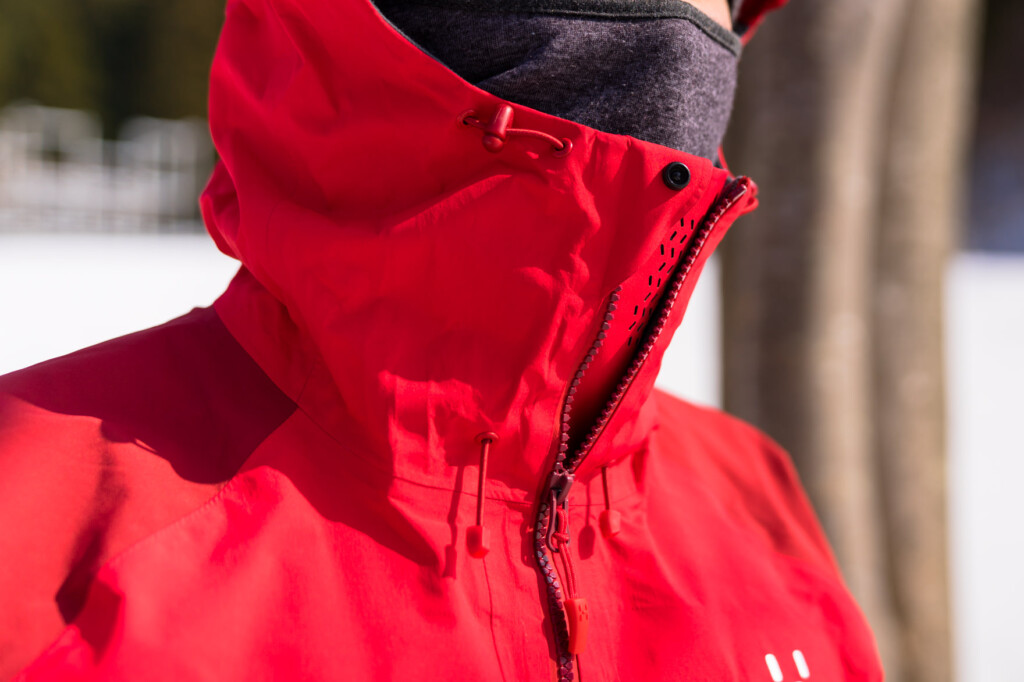
The shape, size, and firmness of the hood are just right. I loved the ventilation holes on the front of the ROC HIGH II JACKET, but unfortunately they're omitted from the SPITZ
If you're looking for a jacket to choose for someone who not only enjoys backcountry skiing but also occasionally goes on winter mountain trekking and ice climbing, I recommend this classic shell from HAGLOFS, a Scandinavian brand popular in Japan for its sophisticated taste and technical expertise. The jacket worn for this test was the high-end ROC HIGH II JACKET, which was available until last year, but while there are some minor differences, it should be considered the same as the SPITZ JACKET, which has inherited its fundamental features
In short, it's a wonderfully well-balanced model. Lightweight and highly durable GORE-TEX® Pro is used in areas prone to high wear, such as the shoulders, back, and waist, at a thickness of 70D to maintain high strength, while 40D is used in areas requiring freedom of movement and breathability, such as the body and sides. This hybrid material mapping achieves the best of both worlds: it's durable, comfortable, and lightweight
The well-balanced design extends beyond its basic functionality. The short length avoids interference with the harness, and despite the slim silhouette, the exquisite three-dimensional cut ensures perfect ease of movement. While it lacks BC-friendly features like an inner pocket or snow skirt, it does at least consider the needs of skiers, with a small pocket on the left shoulder convenient for storing your lift ticket. Another feature I like is the roomy opening, which is neither too big nor too tight. Personally, I loved the collar with breath holes that was on the ROC HIGH II JACKET, but it seems to have been omitted from the SPITZ JACKET
However, it is a well-balanced model that offers a high level of durability, comfort, lightness, and functionality, making it a highly complete piece of clothing that can be worn for any purpose or in any season
2nd place: Arc'teryx Beta LT Jacket
Here's what I like about it
- As light as rainwear
- Stylish and easy to move in 3D cut
Here's △
- No ventilation or double zipper
- In exchange for its simplicity and lightness, it has few pockets
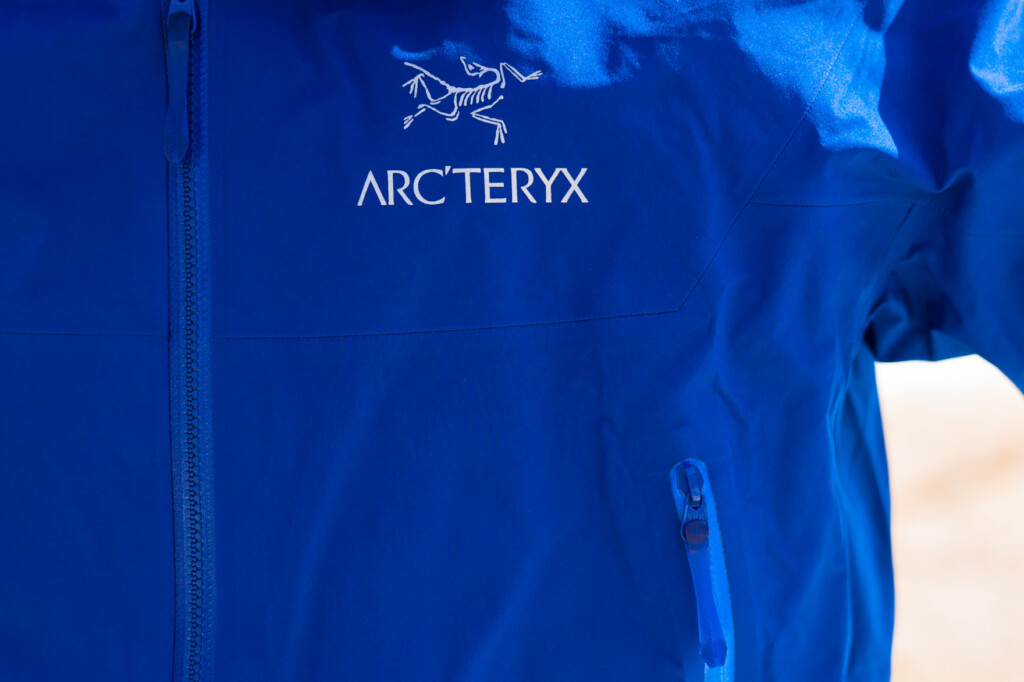
The newly developed zipper eliminates the need for a zipper garage when the zipper is closed (bottom right). This lightness is the result of careful effort, measured in grams
Arc'teryx, a solitary brand that eliminates unnecessary elements and pursues refined functionality and design to the fullest, has renewed its all-season, all-around hard shell in 2017. As always, the level of trimming is surprising, beyond anyone's expectations
What's most noteworthy is its lightness. Weighing just 332g (size S), it's incredibly light, even for rainwear. Its incredible reduction in winter stress makes other models seem sluggish and clunky. The ingenious details that made it so light are also remarkable. Lightweight, durable, and highly breathable, GORE-TEX® Pro is a proven winter outerwear material, boasting a 40D construction that's among the thinnest available. Furthermore, the lining uses ultra-thin 8mm seam tape in places. The RS™ zipper slider, developed in collaboration with YKK, allows even the tiniest details, such as the zipper garage, to be reduced. Minimizing pockets ensures high breathability, even eliminating ventilation, further reducing weight. While the seemingly insane weight reduction may seem drastic at first glance, there's actually a well-calculated strategy behind it, which is truly impressive
That said, this model is ultimately an all-around model, so if you're looking for functionality specialized for a specific activity, you'll definitely find it lacking in functionality. In particular, the ventilation and double front zipper are desirable features that improve ventilation during high-intensity, high-temperature conditions when you'll inevitably end up sweating. In terms of usage, it's perfect for less demanding winter mountain climbing, or as an outer layer in early winter or when snow remains, as it won't get in the way even if you store it in your backpack during hikes or hot days
3rd place: Rab Latok Alpine Jacket
Here's what I like about it
- Highly breathable eVent material and extensive ventilation for excellent ventilation
- Slim and streamlined design with three-dimensional cut for ease of movement
Here's △
- The ventilation zipper is stiff and causes discomfort every time you swing your arms
- price
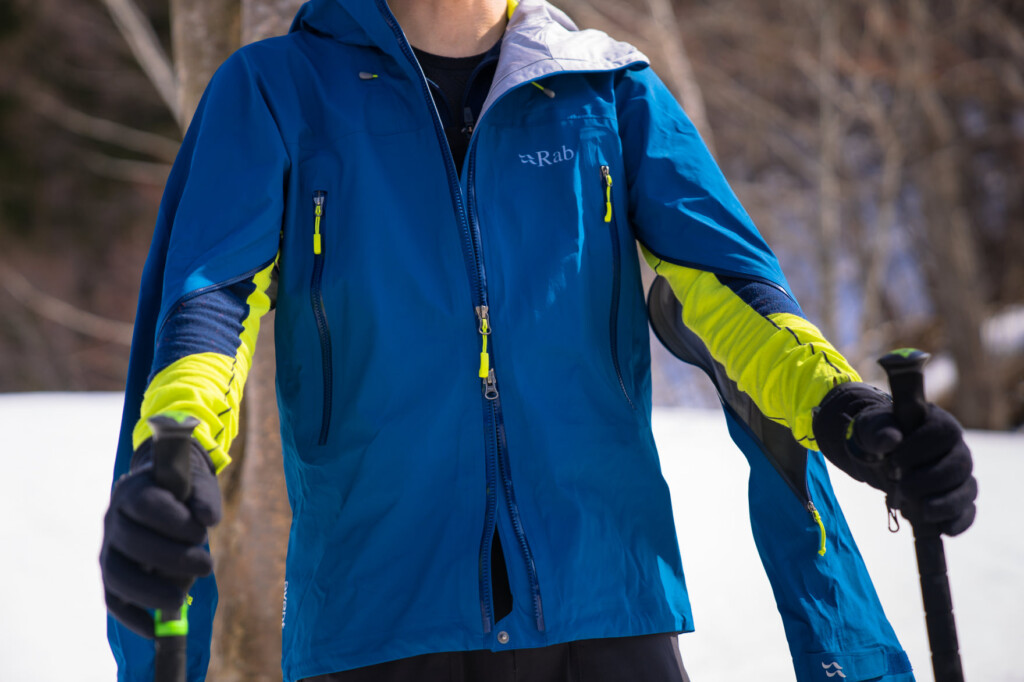
The ventilation extends up to the wrist area. If you put your hands through there and open the front zipper, the ventilation is almost the same as if you were not wearing anything
This hard shell uses eVent, which is said to boast exceptional breathability. While its high breathability might make it less suitable for winter than materials like GORE-TEX®, which allow more air to pass through, the fabric is thick and strong enough to keep out wind and snow. The unique ventilation openings, which can be opened from the armpits to the wrists, provide incredible ventilation, and as a result, no other outerwear can be worn in any weather or condition like this model. The three-dimensional cut allows for easy movement, and the wired hood peak is comfortable to wear, making it a very satisfying jacket despite its minimalist functionality
However, while it may be a matter of getting used to it, the boasted ventilation is a little stiff, and it feels a little uncomfortable every time I move my armpits or elbows. The sturdy Vislon zipper on the front is also quite stiff, making it a pain to open and close. I'm concerned about the comfort of this jacket, so I recommend trying it on before purchasing
Summary and Supplementary Notes
This time, I was able to try out a variety of waterproof and breathable materials, from GORE-TEX® to eVent and Neoshell. In the past, there were many that performed poorly, but at this level, the performance differences are quite small, and no matter which one you choose, you won't make a fatal mistake
Even so, in recent years, no brand or material manufacturer has made any significant advances in terms of material performance, such as durability and breathability, and to be honest, there aren't that many differences between material names or brands anymore (though strictly speaking, that's not true). In that sense, you could say that the current hard shell market has matured to a certain extent. My impression after this comparison is that, while it's important to compare the specs of each model, it's also important to consider the idea and good taste behind the selection of materials and features, and what their intentions were when choosing a hard shell
However, hard shells are also an area in which every brand invests the most research and development costs, so it's entirely possible that new, game-changing materials and technologies will emerge in the future. We can't wait to see what surprises next season will bring!
Check out this article about backpacks
- Essential for the harsh winter outdoors! How to choose a hard shell jacket
- Snow season is here! This season's must-have hard shell jackets [2017-2018]
- 5+5 Recommended Hard Shell Pants for Snow Mountain Climbing and Backcountry Skiing!
- 7 things to keep in mind when choosing the best hard shell pants
Related reading