This season is said to be a warm winter, but it still snows, and when it does, you can enjoy the powder snow. I've been really feeling glad to be born in Japan lately
So, when it comes to winter sports, what do you imagine is the most important piece of equipment for enjoying skiing and snowboarding?
Of course, you need skis and boards to ski! And
of course, boots are the link between the skis and boards!
But the most important thing is the look! And the clothing!
There are many different opinions, but I think the most important piece of gear is goggles

It is said that humans obtain 90% of information through their vision, that is, their eyes. If you are blindfolded, 90% of the information is lost. That is why I believe that goggles, an essential item for seeing, are the most important!
With this in mind, I have been using SMITH
It all started with this comment muttered by a senior patrolman who was color-blind
"I tried a lot of different lenses, but only this SMIT
Before that, I was a big fan of OAKLEY , I started using SMITH SMITH exclusively for about 10 years. In other words, before I started this review, I was a total SMITH fan.
looking at the recent SMITH
"Is the quality really different from cheaper goggles?"
"Is it really worth the price?"
"Other brands say the same thing, but which one is really better?"
It is also true that questions are beginning to arise
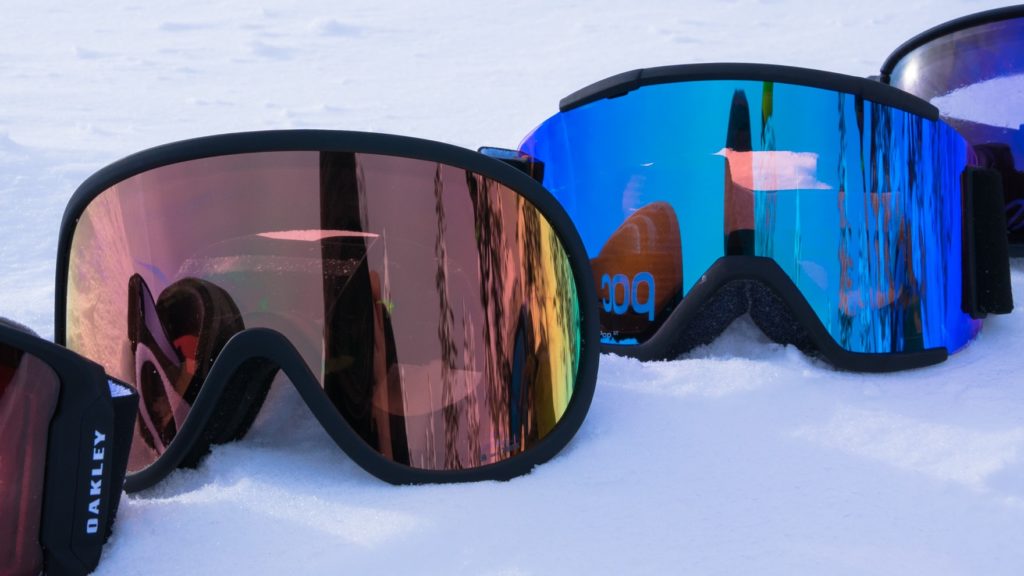
So this time, we picked three popular major brands plus one benchmark company to compare high-contrast lens goggles, which use the latest lens technology!
table of contents
table of contents
- About the items tested this time
- Test Results & Spec Comparison Table
- If you had to choose one, what would it be? My recommendation
- Other recommended models by preference
- Summary: Tips for choosing the perfect goggles for you, as revealed by the test
About the ski and snowboard goggles we compared this time
The goggles used for this comparison are listed below. *The numbers in parentheses indicate the lens type and visible light transmittance (VLT)
- SMITH Squad XL (Cromapop Storm Rose Flash lens 50%)
- OAKLEY Line Miner XM (Prizm Rose 26%)
- POC Retina Big Clarity (Spektris Rose Gold 35% *Included lenses are Spectris Orange 22%)
- (Benchmark) SWANS RIDGELINE-U (ULTRA Lens 35%)
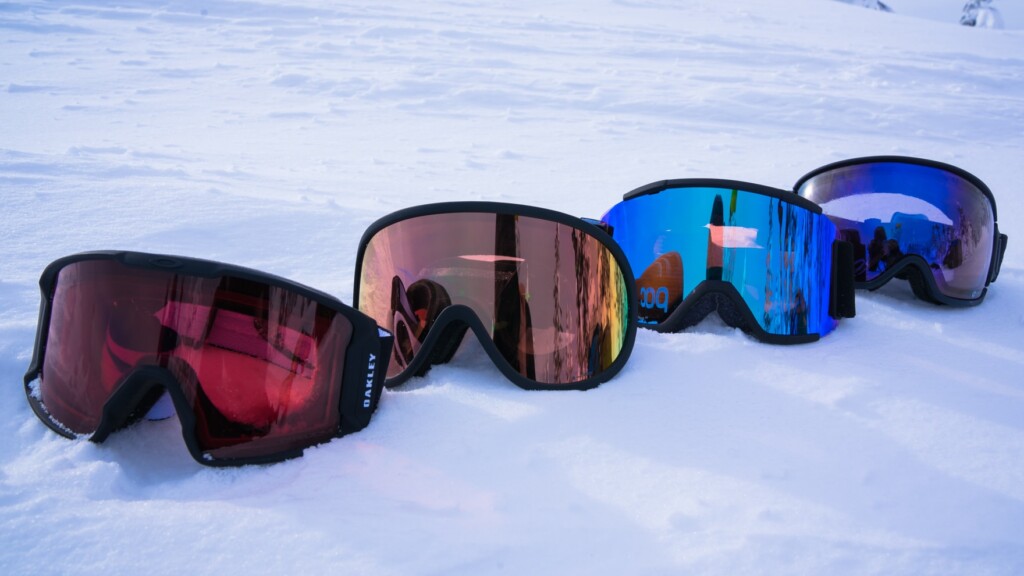
When choosing these four models, I first wanted to test the following three criteria:
- Wearing high-contrast lenses
- Flat lens type
- Being a major domestic brand
Why did you choose a high-contrast lens?
One of the most cutting-edge technologies that has recently become popular in ski goggle lenses is the "high contrast lens." Put simply, it's a technology that allows you to see more clearly and sharply (see SMITH's "Chromapop" ), making it much easier to see bumps in the snow.
Just how advanced have the latest lenses been? As a gear enthusiast, I couldn't help but try them out. There was another reason why I chose the latest high-contrast lens: price
As the level of product technology improves, the price of goggles has continued to rise recently. But are they really worth the price? You've already had to replace your unsatisfactory shoes, so is it really necessary to use an expensive model with high-contrast lenses now? You won't know until you try them out
Why did we choose to compare flat lenses?
First and foremost, it looks cool (lol).
I simply think that flat lenses are the latest trend (lol).
this guy and that guy who compete in the Olympics and X Games also prefer to use flat surfaces.
When I asked why, I was told that flat screens have less distortion. In my own experience, I had to try them out multiple times before I could notice a difference, perhaps at the edge of my field of vision. However, flat screens do have less distortion and provide a more natural field of vision. In a world where instant, delicate, and precise movements are required, you want to choose the most accurate information from the outside world, and this made a lot of sense to me
It is generally said that spherical lenses have the advantage of providing a wider field of view than flat lenses, but in the end, there are also flat lenses that provide a wider field of view. For this reason, I chose flat lenses this time, as they are the most up-to-date
Why did you choose these three brands?
First of all, SMITH and OAKLEY are top brands worldwide. Both support high-level riders, and some riders even say that when it comes to goggles, they only have two choices: SMITH or OAKLEY
Another reason POC on the slopes and among backcountry skiers, and I have the impression that it is often used by foreign tourists! (Actually, I also wanted to see for myself how good they are, as Fullmarks, who has a good eye for quality and branding, is the domestic distributor.)
SWANS given their popularity in Japan and their domestic brand status, but there were no suitable flat lens models available, so this time I picked out a high-end model from their lineup and used it for comparison.
other DRAGON , which also has high-contrast lens models aimed at Japanese people, but after consulting with the editor-in-chief, we narrowed down the comparison models to the four above. Incidentally, I'm a telemark skier who loves powder, so I've made my selections assuming they'll be used in powder or the backcountry.
Test environment
The test conditions were as follows: from January to February, the glasses were tested at ski resorts and backcountry areas, on sunny to cloudy days, and in the morning and evening, to consider visibility, comfort, etc. We also conducted tests in indoor environments to consider details such as anti-fogging

Each model was evaluated by weighting the following five items according to their importance, and the scoring criteria for each item were set as follows:
- Visibility...The high-contrast lenses that inspired this project were not only about how easy it was to see in the snow, but also about how comfortable the field of view was, including the width of the field of view
- Anti-fog: Anti-fog goggles are very important when enjoying powder snow in the backcountry
- Comfort: Check the overall fit, cushioning, breathability, etc
- Ease of use: Compares the small aspects of satisfaction when using the glasses, such as ease of fastening and removing the strap, adjusting the strap, ease of changing lenses, and quality of construction
- Cost performance: Evaluates the balance between the above functions and performance and price
What are your expectations before the test?
My prediction before the test was that, as I am a SMITH fan, the number one choice would be the classic `` SMITH .''
How will
another long-established brand, OAKLEY, And what about the up-and-coming Scandinavian brand POC ?
In the end, is the benchmark SWANS better?
If things go as expected, the order would be SMITH > OAKLEY > POC, but what was the actual result? Let's announce the results right away!
Test Results & Spec Comparison Table
If you find it difficult to see the table on the lightweight display for smartphones, click here.
| comprehensive evaluation | AAA | AA | AA | A |
|---|---|---|---|---|
| item |  |
 |
 |
 |
| Reference price | 17,280 yen | 27,000 yen | 24,840 yen | 27,000 yen |
| Here is ◎ |
|
|
|
|
| Here is △ |
|
|
|
|
| Easy to read | ★★★★☆ | ★★★★☆ | ★★★☆☆ | ★★★☆☆ |
| Resistance to fogging | ★★★★☆ | ★★★☆☆ | ★★★★☆ | ★★☆☆☆ |
| Comfort | ★★★★☆ | ★★★☆☆ | ★★★★★ | ★★★★☆ |
| Ease of use | ★★★☆☆ | ★★★★☆ | ★★★★☆ | ★★★☆☆ |
| Cost performance | ★★★★☆ | ★★★☆☆ | ★★★★★ | ★★☆☆☆ |
| Specifications | ||||
| lens | Prizm Lenses | Clarity Lens | Cromapop | ULTRA Lens |
| Lens Color | Prizm Rose | Spectris Orange (reviewed as Spektris Rose Gold) | Storm Rose Flash | Ice Mirror x Ultra Light Purple |
| Visible light transmittance (VLT) | 26% | 22% (35% in reviews) | 50% | 35% |
| accessories |
|
|
|
|


If you had to choose one, what would it be? My recommendation
All of the products I chose this time were from well-known brands, so there were no major issues with their basic performance, and I didn't find any major drawbacks in terms of ease of viewing or resistance to fogging
However, when it comes to using them in powder or backcountry skiing, the basic performance plus a little extra is very important. For this reason, I compared them from a more detailed perspective. After comprehensively examining lens performance, fit, anti-fogging, build quality, cost performance, etc., the goggles I would recommend right now the OAKLEY Line Miner XM !
To be honest, I was basically satisfied with the performance of all the lenses and it was hard to choose a favorite, but this model provided the clearest contrast, and the other lens performance and fit were flawless, making it safe to use in the backcountry. Another deciding factor in my choice was the excellent build quality
The installation of the pads, bonding of the lenses, construction of the foam, and construction of the lenses are all of high quality down to the smallest details, and I felt that this was a product worth the price. For example, looking at the bonding of the lenses, you can see that the two lenses are bonded together neatly, with almost no misalignment, protrusions, or wrinkles

The whole thing is neatly pasted together, with almost no misalignment, overhangs, or wrinkles
It may seem obvious, but there are very few manufacturers that are so thorough with this even in the parts that cannot be seen. By the way, with SMITH , I am quite concerned about things like excess glue.
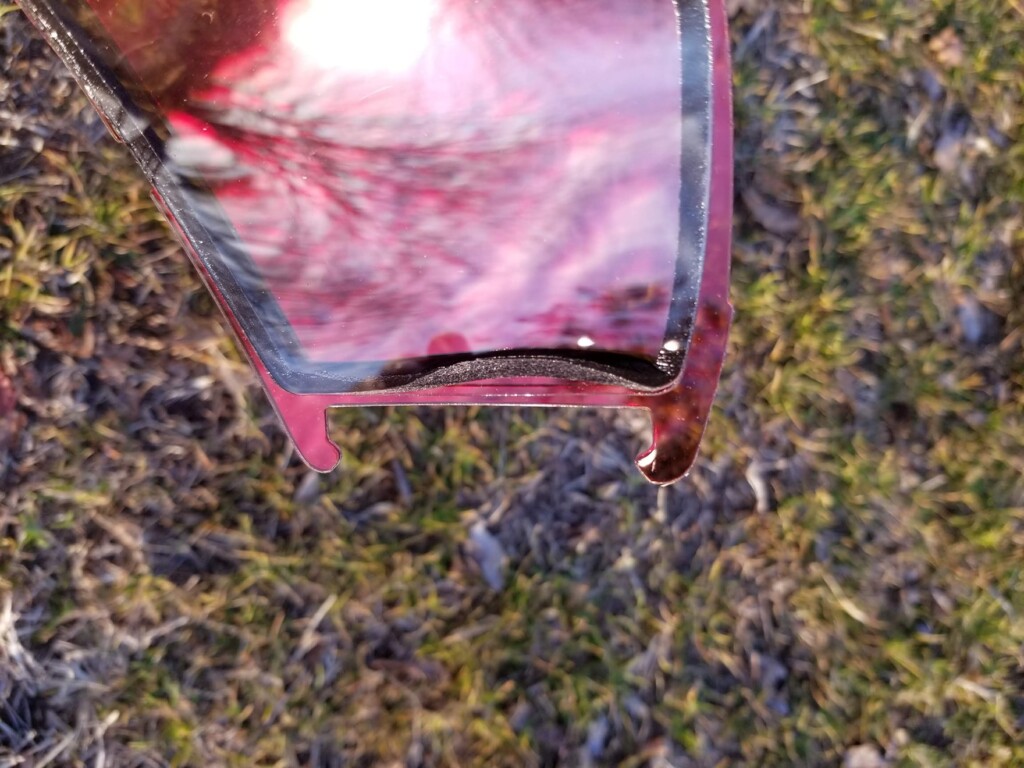
The quality of the construction can be seen by comparing the details. Misalignment of the adhesive, as shown in the photo, has a subtle effect on performance and durability
However, I will be purchasing a different lens color. The Prizm Rose lenses (VLT 26%) used in this test are a little too dark, so while they work well on sunny days, they are harder to see through in lightly cloudy or snowy conditions than other bright lenses
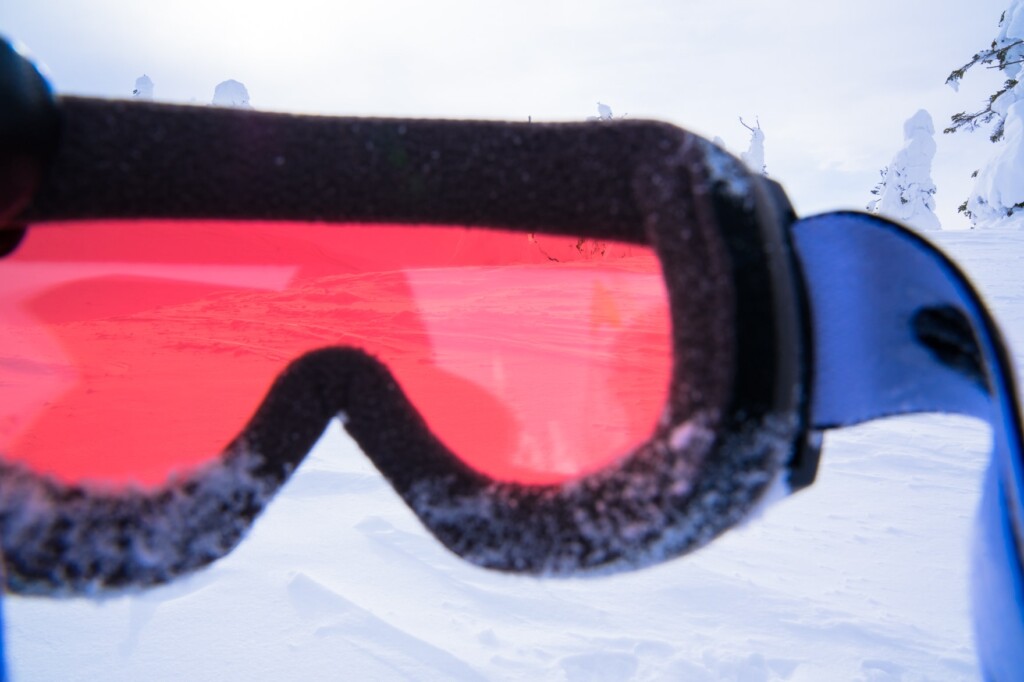
The color is so dark that it doesn't bother me on sunny days, but even on a lightly cloudy day like this, it was quite red and stressful
Therefore, I felt that a VLT lens that was a little brighter (around 35-50%) and had a lighter color that could be used in both sunny and slightly cloudy conditions would make it easier to see overall
However, if you have never used a pair of high-quality goggles before, the SMITH Squad XL . While the assembly quality OAKLEY , the fit is particularly high, and the high cost performance of the two-lens set is a plus for a first model.
When it comes to products of this level, performance is comparable, so it all comes down to the fit, and whether the lenses meet your needs. Having two lenses is like having two pairs of goggles, so if one lens becomes unusable, you can just use the other one to cover it
When you think about it, SMITH is so popular.
Next page: Recommended models by preference
From here on, we will introduce recommended models based on various points of interest from various perspectives. Please use this if you want to judge for yourself which model suits you best based on the test results. It is quite a niche topic, so please enjoy it even if you like it
Bright and high-contrast lenses: OAKLEY
What I was most interested in was the comparison of high contrast lens performance. To be honest, this is the area the brand has been putting the most effort into, and each lens has its own merits and demerits in the finer details, so there is no model that stands out the most overall, making it a very difficult choice .
First of all, in terms of the strength of the much talked about high contrast (how clearly shadows can be seen), OAKLEY was the most noticeably clear. It was clear on the slopes, but it was surprising how clear it was even in the city. Primary colors in particular look fluorescent. SMITH has a strong sense of contrast, partly due to the bright lenses. POC and SWANS also made shadows stand out more clearly on snow, but when viewed in complex environments, including in the city, they were a little milder than the other two.
Next, in terms of lens brightness, the VLT is different so it's not possible to give an exact difference, but in terms of lenses that feel brighter, OAKLEY has the best visibility on sunny days and the contrast is clear, so it feels brighter. Incidentally, SMITH is excellent in overall brightness, and looks brighter especially in dim light. It almost feels brighter than with the naked eye. POC and SWANS also generally bright and easy to see through, and SWANS has a color that appears close to the naked eye, so they cause the least discomfort when worn.
High resolution and wide field of view: POC
the POC lenses provided a clearer and sharper field of view . I can't explain why, but the lenses, made by camera lens manufacturer Carl Zeiss, definitely provided a clearer field of view than the others. It felt like the image quality had been adjusted on my smartphone.
Finally, there's the field of view. The shape of the goggles and the shape of the frame have a big impact on the field of view. Naturally, a wider field of view makes it easier to see, but the easier it is to see the parts you need, the easier the goggles are to use. With this in mind, POC . The drooping shape of the goggles, like teardrop sunglasses, provides a wide field of view on the lower left and right, and the shape and size of the frame also make it easy to obtain a wide field of view.
Cost performance: SMITH
They offer high levels of visibility, anti-fogging, and a comfortable fit, and for the price (23,000 yen) with two lenses, I can only say that they are a great value for the money. If you're buying goggles for the first time, or if your current goggles are no longer suitable, I would definitely recommend SMITH
Also, if you already have goggles that you can use, I recommend OAKLEY as your next pair because of the careful construction
Anti-fog: SMITH, OAKLEY
I believe that anti-fog goggles are very important when enjoying powder snow in the backcountry, so this "anti-fog" feature was something I was particularly interested in
Based on various test results, including not only actual skiing but also leaving them in the bath and spraying them with mist, either SMITH or OAKLEY are perfect for anti-fogging! They are anti-fogging and absorb and release moisture very quickly, so even if you fall and snow gets in your glasses, a quick lift ride will restore them to a level where you can still see clearly. POC also had no issues with anti-fogging on the inside. However, I did feel like the outside of the lenses were a little more prone to fogging when riding in a gondola
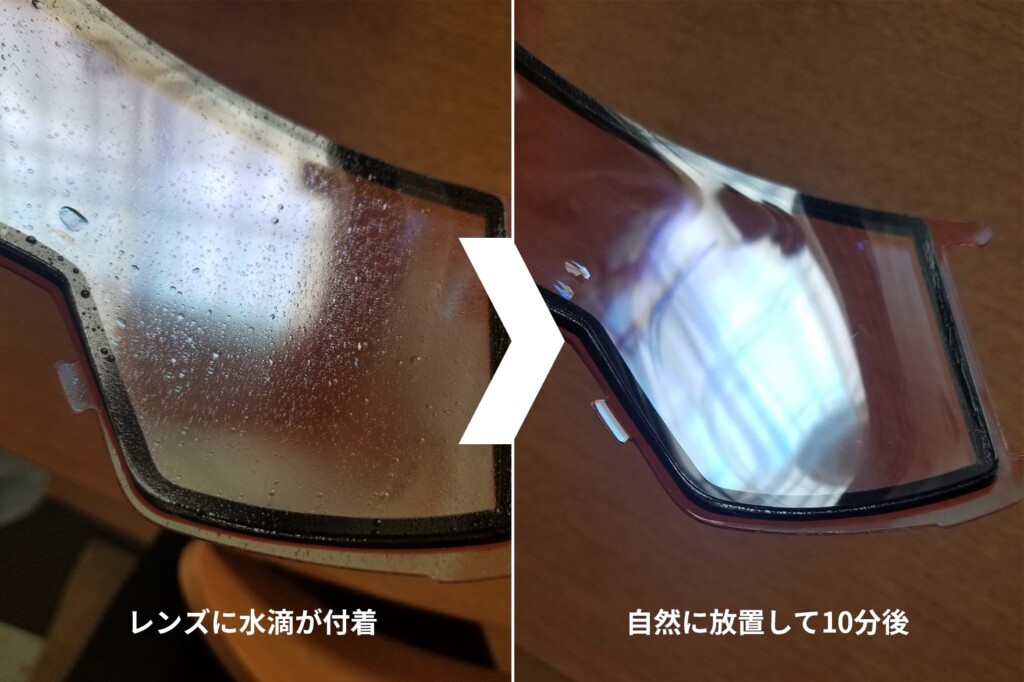
If the lens is anti-fog, the lens will absorb any slight fogging, and even if you spray water on it with a spray bottle, it will quickly absorb and release the moisture (photo shows SMITH)
Regarding SWANS, I didn't have a good impression of them before. However, after this experience, my impression changed and I bought a pair of SWANS goggles for my child. That's how good my impression of SWANS is, but when it comes to backcountry skiing, I don't recommend SWANS
If snow gets inside SWANS and water droplets form, the lenses absorb the water and expand, making it difficult to see. Furthermore, once they absorb water, they take a long time to recover, causing the lenses to become distorted. In this case, a secondary pair of goggles is essential
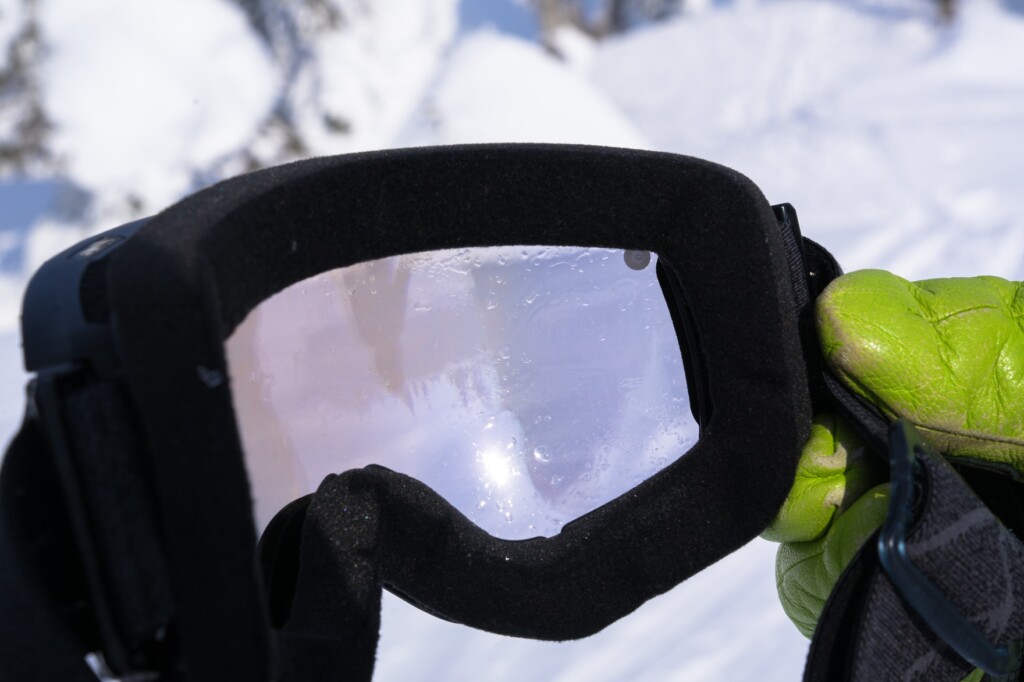
If moisture accumulates on the inside of the lens to a certain extent, the surface of the inside of the lens will become uneven like a crater. Naturally, this will distort your vision. It will take several minutes to several tens of minutes for the lens to recover from this
Comfort: SMITH
(From right: SMITH, OAKLEY, POC, SWANS)
SMITH was the most comfortable overall, taking into account fit, cushioning, and breathability . It's easy to see this when you remove the lenses and try on the frame alone: while other brands' lenses start to touch the sides and temples, SMITH lenses start to touch the center. This means that gaps tend to form around the nose, making them a better fit for Japanese people, whose faces tend to have a gentler curve than Westerners. The reason for this is that the nose area of the Japan Fit lenses has a substantial volume boost, and the foam pads are tapered, with different thicknesses in the center and on the sides.
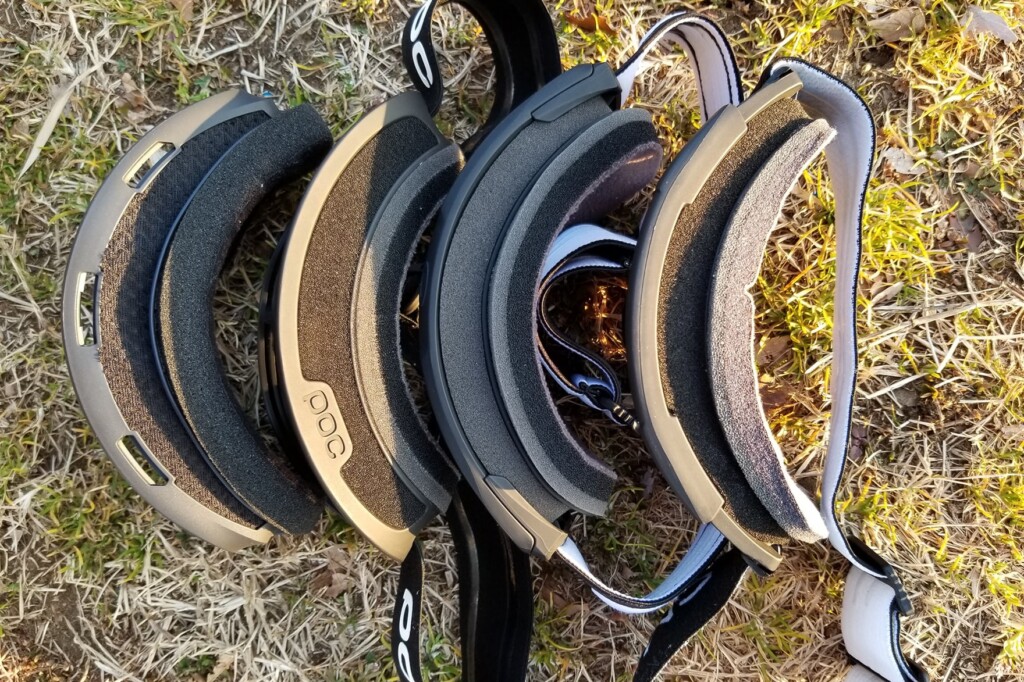
From the right: SMITH, OAKLEY, POC, SWANS
Additionally, OAKLEY also has a comfortable fit thanks to its shape that is relatively easy to fit for Japanese people and the cushioning in the areas that touch. On the other hand POC , while offering an Asian fit, still has a somewhat sharp curve in the frame, and the frame shape makes it easy for gaps to form on the cheeks, so the fit may vary from person to person (although the nose pads are thicker, so they don't tend to be too tight).
Many people may be wondering, "What about the Japanese-made SWANS SWANS also have a gentle curve, but the nose pads are actually thin. Because they are thin (especially around the nose), they may not fit well on some people.
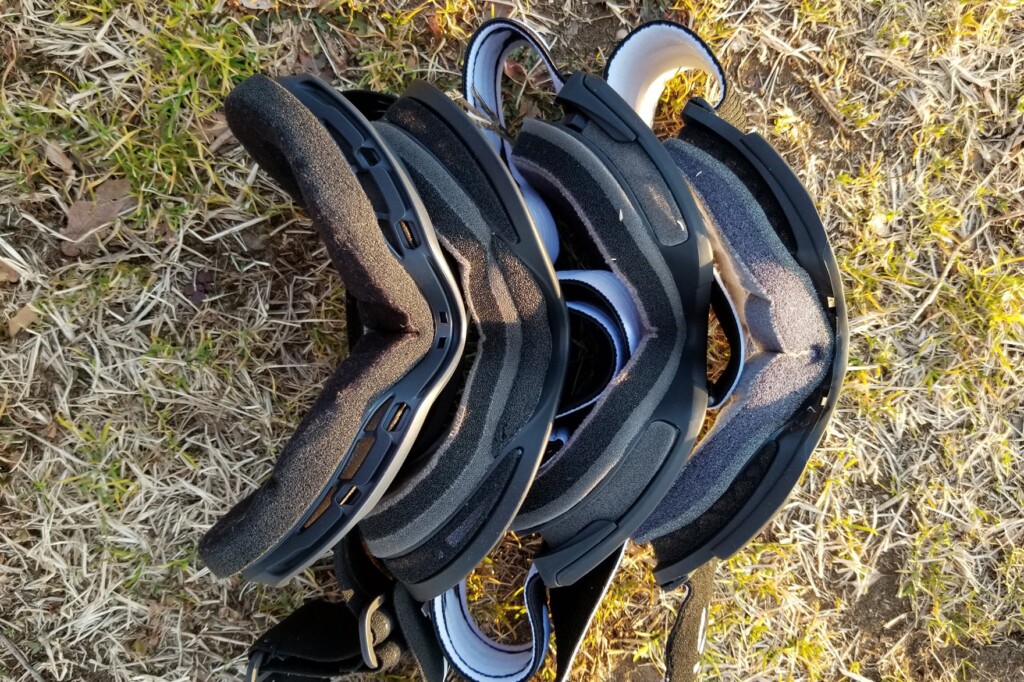
From the right: SMITH, OAKLEY, POC, SWANS. The fit felt quite different depending on the thickness of the nose pads
Summary: Tips for choosing the perfect goggles for you, as revealed by the test
SMITH, OAKLEY, POC, SWANS - all top brands - all of them were great products! It was also a lot of fun to discuss them
Based on the results of this study, we can say the following about goggle selection:
- fitting
- Lens Selection
Finally, I would like to share some tips on how to choose that I learned through this review
1: Fitting
It has been said that fitting is important when choosing goggles. However, you may be wondering, "What should I look at when it comes to fitting?" I myself had only ever paid attention to the gap around my nose. However, after testing this time, I realized that there are several points to consider when it comes to fitting
- Is the frame size right for me?
- Does the frame form curve fit your face?
- Is there a gap in the nose?
- Do you find the hardness of the foam or the feel of the material unpleasant?
When choosing goggles, try out a variety of styles, from expensive to cheap. There's no point in buying expensive ones if they don't fit properly.
Try on five or six brands and models and you'll get a general idea. In particular, when it comes to frame size and dimensions, even if large lenses are in fashion, if they're too big they'll look childish, and if you're wearing a helmet, compatibility with the helmet is also important. If they're too big, the goggles will hang down on the helmet and won't fit.
I think the most important thing is whether you like the model or not, but I hope you'll remember the results of this study when you find yourself thinking, "This one and this one are both good, but what should I do?"
2: Lens selection
Personally, I recommend choosing lenses that are on the bright side. In terms of VLT, this is around 35% to 50%. Basically, it's a lens that can cover everything from sunny to cloudy conditions
Although it depends on the individual, I feel that the lens color is too dark at 25%, making it difficult to see. Lenses designed for foreigners, especially Westerners, seem to be too dark for Japanese people
Foreigners, especially Westerners, wear sunglasses. It's partly a fashion statement, but apparently they're simply too bright. Westerners have lighter eye pigmentation, so they're more susceptible to glare
It also snows a lot in Japan. In January and February, it snows a lot and it's often cloudy, so I don't think you actually need lenses that are that dark
In terms of this lens,
- SWANS RIDGELINE-U (ULTRA lens VLT 35%)
- POC Retina Big Clarity (Spektris Rose Gold VLT 35%)
It seems to be easy to use
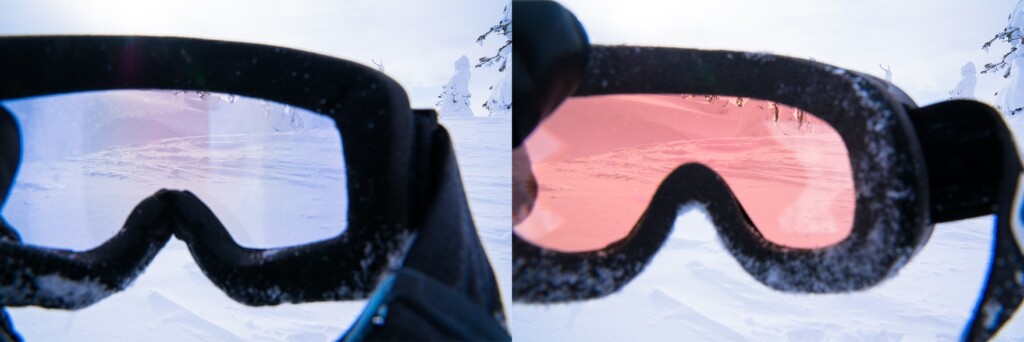
Left: SWANS RIDGELINE-U (ULTRA Lens VLT 35%), Right: POC Retina Big Clarity (Spektris Rose Gold VLT 35%)
Of course, it depends on the individual, so there is no absolute answer. In fact, I am fine with bright lenses, so my favorite lens is the SMITH Cromapop Storm Rose Flash lens 50%
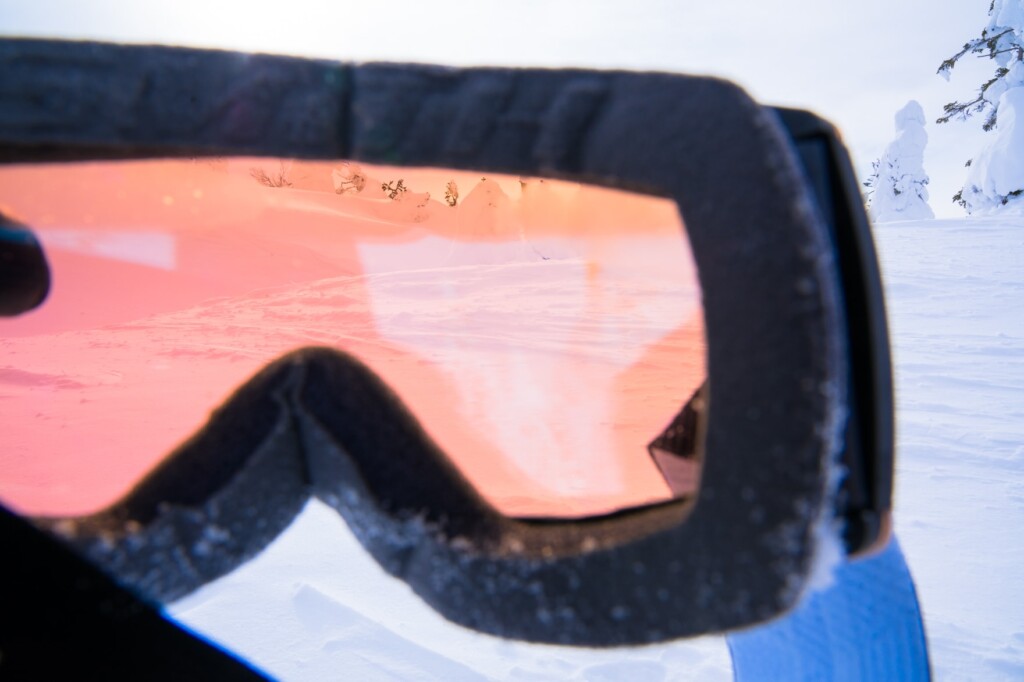
However, some people say that this is too bright and dazzling on sunny days
If it's too bright, it's not good for your eyes and will make you tired, so considering the average lens color, I think 35% is a safe bet. If you have a larger budget, there are now high-contrast and photochromic lenses available, which were not available in this model, so those are probably the best!
The best goggles will depend on how you use them and the primary use you will have. From the perspective of a backcountry skier, the results are as shown here
We hope this helps you choose your goggles!
Makoto Hamaguchi

We are looking for reviewers
Outdoor Gearzine is always looking for members who love the outdoors and want to write reviews about outdoor gear. For more information, please visit the REVIEWERS page here !
Related reading