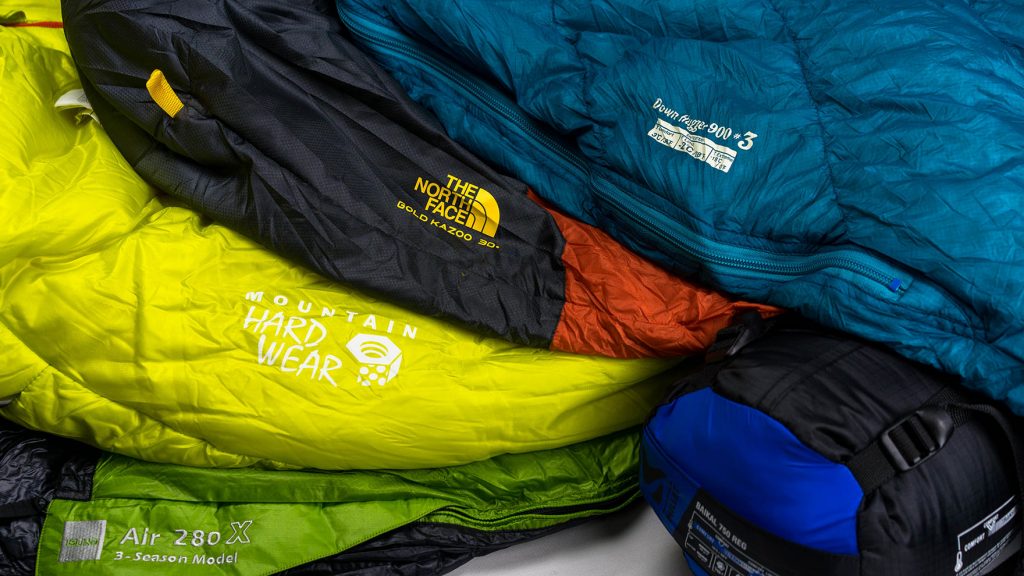
table of contents
- Having a comfortable sleeping bag makes you look forward to nights in the mountains.
- table of contents
- Point 1: Temperature range – how much warmth is needed?
- Point 2: Filling and surface material
- Point 3: Shape, size, and structure
- Point 4: Various parts and special functions
- Point 5: Bedding to be used together
- 8 Three-Season Sleeping Bags Recommended by Our Editors
- ISUKA Air 450X: A model sleeping bag that combines the basics with cutting-edge features
- Mont-Bell Down Hugger 800 #3: A comfortable fit whether you're asleep or awake
- NANGA AURORA light 350DX Having one less thing to carry makes a big impact
- Sea To Summit Spark Sp II Lightweight and compact with amazing specs
- Takemo Sleeping Bag 3: High-quality Japanese sleeping bags for everyone
- THE NORTH FACE Gold Kazoo: A hybrid of down and synthetic fibers for superior heat retention
- Mountain Hardwear Hyperlaminar Spark: The next generation of high-performance synthetic sleeping bags
- finetrack Polygon Nest 6x4: A user-friendly, ultra-lightweight synthetic sleeping bag
Having a comfortable sleeping bag makes you look forward to nights in the mountains.
Enjoying an unobstructed starry sky while wrapped in a luxurious sleeping bag - looking back at my outdoor experiences, I can't think of a more blissful experience than this.
The joy of plunging your body into a fluffy sleeping bag (or shraf, or sleeping bag) and falling asleep while gazing at the endless galaxy is an irreplaceable, soul-cleansing moment that more than makes up for all the hardships of carrying heavy luggage and spending days camping in a tent with an uncomfortable body. However, in reality, it took a lot of luck and preparation to experience such a unique night. Clear skies, little moonlight, no wind, and no pesky insects were all important environmental conditions, but above all, having a comfortable sleeping bag was an essential element for a luxurious night.
To choose an important partner who will be with you for a long time to come
Of course, even if you spend the night in a tent rather than outdoors, a sleeping bag is still important. A malfunctioning sleeping bag not only reduces the quality and quantity of your sleep, but also increases the risk of further activity due to accumulated fatigue, leading to a negative spiral. It is no exaggeration to say that the difference between comfort and discomfort on an overnight mountain trip depends entirely on the choice of sleeping bag, one of the most important pieces of gear for camping in a tent.
However, even though the term "sleeping bag" is used broadly, there are now a huge variety of "outdoor bedding" available for different purposes, ranging from a few thousand yen to over 100,000 yen, depending on the size, shape, weight, and filling. With a wide range of checklists, not-so-affordable prices, and a wide variety, choosing the perfect sleeping bag for you is no easy task. However, once you've purchased one, it's sure to become a valuable partner that you'll likely use for years to come. When you finally slip your tired, muddy body into your comfortable sleeping bag, you'll surely feel that all your hard work was worth it. It's important to choose carefully.
So, this time, we have compiled our own summary of points to consider when choosing the best sleeping bag for general mountain climbing. There are already many guides, catalogs, magazine articles, etc. circulating about how to choose one, so there is no point in repeating them now. As usual, in the first half of this site, we will review the latest models and provide practical purchasing advice based on our experience leading up to the purchase, and in the second half, we will introduce recommended noteworthy models from an unbiased perspective.
table of contents
- Point 1: Temperature range – how much warmth is needed?
- Point 2: Filling and surface material
- Point 3: Shape, size, and structure
- Point 4: Various parts and special functions
- Point 5: Bedding to be used together
- 8 Three-Season Sleeping Bags Recommended by Our Editors
Point 1: Temperature range – how much warmth is needed?
When choosing the best sleeping bag, the most important thing is to choose a model with the correct temperature range. The temperature range simply indicates the temperature range in which the model is best suited for use, and can be said to represent the sleeping bag's heat retention performance. Before we get into that, sleeping bags have traditionally been broadly classified into the following three types based on their relationship to temperature.
| kinds | For summer (1 season) | For spring and autumn (3 seasons) | For winter (all seasons) |
|---|---|---|---|
| Features | This is the lightest, most compact sleeping bag designed for use in low mountains or on flat land in summer, and is suitable for high temperatures only. | A sleeping bag suitable for low mountains in spring and autumn, and high mountains of 3,000m or higher in summer. | This sleeping bag is suitable for intermediate winter mountains in Honshu and high mountains with remaining snow. |
| Minimum temperature guideline | Approximately 5°C or higher | -5 to 5°C | Below -5°C |
The above classification shows that the three types of sleeping bags typically used for mountain climbing are sufficient, but you don't need to have all of them from the start, and the minimum you should have is a three-season bag. While it may be a little too hot for low mountains in midsummer, it's still usable, and so it covers the longest period of time. After that, adding summer and winter bags depending on how often you'll use them and your budget is the method that minimizes waste and failure. Some people are so adventurous that they even use a three-season bag plus a summer bag for winter. The point is, from this point on, there are many different ways to go about it, depending on your own method.
In recent years, even among the same three-season sleeping bags, warmth varies depending on the brand and model, so choosing the perfect sleeping bag requires even more careful consideration. For this reason, each model is always labeled with a temperature range rating. In the past, each manufacturer would indicate their own individual standards, but in recent years, international standards have begun to take hold. This is the European Norm, which we will explain below.
Main reference temperature range: European Norm (EN) 13537
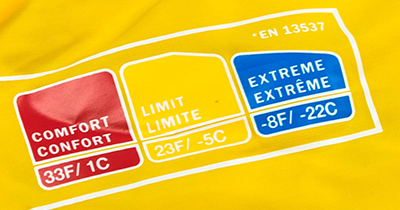
Many modern sleeping bags have a reference temperature range based on a standard called European Norm (EN) 13537. EN 13537 began to be used within the EU in the 2000s, but has since spread around the world as the most reliable indicator (though some manufacturers have yet to adopt this standard due to the not-inexpensive testing costs and doubts about its reliability). This standard displays the following three indicators as a set:
- T-Comfort is the temperature range at which an average woman can sleep without feeling cold.
- The T-Limit (lower limit) is the temperature range at which an average man can curl up and sleep for eight hours.
- T-Extreme is the temperature range that an average woman can withstand for six hours while curled up with her knees in her arms. In some cases, it can be very dangerous as it can lead to hypothermia.
Why you shouldn't trust EN 100%
Knowing this, it would seem that all you need to do the weather forecast or reference page for the approximate temperature of the place you are going to, and choose a model that falls within the temperature range indicated by the EN. However, when you actually purchase and try out various models, you will find that it is not that simple. To put it simply, almost all of the models I tried did not feel as warm as the EN indicated .
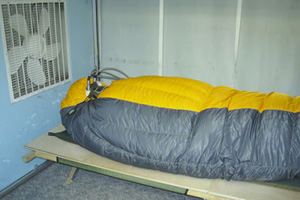
Image: Kansas State University
The main reason for this lies in the test method. The EN13537 measurement method only measures a specific "standard" body type under specific laboratory conditions . This method misses out on the vast variety of conditions, such as the user's body type, constitution, the conditions on that day, the clothes they are wearing, the mat they are using, and the compressibility of the padding. In that sense, the possibility of actually using the same conditions as the test is almost zero . To put it a little roughly, it might be easier to understand if you think of this as being similar to the "catalog fuel economy" (which is almost impossible to achieve even if you wanted to) in car specifications.
In other words, unfortunately, these figures are not something that anyone can take at face value, but even so, in the sense that they are calculated using a standardized measurement method, they should be considered better than the previous standards that varied from manufacturer to manufacturer. At the very least, it is possible to compare heat retention under the same conditions, so making good use of this is the wise way to choose at this time
How do you actually read the temperature range?
So how do you avoid being misled by the temperature ranges displayed? The correct approach, both now and probably in the future, is to always choose a warmer temperature than the displayed range unless you have proof the Hiking Handbook , the lower limit of the EN rating can be affected by a slight wind or the insulation of the mattress alone, which can cause a 7-9°C difference (the effect is more pronounced in cold temperatures), and it warns that if you blindly follow the manufacturer's figures, you may end up choosing a model that is "too warm to die for."
It's best to assume that there will be some degree of error depending on the individual and the environment, so unless you're using a familiar brand or are an experienced user, it to plan for a temperature that's 5-10°C warmer than the EN rating ("comfortable" for women, "lower limit" for men) . Specifically, you can choose a warmer model, or bring extra warm clothing assuming it will be cold. Even so, there's a one in a million chance that things won't go as planned, but even if you end up packing too much or too hot, you should still be able to avoid the serious risk of hypothermia. Learning from that experience can help you make better choices next time.
Some manufacturers may not yet be displaying temperature ranges according to EN standards, but the basic principle is the same. Unless you are certain, it is best to choose a warmth that is more than adequate
Points to consider when choosing
- Sleeping bags are roughly categorized into about three types depending on the season in which they will be used If you are purchasing one for the first time or if you want to use it at various times of the year and in various mountain ranges, it is recommended that you start by choosing a three-season type .
- To make a more appropriate choice, also check the temperature range it supports. Never blindly accept the EN rating, which is a general standard, but use it as a guideline and factor in a margin of warmth (approximately 5 to 10 degrees Celsius more strictly).
Point 2: Filling and surface material
Once you've narrowed down your options based on the temperature range they can handle, the next step is to consider the type of filling. A sleeping bag's heat retention comes from the fact that the layer of still air (dead air) created when the filling expands is warmed by body heat and acts as an insulating layer that blocks outside air, enveloping the entire body. In other words, heat retention depends on how much dead air can be stored. Incidentally, the degree to which the space that stores dead air expands is called loft (bulk), and the filling plays an extremely important role in ensuring as much loft as possible
There are two types of materials used for padding: natural down and synthetic fibers, but currently, down has the highest heat retention per weight . Light, compact, and warm, if you choose a down sleeping bag, you can't go wrong for normal mountain climbing. However, that doesn't mean there are no drawbacks. Below is a comparison table of the advantages and disadvantages.
| material | down | Synthetic fibers | hybrid |
|---|---|---|---|
| merit |
|
|
|
| Disadvantages |
|
|
|
| Suitable situations and uses |
|
|
|
Down is highly functional, but it's expensive and vulnerable to getting wet . For this reason, synthetic fibers may be a better choice than down for people who prioritize price over lightness and size, or for people who frequently engage in activities where their backpacks are likely to get wet, such as canyoning (like me when I was a student). Fortunately, however, there have been remarkable advances in synthetic fiber padding in recent years, and it's clear that we're approaching a point where we can no longer afford to complain that synthetic fibers are heavy or uncomfortable. I highly recommend trying them out in a store and comparing them in person.
Meanwhile, down is also evolving every day. While its heat retention is slightly reduced, it has overcome its weakness to getting wet to some extent, and the fine particles make it less likely to get crushed or damaged. "Water-repellent" down is now widely available. However, while water-repellent down is effective in preventing loft loss due to moisture, it is not "waterproof" in any way, so some kind of water-resistant measure is still necessary. To be honest, in that sense, it's still unclear whether it's worth considering buying just for that reason.
If you choose down, check here too (type, origin, FP, ratio)
Although the quality of down is not like the duvets you often see on TV or radio shopping programs, there are actually a surprising number of factors that affect quality. We won't go into detail about each and every one of them here, but instead will focus on the key points you need to know when choosing a good down sleeping bag
Down types and origins
Down harvested from European geese is said to be of the highest quality, with a larger loft, excellent bulk, excellent heat retention, and little odor. On the other hand, down harvested from waterfowl raised in other regions, or from ducks instead of geese, is said to be of medium to low quality (although not all). The length of time the geese are raised also has a major impact on the quality of the top-quality goose down, and it is said the highest quality down can be harvested from geese that have been carefully raised for 21 weeks .
Down fill power (FP) and ratio
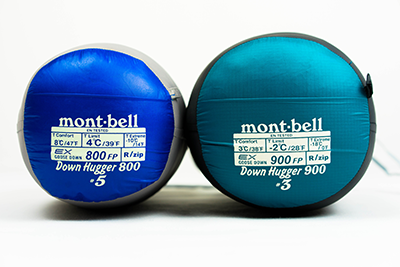
Generally, anything above 650 is considered high quality, but the higher the value, the more expensive it becomes, so when choosing down, you must make a cruel choice between price and warmth/portability
Also, even though it is simply called down, it actually contains a small amount of feathers mixed in to increase loft, and the ratio is displayed as 90/10 (90% down, 10% feathers). Feathers are not a material that increases heat retention, so naturally the higher the down ratio, the better the heat retention, the softer the feel, and the higher the quality .
Surface material
The outer surface of sleeping bags for mountain climbing is typically made of nylon ripstop or polyester, which is resistant to tearing and abrasion, while the inner surface is made of polyester or nylon taffeta, which emphasizes smoothness. Cheaper models are made with thick fabric to maintain durability, making them heavy, but higher-quality models have thinner and lighter fabrics while maintaining durability, and also use high-quality materials with many added benefits, such as downproof processing to prevent the down from escaping and water-repellent processing to repel small amounts of water .
waterproof sleeping bags that use waterproof and breathable material for the outer fabric fully waterproof sleeping bags that boast seam tape treatment to provide complete waterproofing on a par with rain gear . In Japan, where sleeping bag covers are commonplace, waterproof sleeping bags are not a very popular product. On the other hand, overseas, where cover culture is less prevalent (?), there is a greater variety of high-performance sleeping bags made with waterproof and breathable fabric than in Japan. In any case, waterproof sleeping bags eliminate the need for a cover to keep the bag dry , potentially reducing the overall weight of your luggage . However, it's important to note that waterproof and breathable fabrics are heavier than normal, so the weight of the cover alone may not necessarily be reduced.
Points to consider when choosing
- There are basically two options for padding: down or synthetic. For general mountain hiking, we recommend down, but if you need protection from water or are on a tight budget, we recommend choosing a synthetic model.
- There are fewer options, but if that suits your taste, we recommend the hybrid type .
- Although it is resistant to slight wetness, waterproofing measures are still necessary, and water-repellent down jackets have lower heat retention, so we will wait and see for now .
- When looking at the quality of down, you should look at the "place of origin," "type of waterfowl," "FP," and "down percentage." The general guideline for the highest quality down is it is "down of 800FP or more extracted from European geese, with a percentage of 90% or more ." However, rather than just accepting the specifications, it is important to actually touch and feel the down to feel it.
Point 3: Shape, size, and structure
The basic choice is "mummy type"
Many mountaineering guide articles often compare this shape between "envelope (rectangular)" and "mummy shape," but I have no idea why this question still exists; nowadays, there is no doubt that it the mummy shape .
Sleeping bags originally began as a single blanket, then evolved into an envelope-shaped (rectangular) bag made by joining two blankets together, and then, with the development of mountaineering and hiking culture, evolved into a shape (mummy bag) that was more specialized for wrapping the human body more efficiently.
As you can see from its appearance, the rectangular type is similar in shape to a futon. It's not too cramped and may be slightly more comfortable to sleep on, but it's too heavy, and the head is completely unprotected, making it difficult to keep warm in extremely cold conditions . In contrast, the mummy type completely covers everything except the mouth area, and is cut to minimize any excess gaps between the body and the padding, reducing weight as much as possible and making it excellent for warmth and portability , the mummy type is the only type that is suitable for hiking, which is what most visitors to this site will be interested in (although car camping, where there is ample room for weight and space, is a different story).
Focus on the new shape that prioritizes comfort and efficiency
What's more interesting right now is the world of ultralight sleeping bags, with a variety of different shapes emerging that are derivative of the traditional mummy style.
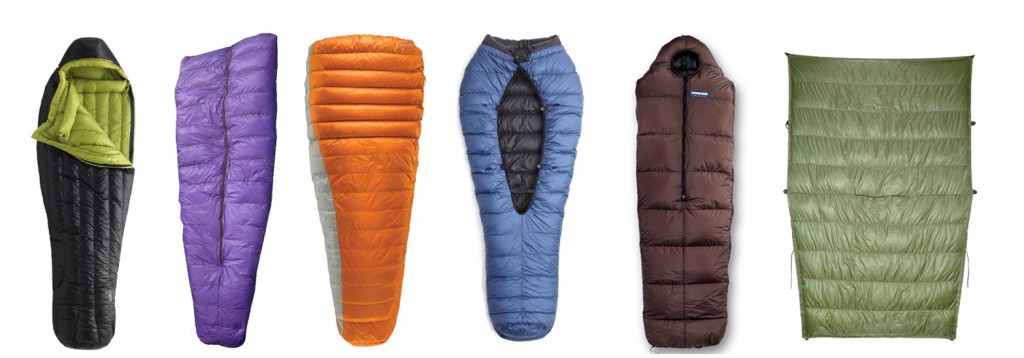
Various three-season sleeping bag styles (from left): Mummy style, mummy style without hood, mummy style without hood or zipper, half-quilted style, wearable style, and quilted style (Image: OutdoorGearLab)
These models further advance the efficiency of the traditional mummy style, and the company continues to take on the challenge of reducing weight and size without sacrificing heat retention . One example is the photo below. The back side has been completely cut out, as it is designed from the start to be used in conjunction with a sleeping pad. When it's cold, it wraps around the pad to create a model similar to a regular mummy style. When it's hot, it can be untied to form a single comforter. The sea to summit Amber Quilt series can be used in a variety of ways, and is an excellent product that is surprisingly lightweight and compact, yet can be used in an extremely wide range of temperatures.


size
To maximize the warmth retention effect, it's best to have as little space as possible between your sleeping bag and your body, but if it's too snug, it's cramped and difficult to sleep in. The best thing would be to be able to have a custom-made bag that fits your body perfectly and strikes the perfect balance between warmth and ease of movement, but of course, such a dream service doesn't exist yet, so for the time being, the only options are to choose the size that fits you best from the regular, long, and short sizes offered by many manufacturers, or from the variety of sizes for men and women based on height and body type (we highly recommend women's models in particular, as they are designed to accommodate women in addition to height).
However, if you try out a few different sleeping bags, you'll find that the shape of sleeping bags varies greatly depending on the brand, and even if your height is right, you can't tell from the outside whether it's comfortable or not. For this reason, the most reliable way is to actually try it out for yourself and see how it feels and fits . Unfortunately, this doesn't seem to be possible at all stores (and honestly, I'm not sure about that), so if there's a store that allows you to try them out, I recommend taking full advantage of that.
structure
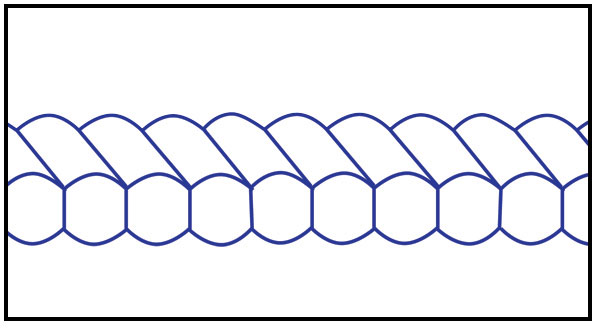
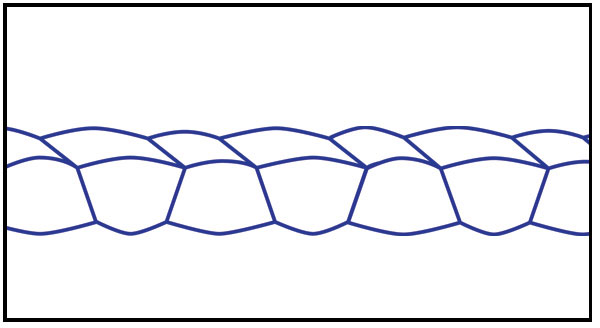
Even if a bag uses a large amount of high-quality padding that is designed for low temperatures, that alone does not guarantee stable heat retention. If the padding inside the fabric were to shift and become uneven, the areas with less padding would be unable to create dead air (cold spots), and the overall heat retention would drop significantly. To prevent this, sleeping bags have continued to improve the way the padding is packed. Here we will introduce the main padding structures used in sleeping bags, so it is a good idea to check whether the model you are considering has a structure that suits your needs.
| material | Single structure | Box Structure | Trapezoid box structure |
|---|---|---|---|
| image | 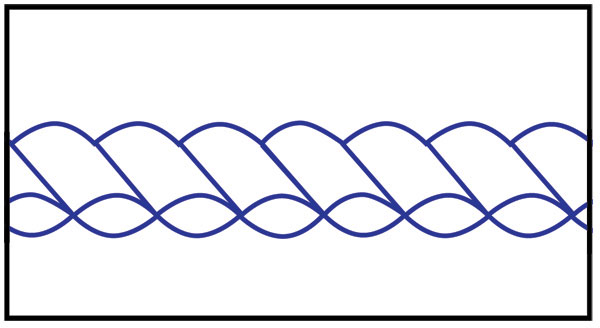 |
 |
 |
| merit |
|
|
|
| Disadvantages |
|
|
|
| Suitable situations and uses |
|
|
|
(References: ISUKA , NANGA , Deuter , Mountaineering Equipment Encyclopedia , Hiking Handbook , rei.com, trailspace.com )
Points to consider when choosing
- The basic shape for mountaineering is the mummy shape. If it's your first time or you don't have any particular preferences, a simple mummy shape is fine , but once you start to develop your own principles and preferences for your mountaineering style, it's recommended that you try out a new shape.
- Check whether there are different sizes available to suit your height and gender . If possible, try to get into the mattress to see how comfortable it is.
- Check that the padding structure is in line with the features you want to prioritize.
Point 4: Various parts and special functions
Finally, I would like to point out some minor checkpoints that were not covered in the explanation so far
elasticity
As mentioned above, to maximize heat retention, it's best to have no space between the sleeping bag and your body, and one solution to avoid creating dead space is this stretchable sleeping bag. Montbell's Spiral Stretch System and Deuter's Inside Thermo Stretch Comfort System are well-known, and if you try one, it's obvious that the padding fits snugly against your body, so you feel warm from the moment you get in, and the thermal insulation is definitely several levels better . However, in terms of feeling cramped, I think people's preferences will differ to some extent.
Weight and storage
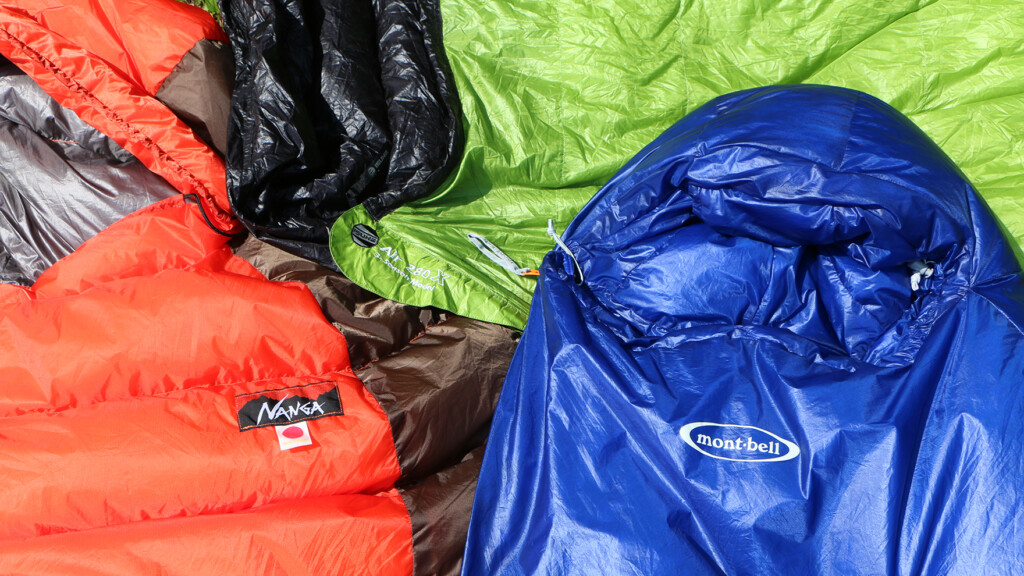
Sleeping bags can be quite bulky depending on the quality and quantity of the padding, whether synthetic fiber is used rather than down, or winter is used rather than summer, so it's undoubtedly best to have one that's as light and compact as possible. However, one thing to keep in mind is that the storage size listed in the catalog is only the size when placed in the included stuff sack . As shown in the photo below, some bags may be large when purchased, but can be stored more compactly by using a separately sold compression sack . Also, some models come with a compression type stuff sack , so it's a good idea to check before purchasing.
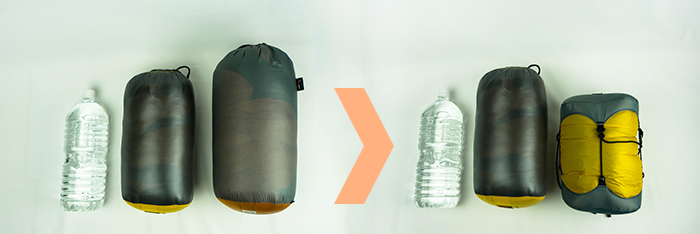
If the included bag is a little too spacious, you can make it much more compact by using the compression stuff sack (far right)
Food
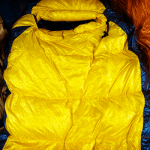
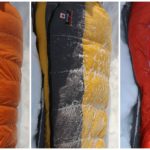
It is said that a lot of heat is dissipated from the area from the neck to the head, making it surprisingly important for maintaining warmth. Some summer and ultra-light models have the hood cut out, as it is not as important. For models designed for three seasons or more, it's a good idea to check whether the hood is designed to fit comfortably over the head, and whether the drawcord at the opening is easy to tighten and doesn't get in the way or feel restrictive
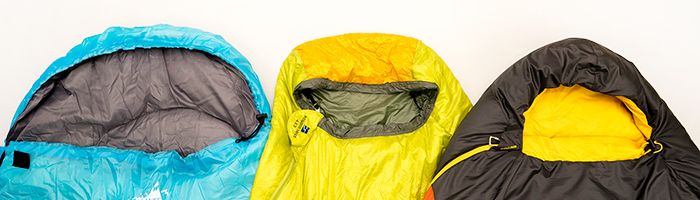
The model with a flat, simple hood creates unnecessary space when tightened and doesn't fit well (left), while the models with a more three-dimensional hood and ample padding for the appropriate temperature range (center and right) are warmer and more comfortable.
Shoulder (low temperature model only)
Three-season models, which are more suitable for winter, have muffler-like tubular or U-shaped shoulder warmers that cover the neck and shoulders to prevent outside air from entering .
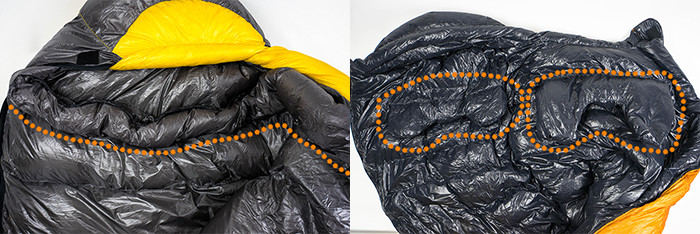
There are various types of insulation for the neck and shoulders. The type that tightens the tube with a drawcord is easy to adjust, but there are pros and cons to each type, such as the fact that it has more parts than the U-shaped type and is therefore heavier
zipper
Zippers have two main roles in a sleeping bag. One is to make it easier to get in and out of the bag, and the other is to control breathability and regulate temperature by opening and closing. The wider the opening , the better for ease of use. However, from the standpoint of wanting to make the bag as light as possible, it's best to have no zippers at all. For this reason, models that prioritize lightweight design only have zippers that take up about 1/2 to 1/3 of the total length, or some models have no zippers at all, so it's best to choose one that suits your preferences.
In addition, high-quality models designed for use in lower temperatures a padded draft tube placed on the inside of the zipper to prevent the zipper from becoming a cold spot .
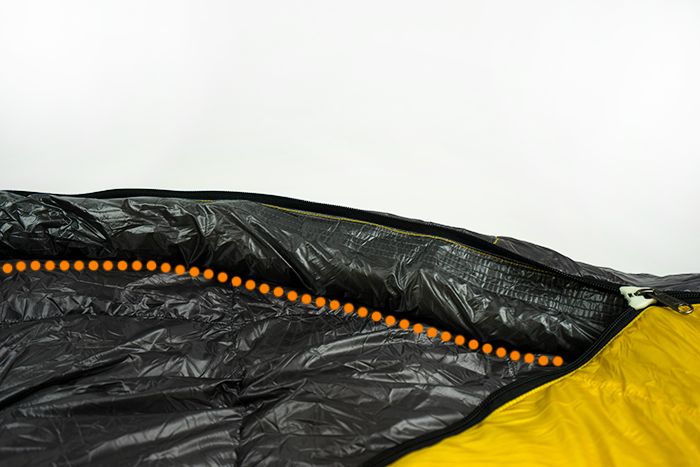
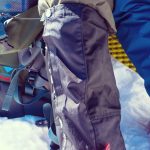
A tube filled with padding is placed along the zipper (dotted line in the photo).
It's surprisingly convenient if the sleeping bag has zippers on both the front and back, or if it can be opened from both the top and bottom. Furthermore, if it has a system that allows you to sleep with your feet exposed in hot weather, it's easy to regulate the temperature.
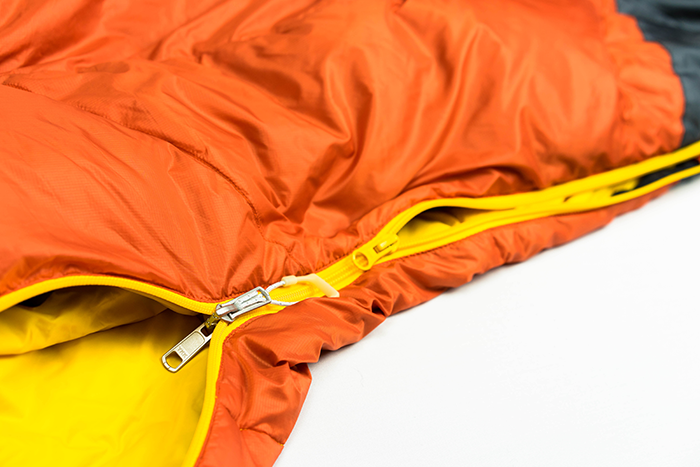
Some models come with a snag prevention mechanism to prevent the zipper from catching and damaging the thin fabric when opening and closing the zipper. However, untreated zippers on sleeping bags are incredibly prone to snagging
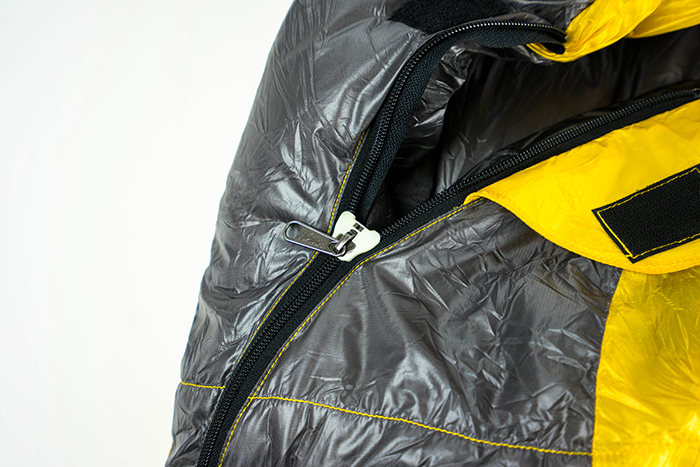
The photo shows a zipper jointly developed by NANGA and YKK that reduces snagging. It is smooth and easy to open and close, and even if it does get caught, it is less likely to damage the fabric
Construction of the foot area (footbox)
which is sensitive to the cold, is sewn in a relaxed, three-dimensional manner and filled with extra padding to distribute pressure evenly around the feet, improving heat retention and resulting in a more comfortable sleep.
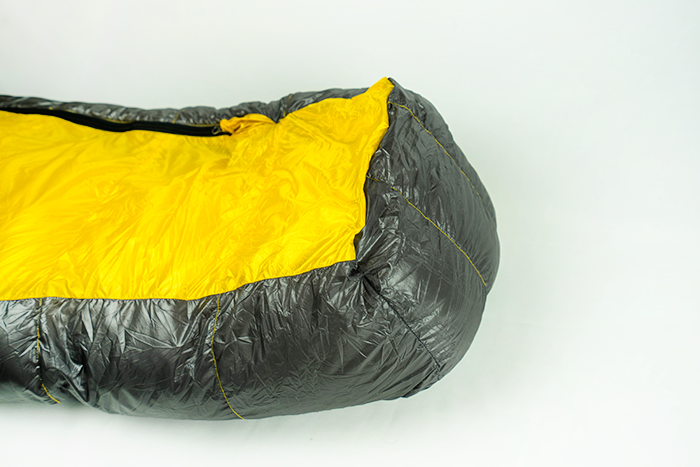
The down is generously packed into the feet, where it's most likely to feel cold, and the three-dimensional construction that conforms to the shape of your feet keeps the entire foot warm evenly and efficiently
Point 5: Bedding to be used together
While sleeping bags can be used on their own, there are many excellent sleeping bag sets available to help keep you dry and maximize your comfort and warmth. Some of this gear is essential, so be sure to bring it with you
Sleeping Bag Cover


Liners and sheets

sleeping pad
![THERMAREST RidgeRest SoLite Regular Sleeping Bag and Mattress (Product Number: 30207) [Official Japanese Product]](https://images-fe.ssl-images-amazon.com/images/I/51ckjD4OVQL._SS150_.jpg)
Pillow

Next page: 8 recommended 3-season sleeping bags from our editorial team
8 Three-Season Sleeping Bags Recommended by Our Editors
Finally, we'll introduce some of our favorite models that our editorial team has used so far, as well as noteworthy models equipped with the latest mechanisms. Some models require importing from overseas, but we apologize for that, but we were free to choose. We've tried to choose a wide range of three-season models that should generally be fine except during the snowy season, but the optimal temperature range and size will vary depending on the individual user, so please consider these separately
ISUKA Air 450X: A model sleeping bag that combines the basics with cutting-edge features

![ISUKA Air 280X Sleeping Bag, Green [Minimum Use Temperature: 2°C]](https://images-fe.ssl-images-amazon.com/images/I/31RbJq97B6L._SS300_.jpg)

This long-established brand has been at the forefront of Japan's world-class quality sleeping bag development since the 1970s. Lightweight and exceptionally warm 800FP white goose down and ultra-thin, ultra-water-repellent fabric combine portability and warmth. They don't sacrifice anything for the sake of lightness, and their meticulous attention to detail is highly appreciated
Mont-Bell Down Hugger 800 #3: A comfortable fit whether you're asleep or awake
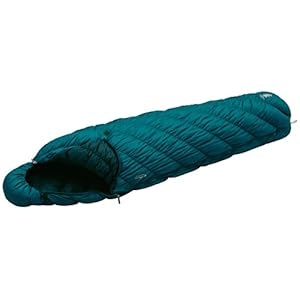
Montbell's high-quality down products are gaining recognition in North America, and the Down Hugger series, made with high-quality goose down, is a prime example. Despite its ultra-lightweight and compact design, the Spiral Stretch System provides exceptional comfort, so comfortable you'll find yourself sitting cross-legged in them even after getting up. On the other hand, some minor details, such as the simple construction around the zipper and hood, leave a bit to be desired. While I think the 800FP model offers the best balance of weight and warmth, I recommend the 900FP if your budget allows. The ability to choose down quality (650, 800, and 900FP) within the same temperature range is both a joy and a challenge
NANGA AURORA light 350DX Having one less thing to carry makes a big impact
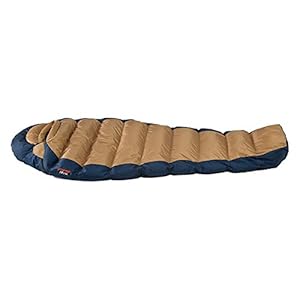
This up-and-coming sleeping bag manufacturer has been gaining momentum in recent years and is renowned for its thorough commitment to down quality, with its lifetime warranty offering free repairs a clear testament to that confidence. This model not only boasts high-quality 760FP down, but also uses the waterproof and breathable Auroratex outer layer to encase it, making it a highly functional and compact model that eliminates the need for a sleeping bag cover. Given the limited options for waterproof sleeping bags in Japan, this high level of quality is highly appealing. If you have a larger budget and want to handle lower temperatures, we also recommend the SPDX model, which uses high-quality 860FP down
Sea To Summit Spark Sp II Lightweight and compact with amazing specs

This palm-sized, 464g, three-season sleeping bag will blow your mind, showing how lightweight it has become. The outer layer is made of ultra-thin 10-denier nylon, and the down is made of 850FP, top-quality goose down with a water-repellent finish. Considering the thoroughness of the zipper, which is only about one-third of the bag's length, it may not be a model that everyone can recommend. In that sense, it's a very exciting model. However, its warmth is a bit lacking, so caution is advised when using it in areas with remaining snow or in late autumn
Takemo Sleeping Bag 3: High-quality Japanese sleeping bags for everyone
![Takemo Sleeping Bag 3 with Storage Bag [Minimum Use Temperature: 2°C]](https://images-fe.ssl-images-amazon.com/images/I/316k5OSNHFL._SS300_.jpg)
Founded in 2015, this new brand's founder previously worked for a Japanese outdoor bedding manufacturer, so you can be sure of its quality. What sets this brand apart is its top-class insulation efficiency (somewhat reminiscent of ●SUKA's) with a box structure, draft tube, neck tube (shoulder warmer), and three-dimensional foot construction, all at an affordable price. It's currently only available online, but I've managed to get one on this site and will be publishing a review in the future
THE NORTH FACE Gold Kazoo: A hybrid of down and synthetic fibers for superior heat retention


This hybrid sleeping bag uses crush-resistant synthetic fiber in areas where pressure is most intense on the back, overcoming the loss of warmth caused by down collapse. By maximizing heat retention efficiency, it offers top-class warmth (minimum -5°C) among models of similar size and weight. Personally, I like the soft feel of the lining. The jacket-style hood provides a perfect fit, and the draft collar around the neck provides unparalleled comfort. However, the zipper tends to get caught
Mountain Hardwear Hyperlaminar Spark: The next generation of high-performance synthetic sleeping bags
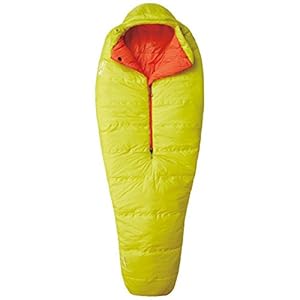

This innovative sleeping bag features a proprietary "Thermal Q" padding material, which is so light, soft, and resilient that it's hard to believe it's synthetic at first glance. It's fused to the front and back of the fabric. Because it's not sewn, cold spots are eliminated, maintaining high thermal insulation. Furthermore, because the padding is fixed in place in this way, it's possible to more precisely map the amount of padding in areas prone to feeling cold and areas where it's not needed. The result is a lightweight, compact synthetic sleeping bag with excellent thermal insulation. The zipper located in the center is also convenient to use
finetrack Polygon Nest 6x4: A user-friendly, ultra-lightweight synthetic sleeping bag
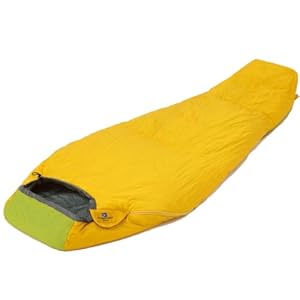
The proprietary "Fine Polygon" padding (or rather, thermal sheet material) is an interesting model that leads the way in next-generation synthetic fiber sleeping bags. I was surprised at how light and dry it felt against the skin, almost like it was synthetic. While it doesn't offer the same warmth as down, its stable heat retention unaffected by humidity, lightweight, compact, quick-drying, and washable for easy maintenance make it incredibly user-friendly, especially during hot and humid weather. I also like the magnetic zipper flap. Furthermore, the concept of "combining" various classes is very similar to how I've used sleeping bags up until now, and I can't help but agree. By utilizing the "6x4" as a base, along with the "1x1 Shield" and "1x1UL," you can create the perfect configuration to fully cover you for a year with minimal investment
Related reading