



Comparison Review: Summer Sleeping Bag: How does Montbell's latest high-tech sleeping bag perform? We compared it with popular domestic models
Written by TAC
Of the many mountain gear options, many people have probably had the experience of struggling to choose a sleeping bag (or shraf). There are many aspects to consider, such as temperature range, material quality, weight, portability, and ease of use, that you can't really know until you actually try it, so choosing the perfect one can be quite difficult
When climbing mountains in the summer, the temperature difference between the ground and the summit is extreme, and it is not uncommon for it to get colder than expected in the mountains, making it difficult to sleep comfortably and, in the worst case scenario, even putting you at risk of hypothermia. As sleeping bags are expensive and important equipment, it is important to gather information thoroughly and not compromise when choosing a sleeping bag
Also, this season, Mont-Bell has announced some revolutionary new products. We have already reviewed the Seamless Dry Down Hugger 900 , and got a glimpse of its amazing evolution and capabilities.
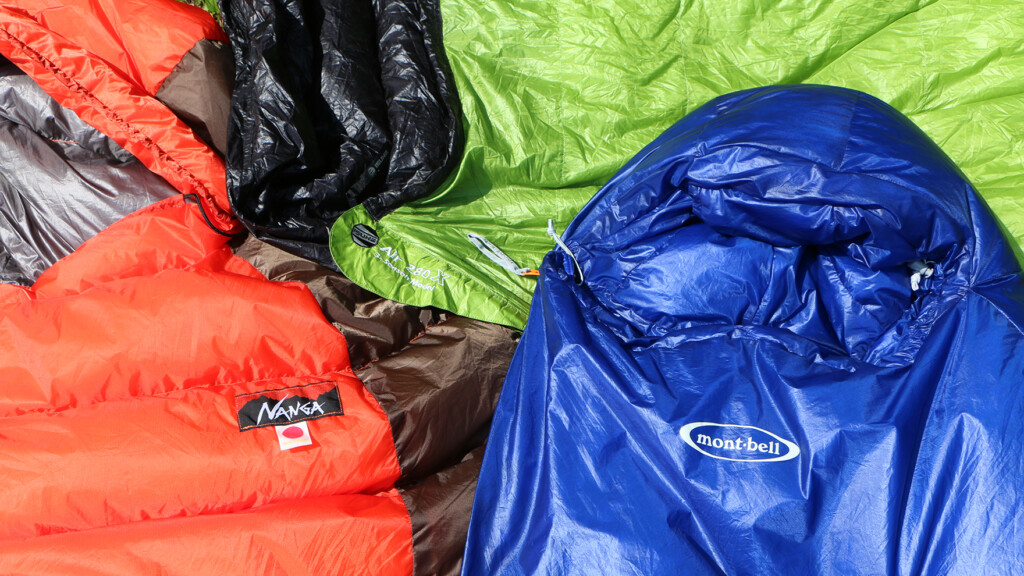
So, this time, we'll compare popular summer sleeping bags, including this new model featuring Montbell's innovative technology. How does it stack up against Isuka and Nanga, two major Japanese brands that have consistently enjoyed popularity thanks to their longstanding reputations and proven track records? I'm sure many people are curious. In reality, it's difficult to make a perfect comparison because the temperature ranges they support don't all match perfectly, but we'll take a closer look at the differences and what to look for when choosing one
table of contents
About the sleeping bags we compared this time
The sleeping bags compared this time are standard summer mountain models. They are so-called summer sleeping bags, suitable for use for around one month, mainly in the middle of summer on Honshu (July to mid-August). While there are slight differences depending on the manufacturer, we are assuming models with a temperature limit of roughly 5°C to 0°C. Sleeping bags generally used for mountain climbing are known as mummy-style sleeping bags, and the filling (insulation) is limited to down, which has high heat-retaining capacity per weight. However, because this category can be made relatively lightweight, it is also true that synthetic filling instead of down can sometimes be used, and cheaper synthetic sleeping bags may actually be an option. The three models selected for comparison this time are as follows
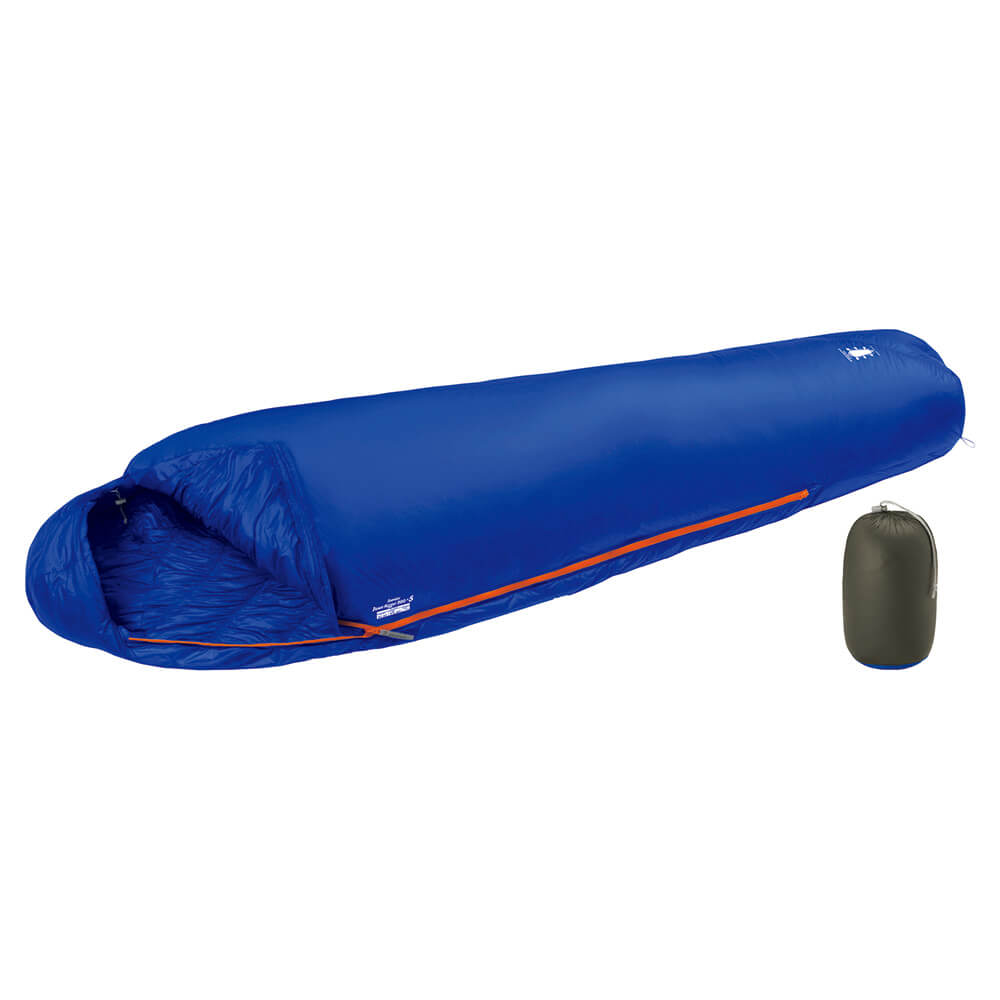
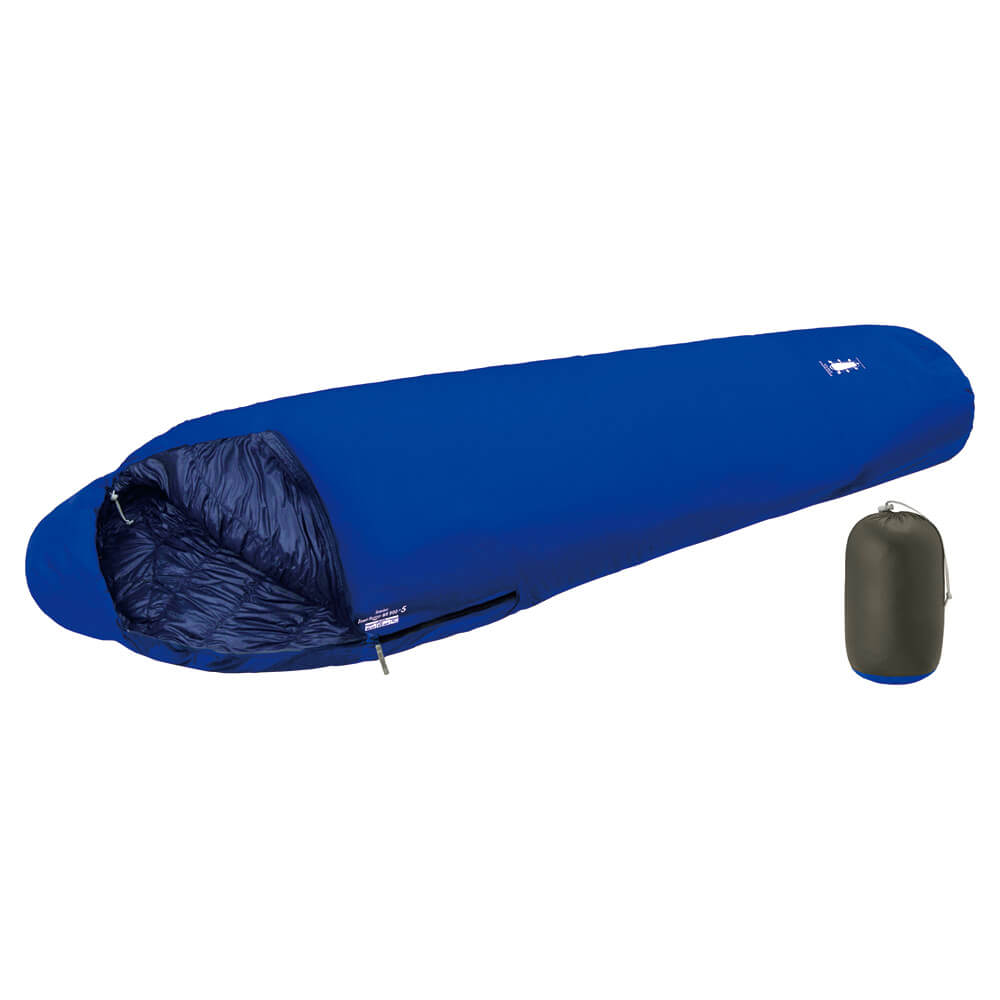
- Mont-Bell Seamless Down Hugger 900 #5
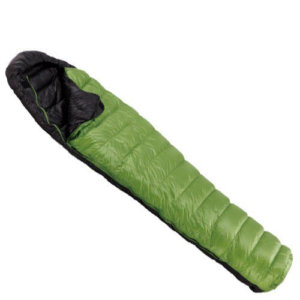
- ISUKA Air 280x
- NANGA Aurora Light 350 DX
Test environment
The test period was approximately two months, from June to July 2020. I used it while hiking in Hokkaido, at campsites, sleeping in my car, and just sleeping. The minimum temperature during sleep was around 8°C to 15°C
As for the clothing worn during the test, I wore a base layer and a thin fleece on the upper body, and a base layer and trekking pants on the lower body
The evaluation criteria are based on the following six indicators. Naturally, the evaluation and scoring are subjective and relative, based on the tester's judgment
- Thermal insulation: How warm you can sleep even in low temperatures
- Weight: how light it is
- Comfort: How comfortable is it to sleep on (feels good against the skin, is it easy to move around)
- Storage: How compact can it be stored?
- Water, moisture, and wetness resistance: how resistant to water and moisture it is, and how easily it dries
- Ease of use: how stress-free it is to use
- Ease of care: Will it be easy to use for a long time?
Test Results & Spec Comparison Table
If you find it difficult to see the table on the lightweight display for smartphones, click here.
| comprehensive evaluation | AAA | AAA | AA |
|---|---|---|---|
| item | 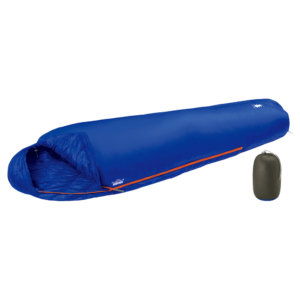 Mont-Bell Seamless Down Hugger 900 #5 Mont-Bell Seamless Down Hugger 900 #5 |
 ISUKA Air 280x ISUKA Air 280x |
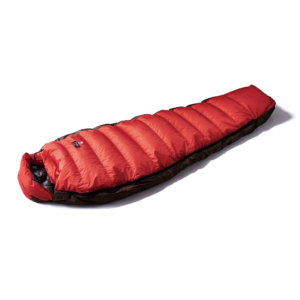 NANGA Aurora Light 350 DX NANGA Aurora Light 350 DX |
| Reference price | ¥37,000+tax | ¥29,000+tax | ¥34,000+tax |
| Here is ◎ |
|
|
|
| Here is △ |
|
|
|
| Heat retention | ★★★★☆ | ★★★★☆ | ★★★★★ |
| weight | ★★★★★ | ★★★★☆ | ★★★☆☆ |
| Comfort | ★★★★★ | ★★★☆☆ | ★★★★☆ |
| Storage capacity | ★★★★★ | ★★★★☆ | ★★☆☆☆ |
| Water resistance | ★★☆☆☆ | ★★★☆☆ | ★★★★★ |
| Ease of use | ★★★☆☆ | ★★★★☆ | ★★★★★ |
| Ease of care | ★★★★☆ | ★★★☆☆ | ★★★☆☆ |
| Specifications | |||
| Suitable height | Up to 183cm | 208 (total length) cm | Up to 178cm (regular) |
| Actual weight (including storage bag) | 420g | 608g | 757g |
| Storage size (cm) | φ12 × 24 | φ14 × 24 | φ13 × 25 |
| Down quality | 900 fill power EX down | 90/10 800 fill power | Spanish duck down 90-10% 760FP |
| Down amount | Undisclosed | 280g | 350g |
| Internal structure | Spider Baffle System Super Spiral Stretch System | Box structure on the chest side, single structure on the back side |
Single quilt construction |
| Limit Temperature | 4℃ | 2℃ | 0℃ |
| Zipper specifications | Right side (zipper length 150cm) | Right side | Right side |
Impressions of each model
Mont-Bell Seamless Down Hugger 900 #5
Revolutionary baffle structure that simultaneously reduces weight and improves heat retention
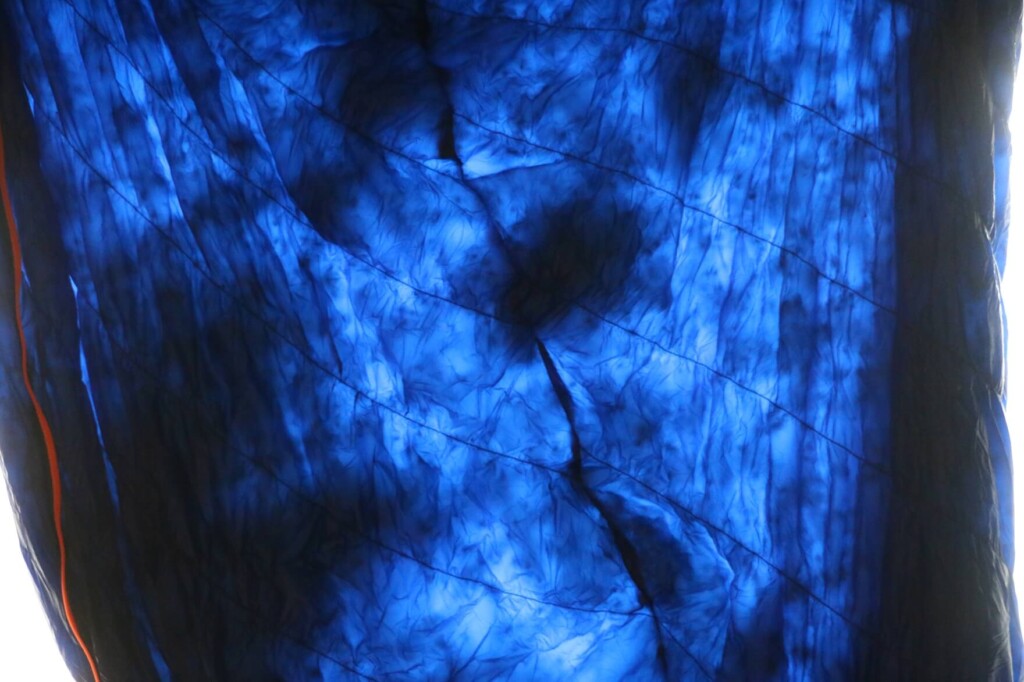
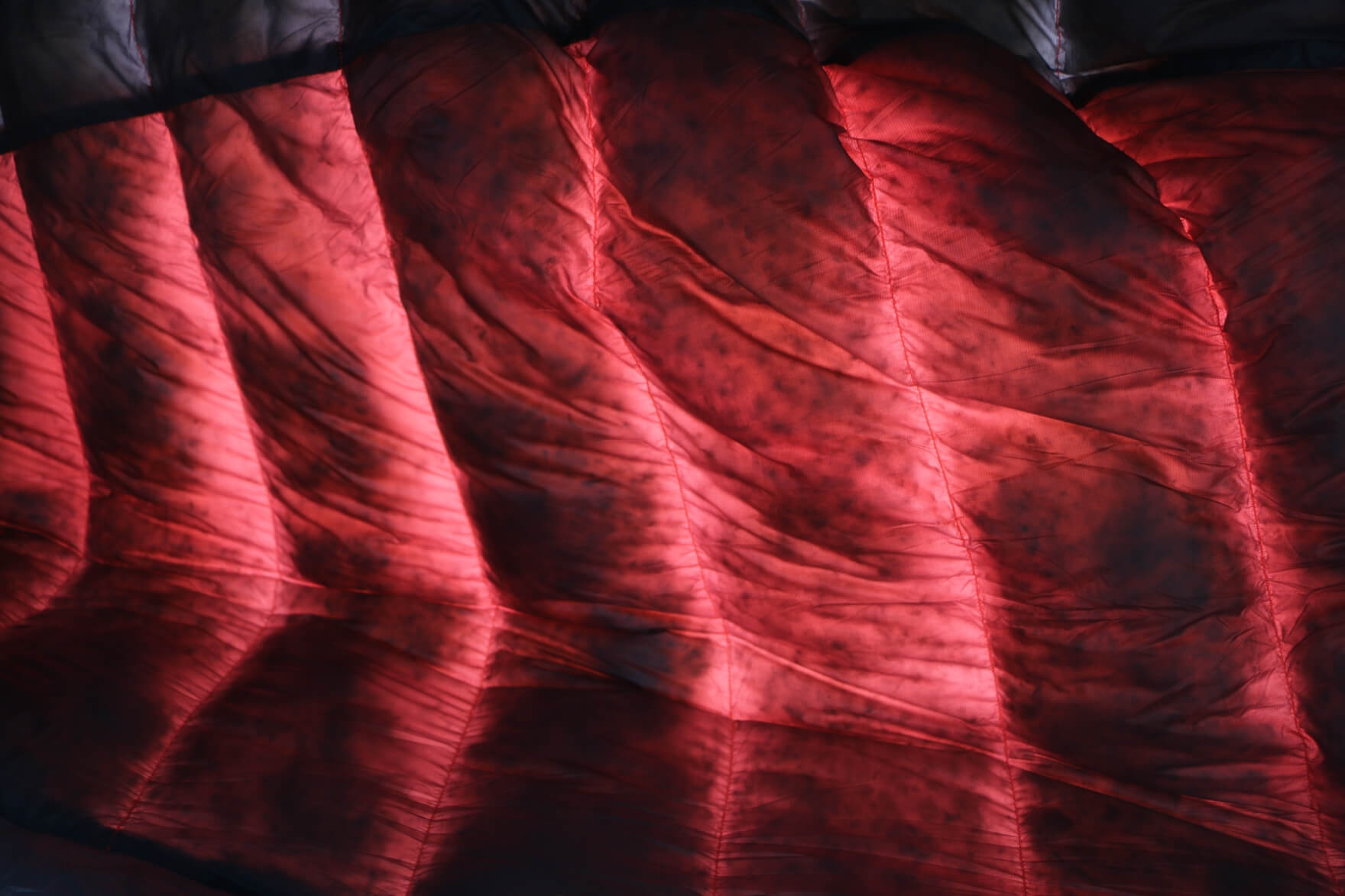
This is a much talked about sleeping bag that uses Montbell's new " Spider Baffle System see here for ). The finely divided partitions that kept the down from shifting have been removed, and instead, a Spider Yarn, which cleverly intertwines the down, is strung throughout the inside of the sleeping bag, ensuring that the padding is evenly distributed throughout the entire bag. As shown in the photo below, when you shine a light through it, you can see that the down is indeed evenly distributed throughout the sleeping bag, eliminating the cold spots around the seams that were unavoidable in previous sleeping bags. This is something that even experienced outdoor enthusiasts will appreciate.
Addictively comfortable sleeping experience
The fact that the 900FP premium down is evenly distributed in a space without any partitions means that there are no obstacles that restrict expansion. When I took the sleeping bag out of the storage bag, I was surprised at how it expanded as if it had been waiting for this. The best way to describe it is as fluffy as possible. The ultra-thin 7 denier fabric also provides an exquisite feel against the skin, and the comfortable feeling of being gently wrapped in the entire sleeping bag is addictive. If it's this fluffy with #5, I wonder what it will be like with #1
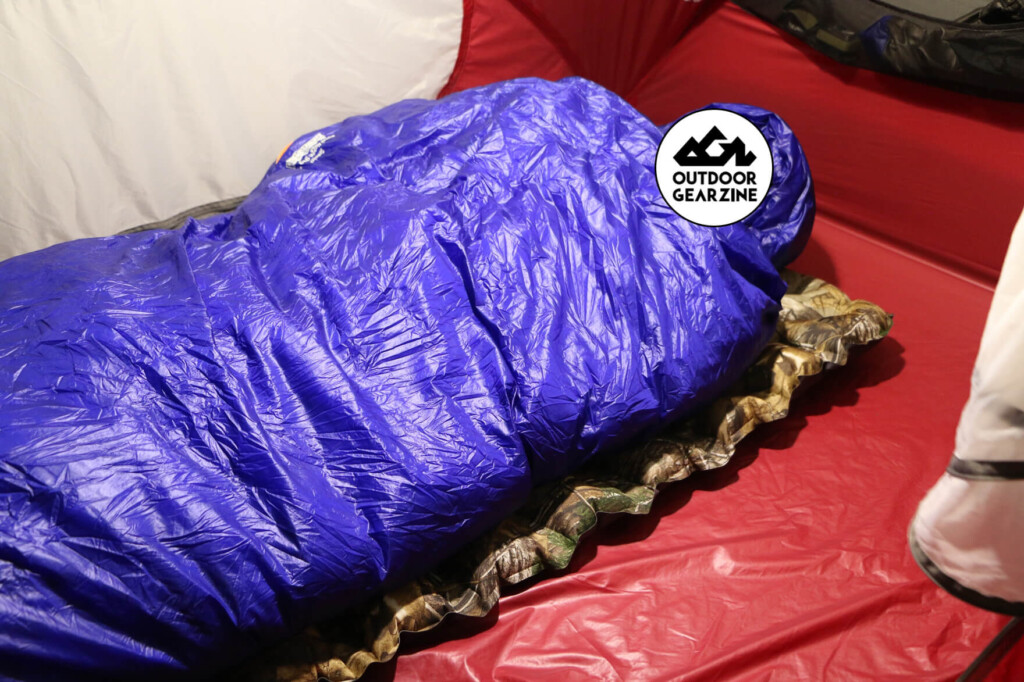
The manufacturer does not disclose the amount of down used, but it seems likely that they have fully utilized the 900FP down's performance and have minimized the amount of down used. As for heat retention, I was able to sleep soundly until morning in the field in late June, when the minimum temperature was 8°C, without waking up from the cold. The outer fabric has no seams, so air does not escape, making it extremely airtight. Perhaps because of this, I ended up opening the zipper of the sleeping bag when it got too hot in a 15°C environment. Well, that's to be expected, considering the comfort temperature is 8°C
The familiar stretch system also reduces tightness
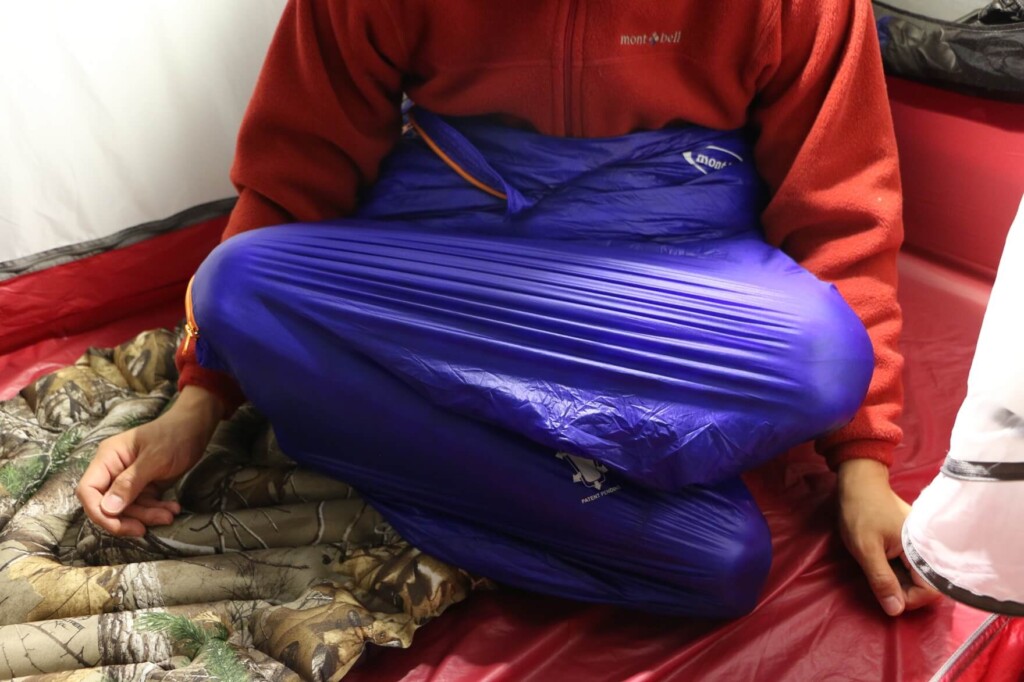
The sleeping bag itself has a slim silhouette, but thanks to the Super Spiral Stretch System, it didn't feel tight at all (see photo below). In fact, it fits snugly to the body, eliminating dead space and contributing to improved heat retention. The balance between weight and size is a major concern when it comes to the heat retention performance of a sleeping bag, but I can confidently say that this model is lightweight, compact, and warm
You can't expect it to be wet
The Seamless DryDown Hugger 900 (#3 #5), which also features the Spider Baffle System, uses GORE-TEX for its outer fabric, making it waterproof and breathable, while the Seamless Down Hugger's outer fabric is made of Ballistic Airlite nylon, which is not breathable. As I'll explain later, the water-repellent performance was disappointing. Also, the anti-snag zipper isn't as smooth as I'd hoped, which is another slight downside
Overall, the Spider Baffle System, combined with the inherited Super Spiral Stretch System, makes this sleeping bag an undeniably satisfying choice in terms of lightness, compactness, and comfort. However, realistically speaking, when compared to the Alpine Down Hugger 800#5 from the same manufacturer, the price difference is not all that great in terms of temperature resistance, weight, and packing size, which is a bit of a problem. Personally, I'd be happier spending another 10,000 yen and buying the Seamless Dry Down Hugger 900#5
ISUKA Air 280x
High-quality down and a unique 3D structure ensure maximum warmth while remaining lightweight
ISUKA is a long-established sleeping bag brand that has been leading the Japanese mountaineering world for many years. Its meticulous construction and thorough product testing have earned it the trust of many mountaineers
The model used this time is the AIR 280X. This model is positioned as a summer model in the popular AIR series. The padding is made of 280g of the highest quality 800FP white goose down. While at first glance it looks like a simple construction, upon closer inspection it is revealed to be made with highly advanced technology, such as a unique 3D structure that efficiently distributes the amount of down in each area. Furthermore, the chest area has a box structure, while the back, which bears the weight, has a single structure, which improves heat retention efficiency and lightness
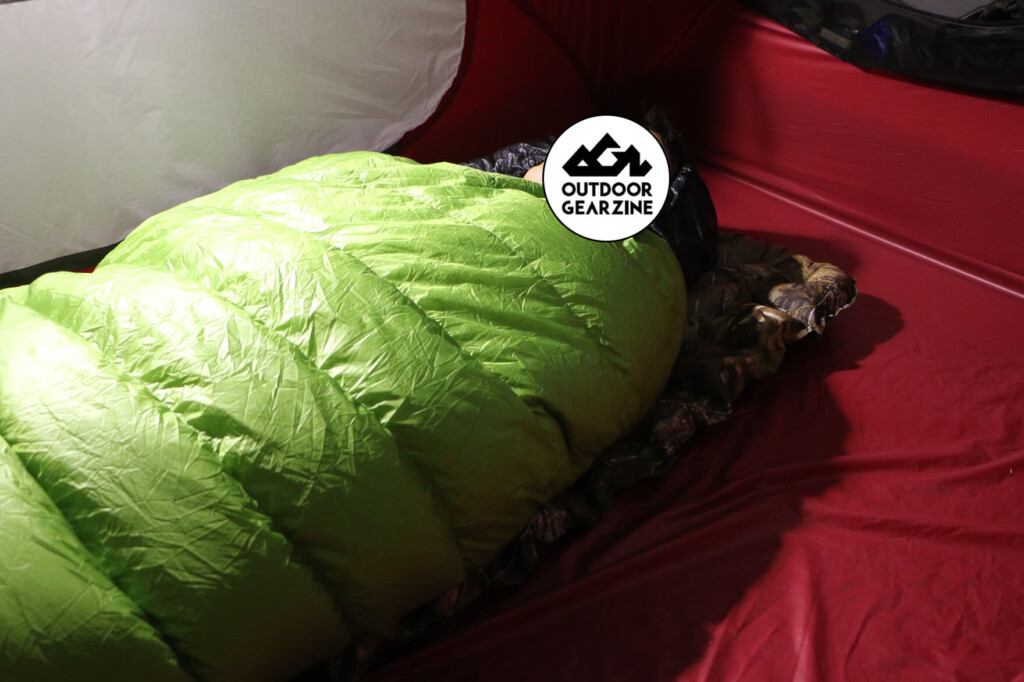
The maximum usable temperature is 2°C. However, when I used it in an environment with a minimum temperature of 8°C, it was a little cold and I had to layer up, but when I used it in a minimum temperature of 12°C, I was able to sleep soundly until morning. If you look at Isuka's website, they only publish the maximum usable temperature. Moreover, unlike Montbell and Nanga, they use their own standards, so when considering a comfortable usable temperature, it's best to add about 5 to 10°C to the maximum usable temperature. Everyone will perceive cold differently, but I personally think that 5°C plus is not enough, so 10°C plus is fine
It's an excellent product that's easy to use and handles wetness well
The outer material is made of ultra-water-repellent nylon 66. In a water-repellent test, the jacket showed excellent water-repellent properties under continuous showering. However, after 10 minutes, water gradually began to seep into the down jacket. Since the water-repellent properties continued, I think it's safe to say that the water seeped in through the seams and zippers, rather than through the outer material. Well, I won't be using it in a downpour, so the jacket's specifications are more than enough to handle a certain amount of condensation and wetness
Overall, it can be said that this item is well-balanced in all aspects while eliminating unnecessary elements

NANGA Aurora Light 350 DX
High quality and peace of mind with a lifetime warranty
NANGA is a Japanese sleeping bag brand that has gained popularity in recent years for its stylish design and boasts a lifetime warranty, thanks to the unique know-how gained through the work of skilled craftsmen and production in its own factory. This time, we've selected the brand's popular model, the Aurora Light 350DX . The Aurora series is a popular flagship model of the brand, featuring a waterproof outer Auroratex , which is said to provide some water resistance even without a sleeping bag cover.
NANGA is also particular about the quality of its down. Previously, they used a mix of Hungarian, French, and Spanish down, calling it European white duck down. Instead, they've decided to use only Spanish down. The reason for this is that Spain has a well-developed waterfowl breeding environment, facilities, and systems, allowing them to obtain high-quality feathers. This results in feathers that are less likely to sag and retain their loft even over long periods of use. The Aurora Light 350DX uses 350g of 760FP Spanish duck down from Spain. As expected of high-quality down, the limit temperature is 0°C, which may be a little too warm for a summer sleeping bag, but it can also handle sudden drops in temperature, giving you peace of mind. When it gets too hot, you can open the zipper to let heat escape.
Comfortable to the touch and comfortable to sleep on
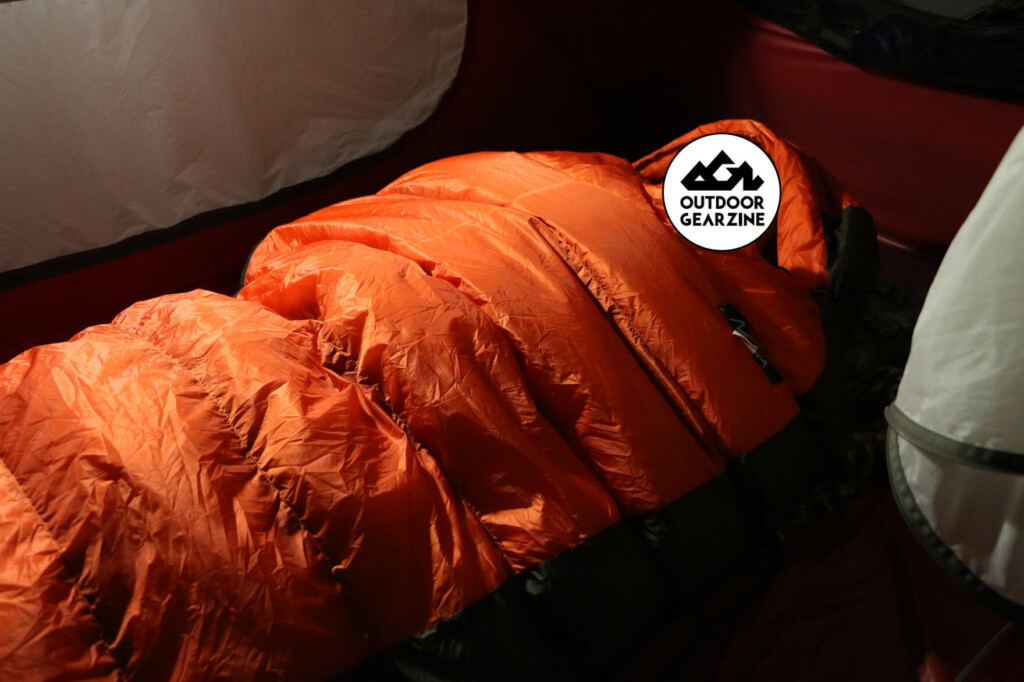
The first thing I noticed when using it was that the inner fabric is softer than the outer fabric, and feels very comfortable against the skin. As expected, the Auroratex outer fabric repels water easily. This means the down doesn't get soggy from condensation, so it's a relief. However, since the fabric is quite stiff, it does make a bit of a crackling noise when you move. It's not so hard that you can't sleep, but it might be bothersome for people who are sensitive to the noise of turning over in their sleep
The deep hood and draft tubes along the zipper help retain heat, improving insulation efficiency and providing a sense of security. Looking at the silhouette, the torso is wide and doesn't feel too tight. It may be just right for a sturdy build, but slimmer people may find there's a bit more dead space. The leg area is slim and roomy, with plenty of down inside, so I didn't feel particularly cold
Parts that are easy to use and satisfying down to the smallest detail
The zipper is designed to reduce jamming and is luminous so it's easy to see even in the dark. It's impressive how well-thought-out it has been down to the smallest of details. However, it does have some jamming issues, and I did experience it a few times if I wasn't careful
Warmth and water resistance trade off weight and portability
It weighs 750g, making it the heaviest of the three models. Its packed size is also large. Perhaps this is a sacrifice that must be made because of the Auroratex material used. However, a single quilted construction is used to reduce weight. Although I didn't notice it during this test, the single quilted construction inevitably means that the down at the seams is thinner, which can cause some cold air from so-called cold spots (see photo below)
It offers excellent comfort and waterproofing, but when considering the balance between weight and heat retention, it may not be suitable for UL packing because it places emphasis on heat retention. However, the quality of the construction, comfort, and comprehensive after-sales service with a lifetime warranty make it a unique and attractive product

Detailed review of each item
Heat retention
Even if it's a summer sleeping bag, it can get cold from night to early morning and can be used in changeable weather, so it's risky to neglect its heat retention performance. It's important to choose a model that can handle the temperature range of your environment
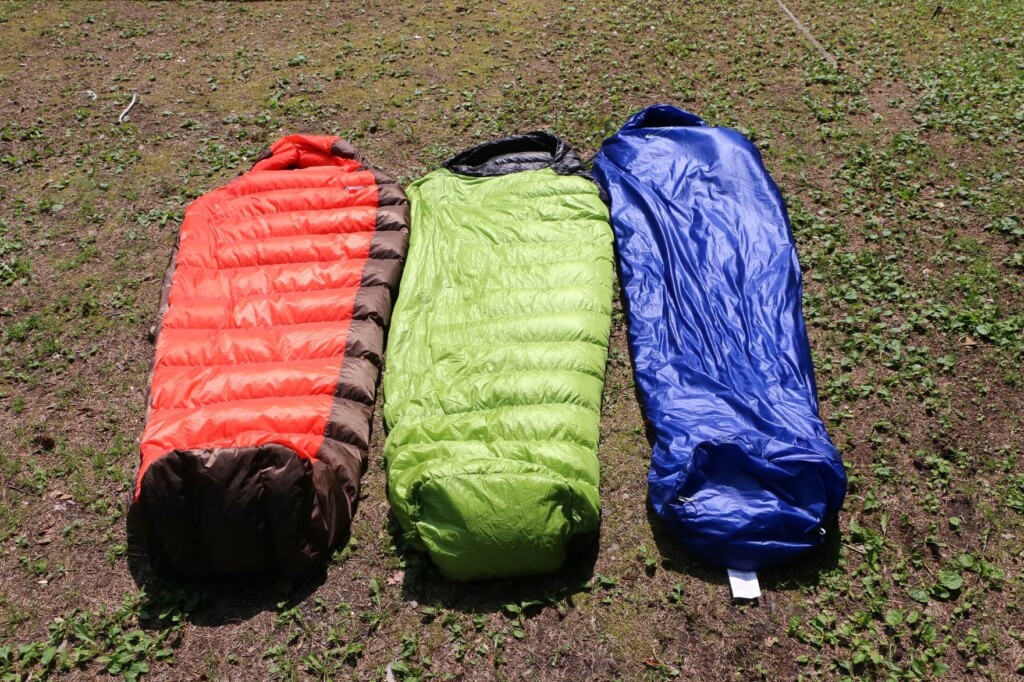
This test was conducted in an environment where the nighttime temperature ranged from 8°C to 15°C. It never got as cold as the published temperature limits of the three models, so I wasn't too cold to sleep, but the NANGA model felt the warmest of the three. Although it uses the lowest level of down of the three models at 760 FP, the filling weight of 350g more than makes up for it, and the warmth was by far the best, with a clear difference
It's likely that the insulating effect is not only due to the amount of down, but also due to the properties of the Auroratex fabric used for the outer layer. However, although this test did not reveal this, I was curious to see what would happen when the temperature in the jacket approached its limit, as it is a single-quilted construction
In reality, I didn't feel much difference between the Montbell and Isuka. If I had to say, the Montbell was slightly warmer. As for Isuka, the temperature rating is not European standard, so based on my own experience, I think the comfortable temperature is around 10℃ to 15℃
The Isuka's heat retention is far superior to that of a regular sleeping bag, and yet I was surprised to find that Montbell's new Seamless Down Hugger , despite being approximately 180g lighter overall than the Isuka, still retains the same or even better heat retention.
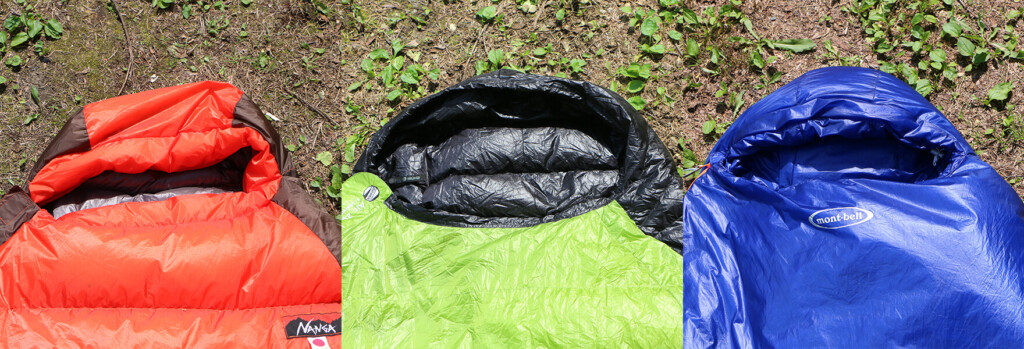
If you look inside the zipper, you'll see that the Montbell jacket has a flap to keep out cold air. The NANGA jacket also has draft tubes filled with plenty of down to improve its heat retention
Also, the hoods of the three models are deep for Montbell and NANGA, while the Isuka hood is shallow, which made me a bit worried when it gets cold
weight
The weight of a sleeping bag is closely related to its heat retention. Normally, heat retention and weight are proportional. Unlike winter sleeping bags, summer sleeping bags tend to focus on lighter models rather than heat retention, but prioritizing weight reduction and sacrificing heat retention too much can leave you cold and unable to sleep well. This is where the balance is very difficult to achieve with sleeping bags. For mountaineers who want to save even 1g, being able to use a lighter, warmer sleeping bag is the best thing
Of the three models, Montbell is the lightest, weighing just 420g including the stuff sack. Considering not only the weight but also the weight ratio, which takes into account the warmth, Montbell is the clear winner
The Spider Baffle System eliminates seams, and the Ballistic Airlite fiber used has been changed from the conventional 10dn to 7dn. Furthermore, the use of 900FP EX down minimizes the amount of down needed without compromising heat retention, resulting in impressive weight savings. It's the lightest model compared to other sleeping bags in Montbell's lineup with the same temperature range. Indeed, when I first opened it, I was worried they'd overemphasized weight reduction due to its light weight. Surprisingly, the waterproof version of this model, the Seamless Dry Down Hugger , still weighs less than 500g, even with the added waterproofing.
However, I am a little concerned about its durability. The change from 10dn to 7dn fiber makes the fabric feel much thinner. When I accidentally pinched the fabric while opening and closing the zipper, it took quite a while to carefully remove the fabric from the zipper so as not to tear it. While it is difficult to judge its durability at this point, I will need to pay more attention to it
The NANGA is the heaviest, likely due to its 15dn Auroratex fabric, but considering that it contains 350g of down and doubles as a sleeping bag cover, I wouldn't call it a heavy sleeping bag
Comfort and sleeping comfort
No matter how light and warm a sleeping bag is, if it's uncomfortable to sleep in, it will leave you feeling tired and affect your activities the next day. Looking at the materials inside the sleeping bags, all of them use soft fabrics and are not uncomfortable to the touch. However, the enveloping sleeping comfort created by Montbell's Spider Baffle System and 900FP down is not found in the other two models, so it's safe to say that Montbell wins hands down. It also comes equipped with the Super Spiral Stretch System, making it the perfect sleeping bag for someone like me who sleeps in an awkward position
The NANGA sleeping bag is also relatively wide, so like the Montbell, I was able to sit cross-legged inside and even change clothes inside. It didn't feel particularly cramped. However, as mentioned above, the outer fabric is a bit stiff, so it makes a bit of a crackling noise when I move
You can't sit cross-legged inside the Isuka sleeping bag, and you can't move around as much as you can with the Montbell and Nanga sleeping bags. That said, I didn't feel cramped, and I wouldn't say it was uncomfortable to sleep in. Perhaps it wasn't compatible with the sleeping pad I use, as it slipped quite a bit when I turned over, and I often found myself falling off the pad, which unfortunately meant I couldn't get a good night's sleep. Of the three models, the Nanga was the least slippery and most stable
Storage size
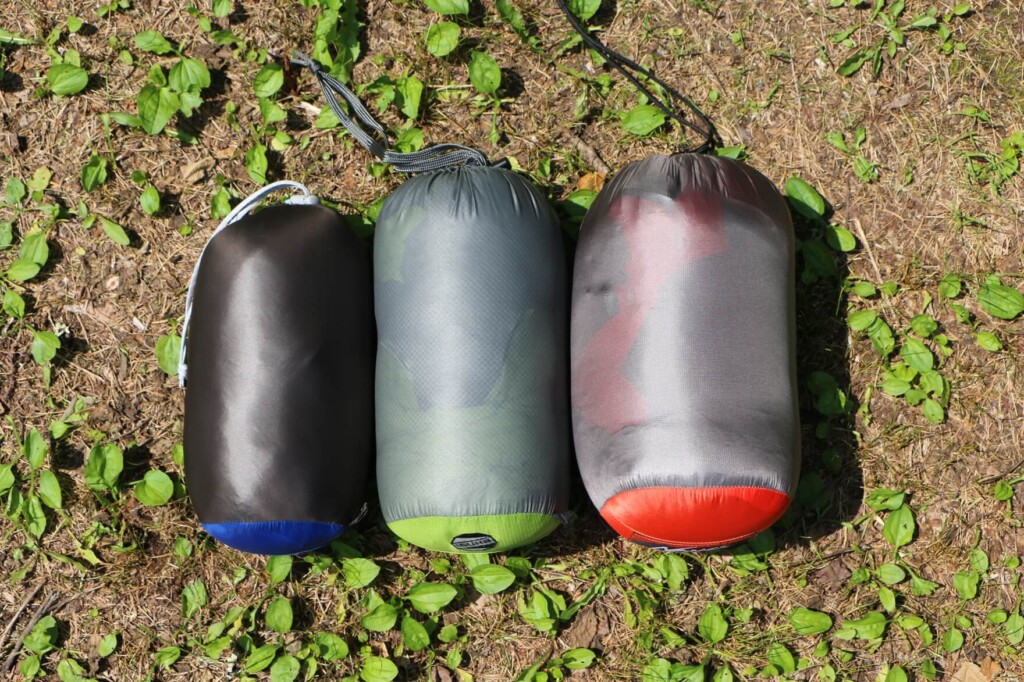
Sleeping bags take up a lot of space in your backpack when packing, so the more compact they are, the better
All three models come with a stuff sack, and each has a two-stage design with double drawcords, making it compact for its weight. Looking at the stuff sack, Montbell's uses the same Super Spiral Stretch System as sleeping bags, so it was stress-free to store. It's also handy, though a little subtle, to be able to change the shape of the pack by rolling it around or stretching it out
The Isuka and Nanga packs are packed to the brim when stored in their stuff sacks, but the Montbell packs have enough room to be compacted even further with the use of a compression belt. The Isuka packs are made of durable Cordura material, which is a plus
Water and moisture resistance
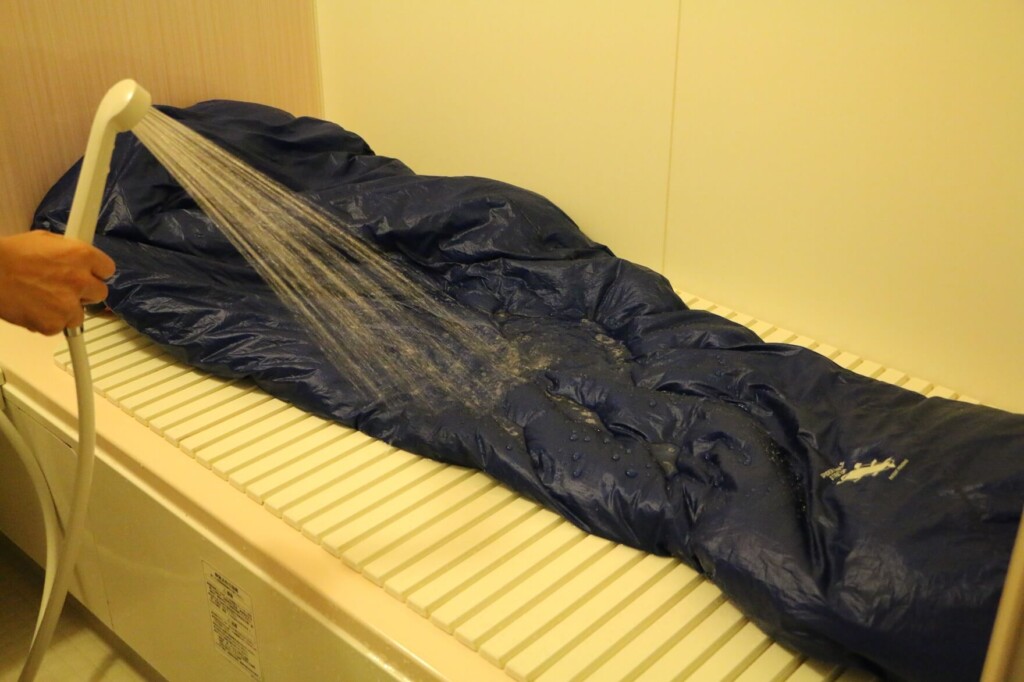
To test the water-repellent properties of each sleeping bag, we showered them with water for 3, 5, and 10 minutes, then compared the water-repellent properties of the outer fabric and the water penetration through the zipper. We also submerged the sleeping bags completely in water to see if they were still usable when wet
As a result, it was the NANGA that proved to have the best water-repellent performance. Even after 10 minutes of continuous showering, no water penetrated the down. As expected, Auroratex makes it so that a sleeping bag cover is not necessary. However, a small amount of water did penetrate through the zipper. In fact, water penetrated through the zipper in all three models. This may be an issue that needs to be overcome for sleeping bags
When submerged in water, it took the longest time for the NANGA to become soggy. This also shows that it is a very water-resistant model. Also, when used in an environment of 15°C, it was indeed hot and I had to open the zipper on the leg side, but it generally did not get stuffy. This shows that the breathability is also working well, and it can be said to be the model with the best waterproof and breathable properties
The Montbell jacket was a disappointment. I had high hopes for water-repellent performance because there are no seams in the outer fabric, but after 5 minutes the down became damp, and after 10 minutes, with water seeping in through the zipper, the down was practically soaked. It also became soaked the fastest when submerged in water. In terms of waterproof and breathable performance, the Seamless Dry Down Hugger, which uses Gore-Tex for the outer fabric, seems to be far superior to this model
Convenience and usability
Zipper operation is an important part of any sleeping bag. A sleeping bag that frequently gets stuck in the field takes up a lot of time and cannot be considered a good sleeping bag
All three models are designed to reduce snagging, but none of them are completely snagged. The Isuka model snagged the least, while the Montbell model snagged the most, which was stressful. The fabric is thin, so I'm worried it might tear. All three models can be opened and closed from the foot side, making it easy to regulate temperature
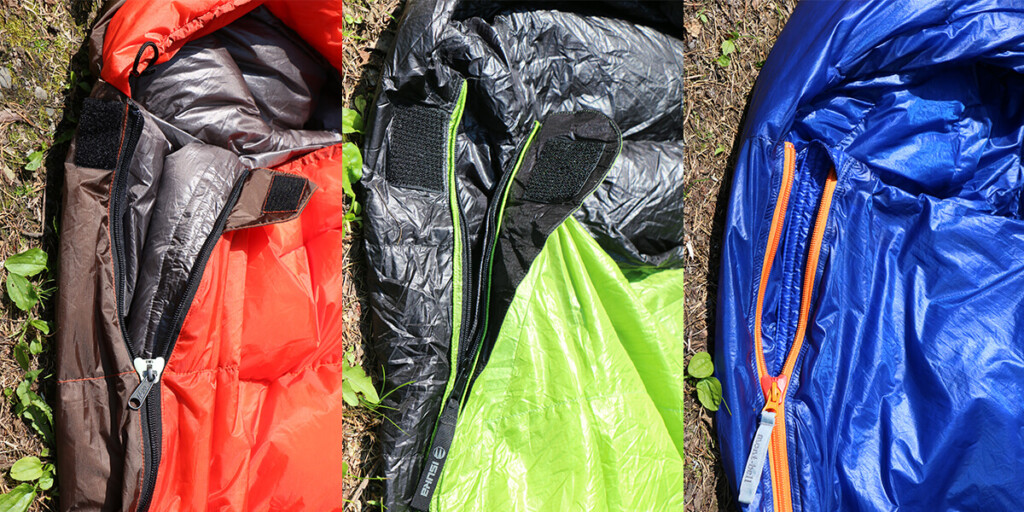
The NANGA luminous slider is extremely useful when operating in the dark. Personally, I'm disappointed that the slider knob isn't a flap-type like the Montbell and Isuka sliders
Looking at the finer details, Montbell has added a folded-over treatment to the opening at the top of the zipper, which prevents the zipper from coming into contact with your face, which is a very nice touch
Ease of care
It is important to wash your sleeping bag thoroughly to make it last longer and extend its lifespan. You can wash a sleeping bag at home, but you can't wash it like regular clothes. It needs to be washed, dehydrated, and dried carefully to preserve the performance of the down. You can save time and effort by having it professionally cleaned, and you'll be satisfied with the results, but it's quite expensive, so many people do it themselves
This time, I tried washing all three models at home. It was quite a challenge, but washing the Montbell model was the least stressful. This is because there was no uneven distribution of the down after drying, which saved me a lot of time. This is another advantage of the Spider Baffles system. Of course, with the NANGA and ISCA models, it was necessary to distribute the down evenly after drying
summary
I had my eye on the Montbell Seamless Down Hugger, but after testing it, I found that it wasn't excellent in every respect. While it was unrivaled in terms of warmth, weight, portability, and comfort, I also found that it still had some areas where it couldn't compete with other models, such as its vulnerability to moisture and stuffiness, its poor usability, and its price. While priorities vary from person to person, Montbell is for those who simply want lightweight, NANGA is for those who prefer warmth and water resistance even if it's heavier, and Iska seems ideal for beginners, with a good balance in all areas. However, while not included in this comparison, judging from the Montbell's excellent performance, I feel that the Seamless Dry Down Hugger , which I passed over due to its price, is the best choice at this time, with no drawbacks other than its price, as it is lightweight and highly insulated while compensating for its tendency to get wet.
Unlike winter sleeping bags, which place the greatest emphasis on heat retention, each summer sleeping bag model excels in different areas. There are probably many aspects that you won't know until you actually try it, but it's important to gather information carefully and choose a sleeping bag that suits your environment
I hope this article will help you choose your summer sleeping bag
Related reading
 Comparison Review: Winter Down Sleeping Bags - Which one will keep you warm and sound asleep even in the freezing cold of the winter mountains?
 Comparison Review: Ultralight 3-Season Sleeping Bags - A showdown of the best products for ultimate lightness and warmth
 How to choose a winter sleeping bag for a comfortable winter tent stay in the mountains and our top 8 recommendations
 Comparison Review: Sleeping on Different Types of Sleeping Pads 2016