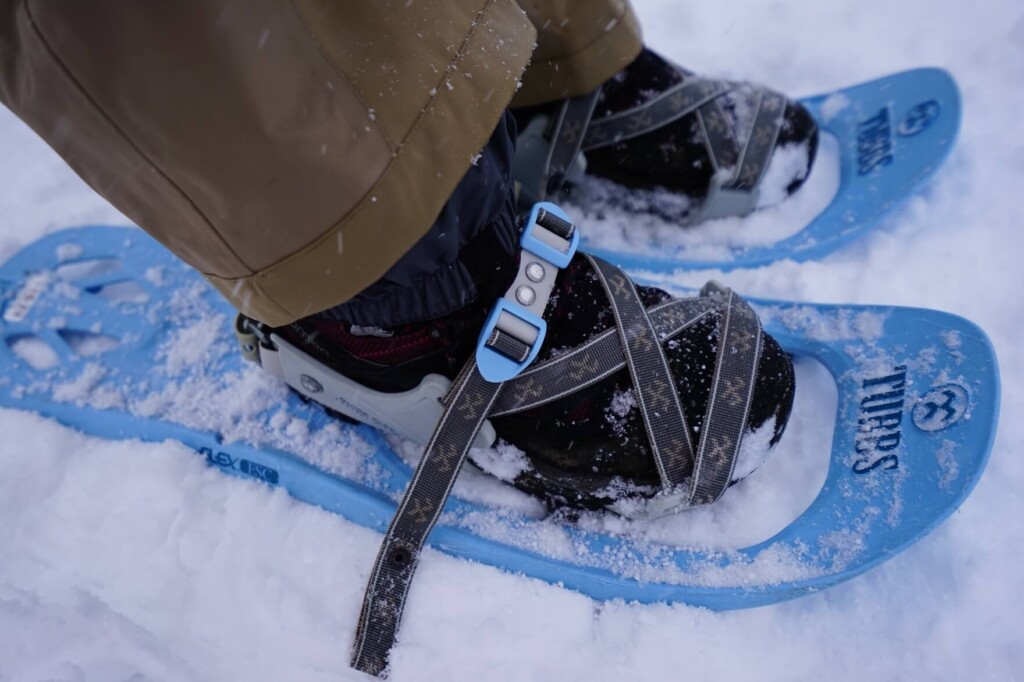
[2025-2026] How to Choose Snowshoes and Wakan: The First Step in Hiking in the Snowy Mountains? Tips for Choosing the Best Models for Each Purpose and Preference
Walking through the snow in snowshoes reveals a slightly gentler world of snowy mountains
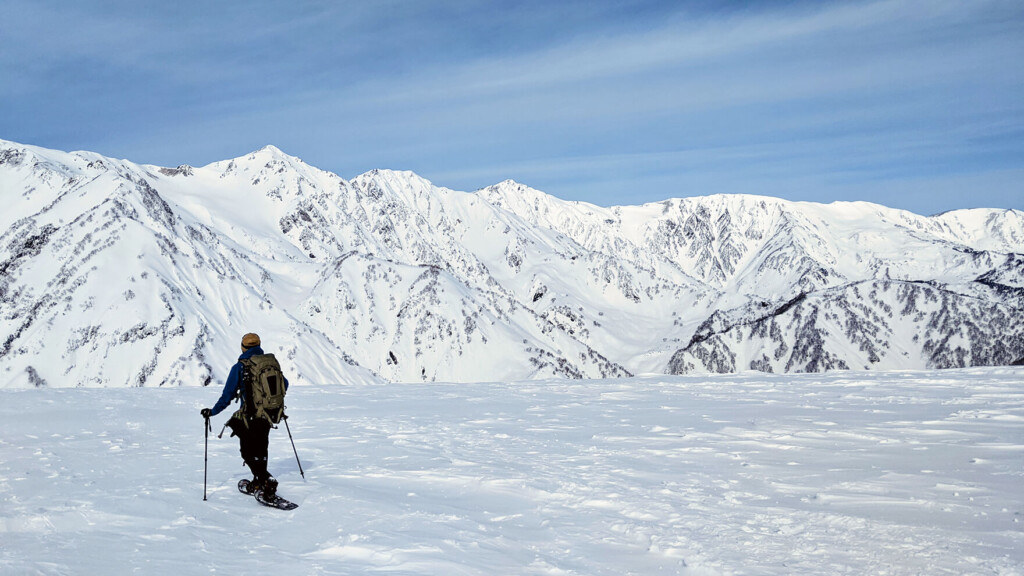
The world of winter mountains, closed off by deep snow, is certainly a high-threshold world that not everyone is allowed to enter casually. However, when you do take the trouble to visit, the overwhelming beauty and majestic atmosphere that you would never encounter in your daily life will surely become unforgettable memories. It is as if the nature you have seen up until now seems even more profound, and it is without exaggeration a sensation that changes the way you see the world. Snowshoes and crampons are the easiest way to experience this world of snow
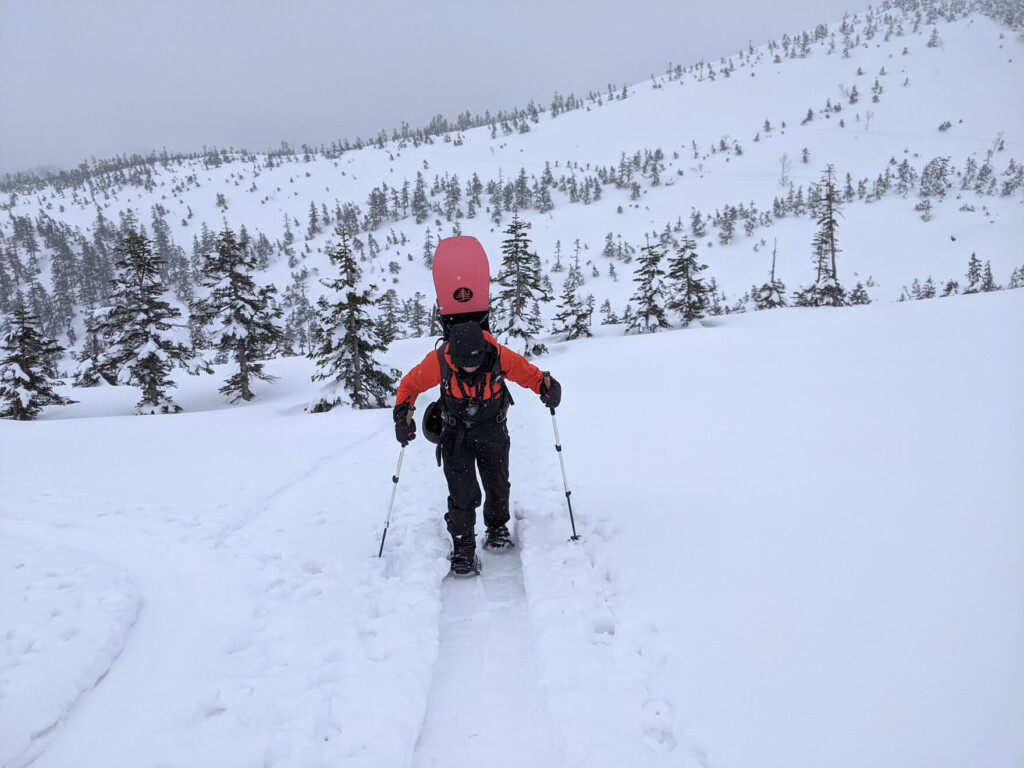
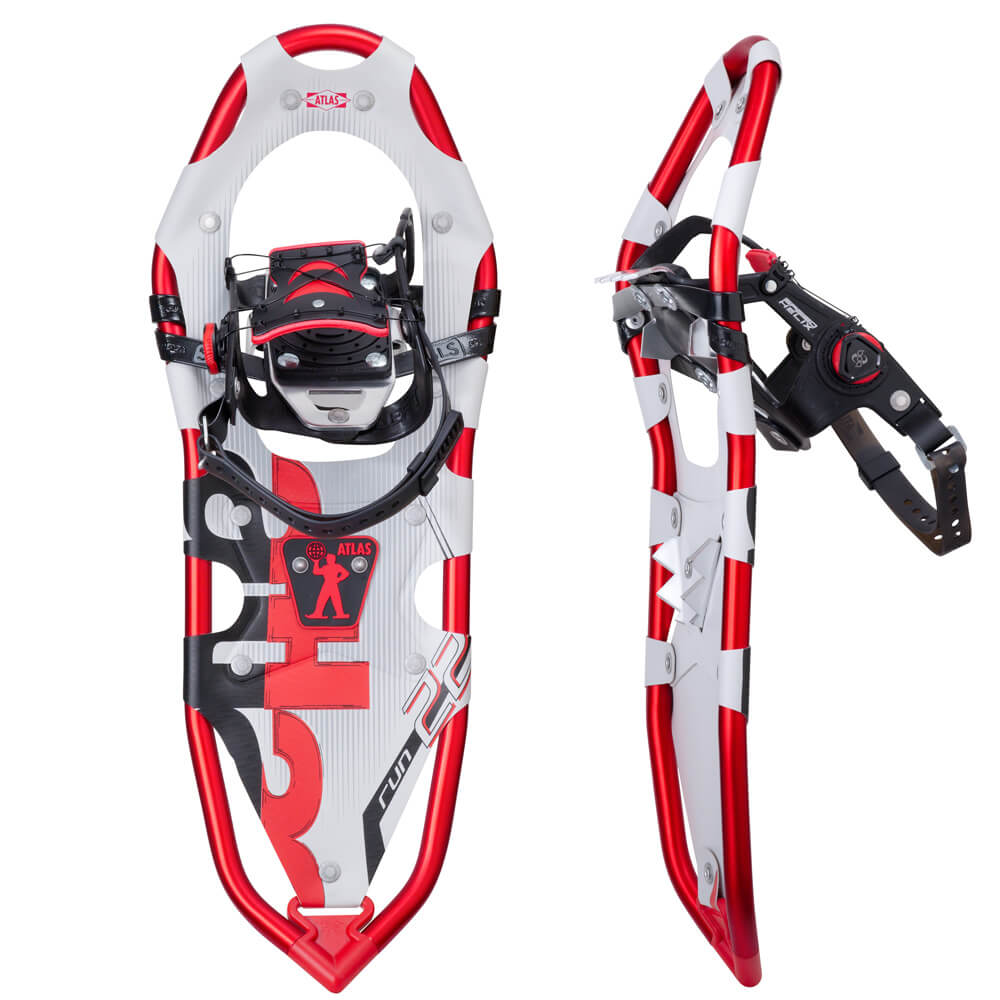
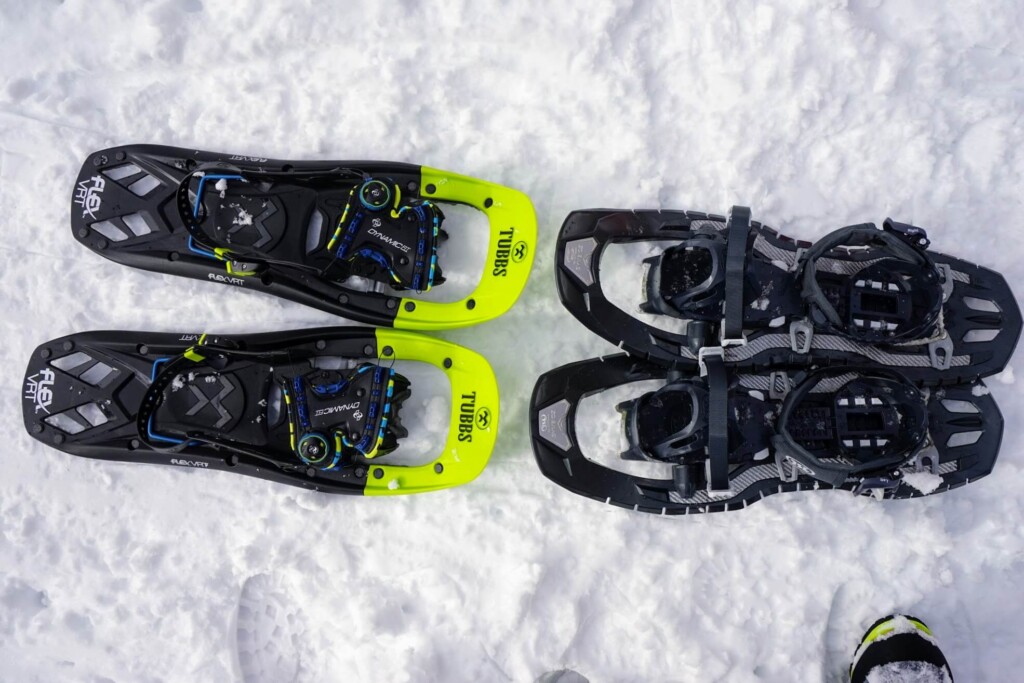
There are a wide variety of snowshoe models to suit a variety of winter activities that require free movement through snow-covered areas, from winter forest and rural mountain walks to winter running and even hiking up steep slopes in the backcountry. Choosing the right type of snowshoe for each activity is important for safety and comfort
Here, I have researched the latest information on the equipment needed to enjoy snowshoeing, and based on my own experiences, I have compiled a list of wise choices
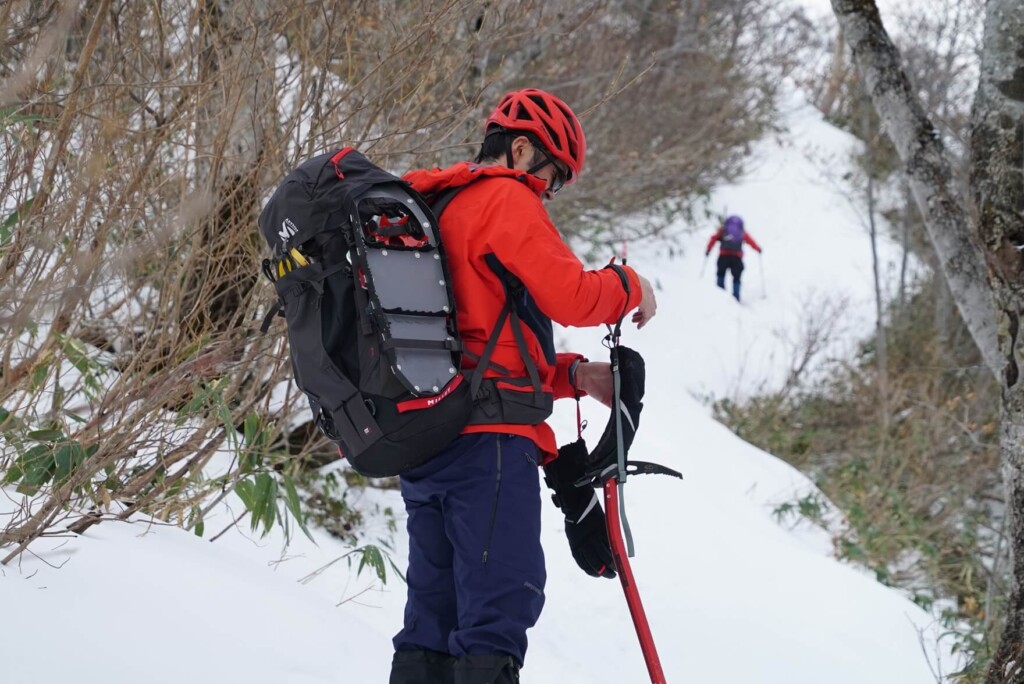
So, for those who want to fully enjoy backcountry skiing and snowboarding, I'll write about recommended backpack models for backcountry skiing and snowboarding in the first half, and tips on how to choose one in the second half. After doing some research, I've learned that there are a wide variety of preferences for backpacks for ski touring, depending on the manufacturer and the person. Therefore, the selection method I'll write about here inevitably reflects my personal preferences and habits, so there may be many differences in opinion with experts. I hope you'll read on with that in mind.
Please note that we are only introducing one or two recommended models in each category here, but by becoming a member you can view a comparison list of all 49 best candidates, including other recommendations
Outdoor Gearzine's content is made possible by your support. If you're interested, please consider becoming a member!
All recommended snowshoes and crampons and a comparison table of all 49 models are available with a paid membership

table of contents
- [By Use/Preference] Best Snowshoes & Crampons - From Snow Hiking to Snow Mountain Climbing and Backcountry Skiing -
- Best Overall Snowshoes: MSR Lightning Explorer / TSL SYMBIOZ instinct
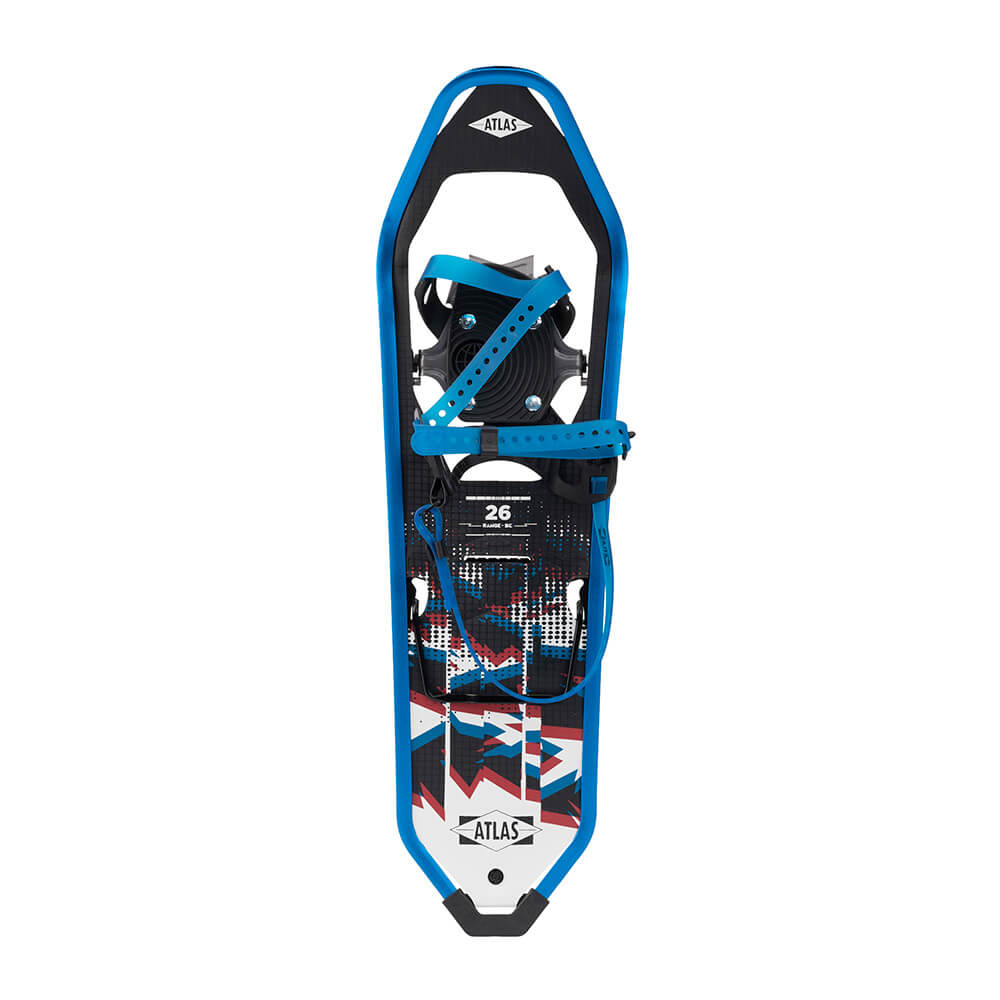
- Best Backcountry Snowshoes: MSR Lightning Ascent/ATLAS Range BC 26
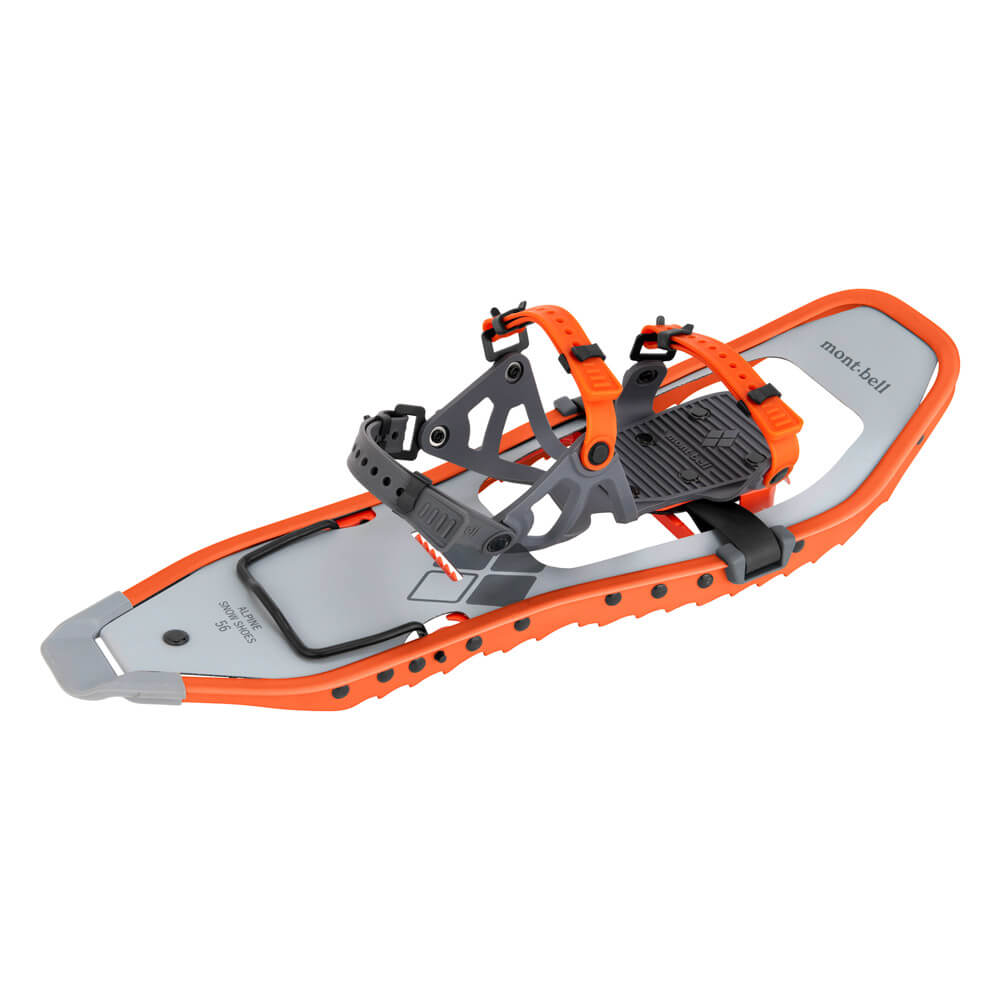
- Best Affordable Snowshoes: Mont-Bell Alpine Snowshoes 56
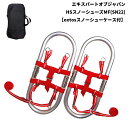
- Best Wakan: Expert of Japan HS Snowshoes (Flat Type)
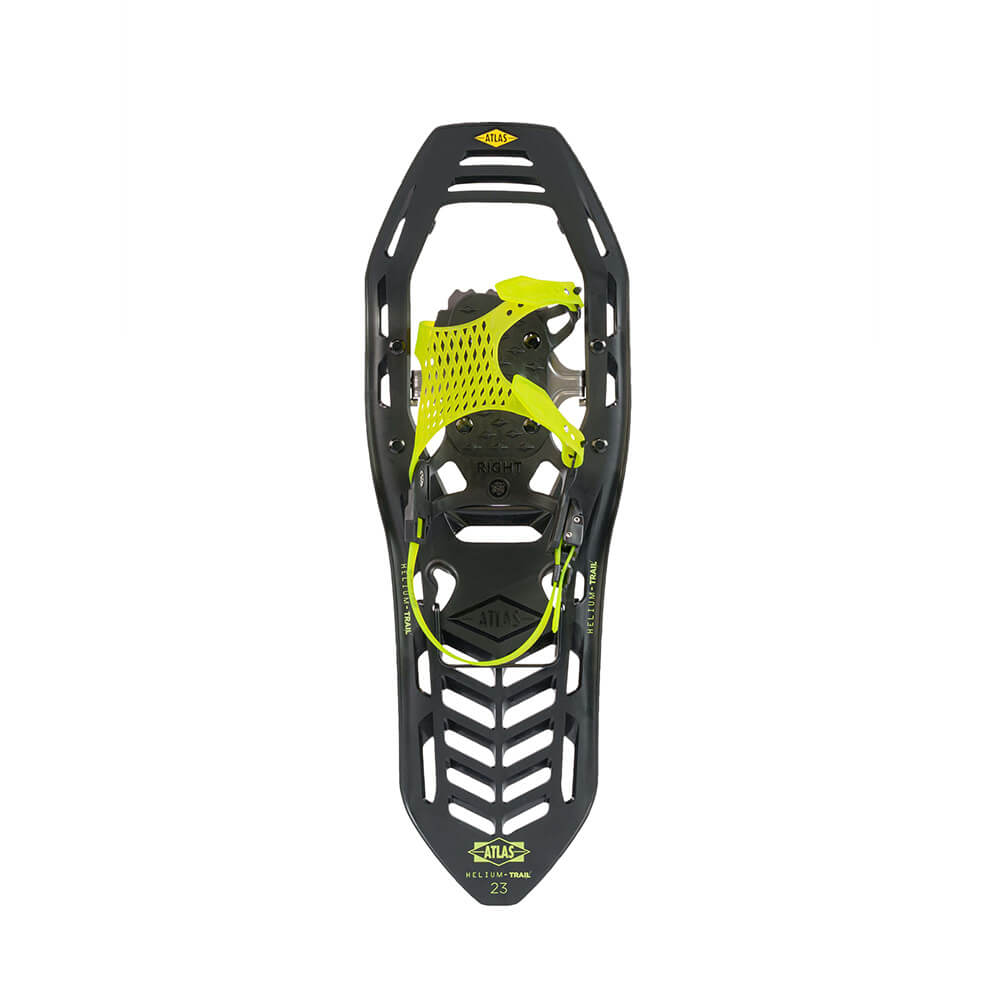
- Recommended Snowshoes for Beginners: Atlas Helium Trail 23
- Best Lightweight: oxtos SNOW PLAK Approach oxtos Ver.
- How to Choose: What are snowshoes? What are crampons? What are they and how should you use them?
- Five things to check when choosing the best snowshoes
- Point 1: Know the type of snowshoes that are suitable for your purpose
- Point 2: Choose the optimal size (length) and shape of frame
- Tip 3: Choose bindings that are easy to put on and take off and won't come loose
- Tip 4: Check that the crampons are strong enough for the intended use
- Point 5: Weight and portability are important depending on the application
- summary
[By Use/Preference] Best Snowshoes & Crampons - From Snow Hiking to Snow Mountain Climbing and Backcountry Skiing -
Best Overall Snowshoes: MSR Lightning Explorer / TSL SYMBIOZ instinct
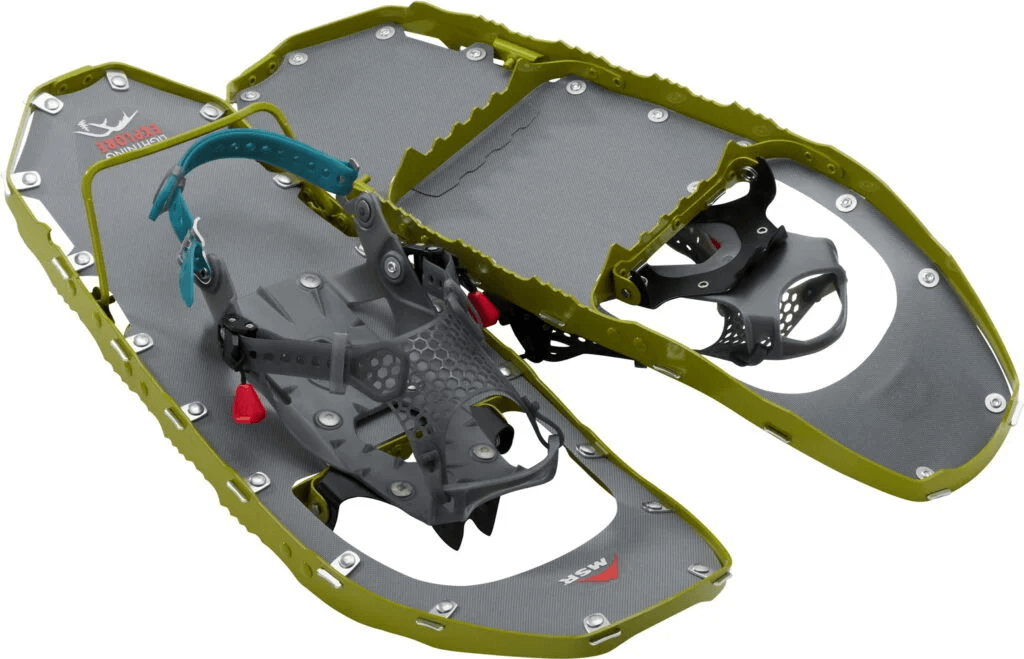
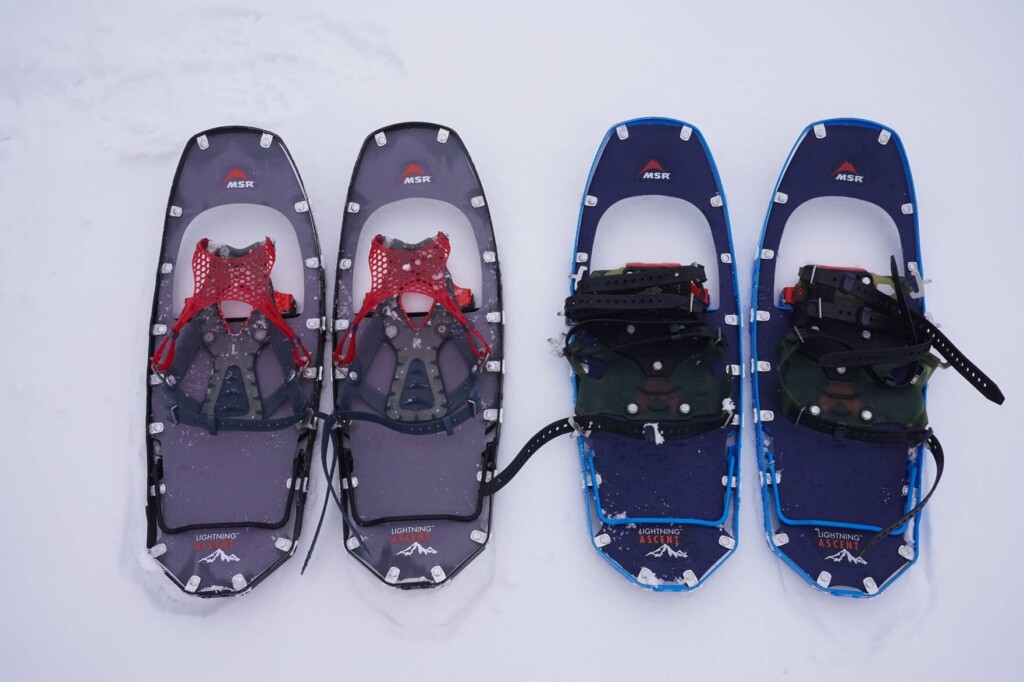
Sorry for being so cliche, but there are many different types of mountain gear, but it's rare to find an item that stands out more in its category than this one.The MSR Lightning series of snowshoes is clearly superior to other models, and has remained unchanged for the past 10 years
However, due to some minor details, the model we chose as the "best overall" this time was not the so-called top model, the Lightning Ascent, but the Lightning Explorer
When we last conducted a comparison survey about five years ago, there were small but clear differences between the Lightning Series' Ascent and Explorer, such as the type of buckle and the number of crampons. However, at a glance, there are almost no differences between the current models. The only difference is that the Ascent has a metal toe part, while the Explorer has a plastic one. It's a subtle difference, but if there is one, it's that the Ascent is more durable and the Explorer is lighter. The Explorer is slightly cheaper. So, for this overall best, we decided on the Explorer, based on balance and ease of use
However, they are among the most expensive snowshoes available. You have to be prepared for that. If you can accept that, their top-class walking stability, which can handle everything from flat ground to steep slopes and technical terrain, and their high-performance bindings that are light, thin, smooth, and don't come loose easily, are truly one of a kind. Honestly, once you try them on, you'll never want to wear any other snowshoes. The Lightning has all the essential elements of a mountain snowshoe, and there are almost no drawbacks when it comes to "safely climbing and descending," making them ideal for everything from snow-capped mountain climbing to backcountry skiing. This also means that they can be used on any other snowy mountain, so it's unlikely you'll regret buying them
What I like about the MSR Lightning Explorer
- Easy to put on and take off bindings
- High fixing power regardless of shoes
- High grip on all slopes
- Folds compactly for easy portability
- lightweight
"TSL SYMBIOZ instinct" is a unique and appealing product that should not be underestimated
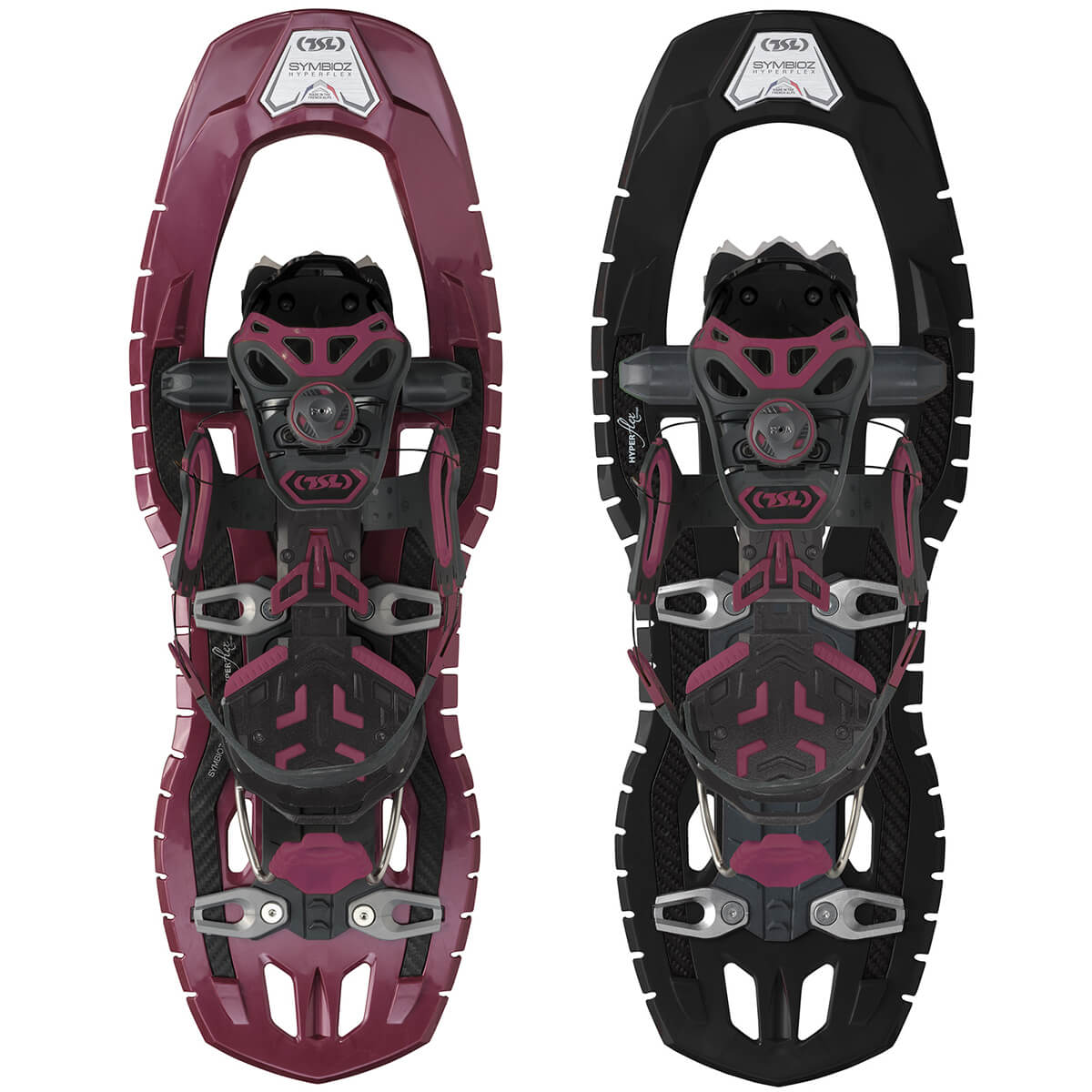
On the other hand, there is another excellent competitor that the Lightning in overall performance, but the Lightning SYMBIOZ instinct " from TSL. This brand is a minor one in Japan, but it is the flagship model of a long-established manufacturer in France, a snowshoe powerhouse known only to those in the know.
The biggest attraction of these snowshoes is their exceptionally comfortable walking ability, thanks to their unique frame structure. The small grooves on the sides of the frame and the special plastic make the snowshoes incredibly flexible. Even though you're wearing snowshoes, you can walk as naturally as if you were wearing regular shoes
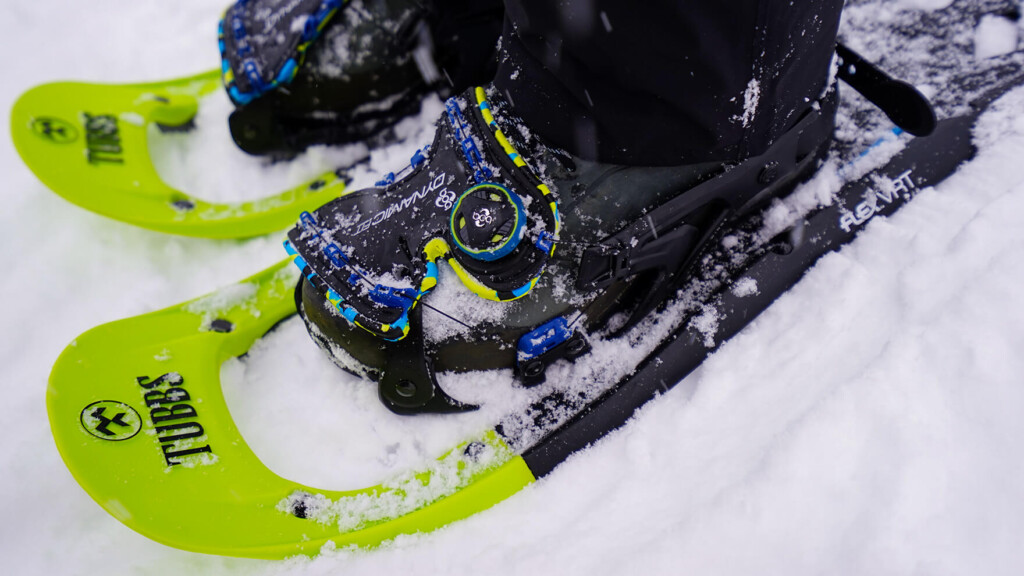
Furthermore, this latest model is incredibly easy to put on and take off thanks to the BOA system at the toe. The revolutionary fitting system, which securely fastens the shoe only at the forefoot (without fastening the heel or ankle), is fantastic. Aside from the bulkiness of packing, this is a top-class performance shoe. The price (compared to MSR) is also quite attractive
What I like about the TSL SYMBIOZ instinct
- Comfortable walking, as if you were not wearing shoes
- Easy to put on and take off bindings
- Strong grip for traversing slopes
- lightweight
- Affordable compared to competitors
Best Backcountry Snowshoes: MSR Lightning Ascent/ATLAS Range BC 26
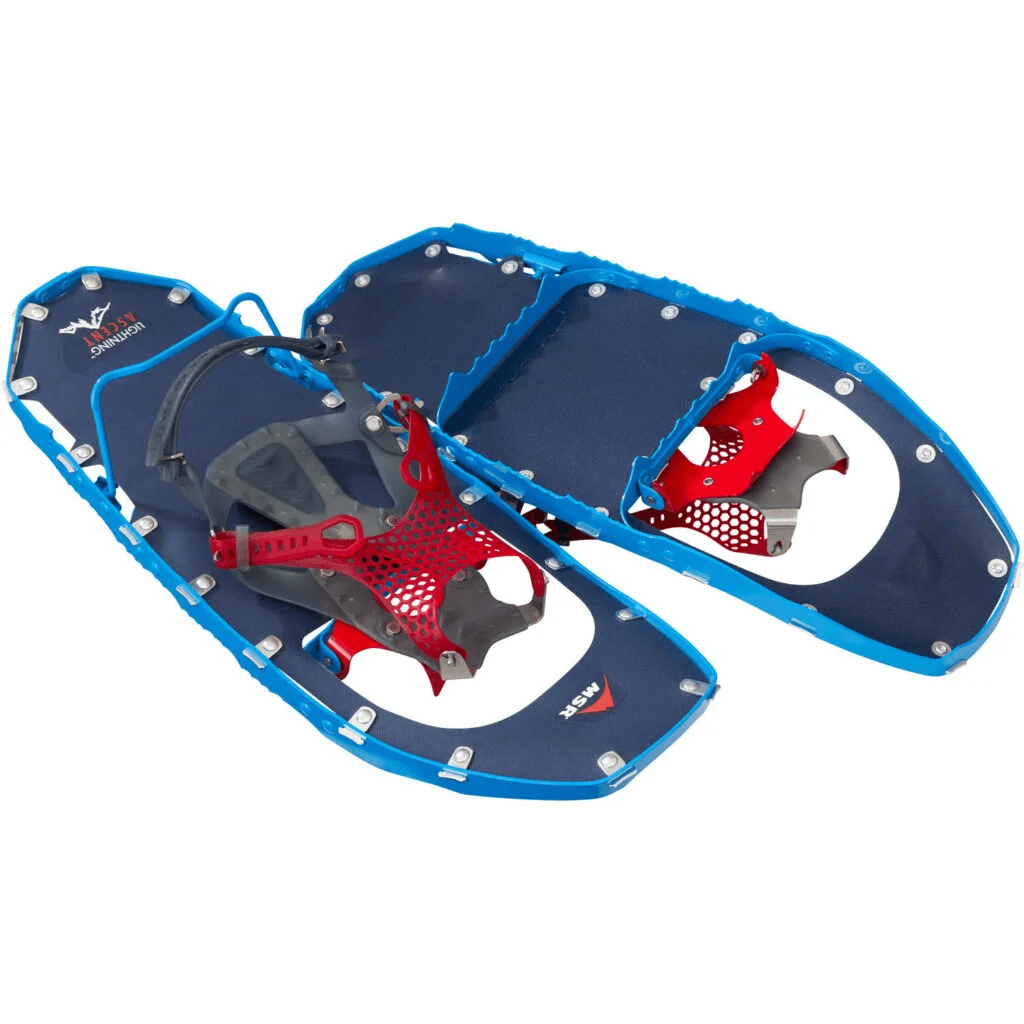
I've already written most of it, but the Lightning Ascent, the flagship model of the MSR Lightning series of snowshoes, is undoubtedly top-class in both performance and quality. It has reliable edges that provide a firm grip even on difficult terrain and steep slopes, is quick to put on and take off, is not likely to come loose, and has strong parts that are not easily broken, making it an undoubted top choice when thinking of taking it to the most difficult mountains
What's more, the compact body makes it easy to carry, making it ideal for backcountry use, where you can climb tough terrain and then stow it away when descending
What I like about the MSR Lightning Ascent
- Easy to put on and take off bindings
- High fixing power regardless of shoes
- High grip on all slopes
- Folds compactly for easy portability
- Durable and long-lasting
- lightweight
The ATLAS Range BC 26 is powerful, compact, and attractively priced
ATLAS Range BC 26 which has been released in recent years, is also quite excellent. Based on the same mountaineering concept, it has learned the best parts of the unquestionable benchmark Lightning Ascent and added their own unique "flavor" to differentiate it. The T-shaped aluminum frame with its edgy design around the perimeter provides just the right amount of flexibility, solid rigidity, and grip, and the slim, vertical silhouette is carefully designed for ease of walking (although the slender 26-inch length can be a bit of a concern).
The thin, lightweight, and compact strap-type bindings aren't as easy to set up as the Lightning, but the peace of mind of knowing you can easily replace them if they break is quite appealing. And, of course, they're also reasonably priced compared to the MSR
What I like about the ATLAS Range BC 26
- High grip on all slopes
- Folds compactly for easy portability
- Bindings that are easy to attach and detach and replace in case of emergency
- Durable and long-lasting
- lightweight
- Affordable compared to competitors
Best Affordable Snowshoes: Mont-Bell Alpine Snowshoes 56
Snowshoes have become much more expensive in recent years, and it's now difficult to find a decent pair for under 20,000 yen. Meanwhile, Montbell's new Alpine , are an excellent choice, offering all the features mountain enthusiasts want while still being priced at under 20,000 yen.
The aluminum frame with its sharp edges and the lightweight and compact bindings are typical of Montbell, but there's still room for improvement as they lack any outstanding individuality and the bindings are outdated and tend to loosen after extended use
Previously, I had selected Captain Stag snowshoes as a recommended low-priced model, but after using them for two years, I found that the buckles that secure the straps were prone to loosening and breaking, and other obvious flaws in the construction, so I decided to remove them from my selection this time
What I like about the Mont-Bell Alpine Snowshoe 56
- Durability and grip for serious mountaineering at a reasonable price
- High grip on all slopes
- Folds compactly for easy portability
- lightweight
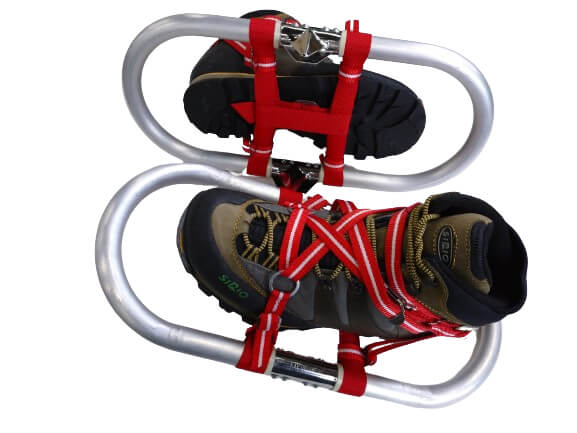
Best Wakan: Expert of Japan HS Snowshoes (Flat Type)
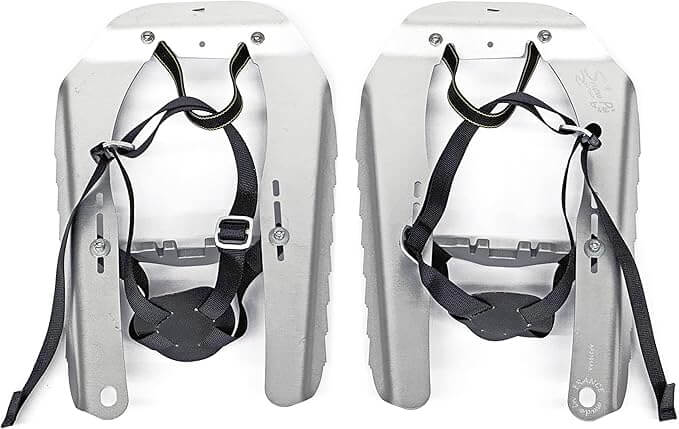
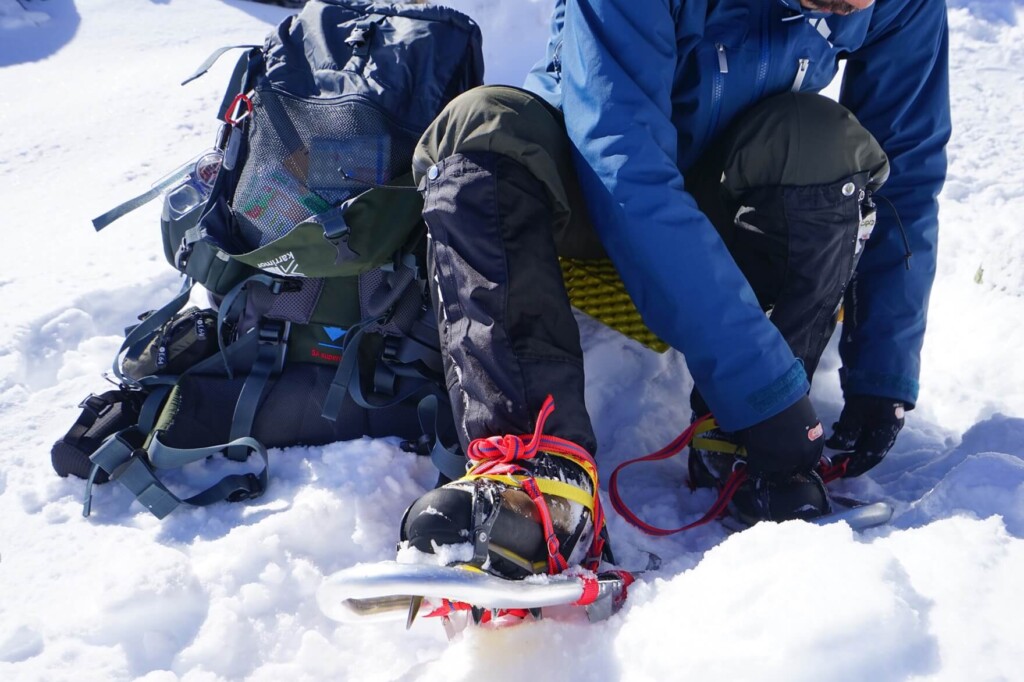
Snowshoes are advantageous when walking on flat ground or when breaking through deep, dry snow, but in Japan, where mountain climbing is rugged and there is a lot of heavy, wet snow, crampons, which have long been a must-have for snow climbers, are often easier to use. Another advantage that snowshoes don't have is that they can be used in combination with crampons
There are a number of innovative snowshoe products available from various Japanese manufacturers, but when it comes to choosing the best model, it seems that the familiar " Expert of Japan HS Snowshoes
First of all, it's light. It's still the lightest among competing models. This lightness and compactness makes it easier to attach to a backpack than snowshoes
What's more, the crampons can be turned inside out and crampons attached, making them highly flexible and easy to use on Japan's technical snowy mountains, where deep snow alternates with slippery, hard slopes (for this reason, we recommend the ``flat type'', which can be turned inside out and used easily)
Competing models certainly include some innovative designs that combine the best of snowshoes with traditional crampons by adding features such as ratchet bindings to make them easier to put on and take off, or by increasing the surface area and adding claws
However, all of these eliminate the original advantages of snowshoes, which are their light weight and compactness and high maneuverability, and to be honest, there is nothing that makes me want to switch to them
What I like about the Expert of Japan HS Flat Snowshoes
- Incredibly lightweight and compact
- High mobility
- Can be used in conjunction with crampons for excellent grip on any slope
- Easy to repair due to simple construction
Recommended Snowshoes for Beginners: Atlas Helium Trail 23
Based on proven, easy-to-use materials and a simple structure, it has a straightforward design that can be used for any purpose. There are several beginner-friendly models that have been designed with ease of use in mind down to the smallest details and are also priced as affordably as possible, but the ATRAS Helium TRAIL 23 is the most well-balanced model that we can recommend with the most confidence.
The bindings are lightweight, simple, and easy to put on and take off, and have a high level of hold. Although they are aimed at beginners, they have a certain degree of reliable traction and heel lift, so they can handle a wide range of terrain, even on slopes, and are of a quality that is sufficient for use on routes that are not too tricky
What I like about the ATRAS Helium TRAIL 23
- Easy to put on and take off, high-hold wrap binding
- Railed crampons for excellent grip in mountainous terrain
- lightweight
Best Lightweight: oxtos SNOW PLAK Approach oxtos Ver.
Of all the snowshoe and crampon products that have appeared in recent years, the SNOW PLAK has been the most noteworthy. Developed as a project by ANENA (French National Association for Snow and Ice Research) and awarded Gold Winner at ISPO in Germany in 2018, this innovative snowshoe (or crampon?) is designed to be fastened to the front half of regular hiking boots or boots with crampons. Despite being so simple and compact, watching a video at a retailer, it appears to have the same level of buoyancy as crampons
The original model was imported and sold by Evernew, but the one we chose this time is a custom-made model from Octus, a mountaineering specialty store in Osaka, which has improved parts maintenance and ease of fastening the boots
While maintaining the lightweight and compact advantages of snowshoes, these snowshoes are even lighter, more compact, easier to put on and take off, and easier to walk in. I felt they had the potential to overturn conventional wisdom. The only drawback is the price
Favorite points of oxtos SNOW PLAK Approach oxtos Ver
- Incredibly lightweight and compact
- More maneuverable than snowshoes and better climbing ability than crampons
- Easy to put on and take off (after adjusting in advance) and has a strong hold that prevents it from slipping off easily
- Higher buoyancy than it looks
- Use in combination with crampons for versatile terrain compatibility
In addition to the above, you can read the comparison list of all 49 models in the paid membership article
How to Choose: What are snowshoes? What are crampons? What are they and how should you use them?
Snowshoes are walking devices that allow you to walk on ground covered with deep, unpacked snow without sinking into the ground. Their history dates back thousands of years, and they are said to have originated as tools that humans invented to survive in the harsh winters of the earth
To understand how snowshoes make it easy to walk on snow, it helps to think of them as a boat. Just like a boat that floats on water, snowshoes are designed to expand the surface area of the sole of the shoe. The larger surface area that comes into contact with the snow provides greater buoyancy, allowing the body to float on the snow without sinking. Generally, the heavier the load or the lighter and drier the snow, the more likely a person is to sink, so a snowshoe with a larger surface area is required

Are snowshoes and crampons different? - They may look similar, but they're actually quite different
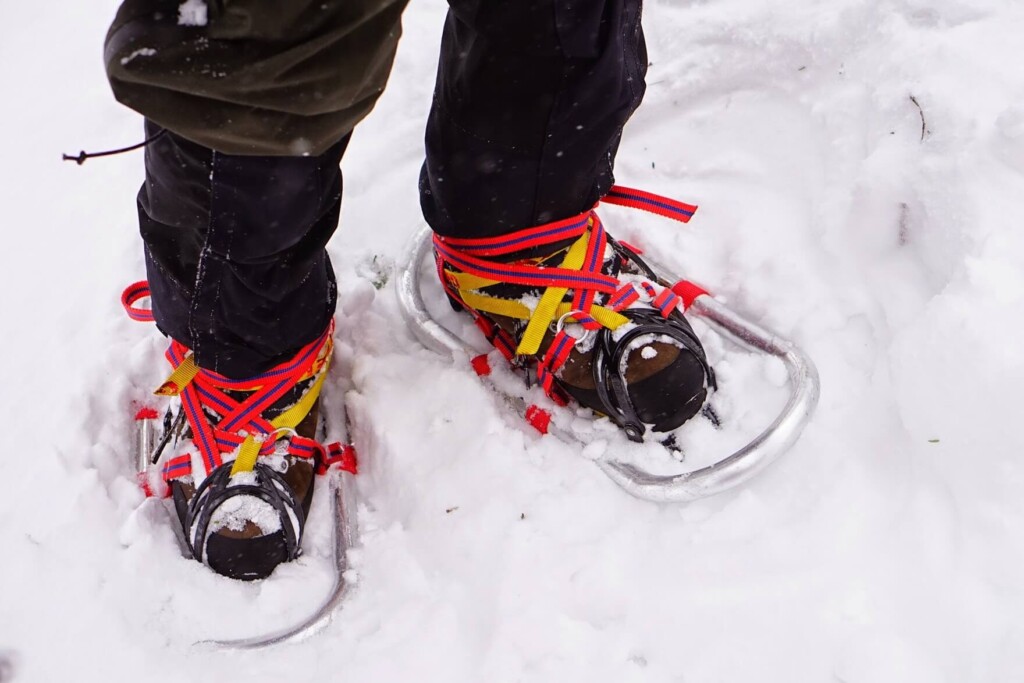
Snowshoes are said to have originated in Central Asia and spread all over the world, adapting to each region, but here in Japan they have also evolved in their own unique way. This is the " wakan" (snowjiki) .
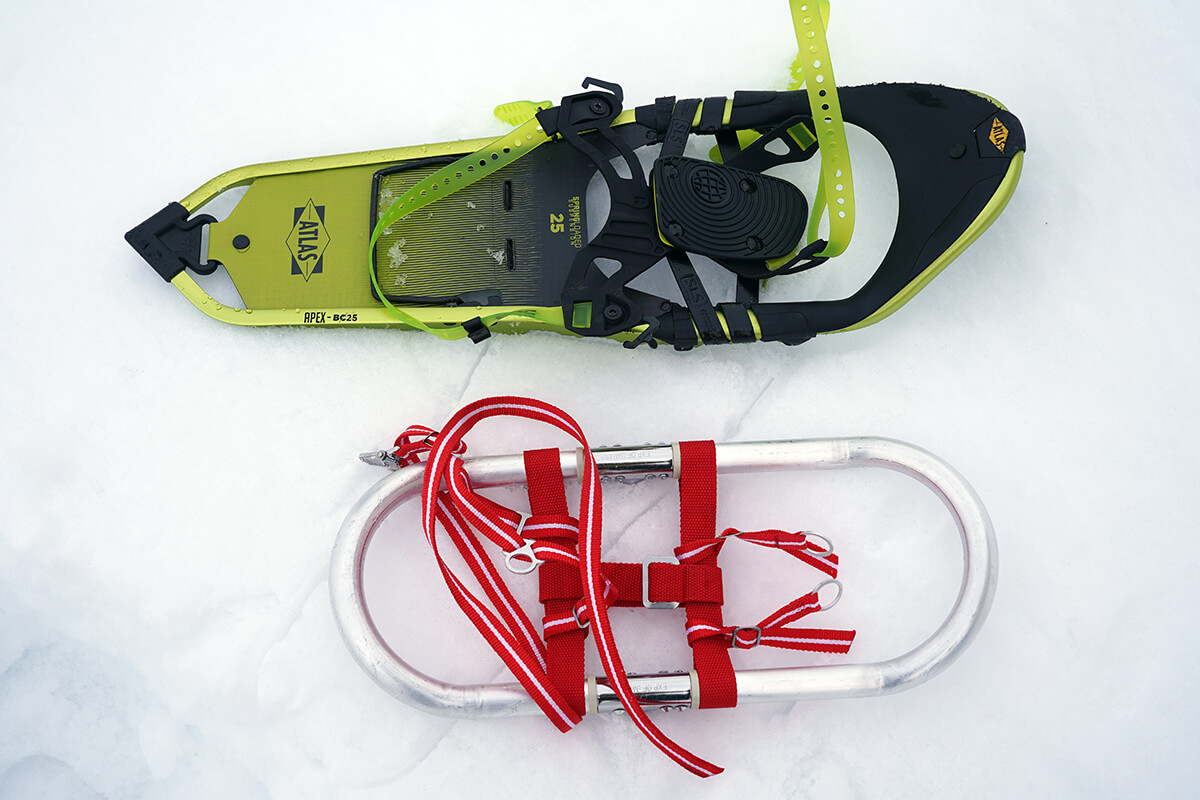
crampons and snowshoes are made to make it easier to walk on snow, but because the environments and uses are different in the West and Japan, it's difficult to say which is better. However, from experience, I think crampons are often more effective and easier to use when used for "winter mountain climbing" in Japan. The differences, including the reasons why, are summarized in the comparison table below (this is a general comparison only).
| material | Snowshoeing | Wakan |
|---|---|---|
| Representative image | ![]() | ![]() |
| Features | Basically, it is effective when walking on dry snow, deep snow, and gently sloping flat terrain | Effective for walking on heavy snow in complex terrain, including wet snow and steep slopes (when used with crampons) |
| merit |
|
|
| Disadvantages |
|
|
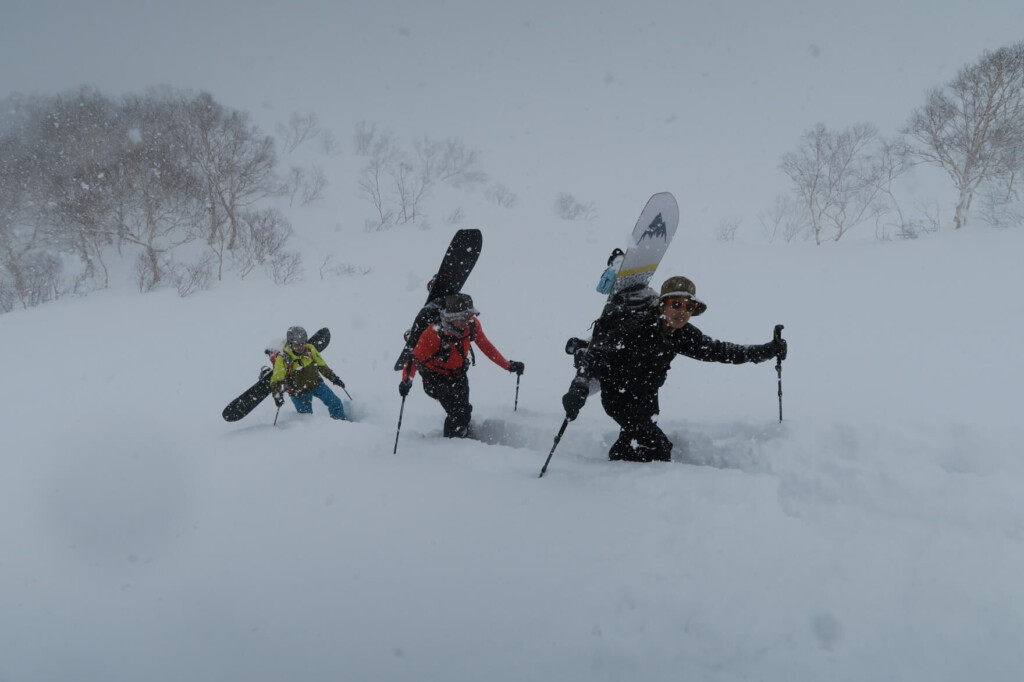
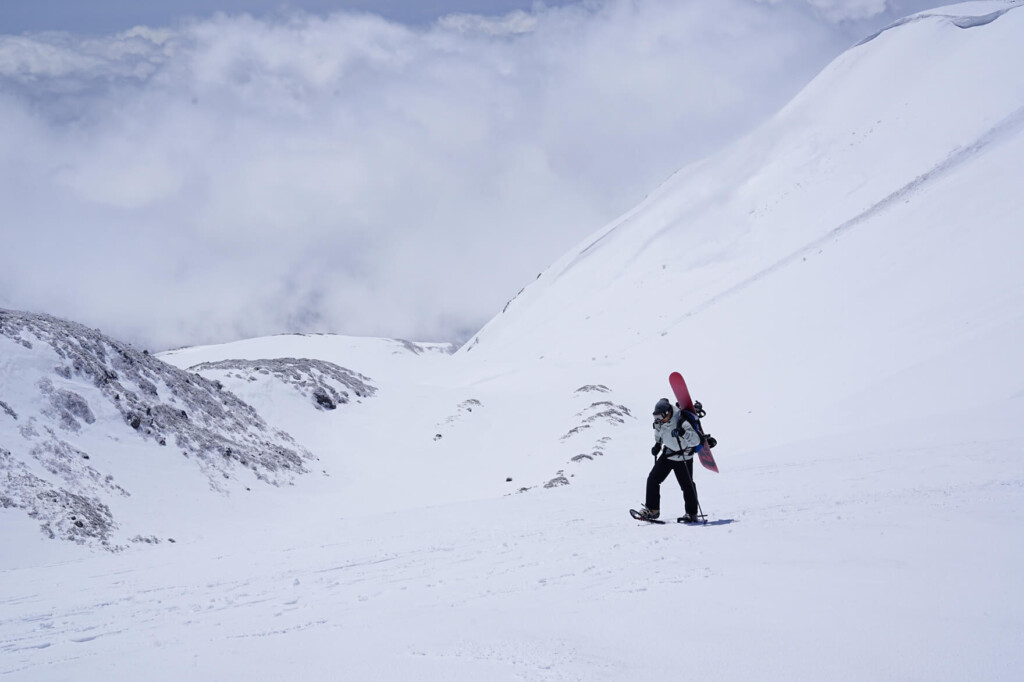
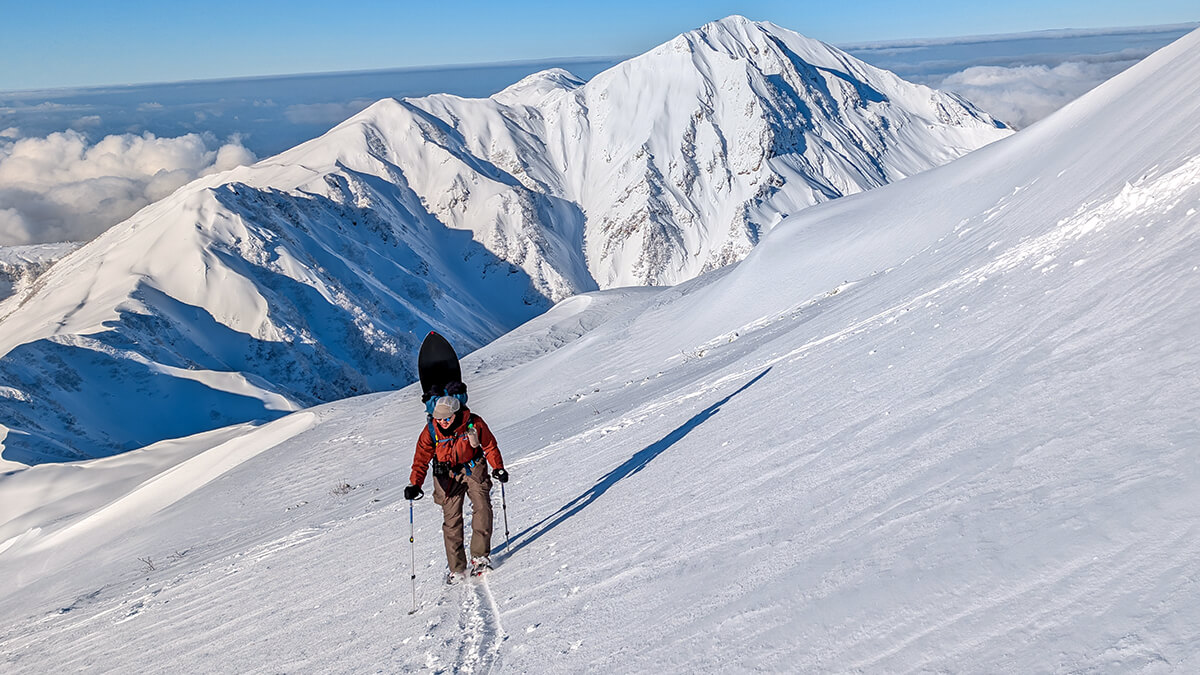
In summary, in Japan, where the terrain is often very varied and the snow is often heavy and wet, the combination of crampons and snowshoes has long been popular because it is easier to use. However, when it comes to backcountry snowboarding, where you're sliding down powder snow, snowshoes are often more suitable due to their buoyancy, and in that case, the MSR Lightning Ascent are ideal as they are lightweight, compact, and strong enough for steep slopes.

Snowshoes have high buoyancy and are easy to walk in even in deep snow, while crampons are maneuverable and highly maneuverable, making them suitable for tricky snow conditions

Wearing snowshoes over crampons allows you to flexibly adapt to a wide range of terrain, including deep snow and ice, for peace of mind
What kind of shoes do you wear with snowshoes?
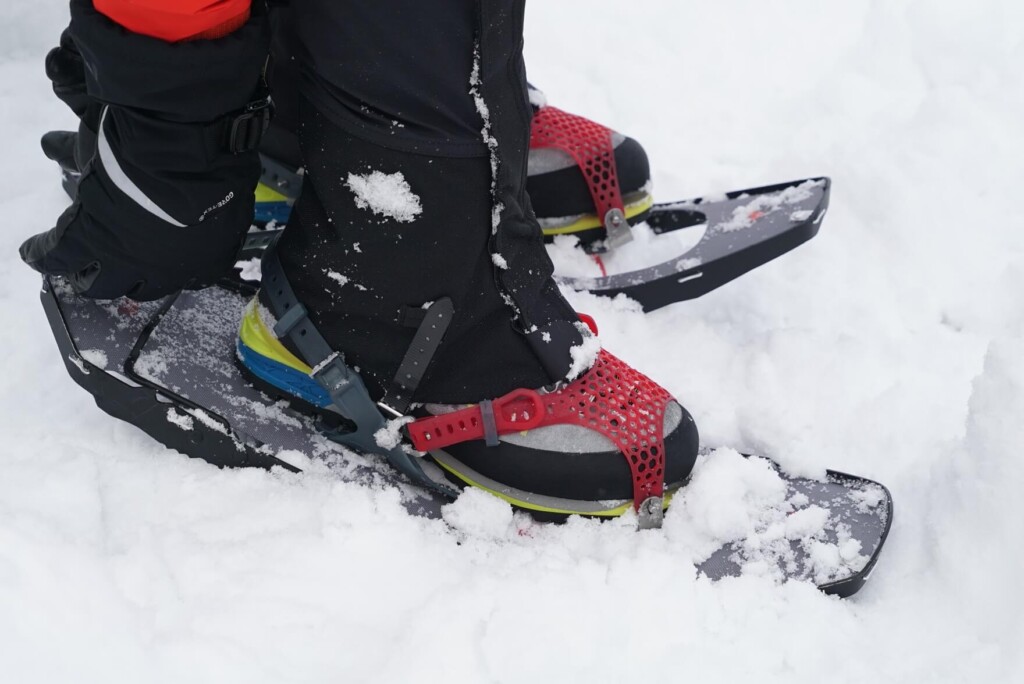
Snowshoeing shoes do not necessarily have to be sturdy, insulated winter hiking boots
To put it bluntly, it doesn't matter what you wear as long as it keeps you in place, but people generally wear "waterproof and breathable hiking/trekking boots," "winter boots," or "winter mountaineering boots." However, if you wear spring to autumn trekking boots or low-quality leather mountaineering boots, your feet may get cold, so in those cases it's best to use "overshoes," which are waterproof and breathable shoe covers worn over your boots, as shown in the image link below
What other equipment do I need to enjoy snowshoe hiking?
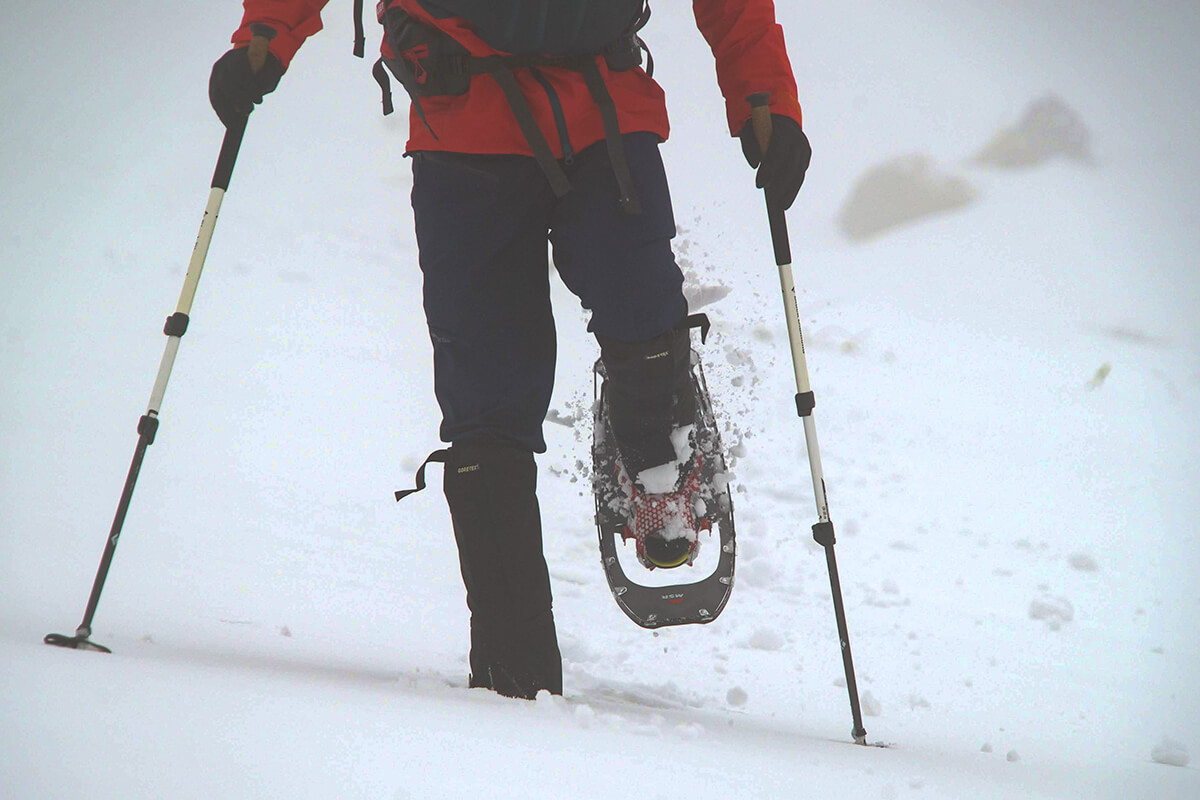
Generally, when snowshoeing, you use poles (stocks), just like when skiing or hiking
It's not impossible to walk without using poles, but if you lose your balance on the snow, you'll easily fall over. We don't recommend snowshoeing without poles at all. To walk steadily and without getting tired, prepare snow poles with wide snow baskets, which are different from trekking poles

We recommend snowshoe poles that are adjustable in length and have wide snow baskets
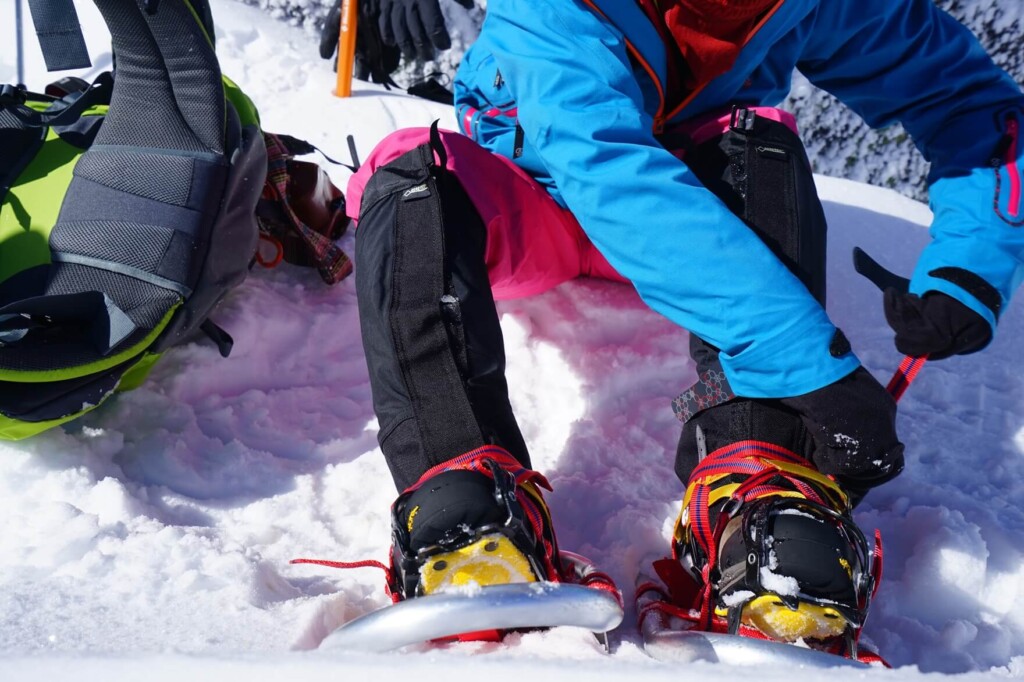
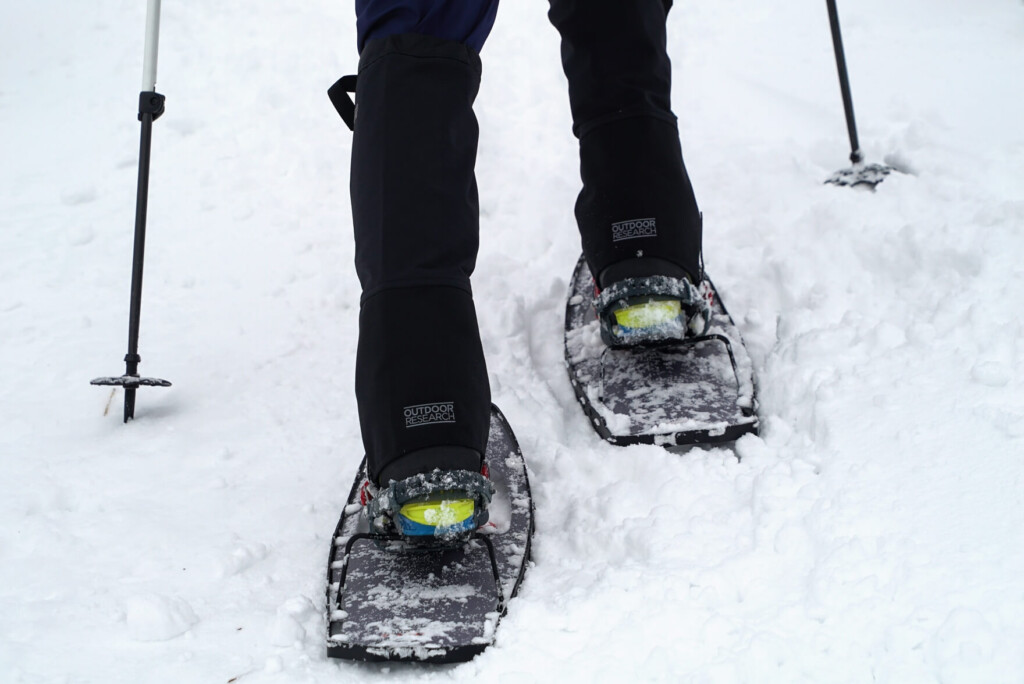
Also, when walking on snow, you should wear "snow gaiters (spats)" that cover your feet and shins to prevent snow from getting inside your boots. Without these, if you happen to get stuck in deep snow, cold snow will mercilessly get into your shoes. Don't forget to put them on before you start
Related articles

Gaiters are essential when walking through deep snow
Five things to check when choosing the best snowshoes
Point 1: Know the type of snowshoes that are suitable for your purpose
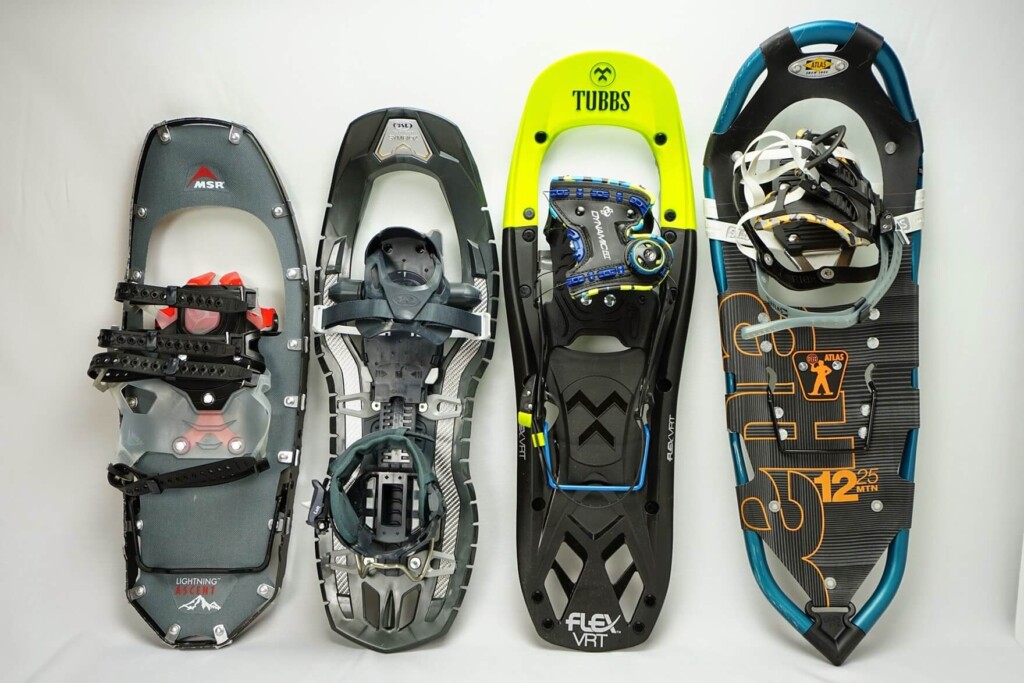
Currently, snowshoes are roughly divided into three types depending on their intended use. Each has its advantages and disadvantages, and while there are relatively well-balanced models that are as all-around as possible, it's rare to find an all-purpose model that covers all of them perfectly. First, let's understand the features of each type of model and figure out which type you should buy
| type | For flat ground and gentle slopes | For mountainous terrain and backcountry | For running (races) |
|---|---|---|---|
| Representative image | ![]() | ![]() | ![]() |
| Purpose | A model optimized for walking on flat ground to gentle slopes | A model optimized for mountaineering and backcountry skiing, with steep slopes as the premise | This model is optimized for riding on packed snow |
| Features | Perfect for beginners | Ideal for backcountry and winter mountaineering | Ideal for snow running and racing |
| Strengths |
|
|
|
| weakness |
|
|
|
Point 2: Choose the optimal size (length) and shape of frame
Choose the size (length) that suits the snow quality and depth
Now that you know which type is best for you, the next thing to check is the structure of each model, starting with the frame and deck
The "frame" refers to the frame that surrounds the snowshoes, and if there is a membrane stretched inside the frame, that part is called the "deck."

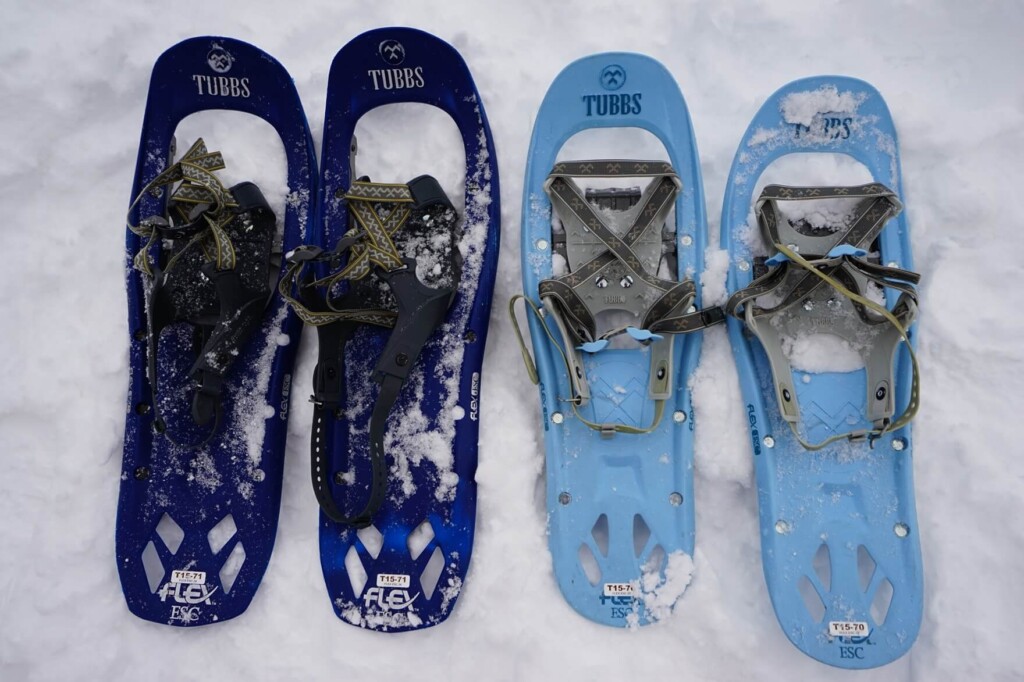
Snowshoe frames and decks come in a variety of materials, sizes, and shapes, depending on the primary use
To ensure good floating on soft snow, the overall frame size or overall length is crucial. Naturally, the larger the frame, the greater the buoyancy , meaning that it can provide buoyancy even in deep snow, making it easier for larger people or those carrying a lot of luggage to walk . However, it also means that it is heavier . For this reason, simply choosing a large model is not the answer.

In order to break through powder snow, you need a large frame otherwise your feet will sink in deeply and it will be difficult to walk
Some manufacturers offer different sizes (total length) of the same model, so if you're not sure what length is appropriate, it's best to consult with a store clerk and consider whether your weight + luggage
Choose a frame with a material and shape that is suitable for the terrain of your walking route
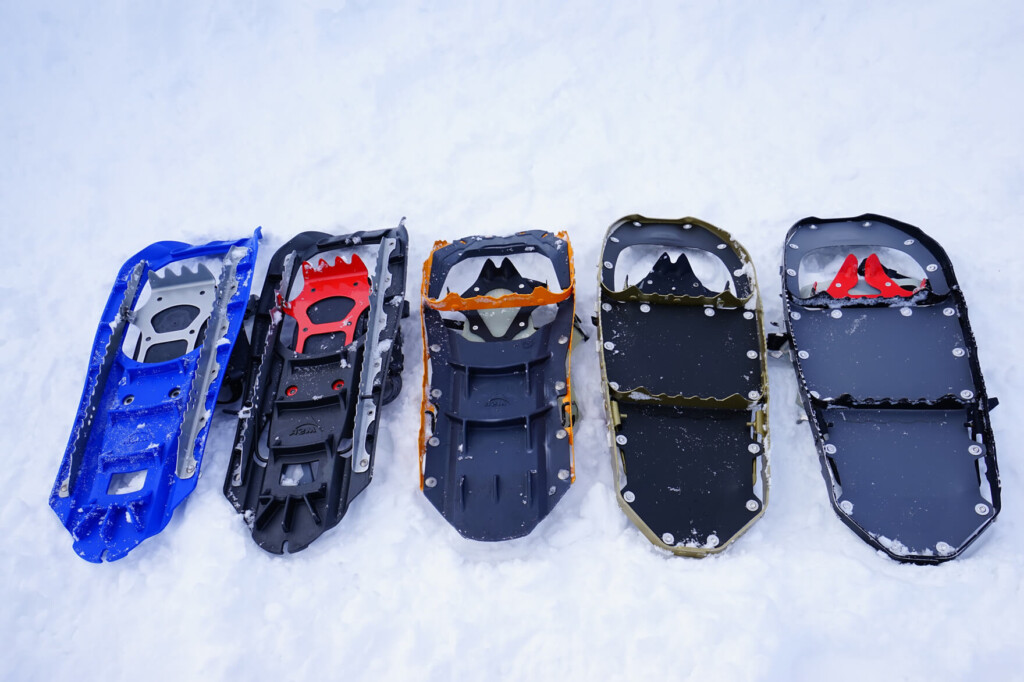
Another thing to pay attention to when choosing is the frame material and edge shape .
Tube type
Originally, snowshoe frames were made from wood or bamboo, but now most have been replaced by metals such as aluminum or plastic. Wood, bamboo, and aluminum frames are often made of round tubes, which means that they have the disadvantage of poor grip on steeper slopes

Edge Type
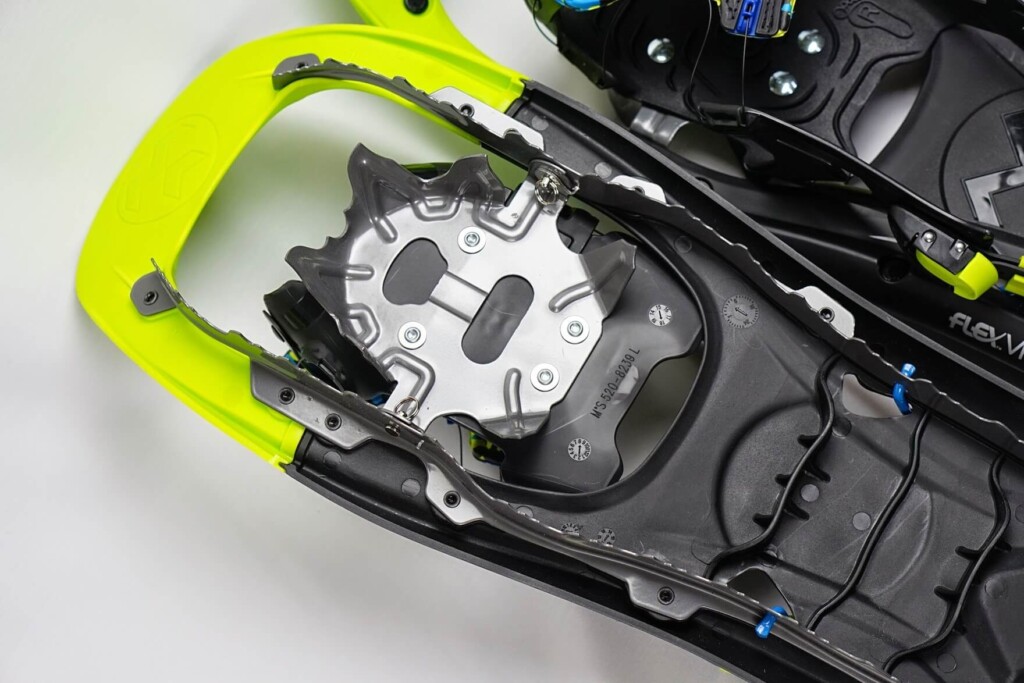
Other frame shapes include models made from molded plastic or aluminum plates with corners, creating edges around the perimeter (the photo below shows a plastic edge-type frame)

These snowshoes are often from European brands that were primarily used for glacier walking, and that the strong grip of the edges makes them suitable for going up and down slopes, traversing, and walking on hard snow . However, they are less durable than tubes, and because of the sharp edges, they are not as good at walking smoothly (sliding) in deep snow.
Tip 3: Choose bindings that are easy to put on and take off and won't come loose
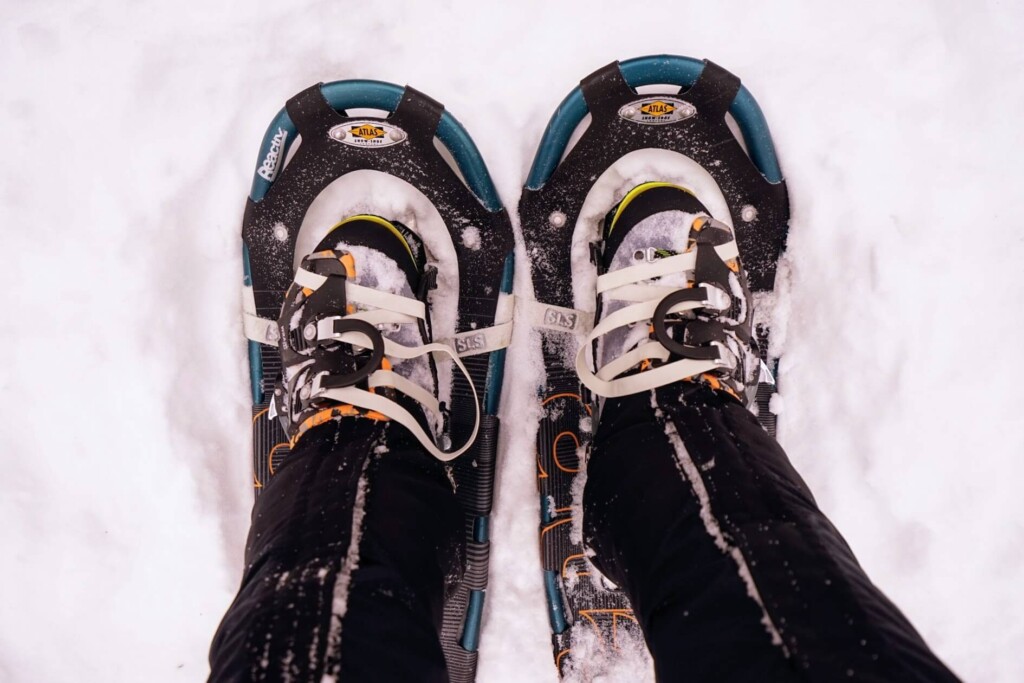
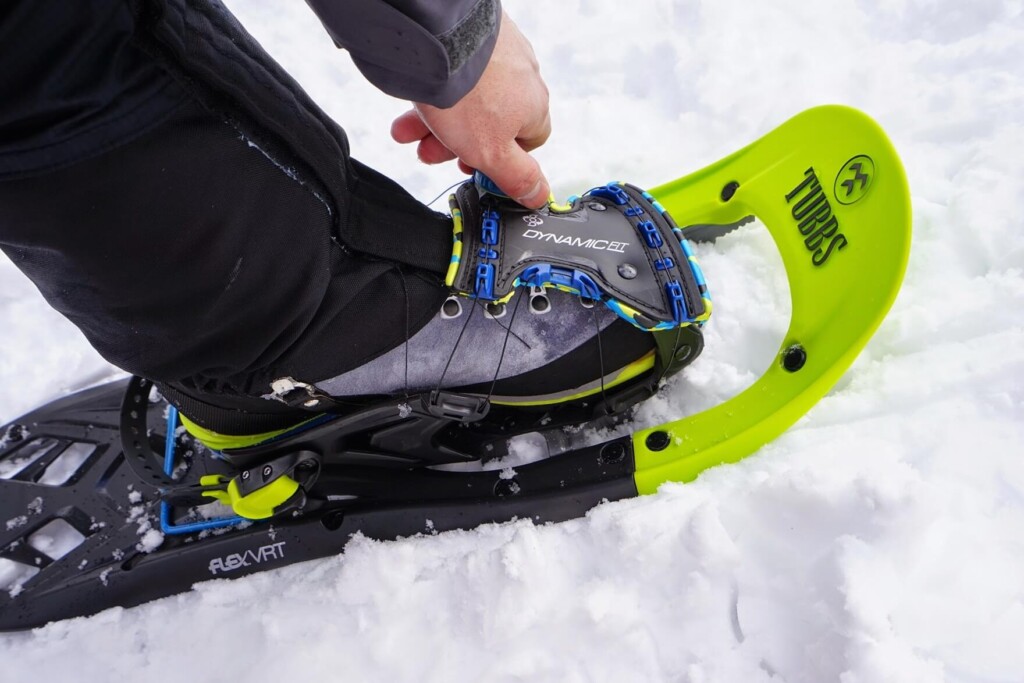
Bindings are the parts that secure your shoes to your snowshoes. There are various ways to secure them depending on the manufacturer and type. The quickest way to tell is to try them on, but in any case, there are two things you should check:
One is whether it is easy to put on, take off, and adjust . Putting on and taking off a mask while wearing gloves can be surprisingly difficult, and even if it is easy to do with bare hands, it can be difficult in the actual workplace.

The speed of putting on and taking off the boots and the fit are all different depending on the binding. I'd like to try them out and compare them
Another whether the bindings will not loosen easily even after walking for a long time . This is something that you won't really know until you actually walk for a long time, but even when trying them on, you can at least check to some extent by moving your feet around and stubbing your toes to see if they do not loosen easily. Even if you can only check by the specifications, make sure to check as much as possible to make sure that these two points are solid.

While the construction of the bindings is important in determining whether they can securely hold your entire foot in place, it's also important to wear them correctly as recommended by the manufacturer
If you plan to use them for serious mountain climbing, you should also check whether they have a heel lift to help you climb steep slopes

There are beginner snowshoe models that do not have a heel lift, and these snowshoes make it difficult to walk on steep slopes
Tip 4: Check that the crampons are strong enough for the intended use
Larger, deeper claws are needed for steeper slopes
Crampons are the jagged spikes, edges, or cleats on the bottom of your shoes
As many of you can imagine, this helps the snowshoes dig into the snow surface, making them less likely to slip and increasing grip, and this will vary greatly depending on the shape, size, material, etc. Again, you won't know their true capabilities until you actually walk on a snowy slope, but here we will explain how to check them before purchasing.
The strength of crampons, above all else, is "depth and size (sharpness)"
Naturally, the depth and size (sharpness) of crampons have a big impact on the strength of their grip. Large, sharp claws can dig firmly into the ground even on harder, steeper slopes, allowing you to walk safely

"Paw placement and orientation" that creates a stable grip on a variety of terrain
Next, check how many crampons are on which parts of the sole of the shoe, as well as their placement and direction. Depending on the model, there are various options, from those with crampons only on the toe area to those with crampons on the entire sole, and even those with crampons around the outside of the frame. Of course, choosing a model with more crampons placed over a wider area is likely to provide better stability, as it will provide better grip regardless of how you place your foot

The gripping power increases depending on the number and size of the nails, but the weight also increases accordingly. It is best to use the minimum number of nails necessary for the purpose
The orientation of the claws also determines whether they are designed to simply provide support in the forward and backward directions, or whether they are designed to be resistant to sideways slippage and provide support against lateral shifts (in anticipation of traversing slopes, etc.)

For example, if crampons are only attached to the toes, it can be difficult to maintain stable footing when traversing slopes
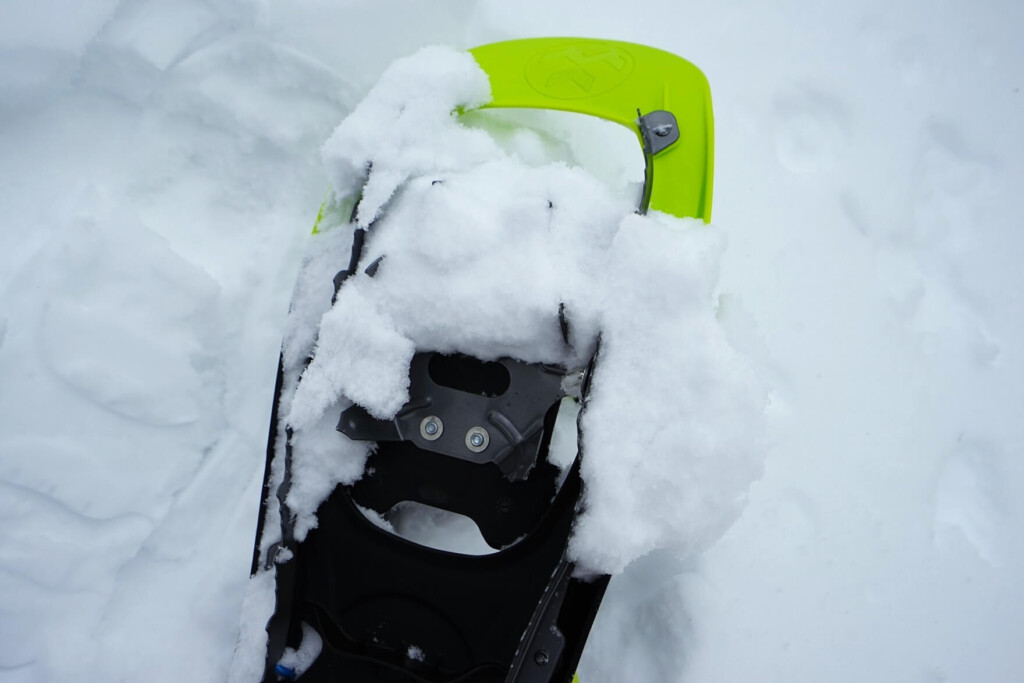
Finally, depending on the structure of your crampons, heavy snow such as wet snow may get stuck in them as you walk (see photo below). This is particularly common with North American manufacturers who tend to use dry, powdery snow, but be wary of models where the crampons are spaced too close together or positioned in a way that doesn't allow snow to pass through easily

If the crampons are too large and too dense, heavy snow can cause snow to get stuck between them as you walk
Point 5: Weight and portability are important depending on the application
If you keep this in mind, you shouldn't make any major mistakes, but if you still can't squeeze it all out, try considering the last checkpoint: weight and portability

When choosing snowshoes for mountaineering or backcountry, the key points are whether they are lightweight and easy to pack
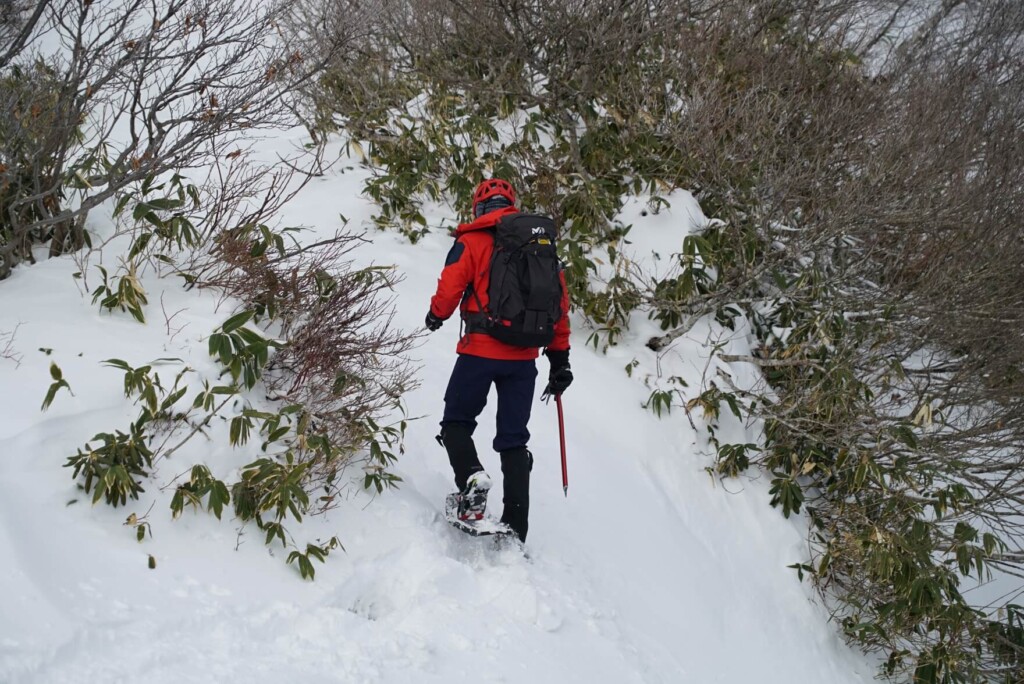
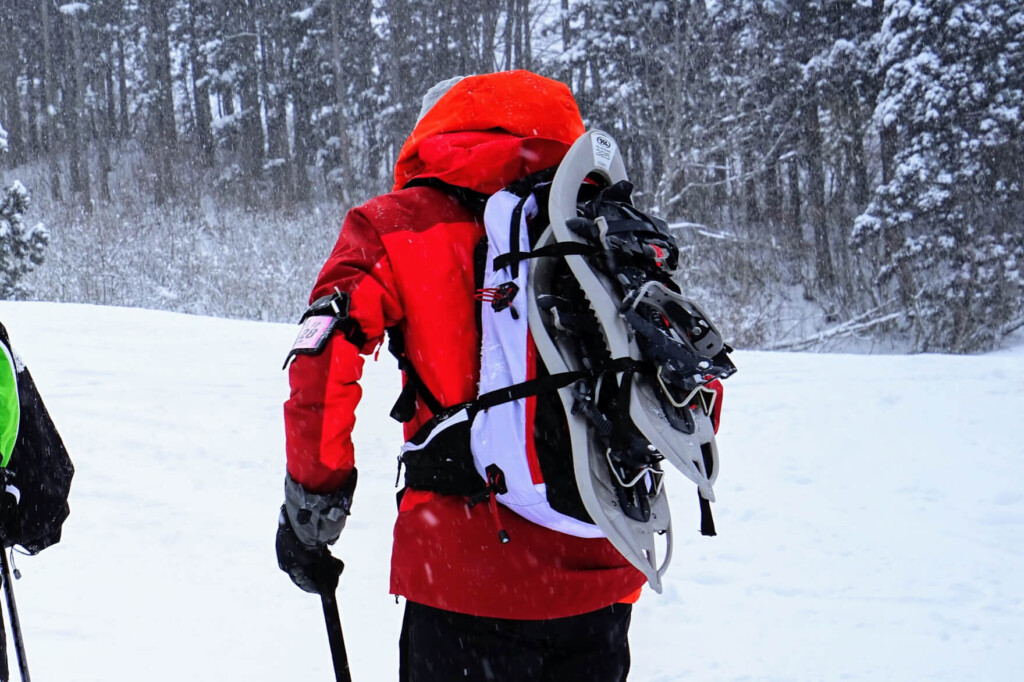
If you're going on a day hike in the snow for a few hours, you probably won't take off your snowshoes from start to finish, but if you're climbing a snowy mountain and passing through a deep snowy forest to reach the ridge, you'll likely have to take off your snowshoes along the way, attach them to your backpack, and then put them back on when you descend. In that case, snowshoes can be surprisingly bulky depending on the model, so it's best to choose ones that don't take up too much space when attached to your backpack and are light enough to carry around without any hassle. Even if you don't plan on doing this now, you might regret it later, so we recommend choosing a lightweight and compact model that has all the necessary features and that your budget allows

No matter how comfortable your snowshoes are, you should also consider portability if you plan to carry them around
summary
If you think of snowshoes simply as something for walking on deep snow, then at first glance it may seem like they all make the same choice, but there are some surprising pitfalls. An acquaintance of mine once went into the backcountry in a hiking model, and while everyone else was moving along smoothly, he ended up sinking deep into the snow, completely draining his energy. Because of this, it's important not to choose simply based on price, but to choose wisely to ensure you get the right model for your purpose and the occasion
Please consider a paid membership to support the website while enjoying exclusive articles and events!


[2025-2026] Never judge a sleeping bag based on brand image alone. The best sleeping bag models for mountaineering and tips for choosing one that won't leave you regretting your purchase
From snow hiking to backcountry. How to choose the right snowshoes for your wonderful snowy mountain adventure
[Fall/Winter 2025] Snowy mountain climbing, backcountry skiing, alpine climbing. The best backpacks for extreme winter activities, categorized by purpose and preference.
Comparison Review: Try out the four major snowshoe manufacturers: MSR, ATLAS, TSL, and TUBBS!