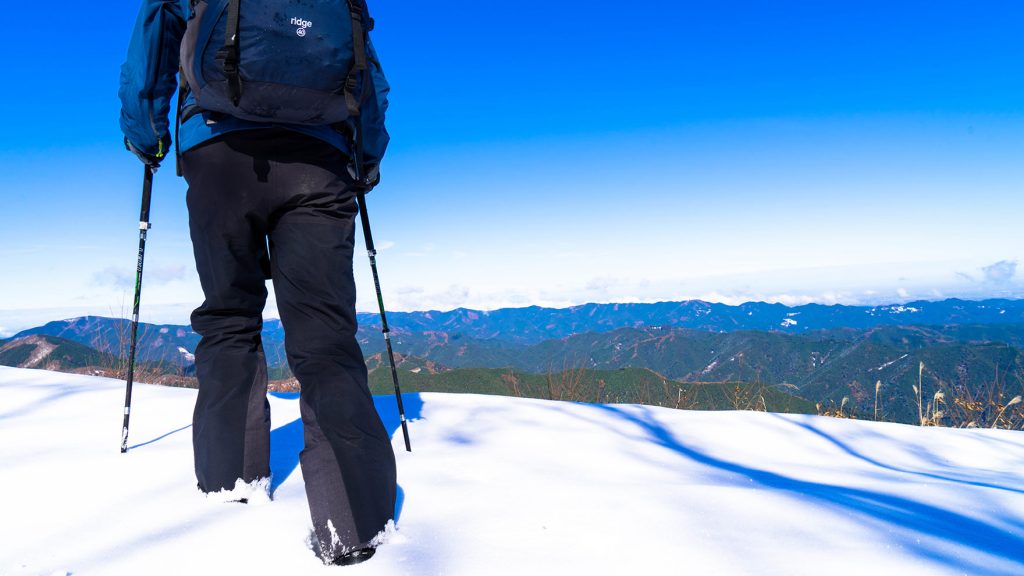
It's fine to simply have the same top and bottom model, but why not try to aim for a more ideal fit?
For winter activities such as skiing, snow mountain climbing, and snow hiking, overpants are essential to stay warm and dry even in the freezing cold, snow-covered fields.Thick soft shell pants are an option for skiing in the relatively calm weather of early winter and early spring, hiking in low mountains with little snow, or ice climbing, where ease of movement is particularly important, but hard shell pants are still the most reliable option for snow activities in general
Even though they're pants, the basic selection process is the same as for a jacket. For this reason, you can't go wrong if you choose the same model as your hard shell jacket, but it's actually surprisingly common for there to be models that only come as a jacket, or for the jacket to be excellent but the pants to be just so-so. What's more, it's one thing if the functionality isn't satisfactory, but it's a real pain if the size or body type doesn't fit and the pants are uncomfortable to wear. In that case, I recommend giving up on matching the same model without hesitation and instead looking for the pants that are best suited to you
So, this time, we have compiled a list of some points to look for when choosing the best hard shell pants, based on past experience, catalog specifications, and actual store inspections. As always, this article contains a lot of our editorial team's own opinions, so we hope that you will use this information to help you make smart gear choices
Related articles
table of contents
Point 1: Material
Waterproof and breathable
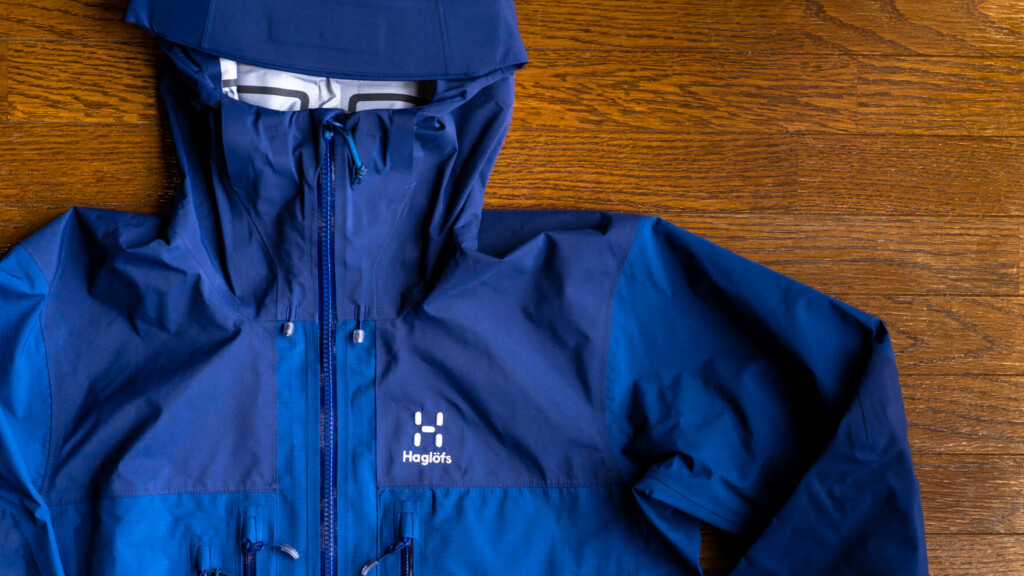
In regions with heavy, wet snow like Japan, hard shell pants are essential, both in terms of waterproofness and breathability. Getting wet in winter can be life-threatening, so choose a model that uses a reliable waterproof/breathable membrane like GORE-TEX, eVent, or Neoshell, and also has tight seam tape and waterproof zippers to completely block out moisture. Be careful, though, as some inexpensive ski pants sold at ski stores aren't designed for long periods of intense outdoor exercise, so they quickly soak in water, lack breathability, or have a short lifespan
durability
Even with the same fabric and material, 3-layer pants with thicker threads and a waterproof/breathable membrane sandwiched between the outer and inner fabrics are more durable. eVent and Neoshell hard shell pants are basically 3-layer, so as long as you pay attention to the thickness of the thread (thickness of the fabric), you should be fine. In particular, I personally recommend Neoshell, as it is a perfect material for pants that require a lot of movement and where stuffiness is a concern, due to its supple fabric and high breathability
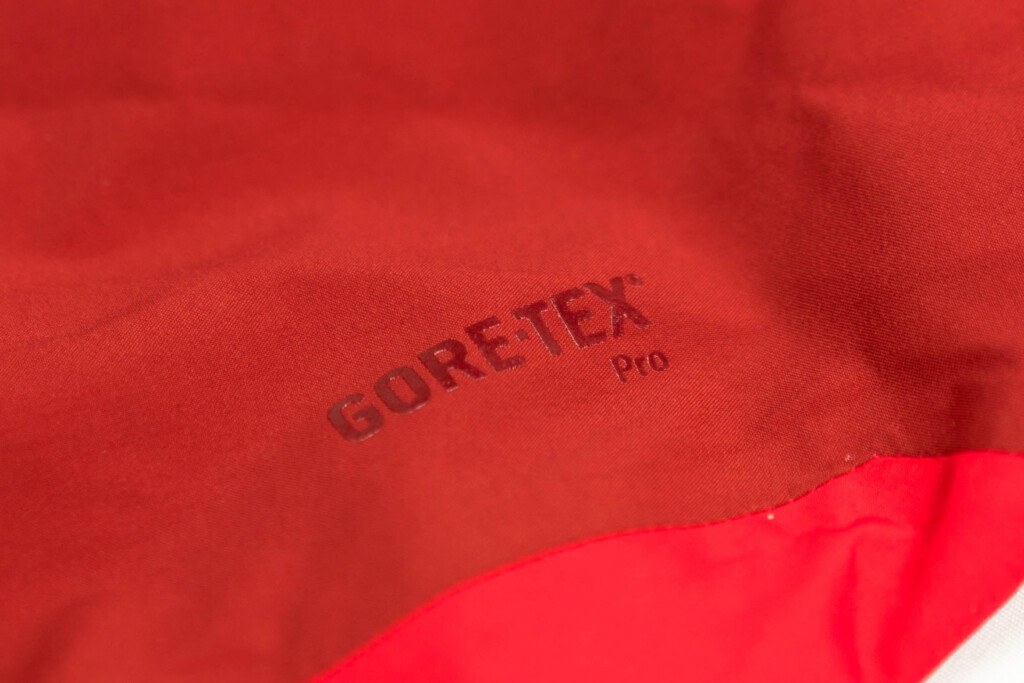
When it comes to thread thickness, there is a trade-off between durability, weight, and ease of movement.Thicker threads are more durable, but they can also be stiffer and more difficult to move around in, so keep that in mind
Heat retention
It's common knowledge on flat ground that in the cold winter, the warmer your pants are, the better. However, in the mountains, once you start moving, your body heats up and you start to sweat, no matter how cold the temperature is. Furthermore, since you can't take pants on and off as often as you can with a jacket, models that provide too much heat are dangerous. Even when it comes to pants, it's best to keep in mind the concept of layering, and it's best to use a model with just a shell as the outer layer, or a thin lining
If you're in the snow season or get hot easily, a wool base layer and outer layer will suffice, and if you're cold, you can wear the mountain pants you wear in the summer as a mid-layer. There are many options to choose from, such as padded thermal pants, fleece, or softshell pants, as long as you consider sweat-wicking properties. However, keep in mind that you need to consider the size of your hardshell pants to allow room for these mid-layers
Points to consider when choosing:
- The most important thing is that the fabric or material is completely waterproof, breathable, and windproof
- If you prioritize durability and reliability in harsher environments, we recommend GORE-TEX Pro or 3-layer material
- If you prioritize ease of movement, good sweat evacuation, and lightness, we recommend highly breathable 3-layer materials such as GORE C-KNIT and Neoshell
- When it comes to pants, it's best to adjust the warmth by layering. We recommend models that don't have extra insulation such as padding
Point 2: Pants or bibs?
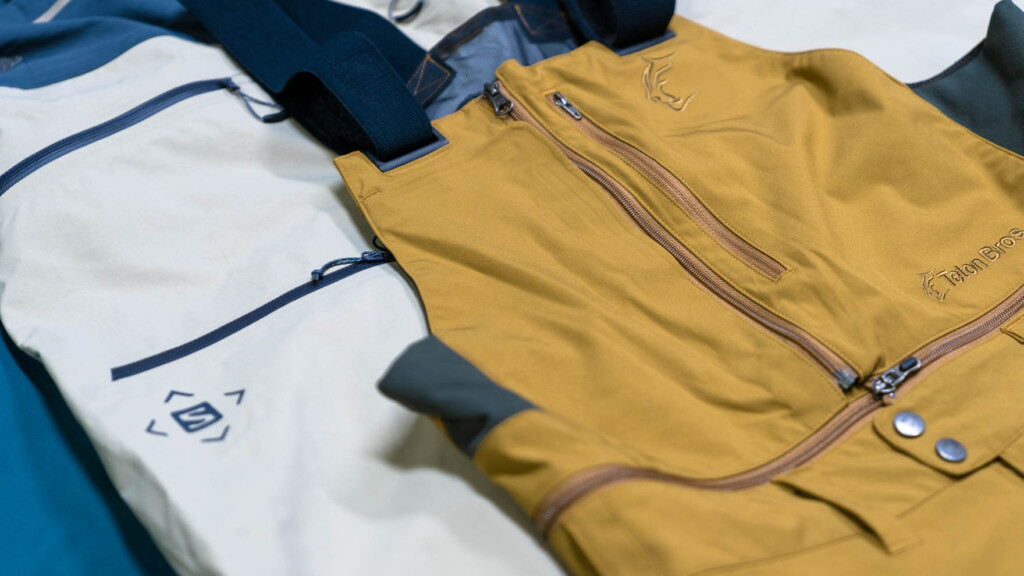
Winter hard shell pants come in two types: "pants" and "bibs," and while appearance is important, it's a wise decision to choose one after understanding their role and function. It's difficult to say which is better, so we've summarized their strengths and weaknesses below
| type | Pants type | Bib type |
|---|---|---|
| image |  |
 |
| Features |
Snow pants are typically worn up to the waist. There are a variety of waist types, from belted to elastic, adjustable with Velcro, and even types that come standard with suspenders. Types with full side zippers allow you to take them off without removing your shoes. There are a wide variety of styles for both alpine and skiing |
The fabric extends to the chest and back, and is worn with suspenders. Designed for cold, severe winters, deep snow, and powder, these pants prevent snow from getting in and provide increased warmth. The upper body prevents pants from slipping down or tightening around the waist, and also provides ample storage. These pants are common in backcountry models |
| Strengths |
|
|
| weakness |
|
|

Points to consider when choosing:
- Bibs are more comfortable and recommended, especially if you spend a lot of time breaking through deep snow or skiing in powder
- bib type with a modest upper body " or the " pants type with suspenders that combine ease of use and comfort .
Point 3: Silhouette and ease of movement
When you try on hard shell pants, you'll see that they come in a variety of styles, from slim fits similar to three-season pants to the wide silhouettes worn by snowboarders on the slopes. This is because hard shell pants are broadly divided into those for alpine (winter mountain trekking) and those for backcountry. Generally, alpine models tend to have a slim silhouette that reduces friction and traps the feet while walking, while backcountry models tend to have a relaxed, wide silhouette that covers larger boots. However, in reality, they don't fall neatly into two patterns; some brands offer models that are somewhere in between, so ultimately, the only way to know if they're right for you is to try them on


For example, as someone who mainly hikes mountains but also likes to ski, I prioritize ease of walking over comfort when going downhill or standing still, so I prefer a slim and easy-to-move model. However, that doesn't mean I personally think there's a big difference between the two. I think it's best not to think too hard about it, but to find the most comfortable fit for you (and your style), including the design.
Points to consider when choosing:
- Thinner ones are for alpine skiing, wider ones for backcountry skiing. Try them on and choose the style that is most comfortable for you, based on appearance and ease of movement.
Point 4: Side ventilation
As mentioned in the section on warmth, pants, which you don't take off or put on often, require more ease of temperature regulation than a jacket. For this reason, it is important to choose fabrics and materials with high breathability, and that they are not too thick to make temperature regulation difficult. Another effective method is side ventilation
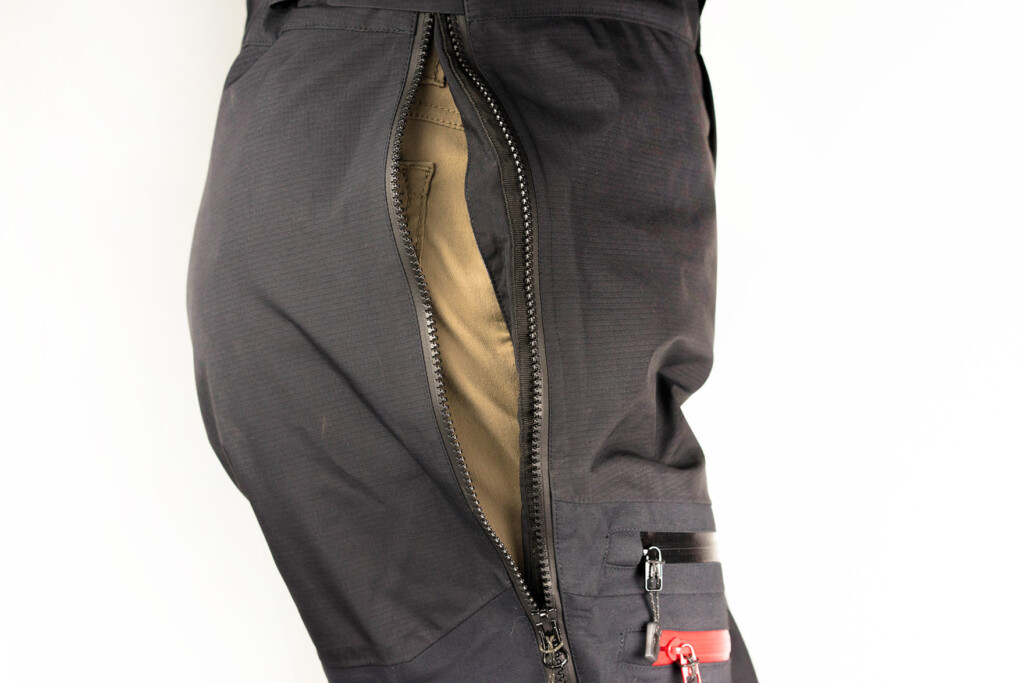
Points to consider when choosing:
- Check whether or not there is ventilation and where it is located
Point 5: Inner spats
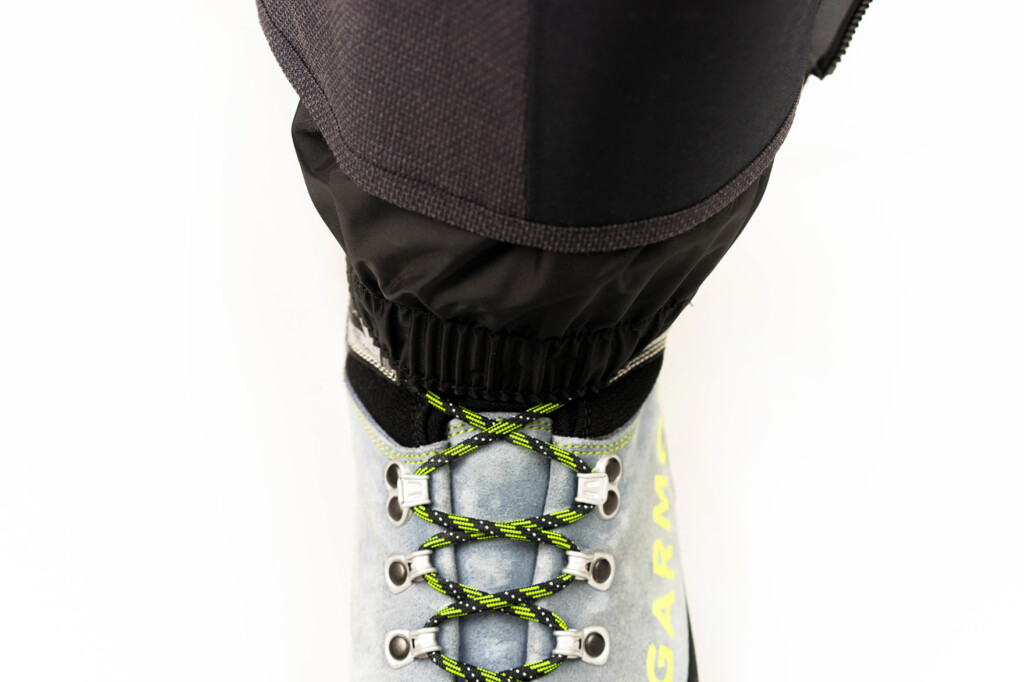
If possible, it would be more convenient to have a hook to attach to your shoelaces or buckles for easier removal, or a loop to thread through the sole of your shoe. Also, as mentioned earlier, there are removable types that are unnecessary if you wear gaiters, so it's best to choose the one that suits your style
Points to consider when choosing:
- Generally, choose a model that has inner spats to prevent snow from getting in . However, if there aren't any, you can always supplement with gaiters.
Point 6: Edge guard
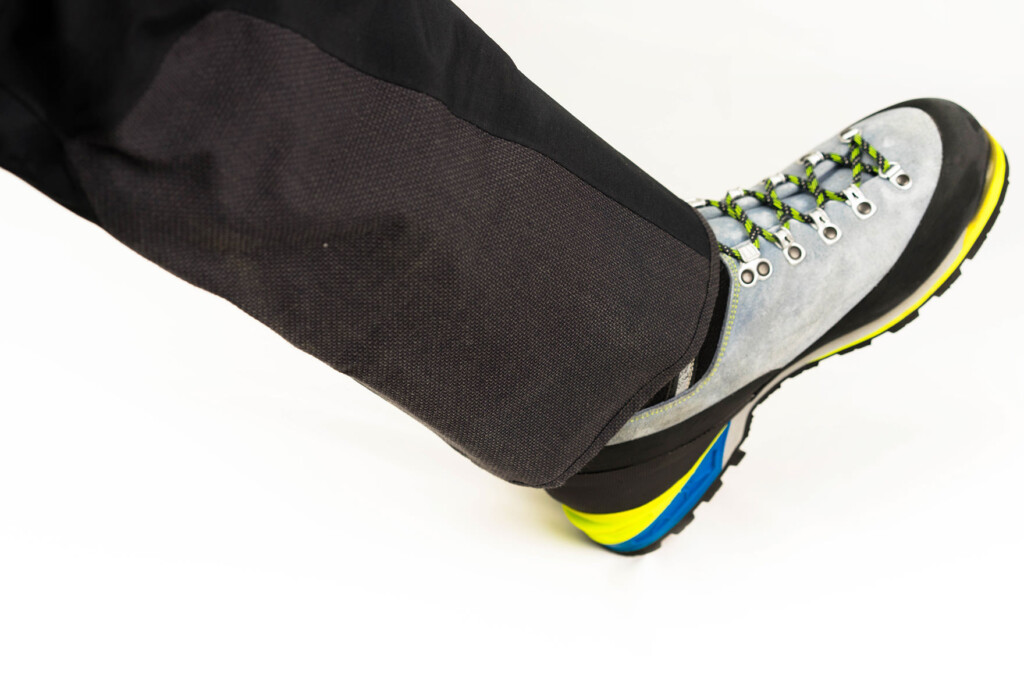
However, no matter how sturdy the fabric is, no one wants to damage the pants they paid so much for. So, although these (along with the inner spats) mean that you don't need to wear gaiters on the outside, it's good to know that some people, including myself, still wear gaiters to protect their pants
Points to consider when choosing:
- Models with inner cuff edge guards to prevent chafing and crampon damage make them a convenient alternative to gaiters。
Point 7: Pockets
One last important feature not to forget is the presence and location of pockets. The more the better, but it's also important to make sure they're not too big, and if you're going to be going over rough rocky terrain, make sure they're positioned so they won't interfere with your harness. Personally, I think pockets on the hips are good for everyday use, but in the mountains they're a pain to access, so thigh pockets are more convenient. Bib-type backpacks are the best, as they often have plenty of pockets on the sides and chest that can be used like inner jacket pockets, and are great for storing bulky gear like camera batteries, avalanche beacons, and walkie-talkies that you want to keep warm
In any case, in winter you will need to carry the gear mentioned above, as well as small items that you will need to take out for small things such as snacks, maps, compasses, GPS, sunglasses, eyeglass cleaning cloths, smartphones, and cameras, so having an easily accessible storage space outside of your backpack is a major advantage
Points to consider when choosing:
- Having more pockets is often more useful in winter than in summer, but it's also a good idea to make sure that the size and placement are well thought out.
summary
I've tried to summarize the selection of hard shell pants as systematically as possible, but when it comes to actually choosing pants, the most critical issue is trying them on and seeing if they fit. I started by comparing the functional aspects mentioned above from among the candidates that fit perfectly, and I think this is ultimately the best way to choose. No matter how good others' reviews are, it's meaningless if they don't fit you
Next time, I'd like to introduce some recommended gems of hard shell pants that have been carefully selected using this selection method. At first glance, it's hard to tell the difference between pants, but when you start looking seriously, you'll find a plethora of great models that combine the technology and ideas of each brand, which will get you really excited. Please look forward to it!
Related reading