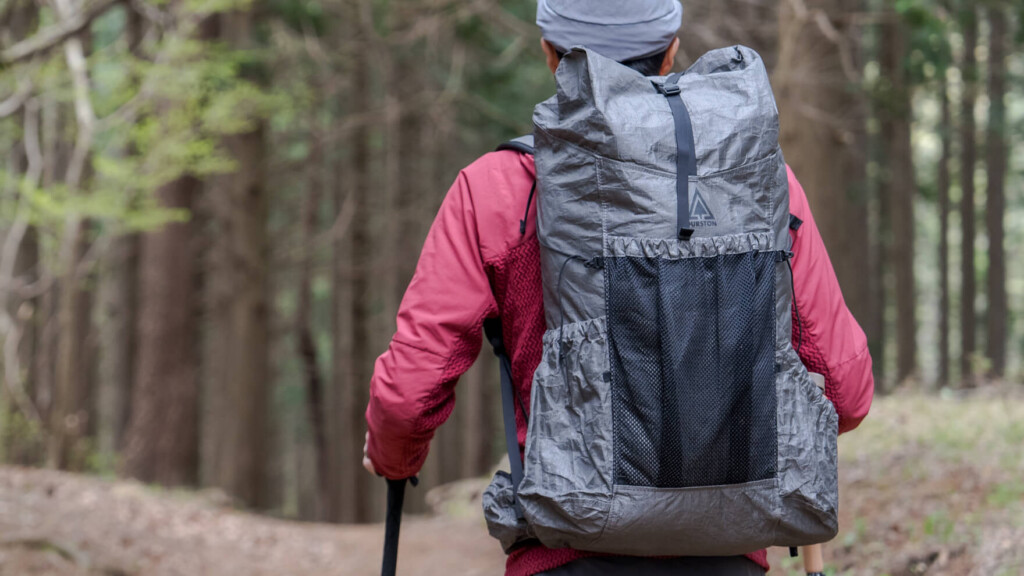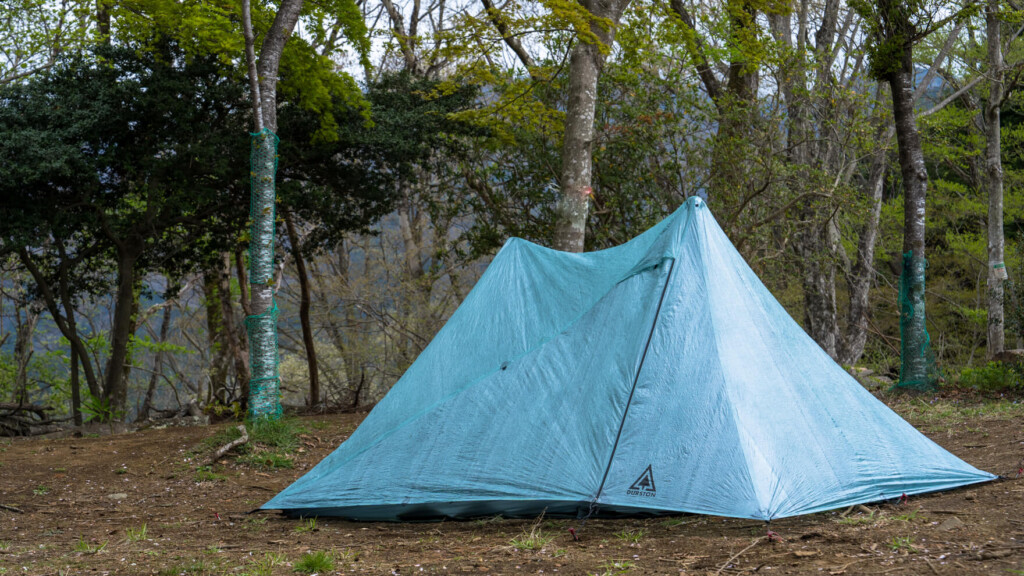
Lightweight, strong, and comfortable. The evolution of lightweight mountain tents (shelters) continues unabated
DURSTON GEAR X-Mid Pro 1 , a next-generation lightweight tent (shelter) that's arguably the most popular among UL hikers today, especially in Europe and the United States . This tent is a symbolic item that made the brand DURSTON GEAR, founded by Dan Durston, a charismatic figure on Backpacking Light, a community site for dedicated ultralight gear enthusiasts in North America, famous, and is a masterpiece for him. It sold out immediately upon release in the US and has been completely unavailable ever since, until one winter I happened to come across an email announcing it was back in stock, and I was lucky enough to get it.
So, this time we will take a closer look at this popular tent
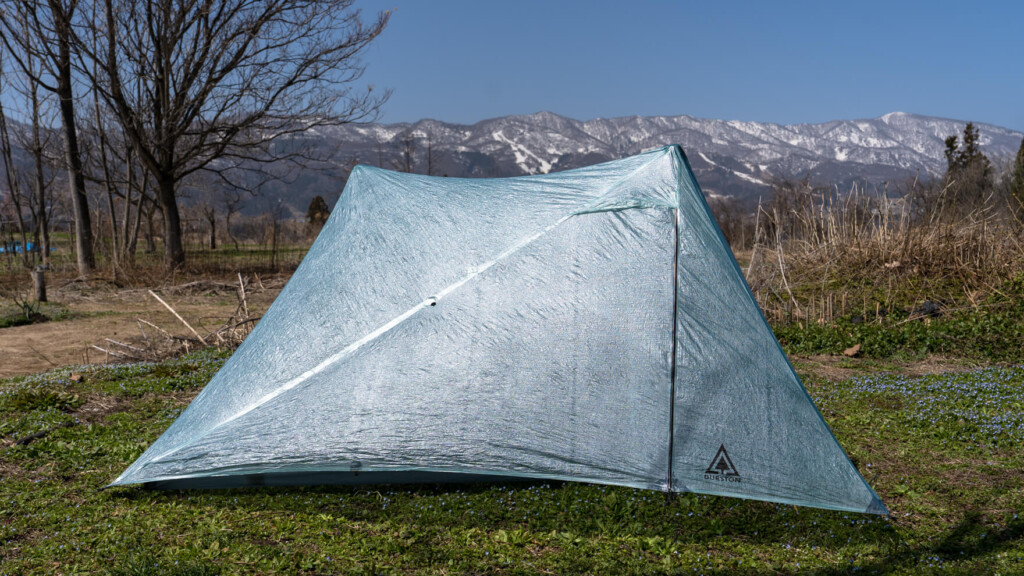
table of contents
- DURSTON GEAR X-Mid Pro 1:
- Main specifications and evaluation
- Detailed Review: 5+ Reasons Why the X-Mid Pro 1 is Revolutionary
- 1. Simple, smart and unique geometric design
- 2: Material, storage size, and weight - Skillful use of fabrics that chooses a good balance of "lightweight, compact, and highly durable" rather than "lightest."
- 3: Ease of setup - Intuitive, easy to understand and quick setup
- 4. Weather resistance - Resistant to all weather conditions, including rain, wind, and even some snow
- 5. Spaciousness and Comfort of the Tent Interior – Not only is it spacious, it’s the most comfortable space you could ever wish for
- Summary: Light enough, comfortable, sturdy, and easy to use. I don't think I'll be able to use any other shelters for a while
DURSTON GEAR X-Mid Pro 1:
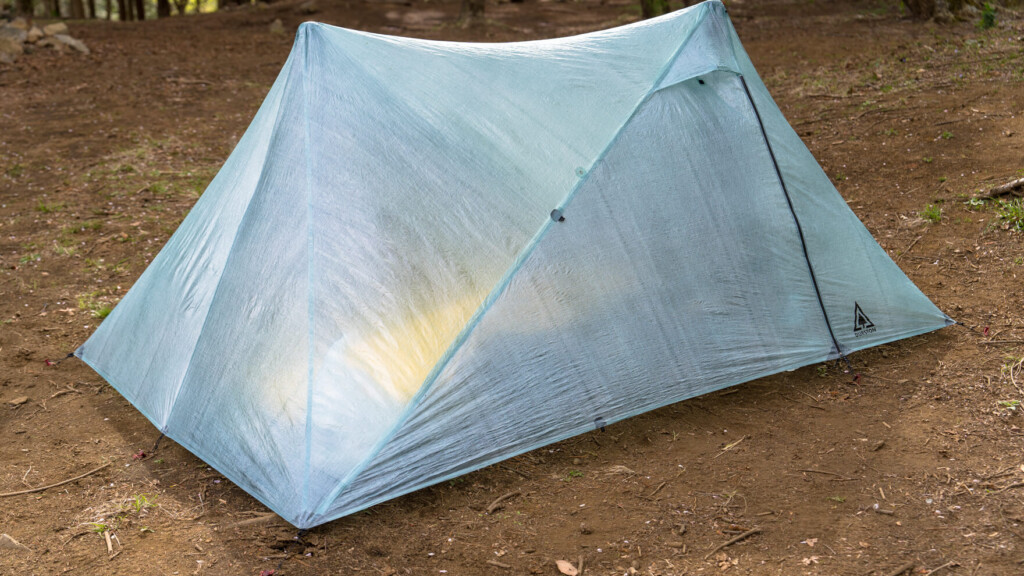
The DURSTON GEAR X-Mid Pro 1 is a single-wall, one-person mountain tent made with ultralight, highly durable DCF (Dyneema Composite Fabric). Its cutting-edge materials, innovative construction, and meticulous attention to detail combine to create a tent that requires only four pegs for setup. Its efficient geometry provides ample living space, dual access points provide comfortable sleeping and livability, and excellent weather protection ensures it can withstand storms, wind, and snow. While trekking pole shelters aren't for everyone, this model is sure to appeal to hikers seeking a lightweight, strong, and comfortable shelter for activities like fastpacking, thru-hiking, and UL hiking.
This is my favorite place
- Spacious interior space for a one-person trekking pole shelter
- Incredibly easy setup
- The perfect combination of a lightweight, durable DCF fly and a strong, compact Sil/PEU nylon floor
- Moderate breathability and double-walled sidewalls for resistance to condensation
- Excellent weather resistance against rain, wind and snow
- Attention to detail and ease of use, including convenient pockets and an entrance that is easy to access and fasten
This is what I'm curious about
- Although it is somewhat compact, it is still bulky when stored compared to an all-fabric tent
- I want something that I can attach a hook to at the top of the tent
- The height of the bathtub part of the floor feels a little low (although it wouldn't be a problem if it was properly installed without sagging...)
- Needless to say, this is a non-freestanding tent, so it is difficult to set up on hard ground where there are no rocks or other support points
Main specifications and evaluation
| item | Specifications and reviews |
|---|---|
| Number of people sleeping | 1 person |
| weight |
*Actual weight: 485g |
| Canopy Fly Material | 0.55 oz Dyneema® Composite Fabric (CT1E.08) in Spruce Green |
| Inner (floor) material | 15D Sil/PEU nylon in gray (floor) |
| Zipper material |
|
| pole | Use approximately 115-120cm trekking poles |
| Dimensions and area |
|
| Number of doors | 2 |
| Storage size | 30 x 10 cm |
| Floor area | 1.9 m2 |
| Front chamber area | 2 m2 (1 m2 x 2) |
| accessories |
|
| Living Comfort | ★★★★★ |
| Ease of setup and takedown | ★★★★★ |
| weather resistance | ★★★★☆ |
| durability | ★★★★★ |
| weight | ★★★★☆ |
| Portability | ★★★☆☆ |
| Versatility | ★★★★★ |
Detailed Review: 5+ Reasons Why the X-Mid Pro 1 is Revolutionary
1. Simple, smart and unique geometric design
The uniqueness of the X-Mid Pro 1 (or more precisely, its base model, the X-Mid) is clearly expressed in its sleek design. It was designed by Dan Durston, founder of Durston Gear and designer of the X-Mid. A native of Golden, British Columbia, Durston is a biologist by trade, an avid hiker, and has completed the Pacific Crest Trail (4,265 km) and the Great Divide Trail (1,200 km). He is also a five-time "fastest finisher" of the Bob Marshall Wilderness Open adventure race in Montana, and is recognized online as a genuine gear nerd
He had long believed that many tents supported by trekking poles were unable to overcome the trade-off between comfort, ease of erection (weight), and weather resistance, as shown below
- The simple rectangular base structure of the One Pole is the lightest, but it is less comfortable than other shapes for the living space (because the pole is in the center of the room and occupies the highest area)
- The polygonal structure of a one-pole tent may increase livability, but the increased number of sides means more pegs are required, making it heavier and easier to erect than a rectangular tent
- Even if you try to increase the livability of a tent by using a rectangular base and two poles (such as the classic pup tent ), the vertical walls can reduce wind resistance, or (like the Zpacks Duplex Tent) the pole still has to be in the middle of the entrance, making it difficult to enter or exit, or you need a lot of guy lines and pegs to set it up.
In other words, his ideal image of a trekking pole shelter can be summed up simply as "a simple rectangular structure that doesn't require carrying many pegs, and is easy to set up, light, strong, spacious, and comfortable." Durston says he came up with the dreamy design concept for the X-Mid while hiking the Canadian Rockies on the Great Divide Trail


The grey parallelogram represents the floor space, and the rectangle in the middle represents the mat
We started from the realization that the poles could not be placed at either end (because that would make the sidewalls vertical and require guylines), nor could they be placed near the center of the tent (because the poles would occupy the highest point of the tent and require them to be placed inside the tent), so they had to be placed approximately halfway between the center and the sidewalls. In other words, the poles are placed diagonally across the tent floor. This patented layout provides ample living space without the poles interfering with the door or living space, nor complicating setup. Despite the spaciousness of the shelter, it can be easily set up with just four pegs and no guylines. This layout also creates more usable vestibules on either side, as the vestibule space is next to the door rather than blocking it. *Quoted from durstongear.com
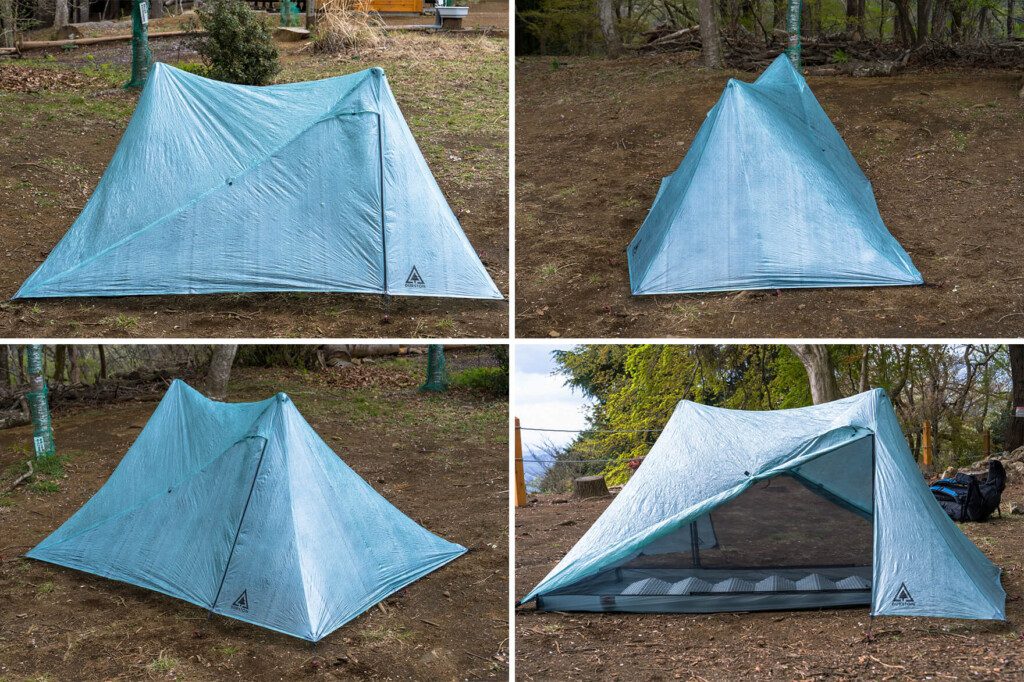
The novelty of this design is that it combines the best of both worlds: the ease of erection and weather resistance of a single-pole pyramid tent with the high livability of a dual-pole tent. The X-Mid is a simple, lightweight, and compact rectangular tent with no vertical walls, a spacious interior with two large entrances and a vestibule, and easy to erect with just four pegs. It has succeeded in minimizing the compromises that traditional lightweight shelters have had to make
2: Material, storage size, and weight - Skillful use of fabrics that chooses a good balance of "lightweight, compact, and highly durable" rather than "lightest."
Overcoming the disadvantage of "Dyneema is bulky" to some extent
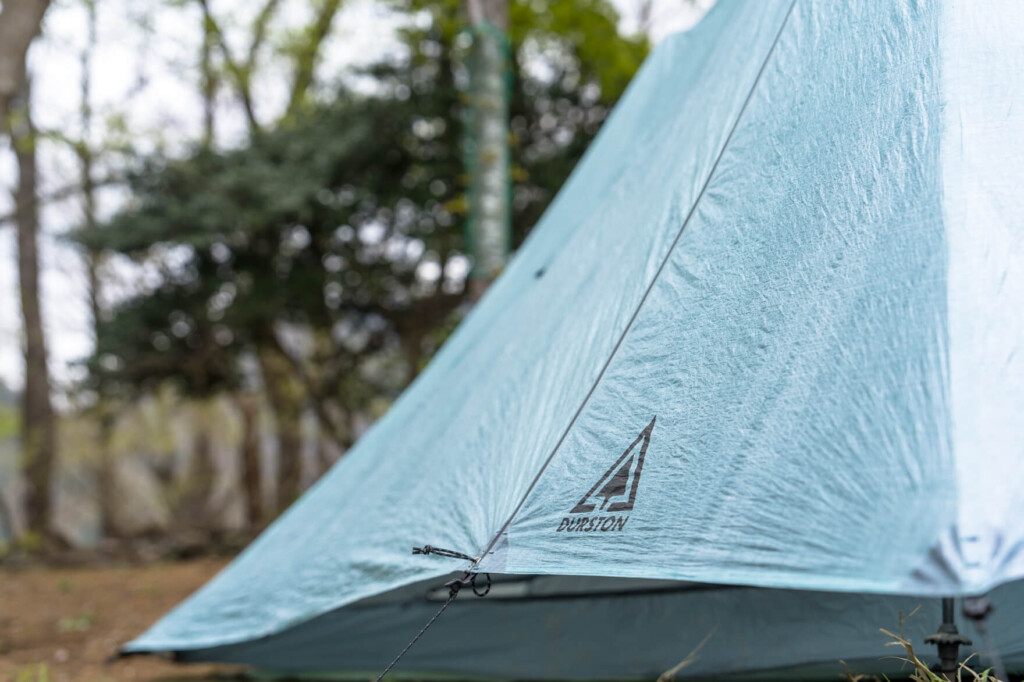
The DCF (Dyneema Composite Fabric) material used for the tent fly is ultra-lightweight yet highly durable, nearly 100% waterproof, does not sag even when wet, and is UV-resistant, making it ideal for tents. It's widely used by various manufacturers as a material for high-end ultralight tents. Its proven track record goes without saying; it's become so well-established that it's hard to imagine a lighter, more durable fabric at this point. However, the X-mid Pro 1 isn't just made with this premium material. In fact, this tent features a hybrid structure that uses Dyneema and nylon in the right places.
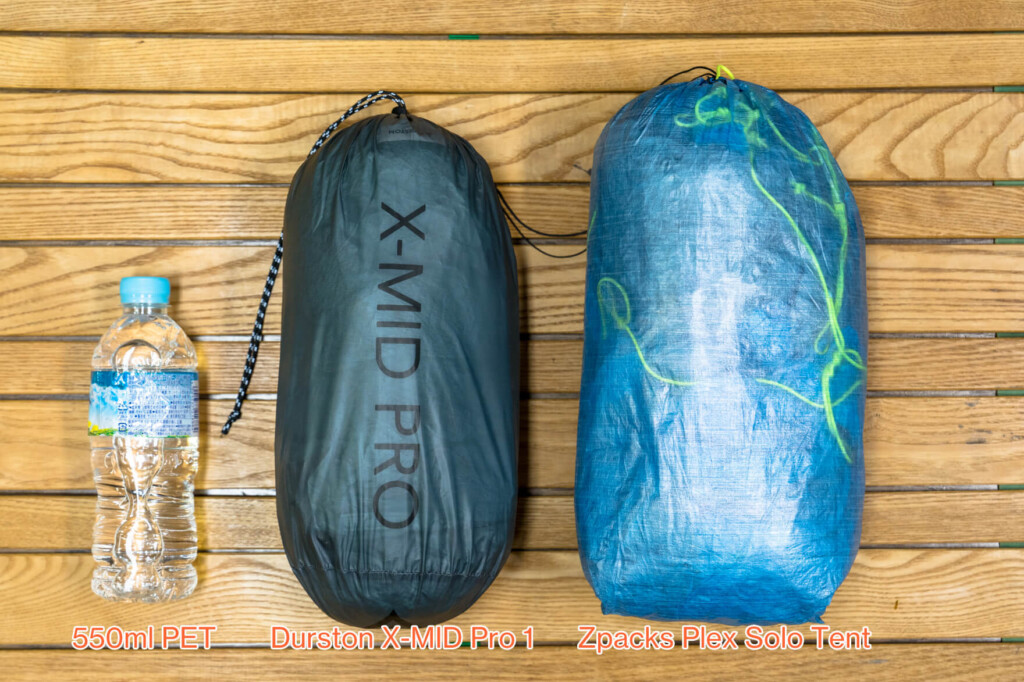
One of the main reasons for using two different materials was to overcome one of the most common drawbacks of DCF: its difficulty in compressing (bulky). Despite being significantly lighter than standard tents, Dyneema tents have a major drawback: they don't pack down as compactly as expected. The X-Mid Pro 1's floor is made of 15-denier nylon (treated with silicone and high-durability PEU) instead of Dyneema, resulting in a lightweight tent that minimizes bulk (despite being made of Dyneema) and is highly puncture-resistant. The photo below compares the X-Mid Pro 1 with the Zpacks Plex Solo Tent, a single-person tent made entirely of Dyneema fabric, including the floor. While both are larger than nylon or 100% polyester shelters, the X-Mid Pro 1 packs down to a significantly more compact size, despite having a larger living space than the Zpacks
Is there any problem with the strength of 15 denier nylon?
A 15 denier nylon fabric was chosen for the floor, with the belief that a footprint is not necessary in most situations if reasonable precautions are taken in campsite selection. This 15 denier nylon floor is the better choice as it is much less bulky for the same weight and is more abrasion resistant and waterproof in the long term (DCF is more abrasive in the long term than nylon)
"Dan says, "In fact, it has become common for lightweight tents from major manufacturers (such as MSR and NEMO) to use 15D nylon fabric for the floor, so it's clear that this tent is not the only one that uses extremely thin and poor material to reduce weight
*However, we do recommend that hikers who intend to use the trail in conditions where punctures are more likely (such as terrain with lots of rocks or gravel) bring their own footprints
What's more, the clever thing is that this nylon is only used in the floor area, which means that nylon's weaknesses, such as its tendency to absorb water and sag, and its vulnerability to ultraviolet rays, are virtually eliminated. What's more, by including relatively inexpensive nylon, you can save on expensive DCF and keep costs down, so it's all good
The world's only factory-made fabric with seamless tape bonding
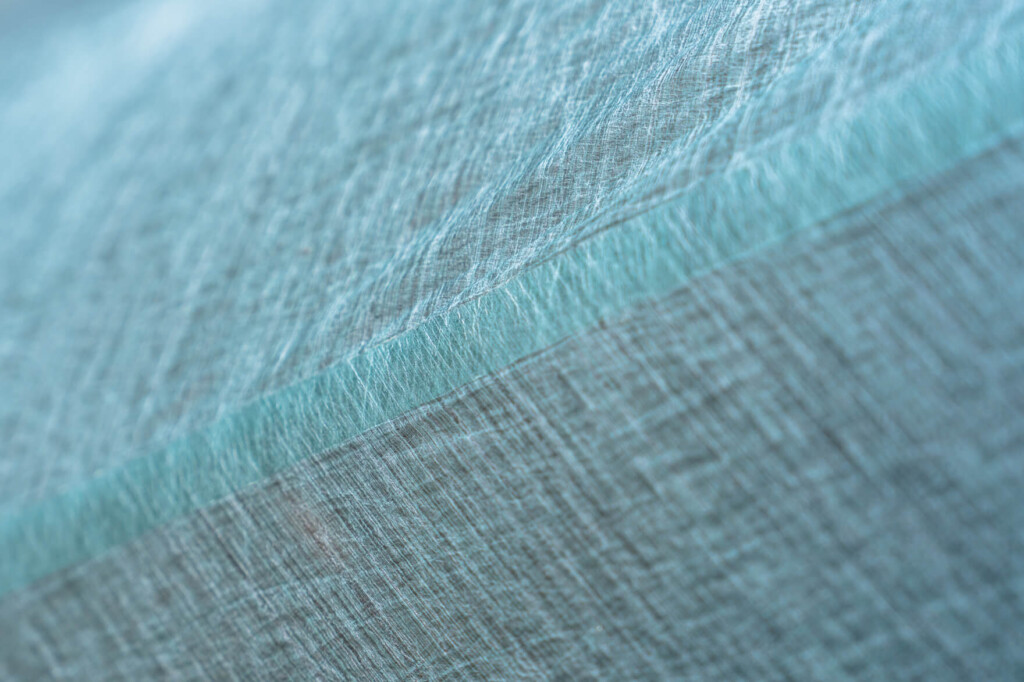
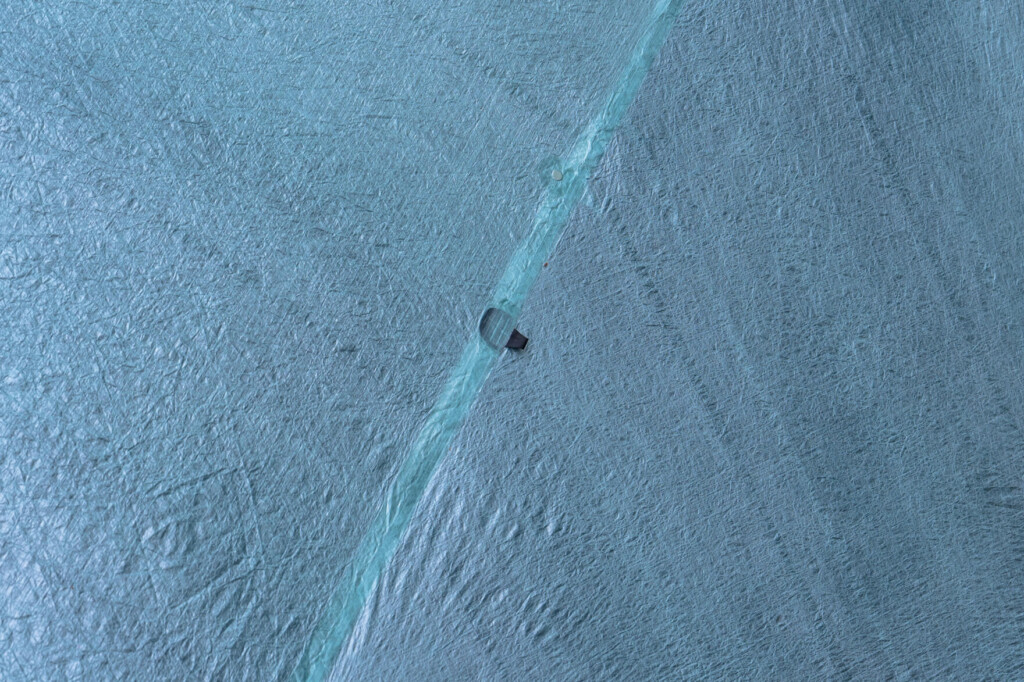
The shelter is completely taped without any stitching, eliminating the most delicate seams in a shelter (see photo below). This is made possible by the latest adhesive process developed at the only tent production factory in China that can sew high-quality DCF (other premium tent manufacturers that use this process include Locus Gear, Samaya, TarpTent, Big Agnes, and others)
Not the lightest, but still light enough
If you look at the tent itself, the X-Mid Pro 1 is not the lightest tent on the market. However, as mentioned above, this is the result of consideration of other aspects such as packability and livability. Furthermore, even if the weight of the tent itself is slightly heavier, the difference is negligible as the number of pegs can be reduced, so overall, it can be considered a satisfactory ultra-light tent
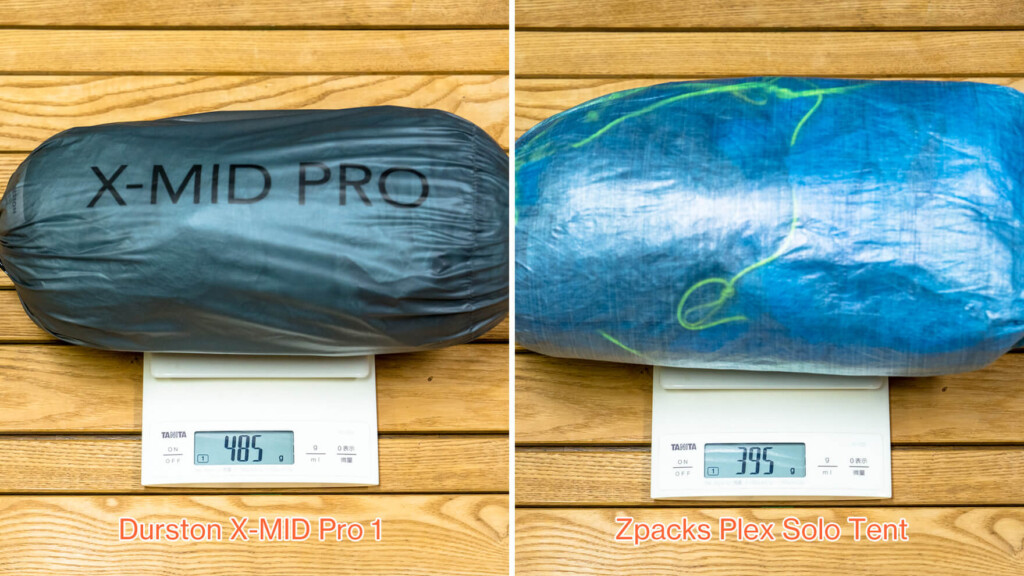
Weight comparison with the Plex Solo Tent (right), the lightest trekking pole shelter (with floor). Pegs not included
3: Ease of setup - Intuitive, easy to understand and quick setup
Most trekking pole shelters require at least 6-8 pegs to set up, but the X-Mid Pro basically only requires 4 pegs . The setup procedure is basically very simple. First, temporarily secure each of the four corners with a peg, then insert trekking poles into the ventilation holes at the two vertices and raise the tent up. That's really all there is to setting it up (see photo below). Once you get used to it, you can pitch this tent in just a few minutes without having to readjust the tension of the temporarily secured pegs.
Of course, you will need to move the pegs and adjust the tension of the guy lines a little while before you get used to it, but because it has a simple rectangular shape, you won't have to make the difficult, subtle adjustments that are common with polygonal tents. This means you can easily set up the tent without getting frustrated, even when you're exhausted and in bad weather or nearing sunset, and without getting the inside of the tent wet. We're very particular about this because we know how much you appreciate this
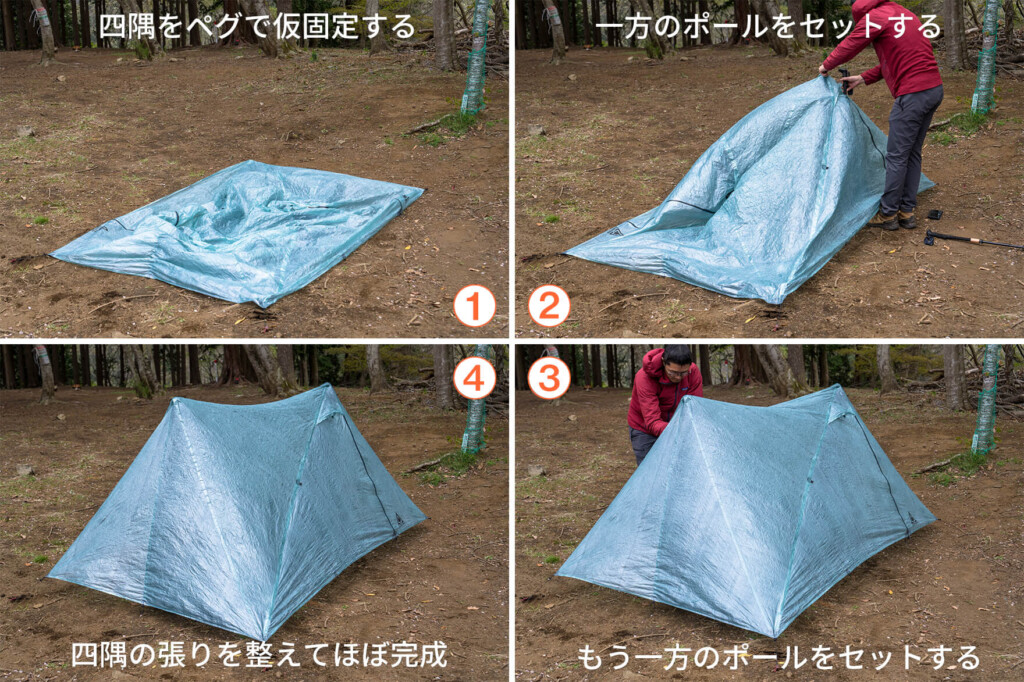
Reference: Check out the pitching from the official video (video below)

4. Weather resistance - Resistant to all weather conditions, including rain, wind, and even some snow
Despite being such a lightweight and simple tent, it has been designed with great attention to detail to ensure safety and comfort in bad weather
For example, the angle of the walls on each side of the tent. Dan focused on the trade-off between "the gentler the slope of the wall, the more wind can escape, but if it sways too much (or has flat areas), it becomes difficult for rain and snow to fall off," and determined the optimal angle, where neither is too extreme. He also insists on making all sides of the tent the same angle. This is because if one side is steep and the other is flat, it will have trouble in both strong winds and snowfall
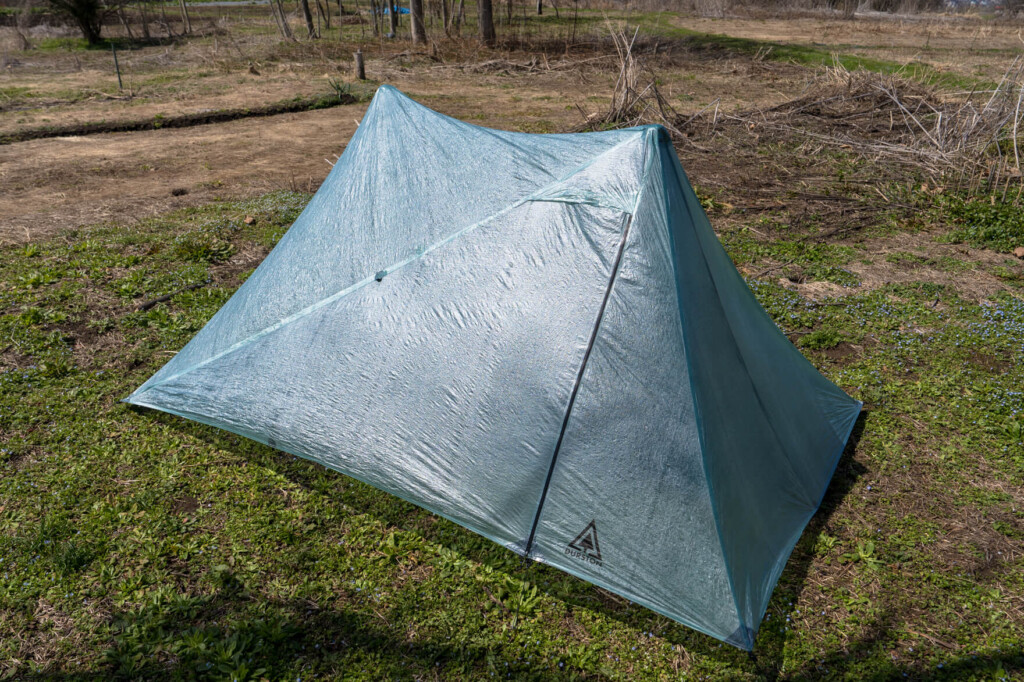
The concept of the X-Mid Pro is that the angle of the wall is wind-resistant and snow can easily fall off, and all sides are aligned at the same angle
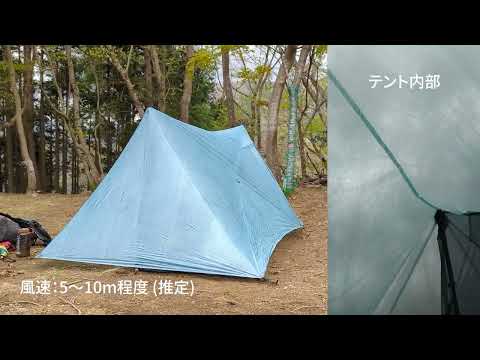
When I first saw this tent, I thought the walls were a little steep, but as mentioned above, it makes sense if the design is for 3.5 seasons, including some snowfall. Of course, in that sense, it's structurally less wind-resistant than other tents with less steep walls. However, this tent is designed to remain safe even in harsh conditions by providing eight additional stake points around the perimeter in addition to the four corner pegs. I personally feel safe even in extremely strong winds, especially since there are stake points not only on the slopes but also at the tops of the poles. While I didn't actually test it to its limits, I was able to test it in strong winds of around 10 meters, so I filmed the process (see video below)
Other features include Dyneema fabric that doesn't sag even when it rains, fully taped seams that you don't need to add yourself, the fly can be adjusted to cover you all the way down to the ground by adjusting the length of the poles, preventing wind, raindrops and cold air from getting in (of course you can also leave it open to improve ventilation), a bathtub to block raindrops (although I would have liked it to be a little higher), and a vestibule that is spacious enough to be left open even in light rain, making it one of the most comfortable trekking pole shelters available, even in bad weather
Peak guyouts, side panel guyouts, and additional stake points around the base are for tough conditions
5. Spaciousness and Comfort of the Tent Interior – Not only is it spacious, it’s the most comfortable space you could ever wish for
Geometry that provides exceptional comfort and excellent usability
As I've mentioned briefly so far, the biggest selling point of the X-Mid pro 1, along with the ease of setting up the tent, is its exceptional level of livability for a trekking pole shelter
The X-Mid Pro 1 was designed with the most efficient structure to maximize livability, weather resistance, and ease of pitching, resulting in a parallelogram floor with a base of 90 inches (approximately 230 cm) and a length of 32 inches (81 cm), as shown below. When a sleeping mat is laid out, the effective dimensions are 203 cm long and 81 cm wide, allowing even the largest of people to use it with ease. With a standard mat, there is plenty of room to fit various gear inside the tent, and the parallelogram shape also creates a little extra space above and below the head and feet where you can store luggage
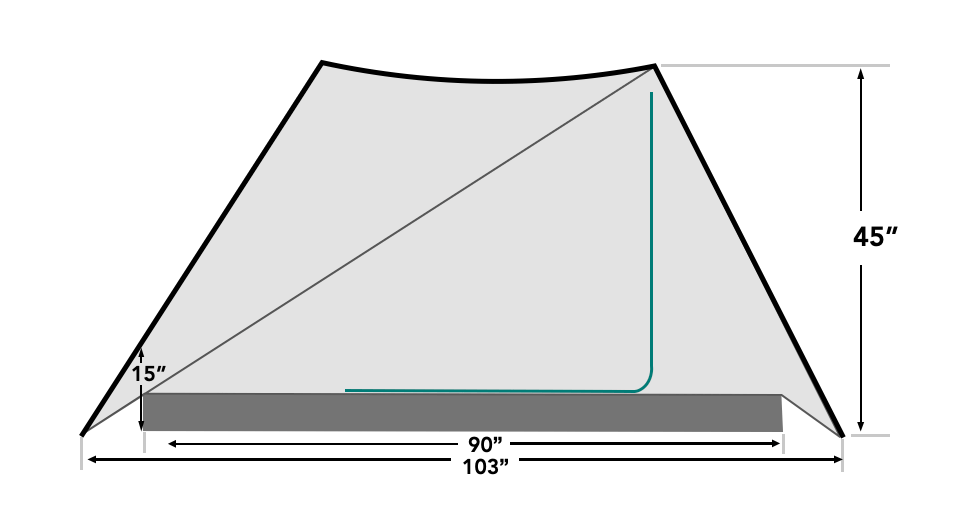


Quoted from the DURSTON official website
The poles are located at both ends of the floor area, so they don't interfere with the living space. The diagonal ridges of the two poles are kept at a height close to the peak, so there is ample head space. The height is about 115cm, so my head, which is 176cm tall, didn't get stuck
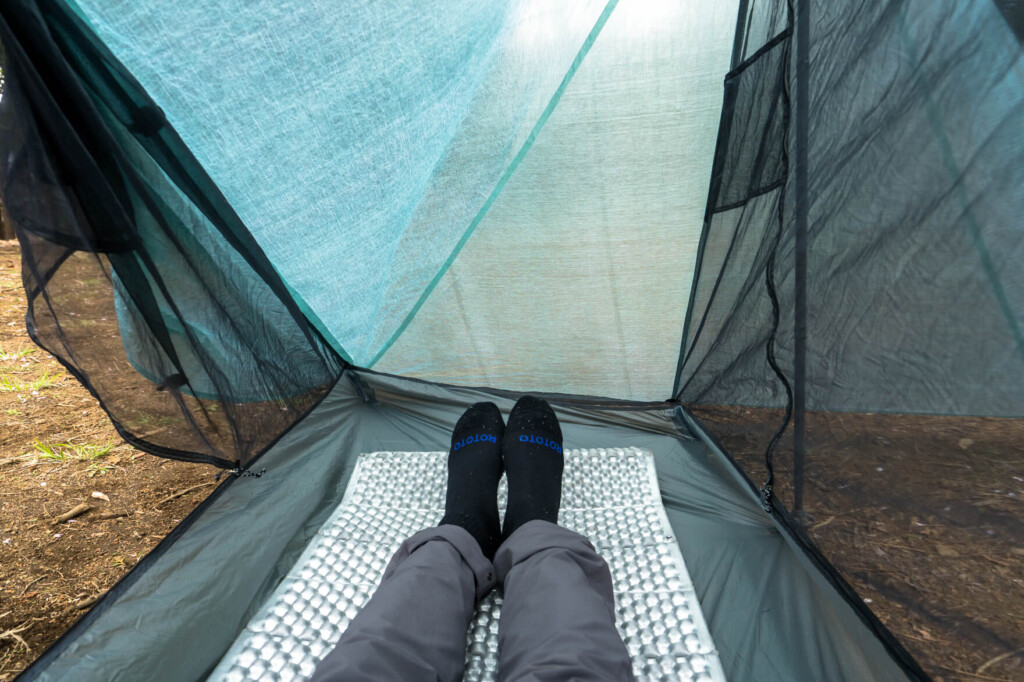
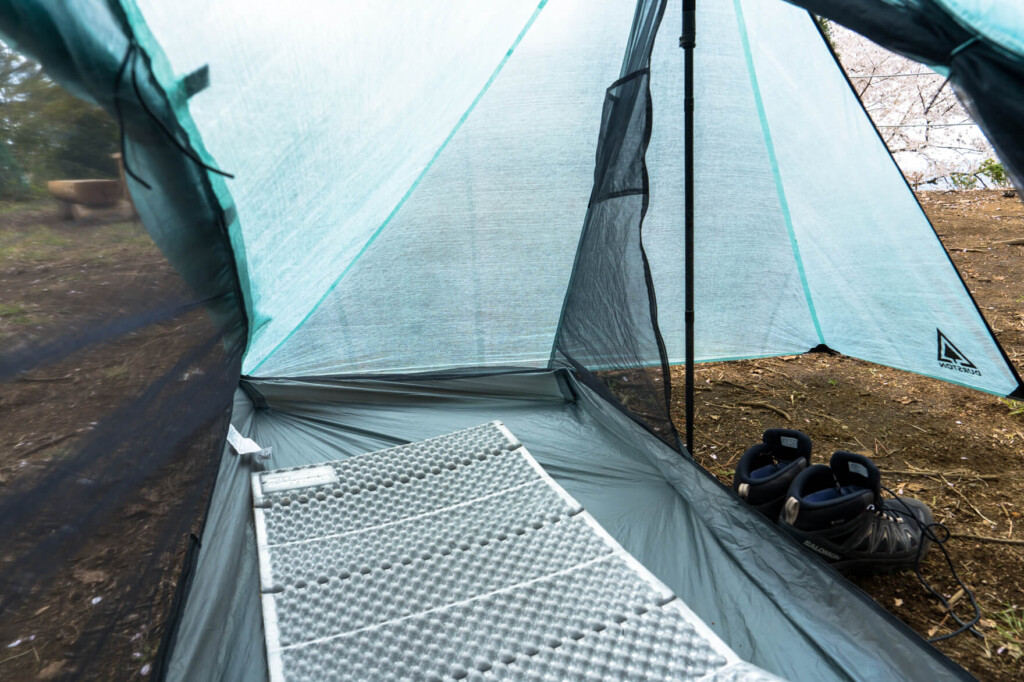
The inner lining is lined with mesh to keep out insects, and the long sides have dual side doors that allow entry and exit from either side (see photo below). Unlike many trekking pole shelters, the poles are not positioned in the middle, making entry and exit smoother. The slightly offset pole arrangement is also useful here
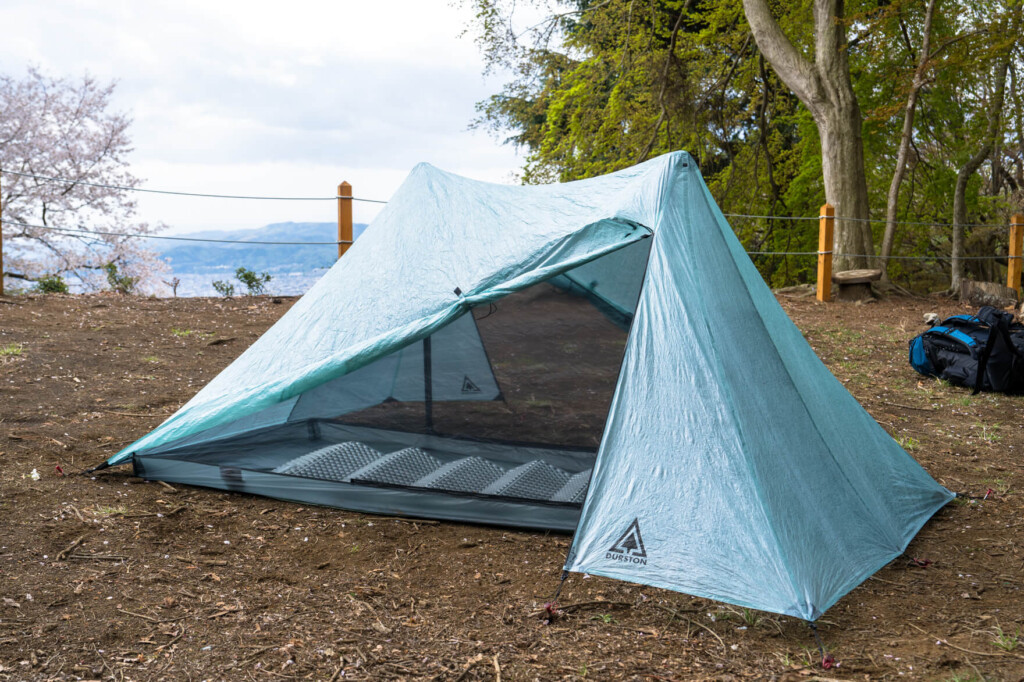
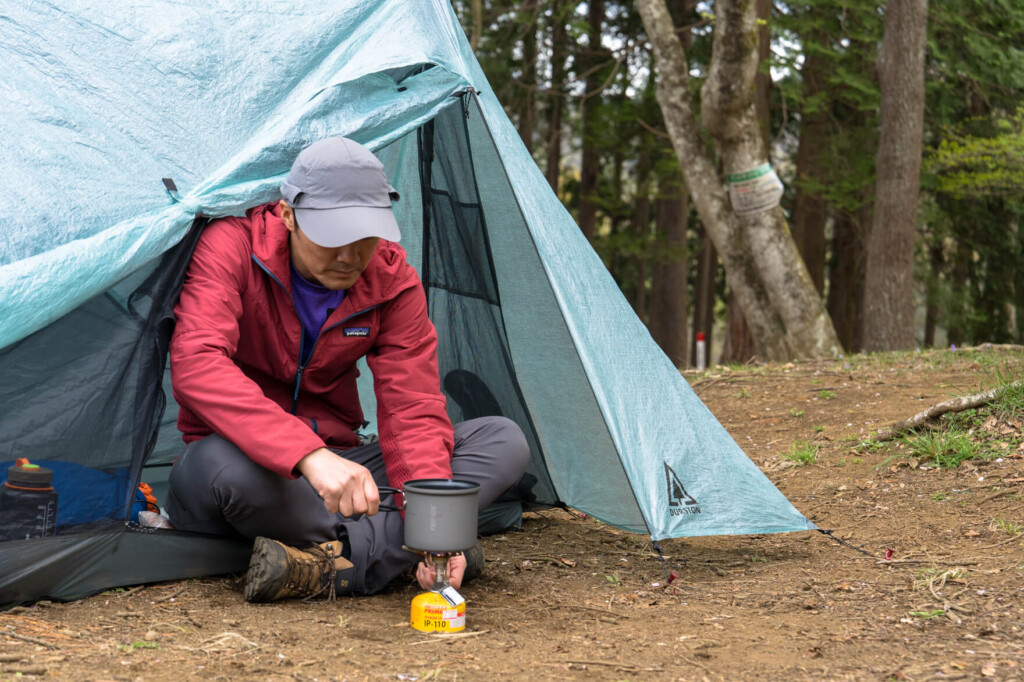
The best part is the spacious vestibule (see photo below). With two doors, there are spacious vestibules on both sides, so even someone like me who isn't good at organizing things had no stress at all thanks to this luxurious space
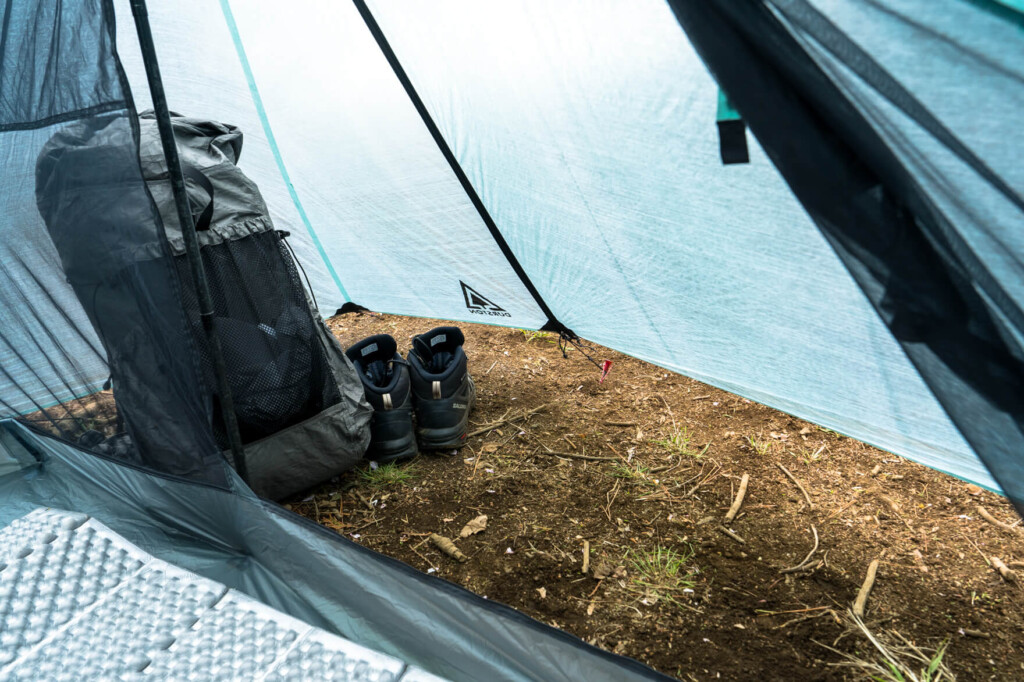
You can also leave the narrower entrance closed and roll up one side for ventilation. The fly fastens with a magnet. It's just so nice

There are even large pockets on both sides of the inner mesh (see photo below). It's so user-friendly. It's a bit strange that they didn't add a lantern hook or something to the top, considering how well-equipped it is
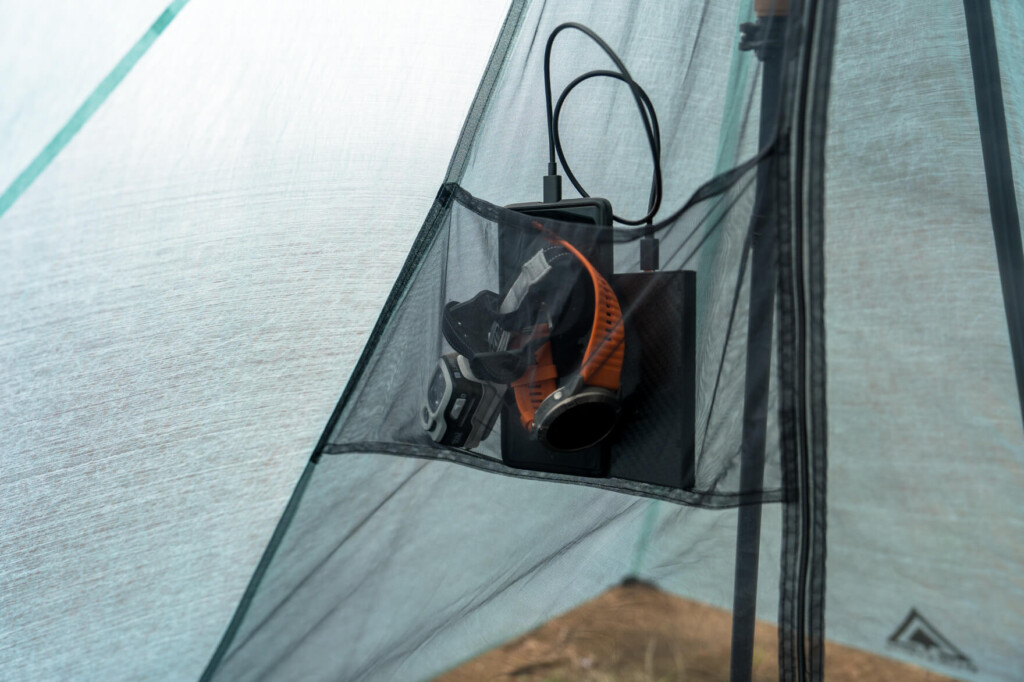
A system that maintains comfort even in rain or condensation
Besides high livability, the other important aspects of a tent's comfort are, of course, ventilation and measures to prevent condensation. Naturally, measures have been taken to ensure this. The tent has ventilation installed above the two entrances on the left and right (see photo below), and air can be taken in through the gap under the fly, providing good ventilation. If you want to keep out the cold, you can close the ventilation to block the air flow, or shorten the poles and close the fly
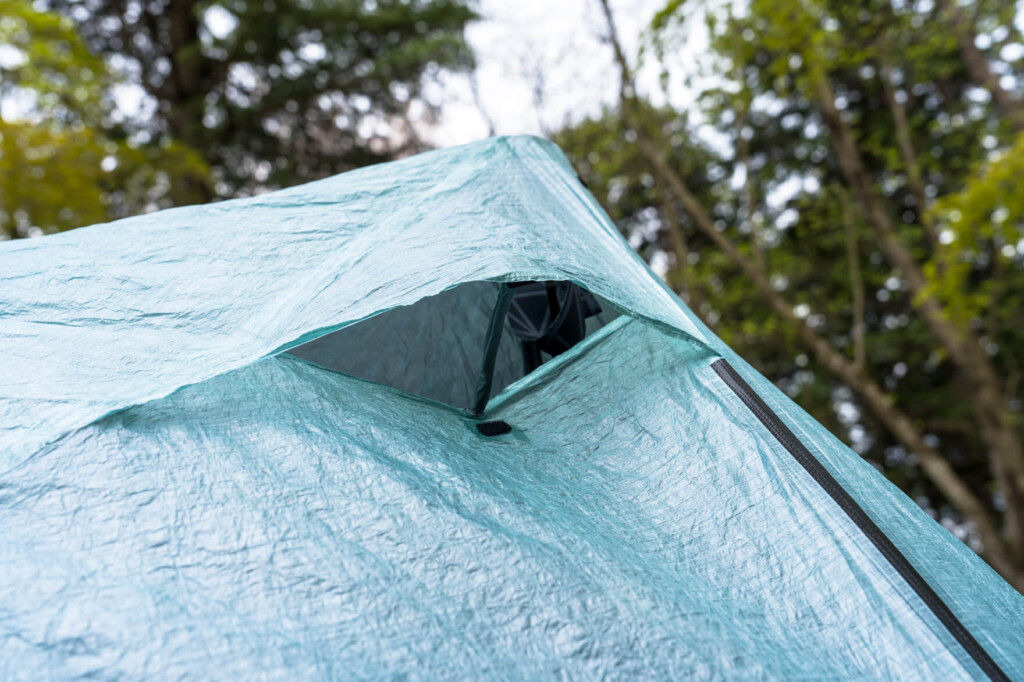
What about condensation?
First of all, this tent has a double-wall structure with inner mesh walls and a fly on both sides (long sides), but the top and bottom (short sides) are a hybrid structure with a single-wall structure without mesh, so you need to be particularly careful about condensation that gets on the fly at your head and feet. Mesh fabric is stretched over these areas to protect against insects and raindrops, and also allows any condensation that gets on the inside to run off onto the ground outside (see photo below. With a normal single-wall tent, condensation on the inside runs directly onto the floor)
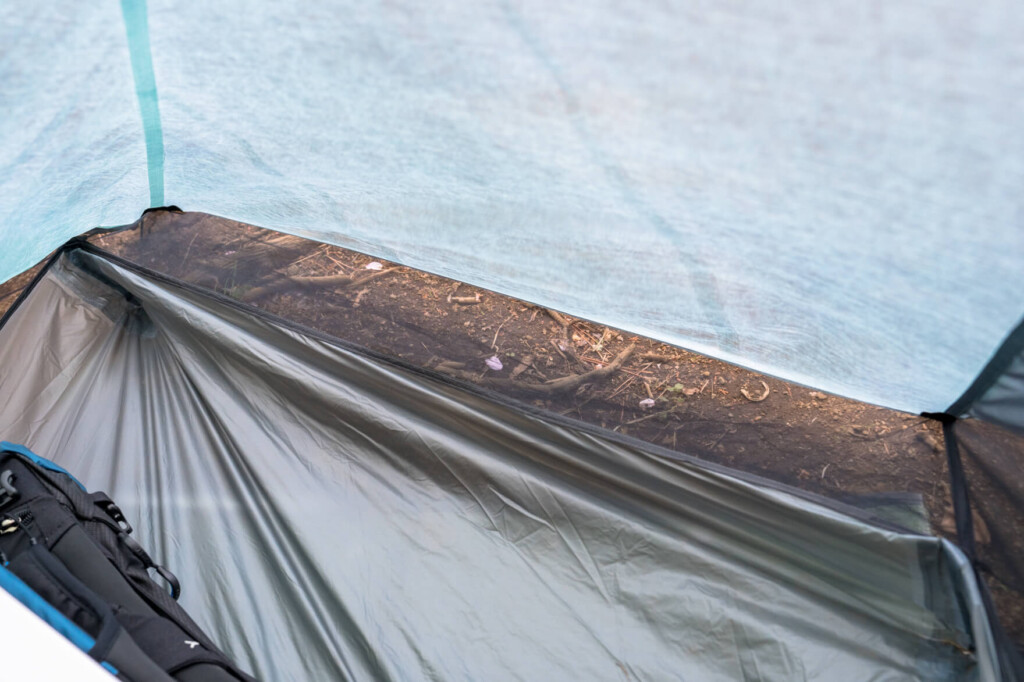
Mesh is placed between the wall and floor on the short sides of the head and foot area, so that water droplets from the inner wall pass through the mesh and fall outside without falling onto the floor
However, no matter how much ventilation you try, some condensation will occur if you try to sleep warmly. During a test night in April, there was a slight amount of condensation that caused the windows to fog up (see photo below. I guess this is within the acceptable range)
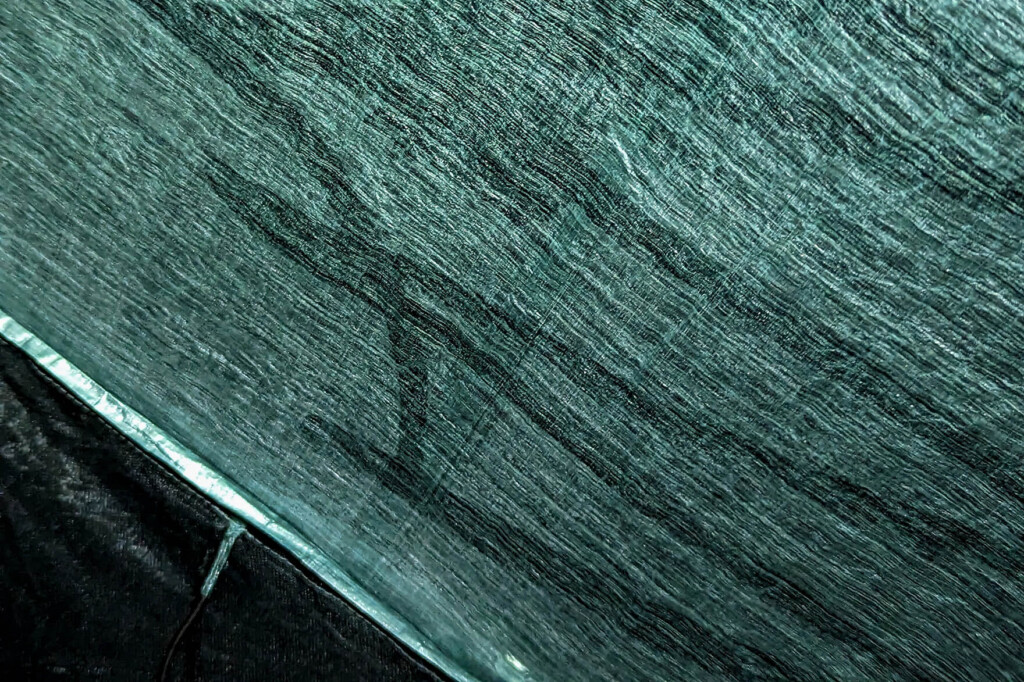
Some people are concerned, but what about privacy provided by ultra-thin Dyneema?
One of the concerns that often comes up with lightweight Dyneema tents is privacy. Because the fabric is thin, the inside is somewhat transparent from the outside, making it difficult to see the silhouettes of people inside the tent. The photo below shows the inside of the tent. What do you think?
You may be able to distinguish fluorescent mats and white convenience store plastic bags, but I don't think you'll be able to see anything else so clearly that it's worth worrying about. However, since everyone's perception is different, this may be a bit of a negative point for those who are concerned about privacy
Summary: Light enough, comfortable, sturdy, and easy to use. I don't think I'll be able to use any other shelters for a while
Overall, the X-Mid Pro 1 is more spacious, comfortable, user-friendly, weather-resistant, packs down compactly, and best of all, is lighter, simpler, and easier to set up than any trekking pole shelter to date. This incredible new shelter cleverly combines the best aspects of many previous tent designs, and it's a step forward in the long history of mountain tents, which stretches back well over 100 years
Until now, my first choice for this type of shelter was the Zpacks Plex Solo Tent, but while it's also a very good tent, I may find myself using it less after discovering this one. I'm sure it will be more than satisfying for anyone looking for lightness over luxury in backcountry activities, excluding the harsh winter months, such as UL hiking and fastpacking, as well as variations on mountain climbing like river climbing, bikepacking, and camping. I hope you have an exciting and enjoyable trip with the X-Mid Pro 1
*The link below is to the e-commerce site in the home country

The taut fabric does not sag even when wet

As for privacy, if you put your hand directly on the fly, it will be this transparent
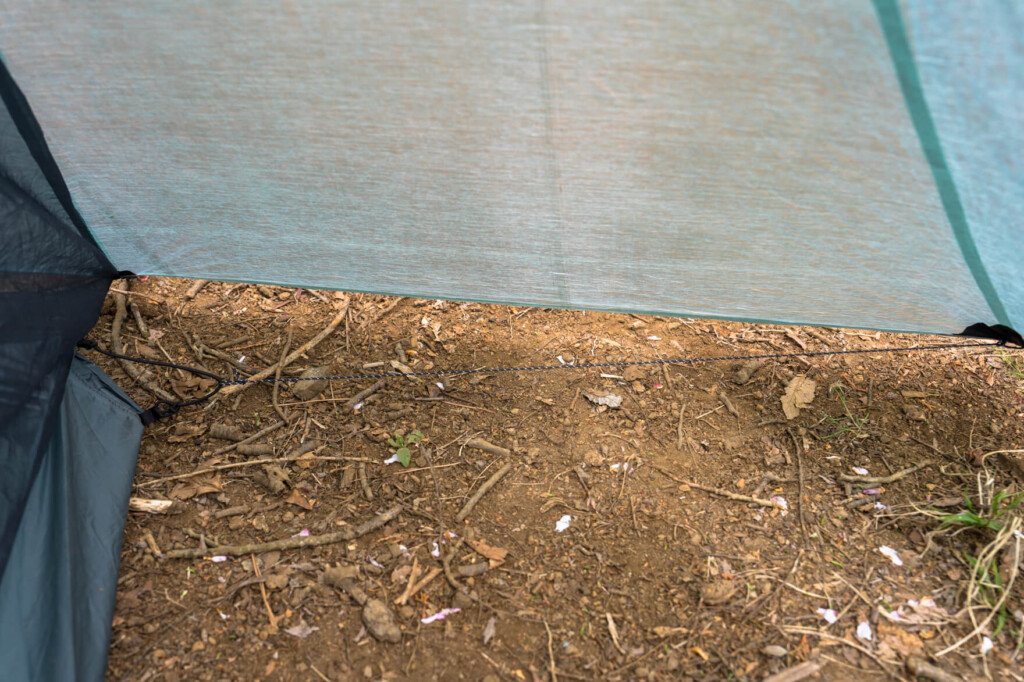
Guy cords are connected to the four corners to raise the bathtub and lay the floor

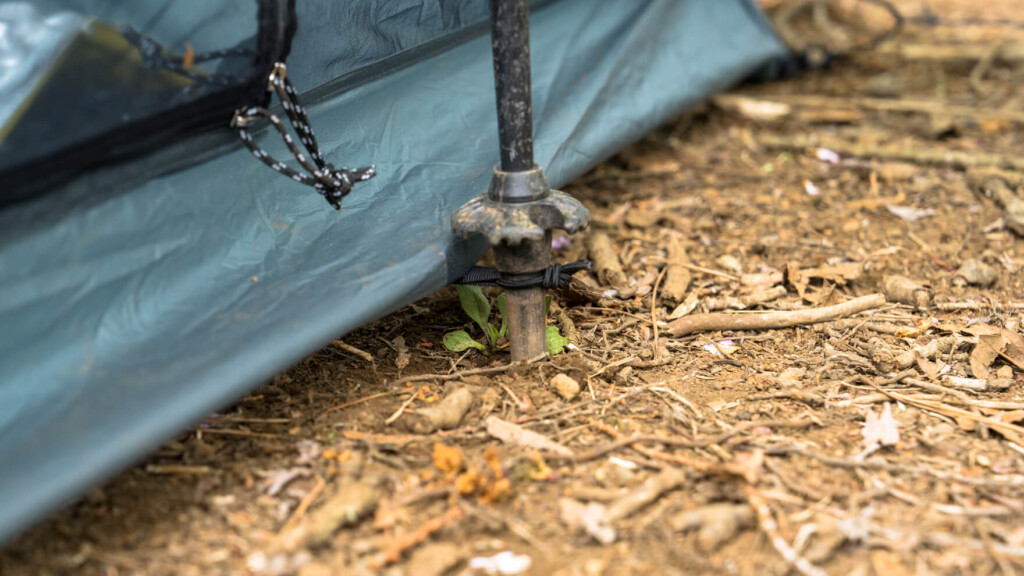
Floor-mounted loops for vertical positioning of trekking poles from the top

Flexible for adjusting tension
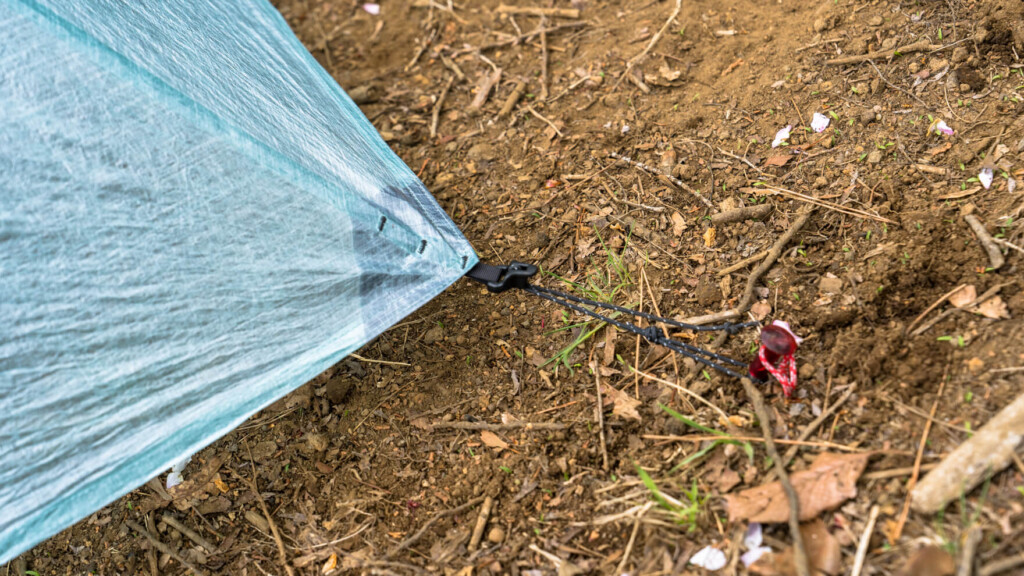
The four corner peg points are reinforced
Related reading