



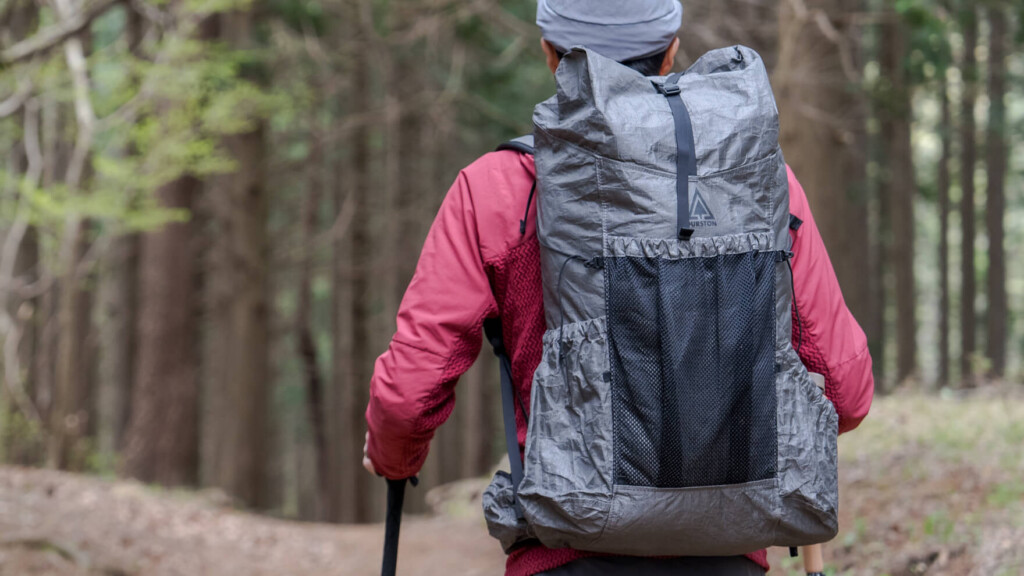
[Unbiased Review] DURSTON Kakwa 40: This next-generation hiking backpack, made with revolutionary Ultra Fabric, is so lightweight and durable it's practically tear-jerking

Written by Yasushi Hisatomi
I started using Discord
The world of outdoor equipment continues to evolve
This time, we bring you what is probably the first review in Japan of a next-generation backpack made from a new material that has been a hot topic among outdoor gear enthusiasts, especially in North America, where it originated, over the past year or two
DURSTON GEAR is an up-and-coming brand that is arguably leading the current lightweight mountain gear scene, especially in North America. It has quickly established itself as a solid leader among cottage brands* thanks to its unique and practical products ( see our recent review of lightweight shelters for more details ).
*An outdoor manufacturer that produces cutting-edge gear in small quantities, focusing on new activities, styles, or niche needs
Durston has developed a new hiking backpack called the Kakwa 40. Named after the northern terminus of the Great Divide Trail, one of North America's three major long trails, this model is notable for its use of the new "Ultra Fabric" material, but it's also truly Durston-like in many ways. It's not just lightweight; its meticulous construction has left me impressed countless times. Unfortunately, as usual, it's not yet available in Japan, so the only way to try it out is to import it personally. However, this model is undoubtedly a leader in the world of hiking backpacks, and Outdoor Gearzine couldn't resist checking it out.
So this time I tried out this cutting edge lightweight backpack by hiking in the low mountains in spring, and I'll give you my review right away
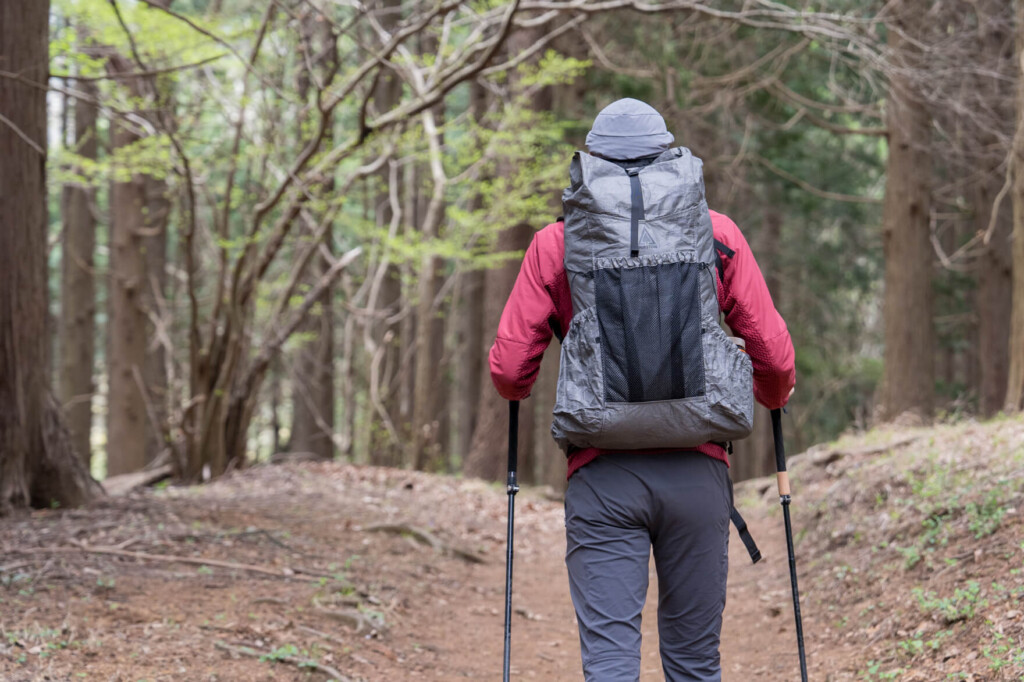
table of contents
Main features of DURSTON GEAR Kakwa 40
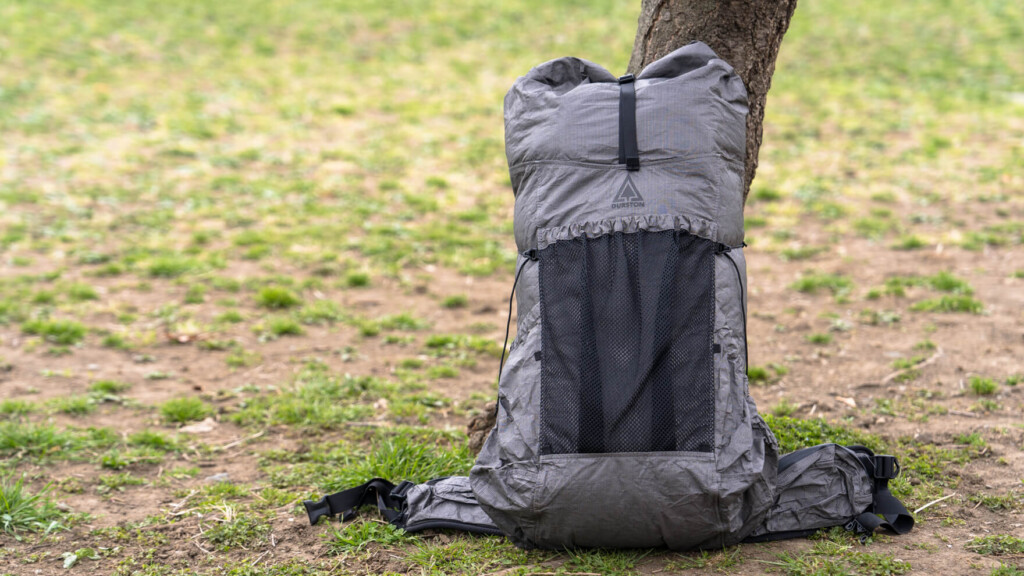
This hiking backpack, crafted from the ultra-lightweight, abrasion-resistant, and tear-resistant 200-denier "Ultra 200" fabric, boasts surprisingly high load-bearing capacity despite weighing less than 800 grams. The back panel features a lightweight, U-shaped aluminum frame and built-in foam cushioning, providing a stable back structure that keeps your center of gravity firmly planted on your hips, even when carrying a heavy load. The main compartment holds approximately 40L, while the external pockets offer a total of approximately 15L of storage, making it spacious enough for extended tent stays with lightweight gear. The extensive external storage, including a deep, easy-access stretch pocket, side zip pockets for standing access, hip belt pockets, and mesh pockets on the shoulder straps, has been carefully designed for maximum convenience while minimizing waste
Favorite points
- With proper weight positioning and outstanding stability, it's surprisingly comfortable to wear for a lightweight backpack
- Higher load capacity than competing models
- Unbelievable lightness despite its premium comfort
- Lightweight yet extremely durable and water-resistant fabric
- Dual-strap reverse-pull hip belt for easy tightening and a comfortable fit
- Side pocket with zipper pocket for ample storage and easy access
- Elastic shoulder strap pocket
- Reasonable price
Points of concern
- The back is not well ventilated
- To access the main compartment, you need to open and close the roll top
- Limited customizability of external attachments
- No hydration sleeve and very small hydration holes
Main specifications and evaluation
| Item Name | DURSTON Kakwa 40 |
|---|---|
| capacity | Approximately 40 liters (total external storage: approximately 15 liters) |
| weight | Size M: 775 g (including 90 g frame and 15 g foam pad) |
| material |
|
| Women's model | none |
| Size/Back Length |
|
| Rear Panel | Detachable U-shaped aluminum frame |
| Recommended maximum load capacity | Approximately 20 kilograms |
| Hydration sleeve | × ※Hydration holes available |
| Main Access | Roll-top style (with Y-shaped top strap) |
| Rain cover | × |
| Pocket Attachment |
|
| evaluation | |
| Comfort | ★★★★☆ |
| stability | ★★★★★ |
| Storage capacity | ★★★☆☆ |
| Functionality (ease of use) | ★★★★☆ |
| durability | ★★★★★ |
| weight | ★★★★★ |
| Extensibility (customizability) | ★★★☆☆ |
Detailed Review
New material "Ultra 200 Fabric" provides unprecedented lightness and durability
The emergence of new fabrics and materials always has a major impact on the world of outdoor gear, and the innovative technical fabric used in this backpack, Ultra 200 fabric , is certainly one such example.
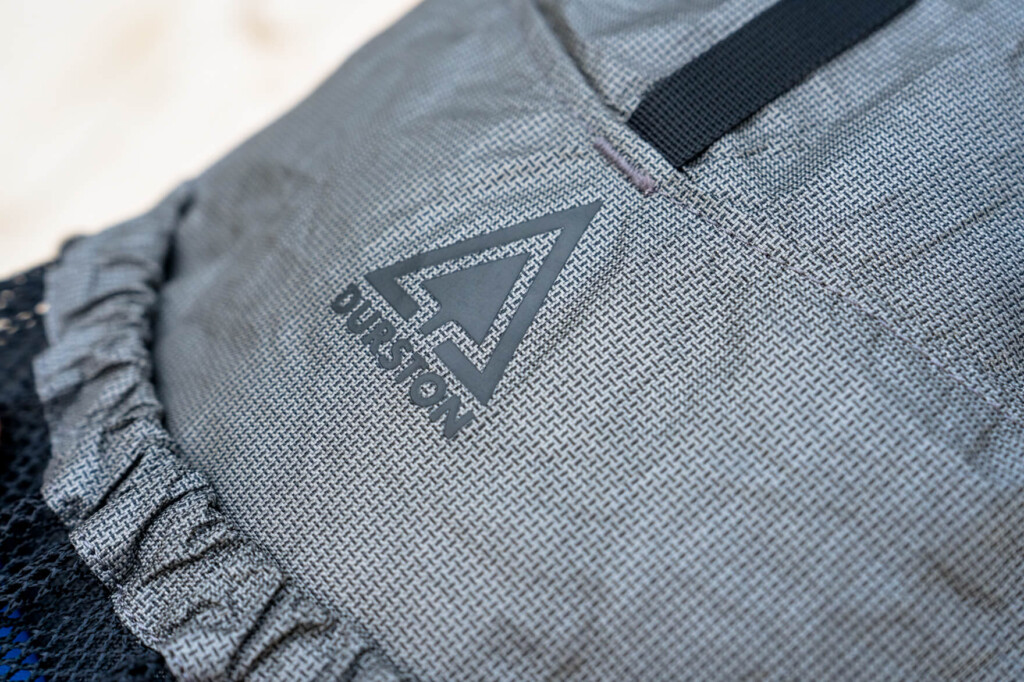
Developed by Challenge Outdoor, this fabric is a 200-denier woven fabric made from a blend of ultra-high molecular weight polyethylene (UHMWPE) fiber, commonly known as Dyneema®, and high-strength polyester fiber. This gives it a supple, cloth-like feel to the touch, similar to that of ordinary nylon fabrics (not surprising, of course). While DCF (Dyneema Composite Fabric) is the fabric that immediately comes to mind as an ultra-lightweight, highly durable material, it is a laminated nonwoven fabric that is crisp, thicker, and stiffer. My first impression was that this fabric is easier to handle and compact. On the flip side, it's not as stiff as a fabric, so it's a matter of personal preference
However, Ultra Fabric is to be several times stronger and more abrasion-resistant than Cordura nylon and to have the same or better durability per weight as DCF ( a variety of grassroots tests are currently being conducted , and while it is not exceptionally strong, it is safe to say that it is not clearly inferior). Furthermore, the lining is laminated with recycled RUV™ film, which gives the fabric excellent waterproofing (however, the seams are not taped, so please note that it is not completely waterproof as a backpack).
is lighter, more scratch-resistant, water-resistant, and UV-resistant" than the ultra-lightweight, highly durable fabrics that have been used until now
When you actually pick up this backpack, you'll understand that it's unbelievably light. It weighs just 775g. It's one of the lightest framed backpacks out there. And yet, it can withstand a load of about 20kg, and is stronger than even the strongest fabrics like Cordura nylon and Dyneema. Your brain can't keep up with how incredibly light its specs are
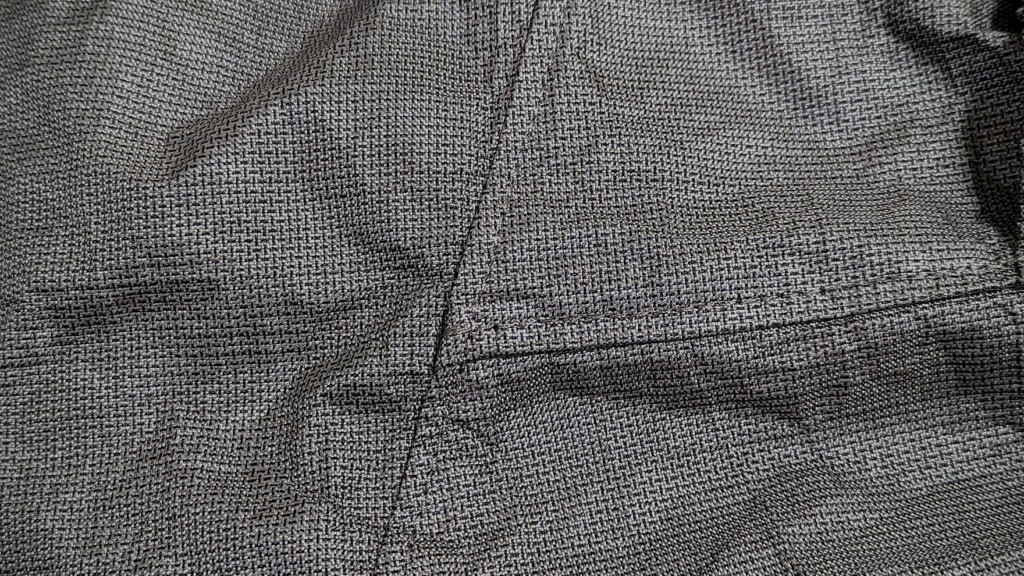
Furthermore, it's not just the fabric that's strong; the stitching is also double-stitched with thick thread, as shown in the photo below, to prevent unfortunate issues such as seams coming undone (even though the fabric is strong) (by the way, according to the manufacturer, the backpacks are manufactured in the same factory as Arcteryx)
From this point on, we begin to see a glimpse of Durston's unique philosophy of "lightness without compromising durability," which is unique to the Canadian Rockies, where harsh off-trail conditions are common
Size
Following the size guide on the official website, I purchased the M size, as I am 176cm tall, 63kg, and have a slim build with a back length of 50cm. The result was a perfect fit (see photo below)
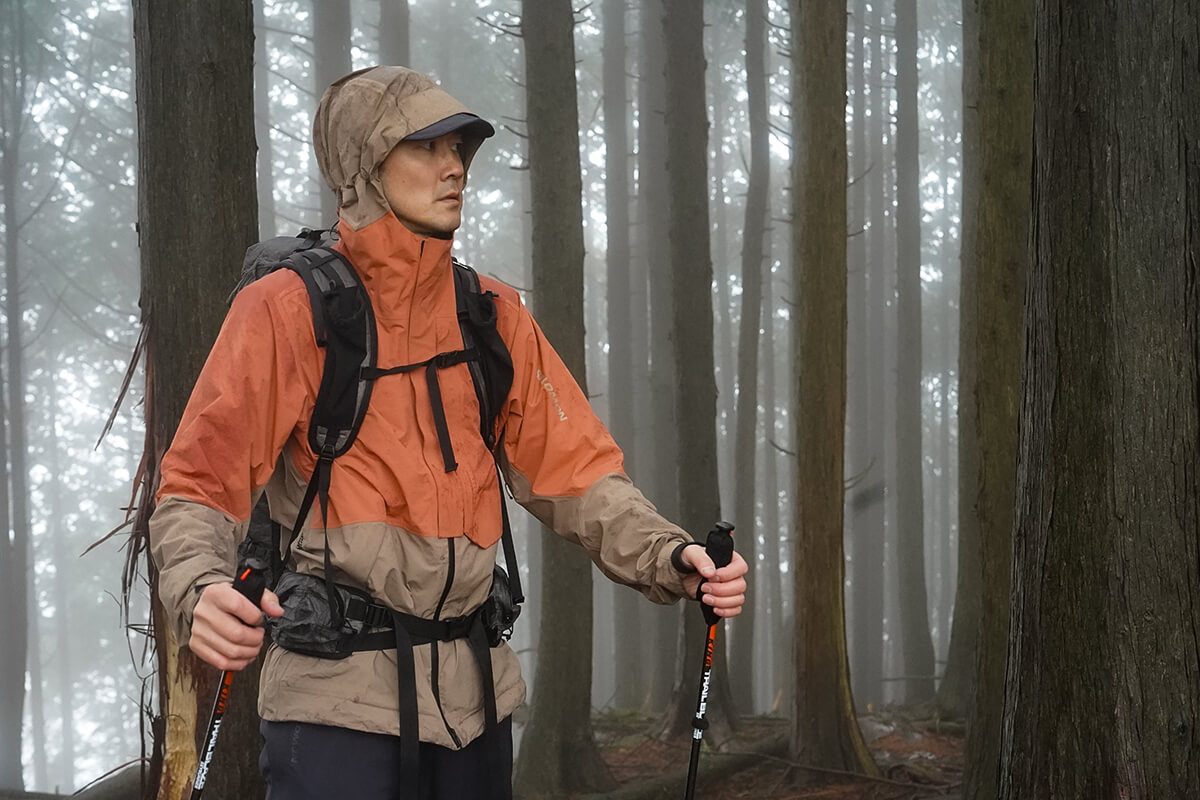
Comfort: Despite being ultra-lightweight, it is incredibly easy to carry and provides a high level of stability
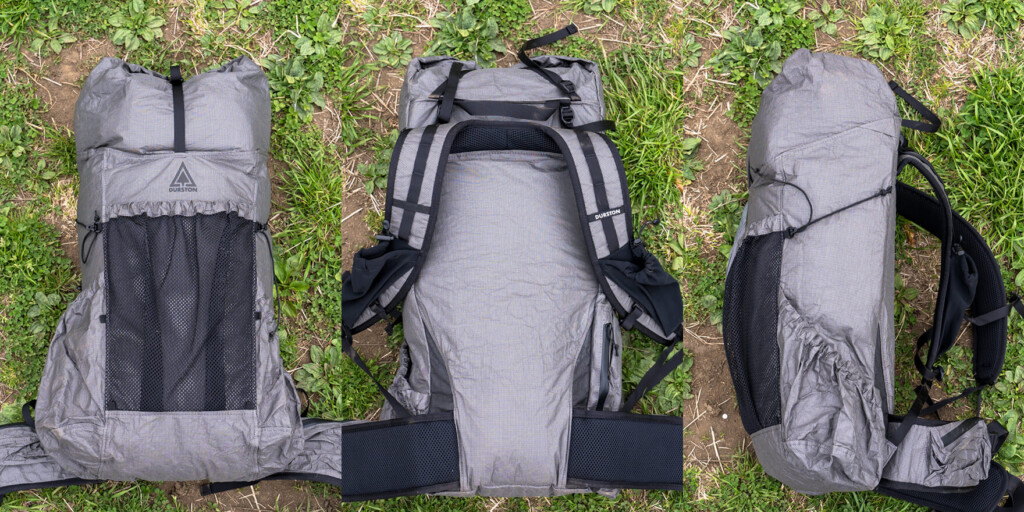
Kakwa clad in the latest technical fabric, which is an obvious new feature , but in fact, backpacks using this Ultra Fabric have been made by several cottage brands, and it is true that it has become commonplace in the last one or two years.However, the reason why I still love this backpack so much is because of its true appeal: " incredibly sophisticated, comfortable and stable carrying comfort .
I've carried many so-called "ultralight" backpacks, but this may be the first one I've ever carried that can be used as a "normal mountaineering backpack." Despite being surprisingly light, I don't have to sacrifice comfort even when carrying more than 10 kg of luggage, which is a blessing for someone like me who isn't particularly stoic about weight reduction (although of course this isn't a feature for lazy people like me)
The secret to this perfect carrying comfort lies in the back panel structure, which has been carefully designed down to the smallest detail, including the molded U-shaped aluminum frame, load lifter, and dual-strap hip belt
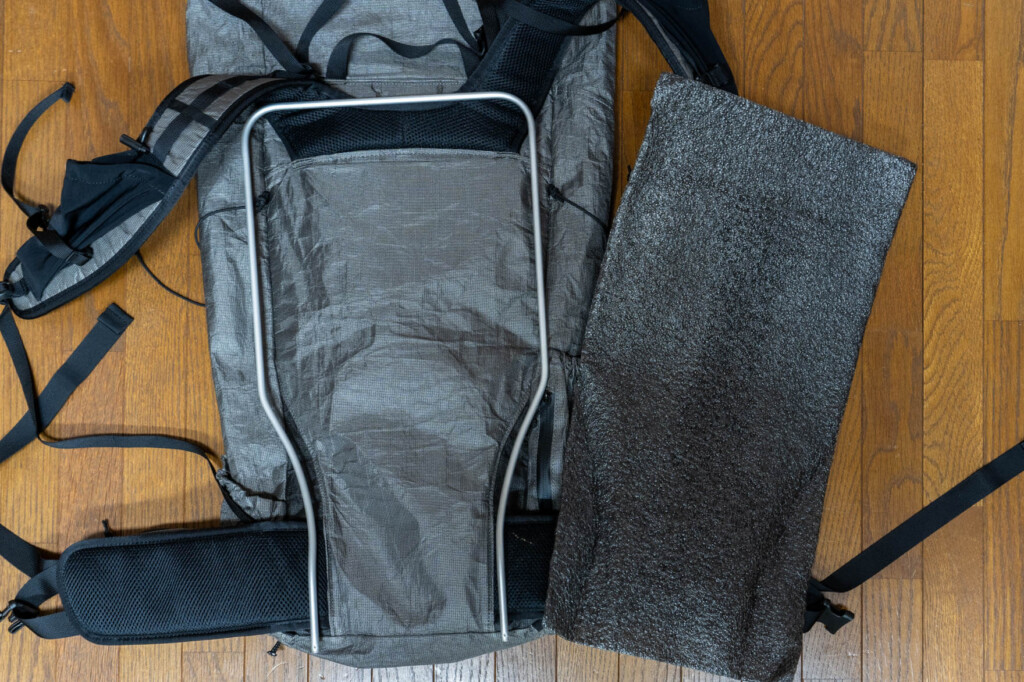
U-shaped aluminum frame with foam padded back panel
The back of the chair has a curved, U-shaped frame made of tubular aluminum that fits the curve of your back. The same area also contains a thin, lightweight foam pad that cushions and protects your back (see photo below)
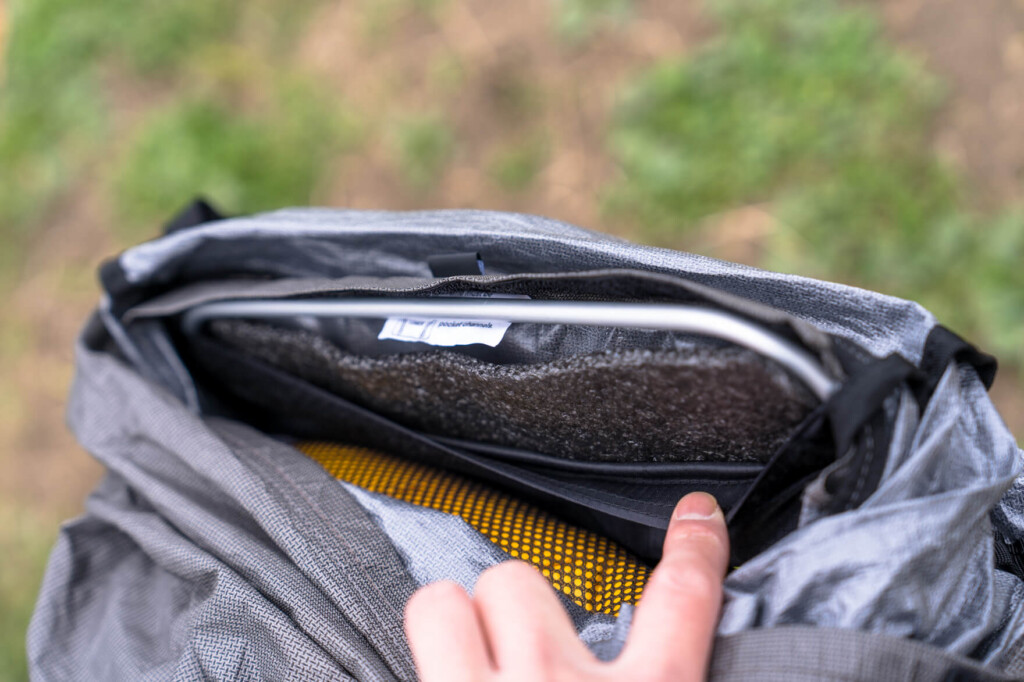
This aluminum frame keeps the outer perimeter of the back flat, preventing the back of the pack from curling up into a barrel shape (when loaded) like frameless packs or simple I-frame backpacks, and it also does an excellent job of keeping the center of gravity close to the body, over the hips
Both can be removed, but given the superior comfort, sacrificing them for just 100 grams of weight isn't a good idea
Shoulder straps and load lifters
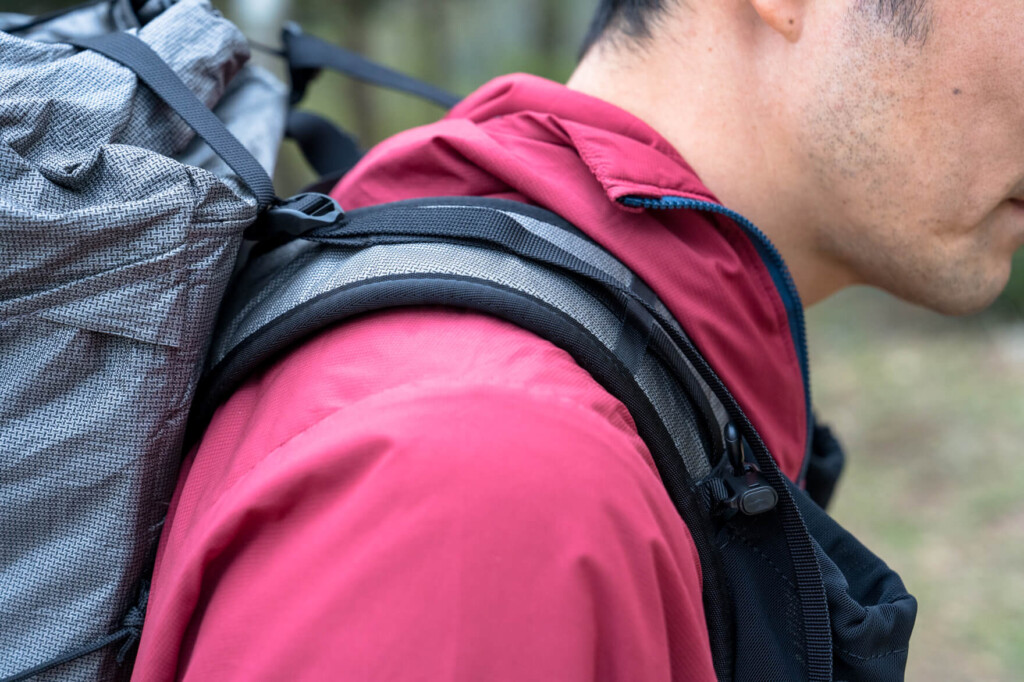
The shoulder straps have a subtle S-curve that follows the lines of the body, preventing interference with upper body movement. The left and right straps are joined by a yoke rather than sewn separately, which distributes the load evenly across the seams and contributes to increased durability at the base of the straps (see photo below)
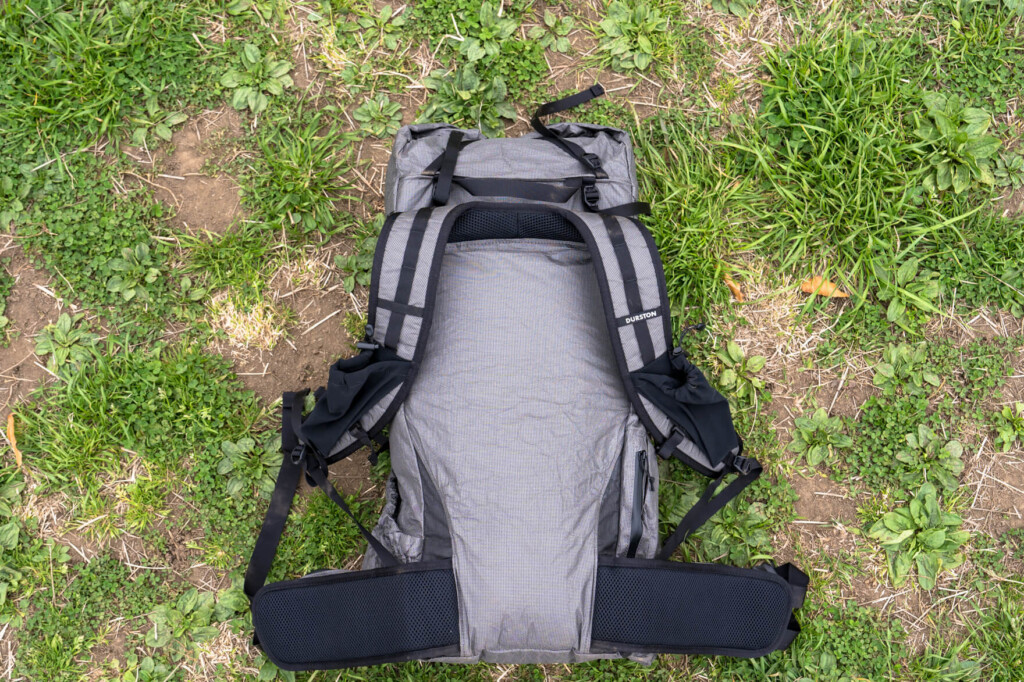
The shoulder straps are equipped with load lifters (see photo below), which are rare for an ultralight backpack. By tightening these load lifters, you can move the center of gravity of the top of the pack closer to your back, bringing the entire load closer to your body, and by preventing it from shaking, you can increase stability even when carrying a heavy load. What a luxury (sigh)
Reverse pull dual strap hip belt
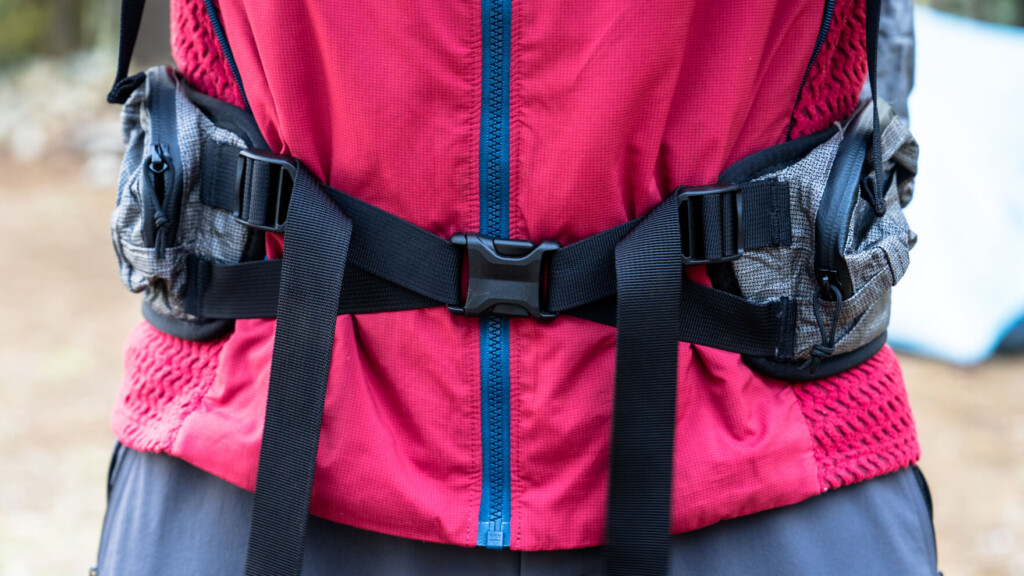
Finally, the hip belt. This is connected almost directly to the end of the frame, which allows the weight to be transferred to the hips without any loss (see photo below)
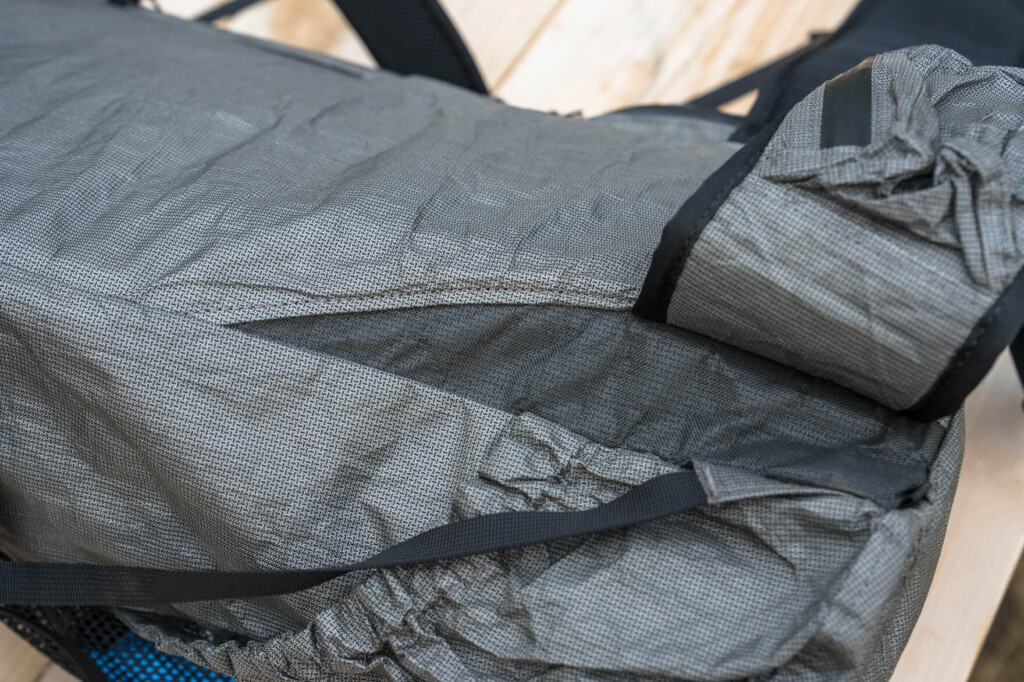
The inside of the hip belt is a breathable mesh with a subtle textured padding. It's not exceptionally fluffy, but that's not the kind of luxury you'd want
What's even more noteworthy are the hip belt straps. The double straps, attached top and bottom, allow you to tighten the entire hip belt so that it wraps around your waist, and the two straps pull forward using the pulley principle, meaning you can tighten it with less force than if you were to pull it with just one, making the belt extremely comfortable (see photo below). I wish all hip belts were like this
Maximum recommended load
Kakwa achieves excellent load-bearing capacity of approximately 20 kg, which is astonishing for an ultra-lightweight pack.
However, in my actual testing, I felt that even if the frame could withstand 20kg of luggage, the shoulder and hip belts would dig in tightly and it would be a bit tough. I think the maximum limit would be around 15kg. However, common sense would dictate that no matter how much luggage you pack into a 40-liter backpack, it's unlikely to exceed 20kg, so unless something extraordinary happens, there's no need to worry
In any case, it is undoubtedly the most comfortable lightweight backpack (under 1.2 kg) I have ever carried, and it is a great option if you are forced to go deep into a mountainous area where water sources are scarce and you need to carry a lot of drinking water
Storage and usability: Smart storage that remains above average even when pared down to the bare minimum
Let me start by saying that the kakwa storage system could easily be described as "minimal." At first, I felt uncomfortable about this, but strangely enough, as I continued to use it, I didn't find any fatal complaints, and now I'm impressed by the streamlined, streamlined design that doesn't cause any inconvenience (of course, preferences are different).
Main storage
First of all, there's nothing special about the main compartment, other than it being a roll-top design. It protects against water and dirt and allows for easy expansion depending on the amount of luggage you have, but opening and closing it is still a bit of a pain. Personally, I wish the main compartment could be accessed with a zipper (since it's 2023)
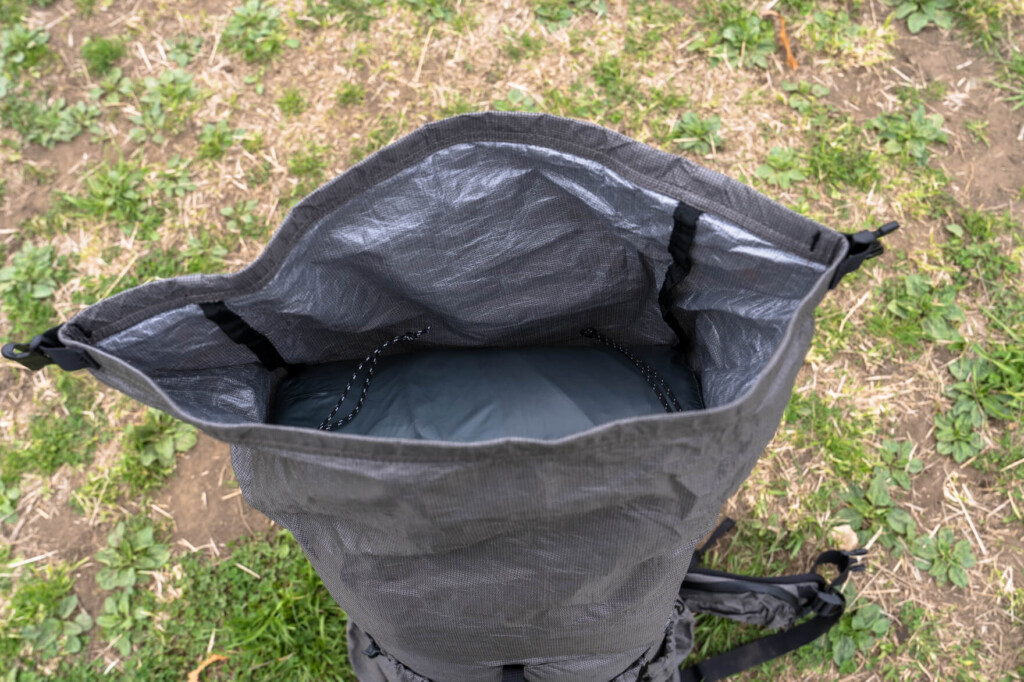
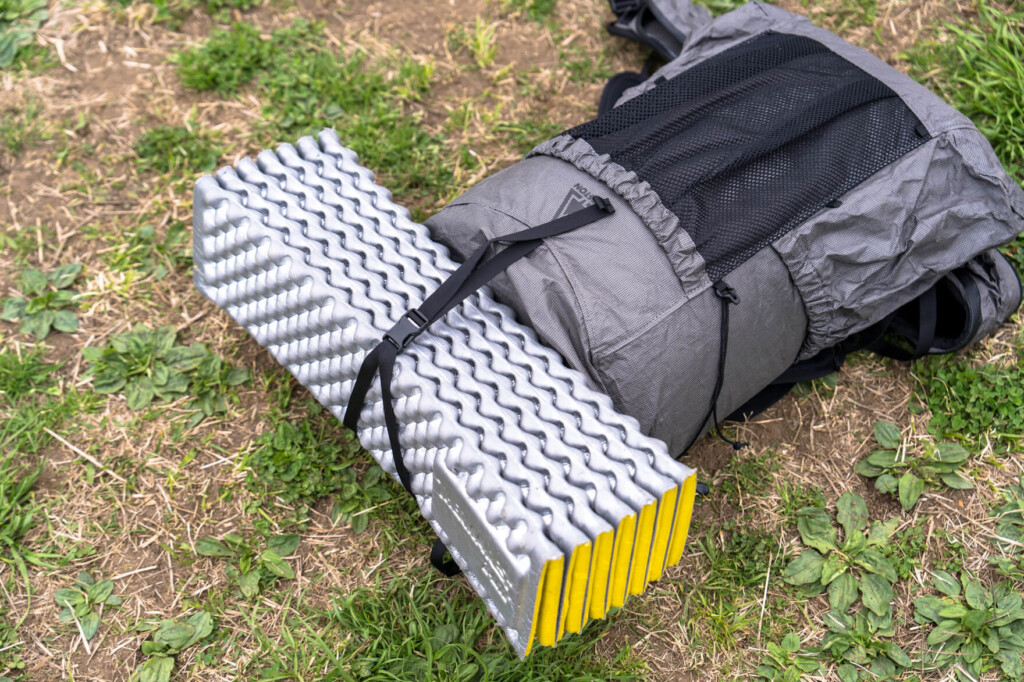
There's also a double adjustable Y-strap here, which allows you to secure bulky items like a tent mat to the top
Side pockets
The asymmetrical side pockets are well thought out and easy to use. The left pocket has a deep base to securely store bottles and long items, and there's a zippered pocket for larger items. Paper maps, gloves, caps, snacks, and even a large smartphone can all be accessed without removing the pack from your back (see photo below)
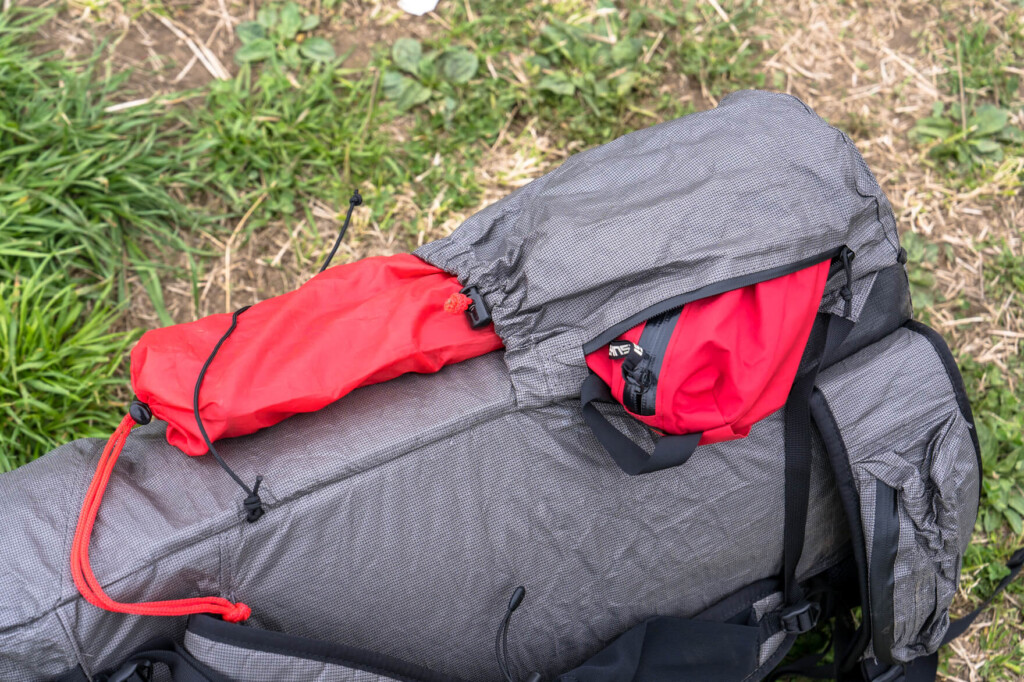
The opening of the right pocket is angled, making it easy to access while standing (see photo below). Incidentally, both the left and right pockets are large enough to fit two water bottles, and the elastic material provides a decent amount of support
Front stretch mesh pocket
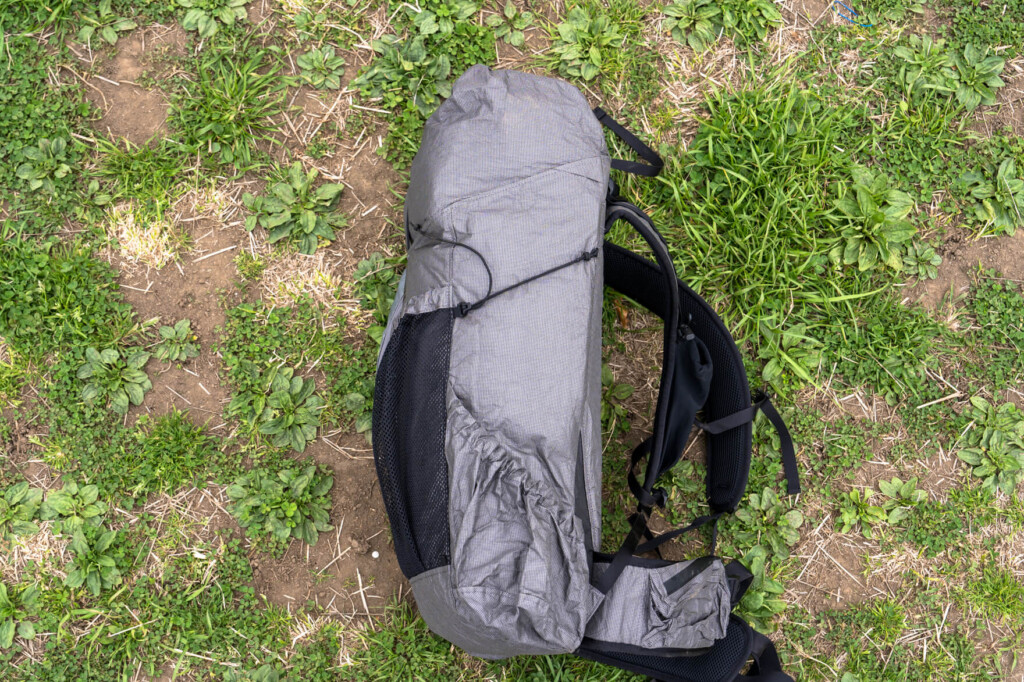
The front mesh pocket is made of durable polyester and has a gusset at the bottom, so it's usually flat but can expand to store larger items. It's very convenient because it can hold more than you'd expect, from rain jackets to snacks, sandals, water bottles and filters, and garbage bags (see photo below)
Hip belt pocket
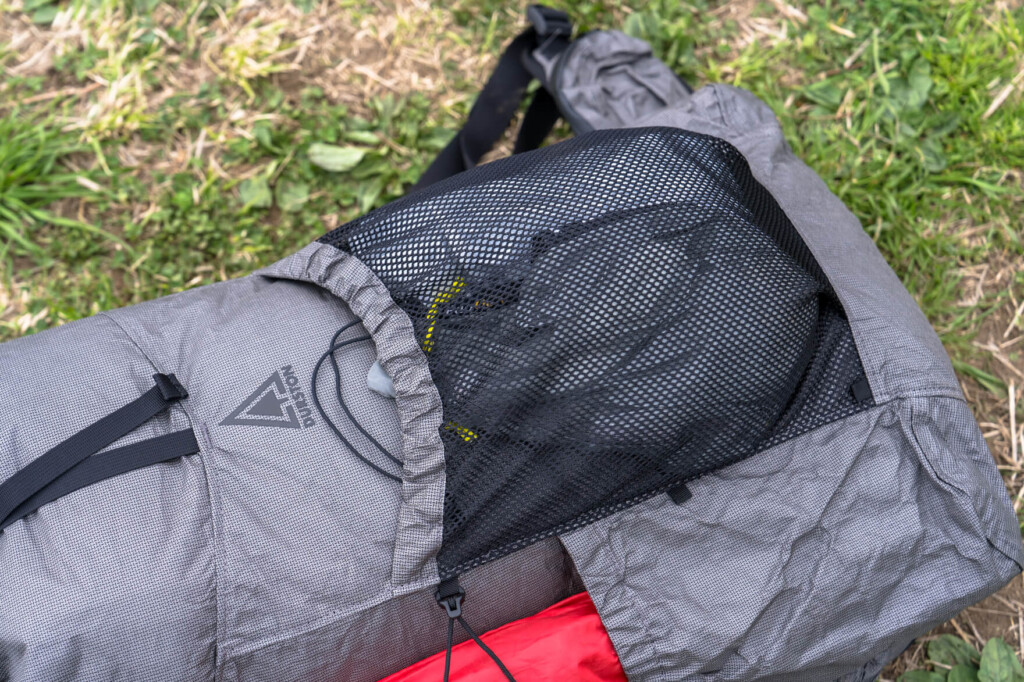
The hip belt has two large pockets on both sides that open and close with YKK AquaGuard water-resistant zippers. They are wider and deeper than they look, and are large enough to fit food, sunscreen, a headlamp, a hand towel, and even my 6.7-inch smartphone, which was extremely helpful
Shoulder strap pocket
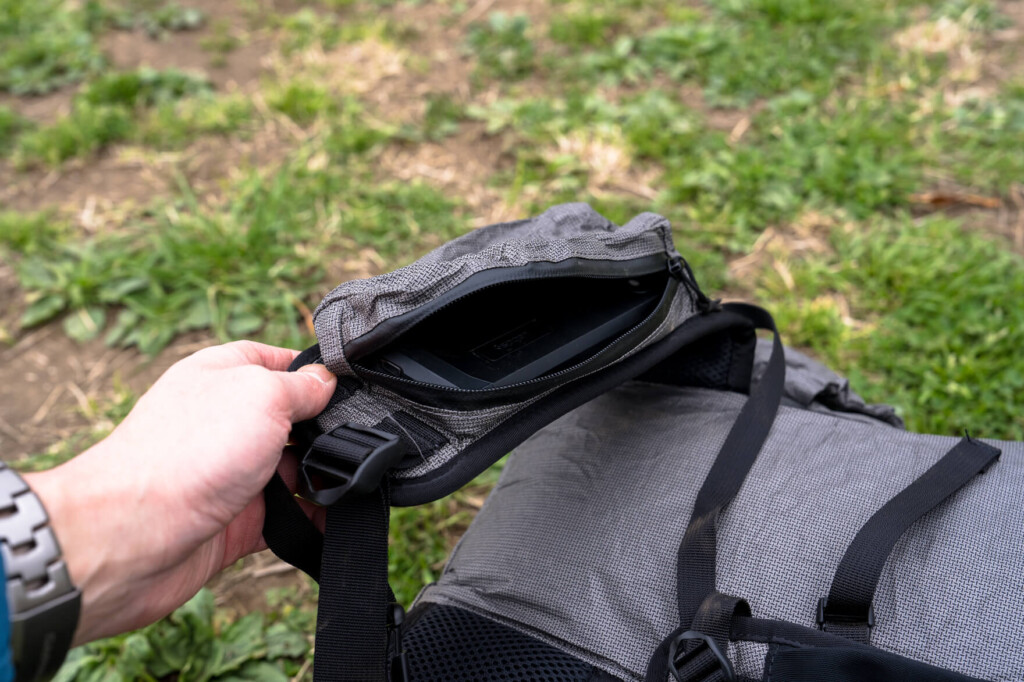
The shoulder strap has a daisy chain in the center and a stretch mesh pocket where you can store small items you want to keep close at hand, such as a smartphone, camera, soft flask, or water bottle. These things are becoming commonplace these days, but it's nice to know that they've taken care of these things as well
Bungee cord loop
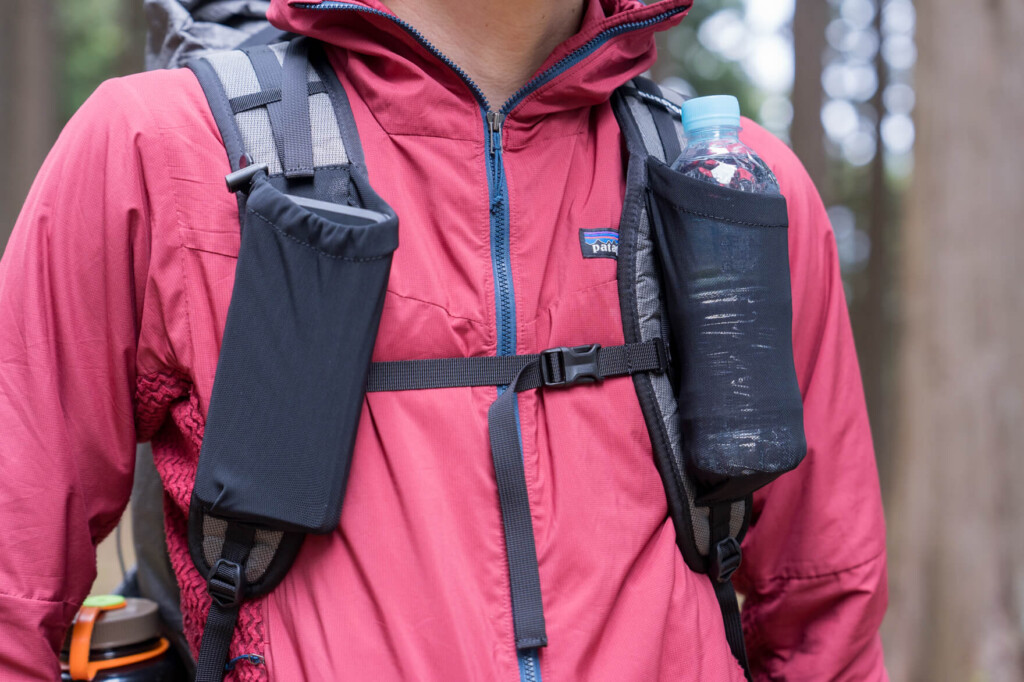
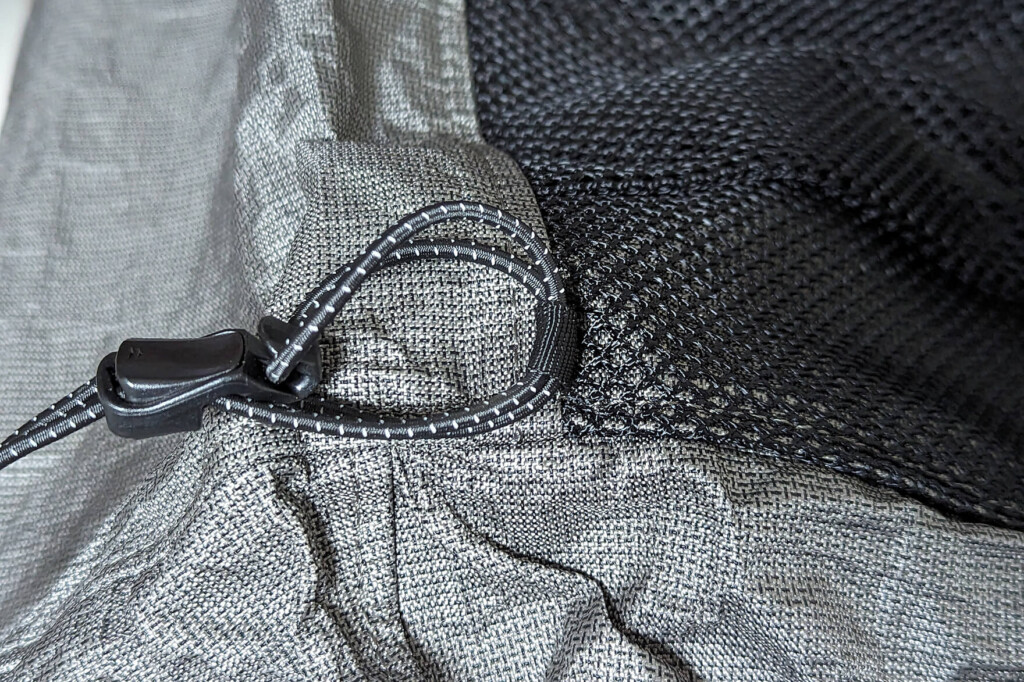
From the front to the bottom, there are about six small loops where you can add bungee cords or other accessories. However, these loops are very small, barely large enough to fit two 3mm bungee cords, so you may not be able to say they offer much flexibility. However, you can still expand the storage capacity to some extent by adding new trekking pole loops or other accessories you have prepared yourself, as shown in the photo below (bungee cords sold separately).
Hydration compatible
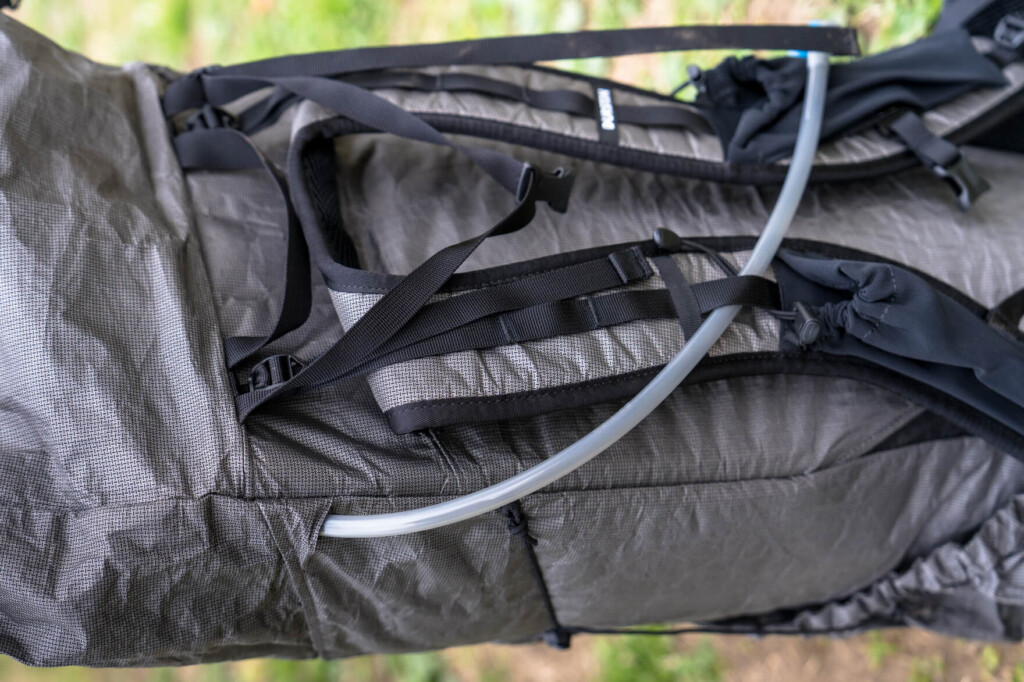
The Kakwa has a hole for the hydration tube to come out of the main compartment, and there is also a strap to secure the tube on the shoulder strap, so it is not a problem for basic use, but unfortunately there is no hydration sleeve inside (see photo below)
Summary: This bag combines top-class lightness and comfort, setting the standard for lightweight backpacks
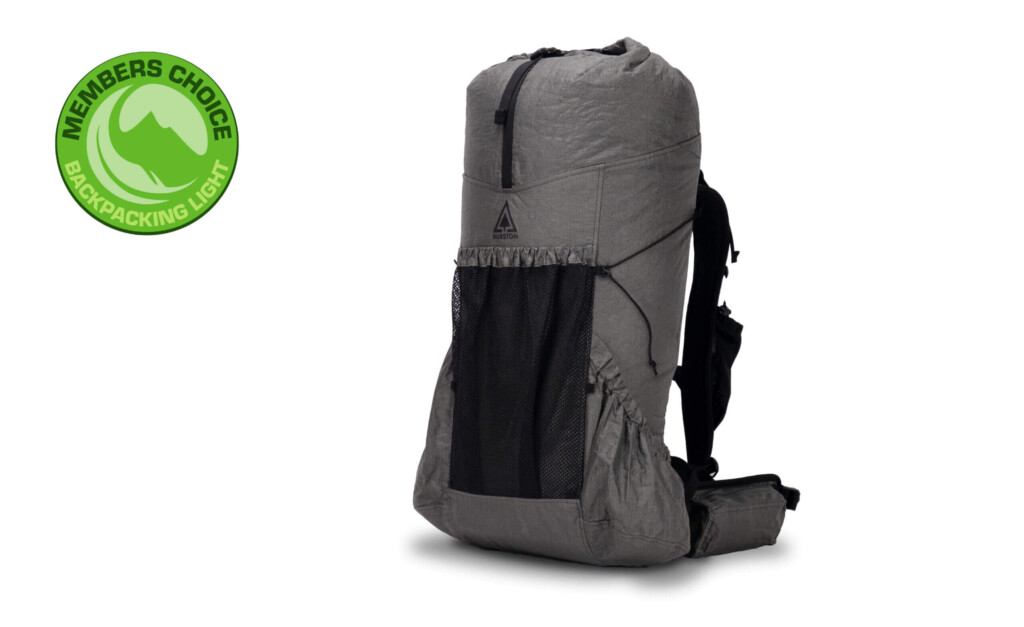
The Durston Gear Kakaku 40 which achieved top-class results in both lightness and comfort, was a high-quality, sophisticated ultralight backpack that perfectly met the recent demands of those who want something light but don't want to sacrifice other elements (durability, comfort, and convenience) as much as possible. This ultralight backpack, which is lightweight yet has the same durability and ease of use as a typical mountaineering backpack, is at the forefront of ultralight backpacks and has the potential to be embraced by a wide range of hikers, from serious UL hikers to UL beginners who want to try a backpack made from ultralight materials.
The new world that Kakwa has shown us is one in which, by adding just a few hundred grams to the weight of an extremely lightweight frameless backpack, you can achieve the comfort of a classic hiking backpack (and, best of all, at a very reasonable price). This is groundbreaking, and it's no exaggeration to say that with the arrival of this backpack, ultralight backpacks have entered a new era that was previously uncharted. The boundaries between ultralight and traditional hiking are gradually disappearing, and the distinction is becoming increasingly unnecessary. Why not try out this backpack, which will inspire you with a new and inspiring experience that gives you a glimpse of this future?
Please consider a paid membership to support the website while enjoying exclusive articles and events!
Related reading
 [Unbiased, Self-Funded Review] The Durston Wapta 30: Overturning the stereotypes of traditional frameless backpacks with its surprising lightness and comfort
 [Unbiased, Self-Funded Review] Durston X-Mid Pro 1: Five or More Reasons Why This Next-Generation Lightweight Tent (Shelter) Is So Revolutionary, It's Getting Praise Around the World
 [Unbiased, Self-Funded Review] DURSTON Iceline Trekking Poles: A revolutionary design you've never seen before. Ultra-lightweight, yet strong and durable, these cutting-edge trekking poles offer exceptional peace of mind
 [An honest, self-funded review] The Durston X-Dome 1+: I was completely impressed by its well-thought-out design. This freestanding double-wall tent is livable, portable, and weatherproof