Finetrack, a Kobe-based outdoor manufacturer, professes the motto "Players are creators" and is committed to Made in Japan products. Though a latecomer, its cutting-edge and innovative technology and products have consistently garnered attention in the outdoor industry. This is driven by the experience and ideas gained through the staff's personal field visits and activities. "Only those who truly enjoy outdoor activities can create true outdoor wear and gear." While a manufacturer, the company continues to create products from the user's perspective, advocating an innovative 5-layering system and continuing to develop functional clothing for a variety of activities. Finetrack has also long been renowned for its tents, and two years ago, it finally released the "Kamina Dome" mountain tent, attracting the attention of many climbers. What kind of mountain tent is Finetrack, whose staff develops and creates products based on what they truly want? A year and a half after purchase, we review our impressions of using the tent and its future potential
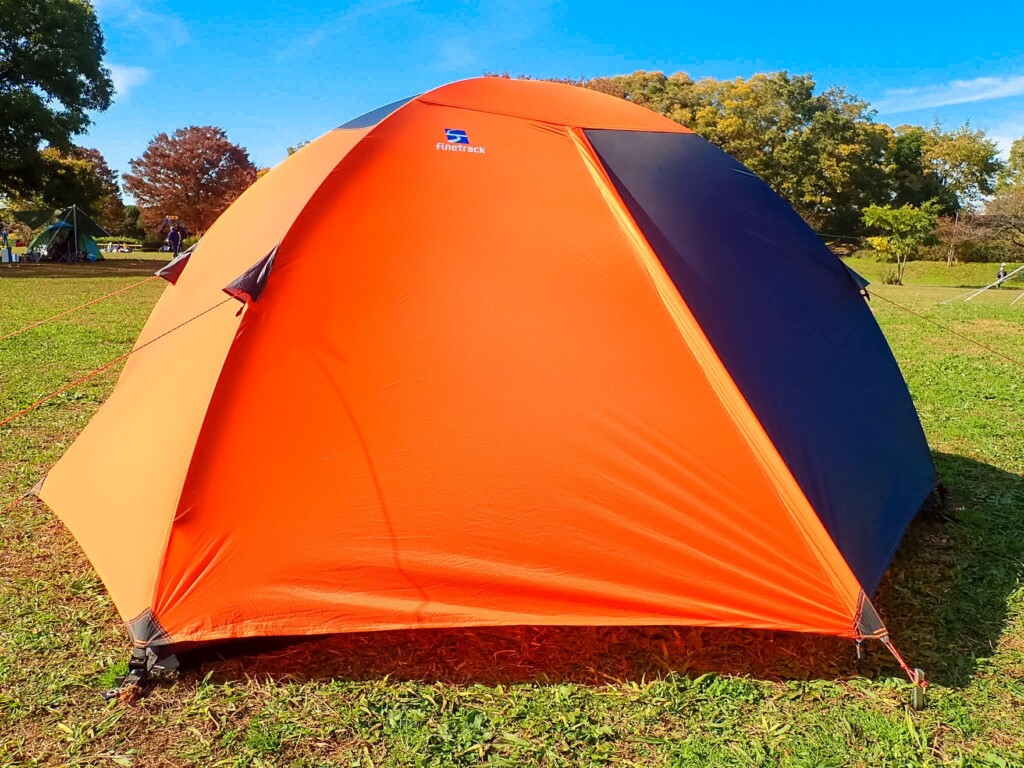
table of contents
table of contents
- Finetrack Kamina Dome 2's main features
- Main specifications and evaluation
- Detailed Review
- Try it out
- summary
Finetrack Kamina Dome 2's main features
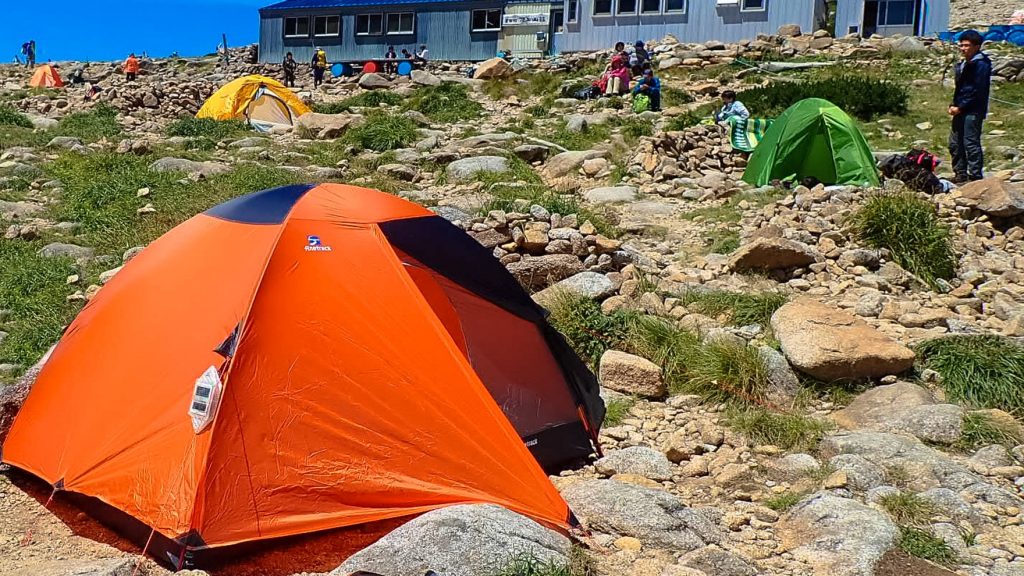
The lightweight Kamina Dome uses ultra-fine fibers to achieve a lightweight design, while simultaneously achieving strength and durability, which are normally trade-offs. It also offers a spacious, comfortable living space and compactness, resulting in a full-spec specification without compromise. This four-season tent was created to fulfill the desire for a tent that could be used to its full potential in Japan's mountainous environments, and can be combined with a wide range of optional items to enable use in winter. In addition to the two-person Kamina Dome 2, the lineup also includes the Kamina Dome 1 (single-person) and the Kamina Dome 4 (four-person)
What's great about this
- Exceptionally light for a freestanding double-walled frame
- Wide range of options available for use in winter
- Easy-to-pack storage shape
- Ease of obtaining repair parts
This is what I'm curious about
- The centrally located entrance makes it difficult to enter and exit
- price
Main specifications and evaluation
| item | Specifications and reviews |
|---|---|
| Number of people sleeping | 2 people |
| color | Orange/Gray |
| official weight | 1,280g (1,430g including guy lines, pegs and storage bag) |
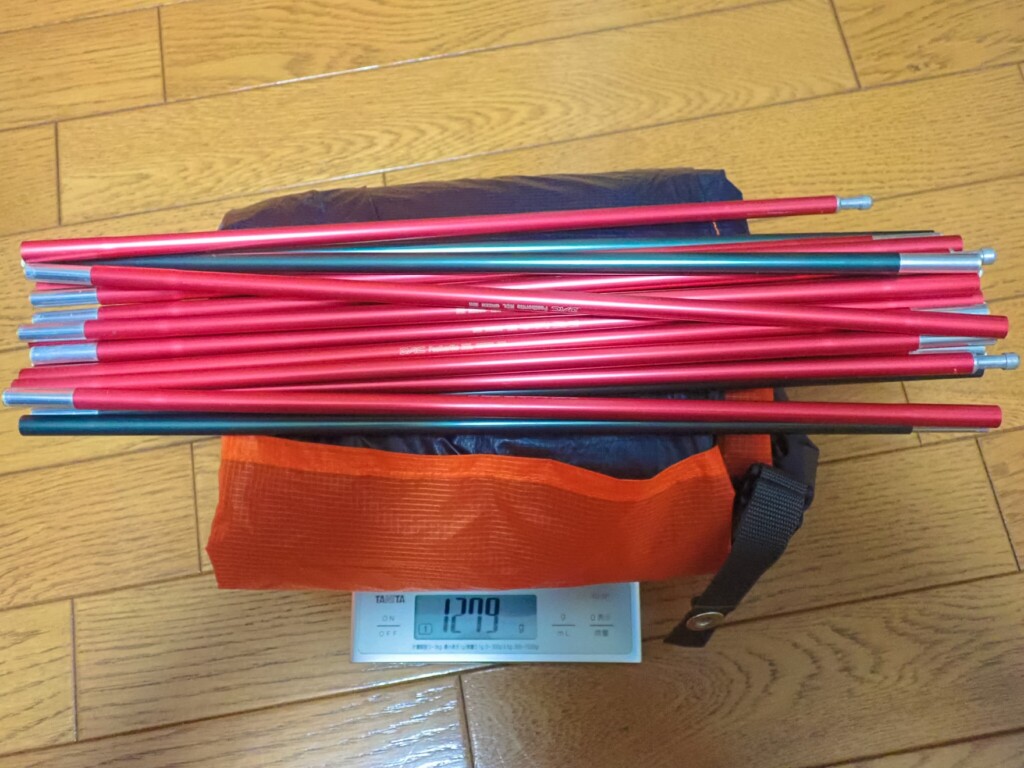
| Actual weight | 1,279g (1,438g including guy lines, pegs and storage bag) |
| Fly material | 15 denier nylon 66 ripstop |
| Inner material | 7 denier nylon 66 ripstop |
| Inner bottom material | 30 denier nylon 66 ripstop |
| Pole material | Aluminum alloy (super duralumin) |
| size | Width 212 x Depth 130 x Height 105 cm |
| Storage size | Body: 8 x 17 x 27 cm, pole: 39 cm |
| Floor area | 2.76㎡ |
| Front chamber area | 0.64㎡ |
| Water pressure resistance | ・Outer: 1,600mm (initial value) ・Inner: 1,800mm (initial value) |
| accessories |
|
| option |
|
| Living Comfort | ★★★★☆ |
| Ease of setup and takedown | ★★★★☆ |
| weather resistance | ★★★★☆ |
| durability | ★★★☆☆ |
| weight | ★★★★★ |
| Portability | ★★★★☆ |
| Versatility | ★★★☆☆*Depending on the combination with optional items |
| comprehensive evaluation | ★★★★☆ |
Detailed Review
Storage size
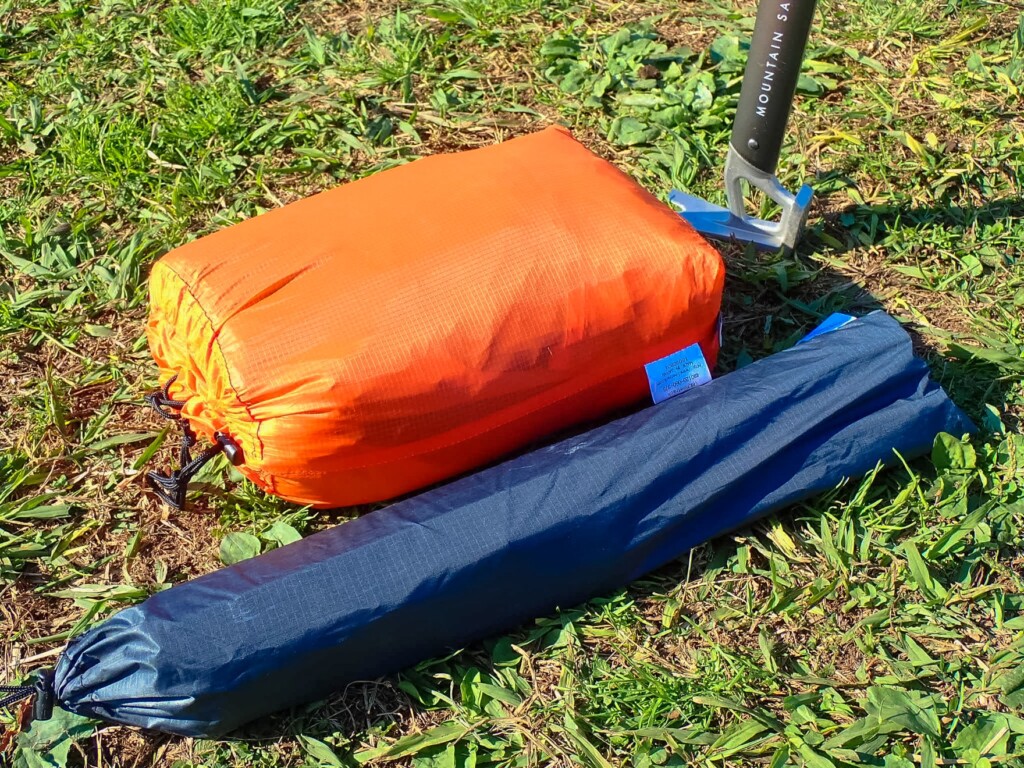
Storage is divided into two parts: the tent and the poles. There is also a small storage bag containing pegs and repair sleeves, but these can be stored together in the pole storage bag. The tent storage bag is also slightly roomy, and I store the optional footprint (ground sheet) and optional loft there as well. Thanks to this spacious size, you can store the tent without folding it, just by pushing it in casually, even in situations where you want to pack down quickly, such as in bad weather. The tent's storage shape is rectangular rather than cylindrical, and I also like the space-saving design that prevents dead space from forming inside the backpack
weight
Weight is an important factor when choosing a mountain tent. The Kamina Dome boasts the highest level of lightness, but we compared its weight with other companies' products in the same class (double wall, 2-person). *The figures are official weights
| Weight (tent, poles, fly) | Total weight (main body + pegs, guy ropes, storage bag) | |
|---|---|---|
| fintrack Kamina Dome | 1,280g | 1,430g |
| Mont-bell Stellaridge 2 | 1,410g | 1,610g |
| Arai Tent Air Rise 2 | 1,360g | 1,580g |
The comparison targets were Montbell's Stellaridge and Arai Tent's Airrise. These two are likely the two most commonly cited when purchasing a Kaminadome, but the Kaminadome proved to be the lightest in terms of both weight and total weight, including pegs and guy lines. While the Kaminadome comes with eight pegs, the Stellaridge and Airrise both come with 12. Even if you add the weight of four pegs (4 pegs x 11g) to the total weight of the Kaminadome, the results remain the same. Even so, its lightness, just under 1,500g, is astonishing. The actual weight of the unit itself was just 1,279g, slightly lighter than the advertised weight. The total weight, including pegs, guy lines, and storage bag, was 1,438g (1,449g including the included 11g repair sleeve). While slightly heavier than the advertised weight, this slight discrepancy is within acceptable limits
Setup
The setup is the same as for a typical freestanding mountain tent: the two poles are passed crosswise through the sleeves of the inner tent, set up, then the fly sheet is placed over it and the guy lines are installed
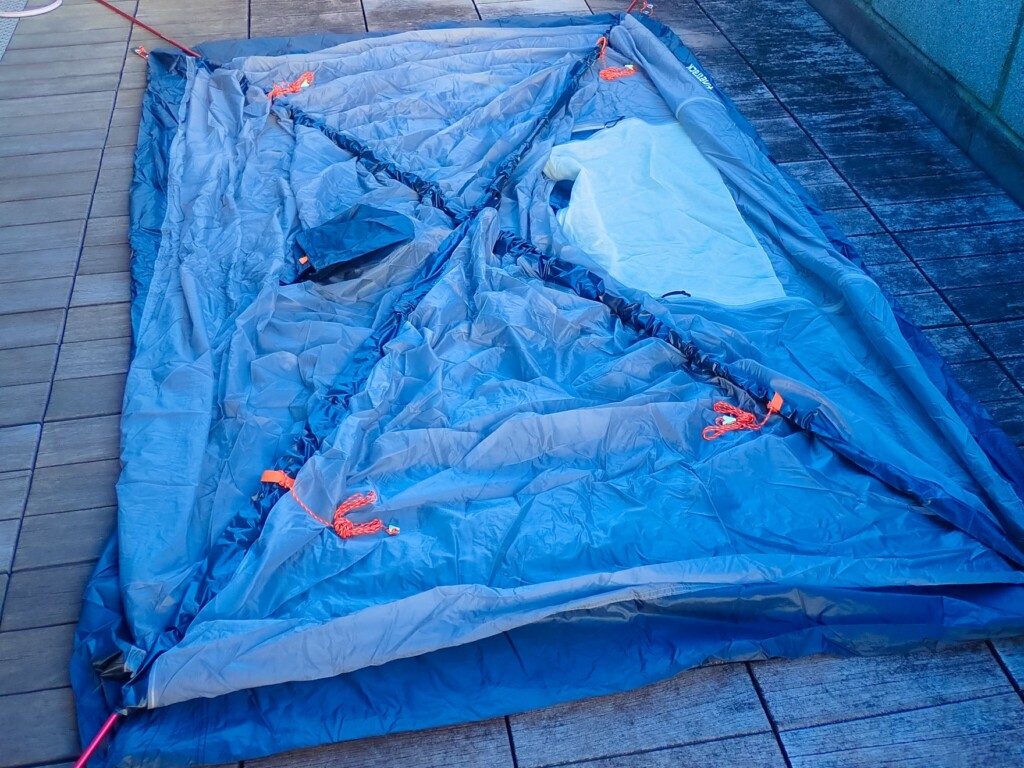
Montbell's Stellaridge and Arai Tent's Airrise, which are synonymous with mountain tents, have a bag-shaped sleeve at the end of one side, simplifying setup and reducing setup time, but the Kamina Dome has grommets on both sides for the poles to be inserted and secured in place. This sleeve shape and setup method are probably a matter of personal preference, but when I first bought the Kamina Dome, there were several times when the pole would come out of the grommet, requiring me to turn it around to the other side and re-secure it... This is just my personal speculation, but I think the simplified structure prevents wear and deterioration between parts and makes repairs easier
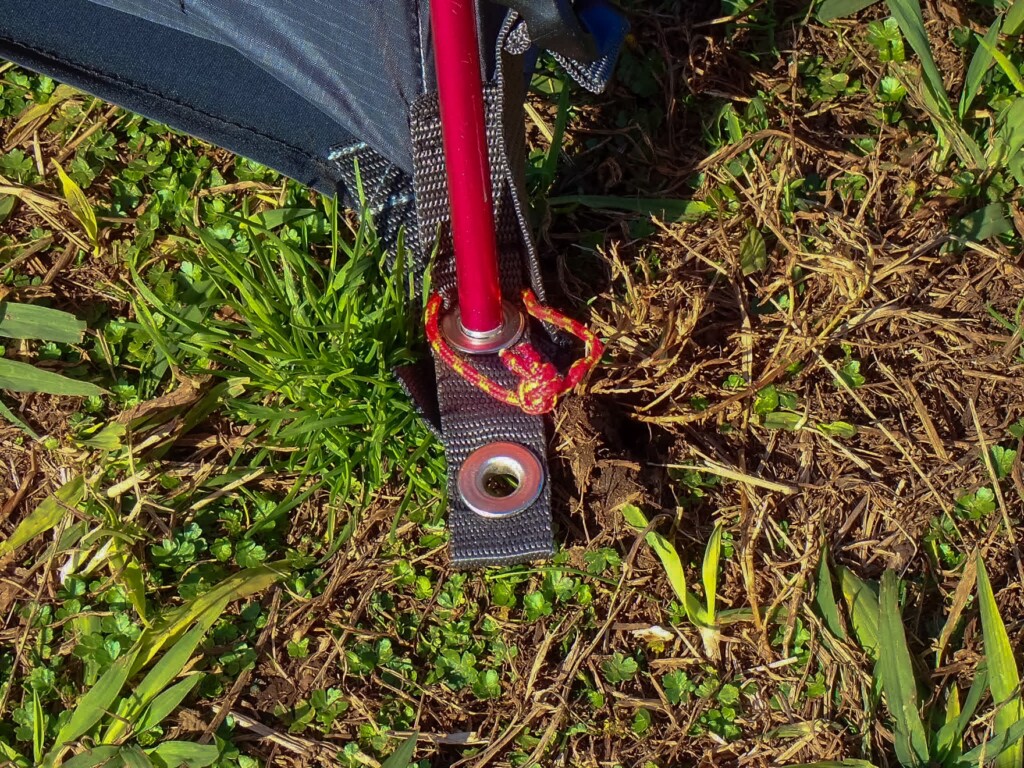
The flysheet is connected to the poles via grommets located at the four corners. The optional footprint (groundsheet) is also connected in the same way. The guylines are attached to the pole sleeves of the inner tent, not the flysheet, and are threaded through holes in the flysheet and pegged down
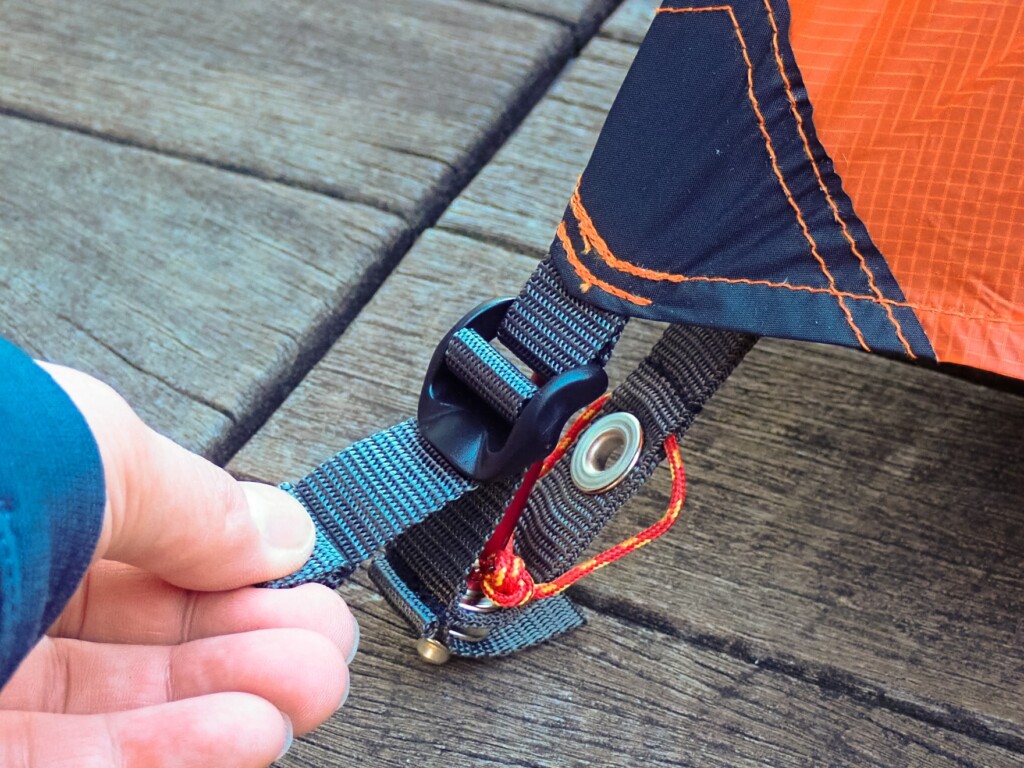
The fly sheet has an adjuster so you can adjust the tension of the fly sheet. As someone who likes to pitch my tent neatly (and look good), I like the idea of being able to make these fine adjustments
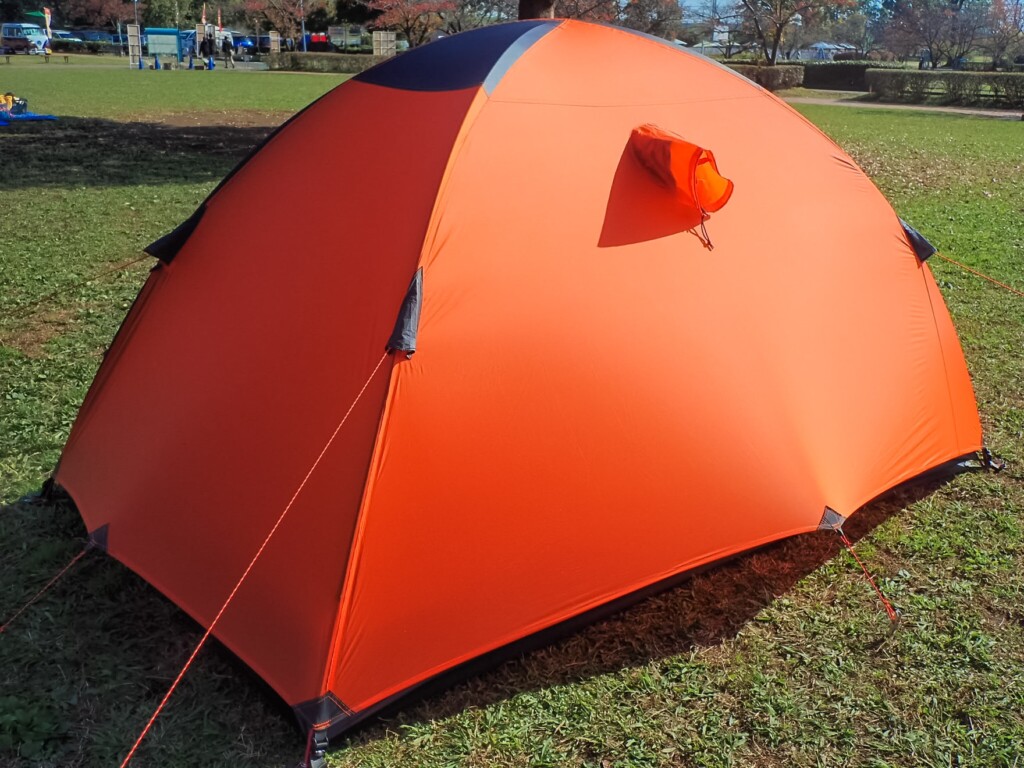
Main unit
Those who pick up this tent for the first time may be surprised by how thin the fabric is. The inner tent is made of 7 denier (30 denier at the bottom) and the flysheet is made of 15 denier, both extremely thin fabrics. The inner tent in particular is so thin that if the weather is good, the inside of the tent can be slightly visible (lol). This ultra-thin fabric not only makes it lightweight, but it is also flexible and easy to fold up, which seems to contribute to its storage capacity
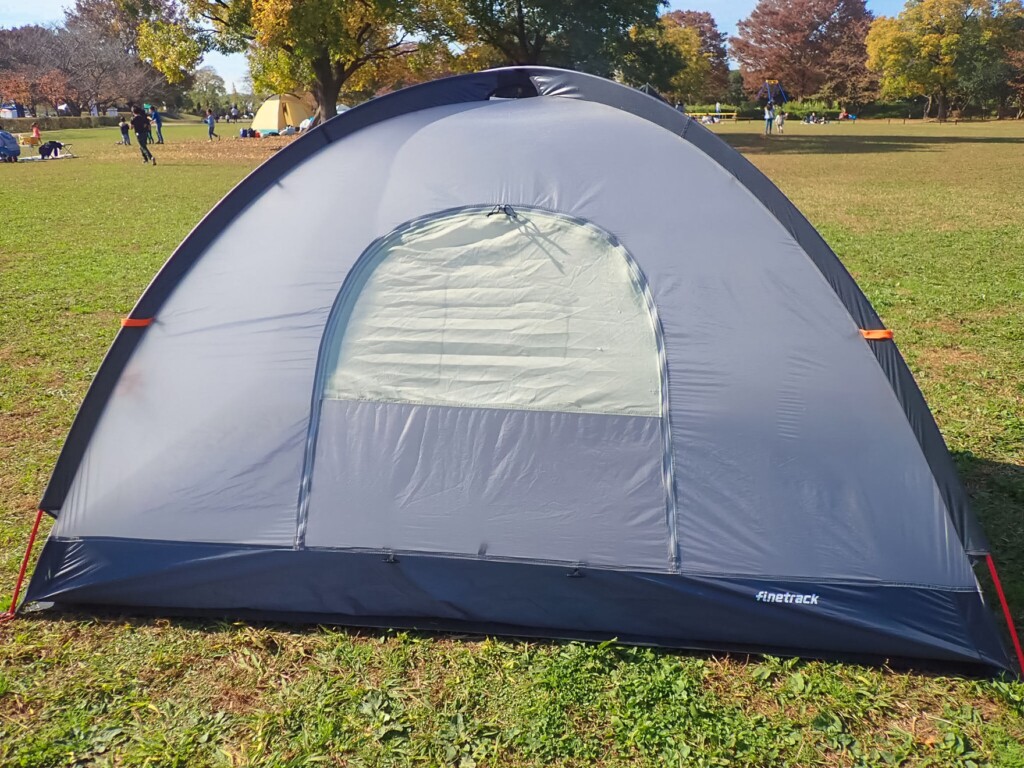
Now, when using ultra-thin fabric, durability is a concern. Both the inner tent and fly sheet are ripstop processed with reinforcing thread (inner: 30 denier, fly: 40 denier), improving durability against rips and tears. In addition, areas subject to stress (tension) from the bending of the poles are reinforced from the inside with Dyneema tape, which appears to increase structural strength. The guy lines are also attached to the pole sleeves rather than the fly sheet, so wind resistance is not a concern

The ventilation is double-layered with mesh. The mesh helps prevent pesky insects from getting in, but because it's a simple design that requires tightening and tying a string to secure it, I modified it to a one-touch system using my own cord lock
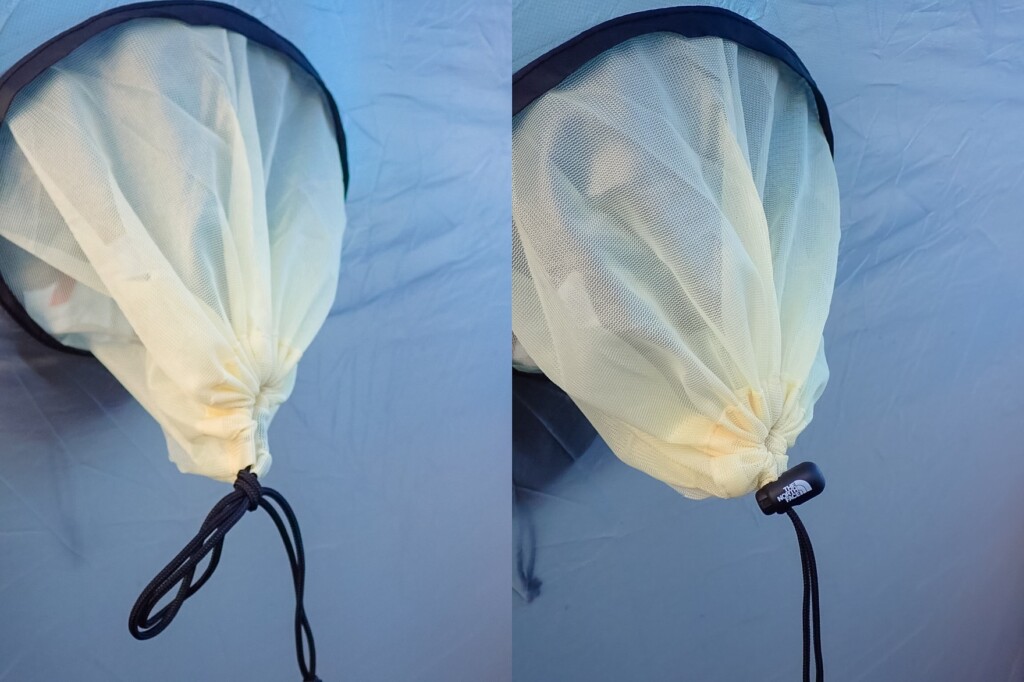
In addition, this ventilation can be connected to the ventilation on the fly sheet side with snap buttons, allowing for effective ventilation and ventilation by maintaining its shape

The entrance is located in the center of the long side and has a convenient double slide zipper, which can be switched to mesh by operating a separate zipper from the opening and closing zipper. This improves ventilation, making it comfortable even in the summer and is also useful for ventilation
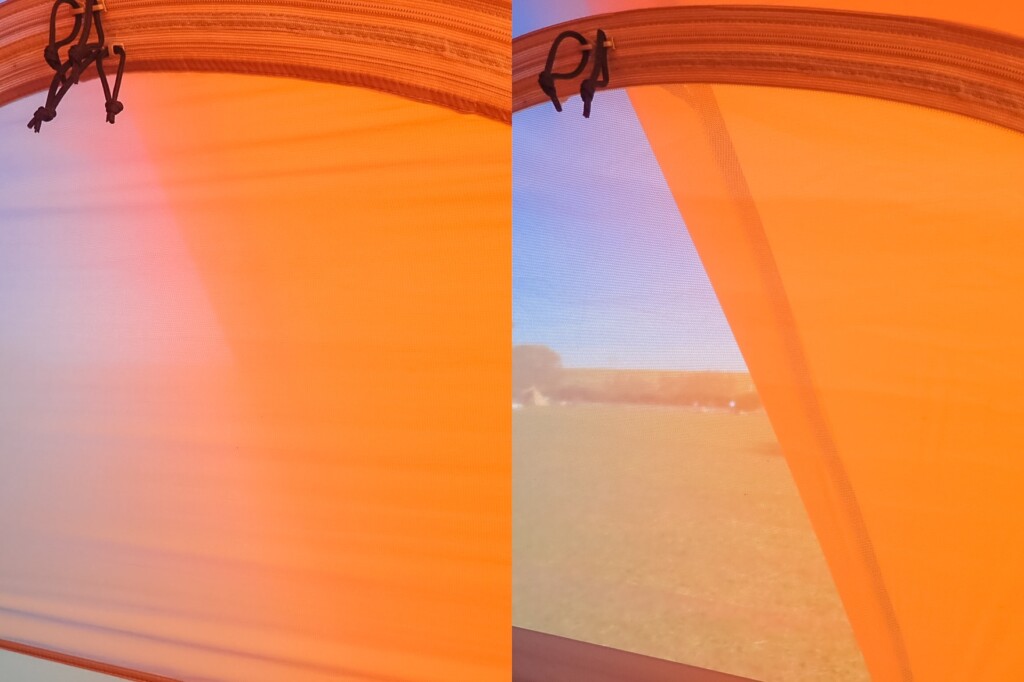
The flysheet uses a freeze-resistant Vislon zipper, which also has a double zipper. When entering or exiting the tent, you slide the lower slider up, but by sliding the upper slider down, you can ventilate the vestibule when cooking, or you can pop your head out to check what's going on outside without fully opening the zipper
The poles are made of aluminum alloy (extra super duralumin), which is both lightweight and strong. They are manufactured by DAC, a global pole manufacturer and the parent company of Helinox, which develops outdoor chairs and cots. Their reliability is evident from their use by many manufacturers both in Japan and overseas, including Montbell, Arai Tent, Nemo, Hilleberg, and Coleman
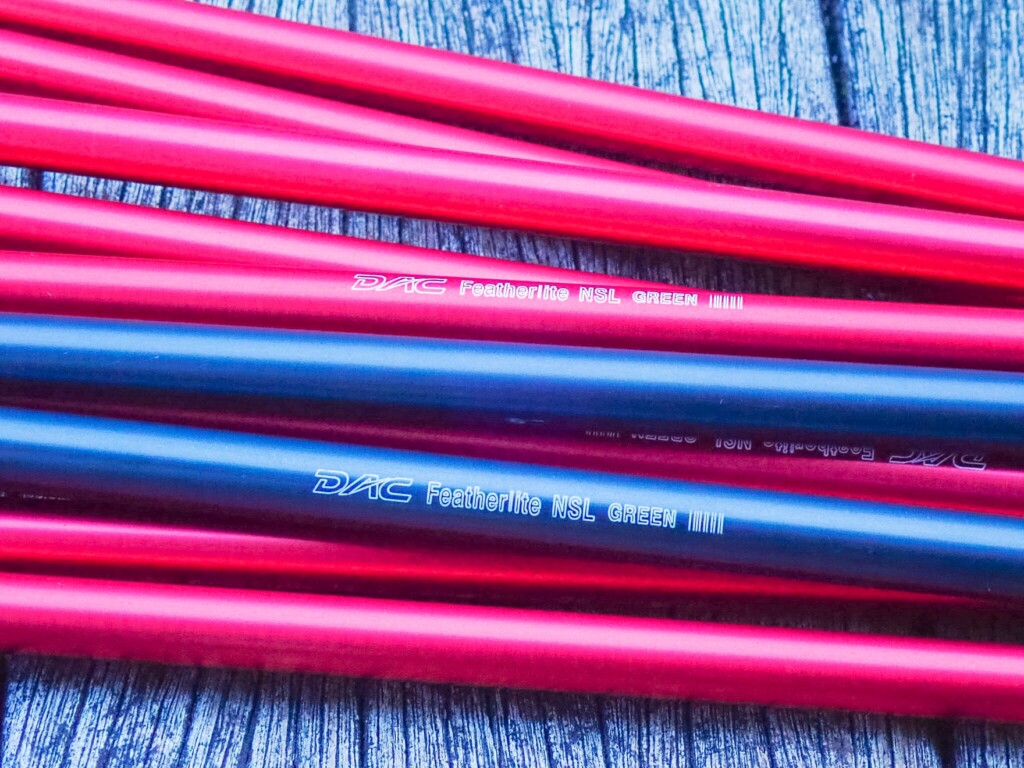
The tuning pegs are also made by DAC, the same company that makes the poles, but they are made of "TH72M," an aluminum alloy mixed with titanium and copper, and weigh just 11g each. Not only are they light, but they are also strong, and like the poles, they are used by a variety of manufacturers
Inside the tent
The interior is a standard two-person size, just like other tents. It's not particularly spacious. The walls are angled higher thanks to the use of poles with different rigidity, and the overhead area is advertised as being 1.4 times larger than a typical mountain tent, but to be honest, I didn't feel that much
Inside the tent there are loops for attaching a winter liner (optional) and an optional loft (optional) for storing small items
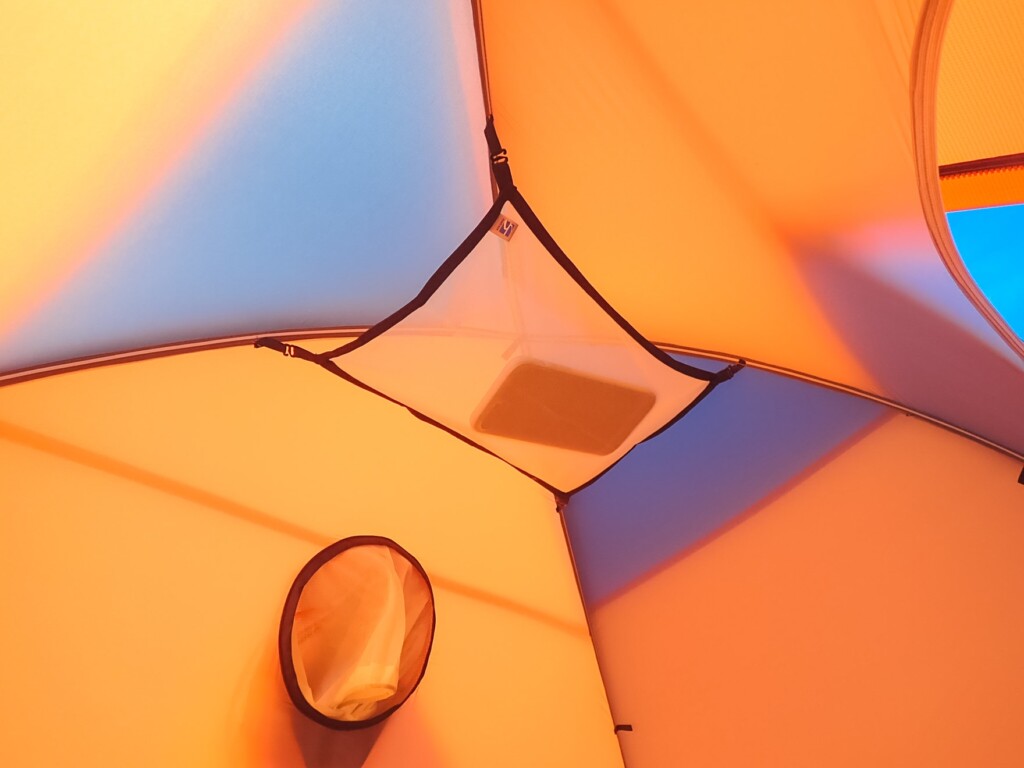
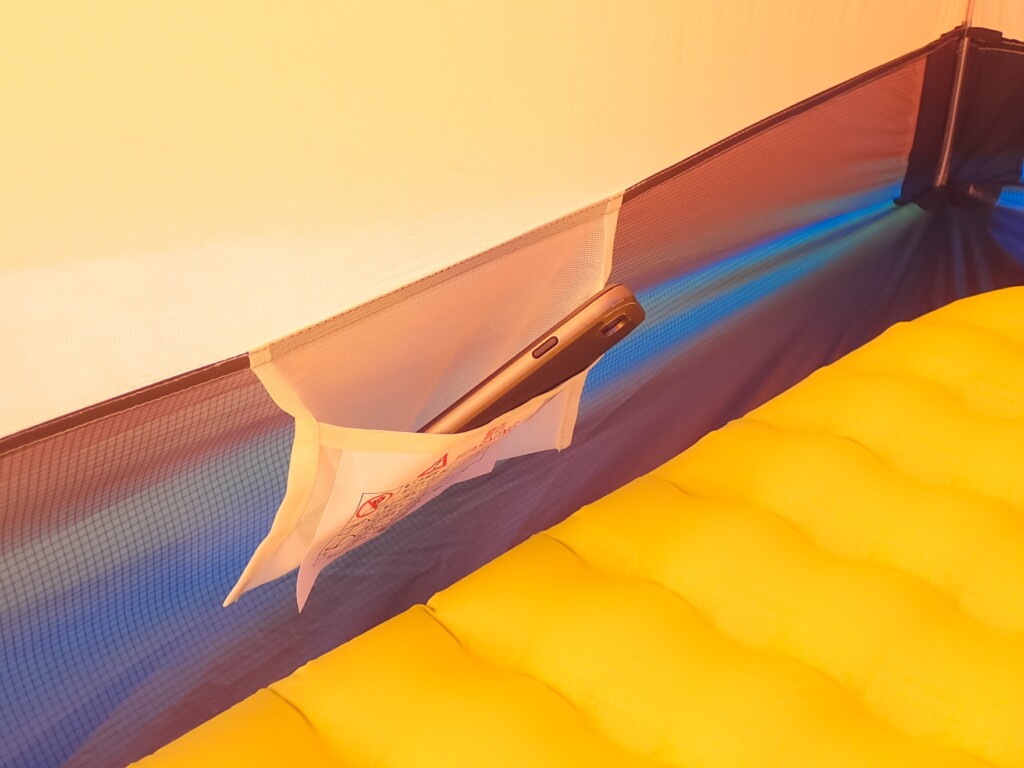
Although it's not its intended use, you can also hang a towel or a Sierra cup by passing a thin cord (guy rope) through the loop. There is also a pocket for storing small items, so it might be a good idea to store a smartphone or other small items that are easy to lose
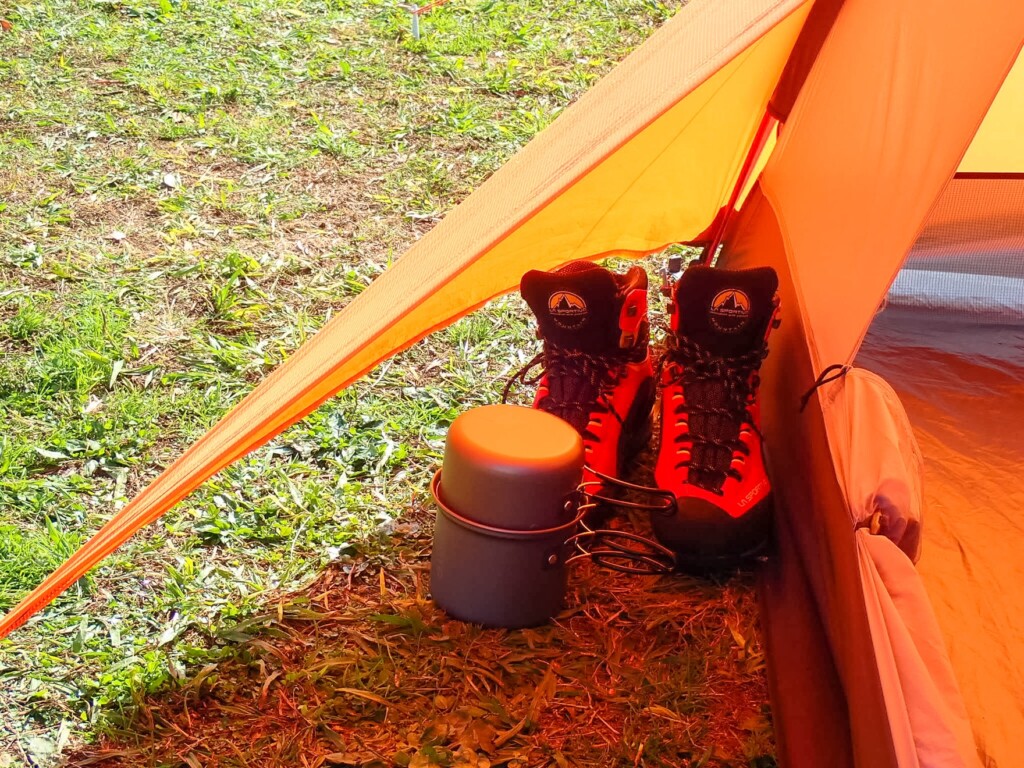
The size of the vestibule is average, neither too large nor too small, compared to other tents with entrances on the long side. Two pairs of trekking boots can be easily stored there, and it can also be used effectively as a place to store cooking equipment such as a burner and cooker
Actual impressions after using it
I have used it for three seasons except winter, under various conditions (mountain, weather). When I first bought it, I was very careful when using it because the fabric was thin, but as I continued to use it without any holes, my concerns about its strength and durability gradually turned to trust
I don't know about the strength of the tent, but I could feel the resilience and strength of the fabric when I pushed the set-up tent down with my hand. As I mentioned earlier, it is a bit more difficult to set up than the Montbell Stella Ridge, but it's not so much of a concern unless it's bad weather, and I personally think that it's a result of prioritizing the prevention of deterioration of parts and ease of repair, so I'm happy with the specifications
The entrance is located in the center of the long side, which makes it easier to enter and exit than tents that are located on the short side, but the downside is that when one side of the flysheet is open, you have to enter and exit from an angle relative to the entrance. However, by placing it in the center, it is easier to reach the spaces on both sides of the vestibule, and considering the clearance when closing the flysheet and using the burner in the vestibule in rainy weather, I felt that it was easier to use if it was located in the center

Although it does not have any revolutionary or surprising features, I feel that it is an overall excellent tent because it meets the requirements for a mountain tent, such as lightness, livability, comfort, storage, and durability, at a certain level or higher
Another appealing feature of this tent is the wide range of options and repair parts available, easily purchased from the online store. It's rare to find a manufacturer with such a wide lineup, including a storage bag, repair sleeves, poles, and end tips. By combining it with the winter options, the Snow Fly and Winter Liner (EXP), it becomes possible to camp in a tent all year round, but I haven't yet implemented them. Purchasing the winter options would easily cost more than the tent itself, and as a humble office worker, I don't have the courage or financial resources to do so (lol). I'd like to review this tent once I'm able to, although I'm not sure when that will be. Unlike popular and classic tents like Montbell's Stellaridge, there are only one or two tents at a time at actual campsites, so it's important to remember that you won't lose your own tent (lol)
Summary: Recommended for these people
Because it's a standard tent with no quirks, it's an item that can be recommended to a wide range of people, from those who are thinking about trying tent camping for the first time to those who have some experience camping in a tent and are considering replacing their current one. However, because it's a standard tent, it doesn't have any innovative features, so don't expect too much. In terms of price, it's a little more expensive than other products in the same class (double wall, two-person) from other companies, which may be a problem for those who only camp in tents during limited seasons. However, it's an ideal item for those who want to try camping in a tent in the winter by combining a wide range of options, or who want to use one tent in multiple seasons





Related reading