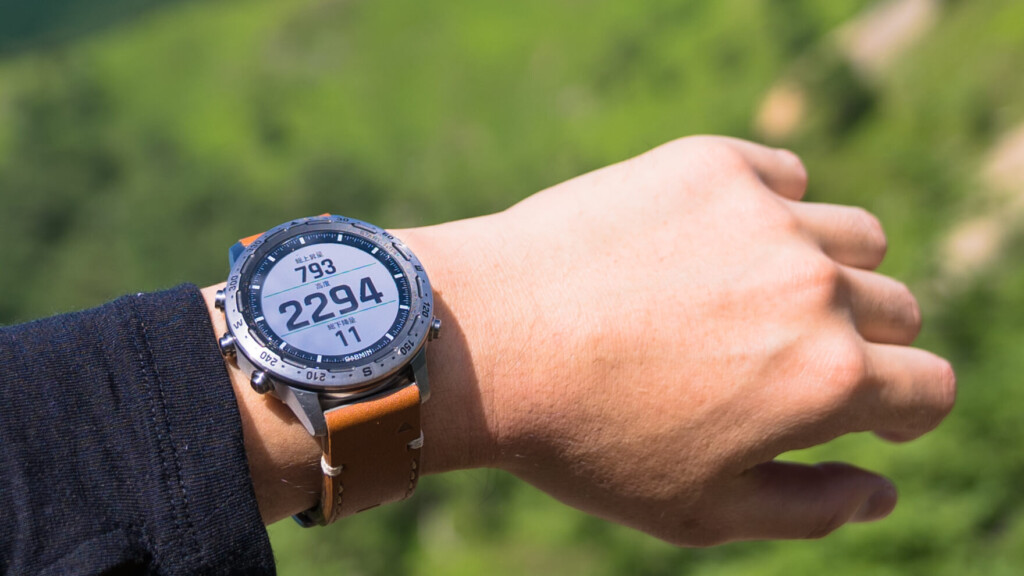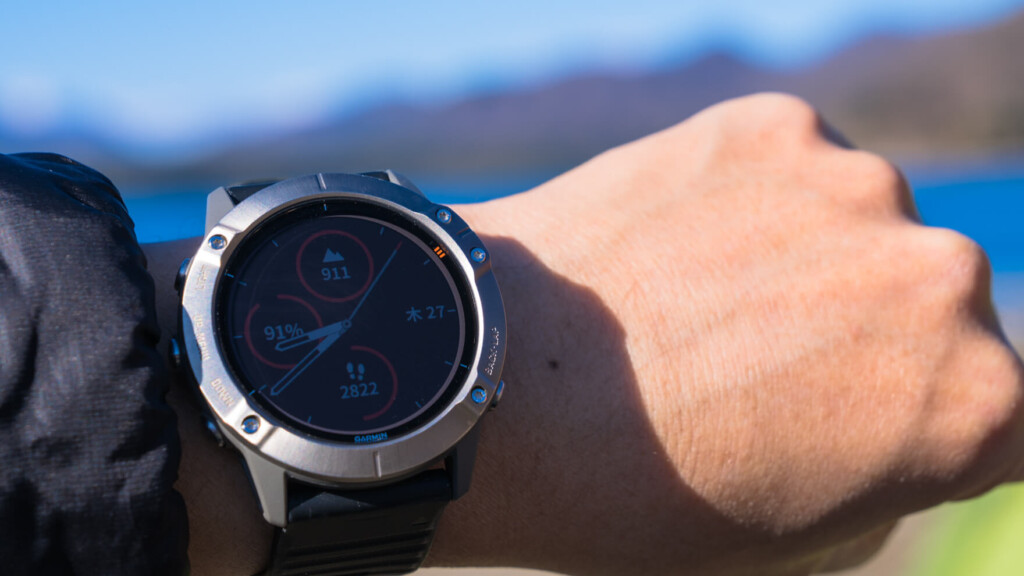
It's been just over three months since I bought the Garmin fenix 6X Pro Dual Power , an outdoor smartwatch with ample performance for avid athletes and a full range of features for enjoying a variety of activities
The Fenix 6 series is Garmin 's flagship smartwatch, and the Fenix 5 Plus . This latest model boasts several welcome improvements, including a slimmer and lighter body, longer and more efficiently managed battery life, and a refined interface. Above all, it's also a memorable model, marking the first time that the company's smartwatches feature solar charging. Perhaps it's finally time to say goodbye to the battery life issues that have long plagued smartwatches. I couldn't contain my excitement when I got my hands on one.
This time, I would like to Garmin 's latest and greatest outdoor smartwatch, based on my experience the Fenix , Suunto 9, Suunto Ambit , CASIO WSD-F30.I would like to report on what this watch can do and how it actually feels to use.
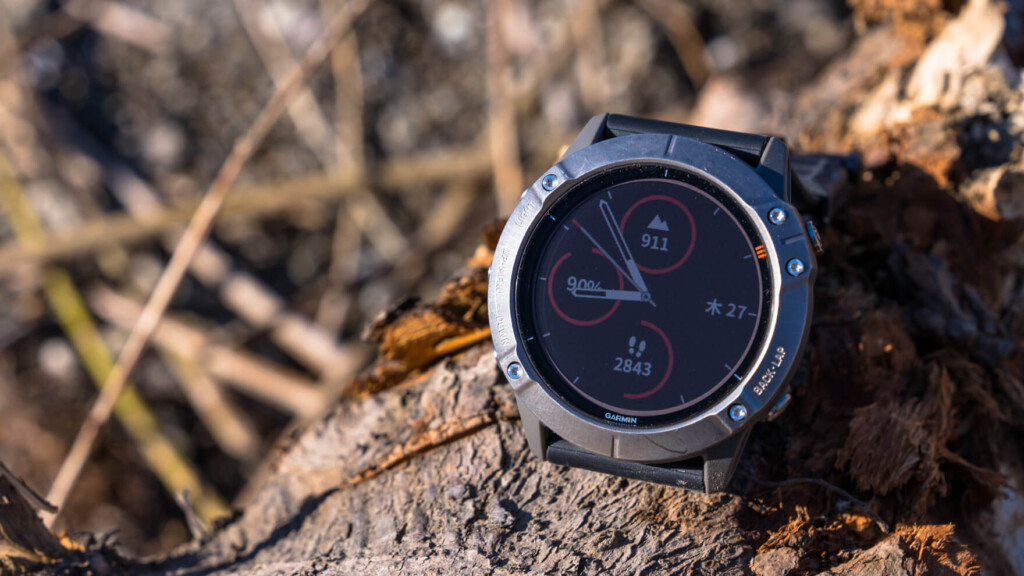

table of contents
The Fenix 6X Pro Dual Power has evolved from the Fenix 5x plus series
In Garmin's previous Fenix 5x Plus series, the changes from the previous model were limited to updates focused on smart features such as a music player, Garmin Pay, and preloaded maps across the entire lineup. On the other hand, the Fenix 6 series has seen gradual but significant improvements overall, including a lighter, more compact design, a larger screen (Fenix 6X Pro), and longer battery life
Changes from the Fenix 5x plus to the Fenix 6X Pro Dual Power (partial excerpt)
- Lighter (same titanium model: 88g → 82g)
- Thinner (17.5mm → 14.9mm)
- The bezel has been reduced, but the screen size has increased (1.2 inches in diameter, 240 x 240 pixels → 1.4 inches in diameter, 280 x 280 pixels)
- The lens material has been changed from sapphire to "Power Glass (material: Gorilla Glass)" (the 6X still uses the conventional sapphire lens). *This is more of a solar charging feature than an improvement
- Solar charging function added
- Battery life has been significantly increased, from a maximum of 30 hours with a standard GPS + optical heart rate monitor to 60 hours + solar charging
- New battery management features (allowing you to customize which features you turn on and off to achieve your preferred battery life balance)
- New Expedition mode (disables all features except reduced-rate GPS tracking, allowing tracking for up to 36 days)
- Added ultra-saving battery mode (providing up to 80 days of battery life with just basic clock functions)
- New PacePro function (pre-calculates your pace development for your target time, allowing you to check your progress during the actual race)
- Built-in memory has doubled to 32 GB (storing up to 2,000 music titles instead of 500)
- Added map display themes (high contrast, popular, dark)
- The widget display interface can now display three widgets at once
It may not look like much has changed, but there are actually a few changes, including: Personally, the hardware has become more compact and the screen has become larger, and above all, the battery life has been significantly improved, which I welcome more than anything else
Comparison table between previous model and Fenix 6X Pro Dual Power
For reference, if we roughly compare the hardware specs with the Suunto 9 Baro, which is considered a competitor, the screen size and clarity are inferior (the Suunto 9 is a touchscreen), but it is a close match in terms of thinness and battery life. This depends on how you use it, so comparing only the maximum figures is not very meaningful, though
| Item Name | fēnix 5X Plus Sapphire Black | Fenix 6X Pro Dual Power Ti Black DLC | SUUNTO 9 BARO Black (reference) |
|---|---|---|---|
| Reference price (excluding tax) | 109,800 yen | 130,000 yen | 85,800 yen |
| weight | Sapphire Black: 96g (Sapphire Ti Black: 88g) |
82 g | 81 g |
| Body size | 51 x 51 x 17.5 mm | 51 x 51 x 14.9 mm | 50 x 50 x 16.8 mm |
| Screen size | 1.2 inch (30.5 mm) diameter | 1.4 inch (35.56 mm) diameter | |
| resolution | 240 x 240 pixels | 280 x 280 pixels | 320 x 300 pixels |
| Lens material | Sapphire Lens | Power Glass (Material: Gorilla Glass) | Sapphire crystal |
| Bezel Material | DLC stainless steel | Diamond-like carbon (DLC) coated titanium | Stainless steel |
| Case material | FRP | FRP | Glass fiber reinforced polyamide |
| Strap material | silicon | silicon | silicon |
| battery | Watch mode: Up to 18 days GPS + optical heart rate: Up to 30 hours GPS + music + optical heart rate: Up to 11 hours UltraTrac™ mode + optical heart rate: Up to 64 hours |
Smartwatch mode: Up to 24 days/week*1 GPS + optical heart rate monitor: Up to 60 hours + 6 hours*2 GPS + music playback: Up to 16 hours + 1 hour*2 UltraTrac mode: Up to 70 hours + 10 hours*2 Expedition mode: Up to 36 days + 6 days*2 Battery-saving watch mode: Up to 64 days + 26 days*2 |
In time mode: 14 days 24/7 Tracking and Mobile Notifications: 7 days Training mode with GPS: |
| Internal memory/history | 16GB | 32GB | - |
| Offline Color Map | Shobunsha Topographical and Road Maps | Shobunsha Topographical and Road Maps | - |
*1: When exposed to light of 50,000 lux for 3 hours outdoors every day for a week, it can be charged for a total of approximately 24 hours (smartwatch mode)
*2: When used under conditions of 50,000 lux
Which Fenix 6 Series Camera Should I Choose?
Before we get into the detailed review, let's take a look at some of the differences between the various Fenix 6 series models for those considering purchasing one
To make things more complicated, the number of models officially distributed in Japan is smaller than the lineup available overseas, so you need to be careful as the functionality is often not comparable to the Fenix 5 simply based on the name
Fenix 6 Series
This is the most basic model of the Fenix 6. The cheapest model lacks the music storage, preloaded topographic maps, and Wi-Fi connectivity features found on the Fenix 5 Plus. Lenses are available in Corning Gorilla Glass 3 and sapphire crystal, with the sapphire crystal model including music storage and Wi-Fi connectivity
Fenix 6S Series
It's slightly more compact, with a 42mm case, but with slightly shorter battery life than the Fenix 6. Again, the cheapest model doesn't offer music storage, preloaded topographic maps, or Wi-Fi connectivity, but you can choose between Corning Gorilla Glass 3 and sapphire crystal lenses. The sapphire crystal model does include music storage and Wi-Fi connectivity
Fenix 6X Series
This model, which has risen in price significantly, is a legitimate evolution of the Fenix 5 Plus, offering comprehensive upgrades. It also comes with music storage, offline topographical maps, and Wi-Fi connectivity. What sets it apart from the 6 and 6S is its significantly longer battery life and PacePro race strategy features
Fenix 6X Pro Dual Power Series
Finally, the most high-end model we'll be reviewing is the 6X Pro Dual Power, which combines an ultra-lightweight all-titanium body with solar charging functionality and the option to choose a titanium band

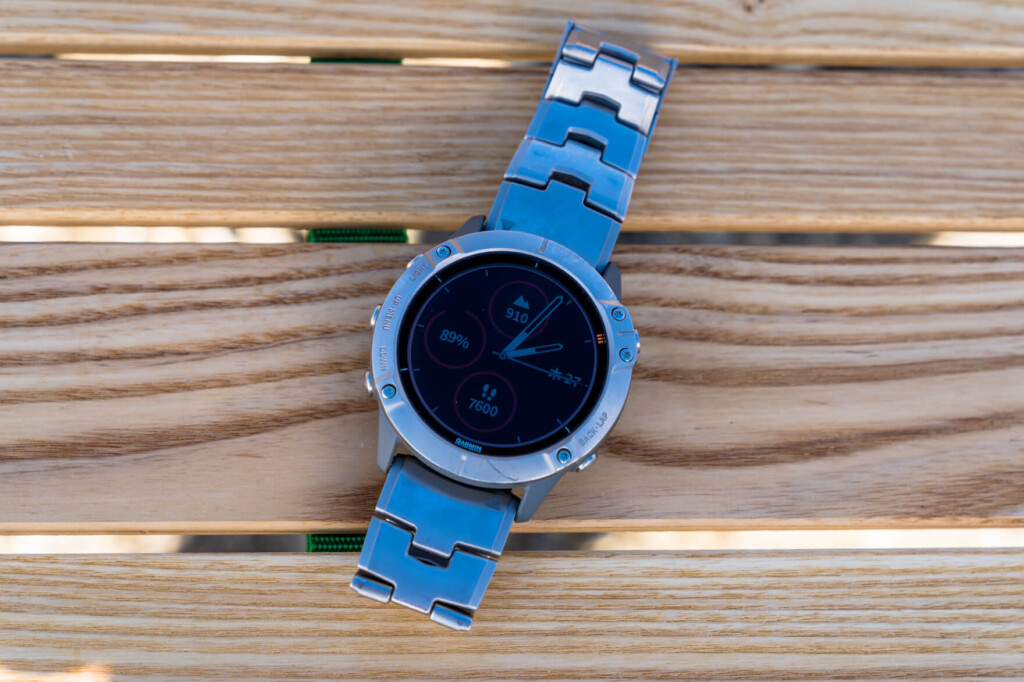
The high-end Fenix 6X Pro Dual Power model is available with a titanium band, making it a comfortable watch to wear in everyday business situations
| Item Name | Fenix 6 | Fenix 6S | Fenix 6X Sapphire | Fenix 6X Pro Dual Power |
|---|---|---|---|---|
| Base model reference price (excluding tax) | 70,000 yen | 65,000 yen | 110,000 yen | 130,000 yen |
| weight | 80g | 58 g | 93 g | 82 g |
| Body size | 47 x 47 x 14.7 mm | 42 x 42 x 13.8 mm | 51 x 51 x 14.9 mm | 51 x 51 x 14.9 mm |
| resolution | 260 x 260 pixels | 240 x 240 pixels | 280 x 280 pixels | 280 x 280 pixels |
| Bezel Material | Stainless steel | Stainless steel | Diamond-like carbon (DLC) coated stainless steel | Diamond-like carbon (DLC) coated titanium |
| battery | Smartwatch mode: Up to 13 days GPS + Wrist Heart Rate: Up to 36 hours UltraTrac mode: Up to 42 hours Expedition mode: Up to 22 days Battery Saver watch mode: Up to 38 days |
Smartwatch mode: Up to 9 days GPS + Wrist Heart Rate: Up to 25 hours UltraTrac mode: Up to 30 hours Expedition mode: Up to 16 days Battery Saver watch mode: Up to 27 days |
Smartwatch mode: Up to 21 days |
Smartwatch mode: Up to 24 days/week1 |
| Internal memory/history | 64 MB | 64 MB | 32 GB | 32 GB |
| Preloaded topographic maps | - | - | Shobunsha Topographical and Road Maps | Shobunsha Topographical and Road Maps |
| Music Storage | * Models with sapphire crystal lenses come with up to 2,000 songs | * Models with sapphire crystal lenses come with up to 2,000 songs | Up to 2000 songs | Up to 2000 songs |
| Wi-Fi connection function | *Included with models equipped with sapphire crystal lenses | *Included with models equipped with sapphire crystal lenses | can be | can be |
| PacePro function | - | - | can be | can be |
| Solar charging | - | - | - | can be |
Looking at it this way, if you prioritize lightness, compactness, and a reasonable price, the 6 or 6S are the way to go, but they're significantly inferior in terms of functionality and durability. Even in the Fenix 6 series, the lowest-end models have lower performance in terms of hardware, such as lenses, and some people might think that the company's ForeAthlete 945, which comes with offline maps and music storage, is a better value in terms of functionality in the same price range. Honestly, if you're primarily into road-based sports and exercise like running and triathlons and are concerned about cost-effectiveness, I'd probably recommend the ForeAthlete over the Fenix series
On the other hand, if you enjoy a variety of sports and outdoor activities and want to use it heavily in races, you will need to be prepared to spend a considerable amount, but unless you choose a model with sufficient hardware and features such as the 6X or 6X Pro Dual Power, you will not be able to fully experience the benefits of the Fenix 6
First impressions (design and interface)
Now, let's finally move on to the review of the Fenix 6X Pro Dual Power
Appearance: Follows the previous model
The look is essentially the same as the Fenix 5 Plus. The back of the plastic case is covered with a metal plate and is framed by a titanium bezel with a more durable DLC coating. The overall diameter of the watch remains the same, but the narrower bezel allows for a larger display area
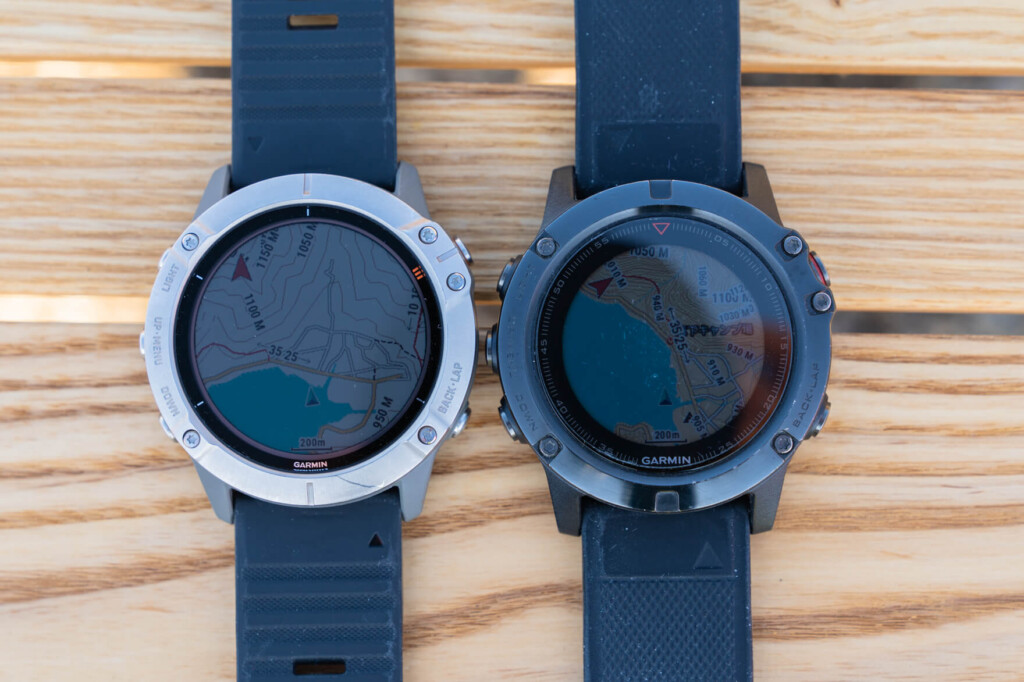
Comparing the screens of the Fenix 6 Pro Dual Power (left) and Fenix 5x (right), it's clear that the thinner bezels mean the larger screen display area
Furthermore, (despite the extended battery life) the thickness of the device has been slightly reduced from 17.5 mm to 14.9 mm, which is especially pleasing for me as I find it extremely frustrating when the device gets caught on something when wearing a backpack
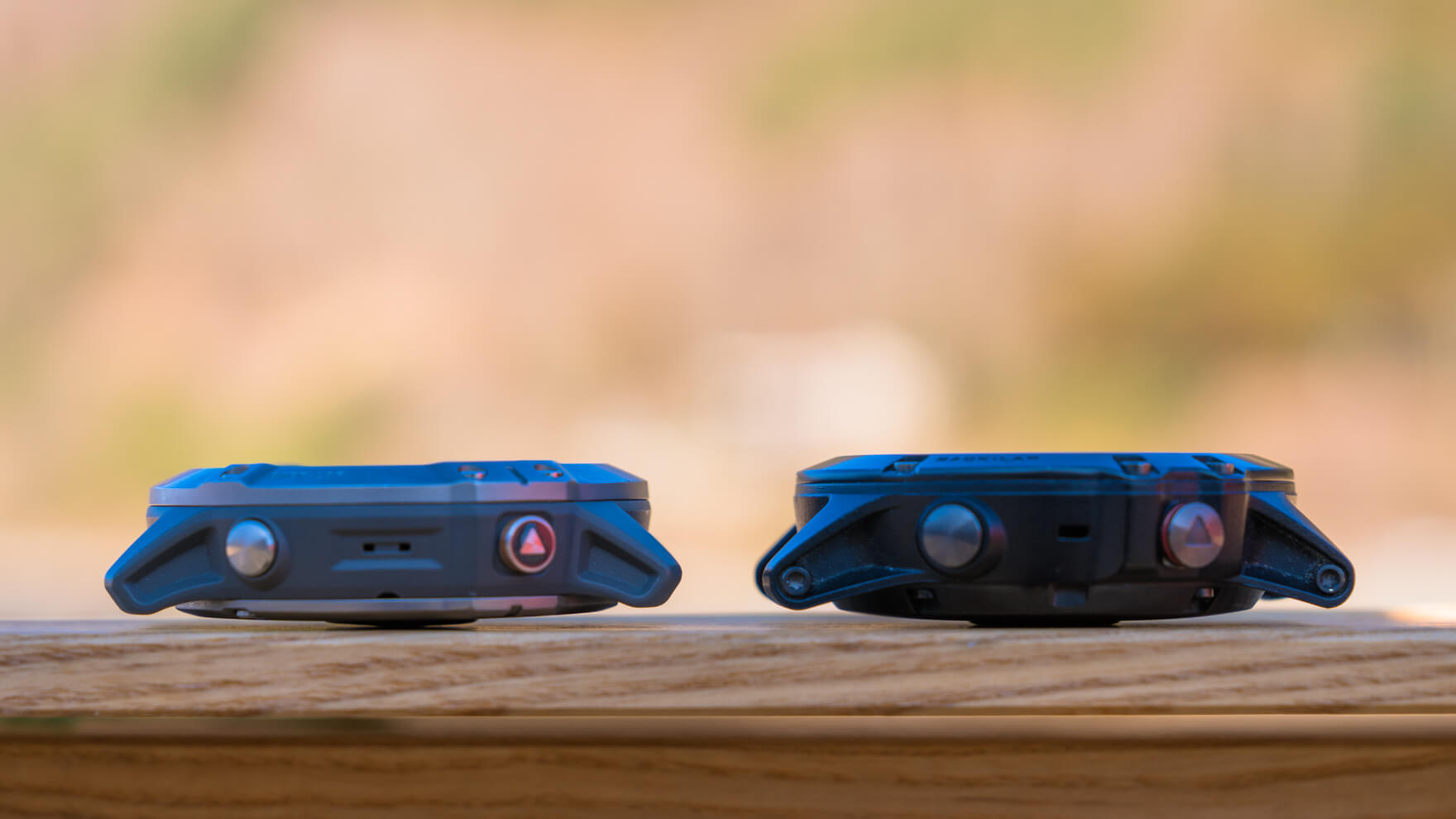
It may be difficult to see, but the bottom bulge on the Fenix 6 Pro Dual Power (left) is slightly thinner
The band is compatible with the familiar QuickFit® watch band, so you can easily change it to suit your preferences. Personally, I use the DLC titanium band for everyday wear and the silicone strap for training or in the field, which perfectly meets my daily needs
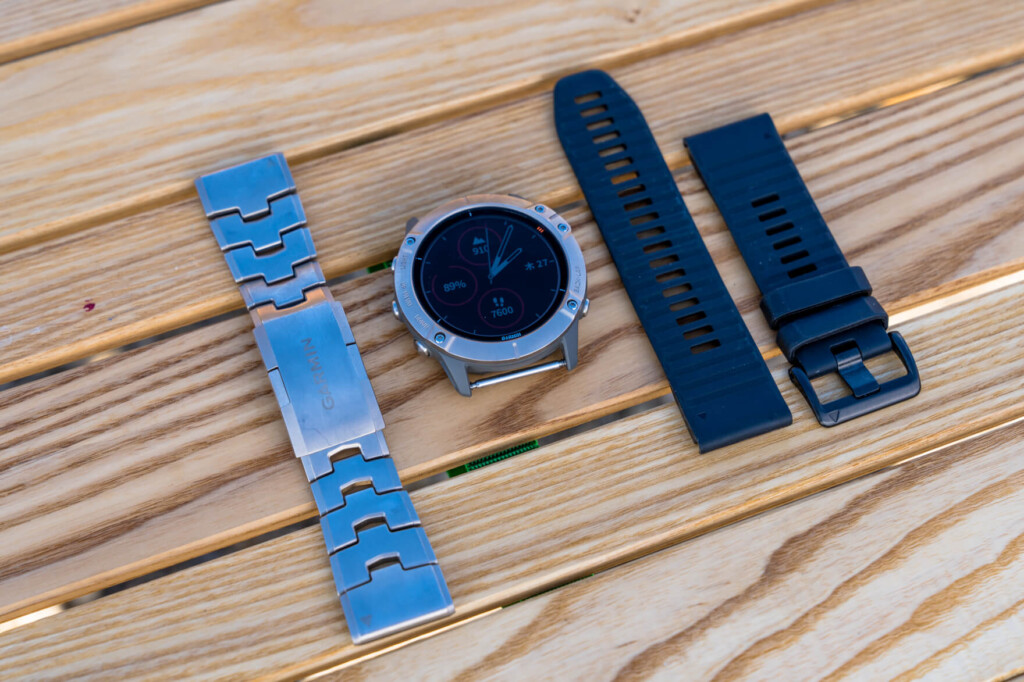
The band is easily removable. The titanium band model comes with a silicone band as standard (though it's orange, not black as shown in the photo)
Display: Ensures high visibility while minimizing battery consumption
The 1.4-inch display is 36% larger than the Fenix 5 Plus and features a tempered glass solar-charging lens. The increased resolution of 280 x 280 pixels means maps are easier to see, which is only a good thing
On the other hand, the display used in Garmin's Fenix series is a transflective memory-in-pixel (MIP) display, just like previous models. Compared to other outdoor smartwatches, it's not a convenient touchscreen, nor is it a high-resolution, highly visible OLED display, which is a bit disappointing. To be honest, once you're used to OLED displays, it can be hard to deny the impression of being quite dim. Incidentally, there's no ambient light sensor, so the brightness doesn't automatically adjust
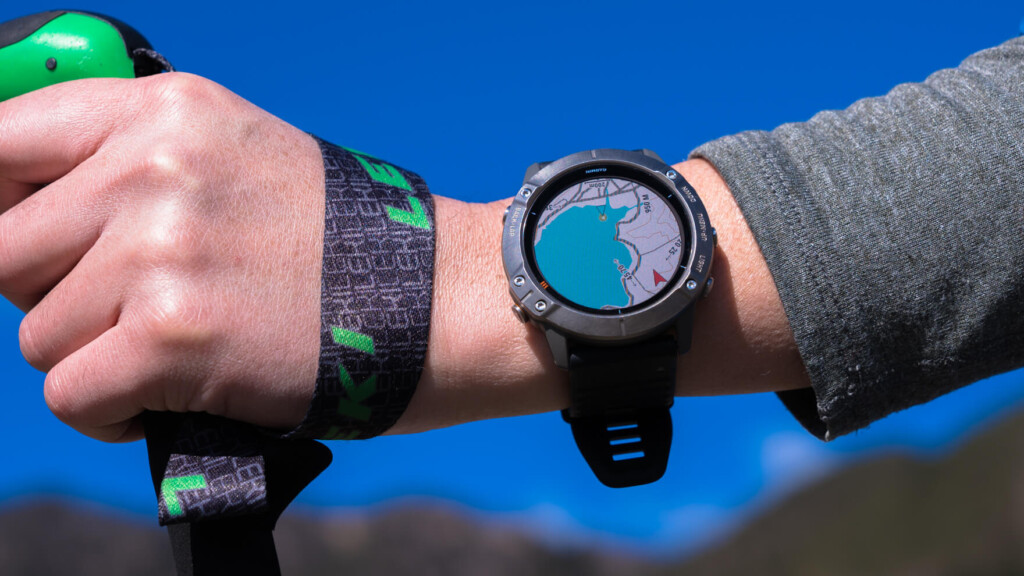
The visibility of the screen display is undeniably the usual Garmin-like (rough) feel, but it's not difficult to see even in sunlight, so it's not particularly stressful
On the plus side, it's extremely energy efficient, and it's easy to read even in direct sunlight or in low light, but you'll have to accept that this is a trade-off with battery life
Button configuration: Button operation takes some getting used to
The Fenix 6 series is operated entirely with six easy-to-press buttons. Since it doesn't support touchscreens, you still need to learn complex controls. Very few settings can be completed with just a few button presses. Adjusting the display brightness, for example, requires more than 10 clicks in addition to the adjustment itself. Honestly, it's still a bit stressful
Also, while it's not a bad thing that the buttons are large and easy to press, if you're not careful, they can get caught on the buttons when putting on or taking off a backpack and you accidentally press them a few times. On the other hand, in the winter, you can press them without a problem even with gloves on, and when working out while listening to music, you can easily and reliably play and skip to the next song even if the watch is hidden under your sleeve or gloves, so to some extent, this is something that will be solved by personal differences and getting used to it
Durability: Satisfactory score
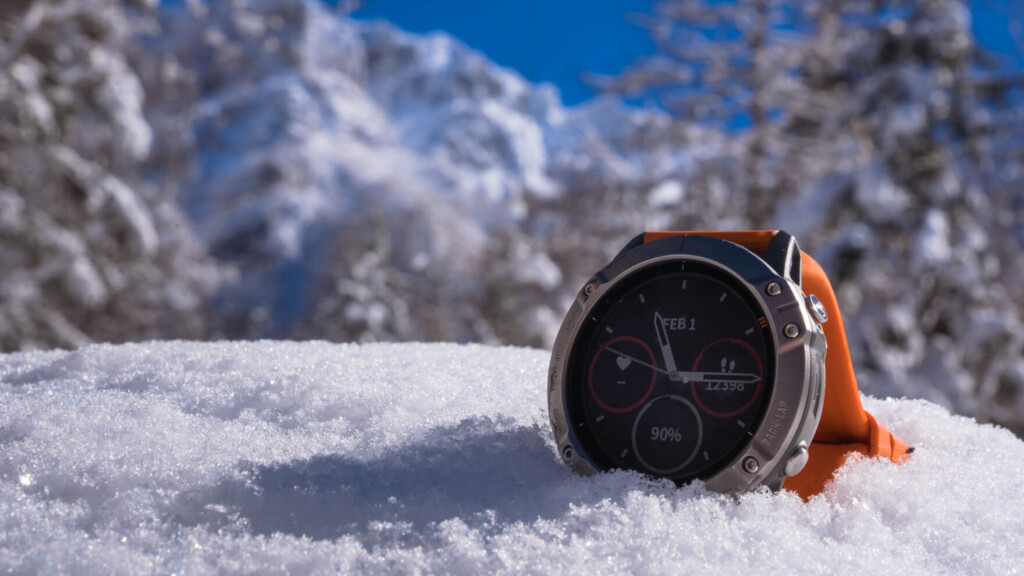
With a titanium case, tempered glass, 10 bar water resistance, and an operating temperature range of -20°C to +45°C, these specifications are more than enough for water sports or snowy mountain adventures
What it can do (features and technology)
In recent years, the possibilities of high-end outdoor smartwatches have exploded, with more than just basic ABC (compass, barometric pressure, altitude) functions; they also come equipped with a wide range of sensors, including GPS, heart rate monitors, gyros, accelerometers, and thermometers, as well as data such as color maps and music storage, and connectivity with devices like smartphones
This means that your watch has gone from simply showing you numbers to helping you train more efficiently, perform better in races, be safer on adventures, and make your everyday life more convenient
So what exactly can this cutting-edge multi-sport smartwatch do? I'll just pick out the parts that seem relevant to me and roughly list its features (although I'm not kidding, I've only listed about half of what it can do)
- In addition to the basic functions of a watch, it can display and record a wide range of health statistics, including ABC (compass, barometric pressure, altitude) and temperature data, as well as heart rate, steps taken, stress level, sleep time and quality
- Using a GPS sensor and pre-installed color topographical maps, your current location can be displayed on a map even in places without internet access
- It can track and record a variety of activities, including hiking, mountain climbing, trail running, running, triathlons, exercise, cycling, swimming, water sports, slope skiing, backcountry skiing, etc. During these activities, it can record and display performance information such as speed, elapsed time, altitude, heart rate, calories burned, training effect, and VO2 Max value, as well as GPS information, using various sensors
- By using the map and compass functions and registering a route, the device will navigate you to your destination using arrows, sounds, vibrations, etc
- Various data measured by Garmin devices is automatically analyzed, and a virtual coach on your smartphone will present you with a training menu
- The PacePro pacing function guides you through races and training courses with paces adjusted to suit your level
- It has a USB charging function as well as a solar charging function
- It can be used continuously for up to 24 days in smartwatch mode, up to 60 hours (plus solar charging) in GPS and heart rate monitor mode, and up to 36 days (plus solar charging) in GPS only mode
- "Power Management" allows you to set a battery saving mode or a power mode that allows you to select only the functions you want to use and consume the battery efficiently to your liking
- It connects to your smartphone via Bluetooth and allows you to receive weather information, calendar schedules, smartphone notifications, incoming call notifications, and more, as well as search for lost mobile devices
- By connecting to an inReach device, you can send simple messages and SOS signals from the watch
- Using the Garmin Connect app, you can save and display your activity history, detailed analysis, and life logs such as activity levels and sleep, as well as set up and operate the watch and various apps
- Using the Garmin Connect IQ app, you can add and configure watch faces and apps provided by Garmin and third parties
- It can detect accidents during some activities and send a message to emergency contacts
- You can play and control music from a paired smartphone or music downloaded to the watch (up to 2,000 songs) from the watch
- Garmin Pay allows you to make contactless payments at participating merchants
Try it out for mountain climbing, running, skiing, and backcountry skiing
I'll share my experience using it for the past three months. As with other smartwatches, you first need to install the Garmin Connect Mobile app and pair it with your smartphone
Once the initial setup is complete, you're ready to go in the field, but if you want to customize it a bit more, you can add your favorite watch faces and set up widgets to add additional functionality to your watch using the Garmin Connect IQ app
Widgets can add a wide variety of functions beyond your imagination, ranging from those that provide simple information such as temperature and sunrise/sunset, to those that display fitness information in an easy-to-read format, to those that make everyday life more convenient such as maps and navigation for specific purposes, music players and entertainment, calendars and weather forecasts, and more
By installing these, even if you only have the bare minimum of functionality at first, you can customize it to your liking and quickly access the information you want with the button on the left. I have installed the bare minimum widgets below, but there are so many other widgets that you can display that it's hard to choose
- solar
- weather
- Sunrise & Sunset
- ABC (altitude, pressure, direction)
- Performance (VO2 max value from previous training and predicted times for 5km, 10km, half marathon, and full marathon)
- Last Activity Summary
- Step count
- Health statistics (heart rate, stress levels, etc.)
- calendar
- notification
- Music
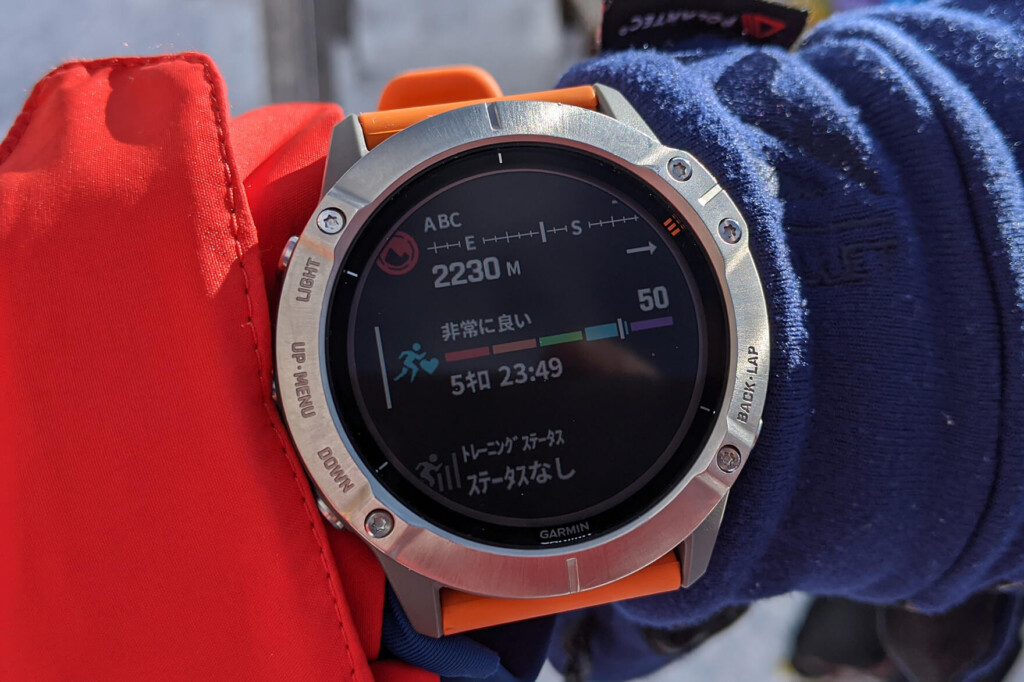
Adding widgets allows you to easily access information on the display screen, such as photos
Activity tracking for hiking, running, and backcountry skiing
I'll be using the Fenix 6X Pro Dual Power for mountain climbing and hiking. To be honest, the functionality here is almost the same as the previous model
Regardless of the activity, all you need to do is press the button on the top right, select the activity, and start. If you save the course data in advance on the watch, you can also use the "Navigation" function, which will navigate you along the route while you walk (or run)
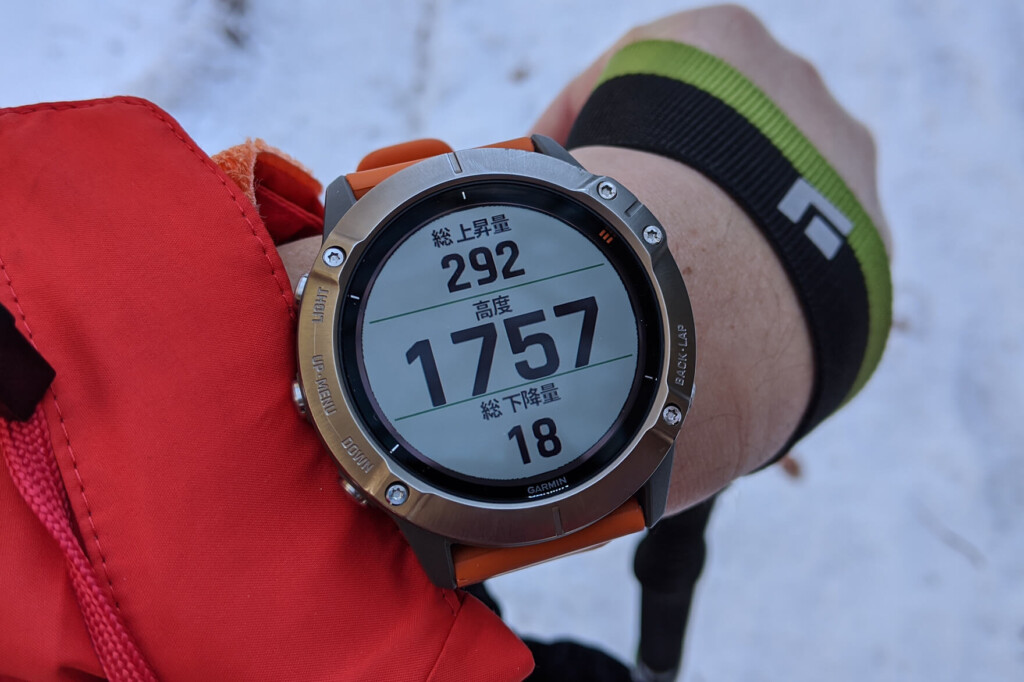
The data you can view in real time during tracking is preset depending on the activity, but once you get used to it, you can arrange it however you like. For example, mountain climbing , the initial settings are as follows for each screen:
- Total ascent/altitude/total descent
- Distance/Uphill Speed
- Current location (longitude and latitude)
- Heart rate
- Current location (map)
- Current time and remaining battery power
is
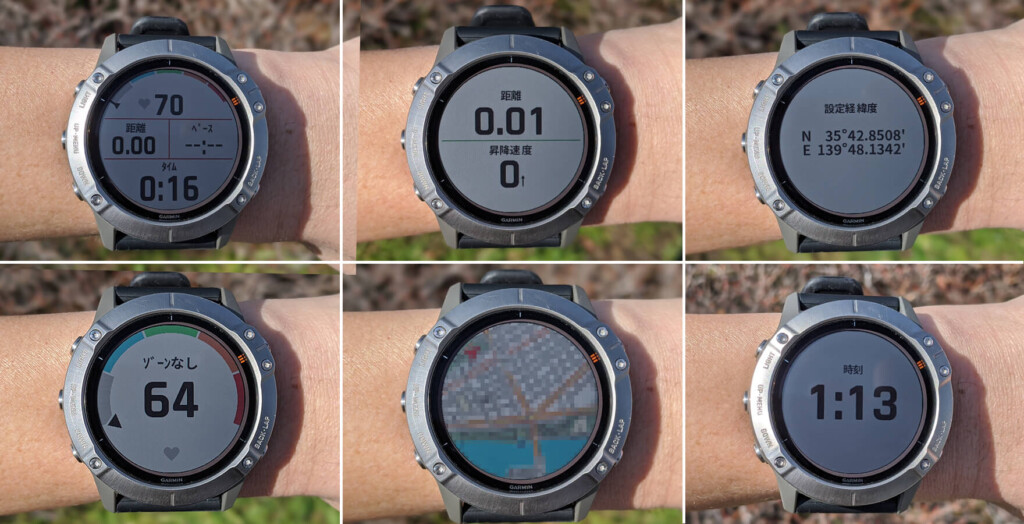

However, I like to change the "Current Location (Latitude and Longitude)" screen to the "Atmospheric Pressure & Calories Burned" screen, and add the "Compass" screen, so you can freely arrange the information you want to check immediately while on the move. This is a bit of a hassle at first, but once you've set it up it's really convenient
By the way, trail running are:
- Heart rate/distance/time/pace
- Heart rate / total ascent / time / ascent speed
- Heart rate/Lap distance/Lap time/Lap pace
- Current time
- Current location (map)
is
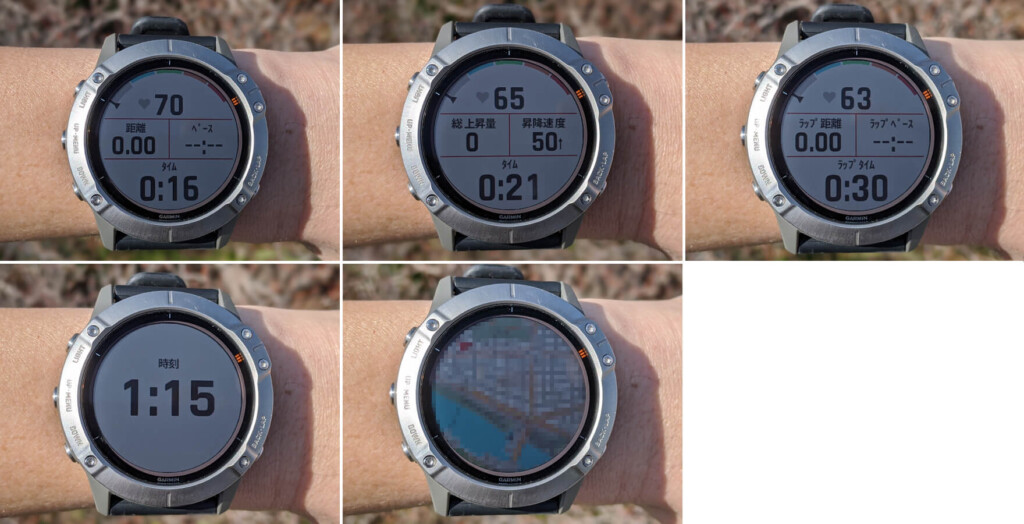
However, to make it easier for me to use, I replaced the second "time" with "altitude" and "ascent and descent speed" with "total descent amount," and added screens for "stride length," "pitch," and "speed."
And backcountry skiing , the device automatically recognizes whether you're hiking up or skiing down, and displays the information accordingly.
- Distance/Uphill/Downhill Speed (Maximum speed when gliding)/Time
- Time / Time / Sunset time / Heart rate
- Set latitude and longitude/direction/altitude
- Current location (map)
- Last time I hiked up (or skied)
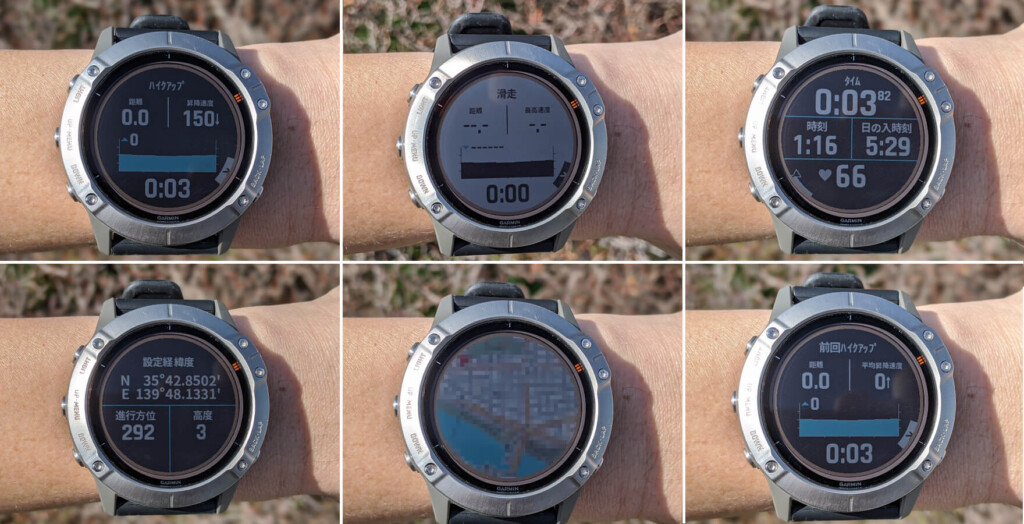
Decent battery life
In fact, the battery life is truly amazing. Since I started using this watch at the end of the year, I haven't done any activities for a while, but I've been using it in smartwatch mode (with 100% backlight) which tracks fitness such as heart rate and step count and connects to my smartphone. Even after wearing it for over two weeks without charging, the battery is still at over 30%. What's more, the watch was hidden under my long sleeves at the time, so solar charging was hardly used at all. The official figure of "up to 24 days" doesn't seem to be that far off
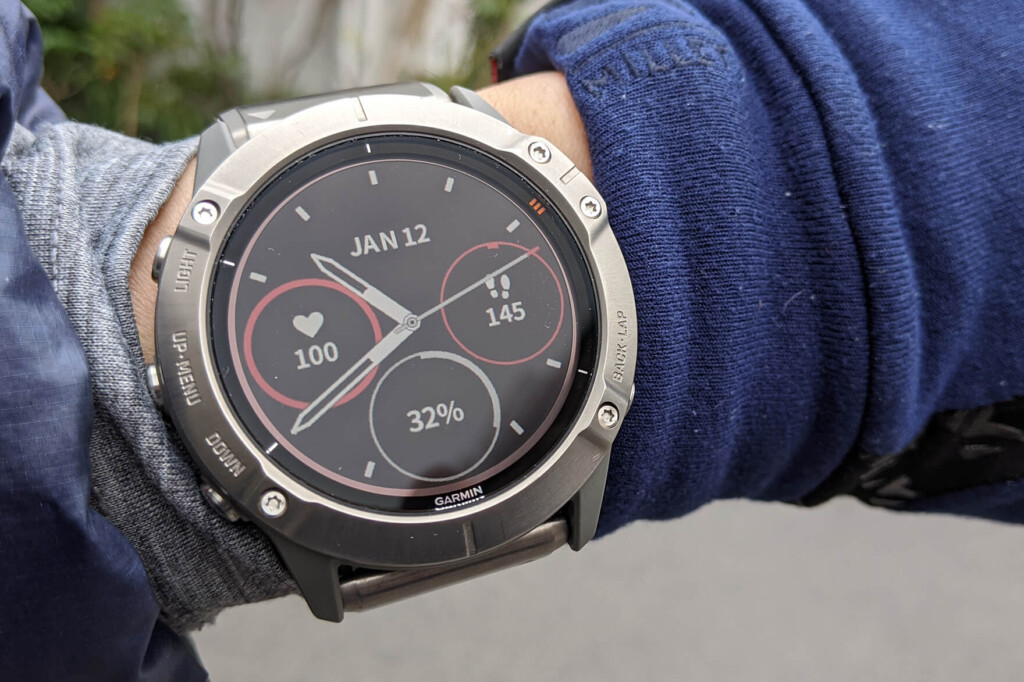
I've been using it since the end of the year, and even after about two weeks, the battery still has enough power to last for a few days
Next, I checked the battery life during activities. I didn't use any power saving settings, and just did a few measurements using regular activity tracking
A 3-hour, 5km backcountry ski trip left me in the upper 80s, with only about 10% of my battery being used. A similar 6-hour trip dropped me to the 70s, and even after tracking for nearly 15 hours, I was still able to maintain over 50%
Of course, you can further reduce power consumption by dimming the backlight, and even more by switching to "UltraTrac mode," which reduces the frequency of GPS and sensor data acquisition, more than doubles the battery life. "Expedition mode" also allows the watch to operate for up to a month without charging, thanks to its low-power consumption, GPS-only function. So, even if you're only using it for one activity, you won't have to worry about the battery running out, even though it's a smartwatch
The solar charging function is still just a temporary relief
The solar charging feature is the highlight of the watch. Officially, if you expose the watch to sunlight of approximately 50,000 lux, the same as a sunny winter day, for at least three hours a day, the solar charging lens can extend the battery life by up to 24 hours in smartwatch mode
To see how much battery life there is, the widget displays the solar charging activity over the past six hours, so I spent about half a day with the watch exposed and checked how the battery drained. By the way, activity tracking was not performed and the watch was in smartwatch mode
In reality, the battery level remained constant while the solar charging was in progress. In my personal experience, solar charging is not effective enough to "actively charge" the battery, but it is effective in "maintaining the current state" of the battery
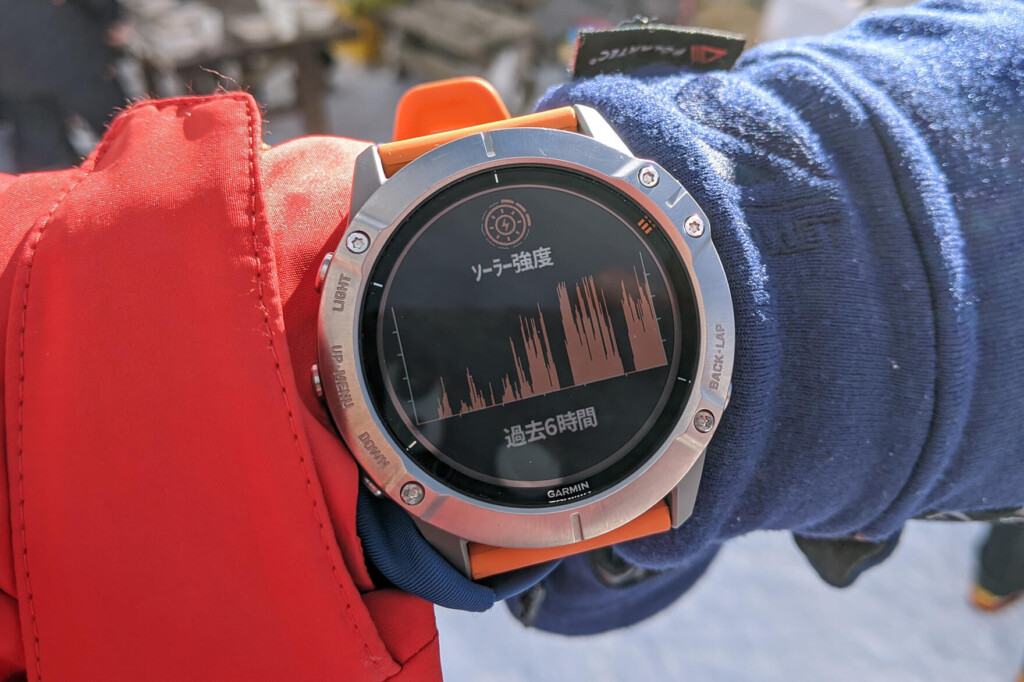
As I spent time using the solar charging function, the battery level neither increased nor decreased, remaining at the same level throughout
Map display: A little progress?
The map software is the Fenix 5X Plus , so the large size, clarity, and ease of use remain unchanged. It can be accessed and viewed during normal activities and activities. During activities, your current location and the path you've walked so far are displayed on the map. The combined speed and accuracy of GPS, GLONASS, Galileo, and Michibiki for determining your current location are decent.
One slight improvement is that the screen size has been increased by about 17%, from 240 x 240 pixels to 280 x 280 pixels, making it easier to understand the route (see photo above)
You can now choose from several themes for the map display, such as "High Contrast," which increases the contrast for better visibility, and "Dark," which improves visibility at night, which also seems to make the map easier to read to some extent
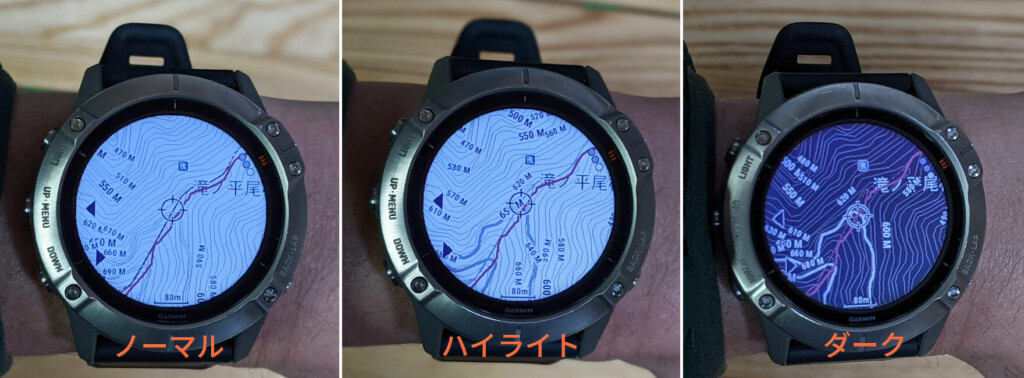

Furthermore, compared to smartphone maps or touchscreen smartwatches, using the buttons to zoom in and out and move the screen is frankly inconvenient. For this reason, we don't recommend using it as a substitute for a map; its practical use is limited to checking your current location and the surrounding terrain. Of course, even if you don't, you should always carry a paper map in case of the worst-case scenario
Amazing! Pace Pro course planning function
One of the new features added to the Fenix 6x is the Pace Pro course strategy function, which instantly calculates the optimal pace for running a set route within a set time. Settings can be configured via GARMIN CONNECT on your smartphone or PC
For example, in the image below, if you're running the 7km course around Mount Bonoori in Okutama in about an hour, Garmin Connect will create a pace plan for each kilometer, taking elevation gain into account. You can also adjust your pace from there, such as whether to run a little faster in the first half (positive), or slow down in the first half and then pick up the pace in the second half (negative), making it surprisingly easy to create your ideal race plan. It's probably overkill for me, but it's impressive


The Pacepro feature instantly analyzes any course and creates a race plan
Analyze your past activities in Garmin Connect
Once you've finished your activity, it's saved and when you connect it to your phone, it's instantly transferred to the Garmin Connect app, where you can review it with an incredible amount of detail
For mountain climbing (reprinted from the MARQ review)
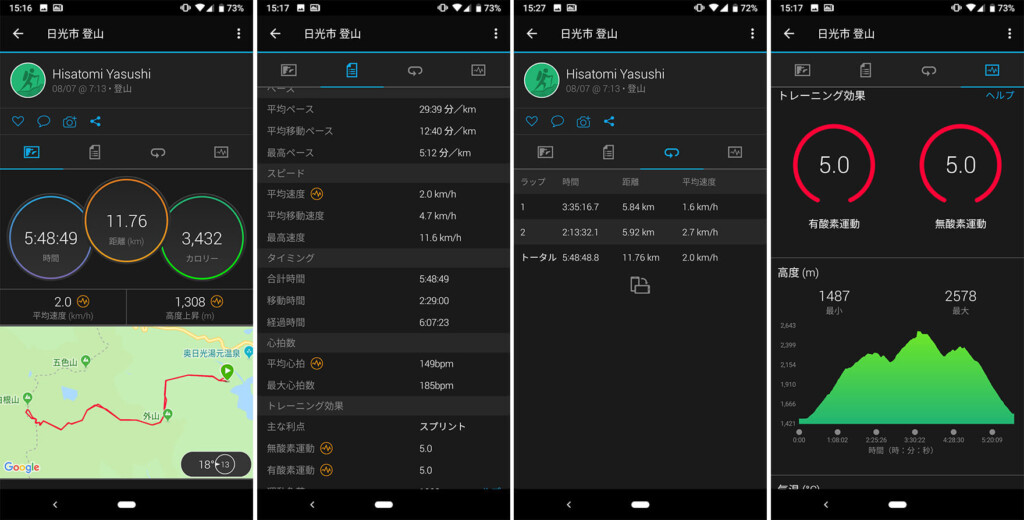
This is a record of your activities when you set the activity "Mountain climbing." The data is very detailed and multifaceted, and you can check it immediately on your smartphone right after you finish
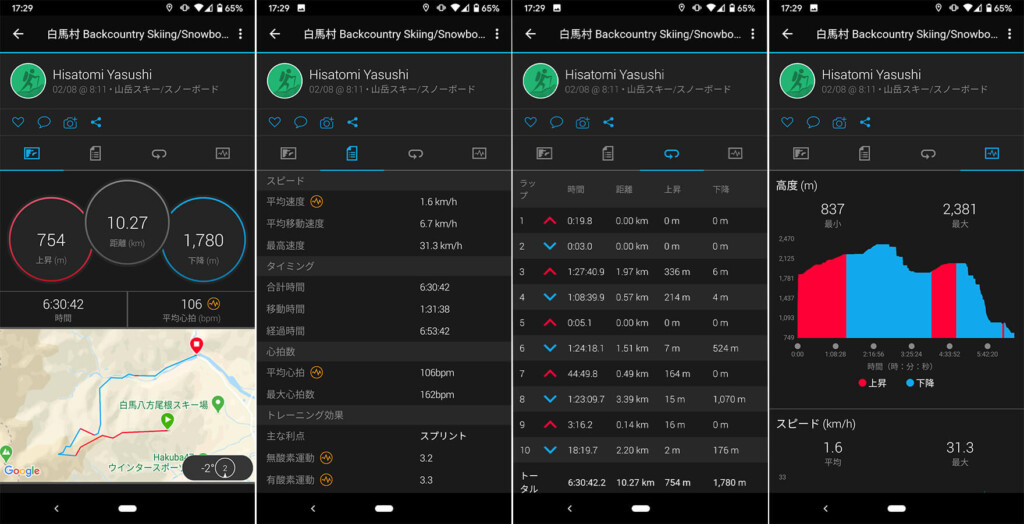
In the backcountry
For backcountry activities, hikes and descents are automatically categorized and color-coded to display your data
For running and trail running
For running activities, you can analyze speed, pace, and other running dynamics such as pitch and stride
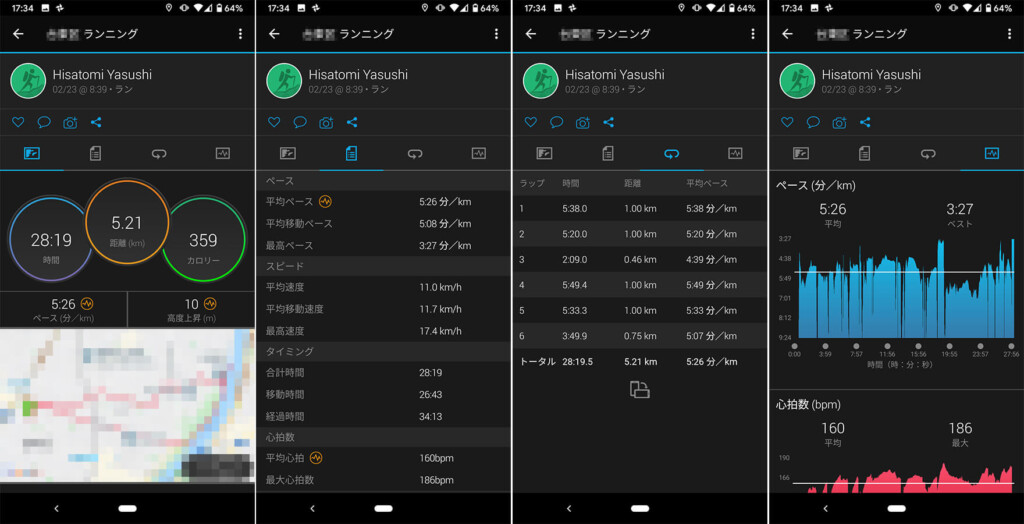
As always, the app is excellent, providing detailed data in an easy-to-read interface. In addition to detailed activity data, you can easily see all your daily activities and health status, from your heart rate to steps, exercise volume, fatigue level, stress, calories burned, and the quality and quantity of sleep. The precision and clarity of the display are, in my opinion, superior to any other app
You can view a variety of measurement data, such as pace, cadence (stride length), VO2 Max (maximum oxygen uptake), FTP (functional effective power), and lactate threshold, in graphical format, essential for detailed and multifaceted analysis of your performance. This is the ultimate motivation for serious runners


From the left, the current dashboard, recent activity, Vo2Max history, and heart rate history. Each value is displayed in a way that makes it easy to understand
Summary: Who is this recommended for?
Even with all this, I still can't say I've exhausted all the features of this watch. It's packed with too many functions for one person to master, yet it's an impressively complete smartwatch that delivers satisfying performance for users of all disciplines, from running to mountain climbing to skiing. Even if you're used to using a regular watch, I think you'll be able to get used to smartwatches smoothly and without stress. That's how few things I'm dissatisfied with
I felt that it was superior in all aspects to the ease of use, functionality, and balance of any other camera currently available from any other manufacturer. I would recommend it without hesitation to any outdoor enthusiast with a budget. However, if you are asked whether I would recommend upgrading to a Fenix 5x Plus, I'm not sure. Although everything has improved evenly, the differences are subtle. If you have a Fenix 5x, upgrading might be worth it
On the other hand, just because you paid a lot of money for it doesn't mean it's a watch that "does everything without you having to do anything." To be honest, if you try to use it casually, you'll be overwhelmed by the complexity of its operation, then overwhelmed by the sheer number of things it can do, and you'll end up thinking, "I can't use it." It constantly records the quality and quantity of your activity and the quality and quantity of your sleep in your daily life, so it can be a useful companion for maintaining your health, but if that's all you need, the Apple Watch will surely be enough
In that sense, it will undoubtedly meet the desires of "serious athletes" and outdoor addicts who "want to enjoy a variety of outdoor activities to the fullest, without being limited to a single activity." For those of you who are thinking about finally buying a smartwatch for the upcoming new season, everything is ready. All you have to do is jump in