You want a tent. When that happens, the first thing that most people realize is that there are many different types of tents. Double-wall tents, which combine a main body and a flysheet, are generally the most popular, but they are by no means universal. Depending on the season or purpose, a different structure or style may be more suitable, and just like backpacks, tents can be a tricky item to navigate, as you continue to climb mountains, wanting more and more types for different purposes. If you're interested in the subtle differences between the different types and their respective features, please refer to our previous article .
a single-wall structure , which simply consists of just one main layer . The main advantages of single-wall tents are that they require fewer parts, making them light, compact, and quick to set up. However, many of them do not have a vestibule (an entrance or rain shelter space at the entrance), which often comes with drawbacks such as poor ventilation and a tendency for condensation to form on the inside.
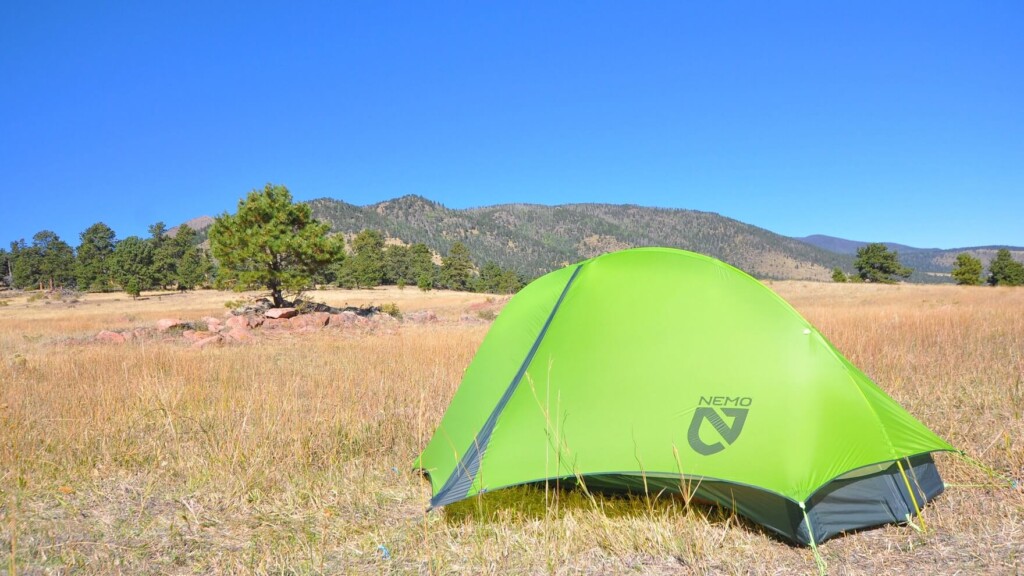
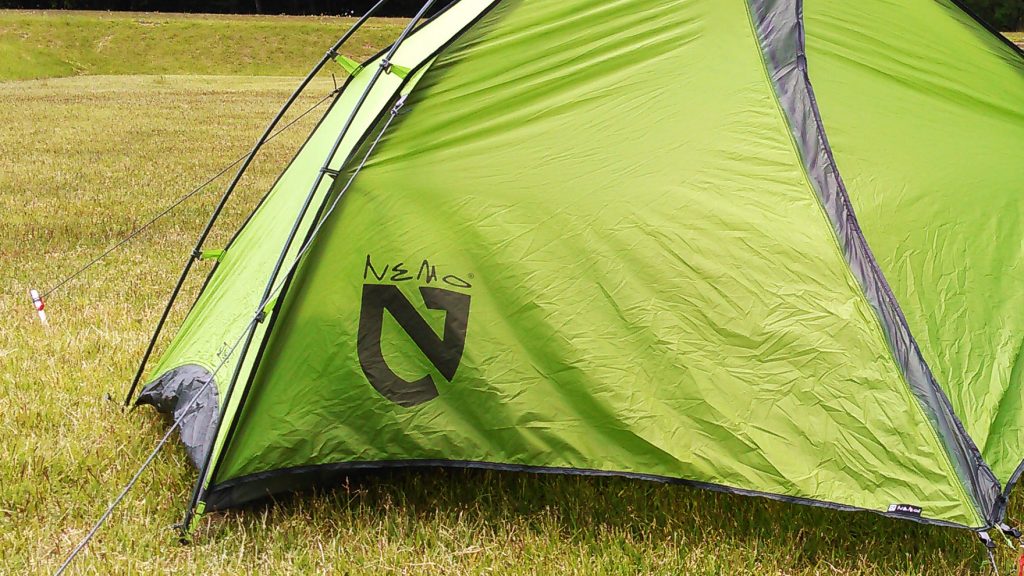
The NEMO ANDI 1P I'm reviewing today is a freestanding, single-wall dome tent that takes advantage of the benefits of single walls while overcoming some of their drawbacks, making it incredibly easy to use depending on the application. This season, a long-awaited new single-person model has been released, so I'd like to report on it right away.
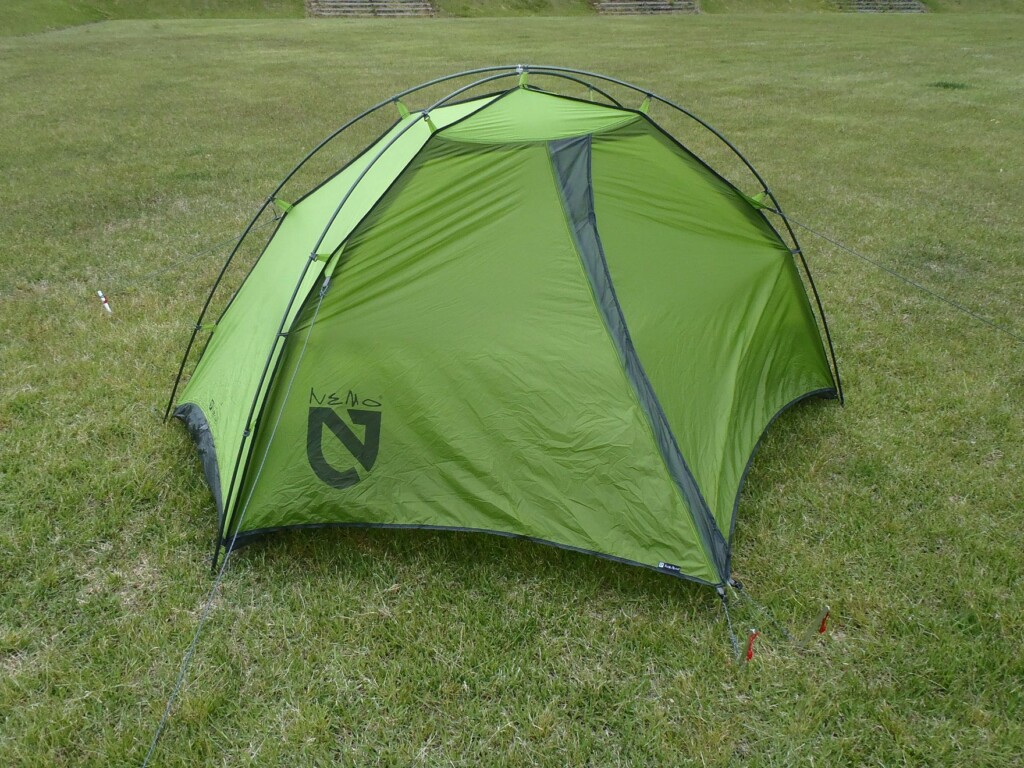
table of contents
General characteristics
This single-wall, self-standing dome tent is designed for quick setup and teardown, and is lightweight. The main body is made of a unique 20-denier waterproof and breathable material, and the hanging poles allow for quick and secure setup even in adverse conditions. The integrated vestibule also provides a level of livability approaching that of a double-wall tent
Recommended points
- The vestibule fly is integrated into the tent body, providing high livability
- It weighs just 1kg and is extremely compact when stored. The storage bag is also well-made, making it extremely easy to take down
- Single wall and hanging design for quick setup
- Wide mesh panel at the entrance provides excellent breathability
- Each part is more firmly fixed than it appears
Points of interest
- Because it is a light and thin material, it requires some delicacy when handling
- (As a general rule) Please be aware that if you do not follow the correct procedure, especially in strong winds, you will not get the benefit of easy setup





Specifications and ratings
| item | Specifications and reviews |
|---|---|
| Number of people sleeping | 1 person |
| minimum weight | 1.02㎏ |
| Body material | 20D OSMO™ W/B (waterproof and breathable material) |
| Front chamber material | 15D PU nylon |
| Floor material | 20D PU nylon |
| Floor area | 1.85㎡ |
| Front chamber area | 0.74㎡ |
| Height, width, and length | 102㎝・89㎝・218㎝ |
| Accessories and options |
|
| Comfort and livability | ★★★☆☆ |
| Ease of setup and takedown | ★★★★★ |
| weather resistance | ★★★☆☆ |
| durability | ★★★☆☆ |
| weight | ★★★★☆ |
| Portability | ★★★★★ |
| Overall score | ★★★★☆ |
*The ★ rating is an impression rating before conducting a comparison test, so please use it for reference only
Detailed Review
Storage size
The complete set looks like this. First of all, you'll be surprised at how small the tent itself is
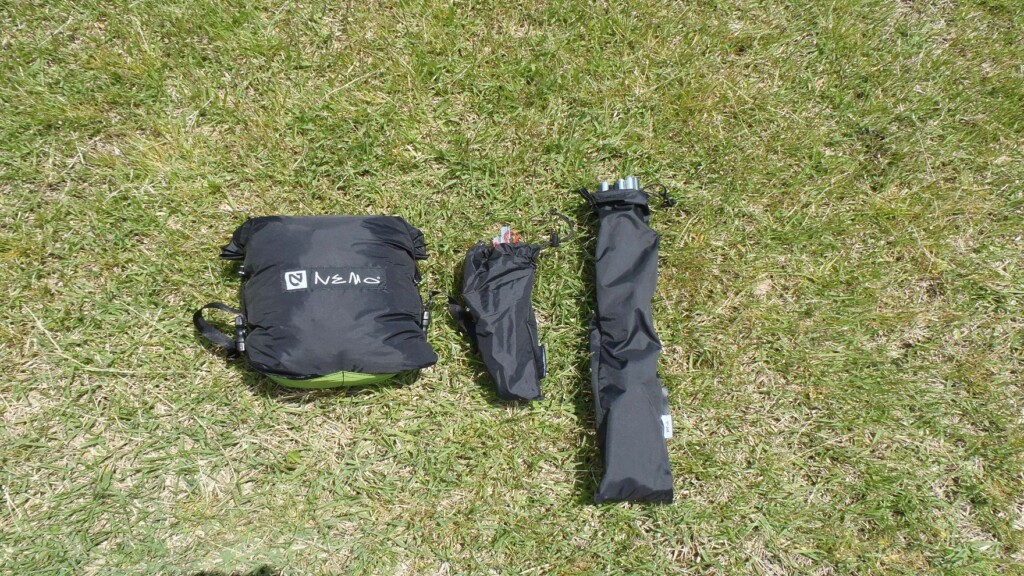
The storage bag for the tent itself is uniquely designed, but it's extremely convenient. It has a wide opening, making it easy to put things in and take them out
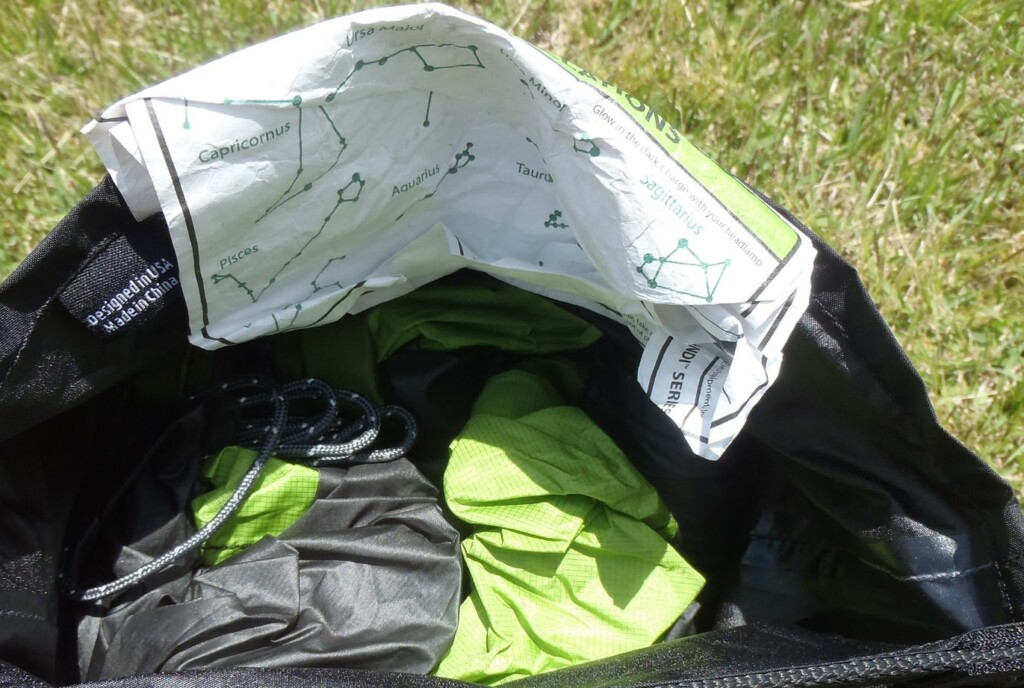

The bag comes with instructions, which is nice, but also includes some nifty extras like a map of the constellations
About setup and the main unit
The dome-shaped poles are two in number, with some kind of part in the center
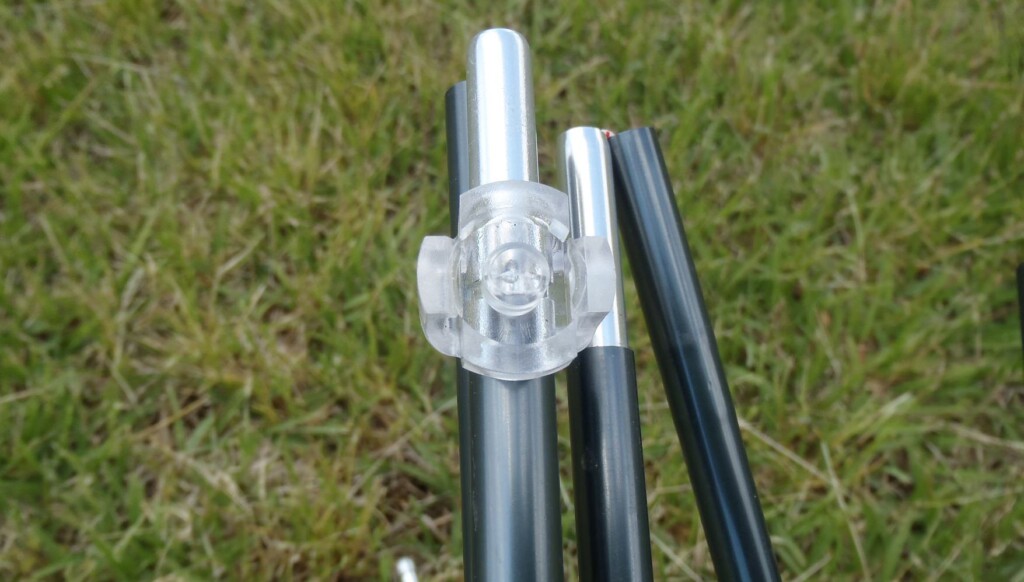
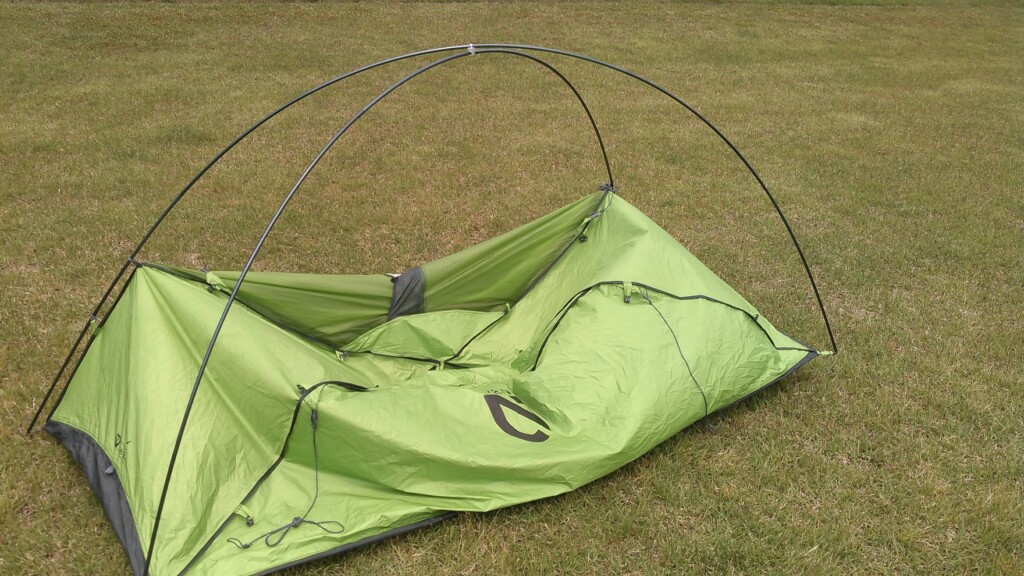
The tent is self-supporting thanks to its hanging structure, where the poles are first set up and then secured with hooks.
To set up, the poles are first fully extended and then secured to the rings at the four corners. Unlike pole sleeves, which require the poles to be inserted into a tube, it is not possible to set up by gradually extending the poles, so greater consideration must be given to the surroundings when setting up in a crowded campsite. The rings that connect the ends of the key poles to the tent body are more secure than their simple appearance suggests.
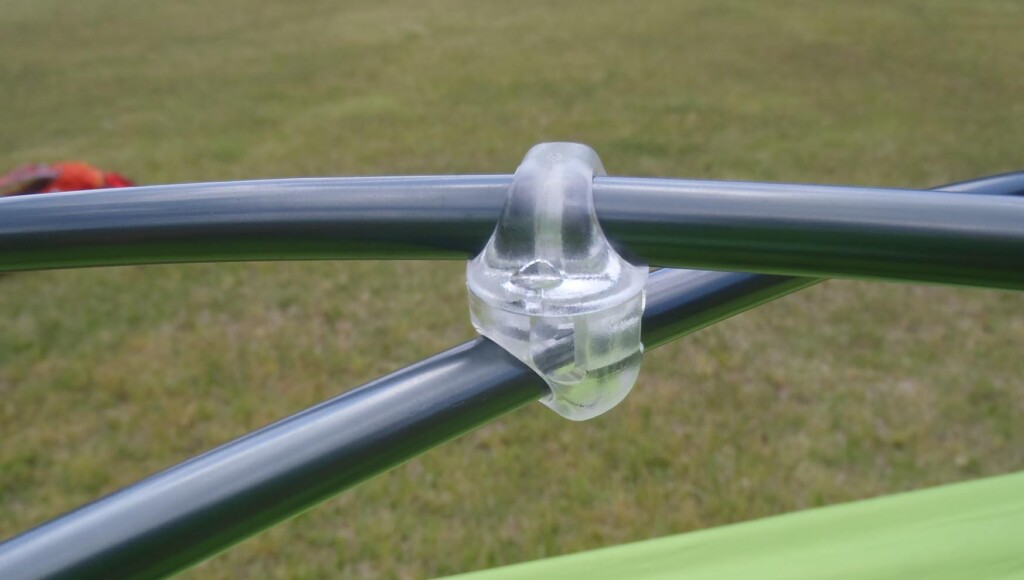
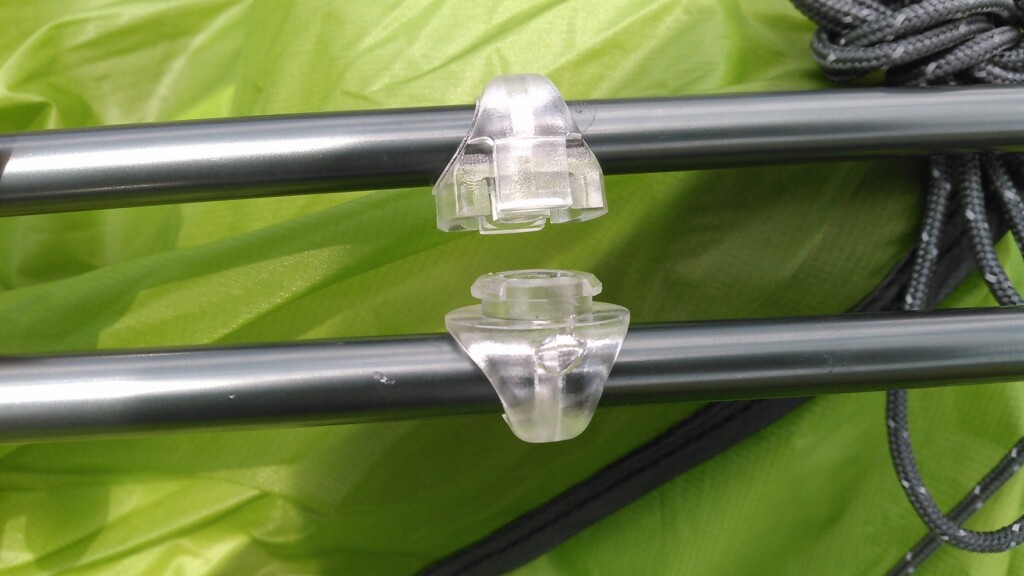
The part I wondered about at first turns out to be used to connect the poles at the intersection of the ceiling. I see. This part locks when it intersects with the poles and releases when it is parallel
There were exactly six pegs included, one for the entrance and one for the four-point guy ropes. They are Y-shaped, so they are securely fastened to the ground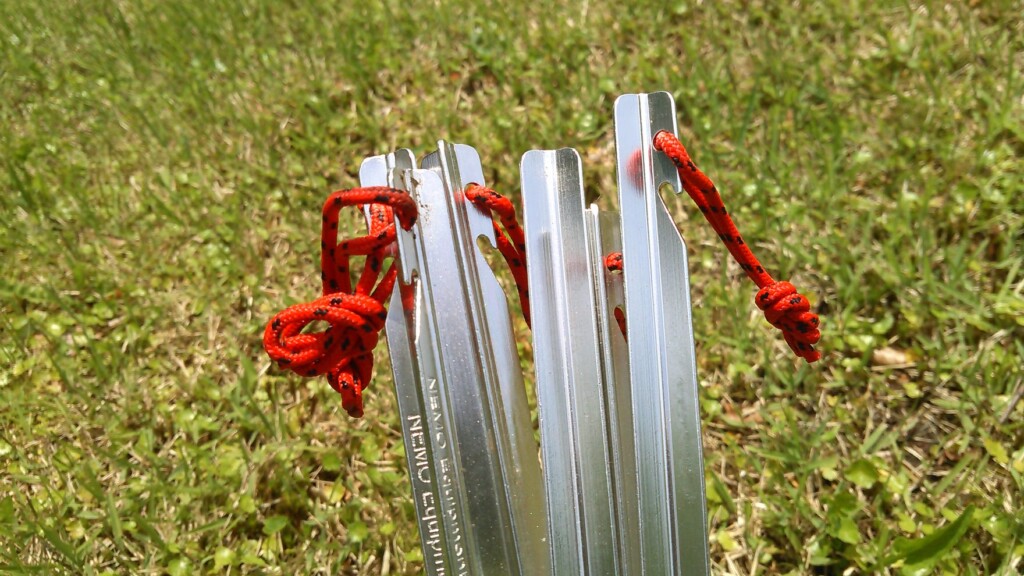
Just hammer pegs into the guy ropes and entrance and you're done
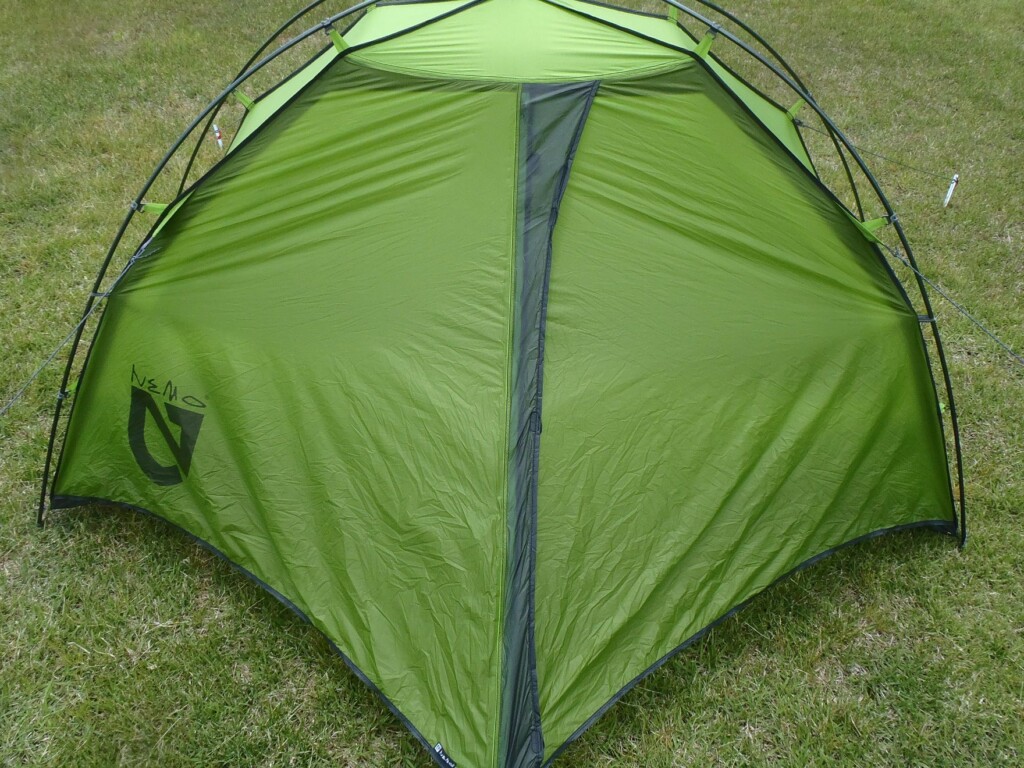
As you can see, the vestibule is integrated with the main body. This is a great structure. The vestibule can also be folded to the side of the main body for easy entry and exit. This is an advantage, but since the vestibule is large, you may need to be careful when using it in narrow spaces. If the space is small, you could leave the vestibule folded up, but that would be a waste。
There is one entrance on the long side. It is wide, so it is easy to get in and out. A large semicircular mesh is placed in the lower half of the entrance, which can be opened and closed as needed, which greatly improves ventilation

By the way, the mesh can only be switched from the inside
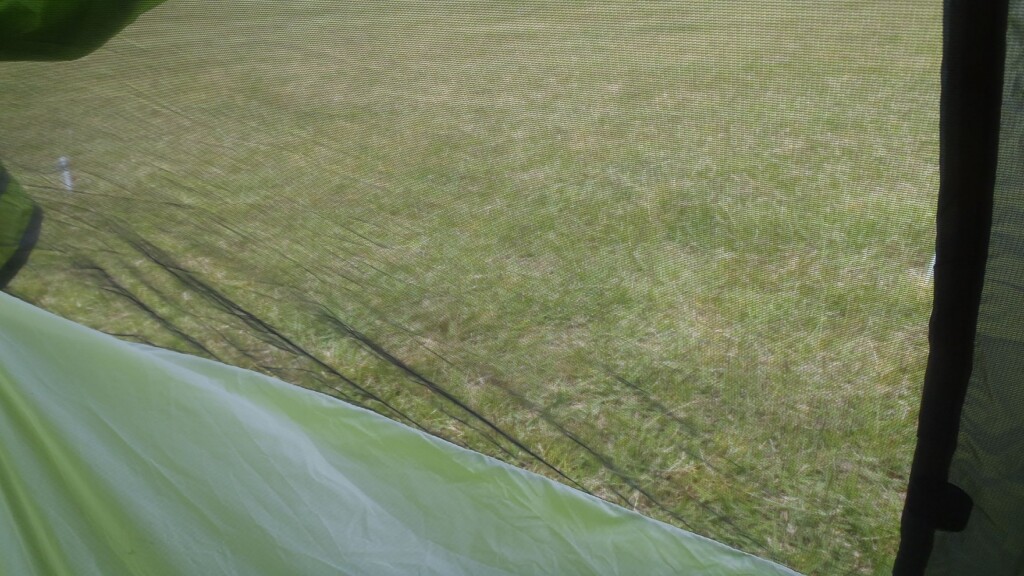
There was a short rod hanging from the wall opposite the entrance. I wondered what it was, but it turned out to be a tension rod to keep the air vent on the other side open

It's a simple, efficient system that leaves you in awe
The panel is also good

The storage bag was really great when I was packing up. Normally, tents need to be put into a special bag for folding. If you want to store it more comfortably and compactly, you'd need to buy your own compression bag, but this tent can be easily stored and compressed using the bag provided
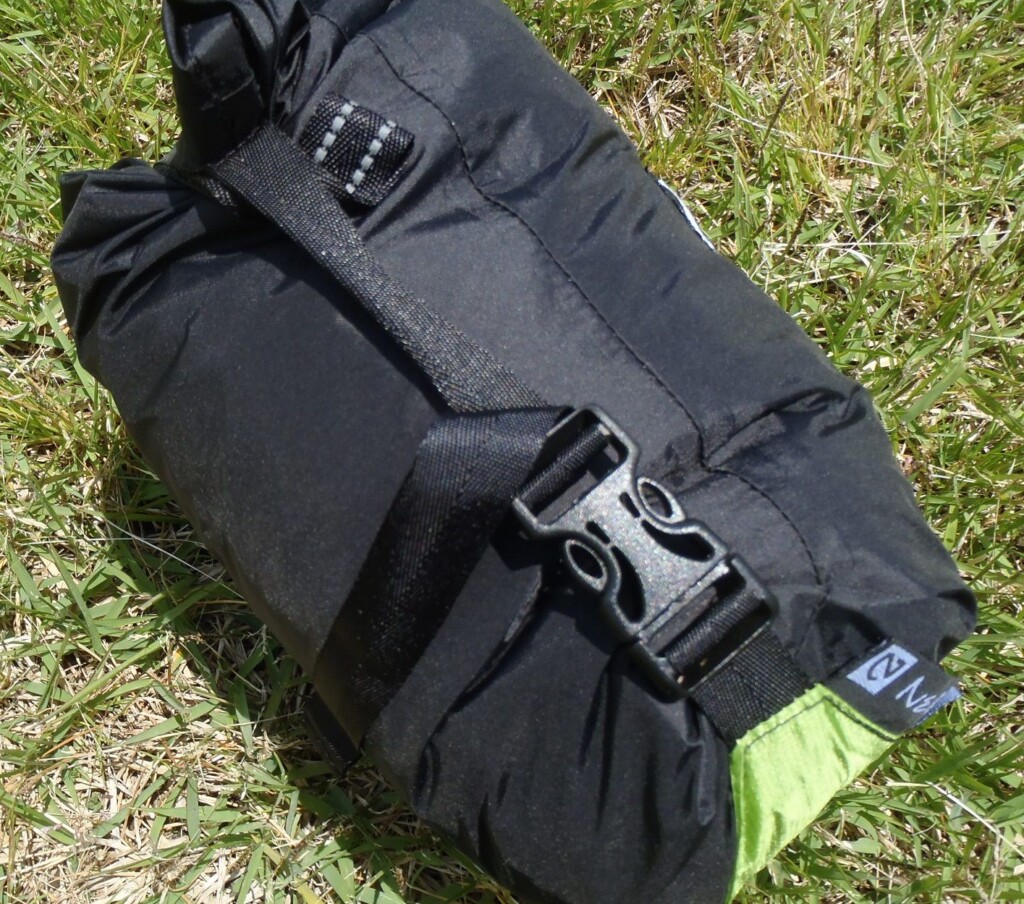
Even though I didn't fold it and just stuffed it into the bag, it all fit neatly and even compressed. It's amazing. I would definitely recommend you try this out
Actual impressions after using it
I had always thought that single-walled tent patios didn't have a vestibule, so when I actually used one I was impressed by how spacious the vestibule was and how comfortable it was to place my shoes and gear. It's a small thing, but it's an important point when it comes to creating a spacious interior
There were no problems with livability, and the mesh panels allowed for good ventilation. Japan has a humid climate, so some condensation and trapped air are inevitable, but even so, the ventilation is good enough for a single-wall tent of this type
Other details and basic parts have the same structure as other general tents
As for the crucial issue of setup, it's often said that dome-shaped, hanging tents like this one minimize wind resistance compared to tube-mounted ramp-type tents. So, what was it like actually assembling it? When I tried to fasten the last one or two hooks, the fabric exerted strong tension, making it difficult to stretch. Additionally, the strong wind caused the parts to move around, making it difficult to secure the hooks. Just when I was almost there, the wind blew the tent body, making setup more difficult than I expected. I've set up many ramp-type tents in the past, but I didn't actually notice much difference in ease of assembly between the two types in harsh environments. Most mountain tents made in recent years are designed to be easy to assemble, regardless of their freestanding type. This experience once again reinforced the importance of not assuming that a certain structure is sufficient, but rather understanding the characteristics of each freestanding type and learning the correct setup method for a safe and efficient setup suited to the environment. While students often say that practice is necessary before the real thing, after some practice and paying attention to the securing hooks, I was able to assemble the tent very efficiently and efficiently
As mentioned above, if the top part of the hook comes off, it will affect the space inside. However, the hook has a strong enough grip that it won't come off even after trying various things, such as intentionally shaking the main body
Also, if you look closely, you can see that there are other places where guy ropes can be attached, and I think it would be nice if there were a few more pegs provided as backup for other securing purposes
Summary: What kind of people and activities is it recommended for?
The appeal of this tent is that it combines high levels of lightness, livability, and speed of setup. However, it is not just a lightweight, compact single-wall tent that separates certain elements, but it is also well-made and constructed. It will be suitable for a wide range of activities where you want to keep your luggage light and compact, such as mountain climbing, trail hiking, and ultralighting. In that sense, it is a tent that is suitable for everyone
It also has the advantages of a double wall, so even those who already own a tent but have never used a single wall tent will be satisfied with the functionality. I think it's a tent worth considering if you're interested
On the other hand, since it is a lightweight tent, you should consider where and when you use it. You need to be careful when using it in seasons or places where strong winds are expected, and even in the three seasons from spring to fall, in bad weather conditions with strong winds on ridges, it can be difficult to fasten the hooks. As long as you take that environment into consideration, it should be perfectly fine to use in snowy places and times of year
Lightness does not necessarily mean perfection, but its lightness is undoubtedly a great advantage. If you are traveling solo, a light and compact tent means you can pay more attention to your other equipment. It would be a good idea to create many memories with this tent. It is such a versatile tent that it is worth considering as your next solo travel companion
Related reading