From late spring to summer and early fall, you don't really think too much about the cold when camping. However, in the coming seasons, if your gear doesn't match the weather and temperature, it becomes a critical and dangerous issue. If you're out and about, you might be able to get through the cold by increasing your exercise, but that's not the case when it comes to sleep, which is when it's coldest at night and into the early morning. You'll end up shivering to sleep, and if you're not careful, you might not be able to sleep at all. Losing sleep will affect your activities the next day, and it can become a life-or-death issue, especially on long hikes
Bedding is such an important tool, but not only the sleeping bag but also the mattress underneath is extremely important. It may not be given much importance, but just laying it down can make a huge difference in warmth and comfort. Despite this, there are many different types of mattresses available in the world, each designed for a different temperature, and many people may not know which one is best. The NEMO Tensor Alpine mattress is a high-spec mattress that, if you choose one without overthinking it, will likely pay off more than you would expect from a casual choice. I've reviewed it, taking into account the low temperatures it will likely be used in.
table of contents
General features of Tensar Alpine
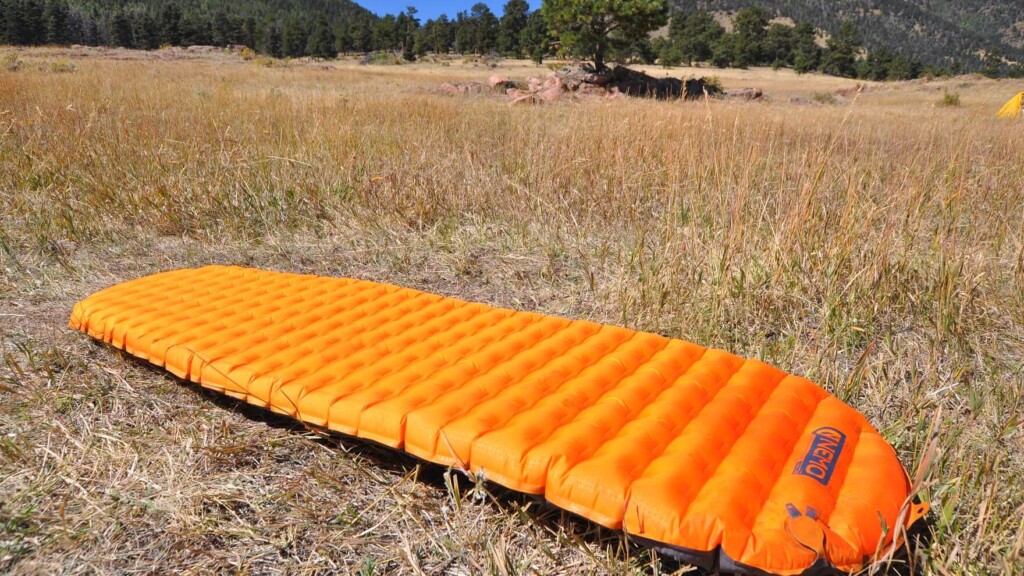
NEMO 's Tensor Alpine is a lightweight, quiet, and comfortable air mattress designed for use in midwinter mountain environments, with operating temperatures -29°C to -23°C 20D polyester , which also contributes to compact storage. The interior features a unique three- layer insulation structure that blocks cold air from the ground while retaining body heat for efficient warmth and comfort. The valve system, which uses a pump sack to inflate the mattress—a standard feature for air mattresses—allows for quick setup and teardown, and simplifies fine-tuning the air volume. The mattress is 8cm and offers ample volume, making it a well-balanced model that meets all the requirements of an air mattress. Available in short (S) and regular (R) sizes for different uses.
Recommended points
- Lightweight and compact
- High insulation and heat retention
- Easy to set up and take down
- Quiet
Points of interest
- The front and back surfaces are slippery
- durability
Main specifications and evaluation
| item | Specifications and reviews |
|---|---|
| color | orange |
| size | S: 122 x 51 cm R: 183 x 51 cm |
| Storage size | S: 7 x 20 cm R: 8 x 20 cm |
| Mat Thickness | 8.0cm |
| Official weight (body only) |
S: 307g R: 475g |
| Actual weight | R: 473 + storage bag 16g + pump 62g + strap |
| Surface material | 20 denier polyester |
| Reference operating temperature | −29℃ 〜 −23℃ |
| R-value | private |
| Insulation material | Thermal Mirror™ metalized film |
| accessories |
|
| Comfort | ★★★★★ |
| Ease of setup and takedown | ★★★★☆ |
| Thermal insulation | ★★★★★ |
| weight | ★★★★☆ |
| Storage capacity | ★★★★☆ |
| Versatility | ★★★★☆ |
| comprehensive evaluation | ★★★★★ |
Detailed Review
Unique structure for heat insulation and heat retention
The R-value of NEMO mattresses is not disclosed, so it's not possible to compare them with other manufacturers' R-values, but the manufacturer recommends temperatures between -29°C and -23°C, which means they can be used anywhere in Japan year-round. While the surface fabric is made of thin 20D polyester to reduce weight, the interior is lined with three sheets of Thermal Mirror™ metalized film, which is coated with aluminum. This reduces the convection of cold air from the ground, improving insulation, and reflects body heat for improved warmth, making it suitable for use even in the harshest winters

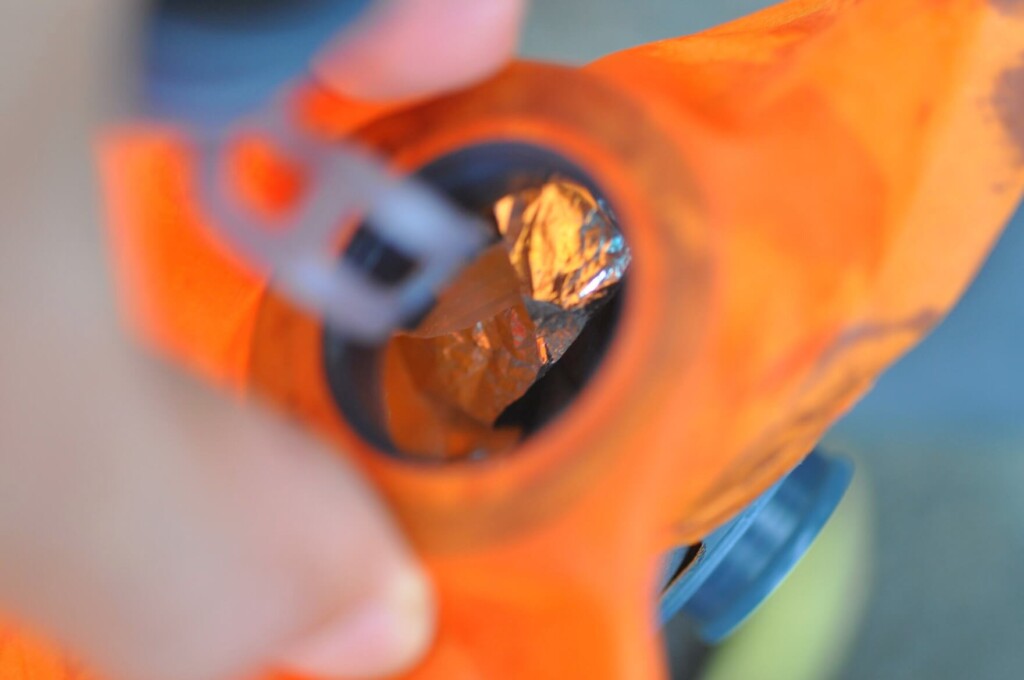
Looking inside the valve, we can't see any solid structure, but we can see that the metal film is folded in multiple layers in a complex manner
The mattress itself uses NEMO's proprietary Space Frame™ baffle structure, which prevents bottoming out even when loads are concentrated in a specific area. Even though the mattress's excellent internal structure provides excellent insulation and heat retention, if you bottom out when resting your elbows on the mattress, you'll feel the heat from the ground directly, causing the warm air that's been so carefully retained to escape. This structure is essential for mattresses used in particularly harsh environments
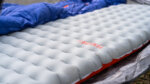
The cushions are 8cm thick, which is quite substantial and provides ample cushioning. In addition, the space frame baffle structure mentioned above prevents bottoming out, and the edges are slightly thicker to maintain balance when moving left and right, making the cushions highly comfortable. The focus has been not only on cold resistance, but also on comfort, and both have been achieved at a high level
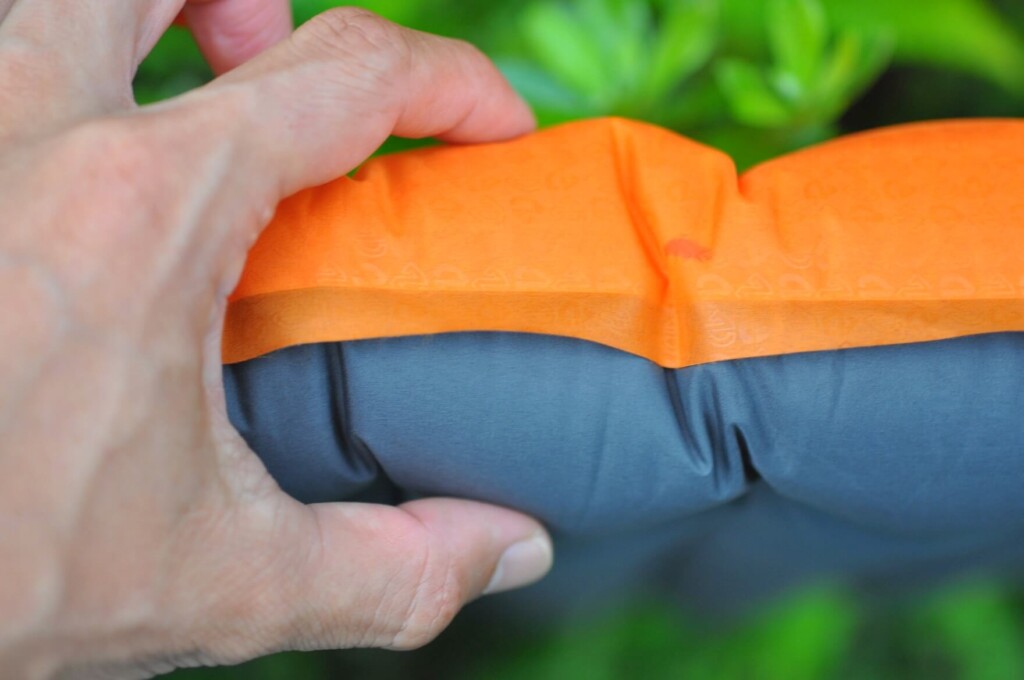
The mat is 8.0cm thick, which is quite voluminous
The valve system finally adopted by NEMO
NEMO has adopted a new valve system and pump sack for this model, which has resulted in a dramatic increase in speed and comfort when setting up and taking down the tent
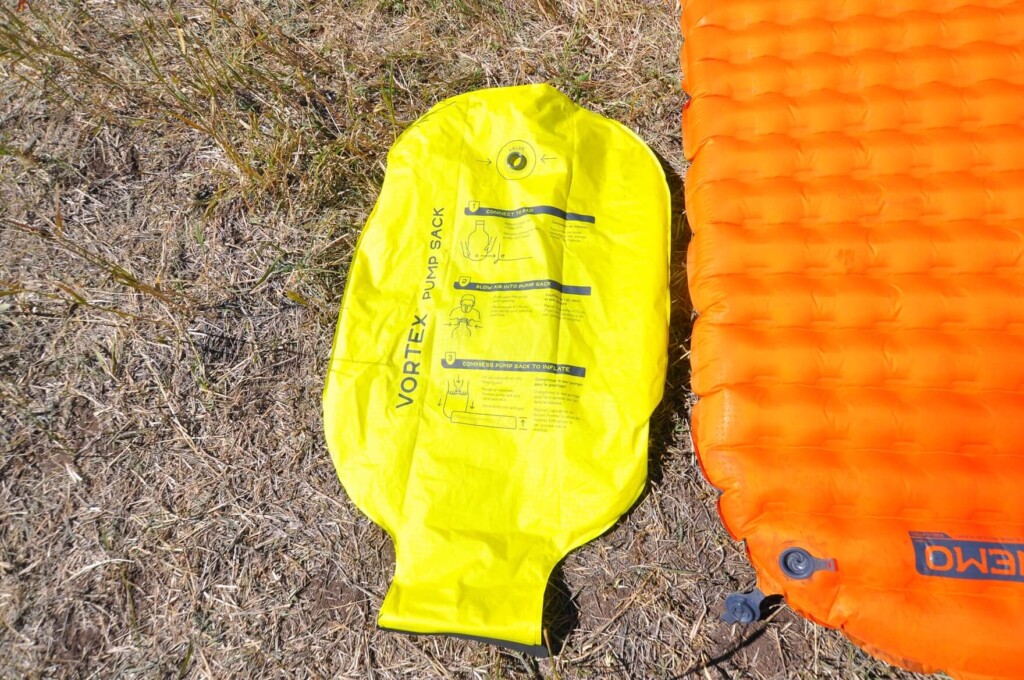
The included pump is made from the same material as the main unit, and has an instruction manual printed on it in English
With previous valves, once you had filled the bag with air, it was easy to make fine adjustments, but it was difficult to inflate it. And it took time to completely deflate it when packing down. This model is particularly popular at high altitudes, so the fact that it doesn't require the hard work of inflating the bag at high altitudes is a big plus. Thanks to the valve system, fine adjustments to the amount of air are also easy
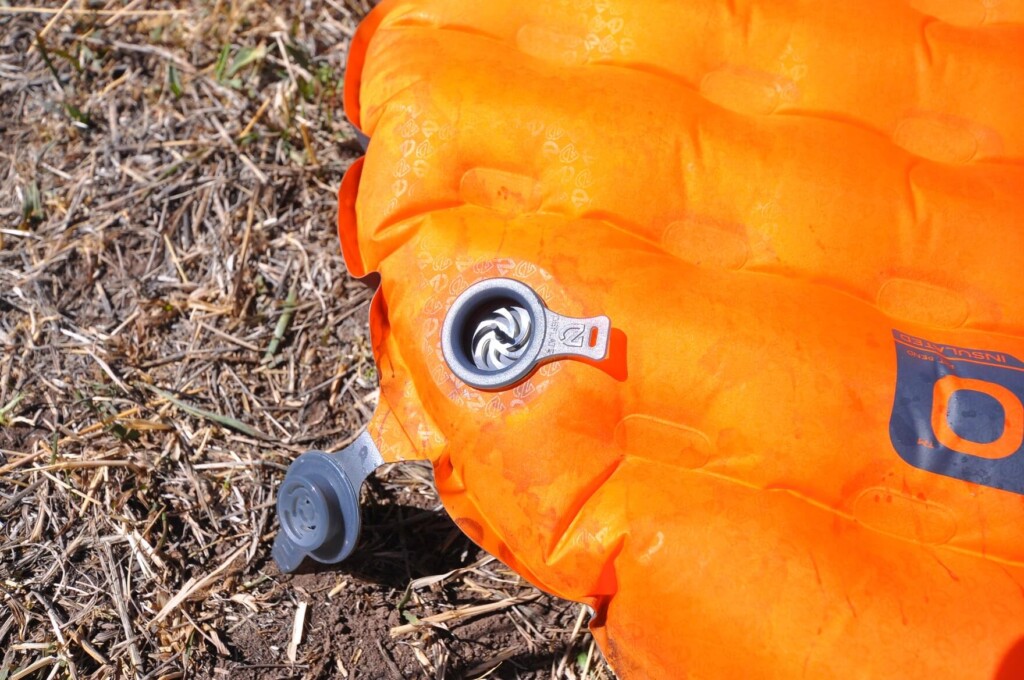
By pressing the center of the valve, air will gradually escape, allowing you to fine-tune the amount of air inside
And because the valve system is flat against the mattress surface, it doesn't bother you when you sleep or when you store it away. This is something NEMO users have been waiting for
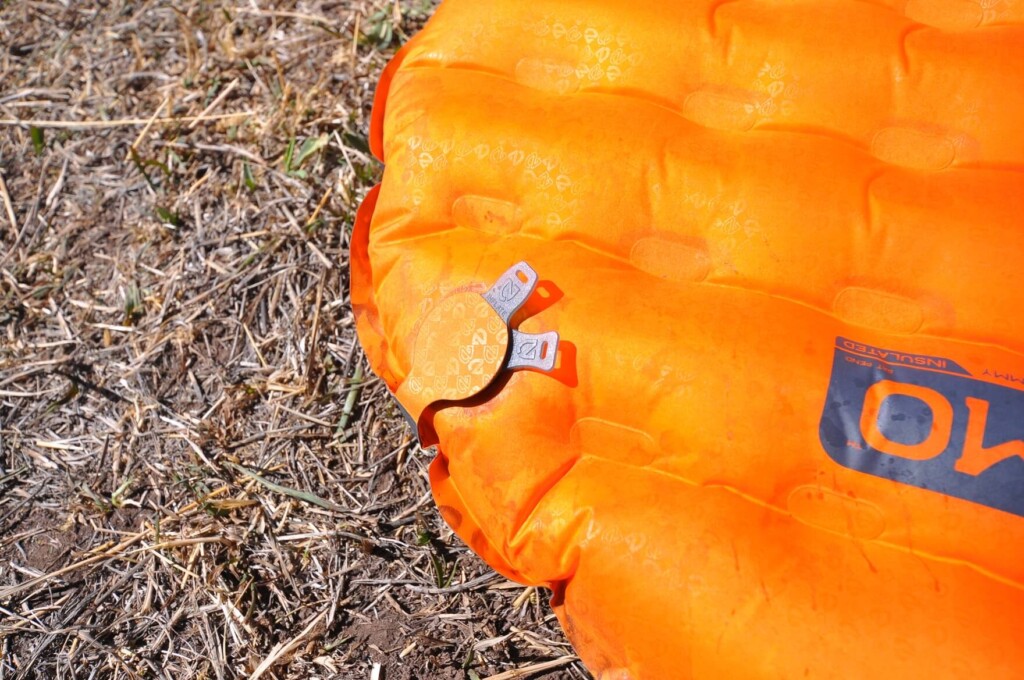
The new valve system lies completely flat, so you won't have to worry about it when you go to bed or put it away
Actual impressions after using it
Considering that I would be using it in the winter, I tried it in two different environments, one with temperatures around 1°C and the other around 20°C. First of all, the insulation and heat retention are excellent. When I changed my position and moved my head in the morning when the outside temperature was around 1°C, the parts that hadn't been in contact with my body were cold, and I couldn't help but mutter, "It's cold!", but the parts that had been in contact with my body were warm. At this temperature, the heat from the ground was barely transmitted at all. It really made me realize how much heat my body was giving off. On the other hand, in an environment around 20°C, I gradually got warmer as I slept, to the point where I started to sweat. I think it would be best to use it comfortably from autumn to winter to spring. In summer, it would probably be useful in the high mountains
As expected, the mattress is 8cm thick and provides excellent cushioning and comfort. However, rather than being fluffy and comfortable, it has a moderate bounce and feels like a high-resilience mattress, without any unpleasant sensations. Models that use metal films can have a rustling sound when moving, which can affect the sleeping experience, but the Tensor Alpine had no such issue and was very comfortable. However, even if your elbows don't touch the ground, they sink in quite a bit, disrupting the air balance within the mattress. It doesn't seem suitable for sleeping on your side. Since neither the front nor back of the mattress is non-slip, it can be quite slippery when used on a slightly inclined surface. In fact, when I slept on a slightly inclined surface, I sometimes woke up with my feet hanging off the mattress. Even when I tried to climb up, putting weight on a specific spot would throw off my balance, which was quite annoying when I was sleepy
NEMO is the first to use a valve system that uses a pump to inflate it. First of all, the valve is flat, which is a nice feature. Previously, the valves would stick out, which was a bit of a nuisance when storing or sleeping, so with this, you can sleep without worrying about it
The valve has two parts: a lid and a check valve, and is used when inflating or adjusting the amount of air. By connecting the included pump, it can be fully inflated in about three tries, and the amount of air can be easily fine-tuned. I also tried it at Sea to Summit, and it was fully inflated in two tries, so it is a little more work compared to blowing it up myself, but it is an overwhelming reduction in effort! When packing up, all you need to do is remove all the valves and the air will be released in an instant. If you remove them while sleeping, it only takes a moment
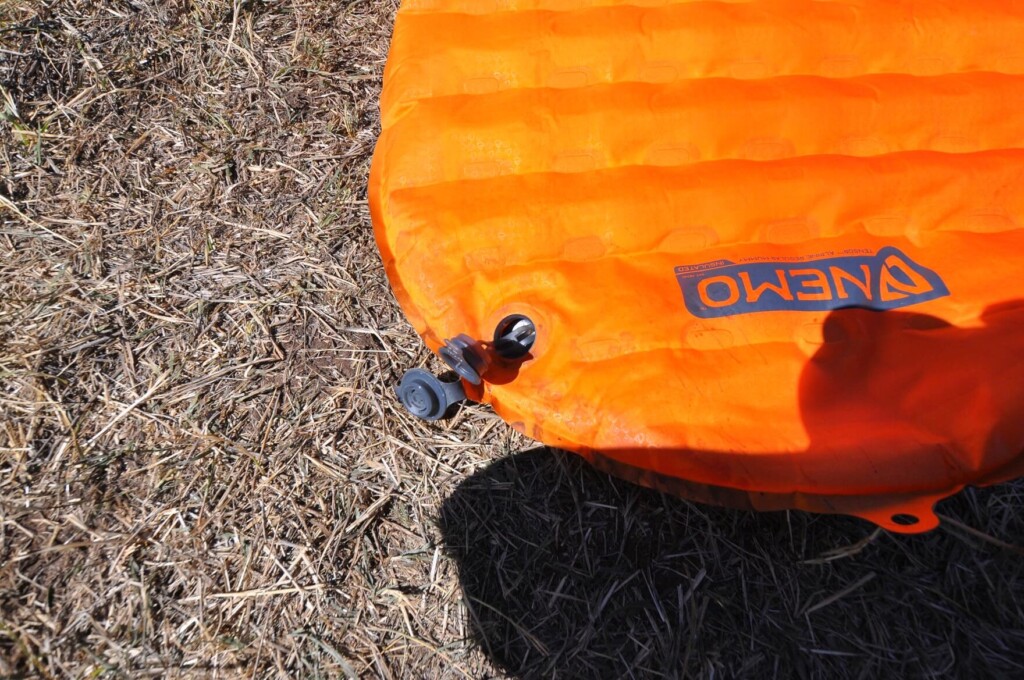
Remove the lid and degas in an instant
The weight of the regular size(R) reviewed here was measured at 473g, which is extremely light compared to sleeping mats from other manufacturers with the same level of functionality, and the packed size is 8cm x 20cm, about the size of a 500ml can. There are other mats with similar functionality and weight, but they are more expensive, so this NEMO Tensor Alpine stands out among similar mats
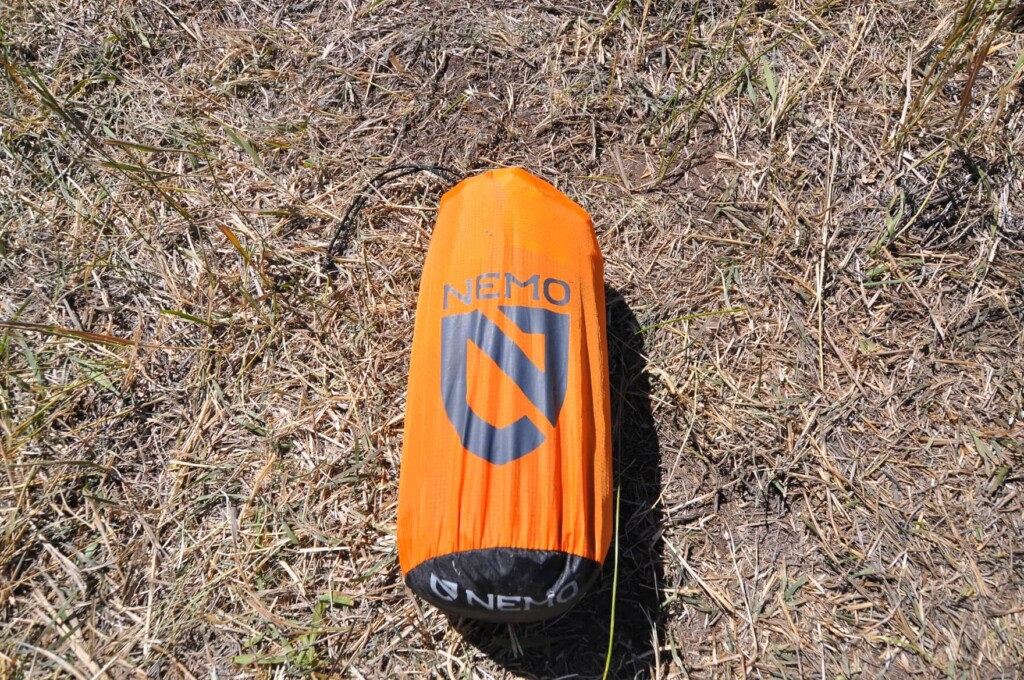
The storage size is very compact, just a little larger than a 500ml can, and about the same thickness
However, to achieve its light weight and compactness, it uses 20D polyester. When you actually use it, you'll notice that the fabric feels thin, which raises concerns about its durability. It's probably a good idea to bring a repair kit when going on long-term mountain hikes. One more thing to say is about the pump. The main body weighs 473g, while the pump weighs over 60g. Of course, a pump is very useful, but it's not essential. The Sea to Summit, on the other hand, doubles as a storage bag and dry sack. Considerable effort has been made to reduce the weight, so if they could add a little more, it would likely appeal to UL-oriented hikers who are concerned about weight
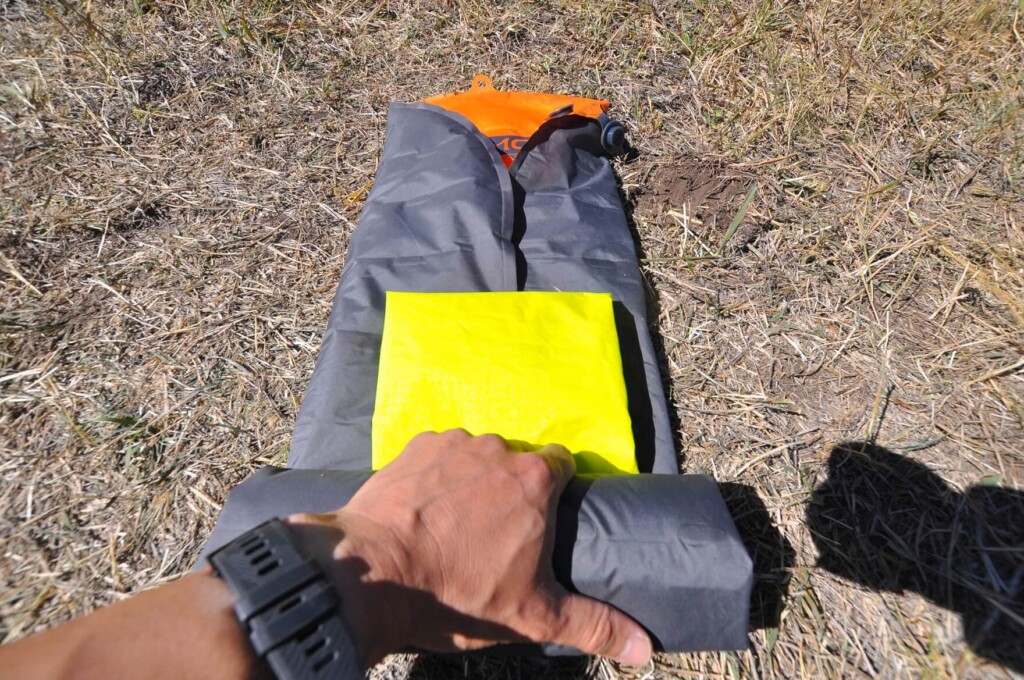
The pump is thin, so it can be stored together with the main unit
Summary: Recommended for these people
It can withstand temperatures down to just under -30°C, yet weighs less than 500g even with the stuff sack inside. It's a thick 8.0cm, but it's not overly fluffy and is built to be very stable, without sacrificing comfort. It keeps your back warm enough in the middle of winter, and even in spring and autumn, so if you use a lightweight sleeping bag, it may be a useful tool for further weight reduction. With such low insulation and heat retention specs, I'm hesitant to use it in the summer, but although it does feel warm and stuffy in low mountains, it seems like it would be comfortable to sleep in at high altitudes
This is the perfect model for the discerning hiker who wants something light and comfortable that can be used even in the middle of winter. It achieves a high level of both comfort and heat retention, two of the most important requirements for a mattress. For those who hike for long periods of time, the choice of bedding, especially the balance between weight, heat retention, and comfort, is extremely important. For those considering a mattress of the same level, this mattress offers high functionality and excellent value for money, so you will likely not regret buying it
Another major advantage is that it can now be inflated with a pump. There must be quite a few people who like NEMO mattresses but think it's not pump-compatible. The Tensor Alpine is a four-season mattress that appeals to such users. It may be the most high-spec mattress available today
Related reading