table of contents
- Humanity's challenge to feathers has come this far
- Patagonia Macro Puff Hoody:
- Main specifications and evaluation
- From "micro" to "macro". What's the difference? - Detailed review
- From a tight silhouette to a loose silhouette suitable for outerwear
- Plumafill is a revolutionary padding material that combines the warmth of down with the functionality of synthetic fibers
- Rich details including plenty of pockets
- What about weight and storage?
- I tried walking along the Nasu ridgeline in a November storm with the Macro Puff Hoody
- Summary: The more you wear it, the more you'll want to keep it. "Down-level heat retention x moisture resistance" - the benchmark for future synthetic insulation
Humanity's challenge to feathers has come this far
The Micro Puff Hoody was finally relaunched in 2017, featuring PlumaFill, a down-like synthetic padding that Patagonia developed over a period of roughly 10 years. I still remember the impact it had on me
Despite being a synthetic fiber, it is as light as down, soft, and has a high loft that restores its shape. The soft feel and comfort of the fabric make it feel completely natural to wear, and it's high enough quality to make you think, "Has artificial down finally come this far?" The efficient and stylish quilting is also wonderful
However, I was not completely satisfied with it. Particularly with its insulation. As I mentioned in last year's insulation comparison review , while it had sufficient heat retention considering its light weight, it still lacked something to actually serve as your main winter insulation. I wanted to see more of the potential of this revolutionary synthetic fiber material. Honestly, I shouted out loud at the time, "If they just added a little more padding, it would be an excellent winter outerwear."
And lo and behold, at the exhibition in January this year, I don't know if my wish was granted, but the exact product I had imagined was displayed prominently at the front entrance of the Patagonia booth!
the Macro Puff Hoody , a cold weather insulation jacket filled with plenty of . So, what's the difference between it and the Micro Puff? And how practical is it overall? With excitement, I tried wearing both models and comparing them. Let's take a look.
Patagonia Macro Puff Hoody:
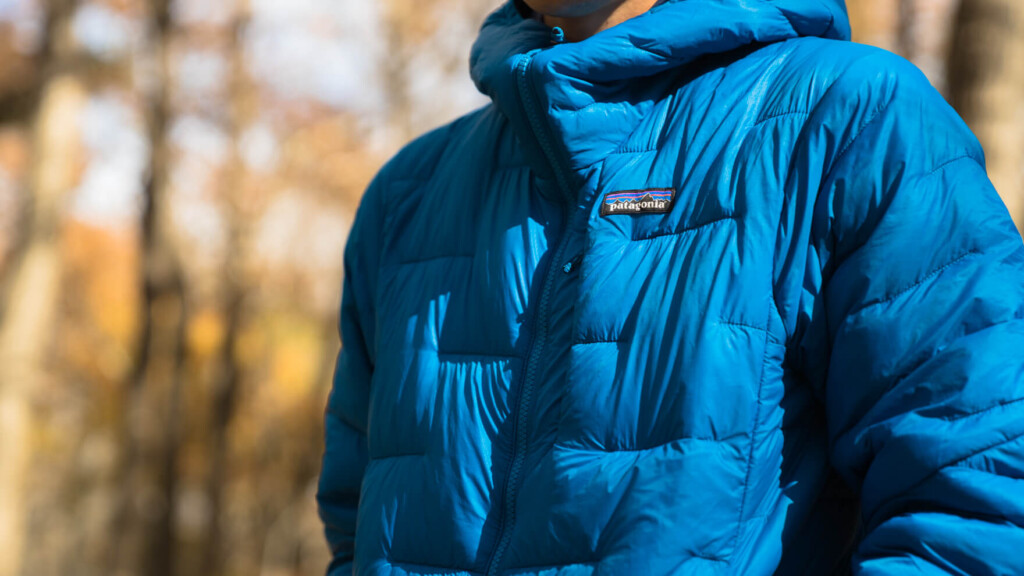
This revolutionary cold-weather insulation jacket features PlumaFill insulation, a synthetic fiber that's as light and resilient as down, wrapped in lightweight, windproof, and water-resistant recycled nylon ripstop. It's as warm and light as down, yet retains its warmth even when wet, like synthetic insulation. The long hem and slightly loose fit make it ideal for layering over a shell in colder temperatures. The adjustable hood provides a comfortable fit and is helmet-compatible. Practical features like a large left-chest pocket and a two-way front zipper provide easy access to the belay loop, perfect for braving the cold, are thoughtfully designed down to the last detail. Meanwhile, its quilted construction combines efficiency and design, while its comprehensive core features, such as ease of movement and comfort, make it suitable for a variety of winter activities
Recommended points
- Lightweight, highly resilient synthetic fiber batting filled to the maximum
- Completely blocks out wind. Highly weather-resistant so you don't have to worry about a little rain
- Well-designed hood that provides excellent overall warmth
- Insulation stability that retains its shape even after washing
- Plenty of pockets and a smooth, easy-to-adjust two-way front zipper make it easy to use
Points of interest
- It doesn't compress as small as expected
- A rather unassuming silhouette and coloring
Main specifications and evaluation
| item | Specifications and reviews |
|---|---|
| official weight | 434g |
| Actual weight | 417g (S size actual measurement) |
| material |
*Fair Trade Certified sewn |
|
|
| Comfort | ★★★★☆ |
| Heat retention | ★★★★★ |
| Stuffiness | ★★☆☆☆ |
| mobility | ★★★★☆ |
| weather resistance | ★★★★★ |
| weight | ★★★☆☆ |
| Functionality | ★★★★☆ |
| Storage capacity | ★★☆☆☆ |
| comprehensive evaluation | ★★★★☆ |
From "micro" to "macro". What's the difference? - Detailed review
From a tight silhouette to a loose silhouette suitable for outerwear
First, let's look at the fit and comfort, comparing it with the previous model, the Micro Puff Hoodie (hereafter referred to as Micro) (see photo below). Both have slightly long sleeves for the average Japanese person. The Micro (right) has a tight silhouette, with tapered sides and sleeves and a hem that reaches down to the waist, while the Macro Puff (left, hereafter referred to as Macro) is elegant but not restrictive, with a somewhat safe form. I wasn't expecting this loose fit, and the moment I put it on I wondered if I'd ordered the wrong size
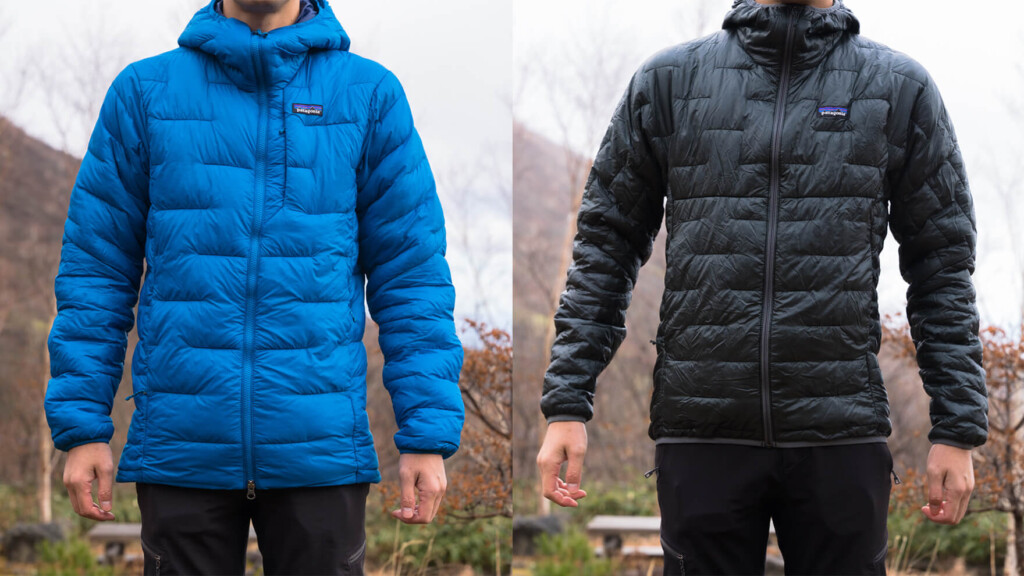
Although it is the same small size, the macro puff on the left is a lot roomier, which is clearly visible just by looking at it
The loose silhouette of the Macro is thought to be designed for use in situations where warmth is a major consideration. For example, you can throw it on over a shell while belaying while climbing, or throw it on when transitioning from hiking up to descending in the backcountry. In other words, it's designed primarily for use as an outer layer. On the other hand, the Micro is thought to be designed for a little more cold protection in warmer seasons (when wearing light clothing), or is tighter for use as a mid-layer
It's not possible to say which is the correct answer, but in that sense, if you plan to use a macro as a mid-layer and layer it underneath, you might want to consider going down one size. And vice versa
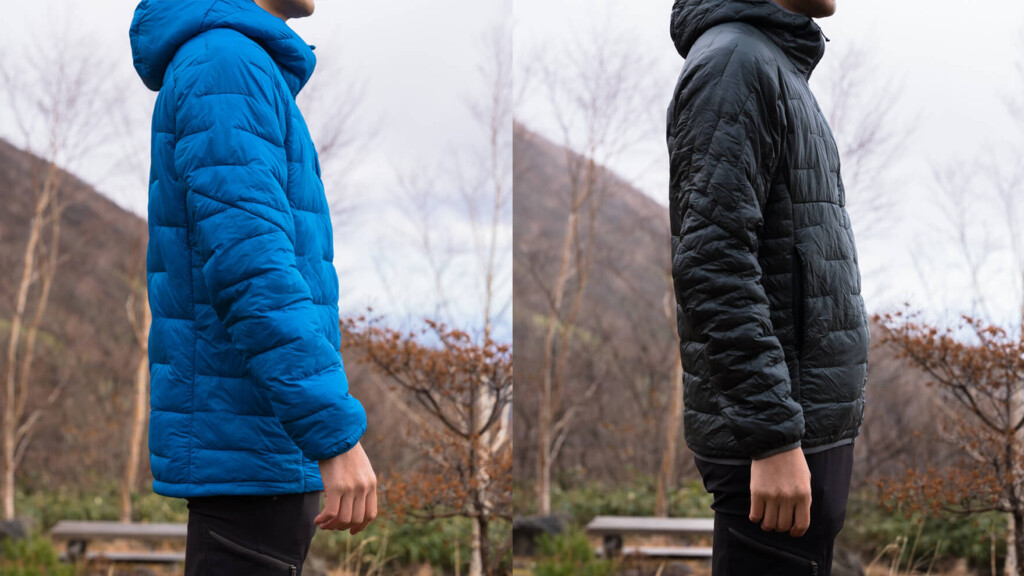
When viewed from the side, the difference in length is immediately apparent
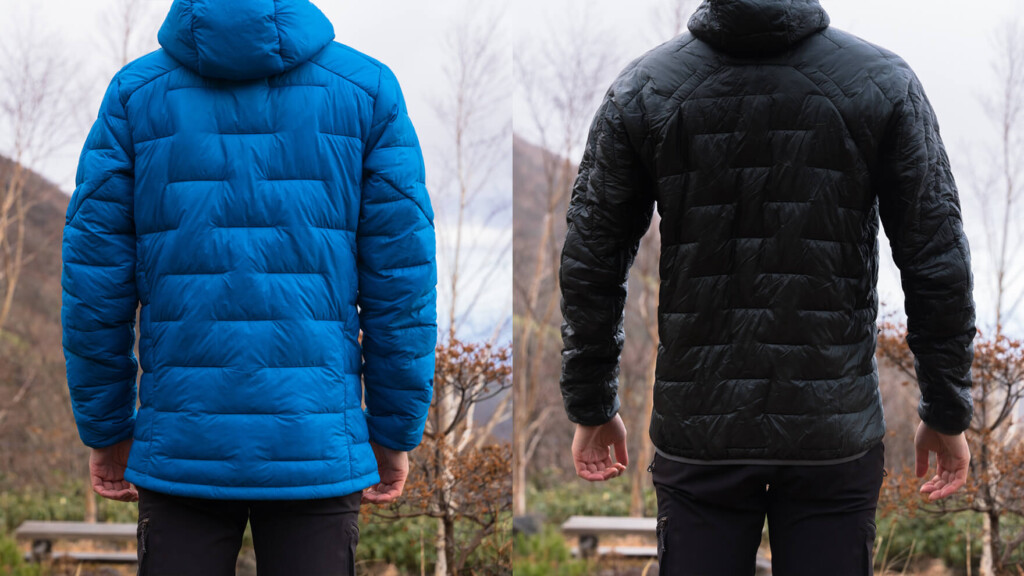
The back is designed to cover the buttocks, which prevents the jacket from riding up and keeps out cold air
Plumafill is a revolutionary padding material that combines the warmth of down with the functionality of synthetic fibers
Next, and most importantly, the heart of this jacket: the increased amount of PlumaFill, the lightest and most compressible padding Patagonia has ever made. Compared to the Micro, the MacroPuff is bulkier (90 grams vs. 135 grams) and more generously packed than ever before. As expected, the MacroPuff delivers a plump, firm, and comfortable feel. Its natural loft is so natural that an uninformed observer might mistake it for down
Based on the information that has been revealed, Plumafil appears to be a material made up of polyester fiber units with a structure very similar to that of down, which are somehow connected to each other to form a continuous mass
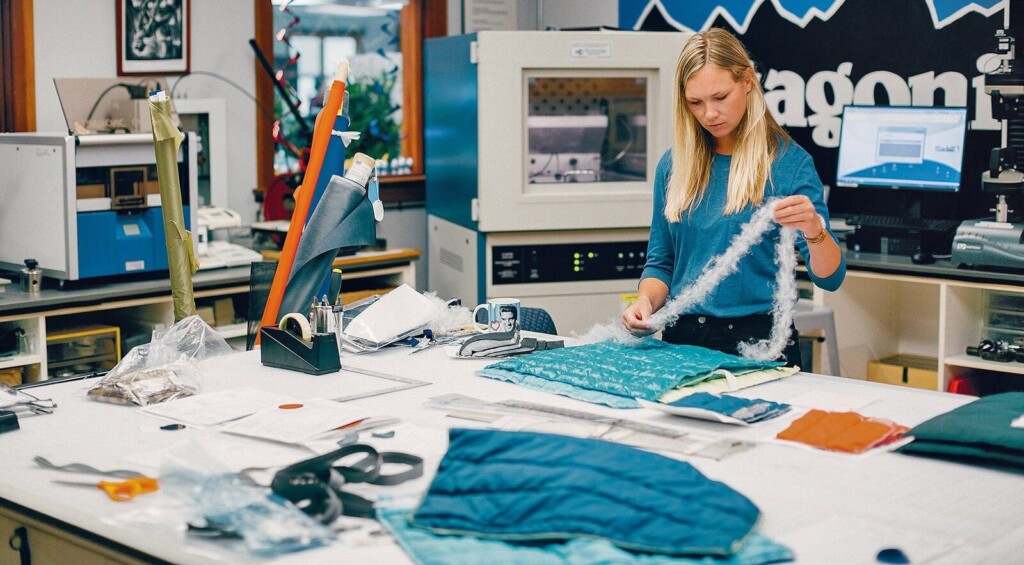
PlumaFill insulation is a continuous synthetic insulation material that mimics the structure of down. *From the official Patagonia website
Each piece has a down-like structure, making it highly resilient and providing excellent insulation despite its light weight. Furthermore, the unique quilt structure, which was developed after extensive research into this special polyester, minimizes seams while stabilizing and maximizing the loft, resulting in virtually no uneven loft
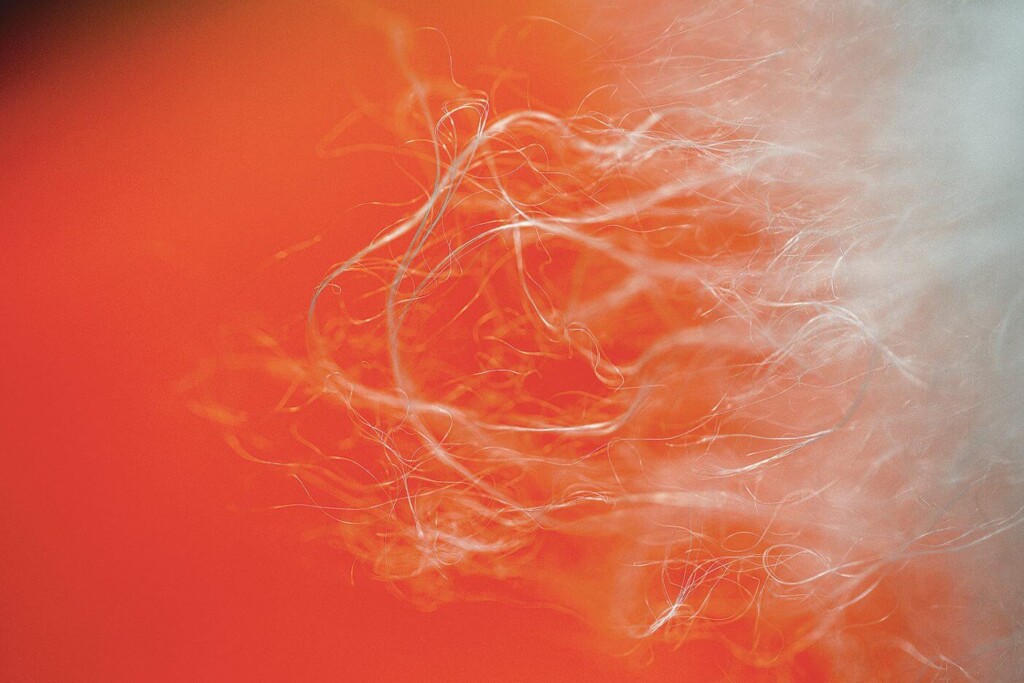
The spiral filament of Plumafil. *From the official Patagonia website
Honestly, I was surprised by this. When imitating down, the filling tends to stick together when wet or washed, causing it to become uneven, and if it's not properly dried and dispersed, cold spots can form. However, when I washed this, the inside of the loft barely moved at all. Considering that, in my experience, PrimaLoft® Black Insulation ThermoPlume®, the latest synthetic fiber that also imitates down, tends to ball up a bit after washing, this is very welcome
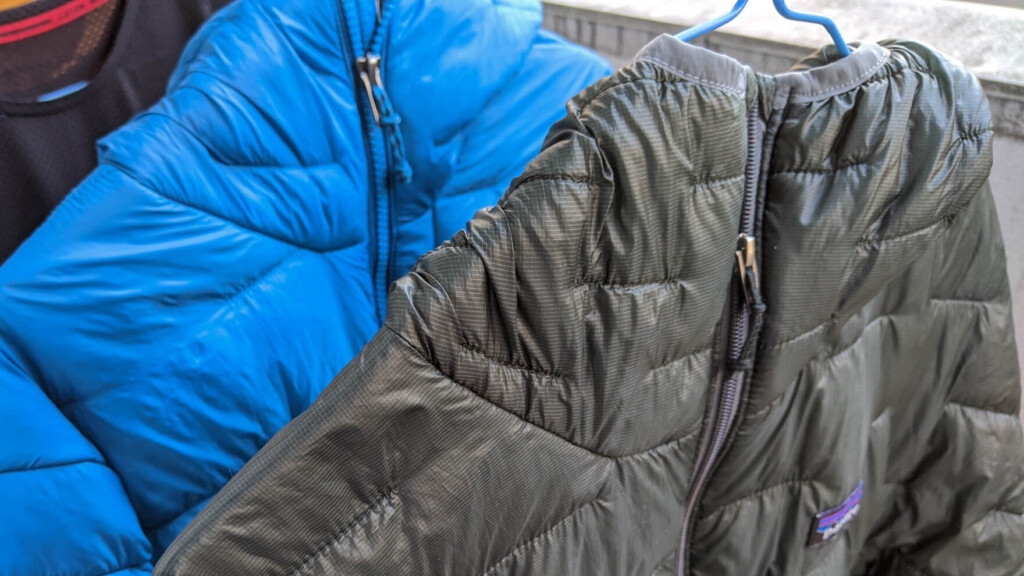
Both the micro and macro versions retain their loft, so you can wash and spin them in a laundry net and still wear them. Excellent
The outer and inner linings are made of thin, tightly packed recycled ripstop nylon (10 denier). It's very smooth and comfortable against the skin. It's not particularly durable, considering its thickness, so I'm not confident it would survive a bushwhack. However, as long as I don't use it recklessly, I haven't had any concerns about it tearing easily
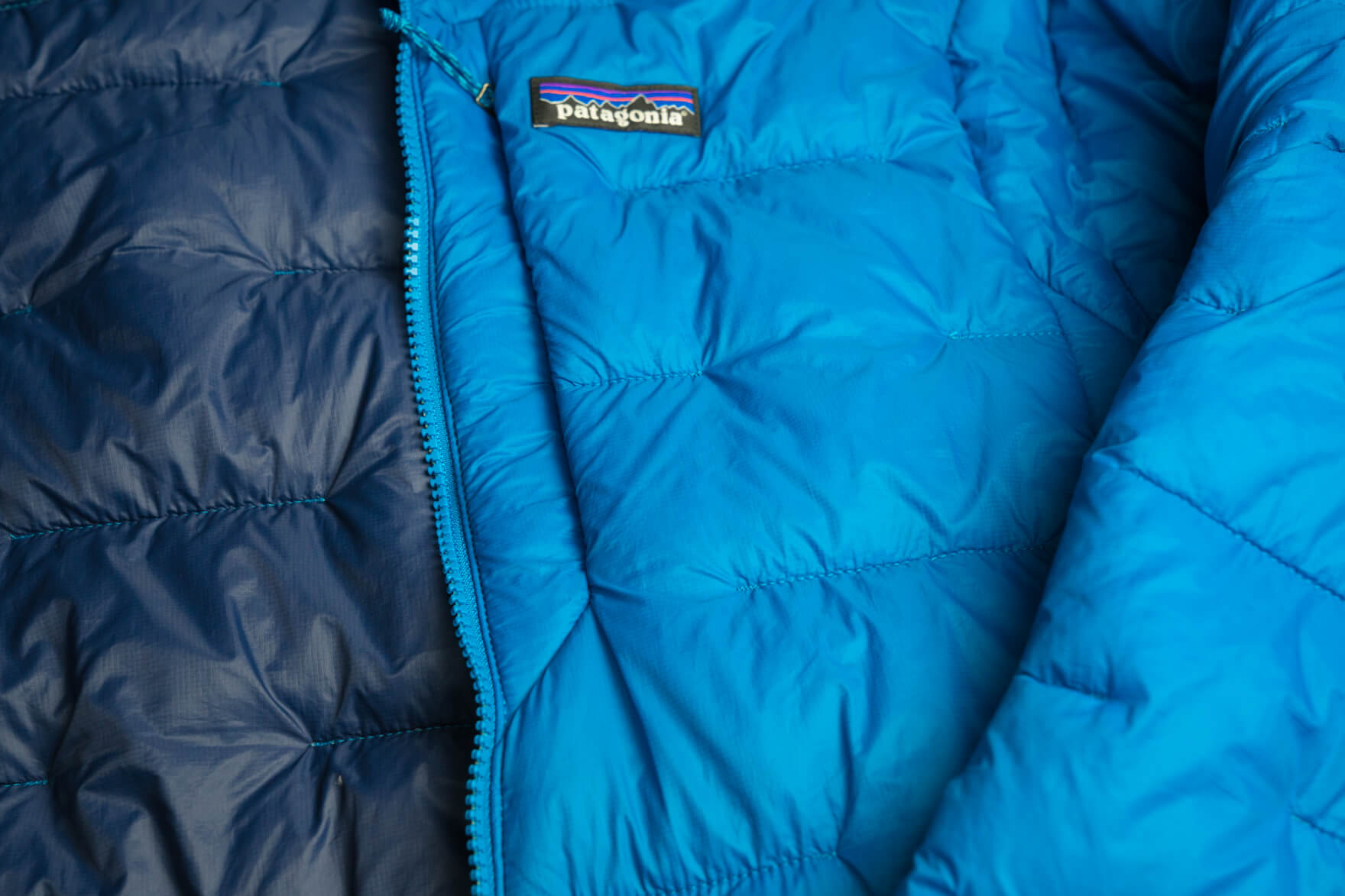
Rich details including plenty of pockets
In terms of functionality, the biggest difference from the Micro is the larger, richer hood. There is an adjustable drawcord at the back of the head, so you can wear it over a helmet or just on your head to find the perfect fit
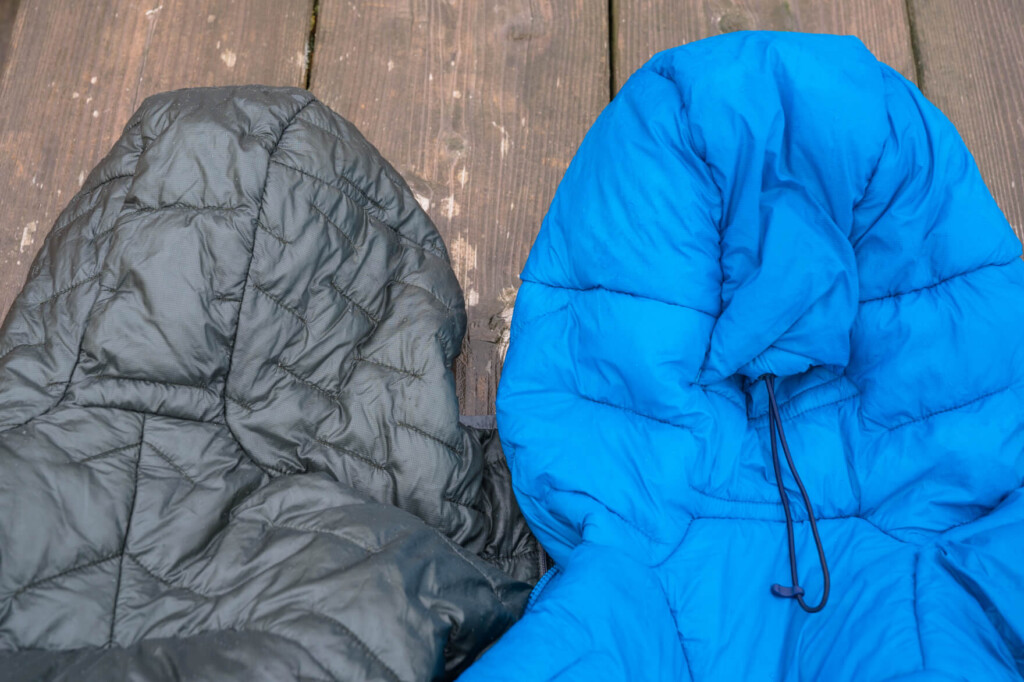
The hood of the Macro (right) has tabs and drawcords that are easy to grip even while wearing gloves
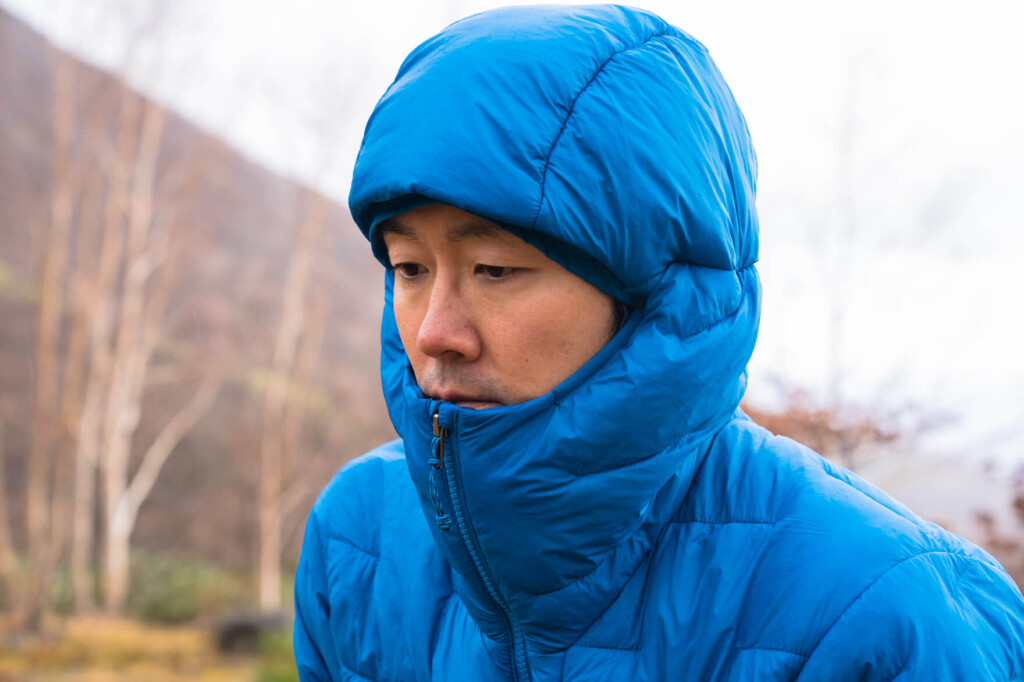
The hood is filled with plenty of padding, providing excellent warmth and a comfortable fit
The front zipper has been changed to a Vislon double zipper for lighter weight and use in colder climates, and for easier access to the belay point on the harness (see photo below, left)
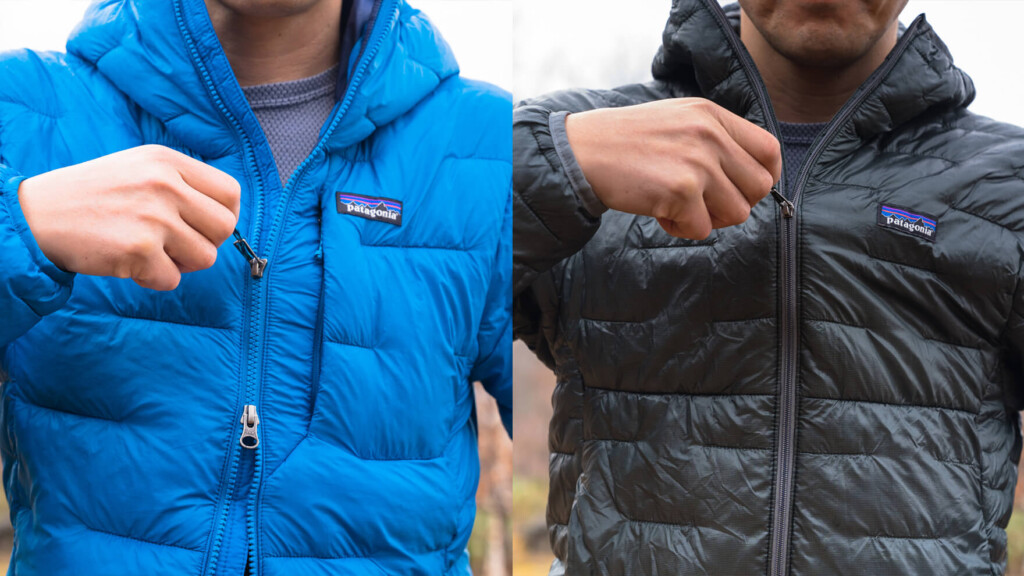
The Macro front zipper (left) is a lightweight, smooth, and freeze-resistant Vislon type
The pockets are basically the same on both the Micro and Macro models, but the Macro pockets are all larger and sized to be easily operated with gloves on
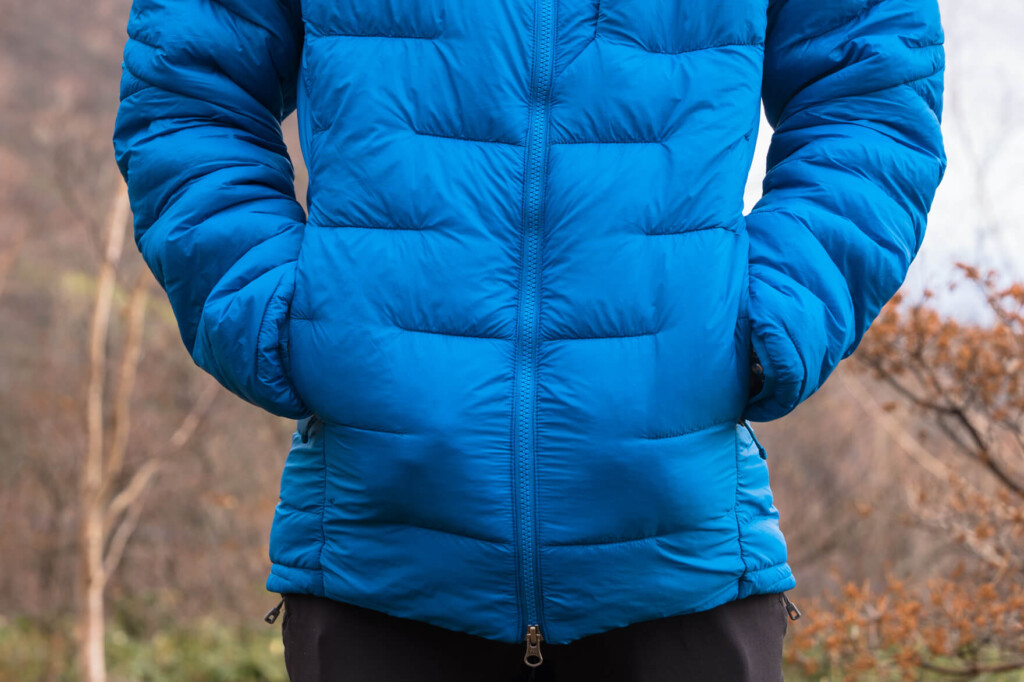
The left and right hand pockets are positioned slightly higher and are large, which is a nice touch
Both the Micro and Macro packs have large drop-in pockets on the inside, allowing you to conveniently store not only snow gloves but also ski seals (climbing skins)
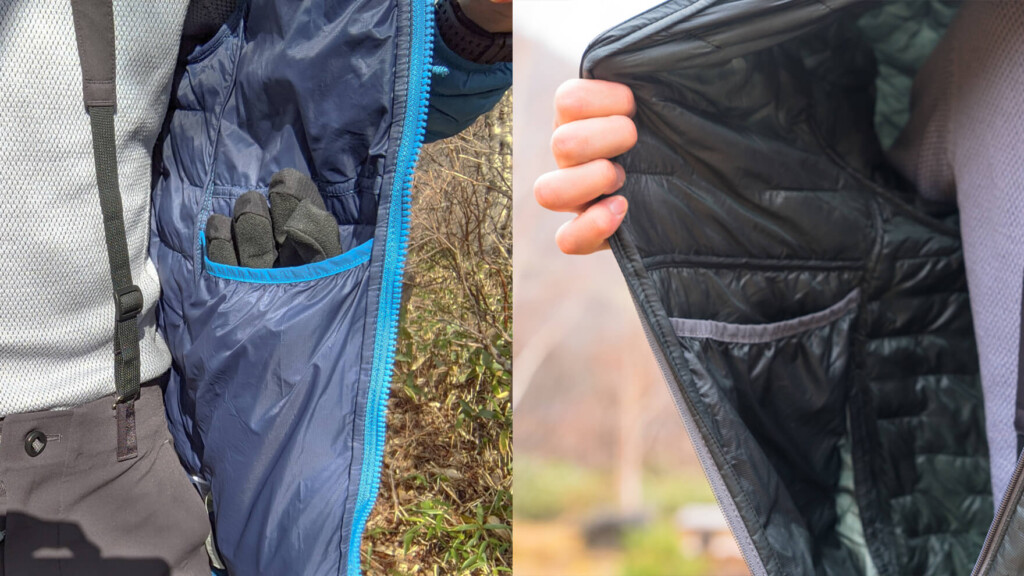
The large pockets on the inside of the left and right sides are simply the edges of the hand pockets sewn on, but there is a big difference in convenience between having them and not having them
The left-chest zipper pocket, exclusive to the Macro, is larger than I expected. It could easily fit a Pixel 3a and even a long wallet

The left chest pocket is large enough, although some people say it's too big and the contents shake around
By the way, there are drawstrings inside the left and right hand pockets to adjust the hem width

Tightening the drawcord at the hem will provide a tighter seal
What about weight and storage?
As you move from the Micro to the Macro, the appeal of the weight and packability has decreased. However, it is still slightly lighter and more packable than other brands of the same class (such as the Arcteryx Atom AR). The Micro (center photo below) is a packable type that can be stored by turning the left pocket inside out, while the Macro (right photo below) is stored in the included stuff sack. The large stuff sack makes it look larger, but it is easier to pack
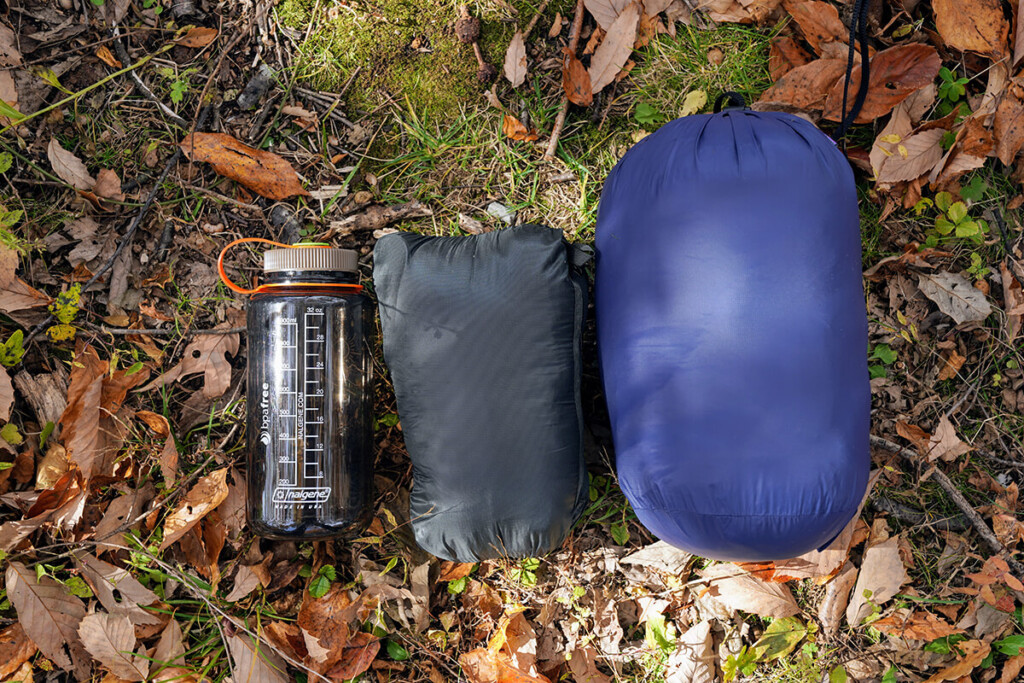
The stuff sack (right) that comes standard with the Macro looks larger than the 1L Nalgene bottle (left), but it can actually be compressed even more
I tried walking along the Nasu ridgeline in a November storm with the Macro Puff Hoody
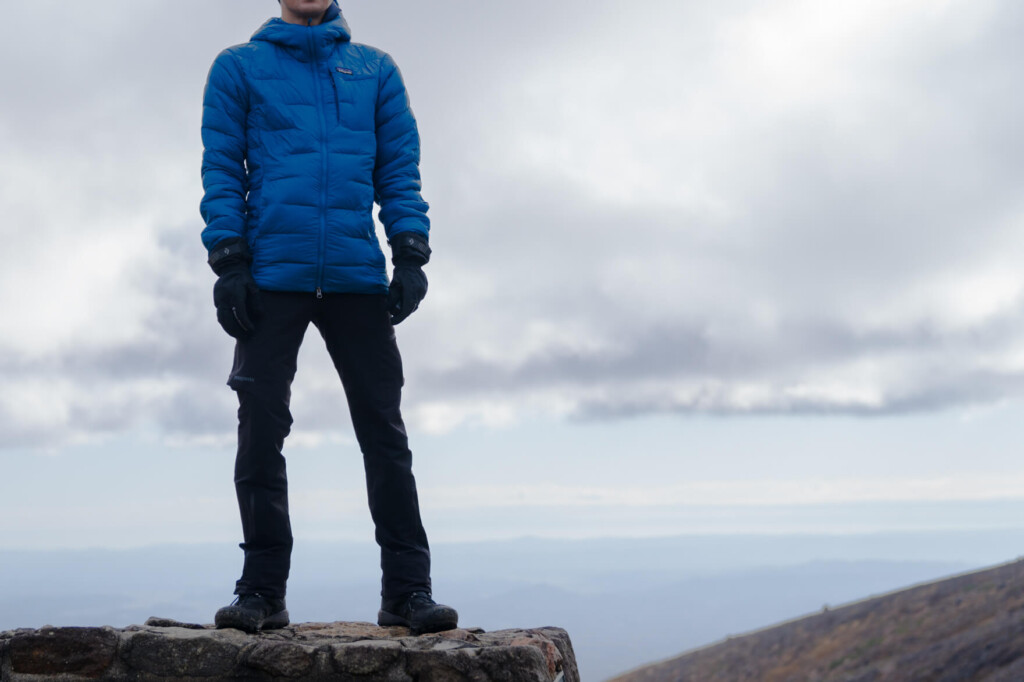
Although the test period was short, I was lucky enough to catch a winter-like atmospheric pressure pattern, so I decided to try it out on the ridge of Mount Nasu, which is known for its strong winds. I evaluated its usability by checking how comfortable it was to wear just a base layer over a 40L daypack and a Macro Puff. Although I didn't end up on a snowy mountain, there was already snow remaining in places on the ridge

It was hot in the forest before the wind started to blow, so I opened the zipper all the way. The cool breeze from the front felt just right
Naturally, once I started climbing, I quickly got warm, and in the windless forest area, I quickly opened the zipper all the way. In terms of breathability, it is inferior to fleece or active synthetic fiber insulation, which allows for good ventilation. However, the strength of synthetic fiber insulation is that it does not lose its heat retention due to stuffiness, nor does it prevent sweat from escaping, so I didn't feel uncomfortable enough to want to take it off. In fact, with the temperature on this day approaching 0 degrees, it felt just right as a jacket for active use. Even when using a lot of my upper body with trekking poles, the excellent three-dimensional cut from shoulders to armpits to elbows meant less stress and I could enjoy climbing in comfort
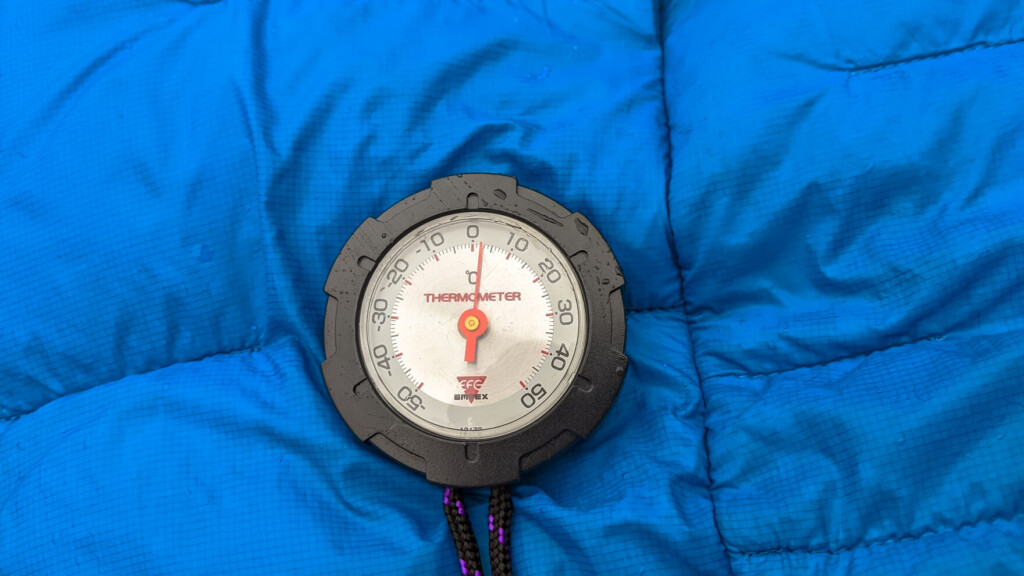
As the winter weather intensified that day, the temperature dropped rapidly. In windy areas, it felt like it was below freezing
As I reached the ridge, sure enough, strong gusts of wind came from the west, making it difficult to stand. Since I didn't have a balaclava, I had no choice but to pull the hood up as far as it would go. By adjusting the drawcord at the back tightly and tucking the hood in low over my chin, it snugly covered most of my face like a balaclava, and it didn't blow me away in the strong wind, so I really felt how great the hood was
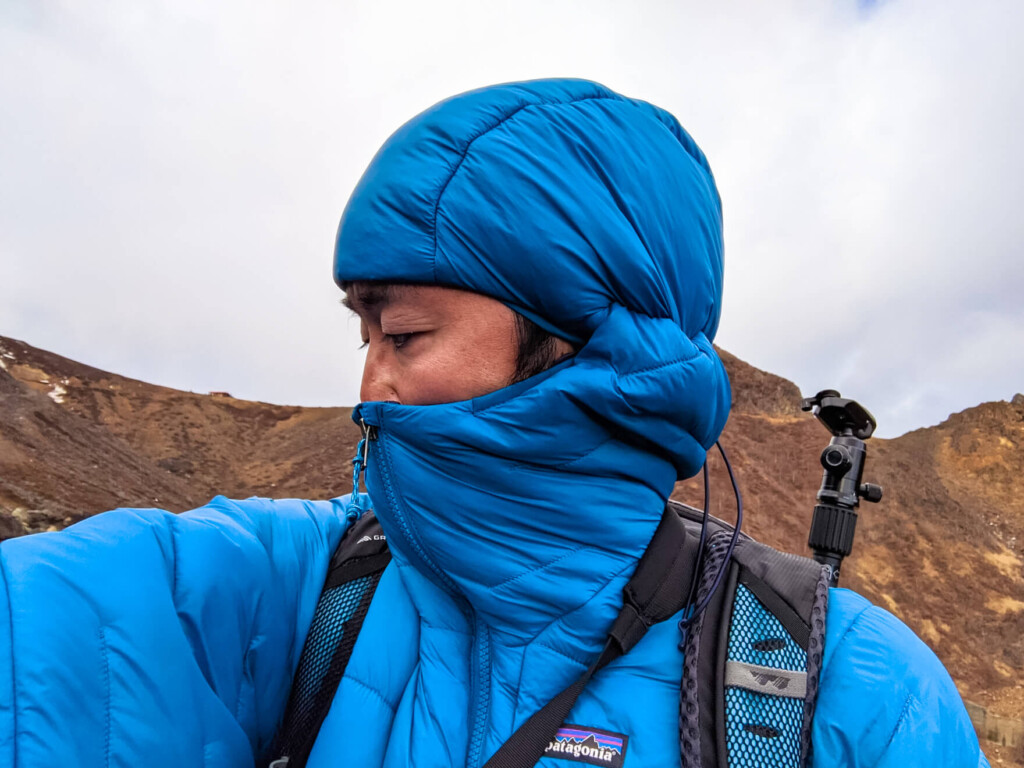
The hood fits snugly to the shape of your head and provides excellent heat retention, making it so comfortable you won't need a balaclava
I walked around in this stormy weather wearing just a base layer and a Macro Puff, and the Macro Puff provided ample insulation, gently maintaining body heat whether I was standing still or walking. No wind blew into the garment, confirming its high windproof properties. Incidentally, when I changed into a Micro Puff at this time, I found that although it did block the wind, it naturally felt relatively cold, and there was a slight draft from the front zipper
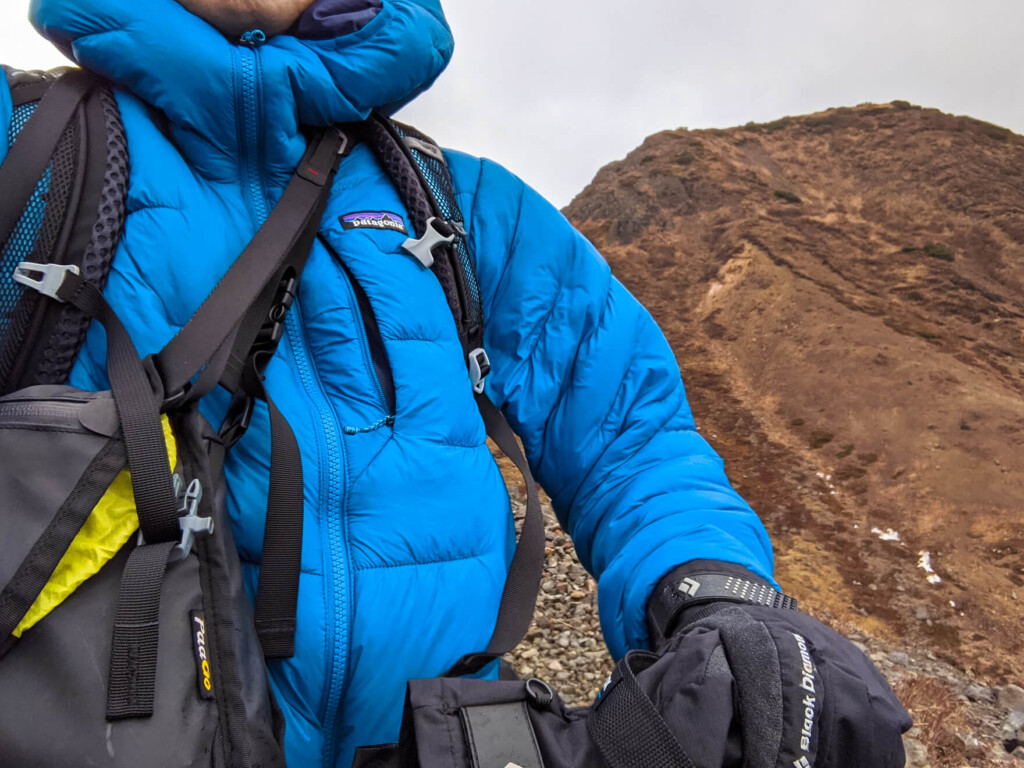
From the hood, sleeves, hem, and zipper, I didn't feel any cold wind anywhere except my exposed face
The nylon ripstop outer fabric, which is treated with DWR (durable water repellent), withstood the rain and sleet that started falling midway through the trip without any issues for several minutes. The strength of synthetic insulation is that you don't really mind getting a little wet in the first place
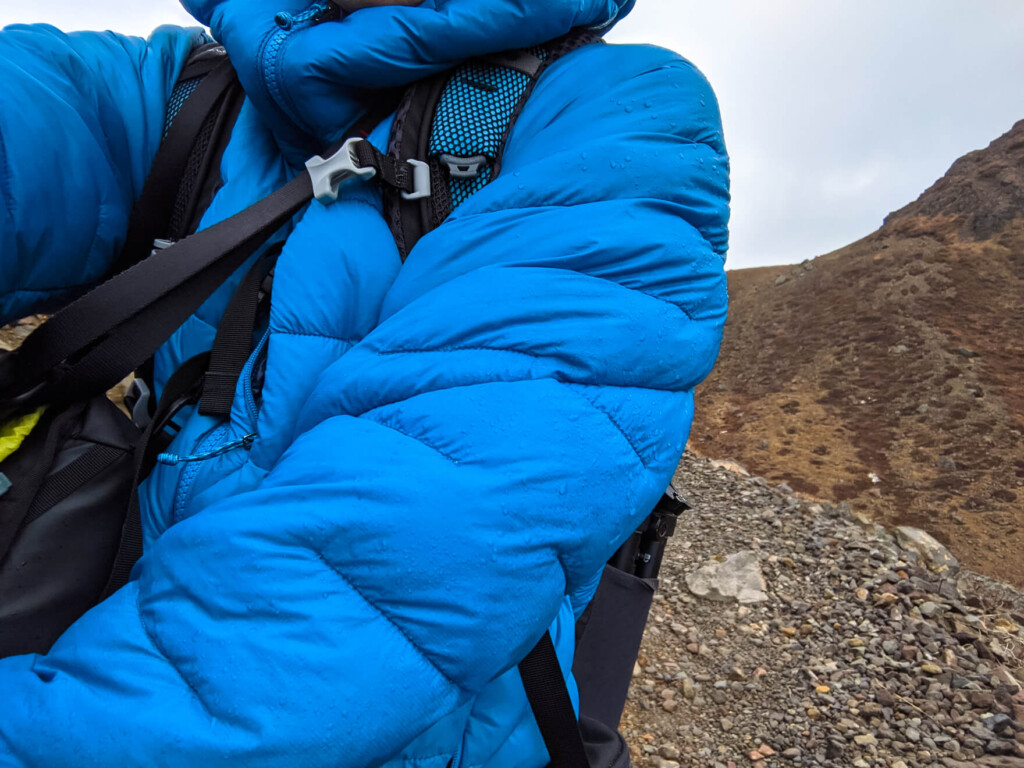
The DWR treatment on the outer fabric repels a certain amount of rain, but water will gradually seep in through the seams
Also, although this was expected, after leaving it in the rain for about an hour, not only the seams but also the fabric gradually became soaked. The water-repellent treatment is just a general one and not particularly strong, so if it rains, it's best to take measures to prevent it from getting wet by putting on rainwear or something similar as soon as possible

Summary: The more you wear it, the more you'll want to keep it. "Down-level heat retention x moisture resistance" - the benchmark for future synthetic insulation
At first, I was having trouble getting used to the loose fit because I was imagining it would be similar to a Micro Puff, but it has a stress-free standard fit, a smooth feel like a high-quality sleeping bag, stress-free ease of movement, and of course, it's light and resilient, unlike a synthetic material, has great usability with all the right details that are easy to use, and is comfortable enough that you don't have to worry about rain or dirt. In short, it's "easy to use as a tool," and the more you wear it, the more you'll want to put it down. Its careful construction with practicality in mind is what makes it so appealing
In areas like Japan, where wet snow falls and the weather in mountainous regions is changeable, synthetic insulation jackets that maintain their insulating properties in all these conditions are perfect. The Micro Puff is likely to be useful as a lightweight winter garment for mild, low-temperature conditions other than snow, but the Macro Puff is likely to be useful as winter clothing that can be used all year round, including on snowy mountains
Although it has many climbing-specific features, it still provides basic cold weather protection, so it can be used not only as a belay parka for mountain climbing or as a warm jacket for use inside a tent, but also as a versatile cold weather jacket for a variety of winter activities
Related reading