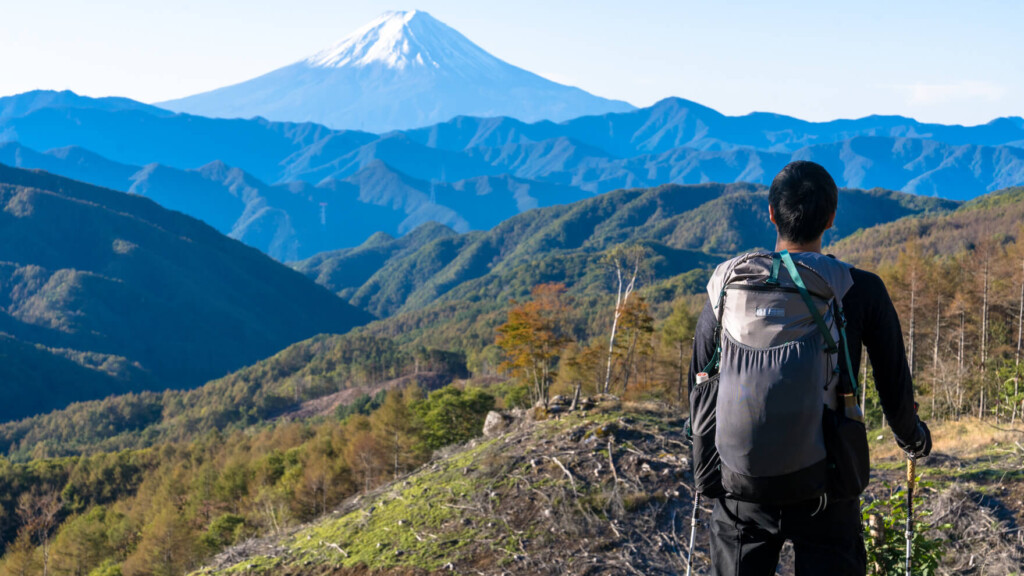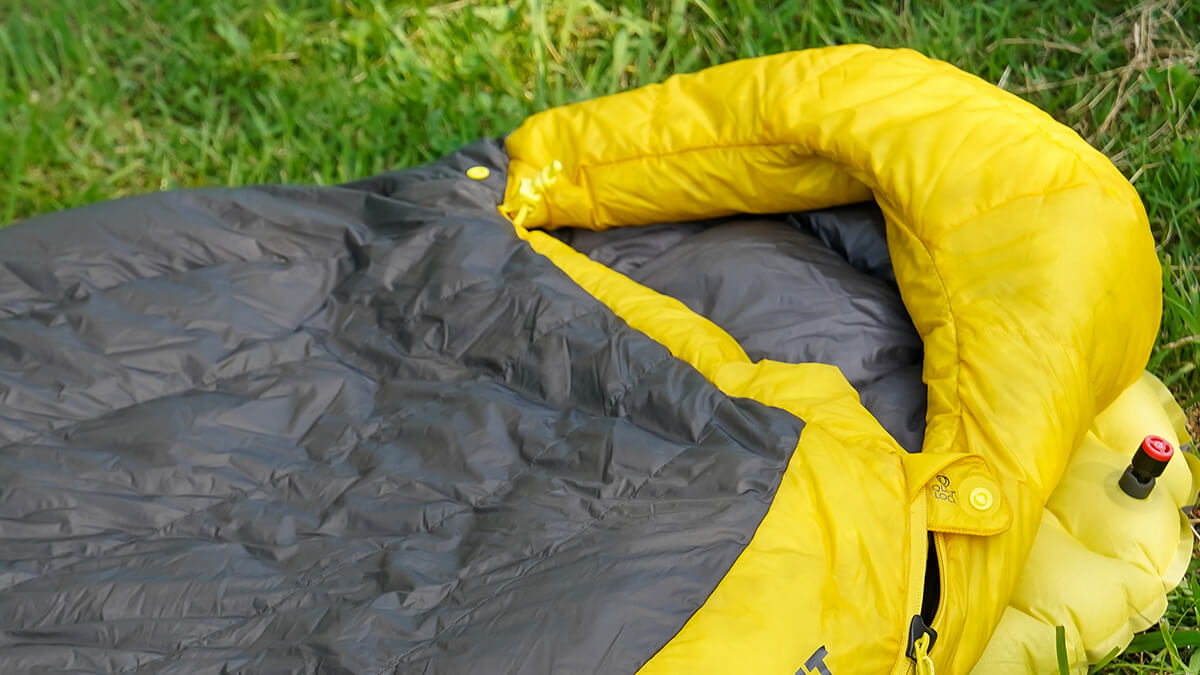
Falling asleep under a starry sky, surrendering yourself to the cozy warmth of your sleeping bag... Although you'll likely be sleeping in a tent most of the time, sleeping while feeling connected to nature is undoubtedly one of the best parts of camping in a tent
A sleeping bag is essential for a comfortable sleep when camping in a tent. Unlike regular camping sleeping bags, sleeping bags for mountain climbing are lightweight and compact, providing maximum comfort and warmth while minimizing the burden of carrying them
Like many other mountain gear, sleeping bags are generally referred to as such, but each manufacturer offers a variety of models with different materials, structures, shapes, and weights depending on the use, purpose, season, and location, and are designed to fit a wide range of needs. Choosing the perfect sleeping bag for you from the wide range of factors and variations is no easy task. If you end up with an inappropriate or poor quality model, you could end up with a lack of sleep, fatigue, and your trip will be ruined. It's not a cheap purchase, and once you buy it, it's an important partner that you'll likely use for years, so it's important to choose carefully
Here in Japan, the big three brands tend to be overwhelmingly dominant (although of course they are of high quality), but in reality, overseas models are just as impressive and continue to evolve every day. With vibrant new products appearing from these overseas brands, this season was another fruitful one
So, this time, as someone with over 25 years of mountaineering experience, I have looked at all 237 models for the 2025-26 season and independently selected the best models, and in the second half I have summarized the points to pay attention to in order to wisely choose the best model
Although we have only introduced one or two items in each category here, we have made available to members a comparison table that includes other recommended models and all of their specifications and features. Outdoor Gearzine's content is supported by your support. If you are interested, please take this opportunity to consider becoming a member!
All recommended sleeping bags and a comparison table of all 237 models are available with a paid membership

table of contents
- [By Scene/Preference] Best Outdoor Sleeping Bags
- Best Overall Sleeping Bag: Rab Mythic Ultra / NEMO Coda™ Endless Promise® / Mont-Bell Dry Seamless Down Hugger 900
- Best Lightweight Sleeping Bag: Sea To Summit Spark
- Vest/Winter Sleeping Bag: ISUKA Air Plus 630/810 / THE NORTH FACE Inferno-18/-29
- Best affordable and high-quality sleeping bag: ZANE ARTS KUMO
- Best/Quilt/Half-Length Sleeping Bag: Rab Mythic Ultra 120 Modular / ENLIGHTENED EQUIPMENT Revelation / NEMO Pulse™ 20/30 Endless Promise®
- Best Low-Cost, High-Quality Quilted Half-Length Sleeping Bag: LEISURES Roo Sleeping Bag 300
- Vest/Synthetic Sleeping Bag: OMM MountainRaid
- Vest, Synthetic Quilt, Sleeping Bag: STATIC ADRIFT Ti SLEEPING BAG
- How to Choose: 6 Tips for Choosing the Right Sleeping Bag for Mountaineering and Hiking
- Point 1: Choose the appropriate temperature range - Be careful not to make it too hot or too cold
- Point 2: Filling material - Down or synthetic? There are countless options to choose from
- Point 3: Resistance to getting wet – Some kind of wet protection is essential in Japan –
- Point 4: Shape, size, and structure - Start with the mummy shape, and once you get used to it, you can eliminate unnecessary parts in your own way
- Point 5: Other elements and parts - Consider ease of use in actual use -
- Point 6: Bedding to use in combination – A sleeping bag isn’t the only thing you need for a good night’s sleep
- summary
[By Scene/Preference] Best Outdoor Sleeping Bags
Best Overall Sleeping Bag: Rab Mythic Ultra / NEMO Coda™ Endless Promise® / Mont-Bell Dry Seamless Down Hugger 900
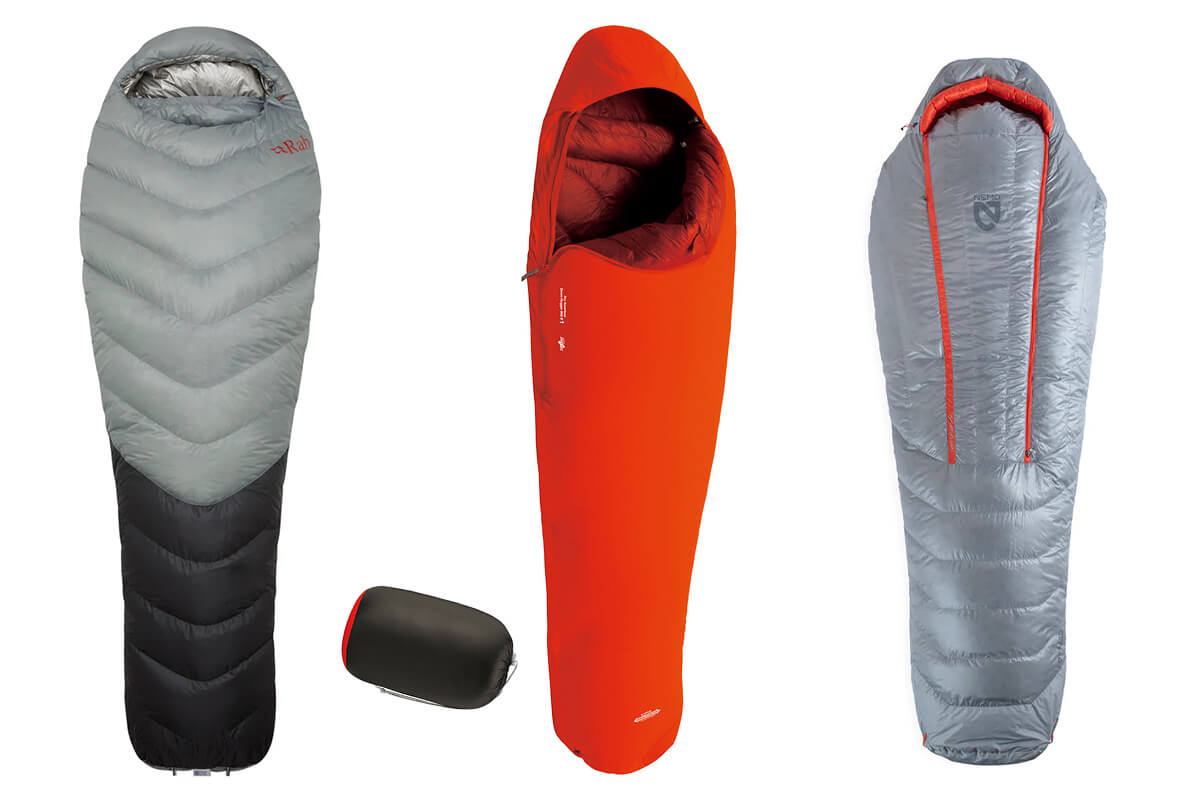
Not only do they offer the high level of warmth per weight required of a good sleeping bag, but models that offer a balanced combination of other elements such as comfort, ease of use, and compact storage make them suitable for a wide range of seasons and activities. Combined with their easy-to-use design, they are a perfect choice for many people, and offer a simple, easy-to-use design that satisfies beginners and veterans alike. It was a tough decision to choose this season's best model, which offers such comprehensive excellence that it can be recommended to anyone, but we have chosen three series: the Rab Mythic Ultra, the NEMO Coda™ Endless Promise®, and the mont-bell Dry Seamless Down Hugger 900
Although each model has its own unique characteristics, we can confidently vouch for the overall well-balanced quality of all our models. Most series have different volume lineups for spring/summer, summer, autumn/winter, and winter, so please choose the range that suits your purpose and preferences
What I like about Rab Mythic Ultra
- The lining fibers are coated with titanium, and the structure (TILT lining) reflects radiant heat into the bag without impairing the breathability of the fabric, achieving better heat retention (i.e. lighter weight) at the same weight
- Made with 900FP RDS-certified European goose down and treated with a water-repellent finish, it is resistant to moisture
What I like about the Dry Seamless Down Hugger 900 series
- Lightweight, high-quality down with excellent insulation
- A unique method of entangling feathers into fibers allows for even placement of feathers without the need for baffles (i.e., weight reduction)
- The outer fabric is made of waterproof and breathable material, making it extremely resistant to getting wet
- Comfortable fit that doesn't restrict movement
What I like about NEMO Coda™ Endless Promise®
- Made with 800 fill power, high-quality RDS-certified down with water-repellent finish
- Draft tubes are placed in the right places to provide comfortable warmth
- Multi-stage thermogills in the chest area and heat-dissipating zippers in the footbox regulate the temperature inside the sleeping bag, preventing you from getting too hot or too cold
- Affordable price
Best Lightweight Sleeping Bag: Sea To Summit Spark
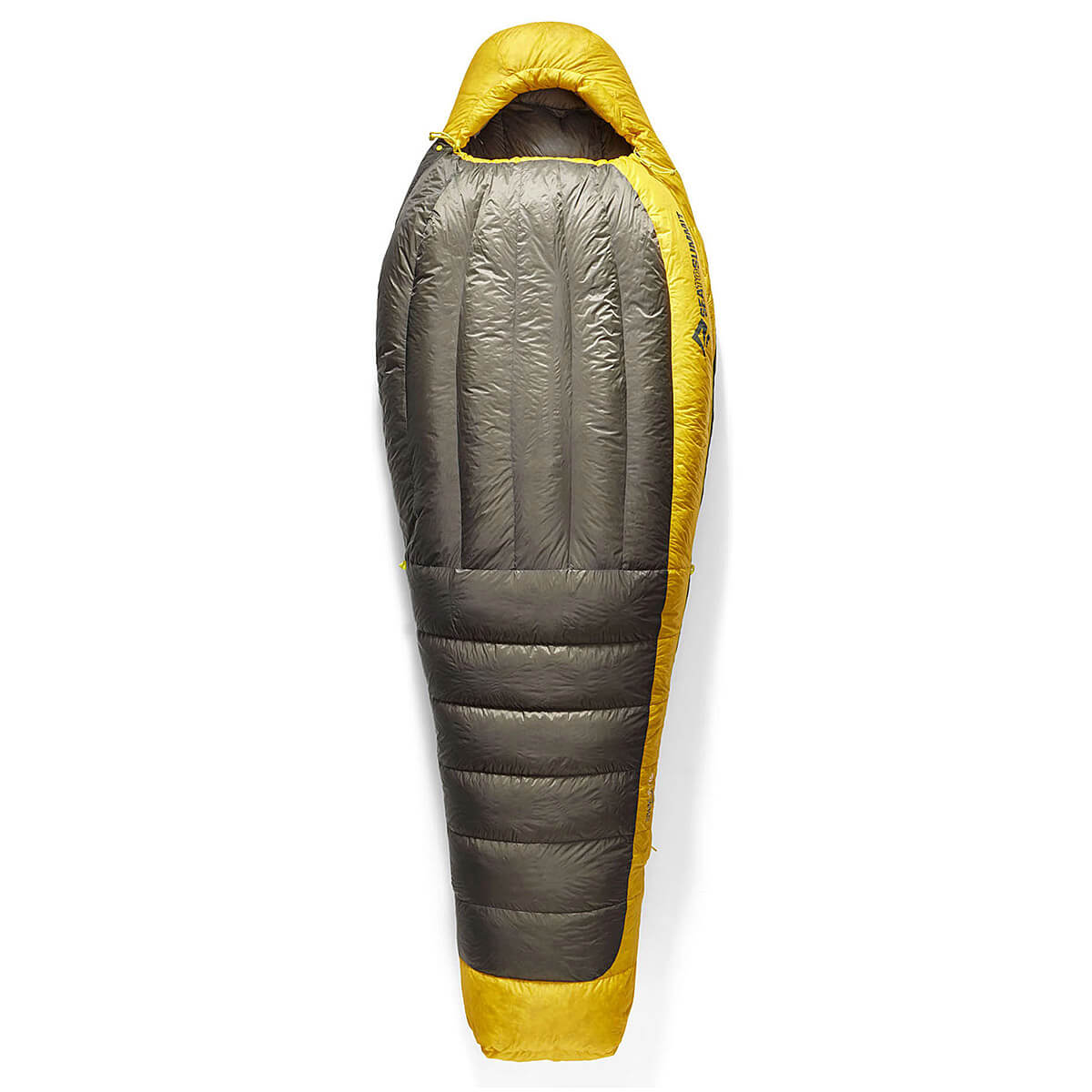
Basically, this model focuses on being slightly lighter and more compact while maintaining a good overall balance. Of course, the quality of the down (insulation) and comfort are both satisfactory, and while it has the basic shape of a mummy-style sleeping bag, it has been designed to be as lightweight as possible by eliminating unnecessary elements, making it perfect for fast and light mountain climbing and hiking. Personally, my top pick in this category, which I think fits me best, is the Sea To Summit Spark Series, updated last season. The high level of combination of lightness, compactness, and excellent warmth is truly impressive
What I like about the Sea To Summit Spark Series
- 850+FP Ultra Dry Premium Goose Down with high resilience and water repellent finish
- It is incredibly lightweight and compact, weighing just 500 grams, despite being able to withstand temperatures below freezing
Vest/Winter Sleeping Bag: ISUKA Air Plus 630/810 / THE NORTH FACE Inferno-18/-29
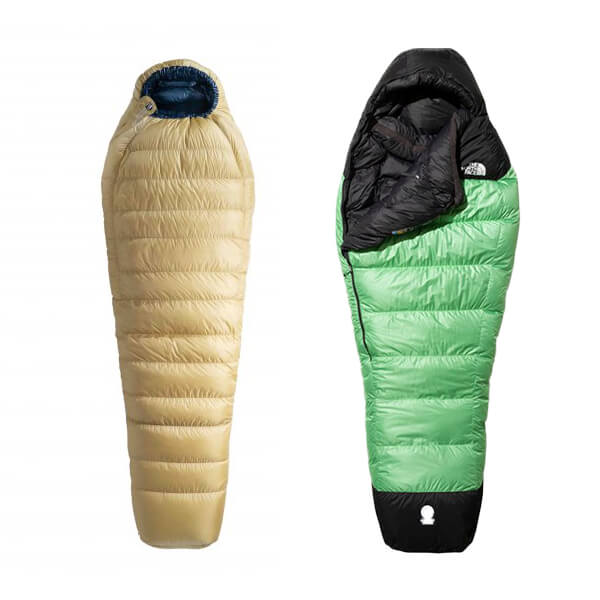
The winter models in the series introduced in the two categories above are also excellent, but these two models are not included but are particularly attractive when it comes to winter mountain use only
The general quality indicator for down, "FP (fill power)," is actually measured in a way that is unclear, so in that sense it should only be considered a reference value
In this regard, the quality of ISUKA's down is so high that when you actually use it, you can see that it has a high level of quality that cannot be seen from the specs alone, and its heat retention and comfort are undeniable. The "Air Plus Series" uses the highest quality down from ISUKA and is designed to minimize heat loss, making it a great ally for winter mountain climbing
The North Face's "Inferno Series" is an expedition model designed for use in polar regions. It is a high-tech model that achieves high insulation thanks to its high-quality water-repellent PRO down and shell fabric with XReflex processing, which enhances insulation and heat reflection
Favorite points of the ISUKA Air Plus series
- Lightweight, high-quality goose down with excellent resilience
- Carefully crafted details to prevent heat loss
What I like about the North Face Inferno-18
- High-quality, water-repellent down, a clever baffle structure that enhances warmth while remaining lightweight, and XReflex processing that enhances insulation and heat reflection for superior insulation performance
- It's designed to fit perfectly with your mattress, and it's also practical with features like a compression stuff sack
Best affordable and high-quality sleeping bag: ZANE ARTS KUMO
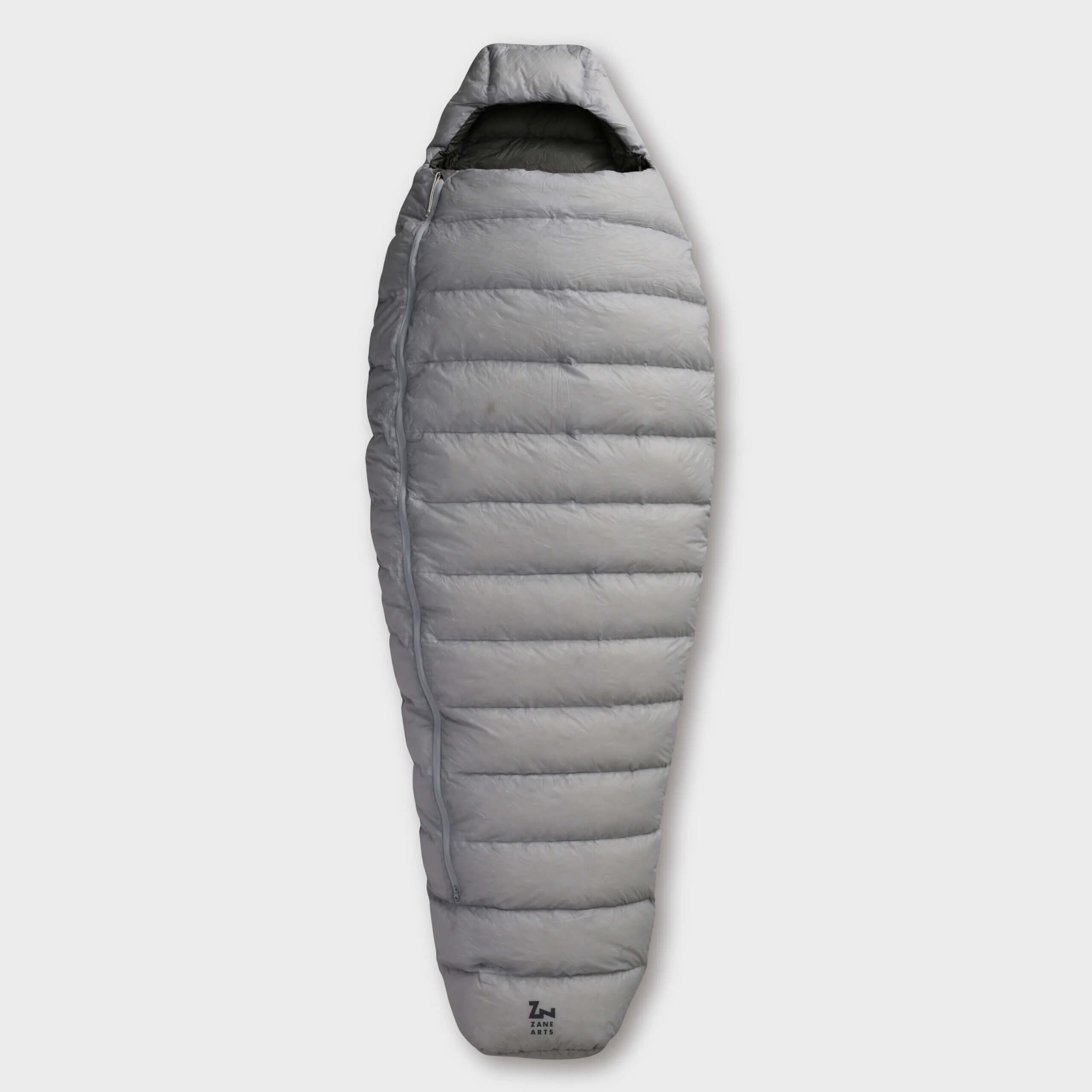
This season, ZANE ARTS has made a big splash by entering the mountain sleeping bag market. We wondered what their first offering would be, and it turned out to be a surprisingly affordable model. The ZANE ARTS KUMO series uses extremely high-quality goose down (850FP) and boasts a box structure suited to low temperatures, a spacious design, easy-to-use zippers, and a down tube for added warmth, all at a surprisingly low price. Another great model is the Mountain Hardwear Bishop Pass, a real bargain
What I like about the ZANE ARTS KUMO series
- Lightweight, high-quality goose down with excellent resilience
- Roomy shape
Best/Quilt/Half-Length Sleeping Bag: Rab Mythic Ultra 120 Modular / ENLIGHTENED EQUIPMENT Revelation / NEMO Pulse™ 20/30 Endless Promise®
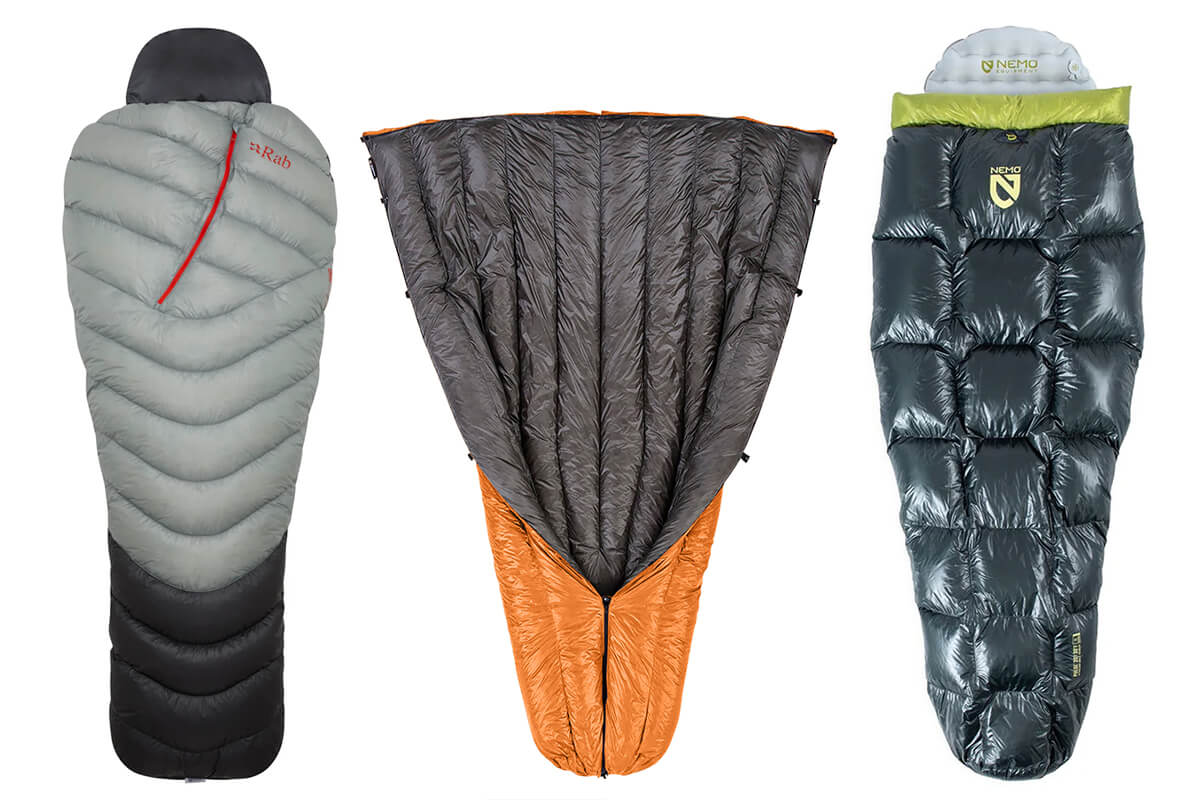
Once you have become somewhat accustomed to traveling and have started to understand what you don't need, a "quilted" or "half-size hoodless" sleeping bag could be the perfect choice. These models are designed to be even lighter by omitting parts that can be replaced, such as the back and head
In addition to being a lightweight and warm sleeping bag, they can also be used as a blanket or as an extra sleeping bag in winter, and in recent years have become popular with a wide range of people, including those involved in ultralight and fastpacking, as well as bikepacking and solo camping
From what I've observed over the years, this category has seen the most new products and entrants in recent years, making it the hottest category in the current sleeping bag market. Because of this, there are so many dazzling new products based on unique ideas and cutting-edge technology, making it extremely difficult to narrow it down to just one
Among them, we selected three models based on their high quality, individuality, and lack of flaws. Among them, this season's new NEMO "Pulse™ 20/30 Endless Promise®" builds on the best features of previous popular models while also incorporating gold into 1000FP, the highest quality water-repellent down, for the highest warmth-to-weight ratio, making it a highly competitive model. The price is also challenging, but with so many premium features packed into it, it's well worth it. The other two models, the "Rab Mythic Ultra 120 Modular" and the "ENLIGHTENED EQUIPMENT Revelation," have also been reviewed in Outdoor Gearzine, and their high performance remains unmatched
What I like about NEMO Pulse™ 20/30 Endless Promise®
- 1,000FP ExpeDRY Gold Infused Down delivers the highest warmth-to-weight ratio in its category
- Unique baffle structure prevents cold spots, distributes down evenly, and contributes to weight reduction
- Achieves a temperature range of -5°C at just 500 grams, which is unthinkable for a regular sleeping bag
What I like about the Rab Mythic Ultra 120 Modular
- The lining fibers are coated with titanium, which reflects radiant heat back into the bag without impairing the breathability of the fabric (TILT lining), resulting in improved warmth (and reduced weight) even with the same amount of down
- Made with 900FP RDS-certified European goose down and treated with a water-repellent finish, it is resistant to moisture
- By omitting the back and adding a mattress, it weighs just 330 grams and achieves a temperature limit of 0°C (Rab's proprietary standard)
What I like about ENLIGHTENED EQUIPMENT Revelation
- Lightweight, high-quality down with high insulation properties of over 850
- Durable, breathable, lightweight, and excellent down-shedding resistance shell fabric
- Highly customizable, allowing you to choose your preferred specifications, from down quality to down amount, size, color, etc. *However, you must purchase directly from the English website
- It can also be used as a quilt by fully unzipping the zipper at the feet, making it highly versatile
Best Low-Cost, High-Quality Quilted Half-Length Sleeping Bag: LEISURES Roo Sleeping Bag 300
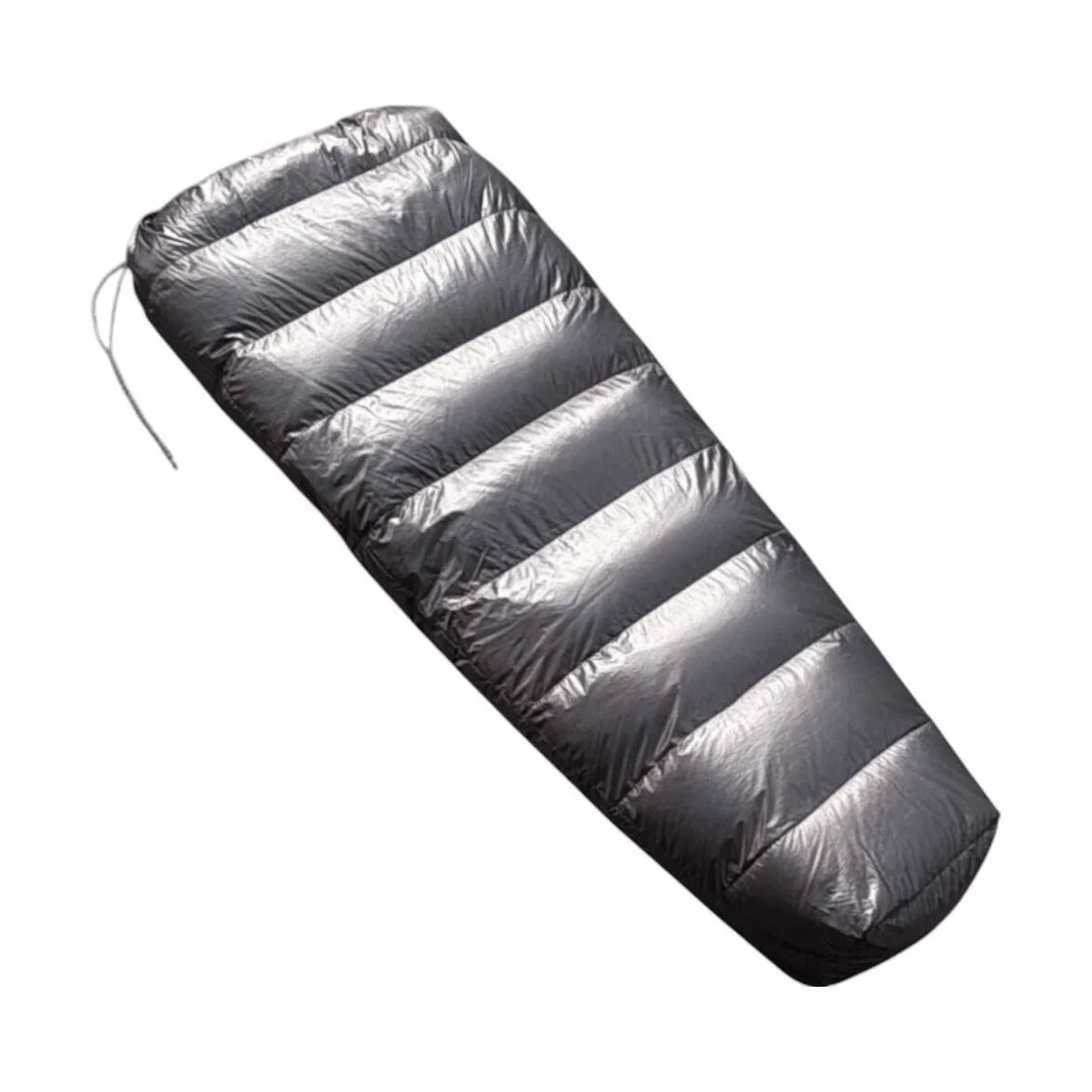
Thanks to the entry of various brands into the quilted half-length category, a wide variety of models are now available, including some that offer excellent value for money. The "LEISURES Roo Sleeping Bag 300" is an original product from the Azumino select shop "LEISURES." It's designed to be sized for Japanese people, with no hood or zipper, making it as lightweight as possible, and featuring a box structure that minimizes cold spots, achieving both lightweight and compactness while still retaining the warmth of down. In addition to this commitment, the extremely competitive pricing is also not to be missed!
What I like about the LEISURES Roo Sleeping Bag 300
- Lightweight and compact design with minimal unnecessary parts, including the hood and zipper
- Lightweight yet highly efficient at retaining heat with reduced heat loss
- Affordable pricing
Vest/Synthetic Sleeping Bag: OMM MountainRaid
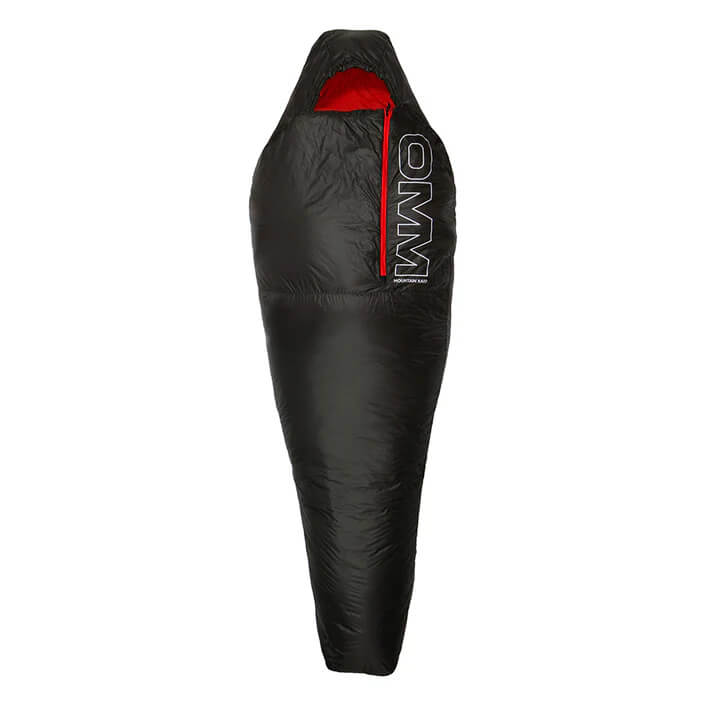
When bad weather or getting wet is unavoidable, such as when climbing streams or long-term mountain hikes, synthetic fibers are safer to carry than down, no matter how waterproof they are
Synthetic fiber padding, which used to be heavy and bulky, has recently undergone remarkable technological innovation, making it much lighter and more compact than in the past. Combined with their inherent low prices and ease of care, cutting-edge synthetic fiber sleeping bags are not a bad choice at all. Our top pick for the best synthetic fiber sleeping bags is the OMM MountainRaid
The OMM Mountain Raid's Primaloft Gold with Cross Core Technology insulation is made with aerogel, a future-proof insulating material, and boasts a warmth-to-weight ratio comparable to down. It also retains its warmth even when wet, making it ideal for humid seasons and water activities
What I like about the OMM MountainRaid series
- It uses Primaloft Gold with Cross Core Technology padding, which is breathable, quick-drying, resistant to moisture, and has high insulation properties comparable to down
- Lightweight and compact despite being made of synthetic fiber
Vest, Synthetic Quilt, Sleeping Bag: STATIC ADRIFT Ti SLEEPING BAG
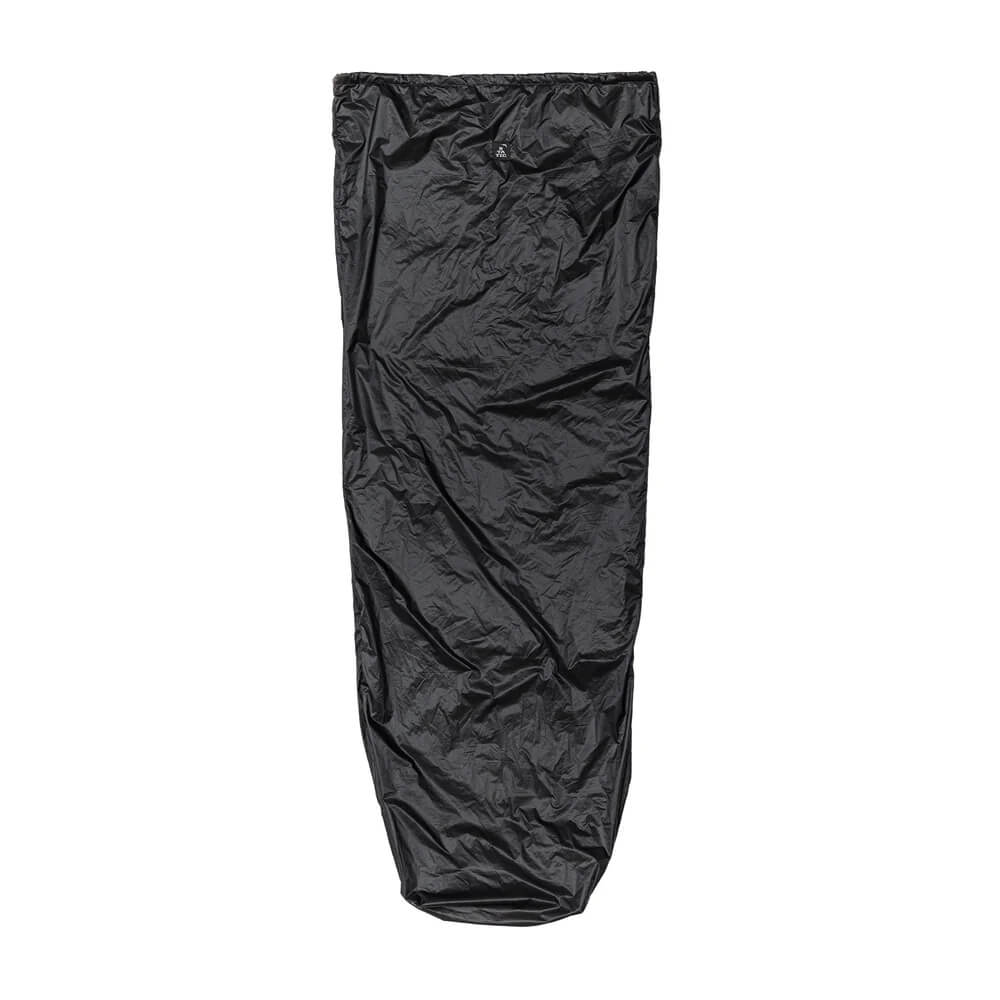
The "synthetic and quilted" style has the potential to be a perfect fit for mountain climbing and river climbing in the hot and humid spring and summer seasons, as it combines the benefits of synthetic fibers with the drawbacks of bulkiness and weight
In fact, the bag I found most useful this season for mountain stream climbing and summer tent-camping was the STATIC ADRIFT Ti SLEEPING BAG, a half-length sleeping bag that is as thin as an inner sheet but incredibly comfortable
This jacket uses Octa®CPCP®, which has been extremely popular in recent years and is used in a variety of active insulations, and its lightness and warmth have been proven. It is also coated with an ultra-thin titanium sputtering coating that reflects body heat for excellent heat retention, making it lightweight yet warm enough for the summer
Generally, most models in this category are perfect for summer, but if you look hard enough, you can also find good three-season models. For example, the LITEWAY SLEEPER QUILT APEX 10D uses the recently popular Climashield® APEX insulation, making it suitable for sub-zero temperatures
What I like about the STATIC ADRIFT Ti SLEEPING BAG
- Lightweight, compact and comfortable to the touch
- Lightweight yet highly thermally efficient thanks to Octa®CPCP® and titanium sputtering for lightness and warmth
- Easy to wash in the washing machine
In addition to the above, all recommended sleeping bags and a comparison table of all 237 models are available with a paid membership
How to Choose: 6 Tips for Choosing the Right Sleeping Bag for Mountaineering and Hiking
Point 1: Choose the appropriate temperature range - Be careful not to make it too hot or too cold
When choosing the perfect sleeping bag, the most important thing is to choose temperature range This temperature range indicates the temperature range at which the sleeping bag will be comfortable to sleep in, and is an indicator of the bag's heat retention capabilities.
Sleeping bags have traditionally been broadly classified into the following three types based on their temperature
- Summer (1 season): A sleeping bag designed for use in low mountains in midsummer or on flat land from early summer to early autumn (approximately 5°C or above) .
- Spring to Autumn (3 seasons) - A sleeping bag suitable for low mountains in spring and autumn and high mountains of 3,000m or higher in summer (approximately -8 to 5°C) .
- Winter (4 seasons): A sleeping bag suitable for winter mountains or high altitudes with remaining snow (approximately -8°C or below)
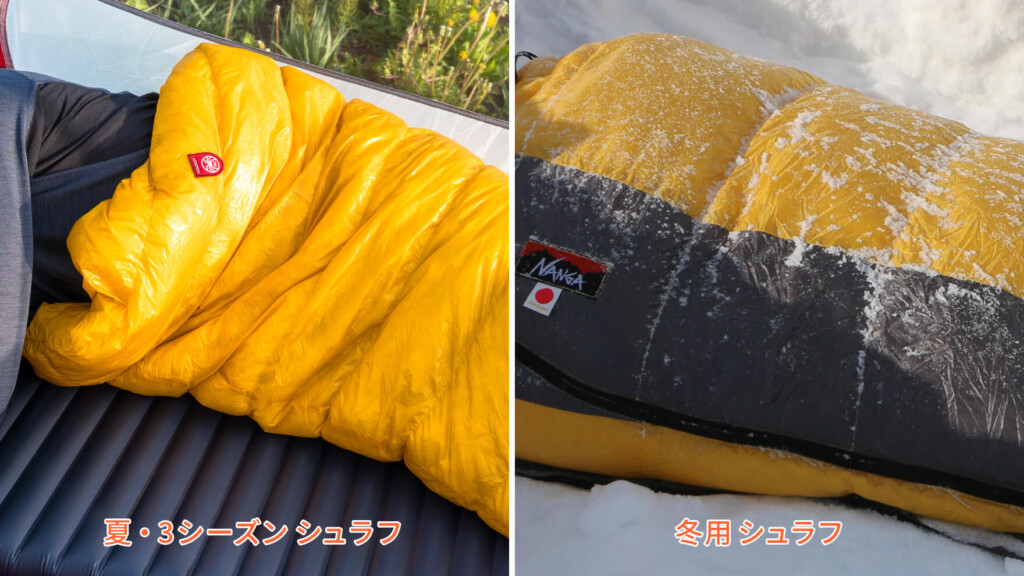

The above classification shows that the three types of sleeping bags typically used for mountain climbing are sufficient, but you don't need to have all of them from the start, and the minimum you should have is a three-season bag. While it may be a little too hot for low mountains in midsummer, it's still usable, and so it covers the longest period of time. After that, adding summer and winter bags depending on how often you'll use them and your budget is the method that minimizes waste and failure. Some people are so adventurous that they even use a three-season bag plus a summer bag for winter. The point is, from this point on, there are many different ways to go about it, depending on your own method.
In recent years, even among the same three-season sleeping bags, warmth varies depending on the brand and model, so choosing the perfect sleeping bag requires even more careful consideration. For this reason, each model is always labeled with a temperature range rating. In the past, each manufacturer would indicate their own individual standards, but in recent years, international standards have begun to take hold. This is the European Norm, which we will explain below.
Use the European Norm (EN) 13537, a handy indicator for determining insulation
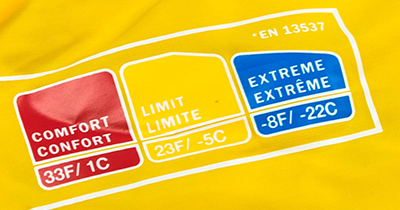
Many modern sleeping bags indicate a reference temperature range based on a standard called European Norm (EN) 13537. EN 13537 began to be used within the EU in the 2000s, but has since spread around the world as the most reliable indicator (though there are still manufacturers who have not yet adopted this standard due to the not-inexpensive testing costs and doubts about its reliability). This standard displays the following three indicators as a set:
- T-Comfort is the temperature range at which an average woman can sleep without feeling cold.
- The T-Limit (lower limit) is the temperature range at which an average man can curl up and sleep for eight hours.
- T-Extreme is the temperature range that an average woman can withstand for six hours while curled up with her knees in her arms. In some cases, it can be very dangerous as it can lead to hypothermia.
[Caution] Be careful how you read EN13537 specifications (don't trust the numbers 100%)
Knowing this, it would seem that all you need to do is check the weather forecast or other sources to find the approximate temperature of the place you are going to, and choose a model that falls within the temperature range indicated by the EN. However, when you actually purchase and try out various models, you will find that it is not that simple. To put it simply, almost all of the models I tried did not feel as warm as the EN indicated .
Image: Kansas State University
The main reason for this lies in the testing method. EN13537 is simply the result of measurements taken in a laboratory environment on specific body types (male: 25 years old, 173cm, 73kg; female: 25 years old, 160cm, 60kg) wearing long-sleeved underwear and socks. It does not take into account various variables such as the user's nationality, body type, constitution, the conditions of the day, the clothes they are wearing, the mat they are using, or the compressibility of the padding. To put it crudely, it's like the "catalog fuel economy" of a car; it doesn't necessarily mean that you will actually achieve that fuel economy, and it's merely a benchmark for comparison
In other words, unfortunately, these figures are not something that anyone can take at face value, but even so, in the sense that they are calculated using a standardized measurement method, they should be considered better than the previous standards that varied from manufacturer to manufacturer. At the very least, it is possible to compare heat retention under the same conditions, so making good use of this is the wise way to choose at this time
So how do you actually judge?
How can you avoid being misled by the temperature range displayed? The correct approach, both now and probably in the future, is to always choose a temperature that is slightly warmer than the displayed range unless you are certain
It's best to assume that there will be some degree of error depending on the individual and the environment, so unless you're using a familiar brand or are an experienced user, it to plan for a temperature that's 5-10°C warmer than the EN rating ("comfortable" for women, "lower limit" for men) . Specifically, you can choose a warmer model, or bring extra warm clothing assuming it will be cold. Even so, there's a one in a million chance that things won't go as planned, but even if you end up packing too much or too hot, you should still be able to avoid the serious risk of hypothermia. Learning from that experience can help you make better choices next time.
Some manufacturers may not yet be displaying temperature ranges according to EN standards, but the basic principle is the same. Unless you are certain, it is best to choose a warmth that is more than adequate
Point 2: Filling material - Down or synthetic? There are countless options to choose from
Once you've narrowed down your options based on the temperature range they can handle, the next step is to consider the type of filling. A sleeping bag's heat retention comes from the fact that the layer of still air (dead air) created when the filling expands is warmed by body heat and acts as an insulating layer that blocks outside air, enveloping the entire body. In other words, heat retention depends on how much dead air can be stored. Incidentally, the degree to which the space that stores dead air expands is called loft (bulk), and the filling plays an extremely important role in ensuring as much loft as possible
There are two types of materials used for padding: natural down and synthetic fibers, but currently, down has the highest heat retention per weight . Light, compact, and warm, if you choose a down sleeping bag, you can't go wrong for normal mountain climbing. However, that doesn't mean there are no drawbacks. Below is a comparison table of the advantages and disadvantages.
| material | down | Synthetic fibers | hybrid |
|---|---|---|---|
| merit |
|
|
|
| Disadvantages |
|
|
|
| Suitable situations and uses |
|
|
|
Down is highly functional, but it's expensive and vulnerable to getting wet . For this reason, synthetic fibers may be a better choice than down for those who prioritize price over lightness and size, or for those who frequently engage in activities where their backpacks are likely to get wet, such as canyoning. Fortunately, however, recent advances in synthetic fiber padding have been remarkable, and it's clear that we're approaching a point where we can no longer afford to dismiss synthetic fibers as heavy or uncomfortable. We highly recommend trying them out in a store to compare the actual products.
Meanwhile, down jackets are also constantly evolving. We are now seeing more and more "water-repellent" down jackets, which have been treated with a strong water-repellent coating to overcome some of their weakness when wet. However, even water-repellent down jackets still have their limits when it comes to protecting themselves from getting wet, so in Japan, where rain and humidity are common, it's best to consider some kind of water-blocking measure essential
Choosing high-quality down makes it lighter and warmer (type, origin, FP, and ratio)
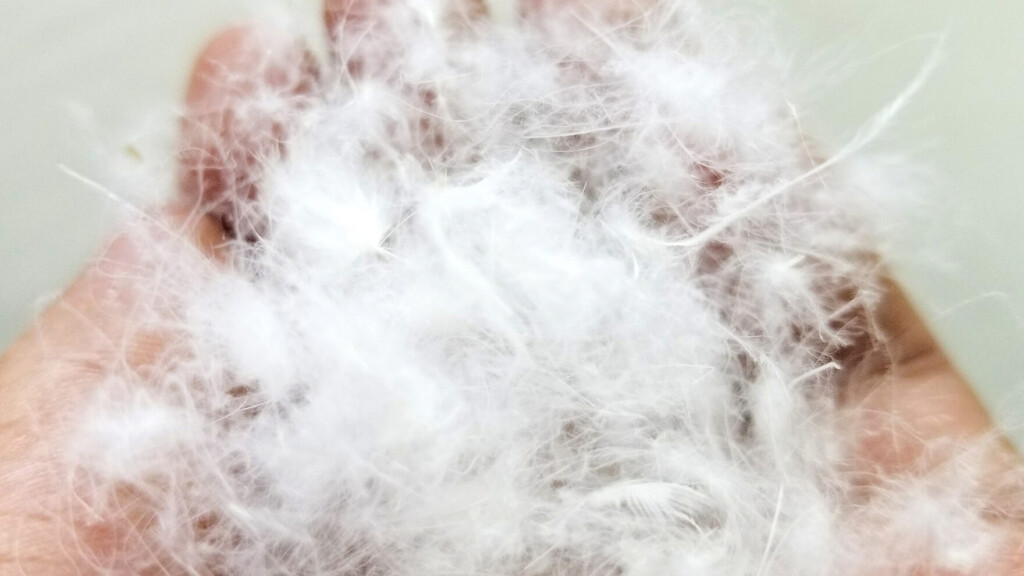
Although the quality of down is not like the duvets you often see on TV or radio shopping programs, there are actually a surprising number of factors that affect quality. We won't go into detail about each and every one of them here, but instead will focus on the key points you need to know when choosing a good down sleeping bag
Down types and origins
Down harvested from European geese is said to be of the highest quality, with a larger loft, excellent bulk, excellent heat retention, and little odor. On the other hand, down harvested from waterfowl raised in other regions, or from ducks instead of geese, is said to be of medium to low quality (although not all). The length of time the geese are raised also has a major impact on the quality of the top-quality goose down, and it is said that the highest quality down can be harvested from geese that have been carefully raised for 21 weeks
Down fill power (FP) and ratio
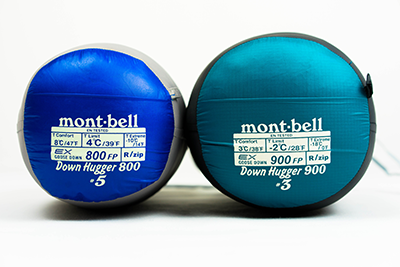
Generally, anything above 650 is considered high quality, but the higher the value, the more expensive it becomes, so when choosing down, you must make a cruel choice between price and warmth/portability
Also, even though it is simply called down, it actually contains a small amount of feathers mixed in to increase loft, and the ratio is displayed as 90/10 (90% down, 10% feathers). Feathers are not a material that increases heat retention, so naturally the higher the down ratio, the better the heat retention, the softer the feel, and the higher the quality .
Animal Welfare and Down
As various aspects of product development are being reassessed to reduce the impact on the environment, the down manufacturing process has also been forced to take a serious look at itself. The act of collecting down from waterfowl is essentially plucking the feathers that grow under the bird's skin, which is, to put it bluntly, animal cruelty. In the past, when efficiency was paramount, waterfowl were force-fed in large quantities to speed up their growth, and then forcibly plucked by machine multiple times throughout their lives, from around 12 weeks old until they reached adulthood
As the concept of "animal welfare," which aims to create a living environment that minimizes stress and pain for livestock, has become more widespread, some sleeping bag manufacturers are increasingly reconsidering these inhumane breeding and harvesting methods, and almost all down products sold in European and American markets in particular are now adopting standards that conform to this concept
So, the main points that we as consumers should be concerned about in the future are:
- Do not force-feed animals by continuously feeding them large amounts of food in small cages
- No live plucking, the practice of plucking feathers from live waterfowl
The key is whether the down filling is sourced from a feather supplier that meets these two criteria

Point 3: Resistance to getting wet – Some kind of wet protection is essential in Japan –
There is no doubt that a sleeping bag is the most important tool for a comfortable sleep in a tent, but the situation where the sleeping bag loses its heat retention is something that must be avoided above all else. In other words, measures to prevent the sleeping bag from getting wet are a must for any tent camping trip
I mentioned earlier that down has a weakness in that it loses its insulating properties when it gets wet. For this reason, in the past, if you were worried about your down sleeping bag getting wet, you had to cover it with a waterproof, breathable sleeping bag cover, or choose a sleeping bag made of synthetic fiber that won't lose its heat even if it gets wet. Of course, these are still effective and reliable ways to prevent your sleeping bag from getting wet, but this means you can't take advantage of down's great advantage of being light, which has been a real problem for some time. However, this situation is gradually changing recently
How to prevent down from getting wet: Sleeping bag with a waterproof and breathable outer material

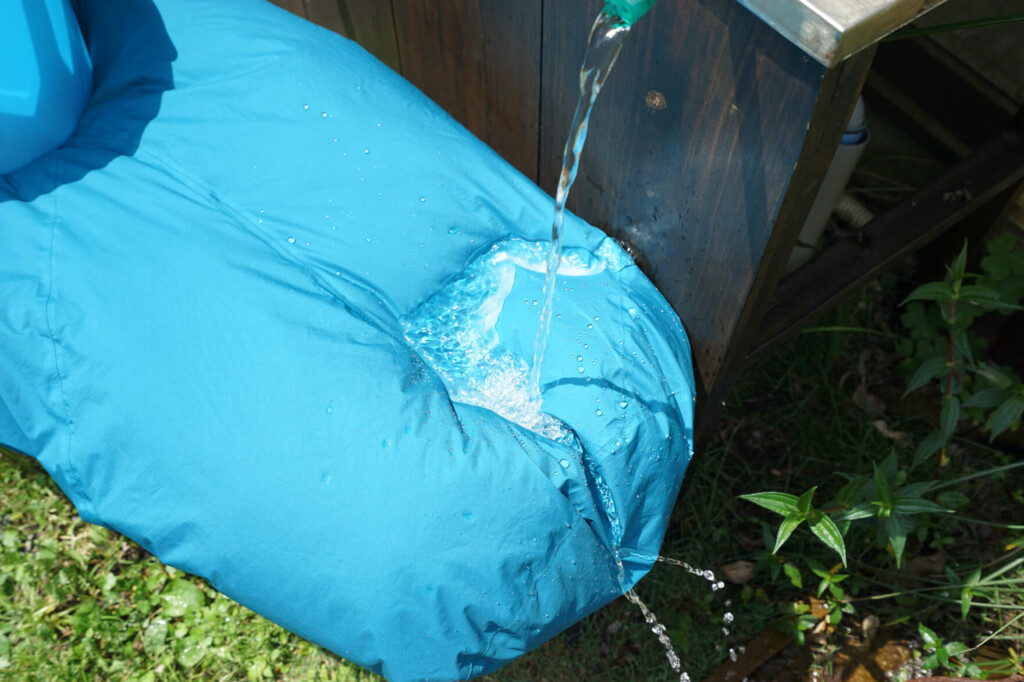
If you use a sleeping bag made of waterproof and breathable material, you don't have to worry about moisture, water droplets, or even getting submerged in water
The quality of the outer fabric of a sleeping bag for mountain climbing is determined, first and foremost, by how thin and lightweight it is while remaining durable. Further considerations include whether it has a "downproof" finish, which seals the gaps between the threads to prevent the down from escaping, and whether it has a "DWR (durable water repellent)" finish, which repels water. However, these alone are not enough to protect against getting wet
A sleeping bag that has been adequately designed to prevent water getting in is one that uses a waterproof and breathable outer fabric, or one that has seam tape on top of the waterproof and breathable material to completely shut out water. In these cases, you won't need a sleeping bag cover to prevent water getting in, and you can enjoy the lightness and comfort of down without worry
Tip 2 for preventing down from getting wet: Sleeping bags made with water-repellent down
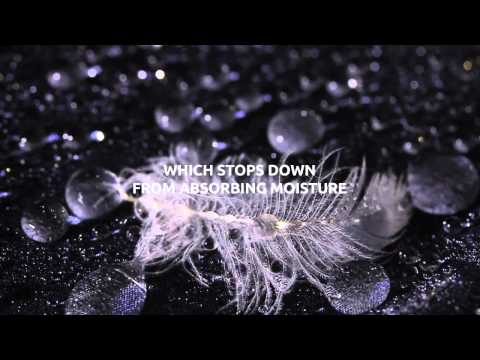
Next, as mentioned earlier, a field that has seen remarkable innovation in recent years is "water-repellent down," which is down that has been treated to further enhance the inherent water-repellent properties of down. Led by Nikwax Hydrophobic Down , a succession of down products have been developed that are less likely to lose their resilience even when wet by applying a highly water-repellent finish to the down filling itself. From watching the video, it appears that the down will retain a certain amount of loft unless the conditions are so severe that it becomes soaked, so it can be said that it is highly practical for now, provided the conditions are not that severe.
However, compared to high-quality pure down, these water-repellent downs inevitably suffer from a loss in recovery (heat retention) due to the treatment, as well as a shortened product lifespan. I've personally experienced the gradual deterioration of DWR treatment on rainwear and other items due to washing, so even water-repellent down will almost certainly lose its water-repellent properties if used repeatedly. In that sense, I'm still skeptical about whether water-repellent down sleeping bags are good products in the long term. It's true that their practicality has improved considerably, but I still think it's not something you should choose without reservation, and I think we need to look at them carefully
Point 4: Shape, size, and structure - Start with the mummy shape, and once you get used to it, you can eliminate unnecessary parts in your own way
The basic shape is "mummy type." Also noteworthy are new shapes that are convenient for specific uses
When considering a broad range of sleeping bags, including those for auto camping and sleeping in a car, there are also "envelope-type (rectangular)" sleeping bags that are similar to regular futons, but when it comes to sleeping bags for mountain climbing, the most common shape is almost always the mummy-type . The mummy-type is designed to cover everything except the face, minimizing excess space between the body and the filling to maximize warmth and reduce weight as much as possible.

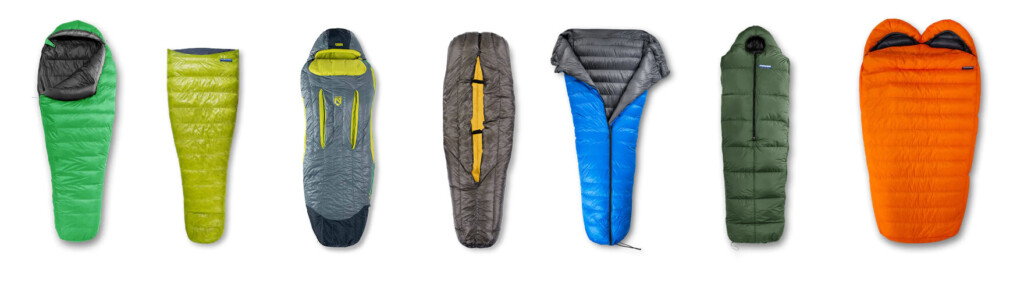
Various three-season sleeping bag styles (from left): Mummy style, hoodless mummy style, modified mummy style, half-quilted style, quilted style, wearable style, and two-person mummy style
For beginners buying their first sleeping bag, the mummy style is recommended as it is safe and functional. However, it is also important to note that in recent years, as activities and needs have diversified, various shapes have been developed that are derived from the traditional mummy style
These models take the efficiency of the traditional mummy model even further, being more streamlined and tailored to specific needs
For example, the "quilted type" (fourth and fifth from the left in the photo above), which has the underside cut out to be used in conjunction with a mattress, is not only lightweight but also allows for flexible sleeping positions (although in the most airtight position body movement is restricted) and temperature regulation, making it an excellent choice for ultralight or fast packing in relatively warm seasons
Additionally, the "half-length sleeping bag" (second from the left in the photo above), which is designed to be worn over a cold weather jacket, is lightweight by removing the shoulders, chest area, or even the entire upper body. These can be used as an inner sleeping bag in combination with other sleeping bags in the winter mountains to provide additional warmth, so you may be able to reduce waste in your overall equipment
size
To maximize the warmth retention effect, it's best to have as little space as possible between your sleeping bag and your body, but if it's too snug, it's cramped and difficult to sleep in. The best thing would be to be able to order a bag that fits your body perfectly and has just the right balance of warmth and ease of movement, but of course, such a dream service doesn't exist yet, so for now, the only option is to choose the size that fits you best from the variety of sizes offered by many manufacturers, such as regular, long, and short, based on height and body type (we highly recommend women's models in particular, as they are designed to accommodate women in addition to height).
One solution to avoiding dead space is to use models with stretchy fabric. Popular examples include Montbell's Spiral Stretch System and Deuter's Inside Thermo Stretch Comfort System. If you try one, it's obvious: the padding adheres to your body, so you feel warm from the moment you get in. The warmth you feel is definitely several levels better, and it doesn't restrict movement, making it convenient for sitting cross-legged while wearing the sleeping bag
structure
Even if a large amount of high-quality padding is used to withstand low temperatures, it does not necessarily guarantee stable heat retention. If the padding within the fabric shifts and becomes uneven, the areas with less padding will not be able to create dead air (cold spots), and the overall heat retention will be significantly reduced

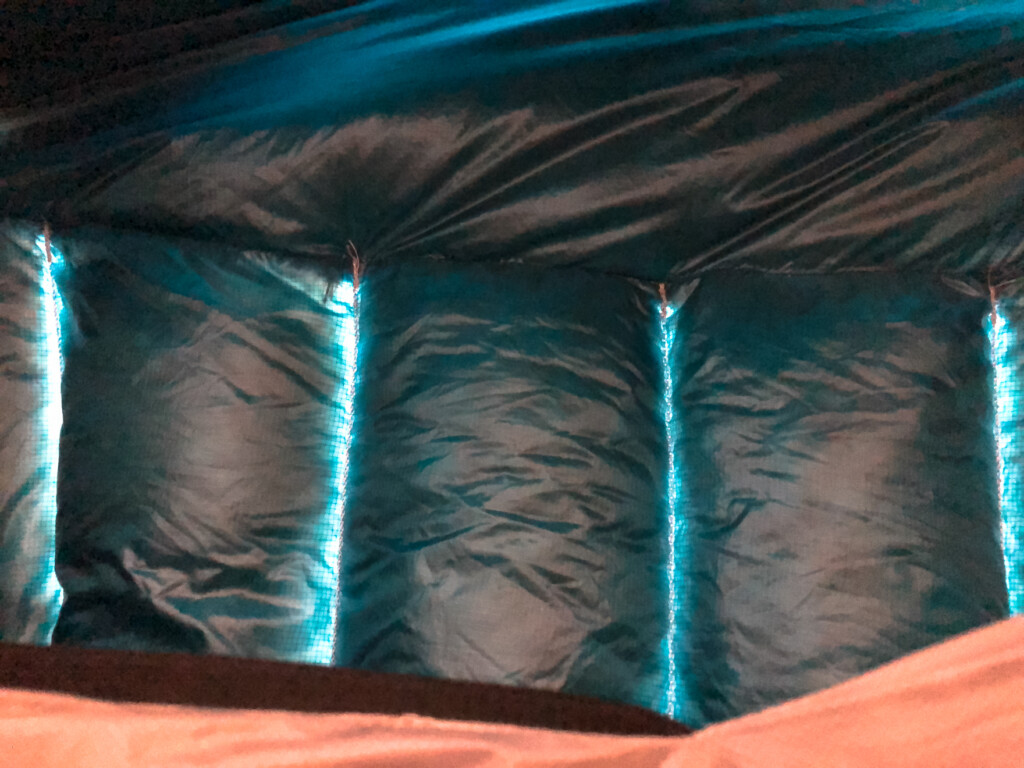
Checking for cold spots by holding the glass up to the light
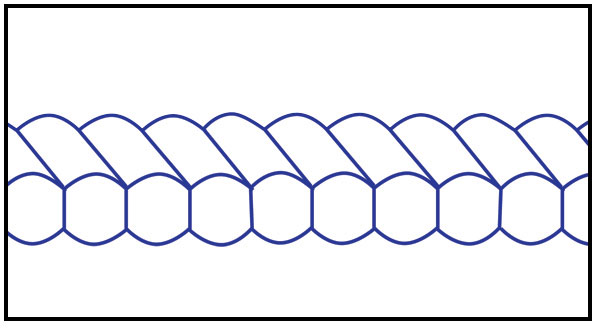
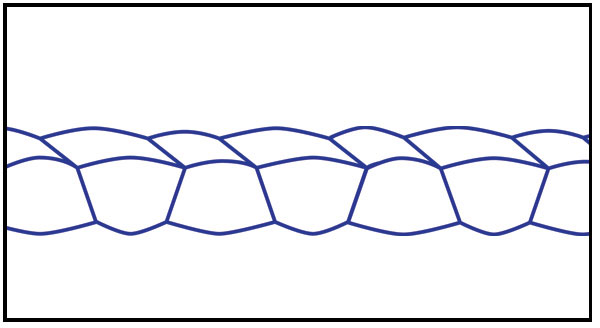
To prevent this, sleeping bags have continued to evolve in ways to seal the padding in. Here we will introduce the main padding structures of sleeping bags, so you can check whether the model you are considering has a structure that suits your needs
| material | Single structure | Box Structure | Trapezoid box structure |
|---|---|---|---|
| image | 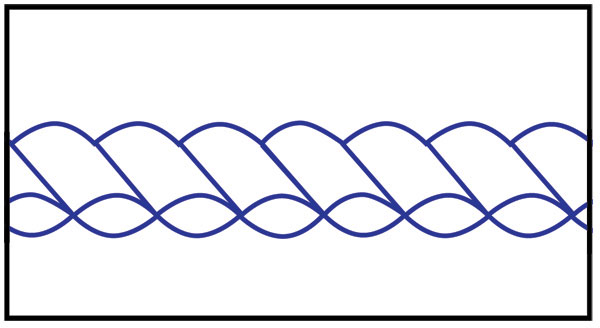 |
 |
 |
| merit |
|
|
|
| Disadvantages |
|
|
|
| Suitable situations and uses |
|
|
|
Point 5: Other elements and parts - Consider ease of use in actual use -
Finally, I would like to point out some minor checkpoints that were not covered in the explanation so far
Storage capacity
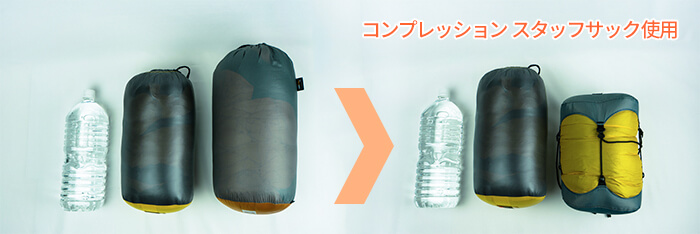
Sleeping bags can be quite bulky depending on the quality and quantity of the padding, whether synthetic fiber is used rather than down, or winter is used rather than summer, so it's best to have one that's as light and compact as possible. However, one thing to note is that is only the size when the bag is inside the included stuff sack
As shown in the photo below, some models are large when purchased, but can be further compressed by using a separately sold compression stuff sack . Also, depending on the manufacturer, the standard stuff sack itself may have a compression function, so it's a good idea to check before purchasing.

Making the hood
The area from the neck to the head is said to dissipate a lot of heat, making it surprisingly important for maintaining warmth. Some summer and ultra-light models have this feature omitted, as it's not as important. For models designed for three seasons or longer, whether the hood is designed to fit comfortably over the head, and whether the drawcord around the face opening is easy to tighten and doesn't get in the way or feel restrictive . Some models designed for colder temperatures also feature padded tubes around the shoulders to prevent cold air from entering, providing greater comfort with less weight.
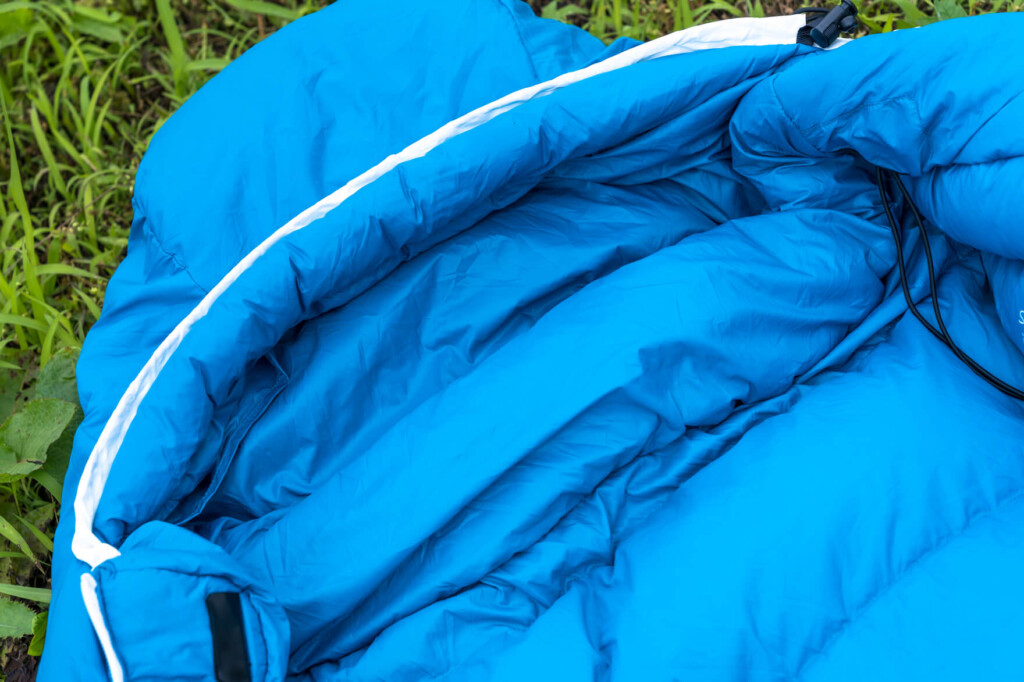
Models with a more three-dimensional hood and tubular padding in the hood and around the neck to suit the temperature range are more comfortable
zipper
Zippers have two main roles in a sleeping bag. One is to make it easier to get in and out of the bag, and the other is to control breathability and regulate temperature by opening and closing. The wider the opening , the better for ease of use. However, from the standpoint of wanting to make the bag as light as possible, it's best to have no zippers at all. For this reason, models that prioritize lightweight design only have zippers that take up about 1/2 to 1/3 of the total length, or some models have no zippers at all, so it's best to choose one that suits your preferences.

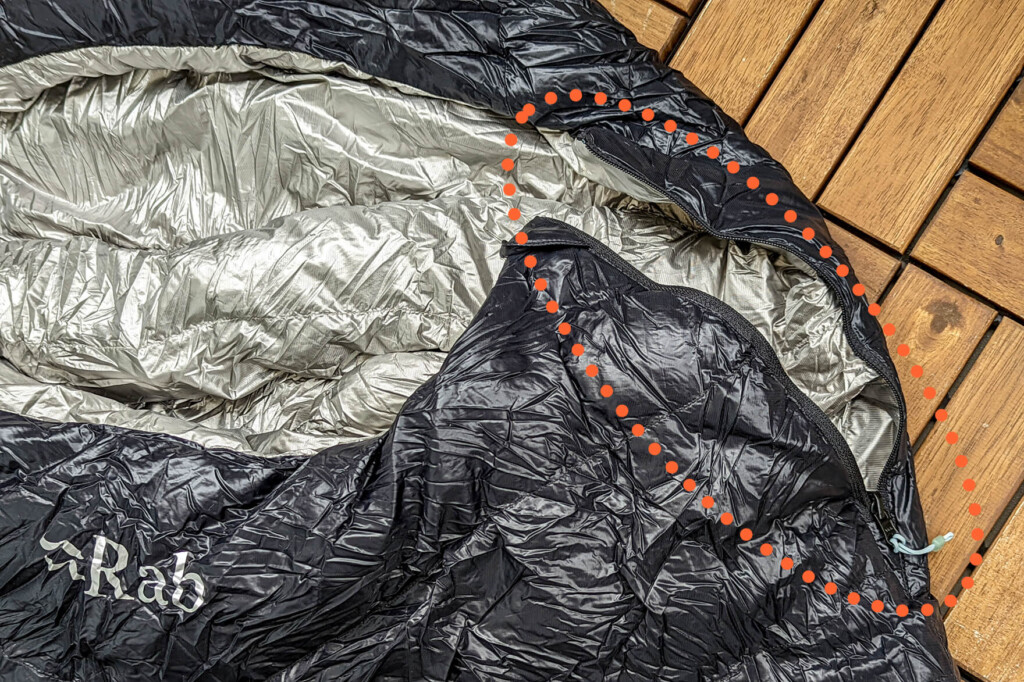
The short zipper (dotted line) contributes greatly to weight reduction, but it also comes with inconveniences such as difficulty in getting in and out and difficulty in regulating the temperature
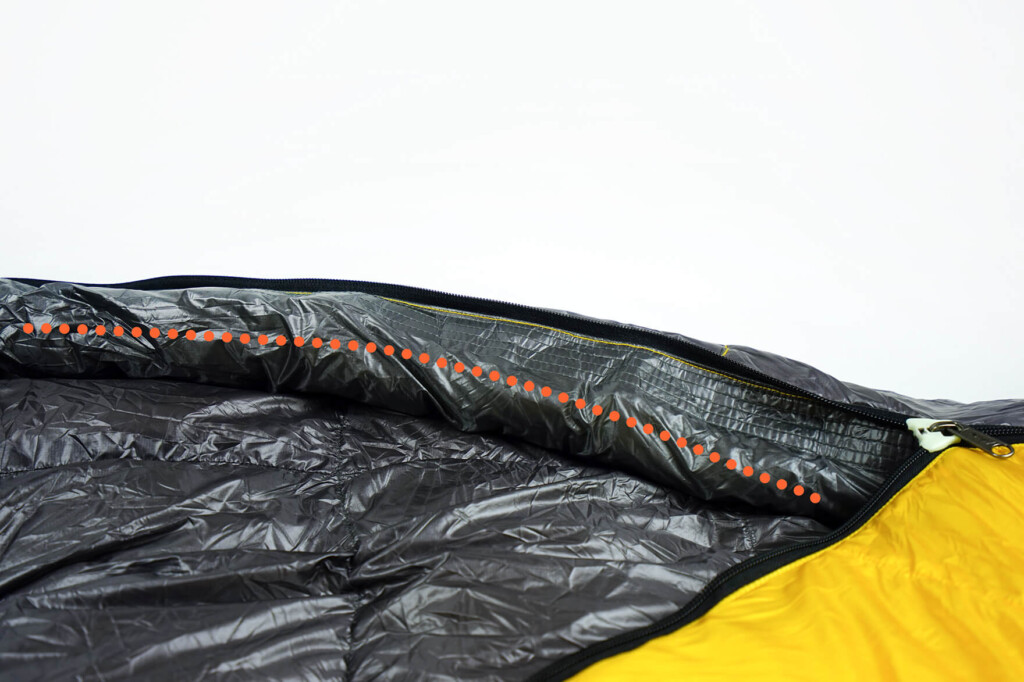
There are also models designed for use in lower temperatures, with padded "draft tubes" placed along the inside zipper line (see photo below) to prevent cold air from entering through the zipper
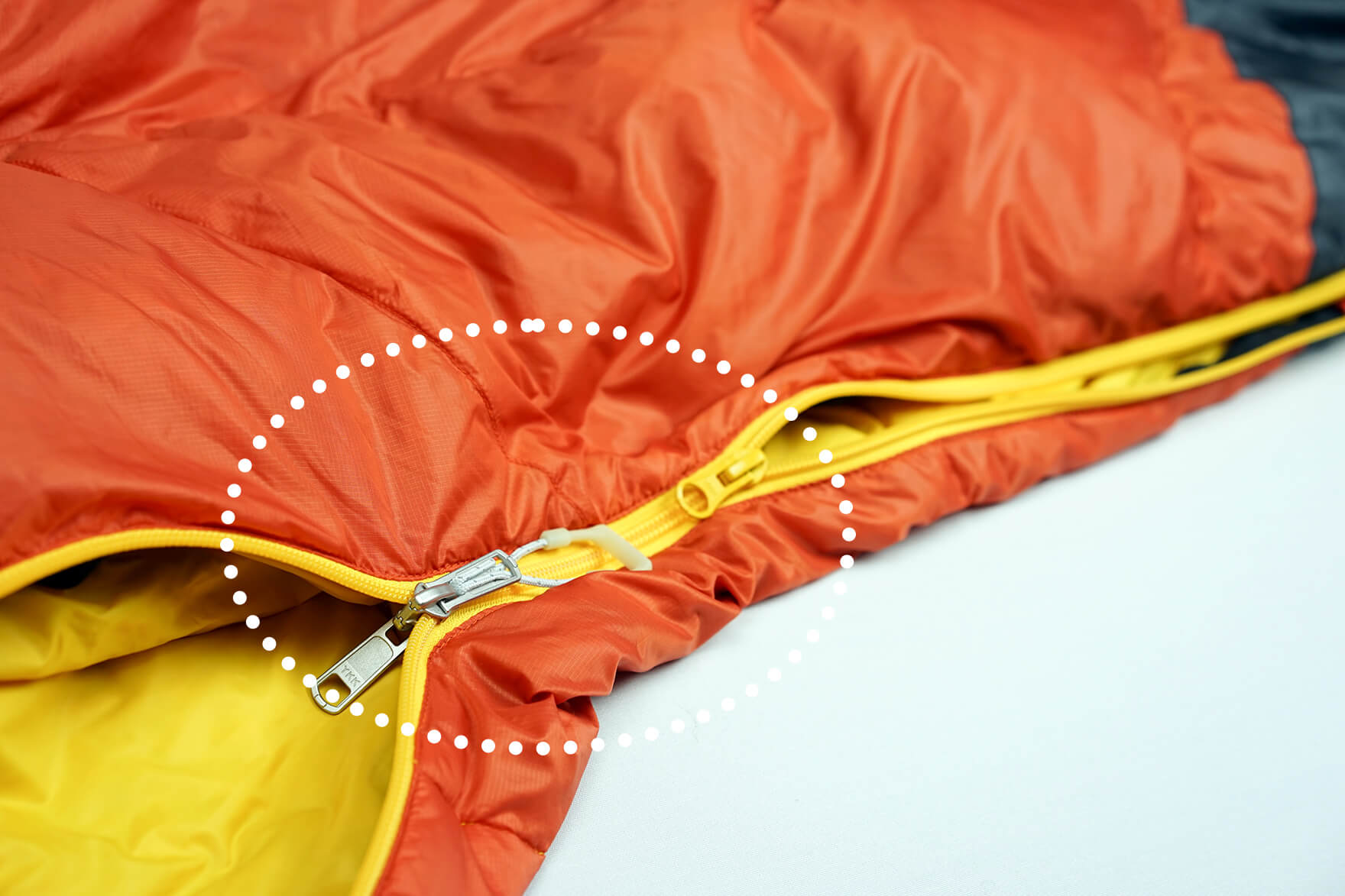
Furthermore, if the zipper can be operated from the inside of the sleeping bag or if it has a double zipper that can be opened from both the top and bottom, it will be even more convenient, and in hot weather you will be able to sleep with your feet exposed, making it easier to regulate temperature and further improving usability
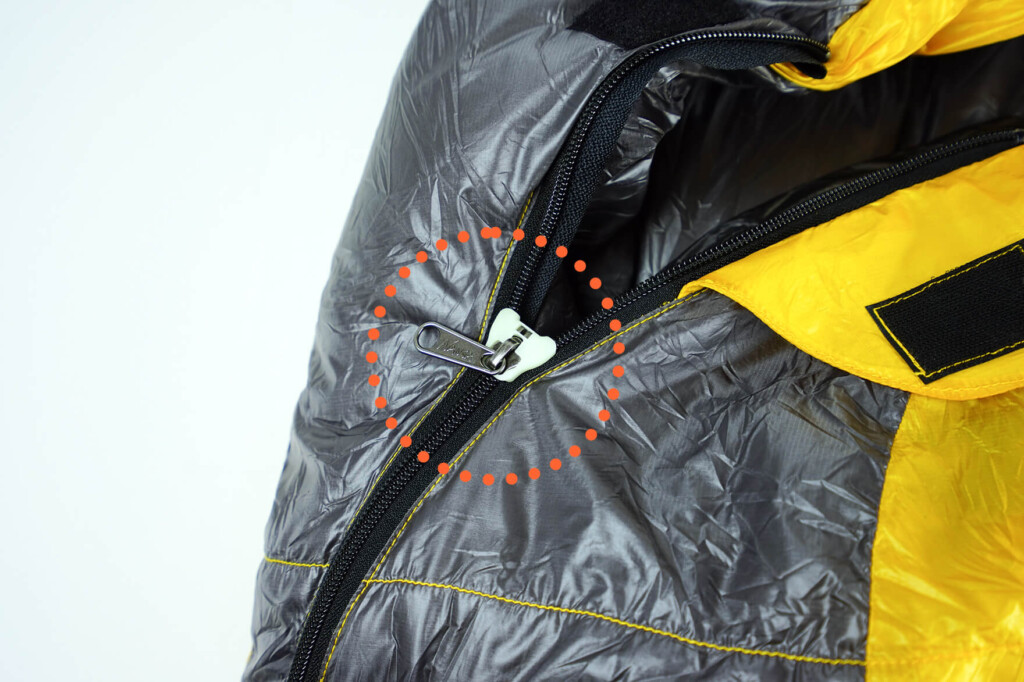
Some models come with a snag prevention mechanism to prevent the zipper from catching and damaging the thin fabric when opening and closing the zipper. However, untreated zippers on sleeping bags are incredibly prone to snagging
Construction of the foot area (footbox)
which is sensitive to the cold, is sewn in a relaxed, three-dimensional manner and filled with extra padding to distribute pressure evenly around the feet, improving heat retention and resulting in a more comfortable sleep.
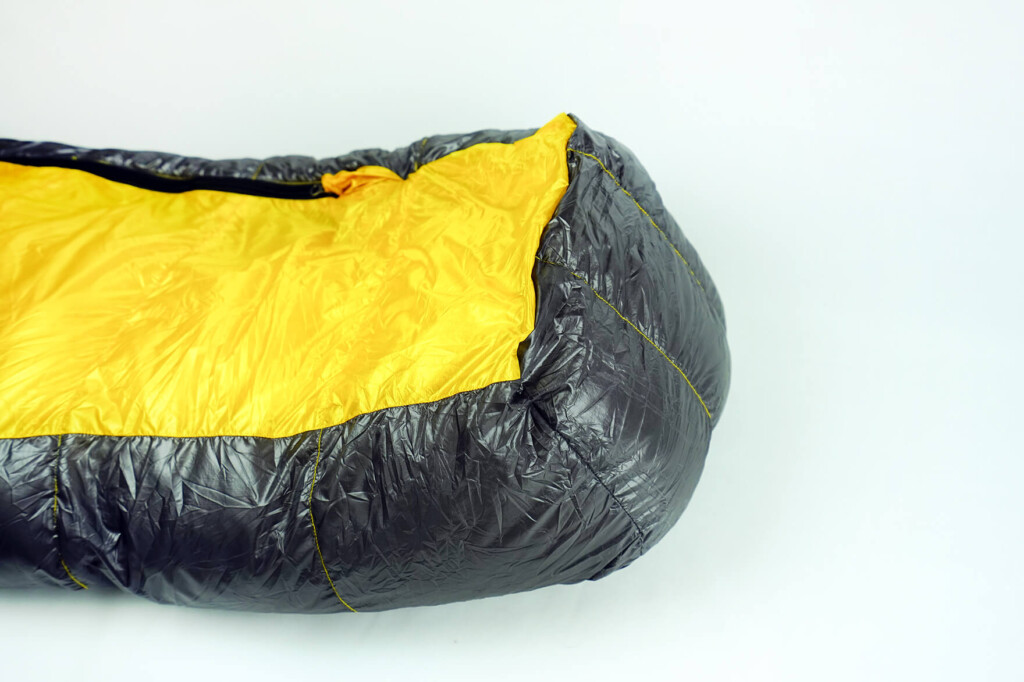
The down is generously packed into the feet, where it's most likely to feel cold, and the three-dimensional construction that conforms to the shape of your feet keeps the entire foot warm evenly and efficiently
Point 6: Bedding to use in combination – A sleeping bag isn’t the only thing you need for a good night’s sleep
While sleeping bags can be used on their own, there are many excellent sleeping bag sets available to help keep you dry and maximize your comfort and warmth. Some of this gear is essential, so be sure to bring it with you
Sleeping Bag Cover
As mentioned earlier, down's weakness is its loss of insulation when wet. Despite this, unlike everyday life, the risk of getting wet in the outdoors is surprisingly high. When you're caught in a sudden downpour, you might accidentally forget to waterproof your backpack, spill water inside your tent, or let condensation drip from above. The risk of water intrusion can come when you least expect it. Unless you're in a low mountain with high temperatures and little risk, some sort of waterproofing is essential in rainy Japan . The first thing to do is to prepare a separate sleeping bag cover made of waterproof and breathable material. This cover, incidentally, can also slightly improve insulation, making it a useful addition to your sleeping bag's insulation.
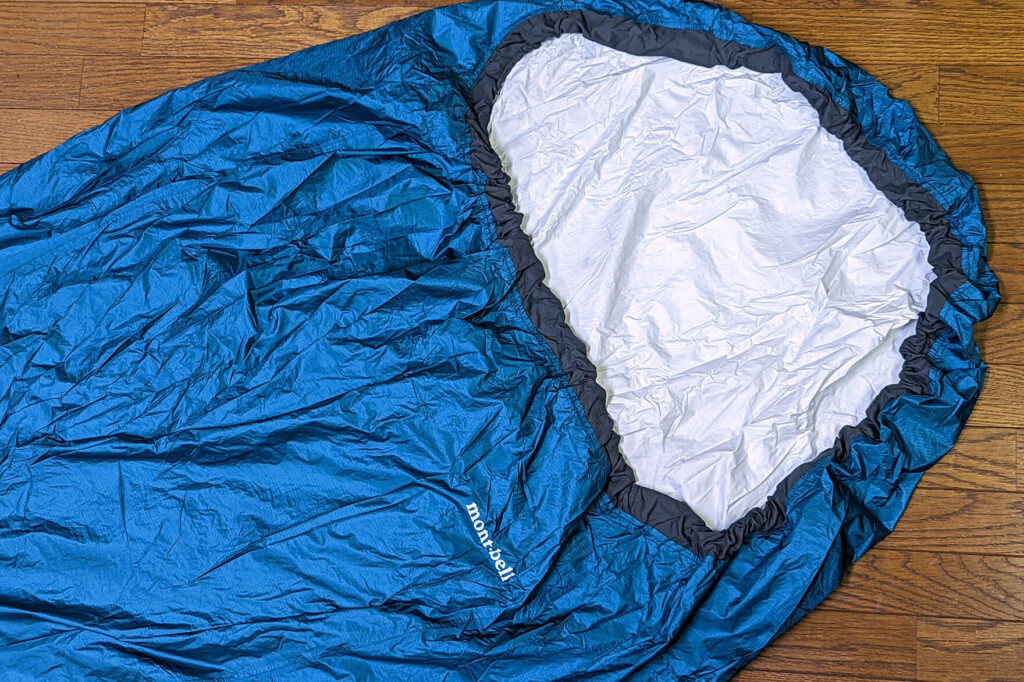
Liners and sheets
A liner (inner sheet) placed inside a sleeping bag primarily to improve warmth can be useful when you feel like the warmth of your existing equipment isn't quite enough, but you're not ready to buy a new sleeping bag. Also, with the COVID-19 pandemic, more and more mountain huts are now requiring liner sleeping bags even when staying overnight, and their use is actually on the rise for reasons of hygiene and comfort
Liner sheets are handy, compact, inexpensive, and easy to use, so it's worth having one. The material should be synthetic or silk, not cotton. I've personally found them useful for a long time, and I've actually used them as a replacement for my summer sleeping bag rather than as an inner layer. From my student days through my first few years in the workforce, it's not impossible to get by with a combination of this and a three-season sleeping bag cover for a year
Pillow
If you have the space, you may want to consider using an inflatable pillow, which is convenient for outdoor activities, to ensure an even better night's sleep. These days, there are pillows that can be compressed quite compactly, so it's true that they don't put as much strain on your luggage
However, I personally don't find inflatable pillows that comfortable, so whether or not it's worth the trouble of bringing one with you probably depends a lot on the individual. Even if you don't bring one, you can make an improvised pillow by putting a change of clothes or a towel in your stuff bag, so honestly, unless you absolutely have a preference, you don't need to worry too much about it

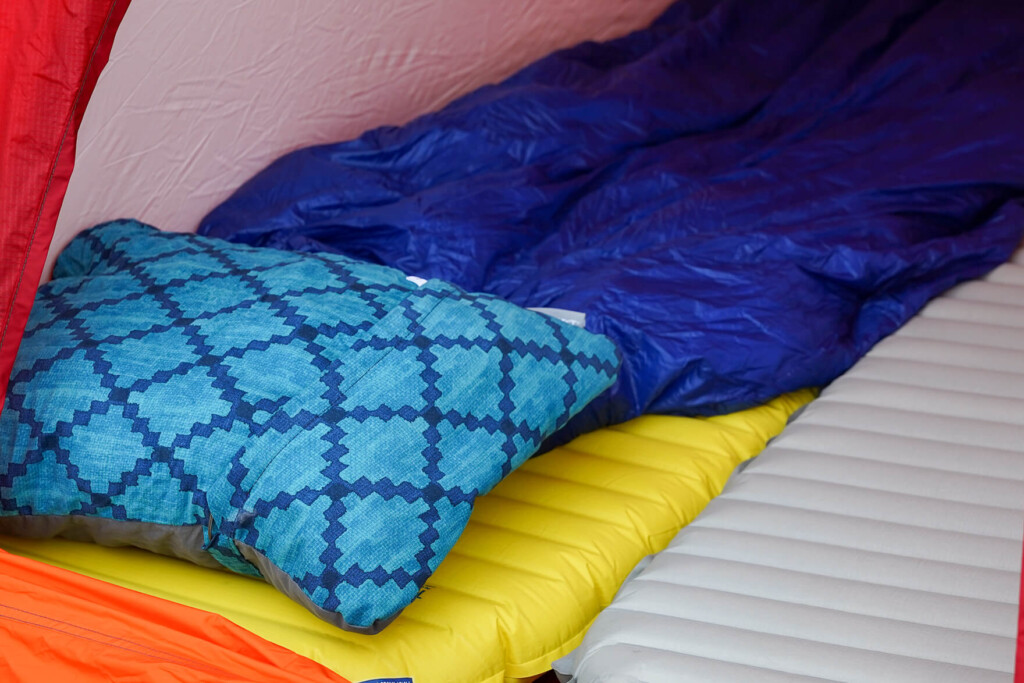
My personal favorite outdoor pillow is the THERM-A-REST compressible pillow, which is stuffed with scraps of mattress foam, but it doesn't compress well enough to take on the mountain
sleeping pad
No matter how fluffy the down is, it will not hold up under your weight, and the part that touches the ground will be hard and uncomfortable to sleep on, and a lot of heat will escape, significantly reducing the sleeping bag's heat retention performance, so it is essential to place a mat under the sleeping bag. There are many different models of sleeping pads depending on your purpose and style, and there are many tips to help you choose the model that is best for you.
Related articles
summary
Lightweight and small, always warm enough, yet durable and tear-resistant, it's resistant to moisture and humidity. If we had a sleeping bag like this, we wouldn't have any problems, but in reality, the best sleeping bag for each person varies, depending on the season, purpose, individual constitution (e.g., sensitivity to heat or cold), preferences, and the balance with other equipment you combine it with. This is also the difficulty of choosing a sleeping bag (or any mountain gear in general). The best models listed here are all excellent sleeping bags that we can confidently recommend, but we hope that this will also inspire you to share the fun of searching for your own best
Please consider a paid membership to support the website while enjoying exclusive articles and events!
Related reading