




[2025FW] It looks easy but it's surprisingly difficult. The best trekking pants for autumn and winter and tips on how to choose them without regrets

Written by Yasushi Hisatomi
If you want to enjoy a quiet hike, try hiking in the low mountains after the leaves have fallen. The appeal of hiking in the so-called off-season is the desolate forest atmosphere, with fewer people walking, the leaves falling and covering the trail, and the wind rustling the fallen leaves. Personally, this is my favorite season.
When I talk to readers at events, I often hear that it's difficult to decide what pants to wear for autumn and winter, or for hiking in snowy mountains. Intuitively, it's easy to imagine that shorts or thin nylon pants are sufficient in the warm spring and summer, but in autumn and winter, it's difficult to imagine what the conditions will be like in the mountains, which may be one reason for this.
The most reasonable solution would be to wear tights under your trekking or rain pants, but that can be too hot or too tight, so it doesn't always work. It's especially unsuitable for times when it's slightly cooler than you'd need tights, and I think many people are troubled by this.
So this time, we looked at all 112 models for trekking pants for the 2025-26 season that have just the right thickness (warmth) and protection for low mountain hikes from early autumn when the weather starts to cool down to January and February, or for snow trekking just before full-fledged winter mountain climbing, or trekking on snow-covered mountains.We selected our own best models, and in the second half of the article we've summarized the points you should pay attention to when choosing trekking pants for autumn and winter wisely.
Please note that we are only introducing one or two items in each category here, but you can view other recommended models and a comparison table of all 112 items by becoming a member .
Outdoor Gearzine's content is made possible by your support. If you're interested, please consider becoming a member!
All recommended synthetic insulation jackets and a comparison table of all 111 models are available with a paid membership.
table of contents
- [Scenes and Preferences] Best All-Round Trekking Pants for Fall and Winter
- Best Fall/Winter Trekking Pants: Patagonia Terra Via Peak Pants
- Best trekking pants for Akiyama: Arc'teryx Gamma Pants
- Best Winter Trekking Pants: Teton Bros. Absaroka Pant
- Best and most cost-effective trekking pants for fall and winter: Rab Incline AS Pants
- Best Pants for Snow Trekking: NORRONA Lyngen Flex1 Light Pants
- Best Field & Everyday Trekking Pants: OUTDOOR RESEARCH Timberline Chino Pants
- How to Choose: Tips for Choosing Trekking Pants Wisely (Autumn/Winter Edition)
- summary
[Scenes and Preferences] Best All-Round Trekking Pants for Fall and Winter
Best Fall/Winter Trekking Pants: Patagonia Terra Via Peak Pants
As I mentioned earlier, autumn and winter can be a diverse season, from early autumn when the heat still lingers to mid-winter when temperatures drop below freezing, and whether there is snow or not. Furthermore, whether it is a low mountain hike or rocky alpine terrain, whether it is a mountain trail or a variation route, etc.
If we go into detail, there is an optimal model for each, but first let's consider a watch that can be called an "all-rounder for autumn and winter" that can cover as wide a range of cases as possible.
When choosing, the most important thing is that the pants have the basic functions required for trekking.
■ Main features required for trekking pants
Breathable to reduce discomfort caused by sweat
Lightweight and easy to move, even when lifting your thighs or bending and stretching.
Durable and protects from scratches caused by trees, rocks, etc.
Quick-drying, even when wet
Windproof and cold-resistant to prevent wind and cold from the outside air
Water-repellent, repels some water and dirt
In addition, it is designed for autumn and winter, as it has the heat retention needed for mountain climbing in autumn and winter.
However, if the pants are too thick, they will be too heavy and uncomfortable, and if you use padding that has a high heat retention capacity per weight, it will have less stretch and will affect ease of movement (of course, with equipment, it's all about prioritizing what you wear, so depending on the purpose, padded pants may be better).
In that sense, the best choice here is a pair of trekking pants made from the classic "medium to heavy double-weave soft shell" material, as this is the most basic and versatile model.
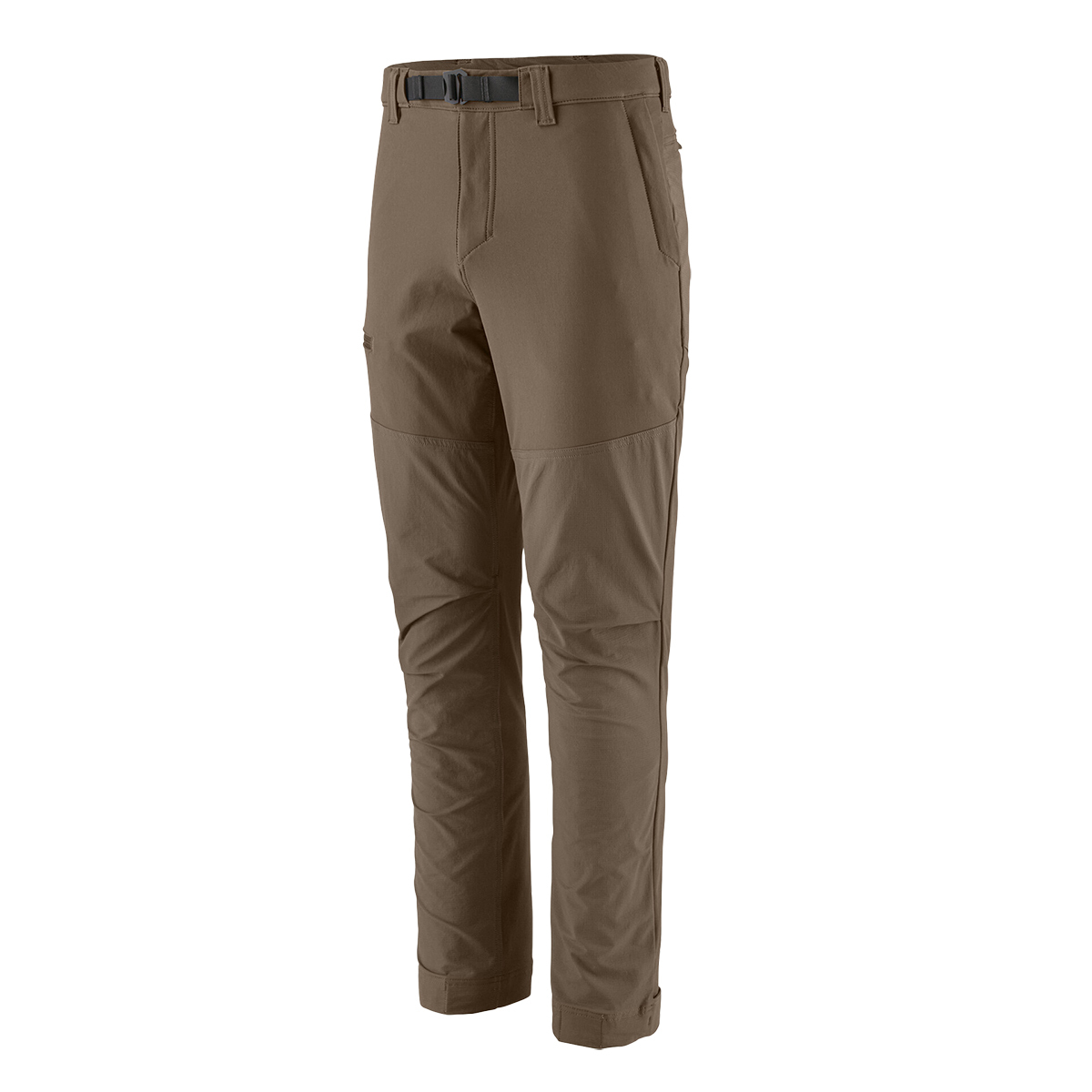
The Patagonia Terra Via Peak Pants offer a balanced range of basic mountaineering functionality, making them ideal all-around trekking pants that can be worn year-round. They're just the right thickness and breathable, quick-drying, making them perfect for high-altitude trekking in the summer as well as autumn and winter. The three-dimensional cut and stretchy polyurethane construction provide excellent mobility, and the slim silhouette is a nice touch. While the knees and buttocks are reinforced, they're not too noticeable, which is a plus. The pockets, waist, and hem are also designed for convenience, leaving no stone unturned.

Best trekking pants for Akiyama: Arc'teryx Gamma Pants
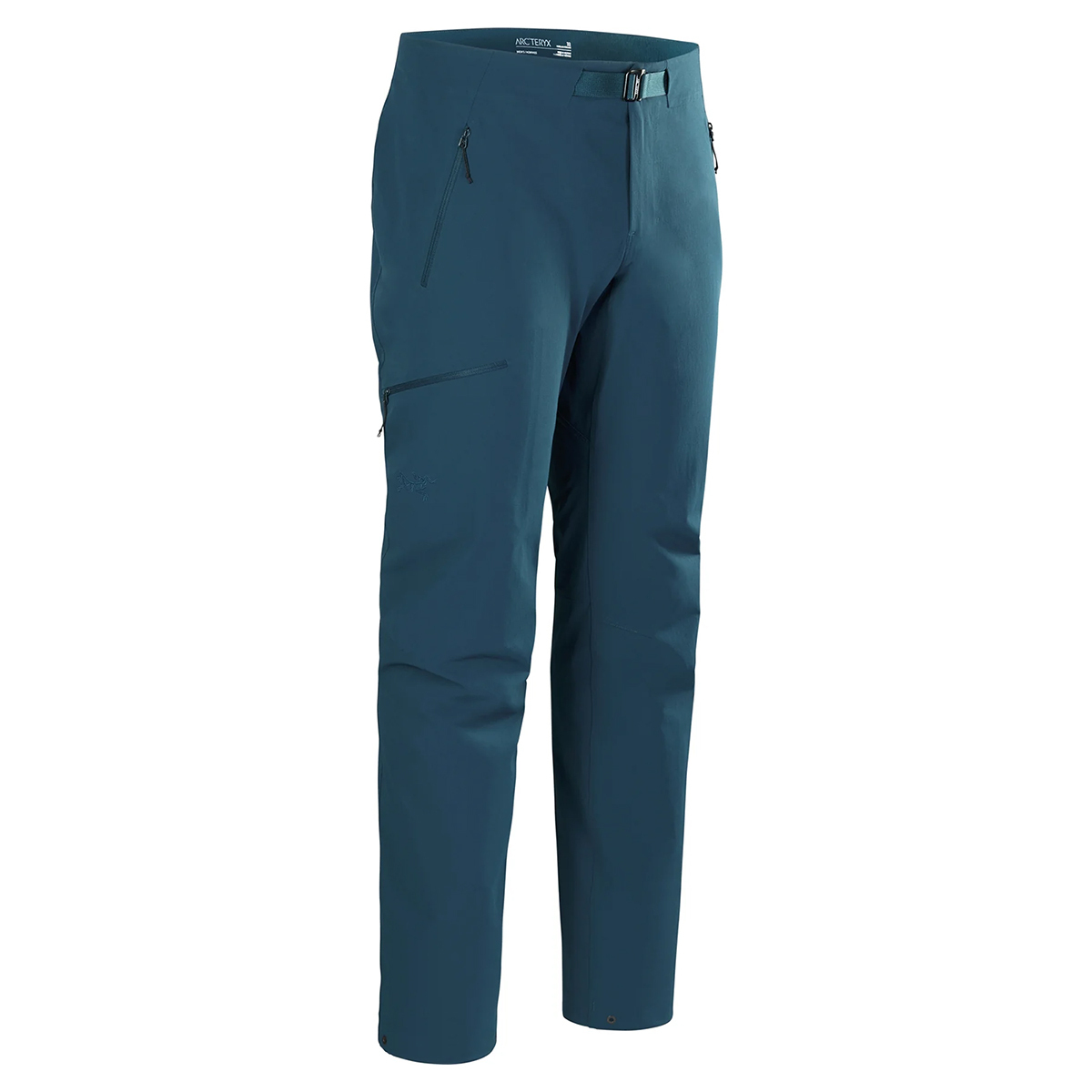
Next up are standard trekking pants, but they're a little thicker for midsummer and a little thinner for winter. They're also made of double-weave softshell material and weigh around 350 grams. They're perfect for when the weather isn't too hot or too cold.
At first glance it may seem like a half-baked item, but given the temperatures we've seen in recent years, it seems like it would be just right for trekking from late August to November, so in that sense it's actually a very versatile line.
If I had to choose, I'd say the Arc'teryx Gamma Pants . Honestly, all Arc'teryx pants are amazing. I've worn many pairs of Arc'teryx pants over the years, and I still treasure them. Once you wear them, you'll be reluctant to let them go because of their comfort and high performance. The Gamma series, in particular, has long been a staple of Arc'teryx's softshell series, focusing on mobility for climbing while also being versatile enough for other activities. The ease of movement and silhouette are simply superb, and I can confidently say that they won't disappoint.
Incidentally, I have an unforgettable memory of interviewing Mike Graham, a legendary climber from the 70s and the founder and designer of GRAMICCI and ROKX pants. When I asked him what outdoor products other than his own he was interested in, he gave high praise to Arc pants. I still remember his words, "Their engineering is outstanding and worthy of respect."

Best Winter Trekking Pants: Teton Bros. Absaroka Pant
This time, we're looking at traditional trekking pants that are warm enough to withstand the cold of midwinter without tights. It's best to choose pants that not only use a double-weave soft shell, but also have a brushed or fleece lining. For those who don't like pants that are too heavy, we recommend models that use highly insulating and breathable padding materials (such as Octa or Polartec Alpha) instead of thick brushed materials (although this will sacrifice some mobility).
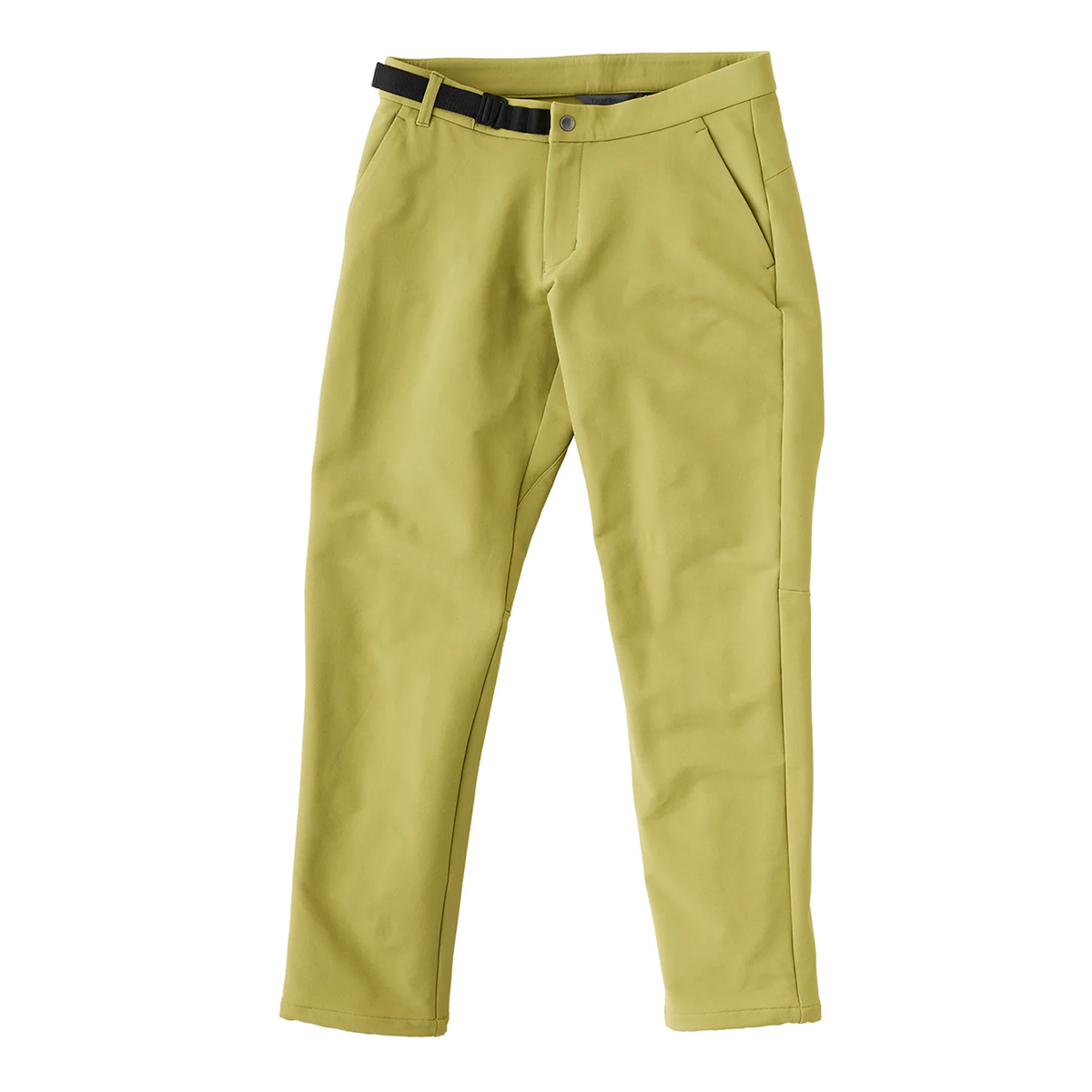
The " Teton Bros. Absaroka Pant " is a warm and active stretch pant from Teton Bros., a brand that specializes in items for high-tempo activities. What I like most about it is that it's made of a double-woven soft shell that provides ease of movement and durability, while the lining is made of a brushed stretch material. It also features clever draping that increases the range of motion of the knees and hips, and a tapered design below the knee for a beautiful silhouette.
Best and most cost-effective trekking pants for fall and winter: Rab Incline AS Pants
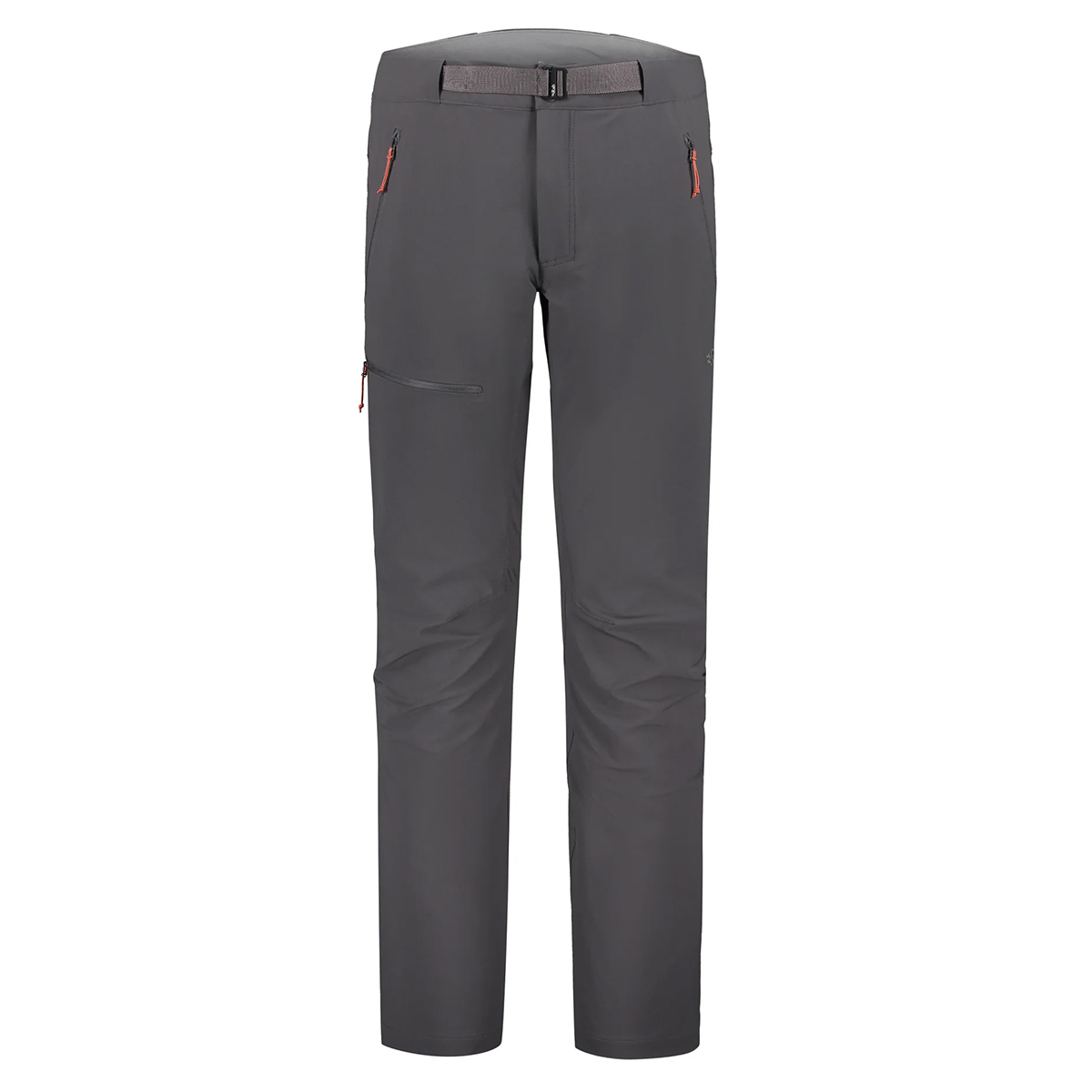
The familiar "high cost performance" model that makes you wonder, "This performance at this price?" Looking at the whole picture, Montbell is clearly the clear winner. It's unsurprising that each pair is priced at over 10,000 yen, and some models even cost less than 10,000 yen, making for an incredibly high price. However, the tricky thing about pants is that even though they're cheap, you might be hesitant to wear a pattern that doesn't fit your body at all. There's always extra room around the waist and thighs, which makes them look a bit unfashionable.
My No. 1 pick here is the Rab Incline AS Pants . I always wonder, is it really okay to charge such a high price for a pair of pants that are so impeccably made? That same admiration extends to trekking pants. This model is so highly functional and well-balanced that it could easily be included in the first category, "Best Fall/Winter Trekking Pants," offering wind resistance, warmth, breathability, stretch, lightness, and a beautiful silhouette. The fact that it has just the right amount of stretch yet doesn't use polyurethane in the fabric is another plus point in terms of durability.
Best Pants for Snow Trekking: NORRONA Lyngen Flex1 Light Pants
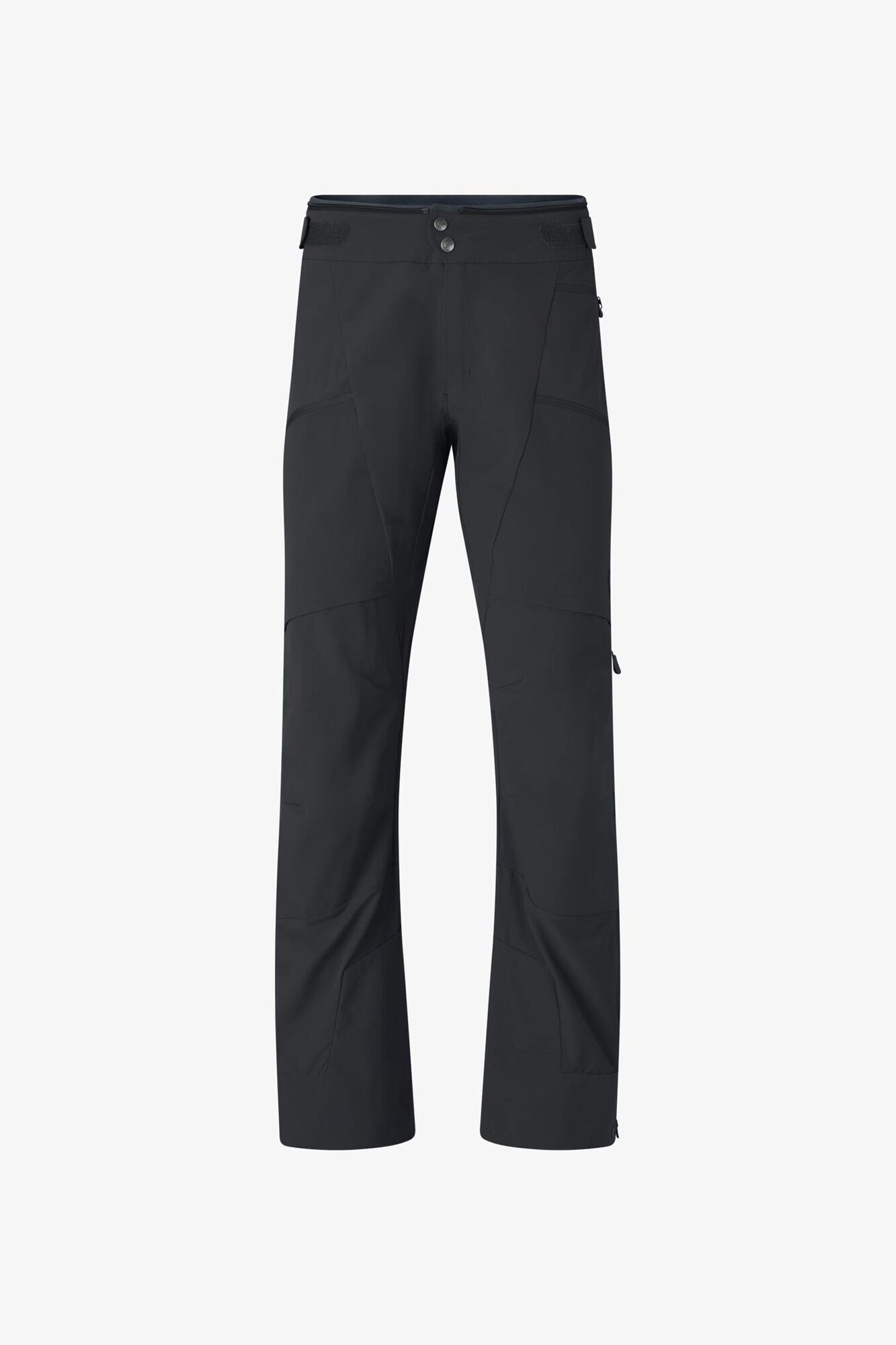
The candidates mentioned so far are basically models intended for mountain climbing and hiking in the snow-free season. Of course, most softshell fabrics have a certain degree of water repellency and wind resistance, so light snow won't soak in if you brush it off with your hands, so it's not like you can't wear them on snowy mountains. However, there are also models of pants for this season that are intended for more serious snow and ice activities, such as ice climbing with crampons, mountain ski touring with ski boots, and snow trekking with snow-
We've selected some noteworthy models from this category. Our pick for the best is the " NORRONA lyngen flex1 light Pants ." Norrona offers a range of products specifically for a variety of activities, including skiing, mountain climbing, trail running, and biking, but the "lyngen" series is a piece from a collection optimized for ski touring, which is what we'd call early spring mountain skiing in Japan.
This model uses flex1™, the same breathable, windproof, durable and stretchy material used in many of the brand's technical pants, to ensure comfort and ease of movement in cold weather, while also featuring features such as a gusset at the hem to accommodate snow gaiters and boots, ample pockets and ventilation to accommodate a wide range of activities on the snow.
Best Field & Everyday Trekking Pants: OUTDOOR RESEARCH Timberline Chino Pants
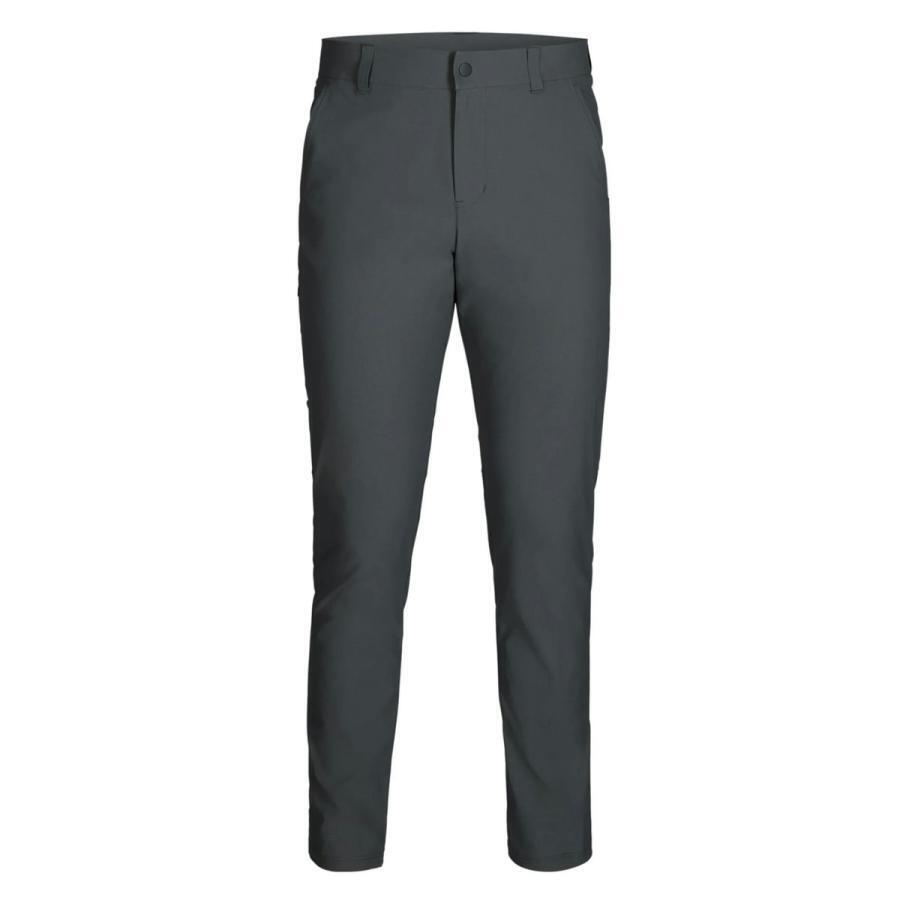
Finally, we checked out a model that not only offers the comfort and protection needed for autumn and winter trekking, but also has a design and silhouette that makes it comfortable to wear in everyday life around town. Personally, this is the model I wear most often in winter.
When it comes to a design that can be worn comfortably in everyday life, there are probably many different preferences, but I personally don't like oversized or extremely tapered silhouettes, so "5-pocket pants" that can be worn to work are my go-to. So, my criteria here are that they have a sophisticated design, are warm and functional.
I mentioned the merits of Arc'teryx earlier, so I've chosen another model here: the OUTDOOR RESEARCH Timberline Chino Pants . OUTDOOR RESEARCH has long been known for its high quality pants that combine functionality and sophistication, and these Timberline Chino Pants have been my favorite for the fall and winter seasons over the past few years.
Made from a sturdy nylon softshell material, it's quick-drying, abrasion-resistant, breathable, and stretchy enough to not restrict movement. Its slim fit and subtle tapered calf help prevent it from looking outdated. While suitable for all seasons, it's a little thin for the winter months, so the Timberline Fleece-Lined Pants, which have the same construction but a brushed fleece lining, might be a better choice for the coming season.


In addition to the above, you can read all the recommended models picked out and a comparison list of all 112 models, including backpacks for snowy mountains, in the paid membership article.
How to Choose: Tips for Choosing Trekking Pants Wisely (Autumn/Winter Edition)
First, let's organize the necessary functions of trekking pants, regardless of the season, while thinking about how they differ from pants you wear every day. Roughly speaking, trekking pants have the following advantages over pants you wear every day:
General characteristics of trekking pants
- Windproof and cold-resistant to prevent wind and cold from the outside air
- Lightweight and easy to move around without stress, even when bending and straightening your knees and thighs
- Breathability reduces discomfort caused by sweat
- Durable and protects from scratches caused by trees, rocks, etc.
- Quick-drying, even when wet
- Water-repellent, repels some water and dirt
Of course, there is no one pair of pants that has everything perfectly, and although there are inevitably trade-offs to some extent, high quality pants are those that achieve a good balance according to the use and purpose.
For this reason, when choosing trekking pants, it's important to consider what kind of activities you'll be doing most, and then check whether they have all the necessary features. When it comes to trekking pants for autumn and winter, the most important thing is heat retention, but breathability isn't as important. You want pants that offer the same level of ease of movement and durability in all seasons.
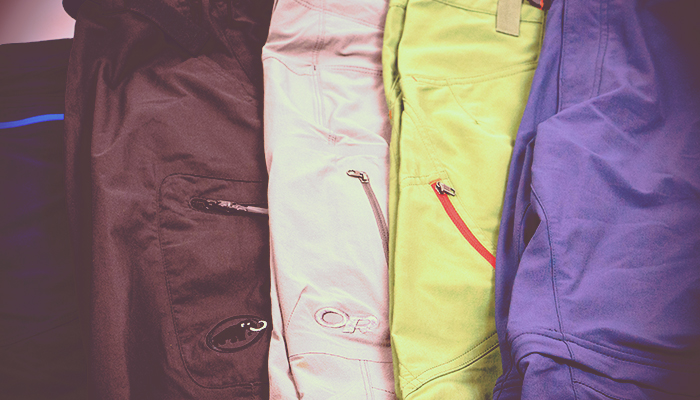
Trekking pants come in a wide variety of models, from materials to designs and details
Point 1: Thickness, weight, and heat retention of the fabric
You should have a rough idea of how thick (volume) you need for autumn and winter. Long pants can be roughly divided into spring/summer, year-round, and snowy season pants depending on the thickness of the fabric . For autumn/winter trekking pants, you can rest assured if you choose a type known as an " all-year model " or a three-season model (except in the harsh winter). Even though they are all-year models, they can still be too hot if worn on low mountains in midsummer, so it's best to think of all-year models as being primarily for spring and autumn.
Year-round models are generally made with " double-weave softshell fabric weighing around 400 grams or more, " which serves as a guideline when considering thickness. Of course, there will be some variation depending on the fabric's performance, such as a light and warm fabric or a heavy but thin fabric. This guideline is only for general softshell pants. Pants that contain insulation (padded batting) rather than softshell, or pants with a brushed lining, can be light but warm (although this often comes at the expense of stretchiness, etc.).
Point 2: Fit and ease of movement
Form (draping)
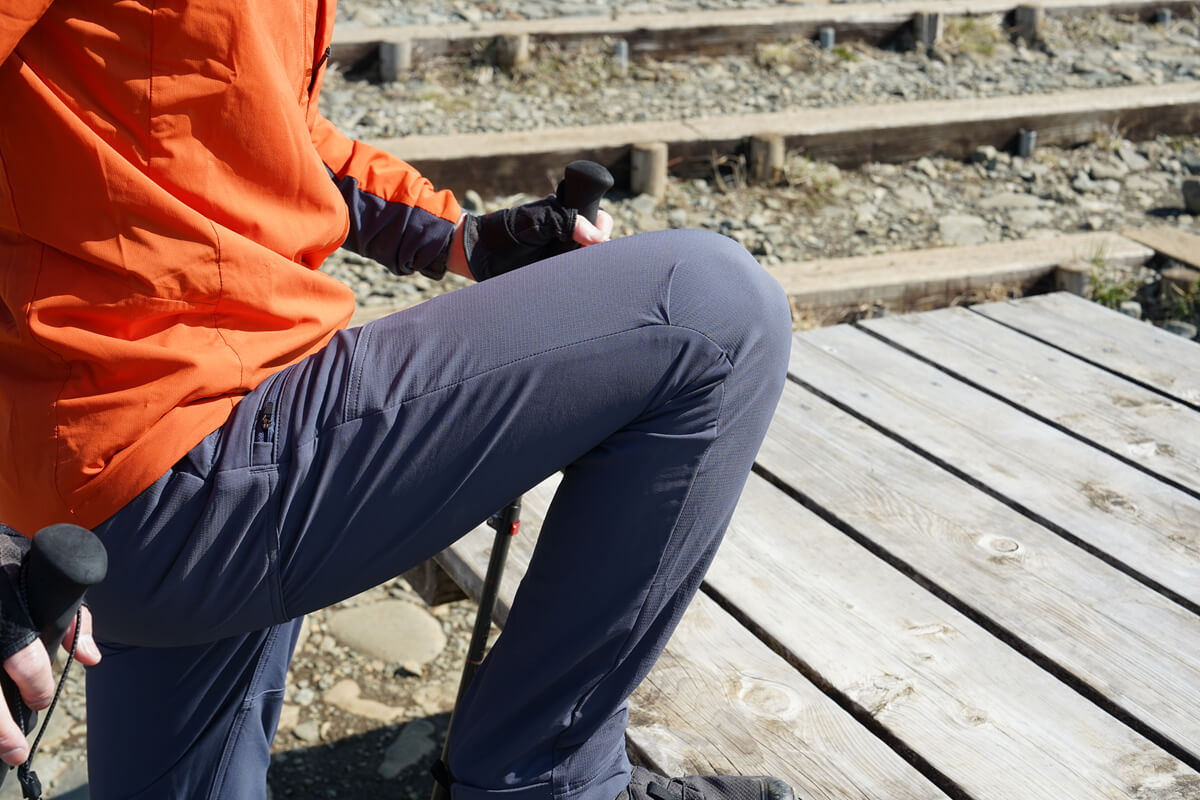
The most important thing about trekking pants is that they allow for a wide range of motion and are easy to move in. However, if they're too loose, you risk tripping over the hem and falling, and if they're too tight, they'll feel tight when you bend or stretch. For this reason, many trekking pants are ergonomically designed with a three-dimensional cut. As you can see from the knee area in the photo on the right, they're designed to leave some room in the knee area so they don't feel tight when you bend or stretch. Depending on the manufacturer and model, various other features, such as hip shape and crotch gussets, are incorporated to allow for unrestricted movement , so try them on and compare them to find the model that best fits your body and movements.
Stretchability
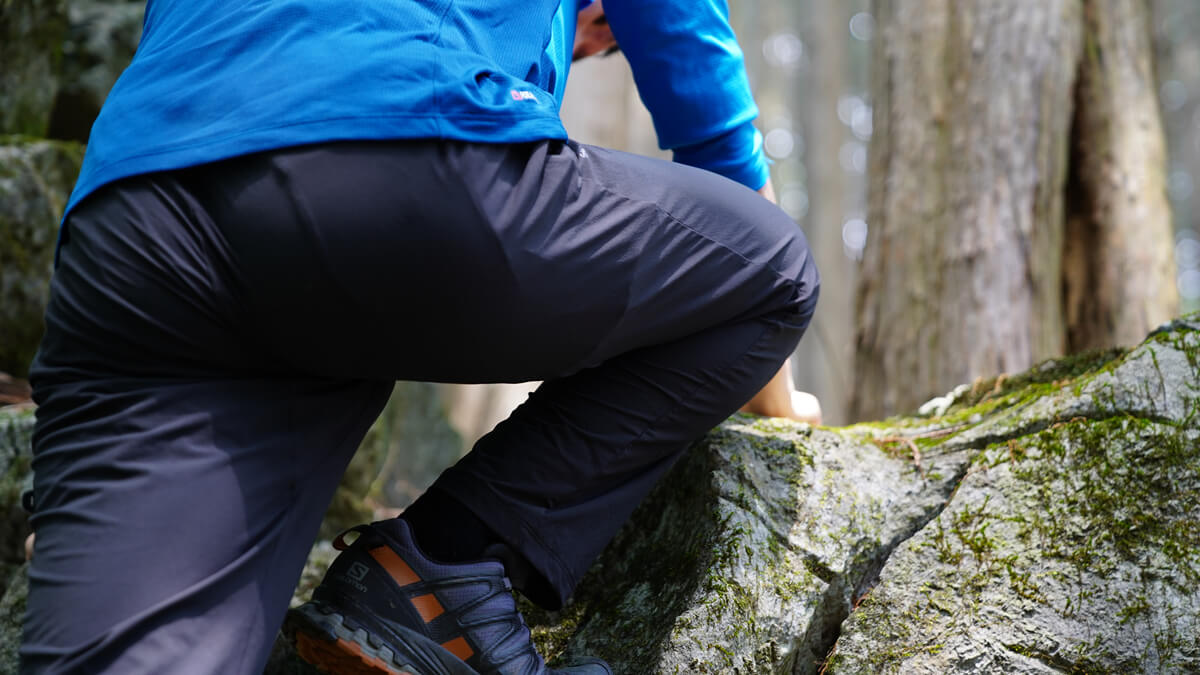
Another factor that allows for natural movement the high level of stretch in the fabric. Highly stretchable trekking pants often contain polyurethane (spandex) and other materials, resulting in a number of models offering surprisingly easy mobility. This allows for natural freedom of movement even in a relatively tight silhouette, ensuring safe and comfortable walking . When choosing pants, the strength and direction of stretch (e.g., stretch in only one direction, vertically or horizontally, or all directions) vary by manufacturer and model, so try them on and bend and stretch your body to get a feel for how they feel and how easy they are to move in. However, be careful of pants that use too much polyurethane just to enhance their stretch. Polyurethane is heavy and degrades over time, so even if it's for ease of movement, it's best to avoid it if possible.
Point 3: Material (water repellency, breathability, quick-drying, UPF, durability, weight)
In addition to the stretch function mentioned above, there are various other characteristics depending on the material, so be sure to check the following
water repellency
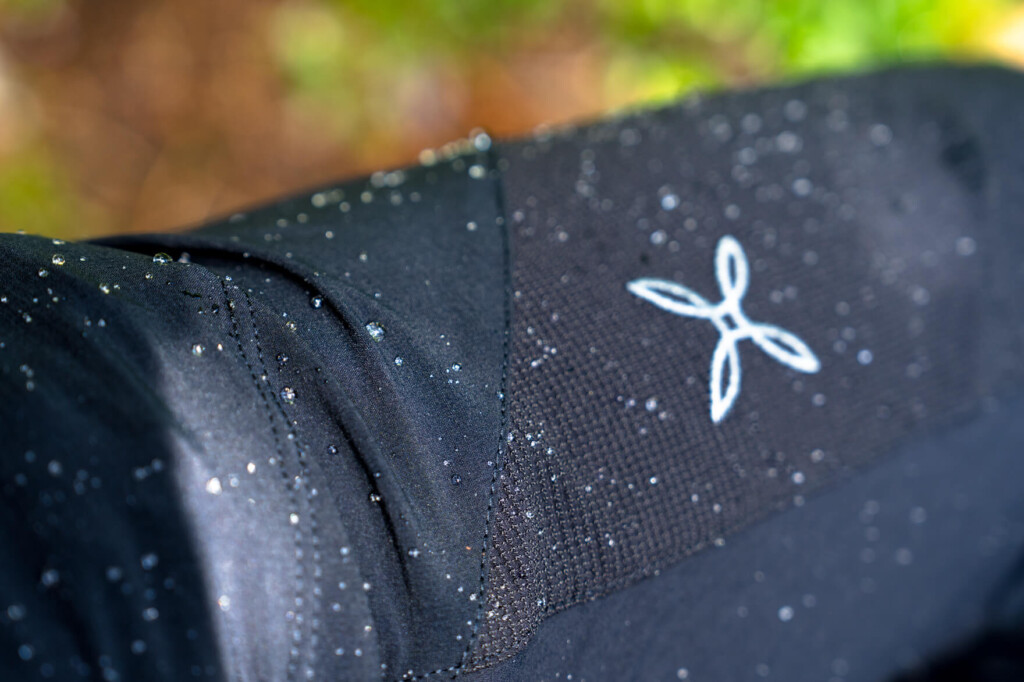
Fabrics with a DWR (durable water repellent) finish are very useful as they will repel light rain and snow , but they are not "waterproof," so be sure to take precautions against heavy rain.
Moisture permeability, breathability, and quick drying
When you're active for long periods of time, your pants will absorb a lot of moisture, not only from sweating in your lower body but also from sweat dripping down from your upper body. Getting wet can be fatal in outdoor activities, so choose trekking pants that are highly breathable, quick-drying, and have moderate breathability . However, when considering trekking pants for autumn and winter, pants that are too breathable will make you feel cold, so it's important to have just the right amount of breathability. In that sense, double-weave softshell pants are ideal for autumn and winter pants, as they block the wind but allow moisture to escape and are reasonably breathable. Of course, chinos and jeans, even though they may be thick and warm, are strictly prohibited as they have poor breathability.
UV protection (UPF) material
UPF stands for "ultraviolet protection factor," which indicates how well a garment protects your skin from UV rays and sunburn. The higher the number, the better the UV protection, but regular clothing naturally also blocks a certain amount of UV rays. If you're really concerned about sunburn, choose pants made from a material with this property .
Checkpoint 4: Details (waist, pockets, hem)
West
Trekking pants' waists can be broadly adjustable and non-adjustable types . Non-adjustable types have belt loops, so you'll need to bring your own belt, but they offer greater versatility. On the other hand, adjustable types have a variety of adjustment methods, and the ease of use and range of adjustment vary, so you'll need to try them on to make sure. Another thing to be careful of, based on experience, is that if the central button (buckle) is made of thick metal, some people may feel painful pressure from the hip belt of their backpack, so it's a good idea to check that the belt area is not excessively uneven.
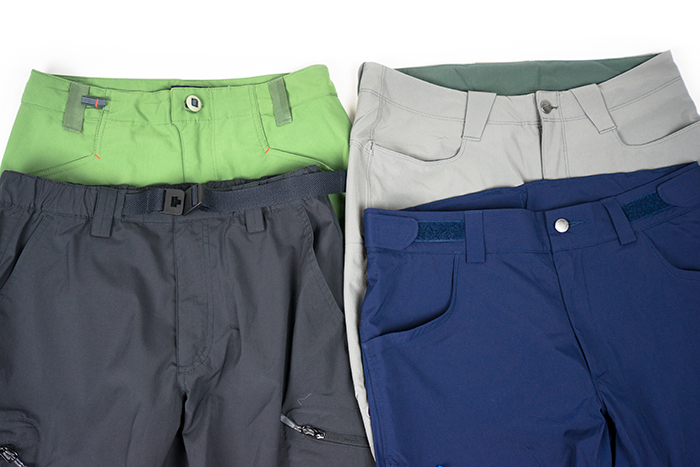
Various adjustment functions. The upper left one can be adjusted by pulling the tape on the left side, the lower left one can be adjusted with the attached belt inside. The upper right one has only belt loops, and the lower right one can be adjusted with the belt loops and hook-and-loop fasteners on both sides
- The simpler the waist adjustment , the more comfortable it is. Choose a waistband with a simple adjustment mechanism that allows you to easily adjust the size .
- Try it on and see if it fits。
Pocket specifications greatly influence the usability of pants, but in reality, pocket location, number, size, and whether or not they have zippers vary greatly depending on the pants. Pockets also serve more than just as pockets; they also reinforce the durability of the hip area and provide ventilation (increased breathability), so there are many aspects to consider before trying them on to determine whether they will actually satisfy you. However, one thing can be said: in terms of ease of use, more is better . Sometimes, there are modest models that prioritize weight and style, but as a result, the pockets can be just there and you don't know what to put in them, so be sure to check this carefully.
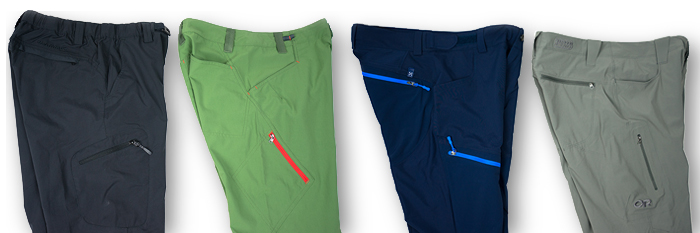
Pockets are generally located on the hips, waist, or thighs, but the size and number vary
- If you don't consider weight or shape, it is generally recommended to have larger and more pockets as they are easier to use .
- Pockets with zippers are safer to prevent items from falling out .
- If you are also using it for climbing, make sure it does not overlap the belt position of your harness .
Drawcord and hook hem
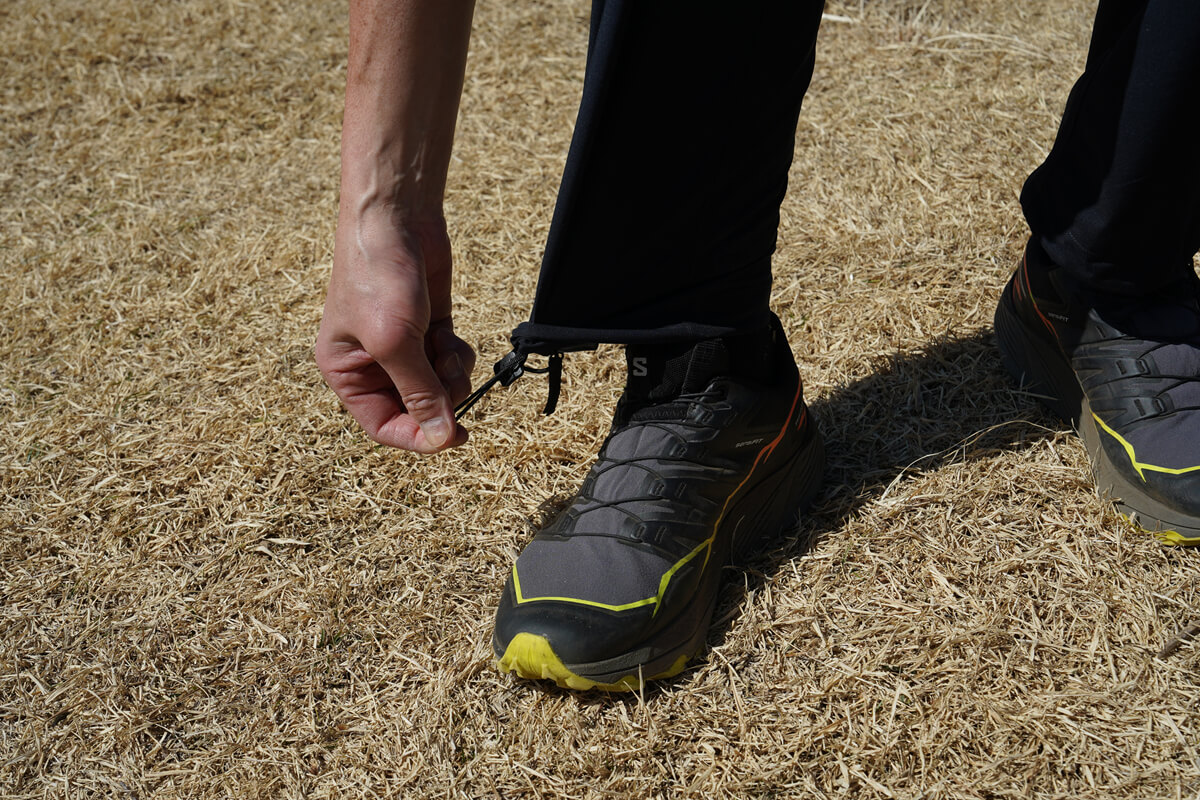
Recently, models with drawcords at the hem that can be tightened are becoming more common, and they are often convenient, but they don't interfere with trekking so I think they're not a high priority. There are three main reasons why they're convenient.
- This prevents the hem from spreading out and makes it less likely to get caught on your legs .
- Tighten it over your shoes as a simple gaiter (preventing pebbles and water from getting in) .
- You can roll up your long pants and wear them as shorts
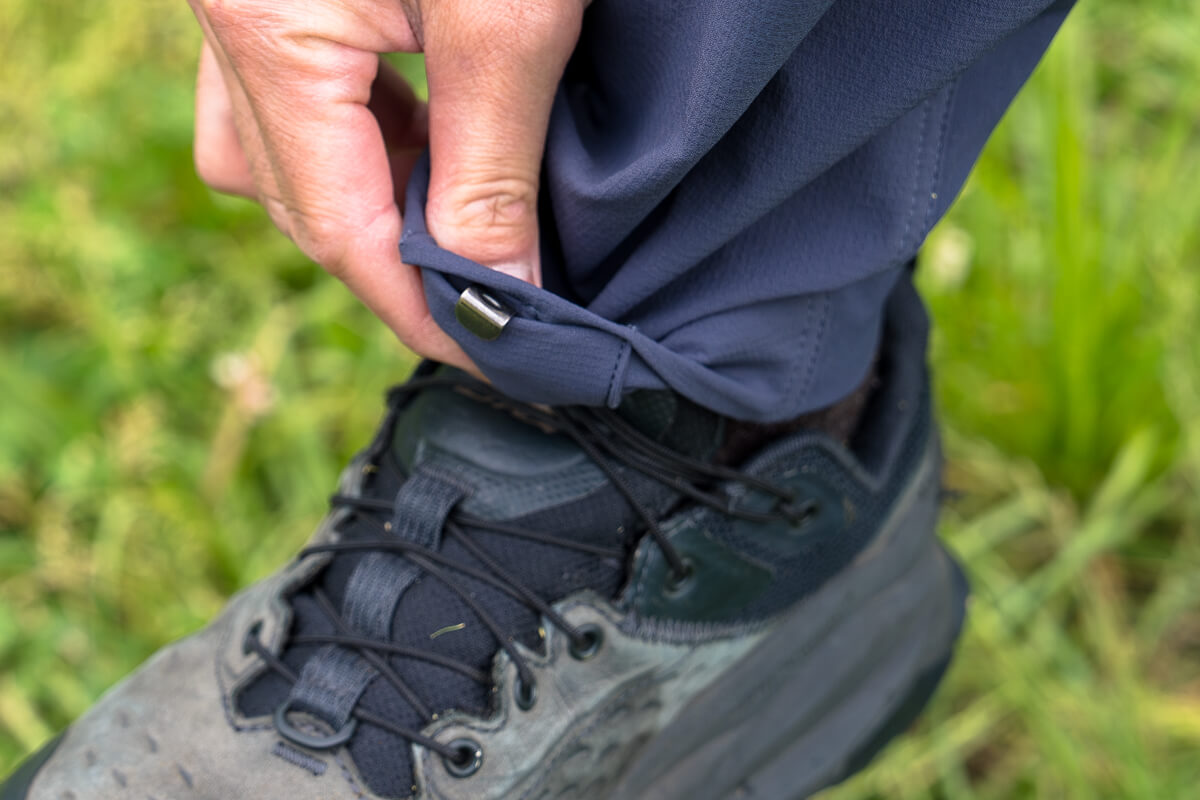
Some pants also come with hooks that can be hooked onto shoelaces to prevent the cuffs from riding up and to block out pebbles, branches, and debris.Like drawcords, these are convenient features designed for ease of use when hiking or climbing.
summary
If you choose your trekking pants in the same way as you would for everyday pants, you might be satisfied with just the shape and ease of movement, but when it comes to performance for mountain climbing, various functions and features are required of trekking pants. Please use this as a reference when choosing the perfect pair depending on the purpose, season, and location.
Please consider a paid membership to support the website while enjoying exclusive articles and events!
Related reading
 The best ultralight backpacks for those who want to enjoy the mountains as freely as possible, and tips on how to choose one that won't leave you regretting it
 [Fall/Winter 2025] This season's best hard shell jackets, essential for the harsh snowy mountains, and tips on how to choose them safely
 [Fall/Winter 2025] Down? Synthetic? Fleece? The key to comfortable layering is choosing the right material. The best mid-layers for mountaineering (cold weather gear) by type, and tips for choosing the right one
 Lightweight, comfortable, and stylish. 7+7 trekking pants recommended for spring and summer mountain climbing