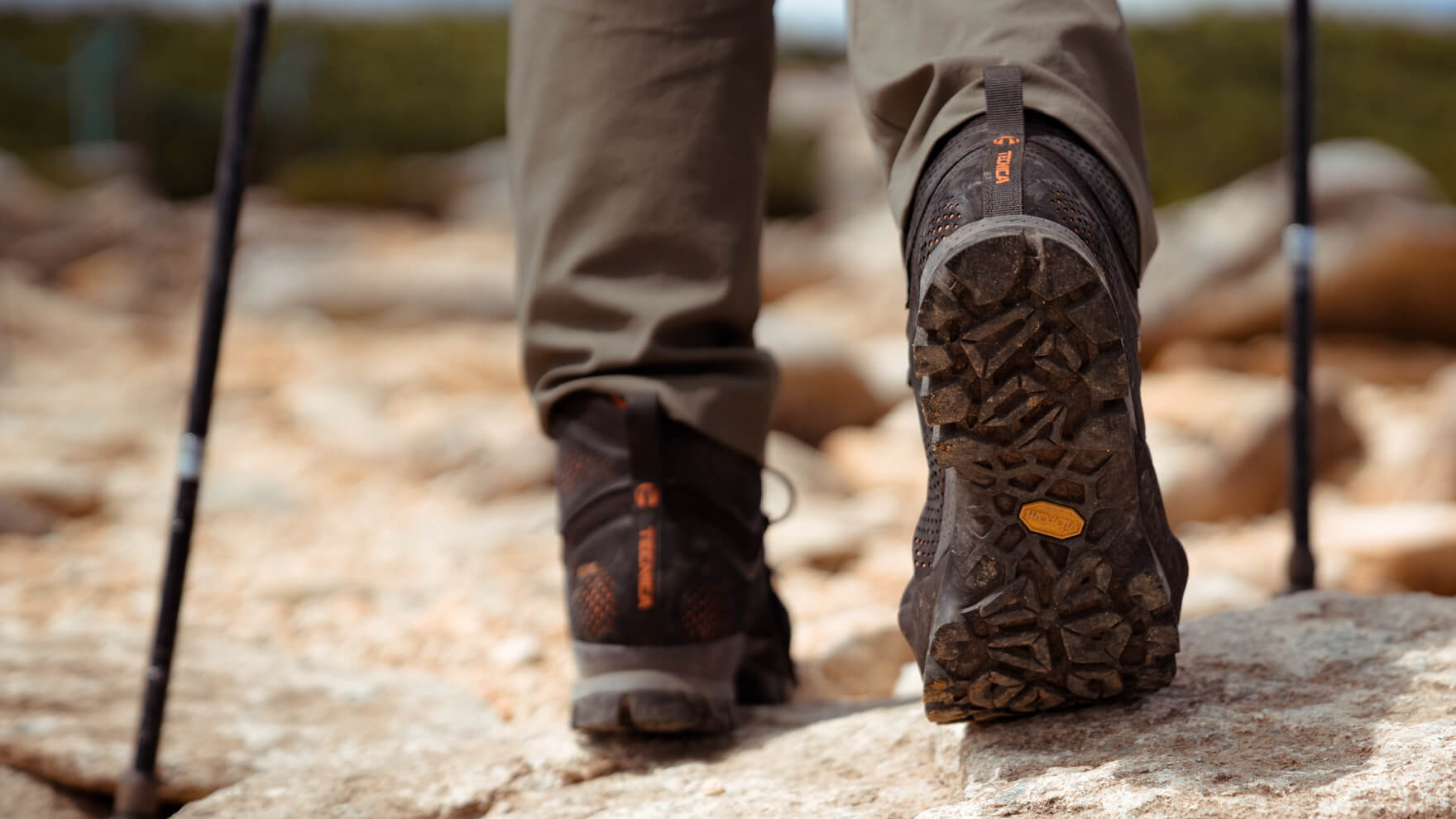
Up until now, on this site, we have been researching all the popular and latest models of mountain boots (trekking shoes/hiking shoes), which are one of the most uncompromising pieces of mountain gear and are very delicate items, by purpose and type every year, and then purchasing the ones that we thought were the best at our own expense and actually walking with them
This time, I would like to introduce some of the shoes and boots that I am really glad to have purchased (and worn) from among these carefully selected items. In the second half, I have summarized six points that anyone can easily understand to help you avoid getting lost in the store when choosing trekking shoes, which can be quite difficult. If you are interested, please take a look
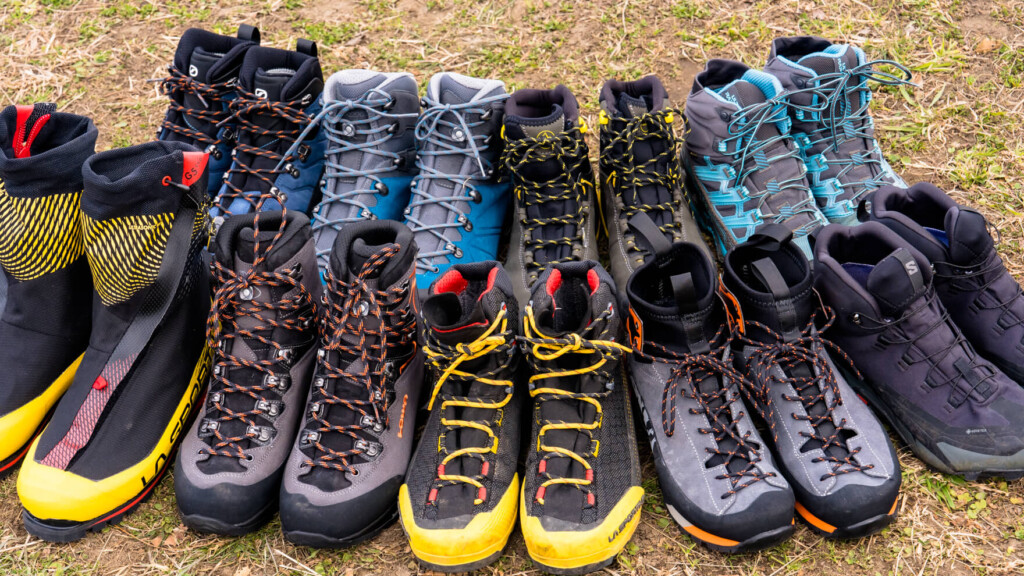
table of contents
- Recommended hiking boots and trekking shoes by category
- Best Lightweight Hiking: From day hikes to fastpacking, this lightweight model offers speed and just the right amount of protection
- Best Low-Cut: Short and perfect for light activities and everyday wear
- Best Approach Shoes: While these shoes are primarily designed for rocky and technical terrain, they also have many models that are ideal for hiking
- Best for Longitudinal Trekking: A versatile model perfect for hiking trails with luggage and staying overnight in huts
- Best Alpine Trekking: Suitable for overnight stays in huts and heavy loads, and performs to its full potential on technical routes
- Best Long-Term Trekking Category: Ideal for long-term trekking with heavy loads, including camping in a tent
- Best Long-Term Alpine Trekking: Ideal for long-term trekking on technical routes, including difficult rocky terrain, with heavy loads and camping
- Best Winter Category: Ideal for winter mountain climbing, even during the harsh winter months
- Best Value: KEEN Circadia Waterproof (Low/Mid)
- How to Choose: 6 Points to Choose Trekking Boots Wisely
- Point 1: Types of hiking boots - Know your strengths and weaknesses and your hiking style
- Point 2: Upper material - Decide whether to use synthetic fiber, leather, or a combination depending on your climbing style
- Point 3: Midsole - Determine the hardness depending on the route and the weight of the luggage you will be carrying
- Point 4: Outsole - Choose an outsole that is non-slip (grip) and easy to step on (traction)
- Point 5: Weight - Lightness is good, but be aware of what you lose in exchange for "lightness" -
- Point 6: Other items to check
- Summary: Only your feet can tell you the best shoe choice
Recommended hiking boots and trekking shoes by category
Best Lightweight Hiking: From day hikes to fastpacking, this lightweight model offers speed and just the right amount of protection
1) La Sportiva Ultra Raptor II Mid GTX
Favorite points
- lightweight
- Cushioned and stable midsole
- Supportive yet flexible ankle
- Easy walking thanks to trail running shoes
- Excellent protection
Points of concern
- The lugs on the outsole are a little shallow, so grip is a bit unstable on wet surfaces or in deep mud
- If you expect too much from trail running shoes (lightweight, high cushioning, high resilience), you will be disappointed
Originally the Ultra Raptor series was Sportiva's standard trail running series, but these boots were completely redesigned as fast and light hiking boots. While inheriting the lightness, cushioning, stability, and toughness of the Ultra Raptor as a trail running shoe, they also add the high support and protection (waterproof and breathable) of a mountain shoe, making them the perfect lightweight hiking boots for me, who wants to be comfortable both on day hikes and runs
The sole is flexible enough to bend by hand, yet the TPU heel cup provides stability even on long walks, and the comfortable padded panel that wraps around the ankle provides the support and comfort you expect from a hiking boot. The upper part of the heel (Achilles tendon) is made of stretch material, which also ensures ankle mobility (see photo below)

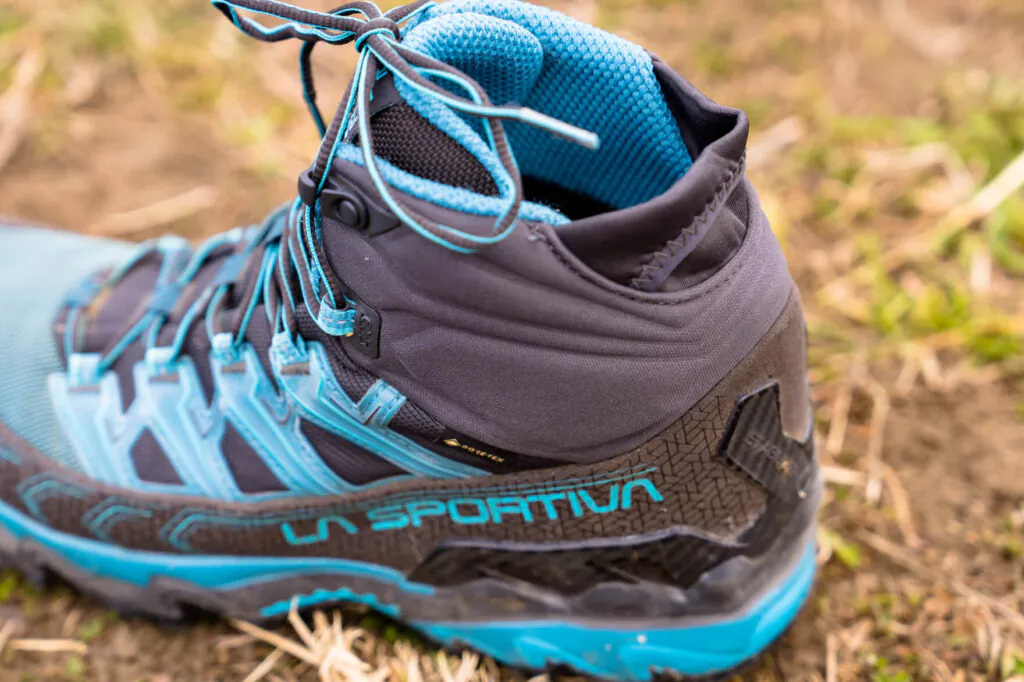
Despite the firm heel hold, the back of the ankle is recessed for easy movement, making it comfortable even when moving quickly
However, if I had to say something, I couldn't help but feel that the grip was a bit lacking. The lugs are shallow for hiking boots, and while they provide excellent grip on dry terrain, they can slip a little on wet surfaces or in deep mud, which is a bit worrying. Also, the sticky grip makes them less durable
However, this is not a concern when you consider the overall quality of the shoes. For hikers who like to travel as quickly as possible while carrying a small load off-road, the La Sportiva Ultra Raptor II Mid GTX and is sure to be a satisfying choice.
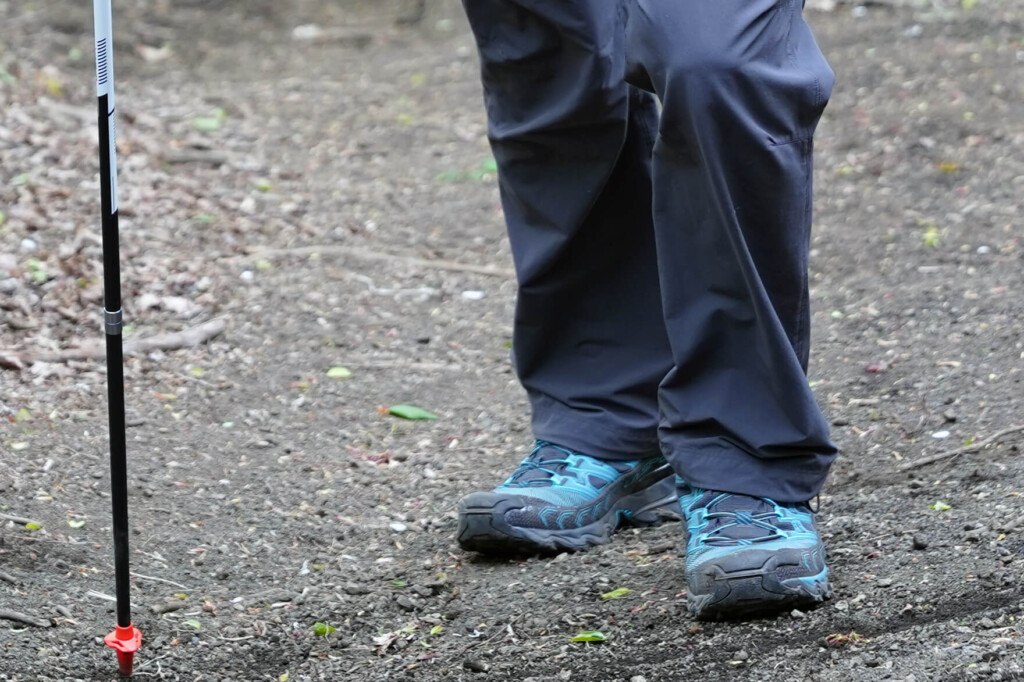
2) Salomon CROSS HIKE 2 MID GORE-TEX
Favorite points
- Comfortable upper with a snug fit
- A good balance of lightness and stability for comfortable walking and running when hiking with a light load
- A midsole with excellent shock absorption that can adequately handle heavy loads and long distances
- Outsole for peace of mind even on rough roads
- Adequate protection
Points of concern
- Lightweight like trail running shoes, but not as easy to run in
This mid-cut lightweight hiking shoe is based on the sole structure of Salomon's classic trail running shoe, the SPEEDCROSS series, but adds the support and protection needed for trekking shoes to the upper and ankle area, achieving excellent agility, comfort, and durability. After choosing it, I realized that I have an eye for shoes that are based on trail running shoes but have the added strength needed for hiking. Considering how well they work with lighter loads, I'm sure I'm not the only one with this tendency.
While its predecessor was also excellent, this second-generation model has been tuned slightly more for mountaineering than its predecessor, achieving a higher level of balance as a lightweight hiking boot that can also be used for running. Despite its light weight of just 413g per shoe, the durable and comfortable upper material provides excellent mobility, comfort, and protection. The midsole is equipped with EnergyCell™+, which combines the excellent rebound, shock absorption, and durability of trail running shoes, allowing for comfortable movement whether walking or running. The outsole, featuring Mud Contagrip®, provides excellent grip even on muddy and slippery surfaces, and the revised lug pattern improves braking performance. Detailed upgrades from the previous model make this a tougher shoe, more comfortable for long mountain trips
If you want to know more, please read the review I wrote previously:
Related articles
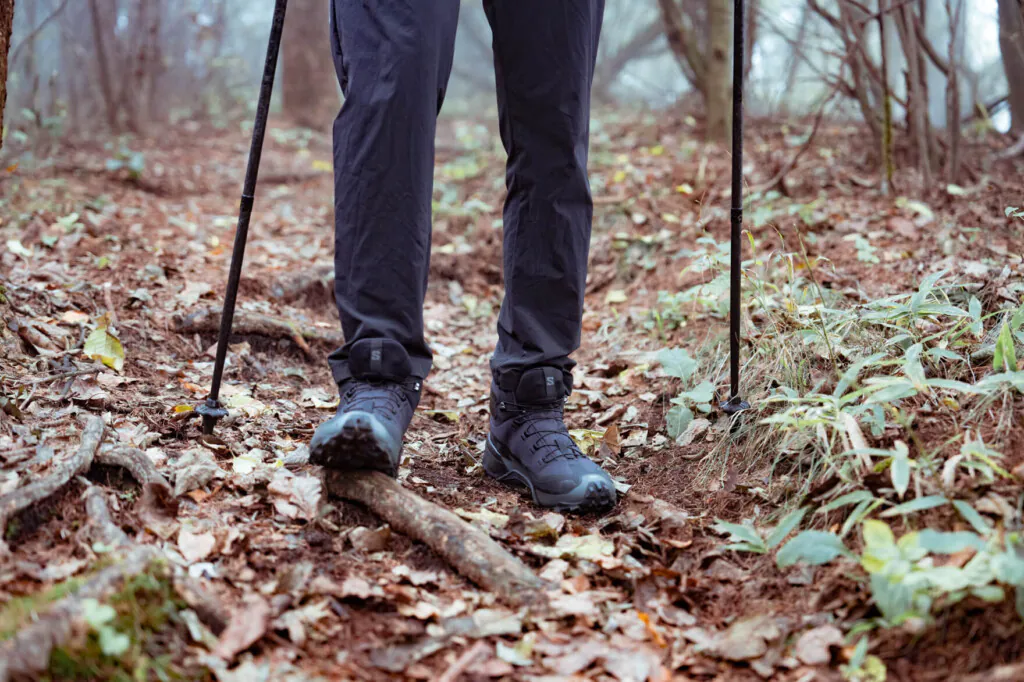
Although it unfortunately didn't win, we also recommend this one in the Best Lightweight Hiking category
- on Cloudrock 2 Waterproof
- ALTRA OLYMPUS 5 HIKE MID GTX
- hoka one one Anacapa Mid GTX
- KEEN Nexis Evo Mid Waterproof
Best Low-Cut: Short and perfect for light activities and everyday wear
Salomon X ULTRA 4 GORE-TEX
Favorite points
- High stability that makes it hard to shake and less likely to cause injury, unlike low-cut shoes
- Grip strength that allows stable landing and stepping even on steep slopes and wet terrain
- Lightweight despite its structure that prioritizes stability
- Quicklace system for quick and easy on and off
- Solid protection for the toes and surrounding area from sharp obstacles
- GORE-TEX provides stable waterproof and breathable performance
Points of concern
- The shoe tongue is not fixed, making it a little difficult to put on
The latest model in Salomon's popular X-Ultra series of hiking shoes is a groundbreaking hiking shoe that offers unprecedented stability and support for low-cut shoes. This unique and highly refined pair offers the support of a mid-cut shoe while maintaining the agility of a low-cut shoe, making it easier to walk in complex terrain and less likely to cause injury. It's one of a kind among the many excellent hiking shoes on the market
The new ADV-C Chassis and Active Support midsole provide joint support without restricting ankle freedom of movement, reducing the risk of injury and providing stable footing on uneven, technical trails. The deep-lug Contagrip® MA outsole provides firm grip on slippery terrain like mud and wet rocks
The SALOMON X ULTRA 4 GORE-TEX a lightweight, agile low-cut shoe that offers amazing stability and comfort , making it a perfect choice not only for hikers with foot concerns, but also for a wide range of hikers who enjoy day hikes.
There is also a detailed review here, so please refer to it below
Related articles

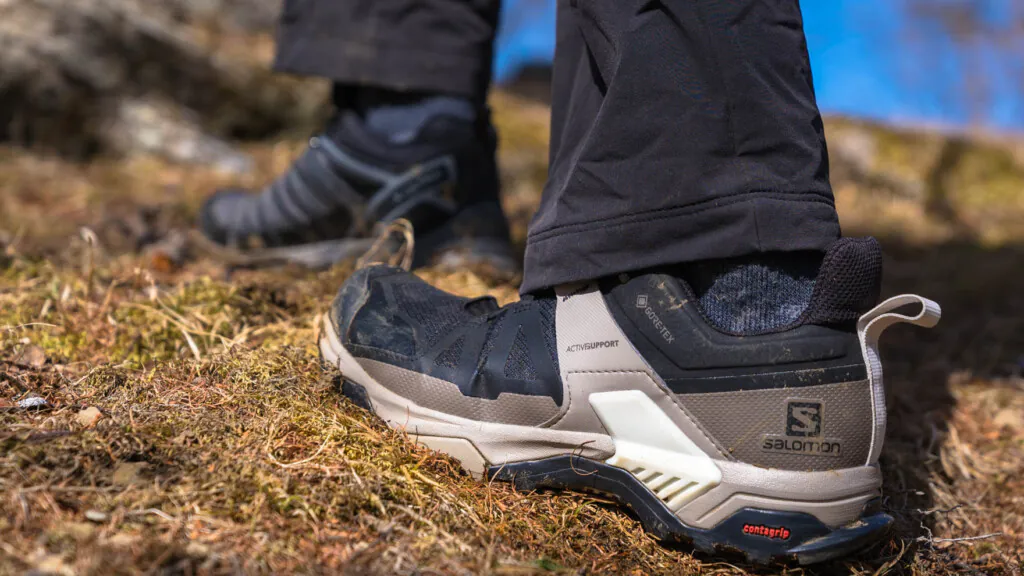
The outer resin parts protect the ankle from twisting, providing excellent stability despite the low cut
Although they unfortunately didn't win, we also recommend these in the Best Low-Cut category
- MAMMUT Sertig II Low GTX
- ASOLO Grid GV
- hoka one one KAHA 2 LOW GTX
- MERRELL MOAB SPEED GORE-TEX
Best Approach Shoes: While these shoes are primarily designed for rocky and technical terrain, they also have many models that are ideal for hiking
1) La Sportiva TX5 GTX
Favorite points
- Excellent balance and versatility for walking, climbing, and running on uneven terrain
- Comfortable fit
- Excellent grip and traction
- Ankle support and mobility
- Excellent protection and waterproofing
Points of concern
- Despite their excellent versatility, they are inferior to the specialized models in each category
the TX5 GTX is named after the company's "Traverse" series of approach shoes, in reality it is not a pure approach shoe, but rather an extremely unique hiking boot that can be described as the "ultimate multi-purpose shoe (boot)" that can be used for a variety of purposes, breaking down the barriers between hiking, climbing, and running.
Simply put, these shoes have an excellent balance: they can climb rocks better than hiking boots, but are more comfortable to walk in than approach shoes. I was immediately struck by the high level of perfection of these shoes. The nubuck leather upper, which has a nice texture and excellent durability, is soft and fits the foot perfectly. Around the ankle, Sportiva's familiar "3D Flex System" provides excellent ankle protection while allowing for easy movement. Combined with the incredibly reliable Vibram Megagrip outsole, you can always walk safely and comfortably on approaches to technical terrain or long summer hikes, on everything from uneven ground to rocky areas, wet roads, and even lightly snow-covered ground.
While providing excellent stability on rough terrain, the sole isn't as hard as that of a full-fledged hiking boot, and they're not too heavy, making their ease of walking all the more surprising. As mentioned on the official blog, it's no exaggeration to say that these boots are a hidden gem that can be recommended as a "first pair of hiking boots" for beginners. Incidentally, these boots are also available in a low-cut model, so if you prefer more conventional approach shoes, you might want to try one of those, or even try a sister model like the TX 4
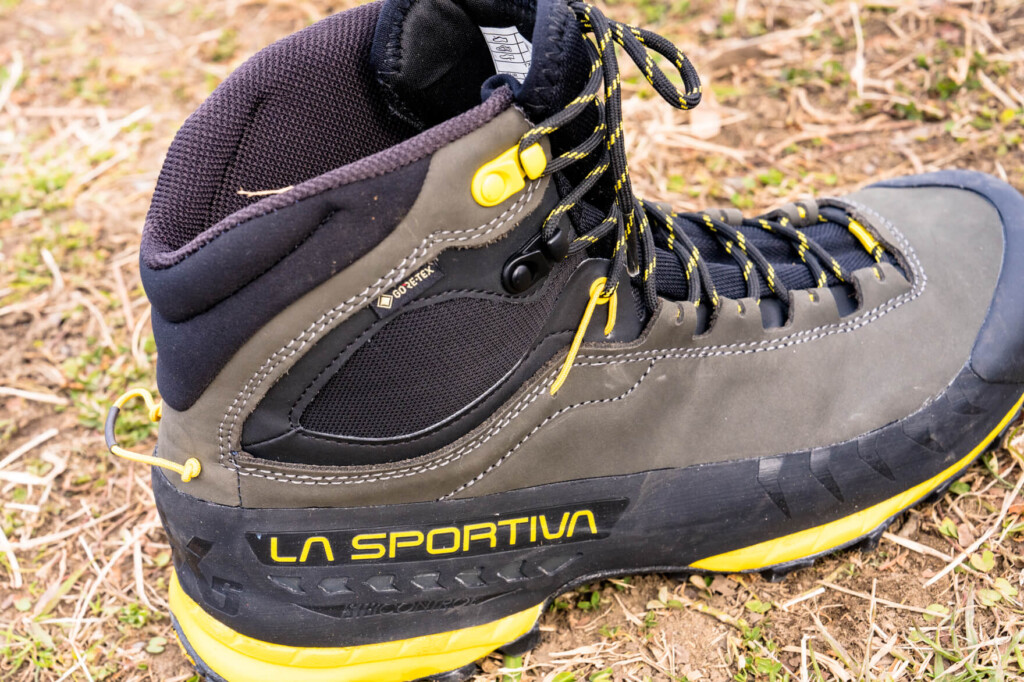
The comfortable padding around the ankle allows for moderate mobility, making it easy to walk without restricting ankle flexion
2) Zamberlan Salathe 5.13 GT RR
Favorite points
- Microfiber material around the ankle and laces that run from the toe to the ankle provide a sock-like fit
- High protection performance
- High shock absorption and torsional rigidity midsole
- Vibram Megagrip for excellent braking traction
Points of concern
- Slightly heavier than low-cut shoes
- Slightly less ankle support than mid-cut boots
In 2022, Zamberlan's latest approach shoe, combining the craftsmanship of Italian mountaineering bootmakers with modern ideas, was a hot topic. At first glance, the Salate 5.13 GT , but its ankle gaiter construction, made of stretchy microfiber, ensures a superior, sock-like fit. What's more, this gaiter not only provides a comfortable fit, but also provides lightweight ankle protection and keeps out gravel, a smart design that kills multiple birds with one stone. Combining the lightness of a low-cut shoe with the stability of a mid-cut boot, this shoe is hard to beat.
Made from lightweight yet durable suede leather, the shoes offer solid protection around the perimeter. The Vibram® Pepe sole, featuring Vibram's Megagrip compound and dual-density EVA midsole, provides cushioning and torsional rigidity while also providing excellent braking performance. The sole's moderate hardness allows for stable walking on rocky terrain and firm grip on tight holds, making it versatile for a wide range of activities, including short ridge routes, trekking, and hiking
The concept of "From the Car to the Top" is not just for show; these are innovative fast trekking shoes. Of course, I admit that they have a strong character, but there is no doubt that these shoes offer a comfort that cannot be replicated in ordinary approach shoes. The moment I saw them, I knew they would be perfect for descending mountain on an overnight river climb
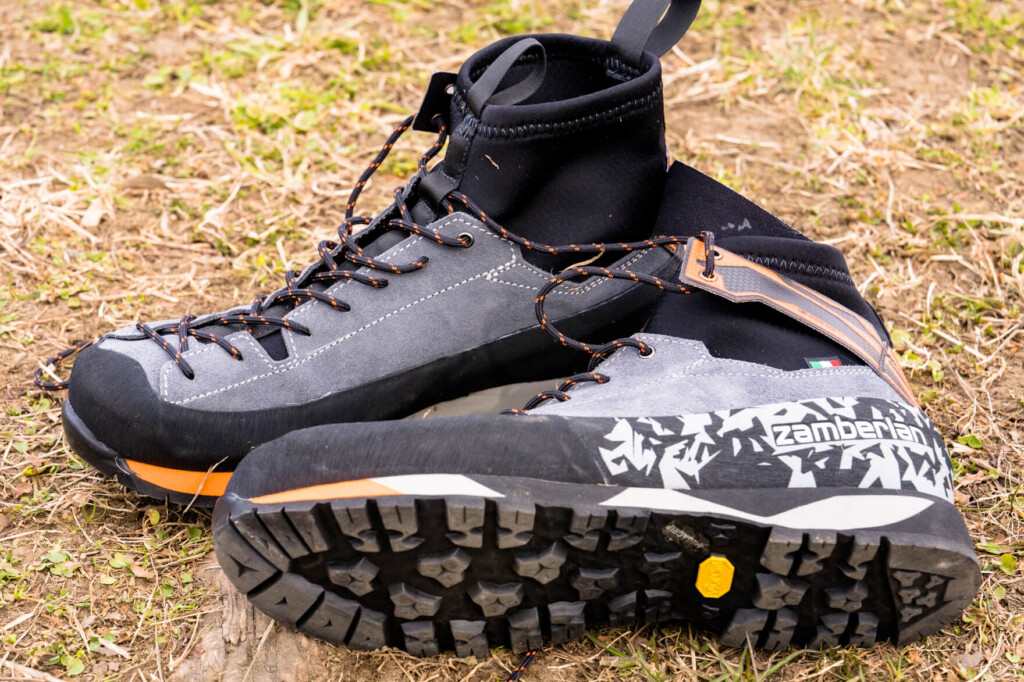
Stretch ankle material provides a comfortable fit and also functions as a gaiter
Although it unfortunately didn't win, we also recommend these shoes in the Best Approach Shoes category
- SCARPA Mescalito GTX
- MONTURA YARU TEKNO GTX
- GARMONT Dragon Tail Tech GTX
- Arc'teryx Conceal FL 2 Gore-Tex
Best for Longitudinal Trekking: A versatile model perfect for hiking trails with luggage and staying overnight in huts
LOWA BALDO GT
Favorite points
- A hybrid of strong and durable split-grain leather and lightweight, breathable, and highly mobile nylon fabric
- X-lacing technology holds the tongue in place
- Roller eyelets for smooth lace movement and two-zone lacing for fine-tuning the fit
- Vibram TRAC LITE II outsole for superior traction and versatile terrain
- Waterproof and breathable GORE-TEX
- Last development of WXL size, which is popular among Japanese people
Points of concern
- Low breathability (breathability)
Although you don't have to worry about rugged rocky areas, if you plan to walk long distances on up-and-down mountain trails with a fair amount of luggage (sleeping in huts), you'll need trekking boots, which have a sturdy upper to protect your feet from obstacles and a sole that is hard and cushioned enough to withstand impacts and uneven surfaces, rather than hiking boots which have a sneaker-like feel
For a lightweight trekking boot that has the minimum strength of a mountaineering boot, but is also easy to walk in and comfortable, the best choice for me was the Baldo boots from LOWA, a prestigious German boot manufacturer that is celebrating its 100th anniversary since its founding
The upper's clever use of materials, covering the instep and ankle with a thick leather and blending flexible, lightweight, and breathable fabric, combines high abrasion resistance with ankle support and mobility. The tongue and laces are inlaid with unique fitting technology, ensuring a comfortable fit. While serious hiking boots in this category and above usually require a certain amount of break-in period, the BALDO boots quickly became comfortable and barely required any break-in period, a testament to the meticulous attention to detail
The midsole is made of polyurethane, which is more durable and harder than the EVA used in hiking shoes, and it provides stable cushioning for the soles of your feet while firmly supporting heavy loads. I also like the fact that the outsole has a climbing zone at the toe
With reliable durability and protection, all-day comfort, and all-around performance that can handle any terrain, these boots are not only great as trekking boots for beginners to serious mountaineering, but their versatility means that (although this will vary from person to person) it is not surprising that there are people who can walk in almost any area of Japan with just one pair of these boots
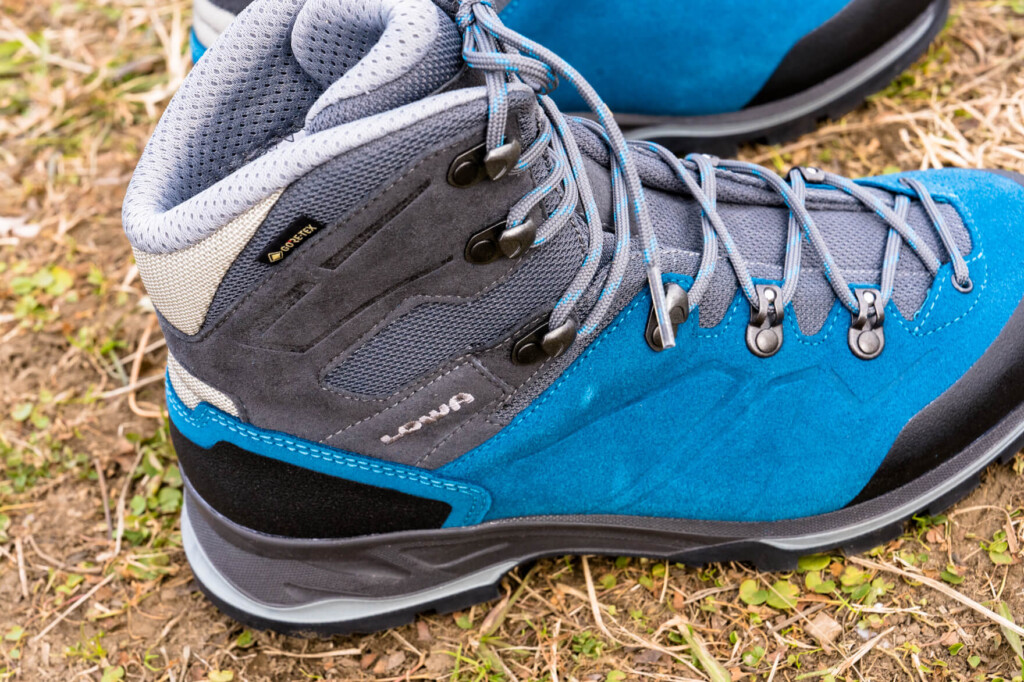
The hybrid upper, made of durable suede leather and lightweight synthetic fabric, is easy to walk in and provides excellent protection
Although it unfortunately didn't win, we also recommend this one in the Best Longitudinal Trekking category
- MAMMUT Ducan High GTX
- SCARPA ZG Trek GTX
- Zamberlan Baltoro Light GT
- La Sportiva Trango Tech Leather GTX
- ASOLO Falco GV
Best Alpine Trekking: Suitable for overnight stays in huts and heavy loads, and performs to its full potential on technical routes
La Sportiva Equilivium ST GTX
Favorite points
- A snug fit that wraps around the entire foot
- Rugged yet light
- Perfect balance of flexibility and support around the ankle
- A sturdy sole that can be used with crampons for peace of mind on rocky terrain
- An outsole that provides stable grip from landing to kicking off
Points of concern
- Shoelaces loosen easily
- Grip is weaker on wet rocks and roots (compared to hiking boots, etc.)
- Expensive price
an Italian mountain shoe manufacturer that continues to innovate by creating a series of groundbreaking shoes that overturn conventional stereotypes, has no other shoe that embodies everything modern mountaineering style has demanded in recent years more than their new Equilivium series of technical mountain boots.
Incredibly light, comfortable, and durable, these boots perfectly combine the strength of alpine boots, which require stability on rocky and snowy terrain, with the lightness and ease of trekking boots. Furthermore, the boots incorporate the company's diverse expertise in trail running shoes and approach shoes, making them a mountaineering boot that truly combines the best of outdoor footwear. It's no exaggeration to say that only Sportiva, which has made first-class shoes for all mountain activities, could have created these boots
With this pair of boots, you won't find them too bulky, even in mountains around 2000m high, where forests are common. At the same time, you won't feel too flimsy even in high mountains between 2000m and 3000m, where the terrain is varied, from rocky areas to remaining snow. The Equilibrium is a well-balanced boot offering high levels of safety and comfort, making it a boot you'll want to wear anywhere in Japan. That said, the sole is more flexible than models for full-scale mountain climbing, so if you're hiking routes that require constant crampon use or are planning to hike rocky ridges for long periods of time while carrying a heavy load, the models mentioned below would likely be more ideal.
We have also thoroughly analyzed this in the review below, so please take a look if you are interested
Related articles
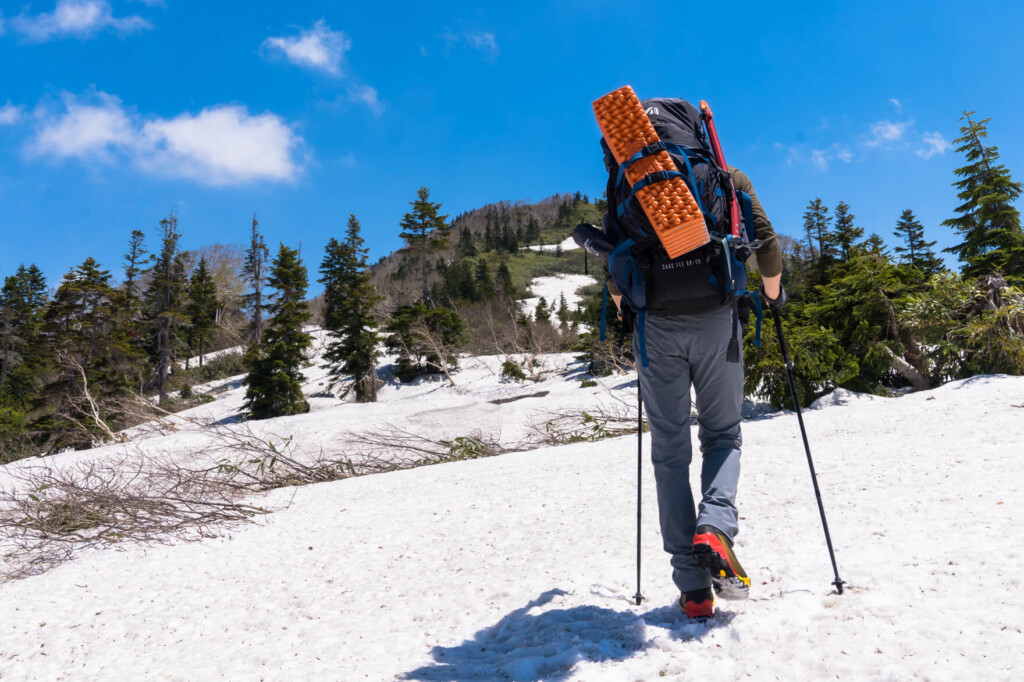
Although it unfortunately didn't win, we also recommend this one: [Best Alpine Trekking]
- Arc'teryx Acrux TR Gore-Tex
- ASOLO Eldo MID Leather GV
- GARMONT Vetta Tech Gore-Tex
- SCARPA Marmolada Pro HD
Best Long-Term Trekking Category: Ideal for long-term trekking with heavy loads, including camping in a tent
LOWA Tecum II GT
Favorite points
- Highly rigid sole that can withstand heavy loads
- Durable, comfortable and easy-to-wear upper
- Lacing system for a perfect fit
- Excellent stability and support, especially around the ankles
- Outsole with excellent grip
- Highly waterproof
Points of concern
- Since they do not have the welt or toe climbing zones of crampons, they are not designed for very steep routes
- weight
If you're planning a long hike over several days, camping, your backpack will inevitably weigh nearly 20kg. To be able to withstand that load day after day, boots not only need a durable upper, but also a rigid sole and full ankle support. At this point, the sole of the boots will be so hard that you won't be able to bend it at all with your own hands. My ultimate hiking boots in this category are the TEKHAM II GT
These shoes provide excellent stability when walking with a heavy load. What I like most about them is that no matter how heavy your load, you don't have to worry about injury or fatigue. The durable yet flexible upper construction, made entirely of suede leather, is neither too wide nor too narrow, leaving just the right amount of toe space, resulting in a comfortable fit. The shoelace and tongue system, which securely fasten the shoes in the correct position with just the right amount of tightness, ensures an excellent fit. The firm leather and padding also cover the ankle quite high, providing excellent support around the ankle, making them the perfect choice for long trails where you'll be constantly walking along a long mountain trail carrying a heavy load
On the other hand, the boots are not designed to be used with (semi) one-touch crampons, and the lug pattern on the outsole is designed more for mud removal than rocky terrain, so they are not designed for technical routes that include steep rocky areas (this is where the difference with boots from Italian brands is interesting)
REI is the most famous outdoor shop in North America, and although European outdoor brands are rarely found there, I remember seeing LOWA shoes frequently. At the time, I had no idea why, but now that I think about it, LOWA shoes, which are suitable for walking safely and comfortably on long routes that may not be steep, seem to be a perfect fit for long trails in America
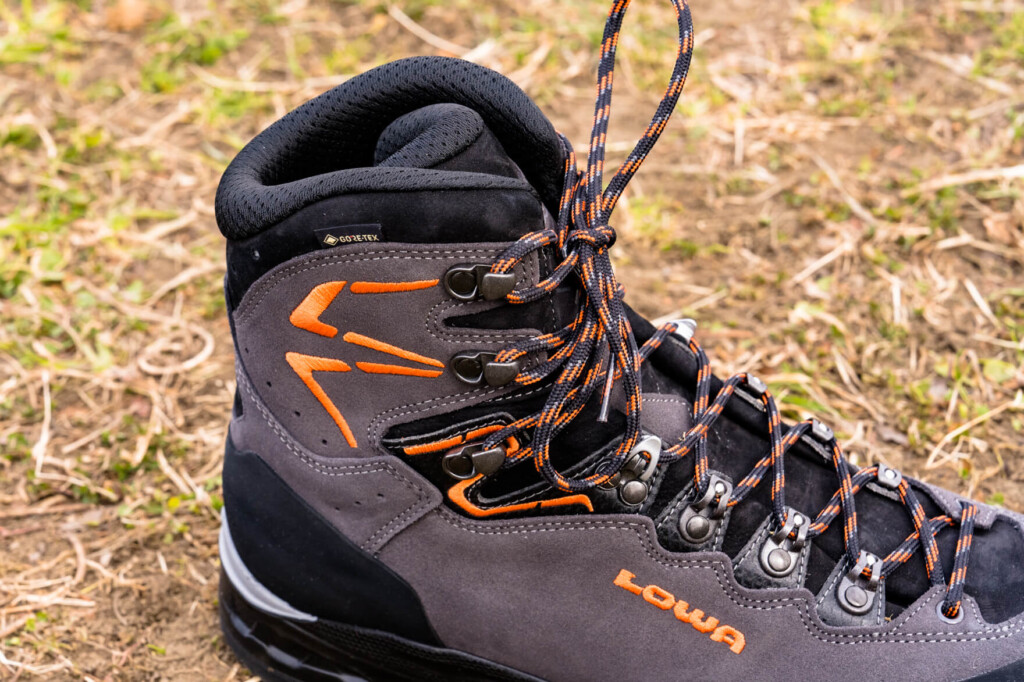
The ankle area is covered with sturdy leather, which firmly secures the ankle, giving you an excellent sense of security when walking
Although it unfortunately didn't win, we also recommend this one in the Best Long-Term Trekking category
- La Sportiva Trango Tower GTX
- MAMMUT Kento Advanced High GTX
- SALEWA MTN Trainer Mid GTX
Best Long-Term Alpine Trekking: Ideal for long-term trekking on technical routes, including difficult rocky terrain, with heavy loads and camping
SCARPA Libere HD
Favorite points
- Highly durable and sturdy body, yet surprisingly lightweight and flexible
- Comfortable upper with excellent fit
- Moderate ankle support
- Highly rigid sole and climbing-conscious lug pattern provide a sense of security on rocky ridge routes
- Vibram outsole provides excellent grip and traction on rocky terrain and slip resistance on uneven ground
- Warm 37.5 fabric liner for light snowy weather
Points of concern
- HDry waterproof and breathable membrane is less waterproof than GORE-TEX
- The shoelaces are somehow short
- price
These boots are suitable for hiking in the snow-free season on the toughest and most technical routes, carrying heavy loads, and are intended for long-term traverses of the large, rugged rocky ridges of the Japanese Alps, as well as variation routes that are higher level than regular hiking trails. If you're looking for hiking boots for traverses that work well on rock, gravel, mud, ice (and even a little snow), and trails, then for me right now, the Libere HD is the best
Above all, they are top-class durable, yet surprisingly light and easy to walk in. Safe mountain climbing with heavy loads requires sturdy boots, but it's common knowledge that a certain amount of weight is unavoidable. The fact that each pair weighs less than 700 grams is surprising (and Scarpa even offers a lighter version)
Not only are they lightweight, but these boots also offer a comfortable, snug fit thanks to their excellent Sock-Fit XT upper construction, which extends from the instep to the heel cup. The padded ankle area provides support while allowing relatively free movement and comfort. The 37.5 fabric lining provides moderate insulation and breathability, making them suitable for routes with light snow, such as in early winter or when snow remains. The rocker-shaped, curved sole, borrowed from trail running shoes, helps reduce the awkwardness often associated with stiff hiking boots
The midsole features a hybrid construction, cleverly mapping two different densities of TPU material into areas that provide shock absorption and lightness, and areas that provide support and stability. The outsole is particularly hard, providing exceptional security when climbing on rocky terrain. The lug pattern is divided into three areas, each with its own characteristics: stepping on, stopping, and gripping. The climbing zone at the toe maximizes grip, the outer area maximizes stepping on, and the center, medial, and heel areas maximize braking performance
If there's one thing I'd like to see a bit more of, it's that the proprietary HDry membrane isn't as reliable. I recommend spraying it with water repellent spray more frequently than usual. In any case, for me, the SCARPA Libere HD combines the security of a full-fledged mountain boot with the ease of movement and comfort of a lightweight trekking shoe, making it the perfect boot for mountaineers and hikers who demand uncompromising performance for tough three-season mountaineering
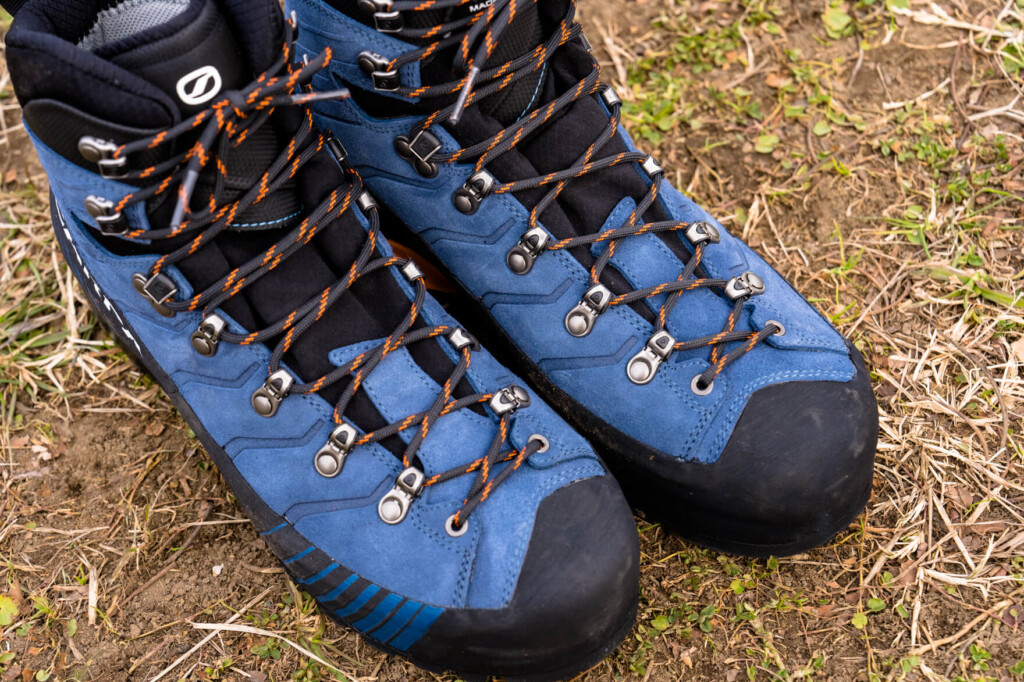
Although the overall construction is sturdy, the flexible and pliable tongue ensures an excellent fit around the entire foot
Although it unfortunately didn't win, we also recommend this one: [Best Long-Term Alpine Trekking]
- Arc'teryx Acrux LT Gore-Tex
- ASOLO Elbrus GV
- La Sportiva Trango Alp Evo GTX
- LOWA Cevedale EVO GT
Best Winter Category: Ideal for winter mountain climbing, even during the harsh winter months
La Sportiva G5 EVO
Favorite points
- Top-class lightness for winter mountaineering boots
- High thermal insulation for peace of mind even in the harsh winter
- Boa system for excellent fit and quick on/off
- High mobility around the ankle
- Roomy toes that won't get cold
- Double boot design with an upper that doubles as a snow gaiter for high insulation, snow protection, waterproofing, breathability, durability, and abrasion resistance
- Combines ease of walking on snowy trails with optimal climbing performance for ice climbing
Points of concern
- Very expensive
- It cannot be said that there is no damage to the bore
- Waterproof front velcro and zipper
Who would have thought that winter mountain boots could be so light?
The La Sportiva G5 Evo is the ultimate pair of winter mountain boots, with all the features you'd want in a pair (without considering the price). Until now, I've worn regular leather mountain boots or double-layered plastic boots for the harsh winter weather, but I've come to appreciate the incredible ease of use of winter boots with snow gaiters and the Boa system, which have all the benefits of those boots. I also really enjoyed the essence of Sportiva's advanced technology, which has been kept as lightweight as possible. The quality is so high that I don't think you could ask for more from a winter mountain boot
In any case, they are smooth and comfortable, whether climbing steep slopes or walking normally. One of the highlights of these boots is the laceless Boa system, which allows you to put them on and take them off quickly without removing your gloves, and also allows you to set the same high level of fit every time compared to shoelaces. Once you experience this, you'll never go back to other boots
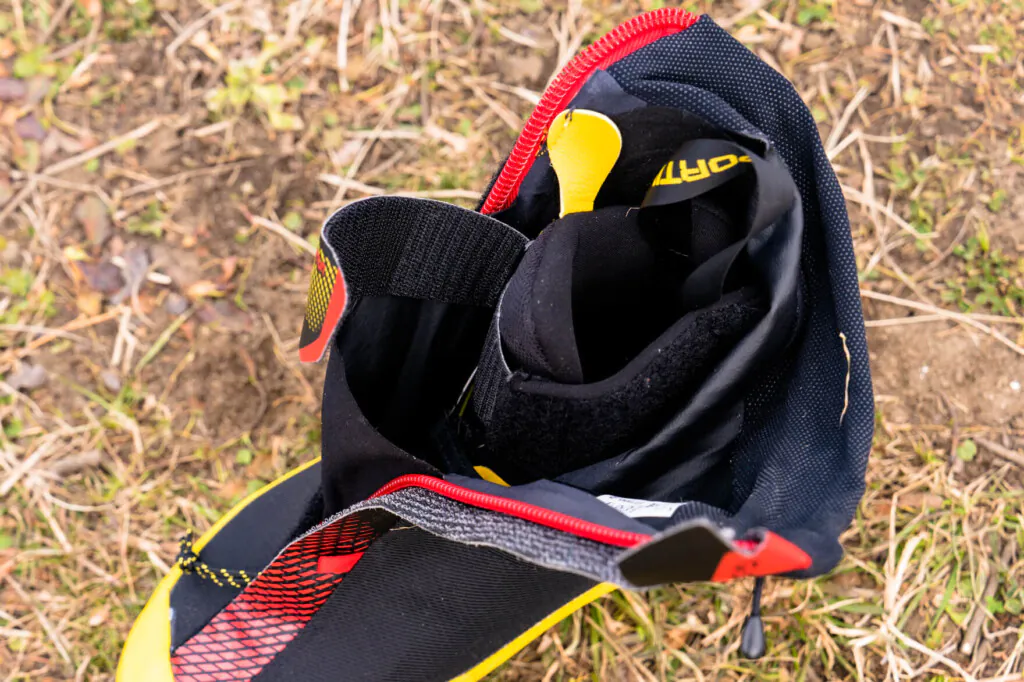
The double structure of the inner boot and outer boot. The outer Boa brace tightens the entire foot, eliminating the need for shoelaces and providing a comfortable fit
For a Sportiva, the toe area is relatively roomy and doesn't feel too tight, and the GORE-TEX INFINIUM™ THERMIUM™ technology keeps your toes warm, making them incredibly warm. Wearing crampons inevitably restricts blood flow and can lead to cold toes, but these boots offer ample protection. Another improvement over the previous model is the placement of Boa® on the outside of the gaiters, allowing you to tighten the boots when climbing and instantly loosen them with a pull of the knob when not climbing. In that sense, you'll have less to worry about cold feet than with any other winter boots
Of course, the sole and upper are rigid enough for mountaineering in the snowy season, and they are also perfectly compatible with crampons
If your primary focus is snow hiking or climbing snowy mountains up to around the tree line, leather boots like the company's Nepal Cube GTX may be sufficient. However, if you plan to traverse technical rock and ice terrain or even ice climbing in the future, the G5 Evo offers superior performance in terms of lightness, insulation, mobility, and convenience. It's undoubtedly an ideal choice for 3,000m-class mountaineering in Japan during the harsh winter, as a winter mountaineering boot for extended periods of activity with crampons, or for ice climbing, but it's not overkill for regular snowy mountaineering. Even if you're new to winter mountaineering, if you have the budget, we highly recommend choosing this pair of boots, which incorporates the latest technology.
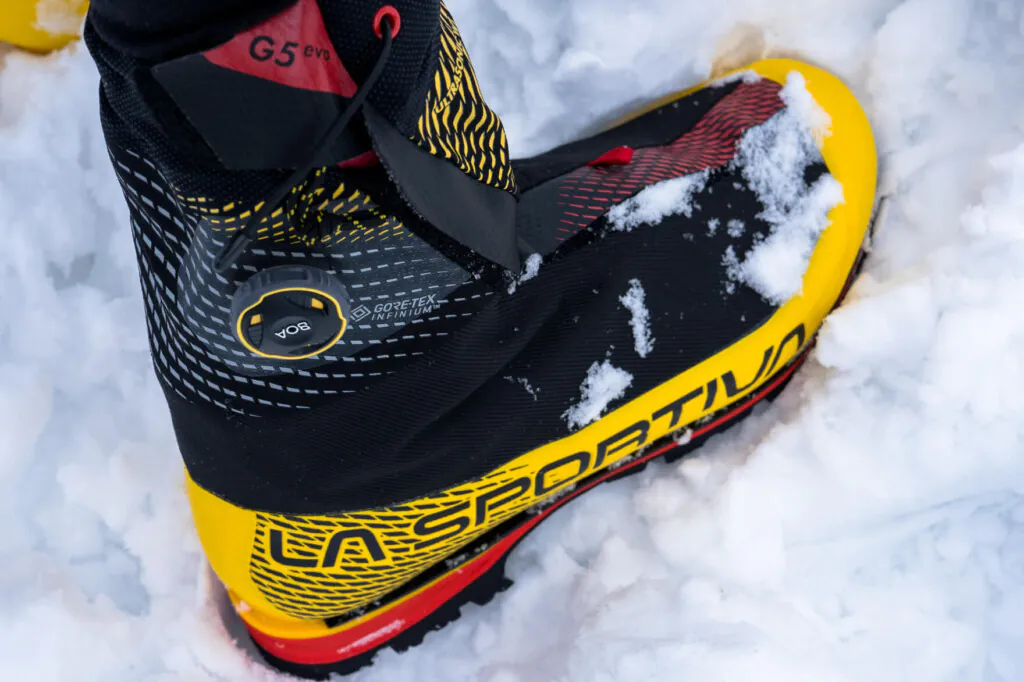
Although it unfortunately didn't win, we also recommend this one in the Best Winter category
- La Sportiva Nepal Evo GTX
- SCARPA Manta Tech GTX
- Zamberlan Mountain Pro EVO GT RR
- ASOLO 6B+ GV
- LOWA Alpine Expert II GT
Best Value: KEEN Circadia Waterproof (Low/Mid)
Favorite points
- A low-priced model from a brand with solid technical capabilities, a proven track record, and design skills
- It has all the necessary features for a hiking boot, including waterproof and breathable properties, but is reasonably priced
- Convenient for everyday walking shoes
Points of concern
- Given the price, I'm not sure about durability
- Slightly heavier than most modern hiking shoes
- The grip of the outsole is decent compared to the top level
How to Choose: 6 Points to Choose Trekking Boots Wisely
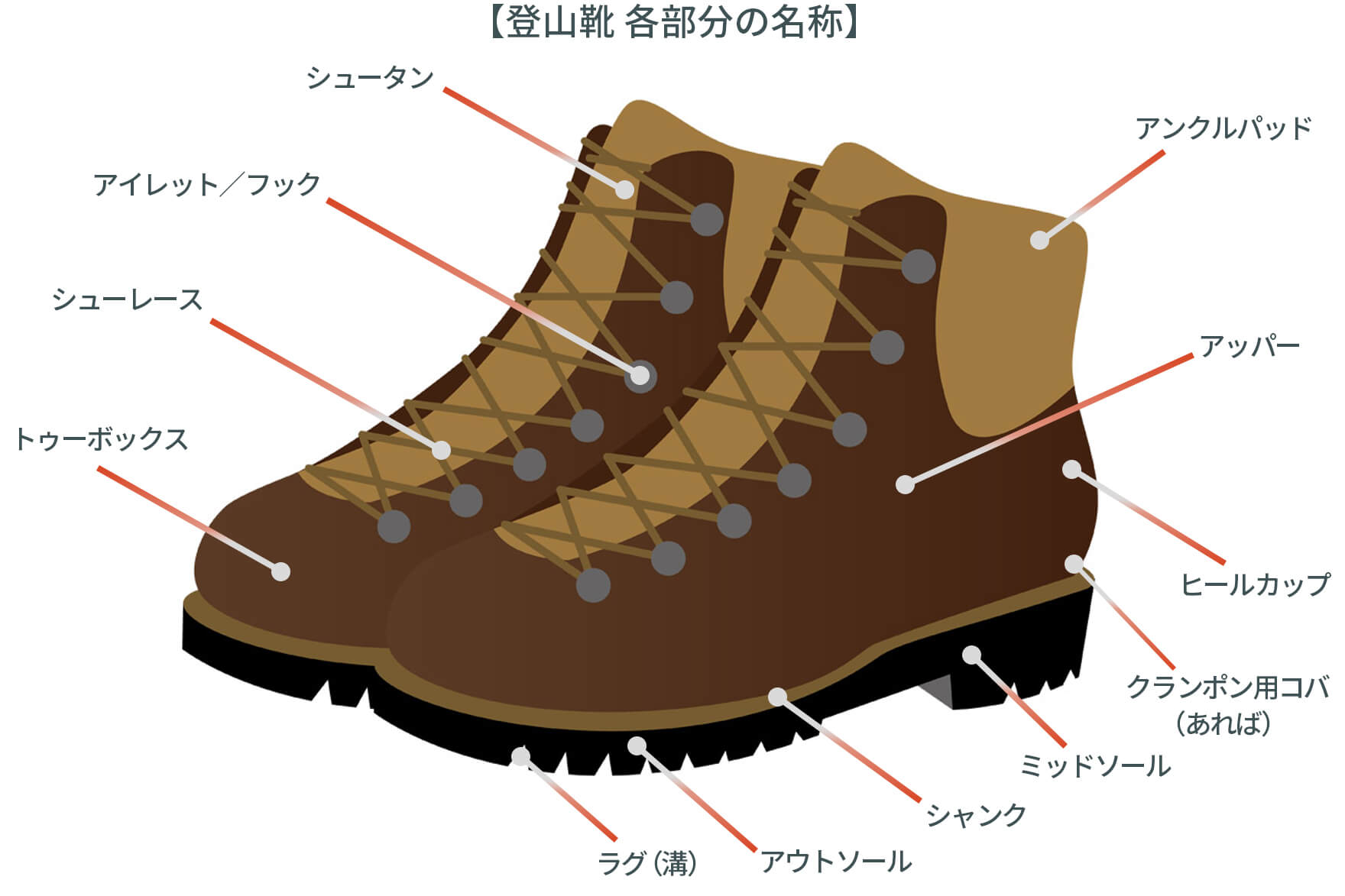
Point 1: Types of hiking boots - Know your strengths and weaknesses and your hiking style
With the recent diversification of outdoor activities, it is not difficult to imagine that there has been an increasing number of different types of hiking boots to suit different purposes, hiking locations (terrain), walking styles, etc. When it comes time to buy your own shoes, there is probably no one in the world who can immediately tell which type best suits their style just by looking at the shoes lined up in the store without any prior knowledge
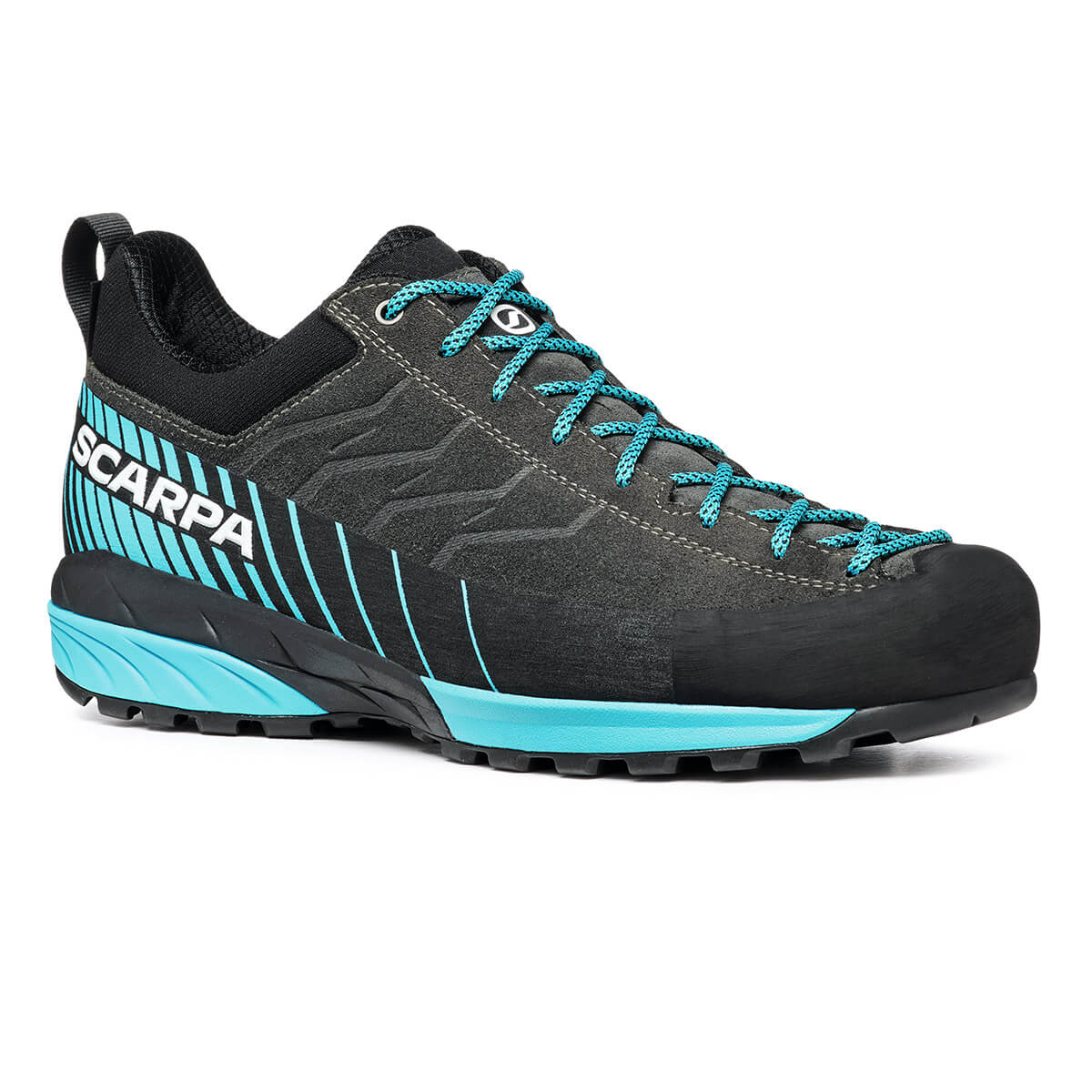
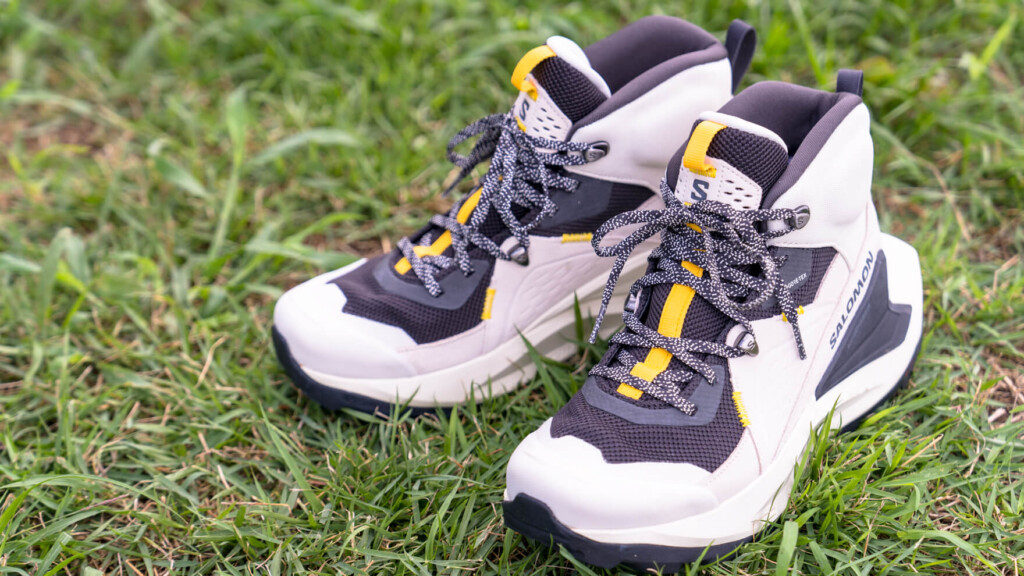
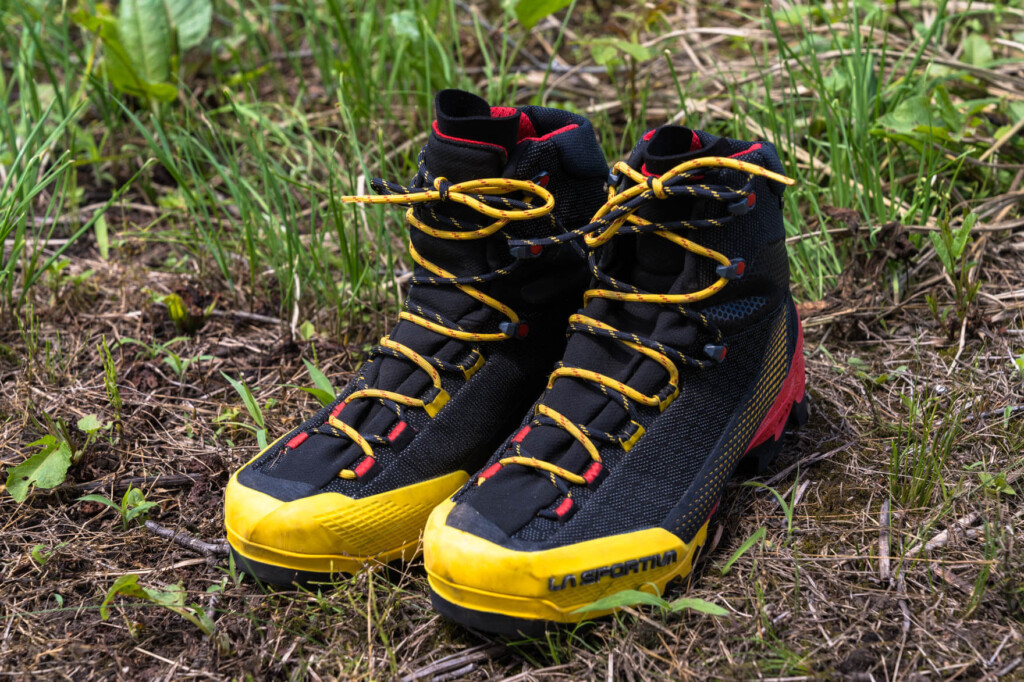
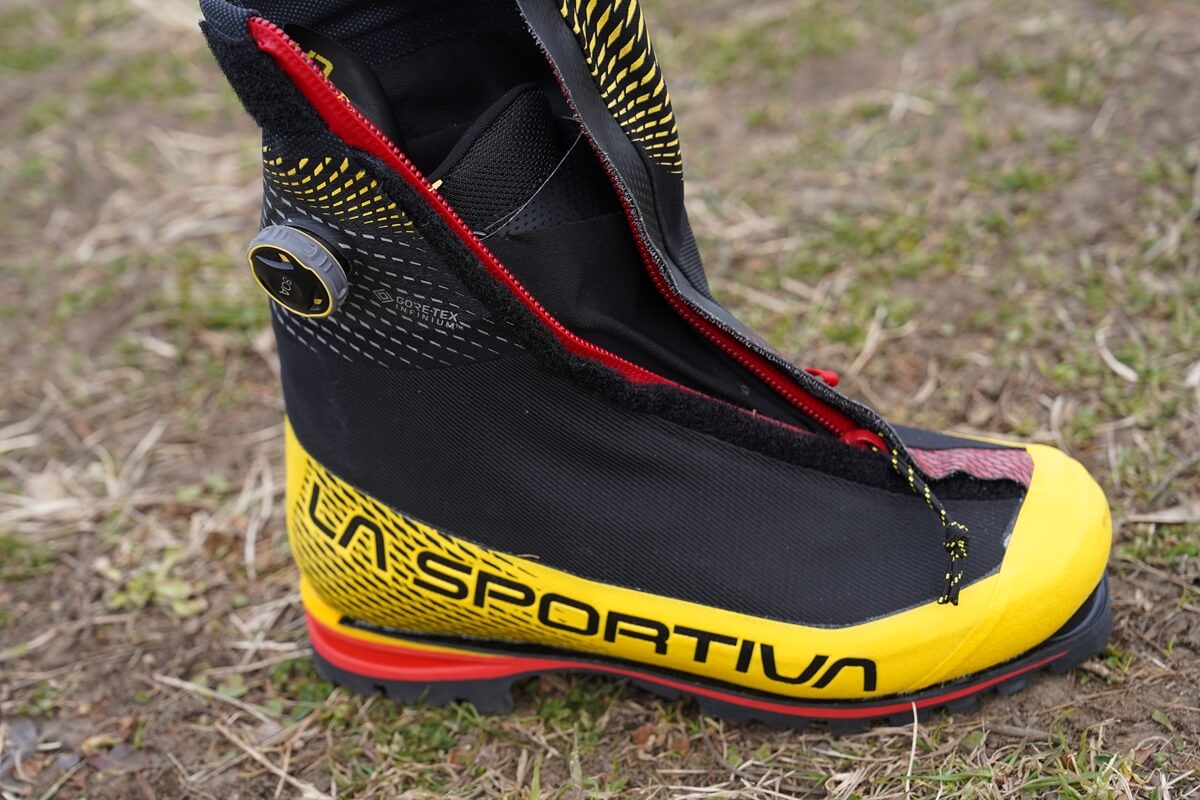
So, first, we've put together the general classifications and characteristics of hiking boots in the table below, so we recommend that you first consider the general type of hiking boots you should choose. If you keep this in mind when talking to the store staff, you shouldn't be led in the wrong direction. Of course, this classification isn't a uniform, objective line that applies everywhere, so some models have ambiguous boundaries or cover a wide range, so you need to be careful
Comparison of types and features of hiking boots (outdoor shoes)
| type | Trail running shoes | Approach shoes | Hiking shoes (boots) | trekking boots | alpine boots | Winter boots |
|---|---|---|---|---|---|---|
| image | 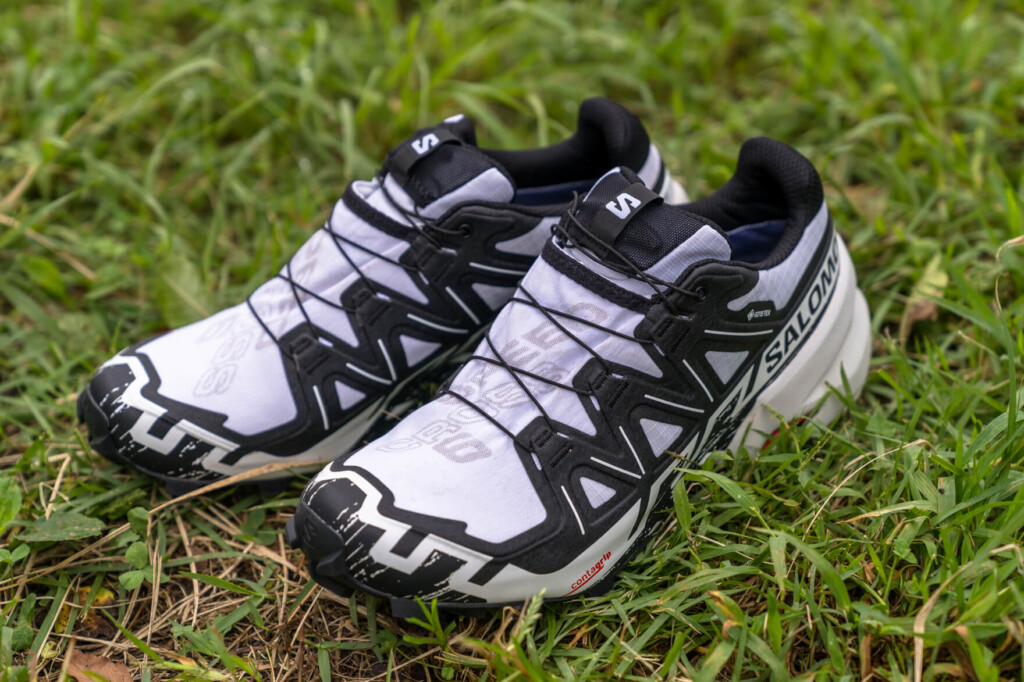 |
 |
 |
 |
|
 |
| Best scene |
|
|
|
|
|
|
| Strong Points |
|
|
|
|
|
|
| Disadvantages |
|
|
|
|
|
|
For those who are new to walking on unpaved roads and are not used to it (because you probably won't be heading straight for a difficult mountain), we recommend hiking shoes trekking boots are the most versatile of all outdoor shoes, covering a wide range of activities, from light mountain walking to serious rocky ridges. They come in a wide variety of softness and ankle heights, making them a good choice for those starting out in serious mountain climbing, or as a gradual step-up from hiking shoes.
In high mountains such as the Northern Alps and Yatsugatake, where many areas are above the tree line, and where you will be climbing steep rocky areas or traversing, it is time to look for alpine boots designed for climbing rocky areas. There is also an increasing variety of these boots, from lightweight models to heavy, hard types, so it is a good idea to consider the grade depending on how much luggage you will be carrying
Ankle height
There are three types of trekking shoes: low-cut, mid-cut, and high-cut, which differ in the coverage they provide around the ankle. Low-cut shoes are by far the easiest to walk in if you want to walk lightly with a light load, but if you plan to carry a heavier load more often, if you frequently walk on steep or rough terrain, or if you have weak legs or are prone to sprains, shoes with a higher ankle height and more support are more reliable.
| cut | Low-cut | Mid cut | High-top |
|---|---|---|---|
| image |  |
 |
 |
| Lightness | ◎ | ◯ | △ |
| Ankle mobility | ◎ | ◯ | △ |
| Ankle support | △ | ◯ | ◎ |
| Difficulty invading foreign objects | △ | ◯ | ◎ |
| Resistant to stuffiness | ◎ | ◯ | △ |
| Suitable style |
|
|
|

Point 2: Upper material - Decide whether to use synthetic fiber, leather, or a combination depending on your climbing style
The entire upper part of hiking boots, covering the toes, instep, heel, and ankle, is called the upper, and the material and construction of this part affect many important factors, including the weight of the shoes, as well as comfort, fit, durability, waterproofness, and breathability
Until recently, the only choice of boots was one covered in hard, heavy natural leather. However, with the advent of waterproof and breathable membranes like Gore-Tex, a growing number of models have been developed with uppers made from lightweight and soft synthetic fibers like nylon and synthetic resins. These boots are heavily influenced by today's fashionable styles, which prioritize lightness and speed, and excel in situations where speed, ease of movement, and lightness are paramount. Meanwhile, leather is still popular for heavy trekking and alpine boots, which require durability. Its waterproofing is also excellent, and with proper care, the material itself lasts longer than synthetic fibers, so it retains its appeal as a material that people grow attached to. Furthermore, there are also combination boots that balance lightness and strength by using leather in areas prone to abrasion and impact and synthetic fibers in other areas
As you can see, the upper material and combination will determine the strength, lightness, fit, ease of movement, and other characteristics of the boot, but there is no one that is best. After considering the performance and style you want to prioritize, you should consider whether to go for a leather model, a synthetic fiber model, or a combination type
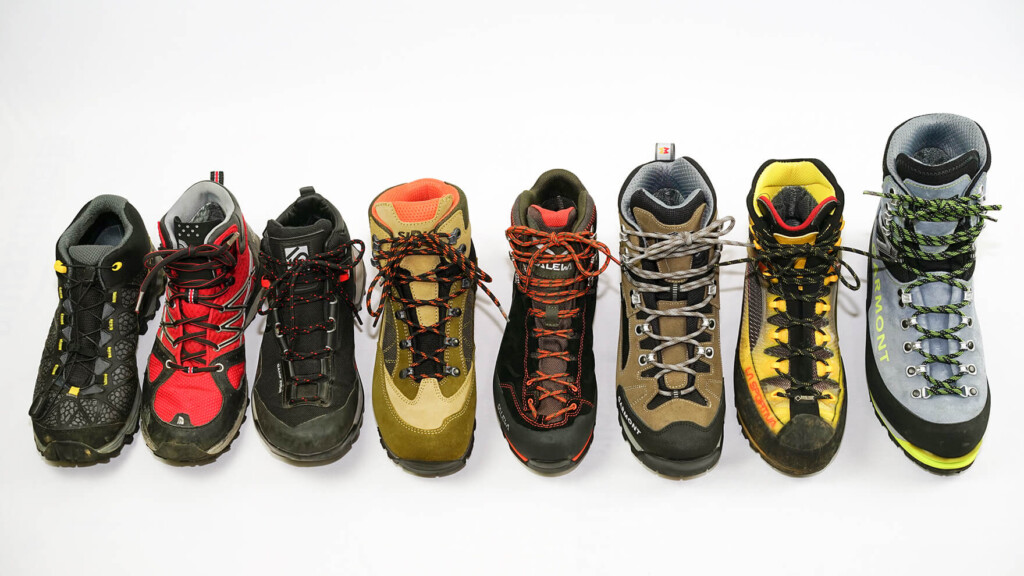
Various upper materials are used. For fast and light mountaineering, a soft nylon upper (left) is used, while for more serious trekking (right), a more robust upper such as leather is used
Point 3: Midsole - Determine the hardness depending on the route and the weight of the luggage you will be carrying
The strength of the load on the foot and the rigidity of the sole
Generally, the sole of a hiking boot is made up of a midsole, an outsole, and a hard plastic part called a shank sandwiched between them (soft shoes such as light hiking boots often do not have a shank). Even if two hiking boots look the same, if you actually pick them up and try to bend them, you will find that they vary from easy to bend to hard models that do not budge at all
The reason why they need to be so stiff is that the stiffer the boots, the less likely the sole of the foot will twist when landing on unstable footing with a heavy load (the ground becomes more stable), and the heel is less likely to drop when standing on tiptoe on an uphill slope or in places with few footholds, making it easier to stand and less tiring. In other words, the stiffness of the sole of hiking boots increases depending on the expected difficulty of the course (whether it is steeper or has more technical terrain), and they are made to be sturdy so that they can withstand long routes with heavy loads
To put it simply, as the climb becomes more technical and the load heavier, such as "Tanigawadake over Mt. Takao → Tanigawadake over Mt. Yari," or "a hut stay over a day trip → a tent stay over a hut," boots with a stiffer sole and more support up to the ankle become more advantageous. On the other hand, lightweight models have no shanks and flexible soles, and are designed to prioritize ease of lateral walking with a light load. Therefore, if you are traveling on gently sloping terrain or aiming to travel long distances quickly, flexible hiking boots (or shoes) with less stiff soles are recommended (however, it should be noted that this is only "ideally," and it does not mean that you cannot walk without them. In fact, experienced climbers with strong legs can even climb Mt. Yari in trail running shoes)

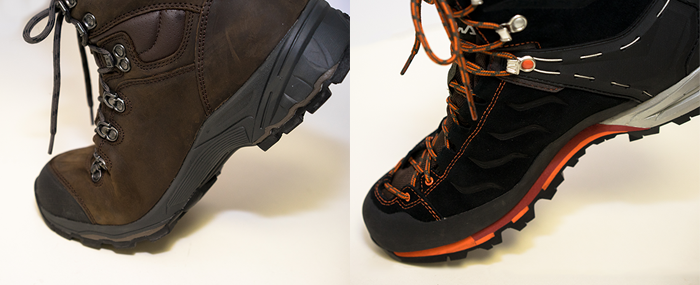
In many cases, the hardness of the sole cannot be compared simply by bending it with your hands, so it is easier to understand by actually wearing the shoes and putting your weight on your toes
The midsole also plays another important role: cushioning the soles of your feet and absorbing shock. This hidden component is often made of EVA foam, polyurethane, or a combination of both, and varies in thickness from very thin to very stiff and sturdy, depending on the model. Generally, stiff, heavy boots tend to have thicker, stiffer materials that can withstand high and intense loads (and most require a break-in period), while softer, more flexible midsoles, like those found in hiking shoes, are made with thinner, more flexible materials
| type | Soft midsole | Stiff midsole |
|---|---|---|
| Suitable style |
|
|
| Features |
|
|
Point 4: Outsole - Choose an outsole that is non-slip (grip) and easy to step on (traction)
Good hiking boots provide firm traction on uneven terrain and slopes, and offer resistance to slipping on dangerous terrain such as mud, slush, tree roots, rocks, and frozen ground. The part that plays this role is the part on the bottom of the shoe called the outsole
To check whether a model has reliable traction and braking, look at the outsole material and the shape of the grooves (lug pattern). In this regard, Vibram outsoles, like Gore-Tex, are a trusted brand that has earned a solid reputation in the mountaineering industry and is now known to everyone. Of course, that doesn't mean that any Vibram outsole is good (even soles from the same brand are finely tuned for each model and specific use), so you need to check the quality and features of the sole for each individual product
For example, some have deep lugs (grooves) that are spaced farther apart to allow for a firm grip in mud and allow mud to be expelled more easily, while others have rubber that is more adhesive to allow for safe walking on wet rocks. Also, approach shoes and alpine boots designed specifically for ridge climbing (walking) almost always have a flat toe area to make it easier to grip small protrusions on the rocks
In this way, the outsole material and lug pattern of all hiking boots are selected to suit the targeted terrain and style. By paying attention to the sole when making your selection, you can get a general idea of the type of mountain (terrain) that the boots are targeted for, so use this as a reference
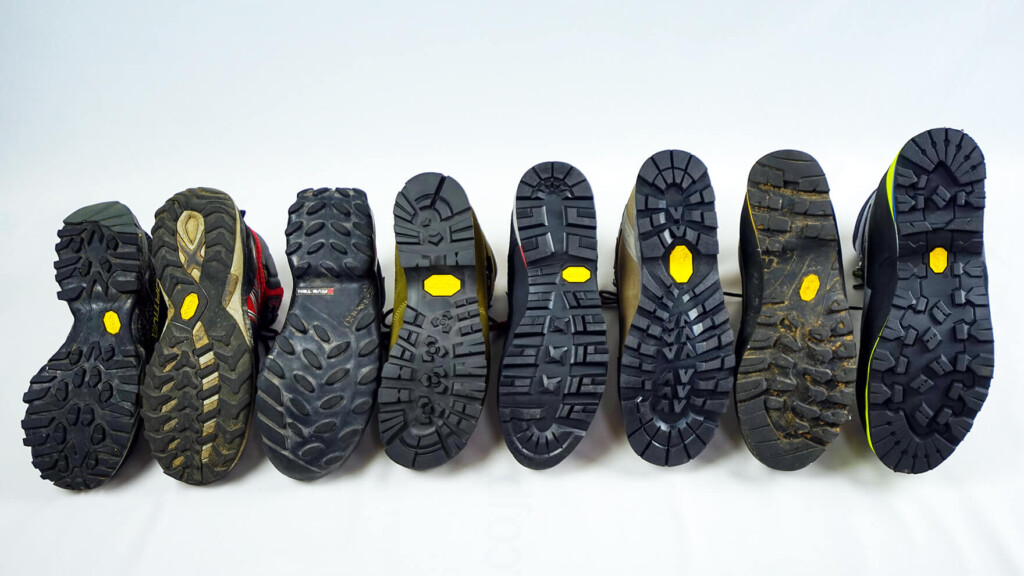
The sole pattern (grooves) is optimized for the style the shoe is aiming for, including shape, direction, depth, spacing, toe shape, and softness
Point 5: Weight - Lightness is good, but be aware of what you lose in exchange for "lightness" -
If you wear heavy shoes, you may find yourself feeling quite fatigued. I'm not sure who said it, but there's a saying that "reducing one pound of shoes is equivalent to reducing five pounds of your back," so it's best to have lighter shoes
However, it's important to remember that this doesn't necessarily mean that light shoes are a good choice. Lighter shoes may mean less stability around the ankle, a weak sole that makes them slippery under heavy loads, or reduced durability, and other trade-offs may be sacrificed in order to achieve that lightness. Balance is key. Consider whether the balance between lightness, safety, and durability meets your desired standards
Point 6: Other items to check
Waterproof and breathable
Your feet get wet easily, and the risks of getting wet inside your shoes are immeasurable, including the loss of body heat and the chafing of softened skin that can lead to peeling. Furthermore, your feet sweat more than you might think, so no matter how much waterproofing you apply to the outside, your feet are always at risk of getting wet. In hot, humid, and rainy regions like Japan, waterproof and breathable shoe treatments should be considered essential .
If you are buying trekking shoes from a major manufacturer, most manufacturers will likely incorporate waterproof and breathable materials such as Gore-Tex into the fabric of the shoes, but be careful as cheap products that sell for a few thousand yen often only have simple water-repellent or waterproof properties without breathability
Incidentally, when you hear the term "waterproof and breathable," you might think it refers to shoes that contain a waterproof and breathable membrane made from synthetic fibers, but in fact, traditional leather also has natural waterproof and breathable properties. Recently, shoes that combine waterproof and breathable materials have appeared that offer functionality that is comparable to synthetic fibers, so the latest leather products are not to be underestimated
Use of third-party insoles (footbeds)
Most trekking shoes come with removable insoles (footbeds) as standard equipment. They provide a three-dimensional fit to the foot, efficiently expel moisture from sweat, and act as a cushion to absorb shock
If you are not dissatisfied with this standard insole, then there is no need to leave it as is, but from experience, it is almost impossible to get a perfect, proper fit with a standard insole.
If you want to walk more comfortably and with less fatigue, we recommend considering third-party insoles and footbeds . They fill the gap between your shoes and your feet, improving the fit of your arch and heel, making walking easier and less tiring, and also cushioning the impact of walking.
If I were to explain how to choose an insole footbed, it would take a very long time, so I will write an article about it on another occasion. Below is a comparison of major products that I did a while ago, so if you are interested, please take a look
Related articles
Lacing System
The fastening mechanisms of trekking shoes have also undergone a variety of evolutions. Shoelaces are now thinner, lighter, and stronger, and the eyelets through which the laces pass and the hooks at the top are made of aluminum, fabric, plastic, etc., making them lighter while still maintaining their durability. Of course, just because something is light doesn't mean it's better than others, and you need to consider that this comes at the expense of durability and the ability to keep the shoe from loosening. In any case, when trying on shoes, we recommend that you actually fasten them yourself and check the following five points .
- Ease of tightening
- Fit when tightened
- (For mid-cut and high-cut models) Ankle support
- Try walking as vigorously as possible to see if it loosens easily
- Are there any discomfort such as catching when walking?
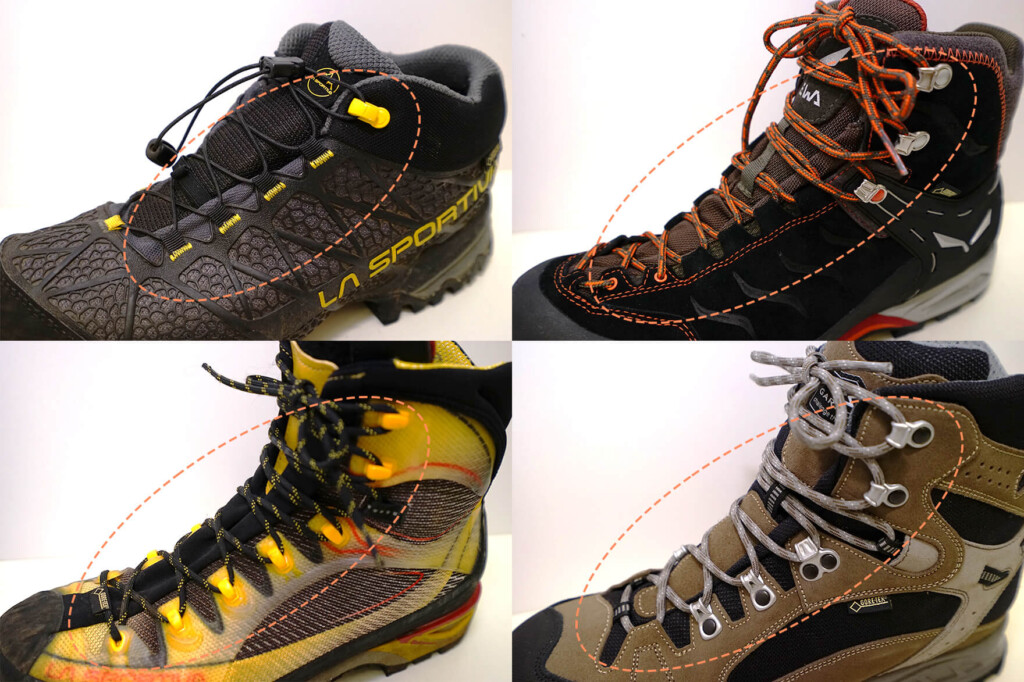
Various shoelaces. Lightness is important, but when you actually try lacing them, you'll find that the ease of lacing and the difficulty of loosening vary greatly depending on the model
Crampon compatible
If you are planning to hike in winter mountains or spring mountains with remaining snow, or on trails with a mixture of snow and ice, boots that can be fitted with crampons are essential
In order to attach crampons, the boots must have a sole that is at least a certain hardness. Furthermore, if you want to use one-touch or semi-one-touch crampons, you will need to choose a model that has a welt on the back or both the front and back for attaching the crampons, so be sure to check this point

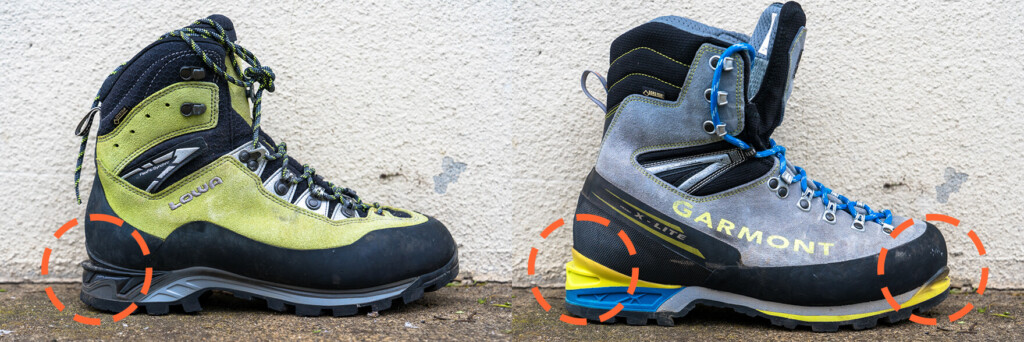
If the boots have crampon welts on the front and back (right), you can use one-touch crampons, if they are only on the back (left), you can use semi-touch crampons, and if they have no welts at all, you can use tape-fastened crampons. *Crampons and boots are compatible, so be sure to try them on and check before use
Men's/women's sizes available, narrow/wide sizes available
For a long time, hiking boots were only available in variations based on foot length, but recently, manufacturers have begun offering "gender-specific sizing" for some models (especially popular models) to fit more feet, as well as "wide (narrow) size ranges" for people with wide (narrow) feet, which are said to be common among Japanese people. These variations are great for people who have always found traditional shoes difficult to fit, and even for those who only have a vague idea of their foot size and shape, in rare cases these variations may fit better than expected, so it's worth trying them on at a store
Summary: Only your feet can tell you the best shoe choice
As I mentioned at the beginning, no matter how high-performance a pair of shoes may be, the reality is that only your feet can tell you whether they're the best for you. Choosing outdoor footwear is complicated, delicate, and, frankly, troublesome. I can't count the number of days I've spent browsing stores just to buy a single pair of trekking shoes. It can be daunting to ask a salesperson to show you multiple pairs of shoes you're not sure whether you'll buy, but it's the only way to find the perfect pair, so don't hesitate to ask. I hope this article will help ease that pain, even if just a little
In the next part, we will actually try on new and popular models of hiking boots that this site has independently researched and picked out from the hundreds of hiking boots available, and compile a list of carefully selected models based on purpose and type as "The pair of boots you should wear now based on purpose and use," so please look forward to it
Related articles
Related reading