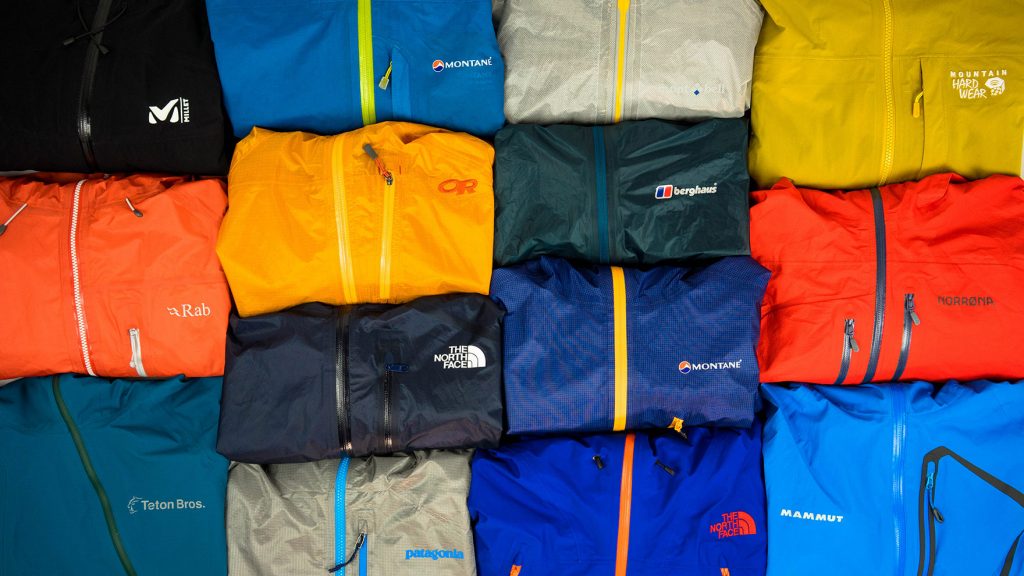
Rainwear is said to be one of the essential pieces of equipment for outdoor activities, and there are now many different types available depending on the season and purpose
this in detail in " How to Choose the Best Rainwear " here, but personally speaking, I find myself carrying around less and less traditional heavy and bulky rain gear these days. Instead, I've become indispensable with ultra-lightweight, feather-light, and compact rainwear, which is becoming more and more high-performance, multi-functional, and convenient with each passing year.
Following on from last year, we will be introducing the "Best Lightweight Rainwear" based on the remarkable evolution of ultra-lightweight rainwear weighing less than 300g, where we compare the latest major models from each manufacturer and evaluate them from various perspectives
Click here for the latest comparison review of the [2018 Spring/Summer model] ↓↓↓
Comparison Review: Which Rainwear is Best for Trail Running? Runners Test It Out in 2018
table of contents
table of contents
- About the items we compared and tested this time (2016 trends)
- Test Results & Spec Comparison Table
- Summary of evaluation results ~Recommended rainwear by type~
- Detailed review of each item (Page:2)
About the rainwear compared this time (2016 trends)
As the name suggests, the primary feature of ultra-lightweight rainwear is that it is essentially all extremely light and compact. Whereas conventional rainwear weighs around 300-500g for just the outer layer, the items we've picked out here all weigh around 300-100g. While durability makes these items less suitable for use in all-day heavy rain or multi-night mountain hikes, their excellent portability and breathability make them ideal for activities that involve a lot of sweating in mild environments (hot seasons, day trips, low mountains, etc.)
This year, more brands than last year (2015) released their latest models, so we significantly increased the number of test items, including models that were continued from last year. We picked a total of 14 items (for items that have not changed since last year, we tested the models purchased last year)
A major trend in 2016 was that while lightweight models based on the concept of mountaineering rainwear were mainstream up until now, this season saw the emergence of many models designed primarily for trail running. In this comparison, we took this trend into consideration and first made sure that the rankings were not biased by these differences. We also revised the evaluation criteria and content to make it easier for users with a variety of purposes, such as hiking, fastpacking, trail running, and biking, to compare and use the products
Test environment
The ultra-lightweight rainwear was tested over a six-month period, from March to August 2016. All items were tested on low mountains to 2,000-meter-high mountains, with walking and running in both good weather (at least one day of use) and rainy weather (at least one pitch). Other testing was conducted by the author himself, with multiple iterations of the garments being worn and compared in as many different situations as possible. Conversely, testing was not conducted in autumn and winter or on 3,000-meter-high mountains. While rain is not a constant occurrence in the mountains, each garment was tested in the rain, even for short periods of time, with occasional changes. Other testing included heavy rain tests in the shower and comparisons of sweat wicking while running in the city, recreating extreme conditions as closely as possible to practical use
Test Results & Spec Comparison Table
| Overall ranking | 1st place | 1st place | 3rd place | 4th place | 4th place | 4th place | 7th place | 7th place | 9th place | 9th place | 11th place | 11th place | 13th place | 14th place |
|---|---|---|---|---|---|---|---|---|---|---|---|---|---|---|
| item | 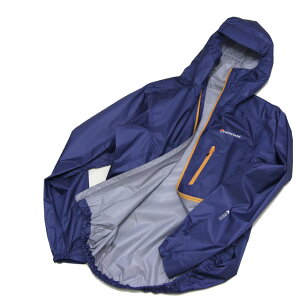 |
 |
 |
 |
 |
 |
 |
 |
 |
 |
 |
![Outdoor Research Helium HD Jacket in Pewter/Leather [Parallel Import]](https://images-fe.ssl-images-amazon.com/images/I/51aQKlM176L._SS300_.jpg) |
 |
 |
| Overall score (out of 100) | 79 | 79 | 78 | 77 | 77 | 77 | 76 | 76 | 75 | 75 | 74 | 74 | 72 | 69 |
| Reference price | 39,960 yen | 38,880 yen | 39,960 yen | 19,440 yen | 37,800 yen | 19,440 yen | 28,080 yen | 31,320 yen | 29,160 yen | 27,000 yen | 32,400 yen | 30,800 yen | 13,500 yen | 27,000 yen |
| Here is ◎ | Breathability, mobility, weight, packability, balance | High all-round performance | Waterproof, comfortable and durable | Mobility, weight, and storage | Slim fit, breathability, mobility, and ease of use | Breathability, mobility, weight, packability | Slim fit, mobility, packability, and balance | Waterproof, comfortable and durable | Comfort, balance and ease of use | Mobility, balance, and ease of use | Breathable, comfortable, and easy to use | Storage and balance | Ease of use | Mobility, breathability |
| Here is △ | durability | Nothing in particular | maneuverability, weight | Waterproof, comfortable, durable, and easy to use | durability | Ease of use | durability | maneuverability, weight | mobility | Comfort | Mobility, durability | Nothing in particular | Breathability, mobility, durability | Waterproof, comfortable, lightweight, and easy to use |
| Waterproof (20 points) |
16 | 17 | 18 | 14 | 16 | 16 | 16 | 17 | 16 | 15 | 16 | 15 | 15 | 14 |
| Breathability (20 points) |
17 | 16 | 17 | 16 | 18 | 17 | 16 | 17 | 16 | 15 | 17 | 16 | 14 | 15 |
| Comfort (10 points) |
5 | 7 | 9 | 4 | 5 | 5 | 5 | 9 | 7 | 5 | 7 | 6 | 6 | 5 |
| Mobility (10 points) |
8 | 7 | 5 | 10 | 9 | 7 | 7 | 6 | 5 | 7 | 4 | 6 | 5 | 8 |
| Weight (15 points) |
14 | 13 | 10 | 15 | 12 | 14 | 13 | 8 | 12 | 13 | 12 | 12 | 13 | 10 |
| Storage capacity (15 points) |
14 | 13 | 12 | 15 | 12 | 14 | 14 | 12 | 13 | 14 | 13 | 13 | 14 | 12 |
| Durability (5 points) |
2 | 3 | 4 | 1 | 2 | 2 | 2 | 4 | 3 | 3 | 2 | 3 | 1 | 3 |
| Usability (5 points) |
3 | 3 | 3 | 2 | 3 | 2 | 3 | 3 | 3 | 3 | 3 | 3 | 4 | 2 |
| Specifications | ||||||||||||||
| item | MONTANE MINIMUS 777 JACKET | Rab Flashpoint Jacket | THE NORTH FACE Climb Very Light Jacket | Berghaus Vaporlite Hypershell Jacket | Teton Bros. Breathable Jacket | THE NORTH FACE Strike Jacket | MAMMUT DRYTECH FREEFLIGHT JACKET | MILLET W7 50000 ST JKT | MONTANE MINIMUS JACKET | patagonia Alpine Houdini Jacket | NORRONA bitihorn dri 1 Jacket | OUTDOOR RESEARCH HELIUM HD JACKET | Mont-Bell Versalite Jacket | Mountain Hardwear Stretch Ozonic Jacket |
| Weight (actual measurement) | 137g(M) | 195g(S) | 262g(L) | 85g(EUS) | 221g(M) | 129g(M) | 162g(S) | 306g(UKS) | 230g(S) | 187g(S) | 214g(S) | 246g(S) | 159g(S) | 272g(S) |
| material | 7D PERTEX ShieldⓇ + (3-layer) | Pertex ShieldⓇ + 3-layer fabric | GORE-TEXⓇ C-Knit Backer (3 layers) | Hydroshell™ Hyper | Polartec Neoshell | 7D HYVENT Flyweight (3 layers) | Pertex ShieldⓇ + 3-layer fabric | Dry Edge Double Seven 50000 3-layer | 40D PERTEXⓇ Shield + (2.5-layer) | 30D H2No Performance Standard Shell | dri1 | 30D PertexⓇ Shield + (2.5-layer) | 15D Super Hydro Breeze R2.5 layer | 2.5-layer 40D Dry-Q Active Stretch Nylon |
| Waterproof (mm reference) | 20,000 | Undisclosed | Undisclosed | 15,000 | 10,000 | 20,000 | 20,000 | Undisclosed | 20,000 | 10,000~20,000 | 20,000 | 20,000 | 20,000 | 20,000 |
| Moisture permeability (g/m2/24h reference) | 30,000 | Undisclosed | Undisclosed | 10,000 | Undisclosed | 40,000 | 20,000 | 50,000 | 20,000 | Undisclosed | 20,000 | 20,000 | 15,000 | 20,000 |
| Layer | 3 | 3 | 3 | 2.5 | 3 | 3 | 3 | 3 | 2.5 | 2.5 | 2.5 | 2.5 | 2.5 | 2.5 |
| 1 (chest) | 1 (chest) | 2 (left/right) | 0 | 1 (chest) | 1 (chest) | 1 (chest) | 2 (left/right) | 1 (chest) | 1 (chest) | 2 (left/right) | 3 (left/right/chest) | 2 (left/right) | 3 (left/right/chest) | |
| pit zip | × | × | × | × | ◎ | × | × | ◯ | ◯ | × | ◎ | ◎ | ◯ | ◯ |
| Hood adjustment | △ | ◎ | ◎ | △ | ◯ | △ | △ | ◯ | ◎ | ◯ | ◯ | ◯ | ◯ | × |
| Cuff (sleeve) | semi-expandable | Velcro | Semi-elastic + Velcro | Stretch | semi-expandable | Semi-elastic + Velcro | semi-expandable | Velcro | Velcro | Stretch | Velcro | Velcro | Semi-elastic + Velcro | Velcro |
| Reflector | ◯ | × | × | ◯ | ◯ | × | ◯ | × | ◯ | × | × | × | ◯ | × |
| Storage method | stuff sack | stuff sack | stuff sack | none | stuff sack | stuff sack | Food | stuff sack | none | stuff sack | none | |||


Summary of evaluation results ~Recommended rainwear by type~
No.1 in overall strength



The two models below received the highest overall scores based on the evaluation criteria we set this time. Although they have different approaches, one for running and the other for alpine climbing, they have in common the fact that they offer high performance that matches each need, while at the same time providing the basic protection and comfort required of rainwear at a high level, and this ingenuity is a major reason for their high ratings
1) MONTANE MINIMUS 777 JACKET
The first, the MONTANE MINIMUS 777 JACKET , is impressive for its incredibly light weight of just 143g, a significant reduction from the previous model, despite its soft, supple, and breathable 3-layer fabric. While the hood, sleeve, and hem adjustments have been omitted to reduce weight, the excellent 3D cut and elastic placement throughout ensure a comfortable fit and prevent slippage or flapping. Other notable touches include reflectors for safety at night and a convenient chest pocket. While the 3-layer jacket weighs in the low 100g range, the THE NORTH FACE Strike Jacket is a competitor, but in terms of comfort and ease of use, the MONTANE MINIMUS 777 JACKET is slightly superior. While generally considered a model optimized for running, its high basic quality makes it perfectly suitable for short mountain trips like trekking and climbing.
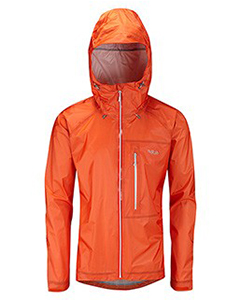
2) Rab Flashpoint Jacket

, the Rab Flashpoint Jacket once again took first place overall. While this year's impact has faded, it still rivals traditional rainwear in terms of waterproofness, breathability, and comfort. This three-layer jacket boasts unparalleled quality, boasting advanced, thorough construction that can withstand harsh environments, including a fully adjustable helmet-compatible hood and state-of-the-art waterproof zippers that are easy to operate. This season's model boasts a slimmer body silhouette for improved mobility, but (this is purely my personal experience) the outer fabric is slightly less dense, which feels like a slight decrease in waterproof (water-repellent) performance. While this jacket is designed for technical situations like climbing, it's also a lightweight, all-around rainwear piece that's perfect for a wide range of outdoor activities, from hiking to running.
Best value for money
THE NORTH FACE Strike Jacket

Who would have thought that such lightweight, comfortable, three-layer rainwear, weighing in at just under 100g, could be found for under ¥20,000? The Strike Jacket is a top-tier model in its category, offering top-class performance for comfortable trail running while remaining relatively affordable (in fact, many people were spotted wearing it at a trail running event in May this year). First, the newly introduced proprietary HYVENT Flyweight fabric delivers high breathability and the supple feel of a three-layer jacket, delivering the comfort you'd expect. The slim silhouette, compact hood, and soft outer fabric reduce stress while running, while the airtight cuffs with flat elastic and Velcro closures keep out rain. While it's certainly ideal for trail running, it's also perfectly suited to summer day hikes and treks. And with a design that blends seamlessly into urban environments, this jacket's versatility is undeniable. As a result, it's undoubtedly the best value for money this year. The Strike Trail Hoodie has also been released as a more running-specific model.
No.1 recommended spot for hiking and trekking
THE NORTH FACE Climb Very Light Jacket
The North Face Climb Very Light Jacket received the highest score when evaluating items considered primarily important for mountaineering (waterproofness, breathability, comfort, durability, and ease of use) from the overall evaluation criteria. While unpublished figures are available, the C-Knit Backer, a new technology from the highly reliable waterproof and breathable Gore-Tex material, delivers outstanding waterproof performance worthy of the Gore-Tex name. The jacket's durable water-repellent properties and the natural moisture-wicking properties of the lining made it particularly impressive, minimizing discomfort in the rain. The soft circular knit lining is also more supple and comfortable against the skin than any other model. The large, helmet-compatible hood can be finely adjusted to fit any head size, making it suitable for even the most severe weather. While the silhouette is slim, it's also slightly roomier than the other jackets in this selection, allowing you to comfortably wear a mid-layer underneath without feeling cramped.
While many of the latest models are becoming increasingly lighter and more geared towards running and fastpacking, there is certainly a need for a model like this that is only light to a certain extent, but still retains the comfort, weather resistance, and durability needed for mountain climbing, and for such users, this would be the best choice rather than choosing a model that is too light
No.1 recommendation for trail running
Berghaus Vaporlite Hypershell Jacket
When we extracted from the overall evaluation criteria items considered to be primarily important for running (waterproofness, breathability, mobility, weight, and packability), the item that received the highest score was the Berghaus Vaporlite Hypershell Jacket . For better or worse, it's the most extreme model, specifically designed for running. Its weight of 86g, packability smaller than a fist, and high mobility are all tops of all items. Despite being so light you'll forget you're even wearing it, it repels normal rain so well that it's nothing short of amazing. The published specs for breathability are low (10,000g/m2/24h), but the thinness of the fabric makes it feel higher than the specs suggest.
What I like most about this fabric is the texture; it has almost no harshness that is typical of waterproof jackets, and is as quiet as wearing a wind shell. The slim silhouette around the shoulders, arms, and body all allows for excellent freedom of movement, and it doesn't flap in the wind, so overall, you can experience the ultimate in comfort while running
However, in exchange for its outstanding running suitability, its waterproofness, comfort, durability, and ease of use as clothing are all at the lowest level. The manufacturer has probably taken these factors into consideration, and the strength of this jacket is not ease of use from an overall perspective, but rather its ability to maximize performance in crucial situations such as races, so if that's what you're going to use it for, then this is the jacket for you
Next page: Detailed review of each item
Detailed review of each item
waterproof
Since rainwear is gear designed to protect you from the rain, waterproofness is the most basic evaluation point. First of all, all of the items featured here use fabrics with waterproof membranes, have a durable water-repellent finish called DWR (Durable Water Repellent) on the surface, and are designed to prevent water from seeping inside the garment by using highly airtight zippers called waterproof zippers and seam tape applied to the seams. Each manufacturer has also passed product testing in their labs. In that sense, all of the items offer basic weather resistance against rain (and wind as well). Even when standing in a moderate rain for several minutes, the falling rain itself rarely penetrated the fabric and seeped inside, and no significant differences were observed
However, this is not the case when you are hit by a large amount of water, such as during a heavy rain, with force for a long period of time and from various angles
Even in this case, it is unlikely that the water will exceed the water resistance of the fabric and penetrate directly through it, but what is more serious is that water may seep in little by little from various places such as the hood, cuffs, zippers, and pocket edges, or the water-repellent properties of the fabric surface may be lost, causing water to remain on the outer surface and making it difficult for moisture inside the clothing to be expelled, resulting in the body getting wet
When comparing the waterproofness of ultra-lightweight rainwear, which is not as water-resistant as full-fledged rainwear for mountain climbing, this was the point where differences emerged between the items, rather than the specs of the materials used.To compare them, we conducted a test in which we moved our bodies while exposed to strong rain (a shower that simulated that) for a certain period of time
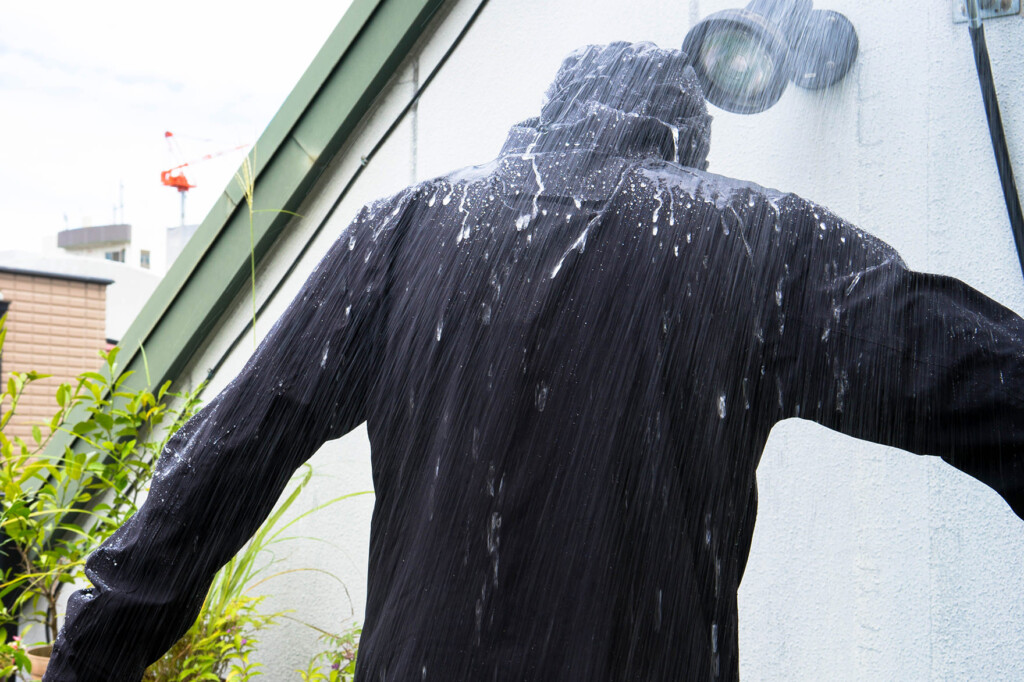
In addition to normal activities in the rain in the field, to recreate heavy rain, the waterproofness was measured by holding a shower head over the head and shaking the face and arms from this position to simulate heavy rain
the THE NORTH FACE Climb Very Light Jacket with a GORE-TEX® C-Knit Backer provided the best waterproofing in the heavy rain . Its reliable water resistance and long-lasting water repellency, airtight zipper and cuffs, large brim, and easy-to-fit hood provide excellent protection from the rain. The Rab Flashpoint Jacket , has changed its material to PERTEX Shield+, but its overall airtightness, including the hood, remains intact. On the other hand, the Berghaus Vaporlite Hypershell Jacket's hood and cuffs absorb moisture, making it prone to seepage, and its small, non-adjustable hood was completely useless in the heavy rain. These jackets should only be used if you plan to descend before the rain gets heavy.
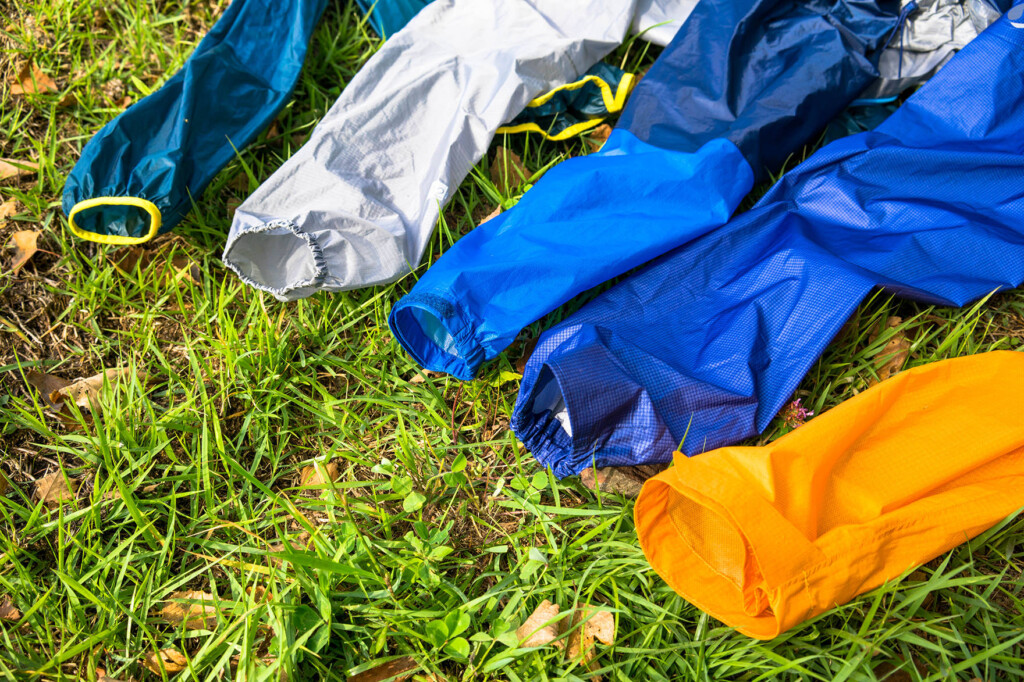
The cuffs' lightness and adjustability are determined by the intended use. If you're mainly running, elastic cuffs (the four on the left) that don't require adjustment are fine, but there's a risk that the elastic will break or wear out. On the other hand, if you're planning on hard, technical use, Velcro-only cuffs are safer because they open and close widely and are less likely to break
Breathability (ventilation performance)
For ultra-lightweight rainwear, which is likely to be used in the summer or during intense exercise, it is particularly important that it keeps the body dry (comfortable) when sweating or in humid conditions
However, "breathability" here does not simply mean the strict moisture (water vapor or water molecules) permeability of the fabric, as expressed in a certain numerical value. While this is a very important evaluation point, waterproof and breathable jackets can also keep the body dry and expel moisture from inside the garment through other means, such as sweat absorption (moisture absorption) by the lining and ventilation through zippers under the armpits. From the user's perspective, the breathability and ventilation performance of clothing must be evaluated taking these factors into account
was the Teton Bros. Breath Jacket, which uses Polartec Neoshell, which has outstanding breathability, and also has excellent sweat-wicking properties thanks to its ventilation and lining. the MILLET W7 50000 ST JKT , which uses a highly breathable 3-layer material that makes it comfortable regardless of what you wear underneath THE NORTH FACE Strike Jacket , MONTANE MINIMUS 777 JACKET, and THE NORTH FACE Climb Very Light Jacket, all of which are among the most comfortable jackets available.
Also, although the fabric is 2.5 layers and the specs aren't outstanding, the NORRONA bitihorn dri 1 Jacket , with its huge pit zips providing excellent ventilation, is hard to beat in terms of overall comfort.
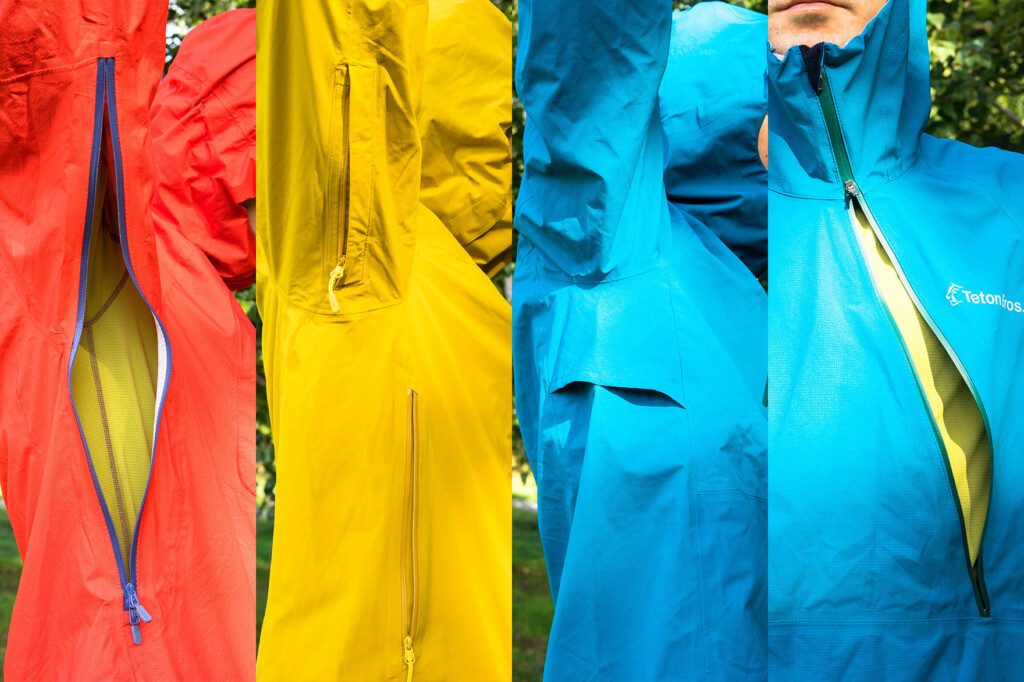
There are various ventilation methods. From the left, there is a large underarm zipper, a small underarm zipper, underarm air vents, and a double zipper on the front. The zipper affects weight and packability, but allows for dynamic ventilation, so each has its own advantages and disadvantages
Comfort and mobility
The models selected this time were a fairly wide range of candidates for comparison, ranging from general mountain climbing to extreme running. Therefore, even though we are talking about comfort, the required comfort varies depending on the intended activity and the clothing worn underneath. For this reason, the method of evaluating comfort has changed significantly since this year's test
The first is the simple feel of the garment against the skin, the lack of tightness, the fit of the cuffs, the fit around the mouth, and other elements that are primarily necessary when walking in rain gear, and these were evaluated as "comfort." The other is the comfort desired when running, such as the lack of flapping of the garment during vigorous movement, ease of movement due to its stretch, the reduction of clothing shifting when swinging the arms, and the lack of rustling noise, and these were evaluated separately as "mobility."
As a result, we found that THE NORTH FACE Climb Very Light Jacket . The knitted lining was extremely comfortable, and the slightly loose cut (top left in the photo below) meant that wearing a mid-layer underneath was comfortable. The hood and cuffs were also well made, as mentioned above. The Rab Flashpoint Jacket had excellent three-dimensional cutting, and despite its slim silhouette (bottom left in the photo below), it provided a more natural fit and ease of movement than expected.
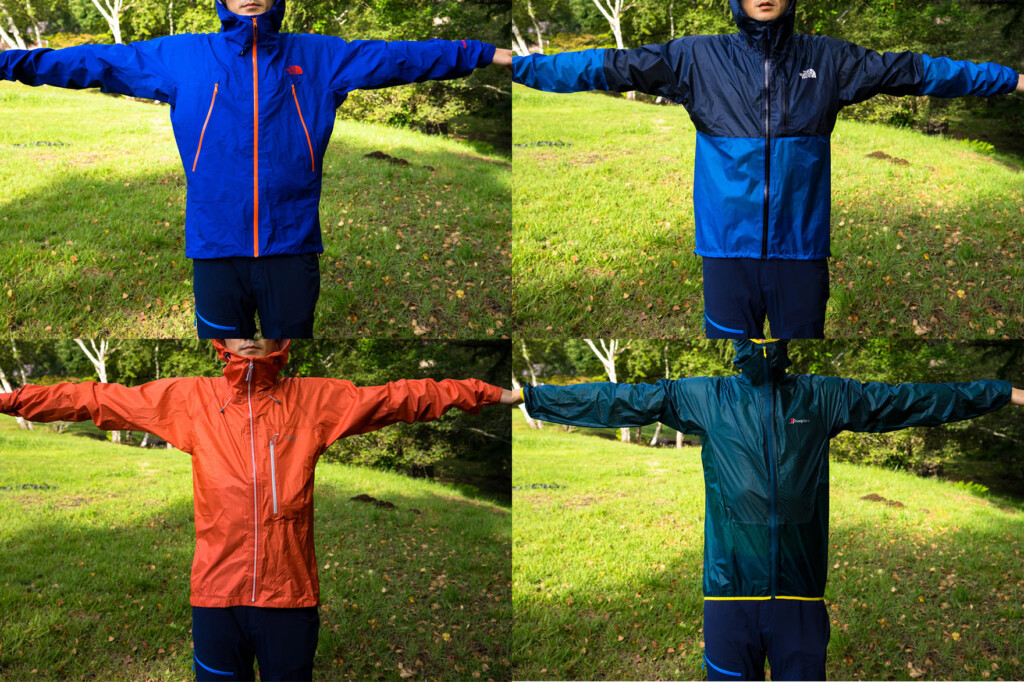
In terms of mobility for running, THE NORTH FACE Strike Jacket and Berghaus Vaporlite Hypershell Jacket are head and shoulders above the rest. As you can see from the photos above (top and bottom right), the jackets are tight enough to be worn under light clothing, preventing flapping, and thanks to the characteristics of the material, you won't be bothered by the sound of the clothing rubbing against each other while you're moving.
weight
Every year I'm amazed at how incredibly light new products are, but this time it's the Berghaus Vaporlite Hypershell Jacket , weighing just 86g (measured in a size small). To give you an idea of how light this is, see the photo below. A packet of instant noodles weighs about 100g, so it might be easier to understand if you imagine it as being lighter than that (?). Basically, models weighing around 100g are so light that they're so comfortable you don't even feel like you're wearing clothes.
However, in exchange for lightness, you must be prepared to sacrifice durability and other aspects, so if you want to use it safely on a variety of terrains, such as hiking, it would be wise to aim for a bag weighing around 200g or more
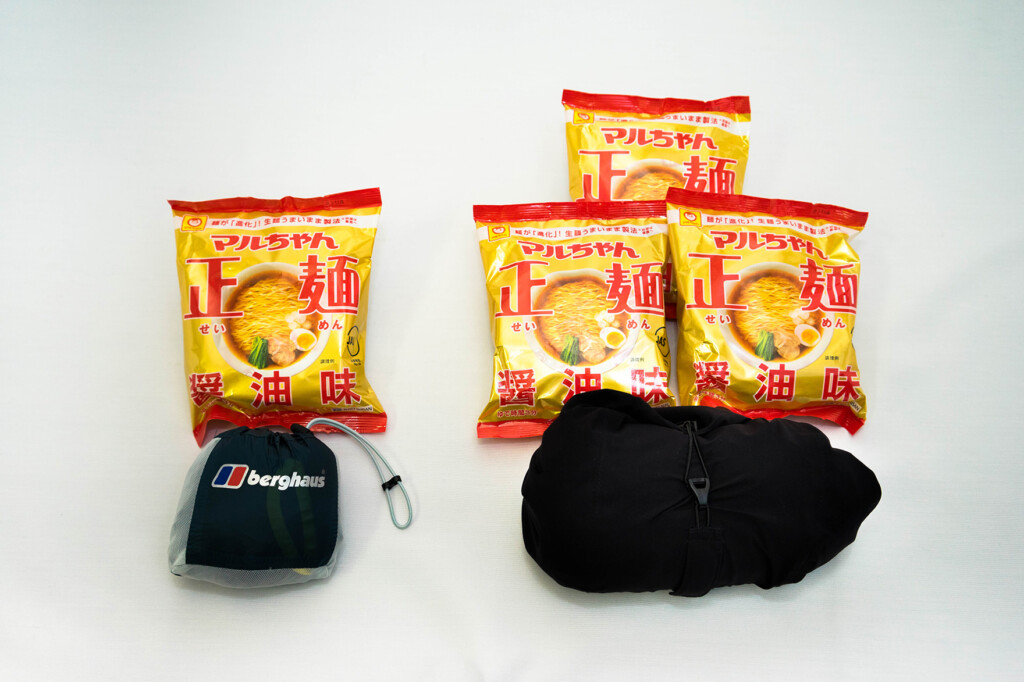
The lightest bag weighed just 86g, less than the weight of a packet of instant noodles (100g). However, since it is designed for short distances and races, a model that weighs about the weight of three packets would be preferable for mountain climbing
Storage capacity
Packing size is closely related to weight, but the easiest way to gauge this is to look at the packing results (photo below). Incidentally, the models without stuff sacks (⑤, ⑧, ⑪) are simply rolled up and wrapped in the hood, so they're not necessarily fully compressed. Including these, the models with the best packability were the ③ Berghaus Vaporlite Hypershell Jacket, ⑦ Patagonia Alpine Houdini Jacket, ⑨ MONTANE MINIMUS 777 JACKET, and ⑭ THE NORTH FACE Strike Jacket . It's becoming commonplace for these jackets to be smaller than a clenched fist.
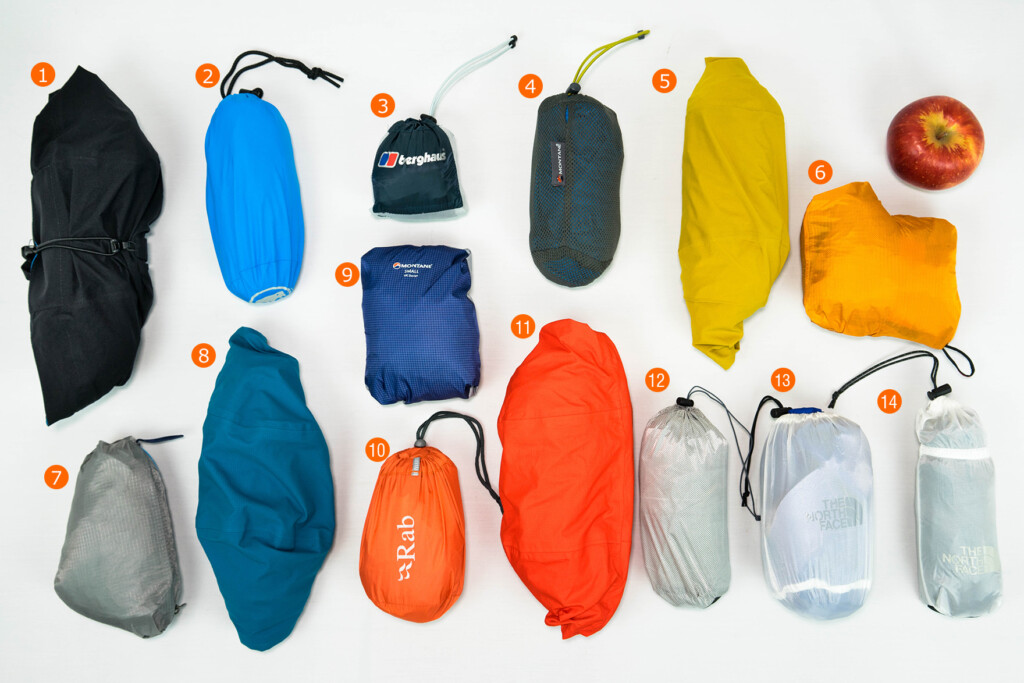
①MILLET W7 50000 ST JKT ②MAMMUT DRYTECH FREEFLIGHT JACKET ③Berghaus Vaporlite Hypershell Jacket ④MONTANE MINIMUS JACKET ⑤Mountain Hardwear Stretch Ozonic Jacket ⑥OUTDOOR RESEARCH HELIUM HD JACKET ⑦Patagonia Alpine Houdini Jacket ⑧⑨MONTANE MINIMUS 777 JACKET ⑩Rab Flaspoint Jacket ⑪NORRONA bitihorn dri 1 Jacket ⑫mont-bell Versalite Jacket ⑬THE NORTH FACE Strike Jacket ⑭THE NORTH FACE Strike Jacket
durability
Unfortunately, it is not possible to provide an in-depth and accurate assessment of durability here, as it is not realistic to use the product for a long period of time or to test its strength to its limits. For this reason, we can only speculate on aspects such as friction and tear resistance based on the thickness and weight of the fabric and our impressions after several trial tests. However, we have added these as evaluation items, as we felt it would be inappropriate to not mention them at all
So, the bare minimum is that, if the entire fabric is made of the same material, the thicker the fabric (the higher the denier), the more durable it should be. Furthermore, at least with a thin 2.5-layer outer layer, strength relies solely on the surface, and the lining is only coated, making it vulnerable to friction and therefore at a disadvantage in terms of durability. In that sense, the Berghaus Vaporlite Hypershell Jacket and the Mont-Bell Versalite Jacket are relatively unreliable in terms of strength, not just in appearance but also in theory.
On the other hand, with a 3-layer garment, not only does the lining at least prevent degradation of the membrane due to friction, but the increased overall thickness of the garment also makes it relatively stronger, giving it an advantage in terms of durability compared to a 2.5-layer garment. In reality, the strength may also vary depending on the weave and tightness of the fibers (sewing technique?), but this is something the manufacturer hasn't disclosed, so it's hard to say. Taking this into account, and based on my impressions of using them, the THE NORTH FACE Climb Very Light Jacket and MILLET W7 50000 ST JKT are 3-layer garments that use sturdy fabric and are highly rated for their durability among ultra-lightweight rainwear.
Ease of use
In order to avoid making evaluations based on impressions as much as possible, we have focused on the following five points as the main evaluation points
- Number and location of pockets
- Ease of opening and closing the zipper
- Easy to adjust hood, cuffs and hem
- Presence or absence of night reflectors (reflective marks)
- Ease of packing (stuff sack, packable design, etc.)
the Mont-Bell Versalite Jacket has it all the Montane Minimus Jacket which received high marks in last year's test, is also top-class in terms of usability, with a large chest pocket, easy-to-use zippers, an adjustable hood, reflectors, and a stuff sack included.
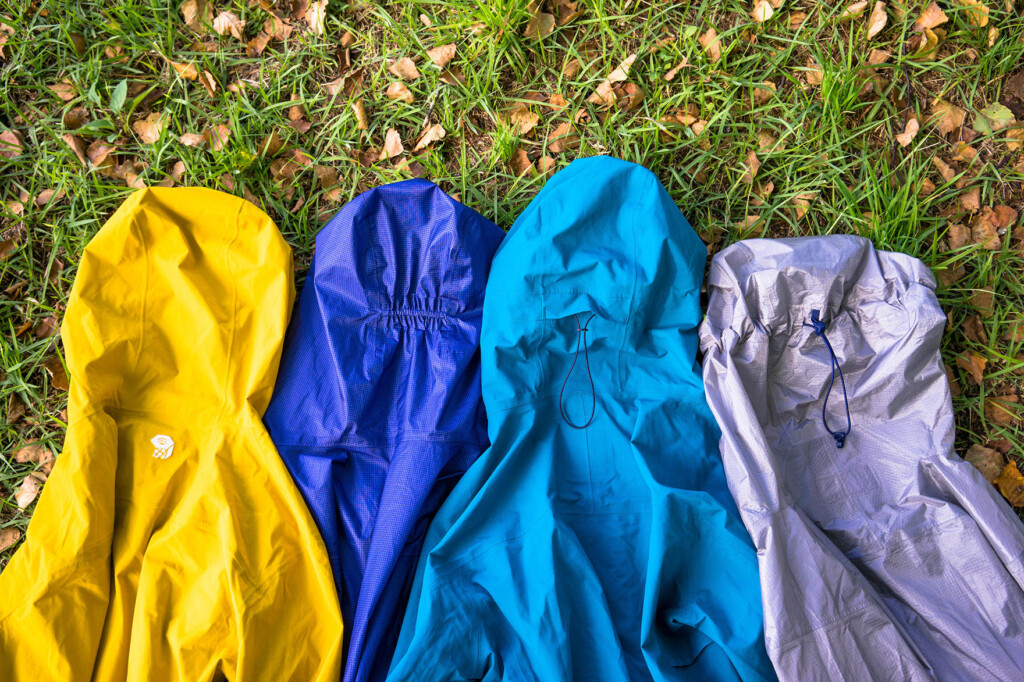
If the hood is not adjustable, it may obstruct your field of vision if it does not fit your head properly, which can be uncomfortable and dangerous. Usability can be greatly affected by whether or not there is a drawcord at the back of the head that securely adjusts and secures the hood, and whether or not there is a function to adjust the height of the hood at the front of the chin (not shown in the photo)
summary
So, this year too, we've compared a wide range of ultra-lightweight rainwear, with each brand competing fiercely for supremacy. We hope you've all found your favorite piece
Honestly, choosing the best rainwear for you is no easy task. We have tried to explain the various and complex comparison factors as clearly as possible, so that this comparison will be of some help to you in choosing rainwear. However, there may have been some areas where our own preferences were involved, or where the testing was insufficient due to physical constraints. We would like to continue improving this, so please let us know if you have any comments or requests
We also recommend this article about rainwear
- Types of rainwear and how to choose them - things to check before you buy
- This season's must-have mountain climbing rainwear [for hiking and trekking]
- This season's must-have ultra-lightweight rainwear [for trail running and fastpacking]
- Comparison Review: What is the best rainwear to have when hiking?
Related reading