Choose a variety of gaiters depending on your needs
If you want to walk as lightly, comfortably, and safely as possible even when faced with rugged terrain or harsh weather, we recommend trying out gaiters (spats)
Gear that tightly covers the ankles and fills the gap between the boots and the feet is almost essential on snowy mountains, and even in the snow-free season, it protects the feet from rain, dew, pebbles, branches, mud, etc. With this, the inside of your shoes will be comfortable even when running on the sand of Mount Fuji, your feet will stay dry even when marching in the rain or walking on grasslands covered with morning dew, and you will no longer have to worry about snow getting in or the cold, even on fluffy snow
A while ago, I chose my favorite long spats for winter solely because of the price and the fact that they were made of Gore-Tex, but they started to develop holes, fray, and become worn out, so I decided to do some research on new gaiters

Gaiters used to be (at least in Japanese mountaineering culture) used to be used mainly as equipment to keep out snow during snowy mountaineering or to protect the feet from crampons, but recently they have been actively used in summer mountaineering as well to protect the feet from foreign objects and dirt. Although this trend has calmed down a bit, they have also suddenly become popular as a fashion item during the mountaineering boom
Recently, there are many variations in length, shape, material, etc. to suit various needs, such as summer and winter, shorts and long pants, hiking and running, and they are useful for almost any scene. In this article, we will summarize the points to pay attention to when choosing the best gaiters for these various purposes, and in the second half, as usual, we will introduce recommended models for each purpose, based on what we learned after briefly trying out the latest models in the field
table of contents
- Introduction: Functions and Types of Gaiters
- Step 1: Choose your length
- Step 2: Choose your material
- Step 3: Choose the opening and closing method
- Step 4: Check other points
- 8 recommended gaiters for beginners and those with strong legs
- Recommended for trail running and fastpacking
- Recommended for protecting against pebbles, rain, and mud when hiking in the snow-free season
- A well-balanced design that can be used all year round for light activities
- Great for all occasions, from spring and summer trekking to winter mountain climbing
- Recommended for hiking in Japan's snowy winter mountains
Introduction: Functions and Types of Gaiters


In recent years, integrated gaiter boots have become the norm for alpine boots used in winter mountains
First, let's take a look at the various types of gaiters available, and understand their main function (role). Just to be clear, gaiters aren't always essential gear for spring and summer, although that may be true for winter mountaineering. Personally, I often skip wearing them in summer mountaineering. Furthermore, many models nowadays combine gaiters with pants or boots (see photo), and even in those cases, gaiters are of course unnecessary. However, when it comes to the ease of putting them on and taking them off, and the fact that they can be worn with any pants or shoes, there's nothing better than having a separate pair of each. For that reason, the table below summarizes the general types of gaiters, along with the pros and cons of not wearing them
Summary of common types of gaiters
| type | No gaiters | Trail (running) gaiters | Alpine gaiters (rain spats) | Expedition Gator |
|---|---|---|---|---|
| Features | A very simple style consisting of pants, socks and boots | They emphasize lightness and ease of movement, and are highly breathable to prevent stuffiness during intense exercise. However, their protection and durability are relatively low, being limited to preventing the intrusion of foreign objects and the unraveling of shoelaces. Short types are the most common | Suitable for all-around outdoor activities, from hiking to full-scale mountain climbing, snowshoeing, and backcountry skiing. They offer high levels of waterproofing and breathability, as well as resistance to abrasion and tearing, while also providing protection from foreign objects. There are a wide variety of options available. Longer lengths are the most common | This is the heaviest model, designed for mountain climbing in harsh environments, with the highest level of durability, heat retention, waterproof and breathable properties. The long type is the only option |
| Reference image | 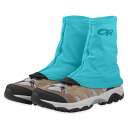 |
 |
 |
|
| Pebbles | × | ◯ | ◯ | ◎ |
| rain | × | △ | ◯ | ◎ |
| snow | × | △ | ◯ | ◎ |
| Crampons | × | △ | ◯ | ◎ |
| Heat retention | × | △ | ◯ | ◎ |
| Breathable | ◎ | ◯ | △ | × |
| weight | ◎ | ◯ | △ | × |
| Ease of putting on and taking off | ◎ | △ | ◯ | ◯ |
| Ideal for outdoor scenes | ─ | Trail running and speed hiking in relatively mild weather and terrain | From hiking to summer mountain traverses, winter mountaineering in general, and backcountry skiing | A long-term trek in the harsh winter |
| Suitable shoes | ─ | Trail running shoes, low-cut and mid-cut hiking shoes | Hiking boots, trekking boots, alpine boots | alpine boots |

What this table clearly shows is that just wearing something called a gaiter doesn't mean you'll be comfortable anytime, anywhere. Trail gaiters won't protect you from heavy rain or deep snow, and conversely, alpine gaiters are too hot to wear while trail running . For this reason, the first step in choosing the right gaiters is to consider why you need gaiters and what activities you want to use them for, and then consider which type to choose.
Step 1: Choose your length
Once you know the type of gaiter you want, the next thing to consider is what length model to choose. Choosing the type will generally determine the length, but recently the boundaries between types have become blurred, so it's important to understand the differences in characteristics depending on the length
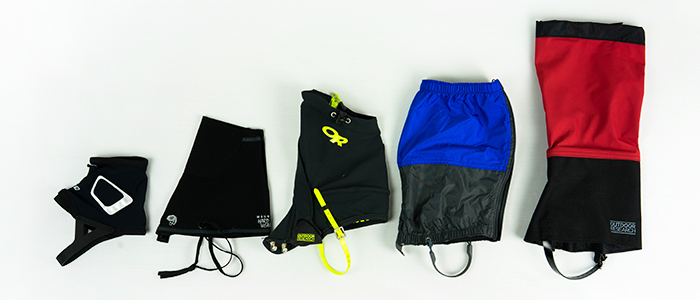
Roughly speaking, short types that reach above the ankle, about 20-30cm and long types that reach above the calf and below the knee, about 35-45cm , with the difference in length being determined solely by how much protection is needed around the legs. A wider range of protection is needed for more severe environments, but this puts a greater strain on mobility and breathability than shorter models. The mid-length (semi-long) size exists to save some weight from the long size, but it fastens at an awkward position, so care should be taken as it is prone to slipping down.
| item | Short type | Long type |
|---|---|---|
| Features | Intended for use in relatively mild environments, primarily for protection from pebbles, mud, rain, etc. While offering less coverage and protection, these are light, easy to move in, relatively inexpensive, and highly breathable | Designed for harsh environments such as bushes covered with tall vegetation, deep snow, deep mud, heavy rain, etc. It also has a certain degree of heat retention, so it can be used as convertible pants with shorts in the summer |
| Coverage | × | ◯ |
| protective power | × | ◯ |
| motility | ◯ | × |
| Heat retention | × | ◯ |
| Breathable | ◯ | × |
| weight | ◯ | × |
| price | ◯ | × |
Points to consider when choosing
- If you plan to only use them for short activities such as trail running or summer day hikes, we recommend the short type.
- you are not planning to use it in light environments and are mainly planning to use it on rough courses or during snowy seasons, we recommend the long type.
- If you spend most of your time wearing shorts throughout the year, we recommend choosing a long type, which also provides warmth when the temperature is low
Step 2: Choose your material
The fabric used for gaiters will vary depending on the season and purpose for which they are intended to be used
If you plan to use it in the snow or rain, choose a waterproof and durable material
, as with traditional gaiters , then you should naturally choose a model made with a waterproof and breathable material . A typical example is GORE-TEX, which has a long history of leadership in waterproof and breathable materials and is therefore highly reliable. Other options include newer materials such as eVent and Polartec Neoshell, which boast higher breathability, and all of these offer sufficient basic performance, so choose according to your preferences.
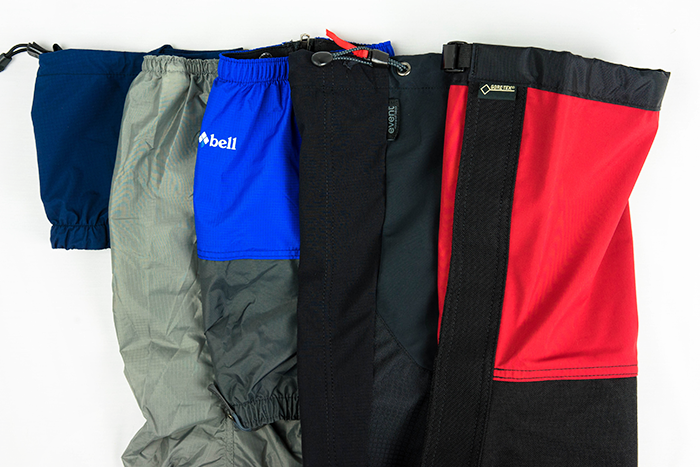
If you plan to use them in winter mountains, choose gaiters made of waterproof and breathable material with the bottom reinforced with thick nylon
Additionally, during the snowy season, gaiters are often worn with crampons, and if you walk incorrectly, the claws of the crampons can scratch the inner fabric or even pierce it. For this reason, the more severe the environment you plan to use them in, such as winter mountains, the more important it is to have sufficient reinforcement at the bottom of the gaiters, even if it means sacrificing some weight . A typical example is highly durable Cordura nylon, and it is best to choose gaiters made from thick, tear-resistant ripstop nylon or urethane-coated nylon.
If you plan to use it in mild seasons for intense exercise, choose a material that prioritizes fit and breathability
, for gaiters intended for summer mountain climbing or . This material's features include an excellent fit, minimal bulk, and resistance to stuffiness even during intense exercise, making it ideal for midsummer hiking and trail running. However, prolonged exposure to rain will inevitably result in water seepage , so be careful about the area you use it in, even in midsummer. Also, the lighter the model, the less durable it is expected , so you should expect to need to replace it more frequently.
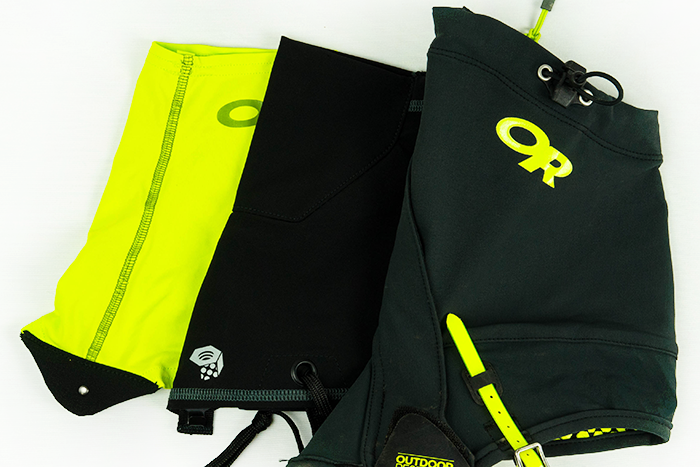
Gaiters made of stretchy material fit the entire leg and allow for easy movement, but they cannot prevent water from seeping in when it rains
Step 3: Choose the opening and closing method
Open/close position
There's actually a surprising amount of variety in this type of closure. Generally, gaiters are opened and closed with a zipper (or Velcro) at the front for ease of putting on and taking off , but some older models have a back closure, which is less user-friendly than front-opening models. Also, many short gaiters for running don't even have a closure at all, and you have to take them off before you put them on, so be careful.
Opening and closing method
Velcro, zippers, or both are common . Velcro closures are preferred for ease of putting on and taking off on snowy mountains (while wearing gloves). On the other hand, if your primary concern is preventing water from seeping in due to rain, a waterproof zipper is the best option. The type that suits both scenarios is a combination of zipper and Velcro, which offers better protection but is the most difficult to put on and take off.
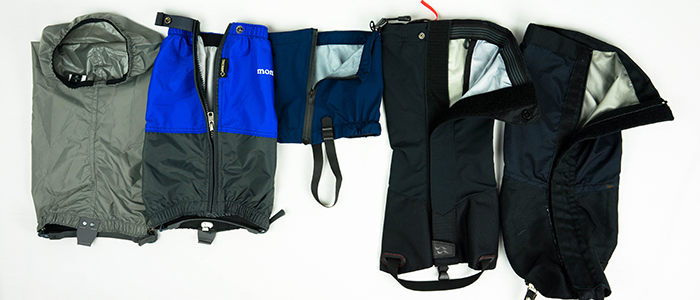
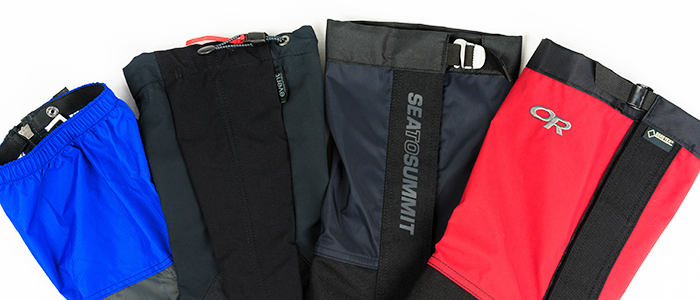
Various opening and closing methods. From left to right: no opening, zipper + flap, waterproof zipper, Velcro, Velcro + zipper
Step 4: Check other points
Strap (band)
The strap that goes around the sole of the shoe is used to secure the gaiter to the shoe so that it doesn't slip while you're moving around
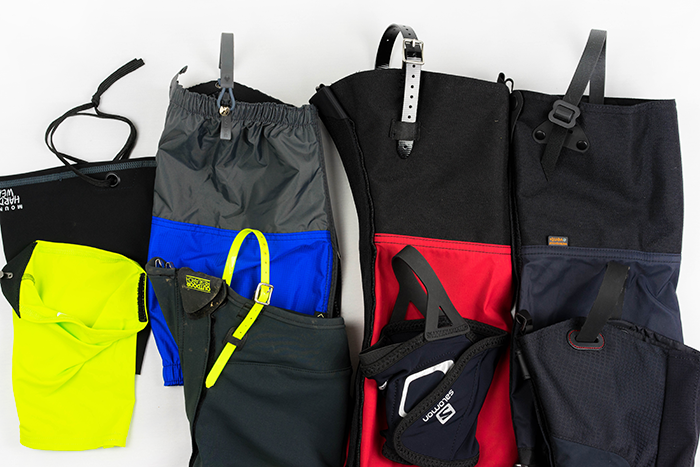
main things to look at are the material and how it's adjusted . Lightweight running gaiters have flat soles, so if you put a bulky band through them, it can cause discomfort to the soles of your feet, so they're usually made with thin laces. In that case, you need to be prepared for the inconvenience of them being light, but difficult to put on, less durable, and prone to wearing and tearing easily.
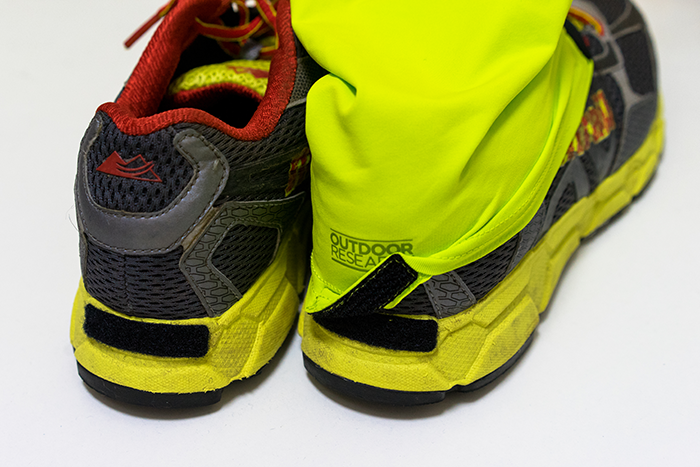
Furthermore, ultra-lightweight gaiters, such as the OUTDOOR RESEARCH Spark Plug Gaiter , don't even have straps; instead, they use a Velcro patch attached to the heel of the shoe to secure the gaiter. While this is the best solution for shoes without a heel arch, such as trail running shoes, it has its drawbacks, such as the patch easily coming off and not being able to be used on shoes without a patch.
On the other hand, alpine gaiters generally use straps (bands) made of leather, rubber, or resin. Durability and ease of adjustment (operability) are emphasized. Personally, I you should choose a durable strap unless you're running a trail race . No matter what model, I'm not willing to skimp on a few grams and choose something that I know will break easily.
Size and Fit
Choose the right size
Whether long or short, most gaiters come in sizes S/M/L to match your boot size. For example, if you choose a long type, a size that's too small will make the gaiter too tight around your boot, or it will be too high and allow snow to seep in from above. Conversely, if it's too big, it will be too loose and make it easy to trip over your foot, or the gaiter will dig into the back of your knee, causing discomfort, so choosing the right size is obviously important. When choosing a size, it's important to keep in mind that the size and thickness of shoes and pants vary greatly between summer and winter. Winter outfits tend to be bulkier than you'd expect, so if you wear something that fits just right in summer, it will definitely be too tight and unwearable in winter .
However, gaiter sizing varies depending on the brand , and it can be difficult to tell from the numerical size whether the gaiter is appropriate. For this reason, best to get fitted in an actual store using the shoes you will actually be wearing . Even if you can't bring your own boots, we recommend that you at least try them on using similar boots available in the store.
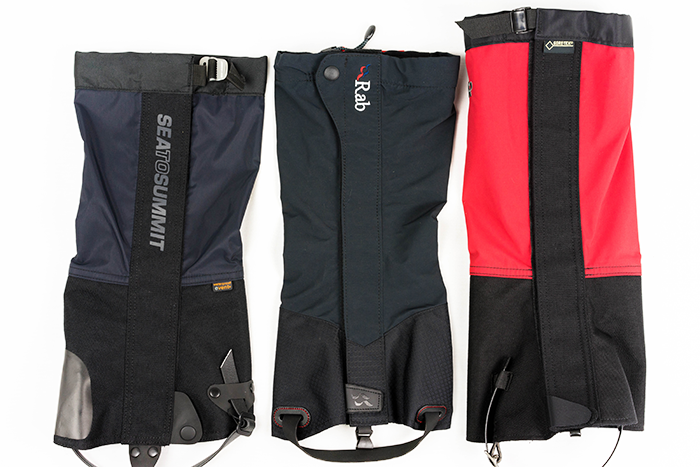
A photo of two M-size gaiters lined up. The OUTDOOR RESEARCH one on the right is clearly a size larger
By the way, some brands offer variations based on gender, and in these cases, the women's models are slightly shorter than the men's models and have more room in the calf area, making them easier to fit for women
Gaiter upper fit
While short gaiters for running often don't have these features, long gaiters, especially those used during snowy seasons, feature straps or drawcords to prevent slipping down and fill any gaps at the top. If these are not tight enough, the gaiters will likely slip down, allowing foreign objects to get in and reducing comfort, so be sure to check them carefully. Gaiters that simply have rubber woven into them will stretch over time. While elastic drawcords are the most common way to adjust the fit, they aren't ideal due to the durability of the rubber and the tendency for excess drawcord to get caught on the outside when tightened. Of course, preference is a factor, but the type I personally find most convenient is a tape strap type that allows for free length adjustment . This allows me to tighten them with confidence, knowing there's no excess loose material and they won't wear out from being pulled too tight.
lace hook
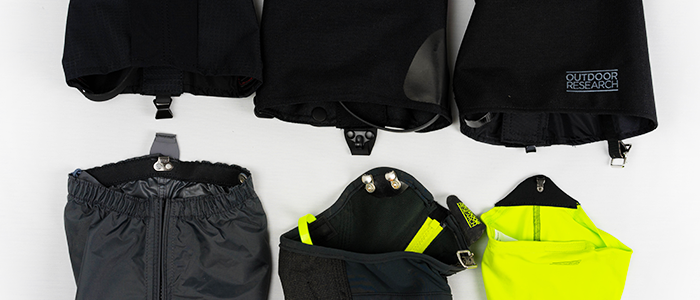
Almost all gaiters have hooks to secure the gaiter in place over the protective instep of the shoe. While there's no problem with any shape, you should check that the hook isn't too long and loose, or too short and exposing the instep when you wear it with your shoes
8 recommended gaiters for beginners and those with strong legs
Finally, based on the points mentioned above, we will introduce our favorite models that our editorial team is currently using (or plans to use this winter) based on their purpose and use
Recommended for trail running and fastpacking
OUTDOOR RESEARCH Ultra Trail Gaiter


These lightweight short gaiters offer excellent fit and mobility, with a cleverly designed design that places highly breathable stretch material in the body and durable Cordura nylon in the sides, which are prone to friction. Their practicality is easy to imagine, as they were inspired by prototypes designed for adventure racing. Features like reinforced lace hooks, a drawcord at the top to prevent slippage, and a non-slip silicone print and Velcro on the inside of the heel not only make them lightweight, but also provide excellent abrasion resistance and a secure fit even with extended wear. While only moderately waterproof, these gaiters combine the lightweight and breathable qualities needed for trail running with the protection demanded by fast hikers, making them ideal for a wide range of active outdoor sports. While they generally pair well with low-cut shoes, they also work well with mid-cut shoes
Mountain Hardwear Scree Gators

These short gaiters are also designed for breathability and mobility, and are perfect for keeping out pebbles and mud during snow-free seasons. While they are slightly less stretchy, the three-dimensional cut provides a great fit. You can't expect them to be particularly durable, but their simple construction and ultra-lightweight design make them ideal for endurance sports like trail running. While these are short, they are slightly larger and can be used with mid-cut boots, making them highly versatile. If you don't mind wearing them exclusively for low-cut boots, the same brand's Seta Running Gaiters are a good choice
Recommended for protecting against pebbles, rain, and mud when hiking in the snow-free season
THE NORTH FACE Hyvent Short Gaiter




For relatively light hikes, short gaiters are convenient because they prioritize waterproofing over mobility. This model uses TNF's proprietary waterproof and breathable material, HYVENT, and unlike other brands, the waterproof zipper and top flap provide excellent waterproofing to protect your shoes from heavy rain. The straps on the soles are made of thin, flat resin that minimizes bumps when walking and are easily adjustable with a buckle. With details like a zipper on the side, these short spats are well-made and highly recommended
A well-balanced design that can be used all year round for light activities
OUTDOOR RESEARCH Endurance Gaiter

This is the model I personally use for trekking in the snow-free season. It may look a little rugged, but when you put it on, the diagonal zipper and three-dimensional cut fit your feet perfectly, allowing you to walk naturally without any stiffness. The drawcord at the top also prevents the boots from slipping down while walking
The opening and closing is done with a zipper and Velcro, so you can put them on and take them off while wearing your shoes. Some people may find it difficult to put them on and take them off, but the zipper has the added benefit of making them less likely to lose their shape and open
In terms of functionality, the soft shell material provides excellent mobility and breathability, while the thickness and inner reinforcement provide water resistance and durability for an excellent balance. This versatile gaiter is perfect for everything from summer running and trekking to light snowshoeing in the winter, making it a highly recommended pair of gaiters for the snow-free season
Great for all occasions, from spring and summer trekking to winter mountain climbing
OUTDOOR RESEARCH Crocodile Gator

Although not suitable for running, crocodile gaiters are probably the undisputed standard among long gaiters made of waterproof and breathable material, as they are suitable for a wide range of activities, from hiking and trekking in spring and summer to serious snow-covered mountain climbing
This long-selling, classic gaiter is the origin of the brand and remains its symbol to this day. It uses 1000 denier Cordura material on the bottom to ensure high durability and reliability, while wide, easy-to-fasten Velcro fastenings and top and bottom closures to effectively prevent snow from entering make it a highly refined model that is comfortable to wear yet still has a smart silhouette
However, compared to other styles, its durability (i.e. heat retention) and longer length make it questionable whether it is easy to use in warm weather. It can be too hot when paired with long pants, so in such cases, it seems that a good style would be to wear it with shorts, which are said to be common in New Zealand, as a pseudo-long pants look
Rab Ratok Alpine Gaiters
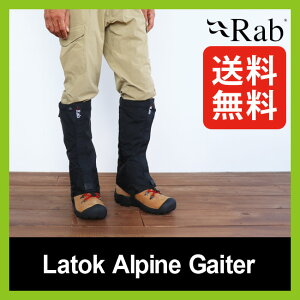

In terms of global recognition in the long gaiter market, few brands can match Crocodile Gaiters, but Rab's lightweight long gaiters successfully incorporate the best parts of the giant while adding a touch of the brand's own unique style. They use eVent, which is more breathable than Gore-Tex, and while they're a full-fledged product, they also incorporate stretch material for high mobility and a lightweight, flexible fit. They're just the right touch, and I personally recommend them
Like the Croco Gaiter, the closure is Velcro only, but the top fastens with snap buttons and a drawcord for easier operability, and the sole straps are adjustable with Velcro, making them lightweight in a unique way. However, they are less durable and abrasion-resistant in many ways, so if you plan to wear them hard in the winter, the Croco Gaiter may be a better choice. Note, however, that the sizing is slightly smaller (shorter) than the Croco Gaiter
SEA TO SUMMIT Quagmire Gator

SEA TO SUMMIT is a relatively new Australian brand that originally produced stuff sacks and various accessories. While a latecomer to the gaiter industry, they offer a well-balanced lineup of excellent long gaiters, from lightweight to expedition use. Among them, the Quagmire Gaiter offers a perfect balance of lightness and durability. Simply put, it's lighter than the OR Croco Gaiter and tougher than the Rab Ratoq Alpine Gaiter. The lower part is made of high-strength Codra nylon, the upper part is made of eVENT. The upper closure features an easily adjustable hook and strap, the lower Velcro closure is easy to fasten with a snap button, and the lace hooks are easy to hook. I found it to be significantly more user-friendly than the Croco Gaiter in many small ways. The size is still a size smaller than the Croco Gaiter, so caution is advised when using it in the snowy season
Recommended for hiking in Japan's snowy winter mountains
ISUKA Gore-Tex Long Gaiter

This flagship gaiter model is produced by a brand that has long been trusted for its winter mountaineering gear, especially its sleeping bags. Designed for Japan's snowy mountains, where deep, wet snow is often shoved into the snow, the closure uses both a zipper and Velcro, and the lower boot is wrapped in elastic rubber to prevent snow from seeping in. This philosophy, cultivated through field experience, will truly shine in Japan's winter mountains. With its high cost-performance ratio and relatively slim silhouette, this is a recommended item not just for its functionality
Related reading