table of contents
What are the two new Kenko anti-vibration binoculars, "Cellarto"?

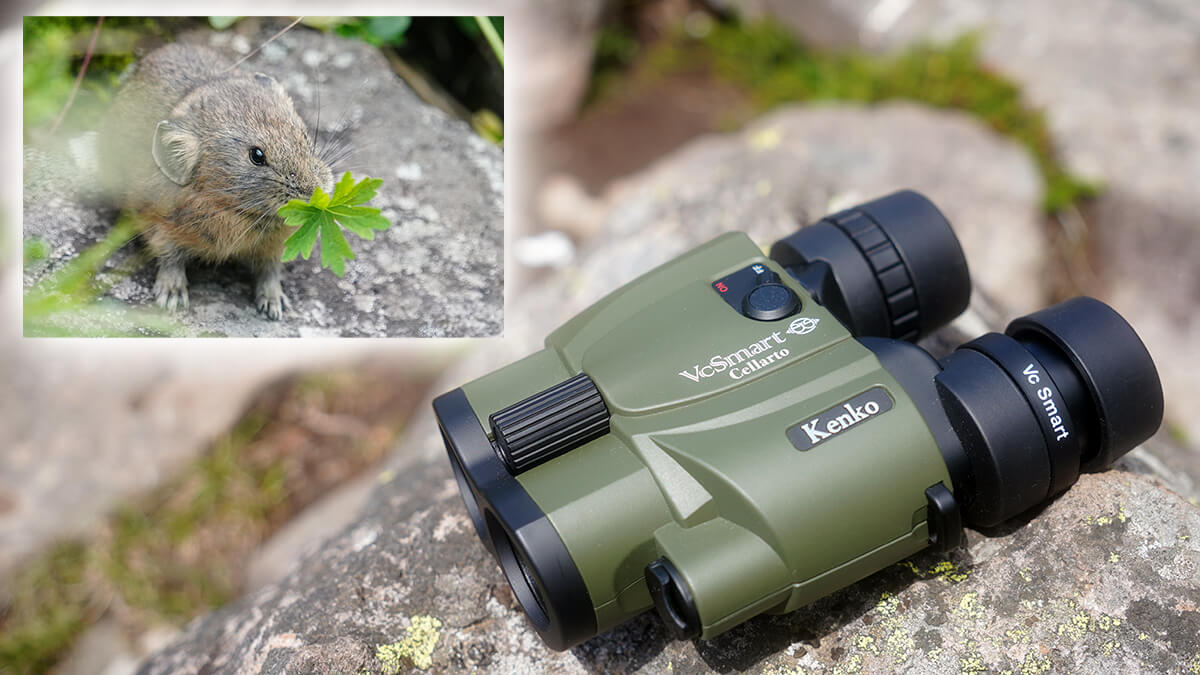
The VC Smart 10x30 Cellarto WP features a distinctive sand green body color and is said to automatically select the optimal vibration reduction mode depending on the type of shake
The Cellarto series automatically selects the optimal vibration-reduction mode
On July 26, 2024, Kenko Tokina released two new binoculars with image stabilization, the Kenko "VC Smart 10x30 Cellarto WP" and "VC Smart 14x30 Cellarto." The actual prices are around 110,000 yen for the "VC Smart 10x30 Cellarto WP" and around 99,000 yen for the "VC Smart 14x30 Cellarto," both including tax, according to an August survey
Naturally, the two models have different specifications, but the most notable feature they have in common is the inclusion of an "automatic vibration reduction mode selection function." It's normal to have no idea what this is about, or what makes it so great. There are different types of shaking (shakes) that occur when looking through binoculars, such as "large shakes" when panning widely to track an object or when rocking on a boat, and "small shakes" that occur when observing a stationary object, and it's said that there is an optimal vibration reduction mode for each type
In contrast, previous anti-shake binoculars had one or more anti-shake modes, but the mode had to be switched manually. However, the "Cellarto" series, derived from the Latin "Celeritas" meaning "to select and switch quickly," detects any shaking of the binoculars themselves and automatically switches to the optimal mode quickly, making viewing and observation more comfortable and with higher definition. This is the "Automatic Anti-Shake Mode Selection Function."

Higashi-Nupukaushi-Nupuri is famous for being a place where you can observe pikas, one of Hokkaido's cutest animals
In my previous article on this site, " Binoculars Hater Gives It a Try!: Results of Walking Through Hokkaido's Forests in Early Spring with Waterproof Kenko VC Smart 10x30WP Anti-Vibration Binoculars," I was amazed at the effectiveness of anti-vibration binoculars, and now it feels like a new, most powerful addition to the anti-vibration binoculars lineup has been added.
The VC Smart 10x30 Cellarto WP is a fully waterproof outdoor model with 10x magnification, while the VC Smart 14x30 Cellarto is a lightweight, compact model with 14x magnification that's perfect for concert use. Naturally, I chose the outdoor-oriented Kenko VC Smart 14x30WP and spent half a day climbing Higashi-Nupukaushi-Nupuri in Hokkaido to observe pikas, hoping to see the power of its image stabilization mechanism in action
Recommended points
- For the first time, it felt clearer than a camera viewfinder
- Allows stable and comfortable observation of subjects for long periods of time
- Completely waterproof for peace of mind in case of sudden rain
- Approximately 28 hours of continuous operation on a single AA alkaline battery, approximately three times longer than previous models
- Sand green coloring enhances the outdoor atmosphere
- Made in Japan for peace of mind
Points of interest
- Screw-on battery cover that is likely to get lost outdoors
- It's mostly a matter of taste, but I'd like it to be under 500g
Main specifications and evaluation
| item | Kenko VC Smart 10x30 Cellarto WP |
|---|---|
| magnification | 10 times |
| Objective lens effective diameter | 30mm |
| coating | Full multi-coating, phase coating, high-reflection coating |
| Actual field of view | 5.2° |
| Exit pupil | 3.0mm |
| Brightness | 9 |
| 1000m field of view | 90.8m |
| Eye relief | 15.0mm |
| Interpupillary distance | 54 to 74 mm |
| Minimum focusing distance | 3.5m |
| Size (maximum eye width) | 147×51×124mm |
| mass | 533g |
| Material | Main body: Polycarbonate resin / Main cover: ABS resin / Eyecup rubber: NBR / Wheel rubber: ABS resin |
| Country of origin | Japan |
| Outdoor Gearzine Review | |
| design | ★★★★☆ |
| Easy to read | ★★★★★ |
| Ease of use | ★★★★☆ |
| Portability | ★★★★☆ |
| Cost performance | ★★★☆☆ |
| Satisfaction | ★★★★★ |
Detailed Review
For the first time, I felt it was clearer and easier to see than the camera viewfinder
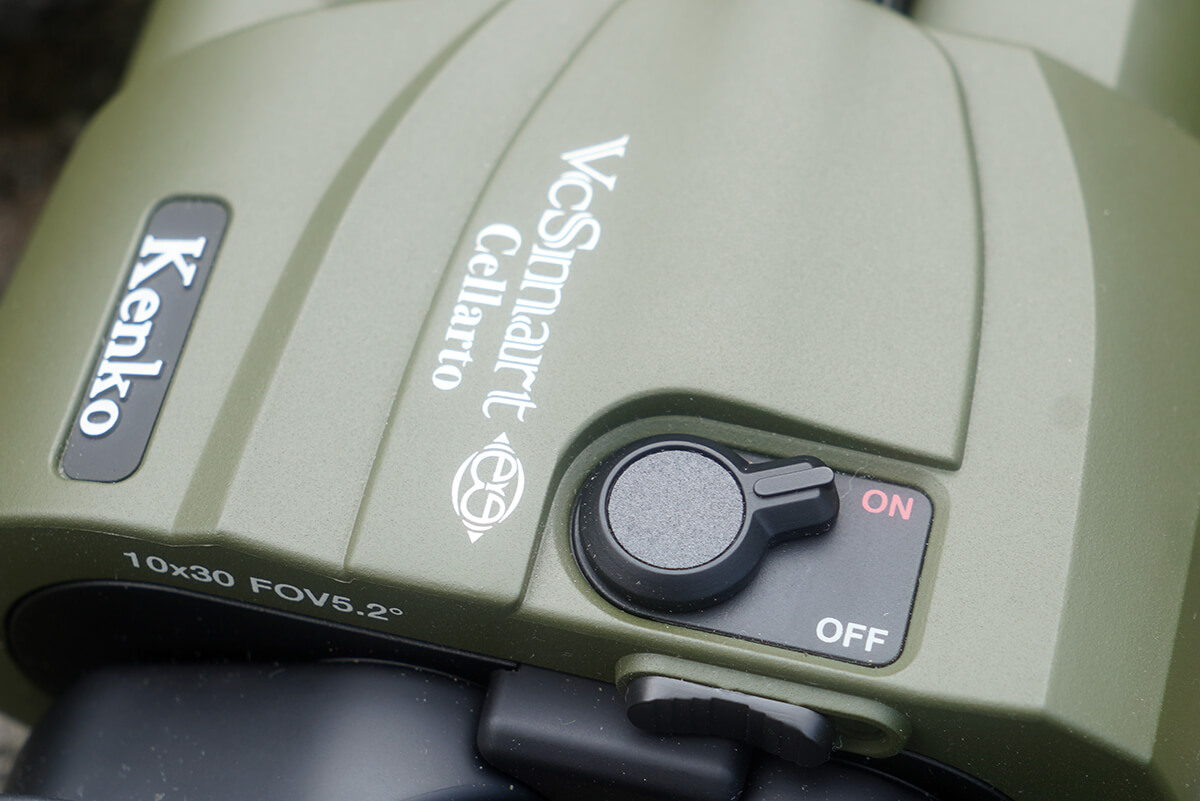
The VC Smart 10x30 Cellarto WP can handle two types of shaking (blur), and the function itself is easy to use by simply turning on the vibration reduction function
This time, I took the VC Smart 10x30 Cellarto WP to Higashi-Nupukaushi-Nupuri, a scree field famous for its pika observations in Hokkaido. However, it would be boring to just say, "I brought binoculars," so I also brought my usual equipment (camera and super telephoto lens) and took photos of the pikas
And so, this may seem like a sudden conclusion, but when I was observing pikas with the VC Smart 10x30 Cellarto WP, I realized for the first time that the binoculars provided a clearer and easier view than the viewfinder of a camera and super telephoto lens. This really surprised me
Naturally, my camera and super telephoto lens set is quite an expensive one. The camera body and super telephoto lens together cost around 400,000 to 500,000 yen, which is not cheap. What's more, super telephoto lenses are equipped with a solid image stabilization mechanism, which is standard these days. Furthermore, and perhaps because I'm more used to looking through a super telephoto lens and camera, I've never felt that binoculars provided clearer or easier images until now

Even when viewed through the VC Smart 10x30 Cellarto WP, the movement of the fine whiskers can be observed in extremely high resolution, making it easy to see and beautiful, even more so than with a camera's electronic viewfinder
However, I was surprised by the VC Smart 10x30 Cellarto WP. Many people who have used binoculars without image stabilization say that when they use image stabilization binoculars, they can see clearly and in high definition, as if a thin film had disappeared. With the VC Smart 10x30 Cellarto WP, this feeling is further enhanced, and it seems like you can see even the finest details
When observing a pika emerging from a gap in the rubble of piled up rock debris, the images were so clear that I could see not only its facial expressions, but also the way it took a breath before making a sound and even the movement of its whiskers. The optimal mode must have properly corrected the minute shakes that occur when observing a stationary pika. If the image stabilization is turned on, the binoculars themselves handle everything, so there's nothing I have to do..
In my case, I use a mirrorless camera, and the image in the viewfinder is displayed on an electronic viewfinder with approximately 3.7 million dots, but compared to the image I was viewing with the VC Smart 10x30 Cellarto WP, it somehow felt grainy. This was a completely new experience for me. That's how stable, delicate, and clear the image I was seeing with the VC Smart 10x30 Cellarto WP was
10x or 14x?
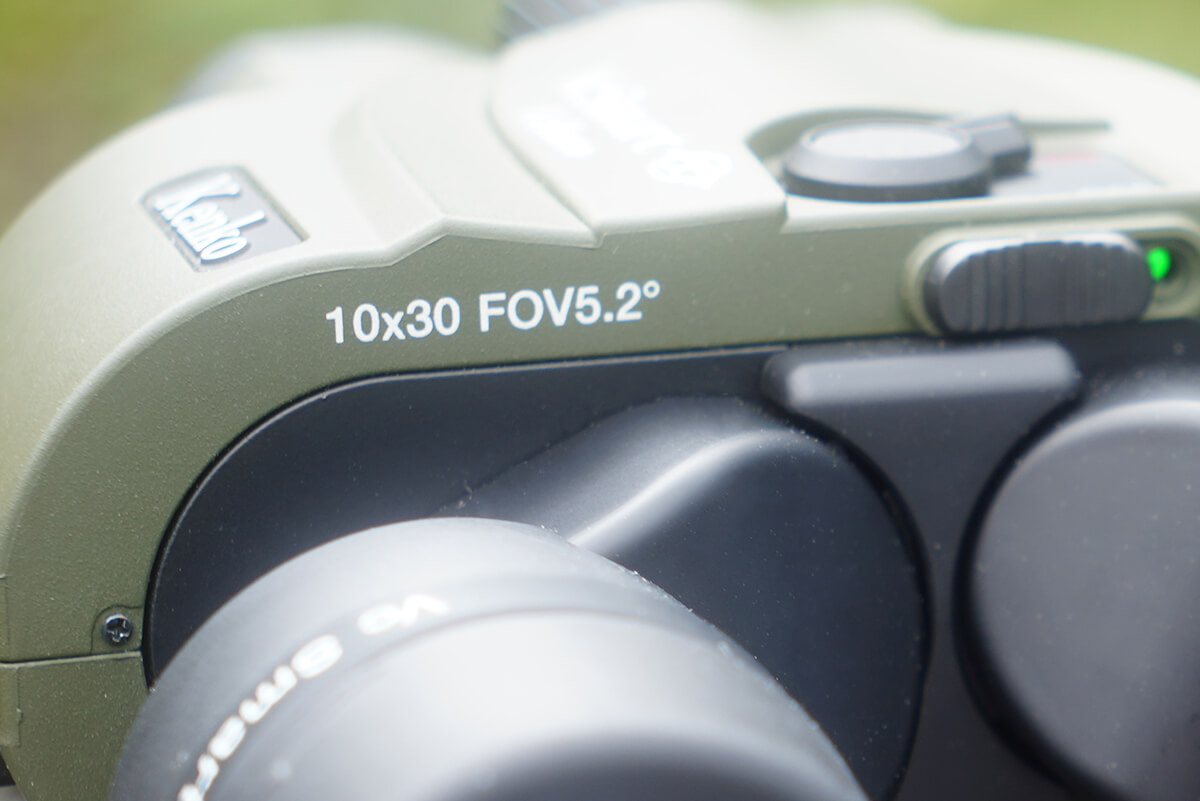
The VC Smart 10x30 Cellarto WP has a magnification of 10x. As the "WP" at the end of the model name suggests, it is a waterproof model
In the previous model, you could choose between waterproof models, the VC Smart 14x30WP and the VC Smart 10x30WP, but in the latest model, the Cellarto series, only the 10x VC Smart 10x30 Cellarto WP is a fully waterproof model, while the 14x VC Smart 14x30 Cellarto is a lightweight and compact model designed for indoor concerts and live performances, but is not waterproof
For outdoor models, I think 10x magnification is sufficient. It's often said that 10x binoculars make something 100m away appear as if it's actually 10m away, but I find this a little hard to imagine. For this reason, as someone who's used to using cameras, I find it easier to imagine and intuitively understand if someone explains that 10x magnification is equivalent to a 500mm telephoto lens, and 14x magnification is equivalent to a 700mm telephoto lens, regardless of whether it's accurate or not
The super telephoto lenses I usually use for photography are around 500mm, and once you get used to it, you can bring the subject into view quite quickly. However, when you go much beyond 500mm, it tends to be a little difficult to bring the subject into view, so I find it easier to use something around 10x

I found that a 10x magnification, or 500mm equivalent, lens was easy to use to quickly bring pikas into view, as you never know which gap in the rocks they might emerge from in the scree
Also, when panning to bring a subject into view, the large shakes are corrected well, which is quite satisfying. However, in some cases the correction was too effective, causing the screen to move a little too far and then return to its original position, resulting in a jittery movement
Because the effective diameter of the objective lens of both the VC Smart 10x30 Cellarto WP and the VC Smart 14x30 Cellarto is the same 30mm, the brightness of the VC Smart 14x30 Cellarto, which has a higher magnification, is 4.4, while the brightness of the VC Smart 10x30 Cellarto WP is 9. As a result, the VC Smart 10x30 Cellarto WP is superior for observing wildlife in dimly lit places
Considering that it is completely waterproof, so you can rest assured even in sudden rain showers, the VC Smart 10x30WP is the best choice for outdoor use. Incidentally, the fact that the VC Smart 10x30 Cellarto WP is made in Japan makes it seem more trustworthy, and I'm sure I'm not the only one who feels that way
Battery life is about three times longer than the previous model, but is auto power off a matter of preference?
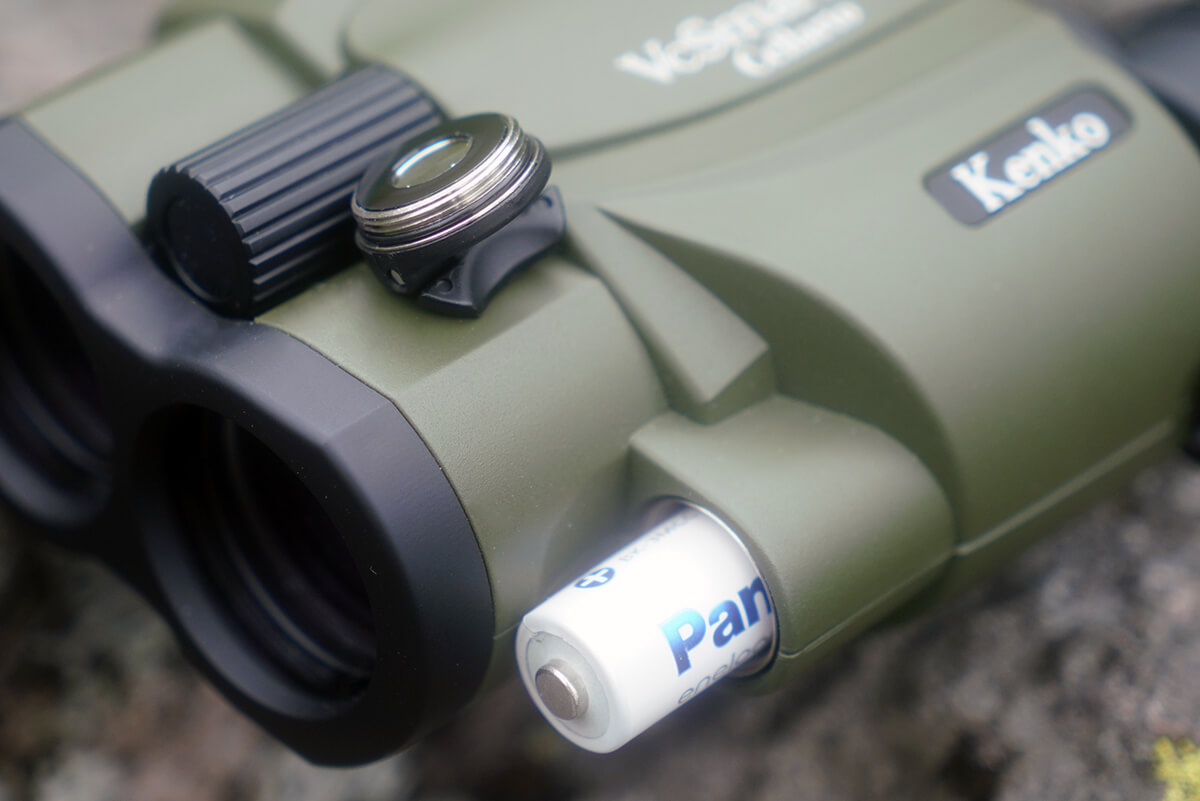
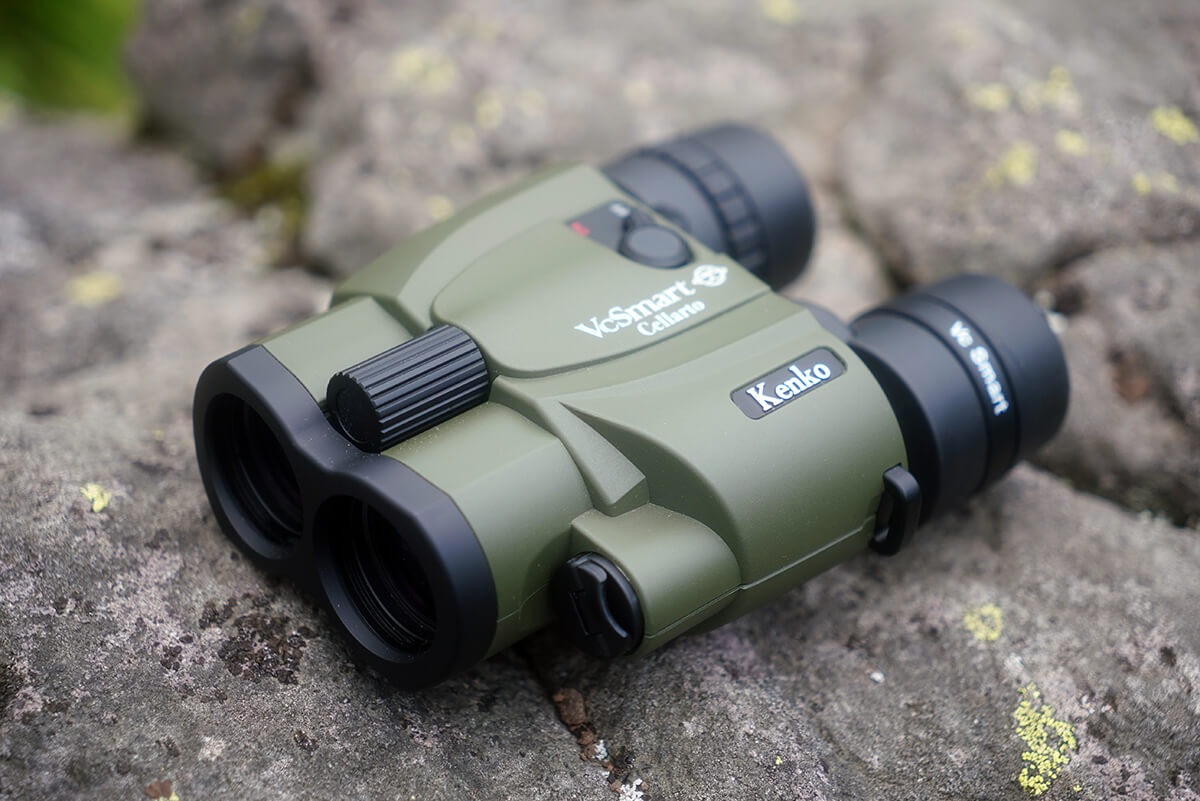
As shown in the photo, the cover for the AA alkaline battery case is screwed on and can be separated from the binoculars. Be careful not to lose it when outdoors
A major feature of Kenko's VC Smart series of vibration-proof binoculars, including the previous model, is that the vibration-proof function can be operated with AA alkaline batteries, which are easily available at convenience stores both in Japan and when traveling abroad. This is a great advantage in outdoor fields where specialized electronics stores are often not nearby. Even the VC Smart 14x30 Cellarto, designed for concert use, can easily have batteries purchased at a convenience store near the concert hall
What's more, while the previous model's vibration-proof function could run for 10 hours on a single AA alkaline battery, the new Cellarto series achieves an amazing 28 hours of operation, which is three times longer. It's a surprising improvement that the operating time has nearly tripled, even though the camera is equipped with an "automatic vibration-proof mode selection function" and has significantly improved functionality
Perhaps because the operating time has been extended by nearly three times, exceeding a full day, the previous model was equipped with an auto power off function that automatically turned off the vibration-reduction function after 10 minutes, but this function has been eliminated in the latest "Cellarto" series. Since the camera can operate for more than 24 hours on a single AA alkaline battery, it seems that the company decided that the disadvantages of having the auto power off function automatically stop the vibration-reduction function during long periods of continuous observation outweigh the advantages
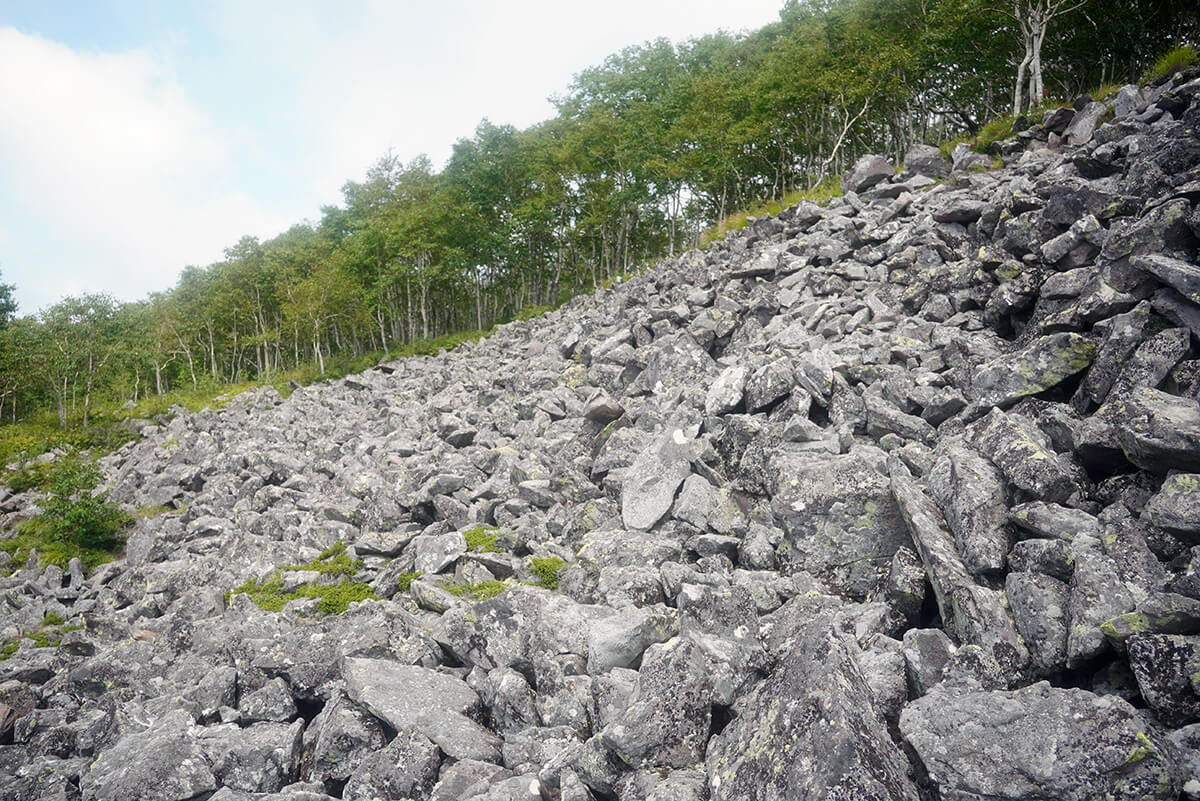
You can reach the scree slope where you can observe pikas in about an hour from the trailhead. As you can see in the photo, pikas pop out from between rocks of various sizes
Certainly, for users who go to outdoor fields or to their favorite artist's concerts on specific days, like the pika in this case, if they replace the battery with a new one before they leave, they can use it for over a day without having to worry about it running out of power even if they forget to turn it on, so this is a great benefit. On the other hand, for people who go for a walk every day to a nearby park or somewhere similar to observe wild birds for a short time, the auto power off function, which conserves battery power even if they forget to turn it off, may be more advantageous. This is largely a matter of personal preference
What bothers me personally is the battery case cover for the AA alkaline batteries. While this is unavoidable due to the waterproof design, the small screw-on cover is designed to come off the binoculars. If you were to drop the battery while changing it on a scree slope, like we did when observing pikas, it would likely roll into a gap between the rocks and get lost. If the binoculars are intended for use in the outdoor field, I feel there is room for improvement in this battery cover
The sand green coloring is nice and easy to see even with glasses
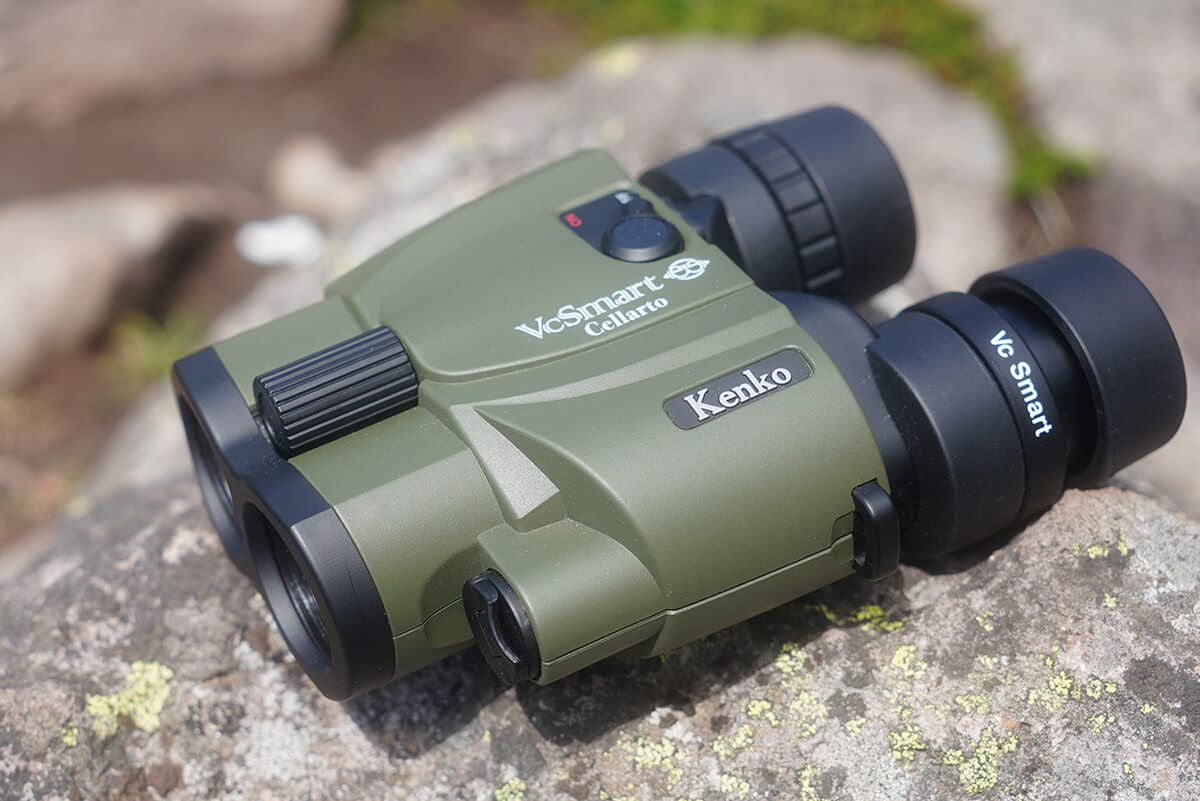
The VC Smart 10x30 Cellarto WP is equipped with an image stabilization mechanism, but is not too thick, making it easy to hold even for someone like me who has small hands
I arrived at the scree field of Higashi-Nupukaushi-Nupuri just after 9am, and spent about six hours there until just after 3pm observing and photographing pikas with the VC Smart 10x30 Cellarto WP. Perhaps it was the temperature or the noise from some kind of exercise, but there weren't many pikas around that day, and I was only able to spot them about six or seven times, at a rate of about once an hour
During that time, I looked at and held the VC Smart 10x30 Cellarto WP, and I liked the green body color more than I expected. According to the manufacturer, it's a sand green color. The more expensive the model, the more likely it is to be black, so the earthy green is a good choice for outdoor binoculars. It might be nice to have other earthy colors like khaki as an option
The previous model, the VC Smart 10x30WP, measured 147 x 51 x 124mm and weighed 535g, while the VC Smart 10x30 Cellarto WP is exactly the same size at 147 x 51 x 124mm but weighs 533g, which is somehow 2g lighter. I thought it would be great if they could shave off another 30g to bring it down to under 500g
By the way, the VC Smart 10x30 Cellarto WP weighs over 500g, but perhaps because the binoculars are designed so that they don't feel heavy at the front when held, they don't feel particularly heavy even when viewed for a certain amount of time. Also, I have small hands for an adult male, but perhaps because the battery box is placed on the side, keeping the thickness to around 5cm, they don't feel bulky or difficult to hold. I feel that this design has been refined with each successive generation of the series

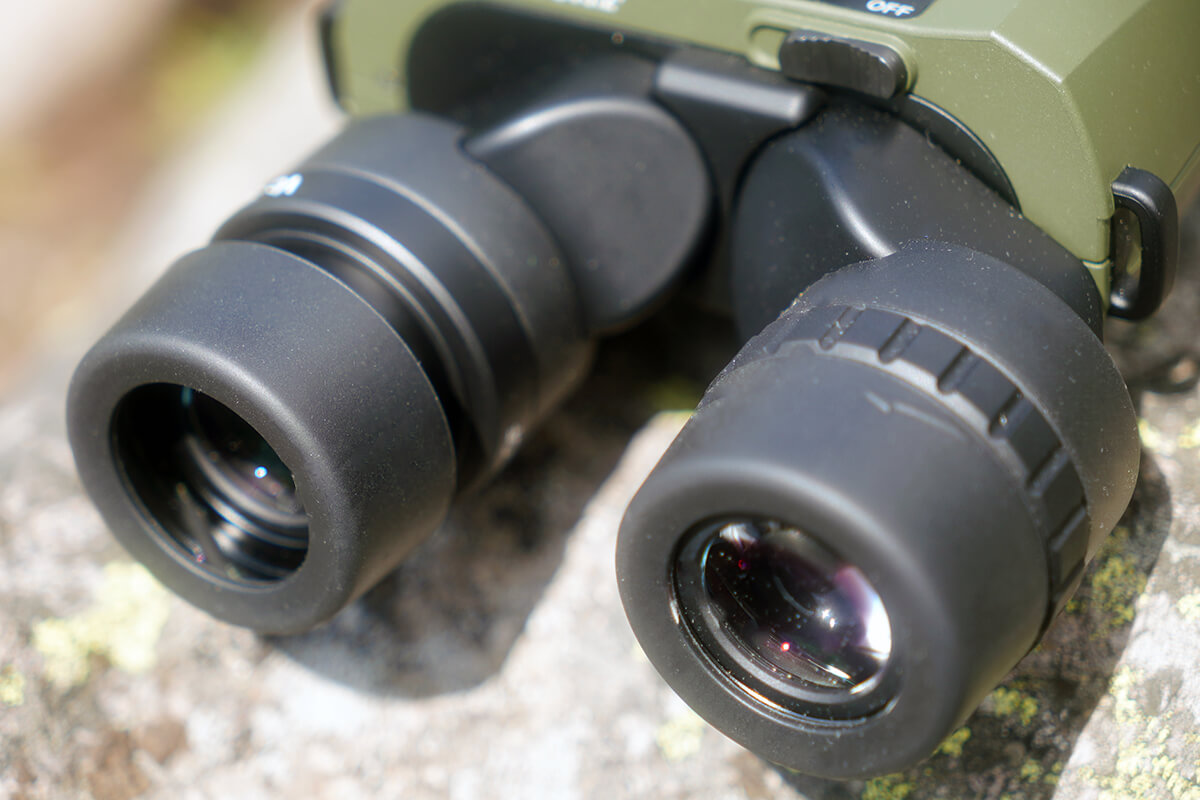
It features a twist-up eyepiece that allows you to adjust the length of the eyepiece by simply twisting it, making it easy to adjust the eyepoint
As for the ease of viewing with binoculars, I have fairly poor eyesight, and when taking photos with my camera, I often have to decide whether to adjust the diopter with or without glasses. However, when observing and photographing pikas, I need to wear glasses to check their appearance, and then observe them with binoculars or take photos with my camera, so I need to adjust the diopter with my glasses. Even in such cases, the twist-up eyepiece makes it easy to adjust the eyepoint. The eye relief, the limit at which you can see the entire field of view, has also been extended to 15mm, 1mm longer than the previous model. If a high eyepoint is defined as a point starting from about 15mm, then these binoculars meet the specifications of a high eyepoint model. This makes it very easy to view even with glasses on
Please note that to reach the scree slopes of Higashi Nupukaushi Nupuri, you need to go further in from the summit, but the entrance to this path is quite difficult to find, so be careful
Summary: If you're serious about buying binoculars, image stabilization is now a must
The "Automatic Anti-Shake Mode Selection" function, which corrects for the nature of the shake, is excellent
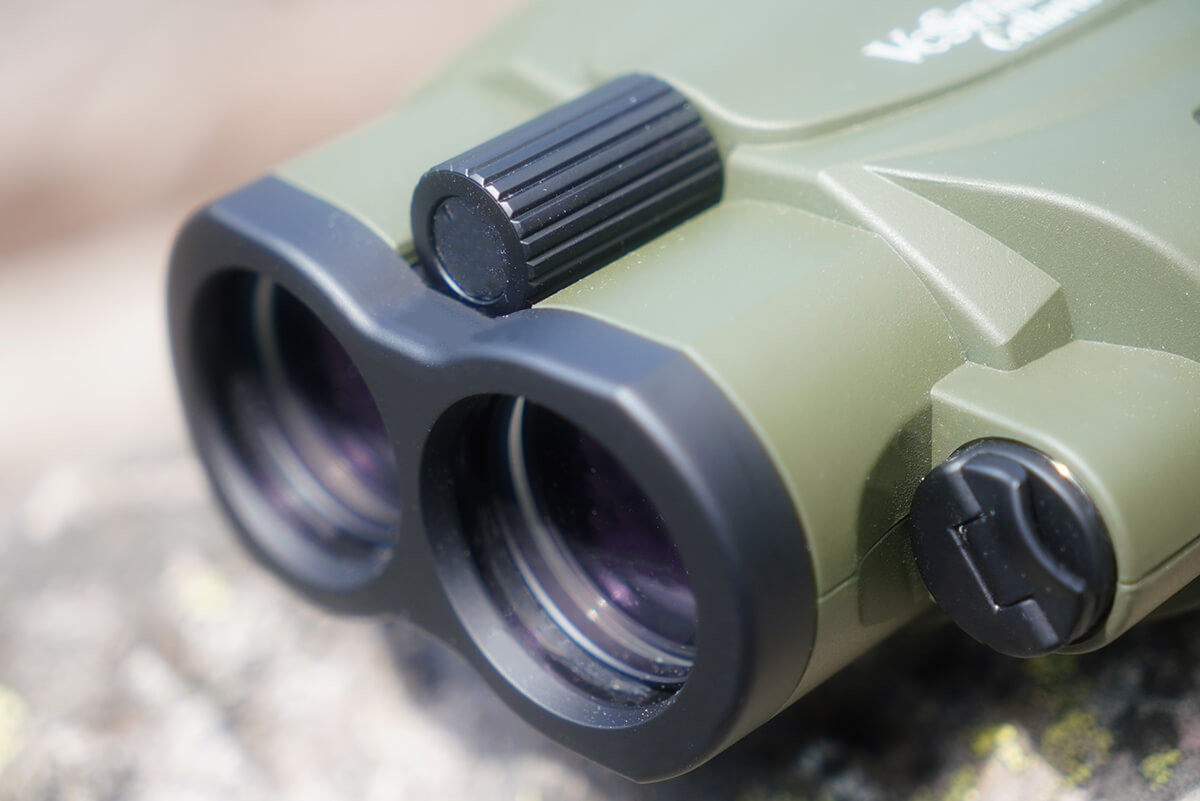
The focus ring of the VC Smart 10x30 Cellarto WP is located near the tip of the lens, and I personally feel that it operates more smoothly than previous models
As someone who has been into digital cameras since the 20th century, I find it puzzling that optical products with a focal length of over 500mm don't have image stabilization. In the camera industry, over the past quarter century or so, image stabilization has evolved from interchangeable lenses to the image sensors in the camera body, and now image stabilization in both interchangeable lenses and the camera body has become the norm
The Cellarto series' new automatic vibration reduction mode selection function can now address multiple types of shake problems, a problem that has been plaguing cameras and solved with image stabilization. The fact that these issues have been resolved is likely why I feel the VC Smart 10x30 Cellarto WP offers higher resolution and is easier to see than the electronic viewfinder display of a camera and lens that costs nearly 500,000 yen in total. However, I also feel that there is a limit to the number of dots on a camera's electronic viewfinder display
It's safe to say that it's now almost impossible to attach a telephoto lens to a digital camera and have the image stabilization (anti-shake) function not function. Twenty years ago, only a few cameras had it, and it was said that it would result in a drop in image quality, but now it's a given. It's now so common that it's treated like power steering or ABS in cars

It's probably a young pika. Looking at the pika through the VC Smart 10x30 Cellarto WP makes me feel like my heart is somehow lighter
The image stabilization (vibration reduction) function in binoculars is so overwhelmingly effective that it is certain to become an essential feature in the future. In particular, the "Cellarto" series, which automatically adjusts to both large and small shakes when observing an object with binoculars, is likely to become the standard in the future. It is true that they are still more expensive than regular binoculars, but if you are seriously considering purchasing binoculars for your hobby, you should definitely try out the latest model of the vibration-reduction binoculars in the "Cellarto" series
By the way, Kenko Tokina's website also an online service purchasing, so you might want to start by trying out vibration-proof binoculars such as the VC Smart 10x30 Cellarto WP.
Kenko "VC Smart 10x30 Cellarto WP" details and purchase information
For more product details, please visit the Kenko Tokina official website
Please consider a paid membership to support the site while enjoying exclusive offers and content!
Chitose Saito


Related reading