Even mountain climbing and hiking in the great outdoors carry the risk of becoming incapacitated, and are closely related to survival. In fact, it is now common for people to carry emergency sheets and whistles when going mountain climbing in case of an emergency
SOL is an American survival gear brand whose name means "survive outdoors." They offer a wide range of items, including emergency sheets. (SOL is an abbreviation for Survive Outdoor Longer.)
This time, we will compare and test the ``Escape Vivi'' series made by SOL, which at first glance looks like a sleeping bag, to see if it can be used in mountain climbing and hiking scenes
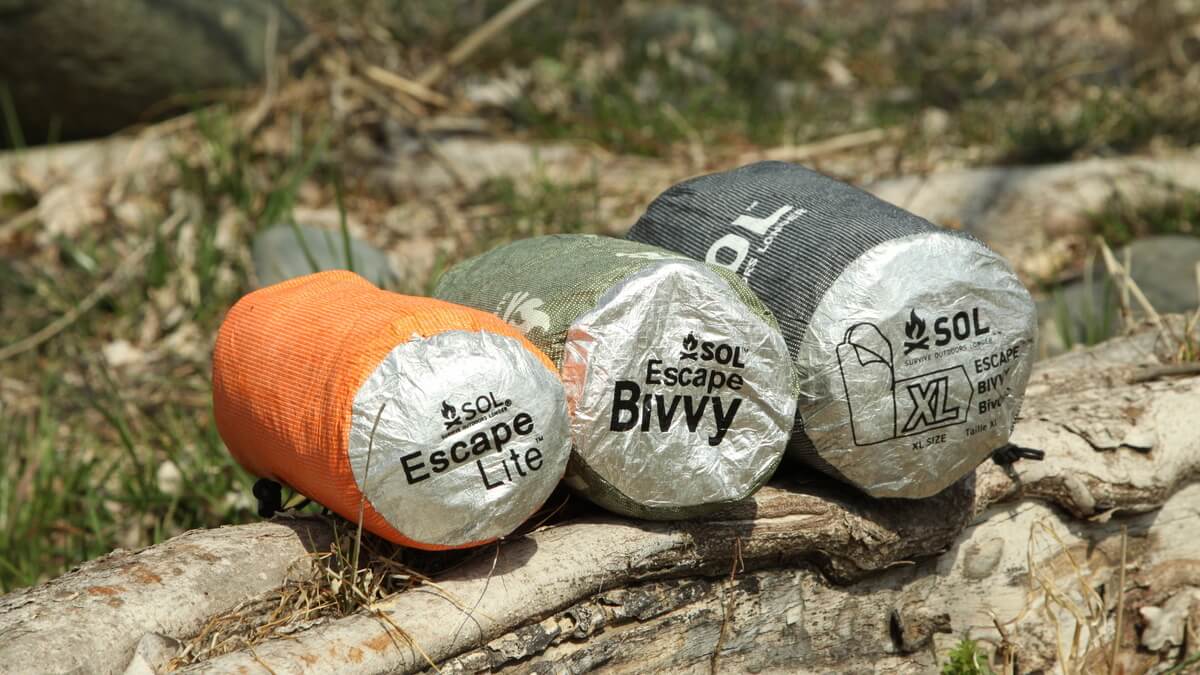
We'll be comparing three models: the New Escape Vivi , the Escape Lite Vivi , and the Escape Vivi XL . After testing them in the field, we discovered that not only are they versatile, but their individual characteristics, which weren't apparent from specs alone, also became clear, revealing that the best choice will vary depending on the application. We hope this article will be helpful for anyone unsure which Escape Vivi model to choose.
table of contents
- Main features of the Escape Vivi series
- SOL Escape Vivi 3 models
- Main specifications and evaluation
- Comparison of comfort of the three models
- Here's how to use this model:
- If you want to sleep in hot weather with just the inner sleeping bag, try the "Escape Lite Vivi."
- If you want to use it practically as a sleeping bag cover, try the New Escape Vivi
- "Escape Vivi XL" is an all-in-one sleeping mat and sleeping bag for camping in tents or tarps in low-temperature environments
- Conclusion and summary: It's not perfect, but having some quirks makes it more interesting as a "tool." For those people, I recommend the Escape Vivi
Main features of the Escape Vivi series
The Escape Vivi series, a lineup of warmth and protection for incapacitated individuals, features a structure that allows people to enter. Made with breathable, weather-resistant materials, it wicks away moisture and keeps you comfortable. The aluminum-coated interior reflects up to 70% of body heat, keeping you warm. The 42gsm polyethylene nonwoven fabric is durable and reusable
This item is breathable, warm, and windproof, yet lightweight and compact for easy portability
How it differs from an emergency seat and how to use Escape Vivi

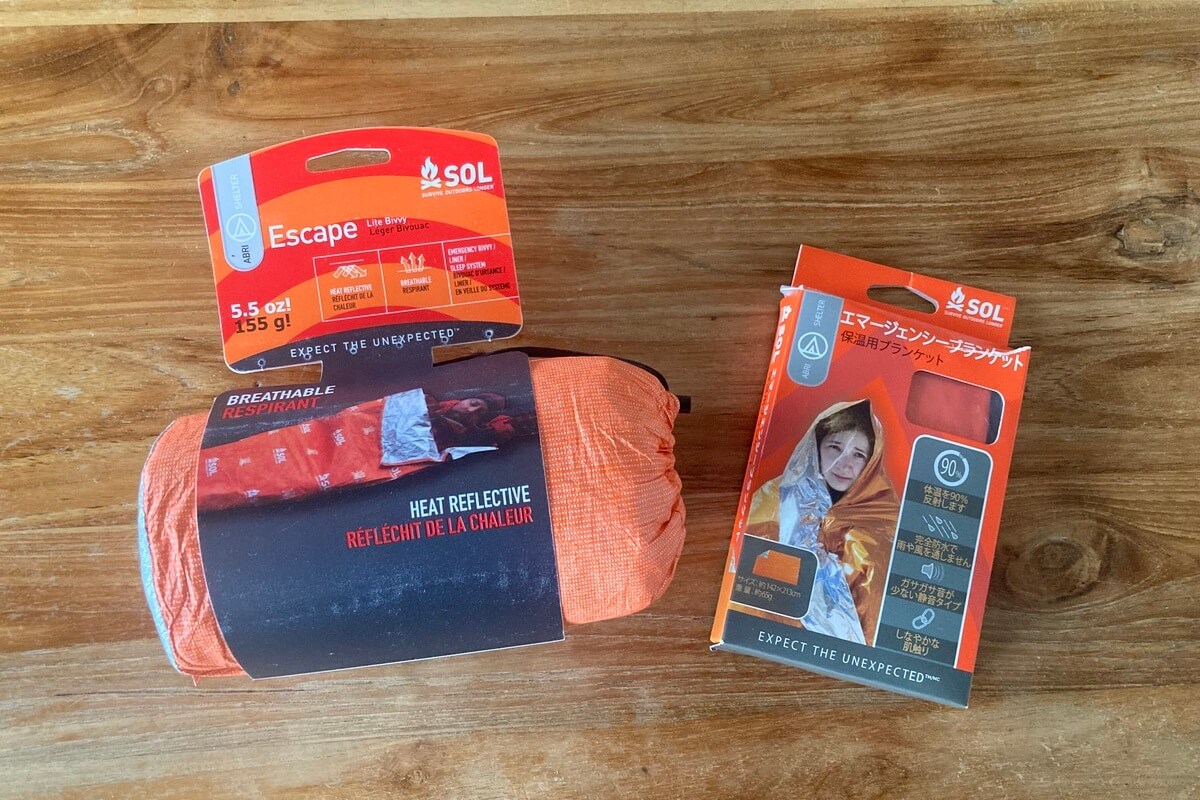
Escape Vivi on the left, Emergency Blanket on the right
Emergency sheets are commonly carried when hiking in case of an emergency, but the difference lies in the material they are made of. Emergency sheets are very compact and portable, and reflect approximately 90% of body heat, but they are not breathable and are made of very thin, weak materials. They come in several shapes, including blanket, sleeping bag, and poncho types, and, as the name suggests, are intended for use in emergencies. On the other hand, Escape Vivi reflects approximately 70% of body heat, maintains its emergency functionality, uses breathable fabric, and comes in envelope or mummy-style sleeping bag shapes. While they are slightly larger when stored than emergency sheets, they are made of a strong nonwoven fabric and can be reused
The Escape Vivi was designed as survival gear, but its envelope-style and mummy-style sleeping bag designs make it highly versatile. Rather than carrying it as an emergency bag, it's more commonly used as a cover for a sleeping bag or to boost its heat retention. An interesting idea is to carry it as an emergency item while also using it as a pack liner for a backpack, allowing it to serve multiple purposes and reduce the amount of equipment you need and make it lighter, making it a popular item that's also popular with UL-oriented hikers
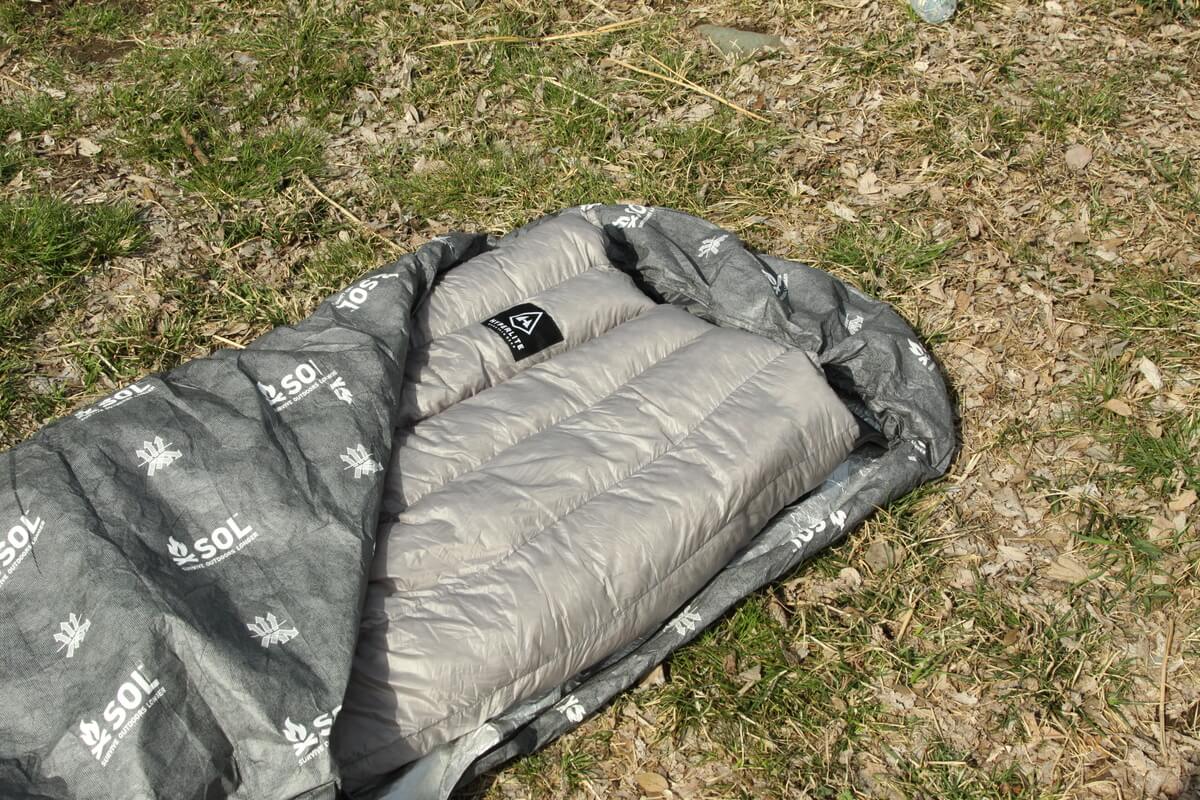
You can also use it as a cover by putting a sleeping bag inside
SOL Escape Vivi 3 models
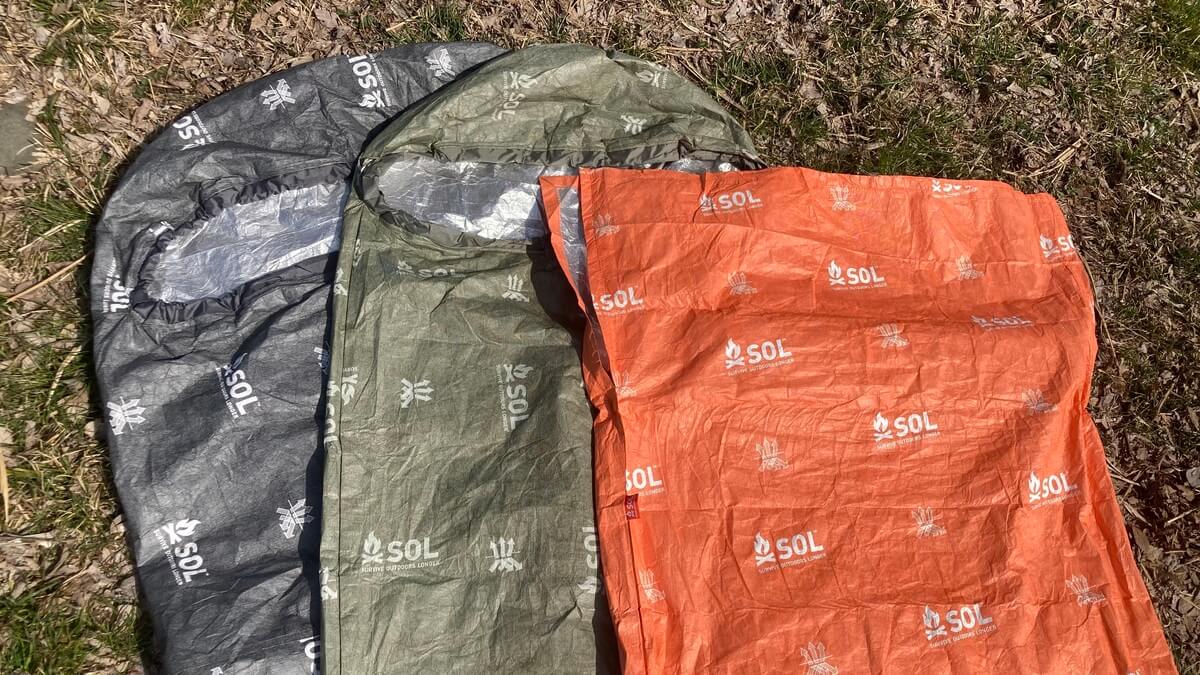
From the right: Escape Light Vivi, New Escape Vivi, Escape Vivi XL
The Escape Lite Vivi is a simple envelope-type bag without a zipper or hood, and is the lightest and most compact in the series. Its small size and light weight make it easy to slip into a backpack.
The New Escape Vivi is a mummy-style Vivi that features three-dimensional stitching to completely cover the entire body. It is a highly practical and versatile model with features such as an easy-to-enter zipper and a hood with a drawcord.
The Escape Vivi XL also a mummy type, is a slightly larger version of the Escape Vivi. This model was created in response to strong user demand, and is spacious enough to fit one adult and even include a mattress inside.
For convenience, since the full names would be too long, from here on we will abbreviate them to Escape Lite ," " New Escape, " and " Escape XL
Main specifications and evaluation
Before we get into the details of the test results, we've put together a comparison table below of catalog specifications and field test results for those who want a quick rundown of the conclusions
The evaluation criteria were set as follows: Five indicators were set, and a rating was given out of 5 stars. This rating is not based on published specifications, but is a unique evaluation based on field testing
- Comfort: Comfort when inside, spaciousness, etc
- Heat retention: High heat retention performance
- Resistant to stuffiness: Reduces the discomfort caused by stuffiness when sleeping inside
- Versatility: Uses and versatility when viewed from multiple angles
- Portability: Compare weight, compactness, etc
| Escape Light Vivi | New Escape Vivi | Escape Vivi XL | |
|---|---|---|---|
| Body size |
Approximately 78 x 208cm |
Approx. 81 x 213cm | Approximately 98 x 221cm |
| Storage size | Φ8 × 15cm | Φ10 × 15cm | Φ12 × 20cm |
| weight | 156g | 227g | 280g |
| Material | 42gsm polyethylene nonwoven fabric with aluminum vapor deposition | ||
| color | orange | Orange/OD Green | gray |
| shape | Envelope type | Mummy type | Mummy type |
| maximum heat reflection | 70% | ||
| zipper | none | can be | can be |
| Reference price (tax included) |
¥8,580 |
¥12,980 | ¥15,180 |
| Outdoor Gearzine Review | |||
| Comfort | ★★★★☆ | ★★★★☆ | ★★★★★ |
| Heat retention | ★★★★☆ | ★★★★☆ | ★★★☆☆ |
| Resistant to stuffiness | ★★★☆☆ | ★★★☆☆ | ★★★★☆ |
| versatile | ★★★☆☆ | ★★★★☆ | ★★★★☆ |
| Portability | ★★★★★ | ★★★★☆ | ★★★★☆ |
Comparison of comfort of the three models
From here, we'll compare the differences between each model. Let's actually use them in the field and see what the differences are in terms of comfort
Differences in shape and size affect comfort
All Escape Vivi sleeping bags are bag-style, but upon closer inspection, there are differences in their shape: the Escape Lite is envelope-style, while the New Escape and Escape XL are mummy-style. The envelope-style Escape Lite has no zipper or hood and only a fold-over flap at the opening, while the mummy-style New Escape and Escape XL have zippers for easy entry and a full-size, three-dimensionally sewn hood (with a drawcord) for increased airtightness
The New Escape and Escape XL have hoods that provide full coverage from head to toe, making them suitable for use in more severe conditions
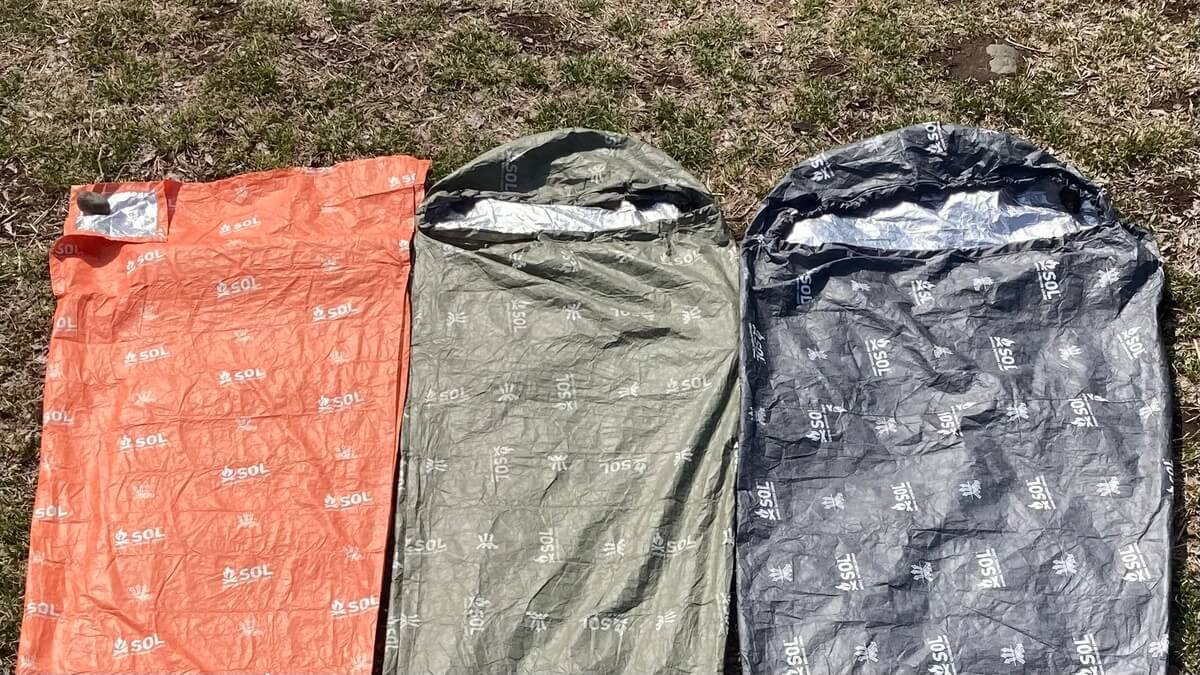
The size of the main body increases in the order of Escape Lite, New Escape, and Escape XL. The size itself is obvious if you look at the official specifications, but when you actually put it inside, there are differences in the stitching. The New Escape and Escape XL have three-dimensional stitching, so it can be used with a sleeping bag inside. The largest, the Escape XL, is particularly large, at 226 cm long and 100 cm wide, so it can also be used with a thick air mattress inside

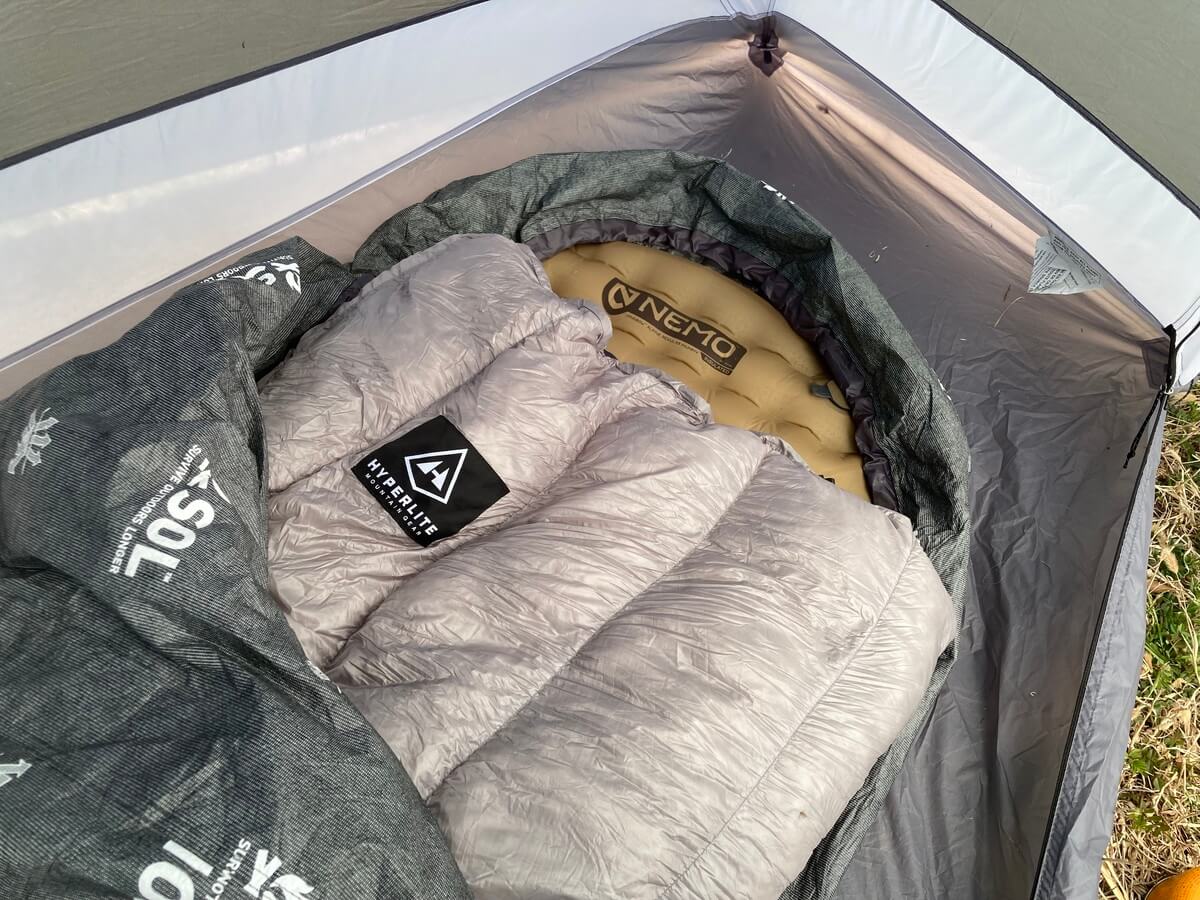
The Escape XL is large enough to fit an air mattress inside
The New Escape also has three-dimensional stitching, but it is a size smaller than the Escape XL, so it cannot fit a thick sleeping mat like an air mattress, but it can fit a closed-cell mattress.The Escape Lite does not have three-dimensional stitching, and is sized just right for one person, making it difficult to fit a thick sleeping bag inside
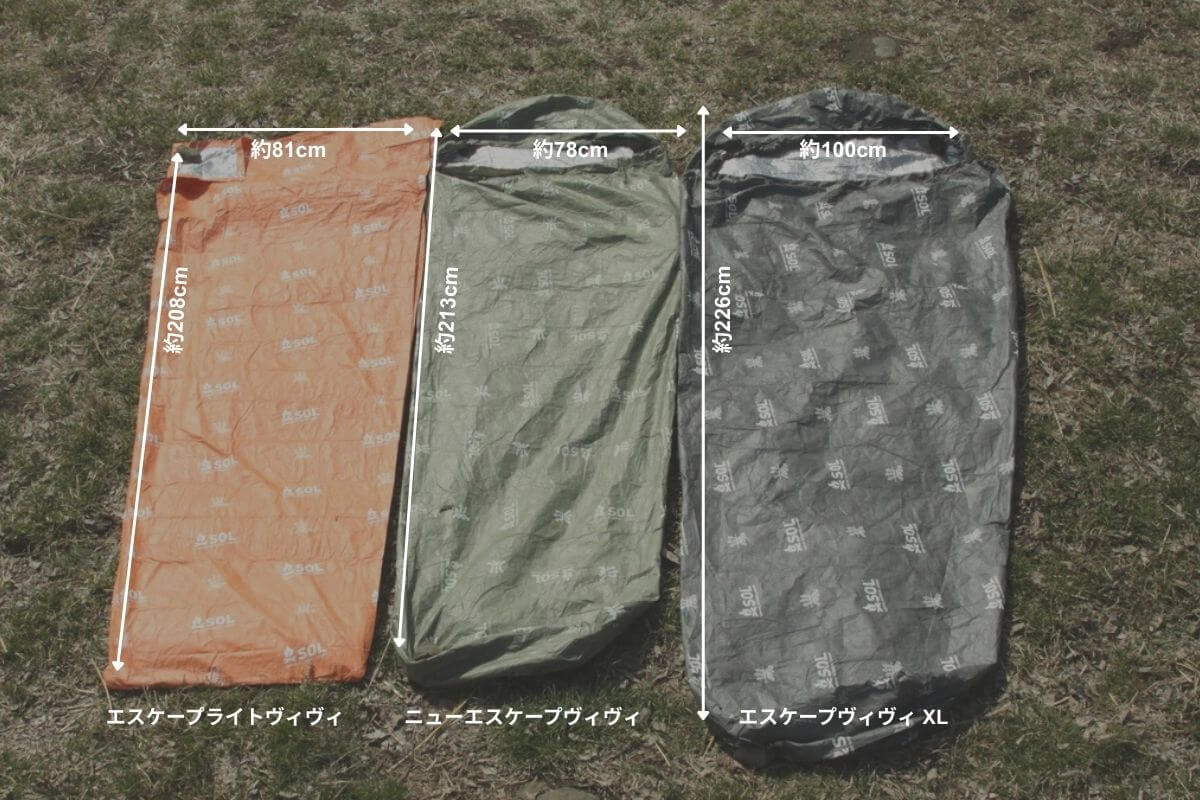
Comparing the three sizes by footbox size
When comparing the footboxes of the New Escape and Escape XL, which have three-dimensional stitching, and the envelope-shaped Escape Lite side by side, the Escape XL has more room, while the Escape Lite does not have three-dimensional stitching and has a more space-saving footbox
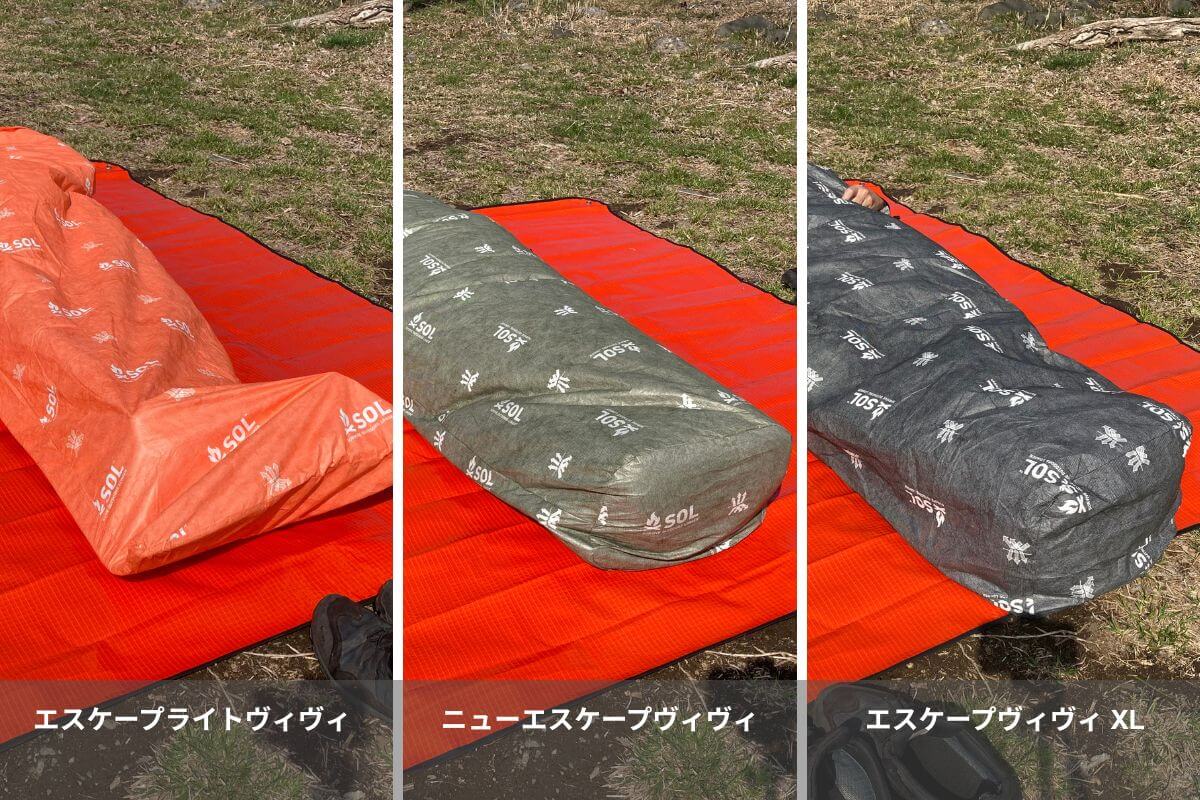
The Escape Light is not sewn in three dimensions, so the legs get tight
This difference in size becomes particularly noticeable when using a sleeping bag inside, and it is important to note that the Escape Lite, which does not have three-dimensional stitching, can interfere with the loft (fluffiness) of sleeping bags with a lot of down when used as a sleeping bag cover, resulting in a decrease in heat retention
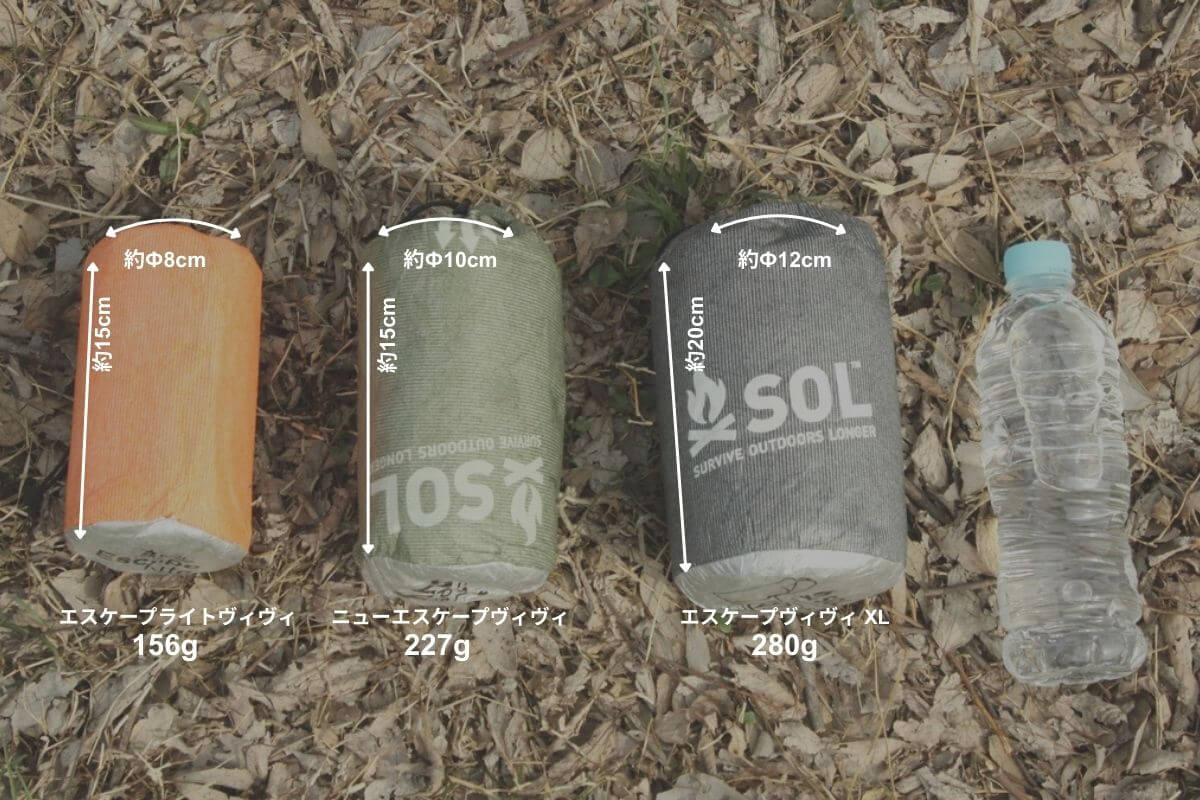
Weight and storage size comparison
The difference in size also affects weight and storage size. The most compact model, the Escape Lite, weighs 156g and packs down to Φ8 x 15cm. Since the materials used are the same, the differences in weight and storage size are simply due to the size, shape, and functionality, but even the Escape XL is lightweight at 280g. Considering that you can also fit a sleeping bag and mat inside, the best choice will depend on the intended use and environment
Comparison of usability when entering the facility in an emergency
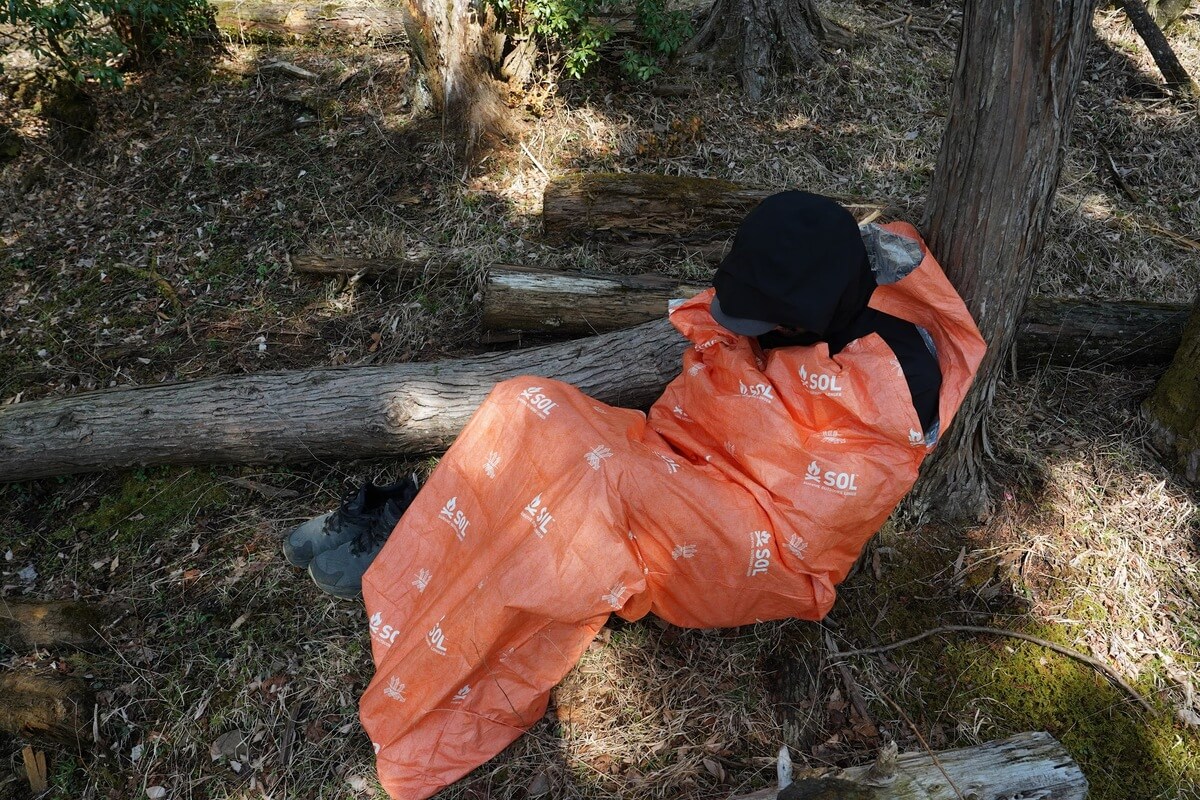
It's difficult to cover your head with the Escape Light Vivi
We actually tried out each model, imagining an emergency. The Escape Lite doesn't have a hood, so it can't completely block out wind and rain. It completely covers you, but it makes it difficult to breathe, and if you leave your face exposed, water can easily seep in through your back and shoulders, so if you wear it for an extended period of time, there's a risk of rainwater seeping in through your head
Another concern about the Escape Lite is that it is difficult to get in and out. It only has a flap, so you have to crawl under to get in, and if you were injured, it would probably be difficult to get in
The New Escape and Escape XL have zippers, making them easy to get in and out of. The Escape XL has a hood, which makes it easy to keep out the rain, but because it's larger, it doesn't feel as warm when you get inside compared to other models. That's not to say it's bad for use in an emergency, though; in fact, its larger size means you can get inside even while wearing a backpack, which may be a good point in case of an emergency
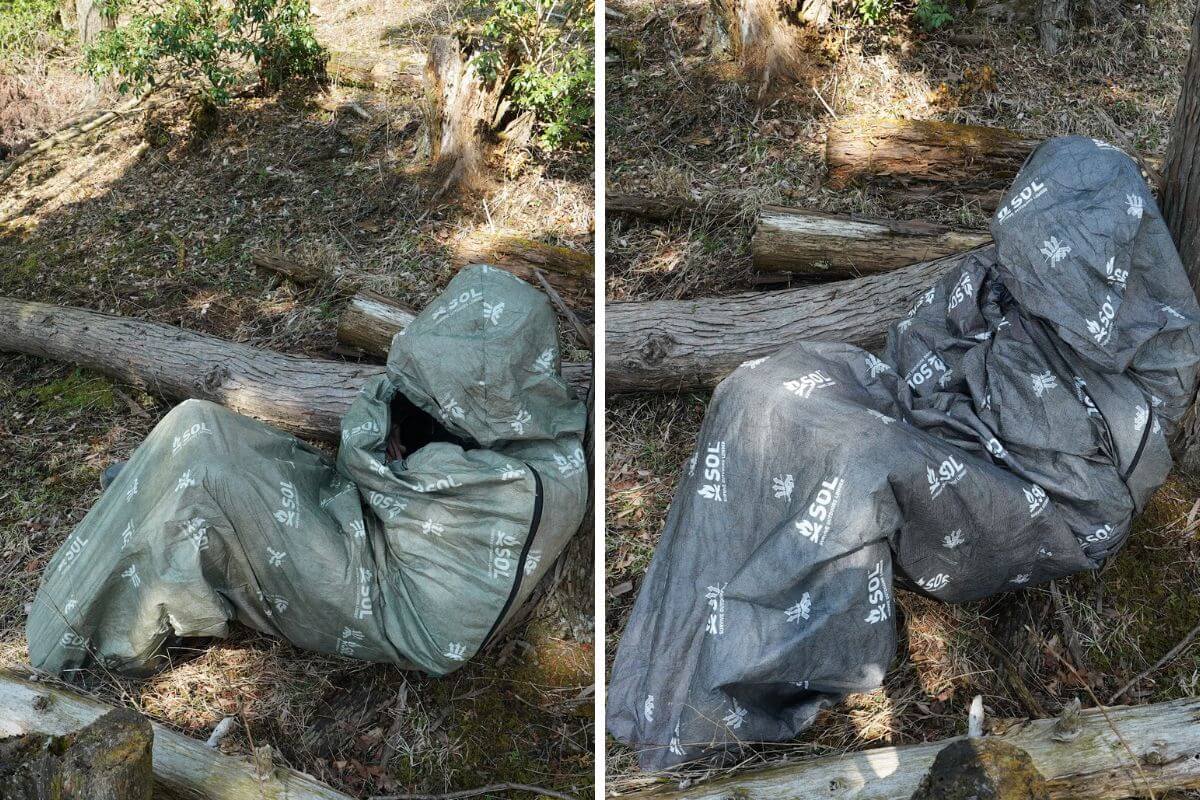
Mummy types that cover the whole body well provide better heat retention and weather resistance
The New Escape was the best-balanced choice for emergencies. It has a hood to keep out water, is the perfect size for one person, and is easy to use. The aluminum vapor deposition coating gives it a gentle warmth
Comparison of durability such as stitching and waterproofing
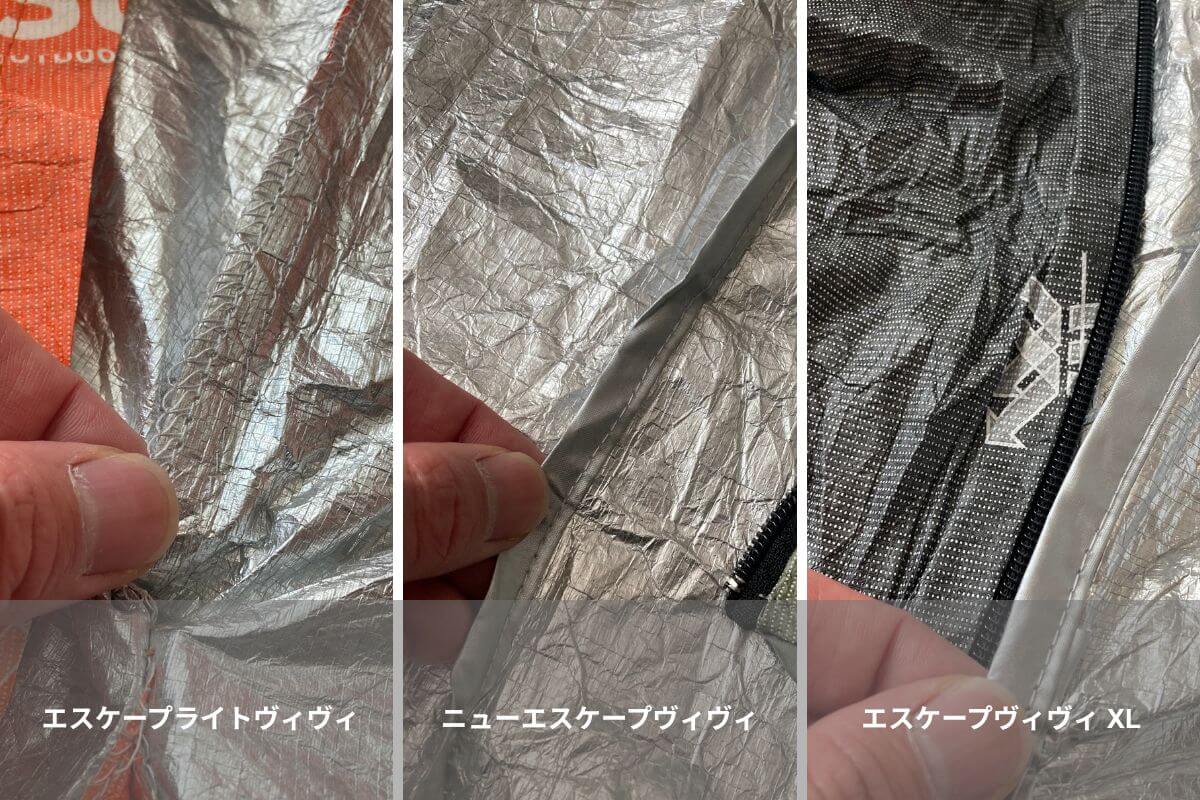
The quality of the stitching also differed
Since the materials used are the same, you might think that the only differences would be the shape, size, and weight, but upon closer inspection, there are also differences in the stitching, which has a major impact on waterproofing
If you turn it inside out and look at the seams, you'll see that the New Escape and Escape XL have patches to increase their water resistance, but the Escape Lite has left the seams unsewn
To test the waterproofness, we poured water into the seams, and the Escape Lite started leaking water quickly. The New Escape and Escape XL are not completely waterproof either, so they leaked after a while, but because they have a strong patch, the amount of leakage was less than the Escape Lite
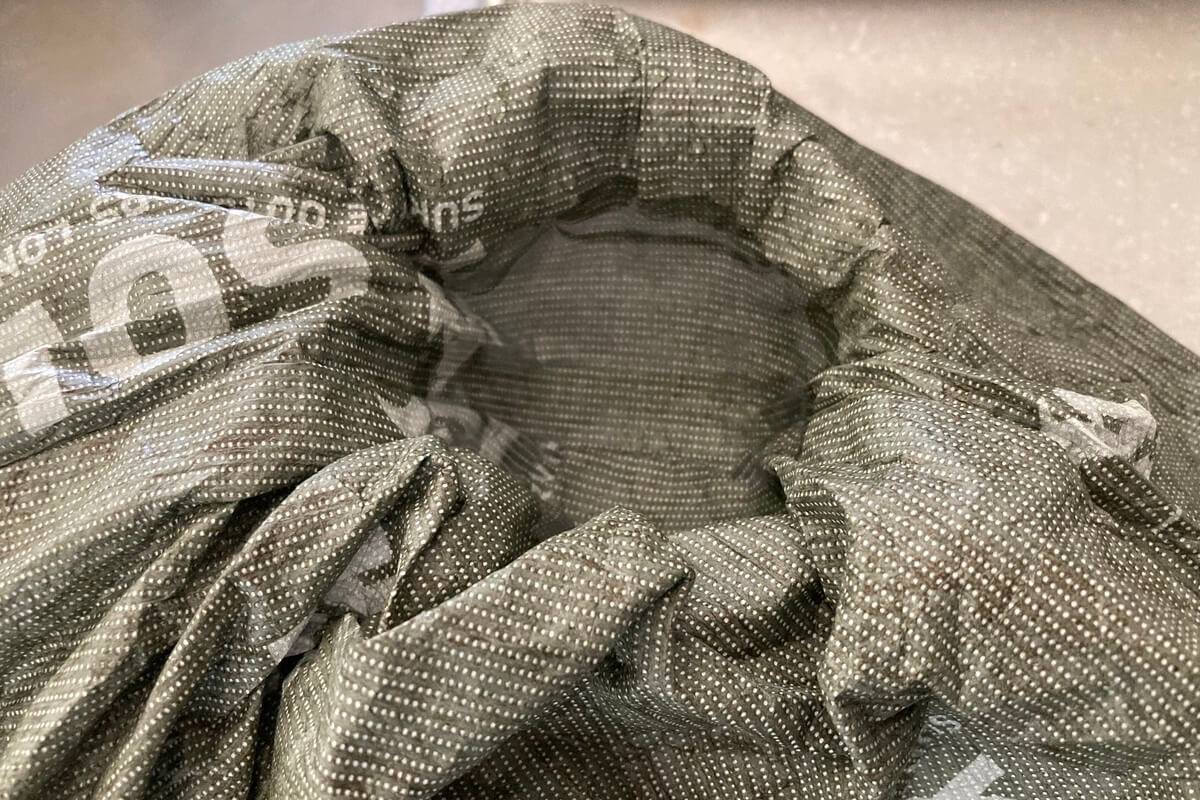
Test the waterproofness by pouring water into it
The Escape series uses a waterproof, breathable polyethylene nonwoven fabric, so it can be used as a sleeping bag cover, but caution is advised as it is not completely waterproof. The seams are not waterproofed, so rain cannot be prevented from seeping in through the seams. It is not recommended for use in situations where it is expected to get wet in heavy rain
Here's how to use this model:
After testing the three models in the lineup, their individual characteristics became clear. Here are my conclusions about the best way to use each one
If you want to sleep in hot weather with just the inner sleeping bag, try the "Escape Lite Vivi."
There are emergency blankets available to protect the body in emergencies, but when it comes to durability and performance, the Escape Lite Vivi is a much more reliable item. Emergency blankets are made of a single piece of fabric and need to be wrapped around the body, but the Escape Lite Vivi is envelope-shaped, so all you need to do is slip it under. Although it feels a little cramped, the advantage of the envelope-shaped design is that it keeps the body warm and protected in an emergency
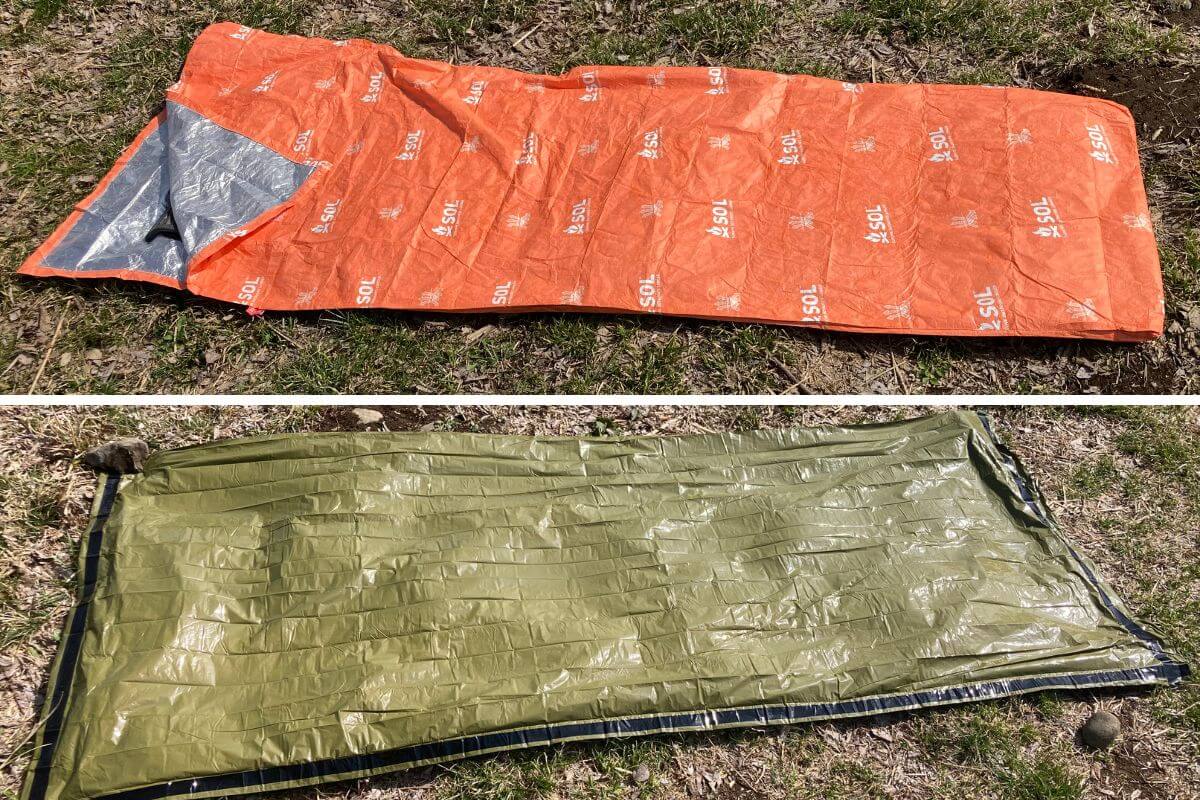
Compared to the Emergency Vivi (bottom), the Escape Lite Vivi (top) is superior in terms of durability
Because it's a simple envelope-style cover, not a three-dimensional stitched one, we don't recommend using it as a cover with a sleeping bag inside. It's particularly incompatible with down sleeping bags, as it blocks the space for the down to expand, reducing its heat retention. In places where the temperature is high and you can stay comfortable with just an inner sleeping bag, we recommend combining it with the Escape Lite Vivi to enhance weather resistance. As mentioned above, the seams are not sealed, so it's not completely waterproof. While it can be effective for protecting your sleeping bag and boosting its heat retention, if your goal is to thoroughly prevent it from getting wet, a dedicated sleeping bag cover is a better choice
If you want to use it practically as a sleeping bag cover, try the New Escape Vivi
The New Escape Vivi is highly versatile and can be used not only for emergencies but also as a pack liner (please note that when using it as a pack liner, it is not completely waterproof), and its three-dimensional stitching allows it to cover the entire body, making it practical to use as a sleeping bag cover as well
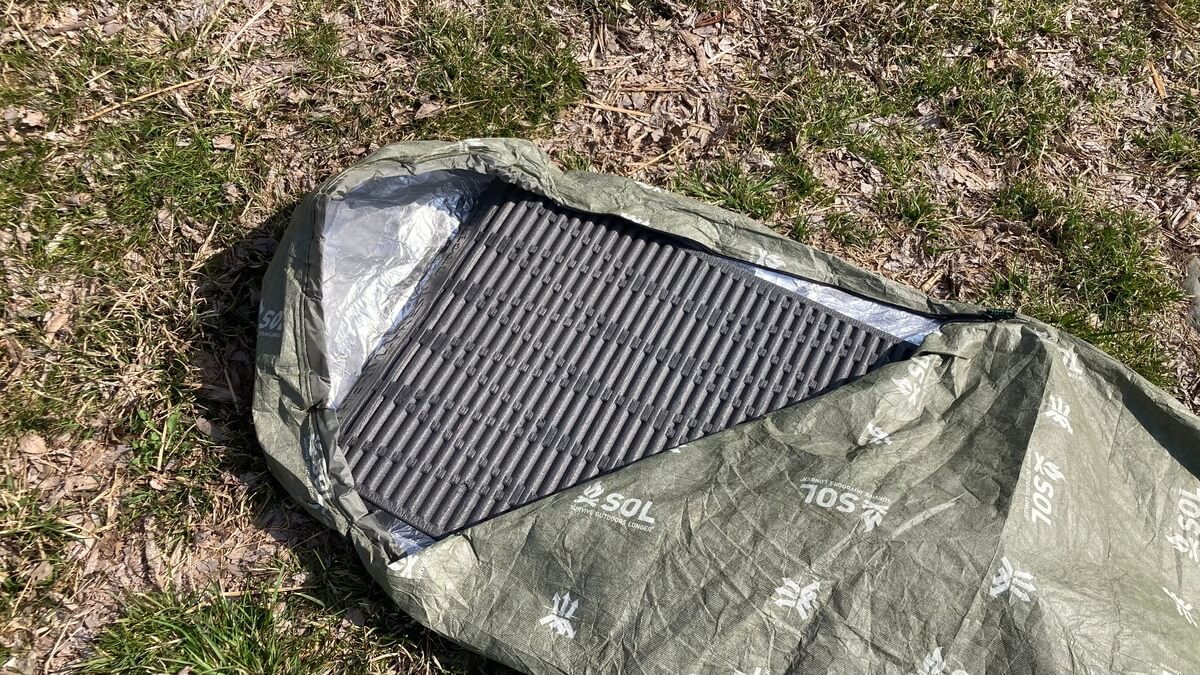
I was able to use a 2cm thick closed cell mat inside (I used a thin 3-season sleeping bag)
However, it is dangerous to use it expecting the same performance as a dedicated sleeping bag cover. Although it is made of breathable and waterproof fabric, the difference in performance is clear when compared to a dedicated sleeping bag cover, including the seam treatment of the seams. The breathability performance has not been made public, but it is best not to expect it to have such high breathability
Previously, when I used the New Escape Vivi as a cover for a winter tarp camping trip, the sleeping bag got wet the next morning due to internal condensation (although not fatal). At the time, it was a one-night mountain trip, so I was able to get away with it, but if I had stayed for multiple nights, I might have had to endure the cold on the second day in a wet sleeping bag. While the steaming effect does seem to improve insulation somewhat, it is not always comfortable, so you will need some technique to achieve comfort. It is an item that should be used while understanding that it is an emergency tool and taking advantage of its characteristics
Although its performance is inferior to that of a GORE-TEX sleeping bag cover, in warm environments where condensation is less likely to occur, it can reduce the risk of serious damage to your sleeping bag. I also use the New Escape Vivi as a sleeping bag cover, emergency bag, and pack liner when hiking in the summer mountains, where temperatures are not low
As mentioned above, the seams are not completely waterproof when used as a pack liner, but I have not experienced any serious damage even when it rained during my previous mountain trips, so I believe it does have a certain degree of effectiveness
Although it is not suitable for use in harsh environments, it can be used for three seasons and has many opportunities to be utilized, so it is recommended from a cost perspective
What's new about the renewed "New Escape Vivi"
The Escape Vivi was redesigned in 2025. The major changes were the shape of the hood, the position of the zipper, and the weight. While the previous model also had a hood, the redesign made it three-dimensional, making it easier to cover the head
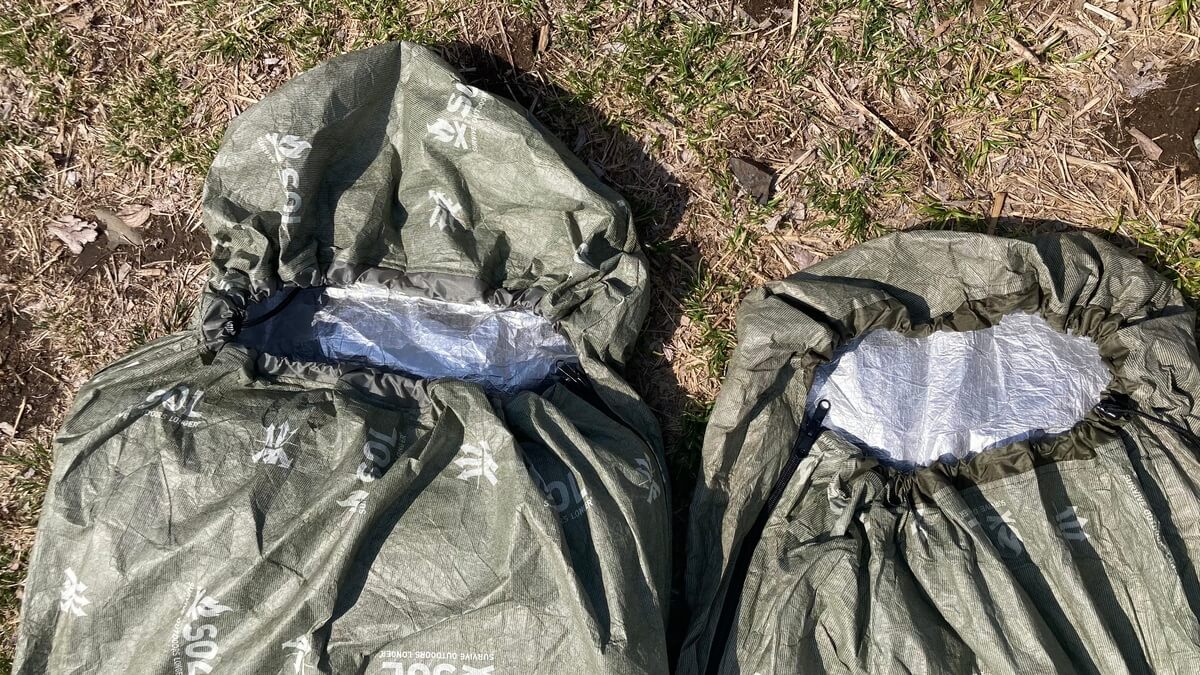
The left is the new Escape Vivi, and the right is the old model. The hood is three-dimensional
The zipper position has been changed. In the previous model, the zipper was located on the right side, but in the New Escape Vivi, it is located on the left side. This can be an advantage or a disadvantage depending on which sleeping bag manufacturer you use. Japanese sleeping bags such as NANGA and ISKA often have the zipper on the right side, which is the opposite of the New Escape Vivi (the zipper position can be stressful when getting in and out). Sleeping bags from foreign brands often have the zipper on the left side, which should reduce stress when getting in and out when using it as a cover
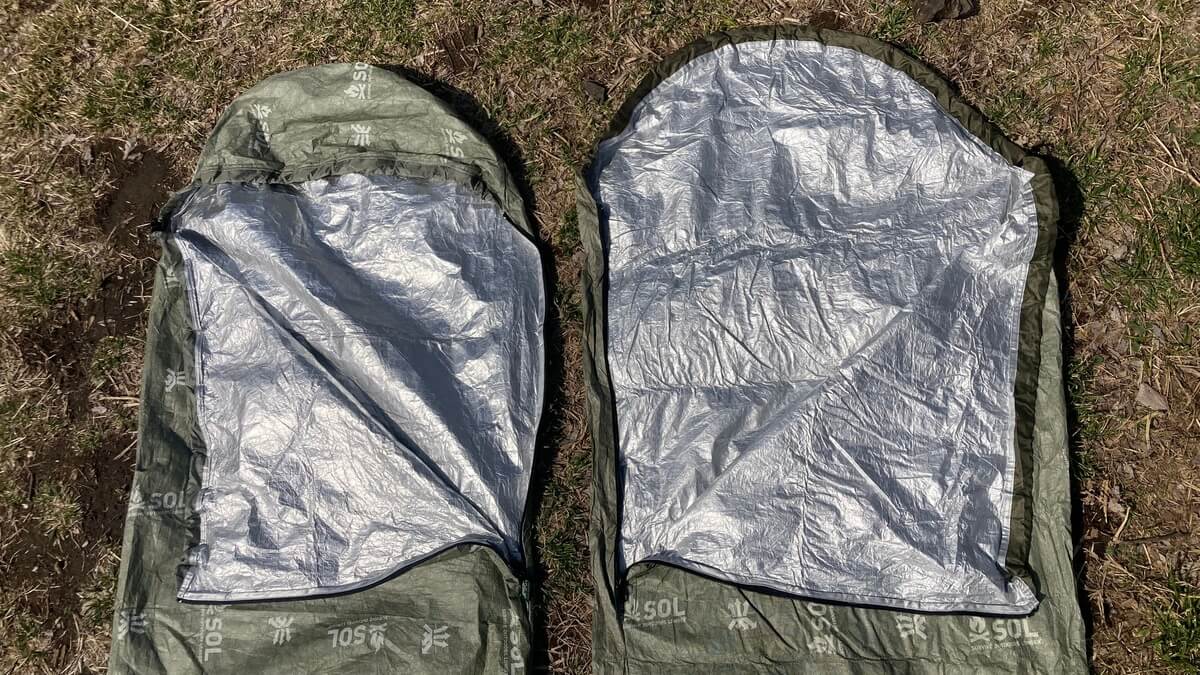
The one on the left is the new Escape Vivi. The one on the right is the old model
"Escape Vivi XL" is an all-in-one sleeping mat and sleeping bag for camping in tents or tarps in low-temperature environments
The Escape Vivi XL is less versatile than the New Escape Vivi. The largest, the Escape Vivi XL, is too large and over-specced to be carried in an emergency, and is also too large to be practical as a pack liner. It's recommended for those who intend to use it as a sleeping bag cover
If you are using it as a substitute for a sleeping bag cover or vivisack, something about the size of the Escape Vivi XL would be easy to use, and because it is roomy, you can put an air mattress inside and even put a sleeping bag inside without losing any loft
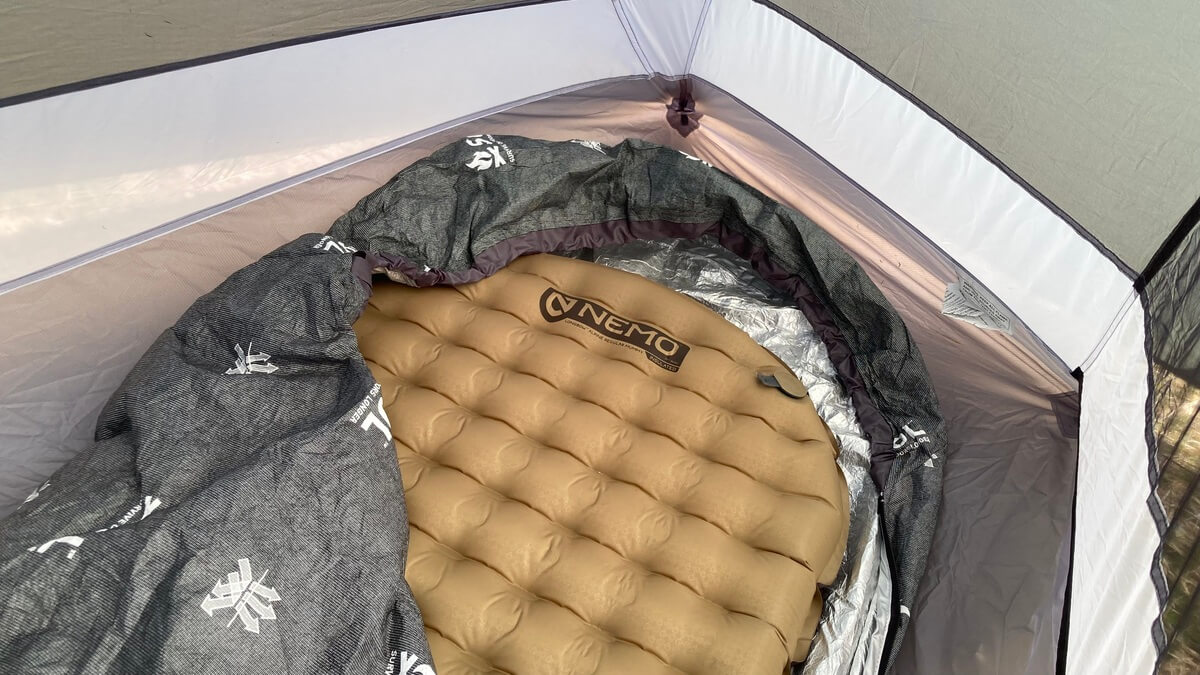
There is enough space to fit an 8cm thick air mattress inside
However, the Escape Vivi XL also has issues with internal condensation due to temperature differences and concerns about waterproofing. It becomes stuffy because it cannot fully dissipate the heat and moisture released by the human body, and as the temperature difference becomes even larger, condensation forms at the boundary between the sleeping bag and the Escape Vivi XL
When using the Escape Vivi XL as a cover (as well as the New Escape Vivi), it's most effective when you want to protect from external rather than internal influences. For example, when camping under a tarp and want to prevent your sleeping bag from getting wet from rain or snow, or when you're constantly exposed to the wind. Even when camping under a tent, using it as a sleeping bag cover will prevent your sleeping bag from getting wet in situations where condensation inside the tent could get it wet. While it won't completely prevent water from seeping in through the seams, it's rare to sleep without a tarp or tent in a place where it rains that hard, so I think it's fine to use it to protect from the wind and rain inside a tent or under a tarp
Conclusion and summary: It's not perfect, but having some quirks makes it more interesting as a "tool." For those people, I recommend the Escape Vivi
We compared the specs of the three models in the Escape Vivi series and explained the differences in their personalities that we felt during field tests. While they are highly versatile and attractive from a cost perspective, they are primarily designed for emergency use. It's true that they don't perform as well as outdoor gear designed for the harsh environments of mountainous regions. However, depending on how you use them, there are many situations where they can be useful
Personally, I find it more interesting to use tools that are a little quirky and inconvenient than to use equipment that is highly reliable and has reliable performance, and I enjoy thinking about how to deal with the shortcomings of the tools. In that sense, I feel that the Escape series is an item that still has a lot of potential, so I would like to continue to keep it in my backpack and use it to the fullest
Please consider a paid membership to support the website while enjoying exclusive articles and events!
Yosuke.C (Yosuke)


From spring to autumn, I go fishing in mountain streams in pursuit of char deep in the mountains. I hike the mountains in search of spectacular views that cannot be seen from the ground. I camp to relax by a bonfire. I snowboard to experience the feeling of floating in the silvery white mountains
A freelance writer who enjoys the outdoors all year round, he shares his experiences and the best gear he has used
Related reading