


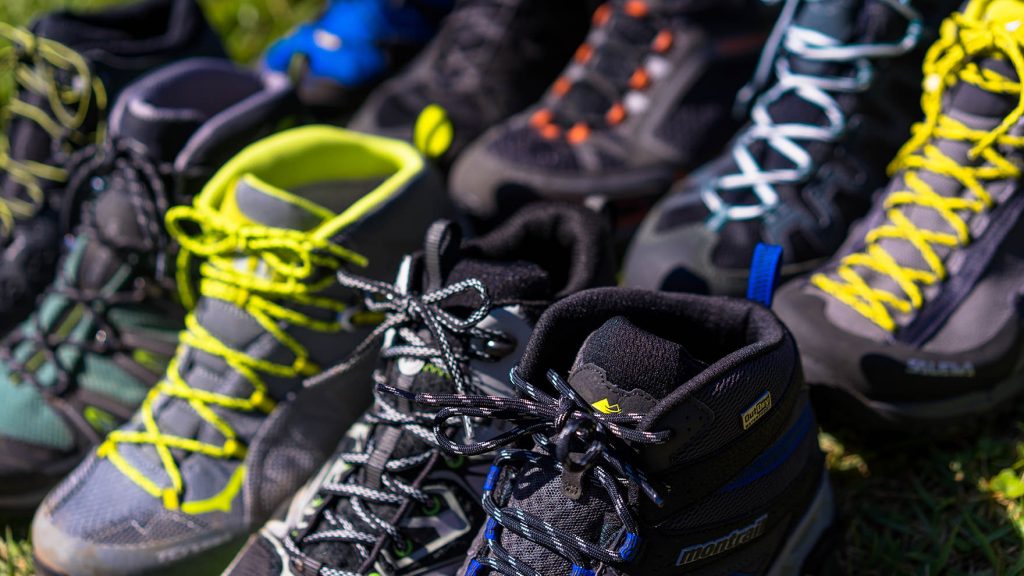
When choosing the perfect hiking boots, the first and foremost thing is that they fit your foot shape. This remains an unchanging rule even today, even after the long history of mountaineering. However, with the diversification and segmentation of genres in recent years, it's not as easy to find the perfect pair just by doing that, which is a bit of a hassle. You have to go from store to store, trying on multiple pairs each time, and the current situation is that choosing shoes is becoming increasingly complicated and troublesome
The same is true for hiking shoes, which are among the lightest mountaineering boots. They look and feel similar to everyday sneakers and are ideal for beginners, allowing them to be used for a wide range of activities, from day hikes on relatively gentle terrain to overnight stays in lightly equipped huts. Thanks to technological advances and the popularity of easy hiking, the options for hiking boots are becoming increasingly numerous
This time, we've compared hiking shoes from various perspectives over the course of about six months and compiled the results. We selected 10 recommended models from major brands available as of 2016, then compared them under the same conditions and evaluated them from various perspectives, including comfort, slip resistance, and fatigue resistance. Personally, I was a little worried about whether there really was much difference between sneakers other than design, but after carefully comparing them, we found that small differences accumulated, and ultimately, the results were interesting, with clear differences depending on the angle from which they were evaluated
Taking the above into consideration, Outdoor Gearzine has selected the best hiking shoes from several perspectives. We hope that this will be of some help in choosing shoes for people who are thinking about taking up mountain climbing or hiking, people who are interested in light mountain climbing such as fastpacking, and people who are looking for shoes that will not tire them out on long trips
Although the term hiking shoes is more commonly used, there are various opinions as to the correct name. For example, according to REI, an American outdoor gear specialty store, "shoes" currently refers to low-cut models , so from here on, we will refer to the mid-cut and above models as "hiking boots."
table of contents
table of contents
- About the items tested this time
- Test Results & Spec Comparison Table
- Summary of evaluation results ~ Recommended hiking boots by type ~
- Detailed review of each item (page 2)
About the hiking boots we compared this time
When it comes to hiking boots, trekking boots (mountaineering boots) are typically expensive and sturdy, weighing between 500g and 1kg per pair. However, when hiking short trails that can be done in a day from urban areas, or even long trails when walking lightly, they can be a bit bulky and can actually make you tired. For this reason, hiking boots that are easy to walk on mountain trails, lightweight and comfortable, and especially hiking boots that cover up to the ankle, are recommended these days. We've summarized the benefits of these boots and recommended models in our article " 10 Pairs of Lightweight Hiking Shoes You'll Want to Wear Out, " but first let's look at the criteria for selecting recommended candidates when actually trying them out.
- Lightweight type weighing less than 500g per shoe
- Mid-cut model that protects the ankles and is highly waterproof
- Basically, models specialized for hiking, approach shoes, etc. are excluded
- Available for purchase in Japan, limited to one pair per manufacturer
Hiking boots are basically worn "door to peak" from the city, so frankly, design is especially important. For this reason, personal preference inevitably comes into play when selecting, but even so, it was quite difficult to narrow it down. The tricky part was models that weighed just over 500g, even for similar uses. In reality, a weight difference of around 100g hardly has a significant impact on the evaluation, but this time there was no end to it, so I reluctantly left them out. For this reason, there were many other shoes that looked good that were not included in the selection, but even though it was a bit of a drag, I settled on these 10 items
Test environment
The hiking boots were tested over a six-month period, from May to early October 2016. The test was conducted by the author alone. All items were purchased independently. The boots were used in the Tokyo area and in the mountains of Okuchichibu and Joshinetsu (at altitudes of around 1,000-2,000m)
The test begins by walking (or trail running) all day on a day trip with ups and downs, carrying a load of about 7kg. We also randomly wear different boots on each foot and walk the same course to compare them under the same conditions (however, we do not compare all combinations of the 10 types). As a rough guide, we calculate that we walk 20km in a normal day trip (including walking around town), 20km comparing the left and right boots, and a total of at least 40km in each shoe
Furthermore, we tested all 10 pairs of shoes in the same place under specific terrain conditions, such as on wet monoliths. We also wore models that seemed particularly suitable for running on trails and roads. Other detailed test conditions are provided in the detailed reviews for each item
Five indicators were set for the evaluation items based on the following assumptions. Note that the evaluation values of the test results are merely relative indicators within the test, based solely on the judgment of the evaluator who conducted the test, and are not objective in any way
- Comfort, such as good fit and breathability, is essential for comfortable walking for long periods of time
- "Grip" to land without slipping even on rough terrain and transmit the power of your feet to the ground without loss
- "Support = stability" that reduces shaking when landing and kicking off
- Weight is essential for light footwork and fatigue reduction
- "Protection" that protects the feet from friction, tearing, and other external pressure
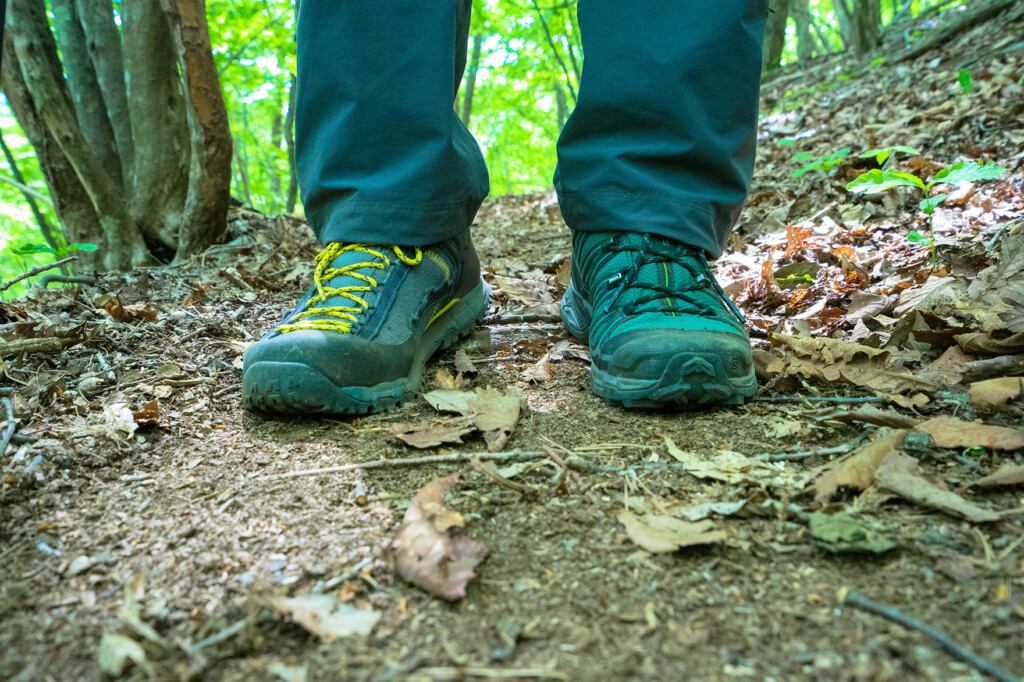
When you walk in different shoes, the difference in cushioning and grip is immediately apparent
Test Results & Spec Comparison Table
| Overall ranking | 1st place | 2nd place | 3rd place | 3rd place | 5th place | 6th place | 7th place | 7th place | 9th place | 10th place |
|---|---|---|---|---|---|---|---|---|---|---|
| item |  |
 |
 |
 |
TECNICA TCROSS MID SYN GTX |  |
 |
 |
 |
 |
| Overall score (out of 100) | 84 | 83 | 82 | 82 | 80 | 79 | 77 | 77 | 75 | 70 |
| Reference price | 21,600 yen | 21,600 yen | 17,820 yen | 15,984 yen | 21,492 yen | 19,440 yen | 25,920 yen | 25,920 yen | 19,980 yen | 29,160 yen |
| Here is ◎ |
Grip, stability, weight, protection |
Comfort, grip, stability and protection |
Comfort, grip and stability |
Grip, stability and protection |
Protection and good balance |
Grip strength and weight |
Comfort, weight |
Grip |
Comfort and protection |
protection |
| Here is △ |
Nothing in particular |
Nothing in particular |
Weight, protection |
weight |
Nothing in particular |
Stability and protection |
Grip, stability and protection |
Comfort and protection |
Grip, stability and weight |
Comfort, stability, weight |
| Comfort (30 points) |
24 | 26 | 27 | 23 | 25 | 25 | 27 | 22 | 27 | 21 |
| Grip (25 points) |
24 | 22 | 22 | 24 | 21 | 22 | 18 | 23 | 17 | 19 |
| Stability (20 points) |
15 | 15 | 16 | 16 | 14 | 12 | 11 | 13 | 12 | 11 |
| Weight (20 points) |
18 | 17 | 15 | 15 | 17 | 18 | 19 | 17 | 16 | 16 |
| Protection (5 points) |
3 | 3 | 2 | 4 | 3 | 2 | 2 | 2 | 3 | 3 |
| Specifications | ||||||||||
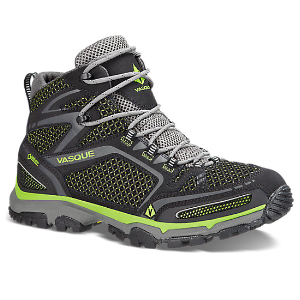
| item | THE NORTH FACE Ultra Fastpack II Mid GORE-TEX | adidas TERREX FAST R MID Gore-Tex | montrail SIERRAVADA MID OUTDRY | Mont-Bell Lapland Boots | TECNICA TCROSS MID SYN GTX | Merrell Capra Bolt Mid Gorete | La Sportiva SYNTHESIS GORE-TEX SURROUND | VASQUE Inhaler II GTX | Salomon X ULTRA MID2 GTX | Salewa HIKE ROLLER MID GORE-TEX |
| size | 27cm | 27cm | 27cm | 27cm | EU42 | EU43 | EU42 | 27.5cm | 26.5cm | EU43 |
| Actual weight (one foot) | 434 | 448 | 481 | 480 | 447 | 425 | 418 | 442 | 456 | 475 |
| Upper Material | Midfoot support cable, rubber toe cap | Synthetic | Synthetic | Synthetic, suede leather | Synthetic upper, stretch fabric. | Synthetic | AirMesh / Nano-Cell direct injection /PU Leather | 1.6mm waterproof leather, air mesh | Synthetic (SENSIFIT) | 1.6mm suede leather, stretch fabric |
| Outsole | Vibram MEGAGRIP | Continental rubber | Rubber outsole | Trail Gripper | Vibram outsole | Rubber outsole (M SELECT GRIP) | Vibram Nano with Impact Brake System | Vibram MEGAGRIP | Rubber outsole (CONTAGRIP) | Vibram RGS Speed Ascent |
| waterproof | GORE-TEX | GORE-TEX | OutDry | GORE-TEX | GORE-TEX | GORE-TEX | GORE-TEX | GORE-TEX | GORE-TEX | GORE-TEX |
| Footbed | Ortholite | Ortholite | original | original | Ortholite | M SELECT FRESH | Ortholite | Dual Density EVA | Ortholite | MFF+ Multi-Fit Footbed |

Summary of evaluation results ~ Recommended hiking boots by type ~
Overall No. 1: Great for all-around use, from rough terrain to speed hiking
THE NORTH FACE Ultra Fastpack II Mid GORE-TEX




Taking first place overall is TNF's lightweight mid-cut boots for fastpacking, which evolved into their second generation in the 2016 season. The main reason for their high rating is not just their lightness, but also their high level of perfection, which combines the security of a mountaineering boot. The previous model was a shock to me, weighing just 400g. Trying out this season's updated model again and comparing it with others, I realize that with this evolved model, lightness is now just part of the shoe's appeal
Although it's not fluffy to the touch, the upper is neither too soft nor too hard, and has just the right thickness and strength to provide a snug, enveloping hold without feeling cramped at all. The sense of unity with the shoe continues to be excellent, as with the previous model. The ankle is higher than others, which feels a bit restrictive, but in return it provides high protection around the ankle and a sense of stability when landing
What really stood out this time was the high level of grip on a variety of terrain. The newly introduced compression-molded Cradle Guide technology and Vibram MEGA GRIP outsole sole structure provided exceptional stability, not only on dry terrain, but also on wet rocks and in forests soaked with mud and moss, with excellent grip and a smooth kick-off. In particular, the grip of the Vibram MEGA GRIP outsole, which I found after trying other models, is genuine . Of course, it's natural that it's inferior to full-fledged hiking boots when compared purely, but it's amazing to see the technological advances that have allowed this lightness to be adapted to such a wide range of terrain.
While there are quite a few models that aim for the perfect middle ground between running shoes and hiking boots and end up being neither, this pair stands out among the 10 for its well-balanced design that leans slightly more towards full-fledged trekking shoes while maintaining the lightness of running shoes. Of course, this assumes that your foot shape fits, but the Ultra Fastpack II Mid is an all-around versatile pair that can be used in any situation and is recommended for anyone.
Best value for money
montrail SIERRAVADA MID OUTDRY
The Sierra Bada which I had high hopes for after experiencing how comfortable they were the moment I tried them on , actually lived up to my expectations. Strictly speaking, the Montbell Lapland Boots are cheaper, but these boots seem more suitable for a variety of activities, including trail running, so they have been awarded the No. 1 spot for value for money as the best value model.
In terms of weight, these shoes are actually the heaviest of the ones compared in this study. However, the great thing about these shoes is that when you walk in them, you don't feel any difference in weight at all. The combination of numerous mechanisms that create comfort, such as the supple fabric used in the upper, the shoelaces that provide excellent hold, the FluidFoam midsole and the unique rubber outsole , makes hiking (or trail running) one of the most comfortable shoes in this study.
On the other hand, you have to overlook the weak protection that is almost like that of a running shoe, and the lack of grip on technical terrain such as wet rocks. For this reason, I can't say that you can go on any mountain, but if you are looking to use these shoes to run lightly on trails on gentle terrain, then I would highly recommend them as your first pair of shoes
No.1 Fastpacking Boots
adidas TERREX FAST R MID Gore-Tex
Many people are surprised to hear that Adidas is a hiking boot manufacturer, but in fact, it is a global outdoor brand with a long history and many excellent models in the fields of trail running and fastpacking. The TERREX FAST R MID Gore-Tex boots clearly prove their capabilities.
Continental rubber with excellent cushioning and grip , and the high mobility around the ankle allow for quick and sure footwork. Furthermore, the heel surrounded by hard plastic and the formotion technology
THE NORTH FACE Ultra Fastpack II Mid GORE-TEX certainly a suitable model for fastpacking, this one is recommended if you prioritize speed. While it lacks grip on tricky terrain like wet rocks and mud, it offers more comfortable cushioning and a more comfortable fit. In other words, if you're looking for overall peace of mind, The North Face is the best choice, but if you prioritize speed, this is the best choice. In fact, this was the one I chose when I attempted a day trip (approximately 30km) to Mt. Kumotori.
In any case, the shoes are surprisingly well-balanced given their colorful appearance, so they are definitely a lightweight pair of shoes that can be used for all-around activities without having to think too hard. Perhaps because they change models frequently, they often have special sales at the end of each season, so they are actually a good value model
All-terrain type with excellent grip and protection
Mont-Bell Lapland Boots
Among the many running shoe-like feel of the boots in this comparison, Montbell's lightweight mid-cut boots offered a unique feel. They provided the most stable walking experience despite their light weight, in harsh environments ranging from dry mountain trails to mud, sand, and wet rocks
The leather-reinforced upper feels a bit bulky despite its light weight. It's true that the stiff sole, deep ankle, and poor breathability make it quite unsuitable for comfortable walking, but on the other hand, it's a truly flawless shoe for mountain climbing. What particularly surprised me was the high performance of the unique outsole, Trail Gripper . In tests on wet rock, Vibram 's MegaGrip, allowing even beginners to wear them with confidence, regardless of terrain or weather.
In this comparison, the model is ideal for casual hiking and fastpacking, so the scores are weighted more towards lightness, resulting in the results shown here, but honestly, it's rare to find a model that's this light (and this price) and this strong when compared to regular hiking boots. In terms of use, it's not suited to running-type activities, so mountain climbing might be your only choice, but in terms of the places you can go, I think it's actually quite versatile. As a first pair of shoes for people who are just starting out in mountain climbing, I actually recommend it
Recommended for those who want to pursue a different level of comfort
La Sportiva SYNTHESIS GORE-TEX SURROUND
Sportiva SYNTHESIS GORE-TEX SURROUND handles these challenges with ease while providing an extraordinary level of comfort that rivals that of running shoes .
GORE-TEX SURROUND which combines excellent waterproofness with maximum breathability, was far more breathable than expected, and it was far less stuffy than expected. Its breathability and quick-drying properties rivaled those of running shoes that don't require a waterproof membrane. NanoCell technology , provides a natural fit and extremely lightweight construction without sacrificing strength. Furthermore, the shallowest heel of the shoes offers excellent ankle mobility, and combined with the soft, cushioned Vibram outsole, these shoes will ensure you have a superbly comfortable day out on a sunny midsummer trail.
However, considering that Sportiva manufactures a wide range of shoes for a wide range of mountain activities, I couldn't help but feel that the grip on rough terrain was a little weak. The softness of the Vibram outsole means that it loses stability under heavy loads in exchange for cushioning, and combined with the weak ankle and upper protection, the stability isn't very high. For this reason, while it's perfectly suited to situations where this model shines (high-intensity activities such as speed hiking or trail running with a light load in low mountains in mild seasons), I wouldn't recommend using it anywhere else
The La Sportiva Core High GTX model with improved stability, is only available at select stores in Japan
Next page: Detailed review of each item
Detailed review of each item
Comfort
No matter how light and non-slip your shoes are, you can't enjoy walking if they're not comfortable to wear. Needless to say, comfort is an important factor when choosing any type of shoe, but when it comes to hiking over rough mountain trails for long periods of time, the comfort of shoes is actually influenced by many factors. Therefore, in this comparison, we've roughly examined the comfort of hiking boots from the following three angles and provided an overall comfort rating
- The fit and comfort you feel when you put your foot in and tighten the laces
- The impact felt on the soles of your feet when walking, and the resistance felt from kicking off to landing
- Breathable and waterproof during activity
Before I comment, I'd like to state that all 10 pairs of shoes were tried on at the time of selection, and that they all exceeded a certain standard in terms of comfort when you put your feet in them. With that in mind, the La Sportiva SYNTHESIS GORE-TEX SURROUND .
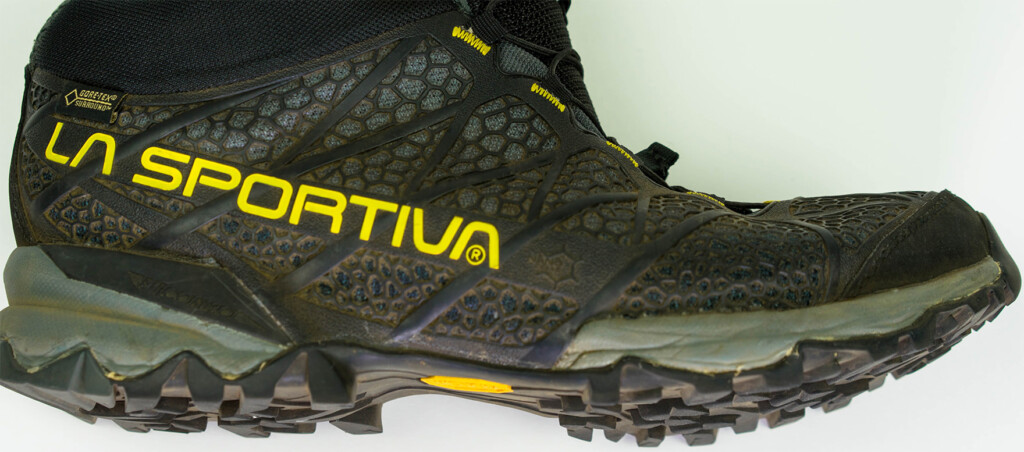
The Sportiva upper is not only breathable but also has an excellent fit
The NanoCell technology upper is one of the thinnest and most flexible materials compared. The mesh-like resin wraps around the entire foot, holding it in place, ensuring uniform, comfortable fit (hold) when lacing. The cord-lock laces are easy to tighten and loosen, making them incredibly convenient. The Vibram outsole's IMPACT BRAKE SYSTEM features slightly deeper lugs and softer rubber for superior shock absorption. And best of all, the GORE-TEX SURROUND ventilation system throughout the shoe keeps your feet dry, even between your toes, even on summer hikes. This feeling is something I've never experienced with any other model.
Another shoe worth mentioning was the Salomon X ULTRA MID2 GTX which uses SENSIFIT . The shoe's grip, which wraps around the foot from both sides, is a testament to the expertise it has gained from trail running shoes, creating a wonderful sense of unity between the shoe and the foot, providing a secure fit that rivals that of running shoes. The Montrail SIERRAVADA MID OUTDRY the adidas TERREX FAST R MID Gore-Tex, with its comfortable hold and excellent ankle cushioning and mobility, were also found to be just as comfortable.
grip
Unlike flat, paved roads, grip allows for stable walking in a variety of conditions, including terrain, conditions, ascents and descents. Excellent grip makes it difficult to slip when landing, and allows you to transfer the force of your step to the ground effectively and efficiently when pushing off. This may sound simple, but if you look at the outsoles (sole) of each model, not one has the same shape, and there is no such thing as a perfect sole in all circumstances. For this reason, each model is designed using the most effective materials and patterns, while considering the balance between durability and weight
In this comparison, in addition to a general test of ascending and descending a varied course from the forest at the bottom to the scree slopes at the peak, we also conducted a test of ascending and descending a wet monolith at the same time and in the same place. Wet rock surfaces are one of the most difficult terrains for hiking boots, which tend to have soft soles, but what was interesting was that, as expected, many models struggled, slipping and falling (like the one looking timid in the photo below), while a few models hardly slipped at all and maintained a stable grip , showing a clear difference in performance.
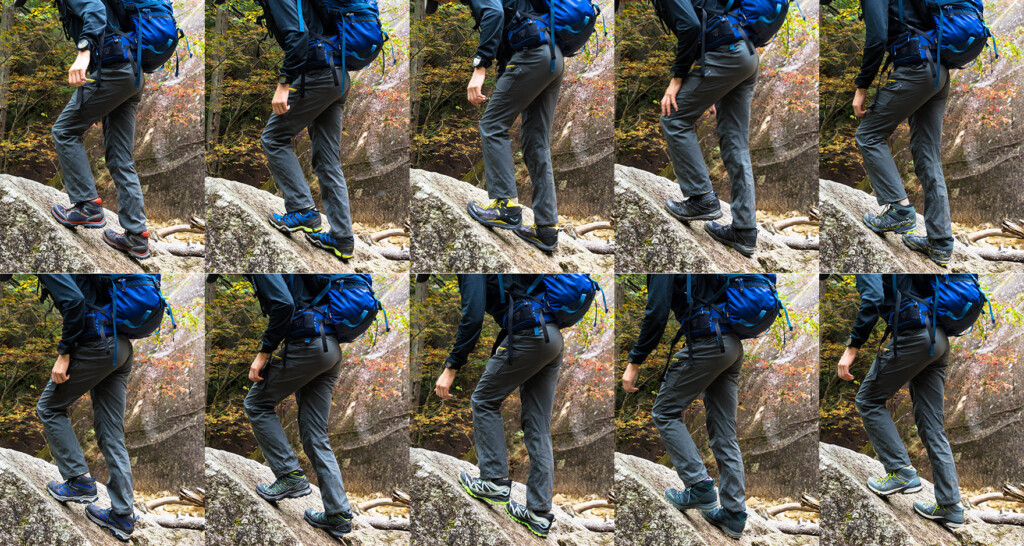
The grip strength test on wet rock was conducted on a wet granite monolith near a waterfall basin on the course of Mt. Mizugaki in Okuchichibu
Despite their lightweight, soft soles, the two hiking boots that offered exceptional grip, even on slippery rock surfaces, THE NORTH FACE Ultra Fastpack II Mid GORE-TEX and VASQUE Inhaler II GTX , both featuring Vibram MEGAGRIP MEGAGRIP isn't a particularly soft material, it offers less comfort (cushioning) than other rubber outsoles. However, while the other boots struggled to withstand the weight of the heavy load and slid off, these boots gripped the wet rock surface firmly, allowing for stable footing. While slightly inferior to these, the adidas Continental Rubber and Montbell Trail Gripper offered a fairly stable grip . Unfortunately , all four pairs of boots were in danger of slipping immediately on wet rock surfaces unless you placed your feet carefully.
Other than these special terrains, none of the models were obviously dangerous, but when considering ease of walking on a variety of road conditions, including gravel, mud, and boardwalks, it could be said that THE NORTH FACE Ultra Fastpack II Mid GORE-TEX and Montbell Lapland Boots were the most stable in terms of kicking off the ground.
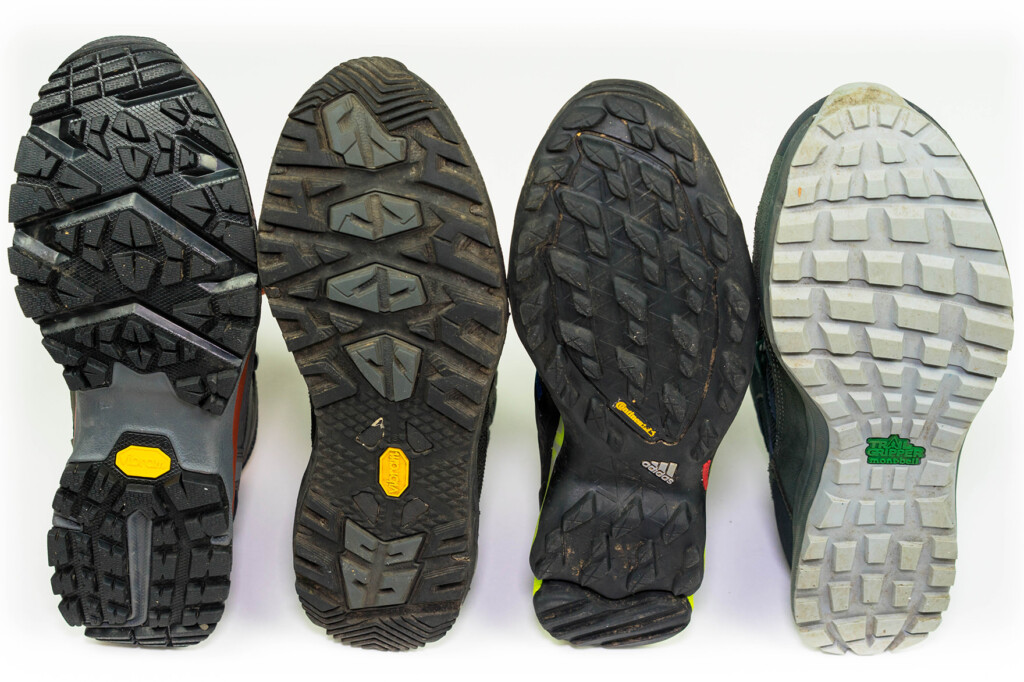
The four outsoles that had the best grip this time were: VASQUE Inhaler II, THE NORTH FACE Ultra Fastpack II, adidas TERREX FAST R, and Mont-Bell Lapland Boots
stability
When considering how easy it is to walk on a variety of terrains, boot stability is closely related to grip. Simply put, it's about how well your feet can withstand impacts without exerting unnecessary force or strain, preventing them from wobbling or twisting. Unlike running shoes, where you run empty-handed, this is an increasingly important factor for activities like mountain climbing, where you carry a heavy load. In this article, we'll be evaluating stability from two main perspectives
First of all, all 10 pairs of shoes selected this time are mid-cut models that are fixed up to the ankle, so since the ankle is more fixed, it can be said that they already offer greater stability than low-cut hiking shoes. However, the design of the ankle area varies greatly between models in terms of height, material, shape, and tightness, so even though they are mid-cut, the sense of ankle stability and security varies greatly depending on the model. The first point in evaluating stability is how effective the design from the heel to the ankle is
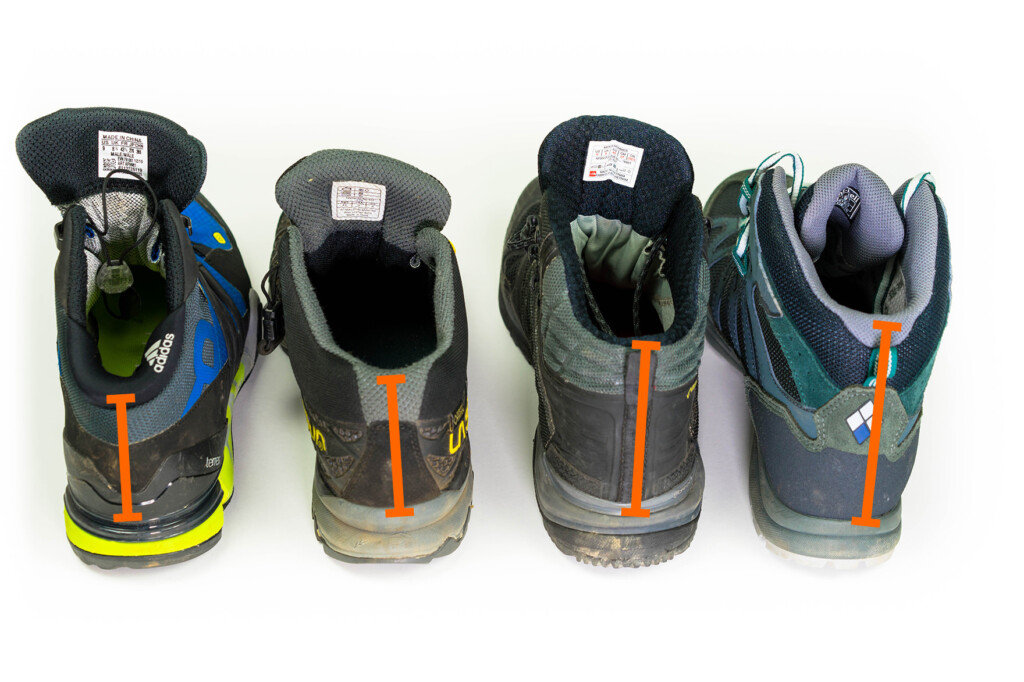
The stability around the ankle is largely determined by the material and structure of the ankle and the height of the heel from the insole. The two higher ones on the right provide high stability, but are not as easy to run in as the two on the left
Another important factor in considering stability is the stability of the sole. Regular hiking boots have a hard core material called a shank inside the shoe, which prevents the shoe from warping even when weight is placed on sloping, rough ground, allowing the foot to rest stably on the ground even with a heavy load. On the other hand, most hiking boots are designed for speedy movement with light equipment, so they prioritize lightness and smooth foot movement, and have soft, flexible soles (shanks), which tend to make the shoes more prone to twisting and less stable. Therefore, in this comparison, we evaluated whether stability was sacrificed for lightness or foot movement, or whether a balance was maintained between the two
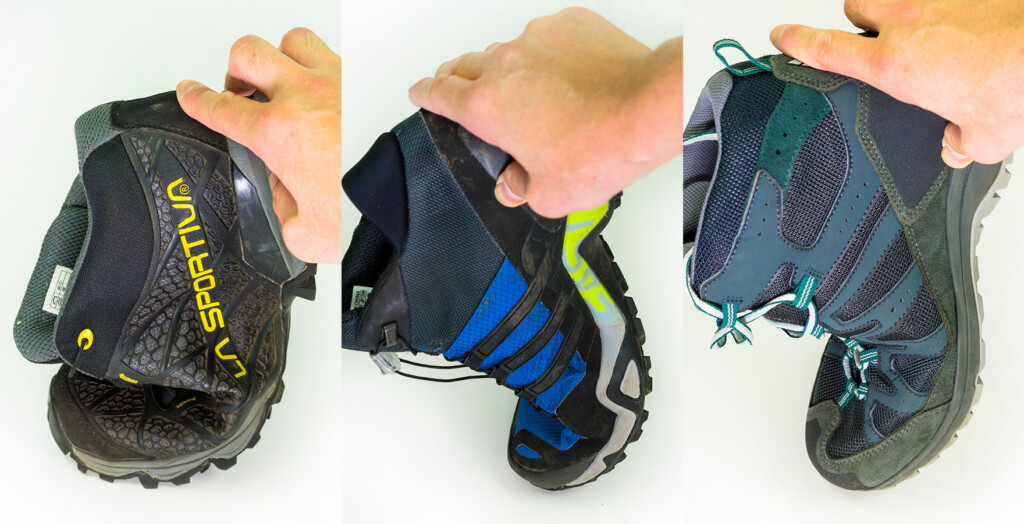
Although flexible shoes make walking easy, they are weak against pressure from the ground, and the heavier the load, the more tired I felt
the Mont-Bell Lapland Boots received the highest rating for stability . Their deep, thick ankle support and moderately rigid shank plate made them the least twisted of the boots tested, providing excellent stability. However, it's undeniable that the high level of support can get in the way when walking fast and your leg rotation speed increases. Meanwhile, the La Sportiva SYNTHESIS GORE-TEX SURROUND , with its low ankle and extremely flexible shank, offered excellent foot movement and comfort, but stability was anything but impressive. Outside of these extreme models, the adidas TERREX FAST R MID Gore-Tex is noteworthy. With an unusual ankle (easy mobility at the back, high support on the sides) and an unexpectedly firm shank, this boot offers a well-balanced combination of comfort and stability.
weight
After re-measuring the weights with all the sizes aligned, the lightest model was the La Sportiva SYNTHESIS GORE-TEX SURROUND , weighing in at 418g. This was somewhat expected given its high comfort and low stability, but THE NORTH FACE Ultra Fastpack II Mid GORE-TEX is nothing short of impressive, as it maintains grip and stability while remaining light at just 434g. However, given the restriction of weighing less than 500g per shoe, all of these models are undoubtedly among the lightest hiking boots, so you shouldn't be too concerned about the difference in points in this category.
protection
Here, we evaluate the boots' resistance to external obstacles, such as protection for the toes, which are prone to being hit, and durability against abrasion and tearing. These are generally weak points for hiking boots, which are not intended for use on harsh terrain such as rocky ridges or for long periods of time exceeding several years, but there are still excellent models that are well-made
The Mont-Bell Lapland Boots are lightweight, yet offer ample protection thanks to the sturdy suede leather reinforcement around the boot. Other boots like the TECNICA TCROSS MID SYN GTX , adidas TERREX FAST R MID Gore-Tex , Salewa HIKE ROLLER MID GORE-TEX also feature hard reinforced toe areas to protect your toes from accidental strikes.
summary
This comparison revealed many new discoveries, such as the fact that just because something is soft doesn't mean it's easy to walk in, that just because it's light and thin doesn't mean it's flimsy, and that just because it's Vibram doesn't mean it's safe. I feel like I've been reminded once again of the depth of hiking boots. Although the scores of the 10 pairs compared vary, after actually wearing them, they are all reasonably comfortable to walk in. I think it's entirely possible that this ranking will change depending on each person's purpose, preferences, and leg strength
Furthermore, complaints about fit, hold, and cushioning can often be resolved by purchasing your own insole (footbed) Superfeet are essential for me to achieve the optimal footbed. I hope that in addition to this report, you will be able to find the perfect shoes for you by combining these additional parts. Finally, for reference, I would like to introduce some of Outdoor Gearzine's previous articles on choosing shoes, so if you are still unsatisfied, I recommend you read these as well.
We also recommend this article about hiking shoes
- Five points to consider when choosing the right trekking shoes for your feet
- How to fit trekking shoes and six things to check
- 10 Pairs of Lightweight Hiking Shoes You'll Want to Wear Out (Under 500g per Pair)
- Comparison Review: Trying out the trekking shoes recommended by a mountaineering shop staff member