



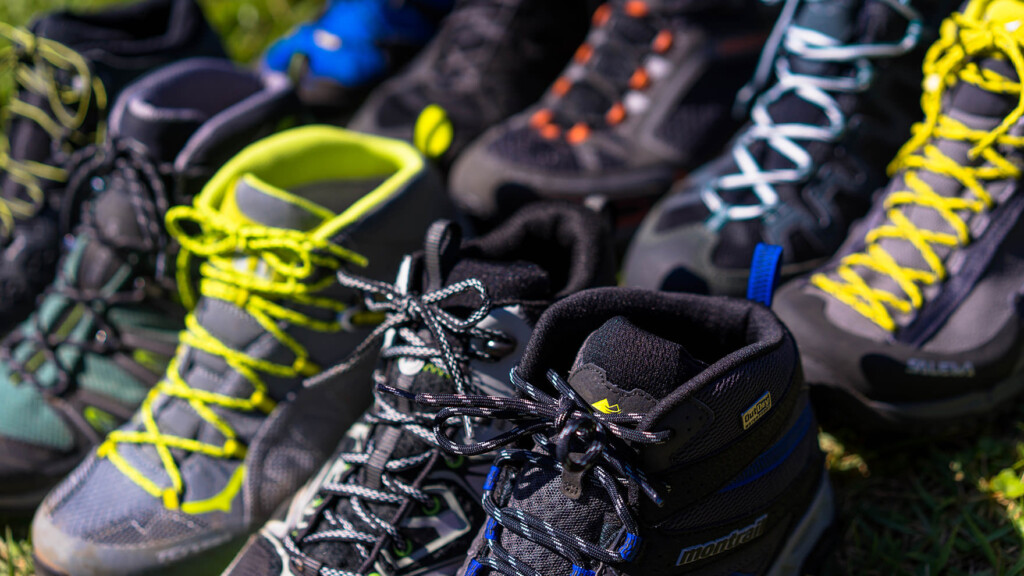
Comparison Review: Lightweight Hiking Boots for Day Hiking and Fastpacking

Written by Yasushi Hisatomi
Detailed review of each item
Comfort
No matter how light and non-slip your shoes are, you can't enjoy walking if they're not comfortable to wear. Needless to say, comfort is an important factor when choosing any type of shoe, but when it comes to hiking over rough mountain trails for long periods of time, the comfort of shoes is actually influenced by many factors. Therefore, in this comparison, we've roughly examined the comfort of hiking boots from the following three angles and provided an overall comfort rating
- The fit and comfort you feel when you put your foot in and tighten the laces
- The impact felt on the soles of your feet when walking, and the resistance felt from kicking off to landing
- Breathable and waterproof during activity
Before I comment, I'd like to state that all 10 pairs of shoes were tried on at the time of selection, and that they all exceeded a certain standard in terms of comfort when you put your feet in them. With that in mind, the La Sportiva SYNTHESIS GORE-TEX SURROUND .
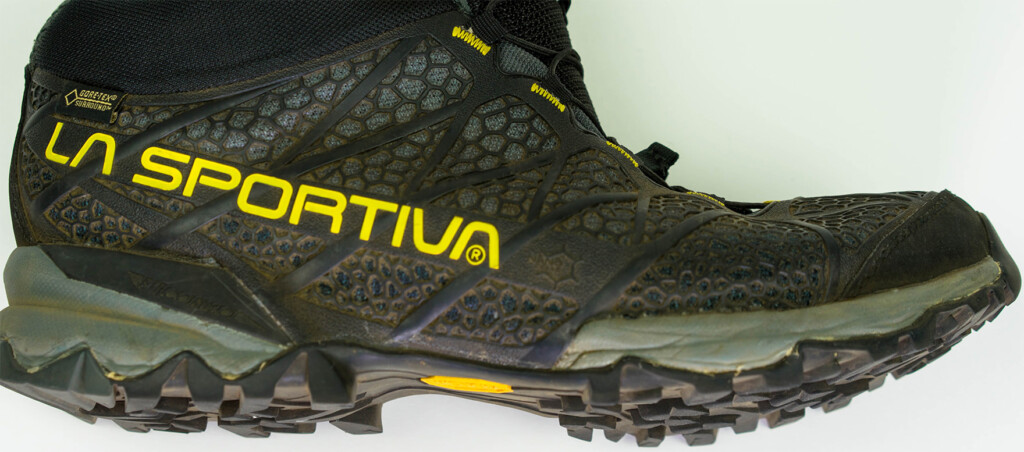
The Sportiva upper is not only breathable but also has an excellent fit
The NanoCell technology upper is one of the thinnest and most flexible materials compared. The mesh-like resin wraps around the entire foot, holding it in place, ensuring uniform, comfortable fit (hold) when lacing. The cord-lock laces are easy to tighten and loosen, making them incredibly convenient. The Vibram outsole's IMPACT BRAKE SYSTEM features slightly deeper lugs and softer rubber for superior shock absorption. And best of all, the GORE-TEX SURROUND ventilation system throughout the shoe keeps your feet dry, even between your toes, even on summer hikes. This feeling is something I've never experienced with any other model.
Another shoe worth mentioning was the Salomon X ULTRA MID2 GTX which uses SENSIFIT . The shoe's grip, which wraps around the foot from both sides, is a testament to the expertise it has gained from trail running shoes, creating a wonderful sense of unity between the shoe and the foot, providing a secure fit that rivals that of running shoes. The Montrail SIERRAVADA MID OUTDRY the adidas TERREX FAST R MID Gore-Tex, with its comfortable hold and excellent ankle cushioning and mobility, were also found to be just as comfortable.
grip
Unlike flat, paved roads, grip allows for stable walking in a variety of conditions, including terrain, conditions, ascents and descents. Excellent grip makes it difficult to slip when landing, and allows you to transfer the force of your step to the ground effectively and efficiently when pushing off. This may sound simple, but if you look at the outsoles (sole) of each model, not one has the same shape, and there is no such thing as a perfect sole in all circumstances. For this reason, each model is designed using the most effective materials and patterns, while considering the balance between durability and weight
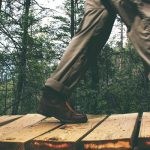
In this comparison, in addition to a general test of ascending and descending a varied course from the forest at the bottom to the scree slopes at the peak, we also conducted a test of ascending and descending a wet monolith at the same time and in the same place. Wet rock surfaces are one of the most difficult terrains for hiking boots, which tend to have soft soles, but what was interesting was that, as expected, many models struggled, slipping and falling (like the one looking timid in the photo below), while a few models hardly slipped at all and maintained a stable grip , showing a clear difference in performance.
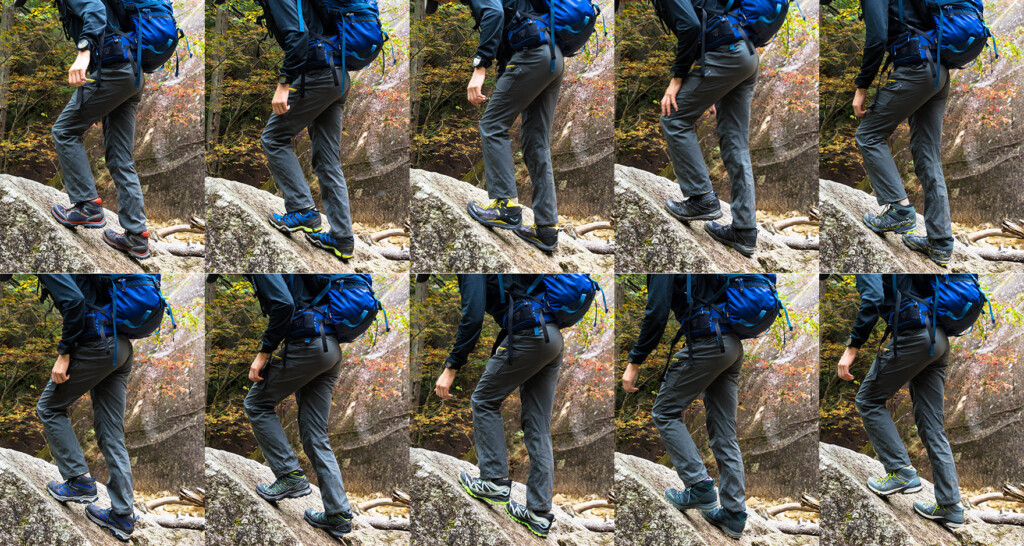
The grip strength test on wet rock was conducted on a wet granite monolith near a waterfall basin on the course of Mt. Mizugaki in Okuchichibu
Despite their lightweight, soft soles, the two hiking boots that offered exceptional grip, even on slippery rock surfaces, THE NORTH FACE Ultra Fastpack II Mid GORE-TEX and VASQUE Inhaler II GTX , both featuring Vibram MEGAGRIP MEGAGRIP isn't a particularly soft material, it offers less comfort (cushioning) than other rubber outsoles. However, while the other boots struggled to withstand the weight of the heavy load and slid off, these boots gripped the wet rock surface firmly, allowing for stable footing. While slightly inferior to these, the adidas Continental Rubber and Montbell Trail Gripper offered a fairly stable grip . Unfortunately , all four pairs of boots were in danger of slipping immediately on wet rock surfaces unless you placed your feet carefully.
Other than these special terrains, none of the models were obviously dangerous, but when considering ease of walking on a variety of road conditions, including gravel, mud, and boardwalks, it could be said that THE NORTH FACE Ultra Fastpack II Mid GORE-TEX and Montbell Lapland Boots were the most stable in terms of kicking off the ground.
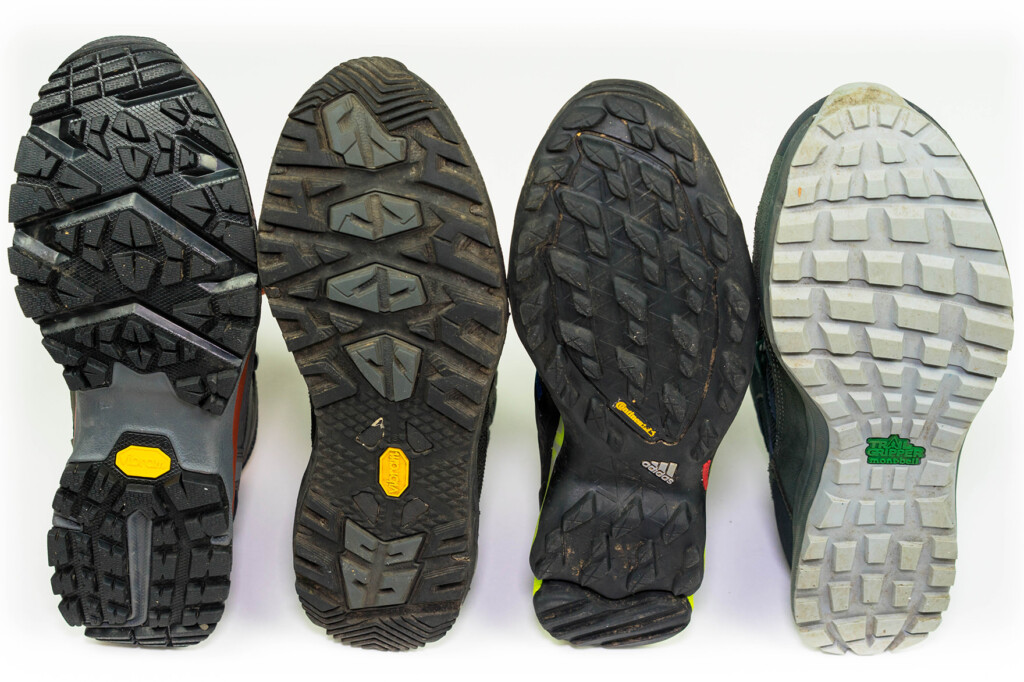
The four outsoles that had the best grip this time were: VASQUE Inhaler II, THE NORTH FACE Ultra Fastpack II, adidas TERREX FAST R, and Mont-Bell Lapland Boots
stability
When considering how easy it is to walk on a variety of terrains, boot stability is closely related to grip. Simply put, it's about how well your feet can withstand impacts without exerting unnecessary force or strain, preventing them from wobbling or twisting. Unlike running shoes, where you run empty-handed, this is an increasingly important factor for activities like mountain climbing, where you carry a heavy load. In this article, we'll be evaluating stability from two main perspectives
First of all, all 10 pairs of shoes selected this time are mid-cut models that are fixed up to the ankle, so since the ankle is more fixed, it can be said that they already offer greater stability than low-cut hiking shoes. However, the design of the ankle area varies greatly between models in terms of height, material, shape, and tightness, so even though they are mid-cut, the sense of ankle stability and security varies greatly depending on the model. The first point in evaluating stability is how effective the design from the heel to the ankle is
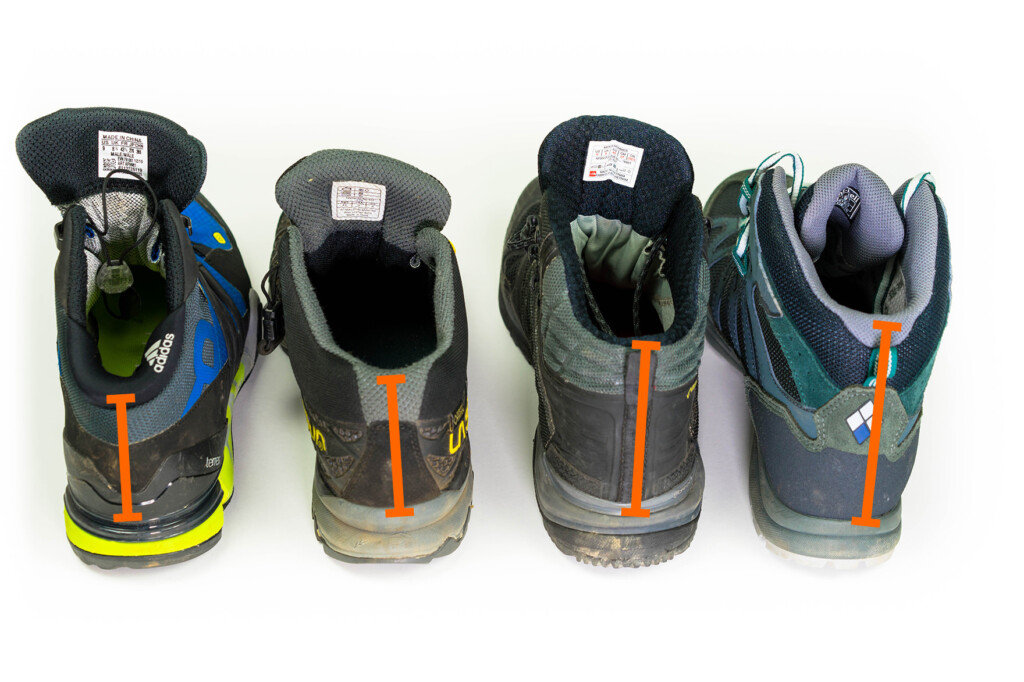
The stability around the ankle is largely determined by the material and structure of the ankle and the height of the heel from the insole. The two higher ones on the right provide high stability, but are not as easy to run in as the two on the left
Another important factor in considering stability is the stability of the sole. Regular hiking boots have a hard core material called a shank inside the shoe, which prevents the shoe from warping even when weight is placed on sloping, rough ground, allowing the foot to rest stably on the ground even with a heavy load. On the other hand, most hiking boots are designed for speedy movement with light equipment, so they prioritize lightness and smooth foot movement, and have soft, flexible soles (shanks), which tend to make the shoes more prone to twisting and less stable. Therefore, in this comparison, we evaluated whether stability was sacrificed for lightness or foot movement, or whether a balance was maintained between the two
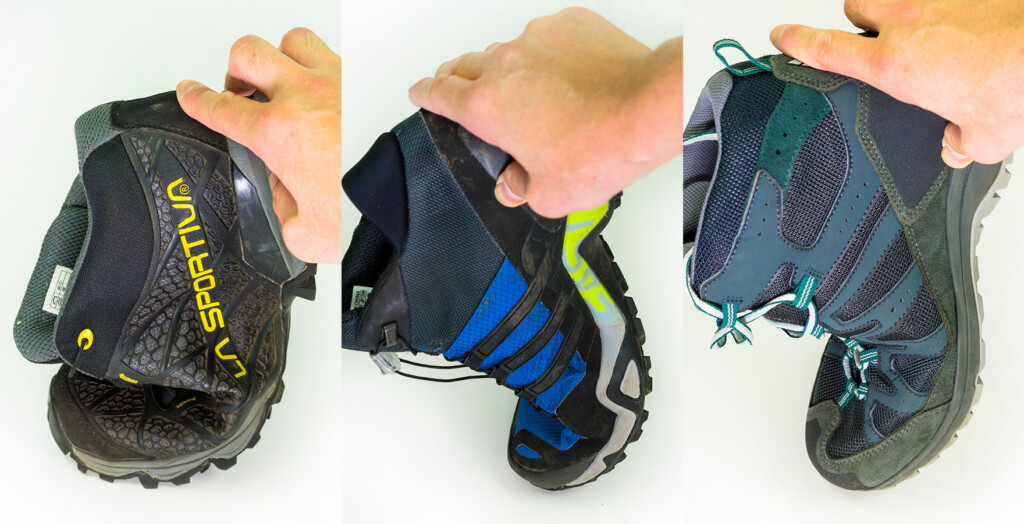
Although flexible shoes make walking easy, they are weak against pressure from the ground, and the heavier the load, the more tired I felt
the Mont-Bell Lapland Boots received the highest rating for stability . Their deep, thick ankle support and moderately rigid shank plate made them the least twisted of the boots tested, providing excellent stability. However, it's undeniable that the high level of support can get in the way when walking fast and your leg rotation speed increases. Meanwhile, the La Sportiva SYNTHESIS GORE-TEX SURROUND , with its low ankle and extremely flexible shank, offered excellent foot movement and comfort, but stability was anything but impressive. Outside of these extreme models, the adidas TERREX FAST R MID Gore-Tex is noteworthy. With an unusual ankle (easy mobility at the back, high support on the sides) and an unexpectedly firm shank, this boot offers a well-balanced combination of comfort and stability.
weight
After re-measuring the weights with all the sizes aligned, the lightest model was the La Sportiva SYNTHESIS GORE-TEX SURROUND , weighing in at 418g. This was somewhat expected given its high comfort and low stability, but THE NORTH FACE Ultra Fastpack II Mid GORE-TEX is nothing short of impressive, as it maintains grip and stability while remaining light at just 434g. However, given the restriction of weighing less than 500g per shoe, all of these models are undoubtedly among the lightest hiking boots, so you shouldn't be too concerned about the difference in points in this category.
protection
Here, we evaluate the boots' resistance to external obstacles, such as protection for the toes, which are prone to being hit, and durability against abrasion and tearing. These are generally weak points for hiking boots, which are not intended for use on harsh terrain such as rocky ridges or for long periods of time exceeding several years, but there are still excellent models that are well-made
The Mont-Bell Lapland Boots are lightweight, yet offer ample protection thanks to the sturdy suede leather reinforcement around the boot. Other boots like the TECNICA TCROSS MID SYN GTX , adidas TERREX FAST R MID Gore-Tex , Salewa HIKE ROLLER MID GORE-TEX also feature hard reinforced toe areas to protect your toes from accidental strikes.
summary
This comparison revealed many new discoveries, such as the fact that just because something is soft doesn't mean it's easy to walk in, that just because it's light and thin doesn't mean it's flimsy, and that just because it's Vibram doesn't mean it's safe. I feel like I've been reminded once again of the depth of hiking boots. Although the scores of the 10 pairs compared vary, after actually wearing them, they are all reasonably comfortable to walk in. I think it's entirely possible that this ranking will change depending on each person's purpose, preferences, and leg strength
Furthermore, complaints about fit, hold, and cushioning can often be resolved by purchasing your own insole (footbed) Superfeet are essential for me to achieve the optimal footbed. I hope that in addition to this report, you will be able to find the perfect shoes for you by combining these additional parts. Finally, for reference, I would like to introduce some of Outdoor Gearzine's previous articles on choosing shoes, so if you are still unsatisfied, I recommend you read these as well.
We also recommend this article about hiking shoes
- Five points to consider when choosing the right trekking shoes for your feet
- How to fit trekking shoes and six things to check
- 10 Pairs of Lightweight Hiking Shoes You'll Want to Wear Out (Under 500g per Pair)
- Comparison Review: Trying out the trekking shoes recommended by a mountaineering shop staff member
Related reading
 Comparison Review: 2018 Lightweight Hiking Boots for Weekend Hikers
 10 Pairs of Lightweight Hiking Shoes You'll Want to Wear Out (Under 500g per Pair)
 Seven new trekking shoes for 2015 that are attracting attention from the world's outdoor media
 Comparison Review: Summer, Hiking, Alps. 2018 Comparison of Lightweight Alpine Boots for Rocky Conditions