



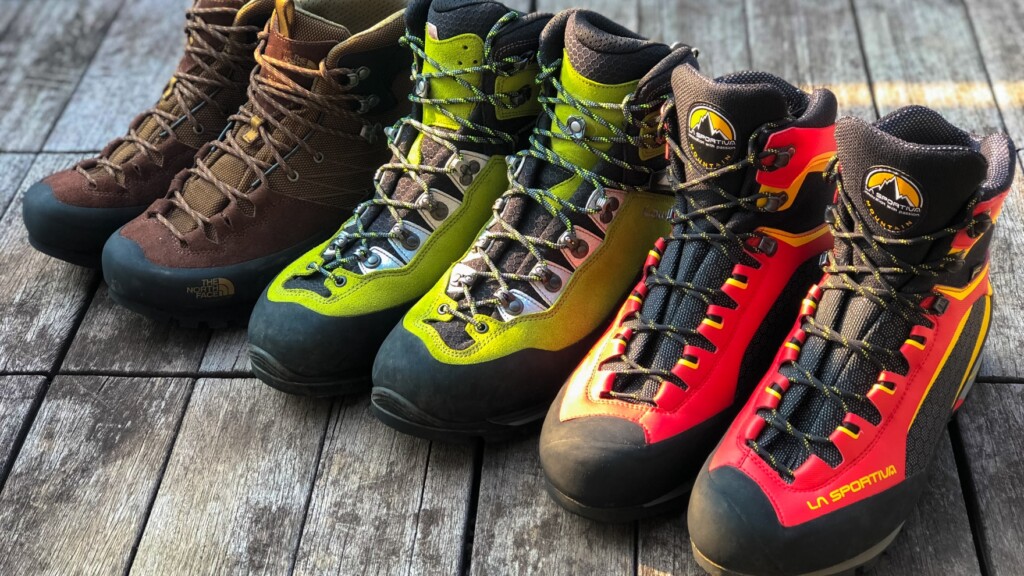
Comparison Review: Summer, Hiking, Alps. 2018 Comparison of Lightweight Alpine Boots for Rocky Conditions
Written by Outdoor Gearzine Editorial Department
The summer mountain climbing season has begun, and I'm sure many people are considering which mountains they will climb this year
People have different plans, from low mountains near cities to long expeditions both domestically and internationally. The snow on the Northern and Southern Alps, which are somewhat inaccessible during the snowy mountain season, is melting, and many people are probably planning their Alps debut this summer
When it comes to the Alps, you need to be well prepared, not only in terms of planning but also in terms of clothing and equipment. Even in summer, there are still snowfields on the higher mountains, so you will need crampons to walk safely, and since many mountains are above the tree line, you will often be climbing rocky areas
It is possible to climb in trekking shoes with soft soles, but considering the risk of injury, you still need sturdy hiking boots that are suitable for the purpose. That's why today we'll be reviewing hiking boots that are recommended for mountains with many rocky ridges, such as the Northern and Southern Alps
table of contents
table of contents
- About the items tested this time
- Test Results & Spec Comparison Table
- Impressions of each model
- Detailed review of each item (Page:2)
- Summary (Page 2)
About the hiking boots we compared this time
To walk safely on rocky ridges, hiking boots with hard soles and good protection are suitable. Of course, it's not impossible to climb in trekking shoes with soft soles. In fact, when I first started hiking, I used to climb in shoes that were little more than sneakers and could hardly be called hiking boots. However, while they were light and easy to walk in, fatigue accumulated below the knees (especially the soles of the feet) with every climb, and sprains and injuries were constant. The shoes themselves also wore out quickly, and sometimes I would wear out an entire pair in just one climb
With that in mind, I believe that hiking boots with hard soles and excellent waterproofing and durability are the best. If your feet hurt or get tired, you won't be able to enjoy your hike and it will become like a training or hardship
When it comes to hiking boots with hard, robust, and durable soles, you'll likely end up in categories like backpacking (long-distance hiking), light alpine, or mountaineering. However, even if the appearance and shape are similar, each manufacturer has its own unique materials, technology, and functionality, ranging from models specialized for rocky ridges to models with a certain degree of versatility. In particular, in Japan's high mountains, most trailheads involve walking through forested areas, passing the tree line, and reaching rocky areas. Therefore, it's not necessarily true that a uniformly rigid and robust model specialized for rocky ridges is the best. Walkability and comfort are also important factors. To begin this review, I've summarized my selection criteria below
- A model aimed at backpacking and light alpine skiing
- Climbing zone on the sole
- There is a welt on the heel so that semi-one-touch crampons can be worn
With the selection criteria now clear, we moved on to choosing specific manufacturers and models. However, since most major hiking boot manufacturers, such as Scarpa, Sportiva, Zamberlan, and Garmont, are European, and especially Italian, comparing only Italian manufacturers would be a bit boring. Therefore, we imposed a mysterious new restriction of one pair per country, settling on three pairs: Sportiva (Italy), Rover (Germany), and The North Face (USA). We originally wanted to add other manufacturers such as Mammut (Switzerland) and Sirio (Japan), but we were concerned that increasing the number would dilute the content of each review, so we limited ourselves to three pairs this time
Test environment
The test period lasted approximately two months, from May to the end of June 2018. Testing was mainly conducted in the mountains of Okuchichibu, the Central Alps, and the Southern Alps. The walking distance per test was approximately 8 to 15 km, with different models being used for ascents and descents, and different models worn on each foot. Tests on rocky ridges were conducted in the mountains of Okuchichibu (Mount Kentoku and Mount Kinpu) to ensure all three pairs were tested under the same conditions. Further detailed test conditions are provided in the detailed reviews for each item
The evaluation criteria are based on the following five indicators. The evaluation results are based on my own judgment as the tester and are not objective in any way
- Sole hardness and grip: essential for hard mountain climbing, such as carrying heavy luggage or walking on rocky ridges
- Support: Prevents twisting of the ankle and slippage inside the shoe
- Comfort, weight...how comfortable are they to wear and whether you can walk in them for long periods of time?
- Durability: Protects the foot from external pressure such as friction and tearing
- Compatibility with crampons: Ease of putting on and keeping crampons when crossing snowfields
Test Results & Spec Comparison Table
| comprehensive evaluation | ★★★★★ | ★★★★★ | ★★★★☆ |
|---|---|---|---|
| item |  La Sportiva TRANGO TOWER GTX® La Sportiva TRANGO TOWER GTX® |  LOWA CEVEDALE PRO GT LOWA CEVEDALE PRO GT |  THE NORTH FACE Verbera Lightpacker III GORE-TEX THE NORTH FACE Verbera Lightpacker III GORE-TEX |
| Reference price | 48,384 yen | 47,520 yen | 29,160 yen |
| grip | ★★★★★ | ★★★★☆ | ★★★☆☆ |
| stability | ★★★★☆ | ★★★★☆ | ★★★☆☆ |
| Comfort | ★★★☆☆ | ★★★★☆ | ★★★★★ |
| Robustness | ★★★★★ | ★★★★★ | ★★★★☆ |
| weight | ★★★☆☆ | ★★☆☆☆ | ★★★★☆ |
| Crampons compatibility | ★★★★☆ | ★★★★☆ | ★★★☆☆ |
| Specifications | |||
| item | LA SPORTIVA TRANGO TOWER GTX® | LOWA CEVEDALE PRO GT | THE NORTH FACE Verbera Lightpacker III GORE-TEX |
| Actual weight (one foot) | 739(UK9) | 841(UK8.5) | 643(UK8.5) |
| Upper Material | High-strength waterproof nylon 6.6 honeycomb guard flex | Suede Leather | Ballistic mesh suede upper |
| Outsole | Vibram CUBE sole | Vibram Dolent Guida Pro | Vibram Mula sole |
| waterproof | GORE-TEX® | GORE-TEX® | GORE-TEX® |
Impressions of each model
LA SPORTIVA TRANGO TOWER GTX®
High overall performance. Especially on rocky terrain, it performs exceptionally well



Here's what I like about it
- Effective traction and braking performance on rocky terrain
- Durable enough to walk on rocky terrain
- Balanced ankle support and mobility
- One-touch crampons fit easily
Here's △
- I wish there was more cushioning in the sole and insole
- price
The Trango Tower GTX 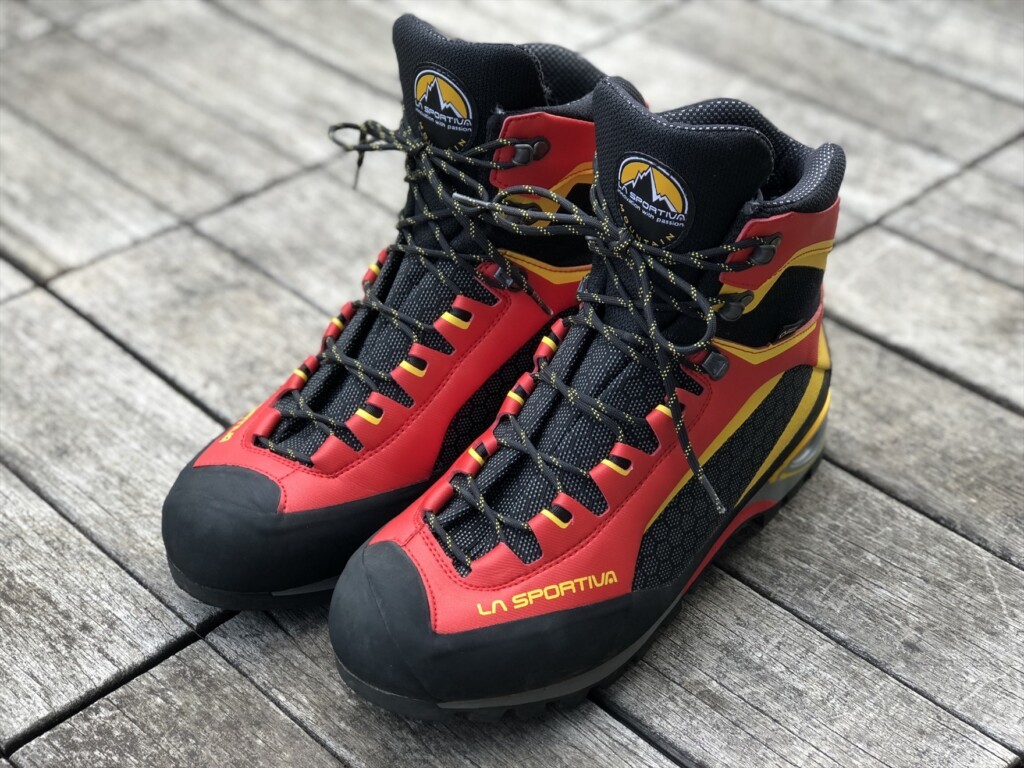 is the latest model in the extensive Trango series, which includes the Cube, Alp Evo, S Evo, and Guide Evo . As an evolution of the Trango S Evo, the design follows the S Evo's slim shape and race car-like form. The honeycomb fabric on the upper is originally a material that increases wear resistance, but it also contributes greatly to the cool look. In recent years, there have been many hybrid mountaineering boots with leather and nylon placed in the right places, but personally I think this is by far the coolest.
Of course, it's not just the looks that make it great; it's also robust and functional, with a double layer of rubber on the toe, which is the most vulnerable part of the shoe, as if to encourage climbing on rocky terrain (?). the Cevedale Pro GT it to, which may be why you feel the sensation on the sole of your foot more directly. However, even though the sole is thin, the shank (core material) makes it hard and prevents twisting, so it won't bend with just a little force. We actually tested it on a mountain with a lot of rocky terrain, and I think it grips the unevenness of the rocks well, and when climbing, you can feel the traction that sticks to the rocks.
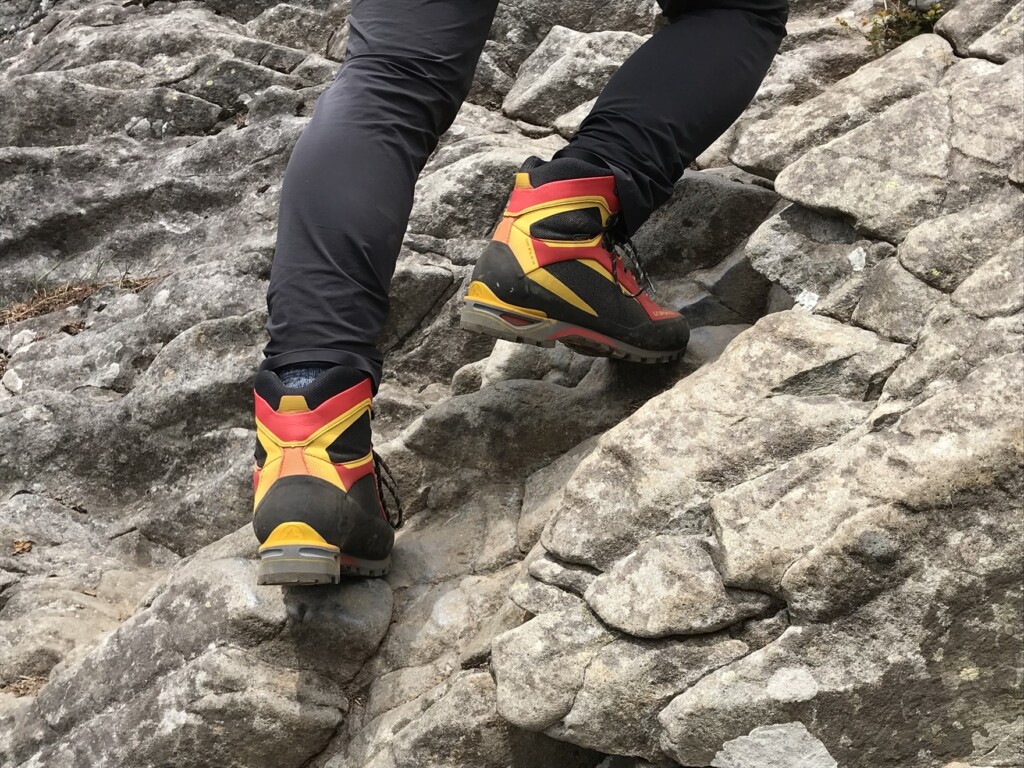 Furthermore, on downhill descents, the shoes gripped the rocks firmly and did not slip even when walking roughly. The sole used in these shoes is the same model as the Trango Cube, and it seems to combine traction, braking, and shock absorption, and I think the traction and braking performance is impeccable
On the other hand, the remaining shock absorption performance was not outstanding, and I felt fatigue and tiredness in the entire sole of my foot after walking for a long time. However, this may be because I got carried away and actively chose unstable footing for the test, and continued walking on that precarious footing for a long time (lol)
Overall, I tried to find any weak points, but honestly, I couldn't find any. If I had to point out one, it would be the insole. I think the cushioning of a shoe should be judged holistically, not just in the insole, but in combination with the midsole and outsole, but the construction feels a bit cheap. I feel like the shock absorption would be better if it were a little thicker. Well, if I had to point out one, that's it... so some people might not mind it at all
LOWA CEVEDALE PRO GT
Not only is it robustly built, but it also offers high levels of comfort and walkability!
Here's what I like about it
- Even when the laces are tightly fastened, the ankle movement is not restricted
- The perfect space for your toes allows them to move freely without pressure
- A good balance of walkability, comfort and durability, and high adaptability
Here's △
- Anyway, it's heavy
- price
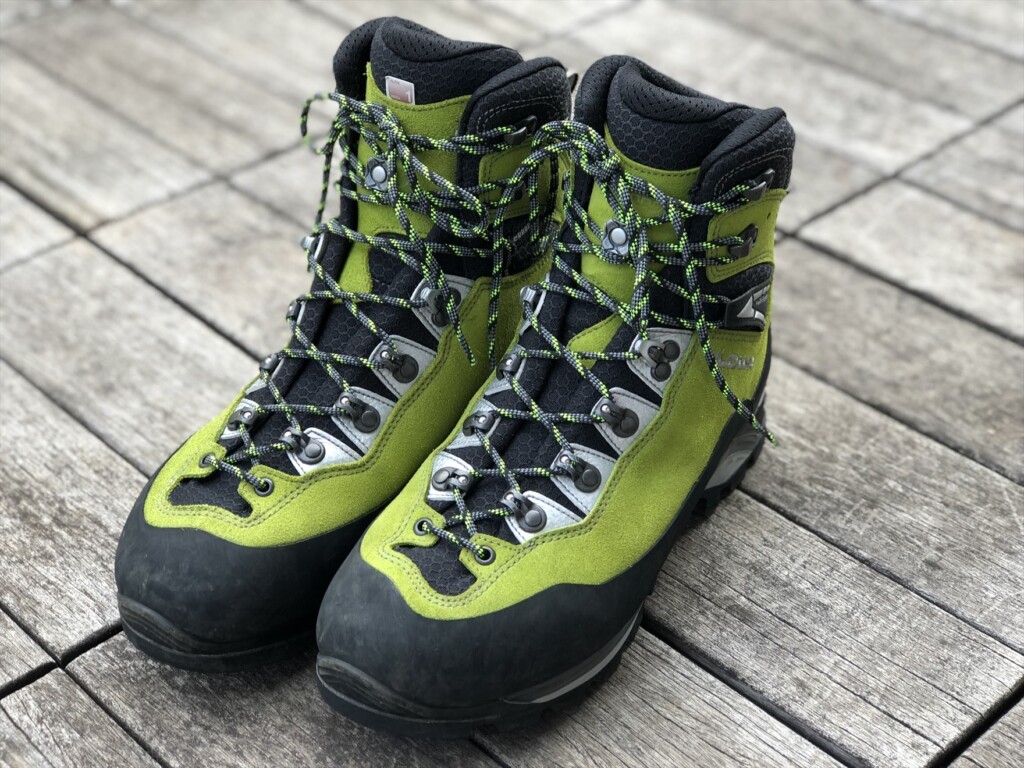 My personal second place overall is the Chevedale Pro GT . With a strong commitment to being 100% Made in Europe, the company's TAHOE is highly popular among its core fans. The Chevedale Pro GT reviewed here is positioned as the company's light alpine model.
The first thing I noticed when I put my foot in was the spaciousness in the toe area. My foot is secured on both sides, but it's neither too tight nor too loose, giving it an exquisite fit. Wearing hiking socks increases the cushioning, so much so that I doubt many people will get foot pain while wearing these shoes. The thick ankle cuff and tongue appear to contribute to the walking comfort and unrestricted ankle movement, even when the laces are tightly fastened
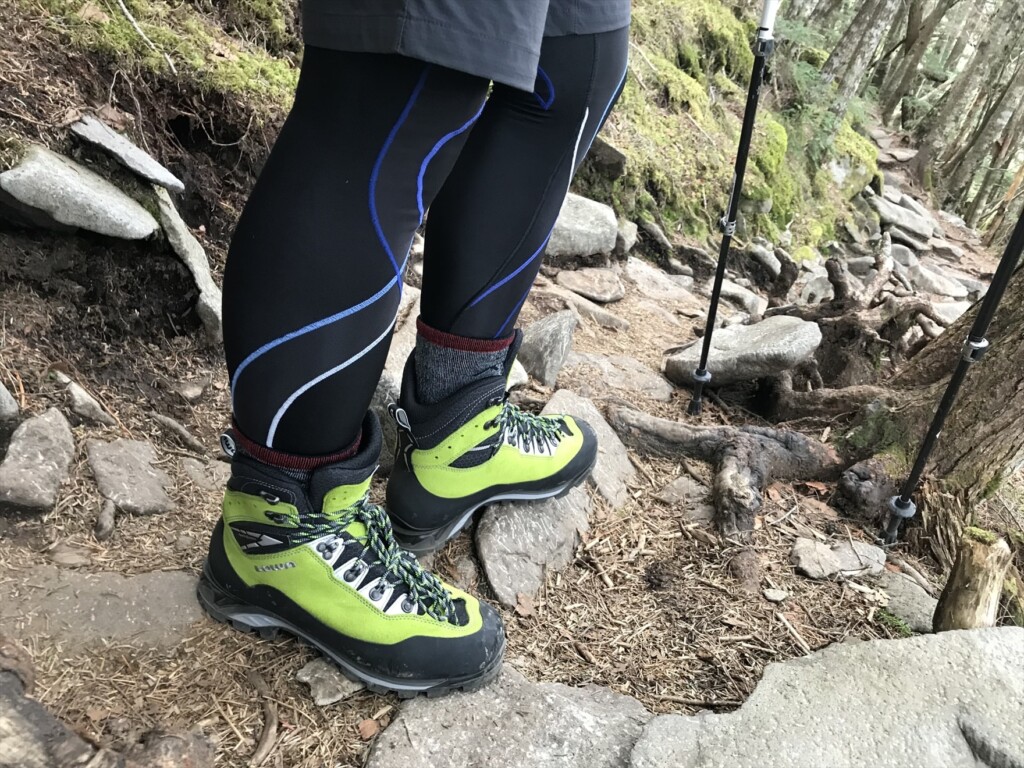 Many people prefer not to lace up to the top lacing when climbing, as increasing the ankle's range of motion makes walking easier. However, with these boots, I felt no stress even when laced all the way up. In fact, if I didn't lace them all the way up, my ankle would be too free and I even feared I might sprain my ankle on the descent. The light alpine boots I've worn in the past have had stiff soles, making them difficult to walk on flat or gentle slopes. However, these boots have a flexible sole from the instep to the shin, making them comfortable to walk in under any circumstances. At the same time, they offer stability on rocky terrain, and the ability to move your toes allows you to brace yourself when stepping onto rocky terrain using only your toes, increasing your sense of security even on unstable footing. Through my testing, I felt that these boots offer a good balance of walkability, comfort, and durability, making them a reliable shoe that can handle any situation
The only drawback was the weight. They're leather shoes, so they're naturally heavy, but at about 841g per shoe (UK size 8.5), they're comparable in weight to winter hiking boots, which is a bit of a stretch by modern standards (lol). One other thing to add is that there aren't many hiking equipment stores that have them on display and for sale. That's a shame, because they're good shoes
THE NORTHFACE Verbera Lightpacker III GORE-TEX
This versatile introductory model is particularly easy to walk in among light alpine skis, and is suitable for everything from day trips to the Alps
Here's what I like about it
- Lightweight and easy to walk in
- Cost performance
- If you're used to walking, it's versatile enough to handle everything from day trips to the Alps
Here's △
- The shoelaces are difficult to tighten and the shoes are hard to fit
- Not much traction on rocky terrain
- The fit of one-touch crampons is not very reliable
Verbella Light Packer III 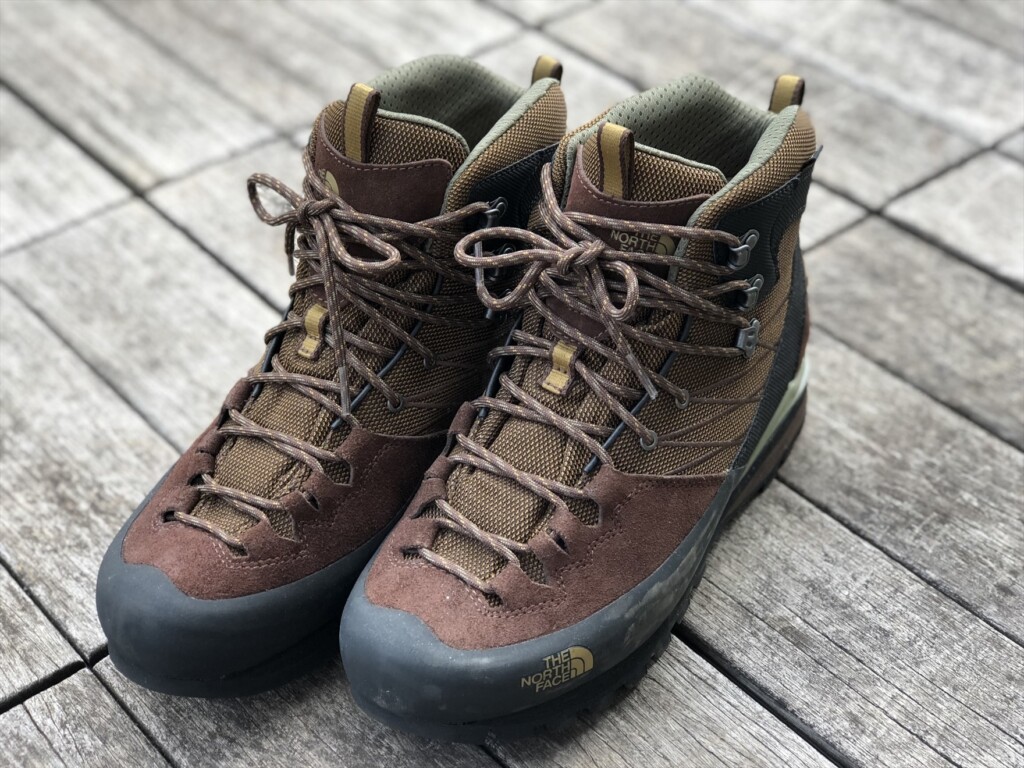 might seem like a light trekking shoe . With a welt at the heel and semi-one-touch crampon compatibility, it's likely a hiking boot designed for everything from snow-covered seasons to summer mountain traverses. Even when I checked them out at the store, they seemed to be positioned somewhere between a light alpine boot and a trekking boot. Compared to other manufacturers' light alpine models (semi-one-touch crampon compatible), they're very reasonably priced, so if they're functionally adequate, they're a bargain. Even so, I was tempted to suspect they were too cheap, but after walking around my neighborhood before my test hike, I found them to be very light and smooth. The deep toe spring (curvature in the toe area) and good cushioning make them as easy to walk in as sneakers.
 Compared to the other two pairs reviewed here, the sole is softer, making this model better suited for general mountain climbing than for ridge climbing. While I've often heard people say that North shoes are narrow, these shoes feature a unique last (wooden form) tailored to Japanese footwear, providing a wide interior and a comfortable fit. However, even when trying to tighten the entire shoe, especially the toe area, when descending, the shape and material of the eyelets require considerable force. While the cuff and tongue are also made of soft material, the laces are difficult to tighten, and the shallow cut makes the ankle hold feel weak and unsatisfying. Even on the actual mountain I visited for my test, I felt the lightness and walkability of these shoes from the very beginning. Even on rough trails, the highly cushioned sole absorbed shock, making them less tiring to walk long distances. While the sole has a climbing zone, I honestly think the toe and ankle hold are weak, and the soft sole makes them less suitable for rocky terrain. I'll discuss crampon attachment in a detailed review later. Personally, when I hear "semi-one-touch crampon compatible," I immediately think of using them in high mountains, but in the case of these shoes, they are an extension of trekking shoes, so it seems best to use crampons with laces rather than one-touch. They are excellent shoes for summer mountain climbing, pursuing lightness and ease of walking, so I recommend them to anyone who wants to cover everything from day trips to traverses with just one pair of hiking boots