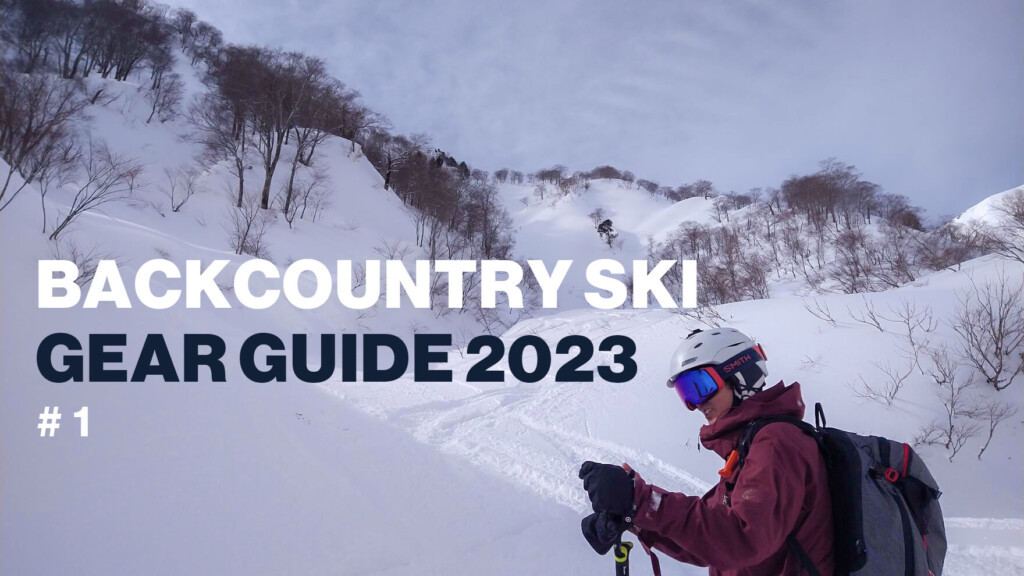
Backcountry skiing (BC), which involves climbing untouched snowy mountains and skiing or snowboarding down pristine powder slopes, is a high-level activity that requires both snow mountain climbing and skiing skills. However, the sense of fulfillment when you come across a spectacular view that you would never see in your daily life, and the sense of accomplishment when you ski down the line you intended, are all exceptional, and it would be a shame not to try backcountry skiing, especially since you live in a perfect environment like Japan, which could be called BC paradise
This time, I, a backcountry ski obsessed person (somewhat experienced in winter mountaineering and a bit of a skier), will share the list of regular equipment I'm actually carrying this season (based on the condition that I'm going on a day trip to the backcountry in Honshu in January or February). first update in two years.
Of course, these choices are based largely on personal preference and personal experience, so there may be some deviations from the basics. Of course, they may also change by next season. I've added some additional information, so please read them as a reference only, keeping that in mind. I'd also appreciate it if you could let me know if there are any better options
table of contents
- Selection criteria
- 2023 season regular equipment list and comments (wear and accessories)
- Underwear: MILLET Drynamic Mesh
- Base layer (top): Black Diamond Solution 150 Merino Base Layer Crew (or any other merino/synthetic blend base layer)
- Base layer (bottoms): MILLET waffle wool tights
- Midlayer (top): Patagonia Nano Air Light Hybrid Hoody
- Mid-layer (bottoms): mont-bell UL Thermawrap knee-long pants
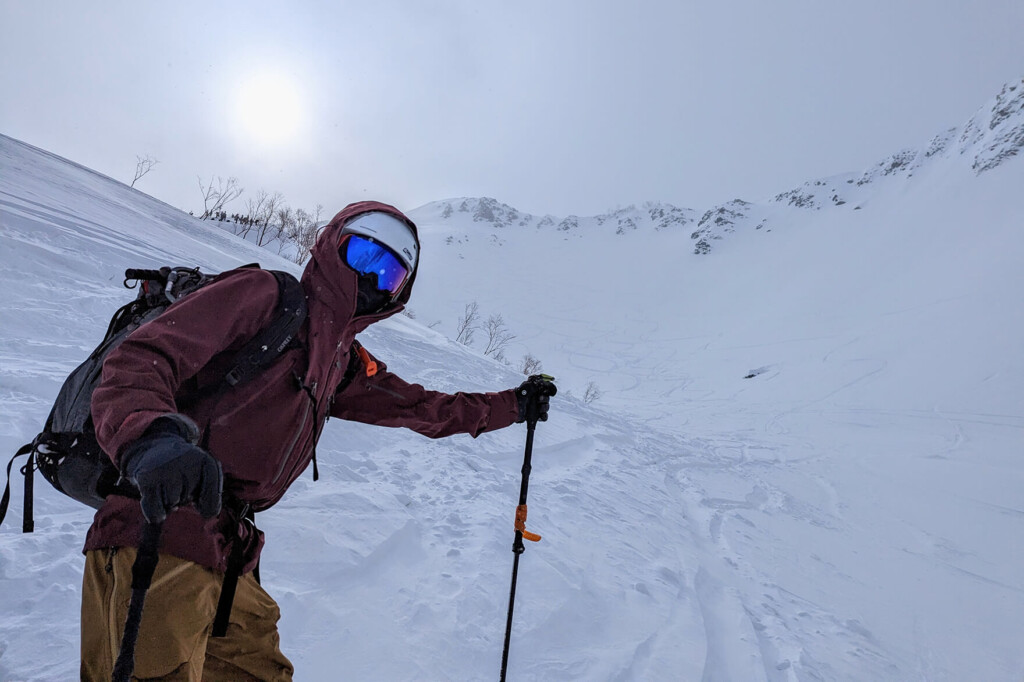
- Hardshell (tops and bottoms): Teton Bros. TB Jacket / Teton Bros. TB Pant
- Socks: YAMAtune Merino Ski Socks Freeride Pile
- Snow Gloves: Black Diamond Solano / HESTRA 3-Finger Full Leather Short
- Balaclava: Finetrack Merino Spin Balaclava
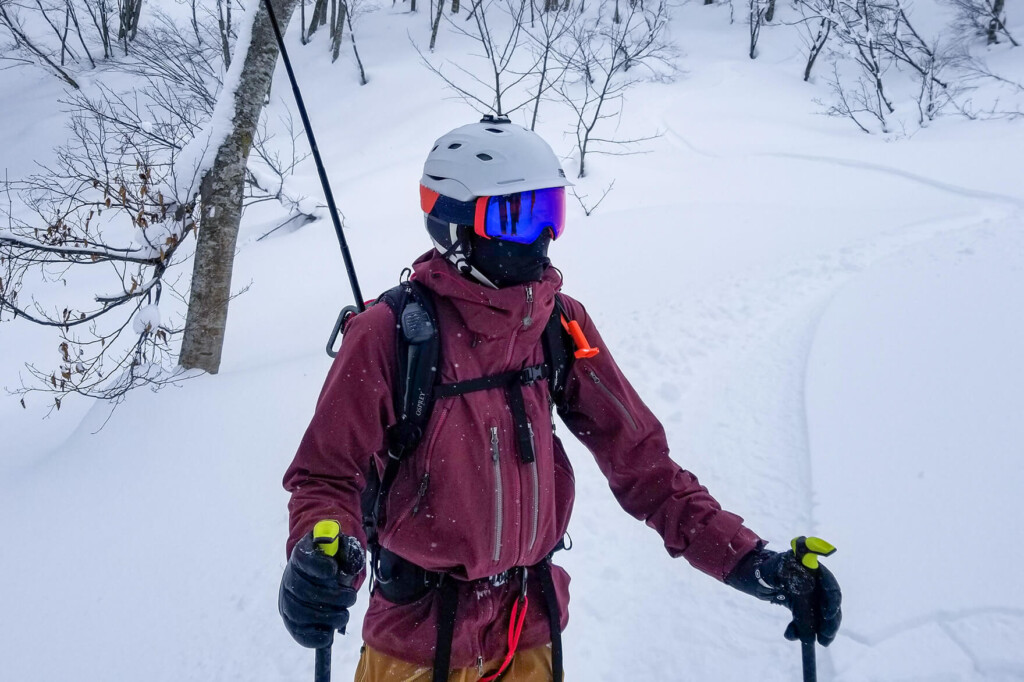
- Goggles: SMITH 4D MAG
- Helmet: SMITH Vantage
- Cold Weather Gear: Patagonia Nano Puff Jacket
- Summary: Continued in Part 2 (Snow Gear & Mountaineering Gear)
Selection criteria
When choosing tools, I paid particular attention to the following three points, in order of most to least expensive
- Safer: Even in the snowy mountains, you'll be entering valleys and streams where it's difficult to escape and there's a high risk of avalanches, so it's natural to be more careful than usual
- Lighter: It is important to avoid wasting unnecessary energy and to be able to demonstrate mobility in case of an emergency
- More powder...With my skiing skills and experience, I prioritize support for descending steep powder slopes over climbing crunchy slopes
Since we will be entering a dangerous area during the most dangerous season, January and February, preparation for avalanches and getting lost is the top priority. We will do our best to mitigate risks that can be resolved financially, and then use the remaining energy to take the easy way out
2023 season regular equipment list and comments (wear and accessories)
Underwear: MILLET Drynamic Mesh
Millet Drynamic Mesh for the harsh winter months, as it supports the sweat-processing ability of the base layer and reduces the chill felt by the skin. Depending on the weather, I've settled on a sleeveless top as my basic layer (for comfort).
Base layer (top): Black Diamond Solution 150 Merino Base Layer Crew (or any other merino/synthetic blend base layer)
As for the type and model of base layer, you don't need to be too strict as long as it's based on merino wool, but my personal favorite over the past few years has been a model that is a high-quality blend of merino wool and synthetic fibers
Additionally, during the peak season from January to February, we recommend a base layer with a balaclava hood, such as Patagonia Capilene Air, which will keep your neck warm
Base layer (bottoms): MILLET waffle wool tights
Especially for the lower body base layer, the warmth and comfort of merino wool is of course important, but ease of movement and resistance to stuffiness are also important. These tights, new this season, have excellent breathability in addition to the moderate stretch of waffle wool, so they fit perfectly, something I've never experienced with merino wool products before, and I was able to wear them comfortably even on long climbs and descents
Midlayer (top): Patagonia Nano Air Light Hybrid Hoody
This latest mid-layer, released in early 2023, combines Patagonia's advanced active insulation "Full Range" with another high-tech fleece, "R1 Air," in the right places. It's moderately warm around the shoulders, arms, and torso, while providing good ventilation in the back and underarms. It hits exactly the right balance of warmth and sweat dispersion I was looking for. Whether hiking uphill or skiing downhill, I can wear it comfortably without taking it off
products made with Polartec Alpha Direct as ever
Mid-layer (bottoms): mont-bell UL Thermawrap knee-long pants
A base layer alone isn't enough to keep the lower half of your body warm, so you'll want some kind of mid-layer to add some extra warmth. However, in backcountry skiing, ski boots are large, so even if they're padded, three-quarter length pants are best, rather than full-length ones. Montbell's unique lightweight, stretchy padding, "Exceloft®," is actually very good and easy to use, making it perfect for wearing in areas like this that aren't visible. The fact that it has a front zipper is also a nice touch
Hardshell (tops and bottoms): Teton Bros. TB Jacket / Teton Bros. TB Pant
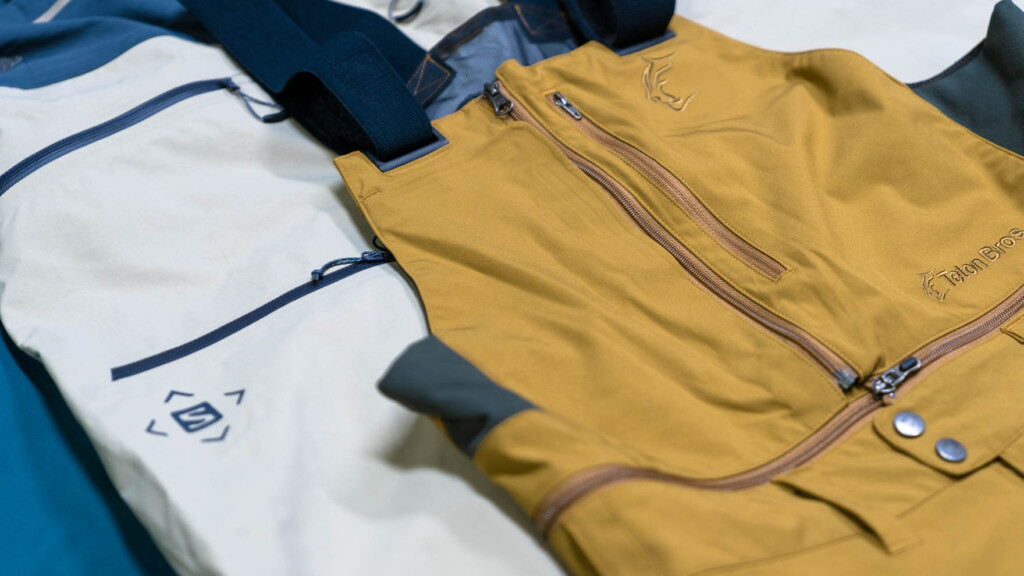
Having discovered this hard shell, there is no longer any hesitation between last season and this year. I actually tried out the waterproof and breathable fabric "Täsmä," developed in collaboration with Toray, and I could tell that it performed just as advertised. The supple and stretchy fabric is extremely comfortable to wear. It also combines high waterproofing and water repellency with sweat management capabilities, so you'll never feel too hot or too cold. Incidentally, word has spread to other members this year, and the number of Teton brothers is literally multiplying
Of course, I also love the bib bottoms. The material and design are excellent, allowing for stress-free movement, and all the essential features like ventilation and reinforced hems are included. The belly area is also softly warm, and the pockets are convenient. If I had to say something, it's that the fabric is less resistant to tearing than the thicker GORE-TEX Pro, so be careful not to snag it on crampons or ice axes

Socks: YAMAtune Merino Ski Socks Freeride Pile
For ski socks, a longer length is preferable, and since I'll be outdoors in the harsh winter, a merino wool-based model with a certain thickness would be a good choice. These socks are new to the market this season, and since I've always loved their summer socks, I jumped at the chance. They were just as comfortable as I expected. YAMAtune socks generally excel in their support (compression) and fit (stays in place). The necessary areas, like the shin, toe, and heel, are reinforced with terry cloth, providing stability and durability, which I'm very happy with. Edging skis puts more strain than I expected, and two-toe models tend to dig in a little too much between the toes, so I personally prefer these round-toe models. Incidentally, before settling on these socks, Smartwool's merino wool ski socks were my favorite. I highly recommend them, too
Snow Gloves: Black Diamond Solano / HESTRA 3-Finger Full Leather Short
If you can afford it, BD's heated snow gloves are incredibly comfortable, but they're a bit too quirky, so if I were to recommend a more universally popular favorite, I'd have to go with the world-renowned Hestra. First and foremost, they offer an exceptionally comfortable fit that only those who wear them can appreciate. They offer a natural grip, almost like a five-finger glove, while still retaining the warmth of a three-finger glove. They're made from a high-quality cowhide and goat leather hybrid that combines durability and flexibility. While wrist length and shape are a matter of preference, my current favorite is the short cuff, which provides a secure fit and is just right for wearing a hard shell (and is lightweight and compact). However, since they're not GORE-TEX, they're not completely waterproof. For wet snow or high temperatures where water is likely to seep in, you might want to consider other options. (Note: In any case, we recommend always carrying a spare pair of gloves in case they get wet and cold.)
Balaclava: Finetrack Merino Spin Balaclava
Balaclavas are essential on ridges where cold winds blow, and while warmth and breathability are essential, the design of the mouth area is surprisingly important, considering that they will be worn for long periods of time. If the mouth is completely covered, the area around the mouth will become soggy and wet from exhalation. Also, when backcountry skiing, you want to make sure it's not too thick, considering how well it will fit with your helmet. The Finetrack Merino Spin Balaclava respects. It can also be worn as a neck warmer, making it easy to adjust to the temperature, and is, without a doubt, the easiest to use.
Goggles: SMITH 4D MAG
I've been using the SMITH 4D MAG now and it remains my go-to goggle. I've been looking for a model that offers minimal distortion, high-contrast lenses, and as wide a field of view as possible, especially for the comfort of my vision, and then these cutting-edge snow goggles finally arrived.
This model not only meets the above criteria, but also features a curved under-eye area, which allows for a wider field of view, a benefit of spherical lenses, making it a highly balanced pair of goggles. It comes with two highly visible ChromaPop lenses as standard, allowing you to clearly see the contours of the snow surface in a wide range of conditions, from sunny to cloudy. The magnetic system makes it extremely easy to put on and take off, and it's fog-resistant and has an ASIA fit, so there's nothing to complain about
Helmet: SMITH Vantage
Of course, the helmet's fit to the shape of your head and design are important, but from experience, I feel that the fit of the goggles and their fogging tendency (breathability) also have a huge impact. Helmets with poor ventilation tend to make the goggles fog up easily, and sometimes the helmet pushes the goggles down, making it difficult to breathe. After trying various options, I came to the conclusion that it's best to match goggles and helmets from the same brand
So, the Smith Bandage not only provides safety, but also a good fit thanks to the Boa system and excellent ventilation thanks to SMITH's unique ventilation system, "AirEvac Structure," which has solved all of my previous problems beautifully. I wish it was a little lighter and more compact, but maybe that's asking too much
Cold Weather Gear: Patagonia Nano Puff Jacket
My regular backup winter gear is Patagonia's standard insulation, which could be said to have "come full circle." Of course, there are more high-performance models available. To be honest, when it comes to day trips to the base camp, I've rarely had to wear a backup winter gear like this, since I'm always careful with my usual layering. In that sense, my current prioritization is to prioritize the bare minimum of warmth and, above all, compactness, so I rely on this, which I can easily throw in the bottom of my pack
However, the Primaloft Gold filling provides excellent heat retention, and the jacket is lightweight and compact, so it is probably quite reliable as cold weather clothing
Summary: Continued in Part 2 (Snow Gear & Mountaineering Gear)
This concludes the first half of the 2023 Backcountry Skiing Equipment List. Next time, we'll finally move on to the second half, where we'll talk about equipment such as backpacks, skis, and mountaineering gear. We hope this gear list will be of some help to those who want to get started in backcountry skiing but don't know what equipment to get and how much
Related reading