Breathtaking panoramic views from mountain ridges, exhilarating powder snow skiing kicking up spray—the best moments in the outdoors pass by in an instant. That's why 360-degree cameras, which allow you to simply "keep recording" without worrying about composition and then extract the best angle later, have become an indispensable recording tool for many outdoor enthusiasts, from mountaineers to skiers
AKASO , a company that has been steadily increasing its market share in the action camera market in recent years by offering "high cost-performance," has finally released its 360-degree camera, the " AKASO 360. "
With dual 1/2-inch sensors for up to 5.7K resolution, image stabilization with horizontal locking and AI tracking, and low-temperature capability (optional), the specifications seem unbelievable for a price under 30,000 yen, but the real capabilities can only be determined by actually using it. Questions like, "Is the actual image quality satisfactory?", "Can it operate in sub-zero temperatures on snowy mountains?", and "How user-friendly is it, including post-production editing?" remain to be seen
I'll give you an unbiased report on my thorough field testing of the AKASO 360 , comparing it briefly with the Insta360 X5, which I currently use and which is leading the market
table of contents
- First Impressions
- Practical Review: My capabilities and limits revealed through low-mountain hiking and backcountry skiing
- With a "low-temperature resistant battery," you can achieve sufficient battery life even in cold temperatures
- The simple operation, which prevents accidental button presses, is a plus (though it also has its drawbacks)
- While the image quality isn't bad, it might struggle in high-contrast environments like snow-covered mountains or natural landscapes
- While relatively lightweight and simple apps are easy to edit with, their functionality is limited
- Summary of comparisons with competitors: A comparison with the Insta360 X5
- Summary: For what type of user is AKASO 360 recommended?
First Impressions
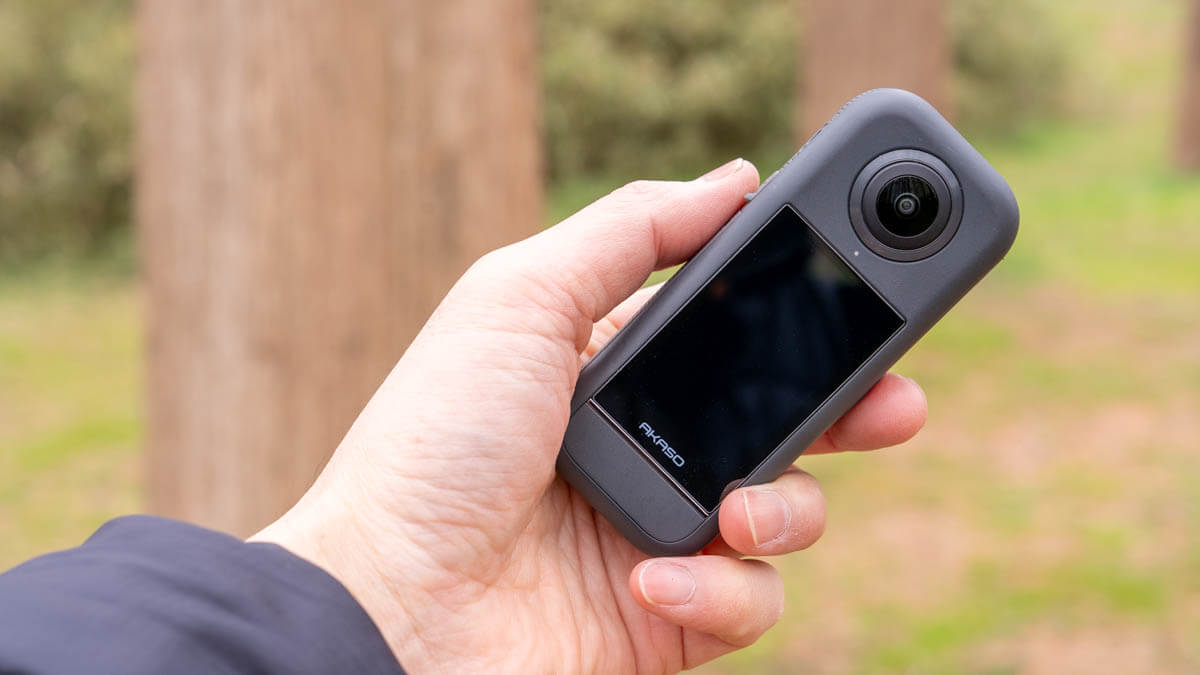
The first thing you notice when you open the package is the "lightweight and compact" design, which is a refreshing change from a 360-degree camera. This is a very positive surprise for me, as I've been growing increasingly frustrated with how big and heavy Insta360 cameras have become in recent years. Naturally, this lightness and portability are a huge advantage, especially in mountaineering where every gram counts
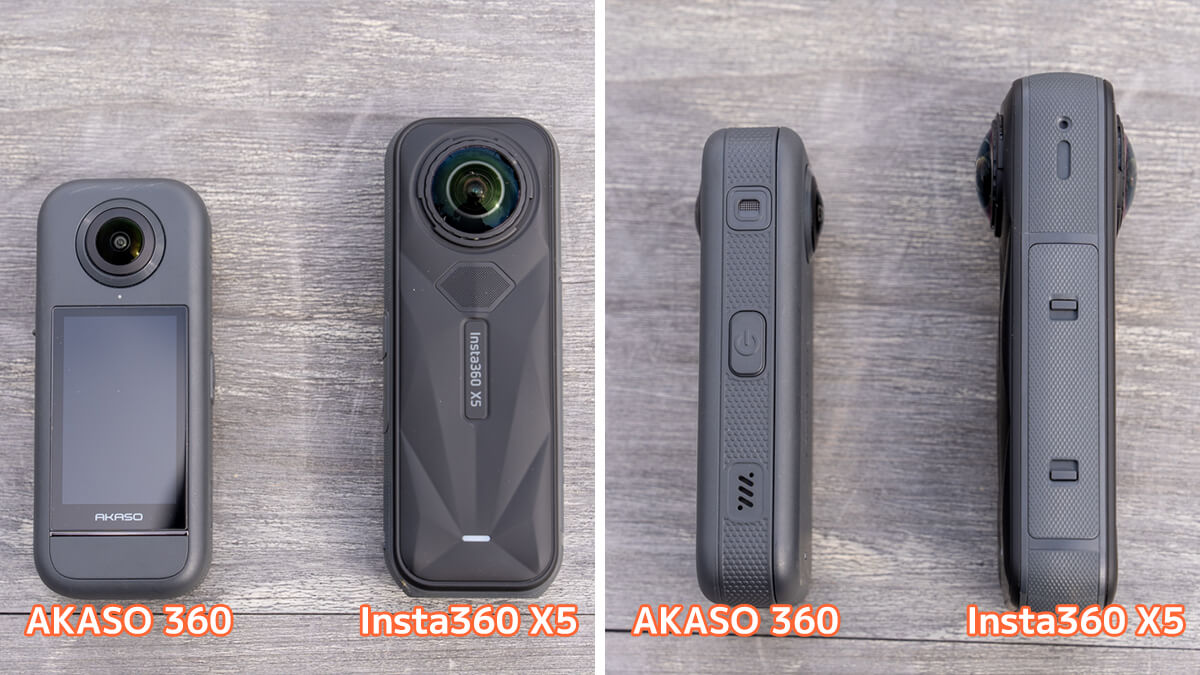
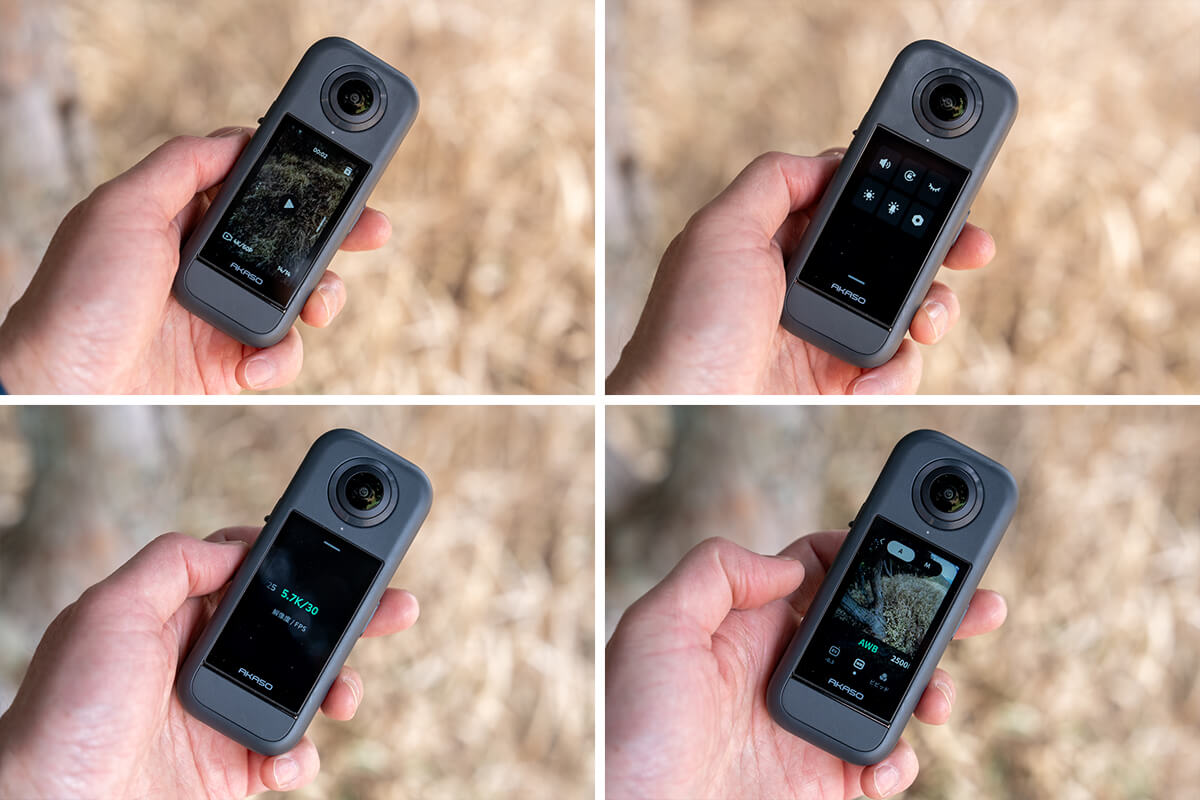
Furthermore, the extremely simple operation is also a positive point. The body only has an ON/OFF switch on the side and a start/stop recording button on the front. Everything else is done on the 2.29-inch touchscreen, resulting in a simple configuration with no complex menu hierarchy, making it easy for even beginners to intuitively start shooting
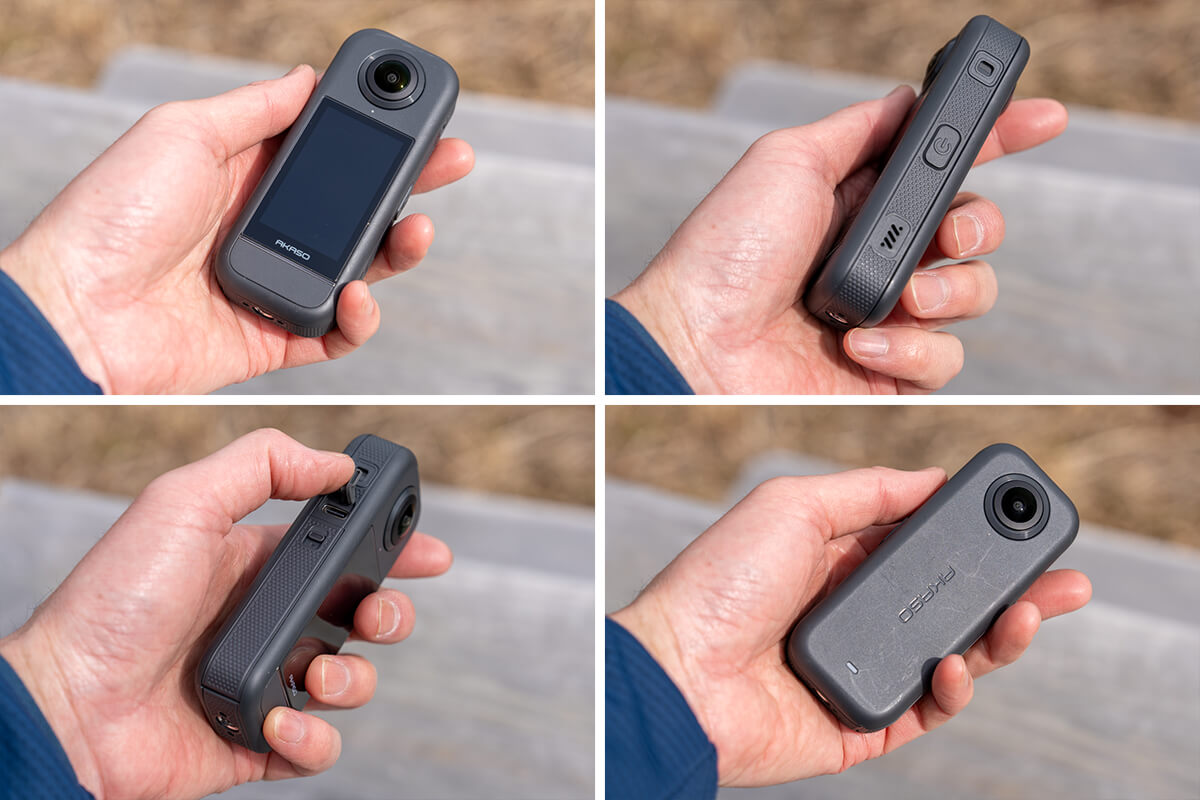

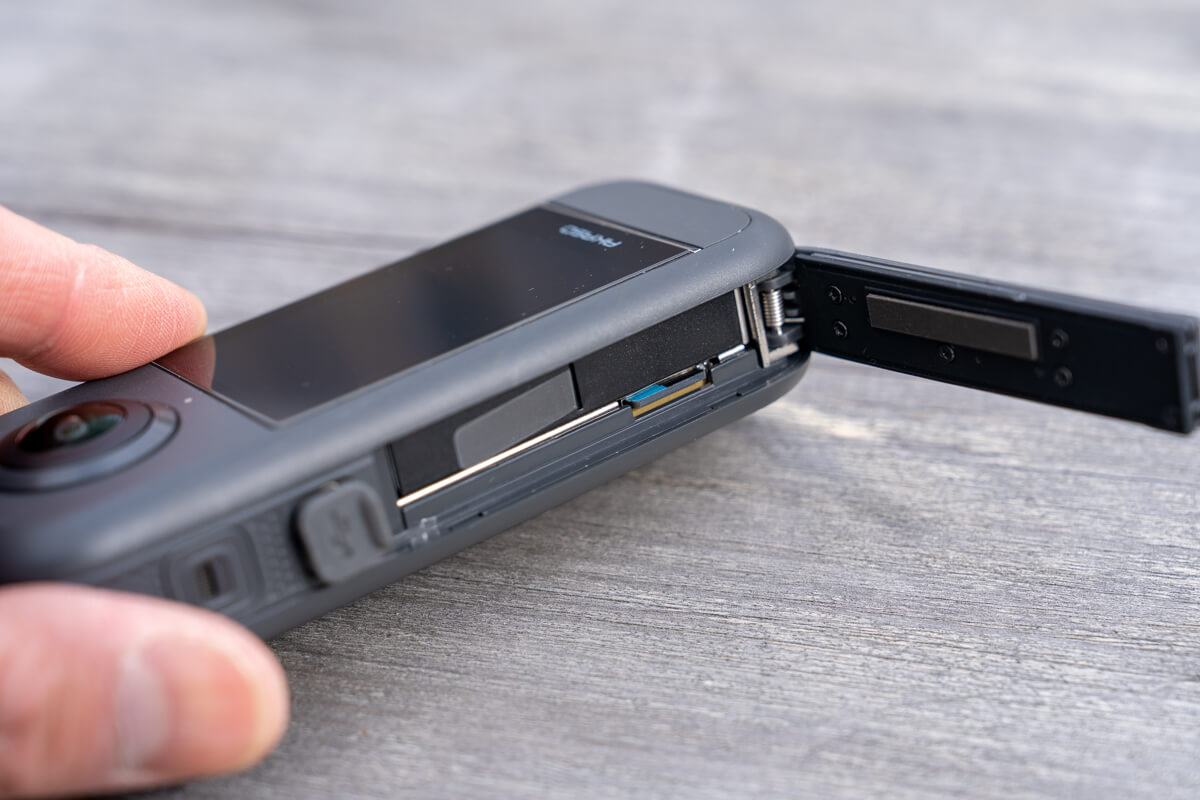
The exterior is a bit glossy and has a plasticky feel, but even when I carelessly placed it on rocks and snow, I didn't feel any concerns about its durability. It's advertised as "all-weather waterproof," so it should be fine as long as you don't submerge it in water. The USB and battery compartments are well-sealed, and after using it for a month in the snowy mountains, I can say it's tough enough to withstand rough handling and gets a decent score in mountain environments
Practical Review: My capabilities and limits revealed through low-mountain hiking and backcountry skiing
With a "low-temperature resistant battery," you can achieve sufficient battery life even in cold temperatures
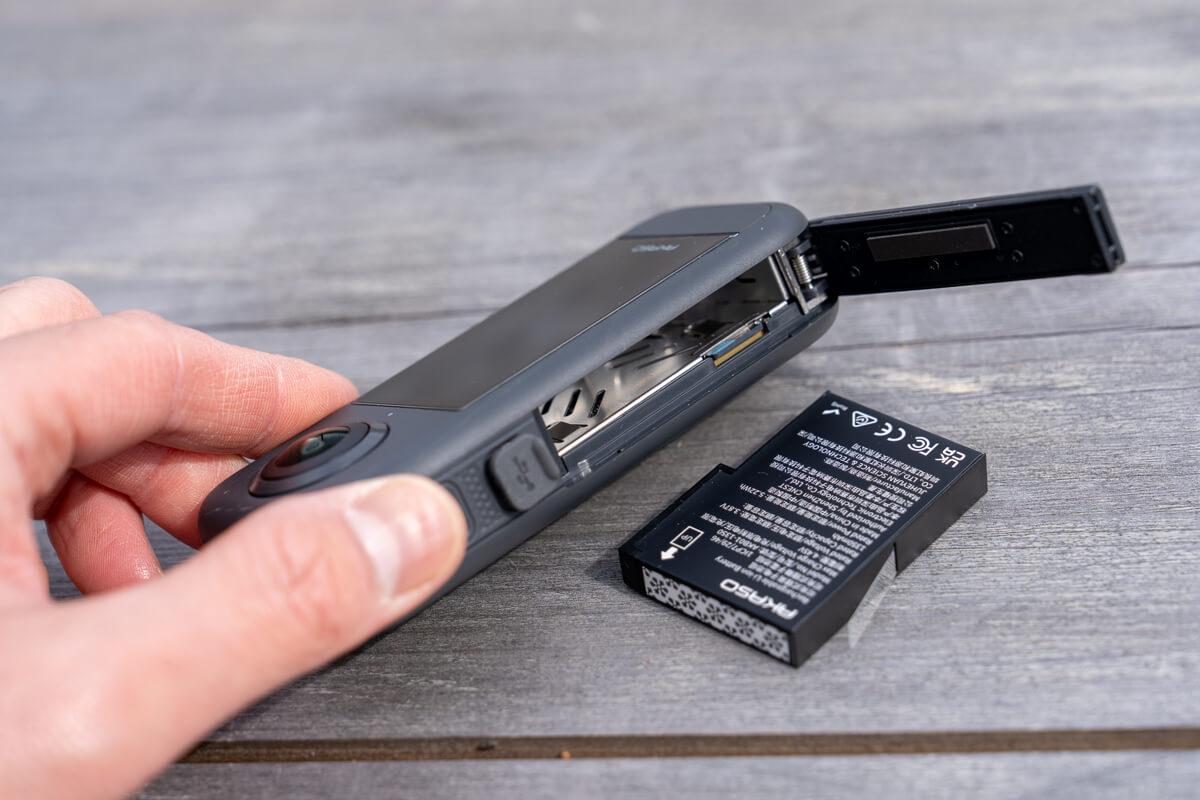
For me, the most frequent use of a 360-degree camera is shooting videos of skiing in the backcountry, so my biggest concern was battery life in snowy mountains, to prevent sudden shutdowns due to voltage drops in sub-zero environments. Since regular batteries are only designed to withstand temperatures down to 0°C, I naturally used a "cold-resistant battery" for this test. As a result, the AKASO 360 showed sufficient battery life even in cold regions (even at temperatures as low as -10°C). The battery life is about 1 hour per battery, which I think is the limit for a camera of this size. Personally, I only use it for "special" moments like when I'm on a ridge or skiing, and I don't shoot for very long periods, so it didn't bother me, but it might not be enough for people who want to shoot continuously
The simple operation, which prevents accidental button presses, is a plus (though it also has its drawbacks)
While my use case is somewhat limited to snowy mountains, for someone like me who often uses it while wearing gloves, the simple design with "one recording button on the front" was very reassuring and easy to use. It also has my favorite feature, the "Quick Capture" function, which automatically turns on the power and starts recording simply by pressing the record button, even when the power is off (this function is off by default, so you should change the setting if needed)
However, the trade-off for its simplicity is the frustration of not being able to use features that go beyond the bare minimum of convenient functions—features that are "one step further."
For example, it lacked a scene-specific "preset function" that allowed users to set detailed image quality settings for each scene, and it also lacked a list view on the video playback screen. These were minor but subtly convenient features, so there were some complaints about the usability
While the image quality isn't bad, it might struggle in high-contrast environments like snow-covered mountains or natural landscapes
Another crucial aspect is image quality. While it can be evaluated to a certain extent, I got the impression that you have to compromise in extreme situations. So, I mounted the AKASO 360 and Insta360 X5 on a 1m selfie stick on the back of my backpack and compared the image quality while walking along a ridge and through a wooded area
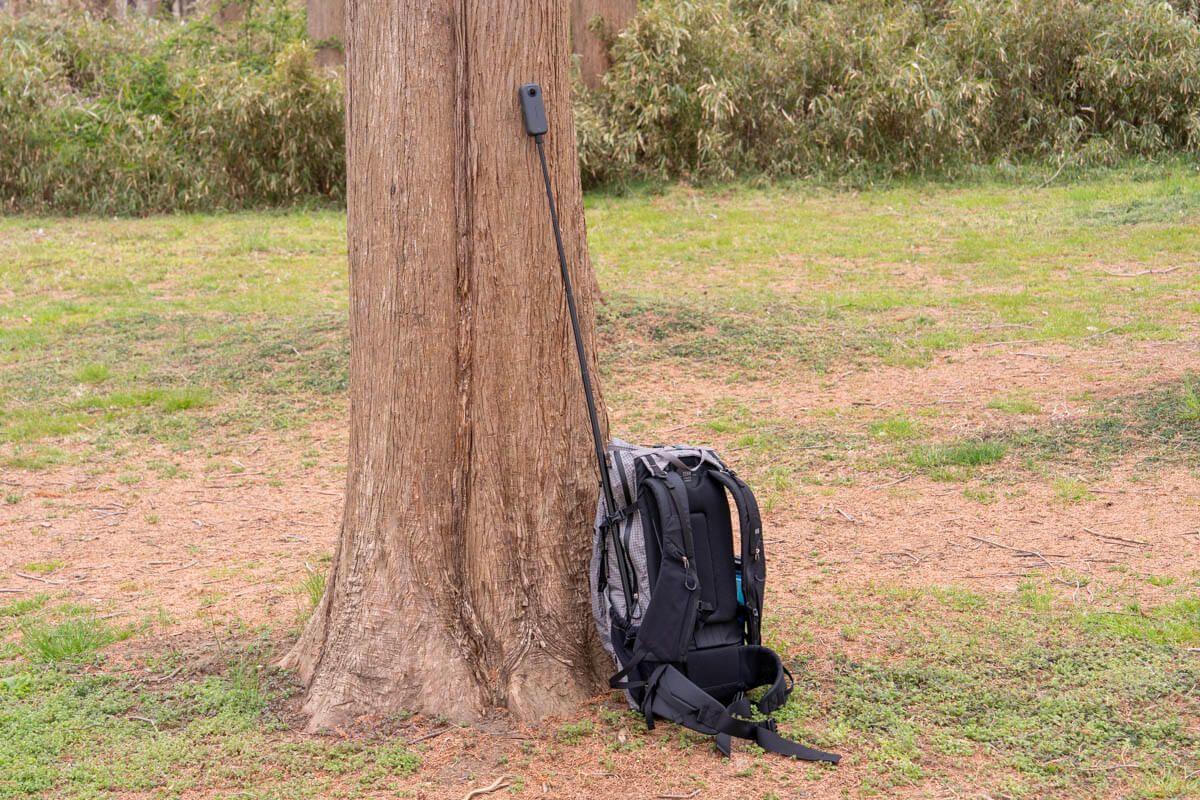
When hiking, attaching a selfie stick and camera to the side of your backpack is convenient because it leaves your hands free, allowing you to take photos of the scenery while walking
During typical low-mountain hikes, the camera captured individual subjects such as the blue sky, clouds, trees, and people beautifully and consistently. the Insta360 X5 , the overall resolution and color reproduction are admittedly a bit inferior, giving the impression of being a "previous generation model," but considering the price, it's still perfectly satisfactory. Furthermore, distortion and lens stitching aren't particularly noticeable, and the image stabilization function for shaking and blurring while walking or skiing works quite well, which is to be expected from a 2026 model.

However, it can't quite compare to the X5, and my personal impression is that it's more of a superior version of the X3. That said, as someone who has been using 360-degree cameras since the X2 era, I think it would be quite appealing to someone who is using a 360-degree camera for the first time

However, especially in environments with extreme contrasts like snow-covered mountains, the narrow dynamic range became apparent, and I couldn't help but feel it was quite challenging. Details on the snow surface were often blown out, and if I lowered the exposure, shaded areas and people would be completely blacked out. I thought I could fix it in editing, but there were many issues that couldn't be resolved even during editing, such as color noise and unstable colors, which left me feeling quite frustrated when shooting in snow-covered mountains. I imagine that this narrow dynamic range would also be a problem in extremely dark environments that I didn't test this time

![[Sound on] I was skiing down Tanigawadake on a clear day with AKASO 360](https://i.ytimg.com/vi/-oYqgAsOgkA/hqdefault.jpg)
While relatively lightweight and simple apps are easy to edit with, their functionality is limited
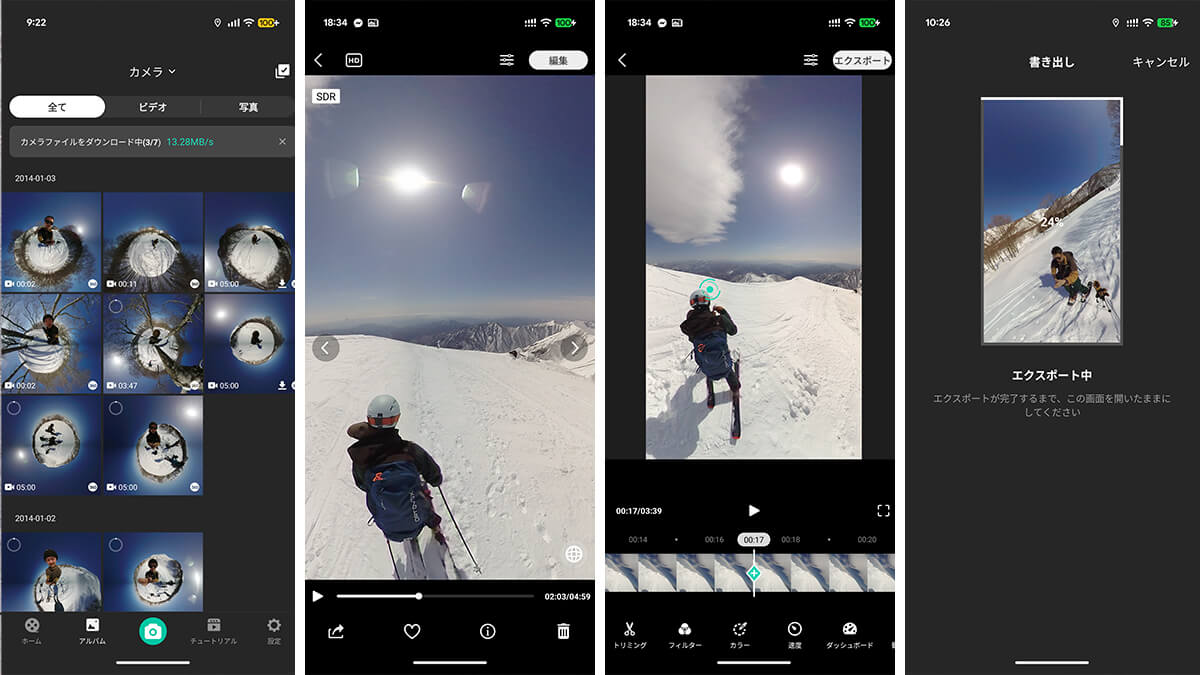
When evaluating a 360-degree camera, one crucial aspect is "post-production editing." AKASO's dedicated app worked fine for basic cropping (reframing) and exporting on both smartphones and PCs. In fact, compared Insta360 's editing app, which has become increasingly complex and sluggish due to recent updates, AKASO's app retains a more traditional, simple UI, which is preferable. In that sense, it's just the right level of user-friendliness for someone editing 360 videos for the first time.
However, even here, it cannot be denied that minor frustrations accumulated as I continued to use and get used to the device. For example, the lack of editing functions for color, style, and movement. Even when trying to correct blown-out highlights, crushed blacks, and adjust the color using the app or PC software, subtle color adjustments are not satisfactory even with editing software (although this may not be a problem with the editing software). Also, while it is not impossible to create the dynamic frame movements unique to 360 video, manually adjusting them feels quite tedious. Furthermore, there were several instances where the Wi-Fi connection between the smartphone and the camera became unstable in remote mountainous areas with poor signal reception. When I wanted to download the video to edit it on my smartphone immediately on location, it was somewhat frustrating
Summary of comparisons with competitors: A comparison with the Insta360 X5
Here's a comparison with the reigning champion , the Insta360 X5,
| Comparison items | AKASO 360 | Insta360 X5 |
|---|---|---|
| Price range | Extremely reasonable (◎) | Expensive (△) |
| Size and weight | Lightweight and compact (◎) | Slightly heavy and large (△) |
| Operability (on-site) | It's simple and beginner-friendly, but it has limited capabilities (○) | It's multi-functional, but requires some getting used to (○) |
| Image quality and color reproduction | Susceptible to noise, overexposure, and underexposure (△) | Outstanding resolution and dynamic range (◎) |
| Apps and editing | The basic functions are easy to use, but it's weak in advanced editing (○) | It has many powerful features such as AI editing and color correction, but it is slow to run (○) |
| Battery (snowy mountain) | The battery is suitable for cold climates and is perfectly practical (○) | Stable performance with a battery designed for cold climates (◎) |
Summary of the advantages and disadvantages of AKASO 360
Based on the field tests conducted so far, here's a summary of the strengths and weaknesses of the AKASO 360
Strengths (GOOD)
- Overwhelming cost performance
- Lightweight and compact body, perfect for mountain climbing
- Simple operation that even beginners won't get lost in
- It has sufficient durability and weather resistance to withstand rough handling (although it doesn't have a lens protector)
- Practical battery performance that can withstand sub-zero temperatures even in snowy mountains (with a separately sold cold-weather battery)
Disadvantages (BAD)
- Image quality and color reproduction are at the level of the previous generation (lots of color noise)
- Overexposure and underexposure in scenes with extreme contrast (such as snow-covered mountains)
- The app lacks functionality (cannot display a list of videos, advanced color correction is not possible)
- Unstable smartphone connectivity in environments with weak signal strength
- There is a lens cap as an accessory, but no lens protector
Summary: For what type of user is AKASO 360 recommended?
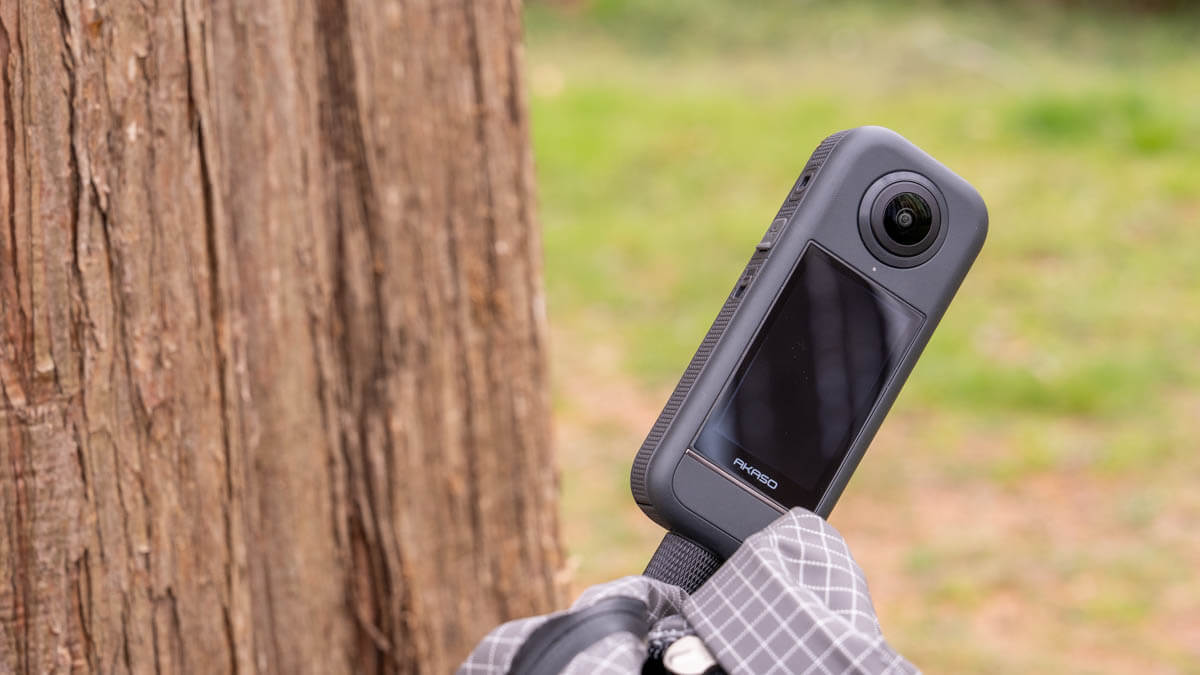
the AKASO 360 in the harsh environments of hiking and snow-covered mountains, which are different from everyday life and travel, is that "for hiking, trail running, and camping during snow-free seasons, it offers sufficient cost performance, but whether it can provide satisfactory image quality in high-contrast environments such as snow-covered mountains is questionable."
However, this is probably influenced to some extent by the fact that I the Insta360 X5 , and in that sense, it can be said that it is a perfectly worthwhile option for first-time 360-degree camera users who want to "shoot 360-degree videos casually during green season outdoor activities such as hiking, fishing, running, motorcycling, and camping, while keeping their budget down."
The fact that you can use it roughly in wooded areas and rocky ridges without fear of damaging the camera is a strength unique to this price range, and allocating the saved budget to other gear is a smart choice for any outdoorsman
Conversely, for those already accustomed to the image quality and powerful editing apps of other companies' high-end models, it would be a lie to say they won't be frustrated. The roughness of the video expression and the limitations during editing will be noticeable, and there's a high probability that even if you introduce it as a secondary camera, you'll end up not using it
The AKASO 360 isn't equipment for creating the "perfect work," but rather a tough companion for easily and reliably capturing the atmosphere of a moment. That's its true position. 360-degree cameras have become quite expensive these days, but if you haven't yet realized their value and practicality, why not try capturing your travel memories with this new camera?
Please consider our paid membership, which gives you access to premium content and exclusive events!
Related reading