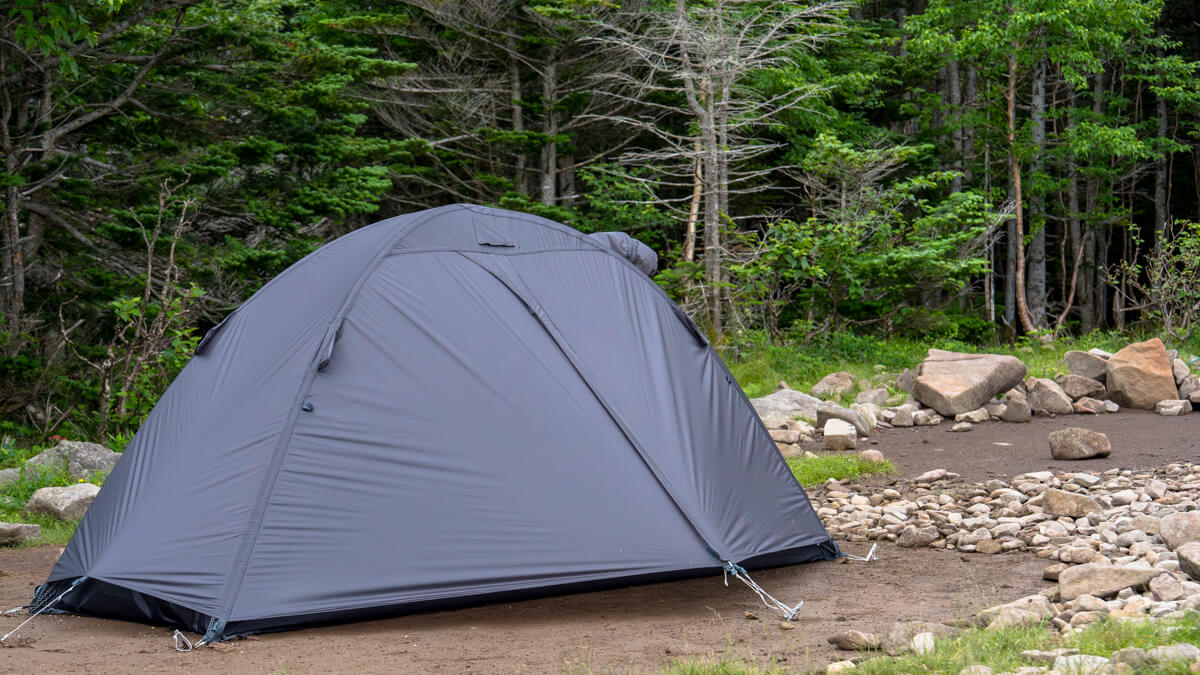
Tents for mountain climbing and hiking come in a variety of shapes and structures, but the most popular style in the Japanese mountain climbing community is undoubtedly the "freestanding (dome-shaped) double-wall type."
There are several possible reasons for this, but the main factors include the unique circumstances of mountain climbing in Japan, such as the fact that compared to hiking in North America and other places, tent sites are often located on ridges in steep mountainous areas where the wind is strong, space is limited, and the ground is hard and difficult to drive pegs into, and the need for high strength to withstand snowfall
As you all know, there have long been many excellent models of "freestanding (dome-type) double-wall" tents in Japan. They have long been popular among many climbers as standard models, but they have also long been in a rut, with the result that they are too stable and it has been difficult to come up with new groundbreaking ideas
However, in 2024, a new tent appeared that may change this long-standing situation and make us think that the tide may finally be turning. This is the mountain tent " arata AX series " that we will introduce here.
Simply put, a tent that is orders of magnitude lighter and more compact than conventional tents, while still being strong enough to withstand the harsh weather conditions unique to Japan's mountainous regions. This is easy to say, but the reality is that this has not been realized for decades. The " Arata AX Series" has overcome this hurdle with a groundbreaking idea and has been beautifully realized.
This summer, Outdoor Gearzine tried out the single-person, freestanding double-wall tent " Arata AX-79 " on a tent-camping trek in a variety of situations, and its amazing performance and the new possibilities for freestanding tents gave us a fresh sense of excitement that we had almost forgotten.
So this time, we will be reviewing AX series ' flagship model, the arata AX-79 , focusing on the innovativeness of this tent and the areas where we hope to see further evolution and improvement
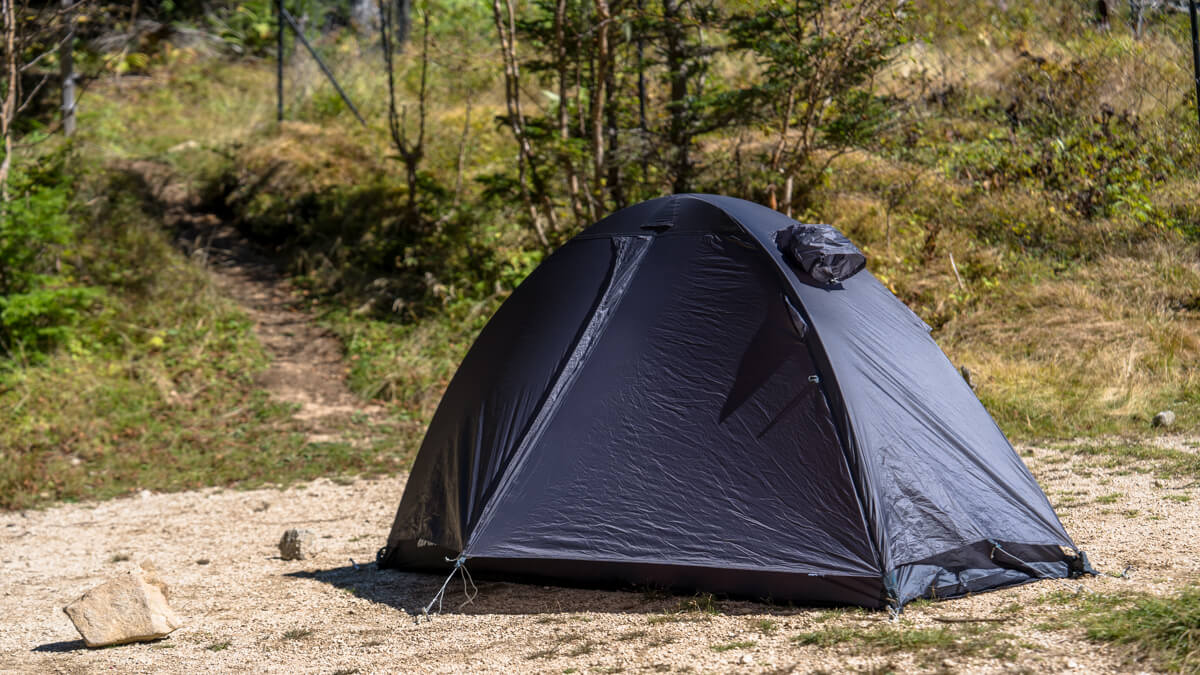
table of contents
- Main features of the arata AX-79 (AX-75, AX-130)
- Detailed Review
- Weight and compactness: Lightest weight freestanding double-wall tent
- Accessories and setup: Easy to set up anywhere thanks to the freestanding tent
- Robust and durable: Robust enough to withstand use in Japan's mountains all year round
- Comfort inside the tent: Although the space itself is minimal, the front and rear rooms are excellent and don't feel cramped
- For petite people or those who want to make their bag as light as possible, even if it's a bit cramped, we recommend the even lighter model, the AX-75
- Along with this lightweight and durable tent, Arata will be releasing a series of even more ambitious related items
- Summary: Overall, this is the best mountain tent currently available, offering the best balance of lightness, strength, comfort, and price
- A guest talk will be held at Outdoor Gearzine's offline event on Sunday, December 1st!
Main features of the arata AX-79 (AX-75, AX-130)
The arata AX-79 is a four-season, freestanding, double-wall tent for mountaineering that combines strength, lightness, and functionality. While achieving a minimum weight of just 915g through the use of lighter poles than conventional tents, the unique sleeve hub structure, guy lines, and highly wind-resistant design ensure it rivals the strength of conventional mountain tents. While maintaining a minimal interior space to balance weight and comfort, the unique rear compartment provides enhanced living comfort and excellent ventilation. Other ingenious features, carefully considered to maximize comfort and ease of use, minimize user stress. The series includes the two-person AX-130 and the AX-75, ideal for smaller people. This package includes the tent, rainfly, and poles, as well as a groundsheet and pegs, making it a complete package for your first tent adventure.
Favorite points
- The lightest freestanding double-wall tent in its class
- Freestanding tents are easy to set up and can be set up anywhere
- Durable enough to be used in Japan's major mountains throughout the year, including snowy mountains
- Despite the minimal living space, the front and rear compartments do not feel cramped
- Good ventilation, including mesh at the entrance, ventilation, and rear door
- Double-walled construction provides high waterproofing and condensation resistance
- Despite its performance, it comes with a footprint and pegs and is reasonably priced
Points of interest
- The inner guy lines can get caught and get in the way (they are removable)
- The interior mesh pocket is small
- The rear ground sheet (optional, sold separately) is easily removed with Velcro fastening, allowing raindrops to easily flow in from the rain fly
Main specifications and evaluation
| item | Specifications and reviews |
|---|---|
| Number of people sleeping | 1 person |
| minimum weight | 915g (weight of inner tent, rain fly and poles only) |
| gross weight | 1060g (weight including guy lines, pegs and storage bag) |
| Fly material | 15D ripstop nylon, water resistance 1,200mm, silicone coating |
| Inner (canopy) material | 10D breathable nylon |
| Inner (floor) material | 15D ripstop nylon, water resistance 1,500mm, silicone coating |
| Pole material | DAC Featherlite NFL 8.7 |
| Room size | 210×80×98 cm |
| Number of entrances and exits | 1 on the long side (there is a window to the rear room on the opposite long side) |
| Storage size | 24×17×11 cm |
| Floor area | Approximately 1.7㎡ |
| Front chamber area | Approximately 1.0 (0.5×2)㎡ |
| accessories |
|
| Living Comfort | ★★★★☆ |
| Ease of setup and takedown | ★★★★☆ |
| weather resistance | ★★★★★ |
| durability | ★★★★☆ |
| weight | ★★★★★ |
| Portability | ★★★★☆ |
| Cost performance | ★★★★★ |
Detailed Review
Weight and compactness: Lightest weight freestanding double-wall tent
Stellaridge Tent is a standard mountain tent that can now be found at any tent site , but the official minimum weight for a single-person tent is 1,140g. Looking at other conventional freestanding tents currently on the market, it's rare to find a model that weighs less than 1kg and is designed for year-round use in Japan's mountains.
The Arata AX-79 weighs just 915g, well under 1.1kg. What's surprising is that this is not just a tent for mid- to low-altitude mountain use in spring and summer, but a freestanding tent suitable for all four seasons (see table below).
| Product name | Official minimum weight (inner, rainfly and poles) |
|---|---|
| Arata AX-79 | 915g |
| Mont-bell Stellaridge 1 | 1,140g |
| Arai Tent Air Rise 1 | 1,360g |
| Nemo TANI OSMO™ 1P | 1,120g |
| finetrack Kamina Dome 1 | 1,130g |
| PuroMonte VL-18 4S | 1,190g |
| ZANE ARTS YAR-1 | 860g |
As I have written several times on this site, tents are one of the "big four" heaviest items of mountaineering equipment, along with backpacks, sleeping bags, and mats, and the 200 grams that can be saved by this model has a significant impact on the overall packing weight, especially when compared to the few tens of grams that can be achieved by switching from aluminum to titanium cooktops
When you actually hold it, it's clear how light it is, and even with all the accessories packed together, it's compact enough to fit in one hand
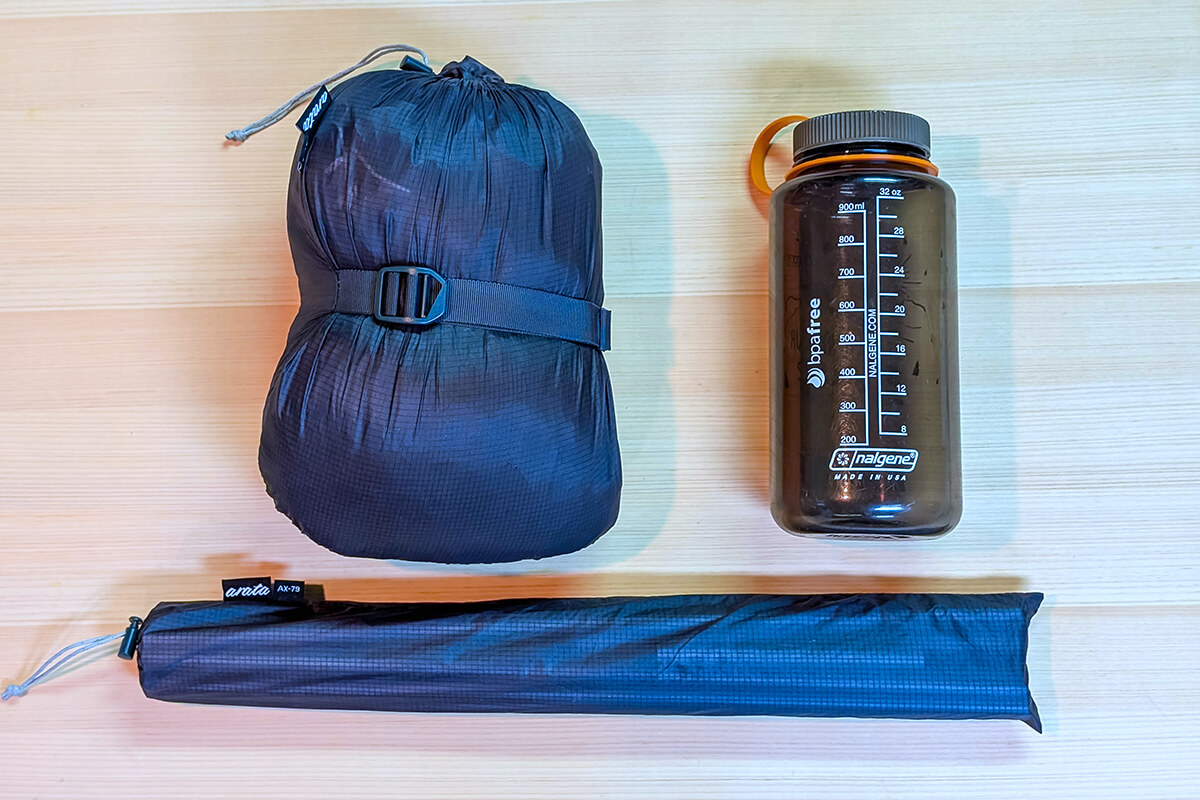
Why is this tent so light? It's the result of careful consideration that has been taken into account a variety of factors
For example, the tent fabric has been made lighter. The inner tent is made of 10D ripstop nylon, which is as thin as possible for a tent, and the inner floor and rain fly are made of thin 15D PU-coated ripstop nylon, making it the lightest in its class, and reducing weight to the utmost
However, it's true that other models have attempted similar levels of weight alone, and they still can't get the weight below 1kg. The AX-79 's outstanding weight reduction can be seen in the fact that the poles (which have a significant impact on weight) are made of the DAC Featherlite NFL 8.7, an ultra-lightweight aluminum alloy that has never been used in a four-season, full-scale mountain tent before. The official website lists the detailed performance differences, and claims that these poles are approximately 22% lighter than the DAC Featherlite NSL 8.5, which has traditionally been used in this type of mountain tent.
Furthermore, the size of the tent and the small parts were thoroughly considered to minimize the weight of the fabric and parts, resulting in a new level of weight of approximately 900g
However, what's even more amazing about this tent is that even after all the stripping down, it still retains its durability and comfort as a tent, and we'll get to that later
Accessories and setup: Easy to set up anywhere thanks to the freestanding tent
the AX-79 , you not only get the main set, but also a dedicated ground sheet, guy lines (4 inner, 4 outer), and 8 pegs, so you have all the equipment you need for normal mountain climbing without having to buy any options separately. In particular, since the floor is made of thin fabric to reduce weight, a ground sheet seems essential, so it was a wise decision not to sell it separately. Personally, I would also recommend purchasing a "rear compartment ground sheet" in addition to this standard set, as it greatly increases comfort, so if you can afford it, I highly recommend getting one.
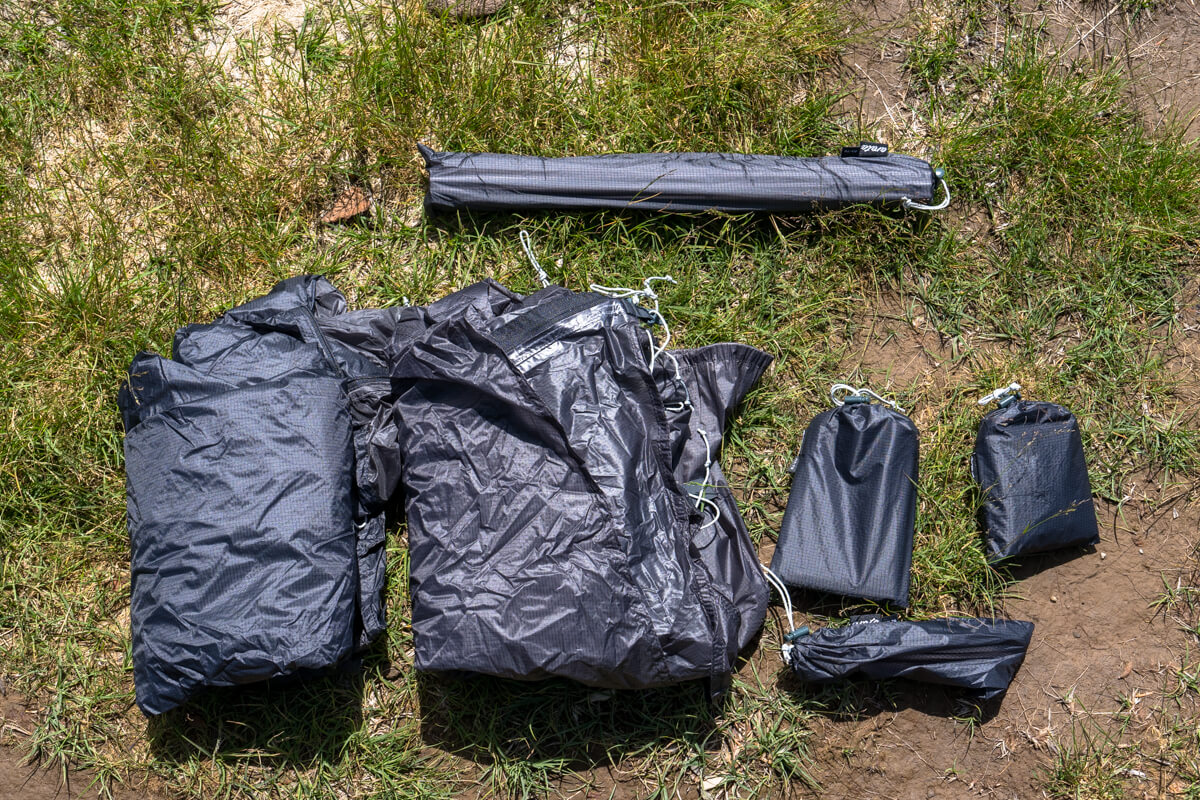
In addition to the inner fly pole, the accessories include a storage bag, eight pegs, and a ground sheet (the small bag visible on the right side of the photo is a rear compartment ground sheet, sold separately)
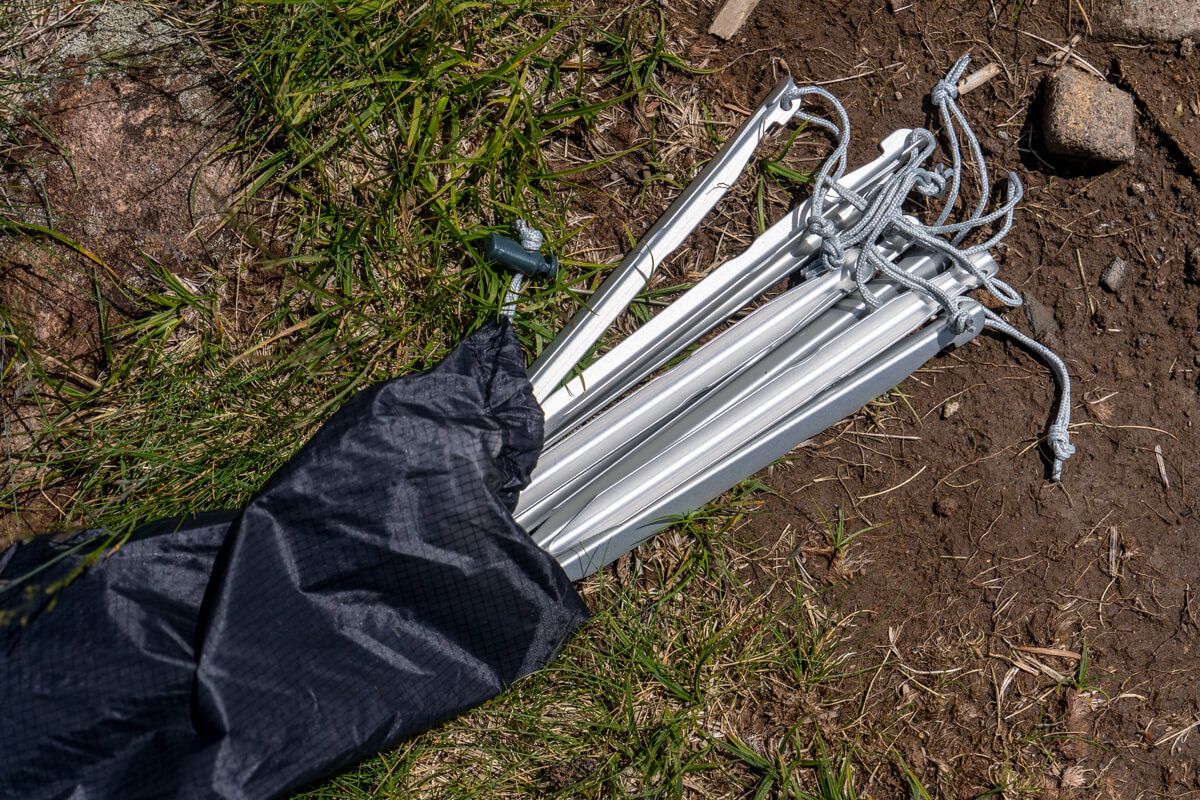
The included pegs are lightweight aluminum V-shaped pegs that are strong and have a wide contact area
When it comes to the ease of setting up a tent, anyone who has ever set up a tent will have no trouble
Just like a regular sleeve-type tent, you insert two poles from one side all the way in and then insert them into the sleeve closest to you, and the tent immediately stands up in a taut state. Because it is a freestanding tent, there is no need to hammer in pegs before setting up the poles
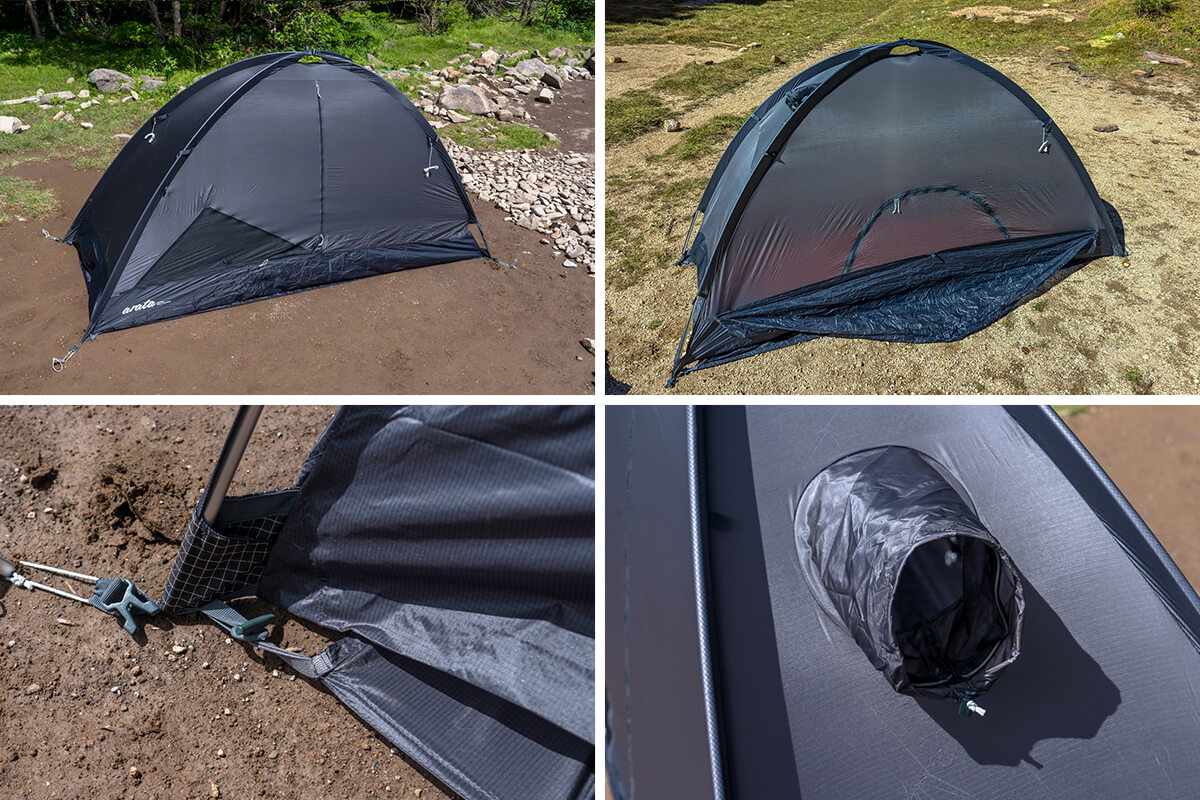
The inner tent set up (top left). There's a small window on the back for the rear compartment (top right). The ground sheet can be attached to the four corners of the tent (bottom left). There's one mesh ventilation hole on the short side (bottom right)
The rain fly, which is placed over the inner tent, can be secured with a buckle and then tensioned by pulling the adjuster. Guy lines are already attached in the necessary places, so you can insert pegs as needed to adjust the tension of the fly sheet
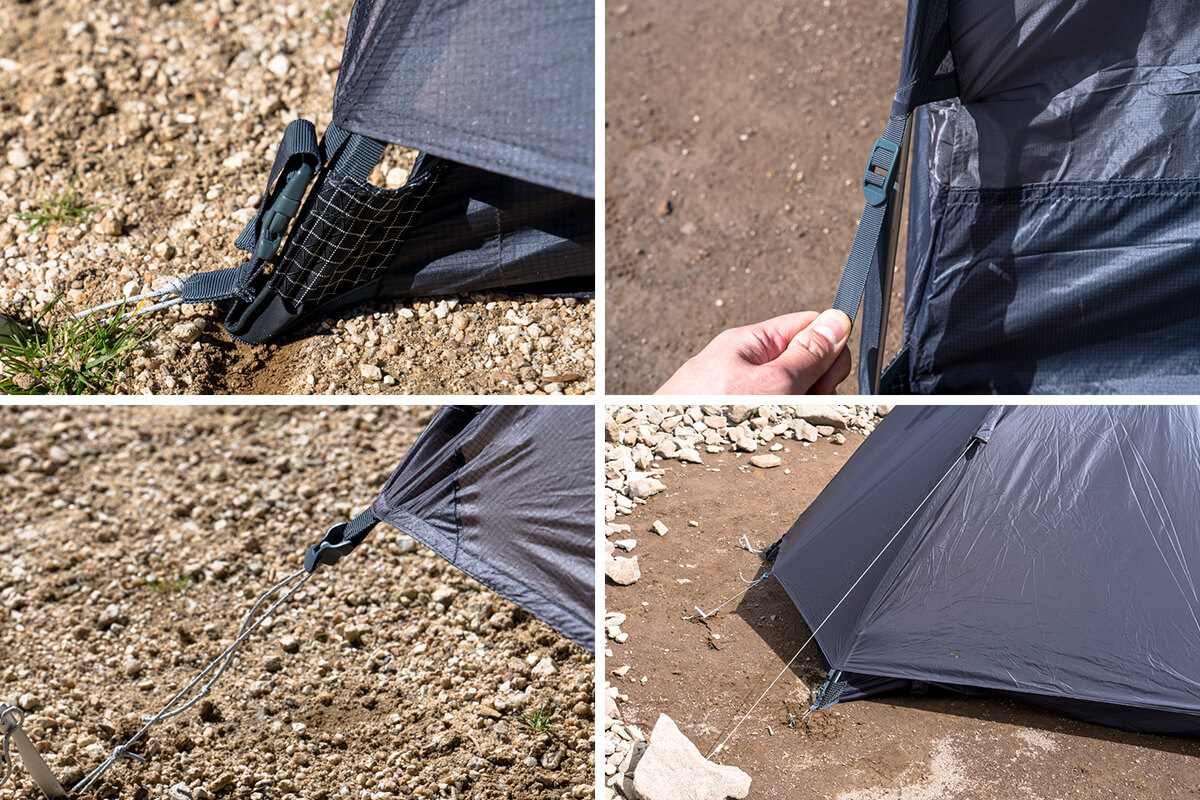
The fly sheet can be easily secured with a buckle (top left). There is an adjuster for adjusting the tension of the inner tent (top right). Flexible cords are provided for tensioning key points on the fly (bottom left). Guy lines are included as standard at the four corners of the inner tent for securing it (bottom right)
The ground sheet that you place under the tent is secured to the loops at the four corners of the inner tent, so you can take it down while it's still secured in place. This way, you don't have to re-lay out the ground sheet every time, which is actually quite convenient (see photo below)
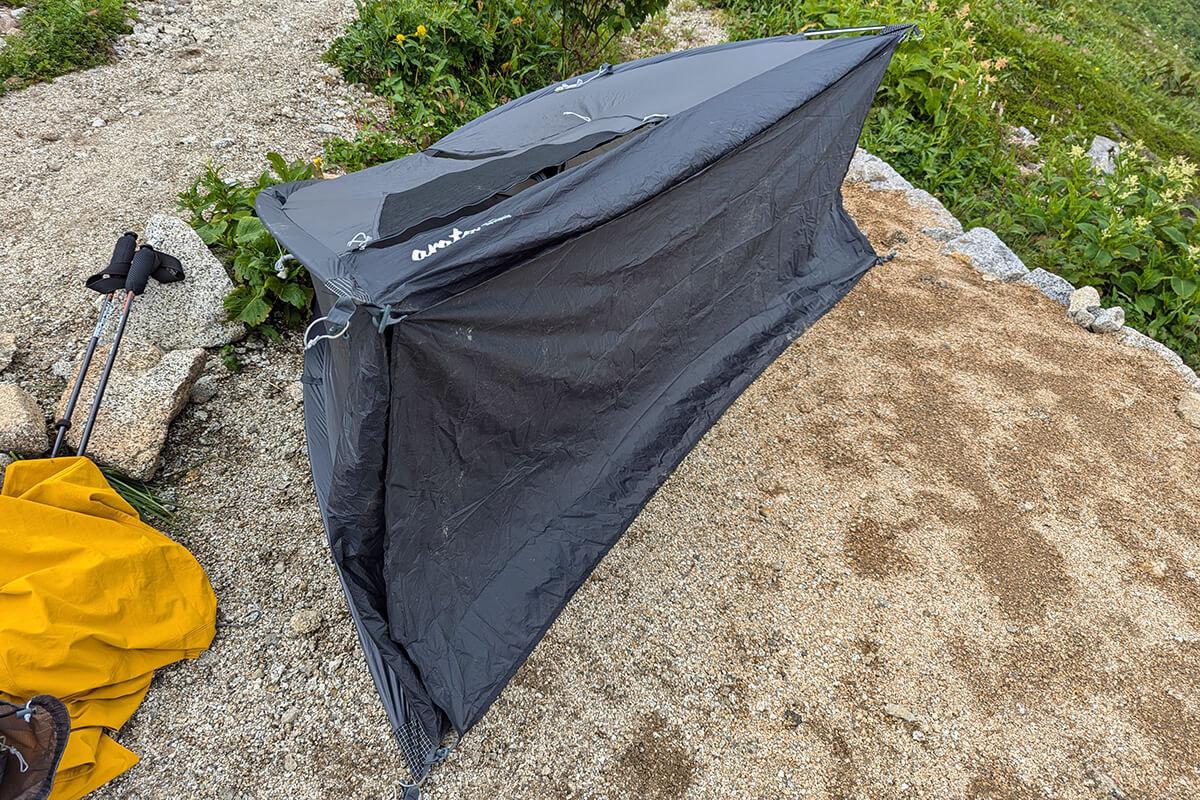
The ground sheet can be attached to the tent, so it can be stored while still attached, which is convenient
Robust and durable: Robust enough to withstand use in Japan's mountains all year round
The reason why freestanding dome tents up until now have been unable to break the 1kg barrier has generally been that, "Sure, it's easy to just make it lighter, but then it wouldn't be strong enough or wind resistant to withstand the rigors of mountain climbing in Japan." This is true in a sense, as simply making the poles and fabric lighter while maintaining the conventional structure would be impossible to withstand the prolonged storms on the ridges of the Northern Alps. The AX-79 has challenged this long-standing impossibility, and despite being less than 1kg, it is using a completely new method to achieve the same excellent robustness and durability as a full-fledged four-season freestanding tent.
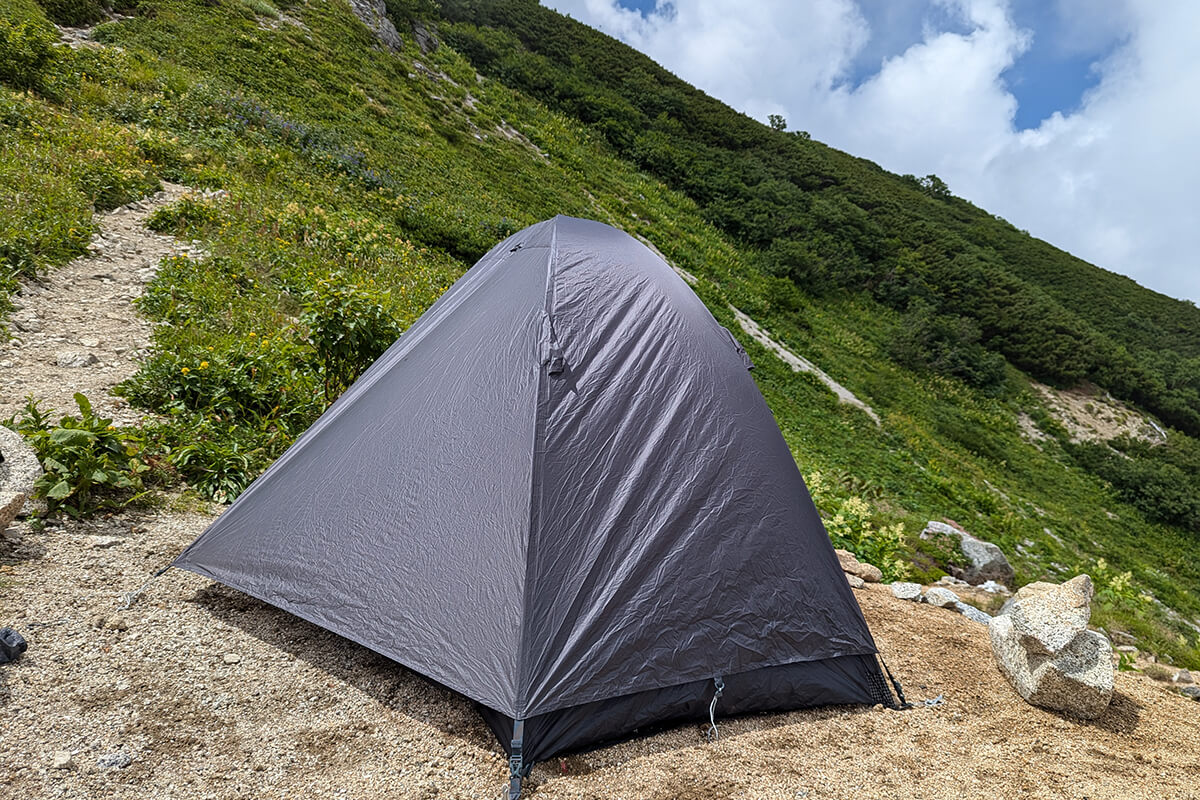
Firstly, the side walls of this tent are steeply angled to allow for better wind flow, and the shape is symmetrical, ensuring high protection from winds coming from all directions. The flysheet itself is also designed to be close to the ground, making it difficult for wind to get in from below (although in the photo below, it wasn't lowered that far because it was hot)
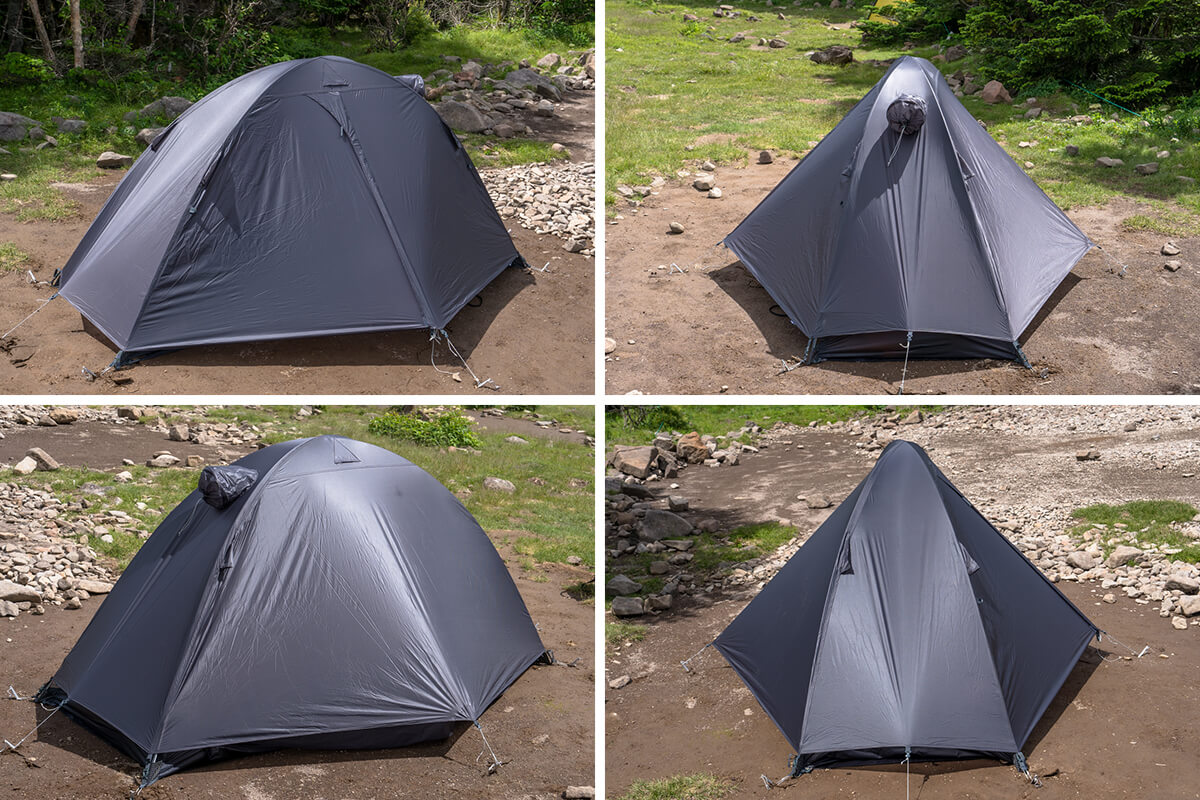
full sleeve inner tent x unique sleeve hub located at the top of the pole .
The pole structures of conventional freestanding tents can be broadly divided into "hanging" and "sleeve" types, with the "hanging" type hanging the tent by attaching hooks to the poles in several places. While this structure makes it difficult to distribute the load on the poles in strong winds, the poles are connected at the top, so the two poles support each other and are resistant to lateral forces (see photo below, left)
On the other hand, the "sleeve type" has the advantage that the load on the pole is easily distributed during strong winds because the entire sleeve supports the pole, but because the two poles are independent of each other, the tent is more likely to warp due to lateral forces (see photo below, right)
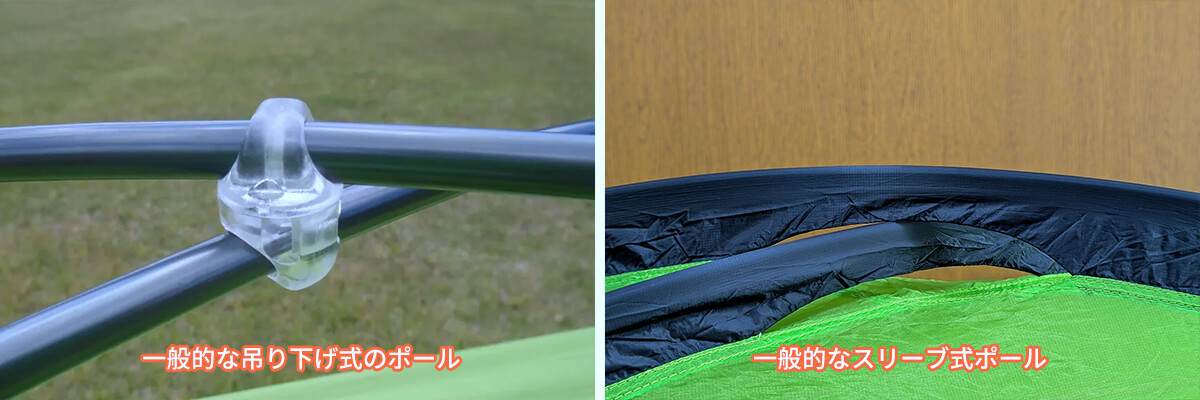
Full Sleeve Inner Tent x Unique Sleeve Hub eliminates the strength weaknesses of both the hanging and sleeve types . Structurally, as shown in the photo below, while it is basically a sleeve type structure, the entire fabric is sewn together so that the poles connect at the top (photo below).
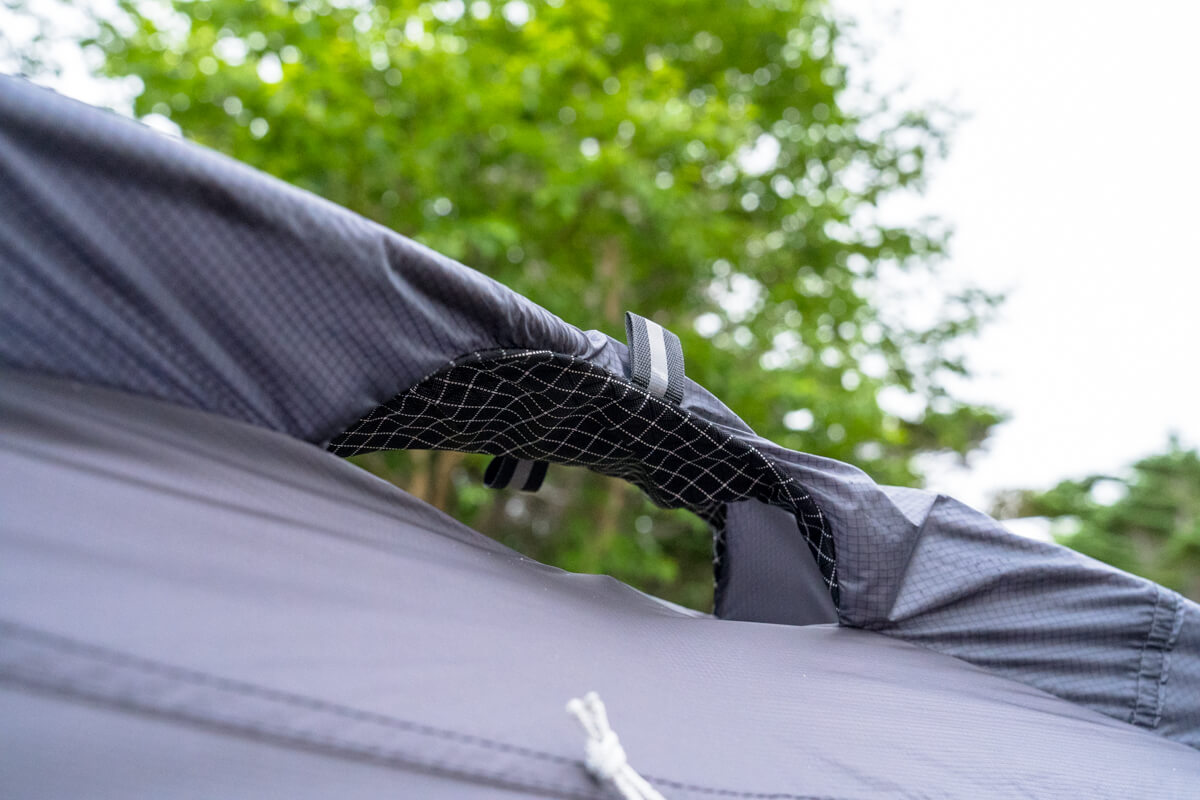
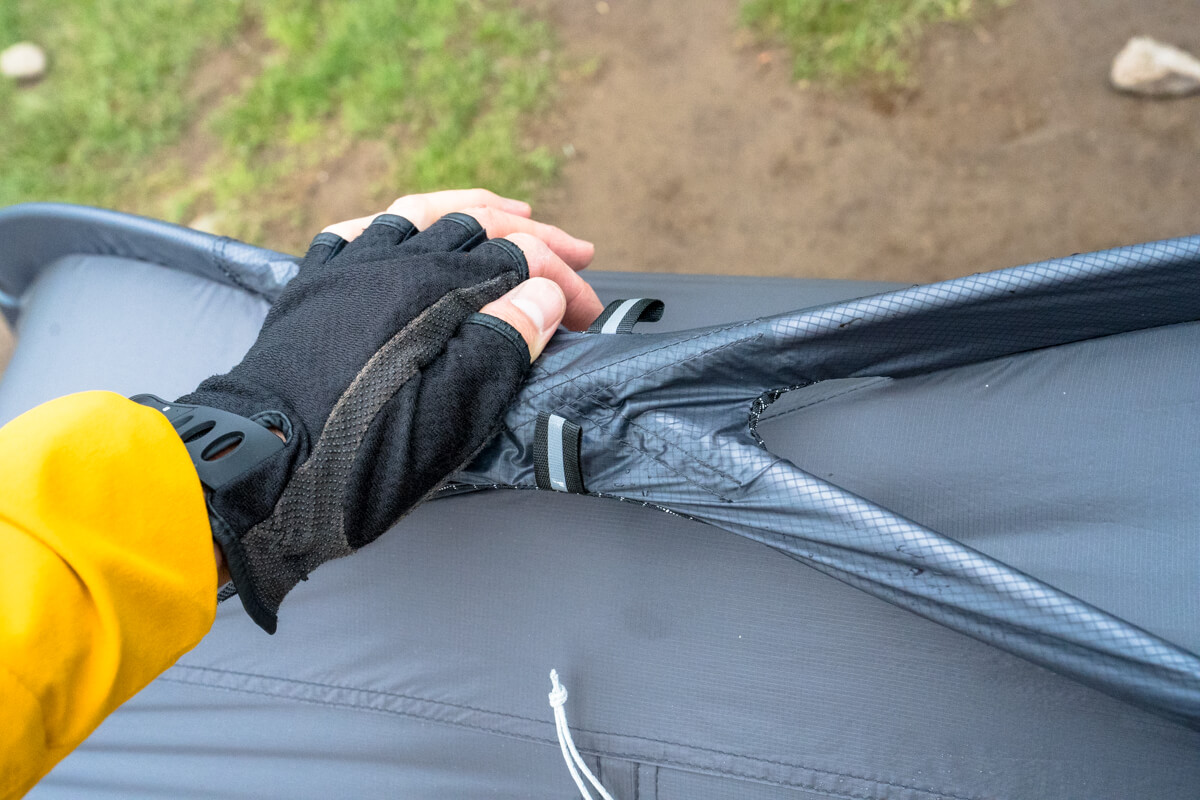
As a test, we picked up the top of the tent we had set up and shook it with great force, and found that the tent with our unique sleeve hub structure remained perfectly still (while conventional sleeve-type tent systems easily became distorted and bent), demonstrating an amazing sense of stability and robustness (see photo below)
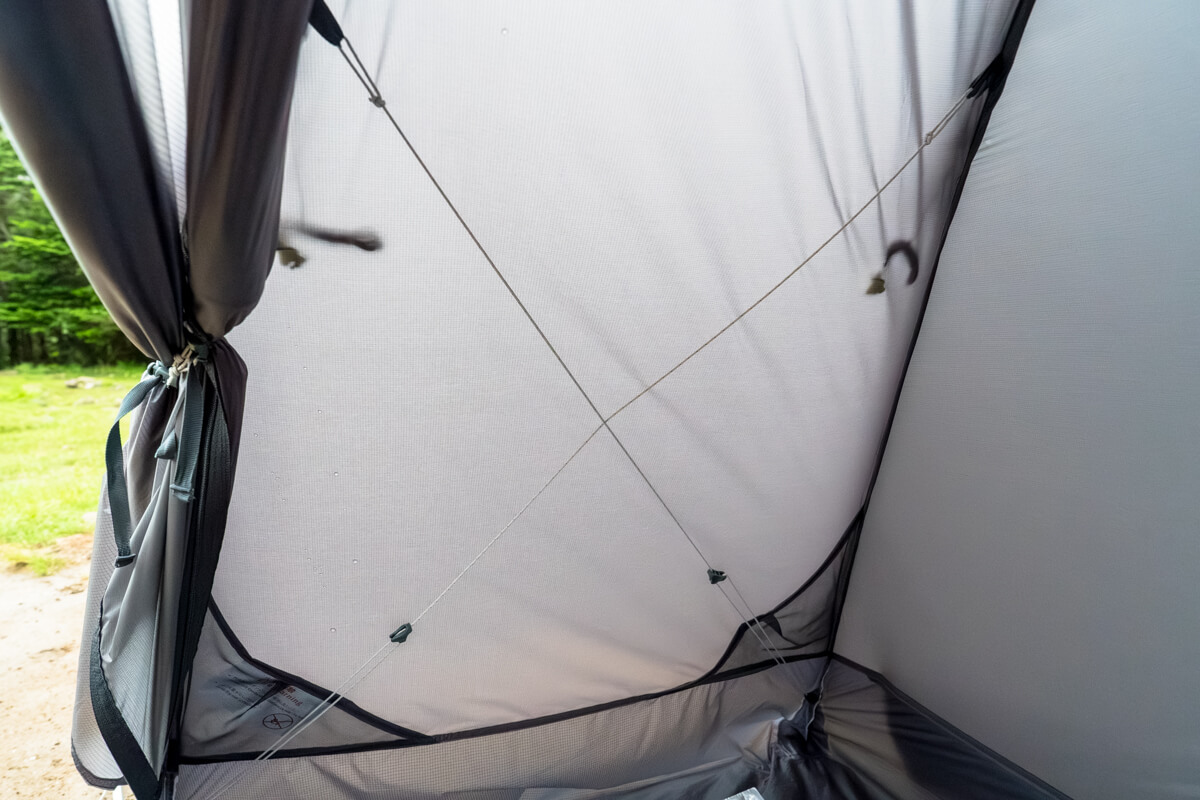
Another unique feature that further enhances the tent's strength is the guy line points located inside and outside the tent. Normally, guy line points that increase wind resistance are limited to the four corners or other sides of a tent, but the AX-79 also comes standard with cross-shaped inner guy lines located on the short sides of the tent interior (see photo below). This structure was incorporated by developers with experience in manufacturing in a variety of industries, applying prefabricated construction techniques, and is said to prevent the tent from deforming due to wind from the long sides.
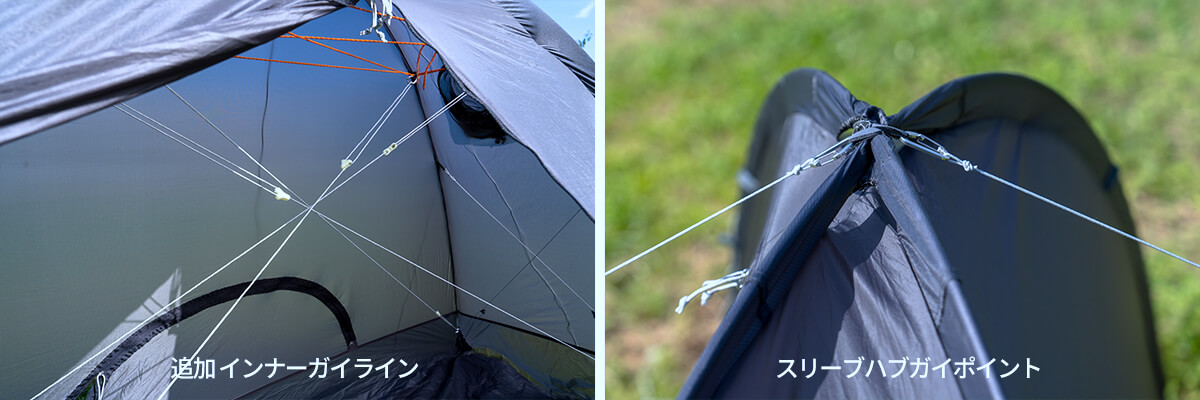
Furthermore, the aforementioned sleeve hubs also have guy line attachment points, which allow you to firmly secure the tent from the top, further strengthening its wind resistance (right photo below).The best part is that you can sacrifice space inside the tent by stringing guy lines diagonally, which allows for the strongest reinforcement possible (left photo below)
To be honest, I've never encountered such bad weather that I felt I had to go to such lengths to feel safe, and I intend to do my best to avoid any mountain trips where there is even the slightest risk of that happening, but the peace of mind that comes from knowing that "if something goes wrong, I can go to this extent" is more reassuring than anything else
In this test (although there was no setup in strong winds), the tent was set up sufficiently firmly and securely just by attaching the inner guy lines (or not, as the case may be), so it seems that there should be no problem even if the optional "Emergency Guy Line Kit" (sold separately) is not always attached
On the other hand, how resistant is it to rain? Fortunately, during a summer hike through the Central Alps, there was a heavy afternoon shower, and we got quite a bit of rain at the tent site on the ridge (see video below)

The rain fly repels rain well, and there is space between the fly and the inner lining so they don't stick together.The bathtub (the bottom of the tent) is also high, which effectively prevents water from seeping into the tent, including water splashing up from the ground
However, as you can see in the second half of the video above, if you're not careful, raindrops falling from the rain fly can get into the optional rear compartment ground sheet (described below). To prevent luggage placed in the rear compartment from getting wet, make sure the ground sheet doesn't extend too far outside the fly
Comfort inside the tent: Although the space itself is minimal, the front and rear rooms are excellent and don't feel cramped
The AX-79 aims for lightness without sacrificing strength , but it also has a unique design that makes it impossible to compromise on interior comfort, something not to be missed. Of course, it doesn't have the luxurious spaciousness of a camping tent, but it's still packed with clever ideas that make it feel less cramped than its light weight. One such idea is the rear room space .
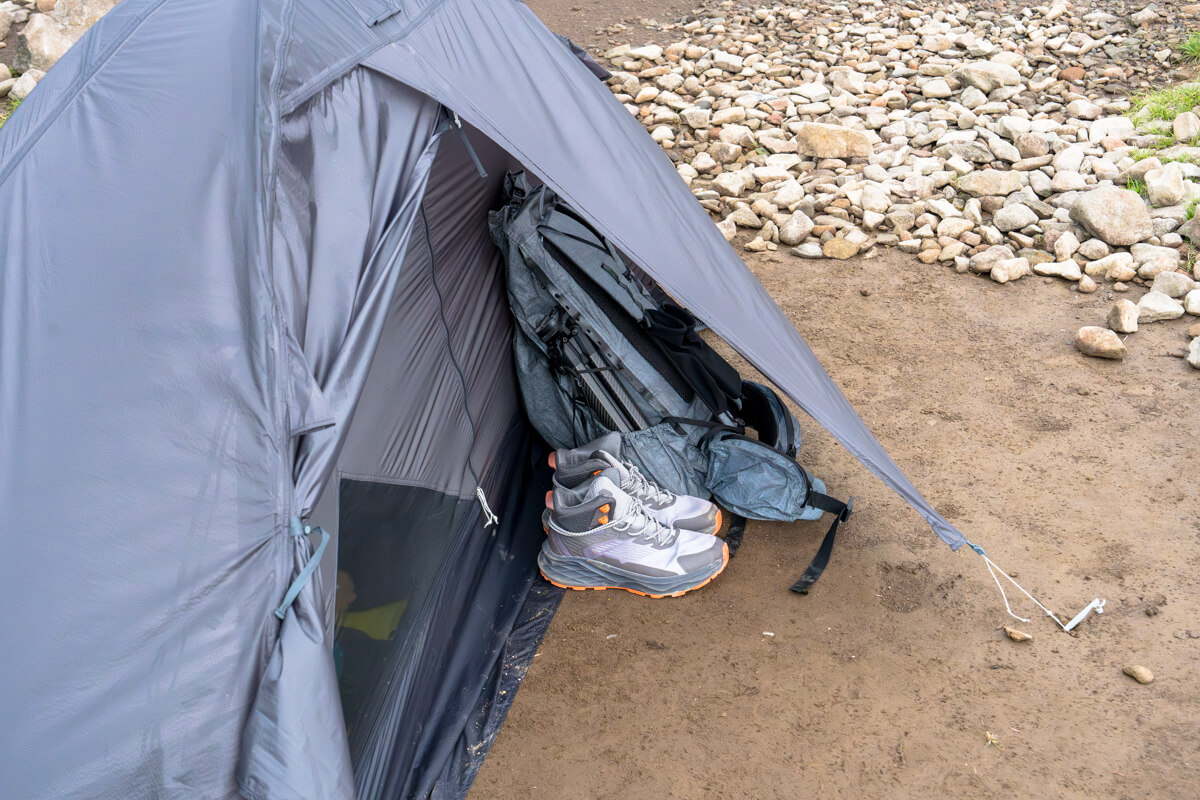
Like a typical one-person tent, the AX-79 has a vestibule between the fly and inner tent at the entrance, which can be used to store shoes, cooking utensils, etc. Incidentally, the AX-79 is angled more than other tents to improve wind resistance, and the vestibule is wider and easier to use (see photo below).
A typical one-person mountain tent will only have one such vestibule on the entrance side, with the other side usually just being a wall, but the AX-79 has a small, semi-cylindrical window in this position, which allows access to the spacious rear room, which can be used to store additional luggage (see photo below).
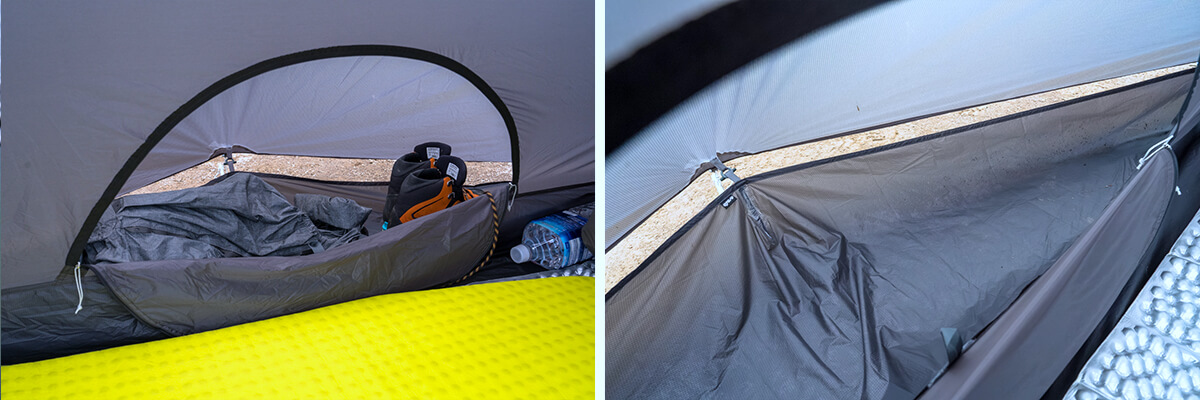
When camping solo, I often leave food and other belongings I don't want to get wet inside the tent, and in that case, even if the tent is spacious, it ends up overflowing with belongings, making it less comfortable, so this is a welcome feature. If you lay down the rear room ground sheet (sold separately) as shown in the photo above, your belongings will not come into direct contact with the ground, so you can place them just like inside a tent (be careful, as the Velcro fastenings tend to come loose and raindrops can easily spill onto the ground sheet). Thanks to this, I was able to make full use of the interior space and it didn't feel particularly cramped
By the way, the interior is equipped with two mesh pockets (although they are not very large) and five hanging loops near the ceiling, so you will have no trouble finding a place to put small items without feeling inconvenienced (see photo below)
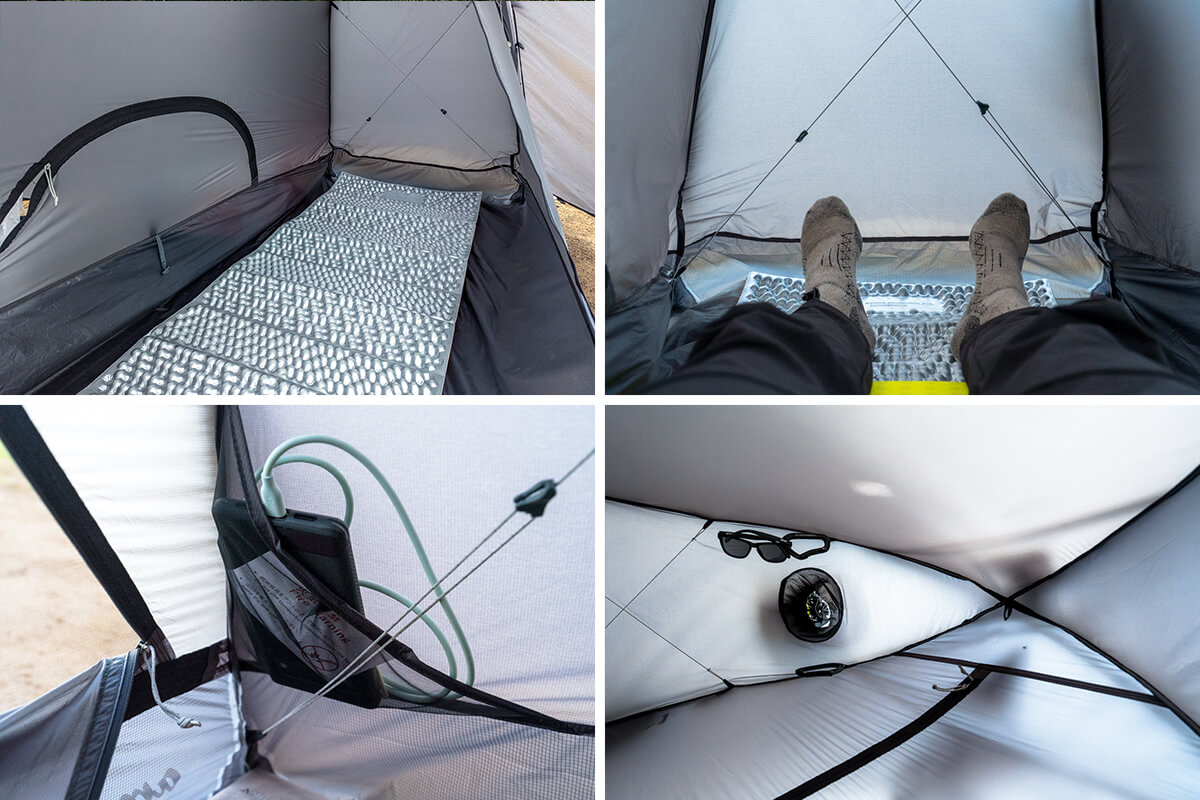
It's spacious enough for a single mattress (top left). A 176cm tall person could lie down with their legs stretched out (top right). There are two small mesh pockets on the short side near the entrance (bottom left). There's a hanging loop on the ceiling for hanging a rope or gear loft (bottom right)
The rear compartment is not only convenient for storing luggage, but also contributes to improved wind resistance and ventilation
This rear compartment not only improves wind resistance from the back, but also contributes to improved breathability, which is difficult to achieve with mountain tents. The mesh fabric at the entrance itself is not particularly large, as it was designed to be lightweight, but with three air holes, including the rear compartment window on the opposite side and the ventilation opening at the top, I felt that the tent was quite well ventilated for a freestanding mountain tent
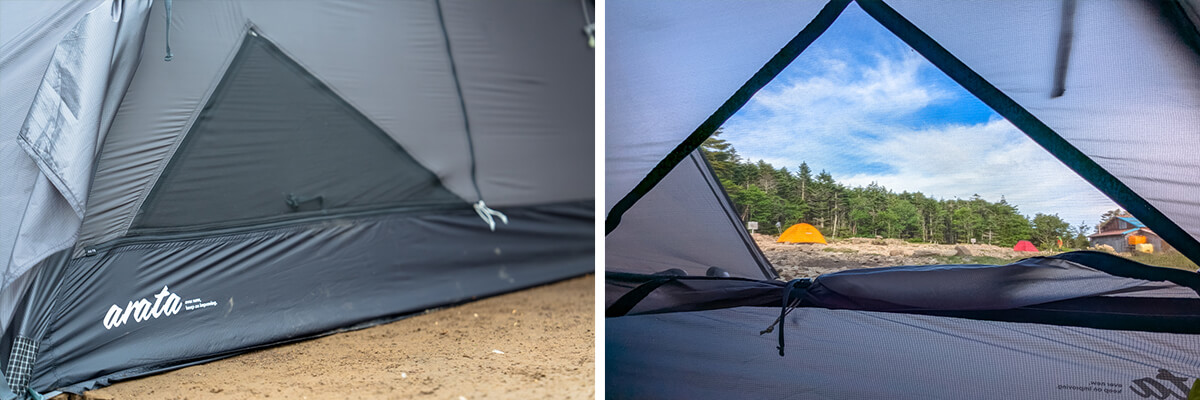
The mesh window at the entrance is not large, but it allows for ample ventilation and is also perfect for looking outside
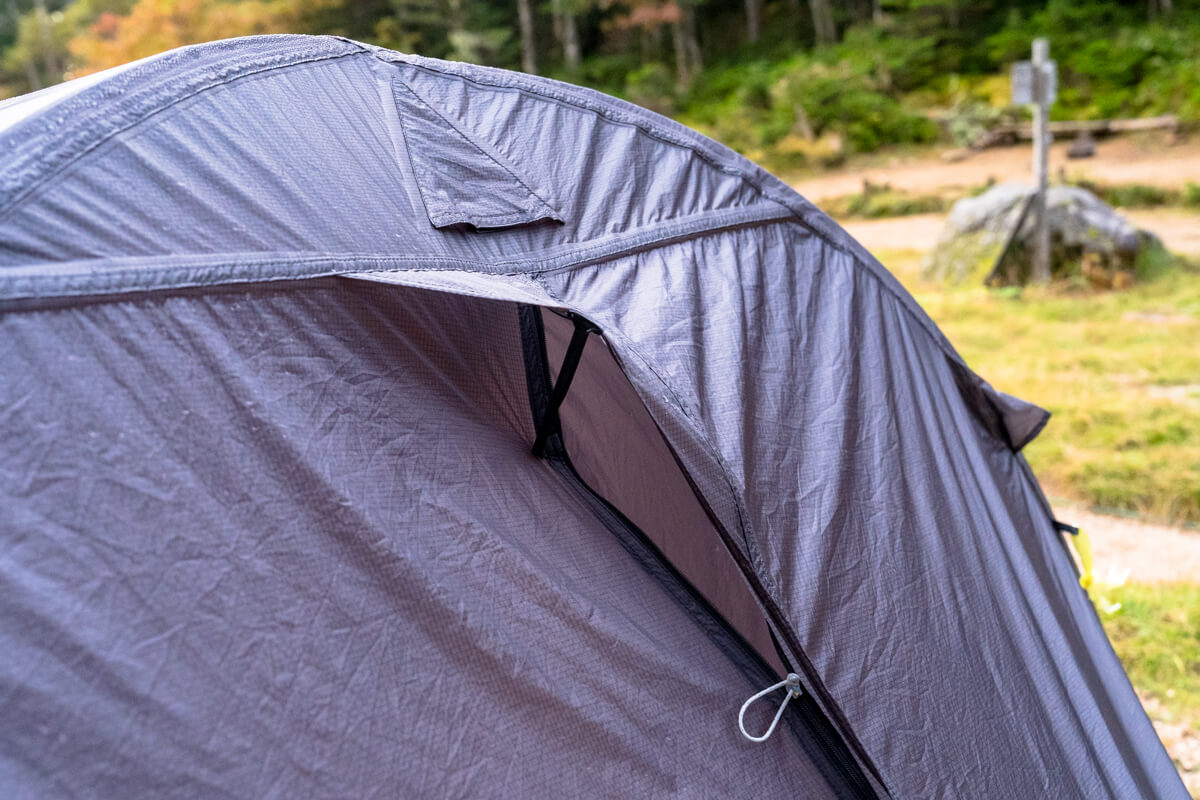
Even when the rain fly is fastened, ventilation can be created using the ventilation rod at the top of the double slider fly
For petite people or those who want to make their bag as light as possible, even if it's a bit cramped, we recommend the even lighter model, the AX-75
There are still many unique attempts that ordinary manufacturers would not consider
The AX-79 has two sibling models in the same series, the AX-130 and the AX-75 , both of which are two-person models, but the AX-75 a smaller version of the AX-79 (10cm smaller in length, 5cm smaller in height and width) just the right size for petite people , resulting in a weight saving of an additional 15 grams.
At 176cm tall, I thought to myself, "I'll put up with a little tightness if it's even one gram lighter!" and wondered if the AX-75 would work, so I actually tried it out, but the results were quite troubling. My height was right on the borderline between the two options.
While the AX-79 was naturally comfortable to sleep in, the AX-75 was just big enough that my head and feet would just touch the short side when I lay down. It's not that I couldn't sleep in it, but my head and feet would probably get wet from condensation droplets on the inside walls. So there's no point in bringing an additional sleeping bag cover. After all, the AX-79 seems to be the better choice for me. Incidentally, I personally didn't feel that the ceiling height (93cm) or floor width (75cm) made much of a difference in comfort with the AX-75
Based on this, my personal opinion after trying it out is that if you are under 175cm tall and want to save even 1 gram, the AX-75 will be tolerable. In fact, if I were 2cm shorter, I the AX-75 I recommend choosing the AX-79 even if you want to save weight
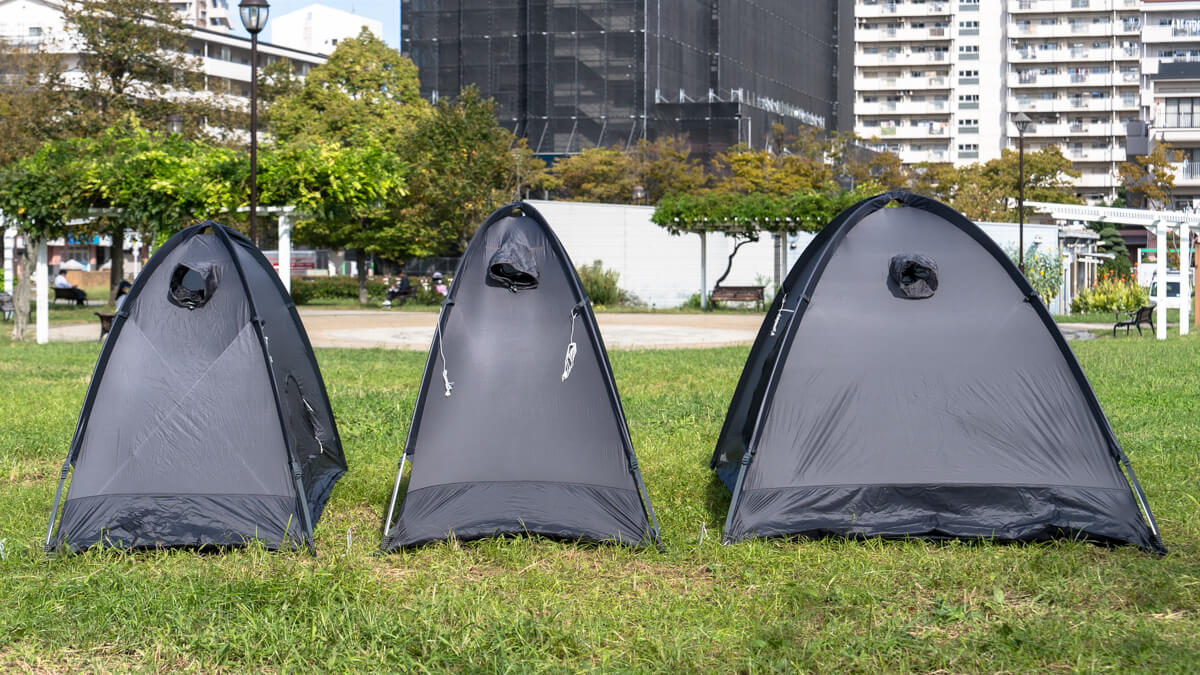
From left: AX-75, AX-79, AX-130
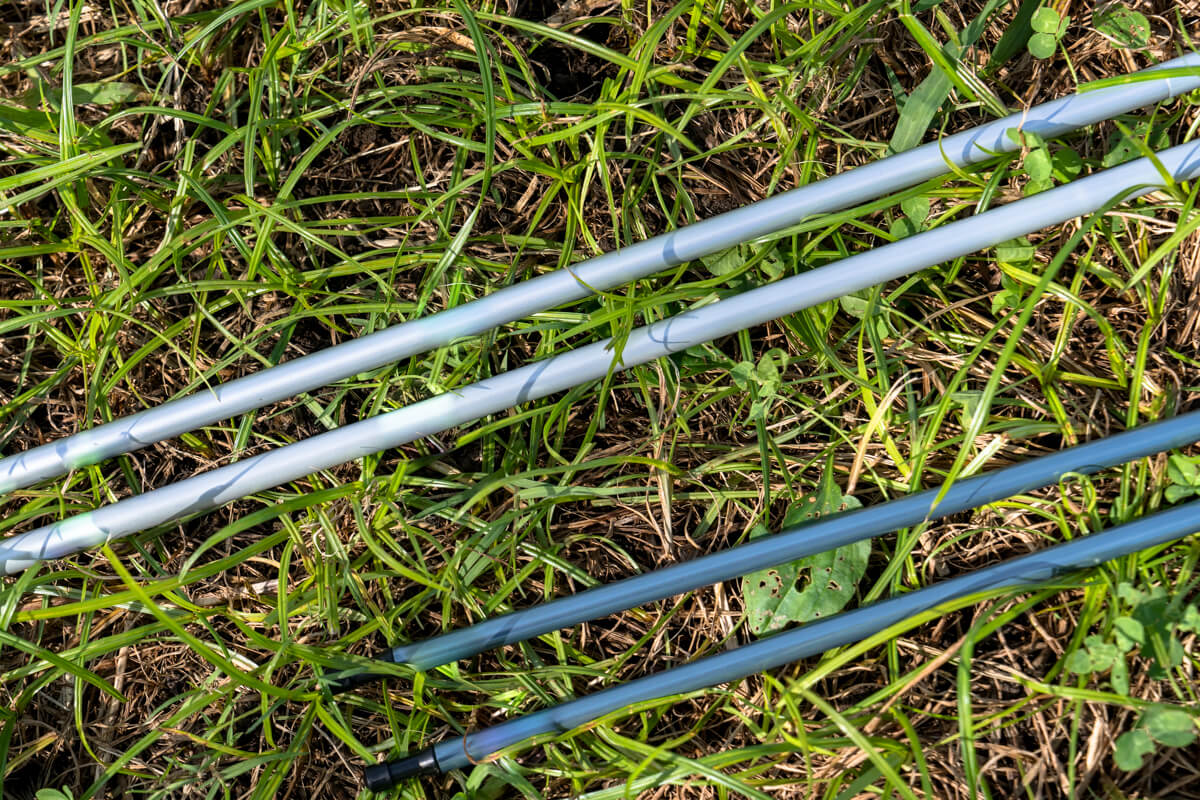
The AX-75 not only features a tent, but also a compact pole with a small diameter (Yunan UL 7.5)
Along with this lightweight and durable tent, Arata will be releasing a series of even more ambitious related items
While I was writing this review, more news from arata came in. In the fall of 2024, they released the " arata ASP-03 arata ASP-R7 an air mattress that combines TPU film and heat-reflective PET film to boast an R-value of 6.5, suitable for temperatures as low as -30°C . Like the tents, these are also new to the market, but they're already delivering top-class insulation performance per weight. While I haven't tried them out in practice yet, they're definitely worth keeping an eye on.
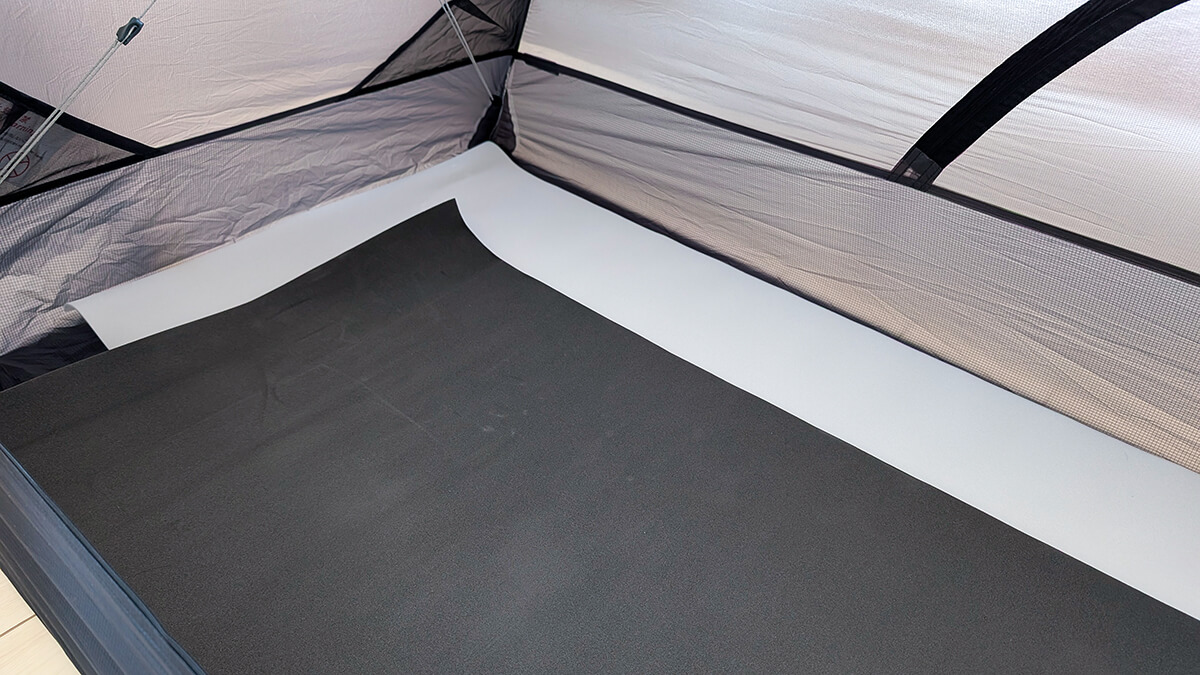
The ultra-lightweight PE mat "arata ASP-03" can be placed under an air mattress to boost performance, or can be used in UL style to minimize weight
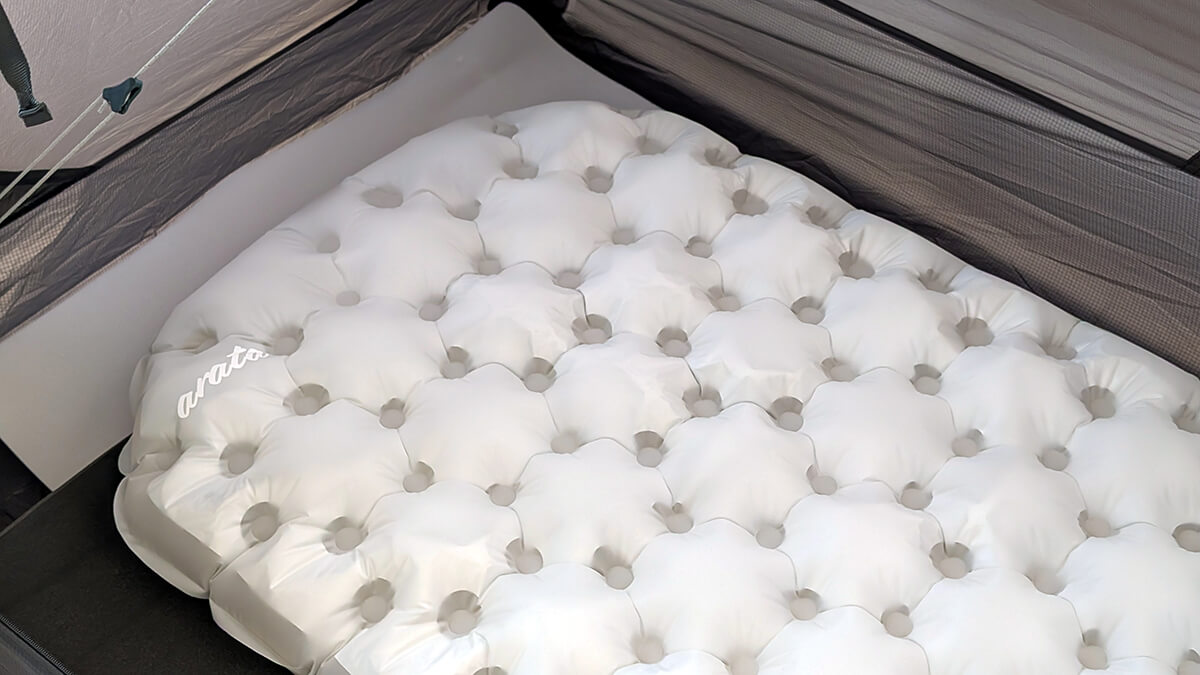
The ASP-R7 Series is an all-season air mattress that combines lightness with a high R-value
Summary: Overall, this is the best mountain tent currently available, offering the best balance of lightness, strength, comfort, and price
For a long time, freestanding dome tents have more or less traded off between "lightness" and "livability/durability." In other words, if you wanted "lightness," you had to accept "crowdedness and the inconvenience of not being able to use it in harsh conditions." However, the Arata AX series , it seems that we may finally be able to overcome this high barrier. This test was limited to general mountain climbing, but as a standard mountain tent, it can be used for a wide range of outdoor activities, including hiking, trekking, and mountain climbing, as well as variation routes and stream climbing in the snow-free season, and it will also be suitable for use on snowy mountains up to around 1,500m.
Weighing just 900 grams, this tent is strong enough to withstand serious mountaineering and offers above-average living comfort. It's the most well-balanced and flawless mountain tent available to date, and is an overall excellent tent. It's also incredibly competitively priced, which is a real blessing, considering how high its performance has been. It's also perfectly suitable for beginners to tenting, of course
As a final aside, the designer behind this tent has previously worked in a variety of manufacturing fields, from home appliances to automobiles and industrial machinery. In recent years, he has single-handedly negotiated with a high-quality Chinese outdoor manufacturer from scratch, starting to sell their products in Japan. He has also grown to the point where he is working on custom-made models, absorbing a wealth of know-how and steadily conducting research and development. arata 's products are filled with unique and groundbreaking ideas that could only have come from someone outside the mainstream of the outdoor industry. However, these ideas are by no means haphazard, disregarding the culture that has been built up over time. Rather, they are the result of ingenuity based on respect for the past and deep research, and are refreshingly logical (though not without their rough edges). In that sense, Outdoor Gearzine will continue to support creators who strive to create quality products without being swayed by trends. The never-ending excitement of arata !
A guest talk will be held at Outdoor Gearzine's offline event on Sunday, December 1st!
Actually, I've been wanting to do this for a while now and have been waiting for an opportunity, and a talk event with Sugime-san, the designer and representative of arata, has been scheduled for the recently announced Outdoor Gearzine offline event (December 1st from 12pm)!
The AX Tent series was just the beginning of Arata's rapid advance .
Starting with tents, arata has continued to release groundbreaking new products one after another. Where do their abundant ideas and drive come from? How does arata, with its behind-the-scenes view of the global outdoor product market, view the current state of outdoor activities in Japan? What future does arata envision? Let's explore the exciting and profound world of the outdoors together, hearing about these and other topics that can only be heard here
Details about Outdoor Gearzine's offline event on Sunday, December 1st can be found here ↓↓↓
Related pages
Please consider a paid membership to support the site while enjoying exclusive offers and content!
Related reading