



How to fit trekking shoes and six things to check

Written by Yasushi Hisatomi
Last time, we covered how to choose the right trekking shoes for mountain hiking . This time, we'll continue from there. Finally, we'll cover the steps and tips for fitting (trying on the shoes in the store) to see if they really fit you.
table of contents
How to Fit
Fitting process
You won't know what the best trekking shoes are until you try them on. First, I've put together a guide on the steps to try on shoes, based on my experience trying on shoes from various sources and at stores all over Tokyo
- If possible, try fitting in the afternoon rather than in the morning when you are most active (foot size fluctuates slightly throughout the day, and it is said that the best fit is achieved by matching the size of your feet to the time of day when you are actually active)
- If you have thick socks and insoles that you will actually wear in the mountains, bring them with you. Reputable outdoor shops may have them available, but if not, wear the thickest socks you have at home to mimic the actual conditions as much as possible
- If possible, have your feet measured at the store and ask the staff to bring you the perfect size. If you can't get your size measured at the store, try starting with a size 0.5 to 1 cm larger than your usual shoe size (note that size standards vary depending on the shoe, so adding 0.5 cm to your foot size is not always correct)
- Remove the insole from the shoe and place your foot on it, aligning your heel with the insole. If there is almost no room in the toe area, it is likely that the shoe does not fit your foot, so consider trying a different size
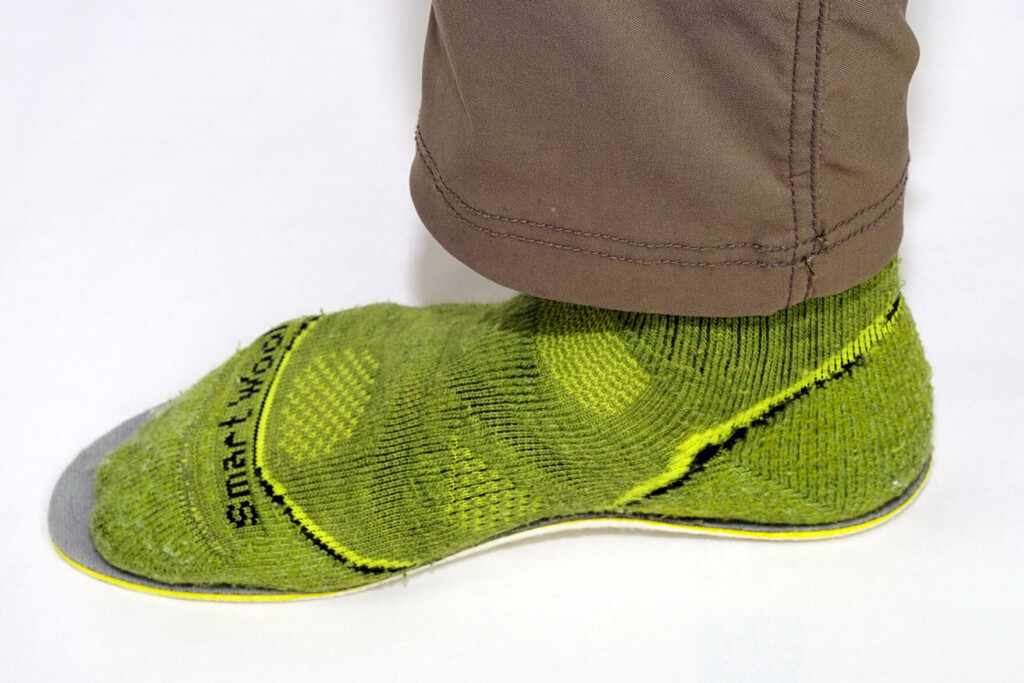
When you adjust the footbed to fit your foot, it is not recommended to use shoes that do not have room in the toe area
- If the insole is not a problem, put it back in and actually put on the shoes. Loosen all the laces and put your toes in the front of the shoe. Then try putting one finger in the heel and see if it fits in easily
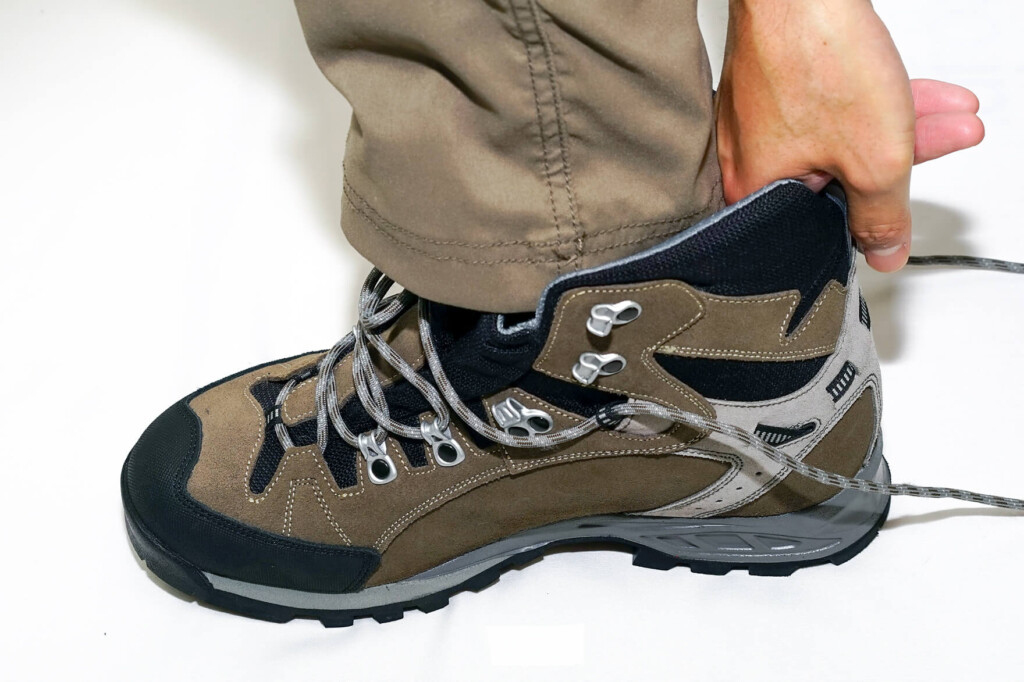
- If this is okay, tap your heel on the ground to align your heel with the heel of your shoe (there should be a few millimeters of space at your toes)
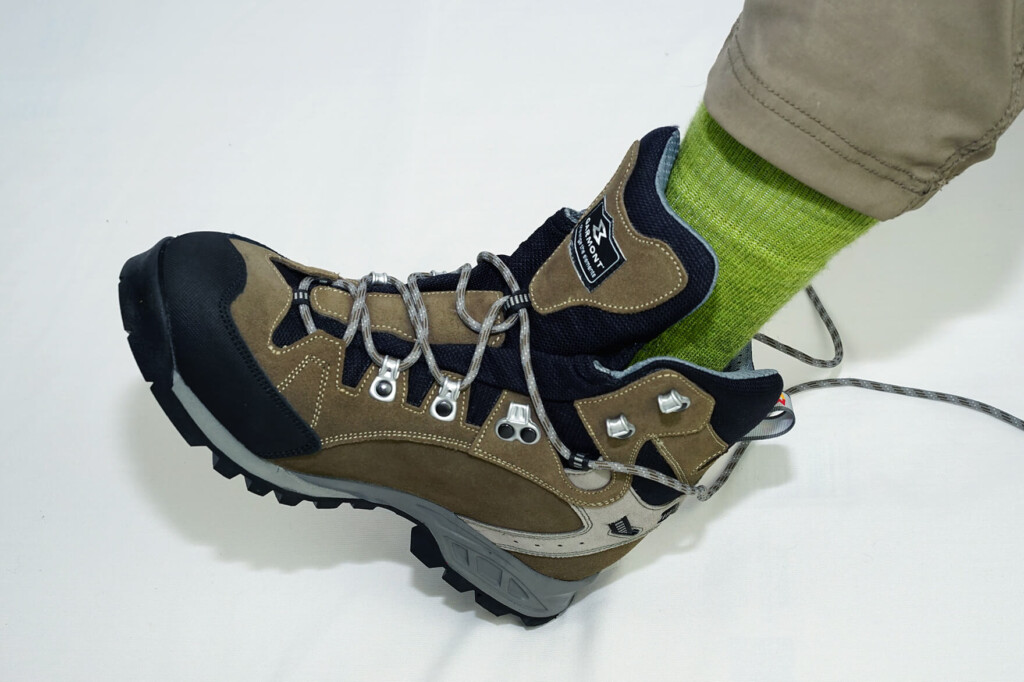
If you don't fasten your trekking shoes to fit your heels, your feet will move around inside the shoes while you walk
- Tighten the laces starting from the tip of the boot. The basic rule is to tighten the laces so that they feel a little tight at the top of the foot, and just enough above the ankle joint to make it comfortable

The type that allows you to hook the laces once they are tightened around the instep is less likely to loosen and is easier to tighten
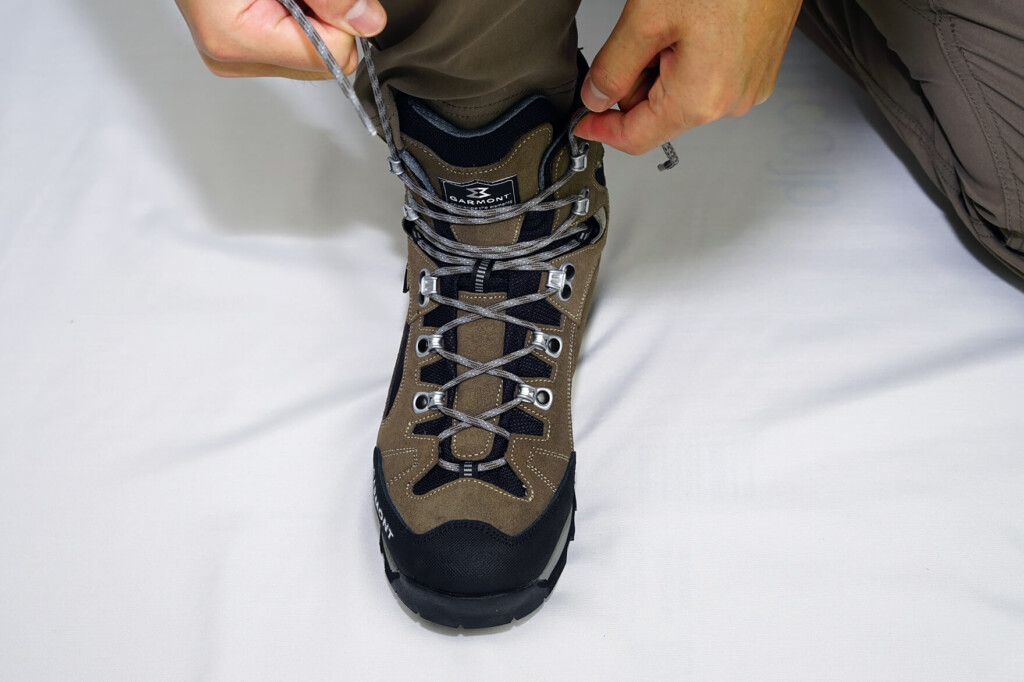
In reality, many people find that tightening the ankle straps a little looser when climbing and a little tighter when descending increases stability, so there is no consistent optimal strength
- This will leave space in the toe area and keep the shoes firmly in place, so from here you can try walking in different ways and carefully check how well the shoes fit
Points to check when trying on trekking shoes
1. Check whether there is any pressure on the entire foot or whether there are any parts that feel unnatural
when you put them on , try going up one size rather than loosening the laces to adjust them . Also, if you walk in them and find that some areas are rubbing against your feet, talk to the store clerk. If the problem persists even after you get used to wearing them, then it's time to accept that the shoe shape is just not right.
It's important to note that the size and shape of your feet are not the same on both sides, but are slightly different . For this reason, don't forget to check that the fit is correct on both sides. It's difficult to get a perfect fit on both sides unless you have custom-made shoes, but there are ways to adjust even the subtle differences and achieve a more perfect fit, such as replacing the footbed with a commercially available one.
2. Try walking in different ways to make sure your feet don't move around inside your shoes
, such as walking on flat ground, going up and down slopes, and traversing slopes (crossing a slope sideways), to check whether your feet are moving . Furthermore, try moving your feet back and forth and sideways while keeping the sole of your shoe on the ground, using movements that stretch your Achilles tendon or positions like side jumps. In this way, you can see how much movement your foot has inside the shoe when you apply force. Ideally, your foot should not move at all, but it's unlikely that it will move at all. However, trying on a few different pairs will help you find a model that fits you best.
3. Is the ankle area comfortable in terms of ease of movement, hold, and softness?
In particular, with high-top trekking shoes, the firm support around the ankle helps prevent injury, but just like with ski boots, if they are too tight, it can interfere with comfortable walking. For this reason, check the freedom of movement around the ankle and whether the built-in cushioning feels comfortable
4. Make sure your toes don't hit anything
At this point, try smacking your toes on the floor a few times. If your toes easily hit the shoes and it hurts, it may be that the size is too small or the shape of the toe box is not right. On the other hand, if there is too much room in the toe box (i.e. the shoes are too big), it can be dangerous as your foot may get caught on an obstacle and cause a sprain.
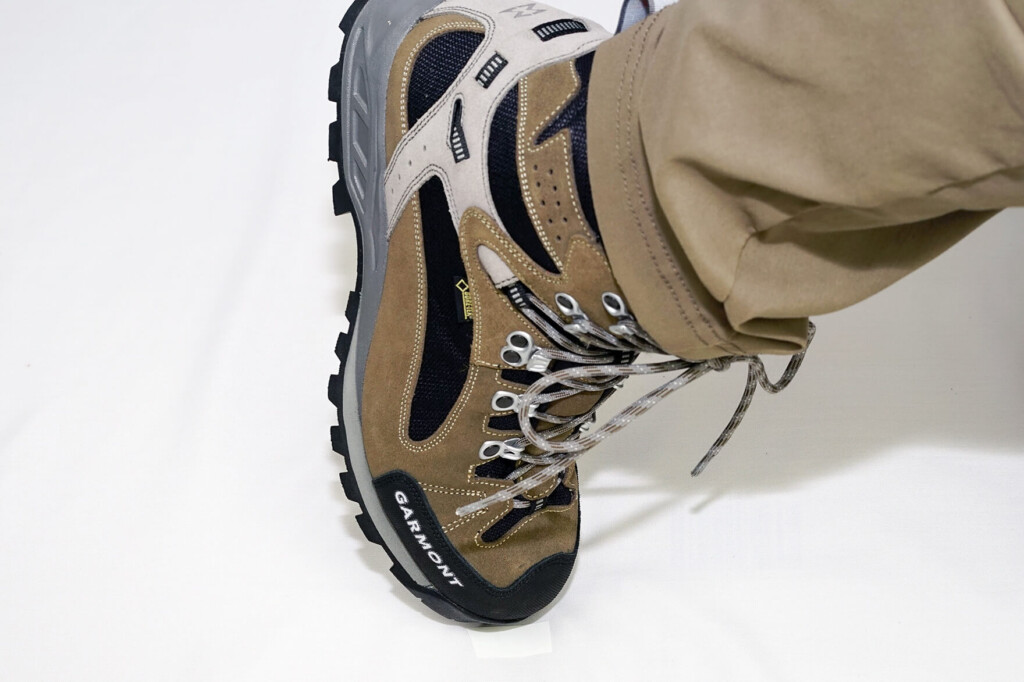
5. Are your heels firmly fixed?
If your heels move back and forth while walking, it will make your footing unstable and can also cause blisters, which is dangerous. Put pressure on your toes and bend the shoe to see if your heels lift up . They probably won't fit perfectly, but if they're clearly lifting up, it's likely that the size isn't right.
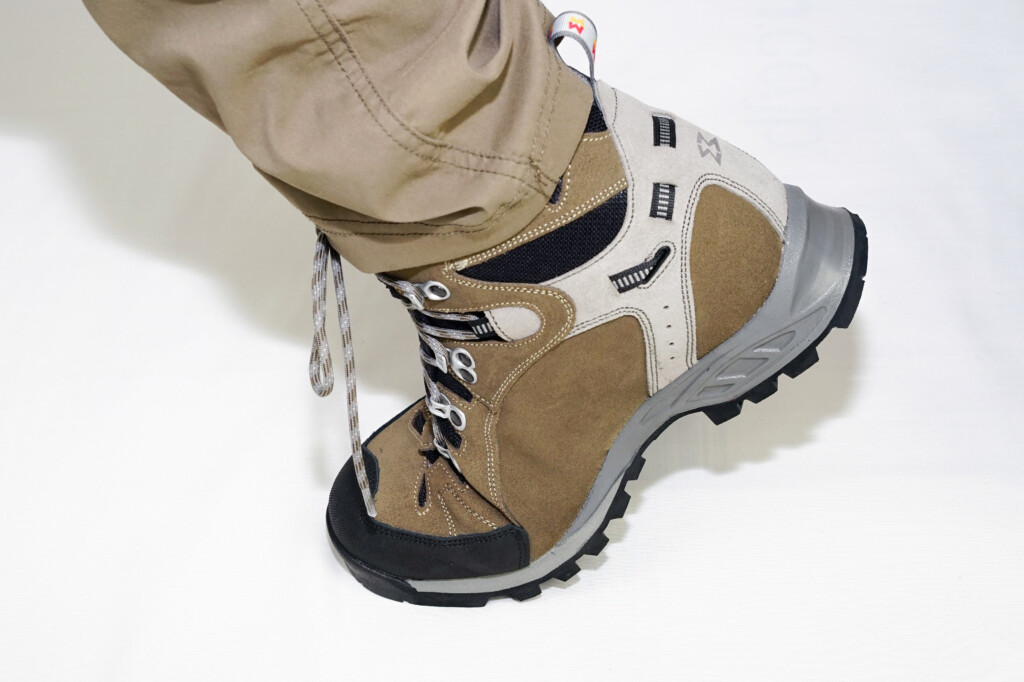
6. Will the creases at the toe joints cause any pain?
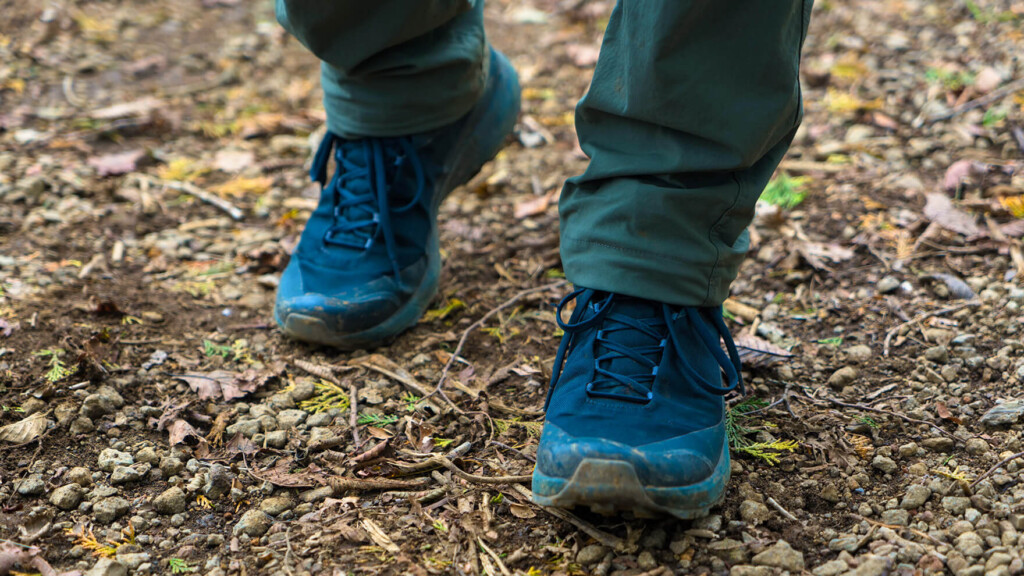
The soles of trekking shoes are generally hard and designed to be hard to bend, but they are not completely inflexible. When you walk, weight is applied to them for a moment, and wrinkles should form at the joints of your toes, as shown in the photo above. When this happens, check to see if the wrinkles rub against your feet more than necessary, causing blisters . However, although the degree of this varies depending on the model, they will generally become accustomed to your feet after wearing them a few times, so if they rub against your feet a little, you don't need to worry about it.
For a more comfortable fit: Consider the footbed
The insoles that come pre-installed in shoes often only provide minimal support and comfort, and are not expected to last. Third-party insoles, on the other hand, are available in a wide variety of models, addressing a variety of walking concerns, including fatigue, blisters, foot pain, and knee pain. Insoles can be broadly categorized into the following effects, and each model specializes in one or more of these, and each model has its own unique characteristics, depending on the shade and other features. It's best to choose one that best suits your needs
Reduces fatigue
They absorb shocks on the heel and other areas of the foot, distributing the load evenly across the entire foot, reducing fatigue caused by walking for long periods of time
Stabilizes the core
By firmly supporting the arch of your foot and supporting your weight, it reduces wobble and movement from your heel to your arch. It also helps you maintain good posture and helps prevent injury
Improved propulsion
It stabilizes arch movement and distributes impact, making it easier to transfer force. By moving your joints and muscles efficiently and with correct posture, you can transfer power throughout your body
Improved fit and comfort
Insoles come in a variety of sizes and thicknesses, allowing you to customize your fit by choosing the right one. Also, if they have the ability to effectively wick away sweat, comfort will be significantly improved