



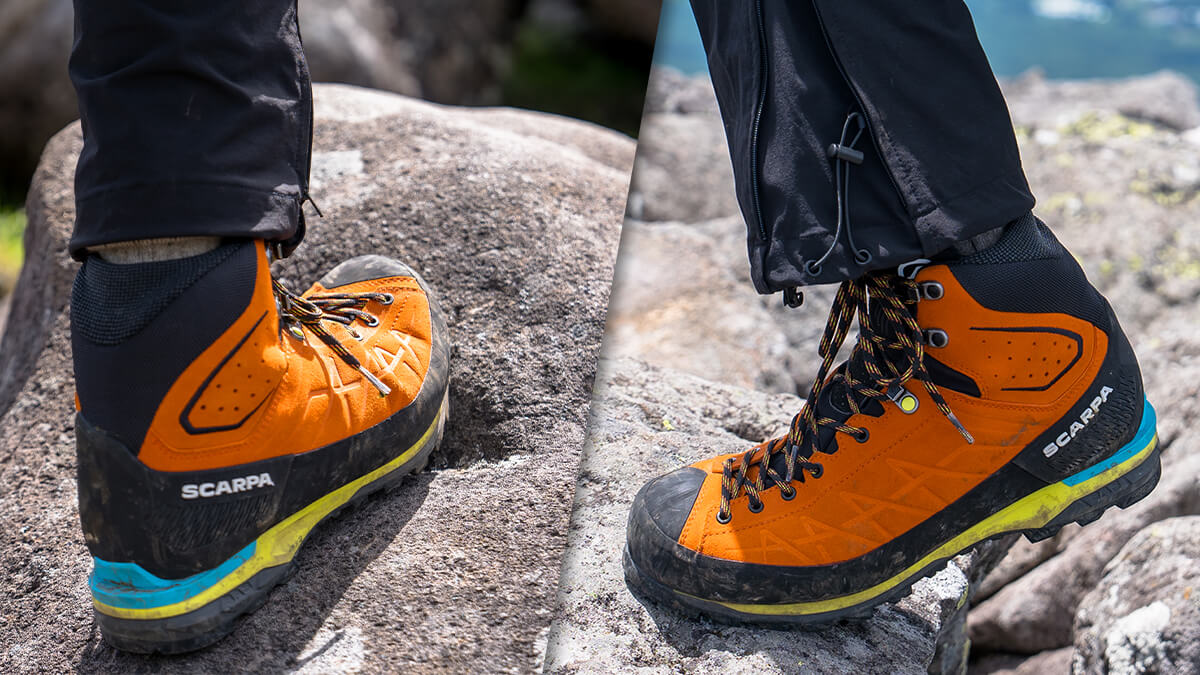
SCARPA Zodiac Tech GTX (and Zodiac Trek LT GTX) Review: An excellent balance of stability on rocky terrain and flexibility on the trail. Next-generation lightweight mountain boots that "can climb and walk."

Written by Yasushi Hisatomi
Anyone who has actually tried hiking in the mountains will know that carrying a heavy load in a large backpack of over 50 liters, or traversing steep rocky ridges in high mountains such as the Alps, makes it difficult to use hiking shoes (boots) designed for low mountains
The main reason is that when you try to place your feet on uneven rocky or unstable snowy surfaces while wearing soft hiking boots and carrying a heavy load, your landing can be shaky or the soles of your feet can twist, causing you to lose balance.You can also find it difficult to climb on small holds on steep rocky surfaces because you cannot get your toes to stick to them, and you can easily become fatigued and tired.Unless you are an extremely fit climber, you will find it very difficult
To walk safely and comfortably in such harsh alpine terrain, even with a heavy load, and to minimize damage to your feet, you need hiking boots with hard soles and a sturdy overall construction. These are commonly called alpine (light alpine) boots or mountain boots. I have previously written about detailed classifications and how to choose them, so please refer to that if you are interested
Related articles from Outdoor Gearzine
While alpine boots offer excellent stability and protection for tough terrain, the trade-off is that you have to get used to (and endure) their unnatural stiffness and weight compared to regular shoes. While stability on rocky terrain is desirable, it's best to have boots that are light and flexible, meaning they're comfortable and easy to walk in
, a lightweight alpine boot from SCARPA , an Italian brand specializing in authentic mountaineering boots , the Zodiac Trek LT GTX , and will share my impressions after walking routes in the Yatsugatake, Nasu, and Central Alps in these boots for about a month.
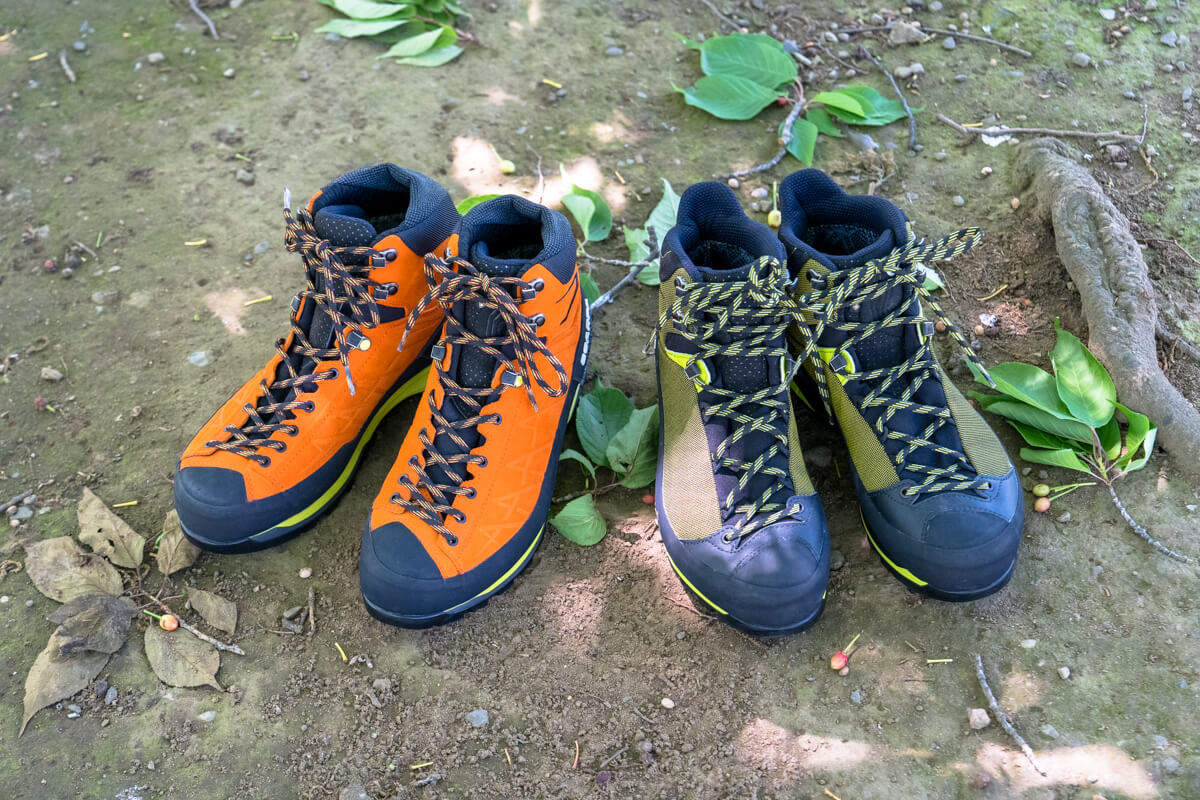
table of contents
- Key Features of the SCARPA Zodiac Tech GTX
- Main specifications and evaluation
- Detailed Review
- Fit and comfort: Although these boots are hard, they are soft against the skin and have a comfortable fit that hugs your feet perfectly
- Durability: Provides ample protection to keep your feet safe
- Performance: A true all-rounder with the stability to land firmly on unstable rocks and the dexterity to stand on tight holds
- Summary: From traversing the Alps to scrambling, this is the first thing you should consider if you want to walk lightly on rocky ridges with a heavy load
- For details and purchasing information on the SCARPA Zodiac Tech GTX/Zodiac Trek LT GTX, please click here
Key Features of the SCARPA Zodiac Tech GTX
The SCARPA Zodiac Tech GTX is a lightweight, three-season alpine boot designed for challenging alpine traverses like the Alps and technical scrambling across rocky ridges. The sturdy upper, crafted from high-quality Italian Perwanger® leather, features rubber reinforcement around the perimeter for superior protection against strong abrasion and impacts. The unique SockFit XT system provides a superior fit, while also providing natural ankle support and a wide range of motion. The highly adhesive Vibram outsole and unique "BAS System" midsole absorb uneven surfaces, maximizing friction with the ground for stable grip and stability. Naturally, the boots are waterproof and breathable thanks to GORE-TEX technology, and are compatible with semi-touch crampons. The Zodiac Trek LT GTX is a lighter model in the lineup, featuring fabric construction for enhanced ankle protection for trekking.
Recommended points
- Lighter than full-fledged mountain boots, yet provides protection and a stable sole for rugged rocky terrain
- Comfortable fit and hold of the upper
- Excellent ankle mobility (despite the high level of support) (Zodiac Tech)
- Good ankle support (Zodiac Trek LT)
- VIBRAM sole with excellent grip and lug design for braking, stepping, and climbing on tough terrain
- Compatible with semi-one-touch crampons for coverage during snowy periods (Zodiac Tech)
- GORE-TEX provides stable waterproof and breathable performance
- High cost performance
Points of interest
- While they provide a sense of security on rocky terrain, they are not mountaineering boots designed for walking lightly with a light load like lightweight hiking boots
- Because they prioritize ankle mobility, they offer less ankle protection than full-fledged mountain boots (Zodiac Tech)
- While the ankle support is adequate, it lacks mobility and freedom of movement (Zodiac Trek LT)
Main specifications and evaluation
| item | SCARPA Zodiac Tech GTX | Zodiac Trek LT GTX |
|---|---|---|
| official weight | 680g (#42, 1/2 pair) | 620g (#42, 1/2 pair) |
| upper |
|
|
| Midsole |
|
|
| Outsole | VIBRAM® ABS Precision Cramp (semi-one-touch crampon compatible) | VIBRAM® ABS Precision |
| Waterproof and breathable | GORE-TEX® Performance Comfort | GORE-TEX® Performance Comfort |
| Sales price including tax (as of August 19, 2024) | ¥45,650 | ¥42,350 |
| Outdoor Gearzine Review | ||
| Fit | ★★★★★ | ★★★★★ |
| weight | ★★★☆☆ | ★★★★☆ |
| grip | ★★★★☆ | ★★★★☆ |
| Cushioning | ★★☆☆☆ | ★★☆☆☆ |
| protection | ★★★★★ | ★★★★☆ |
| Stability when walking with a heavy load | ★★★★☆ | ★★★★★ |
| Climbing aptitude | ★★★★★ | ★★★★☆ |
Detailed Review
*This time, we tested and photographed both the SCARPA Zodiac Tech GTX (hereinafter referred to as Zodiac Tech) and its sister model, the Zodiac Trek LT GTX (hereinafter referred to as Zodiac Trek).However the Zodiac Trek LT GTX .
Fit and comfort: Although these boots are hard, they are soft against the skin and have a comfortable fit that hugs your feet perfectly
The SCARPA Zodiac Tech GTX is more of a sturdy mountaineering boot than a padded hiking boot, and despite its bulky appearance, I was immediately impressed by how smooth it was when I put my foot in and how comfortable the fit was, thanks to the flexible upper that snugly hugged my entire foot. Behind this comfort is the upper structure of the boot's "SockFit TX" system, which is made from a single piece of softshell material from the tongue to the ankle flex point, providing both a flexible, snug fit and ease of ankle flexion
Regarding the sizing, I was told beforehand that the boots were slightly narrow, but in the end, I found the European size 42, which I usually wear for alpine boots, to be pretty much spot on. There's just enough room for my toes to move, and they didn't feel cramped even when going downhill, making them comfortable to wear. I also didn't experience any of the chafing that often occurs when breaking in new leather boots; they molded naturally to my feet without any issues from the very first time I wore them, even with just a pair of thick wool socks. However, due to the nature of leather, it's certainly best to break them in a few times to fully break them in. Incidentally, I always replace these types of stiff boots with my favorite insoles. Of course, I wasn't dissatisfied with them as they were, but I recommend doing so as they're more comfortable
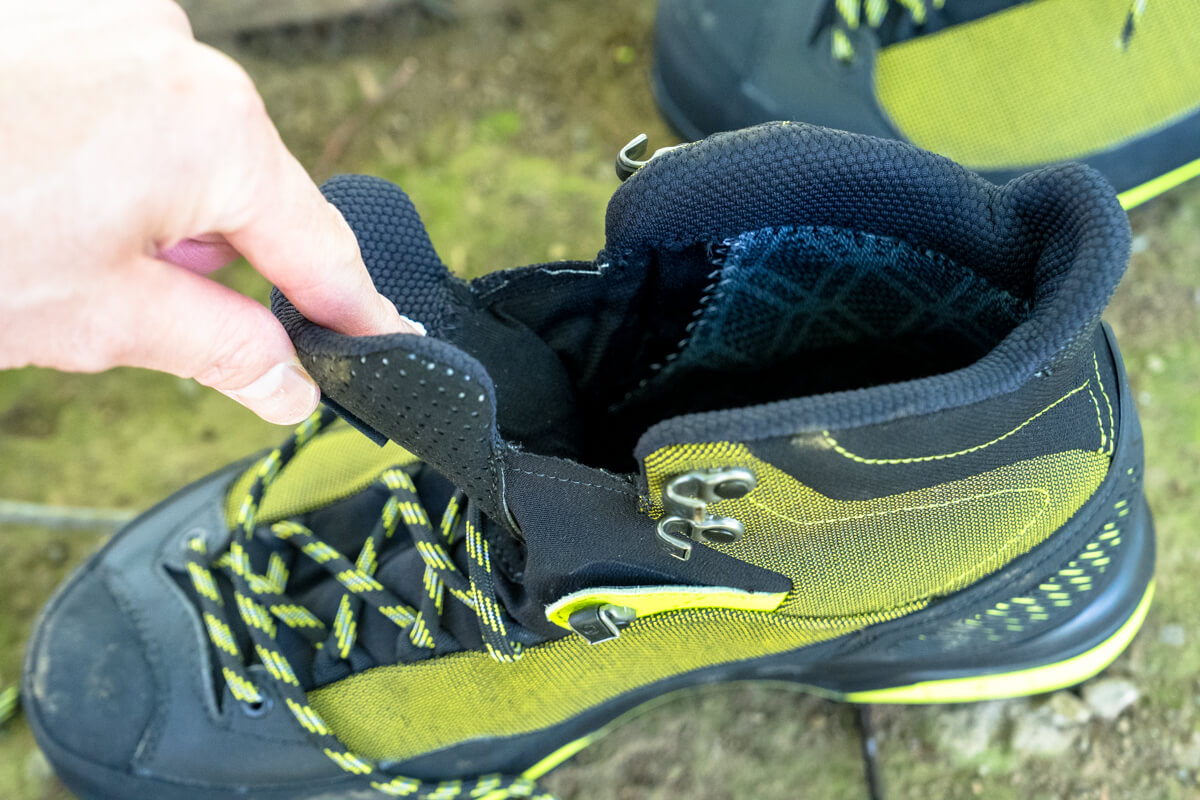
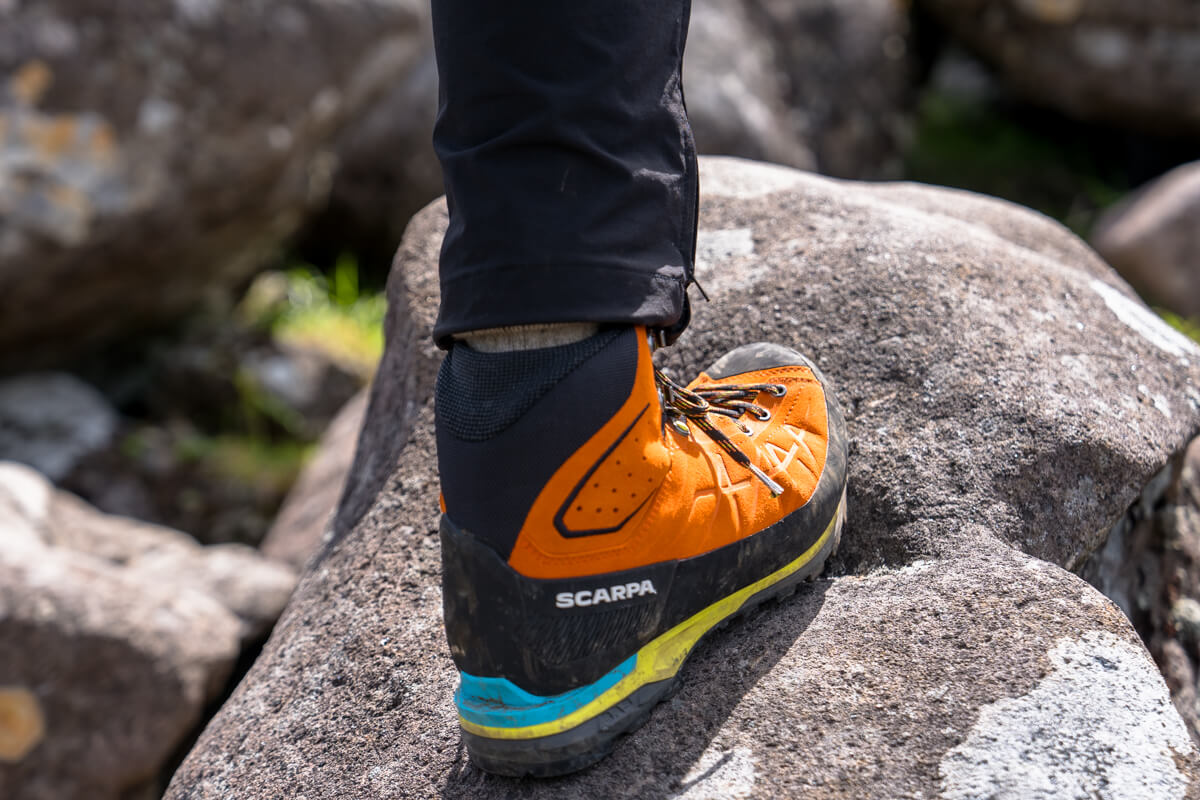
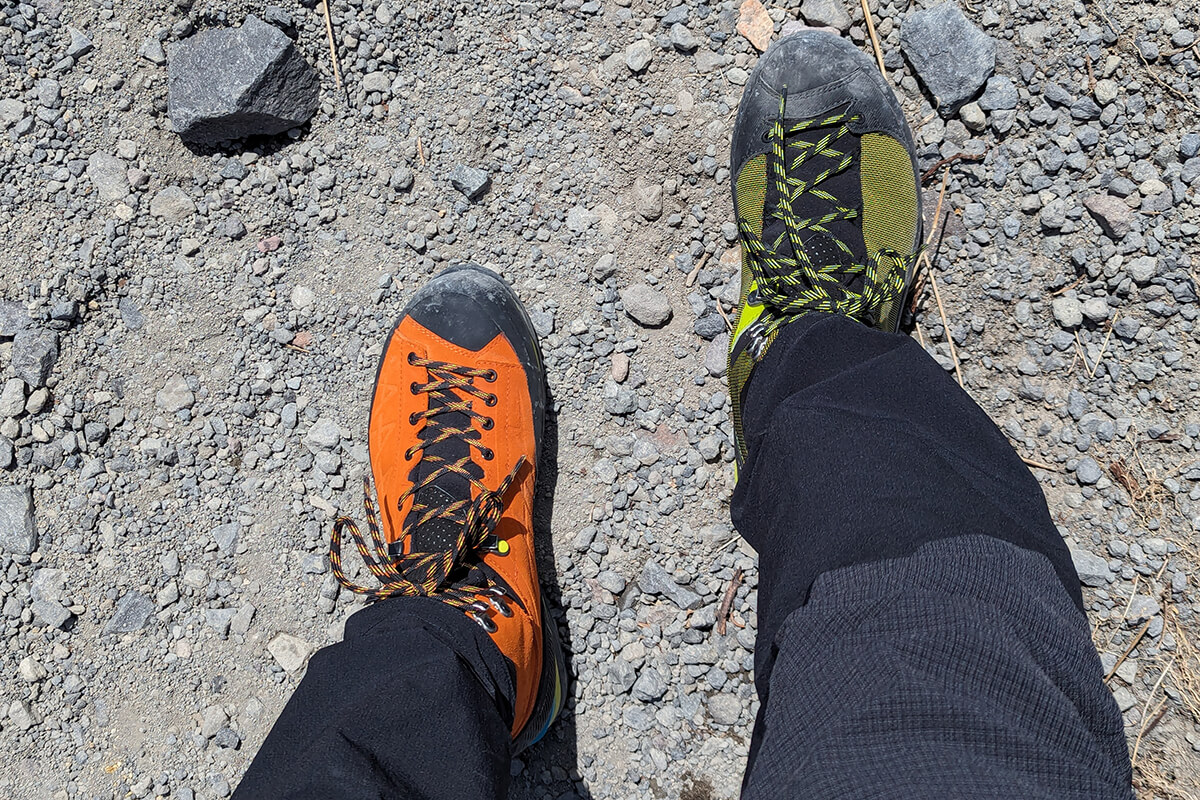
The ankle cuffs at the back the Zodiac Tech and Zodiac Trek differ. The Zodiac Tech has a much lower cuff, with soft, stretchy elastic that acts as a simple gaiter. It feels more like a mid-cut boot than a high-cut boot, which (as we'll explain later) allows for incredible dexterity and range of motion. The Zodiac Trek , has an ankle area that provides excellent ankle support and stability, essential for safe hiking (see photo below).
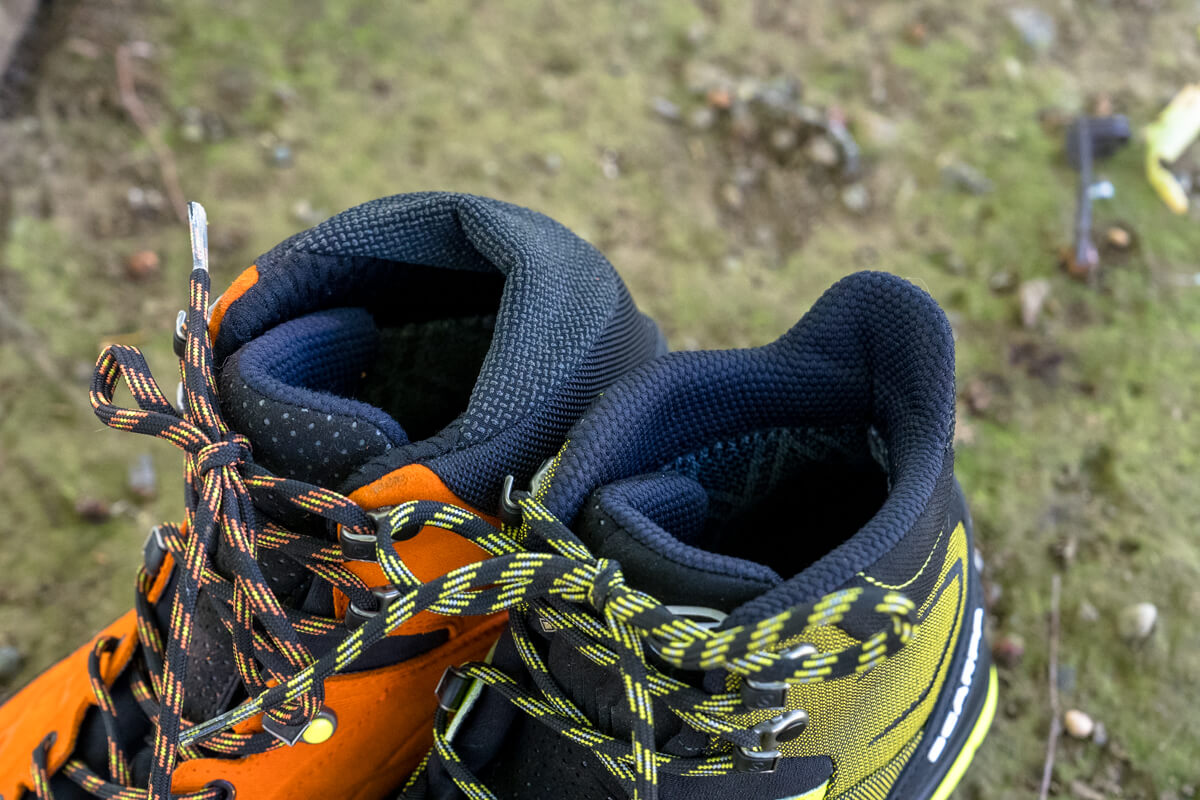
The Zodiac Tech (left photo) has a low ankle back and elastic material to create a simple gaiter, while the Zodiac Trek (right photo) has ample padding to support the entire ankle
This is not so much a question of which is better, but rather a difference in personality that comes from the difference in the target terrain.If you want to prioritize lightness on technical routes even if it means sacrificing some ankle support and stability, then you should choose Zodiac Tech, but if you want stability for longer distance treks such as mountain hikes, then you should choose Zodiac Trek
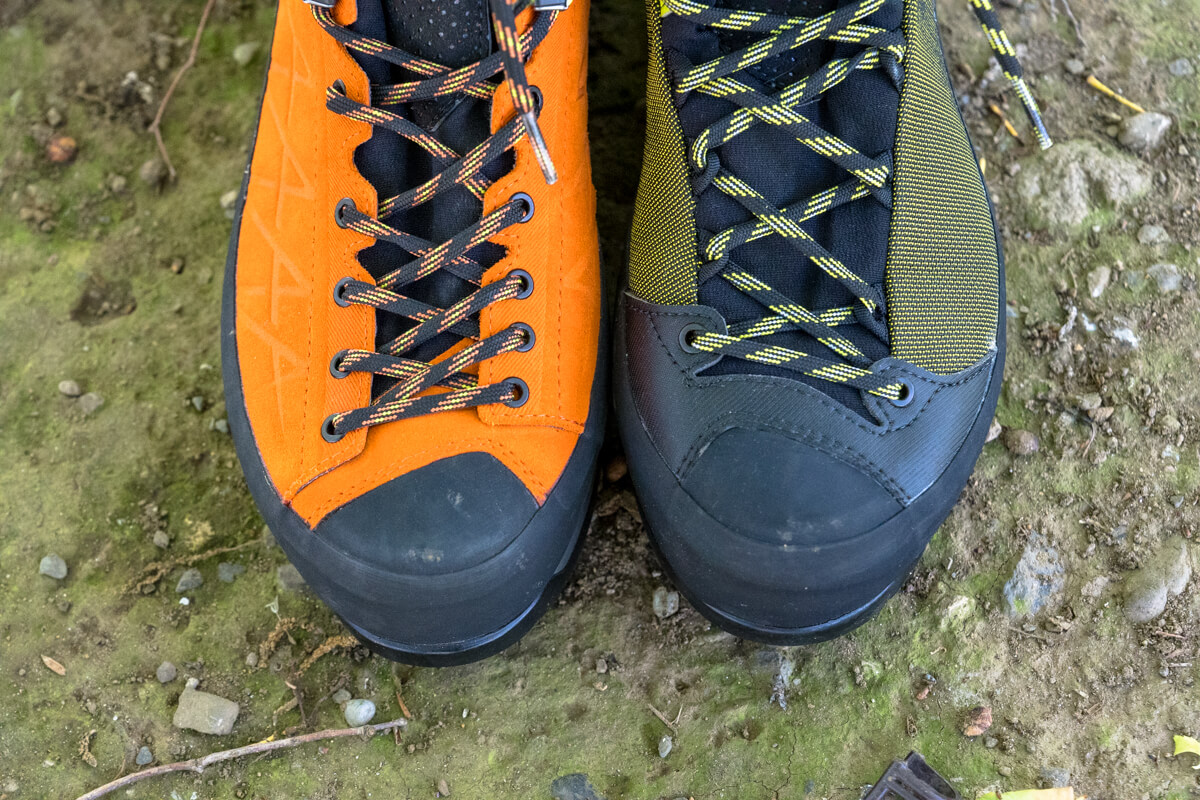
Zodiac Tech upper lacing structure is more like a climbing shoe or approach shoe, with more eyelets arranged in the design (left photo below), while the Zodiac Trek has more space between the laces and a wider exposed tongue, making it more breathable than the Tech
Both shoelace systems have hooks with a locking function at the top, which work well and make them easy to tighten and difficult to loosen, allowing me to securely fasten the boots without having to stop and re-tighten them
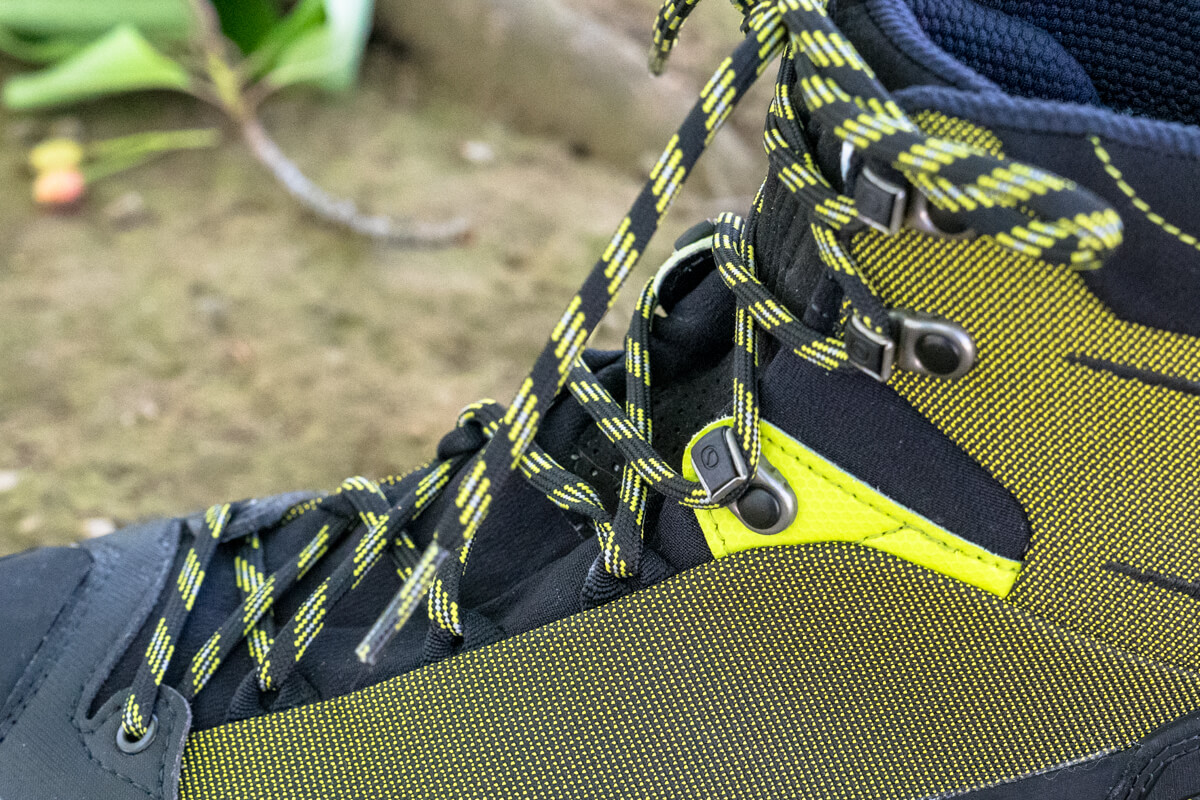
The lacing system can be adjusted to different tensions at the top and bottom of the boot, using standard lockable eyelets above the ankle
At 680 grams (men's size 42), this is considerably lighter than many full-fledged alpine boots that are robust enough to stand safely on rocky terrain, but it is a little heavy when considered as a trekking boot for walking on regular mountain trails (such as the company's ZG Trek GTX or Rush Trek GTX), reflecting its hybrid aim of being an "alpine boot that allows for light walking."
Durability: Provides ample protection to keep your feet safe
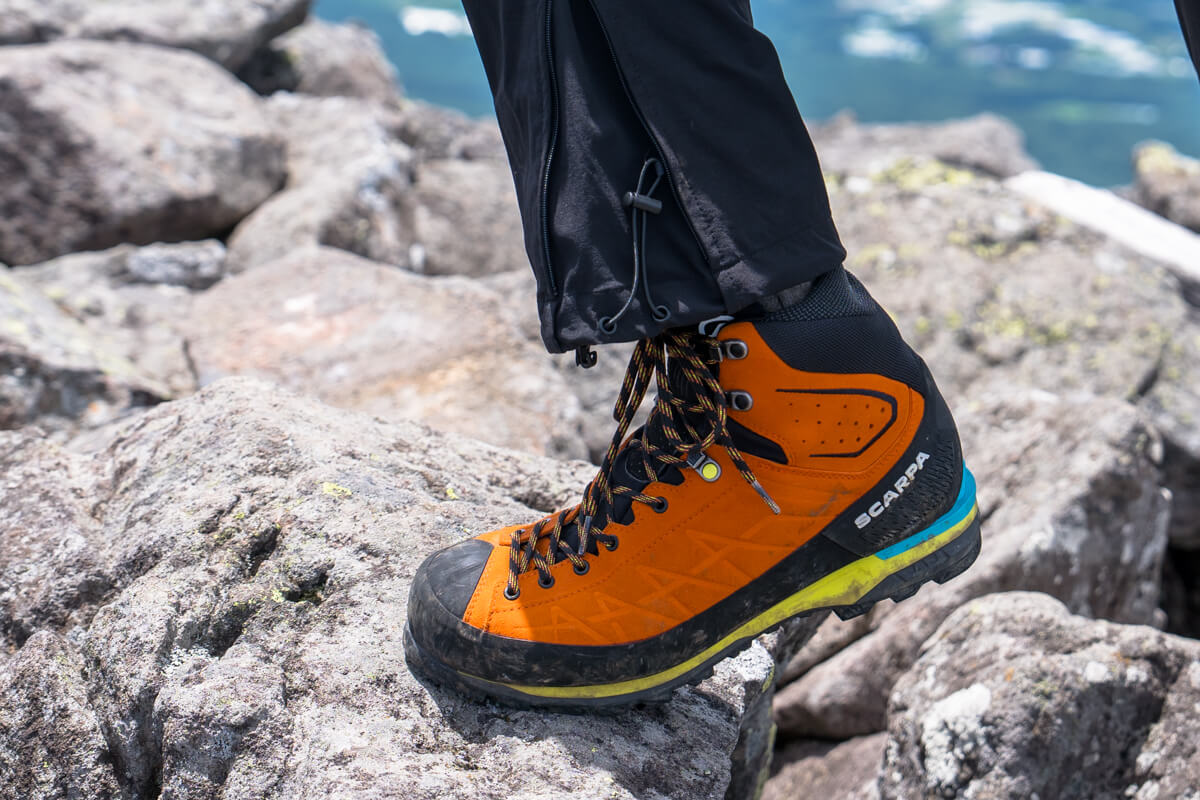
The combination of durable Perwanger® leather and rubber reinforcements gives the Zodiac Tech an extremely durable upper that's perfect for traversing rocky ridges. During testing, the rubber on the toe and the shoelace hooks on the ankle were rubbed hard against rocks several times, but they still looked like new, proving they're durable enough to withstand tough, abrasive conditions
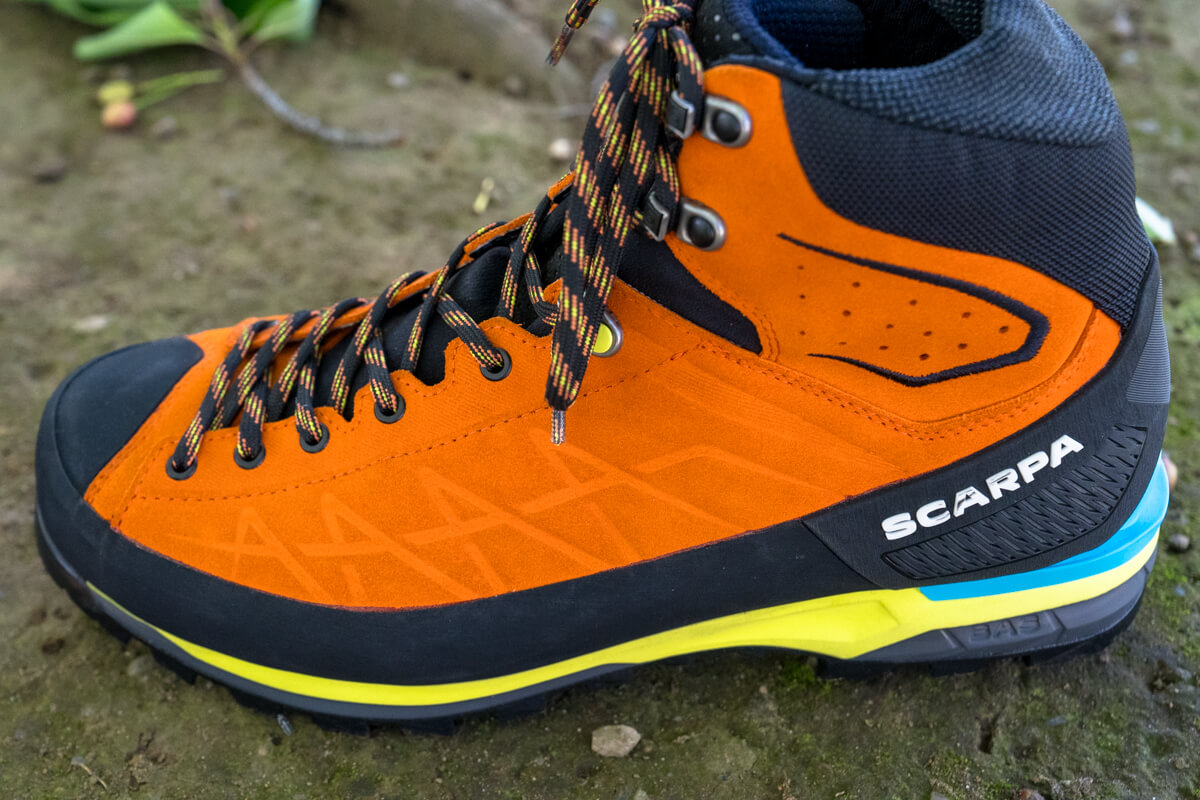
Although the Zodiac Trek's synthetic fiber upper is relatively less durable, it showed no signs of damage during this test, so there is no need to worry about durability no matter where you go trekking in Japan
Performance: A true all-rounder with the stability to land firmly on unstable rocks and the dexterity to stand on tight holds
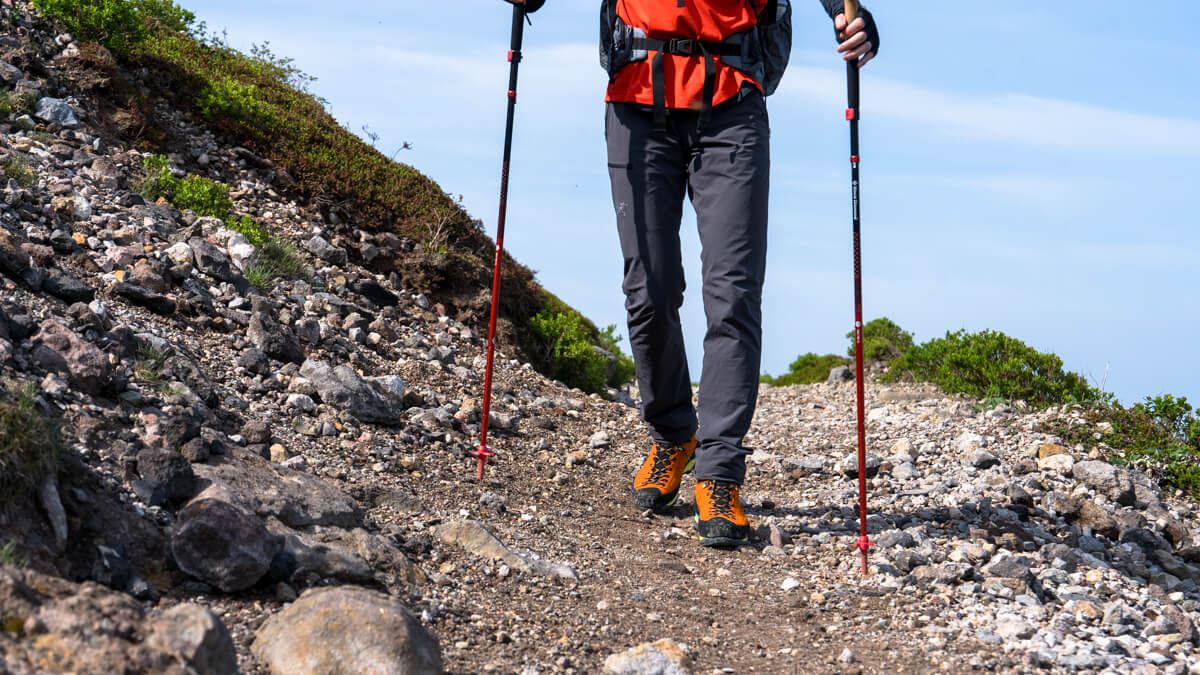
Normally, I tend to pack big and heavy with the addition of camera equipment, but when I'm traversing technical terrain like the Alps, I rely on boots that keep my feet steady and slip-resistant when landing, and allow me to step in smoothly and without stress. In that sense, I was impressed by the excellent stability and support that both the Zodiac Tech and Zodiac Trek
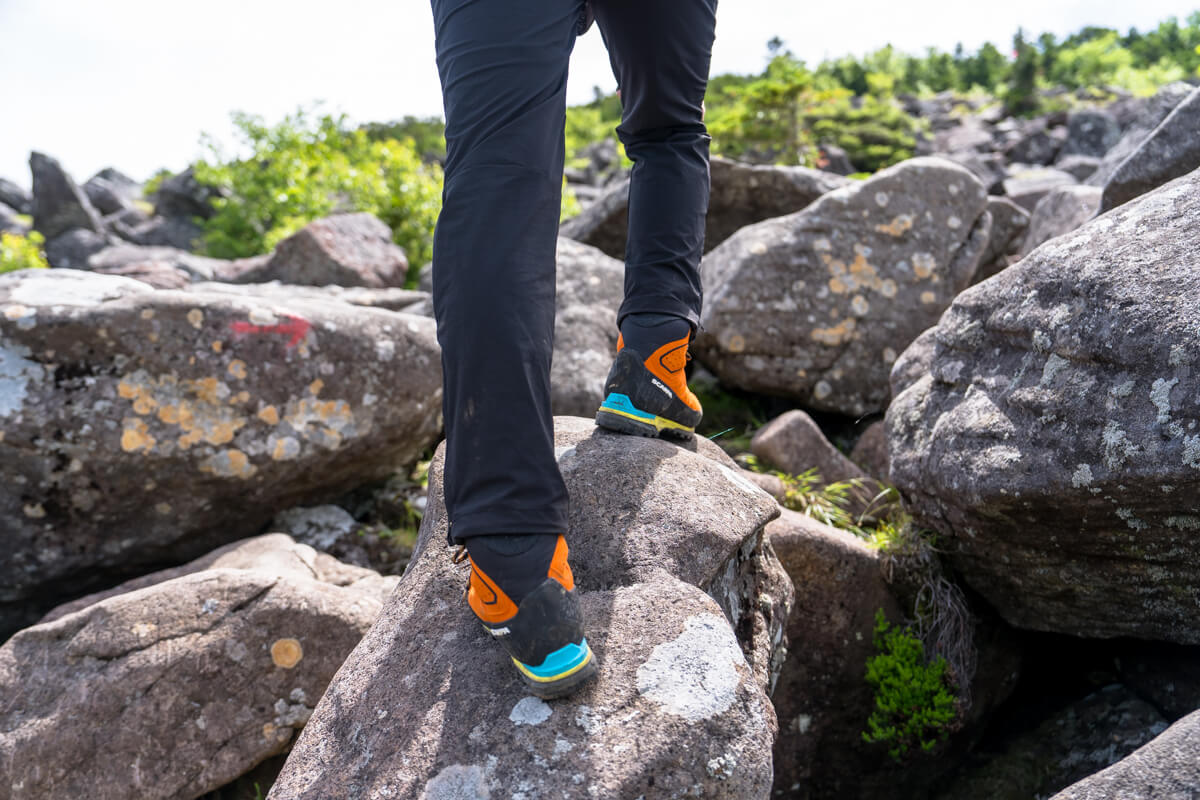
Both shoes feature the unique BAS (Bascula Adaptive System) sole structure. While the outsole itself is extremely stiff overall, the combination with the special midsole allows each lug (sole block) to independently absorb the unevenness of the road surface. This means that even on rough surfaces, your landing and stepping are stable, as if you were walking on flat ground, making it less likely that your ankle will twist or you will lose your balance. Of course, this function is not very effective on flat, gentle terrain, but it is ideal for difficult routes such as those in the Alps
This stability, combined with the aforementioned low cuff and flexible ankle area, allowed the Zodiac Tech
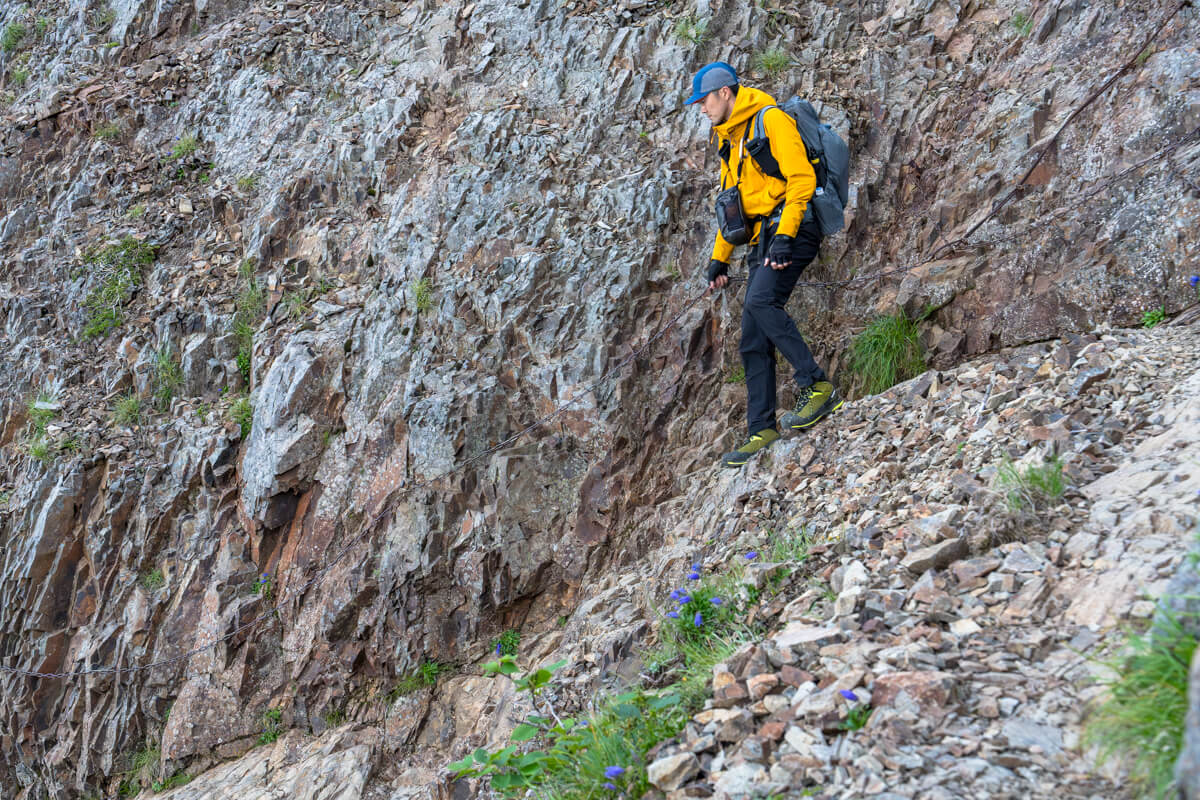
Also, when climbing a rock face where you normally use your hands and feet, the boots will support your weight even when you stand on a hold using only your toes thanks to their hard soles
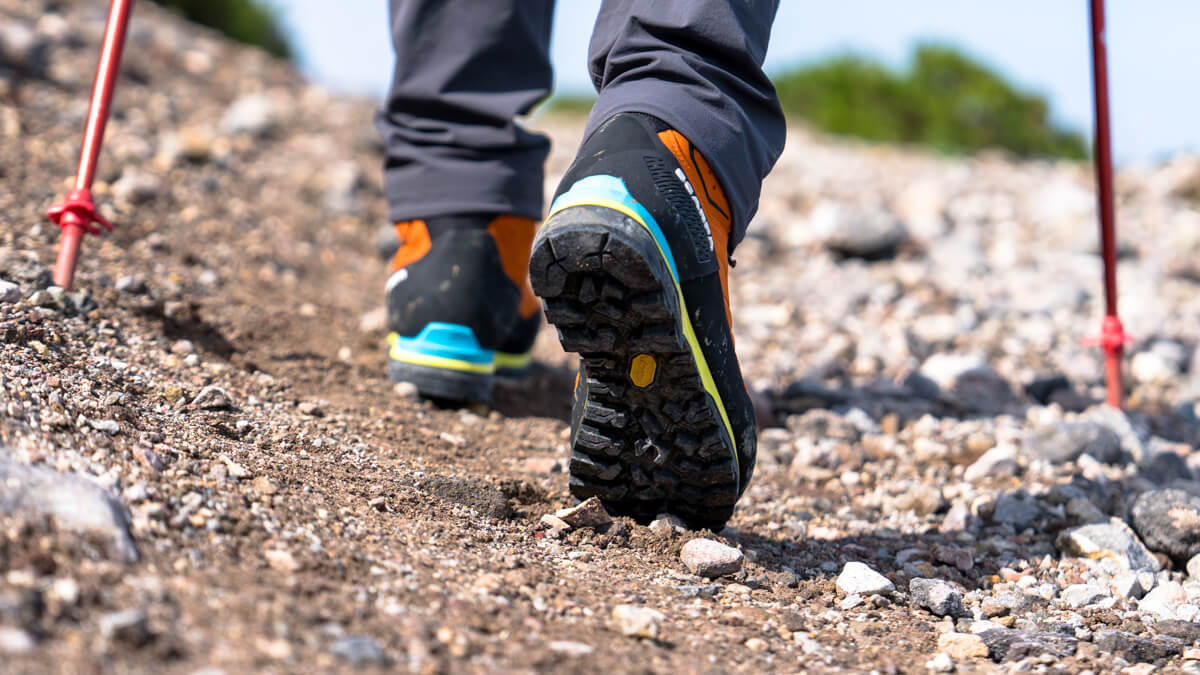
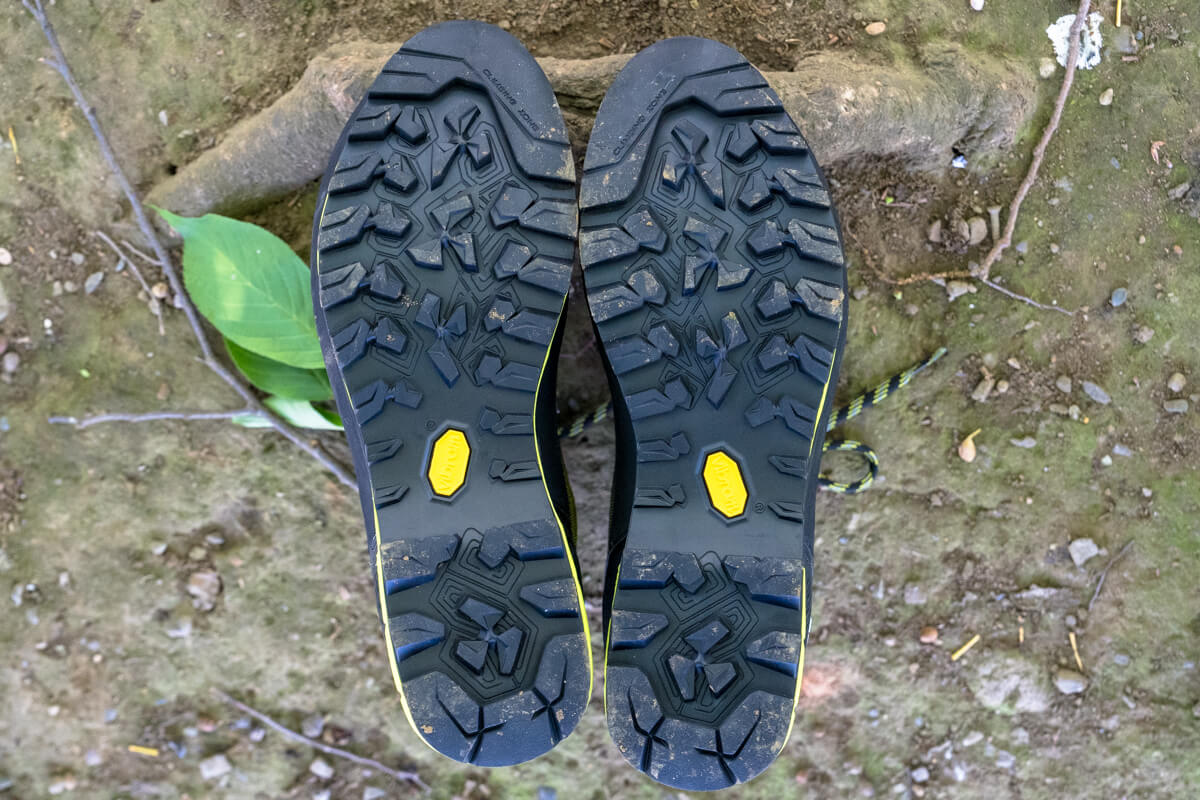
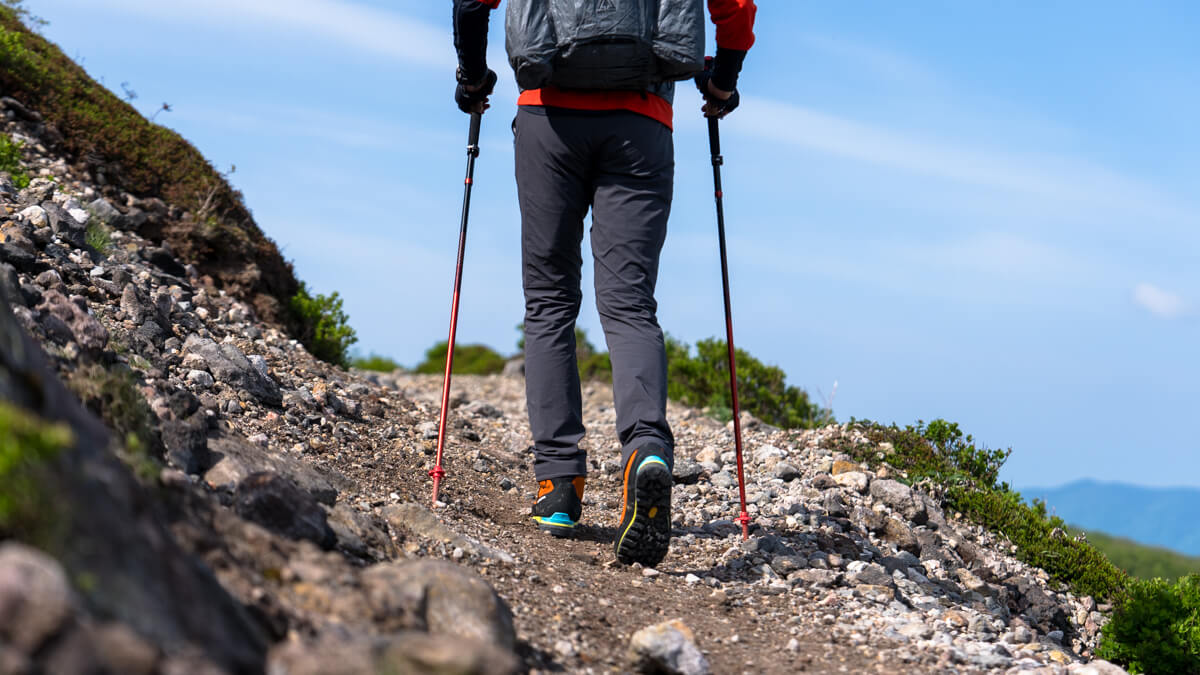
The Vibram outsole, common to both, is made from a compound that is highly adhesive and durable, and is designed to be a lug putter suited to demanding alpine routes, with sensitivity in the toe climbing zone, shock absorption in the medial forefoot and rearfoot, traction in the lateral forefoot and rearfoot, and good mud shedding (see photo below)
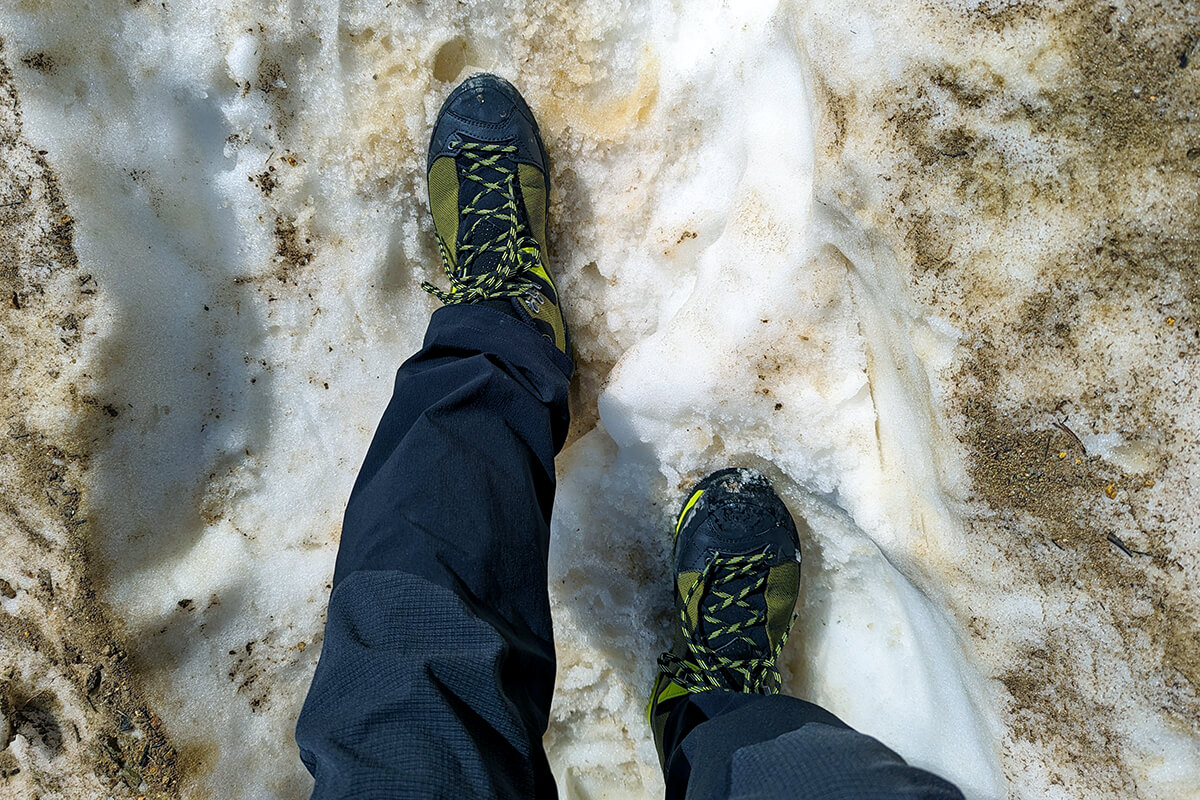
I was able to try walking on some remaining snow for a moment, and even then, it didn't feel particularly slippery compared to other shoes. If conditions are right, I think you could wear them for trekking on remaining snow without any problems (Zodiac Tech is especially compatible with semi-one-touch crampons, so there are a wide range of options)
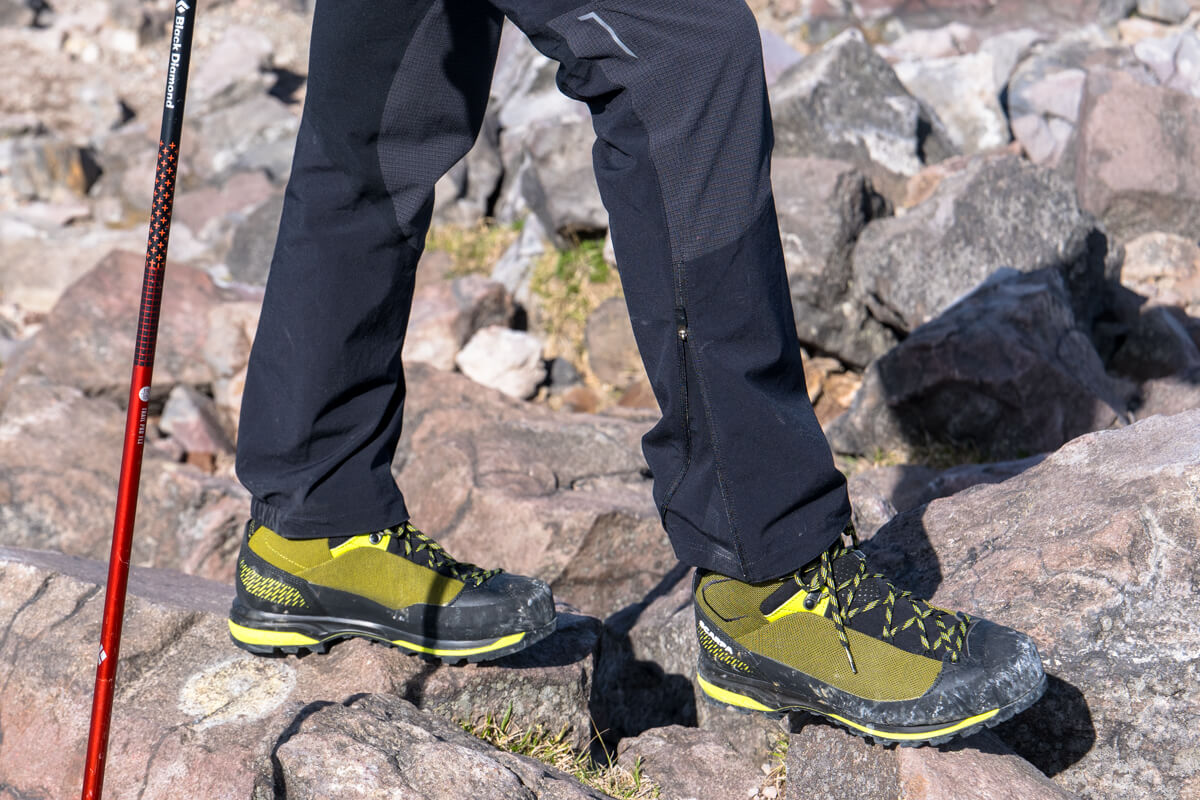
Incidentally the Zodiac Trek uses the same sole unit, so the sense of stability on rocky terrain was unchanged. However, because the range of motion around the ankle is limited, there was a slight resistance to large movements of the lower body, and when trying to walk lightly with a light backpack, I felt a little difficulty in maneuvering my feet. On the other hand, as I mentioned earlier, the Zodiac Trek is superior in terms of ankle support (safety) and reducing fatigue on long walks, so it's not a question of which is better. Being able to choose based on the route and preferences, based on stability on rocky ridges, is not a bad trade-off for a lightweight boot.
Summary: From traversing the Alps to scrambling, this is the first thing you should consider if you want to walk lightly on rocky ridges with a heavy load


The SCARPA Zodiac Tech GTX is the perfect boot for climbers looking for both stability and ease of walking on technical terrain, such as summer traverses in the Alps, routes with snow or residual snow, or scrambling up rocky terrain. For routes with cruxes that feature rocky terrain, where approach shoes are simply too light (or flexible), but full-fledged mountain boots are too heavy and hot, these boots are a top choice. Their excellent balance of climbing performance, exquisite lightness, and ease of walking makes them versatile enough to perform in a variety of mountain activities, from snowy to snow-free seasons.
Furthermore, the boots offer excellent value for money, being more affordable than competing models from other brands (such as Sportiva's Trangotec). Lost Arrow, the authorized retailer, offers comprehensive repair services, so you can rest assured that you'll need repairs or resoling in case of an emergency. Why not try these boots and enjoy the remaining summer months?
Which of the two Zodiac models will you choose?
Both are new models for this season, but to be honest, when I was planning this review, I was unsure which one to review (which would be best for me) because I personally found them both attractive and similar (which is why I was kindly asked to test both this time)
So, for those of you who are in the same situation, I'll summarize the differences between the Zodiac Tech GTX and Zodiac Trek LT GTX , and who they are recommended for, from the perspective of someone who has worn both.
What both boots have in common is the unique sole unit that connects the midsole and outsole, providing stability, traction, and grip on rocky ridges, as well as a comfortable fit from the upper
the Zodiac Tech GTX focuses on strengths for climbing on rocky ridges, such as a wide-range cuff and durability . However, that doesn't mean they're difficult to walk on flat ground; rather, the wide ankle range, like a mid-cut, makes them easy to hike. Another advantage is that they can be fitted with semi-touch crampons. If you're not particularly worried about injuries or carrying a heavy load, the Zodiac Tech is incredibly versatile and can be used for any mountaineering in warm seasons, including when snow remains.
the Zodiac Trek LT GTX focuses on strengths for long-term walking and heavy loads, including on rocky ridges, with features such as a synthetic fabric upper and highly supportive ankle area . However, this doesn't make it difficult to climb on rocky ridges, so it is certainly suitable for both walking and climbing on rocky ridges. Since it is less likely to twist your ankle, if safety is your top priority, this may actually be more comfortable. For climbers who want to walk steadily without worrying about injury and who don't intend to go faster than necessary with a heavy load, this is the more reassuring and recommended shoe.
For details and purchasing information on the SCARPA Zodiac Tech GTX/Zodiac Trek LT GTX, please click here
For information on the latest model arrivals and product details, the official online store . Furthermore, Lost Arrow is running a discount campaign on spring/summer products for brands it handles until the end of August 2024. If you're considering purchasing, don't miss this opportunity, so why not check out various online shops and local outdoor specialty stores?

Support us with a membership full of perks
Related reading
 SALOMON XA PRO 3D V9 GORE-TEX Review: From outdoor activities to city walks, the origin and pinnacle of crossover shoes evolves into the 9th generation
 SALOMON OUTPULSE MID GORE-TEX Review: Whatever the reason, these lightweight hiking boots are incredibly comfortable. They make you want to wear them forever and ever
 SALOMON X ULTRA PRO GORE-TEX Review: The unique high level of perfection remains the same, but with the added benefit of an excellent fit and lightness
 This low-cut shoe offers incredible stability. A review of the new SALOMON X ULTRA 4 GORE-TEX, a classic hiking shoe that combines unparalleled comfort with injury prevention