



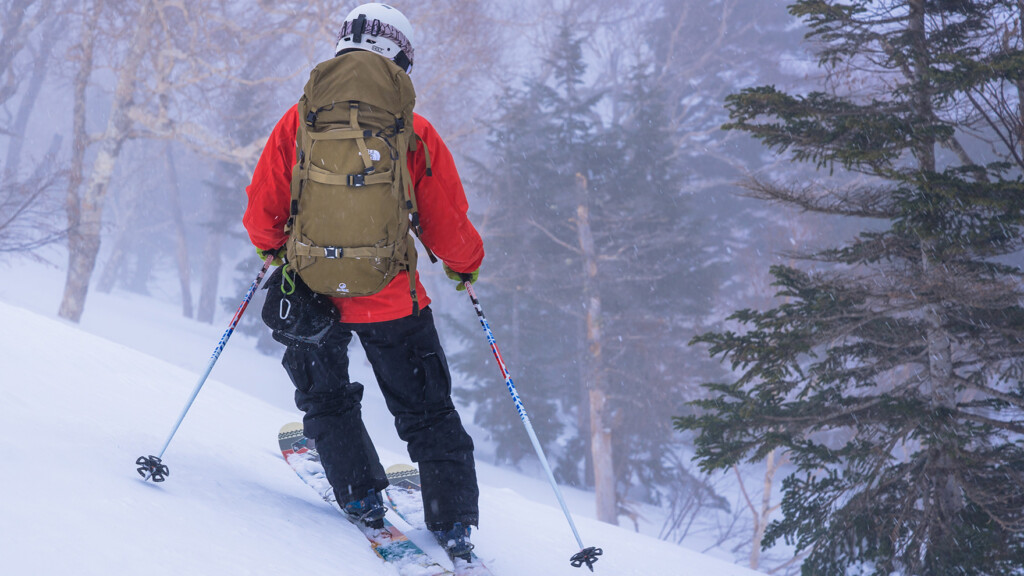
Comparison Review: Backcountry ski and snowboard backpacks for maximum efficiency
Written by Makoto Hamaguchi
Backcountry skiing and snowboarding have become increasingly popular in recent years
The popularity of powder skiing can be seen in magazines featuring ski resorts with excellent powder skiing, and ski resorts themselves creating powder zones! Japan is also rapidly gaining popularity overseas as a country with the finest powder skiing. There's even a hashtag, #japaw, showing just how popular Japanese powder snow is with foreign skiers. Until now, Niseko in Hokkaido and Hakuba in Nagano have been popular, but foreign skiers and snowboarders are making full use of social media and are already spreading the popularity to Nozawa Onsen, Myoko, Zao, Yuzawa, and even Tanigawadake
I myself am one of those people who got hooked on skiing on powder slopes and then ventured into the backcountry in search of even greater pleasure. Today, I'll be reviewing essential items for enjoying the backcountry: backpacks for backcountry skiing and snowboarding! I hope this will be helpful for those of you who are thinking of buying a new backpack this season or who want to get serious about backcountry skiing.
table of contents
About the backpacks we compared
The model I had been using in the backcountry until this test was the Deuter S-Zett . I was quite satisfied with the design and the detailed storage inside the pockets, and although it was still usable, with only a few signs of wear, it had been around for quite a while and the capacity was starting to feel a bit insufficient, so I decided to take this opportunity to buy a new one. As this is my second model, I wanted a more complete model that would maintain my current satisfaction while also addressing some of the issues I was unhappy with. So I did a quick search of the latest models based on the following desired criteria:
- Capacity is about 30 to 40 liters
- Main compartment can be accessed from the back
- Skis can be secured in an A-shape or diagonally
- Helmet holder included
- Plenty of pockets for backcountry use
- If possible, the waist belt should be pulled forward to tighten
- I like simple and sophisticated designs
Here are the five backpacks we have selected that meet these selfish requirements
- Deuter Freerider Pro 30
- Gregory Targhee 35
- Osprey Camber 42
- THE NORTH FACE Chugach 45
- Thule Upslope 35L
This is just a guess before the test, but based on information from catalogs and websites, and my own experience with packs Gregory The North Face is a strong contender, with its excellent design and thoughtfulness, including a radio pocket . Next comes Deuter Osprey , a favorite in backcountry areas and among friends Thule, which has been rapidly gaining popularity recently, was also chosen with renewed hope. In fact, in addition to these five, I also considered Japanese packs like the classic Mammut , Haglofs , ORTOVOX , and PLUS ONE WORKS to be interesting, but ultimately had to give up on them due to factors such as availability, the feel in stores, and my budget.
Test environment
The testers were myself (a skier, 165cm tall, 58kg, who uses skins when hiking) and our editor-in-chief, Hisatomi. As we sometimes go solo, we carry a little more basic equipment (including avalanche gear and helmet) and also use a radio. The tests were conducted in January and February in ski resort access areas and full-hike backcountry areas, using each pack for hiking and skiing. We scored the packs based on our impressions of actually wearing and using them, as well as observing the fine details of their construction
Each model was evaluated by weighting the following five items according to their importance, and the scoring criteria for each item were set as follows:
- Comfort (30 points)
- Scored based on fit when worn, cushioning, and stability when hiking uphill or downhill. - Storage (30 points)
Scoring is based on the ease of storing skiing items when hiking up, storing hiking items when skiing down, and putting on and taking off the skis. - Ease of use (20 points)
Scoring is based on ease of use, placement of pockets and attachments, opening and closing of zippers and buckles, and the presence or absence of other unique features. - Weight (20 points)
- Not just weight, but weight per volume
Test Results & Spec Comparison Table
| Overall ranking | 1st place | 2nd place | 3rd place | 3rd place | 5th place |
|---|---|---|---|---|---|
| item |  THE NORTH FACE Chugach 45 THE NORTH FACE Chugach 45 |  Osprey Camber 42 Osprey Camber 42 |  GREGORY Targhee 32 GREGORY Targhee 32 |  Thule Upslope 35L Thule Upslope 35L |  Deuter FREERIDER PRO 30 Deuter FREERIDER PRO 30 |
| Overall score (out of 100) | 86 | 85 | 81 | 81 | 77 |
| Reference price | 30,240 yen | 20,520 yen | 31,320 yen | 21,384 yen | 22,680 yen |
| Here is ◎ | Storage capacity, user-friendly features, weight | Price, comfort, storage, ease of use | Comfort around the waist and good overall balance | Weight, price | Comfortable to wear and stable when skiing |
| Here is △ | Comfort, price | Nothing in particular | price | Comfort and storage | Storage, ease of use, and weight |
| Comfort (30 points) | 23 | 26 | 25 | 23 | 26 |
| Storage capacity (30 points) | 26 | 25 | 24 | 23 | 22 |
| Ease of use (20 points) | 18 | 17 | 16 | 16 | 14 |
| Weight (20 points) | 19 | 17 | 16 | 19 | 15 |
| Specifications | |||||
| item | THE NORTH FACE Chugach 45 | Osprey Camber 42 | GREGORY Targhee 32 | Thule Upslope 35L | Deuter FREERIDER PRO 30 |
| Weight (g) | 1,785 | 1,820 | 1,700 | 1,380 | 1,720 |
| material | 420D Cordura® nylon, 1050D Cordura ballistic® nylon | Main = 420HD nylon pack cloth, Accent = 420D nylon mini check dobby, Bottom = 420HD nylon pack cloth | 420D Cordura nylon | 420D BALLSHADOW nylon | |
| size | M, L | S/M, M/L | S, M, L | One Size | One Size |
| Avalanche Gear Storage | ◯ | ◯ | ◯ | ◯ | ◯ |
| helmet holder | ◯ | ◯ | ◯ | ◯ | ◯ |
| Rear access | ◯ | ◯ | ◯ | ◯ | ◯ |
| Hip belt pocket | 2nd grade | 2nd grade | 1st grade | large 2 | 2nd grade |
| Ski attachment |
|
|
|
|
|
| Insulated hydration sleeve | × | ◯ | ◯ | ◯ | × |
| Goggle pocket | Large (fleece) | Large (fleece) | Large (not fleece) | Small (fleece) | Small (fleece) |
| Ice axe/pole loop | Both sides | Both sides | Both sides | One side only | Both sides |
| others |
|
|
|
|
|
Evaluation results - Recommendations by type -
First of all, the main premise is that none of the items I chose this time caused me any extreme complaints, such as pain from hitting something or difficulty in maintaining balance due to swinging while gliding, and they were all generally satisfactory models. The results I'll be sharing from now on are the result of a comparison and consideration of quite detailed aspects. With that in mind, I hope you'll use the results below as a reference!
THE NORTH FACE Chugach 45
Overall No. 1: Usability down to the finest details, designed with skiers in mind



Here's what I like about it
- Ample storage and easy access
- Easy-to-open zippers and buckles, easy rear access, and other details make it easy to use
- Highly durable yet lightweight
Here's △
- The hip belt is a little too long and the back is slippery, making it less comfortable
- price
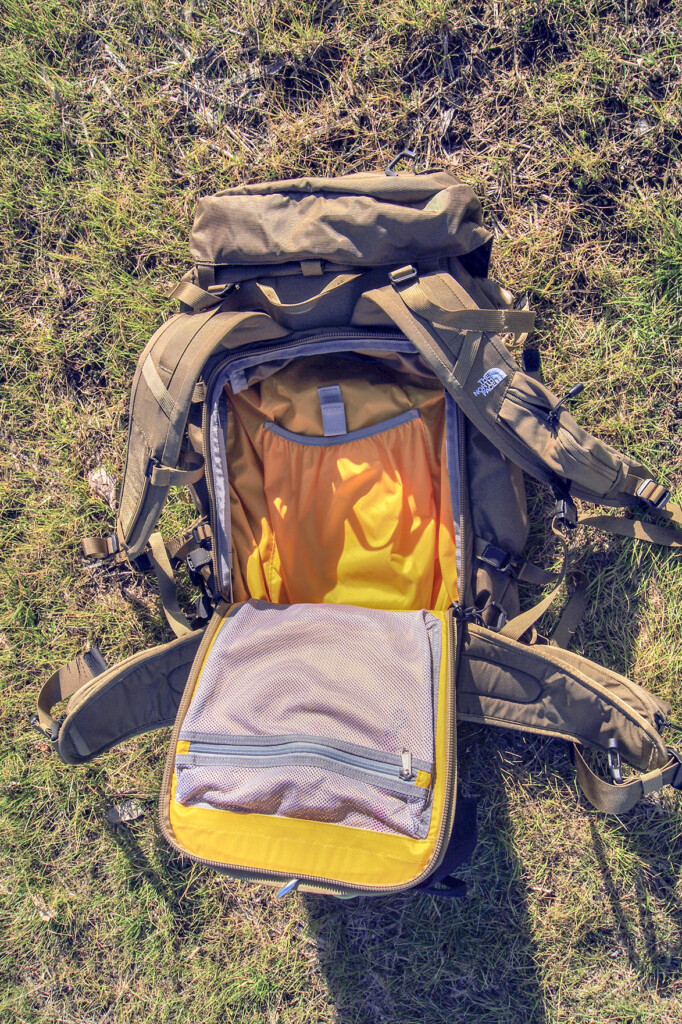
At first glance, it seems like it would be more convenient to open the back panel all the way, but the zipper is hidden by the hip belt and can be difficult to close, so it was less stressful if it stopped at this point
After comparing them from various angles, I ultimately chose this latest Chugach model as the best. First of all, the capacity and design were a perfect match. But the biggest reason is that it has been thoroughly designed with backcountry experience in mind, down to the smallest details, including storage
For example, the main compartment can be accessed from the back panel. Being able to access it without undoing the shoulder buckle is very convenient. Also, by limiting the opening range to about the bottom third, rather than fully opening, the zipper doesn't get hidden behind the hip belt, resulting in a stress-free experience. Other neat features include a pocket for a radio on the shoulder harness and a buckle that keeps snow out and is easy to open and close even with gloves on. On the other hand, I haven't found any major drawbacks, and so far I haven't experienced any stress while using it. I've used it four or five times this season, both at ski resorts and on full backcountry hikes, and each time I wear it, I fall in love with how easy it is to use
However, one thing that concerns me is that the cushioning in the area that rests against the waist is a little slippery and tends to swing from side to side (although this is purely a comparison). Also, the waist belt is long, so those with a slim waist may not be able to tighten it all the way. If possible, it's best to check it out in person. For short day trips, I think 45L is a little too large. In that case, I would recommend the next smaller size (35L). Anyway, I would like you to try out this bag and experience for yourself how easy it is to use, with skiers in mind
Osprey Camber 42
Despite its affordable price, it offers a stable carrying comfort and ease of use, making it the best value for money
Here's what I like about it
- Comfortable to carry thanks to the back panel that fits your back and the moderate cushioning
- High storage capacity and ease of access
- Simple and easy to use
- Cost performance
Here's △
- Nothing in particular, but if I had to say something, the zipper on the back panel is a bit stiff
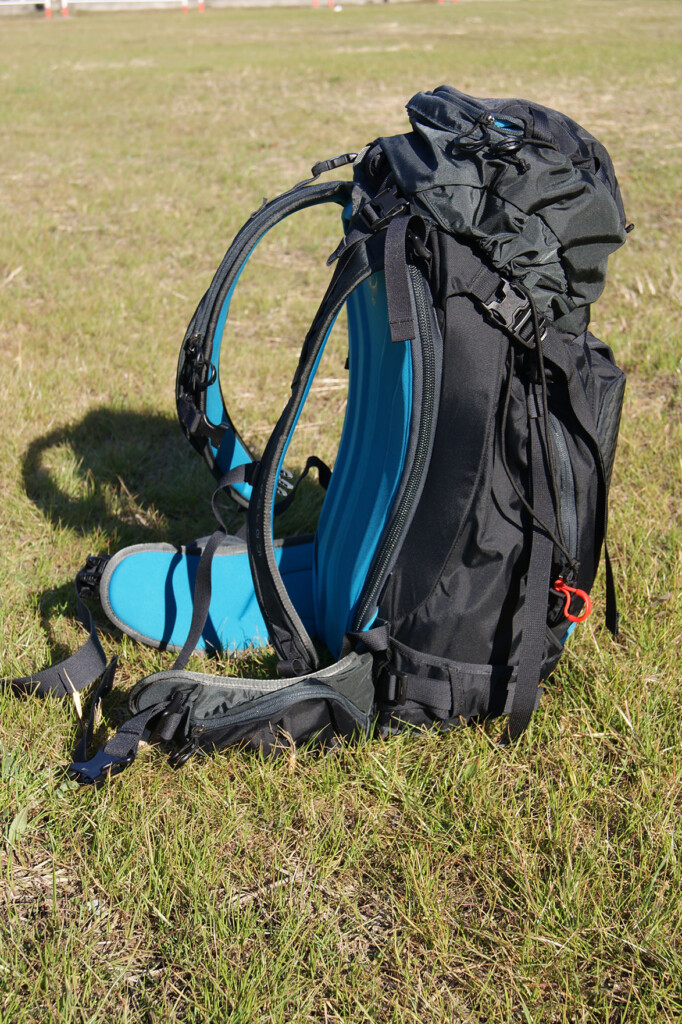
While many ski backpacks have a fairly flat back, the Camber has a well-curved back that follows the spine
The Osprey Camber 42 was undoubtedly the best value for money. It's comfortable, easy to use, has sturdy fabric, is well-balanced, and isn't particularly heavy. Honestly, it's not surprising that some people would say it's the best, and it's also reasonably priced. I don't think there are many backpacks out there that offer such good value for money
What I particularly like about this backpack is how comfortable it is to wear. The curves of the back panel fit my back perfectly, and even when I used it for a four-hour hike, I didn't feel any pain or pain from any contact with my back. Even considering its large size of 42L, the storage design is simple, spacious, and easy to access. The top is a canopy, so apart from storing avalanche gear in the front, it's practically the same as a regular hiking backpack, so you can use it with confidence
If I had to point out a drawback, it would be that the zipper on the side of the back panel, which is the one you use most often to access your belongings, rubs against the inner fabric and is a little stiff. However, this varies from one model to another, and it was only a minor issue compared to other models, so it didn't bother me much when I used it overseas
Deuter Freerider Pro 30
Overall comfort is No. 1 with its comfort and stability when skiing
Here's what I like about it
- Excellent fit, cushioning, stability, and overall comfort
Here's △
- weight
- Poor storage and ease of use due to small capacity
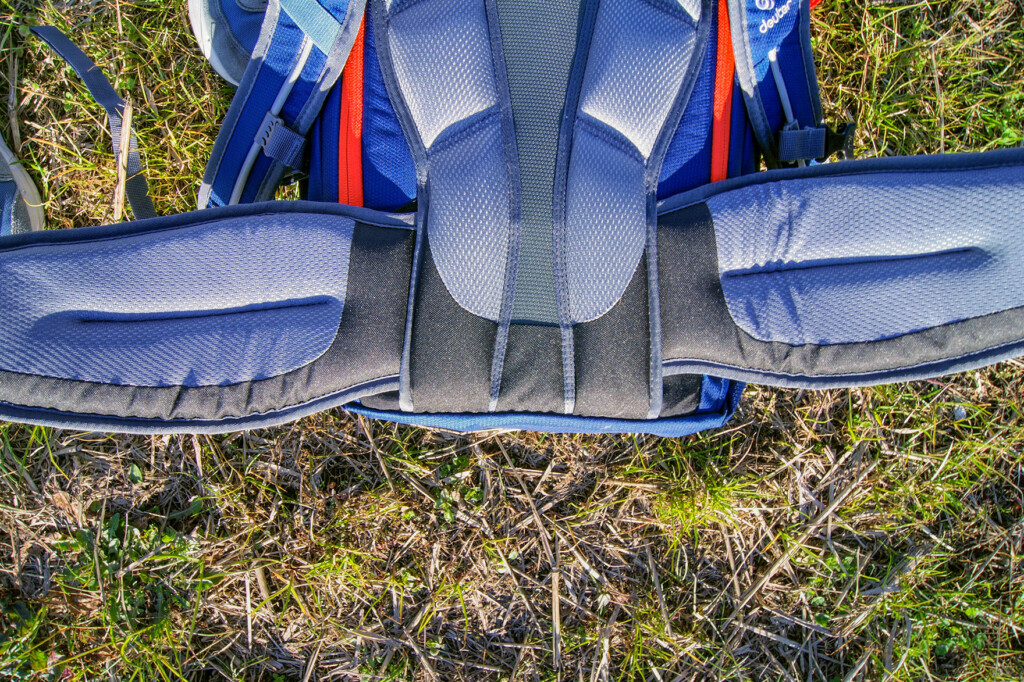
The Variflex system moves up and down in accordance with the movement of your hips, allowing you to accommodate the intense movements you make while skiing
Coming in at No. 1 in comfort was the Deuter Freerider Pro 30. It ranked highly in terms of fit, cushioning, and stability (for hiking uphill and downhill)
What I particularly like is the comfort of the back panel, which is a unique idea, and the fit and stability of the hip belt (Variflex system) that moves in accordance with the movement of the hips. As a long-time Deuter user, I know that the comfort of the grooved back structure, which takes breathability and cushioning into consideration, is outstanding. Perhaps because I get hot easily, I felt that it was cool not only in the warm weather of spring skiing, but also during hikes in the peak season. The overall thin shape does not place the center of gravity too far back, and combined with the stability of the Variflex system, it provides stability when skiing
Its weaknesses include being heavier than other models. Its storage capacity, including its capacity, is also slightly lower. That said, the 30L capacity is just right for those just starting out in backcountry skiing, or those who enjoy day trips, side country, or lift-access backcountry skiing. Backpacks with a large capacity tend to be overloaded, making it difficult to balance the load, which can be more troublesome than you might imagine unless you're extremely confident in your skiing skills. The "bigger is not better" mentality is both a challenge and a fun part of backcountry packs
Thule Upslope 35L
Lightweight, highly functional, and with a clean appearance, this is the No. 1 model for agility
Here's what I like about it
- Amazingly light, with minimal parts while maintaining durability and ease of use
- Low center of gravity by placing luggage around the waist
- price
Here's △
- Difficulty fastening hip belt
- The top compartment is a little small due to the multiple compartments for accessories
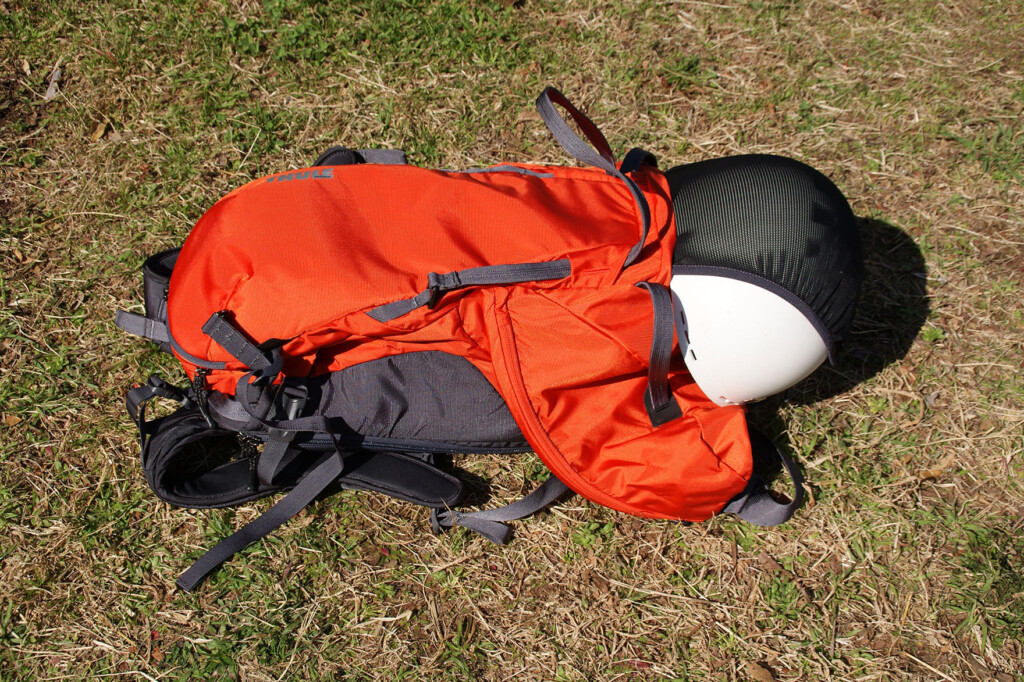
It has some interesting and unique features, such as large pockets on both sides and the ability to attach a helmet underneath
The lightest backpack is the Thule Upslope 35. It has a capacity of 35L but weighs just 1,380g. It's amazing how, despite its light weight, it doesn't have any drawbacks like thin fabric or poor cushioning
What I particularly like about this backpack is its light weight and the many other innovative features that break away from conventional standards for ski backpacks. The left and right pockets on the hip belt are significantly larger than other models and are positioned to fit around the waist, making it not only easier to access items, but also lowering the pack's center of gravity for improved stability. Small touches like the hook-type front strap and the sewn-in helmet holder for easy attachment and detachment (which can be attached in two ways, front or bottom) may be a little intimidating, but they convey the maker's attention to detail in their pursuit of both lightness and functionality, eliminating waste, and reducing the user's workload and making things easier
One thing that bothered me was that the hip belt is tightened by pulling it outwards on both sides, which makes it harder to tighten than other backpacks. However, Thule seems to have just started making backpacks, so this is a brand to keep an eye on. If you like new things and would like to invest in something new, this is the one to choose!
Gregory Targhee 35
If you're looking for a bag that is comfortable to carry and easy to use without any drawbacks, this is it!
Here's what I like about it
- High stability and cushioning around the hip belt
- Flawless
- Easy to use in small areas such as zippers and buckles
Here's △
- price
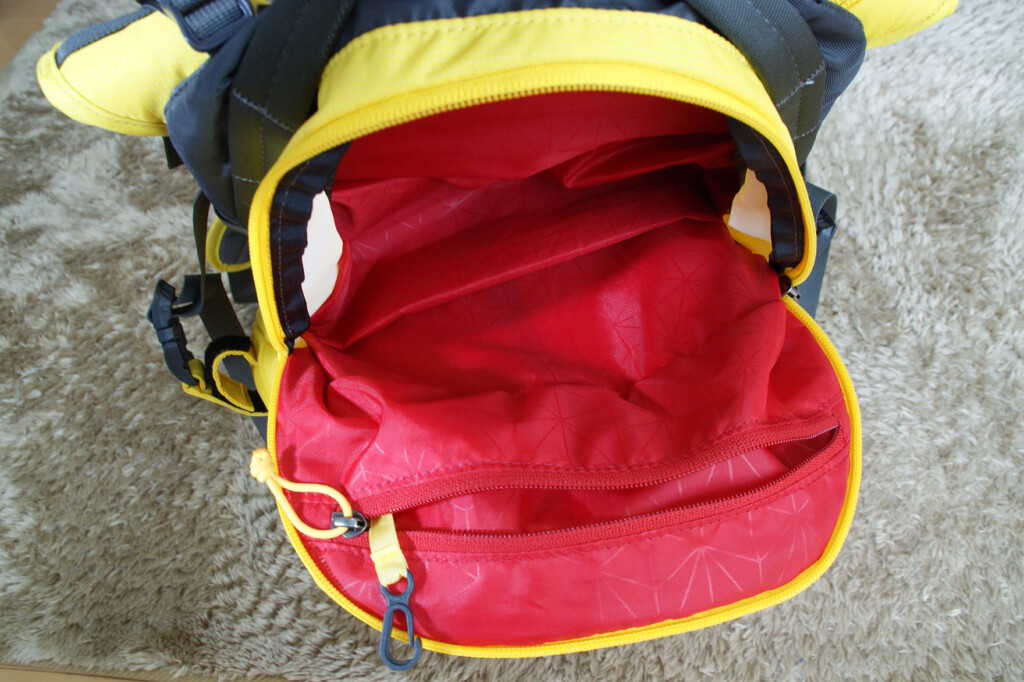
Despite its 32L capacity, it has plenty of storage space for accessories and avalanche gear. This is great because there isn't much you actually need to put in the main access
I certainly had high expectations, so perhaps they were just a reflection of my experience. Gregory's all-around ski pack was ranked mid-point in terms of points, but in a word, it was the most flawless backpack this time. It didn't have any outstanding features, but it also had almost no flaws, and that's what makes it so great, which is my impression of this pack after thinking about it again
The hip belt, which firmly covers the entire hipbone and supports the load, is the best of the bunch, including its high cushioning. Comfort when hiking is as expected from Gregory. The storage area is clearly divided into main compartment, avalanche compartment, and accessory compartments. The large top accessory pocket can easily accommodate today's large goggles, and the zipper is smooth and easy to grip, making it extremely user-friendly. The back access, which can be opened without removing the shoulder buckle, is also impressive
On the other hand, this may be a matter of personal body type, but I was concerned about the line of the shoulder harness from the shoulder to the armpit. The shoulders felt a little wide, and then the armpits seemed to close suddenly, causing some chafing. If this bothers you, it's a good idea to carefully try fitting it on site
There is no clear good or bad, and for some people, this is the best. If you are unsure what kind of personality you should look for in a backpack, this is the backpack you should buy if you don't want to regret it later!
summary
Unlike packs for mountain climbing, where you simply carry your gear, backpacks for backcountry skiing require convenience and comfort that can be used in a variety of situations, such as putting on and taking off skis and ski seals, and going downhill after reaching the summit. For this reason, each model is a highly technical product that combines a variety of elements intricately, including fit, comfort, and stability, as well as ease of use, lightness, and design. In that sense, all five models in this review seemed to have a good overall balance, so to be honest, it was very difficult to compare them. Although this was a pleasant surprise
On the other hand, I'm a little disappointed that none of the models have a back adjustment function. This may be difficult to do from a structural standpoint, as ski packs have back access, but I think it's a feature that will be necessary in the future to achieve a better fit and less wobbling
If you choose a famous brand, you won't be disappointed, but depending on how you use it, a backpack can be a companion that you will use for a long time. You want to get a favorite that you won't regret. Use this article as a reference and think about choosing your companion to your heart's content!
Makoto Hamaguchi
After quitting his job and spending time at a ski resort, he saw his friends enjoying powder snow and became interested in powder snow riding. After that, he worked as a clerk at a ski shop before joining his family's soba noodle restaurant. In the summer, he works at the soba restaurant. In the winter, he aims to become a skier
We are looking for reviewers
Outdoor Gearzine is always looking for members who love the outdoors and want to write reviews about outdoor gear. For more information, please visit the REVIEWERS page here !
Check out this article about backpacks
- How to Choose the Right Mountaineering Backpack and 10 Recommended Backpacks for Beginners
- 10 Lightweight Backpacks for Beginners in Fastpacking
- 10 New and Recommended Daypacks for Day Hiking and Everyday Use [Classic & Unique]
- Comparison Review: Comparing the best beginner backpacks for those just starting out in mountaineering
- Comparison Review: Comparing lightweight backpacks perfect for light hiking and fastpacking
Related reading
 Comparison Review: Comparing convenient and comfortable daypacks for day hikes, travel, and everyday use
 Must-Have Mid-Size Backpacks for Hiking and Fastpacking in 2018
 Comparison Review: 2018's Hottest Mid-Size Mountaineering Backpacks
 This season's recommended backpacks for day hikes and overnight stays, and how to choose the right one