



How to Choose a Sleeping Mat That You Won't Regret and 9 Recommended Items: Use It Wisely According to the Season and Scene

Written by Yasushi Hisatomi
Sleeping mats come in a variety of shapes, features, and prices. Choose the right one for the season and occasion
Sleeping mats (pads), also known as outdoor mattresses, are an important item that greatly affects the quality of your sleeping surface, just as important as a sleeping bag when lying down on uneven outdoor terrain
Speaking of mattresses, it was 20 years ago that I'll never forget. I bought a self-inflating Thermarest model using my meager part-time job earnings (just under 10,000 yen). Having only ever used a thin silver mattress up until then, I honestly believed that this would make me invincible on mountain nights. However, a few months later, that ambition was sadly dashed along with countless punctures. Looking back, it's easy to see that it was my fault for laying it bare on the pebbled ground (although I thought it would be just about okay...)
What I'm trying to say here is that the more expensive the sleeping pad you place under your sleeping bag as a cushion when camping or hiking, the better. There are many different types of sleeping pads available in a wide range of prices, from roll mats that cost around 1,000 yen to expensive models that cost over 30,000 yen. However, if you don't understand the differences in structure and features that come with each type, not just the price, when making your purchase, you could end up with a disappointing purchase
So, in this article, we've put together a guide on how to choose the right sleeping pad, and selected the latest models recommended by our editorial team, who have been sleeping on sleeping pads for over 20 years. We hope this helps those of you who are unsure of which mattress to choose to find one that suits your needs and style
Related articles
table of contents
- 9 Backpacking Sleeping Pads Recommended by Our Editors
- 3-Season Vest①: NEMO Tensor™ All-Season Regular Mummy
- Three-season vest #2: Rab Ultrasphere 4.5
- 4-Season Vest: Therm-a-Rest NeoAir X Thermo
- Summer Vest: NEMO Tensor™ Elite
- Best for sleeping comfort: THERM-A-REST Neoloft
- Warmth (insulation) vest: EXPED ULTRA 7R MUMMY
- Best value for money: CAPTAIN STAG IXPE Foam Mat
- My personal favorite self-inflatable mattress: Therm-a-Rest ProLite Plus
- My personal favorite closed-cell mattress: NEMO Switchback Regular
- How to Choose: 5 Things to Check to Choose the Best Sleeping Pad Wisely
- summary
9 Backpacking Sleeping Pads Recommended by Our Editors
First, our editorial team will introduce some recommended models that are perfect for certain occasions and purposes
3-Season Vest①: NEMO Tensor™ All-Season Regular Mummy

Updated for 2024, the Nemo air-padded mattress offers the brand's signature lightweight, compact, and convenient design, while also providing excellent comfort and insulation. It's a highly balanced, all-in-one mattress that offers superior comfort and durability. The baffle design, which can be viewed either horizontally or vertically, complements the shortcomings of both, providing excellent sleeping comfort. The latest model boasts an improved R-value, further improving durability, which was previously lacking. It also provides ample warmth for all seasons, including winter mountain climbing
- R-value: 5.4
- Weight (regular): 400g
- Thickness: 9cm
- Size: 51×183
- Storage size: 25.5 x φ10 cm
- Pump sack: included
Three-season vest #2: Rab Ultrasphere 4.5

Rab, which has been producing a string of outstanding products across a wide range of genres in recent years, has released its latest air mattress, an all-season model that combines high insulation with exceptional lightness and compactness. Weighing just 370 grams, it achieves a high R-value (heat retention) of 4.3 thanks to its TILT technology, a highly insulating structure that utilizes heat reflection. High quality is also pursued in every detail, with a thickness of 8 cm, flat side baffles, and a quiet design that minimizes friction when turning over. It's amazing how compact it can be stored, even with such high specs!
- R-value: 4.3
- Weight (regular): 370g
- Thickness: 8cm
- Size: 51×183
- Storage size: 18 x Φ9cm
- Pump sack: included
4-Season Vest: Therm-a-Rest NeoAir X Thermo

Its top-class insulation (R-value 6.9) is clearly different from other pads. In short, while other pads "hold in" the temperature, this pad feels like it "generates heat." What's more, it's lightweight and compact, and the new valve makes it incredibly convenient to inflate and deflate. If I had to say something, it's that the crackling noise is a bit annoying. It's not cheap by any means, but for those who want to use it all year round, it's definitely worth the price
- R-value: 6.9
- Weight (regular): 430g
- Thickness: 6.4cm
- Size: 51×183
- Storage size: 23 x Φ10cm
- Pump sack: included
Summer Vest: NEMO Tensor™ Elite

Incredibly light at just 240g, this air mattress boasts a satisfying insulation rating of 2.4, and is portable enough to fit in the palm of your hand—making it a top contender for the lightest air mattress available. While this alone is impressive, its true appeal lies in the fact that it offers uncompromising comfort and durability despite its compact size. It offers stable support without the fluffy feel typical of air mattresses. Furthermore, it's made with CORDURA® nylon, which is thin yet durable and gram-for-gram lightweight. The dedicated pump sack allows for quick and easy inflation, making it the perfect choice for lightweight hikers and alpinists
- R-value: 2.4
- Weight (regular): 240g
- Thickness: 7.6cm
- Size: 51×183
- Storage size: 14 x Φ8cm
- Pump sack: included
Best for sleeping comfort: THERM-A-REST Neoloft

The biggest surprise of the 2025 season. The THERM-A-REST Neoloft is an air mattress that combines the comfort of a bed with a lightweight, compact design that's easy to carry while backpacking. It promises the most comfortable sleep possible, all at the lowest possible weight. Its flat, thick, spacious, and soft, smooth surface provides ample insulation and durability. Its setup and teardown are also incredibly well-made. The only drawback is its price, but the sheer comfort makes it well worth it
- R-value: 4.7
- Weight (regular): 710g
- Thickness: 11.7cm
- Size: 56×185
- Storage size: 24 x Φ14cm
Warmth (insulation) vest: EXPED ULTRA 7R MUMMY
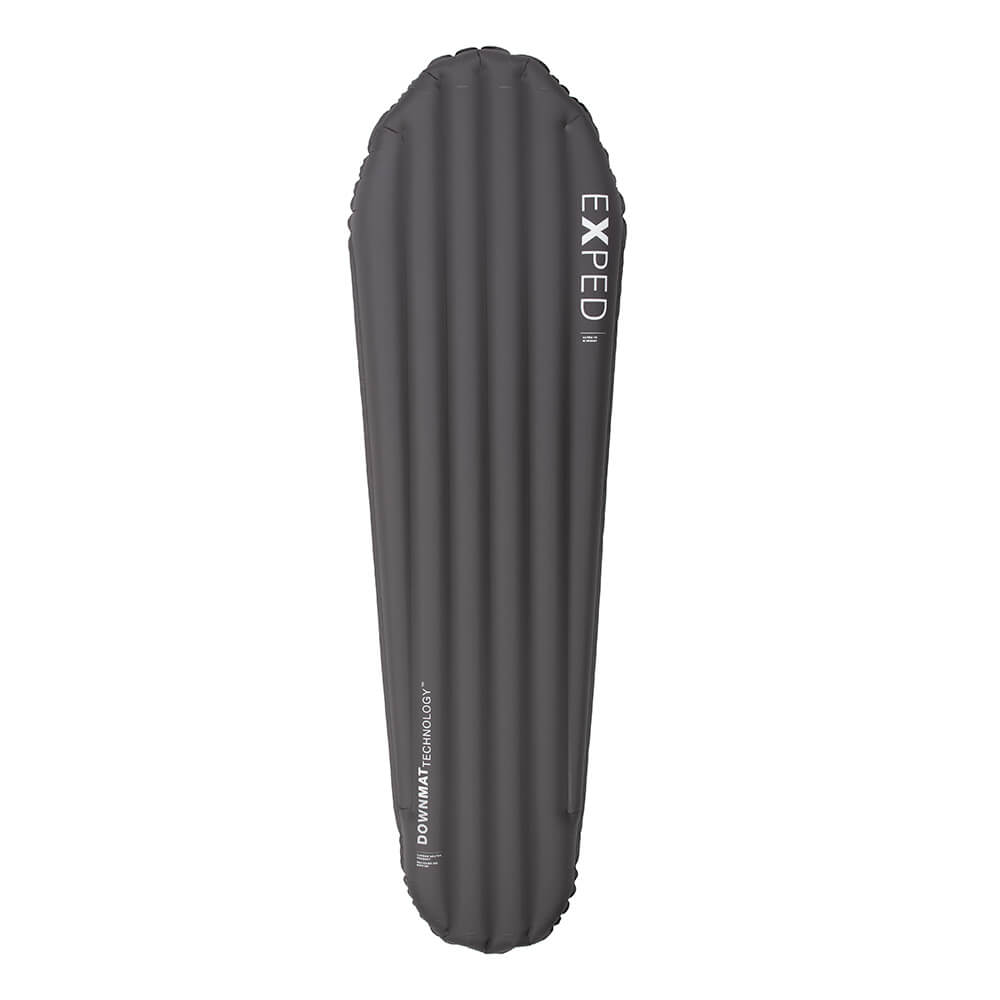
EXPED ULTRA 7R MUMMY a sleeping pad with the ultimate insulation, perfect for winter mountaineering . This season, the brand has reorganized and revised its entire lineup, and the ultra-lightweight, high-end "7R Series" model boasts exceptional insulation thanks to its 700 Fill Power down filling. The vertical baffles are slightly higher on both sides to prevent sideways slippage, and the ample thickness provides solid support. It's also perfect for winter camping and hiking, perfect for those who are sensitive to the cold.
- R-value: 7.1
- Weight (regular): 480g
- Thickness: 9cm
- Size: 52×183
- Storage size: 27 x Φ12cm
- Pump sack: included
Best value for money: CAPTAIN STAG IXPE Foam Mat

There are many different opinions on what constitutes cost-effectiveness, but in these days of rising prices for all mountain gear, I respect the fact that they offer a product that can withstand serious mountaineering at a price of 2,980 yen. While the insulation level is sufficient for year-round use, and while it may not be enough to provide a comfortable sleep, from a cost-effective perspective, there is no more impressive model. Furthermore, this mat also boasts features not found in other mats, such as a wide 56cm width and thickness that makes it easy to carry
- R value: Undisclosed (It can be used comfortably from spring to early autumn)
- Weight (regular): 365g
- Thickness: 18cm
- Size: 56×186
My personal favorite self-inflatable mattress: Therm-a-Rest ProLite Plus
I've been using this mattress (and its derivative models) for decades, and it still maintains its excellent balance and high level of perfection. While it's certainly not as light and compact as air mattresses, the appeal of this mattress is its excellent balance of warmth, comfort (no quirks), durability, and price, making it easy to recommend even to beginners. The new valve makes it even easier to use, providing comfortable nights on most mountain trips, whether spring, summer, or fall

- R-value: 3.2
- Weight (regular): 650g
- Thickness: 3.8cm
- Size: 51×183
- Storage size: 28 x 12Φcm
My personal favorite closed-cell mattress: NEMO Switchback Regular

Lightweight, durable, easy to set up and store, and reasonably warm for its price, this is a reliable mattress that even beginners can use with confidence. While it's thinner and harder than an air mattress and takes up a lot of space when stored, its DIY-friendly design allows you to cut it to fit your height and preferences, eliminating waste, making it perfect for thru-hikers who want to keep things lightweight. It's also useful as a padding pad for winter mountaineering
- R-value: 2.0
- Weight (regular): 415g
- Thickness: 2.3cm
- Size: 51×183
- Storage size: 13 x 14 x 51 cm
How to Choose: 5 Things to Check to Choose the Best Sleeping Pad Wisely
Introduction: The two main functions of a sleeping pad
Why is a sleeping pad important for a comfortable bed? It has two important roles when sleeping in the mountains:
1: Make uneven, hard ground flat and soft

No matter how well-planned the ground is, it's inevitable that there will be some small stones or bumps in the area where you pitch your tent. This can't be improved by just using a tent groundsheet, and sleeping on the bare ground is never pleasant
In such cases, the air layer and sponge cushioning materials in a sleeping pad will help you forget about the discomfort. Just like the bed you sleep on every day, a mattress that distributes body pressure well and has just the right firmness to maintain an ideal sleeping position will lead to quality sleep and greatly help reduce fatigue
The question of what is most comfortable can be difficult to determine as it may vary depending on each person's preferences and constitution, but in any case, the ability to provide a flat, moderately soft surface is an essential element of the optimal mattress
2: Insulates against heat so that body heat is not lost to the cold earth

While this isn't much of an issue in the summer, another important function of a sleeping pad is to create an insulating layer between your body and the cold ground, preventing you from losing body heat while you sleep
When a person sleeps, heat always escapes from the surface they are in contact with (from the hotter to the cooler). When this happens, the thermal conductivity of the surface they are in contact with is about 20 times greater than when it is dead air (air trapped without movement). In other words, although there will be some differences depending on the performance, if you sleep on the ground without a blanket, you will lose 20 times more heat than if you sleep on a sleeping pad
Incidentally, sleeping bags are crushed by your body weight, so without a pad, the bottom is not much different from sleeping on the ground. That's why the "insulation function" of a sleeping pad is an essential element when sleeping, especially in colder temperatures
Tip 1: Choose the right type of sleeping pad
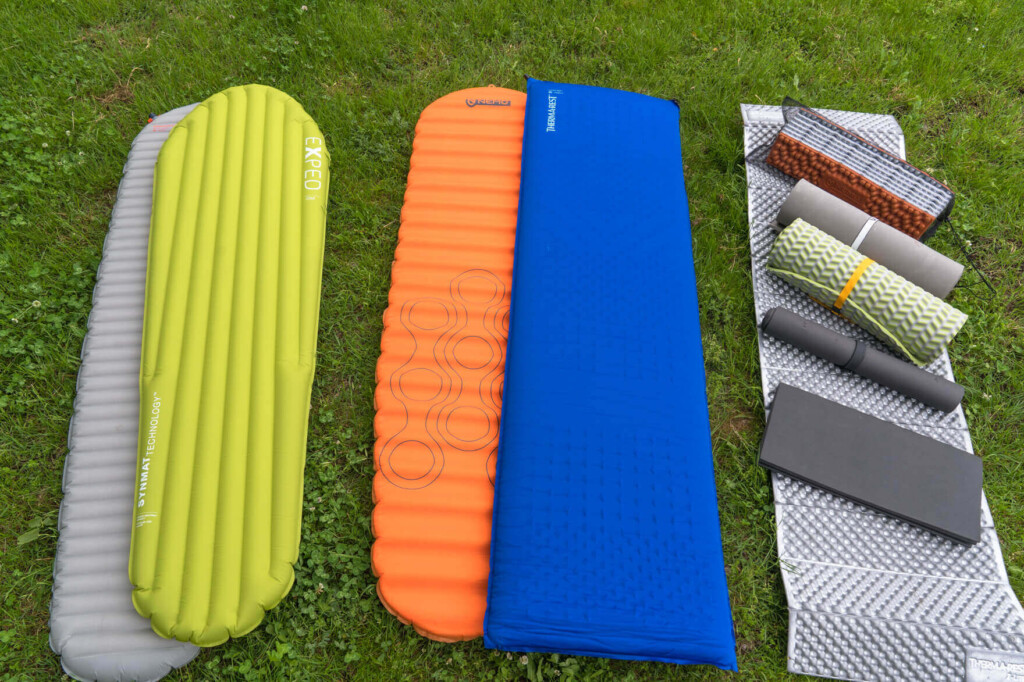
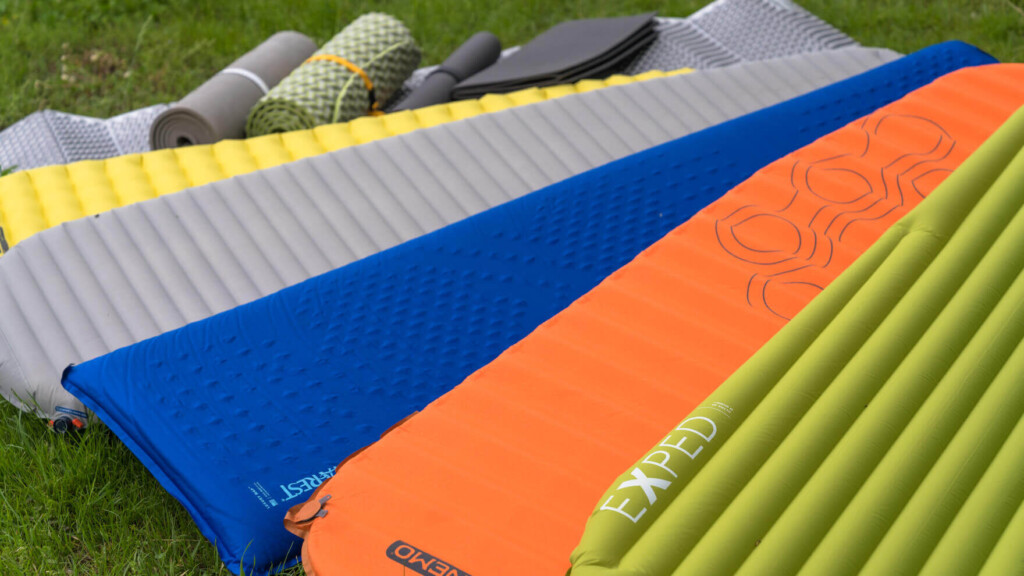
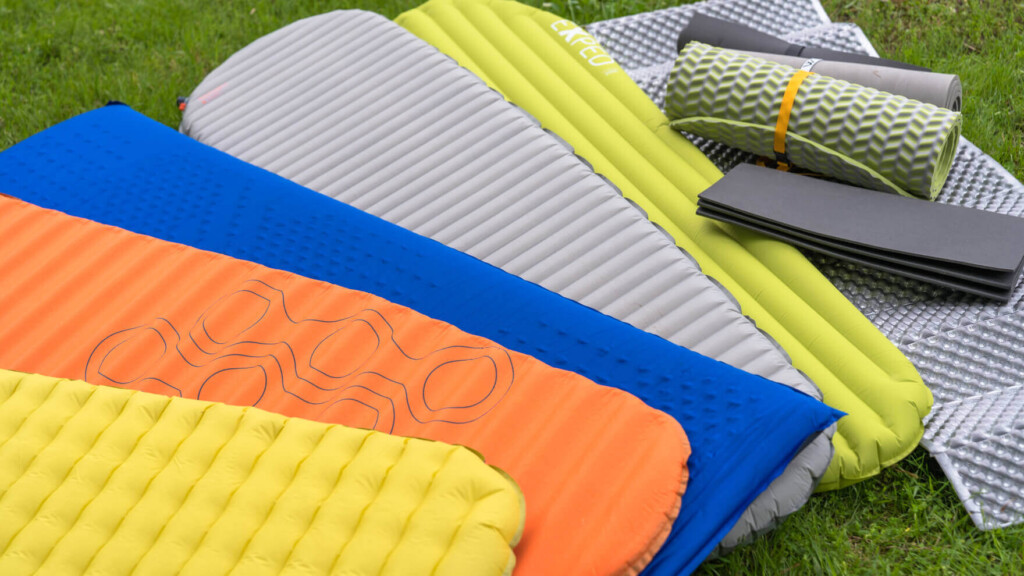
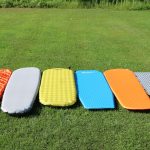
Sleeping mats can be broadly divided into three types based on their structure: air mattress type, self-inflatable type, and closed-cell type (from left)
Now that we understand the role and importance of sleeping pads, let's take a look at how to choose one. First of all, the most basic thing is that mattresses for mountain climbing and camping can be divided into three types based on their structural differences
Each of these types has its own advantages and disadvantages, so choosing a sleeping pad starts with understanding the characteristics of these three types and choosing which one is best for you
1) Closed-cell (closed-cell) padding

This mattress has a closed-cell structure and is made primarily from polyethylene foam (a sponge-like foam made from polyethylene), a durable and insulating material used in insulation. It's a standard type of mountain mat that's inexpensive, hard to damage, and easy to set up and take down, making it easy to use even for beginners
2) Air (inflatable) pad
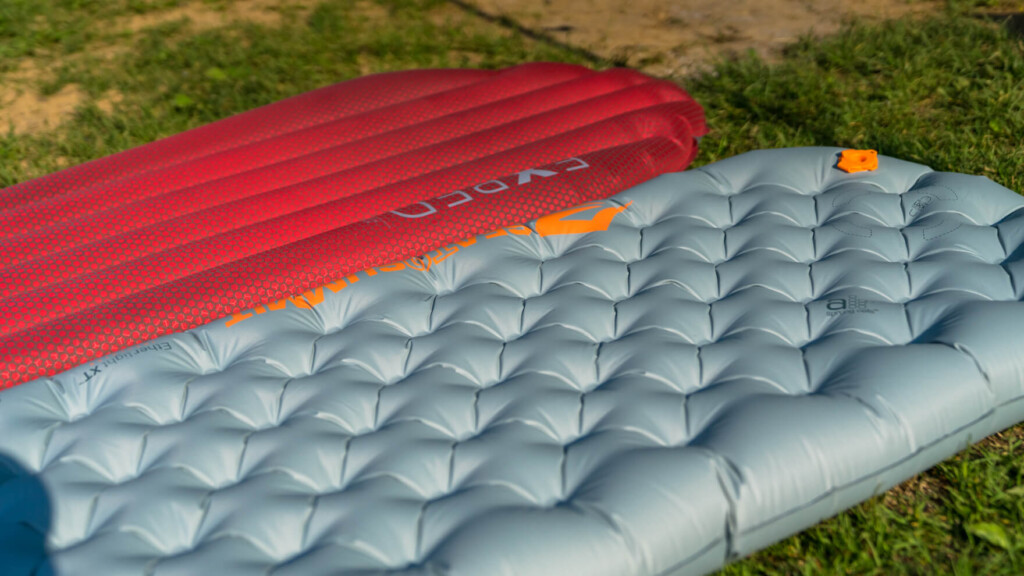
This type of mat is inflated by injecting air into it, creating an insulating layer and cushioning. Its greatest advantage is that it provides the highest level of insulation and is thick enough to provide comfort. For use on snowy mountains, there are models that are filled with heat reflectors or down or other padding inside to further enhance warmth. However, there is a risk that the mat will become unusable if it develops a hole or punctures, so it is important to use it correctly and in the right places
3) Self-inflating (semi-automatic inflation) pad
In addition to being able to inject air to ensure insulation and cushioning, the inside contains a hollowed-out urethane foam or other sponge, so it automatically inflates to a certain extent to become a cushion without the need for air injection. Its appeal lies in its ability to combine the best of both closed-cell and air pads: automatic inflation and comfort (I personally find this to be the most comfortable). However, it can be surprisingly heavy and bulky, and can sometimes feel like it's in between the two. In any case, now that Thermarest's patent has expired, many manufacturers are releasing ingenious models
These descriptions are summarised in the table below
| material | Closed-cell padding | Air (inflatable) pad | Self-inflating (semi-automatic inflating) pad |
|---|---|---|---|
| image |   |   |   |
| Cushioning | △ | ◎ | ◯ |
| Sleeping comfort | △ | ◯ | ◎ |
| Heat retention per weight | △ | ◎ | ◯ |
| durability | ◎ | △ | △ |
| price | ◎ | △ | ◯ |
| Compactness | △ | ◎ | ◯ |
| weight | ◯~◎ | ◎ | ◯ |
| Setup and cleanup | ◎ | △ | ◯ |
| Non-slip | ◎ | △ | ◯ |
| Other benefits |
| ? | ? |
| Suitable scenes and uses |
|
|
|
Point 2: Choose the right heat retention for your situation
Check the "R-value" in the catalog
Anyone who has experienced sleepless nights due to the cold while camping in a tent in winter will understand better than anyone how important a mat's heat retention is. The R-value is an index that can be used to determine how warm a mat needs to be.
the R-value is a numerical representation of a mattress's "insulation (resistance to heat transfer)." The higher this value, the less heat is transferred to the pad, which means it has better insulation and is warmer. For example, you can choose a mattress with a low R-value for hiking in low mountains in midsummer, or a mattress with a high R-value for mountain climbing in the dead of winter, allowing you to choose a mattress with the right thermal insulation for your purpose.
In fact, this value was previously calculated using each company's own method, making it somewhat unreliable as a standard, but since 2020, the international standard known as ASTM (ATSMF3340-18) has been adopted, and manufacturers selling products in the United States at least have to display the R-value in accordance with this ASTM standard. This means that manufacturers can now directly compare warmth levels.
*However, in Japan, there is currently no obligation to display the R-value according to the ASTM standard, so when comparing R-values in the future, be sure to pay attention to whether the value is measured according to the ASTM standard.
So, what is the actual R-value and what level of protection can it provide? Some manufacturers have created convenient tables that show the R-value and season of use. For example, the chart below shows the R-value guide (as of April 26, 2022) on the Sea to Summit website.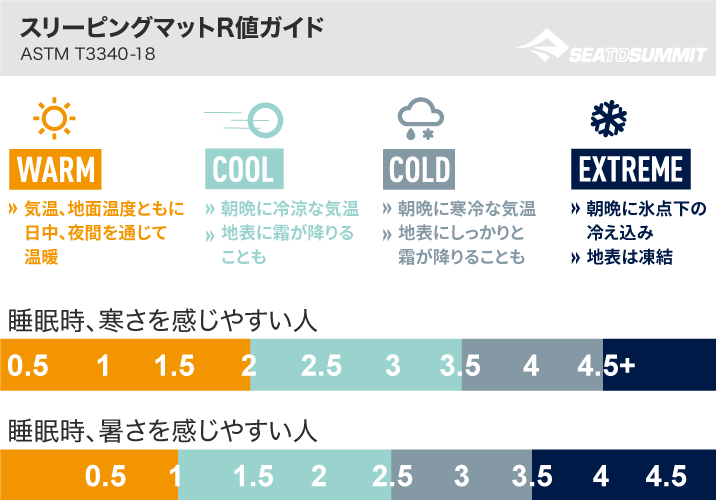
In my personal experience, I think of mattress R-values (warmth) as roughly divided into four categories: summer, spring to fall, winter, and severe winter. I've summarized them in the table below
I don't think I'm particularly sensitive to heat or cold, but everyone feels hot or cold differently, and it also varies greatly depending on the condition of the ground, the breathability of the tent, and the performance of the sleeping bag, so the table below doesn't necessarily apply to everyone at all times. It's important to remember that the relationship between R-value and temperature is not absolute, but is ultimately a matter of each person's perception and relative performance
| R-value | Nighttime temperature guideline | Suitable seasons and uses |
|---|---|---|
| ~2.0 | Approximately 5°C or higher | Summer Ultra Light |
| 2.0~4.0 | Approximately 5~-5℃ | Spring to Autumn: Trekking |
| 4.0~5.0 | Approximately -5 to -10℃ | Fall to Winter Trekking |
| 5.0~ | Approximately -10℃ or less | Midwinter and winter mountain climbing |
R-values can be added together if you layer them
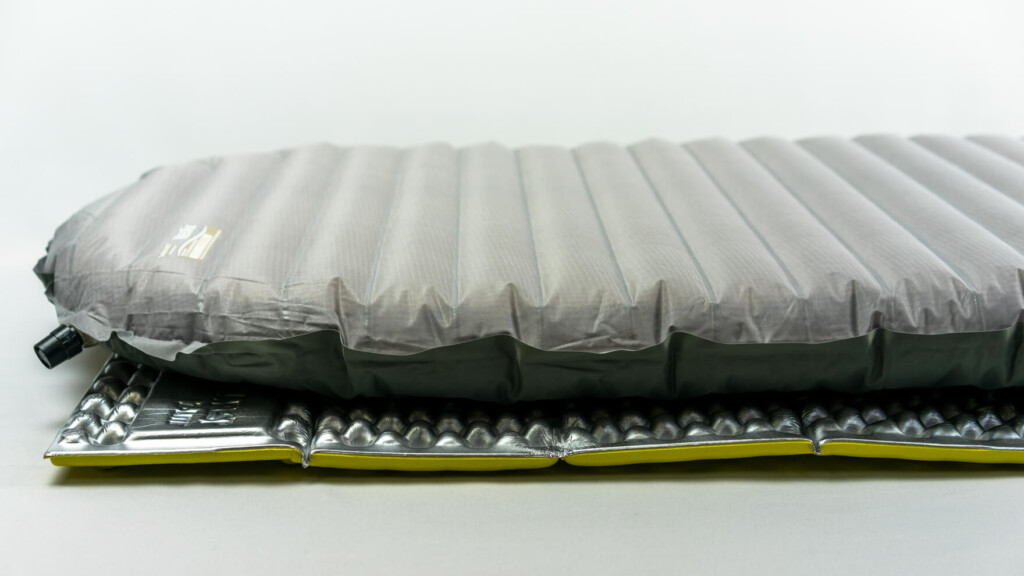
Even if the individual R-values are not high, by layering them together they can withstand low temperatures
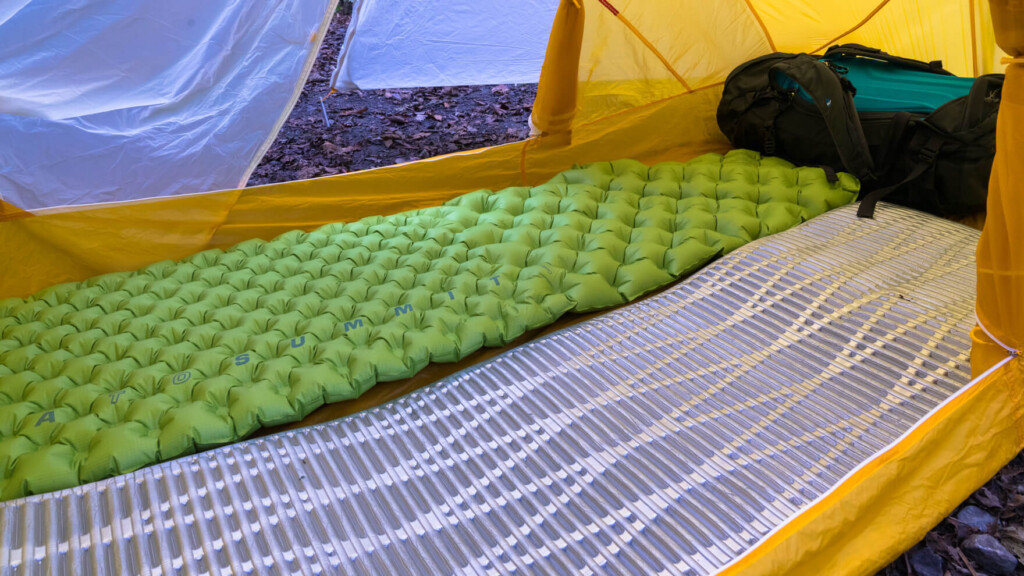
Even if you only have a thin mattress or one that doesn't contain insulating material, if you have multiple pads, you can stack two or more pads as shown in the photo above, and the R-values of each will be added together, resulting in increased insulation. Therefore, it's good to remember that you don't need to purchase a new mattress with a higher R-value; just stack items with lower R-values together and you'll be able to cope well in cold seasons
Point 3: Comfort (length, width, shape, thickness, surface)
Length: The most comfortable size is one that is taller than you. A shorter size is also recommended to reduce weight
If you want to sleep on a comfortable mattress, is to choose one that covers you from head to toe and is at least as big as your height
However, if you are somewhat accustomed to sleeping in the mountains and are taking it on a warm-season hike (when the need for a pad is relatively low), it is perfectly reasonable to choose the "small size" that is shorter than your height . In this case, the pad will only cover up to your waist (around 120 cm), and you can use an empty backpack as a mattress for your lower body, allowing you to reduce the amount of luggage you carry.

Various lengths and widths are available depending on the manufacturer and model
Doing so will significantly reduce weight and volume, leading to lighter luggage , so it's an option well worth considering for anyone interested in reducing weight. Sleeping well is important, but walking without strain with lighter luggage is just as important. This is a challenge that takes courage in the cold season, so we recommend starting little by little in seasons when the cold is less of a concern.
Width and shape: Wide and rectangular for comfort, or narrow and mummy-shaped for lightness?
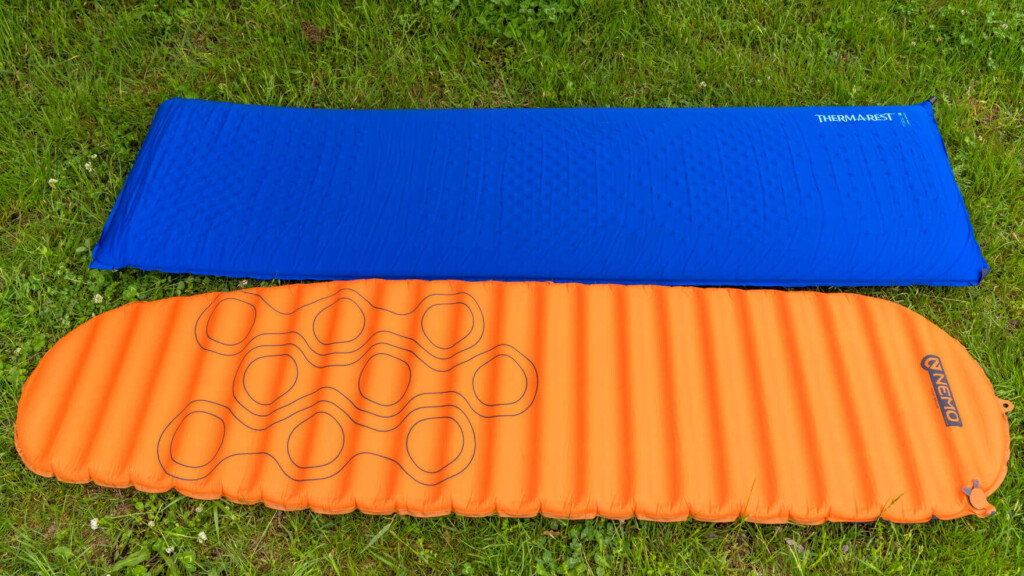
In terms of covering the minimum amount of space, a mattress width of just over 50cm, the width of your shoulders, is sufficient. Furthermore, the most streamlined sleeping pad shape, based on the concept that it is sufficient for your lower body as long as your feet are supported, is the "mummy type" shown in the photo below.
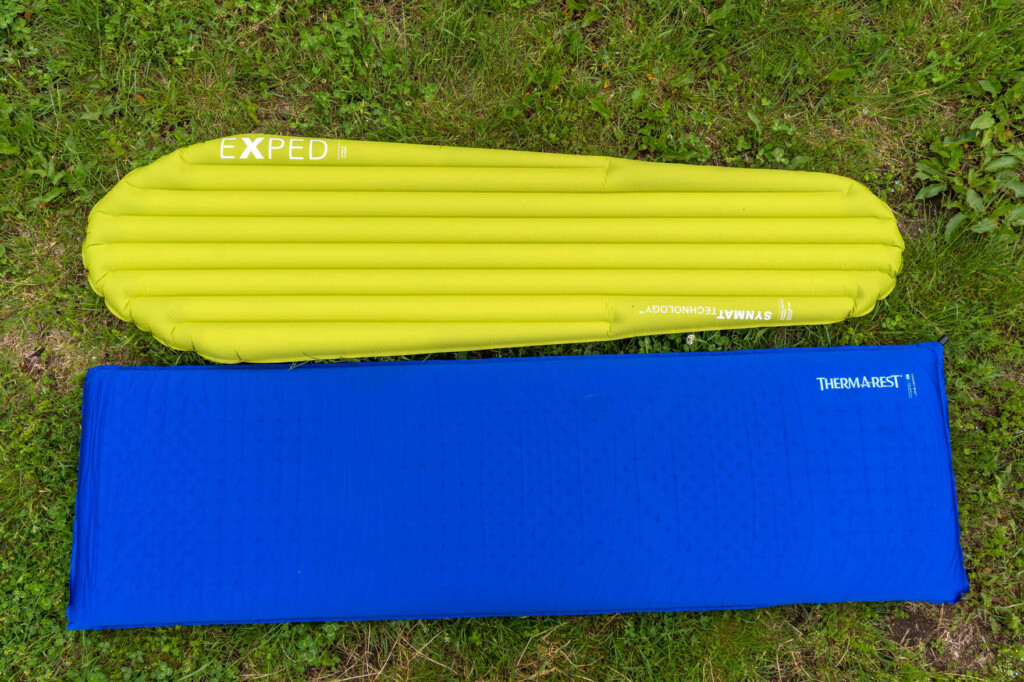
The top is a mummy type. The bottom is a rectangle type
Or, in an extreme example, there are tube-shaped models that have hollowed out the parts other than the points where weight is applied. In this case, however, while the weight is certainly outstanding due to the removal of as much unnecessary material as possible, you also need to be prepared to not complain about comfort
Naturally, the downside to this size is that it's difficult to turn over in bed, and even the slightest shift can cause your body to fall off the mattress . A wider mattress, even by just a few centimeters, can dramatically improve this feeling of tightness and provide a more comfortable sleeping experience. Some people simply can't forget the comfort of this mattress and always choose the wider size.
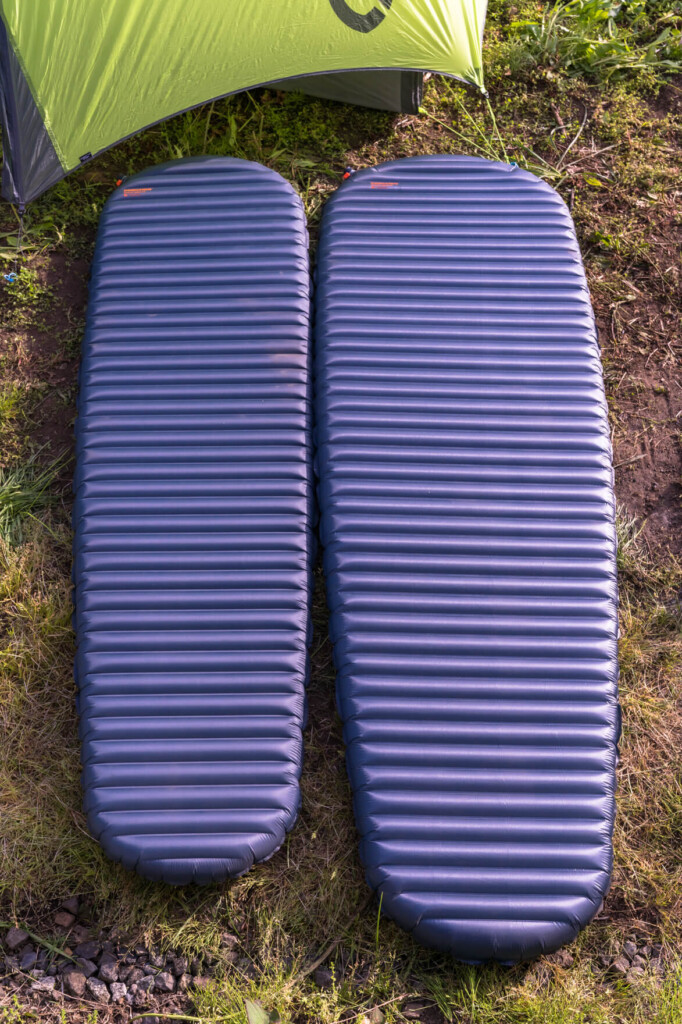
The wide type makes it difficult for your arms to fall off and makes it easy to turn over, and you may find that it is surprisingly comfortable when you actually sleep on it
If the shape is rectangular and wider than the mummy type, it will feel more comfortable and similar to a bed, so you will feel more secure. Here too, you will need to make a trade-off between comfort and light weight and compactness
Thickness and surface: A comfortable mat doesn't just have to be thick
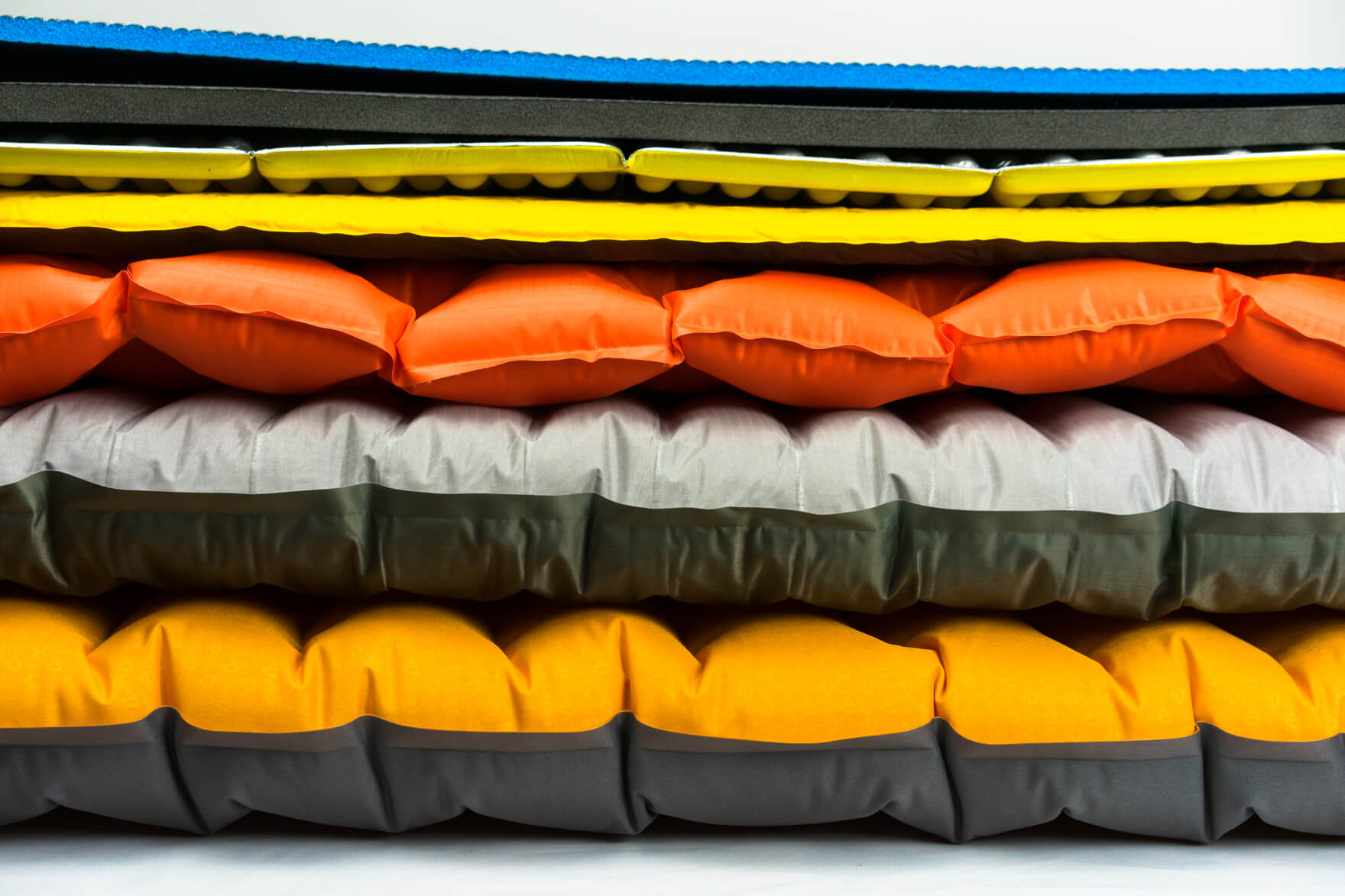
The thickness of a sleeping pad alone does not determine comfort. Check the thickness and surface fit to see how comfortable it is
The thicker the mattress, the more cushioning it provides, so it should be more comfortable to sleep on. It's true that a thicker mattress is better than a thinner one, and in that sense, it's not wrong. However, the difficulty in choosing a pad is that it's not necessarily true that the thicker the mattress, the more comfortable it is. Just as some people prefer high-resilience mattresses like springs, while others prefer low-resilience mattresses that conform to the body, a minimum thickness is necessary for a sleeping pad, but the "surface fit (unevenness and feel)" is also important
For example, in the case of air pads, the surface affects the shape of the baffle that separates the air, and there are various shapes such as border, stripe, dot, and hybrids of these, each with its own characteristics in terms of fit, ease of sliding, etc. Incidentally, my favorite was the dotted air pad surface, but honestly, this is an area where preferences are bound to differ
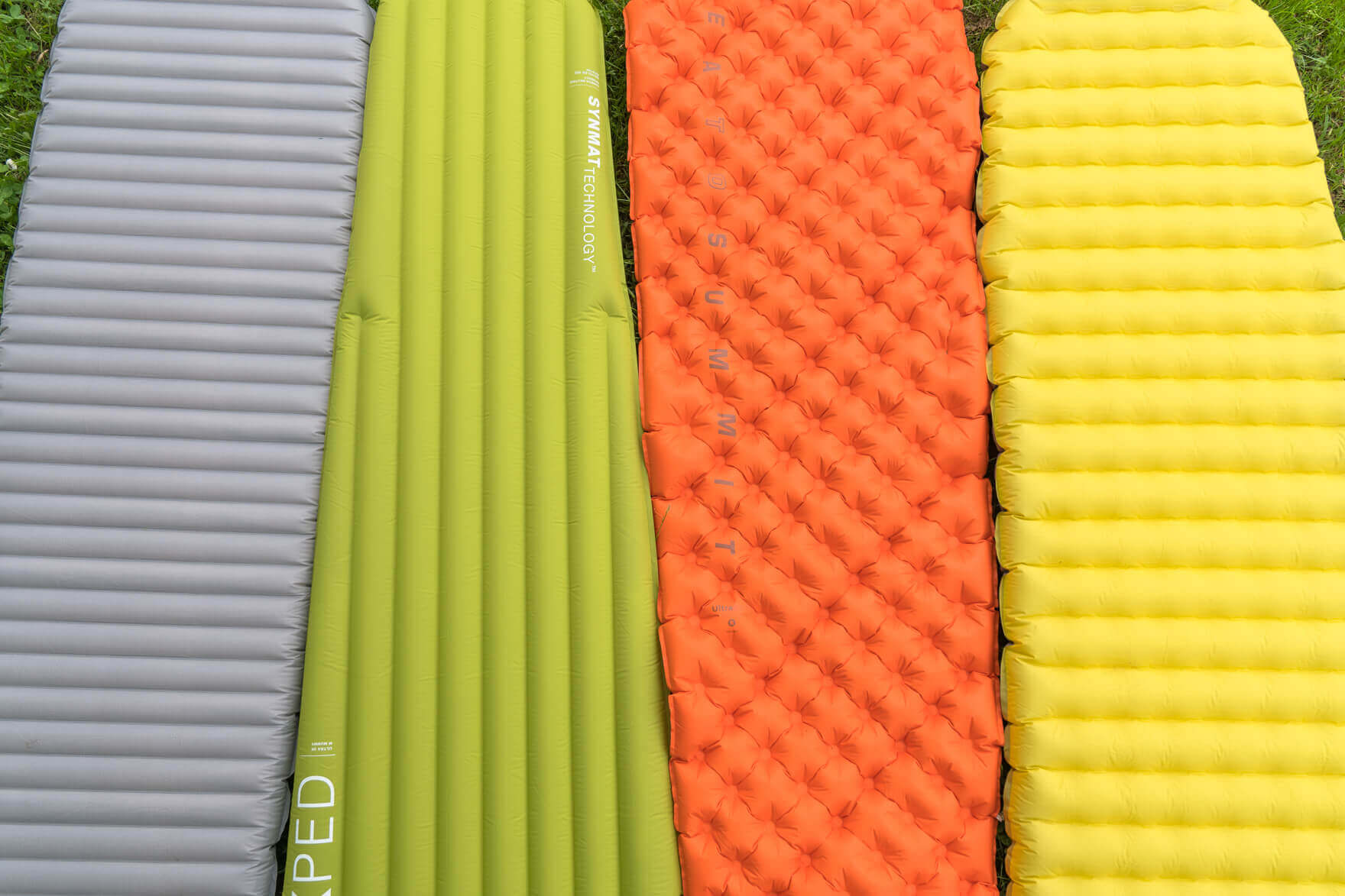
Air mattresses come in a variety of different surfaces depending on the manufacturer, depending on how the air is trapped. It's best to try them out to see which one feels best to you
Self-inflatable pads offer the most comfortable sleeping experience thanks to their generally flat surface and a snug fit similar to a memory foam mattress. Thick models of this type are often extremely heavy, but offer the ultimate comfort. They are often found in luxury mattresses for auto camping
Point 4: Weight and storage size
It's always best for a sleeping pad to be light and compact, but be aware that you may have to compromise on something in return, so when choosing one, think about what you're willing to compromise on based on your priorities
Generally, air pad types are lighter and more compact than any other type, but they tend to be inferior to self-inflatable types in terms of comfort and price, and inferior to closed-cell types in terms of durability and price. Also, even when comparing the same type, the lighter and more compact the type, if the R-value is the same, the thinner and weaker the fabric tends to be
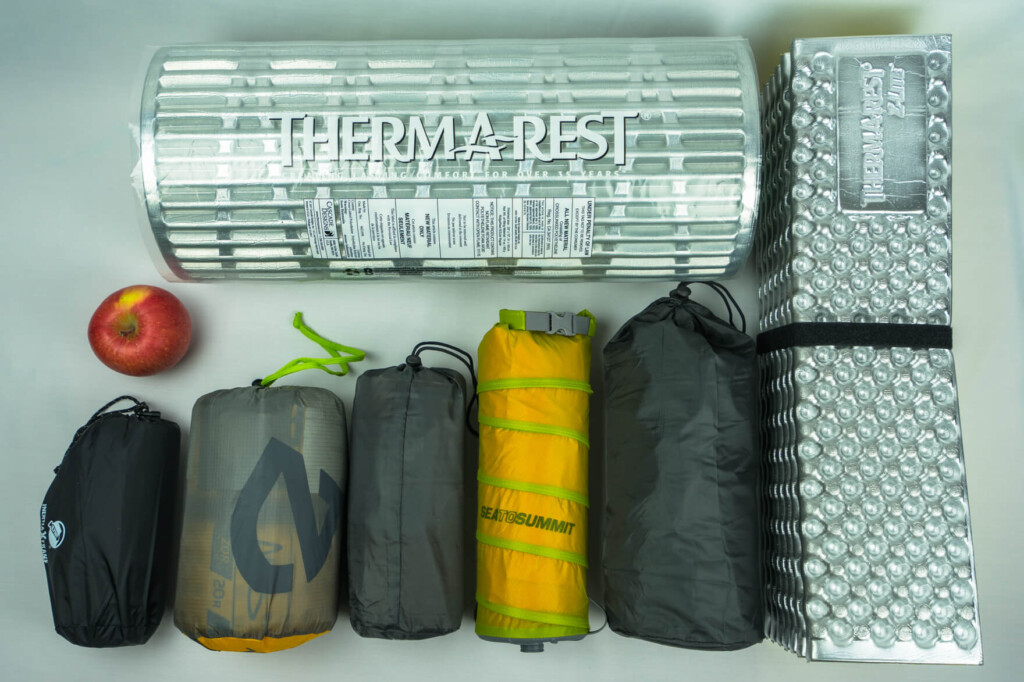
The difference in packability between closed cell and non-closed cell is obvious, while the difference between air pads and self-inflating is not so great
Point 5: Ease of inflation and deflation
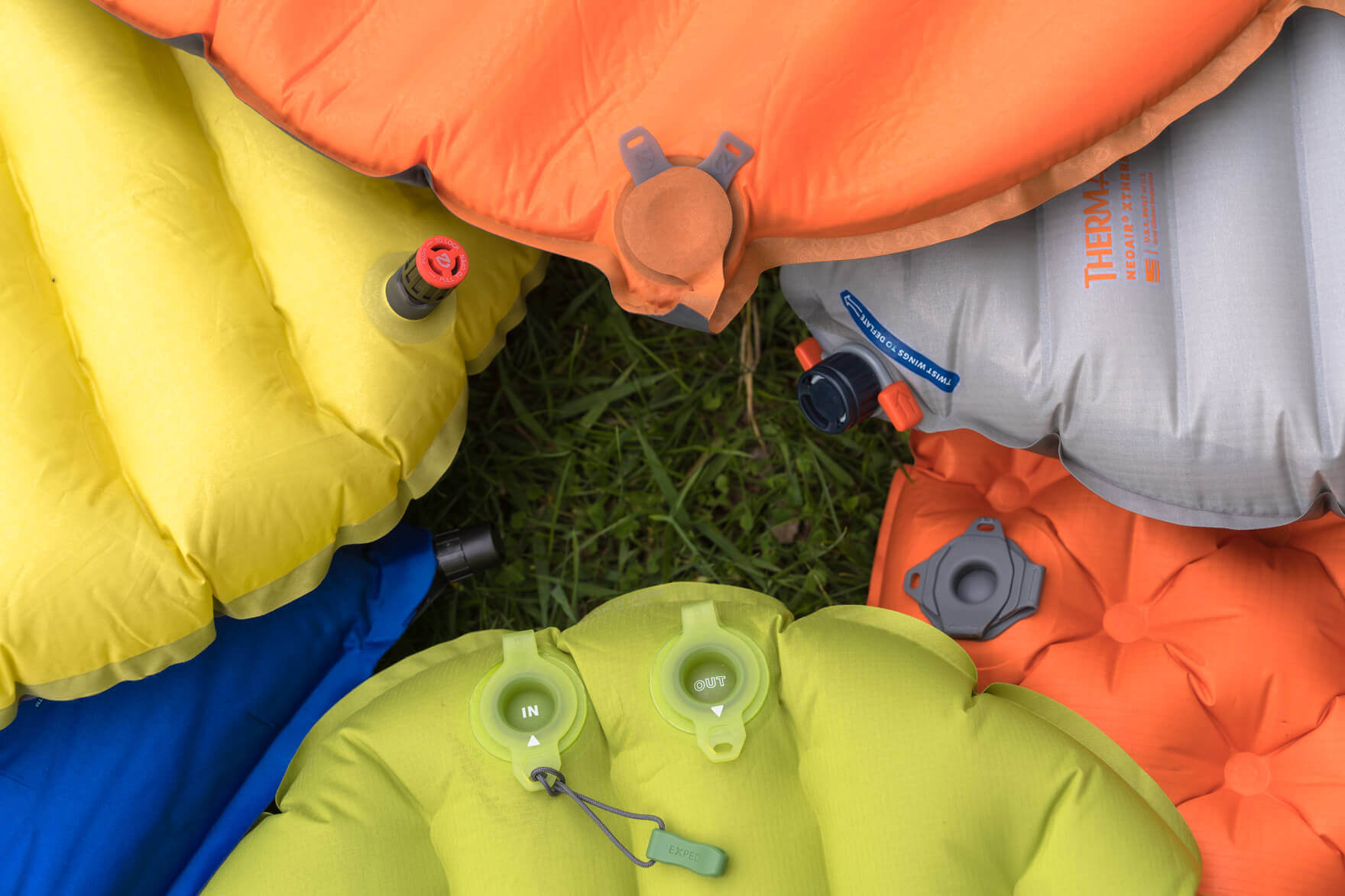
The air inlet also varies depending on the manufacturer. Basically, the key points are that it can inflate and deflate a lot of air at once and that it has a mechanism such as a check valve, but there are also other pros and cons to consider, such as ease of inflation, deflation, durability, and foldability
With non-closed cell types, you need to inject air into the pad to achieve sufficient insulation. This process can be quite tedious, so finding a model that minimizes this work will lead to happiness
For example, with self-inflatable types, a certain amount of air is automatically injected when the valve is opened, but in reality, most of the air still has to be blown in, so in that sense, the amount of effort required is actually not that different from that of air pad types
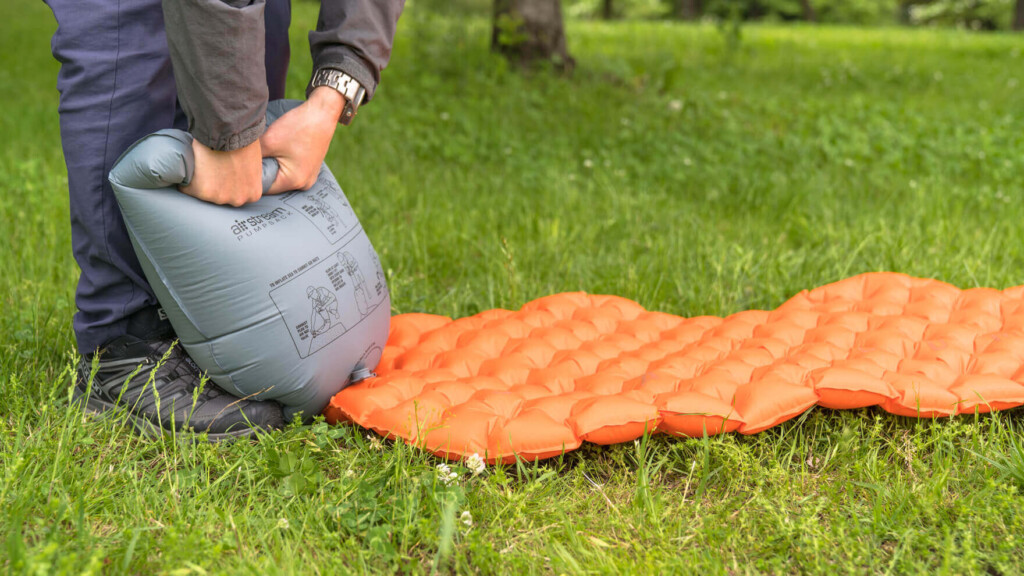
Pump sacks are becoming standard equipment for air pad users. Once you experience how convenient they are, you won't feel like pumping air by mouth from scratch
These days, it's more important to check two things: "Are the air holes larger or designed to make it easier to inflate and deflate?" and " the air pump sack come with it (or is it sold as an option)?" This will more than double the inflation speed, prevent excess moisture from exhaling, and make inflation much easier.
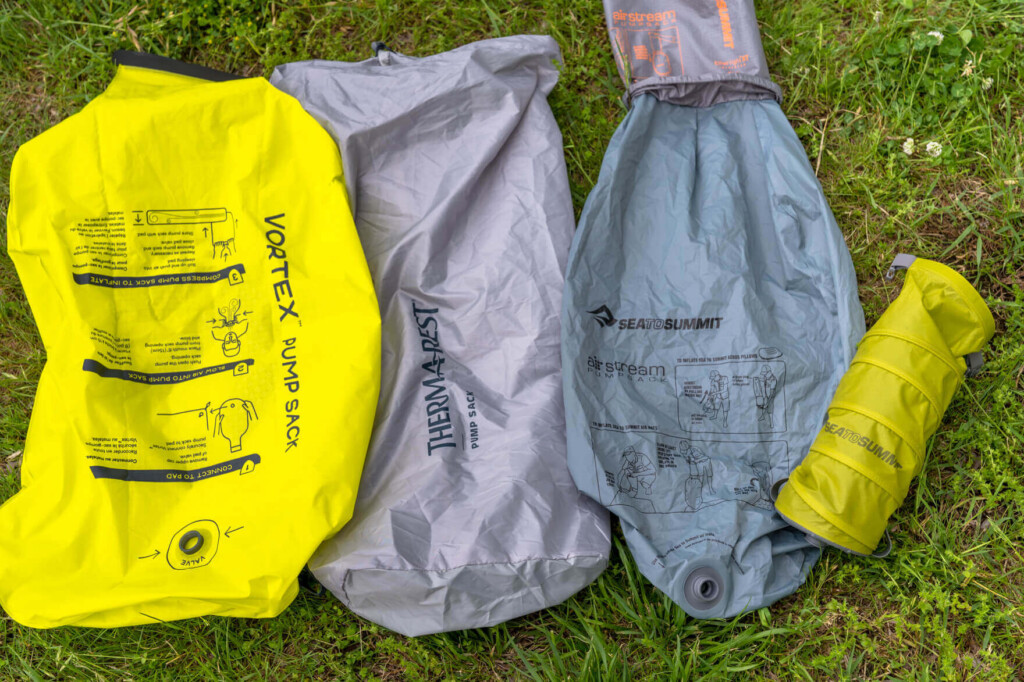
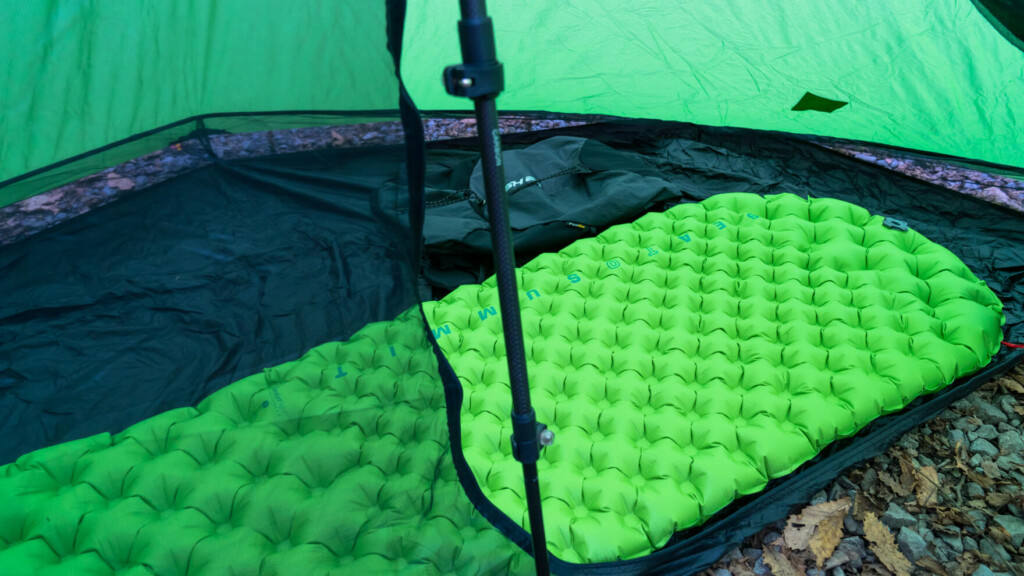
In reality, the ease of use of pump sacks varies depending on the manufacturer. It's a minor point, but it's definitely something you should check if you have the time
summary
Sleeping pads come in a variety of shapes, features, and prices depending on their use and purpose. This time we haven't looked at more luxurious camping models, but if you include those, there is an even wider range of options
To reiterate, it's not true that you can buy the perfect sleeping pad just by spending the money, so it's best to choose one that's right for you and suits your environment and purpose. In other words, to choose the perfect pad for the whole year, it's wise to have several mats and choose and combine them according to your mountain trip. It may be a hassle, but that's part of the joy of mountain climbing
Best of luck to all those who are lost in their sleeping pad search
Related reading
 Comparison Review: Sleeping on Different Types of Sleeping Pads 2016
 "Let's start a tent hiking trip with NEMO" Camping items that will be available at the tent hiking event in May
 [2025 Honest, Out-of-Pocket Comparison Review] A Thorough Comparison of 7 Ultra-Lightweight, Ultra-Comfortable, and Ultra-Cost-Effective Closed-Cell Mats! [For Beginners and UL Hikers]
 Comparison Review: Thinking about sleeping in the mountains. I tried out some interesting sleeping pads (mats)