



10 essential pieces of gear you shouldn't forget to bring with you on a solo hike

Written by Yasushi Hisatomi
table of contents
Solo hiking is popular as it broadens the enjoyment of the mountains
The mountaineering boom that's been going strong for the past few years is gradually taking hold, and it seems the number of people who enjoy hiking alone—known as solo hikers—is on the rise. While the term "solo hiking" (taikan) has long been associated with a somewhat outlaw image, recently, I've seen a number of books in bookstores that talk about solo hiking in a more positive light, using new terms like "solo hiking" and "solo mountain climbing." I, too, started hiking alone more often after I entered the workforce, primarily because I wanted to take photos at my own pace and because it became difficult to coordinate schedules with friends. Eventually, I became fascinated by the experience and found myself trapped in the "solo hiking swamp." I'll discuss the joys of solo hiking another time, but it's only since then that I've often found myself reevaluating my mindset and the gear I carry. So, in this article, I'd like to share my personal recommendations for essential solo hiking gear
Things to keep in mind when hiking solo
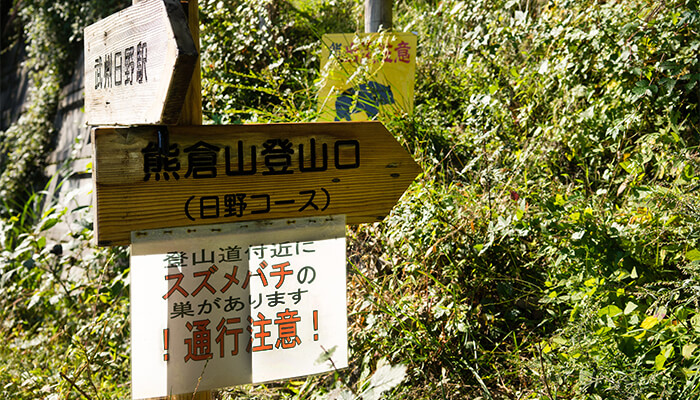
The best part of solo hiking is freedom. To fully enjoy it, solo hikers tend to choose quieter routes with fewer people. That's when I went to Mt. Kumakura in Chichibu. A large sign (title photo) at the trailhead caught my eye. Embarrassed as I am to admit, it was there that I realized I didn't know what to do if I were stung by a hornet. Realizing this was serious, I hurried back to a place with an internet connection and checked first aid. Of course, I didn't have any outdoor poison remover or anything like that, so I decided to head back if the hornet started buzzing any more. I remember feeling quite nervous as I made my way through the hike. In the end, no hornets appeared, and the mountain itself was beautiful, with beautiful forests, making it a wonderful experience
There are countless similar examples I could think of, but going into the mountains alone really makes you realize how much danger we face in our everyday lives. In other words, when enjoying solo hiking, it's important to remember the obvious: no one can guarantee your safety in the outdoors. No matter how well you prepare, if an accident were to occur on a solo hike, you should assume that no one will understand. While it's easy to go hiking alone, you need the ability to deal with any and all events that arise—in other words, the ability to make sound judgments to weather any situation (including turning back). Of course, not everyone has that perfect ability, so I always make a conscious decision to give up if I sense even the slightest danger. Even in the midst of irreplaceable nature, it's still just mountain climbing, after all. I think that's fine
"Preparing for the unexpected" is essential gear for solo hikers
So, the must-have equipment I would like to recommend to beginner solo hikers is, of course, emergency gear. When hiking with multiple people, you tend to share your gear and leave it at home, but hiking is essentially about being responsible for yourself and being prepared to handle everything yourself, and solo hikes in particular are something you want to be sure to have. That said, carrying too much only increases weight unnecessarily and increases the risk, so finding the right balance is always a challenge, but below I'll introduce the 10 pieces of emergency equipment that I always bring with me, even on short day hikes
1. First aid kit (emergency medical supplies)

First aid kits are useless if they get wet, so I put them in a waterproof bag. I recommend Deuter's waterproof bag because of its size and easy-to-use buckle. I put the sewing kit (shown on the left) in here too
This is a list of emergency medical supplies to prepare for injuries and illnesses that are expected in the mountains. These are almost always included in mountain equipment lists, so there is no need to mention their necessity here, but the worst thing you can do is just buy a set from a mountain equipment store and take it with you. It's pointless if you don't have what you were looking for when you actually need it, or don't know how to use it, so it's best to try to take only the bare minimum of things that you will need and can use
In my case, when I go on a minimal day hike, I try to eliminate as much as possible what I can, especially for first aid for injuries and sudden pain. For reference, here is my current list of emergency medical supplies (although I don't think it's perfect):
- Bandages (several sizes)
- cotton swabs
- Sterile gauze and tissues
- disinfectants
- painkillers
- gastrointestinal medicine
- Antidiarrheal medication
- Cold medicine
- Poison Remover
- taping
- Antihistamine ointment (for insect bites)
- scissors
- safety pin
I plan to use bandanas, towels, and any other cloth instead of bandages and slings. If I want to save even 0.1g, I can also use cold medicine, stomach medicine, and other items. I think I can be more selective about what I use depending on the season and my physical condition
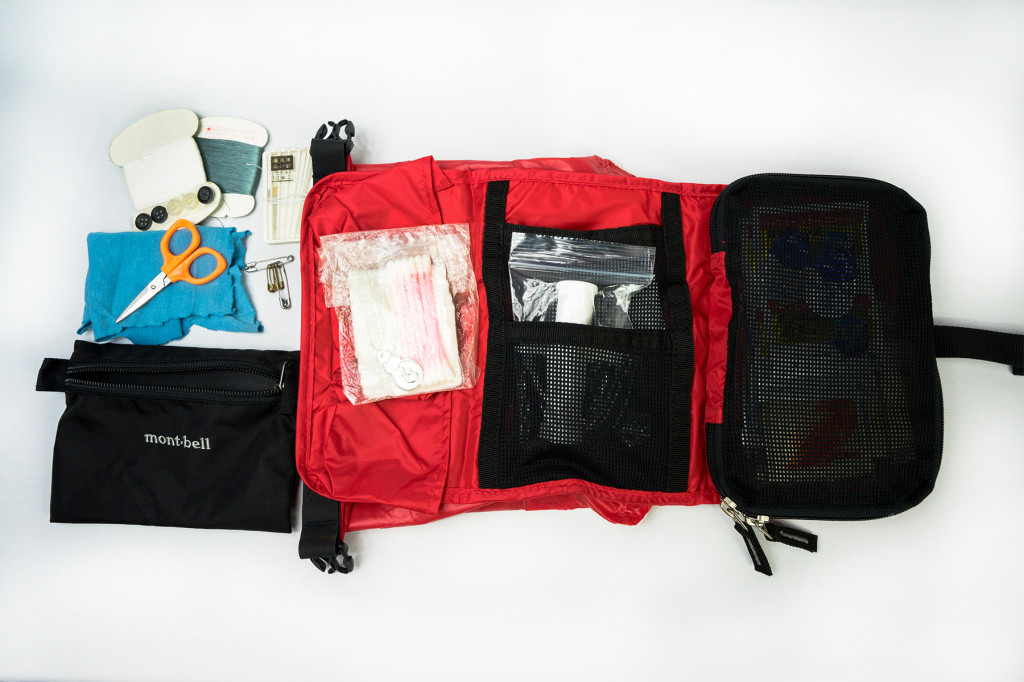
First aid kit and sewing kit contents. I choose only what I need and put in
2. Repair tools
What if the soles of your shoes come off while you're hiking in the mountains? Repair tools are a great way to feel safe in the unlikely event of such an event, but it's difficult to say you're fully prepared with just one. The key is not to have tools for perfect repairs, but to have tools that allow you to provide first aid in the unlikely event of damage. In my case, that's a three-piece set consisting of duct tape, wire, and fine rope (along with a knife and pliers). If your shoes are badly damaged, you can just wrap them with duct tape or wire, use duct tape for holes in your clothing, and use fine rope if your shoelaces break or you need to tie something up. As long as you can make it to the descent, this will temporarily cover up most damage. Of course, if you're planning on staying overnight or using winter gear, you'll need to consider more serious considerations like crampons and tents
3. Headlamp (including spare battery and bulb)
Even if you plan to descend while it's still light, if you end up arriving late, the trail will be pitch black. If that happens, you'll be unable to move around the mountain and you're out. Also, if you end up having to bivouac and spend the night, having light or not could be the difference between life and death
4. Firearms (stoves, cartridges, lighters)
Whenever I go to any mountain, I always take a stove, gas cartridges, a lighter, and a cooker that can be used for cooking. Just being able to drink something warm helps me stay physically and mentally strong in the unlikely event that I find myself in a bivouac and feeling lonely
5.Emergency food
In my case, I always end up taking a lot of lunch with me, so I take a box of Calbee Calorie Mate as emergency food, just enough to last me a day if I'm really in a desperate situation
6. Duct tape
It's duct tape again. It's made of cloth, of course. I mentioned it earlier as a repair tool, but duct tape has a variety of other useful uses as well. For example, you can use it when you want to secure something like a camera. Or as a bandage in case of an emergency. Or as a lid after opening a bag of food or something. And the most unexpected use that impressed me was as a fire starter. You don't need to carry a lot, so just wrap the amount you need around cylindrical items like a water bottle or pole and carry it with you
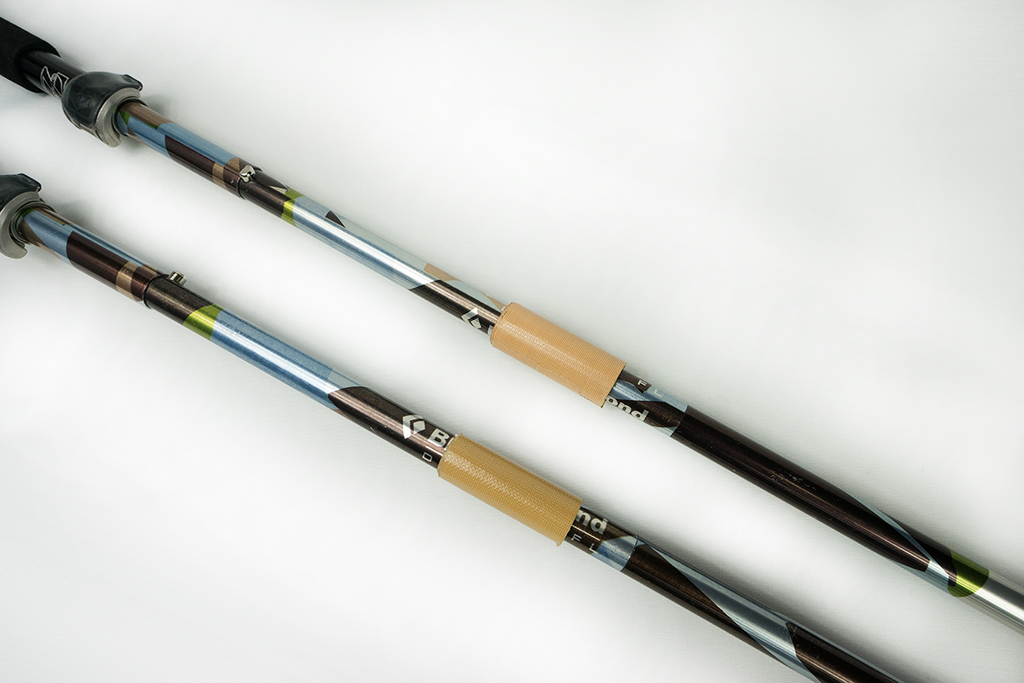
Wrap as much duct tape as you need anywhere (I stock up on it)
7. Portable radio (including spare batteries)
If the weather suddenly worsens, you have to bivouac unexpectedly, or you find yourself trapped for days... In times like these, the radio is still an active information gathering tool. Nowadays, there are more options for gathering information, such as cell phones and OneSeg, so there may not be any need to stick to radio, but radio is still easier to connect to than cell phone signals, and the battery life is much better, so it's reassuring
8.Water
Of course, I think everyone carries water for everyday use, but the water I'm talking about here is the amount of water you always have on hand for cleaning in case of an emergency. I find it a hassle to always have to think about it, so I throw in a 500ml plastic bottle or water bottle separately from the drinks I drink
9. Whistle
There are many reasons why whistles are used in the mountains, such as to signal to distant group members, to ward off bears, or to warn of dangers like falling rocks. In short, they are used when you need to send a loud, urgent signal as far away as possible, but their necessity is even greater on solo hikes. If you slip or get lost on a solo hike and stray from the trail, no one will notice unless you can send a signal
10. Bivouac equipment
Of course, I'm not saying you need to bring a tent on a day hike. However, if you do have to spend the night in the mountains, it's important to have some way to protect yourself from the wind and rain and ensure a comfortable sleeping environment. While a tent is the typical gear designed for this purpose, it's not the only solution. Other options include a survival sheet made of lightweight, insulating material that completely covers your body, a bivy sack, which is a sleeping bag that's almost like a tent, and, in seasons where protection from wind and rain is sufficient, a tarp might be fine. Personally, I don't particularly recommend it, but instead of bringing extra cold weather gear, I only bring a large sleeping bag cover (made of waterproof and breathable material) as my bivouac gear. If it gets cold while I'm sleeping, I put on all the clothes, gloves, and neck warmer I have inside the sleeping bag cover and wrap myself in an emergency sheet. Of course, it's not very comfortable in the event of an emergency, so I consider it to be for emergencies only. If I know I might need it during the day, I'm always prepared to give up and retreat
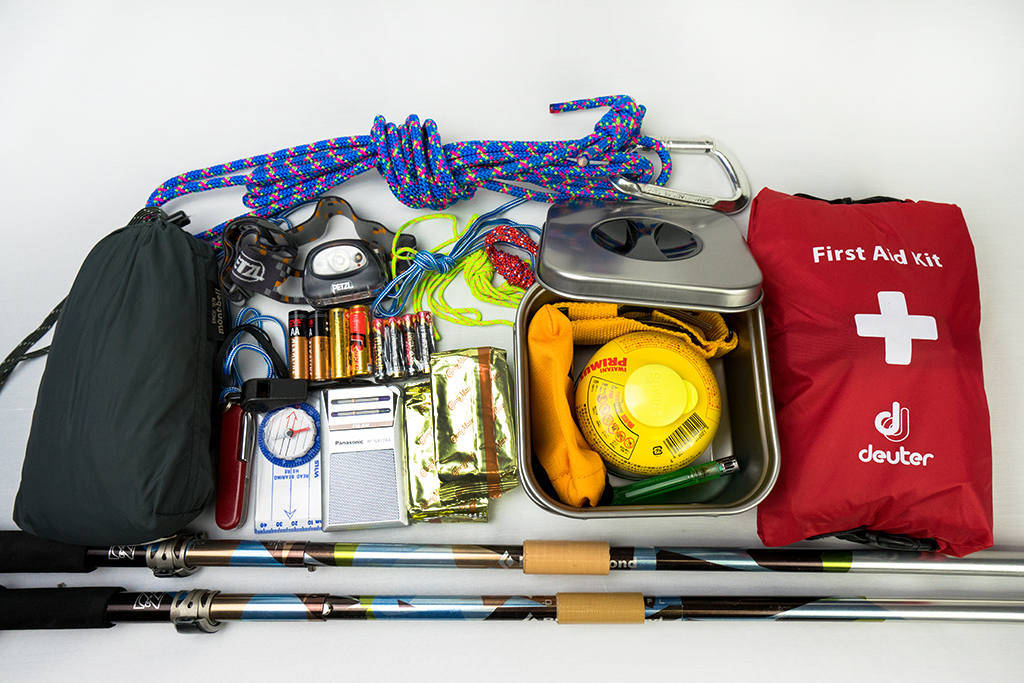
Here is a list of must-have items for this trip
summary
Above, I've shared my thoughts and examples on gear that you might not want to think about but absolutely must not forget when solo hiking. It goes without saying that simply having the equipment is meaningless; you must learn how to use it through various means, such as books and training. Even as I write this seemingly arrogant statement, I'm amazed that I've managed to stay safe so far. No matter how much preparation you put in, anything can happen to anyone at any time, as with the recent Mount Ontake disaster, the outdoors is a place where you can experience the most essential aspects of that. I'm reminded once again that the danger and fulfillment that come hand in hand are what make solo hiking so appealing. Not everyone is prepared from the start; you just need to gradually gain knowledge and experience at your own pace. While what I've written here is only one step in that journey, I hope it will be helpful not only for beginners but also for those who are considering taking on the challenge of solo hiking someday