



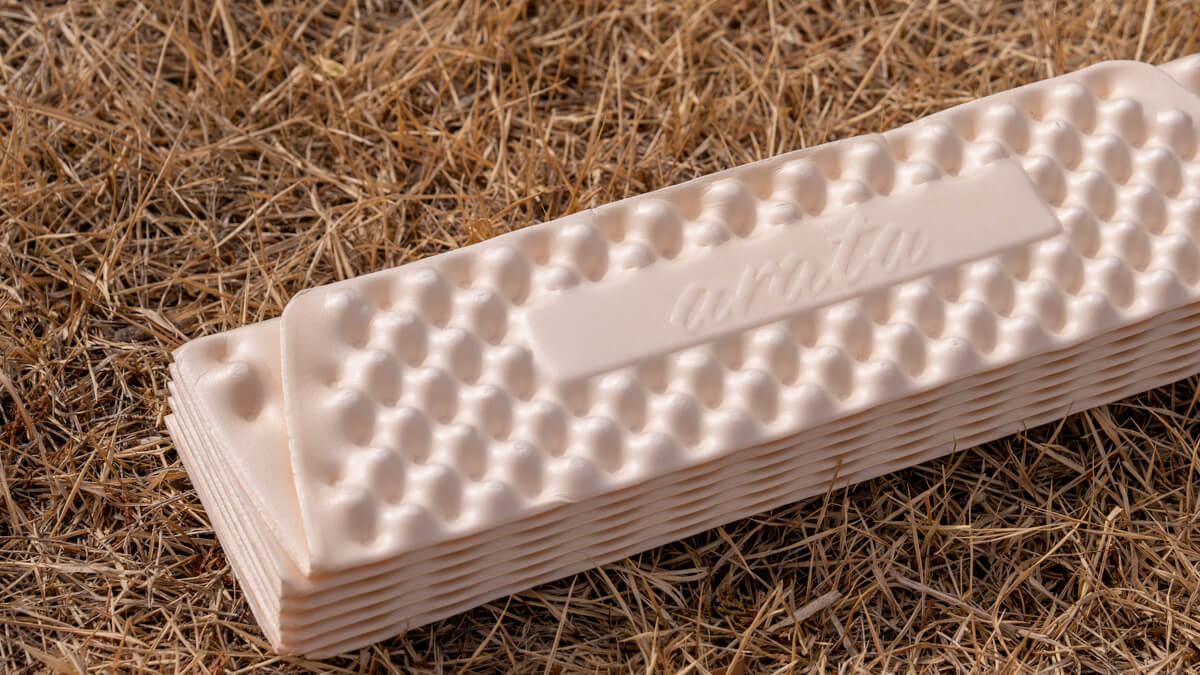
[Practical Review] Arata ASP-14 Sleeping Pad: Transform your tent experience with its 110g, 9.5cm thickness. Combined with an air mattress, it sets a new standard for sleeping systems

Written by Yasushi Hisatomi
When hiking or camping in a tent, there is an unavoidable trade-off between a good night's sleep and lightweight equipment
Lightweight, highly insulating air mattresses have become the mainstream sleeping pad (mattress) in recent years, but they inevitably come with drawbacks, such as the risk of punctures and the stress of the mattress slipping. Closed-cell mattresses offer peace of mind because they eliminate the risk of punctures, but they are bulky and their weight and insulation tend to be drawbacks
To address this dilemma faced by mountaineers and hikers, the cutting-edge brand "arata" has come up with another interesting new product: the " arata ASP-14 " sleeping pad, which we will be reviewing today.
At first glance, it may seem like just an extremely thin and light mattress, but that's not the case. This mattress overcomes the drawbacks of previous air mattresses and updates the sleeping system itself, making it a new type of sleeping gear with new possibilities
We tried out this new concept foldable closed cell mat while camping in a tent in the low mountains in early spring, and we'd like to share our review with you
table of contents
Main features of arata ASP-14 - Why choose a thin mat with an R-value of 1.4 now?
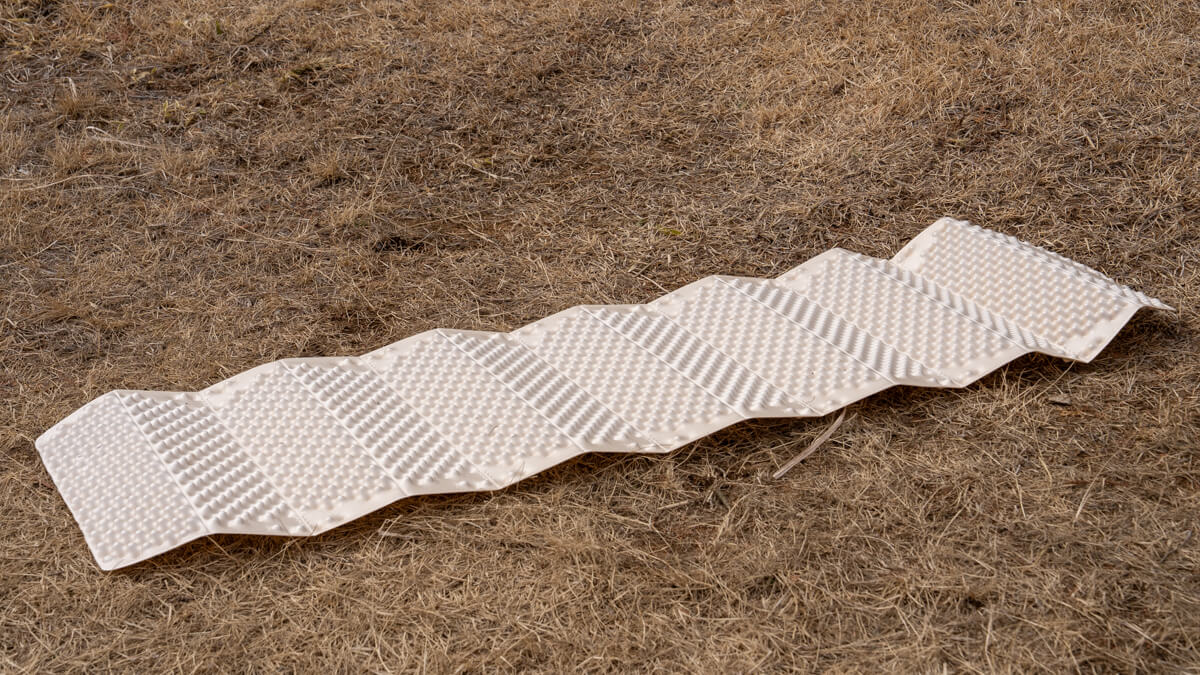
In a market dominated by air mattresses offering superior warmth and comfort, the cutting-edge Japanese brand arata has introduced the ASP-14 . This product's R-value of 1.4 is not particularly high, so it may not provide sufficient insulation to function as a standalone mattress for spring and autumn mountaineering. However, when you think of it as a "base sheet" to be used in combination with an existing air mattress, its appeal becomes clear. It solves the problems of closed-cell mattresses, which are often too bulky and heavy (or too thin and weak), and compensates for the air mattress's drawbacks of "prone to punctures" and "slippery" with minimal weight and bulk. At 180cm long, it provides full body coverage and can even be used alone in the summer for lightweight hiking, depending on how you use it.
Favorite points
- Extremely light (almost no burden even when added to equipment)
- Prevents air mattresses from puncturing and acts as an anti-slip surface
- A minimalist design with no unnecessary features, such as cut corners
- Aluminum-free friction between mats (no slippage)
Points of concern
- Low durability (vulnerable to scratches and wear, requires careful handling)
- Cannot be used alone during severe winter or cold seasons
- Because it is too light, it is easily blown away by strong winds during breaks
- Compared to extra-thick mats, it lacks cushioning
Main specifications and evaluation
| Item Name | arata ASP-14 |
|---|---|
| size | 51×182×1.7cm |
| Storage size | 51×13×9.5cm |
| Mat Thickness | 1.7cm |
| weight | 110g |
| material | Polyethylene |
| R-value | 1.4 |
| Seasonal | 3 seasons |
| accessories |
|
| Outdoor Gearzine Review | |
| Comfort | ★★☆☆☆ |
| Thermal insulation | ★★☆☆☆ |
| weight | ★★★★★ |
| Storage capacity | ★★★★★ |
| Ease of use | ★★★★☆ |
| durability | ★★☆☆☆ |
| Versatility | ★★★★☆ |
Detailed Review
Surprisingly light and compact when stored
Summarizing the ASP-14 110g ). It weighs an astounding 1/4 the weight of a typical full-length closed-cell mattress (approximately 400g). Not only is it thin, but special attention has been paid to weight reduction, including eliminating the aluminum vapor deposition on the surface to enhance insulation and boldly cutting the four corners around the head and feet to match mummy-style sleeping bags. It's so light you won't even feel it in your hand. Perhaps as a reaction to this, the insulation is also minimal, with an R-value of 1.4, which is just enough insulation to be used alone in the summer. This also highlights the fact that this mat's primary role is to be placed under an air mattress as a supplement.
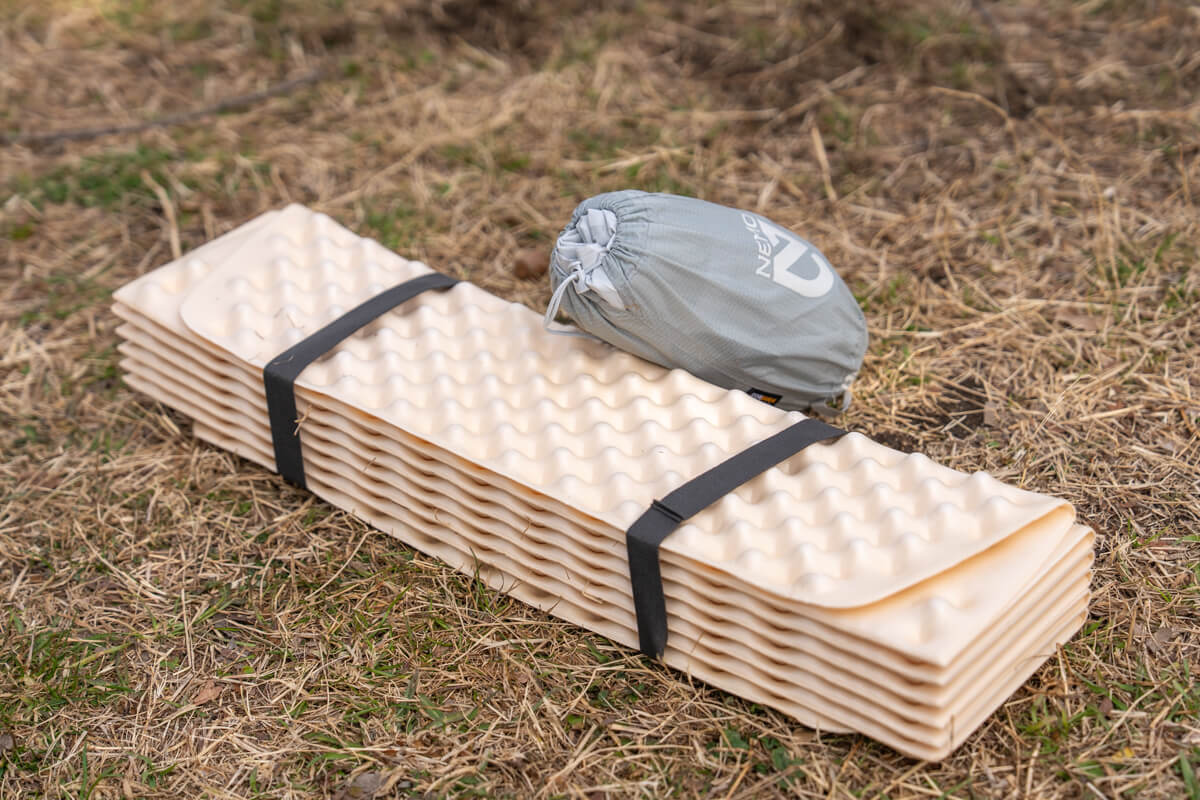
It folds easily in a Z-fold (accordion-style) and is only 9.5cm thick when stored. It can be attached to the outside of a backpack, or placed inside a lightweight frameless backpack as a back pad
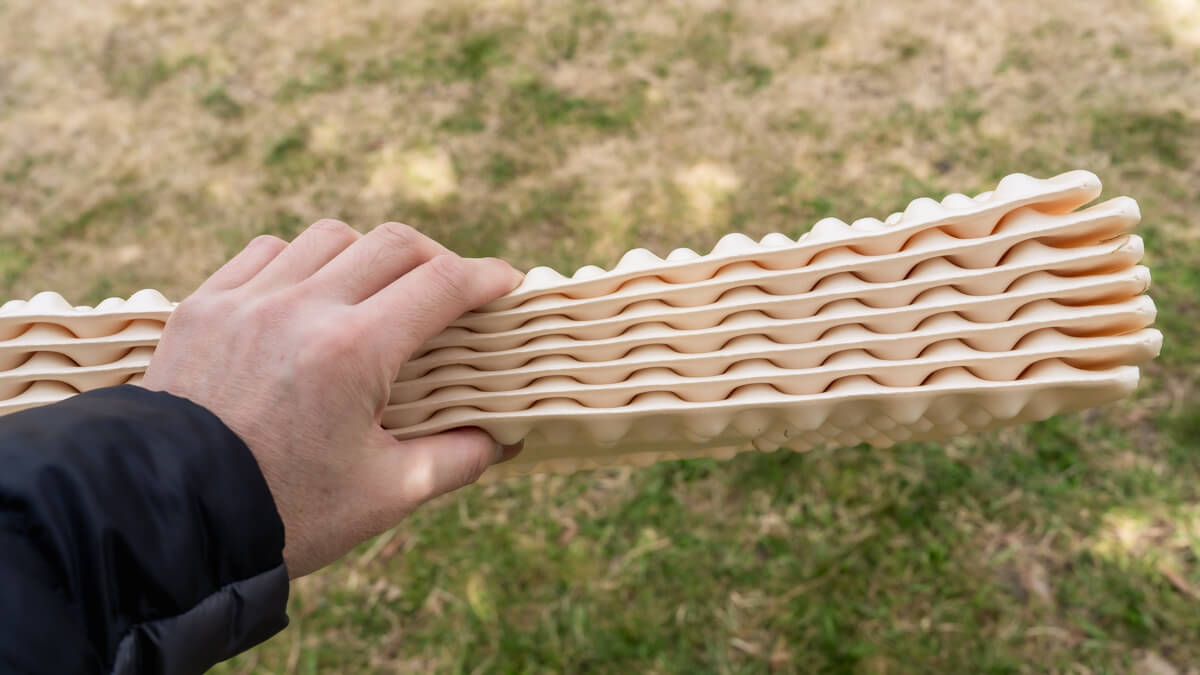
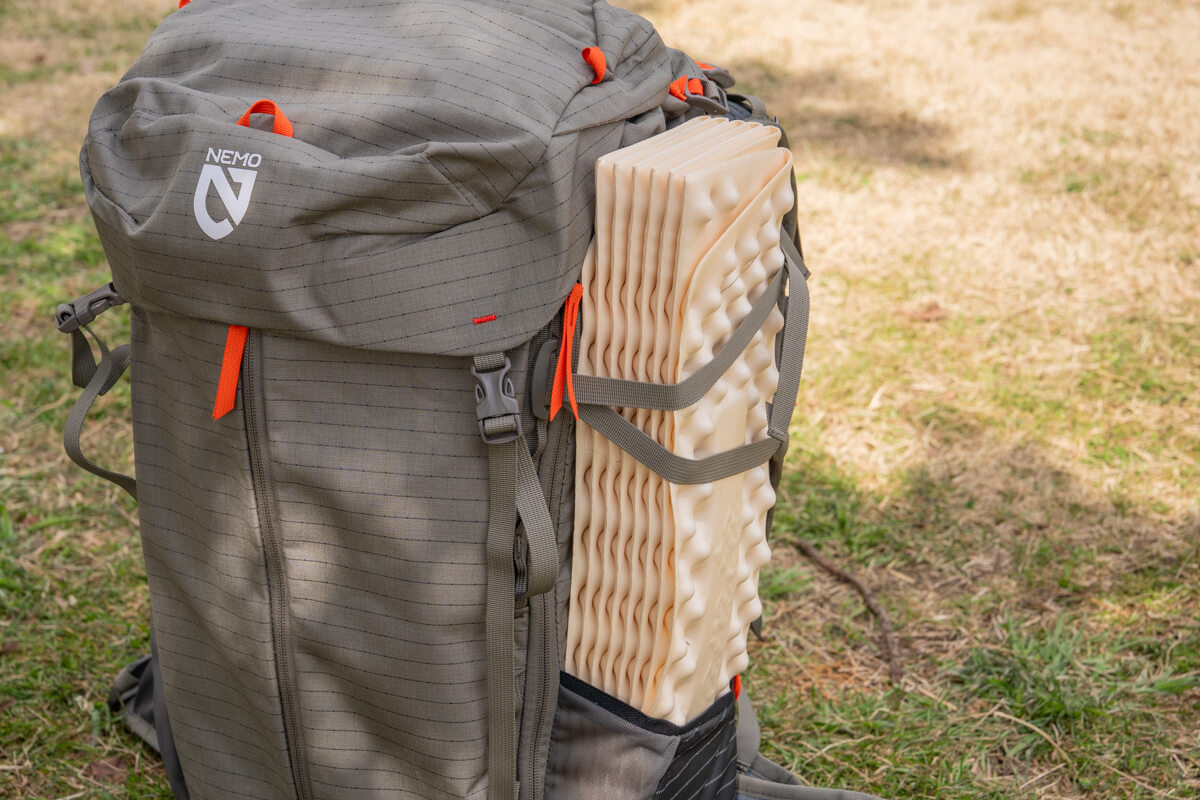
Its exquisite "shadowing" effect when placed under an air mattress and its "exquisite thinness" provide a minimum level of comfort even when used alone
It is 1.7cm thick. While this single senbei futon is the opposite of the comfort of an extra-thick air mattress, it is strong enough to withstand tree roots and pebbles on the ground when placed under an air mattress (although broken bamboo stalks can still penetrate, so be careful)
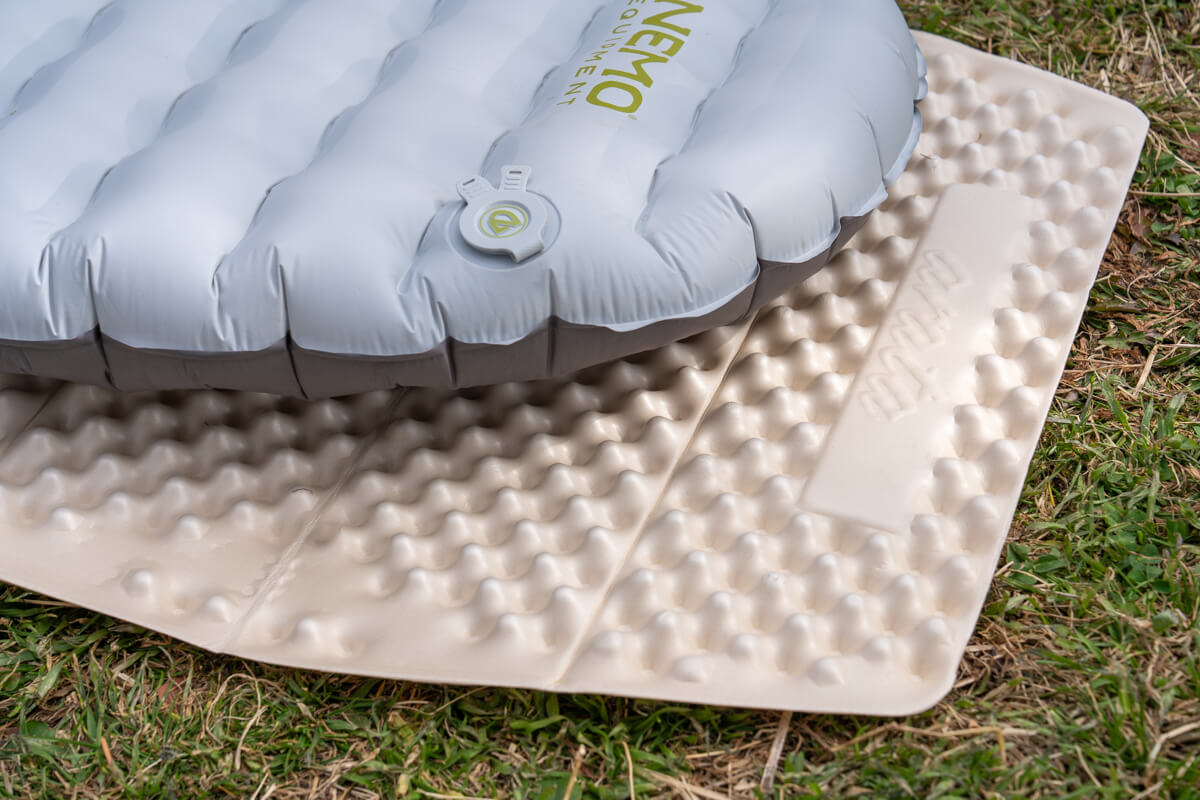
At 51 x 182cm, it's large enough for a mat. It's neither too hard nor too soft, and has just the right amount of bounce, providing the minimum amount of cushioning you need to rest your tired body
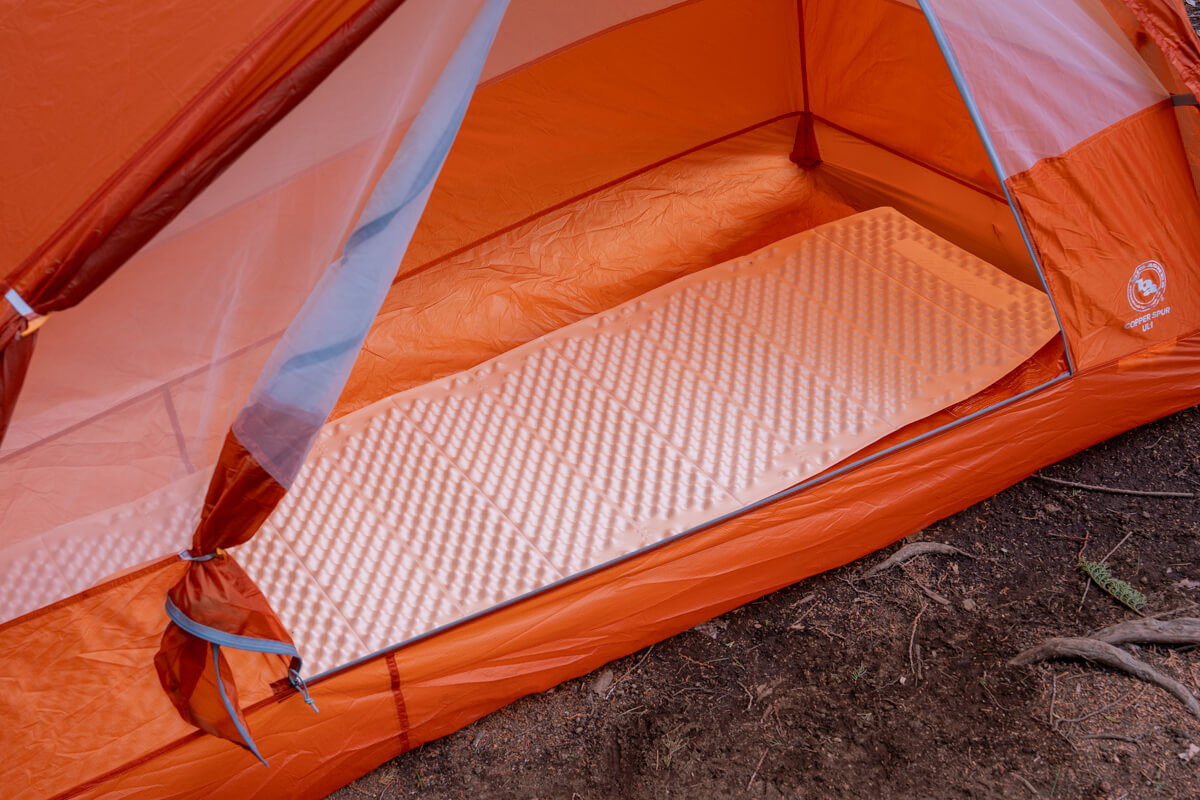
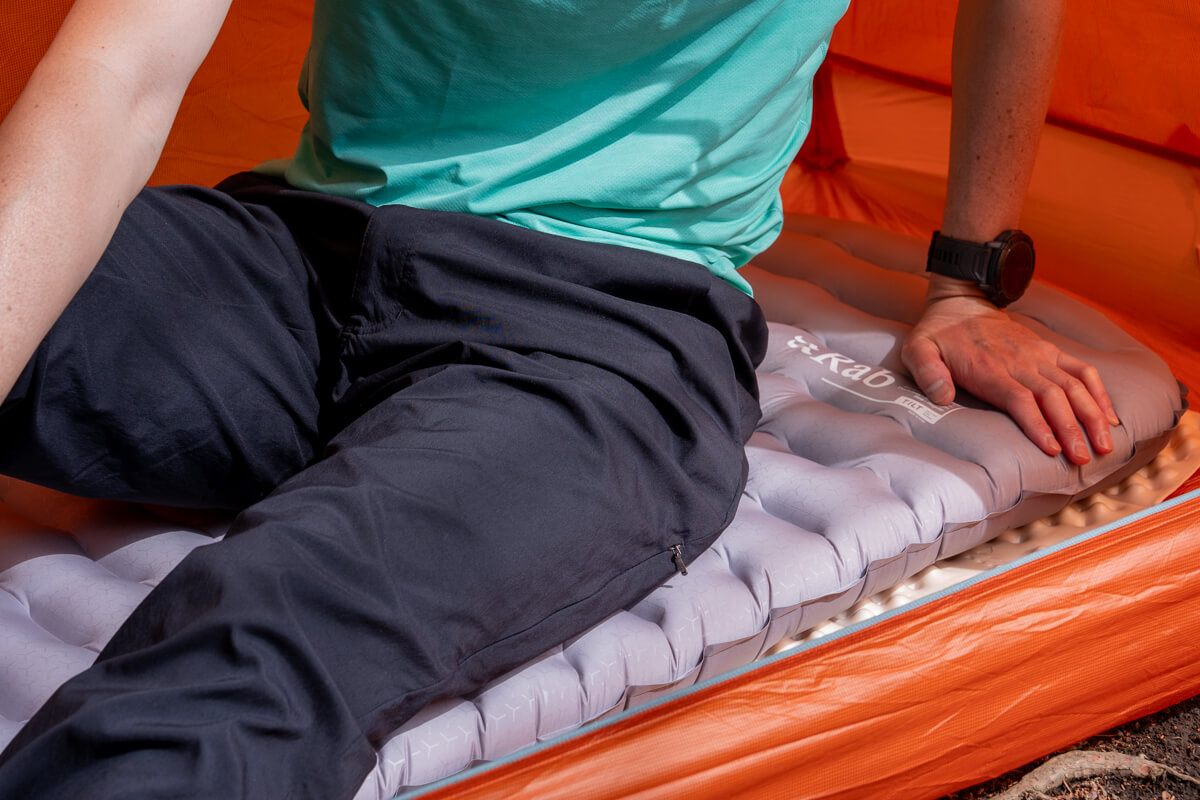
It's rare to be able to pitch a tent on a completely flat surface at a mountain campsite. In most cases, even if you think you've set up your tent on a flat surface, it's actually slightly tilted. This means that a slippery air mattress will inevitably slide down to the lower side of the slope while you're sleeping, making for an uncomfortable sleep
By placing the ASP-14, which is made of polyethylene, underneath the air mattress, you can secure it firmly inside the tent
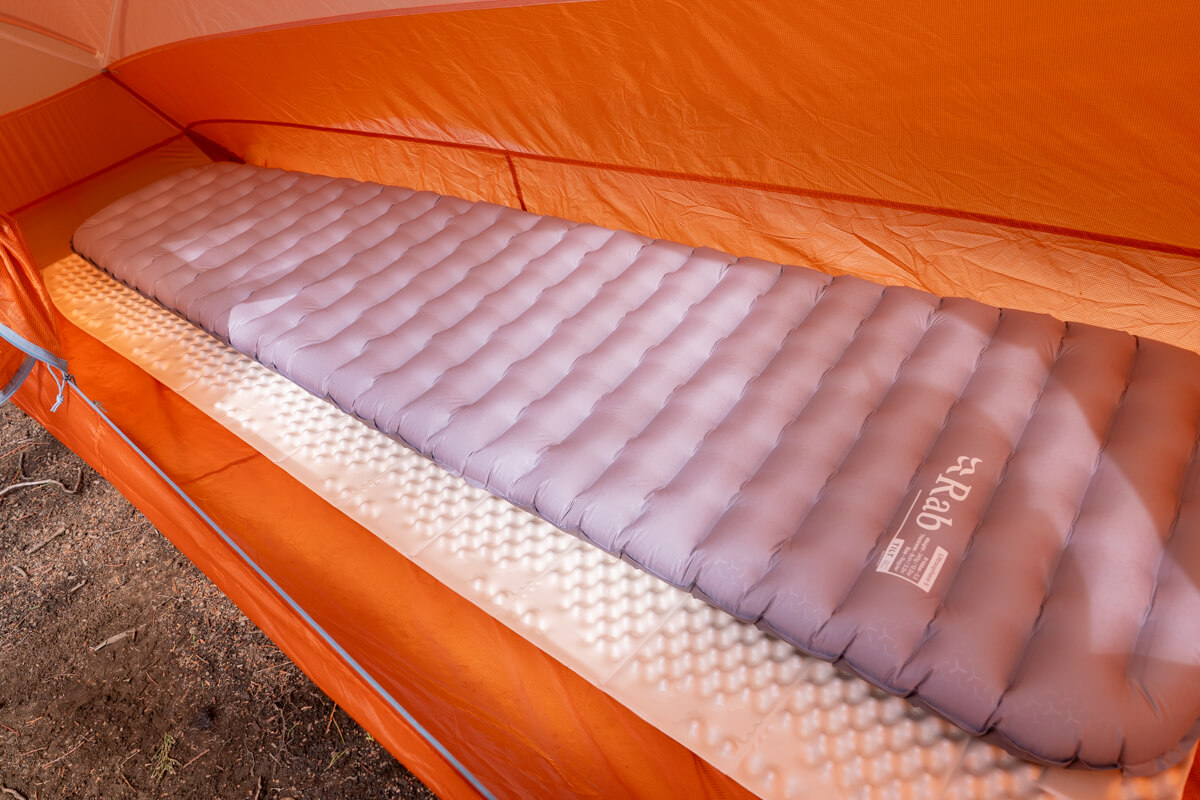
The R-value of 1.4, which indicates insulation, is not particularly high, so using it alone may be limited to low-mountain days in early summer to early autumn. However, if you place it under an air mattress with an R-value of 3.0, for example, the total R-value becomes 4.4, making it suitable for the chilly temperatures of late autumn and early winter. Pairing it with a mattress with an R-value of 5 or higher makes it possible to camp in a tent during the harsh winter. It functions as a reliable layer, physically blocking cold air from the ground while preventing punctures and slippage
Lightweight design requires compromises in durability
The biggest advantage of closed-cell mats is their toughness, which means they won't puncture even if handled roughly, but the ASP-14 . To achieve the ultimate lightness of 110g, the strength and durability of the material has been intentionally reduced compared to conventional closed-cell mats.
For this reason, it is prone to scratches if rubbed hard against rocks or caught on a tree branch, and if a load exceeding body weight is applied for an extended period of time, the material will likely become worn (compressed) due to the pressure, which is likely to occur more quickly than with regular mats, so I felt that care was needed. It is important to think of it not as a "mat that will never break," but as "ultra-light gear that will not get punctured, but that you should be prepared to accept as a consumable item to some extent."
Summary: arata's new "safe and comfortable sleeping style" for the mountains could become the standard in the future
As I have mentioned in the review so far, the arata ASP-14 may not be a mat that is suitable for everyone, and that beginners to mountain climbing can use without thinking.
However, for avid climbers who want to move beyond beginner level and pursue their own unique mountaineering style, the Arata ASP-14 , combined with an air mattress, is a very rational and attractive way to improve performance while compensating for weaknesses.
Air mattresses have become increasingly lighter and more insulated (and therefore more expensive) and this protects them from ground protrusions (punctures), eliminates the stress of slipping off the mattress while sleeping, and even raises the R-value. If you can get all these benefits for just 110g more, which is about the same weight as the weight gain, then it's definitely worth it
the ARAT ASP-14 also a fully functional mattress , and is suitable for ultra-lightweight hikers who pursue lightness. When you're hiking low mountains in the summer or fastpacking and want to shave off every gram, this full-body mattress weighing just 110g is the perfect choice for aggressive hikers. Experience this new ARAT
Consider a paid membership for access to premium content and events!
Related reading
 Surprisingly light, yet strong and comfortable, and reasonably priced. The Arata AX Series, packed with innovative ideas, offers a new perspective on freestanding mountain tents. [Practical Review]
 Arata ASP-R7 Review: High insulation, portability, and excellent comfort for even the harshest winters. Amazingly affordable, this air mattress is perfect for those scary mountain climbs because it has no blind spots
 arata ATP-125 Review: Telescopic, all-season, durable, and weighing just 126g! Unconventional trekking poles
 Review of the ultra-lightweight aluminum cooktop "arata ACP-500/700": It's so light it's almost unfair. It can cook rice, yet it's lighter than titanium. A revolutionary new product that will change the history of mountaineering cooktops. [Information on the exclusive Geargin collaboration model included]