



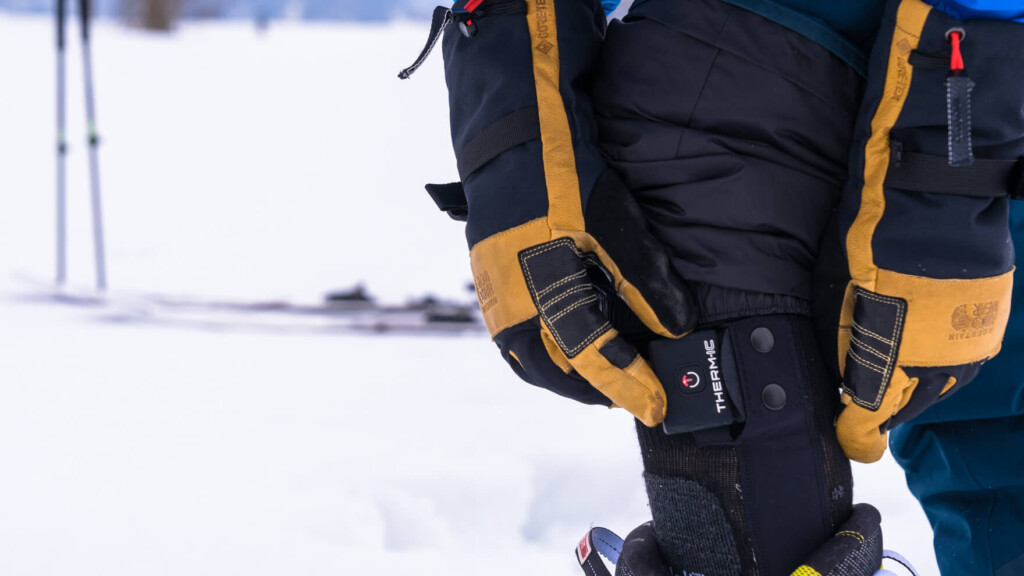
Did these forbidden battery-powered heated socks save my frozen toes? Therm-ic Power Socks Heat Uni V2 Review

Written by Yasushi Hisatomi
Morning. Fully prepared, I pop out of the tent and slip my feet into my freezing cold boots. No matter how much mountain experience I have, how healthy I am, and how motivated I am, my poor circulation in these icy boots makes it all too easy for my toes to take a beating first thing in the morning
Even if you're not prone to cold extremities like me, in the winter mountains your feet are subject to the strong pressure of shoelaces and buckles, exposing them to sub-zero temperatures for long periods of time. If the conditions worsen even slightly, you'll quickly become cold and lose sensation, and in the worst case scenario, you could be at risk of hypothermia. In fact, I personally find my toes to get numb more often than my hands, so it's a real concern
Last time, we reviewed rechargeable heating gloves that use the power of technology to overcome freezing winter hands, but this time we're following that momentum and trying out the second installment in the rechargeable heating series: rechargeable heating socks that use the power of electricity to warm up your cold toes
table of contents
- Overcome the final stress of winter mountain climbing: cold toes!
- Key Features of Therm-ic Power Socks Heat Uni V2 + S-Pack 700 Battery
- Main specifications and evaluation
- I tried it on the slopes and in the backcountry (detailed review)
- Summary: I'm quite satisfied with the heating function itself, but there's room for improvement in usability
Overcome the final stress of winter mountain climbing: cold toes!
Out of the many heated socks available, we chose the Therm-ic Power Socks Heat Uni V2 (+ S-Pack 700 battery). Therm-ic is a pioneer that has been making ski and outdoor products utilizing electric heating technology for over 20 years, starting with the development of heated insoles for ski boots. While still not exactly affordable, these rechargeable heated socks are at the cutting edge of technology that continues to advance at a rapid pace. Will they be able to overcome the dangers and discomfort of winter mountain climbing? And are they actually practical? We'd like to report on them right away.
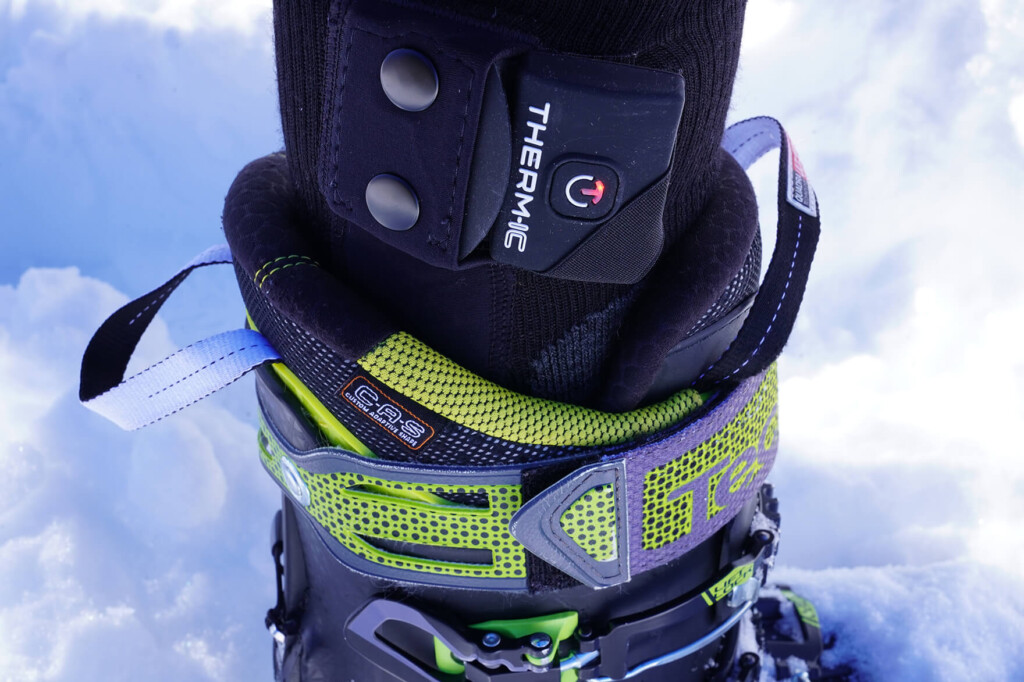
Key Features of Therm-ic Power Socks Heat Uni V2 + S-Pack 700 Battery
Recommended points
- High heat retention at maximum output
- Thin and bulky with minimal volume
- Easy to install and hard to come off
- Cushioned shins
- Can be washed in hand wash mode
Points of concern
- Insufficient heat retention in the most frequently used low mode
- Low warmth as socks when switched off
- The buttons are difficult to operate because they are hidden by pants
- The buttons are easily misoperated due to pressure from the outside, and it is difficult to check the current status
- The socks have little elasticity, so they may not fit well depending on your foot size
- Unaffordable price
- Not very durable (if the heating wire breaks, it's finished)
Main specifications and evaluation
| Specifications | |
|---|---|
| Item Name | Therm-ic Power Socks Heat Uni V2 + S-Pack 700 Battery |
| Material (Power Socks) | Polyamide, acrylic, polypropylene, polyester, elastane |
| Accessories (S Pack 700) | Dedicated USB charging cable |
| Applicable temperature range | Low: 0 to 10°C, Mid: -10 to 8°C, High: below freezing |
| Battery life | Low: 6-8 hours, Mid: 4-5 hours, High: 1 hour 45 minutes to 2 hours 15 minutes |
| evaluation | |
| Heat retention | ★★★★★ (★★☆☆☆ when switched off) |
| Comfort | ★★☆☆☆ |
| Support | ★★★☆☆ |
| Cushioning | ★★☆☆☆ |
| quick drying | ★★★★☆ |
| Ease of use | ★★☆☆☆ |
I tried it on the slopes and in the backcountry (detailed review)
Comfort ★★★☆☆
At first glance, they're so thin you might wonder if there really is a heating wire inside. They're well-made and feel natural compared to regular socks, which I really like. The shin-length size is perfect for skiing, and while they're slim overall, there's some added cushioning in the shin, toe, and heel areas, providing great consideration for areas prone to rubbing and bearing weight
The heat-transmitting wire runs from the outside of the calf, where the battery is located, through the heel and sole of the foot, and finally makes a large spiral at the bottom of the toes. While I'm grateful that the wire doesn't feel like a foreign object, unfortunately, the wire makes the socks themselves less stretchy. My foot size is 26.3cm (right on the border between sizes), so I chose the 26.5-28.0cm size, which left me with a bit of excess fabric
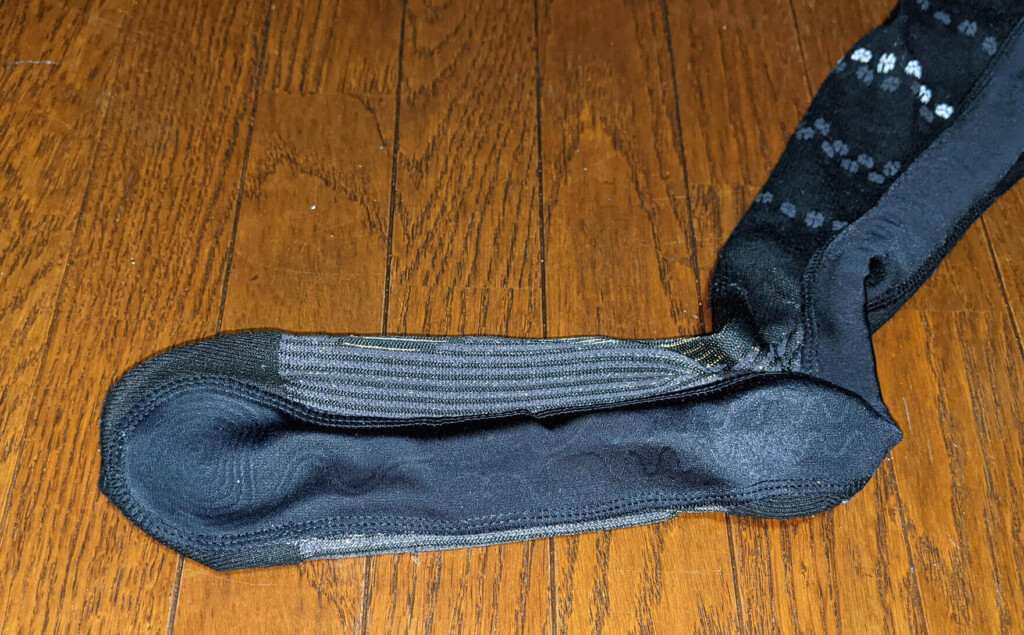
Even when I put the socks on and wiggle my toes, they don't feel particularly stiff, and they feel comfortable as socks. They're also made of quick-drying materials like nylon, acrylic, and polyester, so there's little worry about them getting wet. However, as someone who always preferred thick, fluffy merino wool in the winter, I found the thinness and lack of stretch of these socks quite unsatisfying, and in fact, with the socks turned off, they were quite cold and unreliable. Considering the possibility of a malfunction or dead battery in the harsh winter mountains, this is a significant drawback
Heat retention ★★★★★
Regardless of comfort, let's move on to testing the warmth provided by the heating system, which is the biggest attraction of these socks
As I mentioned earlier, the battery is attached to the outside of the sock with a snap button. This does not interfere with the boots, and it is not particularly difficult or easy to remove, so there are no problems for now
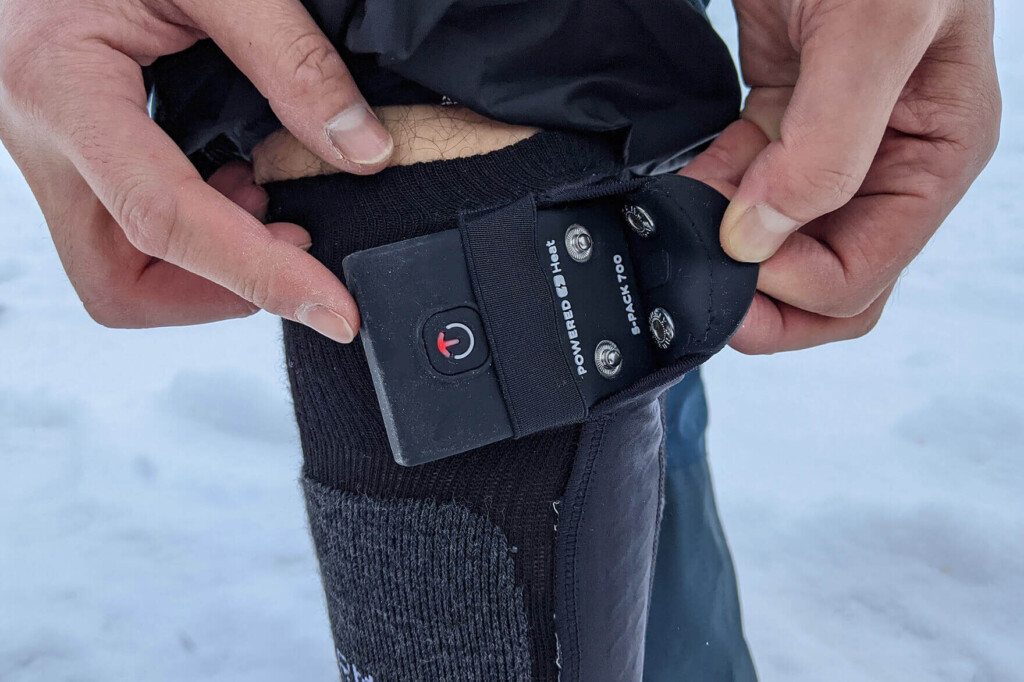
Once the battery is installed, all you have to do is press and hold the button. The device will then start heating in low mode. The heat output is divided into three levels, and the duration of each level is based on the following recommended temperature ranges:
- Low: 0 to 10°C (6 to 8 hours)
- Mid/-10 to 8°C (4 to 5 hours)
- High/Below freezing (1 hour 45 minutes to 2 hours 15 minutes)
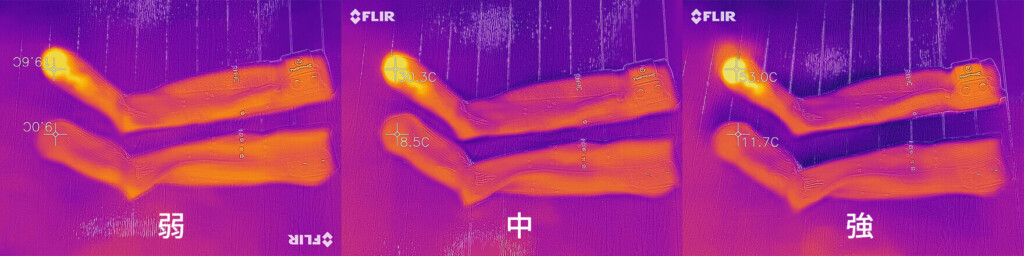
Before using them in the backcountry in January, when the cold weather really sets in, I tested them indoors to see how warm they would be. As soon as I turned them on, I could feel the soles of my toes gradually warming up. However, there wasn't much change in warmth anywhere else. The image below shows this using the familiar thermography. The top shows socks with the switch on in each mode, and the bottom shows socks with the switch off (I can't guarantee the accuracy of the temperatures displayed, so this is just a rough guide for comparison)
The following image shows a frontal view of a foot taken some time after it had been in a fever state
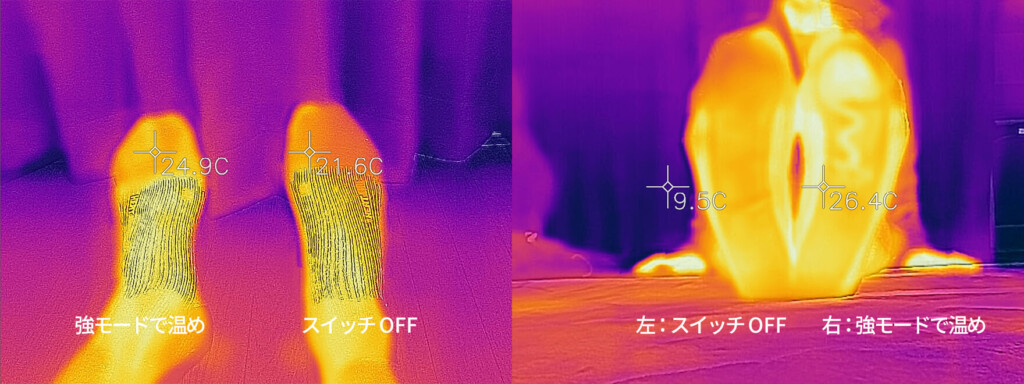
As you can see from these diagrams, the main part that generates heat is the spiral wire at the bottom of the toe, and the amount of heat generated by other wire parts is not that great. I'm a little worried about whether this will really be comfortable for skiing in the middle of winter
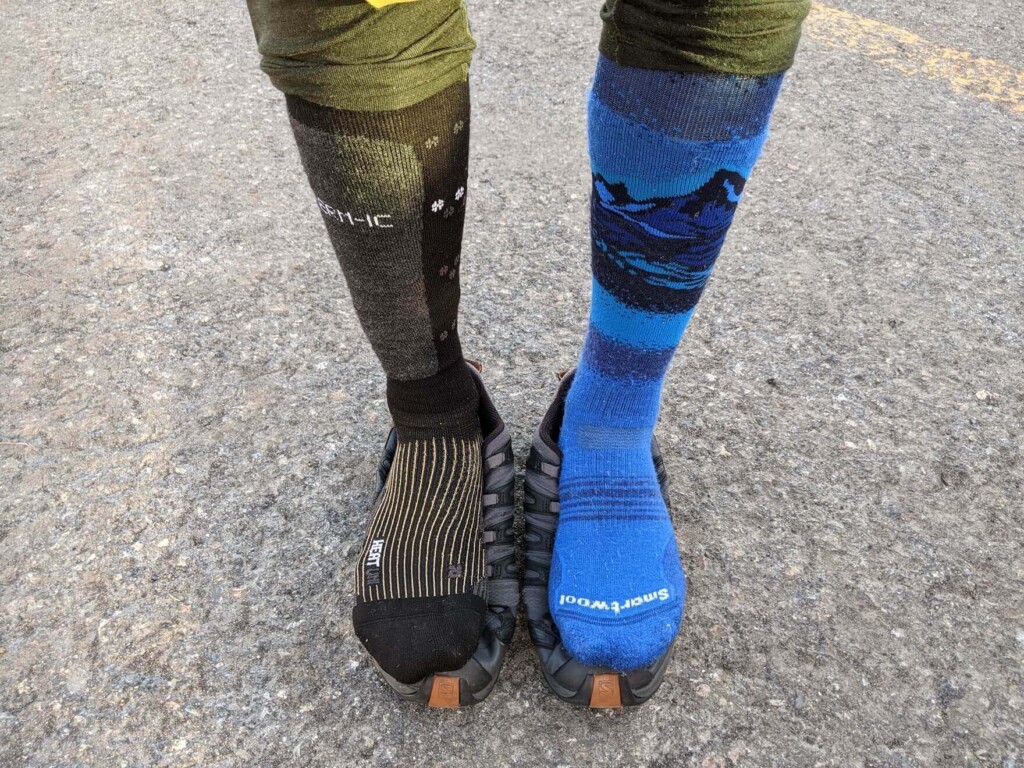
Next, I decided to try wearing the "heat generating socks" and "merino wool ski socks" alternately on each side, as shown in the photo below, in an actual field
Of the three heat levels, the one I usually use is definitely Low (6-8 hours) based on the duration. While changing into my ski boots, I set the switch to Low. Each time I press the button, the level changes from Low to Mid to High
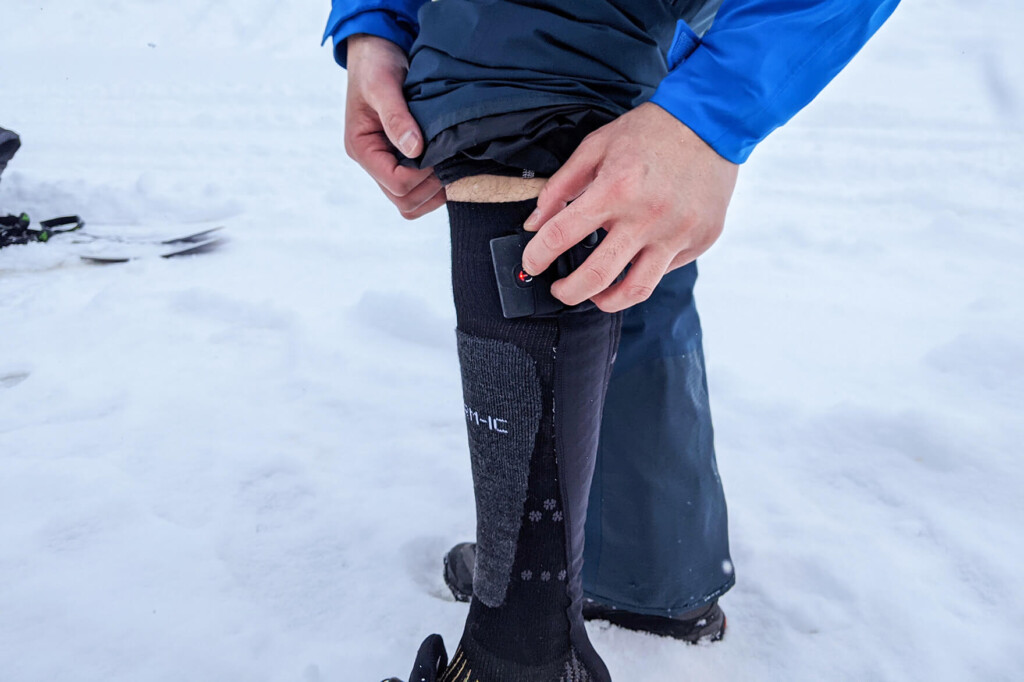
By the way, the three levels are determined by the flashing status of the button light (see video below)
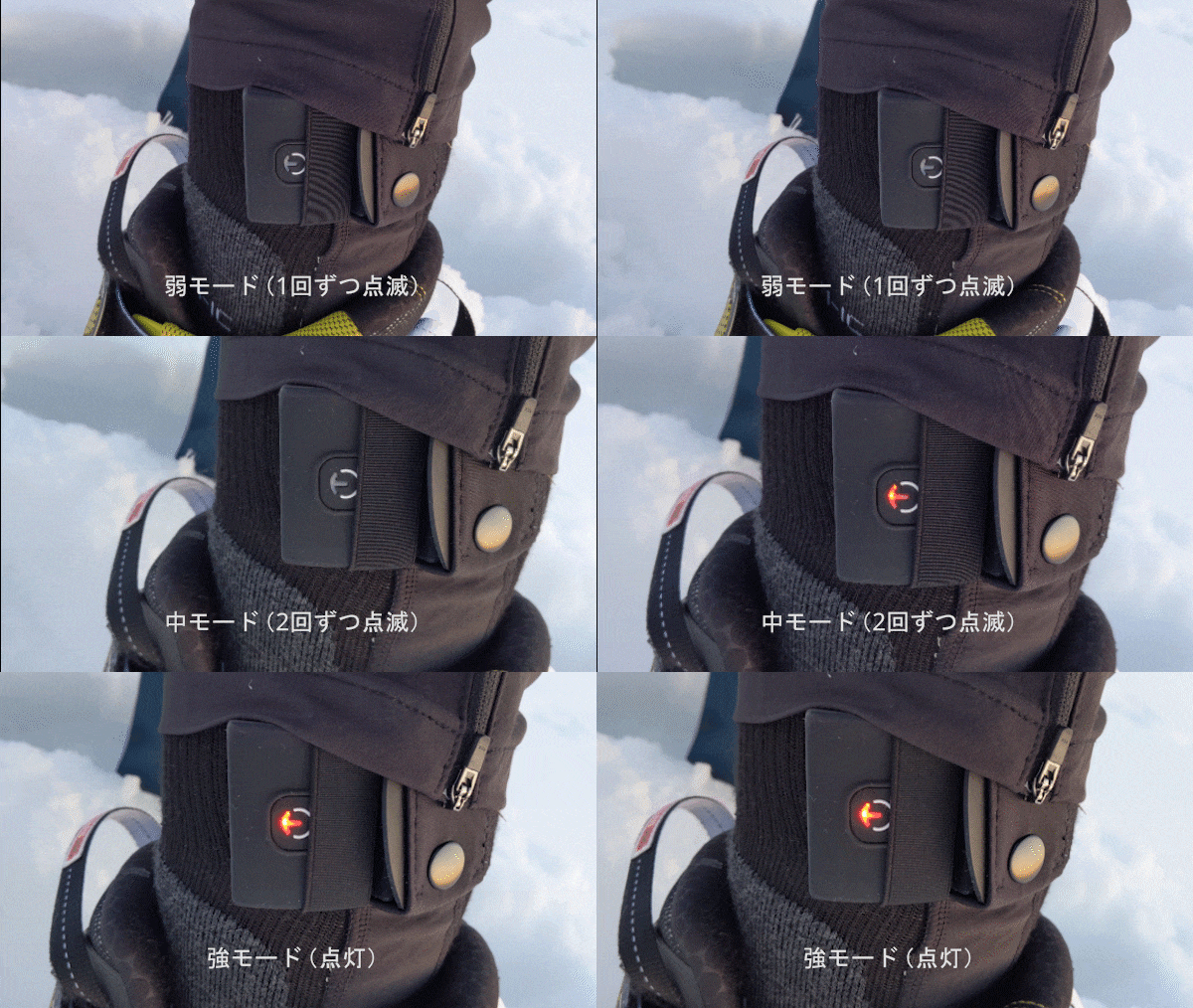
In writing this review, I tried them out in a fairly wide range of weather conditions, including sunny backcountry skiing and at a ski resort in the middle of a cold wave
First of all, after using them in Low mode for a while, I honestly didn't feel that there was much difference in heat retention compared to the merino wool socks I had been wearing
As I feared, there doesn't seem to be much difference between thin socks that only slightly warm the soles of the toes and medium-thick merino wool socks that don't generate heat. It's true that my feet didn't get cold in temperatures above 0°C, but with the buckles tightly fastened and compressed, my feet sometimes lost feeling, so I didn't really feel the full benefits
When temperatures drop below zero and I'm not moving around much, my feet often get cold even on Low, so I switch to Mid or High mode. As expected, the inside of my shoes stays warm and comfortable. Even the thickest merino wool can't match the comfort at this point
However, for a user like me who wanted to use it heavily during the harsh winter season, it's frustrating that I can't keep using the Mid mode, which only lasts for about 4-5 hours. The S Pack 1200 , is said to last up to 7 hours and 30 minutes in Mid mode. Considering all-day use in the bitter cold, I regret slightly choosing this one (it's still too expensive).
Other usability ★★☆☆☆
When using it while skiing, you have to go to the trouble of rolling up your pants or tights every time to check your current level or press a button (see photo below)
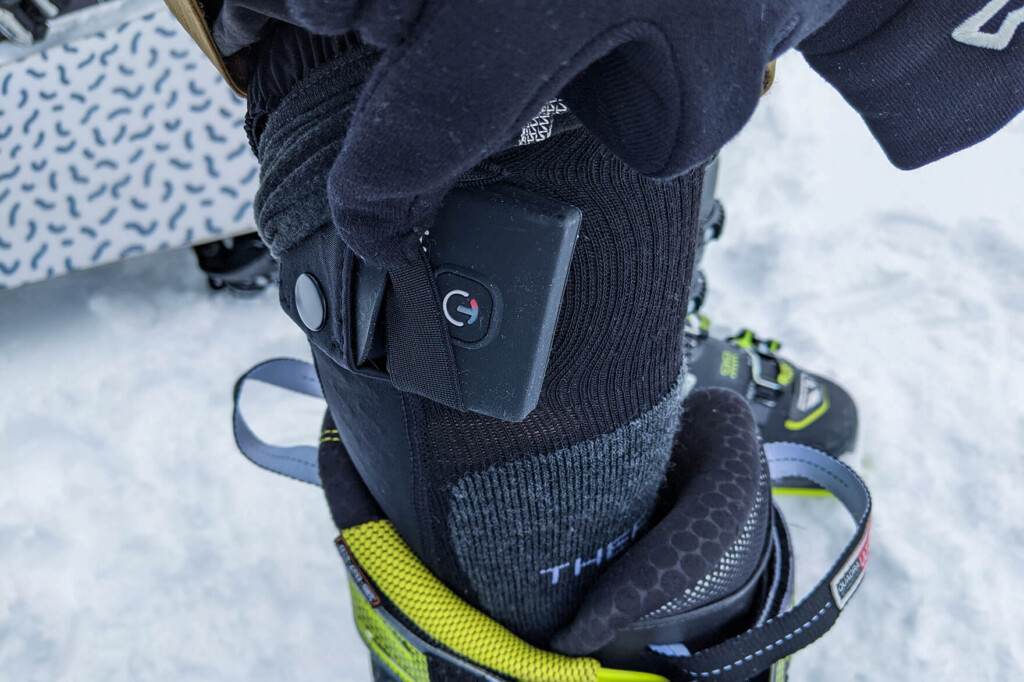
To put it bluntly, this usability is awful. What's more, I accidentally pressed this button several times, and I don't even know when I pressed it, causing the mode to change without me realizing it. I thought I was using it on Low, but suddenly it was on Mid, and the battery ran out. It makes me uneasy and makes me not want to use it. Currently, there are models available overseas that allow you to switch modes via a smartphone app via Bluetooth connection, but this feature should be included as standard
Summary: I'm quite satisfied with the heating function itself, but there's room for improvement in usability
Therm-ic Power Socks Heat Uni V2 's thin, natural feel and excellent heat retention certainly gave hope to outdoor enthusiasts like me who have cold extremities. If you can use them in Mid (and sometimes High) mode for a long time, you won't feel cold in most winter mountains.
However, I felt there was still room for improvement in terms of the inability to use the Low mode in colder conditions, the comfort of the socks, and the button positioning
If it were possible to easily switch modes, it might not have been so stressful, as you could switch between Mid and Low modes as needed to save battery power. Unfortunately, however, the buttons are hidden by pants or tights, so once you set it, it's not so easy to switch modes
For this reason, if you plan to use it for winter mountain climbing like me, the S-Pack 700 battery I recommend choosing an S-Pack 1200 , which can be used for a long time in the Mid format
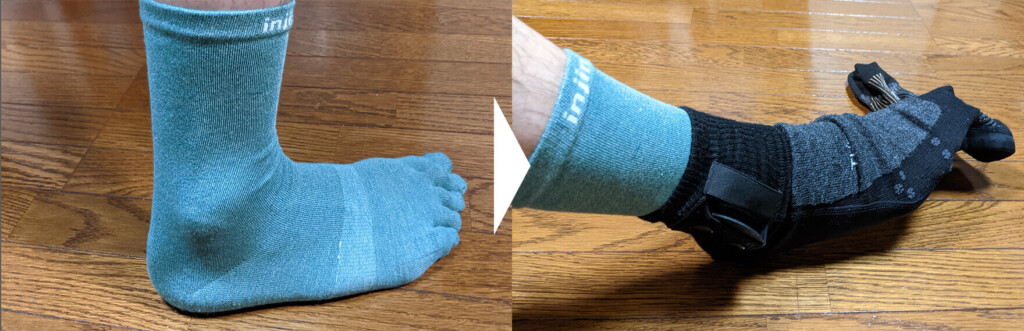
Also, the fabric was not very stretchy and the fit was not very good, so I tried wearing some very thin inner socks underneath, as shown in the photo below, to adjust the size and add extra warmth, and the fit improved considerably
 THERM-A-REST "Neoloft" & MSR "Hubba Hubba LT" Review: The era when you can finally carry the comfort of a bed in your backpack. Incredibly comfortable mountain tent and mat that keep weight down
 Review: Therm-a-Rest Antares HD Sleeping Bag - A comfortable sleeping bag with clever tricks I got from "Sekaimon"
 Review: Therm-a-Rest Vela HD Quilt, a quilted sleeping bag not available in Japan, found on Sekaimon
 itoix Tabi Running Socks Review: Trying out these cool, cool, and refreshing "Washi Yarn" socks for various summer outdoor activities