



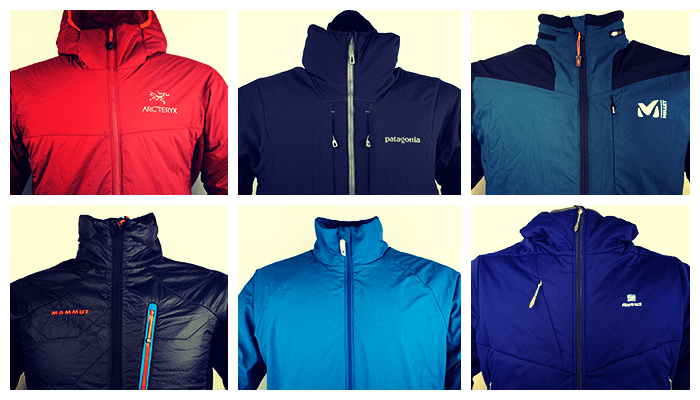
比較レビュー:【フリースを超えた!?】最新化繊インサレーション(防寒着)を着比べてみた

written by Yasushi Hisatomi
目次
温かいのにムレない、新時代の”動ける”防寒着を徹底比較
冬のアウトドアでは常に着用したままの行動が多いミドルレイヤー。中間着や防寒着とも呼ばれるこれらのウェアは、適度な断熱性を備えるとともに、衣服内の汗を効果的に水蒸気として外へ排出する、寒い時期の行動には欠かせないレイヤーといえます。そんなミドルレイヤーのかつての主役といえばお馴染みのフリースジャケット。しかし、その常識は今シーズンを境に変わるかもしれません。
今回の比較テストで取り上げるのは、アウトドア・ギアの世界では間違いなく2015/2016シーズンの最注目トピックであった、フリースの弱点を補いつつより使い勝手を向上させた新しい防寒着であるアクティブ・インサレーション・ウェアの注目モデル達です(まだネーミングは定まっていませんが、一番しっくりくるので試しにこう呼んでみます)。
その特徴や誕生までの簡単な経緯などについては以前こちらでも紹介しましたが、この防寒着の特徴を端的にいうと、保温性と通気性(汗抜けのよさ)、軽量コンパクトさを兼ね備えた新開発の化繊中綿素材を使用し、ウェア全体では伸縮性を備えることで、冬の行動着として必要な要素を十分過ぎるほど満たした、これからのアウトドアには欠かせなくなるであろう次世代防寒ジャケットなのです。
そんなハイテク化繊インサレーションがさまざまなメーカーから続々登場したのが今シーズン。今回はメーカーや素材の異なる最強候補を編集部が独自にピックアップし、さまざまな角度から比較テストを行ない、それぞれの得意分野の違いなどを中心に比べてみました。例によって前置きしておきますと、今回もすべてのモデルは全体としてはどれも素晴らしいアイテムばかりで、総合点での差はあまり気にせず、それぞれのこだわり部分に注目してもらえると嬉しいです。
比較テストアイテム
今回の比較のテーマは「冬の行動中に着っぱなしでもずっと快適な最新防寒着」です。カテゴリとして厳密な定義がないため一部やや強引にはめているのもありますが、ピックアップの基準としては、透湿性能の高い化繊中綿素材を採用している化繊インサレーションジャケットとなります。なお、ラインナップに複数のボリュームがある場合には、厚すぎず、重すぎないモデルを選択しています。
Arc’teryx ATOM LT フーディ
![アークテリクス ARC\'TERYX メンズ Men\'s アトム エル ティー フーディー ATOM LT HOODY Black2015 XL [並行輸入品]](https://images-fe.ssl-images-amazon.com/images/I/410zmIE17PL._SS150_.jpg)
finetrack ドラウトポリゴン3

Houdini C9 Luft Jacket




MAMMUT Eigerjoch Light Jacket

MILLET TOI 3D INSULATED ST ※テストはジャケットタイプで実施
 MIV01313 CASTELROCK 3721 L](https://images-fe.ssl-images-amazon.com/images/I/41C6VwhV3wL._SS150_.jpg)
patagonia Nano Air Hoody

テスト環境
2015年9月~2016年2月にかけて複数回の山行で、同じ状況で数時間毎に着替えながら試着し、テスト。その他日常生活、雨降りでも試着。
実地テストによる詳細評価
評価比較
| 総合順位 | 1位 | 1位 | 3位 | 4位 | 5位 | 5位 |
|---|---|---|---|---|---|---|
| アイテム |  MIV01313 CASTELROCK 3721 L](https://images-fe.ssl-images-amazon.com/images/I/41C6VwhV3wL._SS100_.jpg) MILLET TOI 3D INSULATED ST MILLET TOI 3D INSULATED ST |
 patagonia Nano Air Hoody patagonia Nano Air Hoody |
 finetrack ドラウトポリゴン 3 finetrack ドラウトポリゴン 3 |
![アークテリクス ARC\'TERYX メンズ Men\'s アトム エル ティー フーディー ATOM LT HOODY Black2015 XL [並行輸入品]](https://images-fe.ssl-images-amazon.com/images/I/410zmIE17PL._SS100_.jpg) Arc’teryx Atom LT フーディ Arc’teryx Atom LT フーディ |
 MAMMUT Eigerjoch Light Jacket MAMMUT Eigerjoch Light Jacket |
 Houdini C9 Luft Jacket Houdini C9 Luft Jacket |
| ここが◎ | 行動時の快適さ、動きやすさ、重量 | 着心地のよさ、通気性 | 通気性、動きやすさ | 保温性、バランスのよさ、防風性 | フィット感、動きやすさ、重量 | 着心地とバランスのよさ |
| ここが△ | やや保温性 | 価格、防風性 | 重量、収納性、ポケット | 通気性、運動性 | 価格、保温性、通気性 | 価格、重量 |
| 保温性 (20) |
12 | 14 | 14 | 15 | 12 | 13 |
| 快適性 (20) |
16 | 19 | 17 | 17 | 14 | 18 |
| 運動性 (20) |
19 | 17 | 17 | 14 | 18 | 17 |
| 汗抜け (20) |
17 | 17 | 19 | 14 | 14 | 16 |
| 重量 (15) |
14 | 11 | 9 | 13 | 14 | 9 |
| 使いやすさ (5) |
4 | 4 | 3 | 5 | 4 | 3 |
| 総合 (100) |
82 | 82 | 79 | 78 | 76 | 76 |
| 中綿素材 | 3DeFX+Ⓡ | フルレンジ | ファインポリゴンⓇ | Coreloft™ | PolartecⓇ Alpha | PolartecⓇ Alpha |
| 重量(実測) | 336g | 360g | 408g | 342g | 321g | 395g |
| 防風性 | × | × | × | ◯ | △ | × |
| 撥水性 | △ | △ | ◯ | ◯ | △ | △ |
| ポケット | 3(左右2、胸1) | 4(左右2、胸2) | 1(胸1) | 3(左右2、内1) | 3(左右2胸1) | 2(左右2) |
| フードあり(なし)モデル | あり | あり | なし | あり | なし | あり |
| 参考価格 | 28,080円 | 38,880円 | 26,784円 | 30,240円 | 37,800円 | 34,560円 |
保温性
防寒着である以上、寒さを感じたときに羽織って温かいということは基本中の基本です。ただし今回のテーマでは、保温性のために他のすべてを犠牲にしてよいわけでもなく、どのモデルもアクティブな性能を保ったなかで最大限、保温性を確保しなければならないという高いレベルの要求であることは念頭に入れておかなければなりません。
そのうえで、比較した中で最も保温性が高いと感じられたのは Arc’teryx Atom LT フーディ。本格的な防寒着にも使われる Coreloft インサレーションが脇下以外全面的にマッピングされ、それが非常に効いています。ただ、patagonia Nano Air Hoody、finetrack ドラウトポリゴン 3 もそれに引けをとらない保温力はあり、この差は実質的には素材の断熱性というよりも、ウェア全体の防風性の差ではないかと思われます。一方 MILLET TOI 3D INSULATED ST、MAMMUT Eigerjoch Light Jacket は、本格的な防寒着としてのパフォーマンスはその薄さゆえにしょうがない部分があるかと思いましたが、行動時の保温着としてはまったく問題ありません。
快適性
この項目でキングだった patagonia Nano Air Hoody、次点の Houdini C9 Luft Jacket の2点に共通して上げられるのはまず何といってもきめ細かい裏地のつくり出すソフトで滑らかな肌触り。これが1度着たら病みつきになるほどの魅力で、実際のところ日常で着ていた頻度では圧倒的にこの2着でした。その他スリムだけどキツすぎないフィット感に、ほどよく効いたストレッチ、同じくストレッチ素材を使った袖口の柔らかい当たり、左右のハンドポケットなど、気持ちよく着るということに関してのツボがこれでもかというくらいに押さえられています。他のアイテムも決して悪くはないのですが、総合的な快適さでみたとき、絶妙なバランスでこの2着を上回るものはありませんでした。
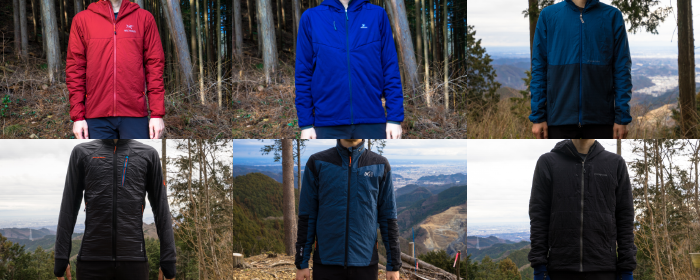
素材の肌触りとともに快適さを大きく左右するのがウェアのシルエット。着た瞬間にはゆったりめの方が楽ですが、行動中にはタイトで邪魔にならにモデルが使いやすい。
運動性
ここではこのインサレーションのもうひとつの顔である、行動時のパフォーマンスのなかでも運動性、いわゆる動きやすさについて評価しました。結果からいうと、どれも一定以上の満足を得られたうえでですが、長く着比べて最終的に行き着いたのは、MILLET TOI 3D INSULATED ST の安定した動きやすさでした。これには2つの理由があります。
ひとつはスペック的な面。各モデルを眺めてみると、ミレーの3DeFX+Ⓡ、パタゴニアのフルレンジは素材自体が伸縮するという特性をもち、その点で非常に運動性に関してはアドバンテージがあります。次にファイントラックとフーディニの2点は素材自体は伸縮しない一方、全面に使用された表裏の素材が適度なストレッチ性をもっているため、ウェア全体で伸縮性を保てています。そして最後にアークテリクスとマムートの2点は中綿をマッピングした部分には伸縮性がなく、脇下や肘周りなどの可動部分に伸縮性のあるフリースを使用することによってウェアとしてのストレッチ性を確保しているという戦略です。ここから分かるように、ミレーの全体的なストレッチ性が、どのような動きに対しても抜け目なく快適な動きやすさを提供してくれている訳です。さらにはダボつかないシルエットと立体裁断によるムダの無いフォルムが、これも運動時のストレスを軽減させているのも見事。他のどのモデルよりも自然に歩きに集中できる、それが評価の決め手でした。
一方 MAMMUT Eigerjoch Light Jacket についても、特に行動時の動きを妨げない非常にタイトなシルエット、そして肩から肘、袖などの可動部分の多くを構成する伸縮性の高い PolartecⓇ Powerstretch が魅力ではありました。ただその極めてタイトなフィット感が結構人を選ぶのも否めず、クライミングやバックカントリーなどのよりアクティブな運動には適しているものの、リラックスした山歩きには受け入れづらいモデルとなっているように感じられます。
汗抜け
今回の各アイテムを特徴づける最も大きな特性が、この保温着にもかかわらずムレにくいという、優れた汗抜けの良さ。近年続々登場している中綿素材は、優れた断熱性と同時に内部の水蒸気を吸い上げて外に排出する透湿性や通気性を備えています。今回のなかでは finetrack ドラウトポリゴン 3 の汗処理能力が秀逸。その理由は何といっても左右の脇腹に取り付けられたベンチレーションにあります。このベンチレーションが腕の動きに応じて外気を大いに取り込んでくれることによって、どれだけアクティブに行動しても、ファインポリゴン自体の通気性との相乗効果でほとんどムレを感じさせませんでした。
ただ素材自体の性能でいけば、patagonia Nano Air Hoody、MILLET TOI 3D INSULATED ST、Houdini C9 Luft Jacket の3点もファイントラックに勝るとも劣らない汗抜けの良さをもっており、よほどの高い運動量のアクティビティでなければそんなに明確な差は出ないのではないかと思われます。
使いやすさ
ここまでは主な性能についての比較でしたが、この項目ではウェア全体としての使い勝手や汎用性、その他の細かな機能について、評価しています。ここでは総合的に Arc’teryx Atom LT フーディの優秀さが目立ちました。例えばこれらのなかで唯一、アウターとしても使えそうな高い防風性を備えている点や、finetrack ドラウトポリゴン 3 と並んで相対的に高い撥水性能(写真参照)。ポケット類も左右のハンドポケットと胸の内ポケットは、patagonia Nano Air Hoody の4つに次いで使いやすいつくりです。コンパクトに収納できる点も重要です。その他では finetrack ドラウトポリゴン 3 の高い撥水性と防臭性は、他のモデルにはない付加価値として特筆すべきです。
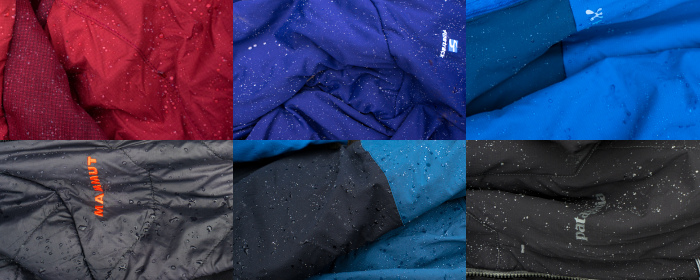
雨がぱらついた時の撥水性を比べてみたところ。写真での様子だけでなく室内テストでも finetrack の撥水性の高さは頭ひとつ抜けていた。
今回の比較まとめ
Editors’ Choice 1: MILLET TOI 3D INSULATED ST
今回のなかでは最も保温性が低いモデルのひとつであるにもかかわらず、総合的に最も高い評価となったのは、今期新素材3DeFX+Ⓡ とともに登場した新世代ウェア。その理由は一言でいうと、「行動着」としての突出した使いやすさ、クオリティの高さにあります。気温の低いなかで行動中でもじんわりと温かく、それでいて高い通気性は激しい動きにもムレを感じさせず、極めつけは軽量で、なおかつ文句なしに動きやすいシルエットとストレッチが着ていることを忘れさせてくれます。日常でも積極的に使うというよりは、より厳しい環境でのアクティビティにガンガン連れて行く感じです。今回テストしたフード無しモデルは特に激しいアクティビティでの行動着としては使い勝手が高いといえますが、どちらが使いやすいかといえば、フード付きモデルは保温性と汎用性の高さからおすすめです。
 MIV01313 CASTELROCK 3721 L](https://images-fe.ssl-images-amazon.com/images/I/41C6VwhV3wL._SS300_.jpg)
Editors’ Choice 2: patagonia Nano Air Hoody
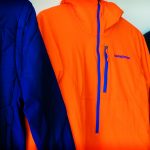
既に昨年から世界中のアワードを受賞している実績をみれば、ここであらためていうまでもありませんが、このカテゴリを切り開いたパイオニアはやはり強かった。とにかく上質な着心地と十分な保温性、そして高い通気性による快適さは発売からしばらく経った現在でも他の追随を許さず、全体的な品質の高さを証明しています。ただ、適度な撥水性はあるものの、思ったよりも風通しが良いのでアウターにはなりにくいと思ってよいでしょう。やや手の届きにくい価格は、基本的に冬の中間着としてオールマイティに適したことや、日常的に羽織るジャケットとしてもまったく問題ないという部分で十分に満足いくものでしょう。

あわせて読みたい
 比較レビュー:この冬注目のインサレーションウェア(防寒着)を着比べてみた
 “動ける”防寒着!最新化繊インサレーションをおすすめする7つの理由と注目の7着
 11月13日開催の山道具フリマで放出するギア一覧をあらかじめ発表します
 着っぱなしで寒さ知らず&汗冷え知らず!行動着としておすすめの化繊インサレーション7着