Our review articles earn a small amount of revenue from product purchases made through affiliate links

[An honest, self-funded comparison review] "Montbell x Thermos x SOTO" - Which titanium vacuum insulated bottle should mountain lovers buy?

Titanium vacuum insulated bottles are finally available

This vacuum insulated water bottle has excellent heat retention, making it especially useful for outdoor activities in bitterly cold weather. It can keep not only hot water but also ice-cold water at the same temperature, making it a great choice for both winter and summer

Stainless steel bottles have been the norm for a long time, but hardcore mountain enthusiasts, including myself, have naturally been waiting for titanium bottles, which are lighter and stronger as a metal. Unfortunately, however, the technical hurdles involved in processing titanium are high, and the reality is that until now, there has been no option other than Thermos (Thermos has been producing titanium vacuum insulated bottles for over 30 years ).

Meanwhile, thanks to advances in welding and processing technology over the past few years, titanium models have gradually appeared from other manufacturers. At the end of 2023, Montbell, a well-known manufacturer of thermal bottles for mountain use, also released a new titanium model, and it can be said that the era in which titanium thermal bottles are an option has finally arrived

So, this time, I would like to compare and review three outdoor models made by domestic brands that appear similar but have subtly different personalities in terms of design, performance, and functions, from various perspectives, mainly based on how useful they are for outdoor activities and mountain climbing

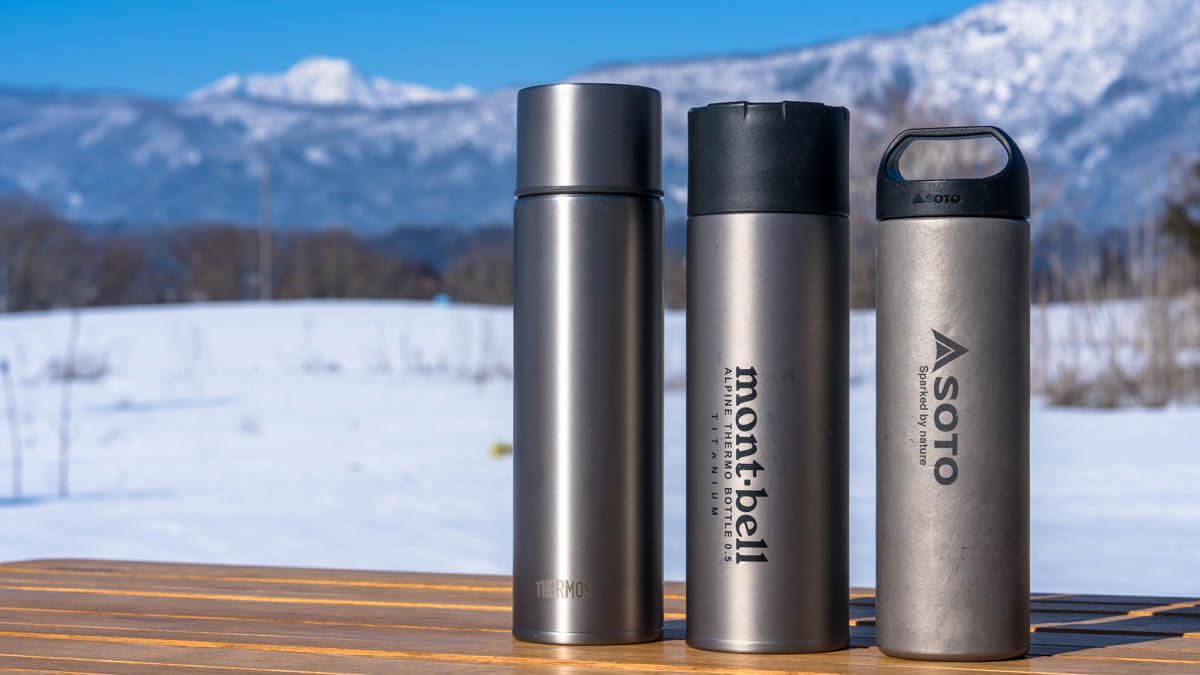
The three best insulated bottles we compared this time

This time, we have selected three titanium vacuum insulated water bottles of around 500ml each, designed for outdoor leisure activities, released by outdoor brands

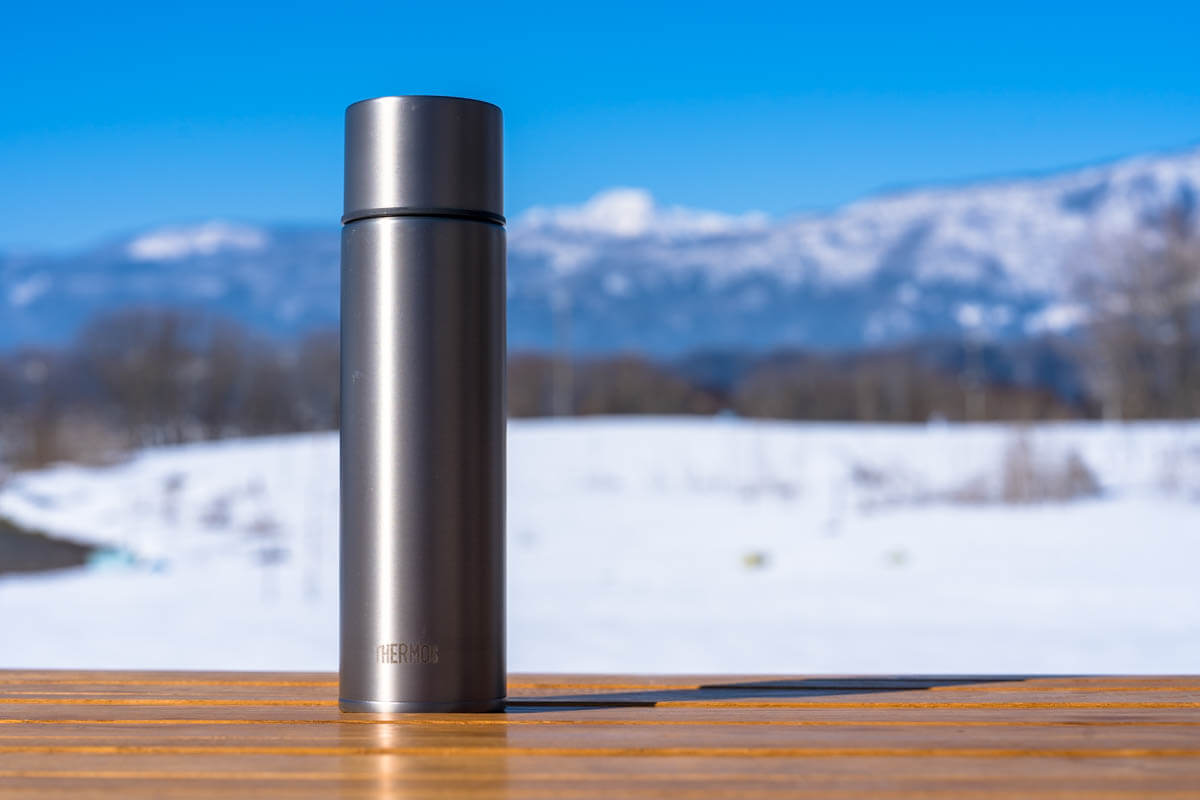
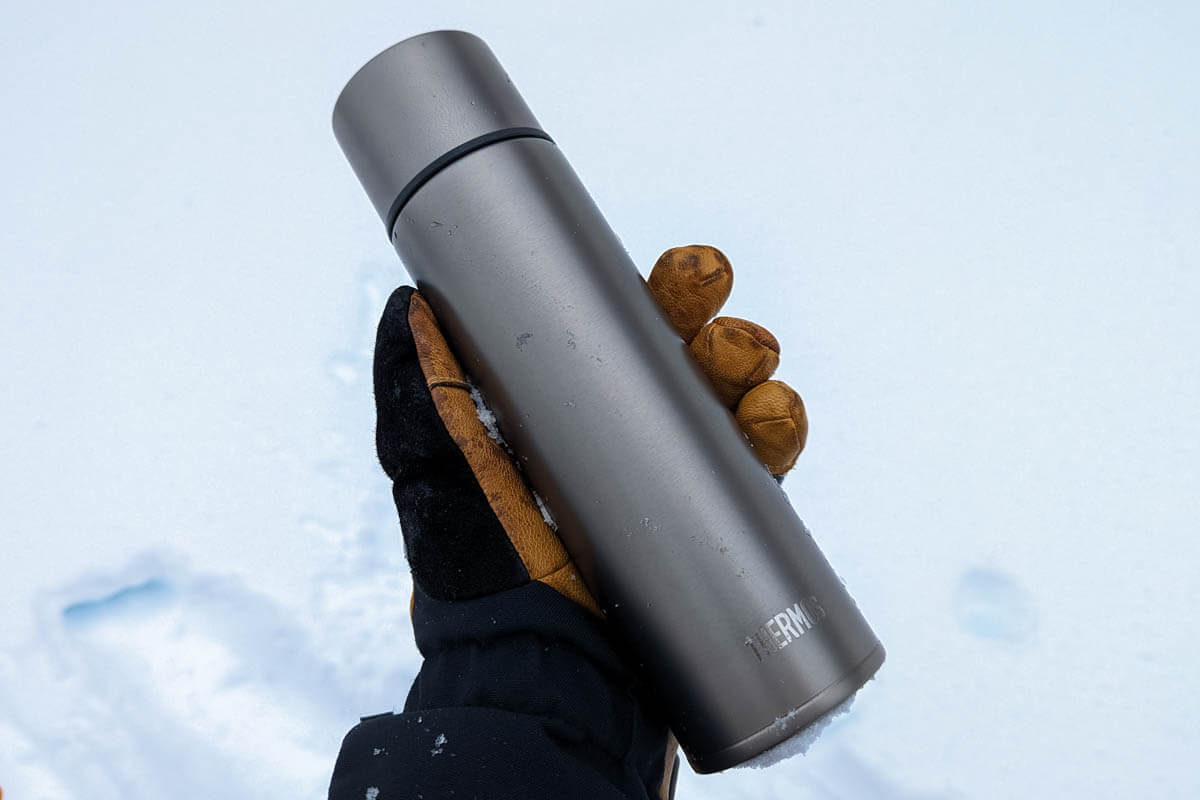
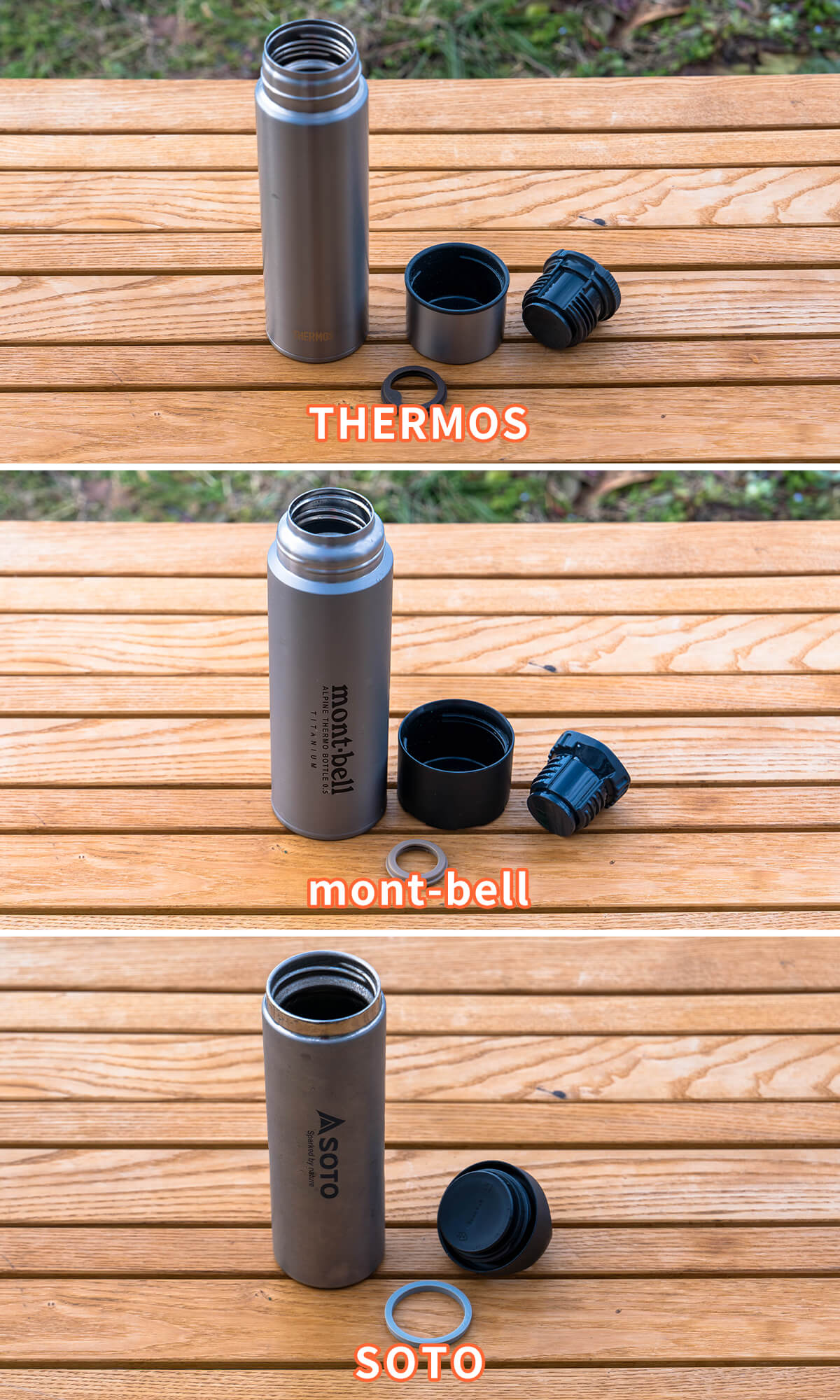
THERMOS Vacuum Insulated Titanium Bottle / FJN-500T

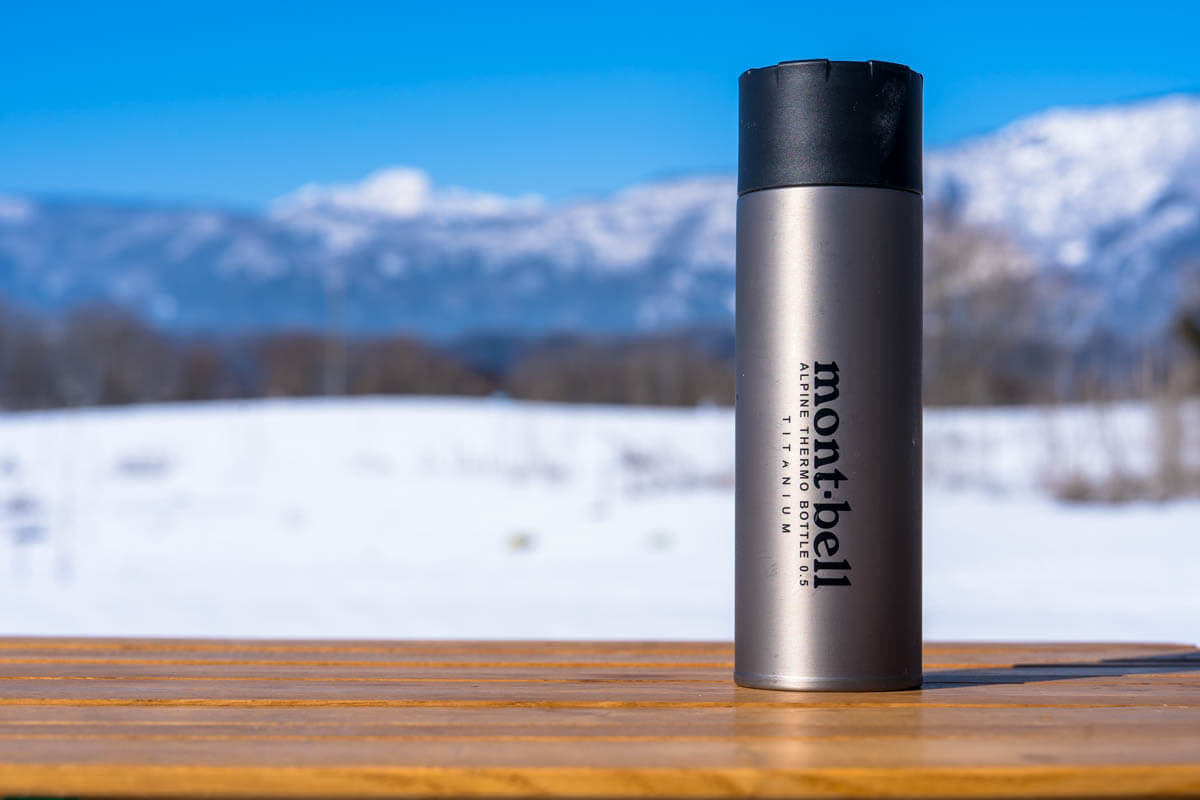
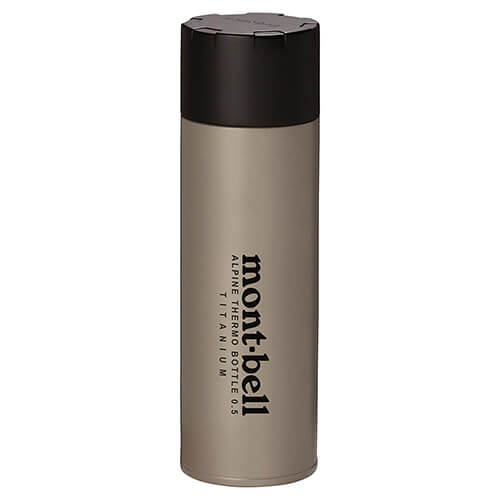
Mont-Bell Titanium Alpine Thermo Bottle 0.5L

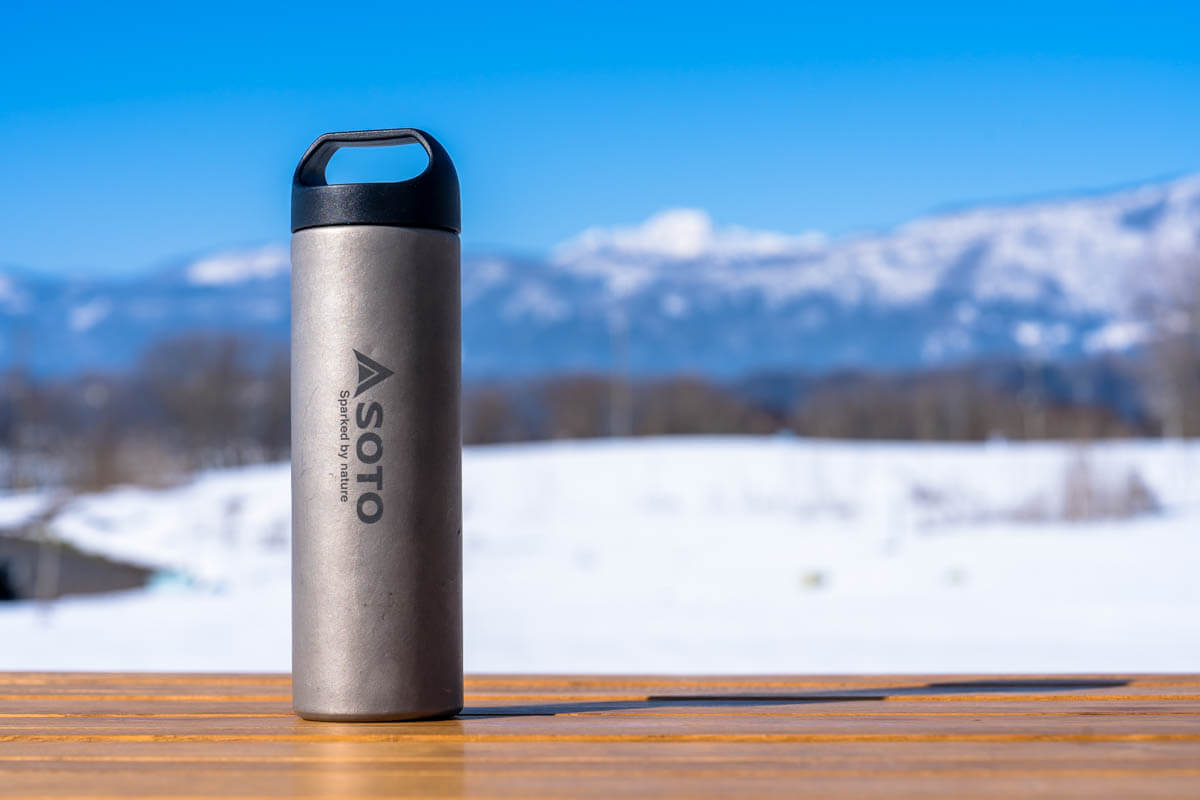
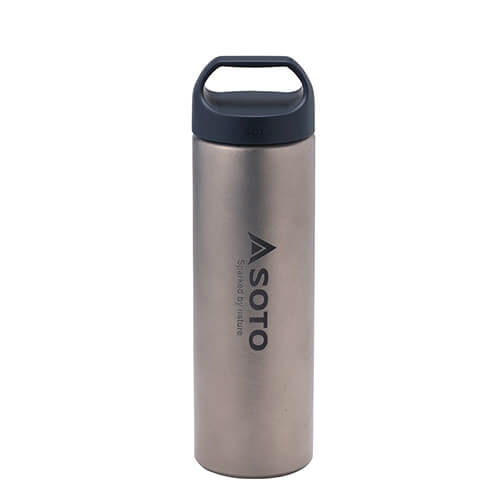
SOTO Titanium Bottle 300 ST-TN30

The evaluation items are set based on the following six indicators

  1. Insulation performance: The basic function of a water bottle. Keeps hot things hot and cold things cold. Measures whether the temperature can be maintained for as long as possible.
  2. Portability (weight, size, ease of holding) - When you're outdoors and carrying a lot of luggage is a big deal, you want something that's easy to carry. Here, we'll take into account the overall weight, storage, ease of holding the bottle, and how hard it is to drop it
  3. Lid/Drinking spout: This index focuses on the tightness of the lid, the speed at which you can drink from the moment you open the lid, ease of use, and the quality of the drinking spout. Bottles with tightly closing lids that allow you to drink hydrate quickly, easily, and comfortably are given a high score
  4. Maintenance: We evaluate how easy it is to clean based on the size, structure, number of parts, etc. Since it is something you wash after each use, this is an important point to consider
  5. Capacity: Since it is a tool for carrying water, it is better to be able to carry as much capacity as possible even with a limited weight
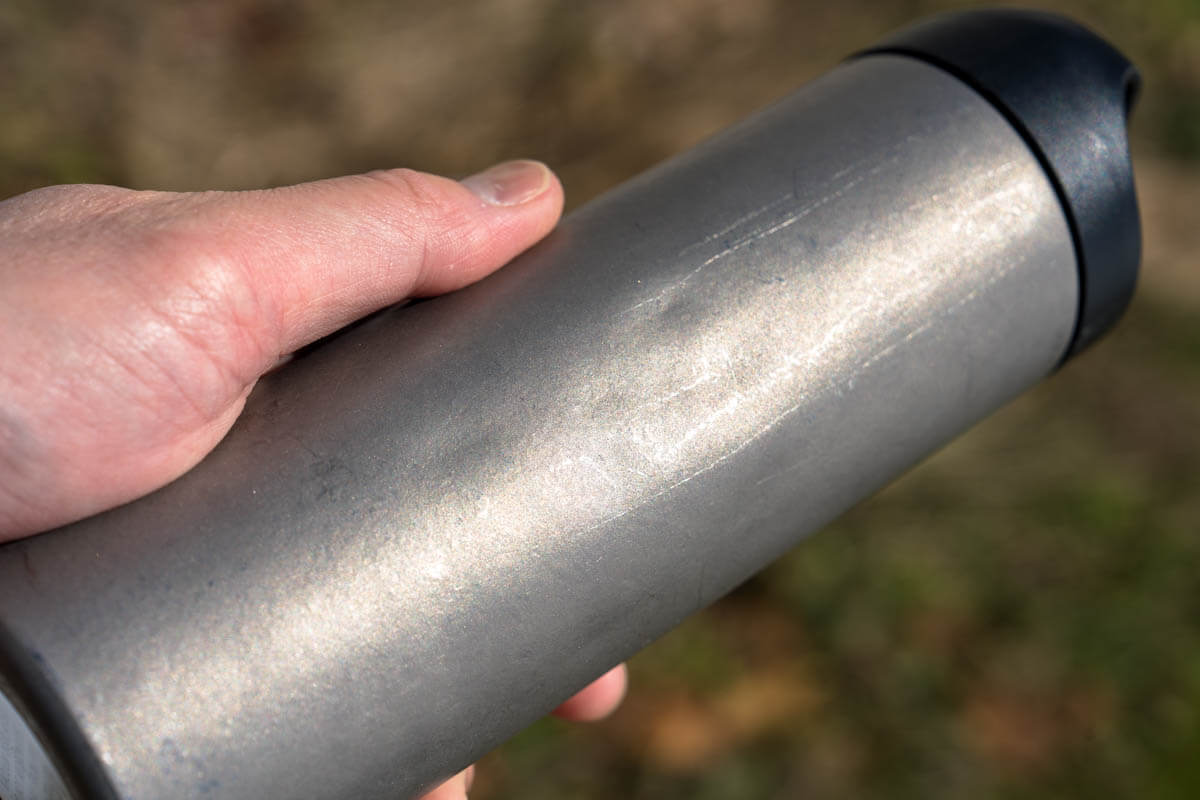
  6. Durability: Titanium is very strong, but we have made it as thin as possible to make it light. Therefore, the ease of scratches and dents varies depending on the processing and thinness. We tried to damage it as much as possible to compare it

Performance and comparison review results

Performance and comparison test results

charmReliable performance and high qualityOverwhelming cost performanceExcellent insulation performance and portability
itemTHERMOS Vacuum Insulated Titanium Bottle / FJN-500TMont-Bell Titanium Alpine Thermo Bottle 0.5LSOTO Titanium Bottle 300 ST-TN30
image
Here is ◎
  • High insulation performance
  • Storage capacity
  • Sufficient durability
  • Slim and easy to hold
  • Neat design
  • High insulation performance
  • The cheapest of the three
  • Lightweight for its size
  • Sufficient durability
  • Highly portable
  • Just open the cap and drink immediately
  • Has a handle and is easy to hold
  • Simple parts and a wide opening make cleaning easy
Here is △
  • Slightly the heaviest of the three
  • It takes time to drink
  • expensive
  • Overall large and bulky
  • It takes time to drink
  • Design
  • Slightly poor insulation performance
  • There is no inner stopper and the wide mouth makes it easy to spill
  • Small capacity of 300ml
  • The material is thin and vulnerable to shocks
Outdoor Gearzine Review
Insulation performance★★★★★★★★★★★★★☆☆

Portability (weight, size, ease of holding)

★★★★☆★★★☆☆★★★★★
Lid and drinking spout★★★☆☆★★★☆☆※Optional replacement active lid★★★★★★★★★☆
Care★★★☆☆★★★☆☆★★★★☆
capacity★★★☆☆★★★☆☆★★☆☆☆
durability★★★★☆★★★★☆★★★☆☆
Specifications
Capacity variations500ml500ml200/300ml
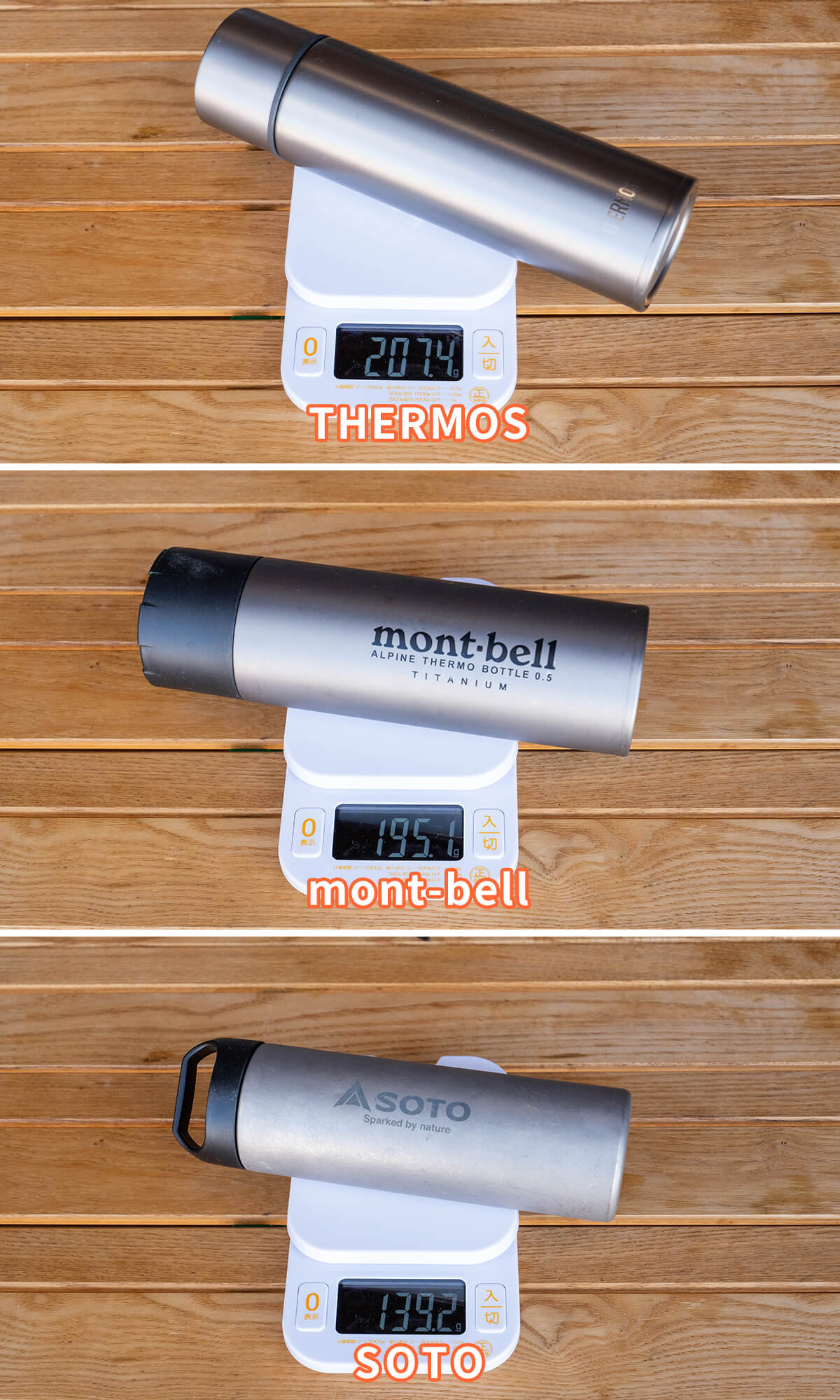
Actual weight (g)207.4195.1139.2
Body dimensions (diameter x height cm)Approx. Ø6.5 x 23.5Approx. Ø6.8 x 22.5Approx. Ø6.2 x 21.4
Official heat retention (6 hours)95℃±1℃ → 69℃ or more (room temperature 20±2℃)95°C → 70°C or higher (room temperature 20±2°C)Undisclosed
Official cooling effect (6 hours)4℃±1℃ → 10℃ or less (room temperature 20±2℃)4°C → 10°C or less (room temperature 20±2°C)Undisclosed
Reference price14,300 yen (tax included) 7,370 yen (tax included)¥9,900 (tax included)

Impressions of each model

Best in overall performance and quality: THERMOS Vacuum Insulated Titanium Bottle / FJN-500T

The FJN-500T has a clean and stylish body

Thermos a household name among Japanese mountaineers thanks to its "Mountain Special Bottle," a stainless steel insulated bottle designed specifically for mountaineering . However, the company has been developing titanium models since 1988, more than 30 years ago. However, at the time, they were expensive and not particularly light, making them unattainable for the average user. However, the third-generation model, released three years ago, is a bit pricey, but it's significantly lighter than its predecessor while still retaining its high insulation performance. Its excellent durability and functionality, reflecting its history as a product created for mountaineers and adventurers challenging the limits, are also impeccable. What's more, its luxurious and stylish form makes it a highly refined model that will satisfy your desire to own it.

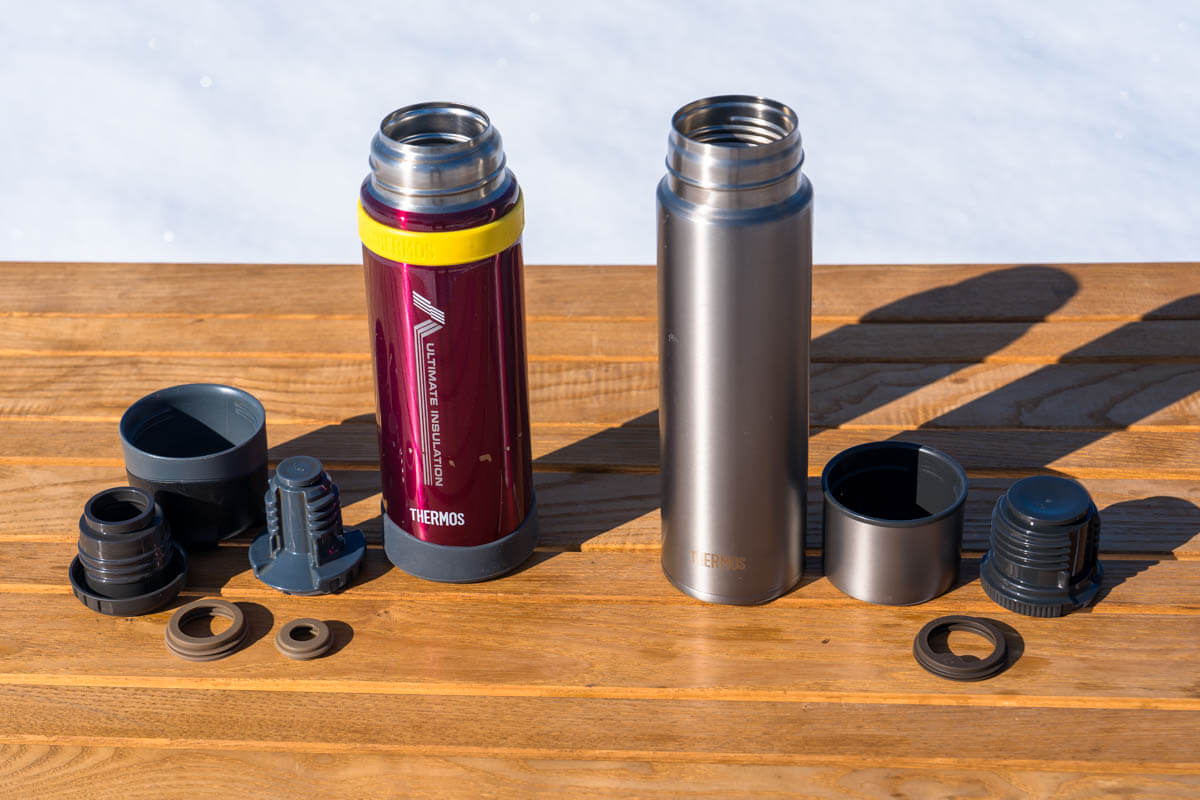
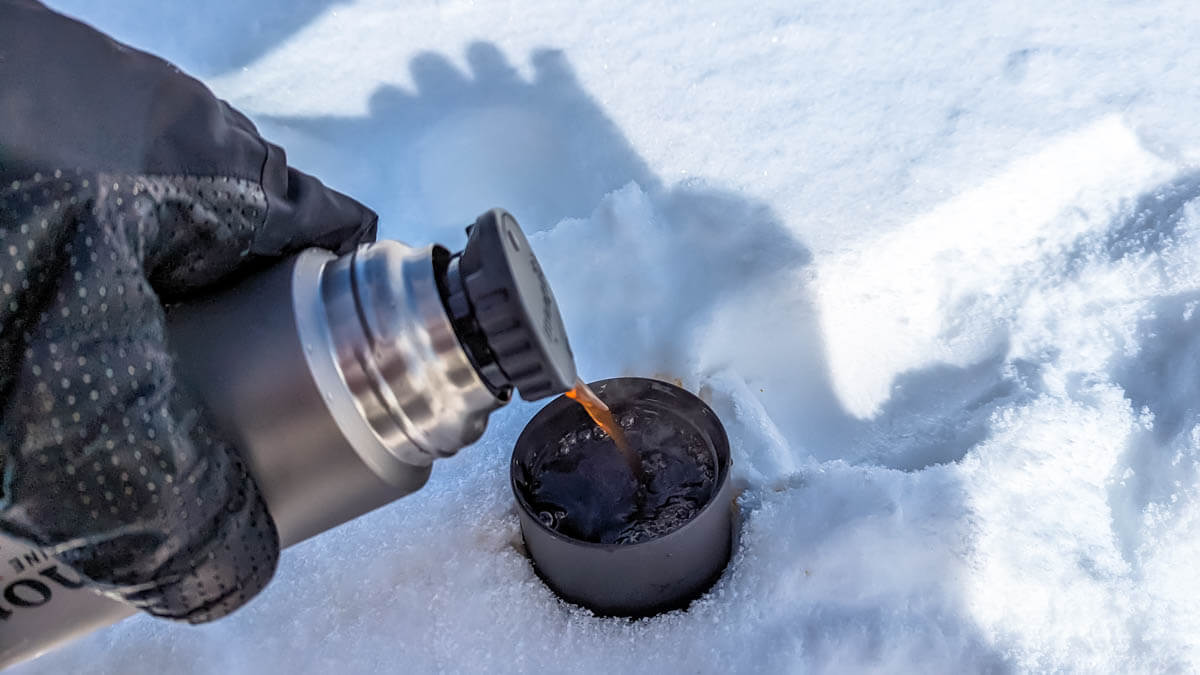
As for its insulation performance, it maintained a high temperature for a long time in our own tests in a freezer and field tests in the winter mountains. It's not impossible to eat instant ramen for lunch, and of course, you can even make hot water the night before and have a meal or hot coffee first thing in the morning when camping solo. Incidentally, compared to the stainless steel mountain bottle (photo below), the inner lid's double screw cap structure is simpler and the rubber anti-slip material has been removed, but the insulation performance hasn't been significantly reduced, and the body is slimmer and easier to grip, so it's hardly a concern in terms of usability

Disassembled stainless steel models FFX-500 (left) and FJN-500T (right), one generation older than the current model

This is a model that is irreplaceable when it comes to outdoor use, with high performance and high reliability that allows you to enjoy that performance in any situation. However, the price is still a drawback, so it can't be helped

created by Rinker
THERMOS
¥11,326 (as of 2026/02/21 00:26:48, according to Amazon - details)

Best for mobility: SOTO Titanium Bottle 300 ST-TN30

Smooth drinking spout, direct drinking type titanium bottle 300

When the first model was released in 2022, I couldn't help but mutter, "I've been waiting for this!" when I saw the titanium insulated bottle from SOTO (Shin Fuji Burner), the company's first entry into the insulated water bottle market. It features bold compromises that a reputable thermos manufacturer would never have made, and while its characteristics may seem unsatisfactory in the normal sense, in some situations they actually emerge as an attractive feature. In some situations, it's the perfect choice, making it a bottle I simply cannot overlook

Its greatest appeal is its lightweight, compact, simple design, and easy maintenance. However, its heat retention, capacity, and durability are only so-so. That said, hot water filled early in the morning will stay warm and drinkable until around noon, and the 300ml capacity is sufficient for drinking during short periods of activity (although 500ml would certainly be better)

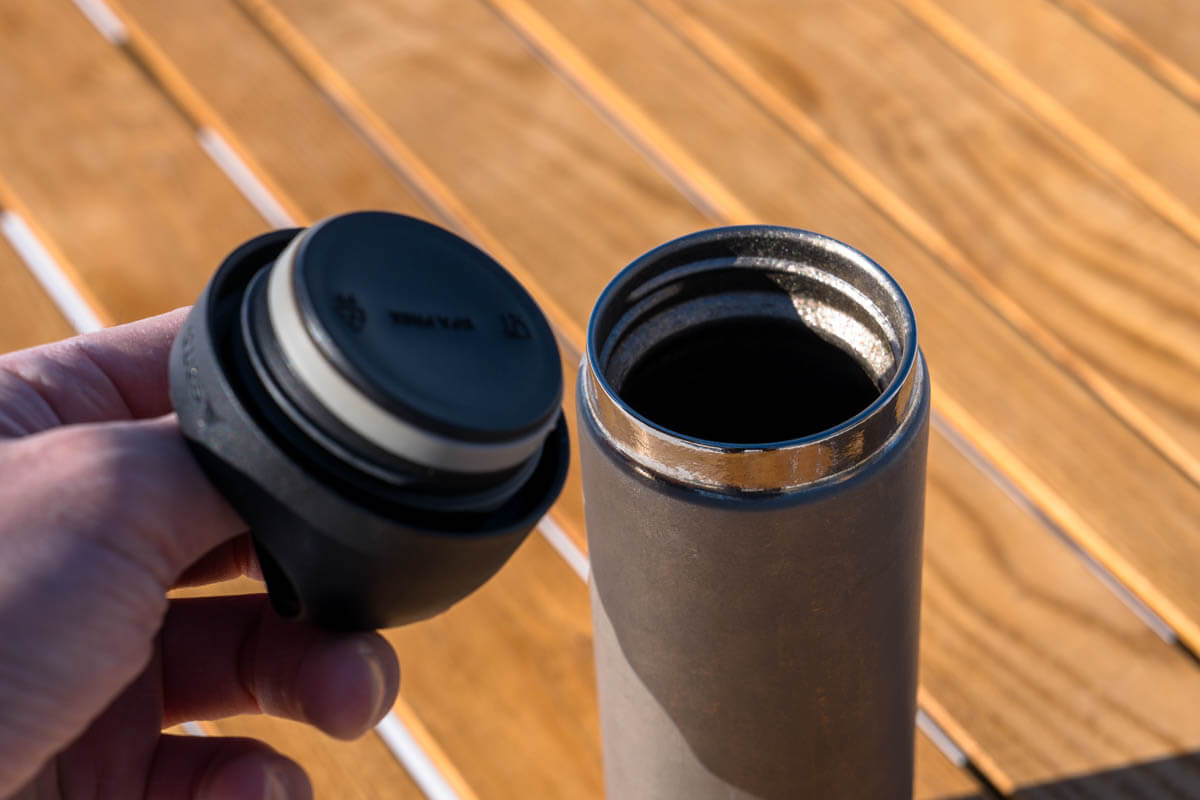
No inner plug, just a lid with a rubber gasket

This bottle is perfect for short routes in autumn and winter, routes with good visibility to avoid emergencies, when you don't need to be able to make instant ramen at the summit but still want a hot cup of coffee, and when you need to keep your luggage as light and compact as possible

SOTO Titanium Bottle 300 ST-TN30 (Product Code: 4953571002842) P108-5219

The best value for money: Mont-Bell Titanium Alpine Thermo Bottle 0.5L

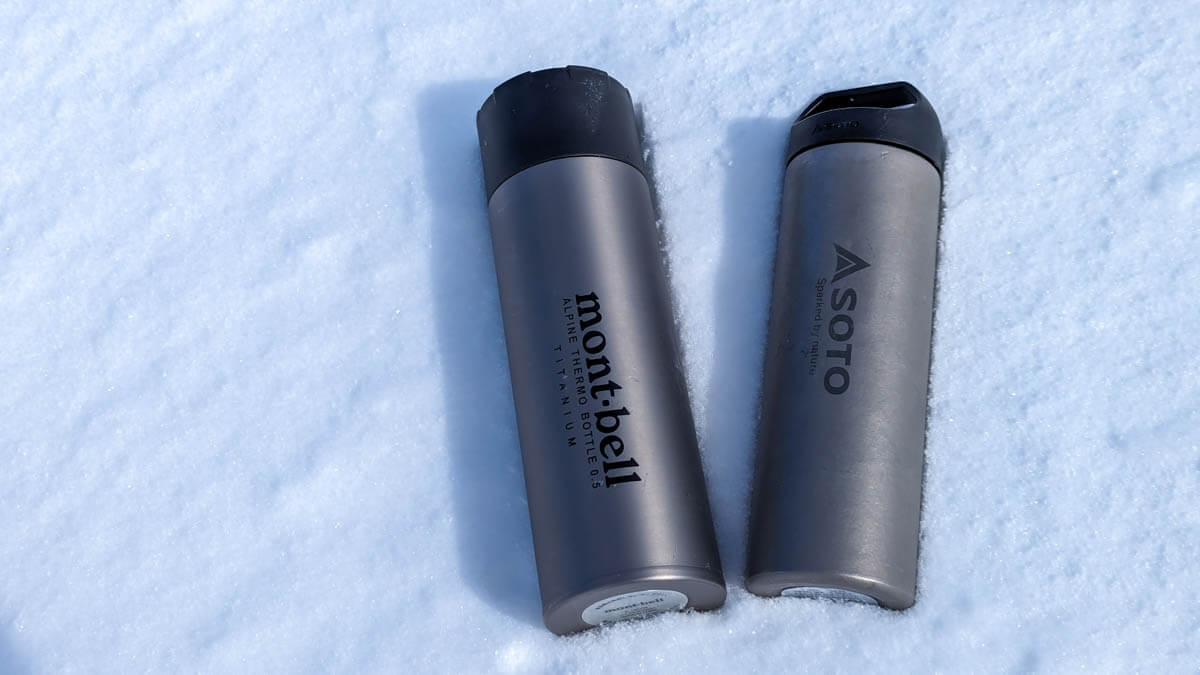
The Titanium Alpine Thermo Bottle 0.5L (left), which demonstrated its excellent insulation performance even when used in Hokkaido during the harsh winter, and the Titanium Bottle 300 (right), which stands out for its lightness

The Alpine Thermo Bottle, a strong rival to the mountain-specific bottle, has finally released a titanium model

The structure and appearance of the cup cover, consisting of an outer plug and an inner plug with a gasket, are almost the same as the stainless steel model. However, it has been made as thin as possible to ensure strength, and the vacuum double structure with a reflective finish to prevent heat loss makes it significantly lighter than previous Thermos models, while still offering comparable insulation performance. And what's most surprising is that despite achieving such high performance, it also has an overwhelmingly better cost performance than the other two models

A typical thermos structure with an inner stopper with a spout and an outer stopper for a cup

It's also nice that there are plenty of options available, such as a silicone protector and an active lid that allows you to change the spout to a direct drinking type. The chunky body and overly assertive logo may be a matter of personal preference, but apart from that, this bottle is packed with the same practical appeal that is typical of Montbell

See details on the Montbell official online store

Detailed review of each item

Insulation performance

Measure temperature changes in two environments: cold and normal room temperature

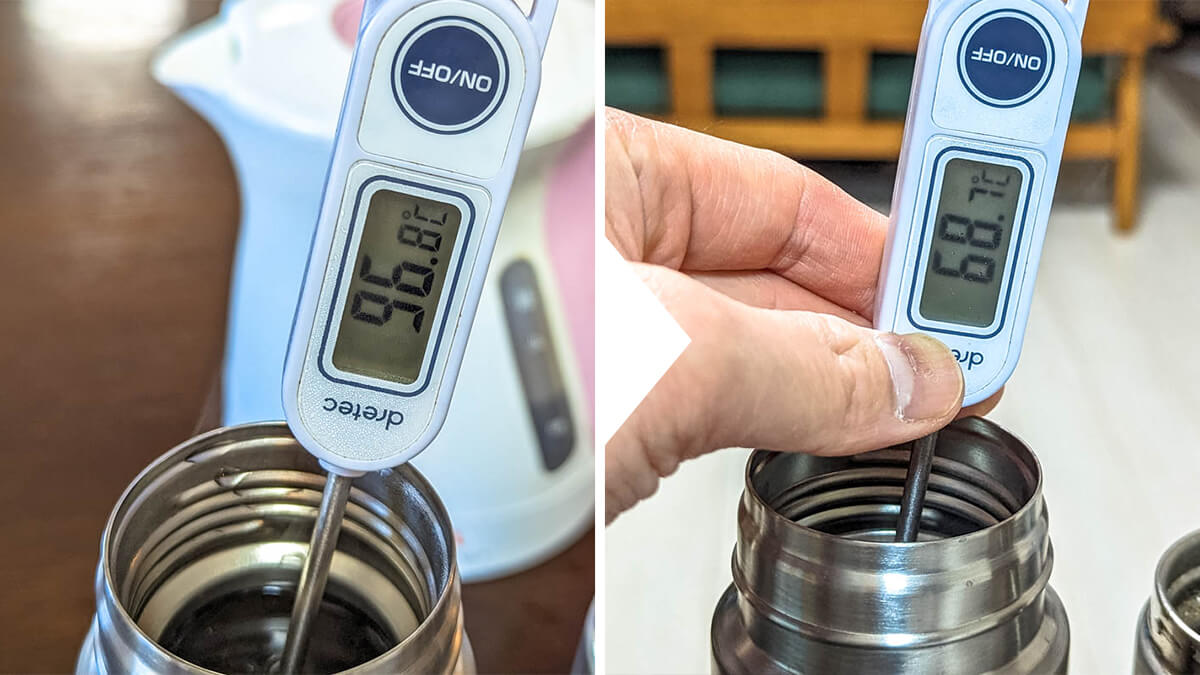
Thermos and Montbell have official specifications for insulation, which is the most basic aspect of a vacuum insulated bottle's performance, but SOTO does not. So, while it's not exactly rigorous, we decided to test its insulation performance to see how well it actually holds up

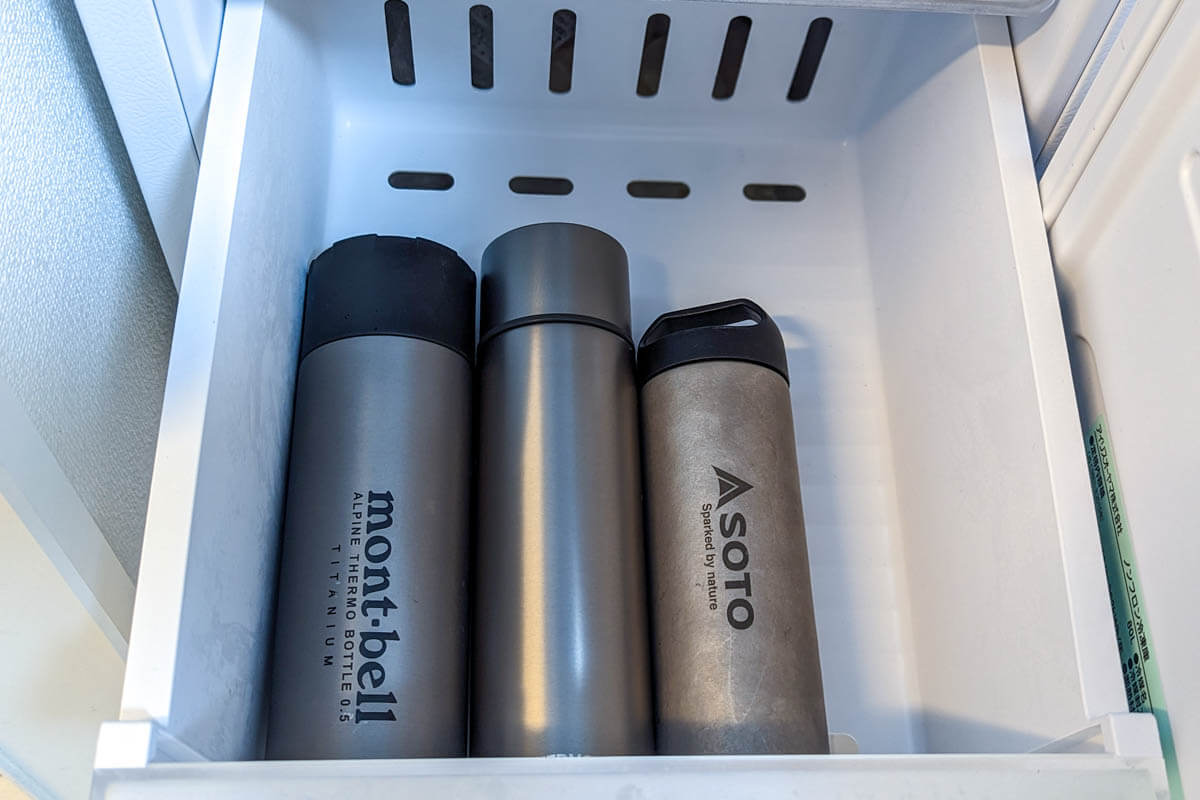
The test was conducted twice. In the first test, freshly boiled water was poured into each bottle, and they were placed in a freezer where the temperature inside was set to around -16°C, simulating the harsh winter conditions of mountain climbing, and the temperature was measured after seven hours (see photo below)

Add boiling water and store in the freezer for 7 hours

In the second test, we filled the bottles with boiled water in the same way, stored them at normal room temperature (alternating between 17 and 23°C), and measured the temperature after 5, 6, and 7 hours. The temperature changes for each test were as follows:

■Put the bottle in a freezer at around -15℃ and check the temperature after 7 hours

Elapsed time (hours)THERMOS FJN-500T (℃)Mont-Bell Titanium Alpine Thermo Bottle (℃)SOTO Titanium Bottle 300 (℃)
096.897.394.4
768.767.541.5

■ Place the bottle in a room at around 20°C and measure the temperature after 5, 6, and 7 hours

Elapsed time (hours)THERMOS FJN-500T (℃)Mont-Bell Titanium Alpine Thermo Bottle (℃)SOTO Titanium Bottle 300 (℃)
095.093.193.2
576.275.462.3
673.372.358.1
768.268.353.3

Please understand that this is a simple test using household equipment and devices. The results for Thermos and Montbell showed that the water temperature, which was around 95°C after 6 hours, remained above 70°C even after 6 hours, and even after 7 hours it was in the high 60s (just hot enough to feel hot when you try to drink it). This is not a significant difference from the official measurements, and it could even be said that the temperature changes are understated

On the other hand, the SOTO bottle reached approximately 58°C after 6 hours at normal room temperature, and approximately 42°C after 7 hours in cold conditions, so unfortunately, compared to the other two models, its heat retention performance is still a step or two behind. To give you an idea, although this will vary from person to person, water around 60°C is a little too hot to drink, while water around 50°C is warm enough to gulp down. If you're using the SOTO, you shouldn't even consider eating instant ramen on the summit, and you should understand that it should only be hot enough to drink a hot beverage

It's also important to note that with SOTO, the temperature drops even more rapidly when the outside temperature is low. With Thermos and Montbell, even when the outside temperature is low (the freezer shown above), the results are almost the same as when it's room temperature. The reason for this lies in the cap structure; with a wide-mouthed, outer plug-only design like SOTO, heat tends to escape more easily through the cap, making it more susceptible to the effects of outside temperatures

Portability (weight, size, ease of holding)

Weight and size

Needless to say, one of the biggest reasons to choose titanium is its lightness. When making such an expensive purchase as titanium, you naturally want high portability, including compactness. Although there is a difference in capacity, the SOTO's lightness and compactness are overwhelming (of course, this was achieved by giving up many things)

And as you'd expect from a latecomer like Montbell, they're clearly conscious of Thermos, making it slightly lighter (around 10 grams) than Thermos (and by the way, the official insulation performance is also slightly higher than Thermos, which is impressive). However, when you actually use it, the 10 gram difference is probably not something you need to worry about too much unless you're very sensitive. Personally, I was more interested in the "ease of holding" that I'll talk about next

Easy to hold

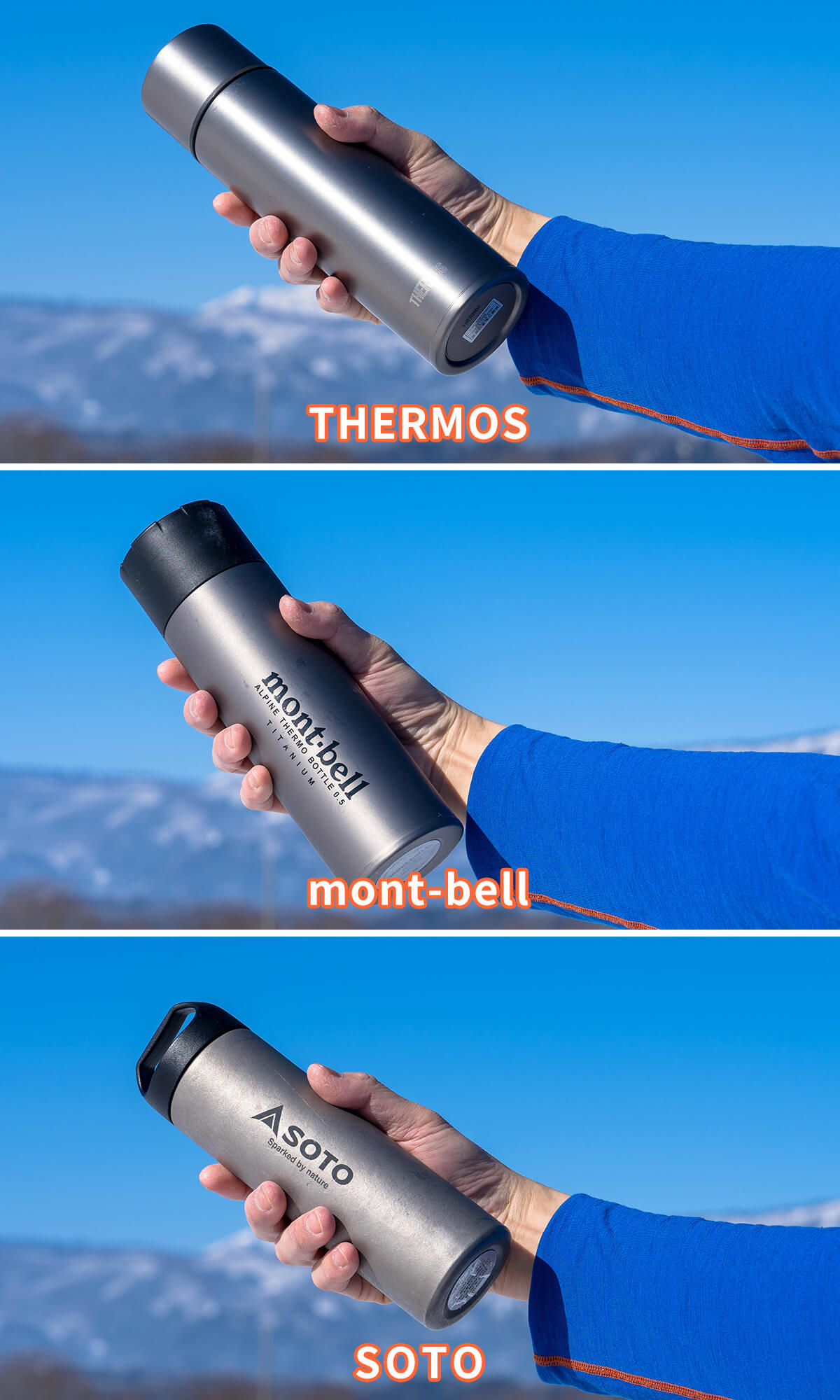
In autumn and winter, we often handle water bottles while wearing gloves, so the grip when holding the bottle is crucial. A bottle with an easy-to-hold shape or a rubber grip would make it less slippery, but none of the three models we looked at have these features. The difference is that the SOTO bottle is slim and easy to grip, with a textured surface that makes it less slippery, which is a nice touch. The Thermos bottle is smooth and somewhat slippery, but it's slimmer than the stainless steel model and fits easily in the hand. The Montbell is the thickest of the three, making it relatively difficult to hold

Lid and drinking spout

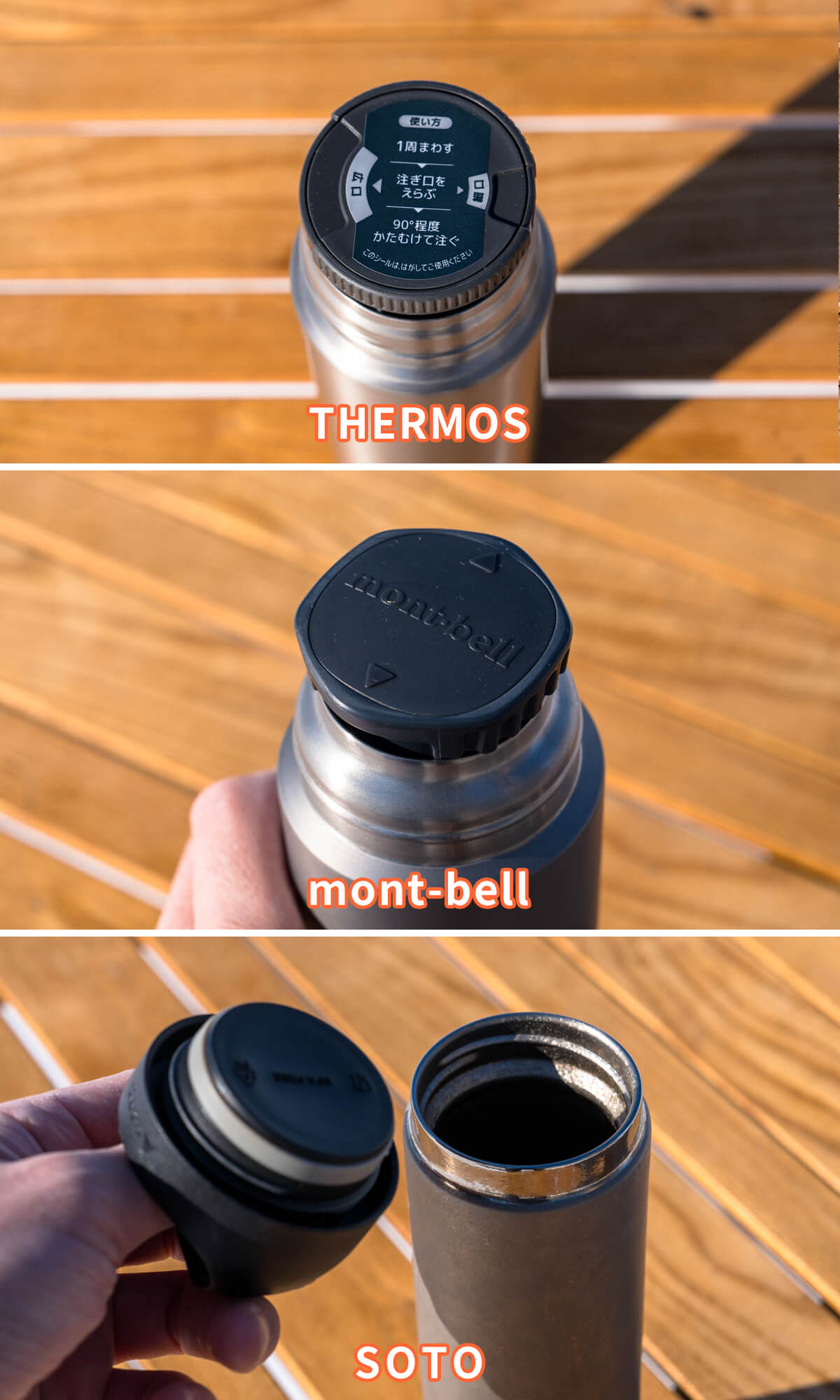
The wider the spout is, and the more air pockets are created between the inner and outer stoppers, the less insulating the bottle becomes. However, this also means that the spout becomes more complex and has more parts, which means it takes more effort to drink

When comparing the spouts from this perspective, the Thermos and Montbell models have a double structure with an inner stopper that prioritizes thermal insulation and an outer stopper that becomes a cup, while the SOTO has a direct-drinking cap structure that prioritizes ease of drinking and simplicity over thermal insulation. Therefore, if we were to evaluate the spout in terms of comfort and ease of use for drinking and storing, the SOTO's simplicity wins out

There was almost no difference between the drinking spouts of the Thermos and Montbell cups, but Thermos is a little more user-friendly in that it has two spouts, a narrow one and a wide one, which allow you to adjust the amount you pour (see photo below)

Replacement Active Lid available as a separate option , and if you replace the drinking spout with this, you will be able to operate it just as quickly as the SOTO, which is something not to be overlooked.

Easy to clean

The simpler the bottle structure, the easier it is to drink from and the easier it is to clean. On the other hand, models with many parts require more effort to drink from and are a pain to disassemble every time you clean it. In that respect, the top choice is SOTO. As for Thermos and Montbell, there is almost no difference between them, and they are neither good nor bad in terms of ease of cleaning (see photo below)

SOTO bottles have a wide mouth and few parts, making them easy to clean

durability

The body material of all the models in this lineup is titanium, so there doesn't seem to be much difference, but the processing method and thickness are different, so naturally the weight and durability will vary. However, since it is impossible to measure such subtle differences, I tried to test the strength of the exterior wall to the extent that I could

When I say I tested it, I mean just pushing it hard and dropping it from a small height onto hard ground, but even so, I could immediately see how delicate the SOTO body is. It dents quite a bit when you push it hard with your thumb (see photo below). It's easy to imagine this is because the outer wall has been shaved down to the bare minimum in exchange for weight. There's no problem with normal use, but you need to be a little careful if you accidentally hit it with a big impact. As for the other two items, even though they're thin, they're not that soft, and although not as durable as stainless steel, they don't seem to have any problems with durability

Unlike the other two models, the SOTO dented surprisingly easily when I pressed hard with my thumb on the body..

Summary: Each of these three models has its own merits, so choose based on your priorities

When we combined evaluations from various angles, we found that each of the three models has its own unique appeal, making it difficult to simply say which one is the best

Based on that premise, if I were to make a personal conclusion from this comparison review, Thermos is the one I would most recommend in terms of performance, functionality, and design, excluding price. This experience once again demonstrated the high quality of Thermos as a top manufacturer. The unsophisticated design of the Yamasen Bottle has been completely redesigned, and there are no flaws in either functionality or appearance

On the other hand, if you're only doing activities that prioritize lightness, then SOTO is the way to go. In my case, I usually take a Thermos for snowy mountain trips, but I'd take this especially for day trips in the backcountry where speed and lightness are important and you don't need to drink hot water slowly

Finally, there's Montbell. If you don't mind a little bulk and prioritize functionality and cost-effectiveness (and don't particularly care about appearance), then this is the one for you. It's simply amazing that it offers such performance and expandability at this price

The cold weather is still not over up in the mountains. Please continue to be careful, use good equipment, and have a good trip