



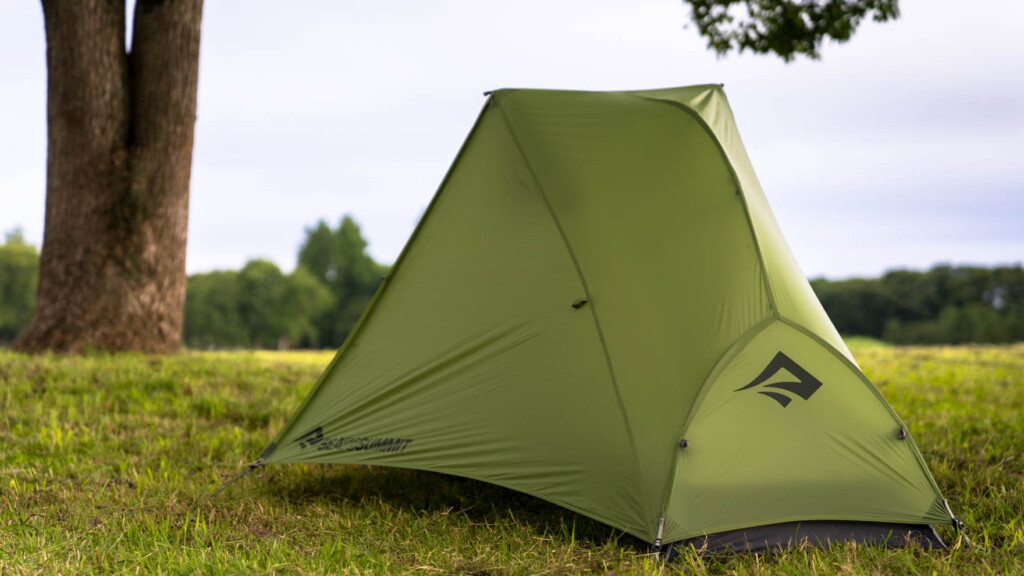
[An honest, self-funded review] Everything is for comfort and ease of use. The SEA TO SUMMIT Alto TR1 Plus Tent is a lightweight tent packed with innovative and practical ideas

Written by Yasushi Hisatomi
Sea to Summit is an outdoor brand from Australia whose name comes from the unique feat achieved by its founder: walking from the Bay of Bengal to the summit of Mount Everest without oxygen.
As their unique challenges show, the products they create are always unique and ingenious, yet functional and practical for real-world use. They started out with inner sheets for sleeping bags, and never satisfied with the development of stuff sacks and cookware, they have continued to grow to include larger products such as sleeping bags, mats, hammocks, and shelters
After more than three years of research and development, they have finally released a full-fledged double-wall tent this season. As an outdoor enthusiast who is familiar with their attention to detail, I couldn't help but be excited!
The latest tents are divided into two series that share the same innovative technology and concept but are optimized for different uses. One is the ALTO the TELOS series , which offers high versatility as well as excellent livability and comfort .
This time, I purchased both of them with my own money shortly after they were released and was able to use them for a while, so I will start by reviewing the Alto TR1 Plus Tent (hereinafter referred to as Alto), which
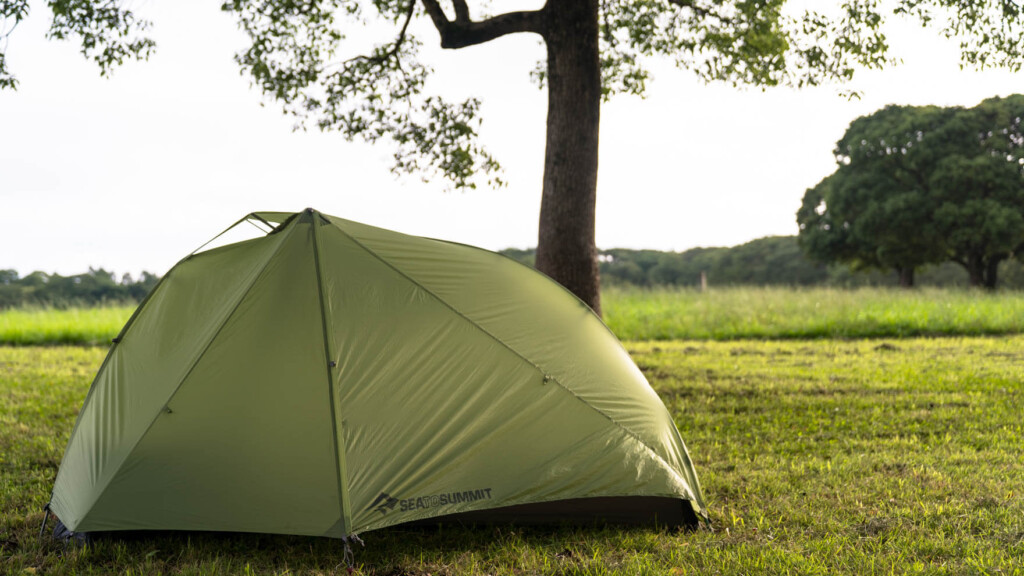
table of contents
- SEA TO SUMMIT Alto TR1 Tent Key Features
- Main specifications and evaluation
- Sea to Summit Alto TR1 Plus Tent Review
- "Let's rethink tent design" - A new tent design born from collaboration with a giant in the tent industry
- A modular storage system that is smartly stored and easy to pack
- The "Tension Ridge" pole system allows you to experience a spaciousness that you wouldn't expect from a one-person tent
- Another breakthrough: Tension Ridge: Achieving unprecedented ventilation efficiency
- Various setup modes to ensure comfort regardless of the environment, location, or scene
- This is not the end of the story; there are many unique features of this tent that have been carefully considered down to the smallest detail
- Summary: From fastpacking to trekking, traverses, stream climbing, and bikepacking... This is a reliable home that can handle any activity, not just jack-of-all-trades
SEA TO SUMMIT Alto TR1 Tent Key Features
Recommended points
- A modular storage system that is smartly stored and easy to pack
- "Tension Ridge" creates a three-dimensional space
- Highly breathable ventilation
- A ceiling light bar that provides comfortable lighting at night
- Stuff sack quickly transforms into indoor storage
- Clips and pegs that are easy to attach, detach, and adjust
- Can be set up using only the fly
- Fabric and poles that are both lightweight and durable
- Guy lines included as standard for excellent wind resistance
Points of concern
- The hook-and-loop fasteners used to secure the fly to the pole are difficult to attach and remove
- Due to its asymmetrical shape, the angle required for proper hanging is a little delicate
- Personally, I would have liked it to be possible to set up the inner fly as a single unit
- Considering the durability of the bottom fabric and ease of setup in fly mode, we recommend purchasing the footprint at the same time
Main specifications and evaluation
| Item Name | Sea to Summit Alto TR1 Plus Tent |
|---|---|
| Number of people sleeping | 1 person |
| Weight (actual measurement) | Total weight: 1,190g
|
| Inner tent material | 15D PeU ripstop silnylon (water resistance: 2,500mm) |
| Fly material | 15D PeU ripstop silnylon (water resistance: 1,200mm) |
| Pole material | Aluminum DAC TH72M |
| External dimensions | 109 × 169 × 223cm |
| Floor Height | 100cm |
| Floor area | 1.81㎡ |
| Front chamber area | 0.7㎡ |
| Storage size | 11 × 11 × 44cm |
| accessories |
|
| evaluation | |
| Living Comfort | ★★★★★ |
| Ease of setup and takedown | ★★★★☆ |
| weather resistance | ★★★★☆ |
| durability | ★★★☆☆ *If you lay a separate footprint, it will be ★★★★☆ |
| weight | ★★★★☆ |
| Portability | ★★★★☆ |
| Versatility | ★★★★★ |
Sea to Summit Alto TR1 Plus Tent Review
"Let's rethink tent design" - A new tent design born from collaboration with a giant in the tent industry
The first thing I would like to mention about this tent is the unfamiliar signature on one side of the flysheet (photo below)
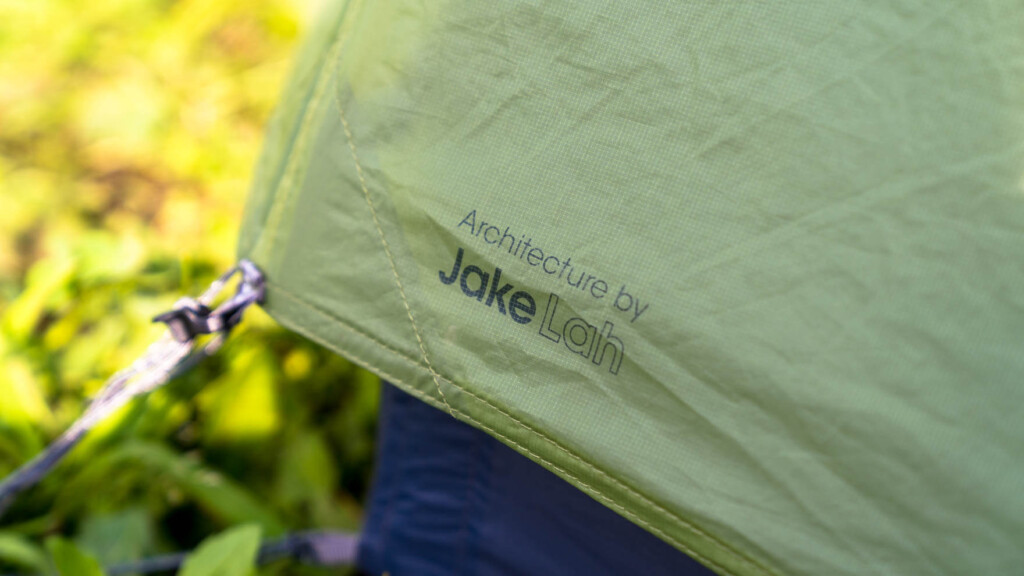
The person mentioned there is Jake Lahr, one of the key people behind the creation of this tent, an accomplished tent designer, and the founder of DAC, a tent pole manufacturer that is a leader in the modern tent industry
I have never heard of a designer putting their name on mass-produced outdoor gear. Of course, this is not just a desire to stand out, but a sign of the confidence and sense of responsibility of the maker, and above all, their passion. In short, it shows that they are definitely "putting their all into it."
Thus, Alto (and Telos) was carried out through a collaboration between Sea to Summit and DAC, two founders and designers who are leaders in the outdoor gear industry and both possess the creativity and craftsmanship to back them up.
They explained in a magazine that they started by "thoroughly researching what problems people have with tents." They reexamined all of the problems that emerged from that research, and without being bound by preconceived notions of what a tent should be, they started from scratch to create an ideal tent that would solve the problems that current tents have
the Alto, which was born after three years of development, looks very similar to other tents, but on closer inspection and use, you'll be amazed at the attention to detail that went into its pursuit of comfort and ease of use, and you'll find it to be an undeniably innovative and highly refined tent. Let's take a closer look.
A modular storage system that is smartly stored and easy to pack
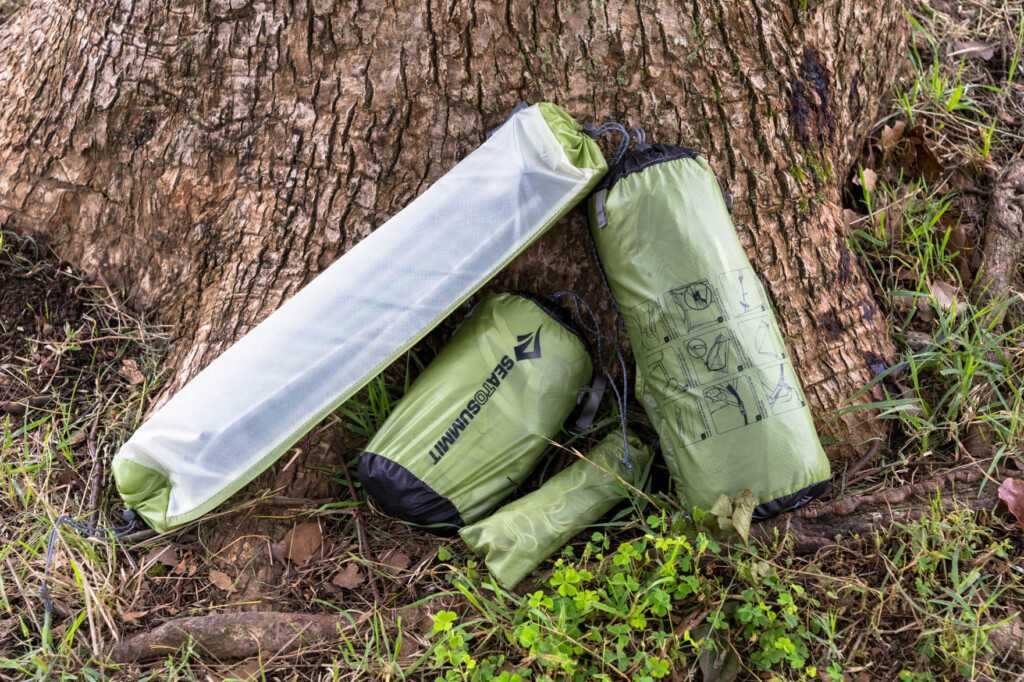
Until now, the simplest way to store a tent was to pack everything into one bag, or a more convenient method would be to store the inner lining and fly, poles, and pegs in separate bags
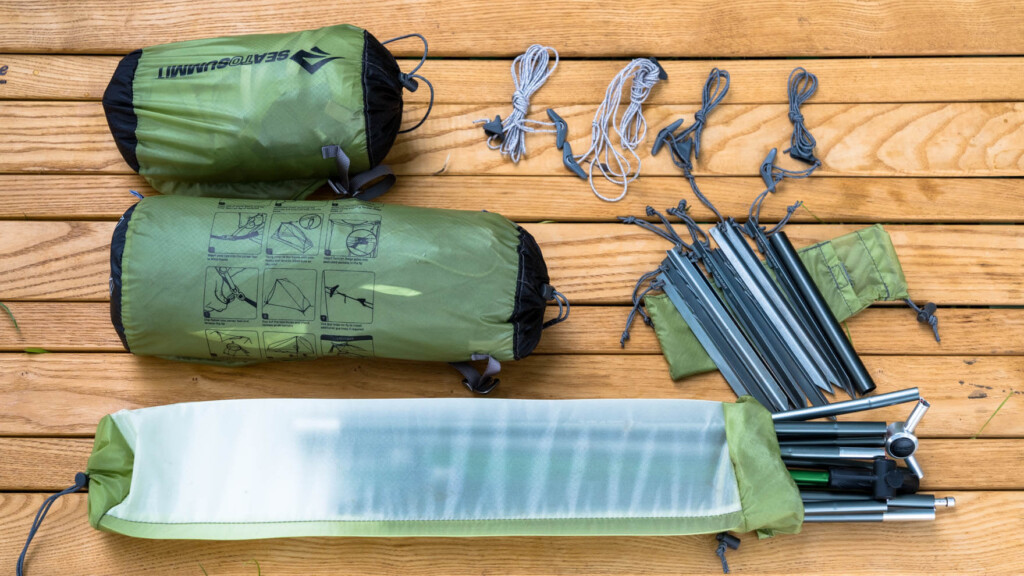
On the other hand, the Alto comes with all the parts, including the inner tent, rain fly, poles, and pegs, packed in separate stuff sacks (see photo above). This allows you to share the luggage with your companions rather than having to carry it all yourself (although this is not as convenient for a single-person tent)
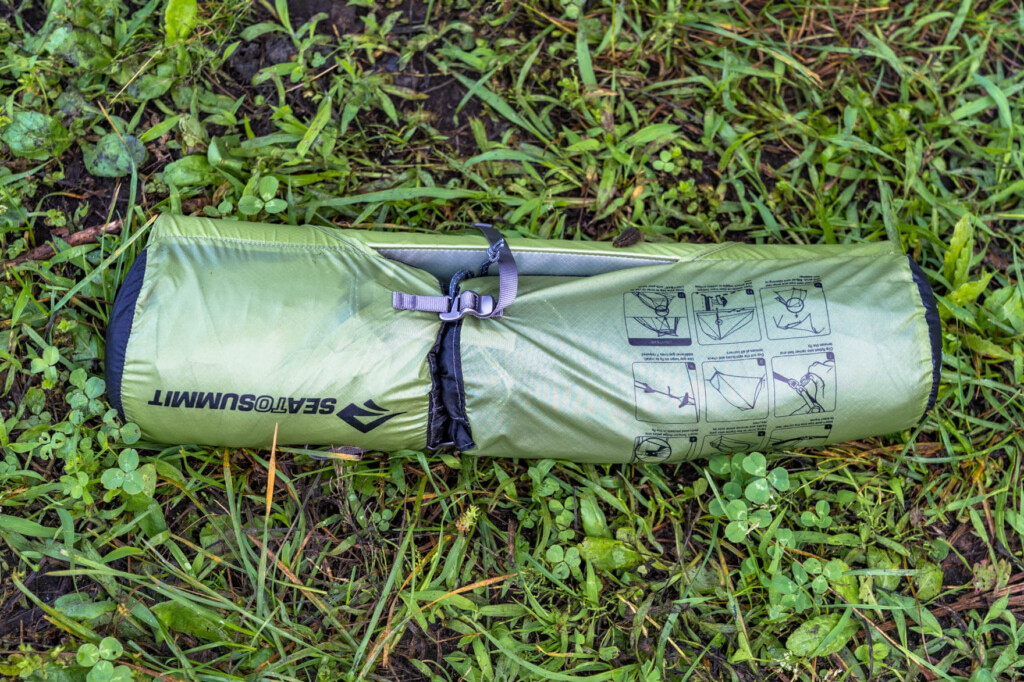
But that's not all. These four storage compartments can be neatly packed into one convenient "modular storage system" (see photo below). The tent itself cannot be folded up that small, but this kind of flexible packing minimizes stress
We took it apart and laid out the accessories (see photo below). In addition to the inner tent, fly, and poles, it comes with nine pegs, four guy lines, and a spare pole - all the necessary equipment you'll need. Incidentally, the tent fabric, poles, and pegs are all made from high-quality materials that are both heavy and durable
The "Tension Ridge" pole system allows you to experience a spaciousness that you wouldn't expect from a one-person tent
The pole structure is semi-self-supporting, with one fork fixing one end of the tent and the other being a single pole fixing the center of one side (both ends are fixed with pegs)
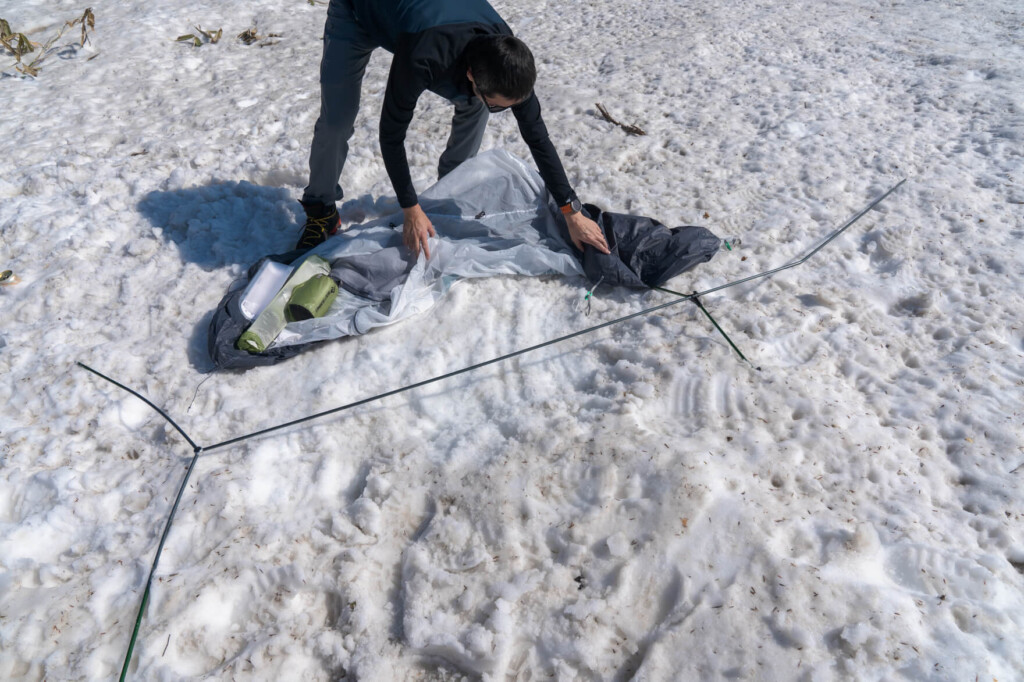
Fully freestanding tents, which are secured at all four corners with poles, are stable but require more poles, which increases their weight. On the other hand, fully non-freestanding tents require fewer poles and are lighter, but they require more setup space and have concerns about wind resistance. In that sense, semi-freestanding tents, which use a certain number of poles and pegs, are a good choice for achieving a good balance of lightness, durability, and ease of erection
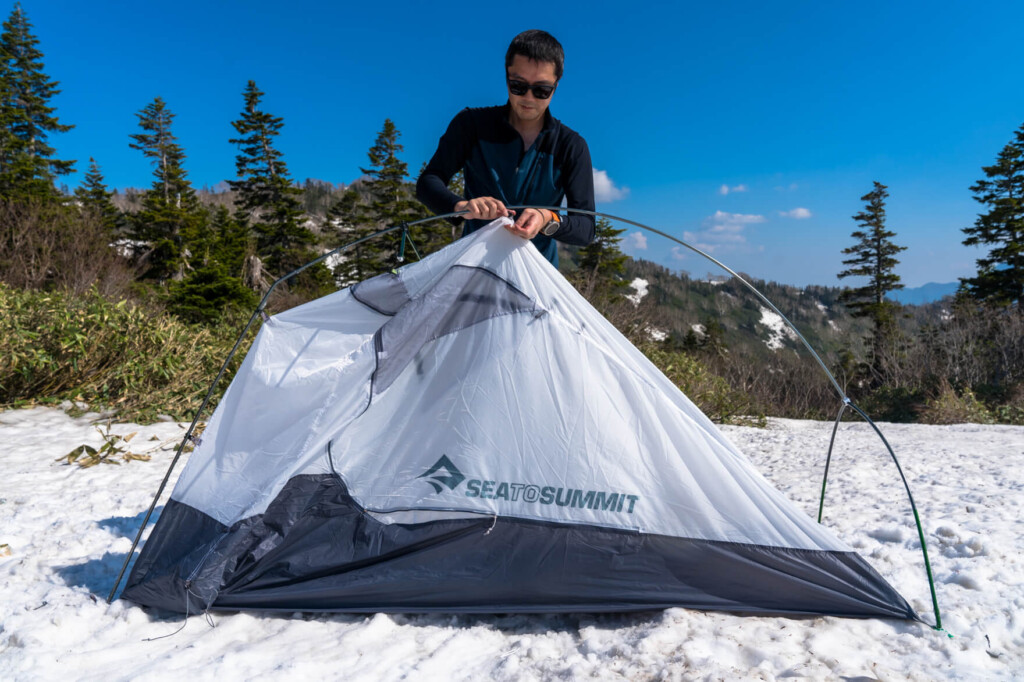
However, the problem with semi-freestanding structures is that the living space (especially the upper space) is narrow. Back when this type of pole structure first came out, people had no choice but to accept the lower living comfort as a trade-off for lightness
pole structure called tension ridge implemented in this tent significantly solves this problem
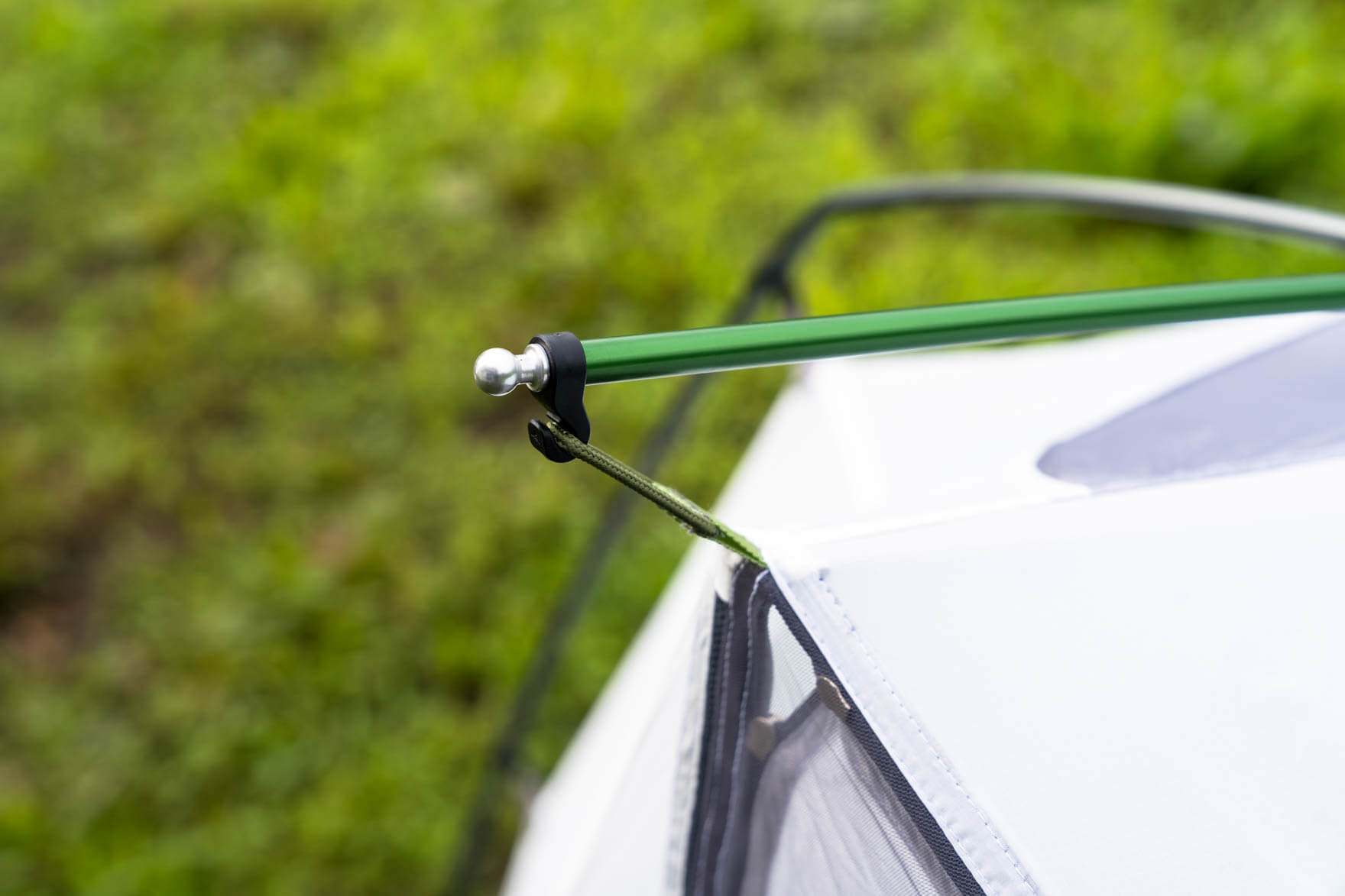
The tension ridge is the Y-shaped top pole located at the exact apex of the tent. Indeed, some people may have seen poles that cross the apex of tents in other manufacturers' lightweight tents. However, if you look closely, you'll see that the tension ridge differs from other tents in that both ends of the pole clearly point upwards (see photo below).
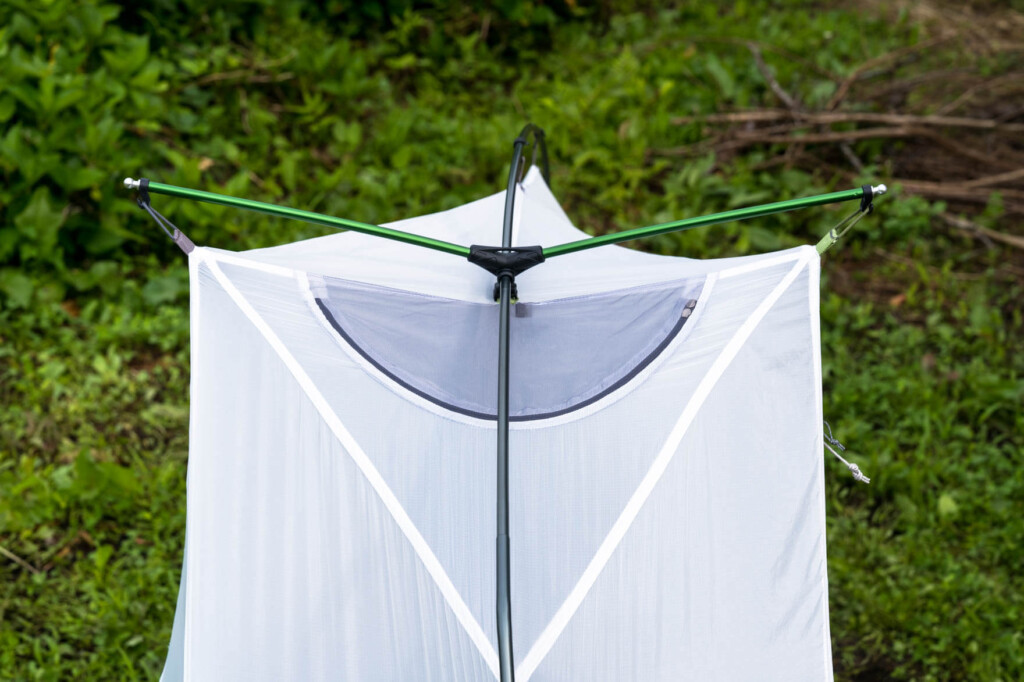
The side wall is secured by hooking the inner tent loop onto the tip of the upward-facing tension ridge
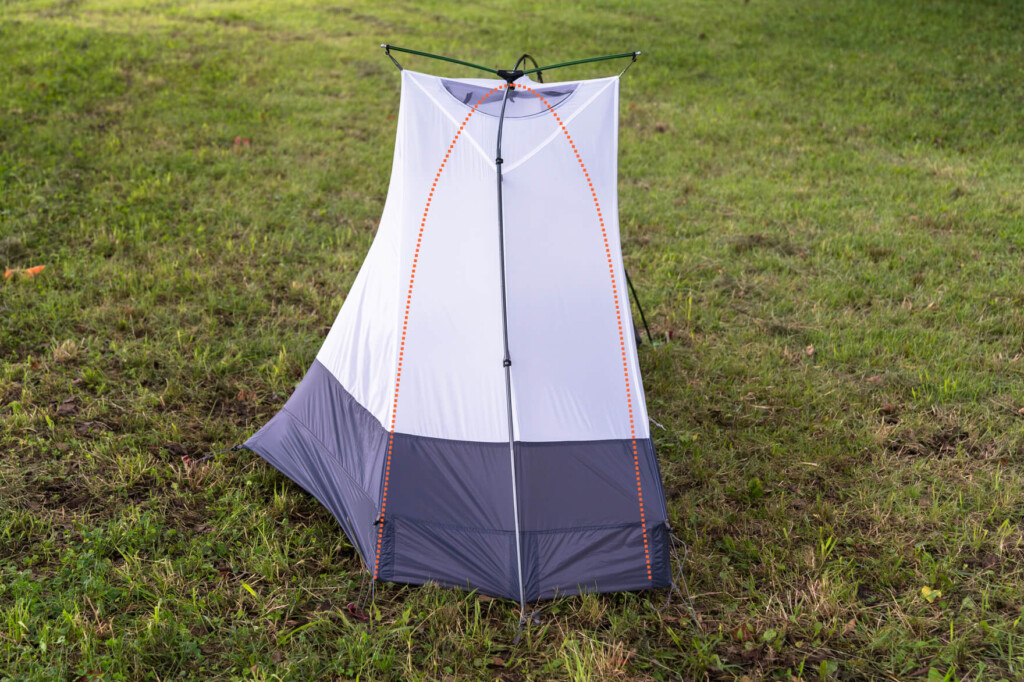
As a result, the side walls rise almost vertically, and the feeling of crampedness that I had felt before is reduced to a lie. As you can see from the dotted line in the photo below, the upper space was previously narrow, but the tension ridge has significantly expanded the area around the head.
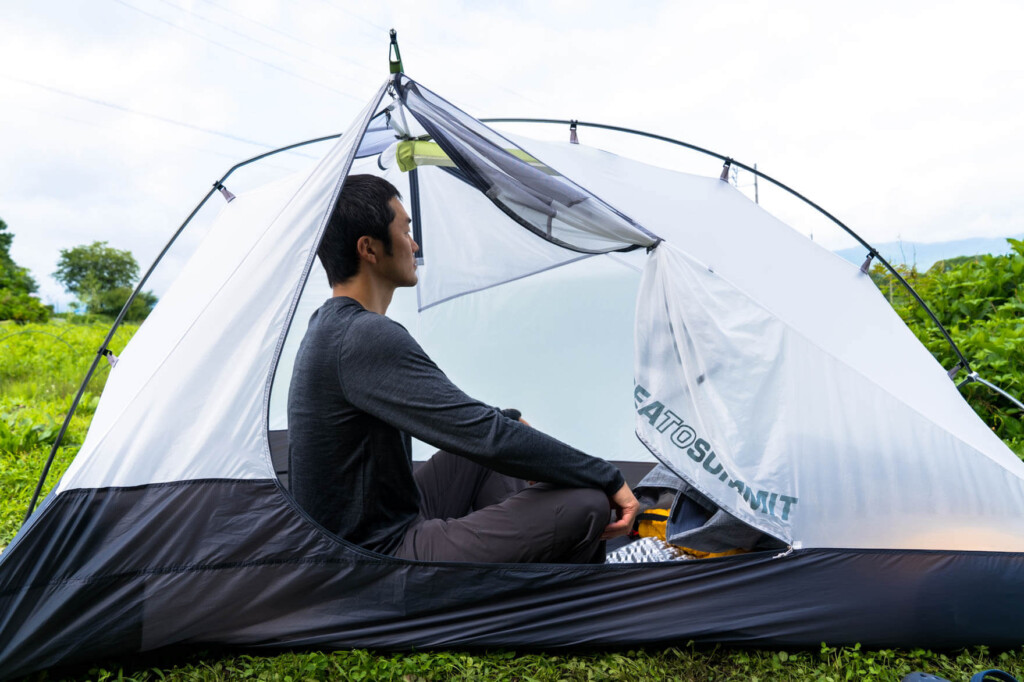
"By reversing the pole angle (upward), we've achieved best-in-class interior space and ventilation without adding weight or bulk to the tent," Lah said in another media outlet. While it's only a small difference, this Y-shaped, upward-facing tip pulls the tent's side walls up more vertically than the others, creating headroom so spacious it feels like a two-person tent. The high ceiling also creates a spacious, comfortable upper space. The entrance door, located on the long side, is also taller and larger, significantly improving the cramped feel often associated with lightweight one-person tents (see photo below).
As a small innovation that supports the spaciousness of the space, a core material is placed at the top of the bottom part at the head end, allowing the walls to rise more vertically (photo below)
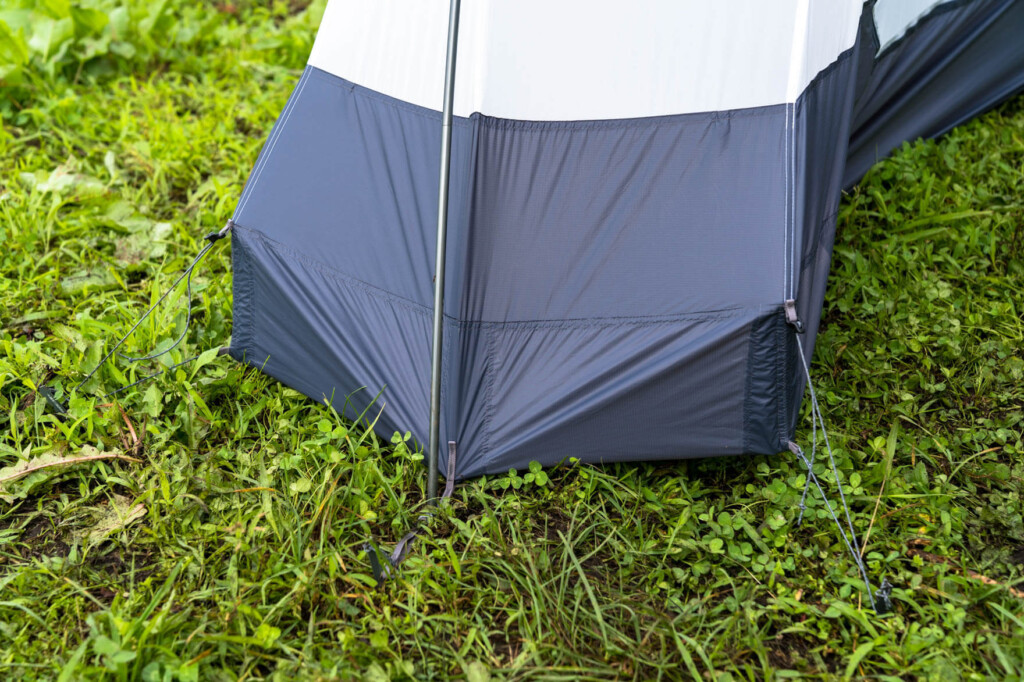
Naturally, the foot area is also raised high, so there is no feeling of pressure (see photo below)
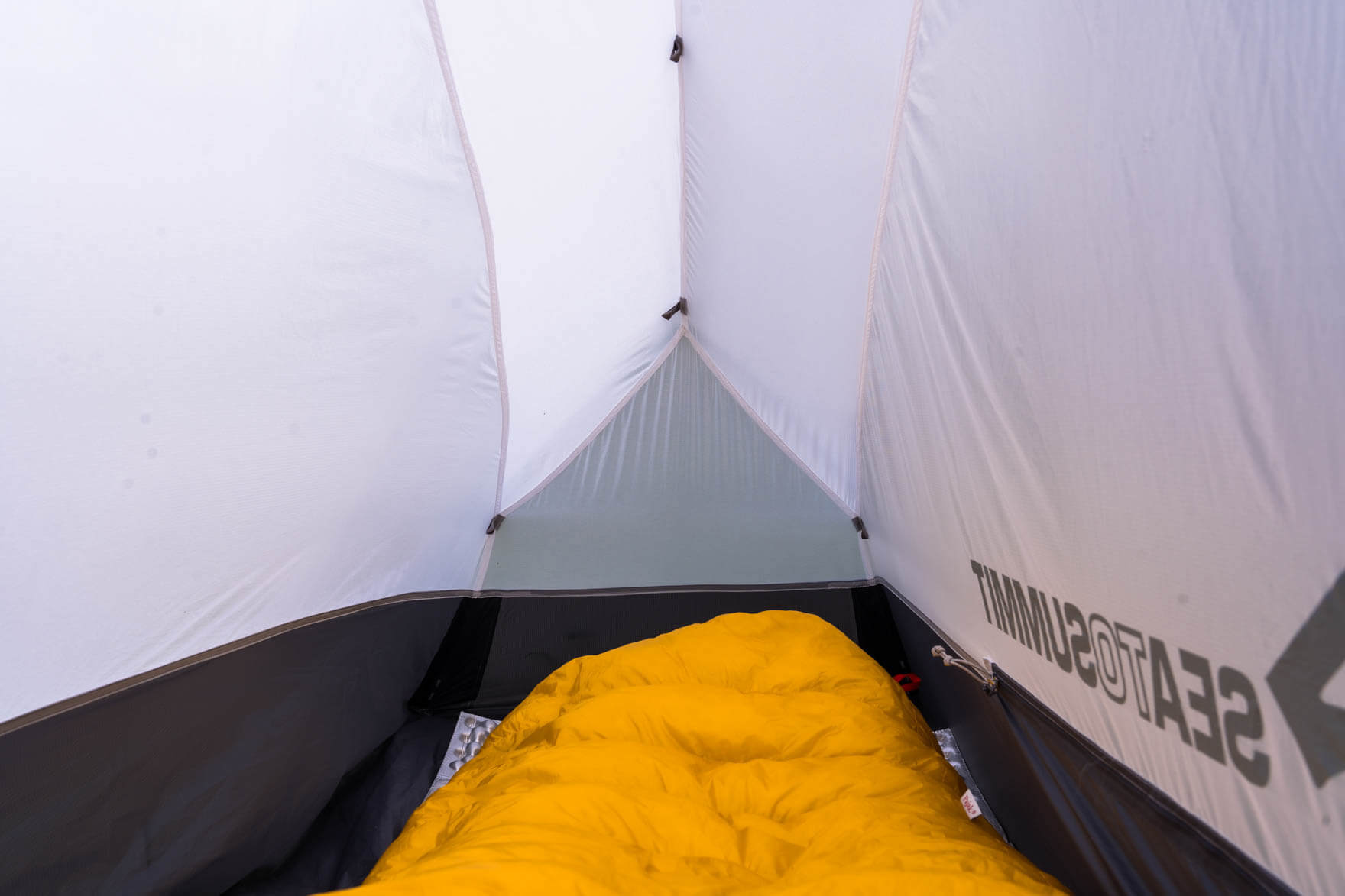
The bottom is asymmetrical with a slight bulge at the back, which can be used as a space to place backpacks and other luggage next to the sleeping area (see photo below)
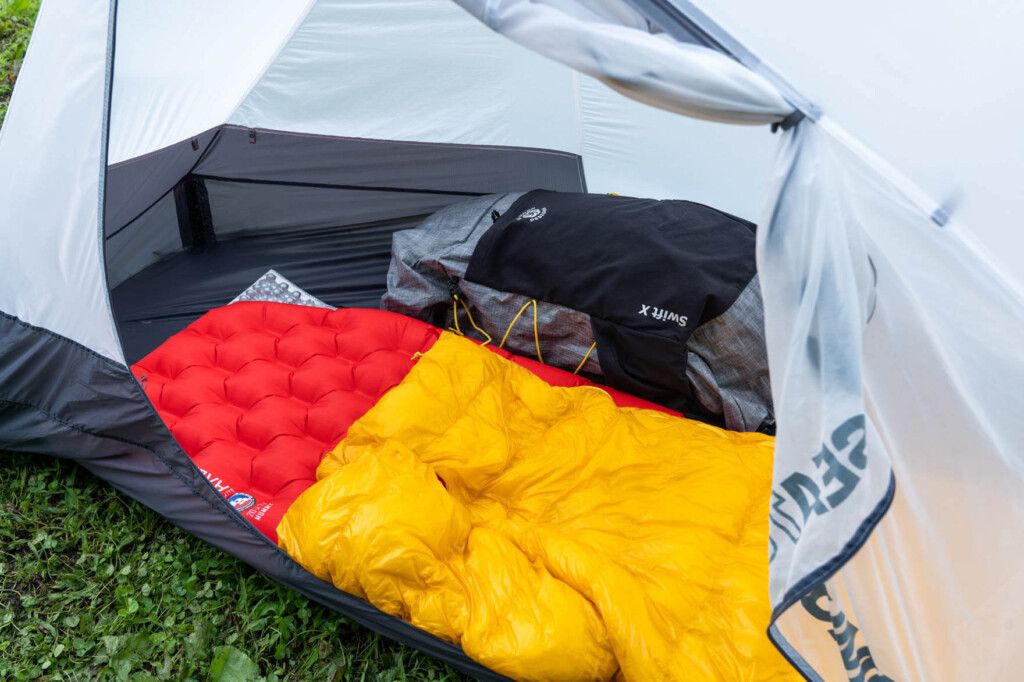
The vestibule is not particularly spacious, but thanks to the tension ridge there is enough room to comfortably place a backpack without any stress (see photo below)
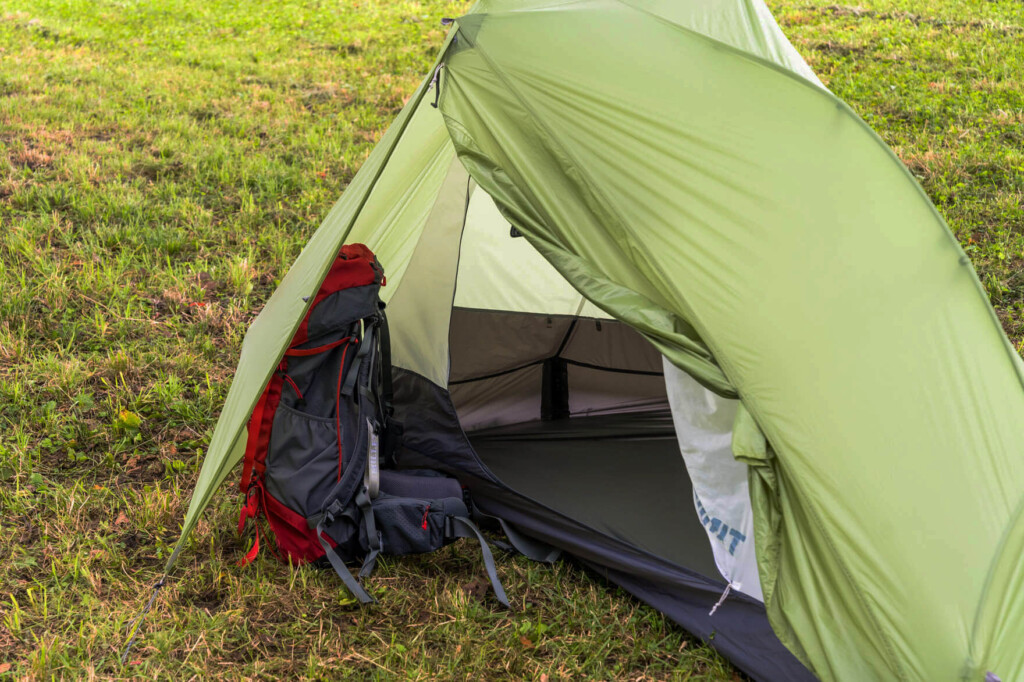
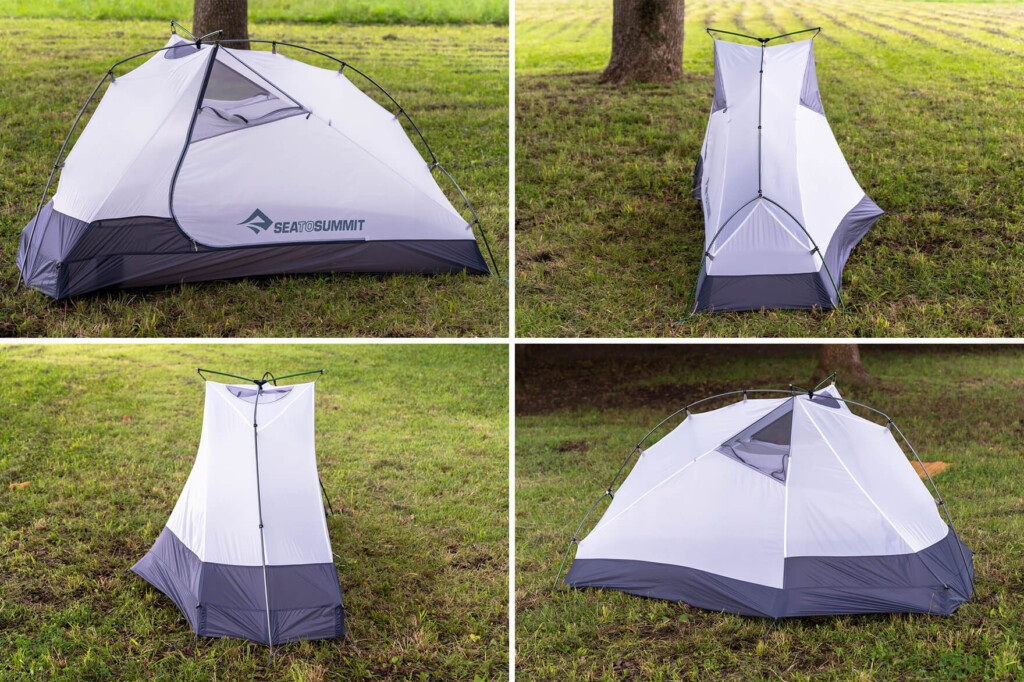
For reference, we have included photos of the inner tent set up from all angles
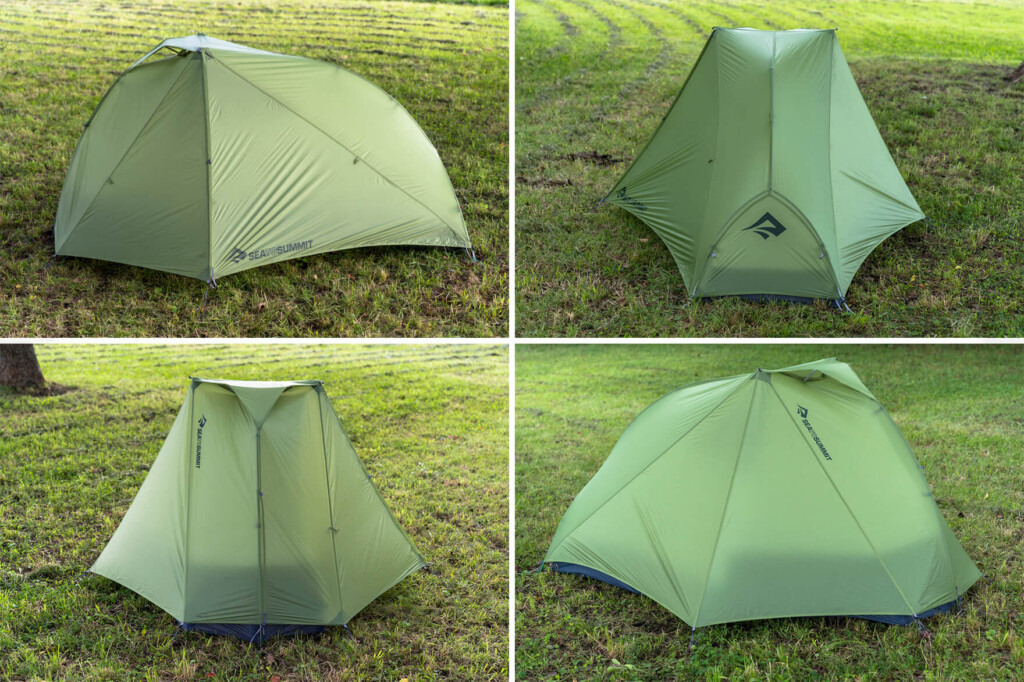
Below is a full-angle photo of the bait with the fly attached. With the fly attached, it becomes almost a dome-shaped bait that is symmetrical from front to back and left to right, which reduces concerns about the vertical side walls being directly affected by the wind and reduces the impact of wind direction
Another breakthrough: Tension Ridge: Achieving unprecedented ventilation efficiency
The Alto (and Telos) come with two inner tents to choose from: mesh (TR1) and non-mesh (TR1 Plus), making the lineup friendly to countries like Japan that prefer non-mesh tent (I, of course, chose the non-mesh one).
Generally, non-mesh ultra-lightweight tents tend to have poor breathability (ease of ventilation) due to the need to reduce weight. However, this problem has been improved remarkably with the Alto. The key to this is, of course, the tension ridge .
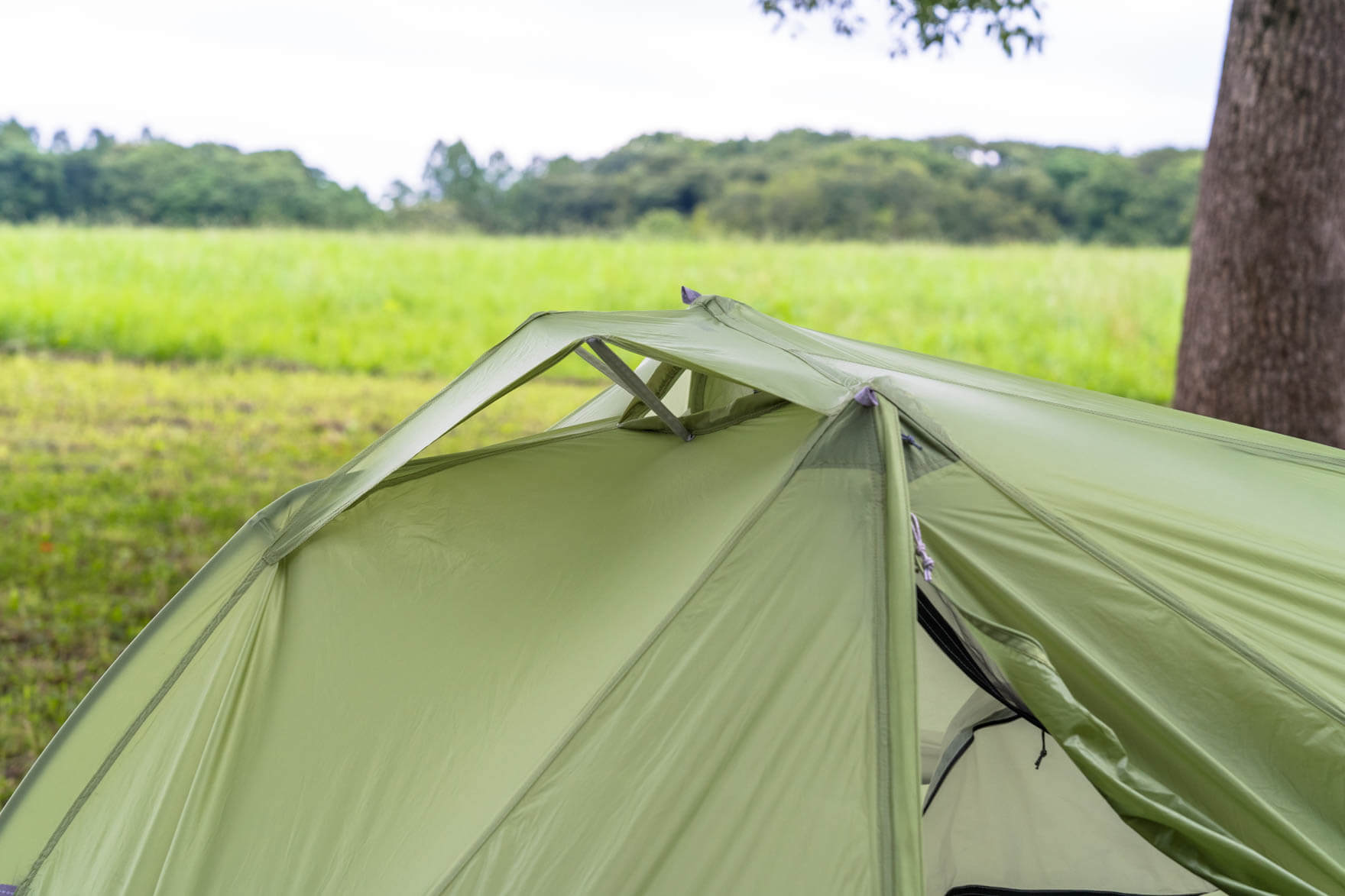
The tension ridge poles raise both ends, allowing the ventilation holes to be placed right at the top of the tent (see photo below)
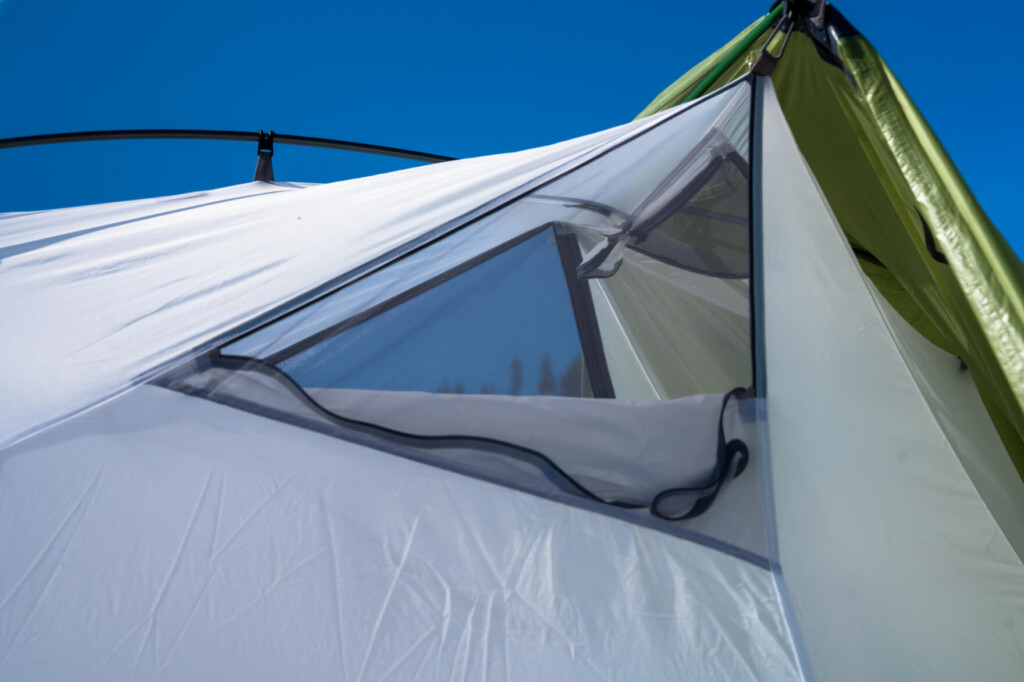
To match this, mesh retractable ventilation is provided on the upper part of both sides of the inner tent, as well as on the ceiling (see photo below)
By adding ventilation at the top, where warm air and water vapor can escape, the airflow is more effective than ever before. This helps prevent heat buildup inside the tent and condensation. To be honest, this is the first time I've ever experienced such good ventilation in a tent (non-mesh), and I have no complaints. I can imagine ultra-lightweight tent users who have been holding back until now saying, "This is it!"
Furthermore, the "Baseline Vent" function is designed to maximize airflow even when the fly is still on (see photo below). The bathtub is also set relatively high, so you don't have to worry too much about rain getting in
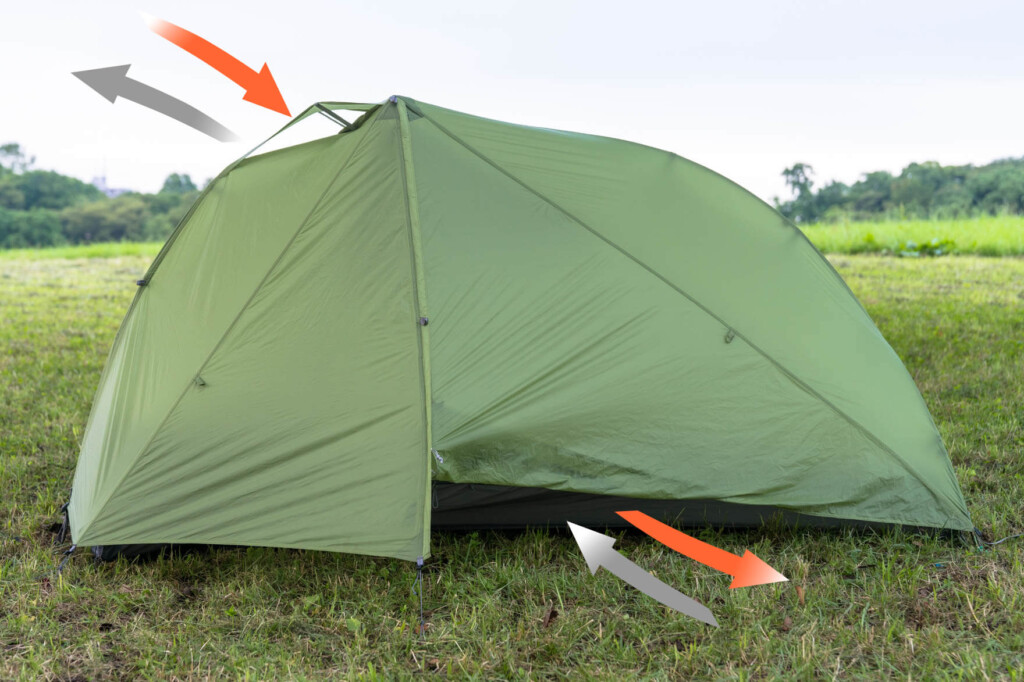
When humidity is high, you can maximize airflow by setting the tent up so that the windward side is at your feet (grey arrow), and when temperatures are high, you can set the tent up so that the windward side is at your head (orange arrow)
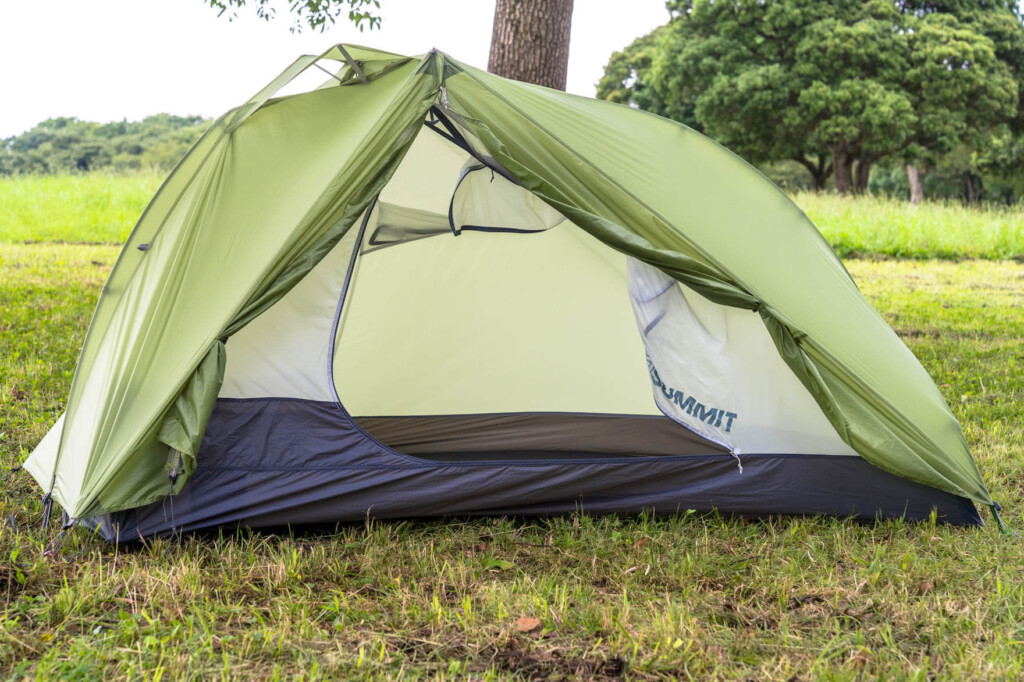
Of course, you can also maximize ventilation by fully opening the fly tent entrance as usual. It can be opened and closed all the way to the ceiling, giving a sense of openness (see photo below)
Various setup modes to ensure comfort regardless of the environment, location, or scene
In today's world, tents are used in a variety of environments, including strong winds, heavy rain, extreme heat, humidity, and cold, as well as for a wide range of purposes, from long-term mountain climbing to light hiking, bikepacking, and camping. This tent is designed for such demanding enthusiasts, allowing it to be set up in a variety of modes and making it comfortable and easy to use in a wide range of situations
First, there is the most basic pattern, with a fly sheet placed over the inner tent (see photo below). Despite being a lightweight tent, footage from a test facility showed that it remained unfazed even in strong winds of over 10 meters per second
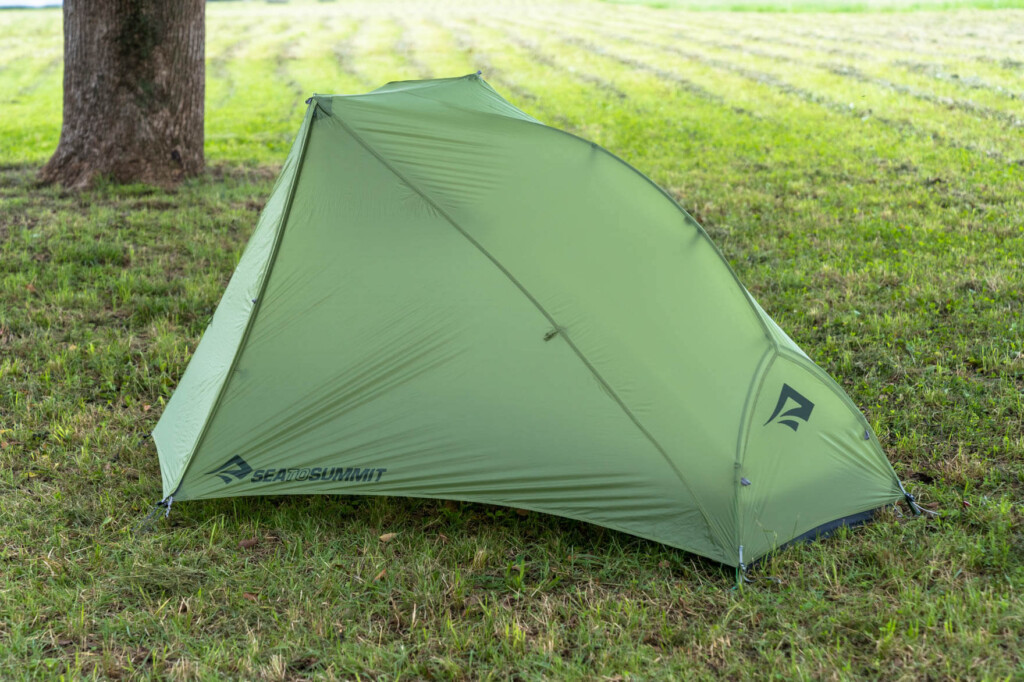
Fly + Inner Mode
Of course, you can remove the fly and use just the inner tent during warmer seasons with little rain. If you have a mesh inner tent, you can even sleep while gazing at the starry sky. In that case, you can even make subtle adjustments, such as just rolling up the fly to cover part of the tent (see photo below)
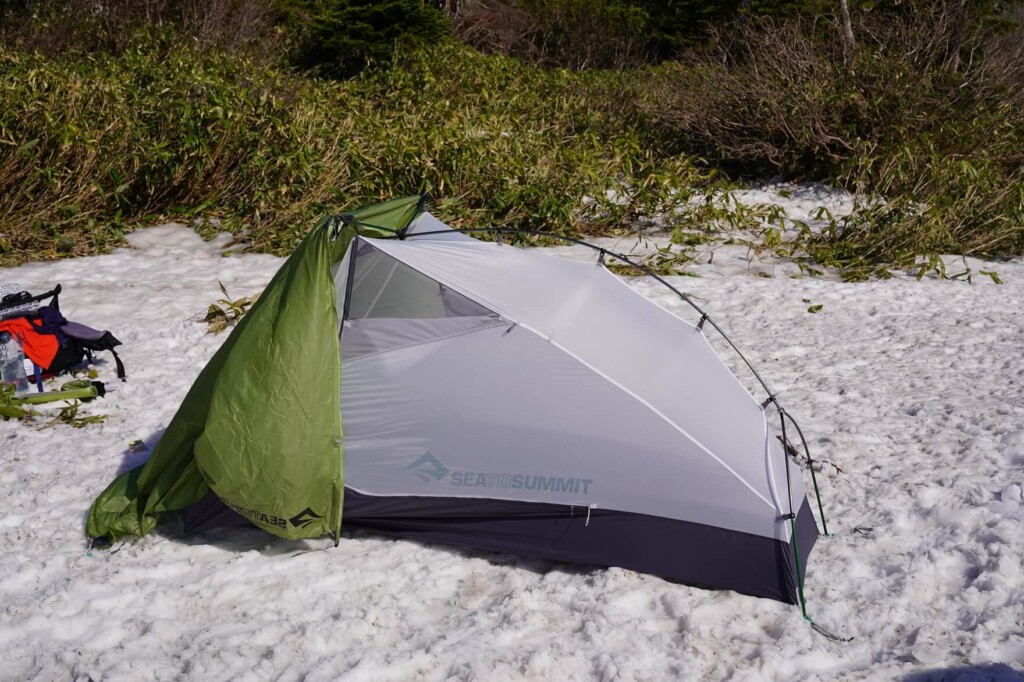
Half Fly Mode
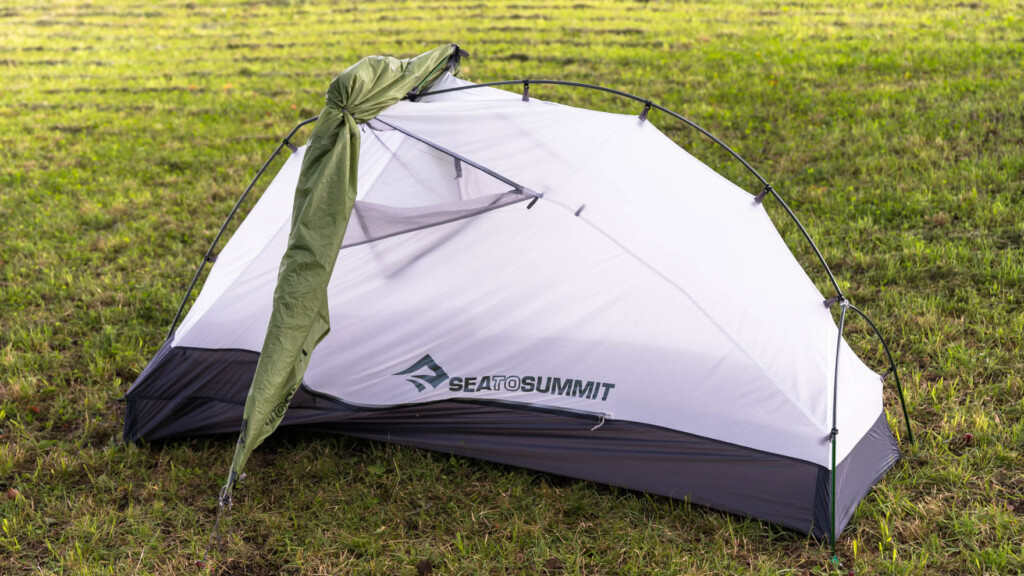
Innerwear only mode
Furthermore, it is possible to set up the tent using just the fly (see photo below). This is perfect for summer picnics where you want to protect from the strong sun and wind (see photo below). You can also set up the inner tent from here, which is a safe and effective option as you can set up the tent while protecting it from the rain by first setting up the fly. However, when actually setting it up, I noticed that without the separately sold footprint, the poles stretch out a little horizontally, making it difficult to set up properly, which was a bit disappointing
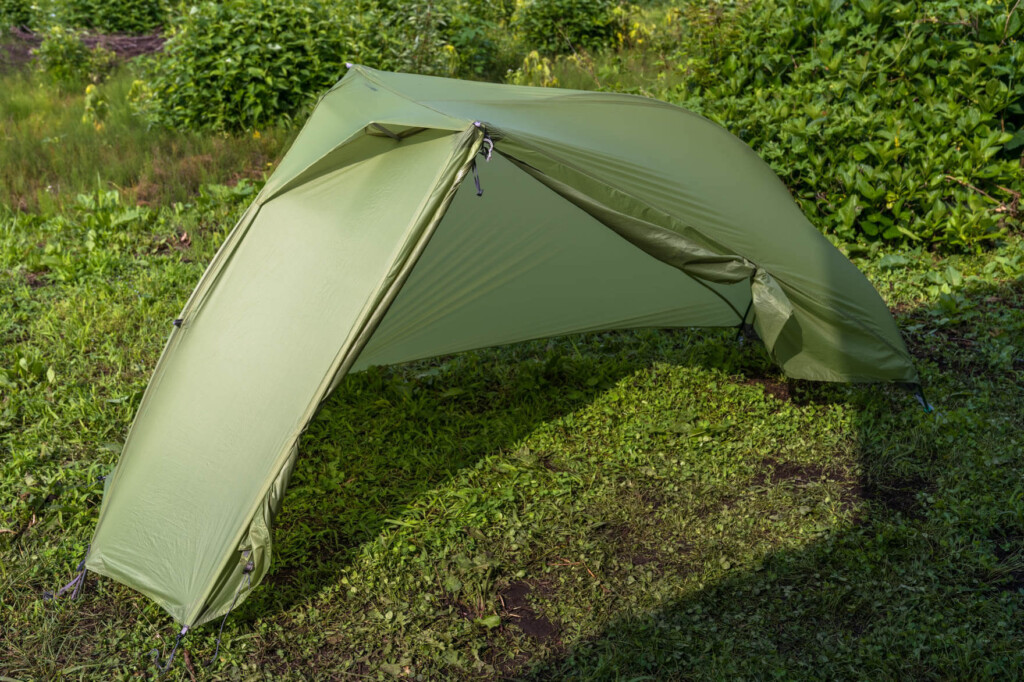
Fly Only Mode
This is not the end of the story; there are many unique features of this tent that have been carefully considered down to the smallest detail
In addition to the innovative structure we've discussed so far, this tent is packed with convenient and comfortable features that will make you smile
The photo below shows the clips used to attach the fly sheet. The simple structure made of highly durable aluminum makes it lightweight, durable, and easy to attach and remove (photo below)
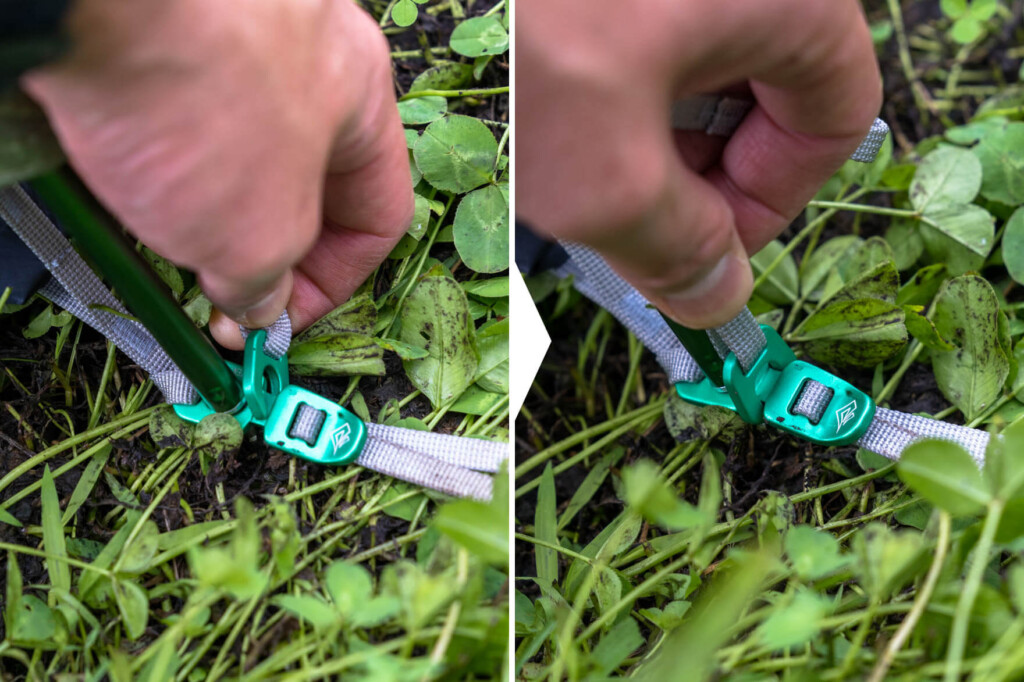
The length is also easy to adjust (see photo below)
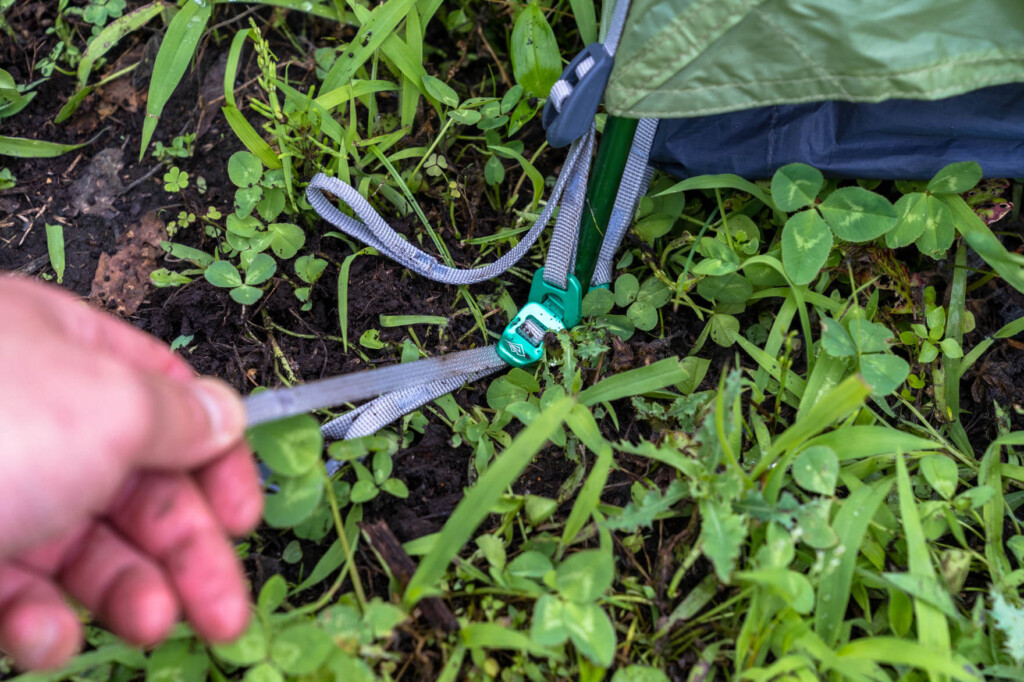
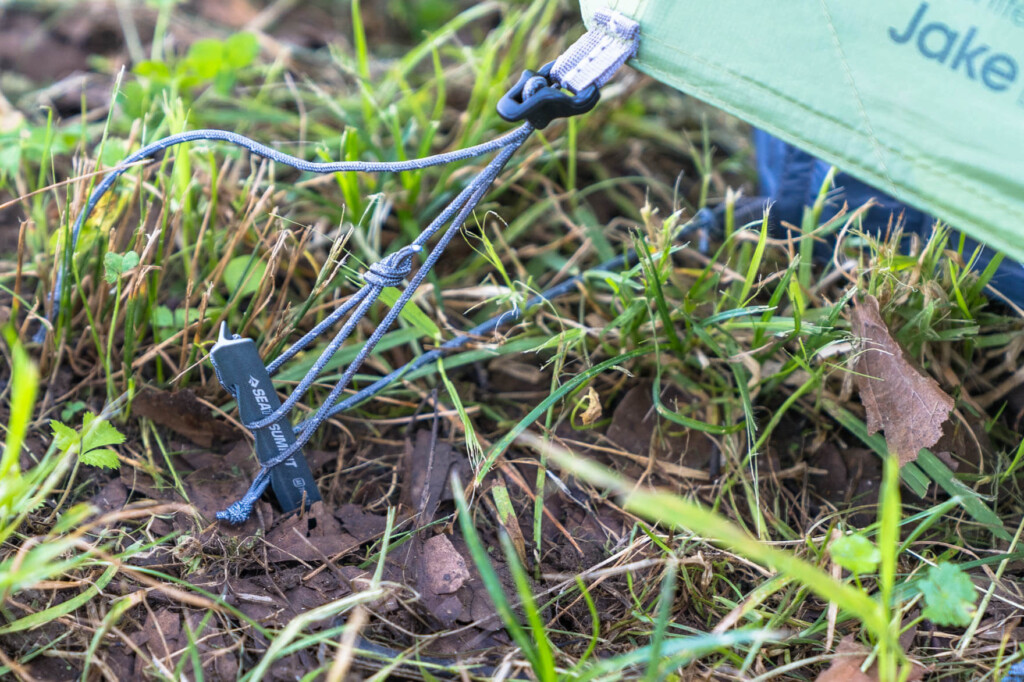
The pegs are made of high-quality 7000 series aluminum alloy, the same alloy used in aircraft, and feature a modified Y-shaped design that makes them lightweight and strong. They also feature multiple notches for attaching ropes, allowing you to secure the pegs close to the ground even in shallow, difficult-to-drive situations (see photo below)
What I personally find amazing about this tent is that even the stuff sack is fully utilized to improve comfort after pitching. The stuff sack that holds the tent fly can be attached to a corner of the room and used as a storage space for small items (see photo below). I was honestly blown away by this. This kind of attention to detail is a specialty of the Japanese, who enjoy every grain of rice to the fullest
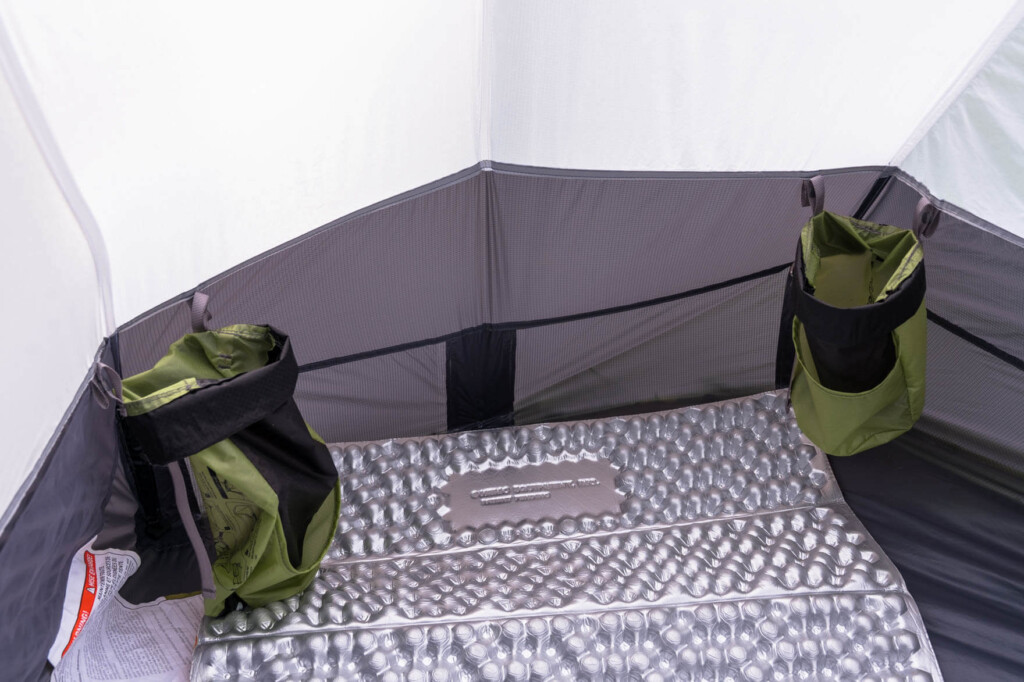
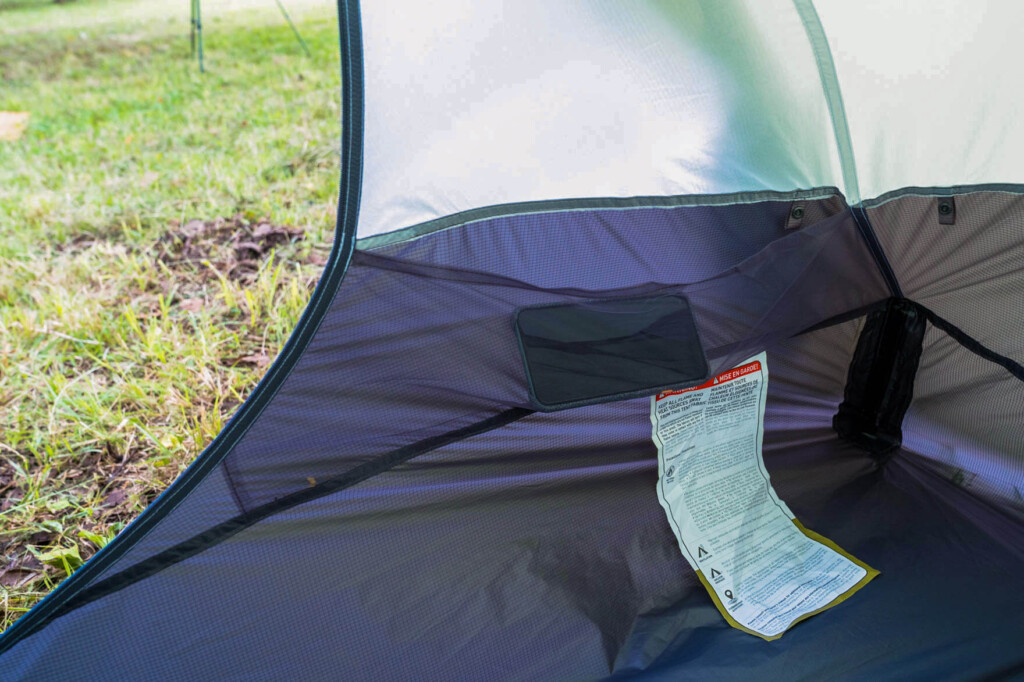
Of course, regular mesh pockets are also standard equipment inside the cabin, so even if the ceiling storage cannot be used due to ventilation, there is no inconvenience at all (see photo below)
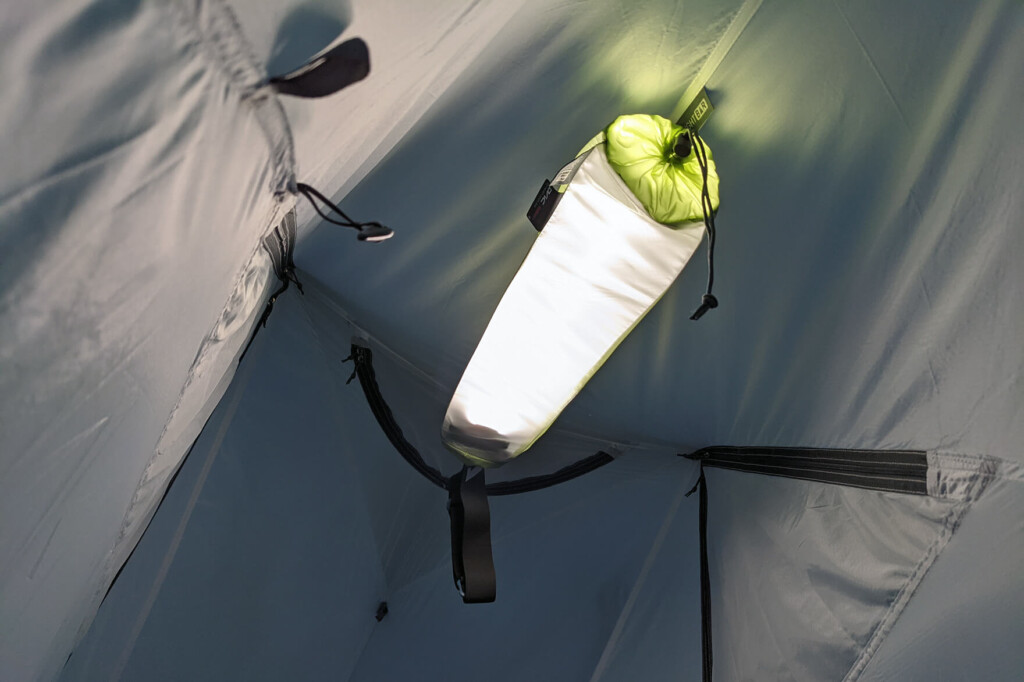
And the best part, and my personal favorite, is this "light bar" (pictured below). At first glance, it looks like an ordinary tent pole storage bag, but it has a translucent white plate inside that allows it to be hung from the ceiling inside the tent
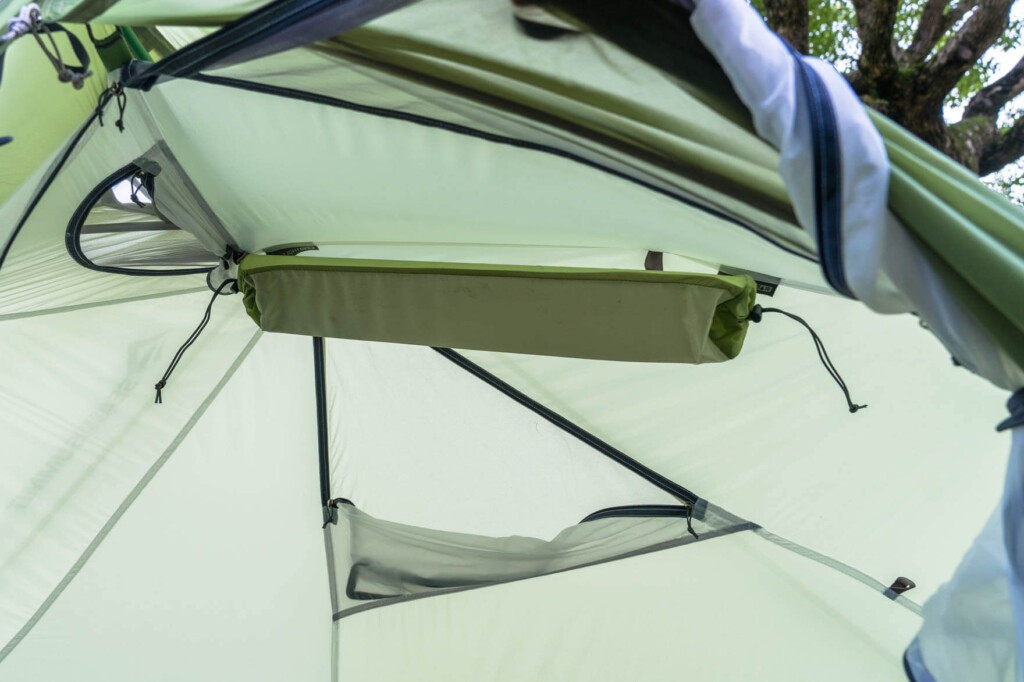
If you put a headlamp inside and turn the light horizontally, lo and behold, it works like a lantern, lighting up the inside of the tent just like a fluorescent light (see photo below). Here again, the cleverness of not wasting a single bit of material and using it as a useful part is impressive, and admirable
Summary: From fastpacking to trekking, traverses, stream climbing, and bikepacking... This is a reliable home that can handle any activity, not just jack-of-all-trades
This review has been quite lengthy, but there are still many features and charms of this tent that I cannot fully explain. This tent, which was released after three years of research and development, is no joke. This tent is so innovative, wonderful, and flawless, with meticulous attention to detail to ensure it is adaptable to a wide range of modern outdoor activities
Still, if there's one thing I'd still like, it's "ease of setup." Experienced people can set it up just fine, but beginners may find it time-consuming and difficult to "attach and detach the hook-and-loop fasteners that secure the fly to the poles" or "pitch an asymmetrical tent neatly and without wrinkles." Also, personally, I love tents with an integrated inner fly that can be set up in one go, and if that were possible, I'd have nothing to complain about
Alto , a particularly lightweight model among the new tents equipped with Tension Ridge, is a new option for hikers who prefer a light and fast style above all else, offering ultimate comfort without sacrificing the previous lightness, and is sure to appeal to them. Furthermore, with its exquisite balance of weight, comfort, and weather resistance, the Alto is not limited to ultralight tents, but will also be satisfying to use for regular mountaineering, trekking, river climbing, bikepacking, and more. However, if you use it hard, don't forget to protect the bottom with a footprint.
Of course, it can be used for camping, but for such light outdoor leisure activities, the other tent released at the same time, the Telos, is more suitable. Please wait for a future review to find out more about that.

Related reading
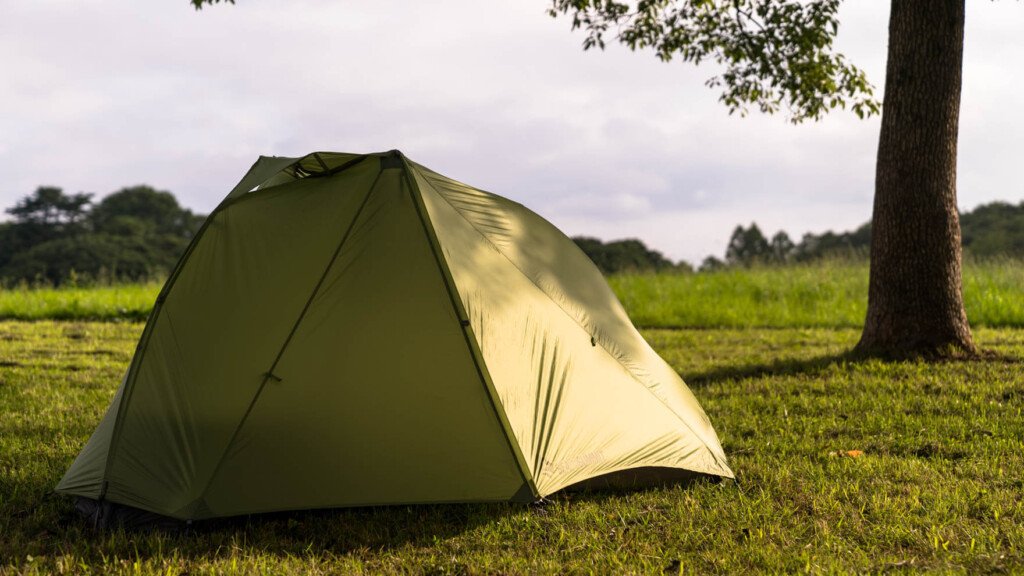
 [Unbiased, Self-Funded Review] SEA TO SUMMIT Reactor Liner Mummy with Drawcord Review: A Wearable Inner Sleeping Bag!? A Convenient Item with Free Arms and Legs for More Than Just a Single Use
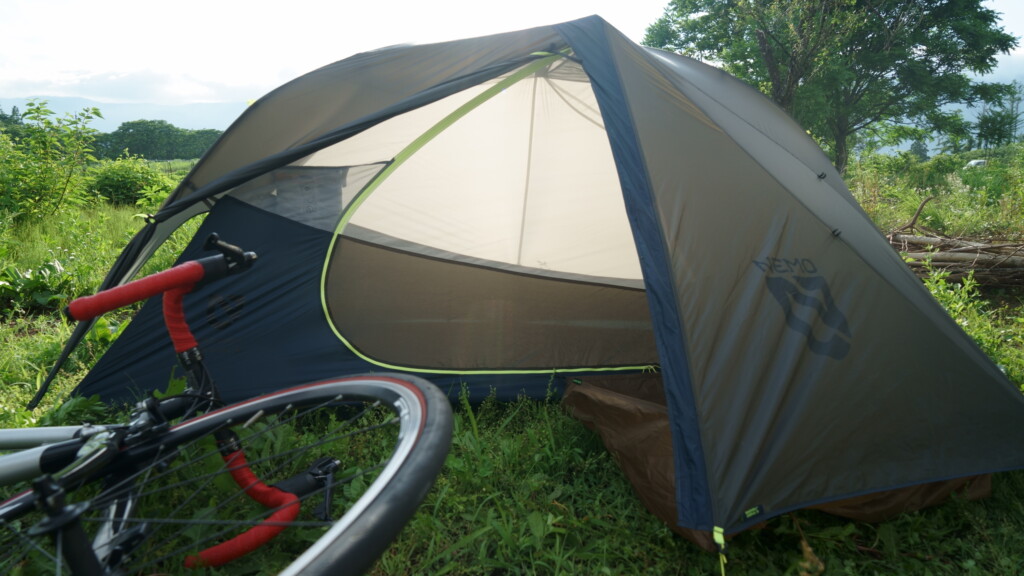 [An Honest Review] NEMO Dragonfly Bike Pack 1P: It's a waste to keep it just for touring! A comfortable and convenient freestanding tent for hiking
 Review: Sea to Summit Comfort Lite Insulated Mat - A year-round, comfortable air mattress
 SEA TO SUMMIT Ember 7C Review: Recommended for hikers who want to pack as light as possible. A high-quality, ultra-lightweight quilted sleeping bag that combines portability and warmth