



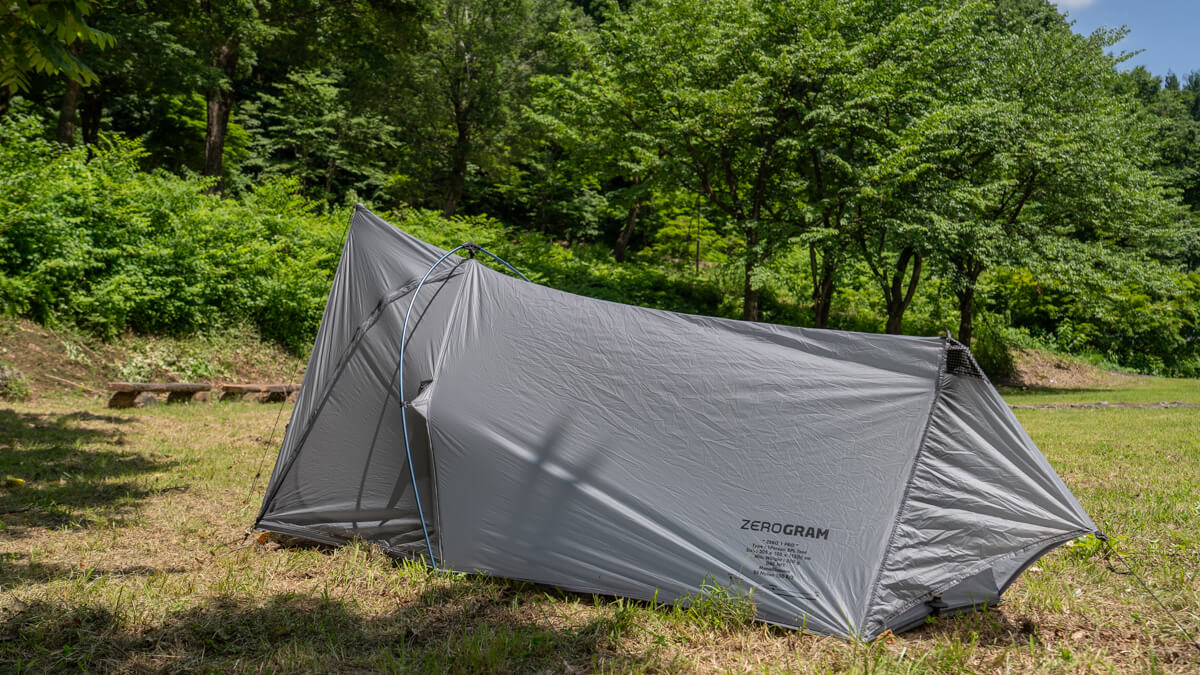
Going beyond trekking pole shelters. The stronger and more comfortable ZEROGRAM "ZERO1 Pro" is more useful than you'd think! A review of the improvements and appeal discovered through field use

Written by Yasushi Hisatomi
For through-hikers, who typically hike routes spanning hundreds of kilometers over multiple days, the weight of their equipment is a real issue. The choice of tent, one of the heaviest pieces of gear, can have a major impact on the comfort and risk of the journey
However, that doesn't mean that a tent is as simple as just being light
Of course, the lighter the tent, the better, but if you're planning to stay in it for several days, not just one night, then various other features besides weight cannot be overlooked, such as ease of pitching, comfort, and durability against bad weather, depending on the season and route. Anyone who has actually hiked for an extended period of time will understand this to some extent
ZEROGRAM , " focusing on the value that lies beyond lightness, inspired by the founder's experience of long trail hiking.
ZERO1 which embodies this philosophy , is a trekking pole shelter with an integrated floor and vestibule that was created in 2015 (released in Japan in 2016) with the basic concept of ultimate lightness and simplicity, while pursuing a balance between comfort and strength.With its unique, cool form that you'll never forget once you see it, and its minimalist, smart functionality, I couldn't help but use it from the previous model onwards.
This season, it has been updated for the first time in about five years as the " ZERO1 Pro ." This shelter offers the livability and stability of a tent, but is one of the lightest in its class. I had the chance to try it out on the trails this spring and summer, so I would like to share my review.
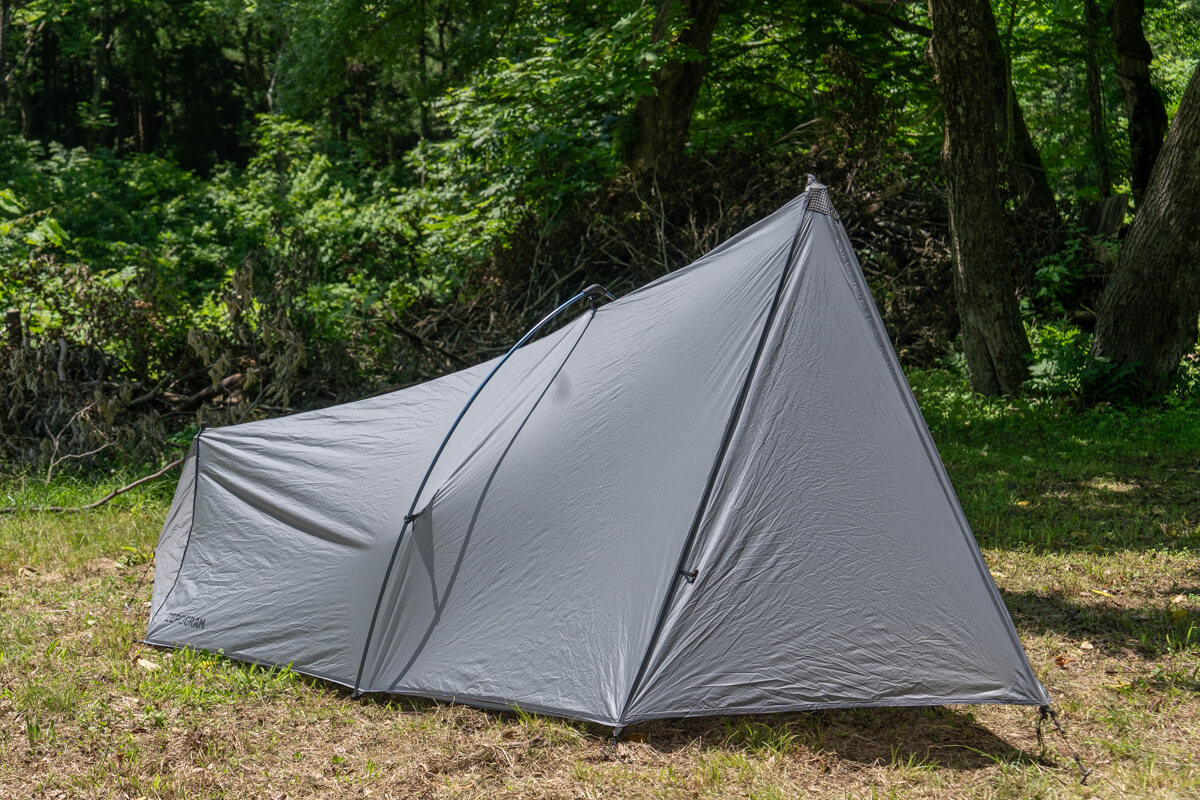
table of contents
- Main features of ZEROGRAM "ZERO1 Pro"
- Detailed Review
- Weight and compactness: Lightweight and compact enough for ultra-lightweight tent camping
- Setting up: It was a bit tricky the first time, but once you get it up it's easy to set up by yourself
- Comfort and weather resistance: Comfortable and not cramped despite the limited space, with ample ventilation and high wind resistance
- Summary: The best solution for hikers in 2025 who want a comfortable and safe night's sleep while still maintaining the advantage of lightness
Main features of ZEROGRAM "ZERO1 Pro"
ZEROGRAM's "ZERO1 Pro" is a trekking pole shelter for solo hikers, based on the concept of "Beyond Trekking Pole Shelter," and is a single-wall trekking pole shelter with an integrated vestibule that offers high living comfort and weather resistance despite being one of the lightest in its class.
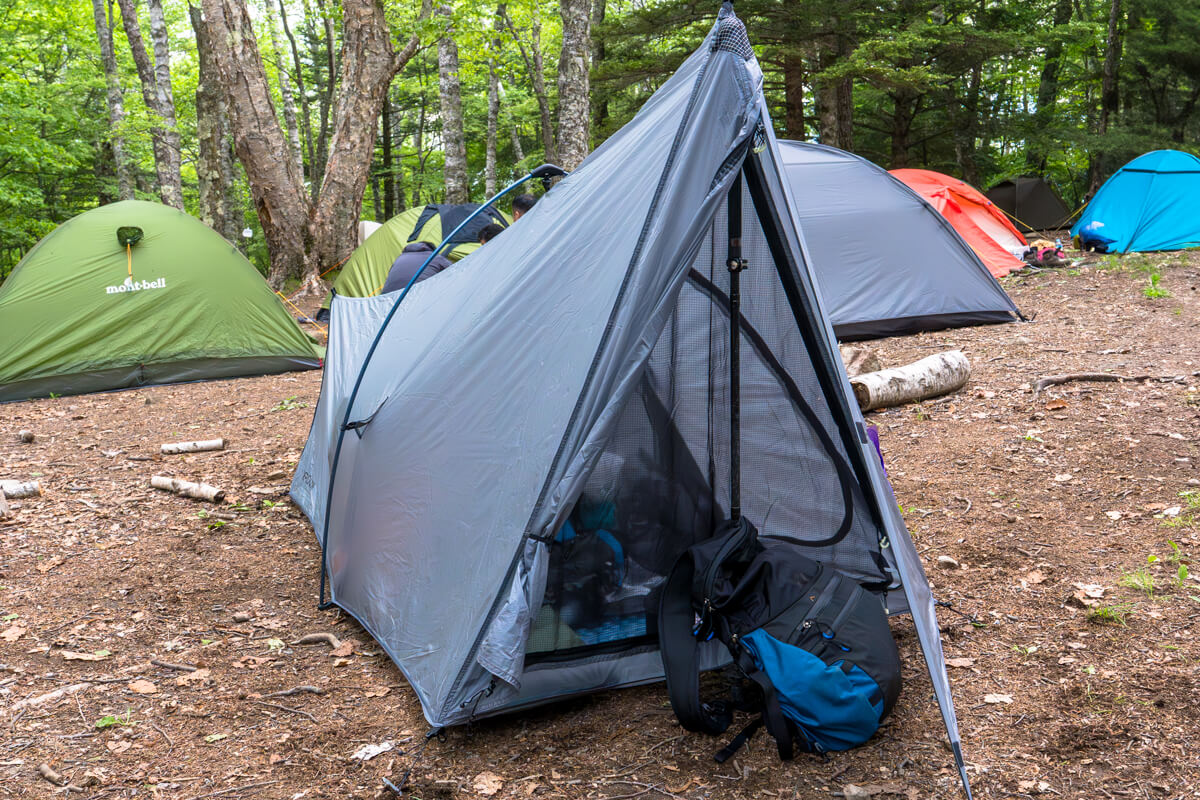
The tent can be set up by using two trekking poles of different lengths as supports and pegging it down, resulting in a lightweight tent weighing just 550g for the main body alone and high packability. The addition of a dedicated outer frame in this model provides a larger interior space and improved wind resistance. Entrances are located on the front (short side) and side (long side). The highly water-repellent monofilament mesh door allows for smooth entry and exit, while the large front door vestibule provides an open, airy living space. Furthermore, three ventilation openings, including one at the foot, ensure smooth airflow and improve resistance to condensation. This tent is ideal for lightweight thru-hiking and other adventures where weight is at a premium, seeking the most comfortable living space possible
Favorite points
- The unit weighs just 550g (just over 650g with the dedicated pole), yet provides a comfortable living space, including overhead
- Highly compact and easy to store
- High ventilation thanks to numerous vents in the front, sides and feet
- Outer frame and guy line points provide livability and high wind resistance
- Vestibule that protects luggage from the rain
Points of interest
- The ceiling is low, so there isn't much legroom and room to move around
- The front entrance is difficult to use because trekking poles get in the way
- Use of footprint is recommended
- (Although it has improved compared to the previous model) condensation on the interior walls is still unavoidable
Main specifications and evaluation
| item | Specifications and reviews |
|---|---|
| Number of people sleeping | 1 person |
| minimum weight | 550g (body only) |
| gross weight | 763g (including pole: 105g) |
| Body and floor material | 15D N/R Silicone PU Coated |
| Mesh door material | 20D N/R Monofila |
| Pole material | DAC Featherlite NFL |
| Room size | 205 x 100 (55cm at the feet) x 110cm |
| Number of entrances and exits | 1 in front, 1 on the side |
| Storage size | 11×25 cm |
| Floor area | Approximately 1.6 m² (205 cm length x 100 cm entrance width x 55 cm foot width) |
| Front chamber area | Approximately 0.4m² (depth 75cm) |
| accessories |
|
| Living Comfort | ★★★☆☆ |
| Ease of setup and takedown | ★★★★☆ |
| weather resistance | ★★★★☆ |
| durability | ★★★☆☆ |
| weight | ★★★★★ |
| Portability | ★★★★★ |
| Versatility | ★★★☆☆ |
Detailed Review
Weight and compactness: Lightweight and compact enough for ultra-lightweight tent camping
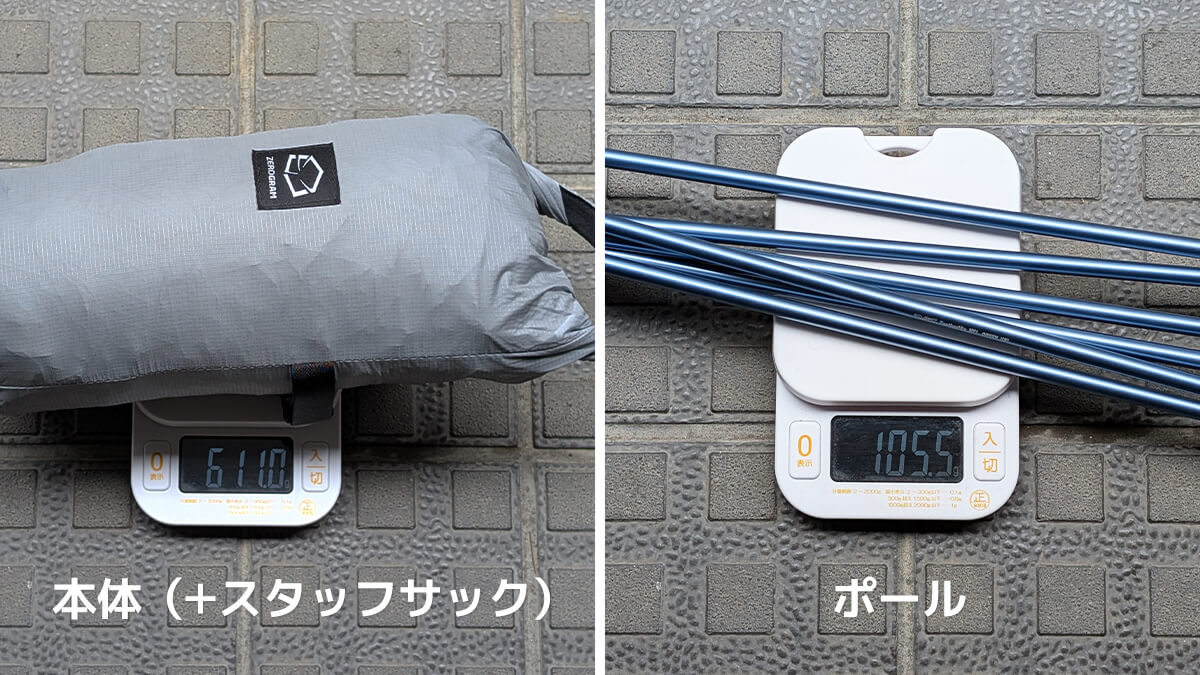
The ZERO1 Pro comes standard with the "main body," "outer frame," "pegs and guylines," and a stuff sack (footprint sold separately). We first measured the weight of the main body and stuff sack alone to determine the realistic minimum weight, which came out to about 611 grams. Add the outer frame (about 105 grams) to this, and the realistic minimum weight is just over 700 grams (see photo below. *The measurement was taken after several uses, so the actual value may vary slightly).
If you use the included pegs and guy lines, and also add a footprint, the actual weight will increase by approximately 54 grams and 115 grams, respectively (see photo below)
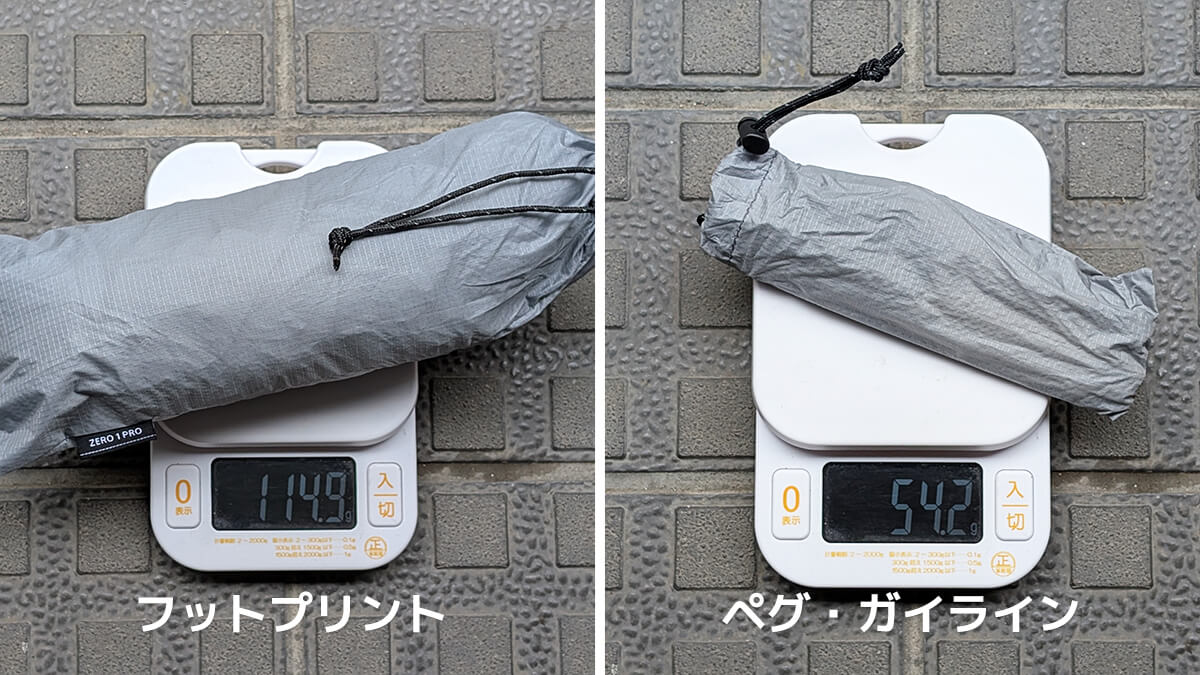
the previous model, the ZERO1 MF (minimum: 490g) , it is true that the weight is slightly heavier due to changes to the poles and fabric, but (considering the benefits of the heavier weight) it is not an increase that is so noticeable that it is noticeable.
The overall weight itself is by no means the lightest, but it is well within the acceptable range for a so-called UL-style shelter. If this meant "you had to put up with the livability," you might be dissatisfied, but the result of pursuing the optimal balance between lightness, comfort, and durability of this shelter is quite convincing
In any case, this lightness was made possible by the accumulation of many small factors. First of all, the tent poles can be substituted with trekking poles. Secondly, it uses 15D Silicone PU-coated ripstop nylon, a thin and lightweight fabric that maintains just enough strength to withstand Japan's mountain environment. The poles are also "DAC Featherlite NFL," among the lightest in their class. Furthermore, space and size have been reduced as much as possible without compromising livability, and the amount of fabric has been minimized by eliminating fabric from the doors and other wasteful design elements. These and other fine-tuning details give the impression of an exquisite design that must have been arrived at through trial and error
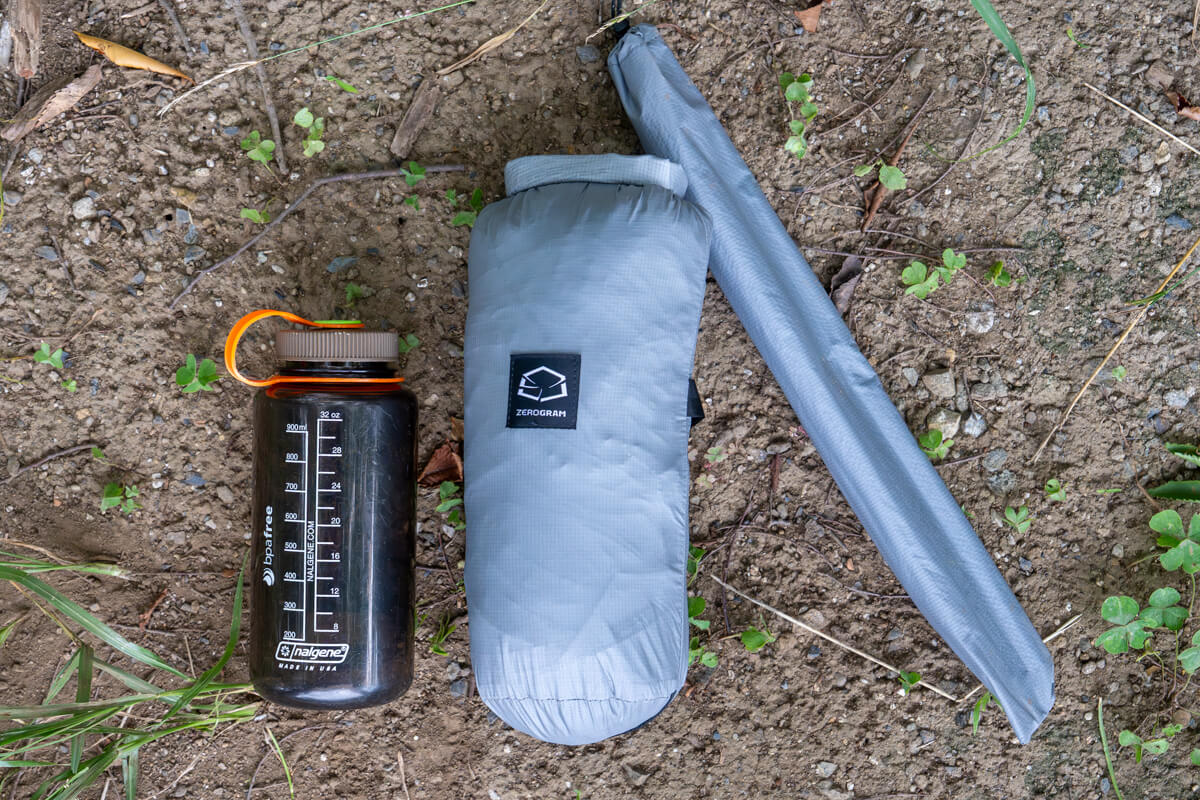
Even with the footprint, guy lines, pegs, and everything packed into the stuff sack, it's still this compact. Considering the comfort, it's incredibly compact
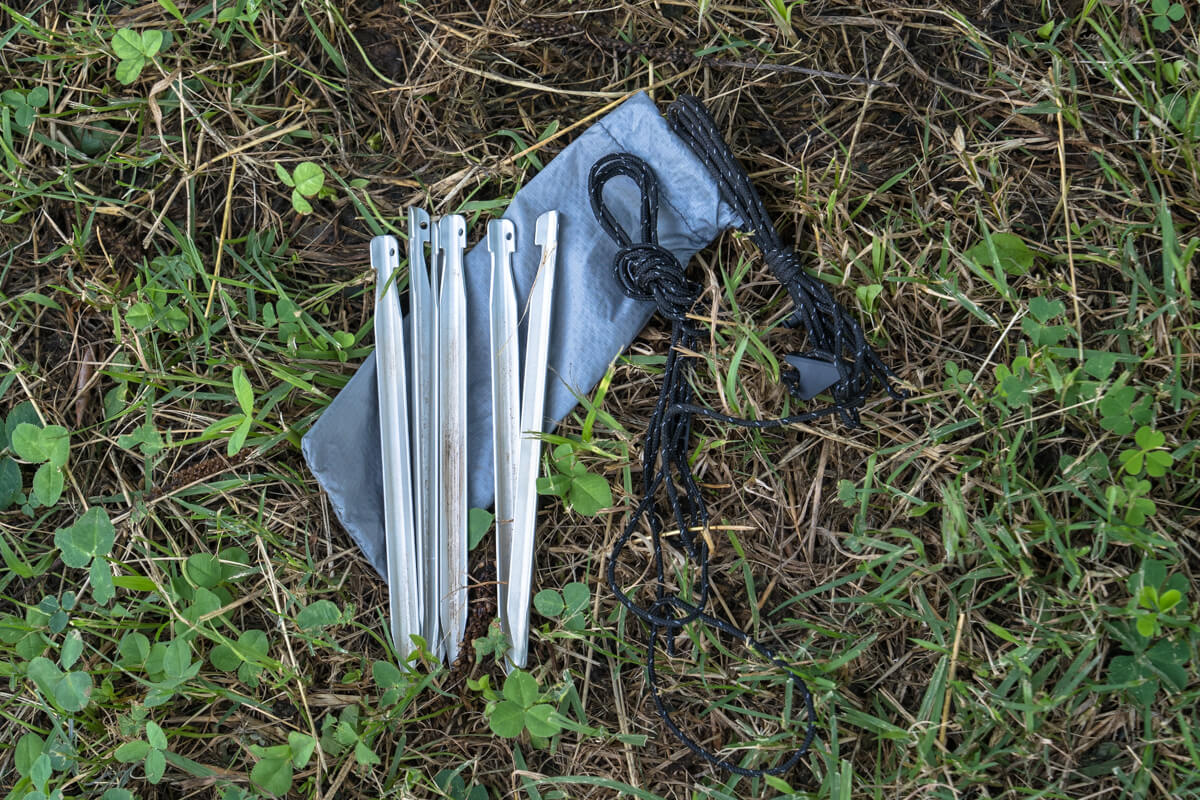
Two guy lines and six aluminum pegs are included as standard, but for a more solid and comfortable setup, it is recommended to have three more guy lines and one for the side vestibules
When I actually packed it, I could really feel how light and compact it was. The stuff sack is rectangular, which makes it easy to pack, and it's very compact even when all the accessories are packed inside
Setting up: It was a bit tricky the first time, but once you get it up it's easy to set up by yourself
the ZERO1 Pro , you need two adjustable trekking poles and at least six pegs (included as standard). It's not a particularly complicated structure, so anyone who has set up a non-freestanding tent or shelter will have no trouble.
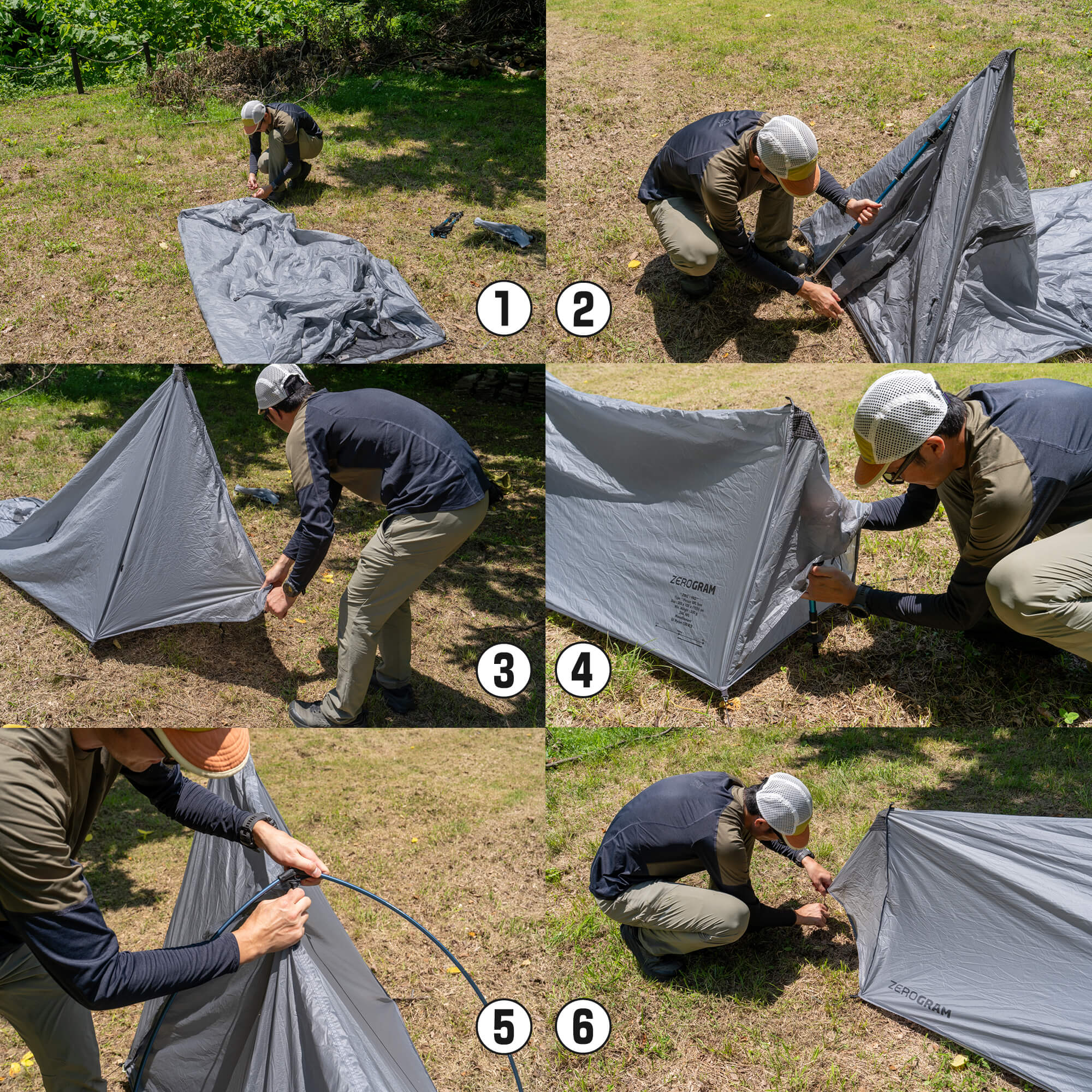
To set up, ① temporarily secure the four corners with pegs, ② set the front pole, ③ secure it with the pegs down, ④ set the pole at the base and peg it down, ⑤ set the outer frame, and ⑥ finally adjust the tension of each peg to complete the setup
When setting up, first lightly secure the four corners. The shelter's floor fabric is 15D ripstop nylon, which should be fine on soft ground, but if you're pitching it in a mountain environment, I personally recommend using a footprint (sold separately)
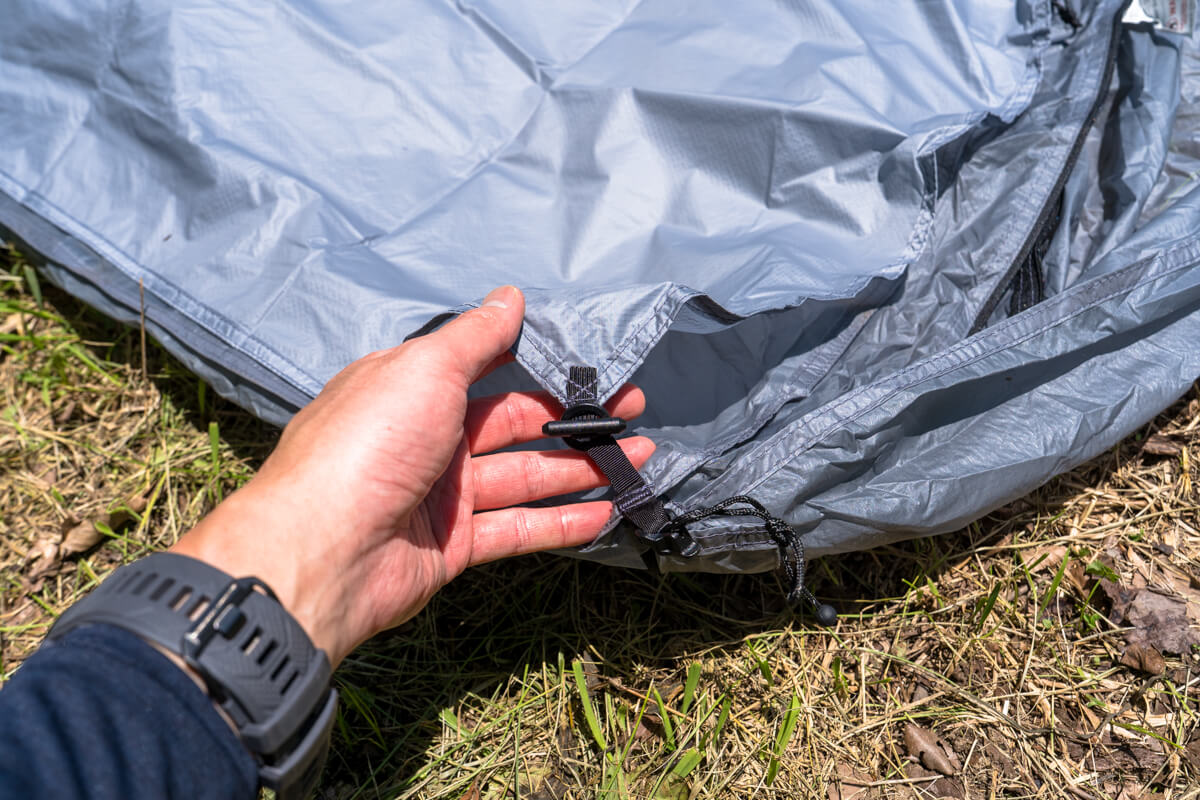
The four corners of the main body have rings for connecting a dedicated footprint (sold separately).If you store the main body and footprint connected together in advance, you won't have to re-lay it out every time you set it up, which is actually quite convenient (see photo below)
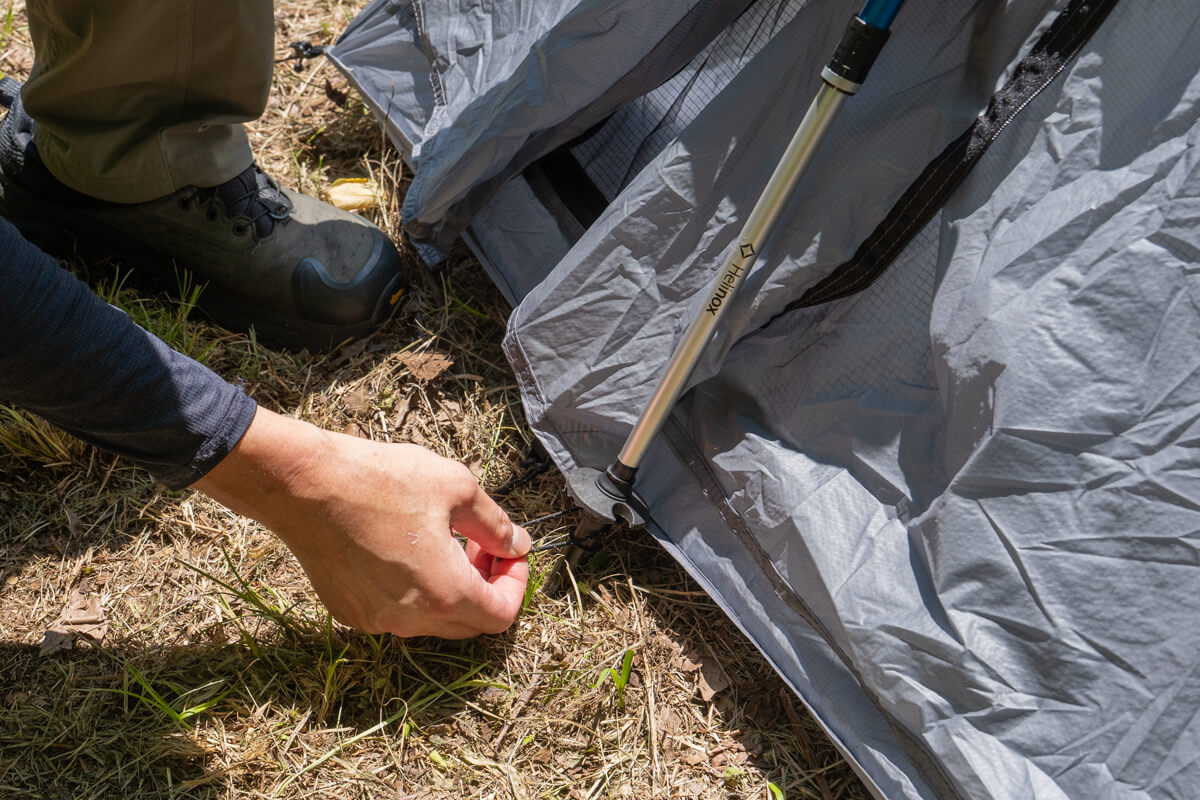
Once you have pegged down the four corners, start setting it up from the front pole. Simply extend the pole about 115cm and insert it into the ceiling where the reinforcement patch is located, then insert the tip of the pole into the floor cord at the bottom of the shelter, which has been newly added to this model. With the previous model, it was difficult to set the angle of the pole at first, but with this model, even first-time users can set it up with confidence
Once the pole is set up, peg down the end of the front door
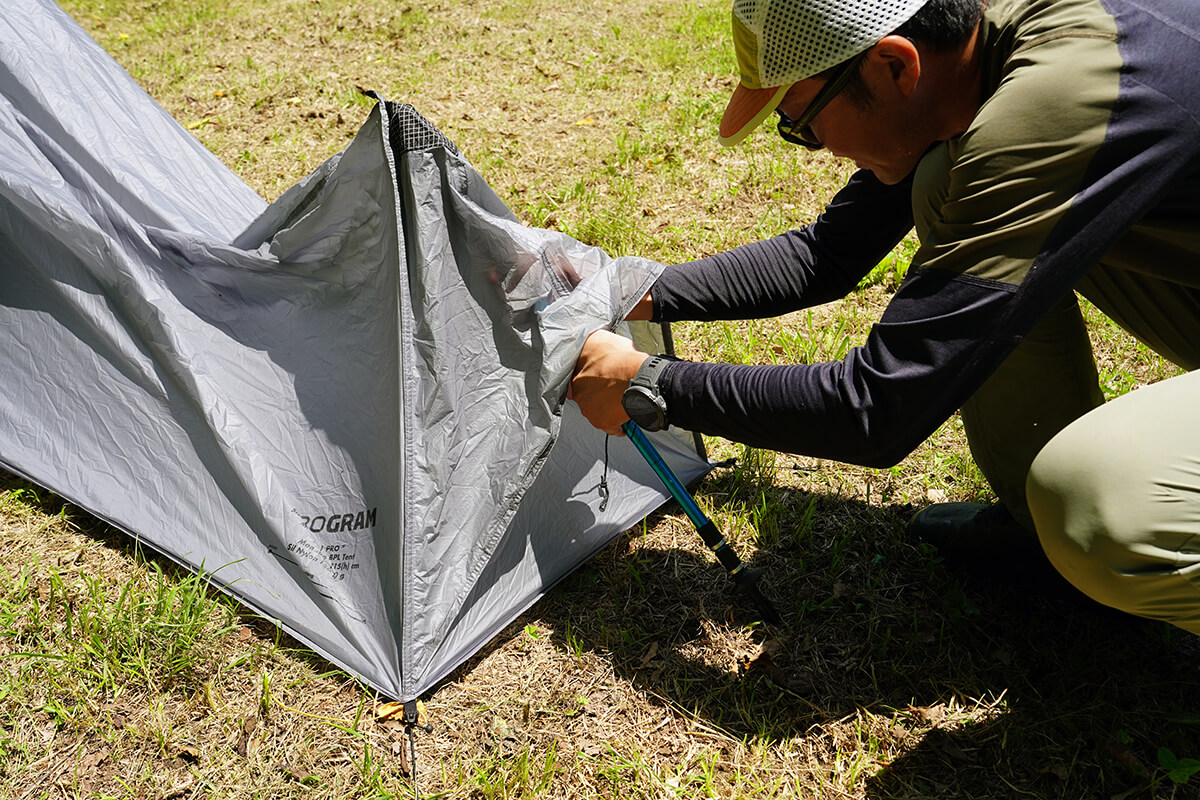
Next, set up the rear short pole in the same way. The official guide says the length of the short pole should be "around 63cm." I didn't have a zero-gram pole, so I tried using a pole from another manufacturer that was a similar size. When I set it up for the first time, I struggled a bit, not knowing if it was set up properly. This is purely my personal feeling, but when I first set it up, it felt like the floor was floating if the pole was longer than 63cm, and that the tension was somehow weaker if the pole was shorter
However, now that I've set it up a few times, I can say that "in reality, there was no need to worry about such subtle differences." Even if it was too high or too low, it wouldn't have a huge impact on the livability (although it might be a concern if you wanted it to be perfectly taut and wrinkle-free). I found that if I first set it up to about the length of two sections of the folding pole, and then adjusted the tension, it generally worked well, so if you think about it that way, it's not a problem if it doesn't fit perfectly from the start, so don't worry about it and just set it up temporarily and proceed to the next step without any problems
I set the short trekking poles at the back. At first, I struggled to find the right length, but in reality, as long as they were not too long, it was fine as long as they were taut
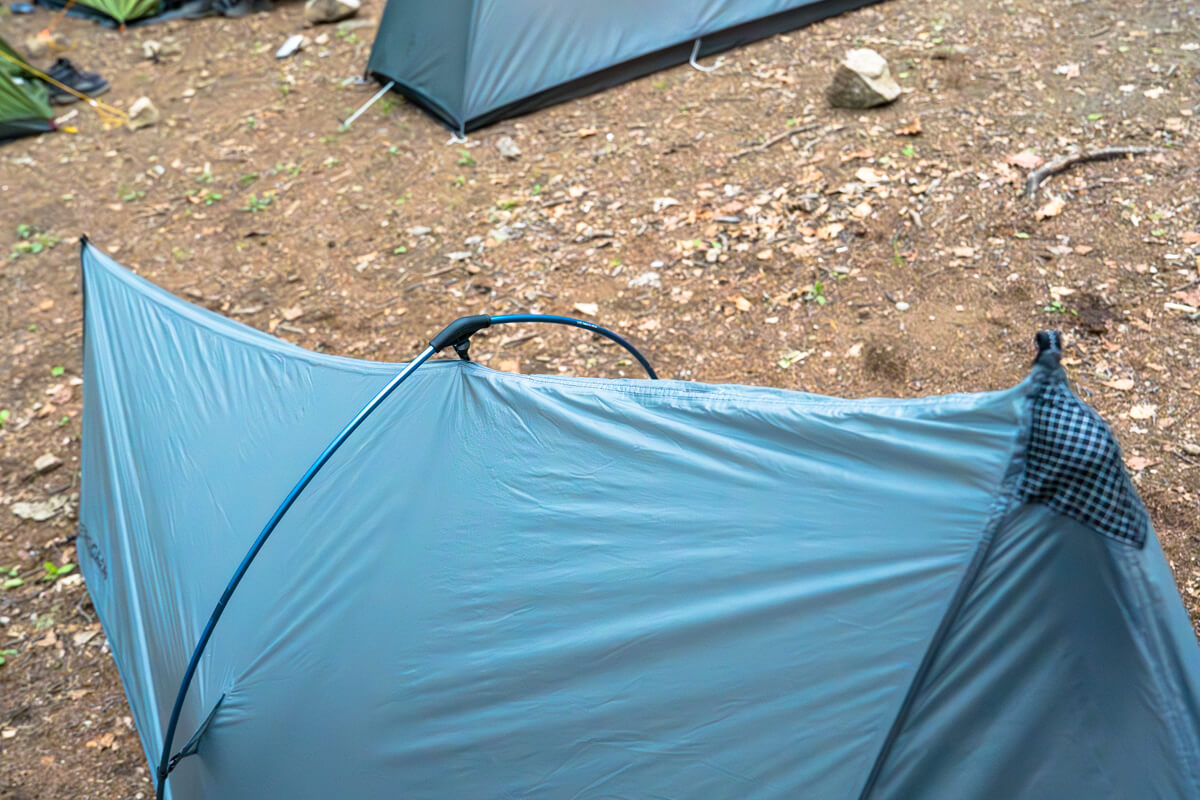
Once the poles were set up, the next step was to install the outer frame, which was the highlight of the trip.All it took was fixing the tip and hooking the central hub, which was easy to set up in no time at all
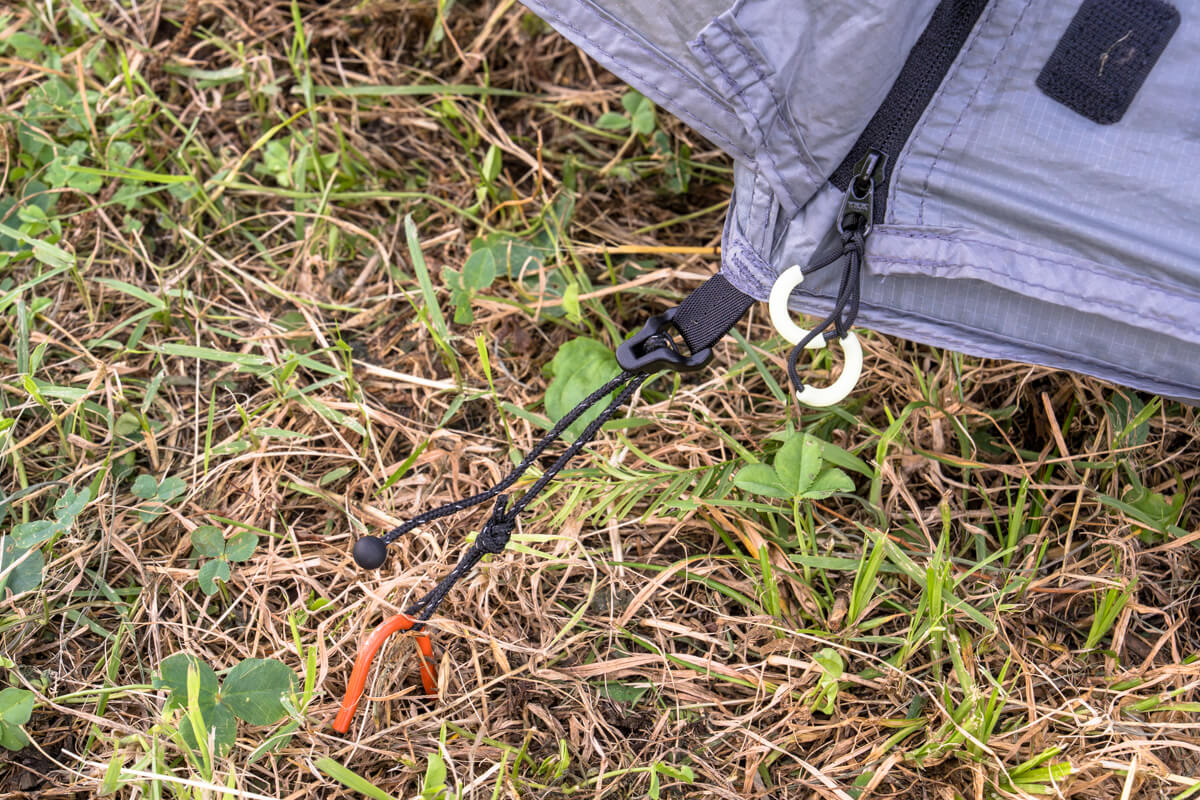
Once the tent is mostly set up, I check the peg points of the shelter again and adjust the tension. The new model has a secure cord lock for adjusting the length of the peg loops at each point, which makes adjusting the tension extremely smooth (see photo below). This small update is much appreciated
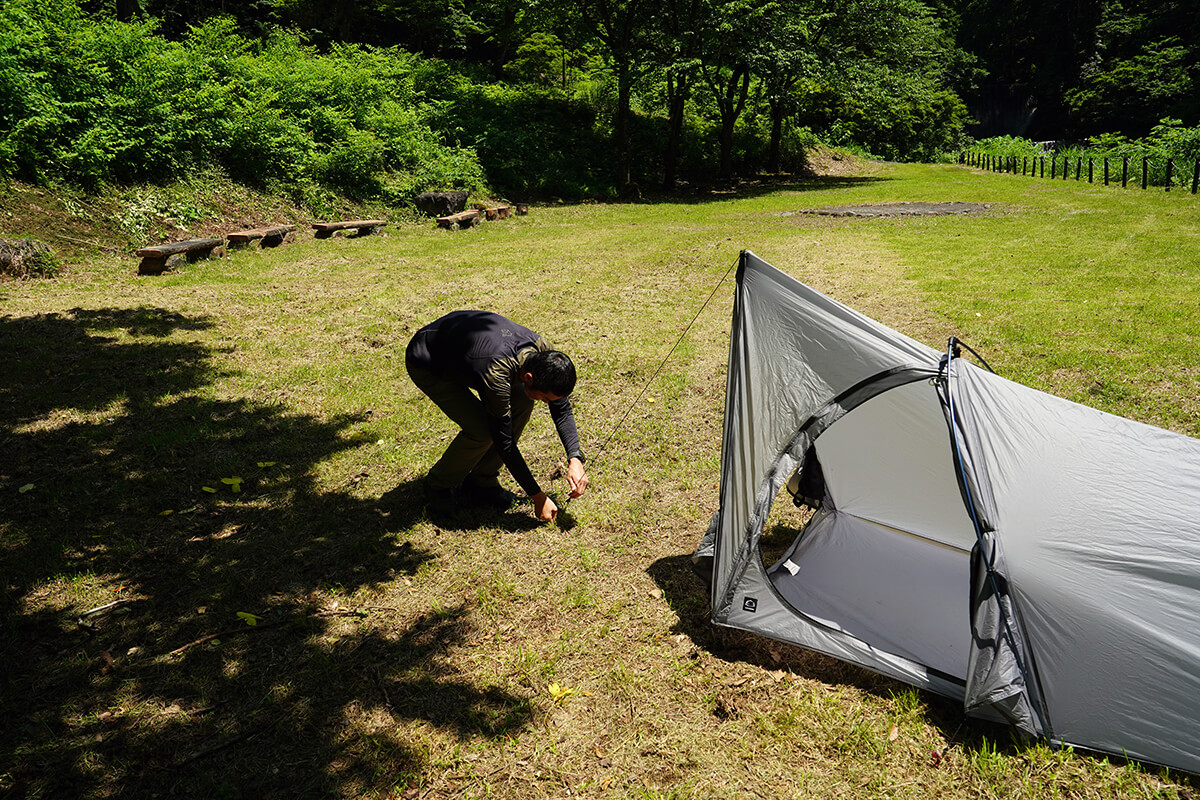
For even greater stability, or if you want to open the front door fully for maximum ventilation, you can attach two additional guy lines to the front and rear poles and peg them down (see photo below). In this case, the guy lines are included as standard, but you will need to provide your own pegs
Comfort and weather resistance: Comfortable and not cramped despite the limited space, with ample ventilation and high wind resistance
Compared to a typical double-wall freestanding tent, so-called trekking pole shelters like the ZERO1 Pro the ZERO1 Pro has unique design features that overcome these disadvantages (without compromising the benefit of its lightness).
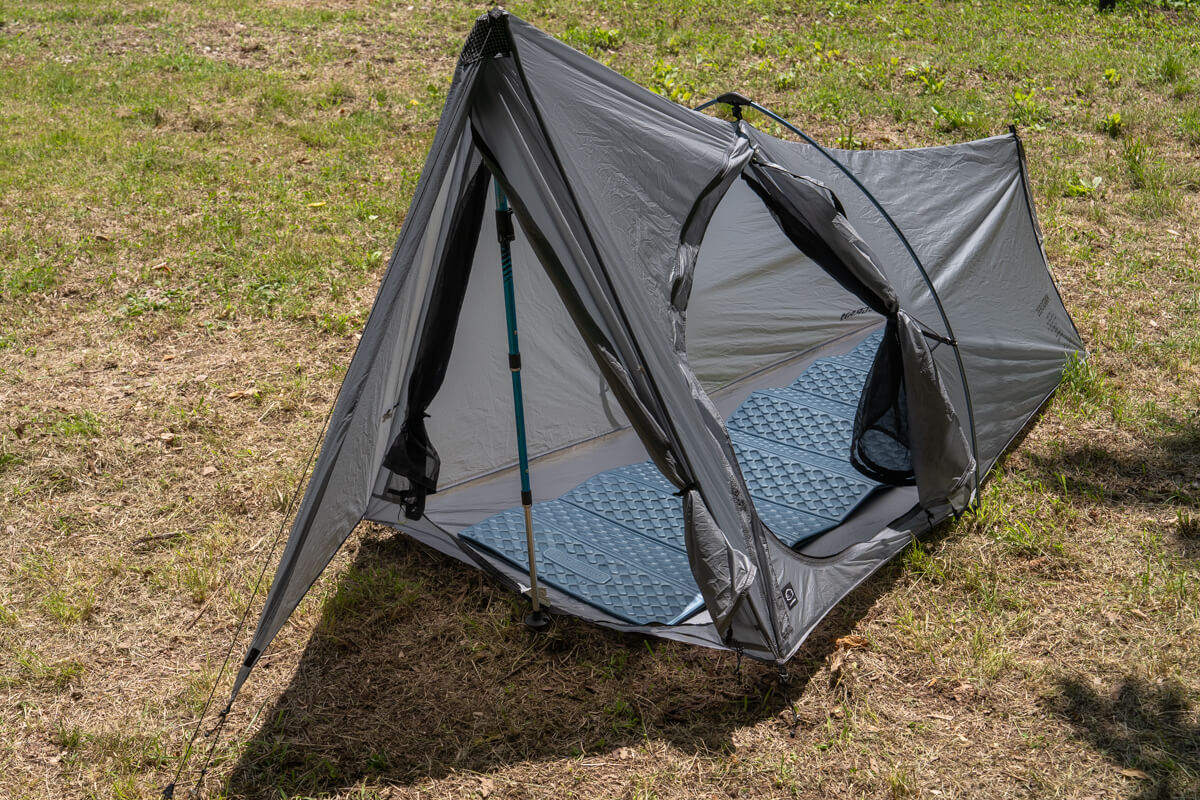
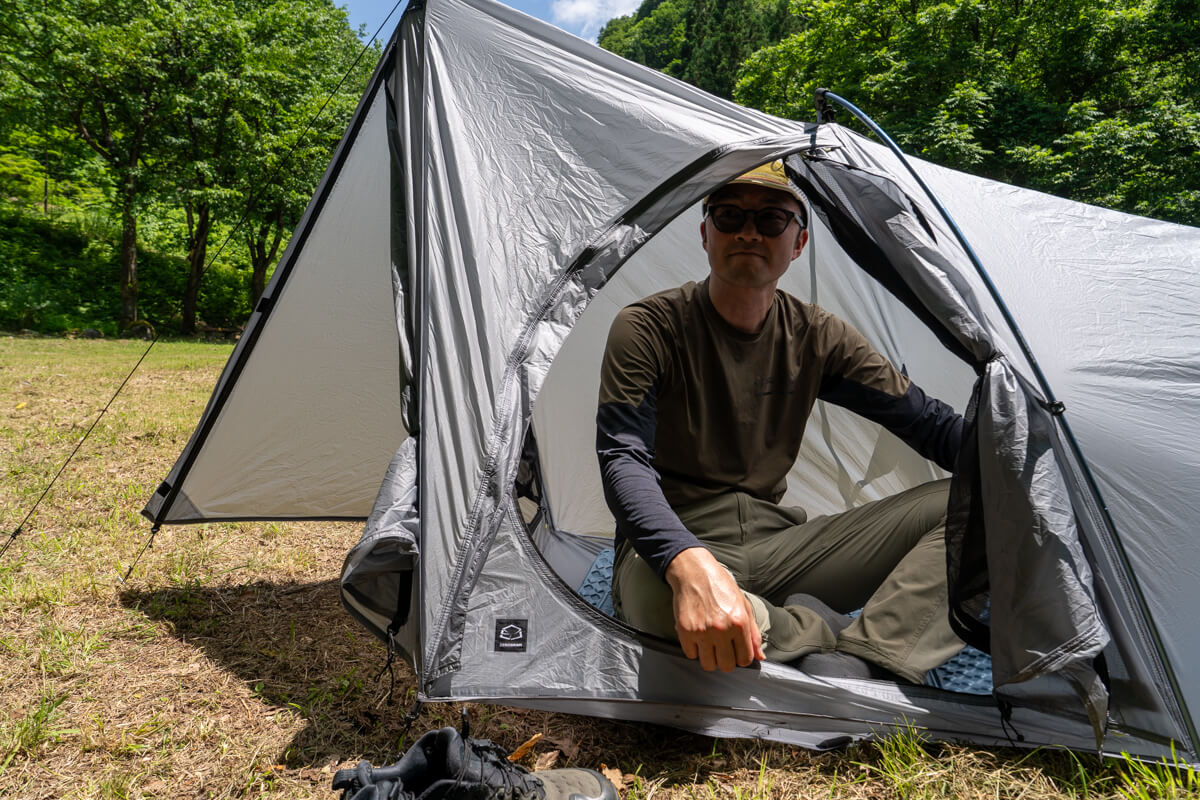
One of these innovations is the living space near the door. The ZERO1 Pro 's interior is designed so that the ceiling gets lower from the entrance to the foot area, so the living space you can move around freely is not exactly spacious. However, the floor width near the entrance is relatively wide at 100cm, the pole height is high at just over 110cm, and the vestibule can be used almost in the same way as the inner space, so it doesn't feel as cramped as you might think, and there is plenty of space to stay comfortably alone. Another major advantage is the large door on the side that lets in air and light.
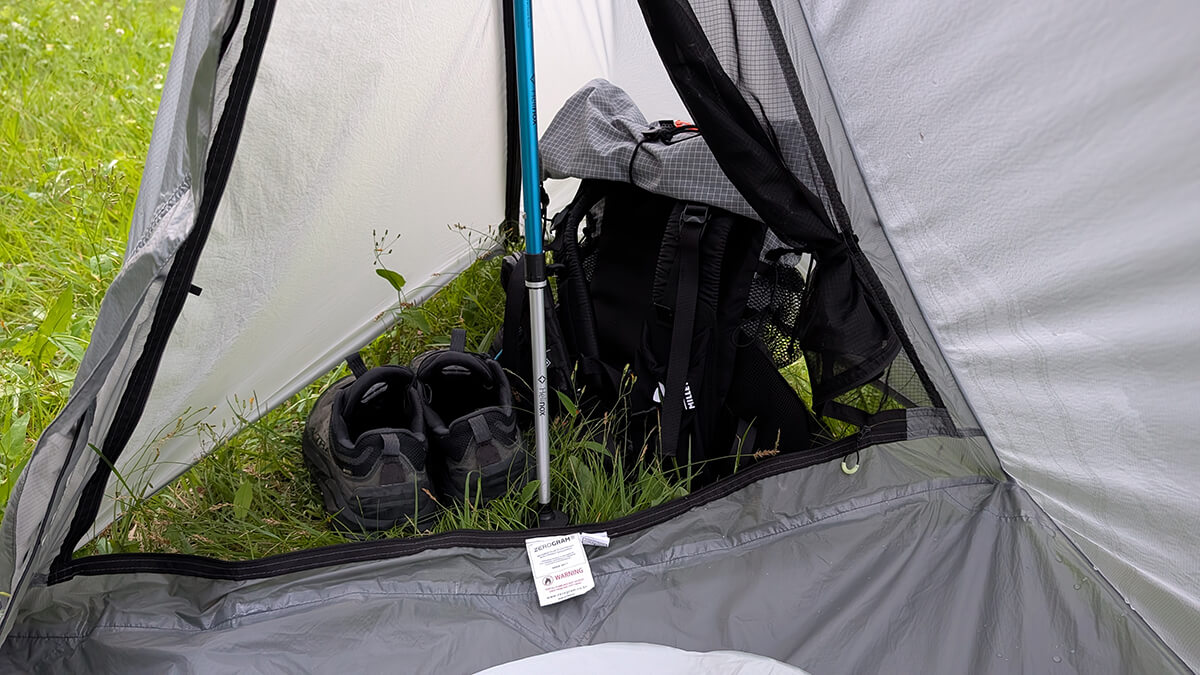
The front vestibule space can be used simply to store backpacks and shoes, but it can also be used as a space for cooking when you're worried about rain or wind. There's a pole in the middle (I wonder if there's anything that can be done about this) so it's not particularly spacious, but it's enough space for one person to do some work
The large door on the side (see photo below) can be opened on sunny days or turned into a mesh door, allowing light in and creating a sense of openness. It also has excellent ventilation, making it easy to get in and out
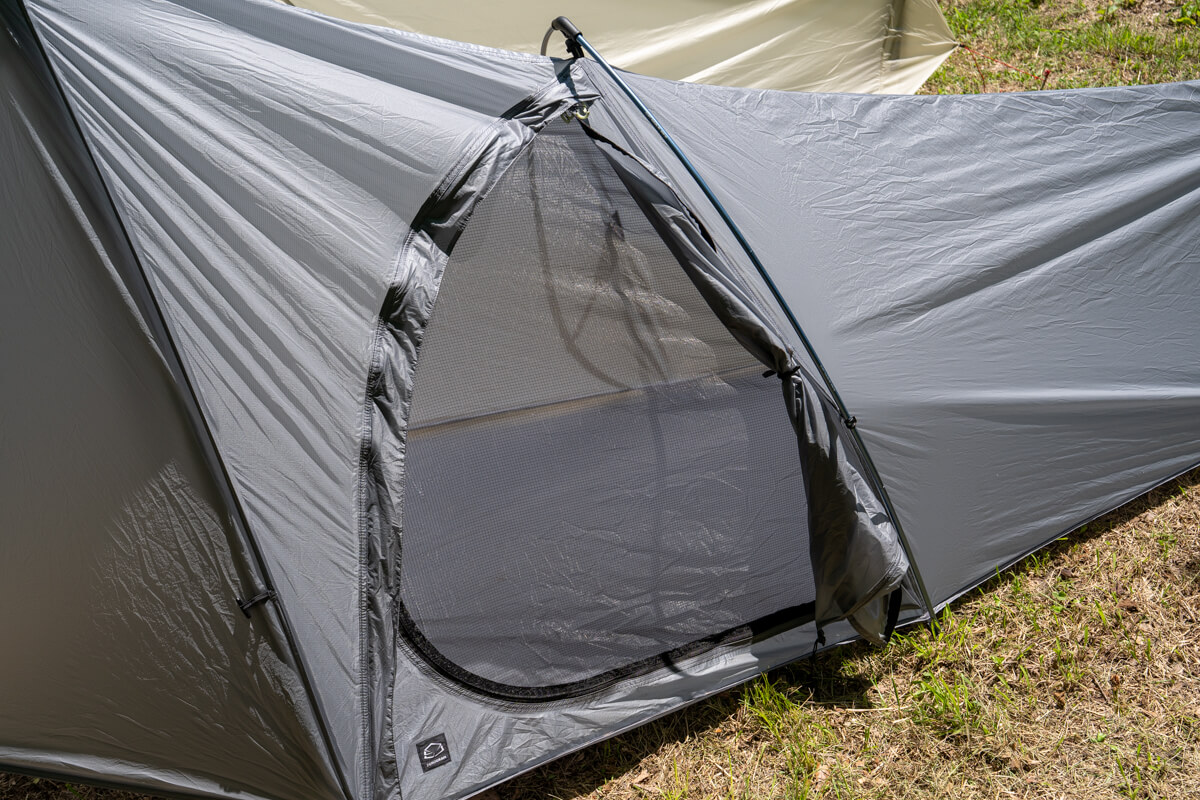
Of course, the head space is spacious and your head won't get stuck
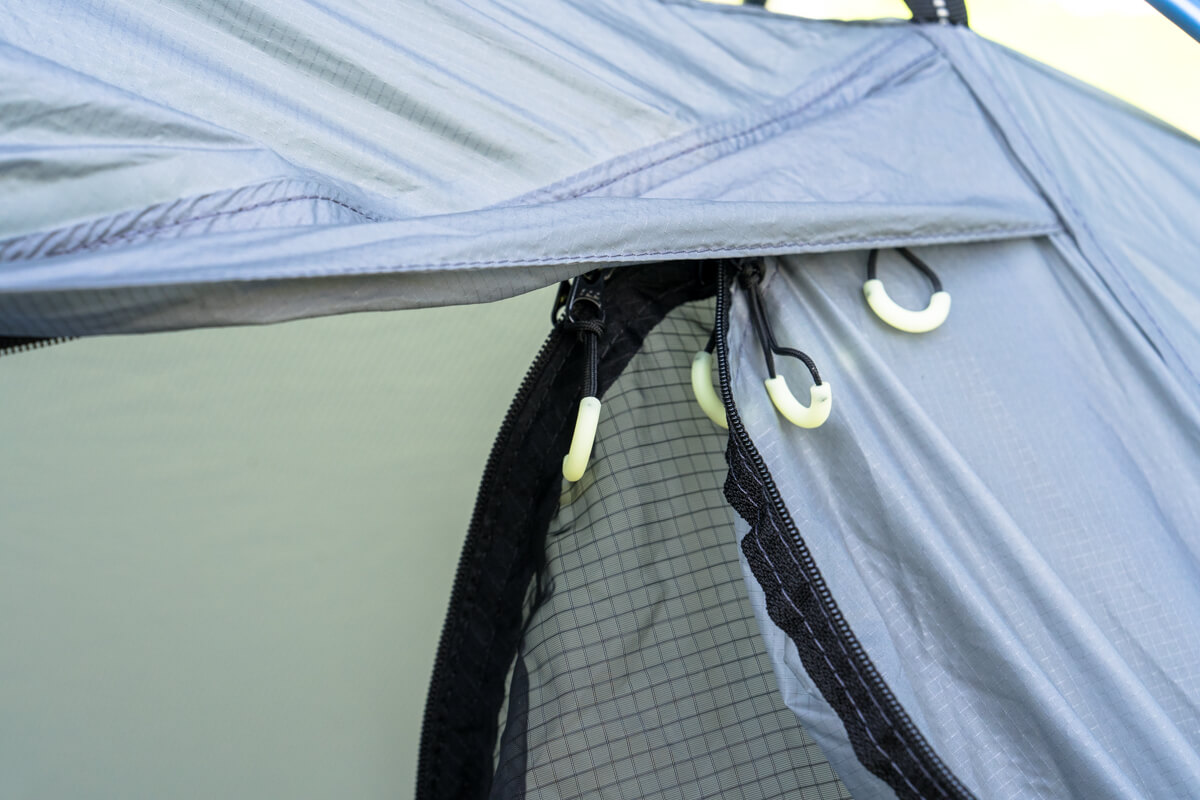
The door zipper, which is equipped with a rain flap to prevent rain from entering the shelter, also has a mesh net and a toggle to roll up and secure the door, so it can be kept open (see photo below). The zipper pull is made of luminous parts, making it easy to see even in the dark
What further improves this living comfort is the addition of a new central outer frame to this model. Previous models only had guy line points, which meant the side walls would sag and the interior space would become smaller. However, this pole keeps the side walls under tension, making the living comfort even better than before
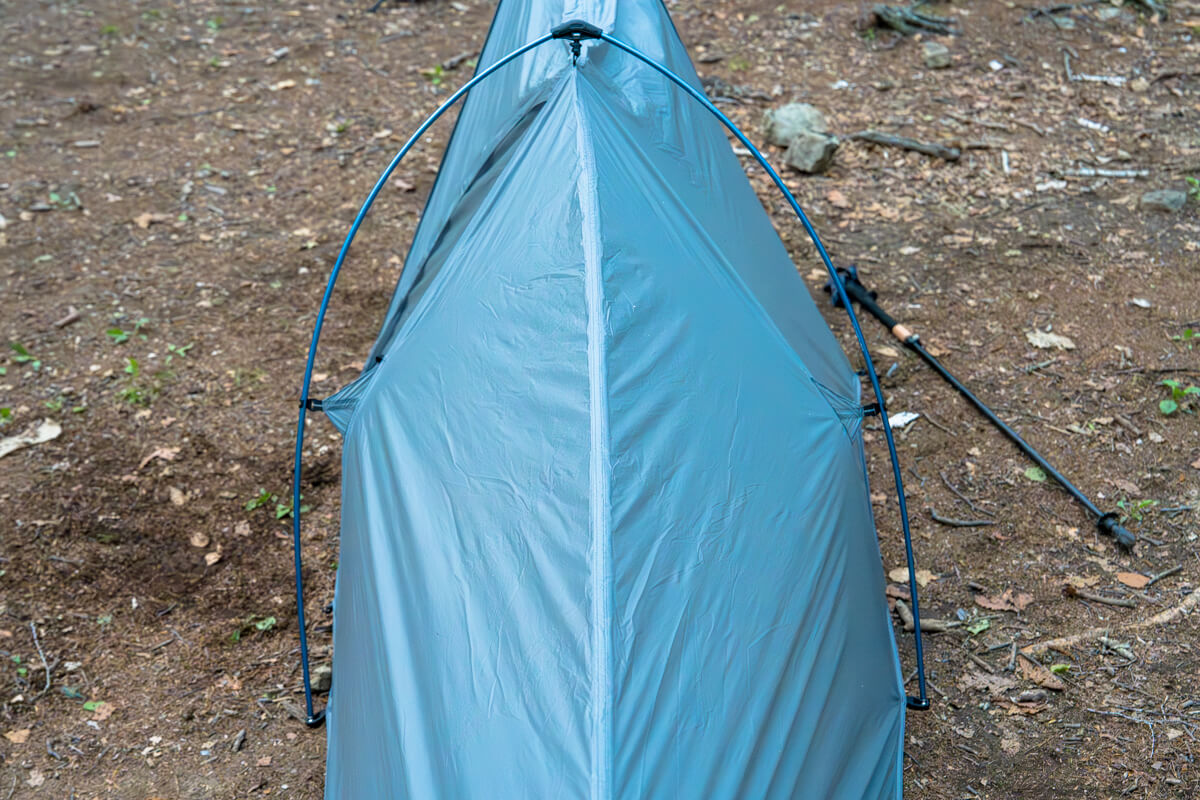
When comparing the size and tension of the interior of the tent with the previous model, the spaciousness of the interior is immediately apparent (photo below)
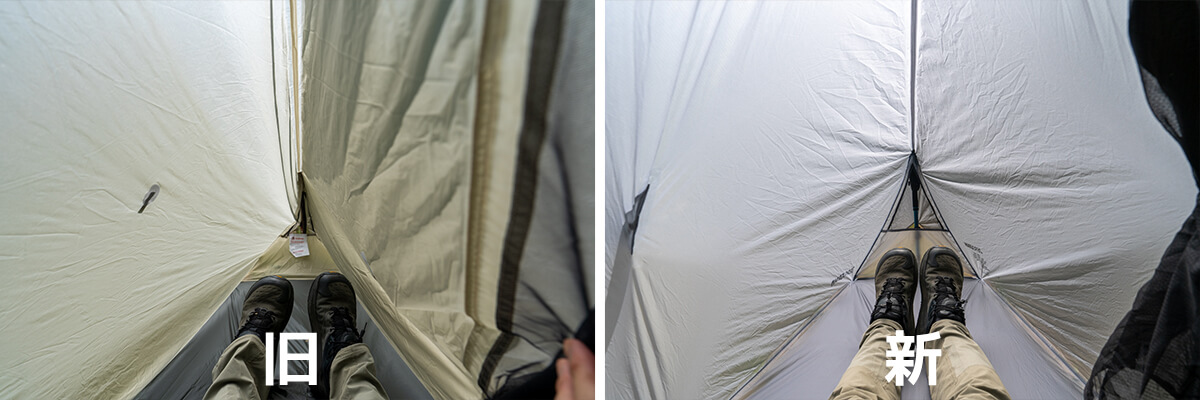
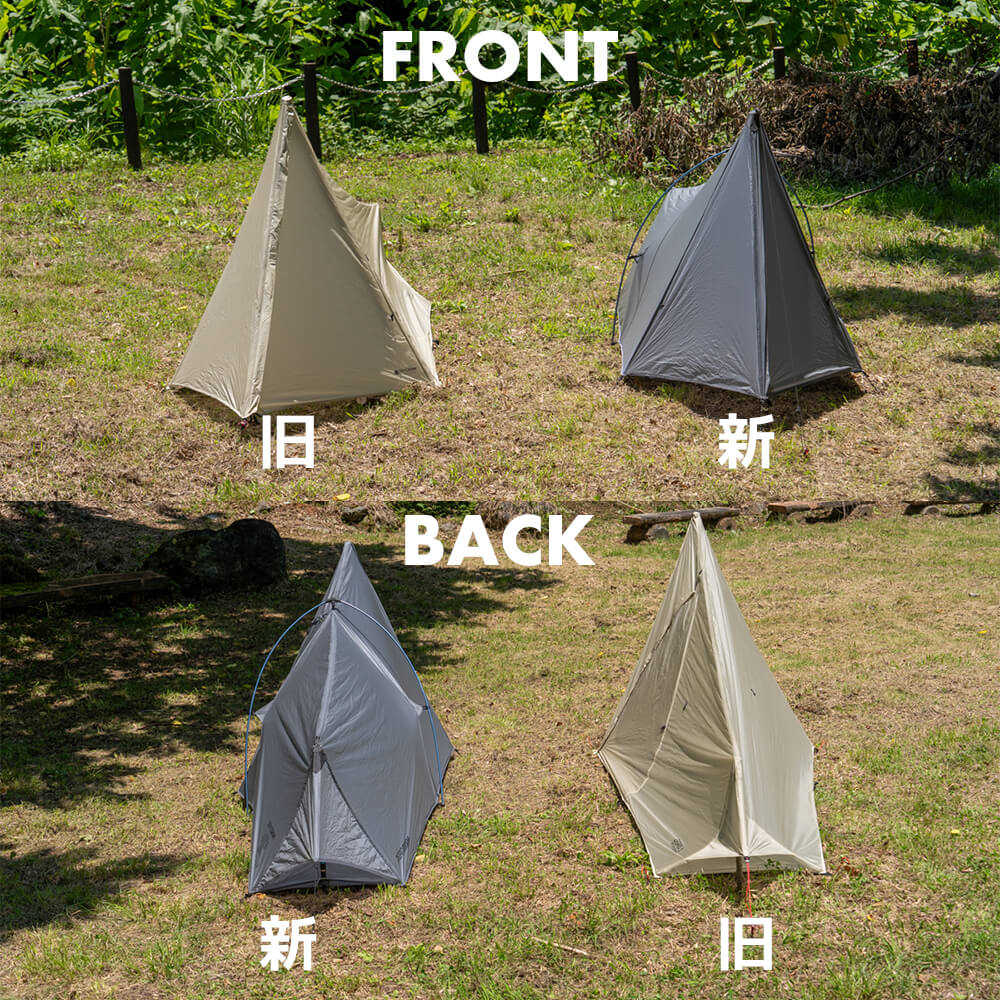
Slack in the sidewalls may only be a little narrow in calm weather, but condensation during the night can cause loose inner walls that are clearly uncomfortable, and if you are stranded in bad weather, the wet walls can come into contact with your body or sleeping bag, making the discomfort and risk even more noticeable
Furthermore, the poles apparently strengthen the sturdiness of the shelter itself (it withstood winds of over 30 meters in a lab wind test). When we actually set it up in some pretty strong winds, we were impressed by the fact that it was extremely stable against strong winds, not only due to the reinforcement provided by the poles, but also because the side walls and floor are integrated, making it difficult for the tent to be blown up by strong winds from below, and the low ceiling makes it easy to deflect the wind
The poles themselves are detachable (i.e., they can be set up without them) if necessary, but once I realized how much comfort and safety it brings with just 100 grams, it has become such an essential part that I personally wouldn't want to live without it
Improved breathability and ventilation
the ZERO 1 Pro that the manufacturer touts is the improved ventilation performance (reduction of condensation), which is a common weakness of single-wall shelters. When I checked this, I could see that they had made some careful efforts.
First of all, near the entrance, where you will likely spend the most time inside the tent, the wind naturally passes through the front and side doors, so as long as these are left open, heat will hardly build up
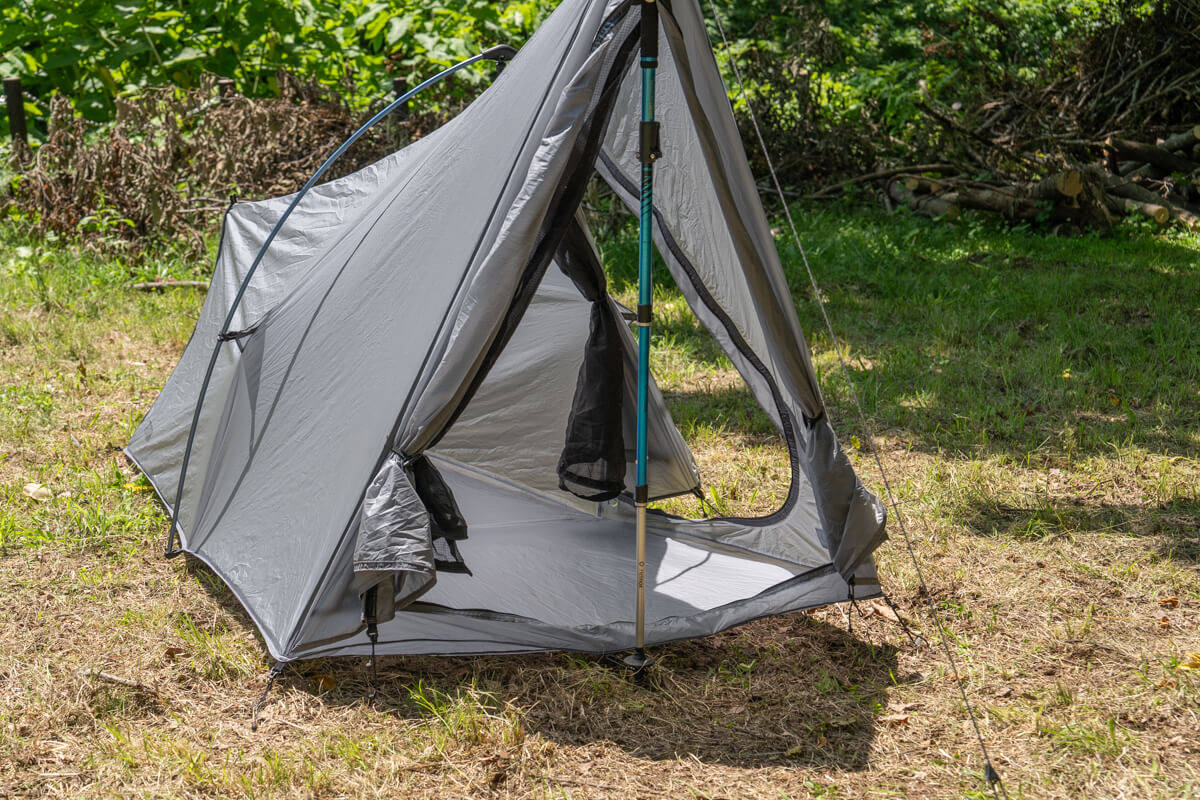
On the other hand, even if the door is closed during rain or when sleeping, the relatively large monofilament mesh window (with a roof to prevent rain from blowing in) located at the feet ensures air passage from a total of three sides, including the front and sides, providing better breathability than a typical trekking pole shelter (see photo below)
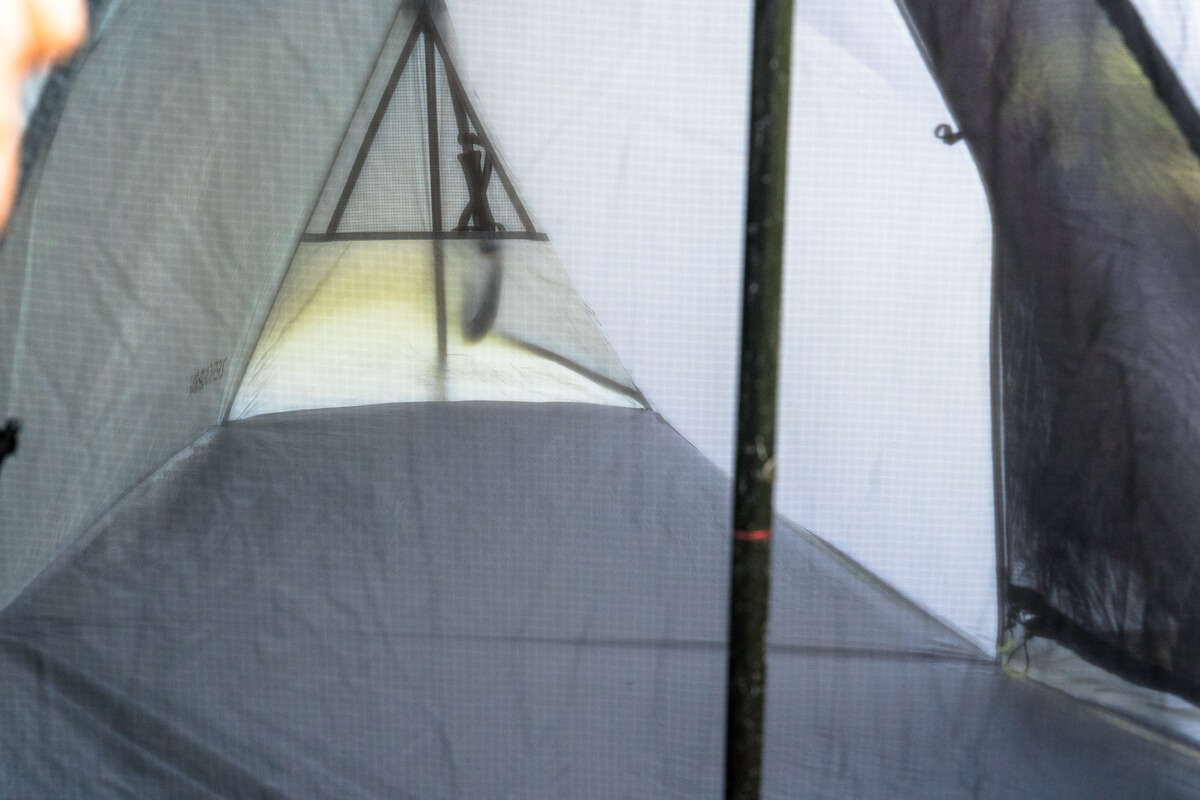
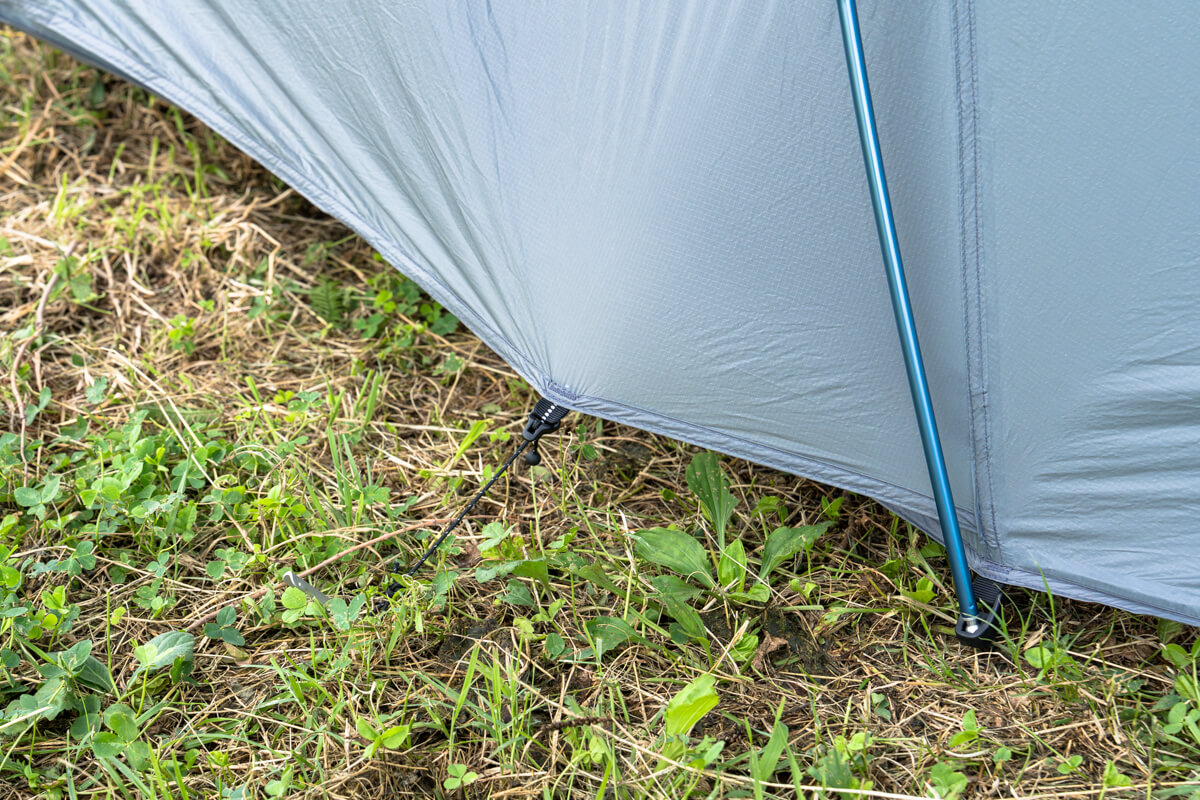
Incidentally, in the previous model, when the door was closed the side became a complete wall, reducing ventilation, but in the new model, guy lines have been placed at the bottom of the long side door (see photo below). This creates space between the mesh door and the fly, further promoting ventilation by air flowing in and out from below
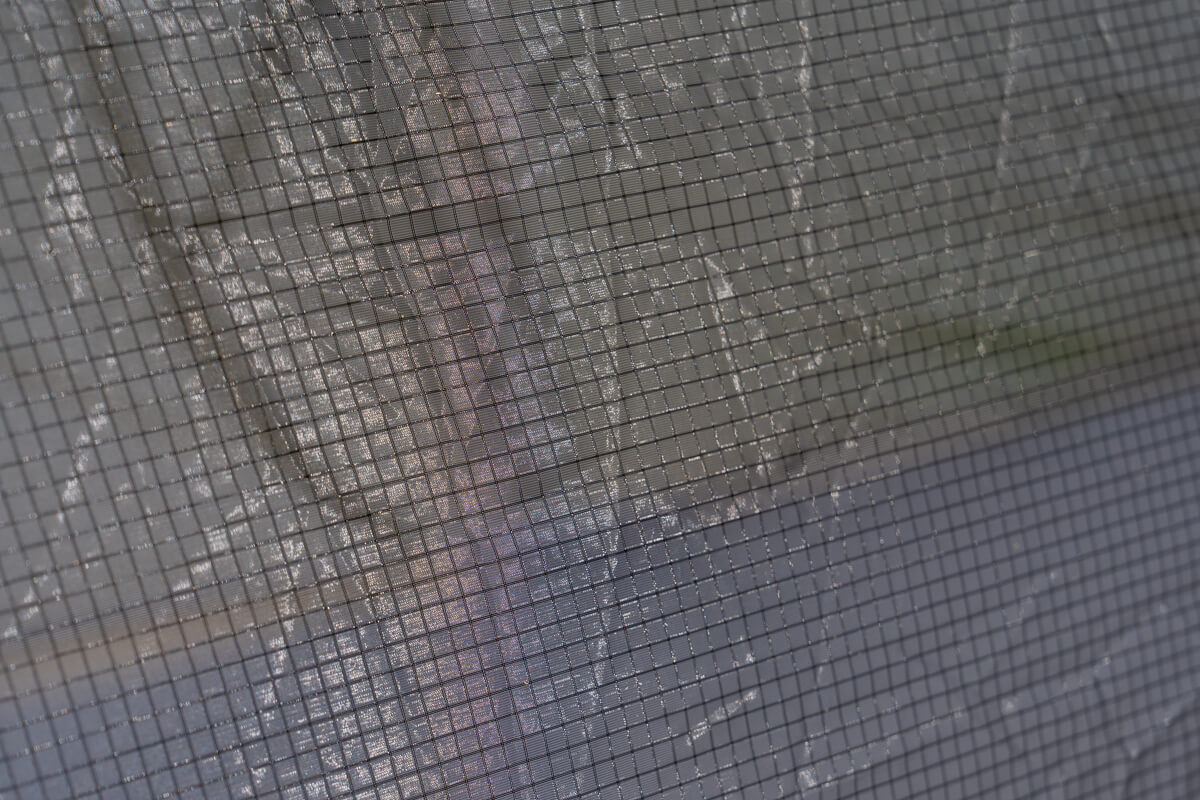
The monofilament mesh, which is also used in other Zero Gram tents, has the advantage of being more water-repellent than regular mesh. Even if condensation does occur, it is less likely to form droplets, which is another advantage that other manufacturers do not have as a condensation prevention measure
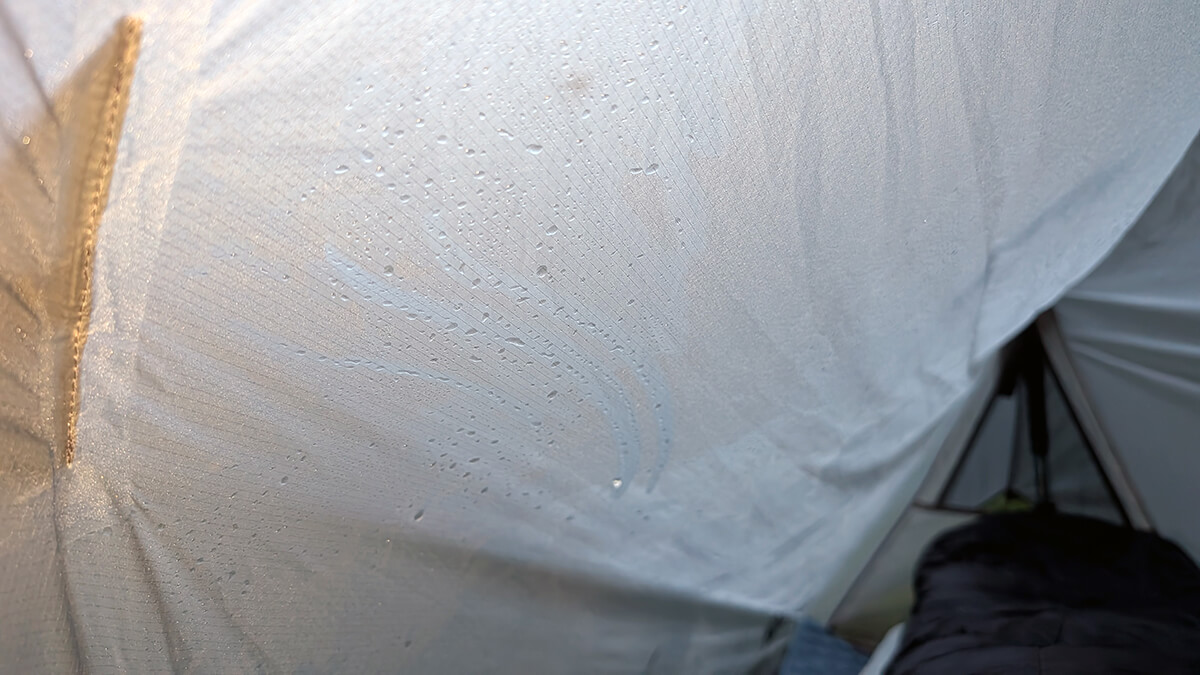
I actually spent the night in it a few times, and of course it's still not possible to have a tent that doesn't get condensation, and it depends on the environment, so it's not possible to have no condensation at all, but I could definitely feel the effect
In terms of condensation, with conventional enclosed shelters, including the previous model, you couldn't complain even if the walls got soaked with condensation, but with this model, even if condensation did occur, it didn't drip down, but rather droplets formed on the surface of the walls, and when you rubbed them together, they formed beads. Of course, this isn't the case every time, and it was only the most intense condensation I experienced during several test sleeps, and of course there were nights when there was even less condensation. I think the degree of condensation will vary depending on weather conditions, etc
Summary: The best solution for hikers in 2025 who want a comfortable and safe night's sleep while still maintaining the advantage of lightness
the Zero Gram ZERO1 Pro has only slightly adjusted its lightness compared to its predecessor, but has also achieved significant improvements in comfort and durability. It can be said to be the next generation of ultra-lightweight trekking pole shelters, achieving a higher level of both lightness and livability than its predecessor. In fact, this is no longer a tent or a shelter; it may be said to be breaking new ground in a new genre, the ultra-comfortable bivy sack.
This tent is very attractive for lightweight hikers and mountaineers who want to combine lightness and security, from hiking in low mountains to traversing high mountains where they stay in a tent site that is less affected by the wind, and who are a little worried about tarps and tents, but find mountain tents and large shelters a bit heavy
As an aside, although this test only covered general mountain climbing and hiking, I personally feel that it would also be good for overnight mountain stream fishing (sawa-no-bori). This is because this shelter perfectly combines all the elements necessary for overnight stays in a stream: lightweight, comfortable, weather-resistant , and insect-resistant. What's more, if you're in a stream (forest), you don't need trekking poles; you can use standing trees instead, and you could even pitch this tent using ropes strung between trees. I'll definitely try staying overnight in a stream with ZERO1 Pro
Enjoy a wonderful mountain trip with `ZERO1 Pro , which is not just lightweight but also has a high level of balance
Please consider a paid membership to support the site while enjoying exclusive offers and content!
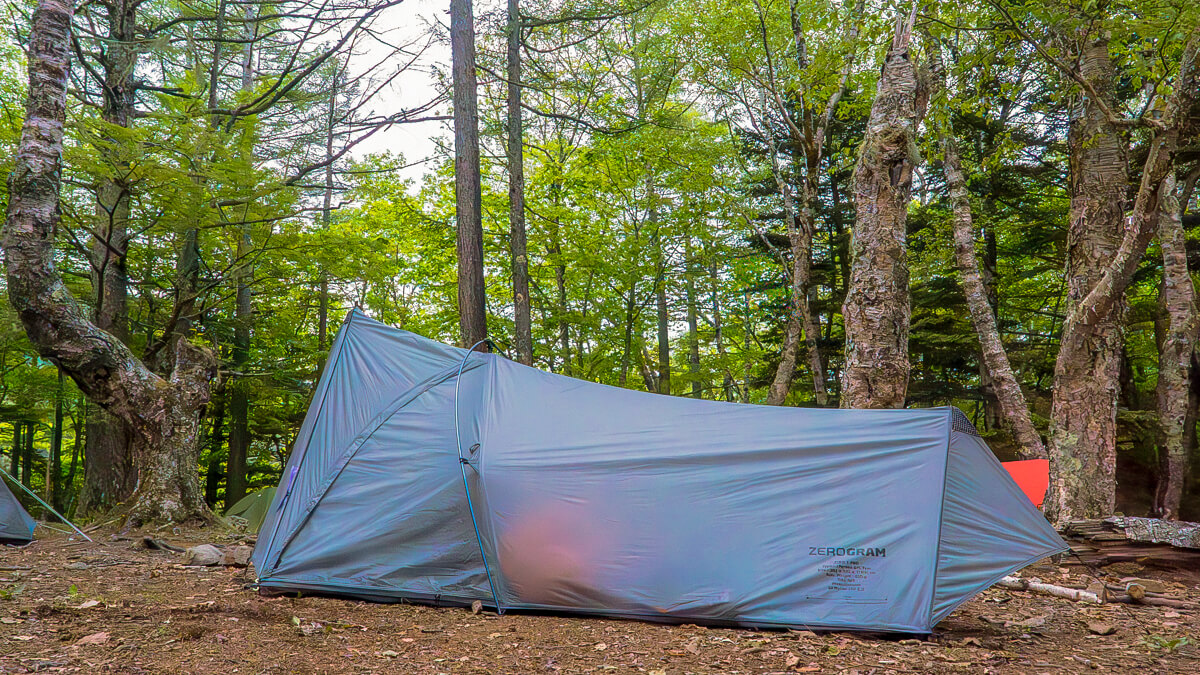
Related reading
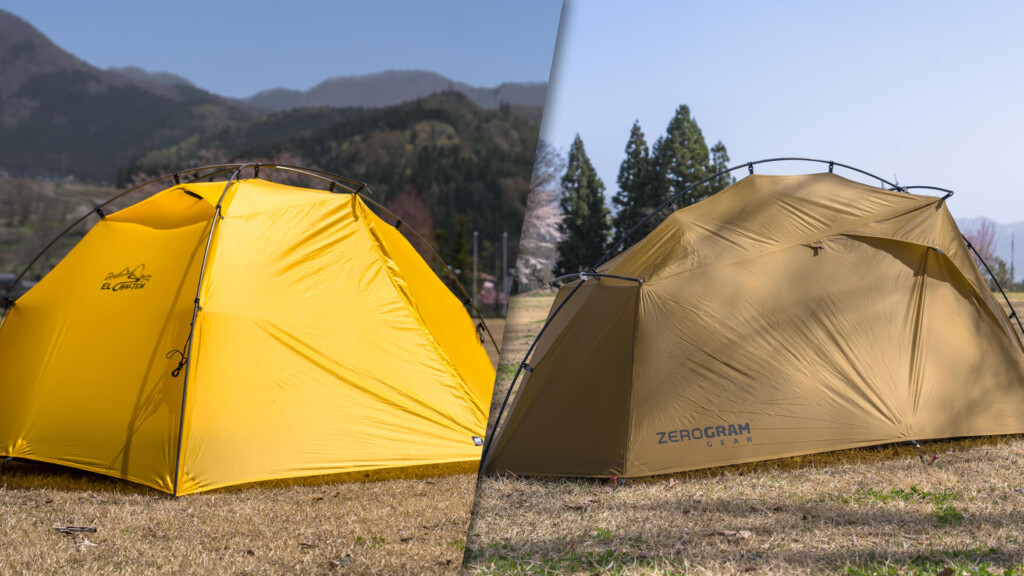 ZEROGRAM Thru Hiker 1p ZEROBONE / EL CHALTEN ZEROBONE 1.5P Review: Two double-wall tents that offer modern comfort while also being unique and appealing
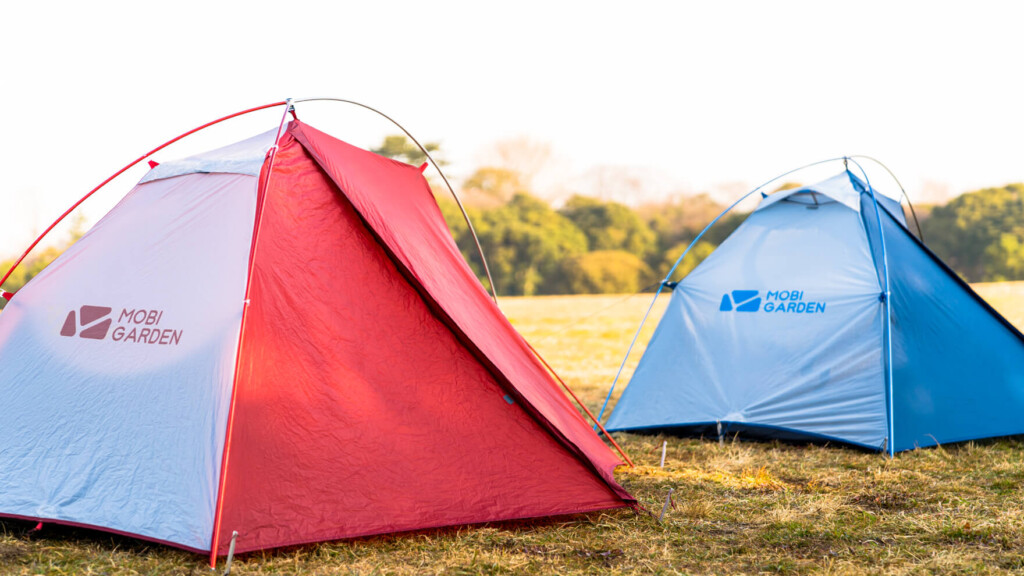 Performance, quality, and price are all reasonable. A review of the Mobi Garden LIGHT WINGS DAC UL1, a highly cost-effective product known only to those in the know
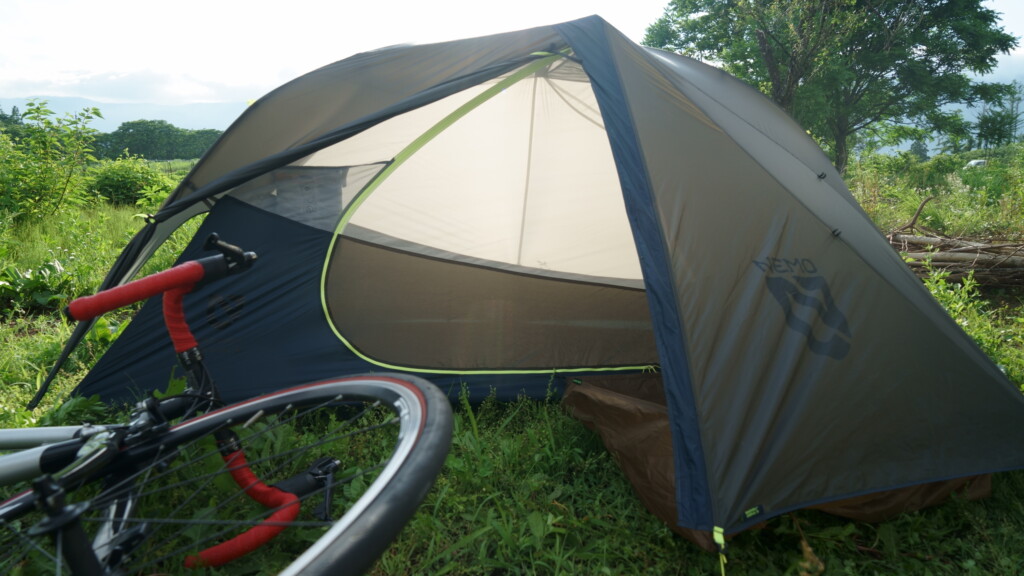 [An Honest Review] NEMO Dragonfly Bike Pack 1P: It's a waste to keep it just for touring! A comfortable and convenient freestanding tent for hiking
 Surprisingly light, yet strong and comfortable, and reasonably priced. The Arata AX Series, packed with innovative ideas, offers a new perspective on freestanding mountain tents. [Practical Review]