



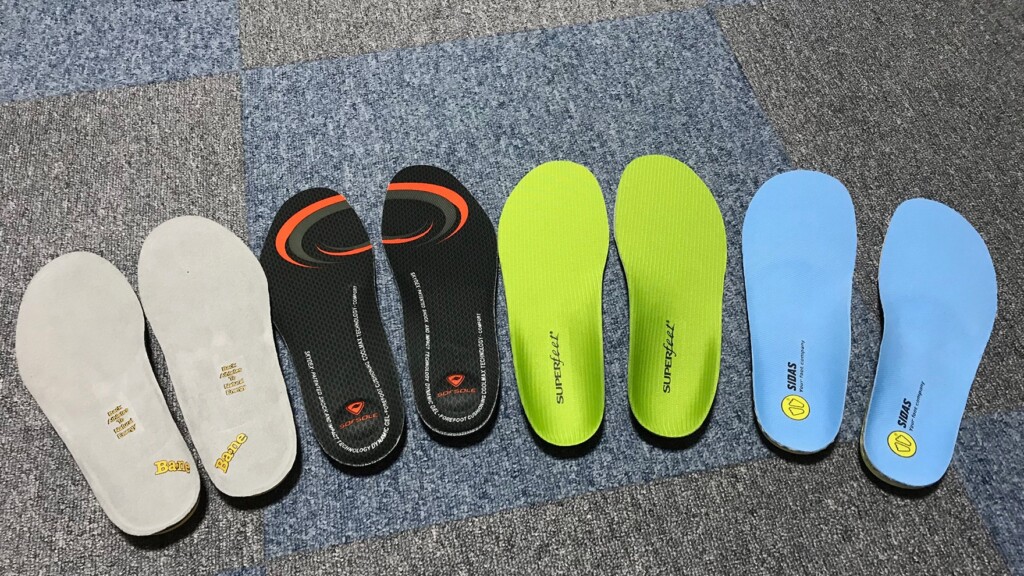
Comparison Review: What's the difference between insoles that are strong for running? We compared them on a trail
Written by Outdoor Gearzine Editorial Department
It goes without saying that you want to run and climb mountains in the best possible condition for performance. I'm sure everyone feels the same way
In particular, you want to avoid problems caused by foot injuries or bad habits. This time, I'll be reviewing insoles, which are surprisingly often overlooked . By simply replacing the insoles that come standard with your shoes, some people can reduce the strain on their feet and hips and improve their performance.
Of course, since everyone's foot shape and running habits vary, effects and preferences will vary. With that in mind, I tried out some insoles that I had been interested in for a while, to tell you about the differences between manufacturers and models and which ones I preferred
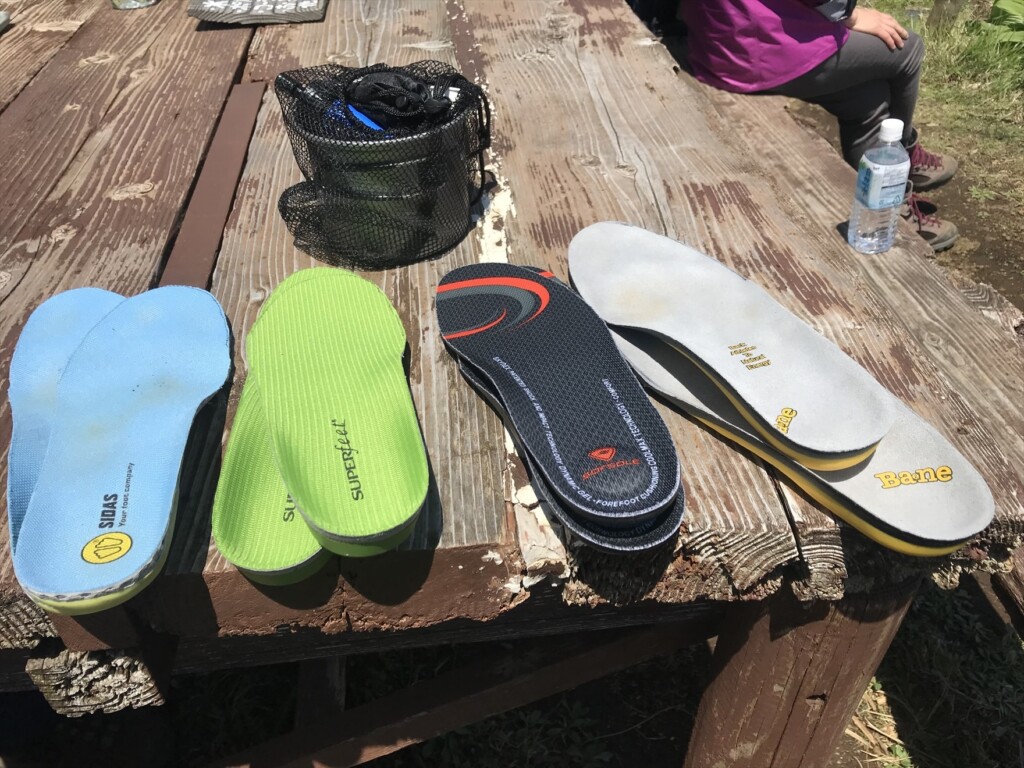
table of contents
table of contents
- About the items tested this time
- Test Results & Spec Comparison Table
- Impressions of each item
- Summary (overall review)
About the insoles compared this time
I basically chose running models from each manufacturer. I tried them out repeatedly on the Tanzawa Mountains (Tonodake, Tanzawa, Hirugatake, Nabewariyama, etc.). I evaluated them based on the following three points
- Comfort: Naturally, we evaluate whether the insole is comfortable or not. The main judging points are comfortable arch support and the sensation when landing and pushing off. We also took into consideration the insole's moderate hardness against the sole of the foot, its breathability after prolonged use, and other factors
- Fatigue reduction: Simply try using the insoles and see if they reduce fatigue. Determine whether you feel that the strain on your calves, knees, hips, etc. is reduced. (It's difficult to generalize, as it depends on your physical condition, individual differences, the duration of use, and the field.)
- Fit: We judged the fit by putting our feet in. The main criteria were whether the arch support was adequate and whether the heel and upper provided adequate support. We also assessed the fit during activities, such as whether the entire sole of the foot had grip
Test Results & Spec Comparison Table
| evaluation | AAA | AAA | AA | A |
|---|---|---|---|---|
| item |  Spring insole basic Spring insole basic |  SIDAS Run 3D SIDAS Run 3D |  SUPERfeet Green SUPERfeet Green |  SofSole Air Plus SofSole Air Plus |
| Reference price | 8,640 yen | 5,400 yen | 7,560 yen | 7,560 yen |
| Here is ◎ |
|
|
|
|
| Comfort | ★★★★★ | ★★★★☆ | ★★★☆☆ | ★★★☆☆ |
| Fatigue reduction | ★★★★☆ | ★★★★★ | ★★★★☆ | ★★★★☆ |
| Fit | ★★★★☆ | ★★★★☆ | ★★★★☆ | ★★★☆☆ |
Impressions of each model
SUPERfeet Green



 Developed based on data from one million feet, SUPERfeet . This time, I selected the basic "Green" model for trail running. Featuring a biomechanically engineered heel cup, it offers the best support and shock absorption in the lineup. While the fit is a little stiff, it firmly lifts the area below the inner ankle and encases the fat layer of the heel. For those who land on their heels, the support is incredibly reassuring. Perhaps because the support is enhanced by the body's own fat layer, strain on the knees and hips is naturally reduced. Running in the shoes reveals a slight stiffness (especially in the toe area), but the support is impressive. A welcome bonus is the natural coating, which inhibits the growth of odor-causing bacteria.
Spring insole basic
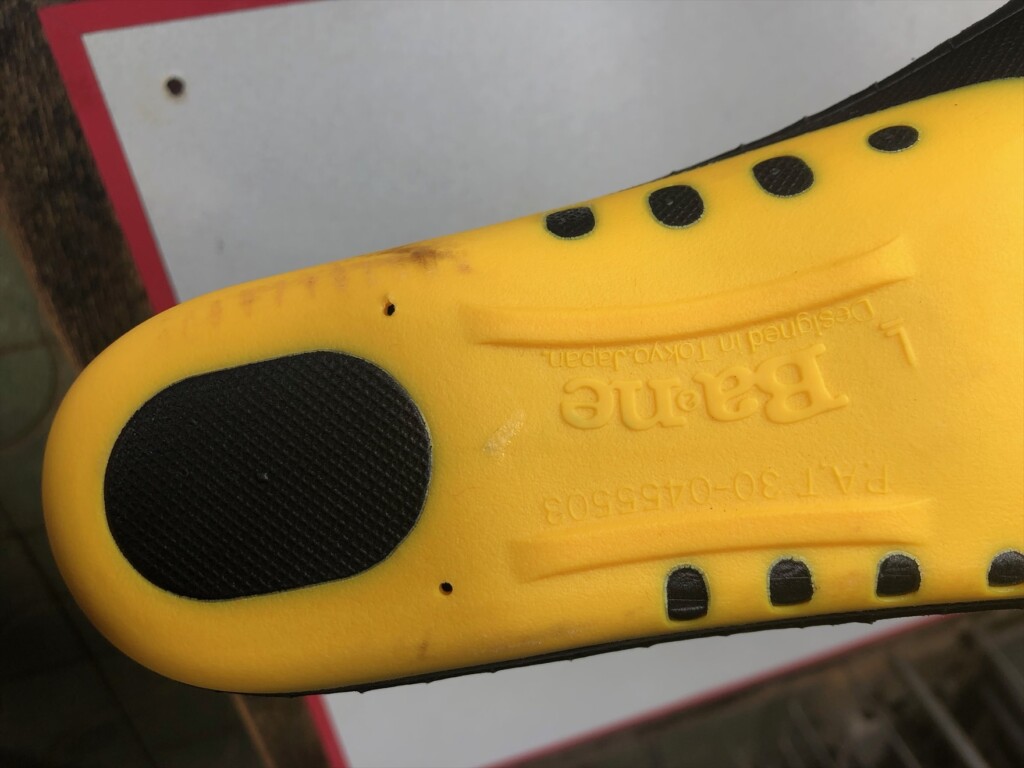 The spring insole, I believe, aligns the foot's skeletal structure and corrects overall misalignment, centering on the ball of the foot, heel, and base of the little toe. When I put my foot in, it felt like it gently lifted the arch and aligned the entire sole of my foot. According to the manufacturer's website, the yellow control cup in the heel disperses the impact of landing while providing a rebound force that makes it easier to push off. It's hard to really feel, but it certainly feels that way. As an insole specifically designed for Japanese foot shapes, it certainly felt the most comfortable (though this is purely my personal opinion). The outer material is "QUANTEX," which has excellent odor-resistant and antibacterial properties and temperature-regulating properties that cool and heat. It's a product I'd like to use not just on the mountain, but on a daily basis
SIDAS Run 3D
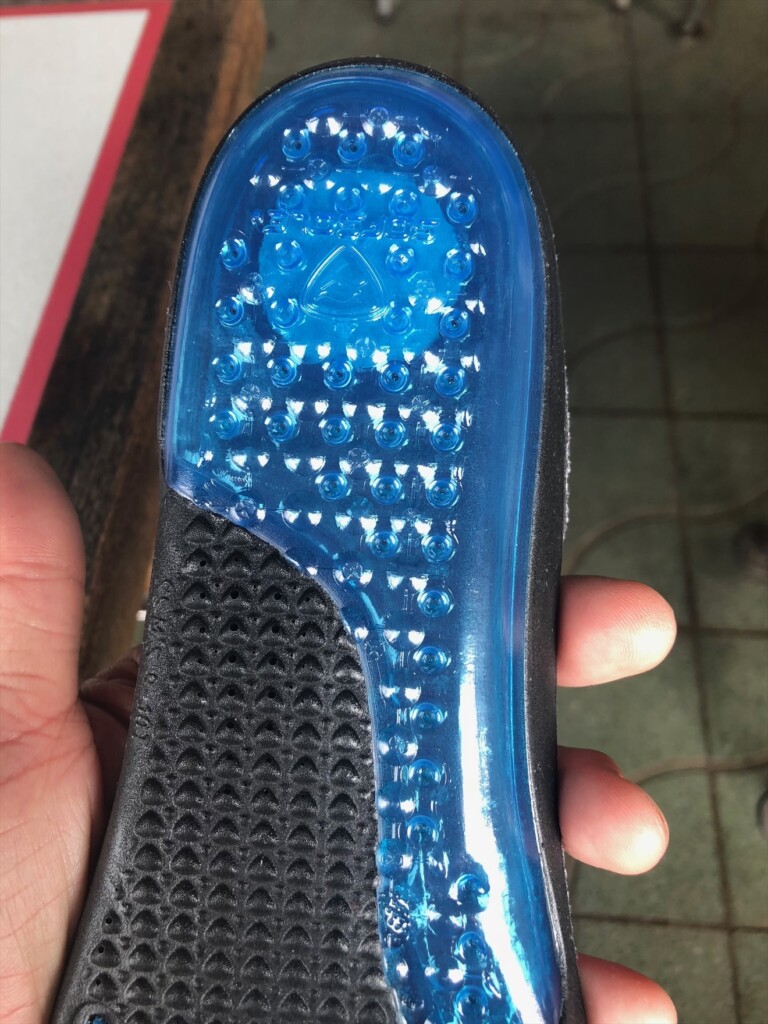
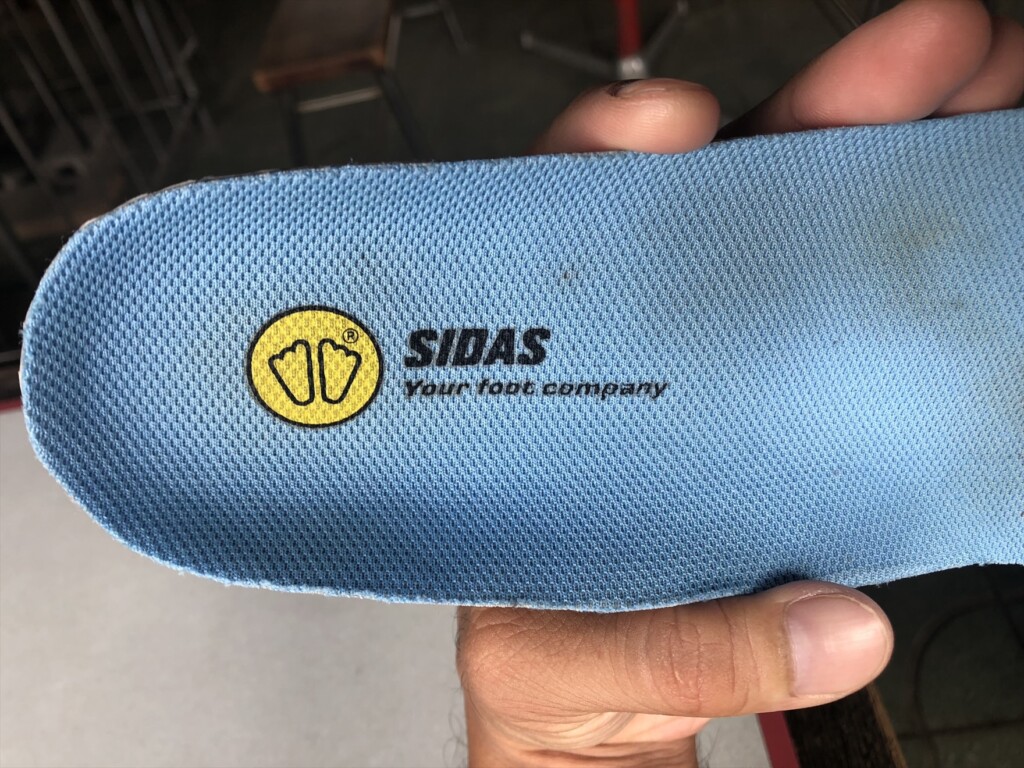 Although it uses a hard material, the insole provides cushioning support not only to the heel and arch, but to the entire sole of the foot. In addition to cushioning and grip, it also has a special design that provides flexibility to support your kick-off, making it a model more specialized for running than other insoles. The impression of hardness is similar to the aforementioned Superfeet Green. It maintains a good balance of the body axis and fits snugly to the entire sole of the foot, but tends to be a little less stuffy (although this depends on the situation and individual differences). When running on trails rather than roads, you can feel more that your feet don't move much inside the shoe. It's also worth noting that the pressure on the sole of your foot is evenly distributed when landing
SofSole Air Plus
 Of all the insoles I tried, this one is the softest. Its shock absorption upon landing feels good, but some may find it unstable. It's also a little thicker than other insoles, which means the upper part of some shoes may feel constricted. While it's supposedly made with temperature-regulating material, I'm a little skeptical about its breathability (though it does feel a bit dry at first...). That said, the heel bump on the heel feels like it significantly absorbs the impact upon landing. When I ran, I noticed that the impact on my knees and hips was softened. While the IMPLUSR shock-absorbing material and SKYDEXR air structure provide a soft landing, some people may prefer it or not. It all depends on your personal preference
Overall Review
My favorites are Sidas and Spring. They are similar in terms of frame, axis, grip, and shock distribution. I felt that both were equally comfortable and top-class. Spring provides comfort specific to the heel cup, while Sidas provides comfort that covers the entire sole of the foot, but ultimately which one feels more comfortable will depend on personal preference
The spring was highly praised for its functionality in the heel area and the use of anti-odor, anti-bacterial materials. While Superfeet certainly provides solid support for your feet, such as shock absorption and kick-off, the shock absorption in the toe area is not felt very well (individual differences may apply). On occasion, when running for a long time, it can feel uncomfortable, perhaps due to the hardness. If you prefer a softer landing with less stress (depending on your preference), I would definitely recommend trying the Soft Sole. It's an incredibly comfortable moment when the heel bump adjusts to fit your heel
That said, insoles have a variety of functions, such as shock absorption when landing, twist prevention, kick-off support, arch support, etc. Whether they work best or not depends on your individual form. We recommend trying out a variety of insoles and choosing the one that best suits your feet
Kenji Okuyama
 Trailist (trail photo writer, event management staff, apprentice lumberjack, mountain hut supporter, etc.). As a freelance trail writer, I write articles for trail running-related publications. As an event management staff member, I was affiliated with the Kita Tanzawa Mountains Center, then Power Sports (where I am now). Course maintenance led me to complete the Basic Forest Management Training and Training Forest Practical Course (which means I'm an apprentice lumberjack). I occasionally help out at Hirugatake Sanso, the highest peak in the Tanzawa Mountains
We are looking for reviewers
Outdoor Gearzine is always looking for members who love the outdoors and want to write reviews about outdoor gear. For more information, please visit the REVIEWERS page here !
Related reading
 Comparison impressions: Ease of walking? Comfortable? What I learned from trying out different insoles for mountain climbing
 [A no-nonsense, self-funded comparison review] Truly the unsung hero. I tried out 8 mountaineering insoles one by one
 Comparison Review: Once you try them on, you won't want to let them go! We compare recovery shoes that gently soothe tired feet
 Comparison review: Which running shoes are best for long distances and long periods of time?