



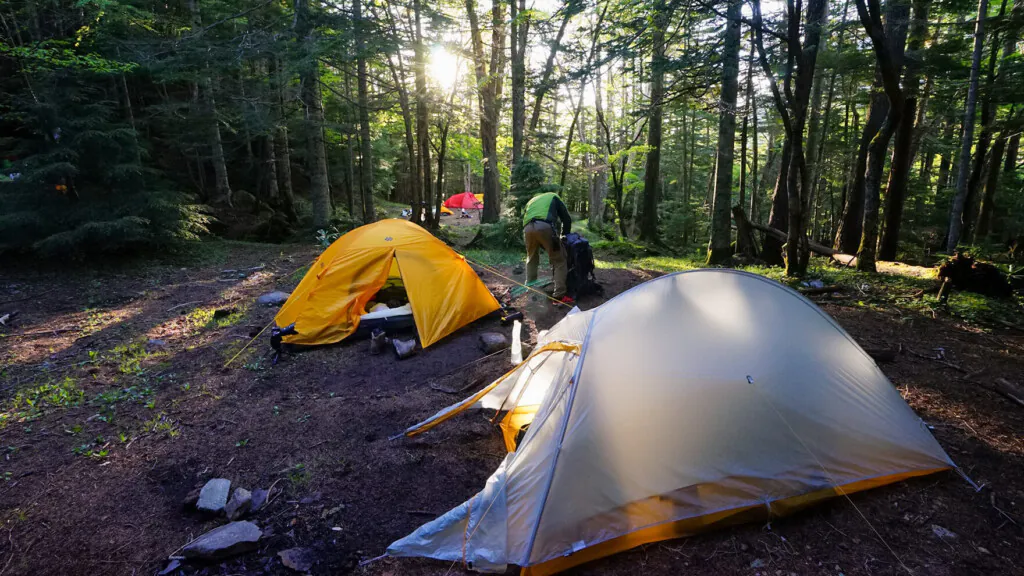
Recommended tents for this season, chosen by a mountain enthusiast who spends over 100 days a year camping in a tent, and how to choose a tent for mountain climbing that you won't regret

Written by Yasushi Hisatomi
A different tent changes your trip. Choose the best tent to suit your preferences
Tents are essential for spending the night in nature, whether it's mountain climbing, hiking, fastpacking, river climbing, alpine climbing, bikepacking, or car camping. Like many outdoor gear, in recent years there has been a wide variety of tent options to choose from, depending on the type of activity, style, season, number of people, and budget
It's not easy to choose the perfect tent you want from the many similar ones out there. While there are certainly some beginner-friendly, safe tents that are acceptable for everyone, they may not actually be the "best" tent for you. When it comes to choosing such an orthodox tent, you'll often find yourself seeing countless tents identical to yours at popular tent sites, which is not exactly exciting
It is not at all uncommon for experienced outdoorsmen to use multiple tents and shelters depending on the season and situation, and being able to choose the perfect tent to suit your style and the situation can make a surprising difference in the safety and comfort of your trip, and above all, how much you enjoy it
So this time, we've evaluated a wide range of mountaineering tents, from this season's new releases to popular and classic models, from the multifaceted perspective of someone like us who tries out and sleeps in tents even at home, and selected the best models for each purpose and type. In the second half of the article, we've also compiled some helpful tips and tricks to help you find the perfect tent for you, so if you have the time, be sure to check it out
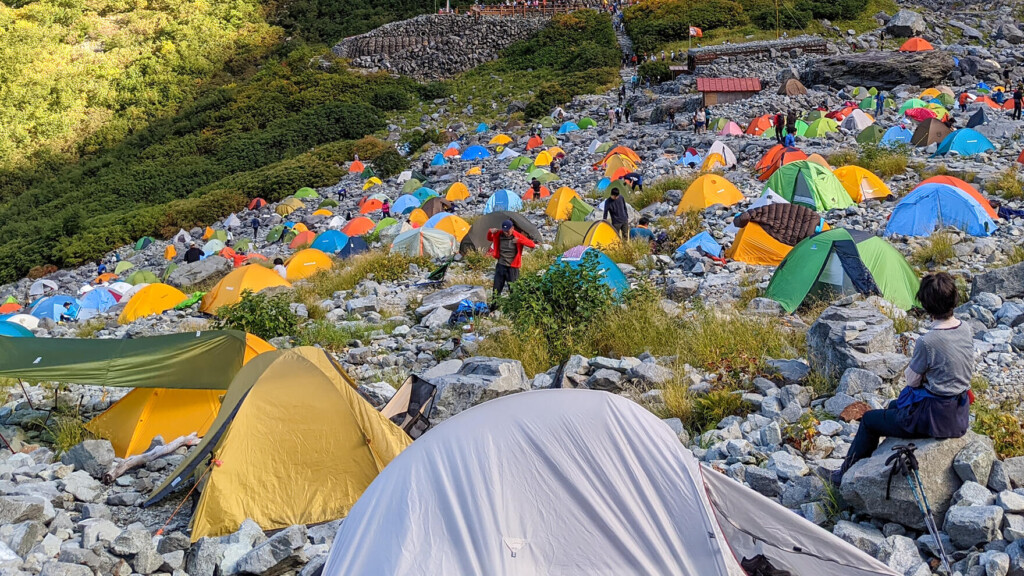
table of contents
- [By Category] This Season's Best Mountaineering Tents
- Best Solo Hike (Overall): Sea to Summit Alto TR Plus Tent/MSR Hubba Hubba Shield
- Best 2-Person Hiking (Overall) Category: Arai Tent SL Dome
- Best Fastpacking: NEMO Hornet Ozumo/MSR Freelite
- Best Winter & All Season: Heritage Espace Maxim Nano (by fly)
- Best Single-Wall Tent: HCS VB-22Z
- Best Beginner's Category: Mont-Bell Stellaridge Tent (with rain fly) / Arai Tent Trek Rise
- Best Cost Performance: MOBI GARDEN LIGHT WINGS 1 JPN
- Best Toughness & Luxury: HILLEBERG Soulo
- How to Choose: 8 Tips for Choosing the Right Tent for Mountaineering and Hiking
- Point 1: Suitable seasons ~The characteristics of the tent change depending on the season you are good at~
- Point 2: Size - Choose a tent based on the number of people who will be using it and how comfortable you want to be
- Point 3: Structure and type: Freestanding or non-freestanding, single-wall or double-wall?
- Point 4: Ease of erection ~A good tent is quick and easy to set up and take down~
- Point 5: Comfort of living space ~The comfort of a tent is not just about the floor space~
- Point 6: Breathability and ventilation – Good ventilation is important not only for comfort but also for safety
- Point 7: Toughness (wind resistance, water resistance, durability, pole strength) - Find the best balance between weight and strength, not too strong and not too weak
- Point 8: Weight - Be careful when comparing weights listed in catalogs -
- summary
[By Category] This Season's Best Mountaineering Tents
Best Solo Hike (Overall): Sea to Summit Alto TR Plus Tent/MSR Hubba Hubba Shield
In this category, we have selected highly recommended one-person tents that combine all the elements required of a tent in a well-balanced and high-level manner, assuming they will be used primarily for hiking and mountain climbing in Japan during the snow-free season. In simple terms, if you are not planning to use them in the Alps in winter, they are the pinnacle of quality for casual hikers, and can be recommended to anyone from beginners to veterans
The two selected models are suitable for a wide range of seasons, excluding the harsh winters of the Alps, and are weatherproof and durable enough to withstand harsh winds and rain, while still being sufficiently lightweight. Furthermore, the interiors offer ample headroom and excellent ventilation, ensuring a comfortable living space, firmly incorporating modern trends. Both models are meticulously designed for ease of use and durability, right down to the smallest details, making them the benchmark for modern tents that can be recommended to everyone. If you're looking for a versatile backpacking tent, whether you're a beginner or a seasoned professional, you won't regret choosing one
Sea to Summit Alto TR1 Plus Tent
Favorite points
- Surprisingly spacious interior
- Excellent ventilation performance
- Plenty of interior storage and thoughtful accessories, such as a light bar that provides comfortable lighting
MSR Hubba Hubba Shield 1

Favorite points
- Weatherproof, lightweight, comfortable, and easy to set up, it is a high-level tent with a high level of perfection in all aspects
- The minimal mesh makes it much easier to use in a wide range of seasons, even in the mountains of Japan
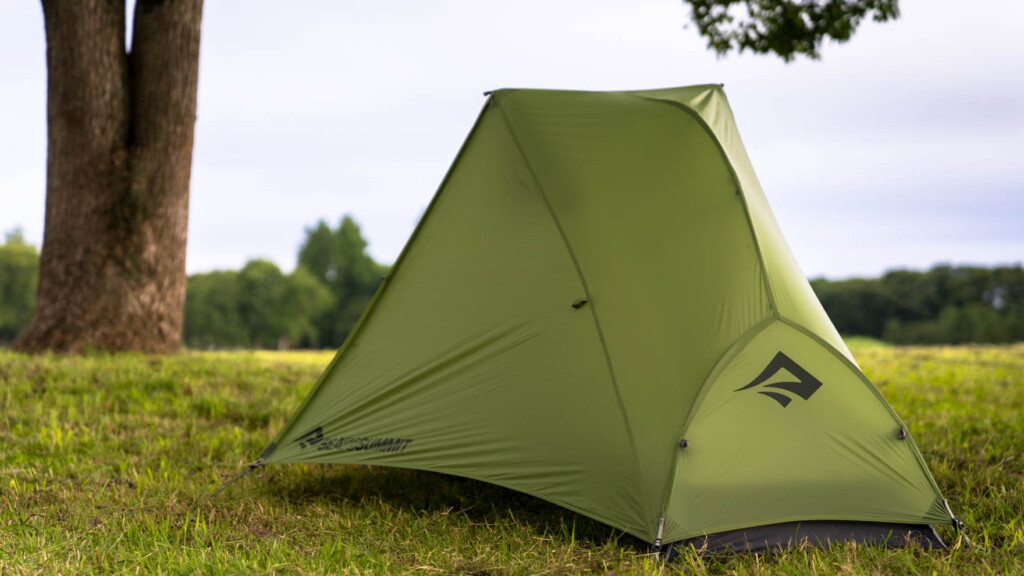
Sea to Summit Alto TR Plus Tent
Best 2-Person Hiking (Overall) Category: Arai Tent SL Dome
Picking it up, I couldn't help but smile at its light weight of less than 1kg (including the main body, fly, and poles), achieved through a thorough review of materials. It also folds surprisingly compactly, making it easy to use even with a 30L backpack. This model recommends using the included undersheet. While there are pros and cons, the freedom to choose what to use depending on the situation is something I appreciate, at least for me. And while it's incredibly light, it still meets the high standards of performance expected of a mountain tent, including the water resistance of the fabric and the durability of the materials. I also checked for condensation, which I was concerned about, and even after a night's sleep, there were only a few faint droplets on the top of the flysheet, while the inner lining remained dry and unaffected
According to the manufacturer, it took many years and repeated trial and error to arrive at this high-quality domestically produced fabric. However, compared to conventional mountain tents, it doesn't sacrifice usability, maintaining a minimum level of comfort and ease of use, and its stance of not refusing to turn away beginners is also not to be overlooked. Even if lightness is the top priority, ease of use and quality are not sacrificed, and the firm philosophy of manufacturing remains strong. The arrival of the SL Dome, which not only combines lightness and compactness with the reliability of a Japanese-made product and a commitment to meticulous ease of use, is sure to be good news for many outdoor enthusiasts looking for a tent that is both tough and lightweight, whether for fast and light mountain climbing or long-term river climbing
Favorite points
- Surprisingly lightweight and compact for a two-person table
- Lightweight yet tough enough
- Same ease of use as the previous model
Best Fastpacking: NEMO Hornet Ozumo/MSR Freelite
This category selects the best tent model that is light, easy to live in, and easy to use, while placing a large emphasis on "lightness" as a parameter, without losing overall balance
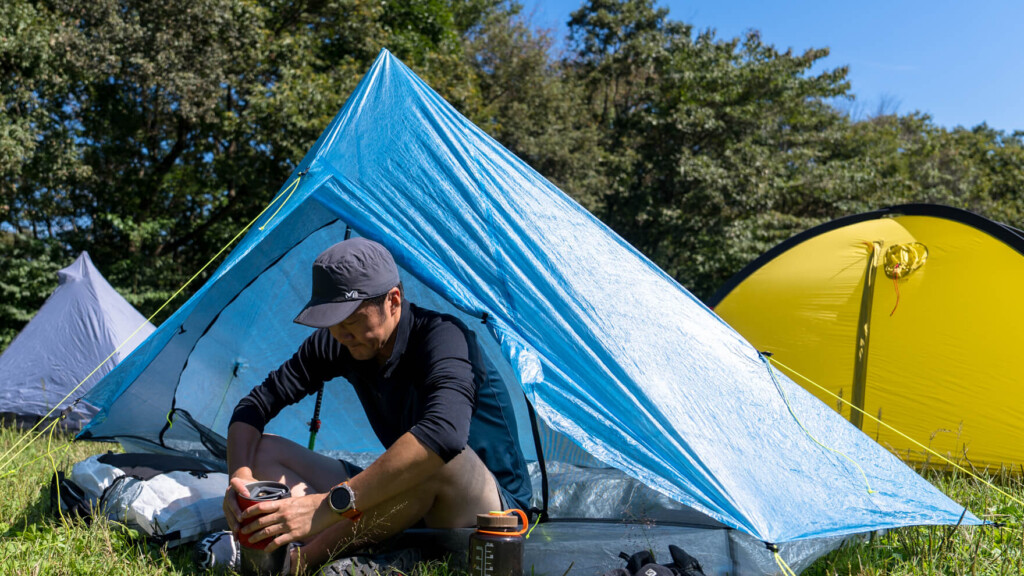
When talking about ultralight tents, people often talk about even more crazy tents that weigh around 500 grams, but the reality is that these require more or less getting used to and compromises in terms of durability, livability, and convenience. What's great about the two models selected this time is that they require almost (if not all) of that kind of preparation, and while they offer the same ease of setup, livability, and peace of mind from the wind and rain as a regular tent, they are exceptionally light, weighing well under 1 kg. In that sense, they're perfect for demanding hikers who can't compromise on either comfort or lightness
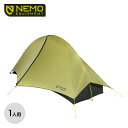
NEMO Hornet Osmo 1P
Favorite points
- Top-class lightness and comfortable interior space
- The latest fabric, made from 100% recycled materials, has excellent water repellency and stretch
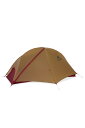
MSR Freelite 1
Favorite points
- Top-class lightness and comfortable interior space
- Simple structure and ease of setup that anyone can do neatly and quickly
Best Winter & All Season: Heritage Espace Maxim Nano (by fly)
Winter mountaineering requires a sturdy structure that can withstand strong winds, snowfall, and snow accumulation, as well as ease of use in the unique conditions of snowy mountains. Here is the best model selected from these perspectives. This is the latest all-season tent from Heritage, a Japanese tent manufacturer formerly known as Esper Tent, a long-established tent brand that has led Japan's glorious mountaineering history
Its robust construction, backed by decades of proven performance and know-how, makes it the most reliable option for harsh natural conditions (yet it's not too heavy or difficult to use). It's well thought out for winter mountain use, with a separate lining available to increase warmth, a windsock-style entrance to prevent snow from getting in, and ventilation that won't collapse even when snow piles up. There are also options available separately for comfort in summer, so it's great for all seasons, not just winter
Favorite points
- Highly weather-resistant and durable, yet lightweight enough for high-altitude climbing in the harshest winters
- Ease of use, designed down to the smallest detail for use on snowy mountains
- Optional parts available for summer mountain climbing
Best Single-Wall Tent: HCS VB-22Z
Unlike typical two-layer tents, single-wall tents are made of a single layer using waterproof and breathable fabric, making them a perfect choice depending on the setup conditions, purpose, and preferences. The HCS VB-12Z is a model with outstanding appeal among the single-wall tents released recently.
First of all, HCS is another long-established mountain tent brand that Japan is proud of, and it's the successor to Dunlop, a brand that I used countless times as a student. In that sense, this tent is also extremely reliable in harsh environments, such as high altitudes and snowy seasons. It's also incredibly lightweight, incorporating modern needs. The entrance is on the long side, making it easy to enter and exit. And the best part? It even has a vestibule. This makes it more resistant to rain and allows for more storage space, significantly increasing comfort. This single-wall tent was already renowned for its lightweight, compact design and ease of setup and teardown, so this single-wall tent with a vestibule is like adding a talisman. However, the fact that it means you can't attach an outer tent, which is necessary for the harsh winter mountains, is a bit of a downside. Still, if you enjoy fast and light mountaineering year-round, this is sure to satisfy you
Favorite points
- Weather-resistant and durable design
- lightweight
- Comfortable and convenient vestibule
Best Beginner's Category: Mont-Bell Stellaridge Tent (with rain fly) / Arai Tent Trek Rise
The selection criteria for this category was the tent that we could most safely recommend to people going on their first mountain climbing or hiking trip. As you might expect, we chose two models that are synonymous with mountain climbing tents in Japan
Both are simple, self-standing tents with double-wall construction, making them easy to set up even for beginners. They also have a traditional dome shape that's strong against wind, so they're safe even in unexpected bad weather. Furthermore, they're made by a domestic manufacturer, so repairs are handled smoothly in the event of a breakdown, so you can rest assured in the event of an emergency. In short, when it comes to peace of mind, these tents are unmatched
The main difference between the two models is that the Stellaridge is an all-season model that can be used even in the snowy season if you add the optional Snow Fly ( incidentally, Arai Tents' flagship model, the Air Rise series, is also suitable for winter). On the other hand, the Trek Rise is not suitable for snowy mountains, but its entrance is located on the long side, making it easier to enter and exit, providing good ventilation and a larger vestibule, lighter and more livable . For this reason, many Japanese climbers own these models, and you'll likely see many tents similar to yours at large summer tent sites (especially the Stellaridge). There are many entry-level models to choose from for beginners, and if you choose a specialist outdoor brand, there won't likely be much difference in performance, so we highly recommend them.
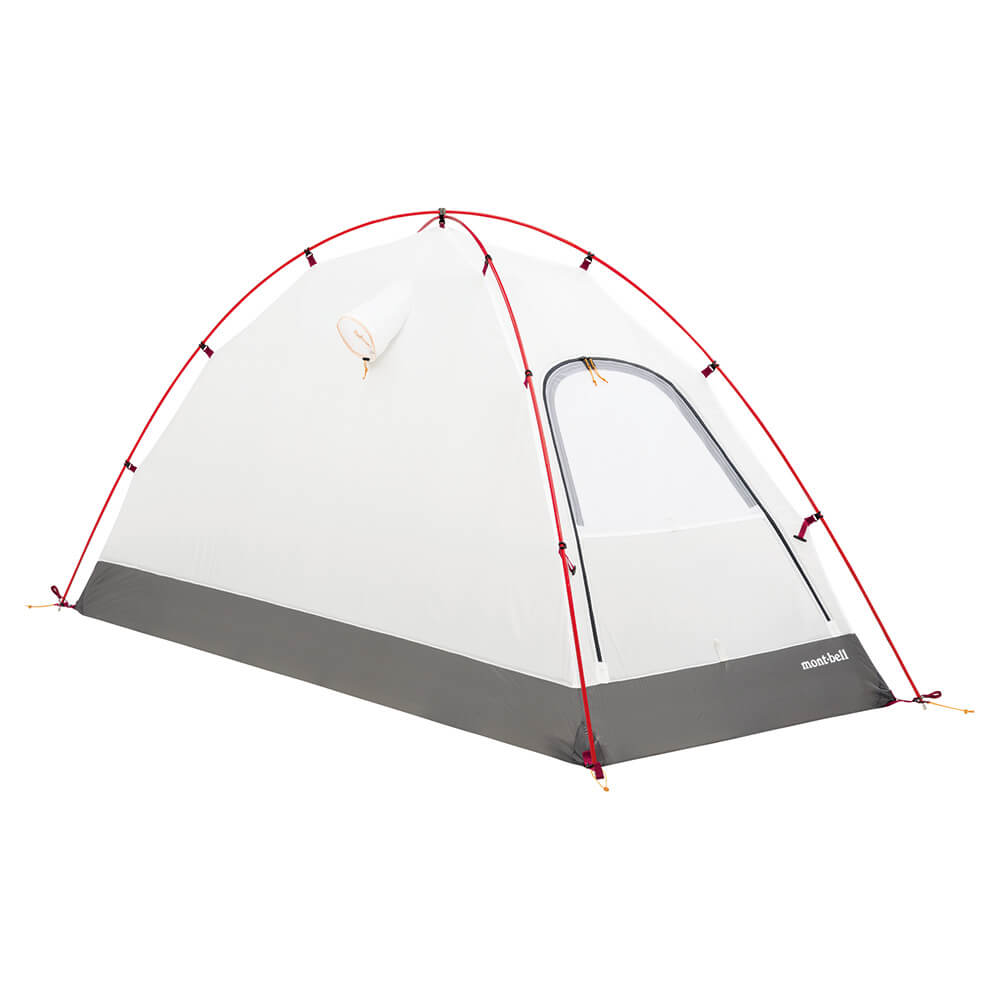
Mont-bell Stellaridge Tent Type 1 (Rainfly Included)
Favorite points
- A good balance of weather resistance, weight, and comfort
- Can be used in all seasons, including snowy mountains, when combined with options
Arai Tent Trek Rise 0
Favorite points
- Good balance and lighter weight for comfort
- Reliable repair service from a Japanese manufacturer
Best Cost Performance: MOBI GARDEN LIGHT WINGS 1 JPN
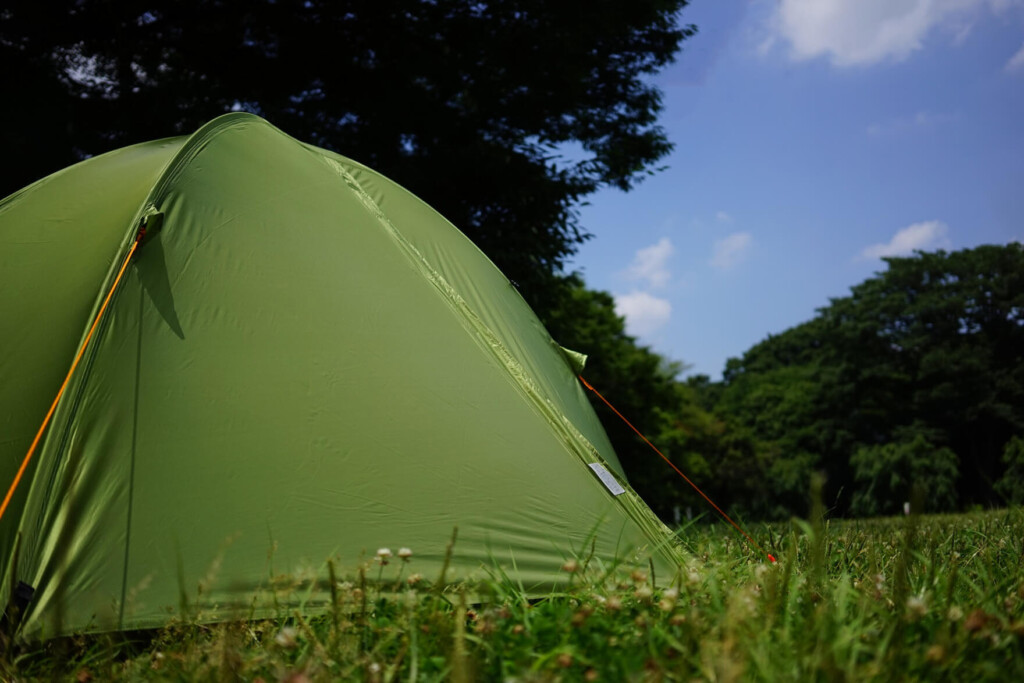
In this category, which is awarded to the tent with the best cost performance, Mobi Garden was impressed by when I came across it at an outdoor exhibition in China.
This all-season, freestanding, double-walled mountain tent combines lightness, protection, ease of setup, and comfort. Its functionality and solid construction are unbelievable for its price, and anyone who tries it once will be astounded by its quality. From its easy-to-set-up design with an integrated inner fly to its high-quality fabric and poles, the tent excels in comfort and ease of use, ensuring genuine quality in every detail. What's more, it's also a favorite for its uncompromising approach, not just in terms of cost, as it's made entirely of fabric for Japanese climbers. It comes standard with a full set of ten high-quality pegs, footprints, and guy lines, and yet its incredibly reasonable price is a constant source of amazement
Favorite points
- Double-walled, one-piece design that can be set up in just 2-3 minutes
- Very durable for a lightweight tent
- Reasonable price even with everything included including pegs and footprints
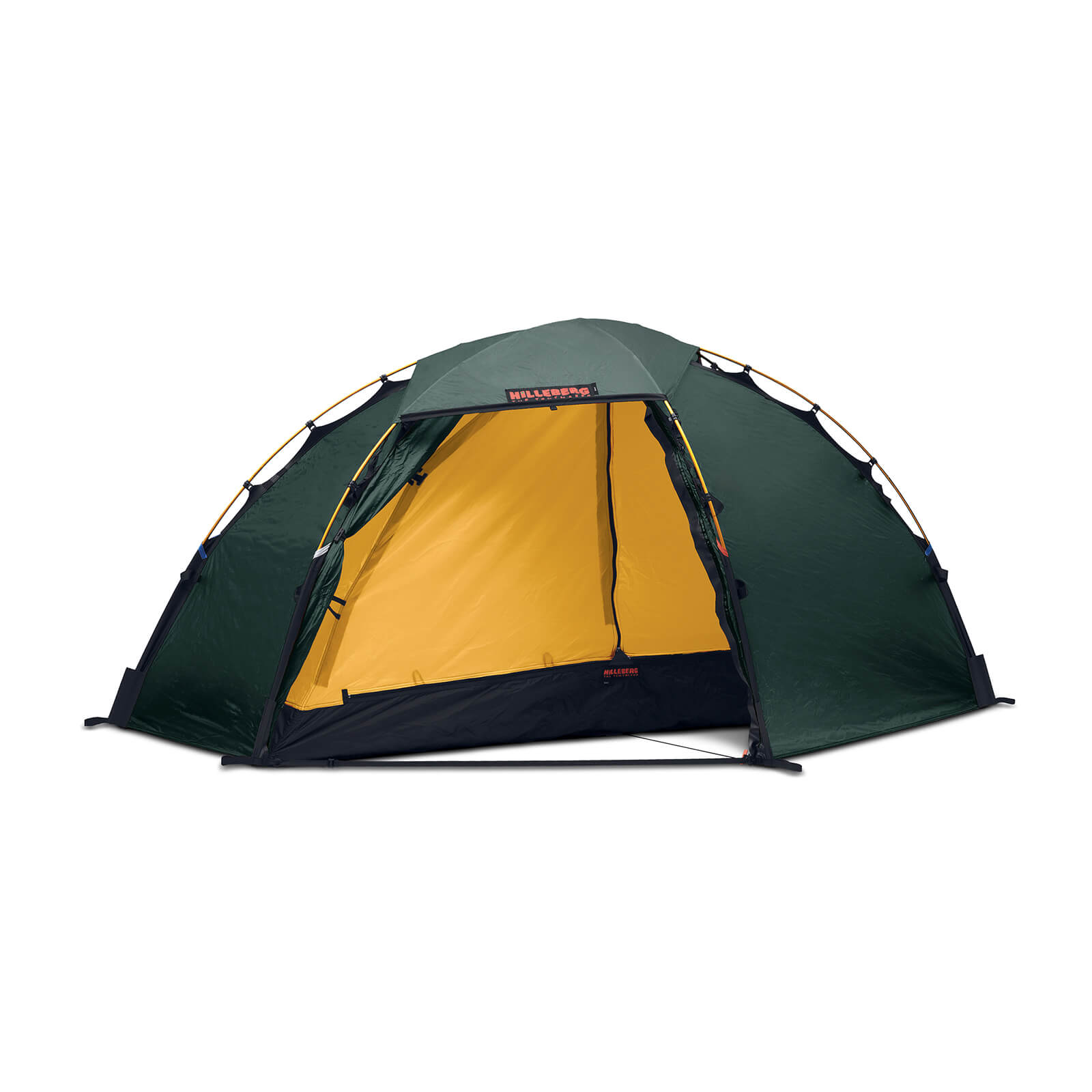
Best Toughness & Luxury: HILLEBERG Soulo
For people who don't just want to use their tent for serious hiking, but also want to travel freely in the great outdoors by car, motorcycle, canoe, etc., this tent is recommended. It's sturdy enough that you don't have to worry about weight and you don't have to worry about the seasons or weather all year round, and it has a comfortable living space that won't tire you out even on long trips
The Soulo is a freestanding double-wall tent with particularly all-round features among the HILLEBERG lineup, the supercar of the tent world that every outdoor enthusiast dreams of. The flysheet extends to the ground on sturdy poles, making it resistant to heavy rain, strong winds, and snow, so there are no problems with weather resistance whatsoever. The high ceiling and spacious vestibule ensure a comfortable living space that is more than enough for one person. What's more, the tent and flysheet are integrated into one, and the unique, easy-to-set-up structure allows for assembly in one action, making the high-quality finish down to the smallest details truly impressive. If you can stomach the weight and price, this is undoubtedly one of the top candidates for your ideal tent
Favorite points
- Excellent durability and weather resistance that can be used regardless of the season or weather
- Highly comfortable living space
- Unique integrated inner fly structure makes it easy to set up
How to Choose: 8 Tips for Choosing the Right Tent for Mountaineering and Hiking
Point 1: Suitable seasons ~The characteristics of the tent change depending on the season you are good at~
The first thing to keep in mind when choosing a tent is that there are roughly two types of tents for mountain climbing: "3-season tents" that are suitable for the snow-free seasons from spring to autumn, "4-season (winter) tents" that are suitable for winter mountains in the snowy season, and three types in particular: "3-season tents that can be expanded to 4 seasons with optional parts." It's important to remember that the types of tents vary greatly depending on whether they can be used on snowy mountains
Of these, is a four-season tent the best because it seems like it can be used for a longer period of time? Of course, it's not that simple. Each tent has its strengths and weaknesses, and if you choose a four-season tent and have no intention of hiking in the snow, you'll likely end up disappointed on a mild weekend hike
For the average hiker, especially those just starting out, it's clear that choosing a three-season tent or an expandable three-season+ tent is the safest bet (though it goes without saying that it's best to have multiple tents for different seasons)
In any case, it is useful to know the differences in characteristics between three-season and four-season tents when going on a tent camping hike, so we have summarized the characteristics of each below
Features of 3-season tents
If you plan to go mountain climbing or hiking in spring, summer, or fall, we recommend a three-season tent. These tents prioritize lightness, breathability, and comfort, and are well-balanced for use in the snow-free season. They protect against insects, rain, light snow, and wind, and are suitable for most seasons and weather conditions except for the harshest winters. However, depending on the weather, they may not be weather-resistant, durable, or insulated enough to withstand the strong winds of a winter storm or snowy mountains in the middle of winter, making them less suitable for winter mountain climbing
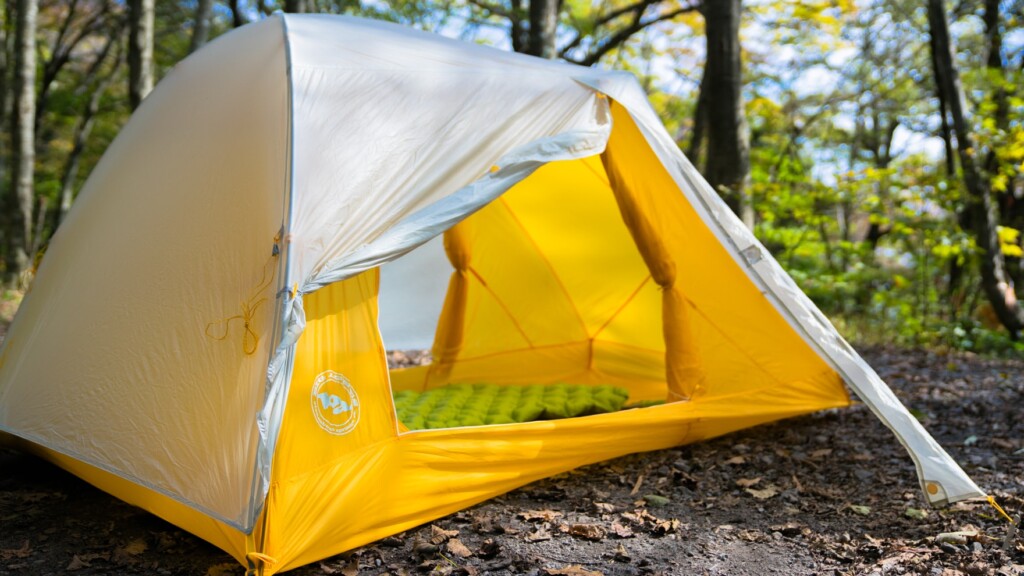
Many three-season tents prioritize comfort, such as good ventilation, lightness, and spaciousness, over resistance to bad weather
Features of 4-season tents
In contrast, four-season tents are designed primarily for comfort on snowy mountains in the middle of winter. They use thicker, stronger fabrics, sturdier poles and parts, a design that prevents snow from accumulating and allows wind to escape, and a snow fly that extends all the way to the ground to prevent snow from blowing into the tent. Everything about these tents is designed to withstand strong winds and heavy snow
However, this naturally increases the weight and volume. Also, since they prioritize preventing warm air from escaping over ventilation, they are highly airtight, so their breathability tends to be inferior to that of three-season jackets
A four-season tent can (theoretically) be used in any season, but if you were to use it in a low mountain in August, you would quickly become sweaty and uncomfortable. In other words, unless there is a special reason, it is safe to assume that a four-season tent is used in the cold winter months, especially when going to snowy mountains
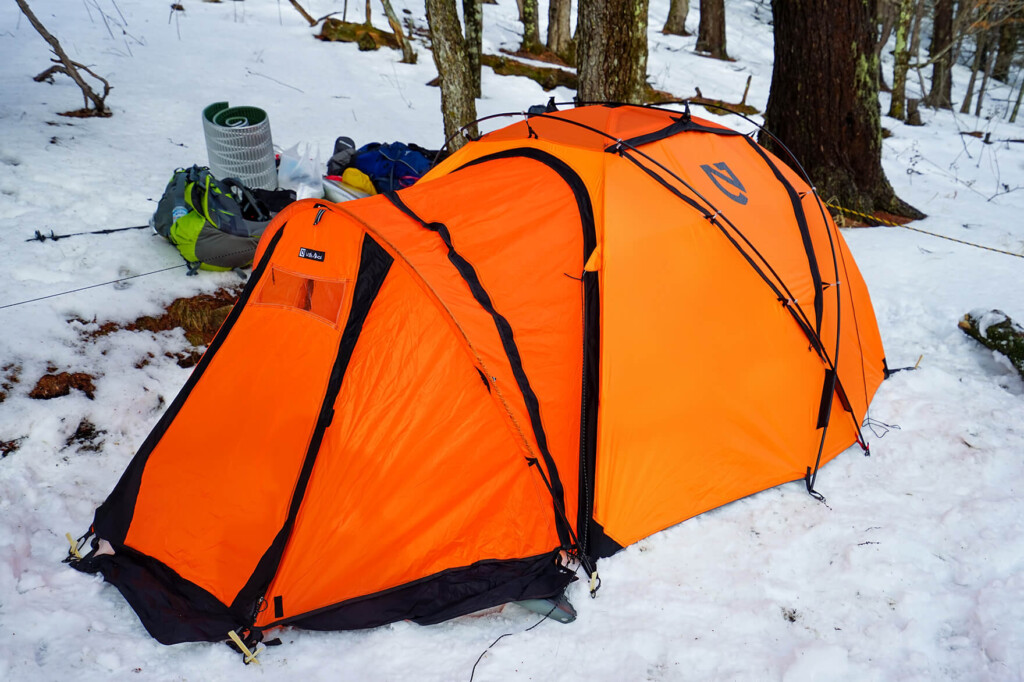
Four-season tents are extremely resistant to harsh winter weather and snow thanks to their weather resistance and high insulation
3+ season tent expandable to 4 season
To go into more specific categories, there are also tents that have the basic features of a 3-season tent, but can also be used in the snowy season if you combine them with optional parts, making them what we might call "3-season+" tents. Many of the standard models made by long-time Japanese tent manufacturers, such as Montbell , Arai Tent , HCS (Dunlop) , and Heritage (Esper Tent),
These tents are stronger and more weather-resistant than pure three-season tents, and their pole strength and weather resistance make them sturdy enough for winter mountain climbing. By reducing the mesh fabric on the sides (or using a retractable double-layered structure), they also offer high insulation even in low temperatures, and while not as strong as four-season tents, they can still withstand harsh weather conditions like strong winds and heavy snow. The outer fly of the inner tent can be switched between a rain-resistant and breathable rain fly during snow-free seasons and a separately sold snow fly (or outer lining) during snowy seasons, which provides excellent breathability and insulation and keeps snow out, allowing for year-round use
Its appeal lies in its extreme versatility, making it a smart choice for beginners who aren't too picky about details and are also considering going to snowy mountains
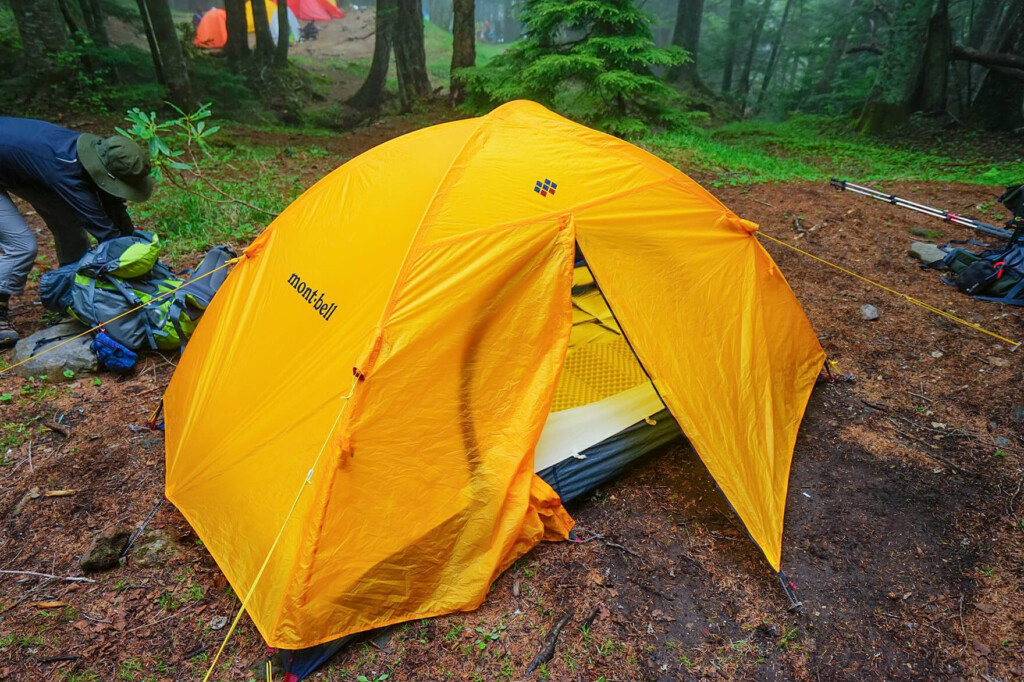
With a 3-season+ tent, if you decide to tackle snowy mountains later, you can purchase additional parts separately, so overall it's a great value for the money
Comparison of the features of 3-season and 4-season tents (3-season+ tents have intermediate features)
| type | 3-season tent | 4-season tent |
|---|---|---|
| Strong Points |
|
|
| Cons |
|
|
| Recommended uses |
|
|
Point 2: Size - Choose a tent based on the number of people who will be using it and how comfortable you want to be
You'll notice that tents have numbers written after their names, such as "Hornet Storm 1P" or "Alto TR2." These numbers indicate the number of people the tent can accommodate, and the basic rule is to choose a tent size based on the number of people you expect to use
However, it is important to note that in order to reduce weight, mountaineering tents are usually sized to "just barely fit enough people" and are often not large enough for that many people to live comfortably. You should be prepared for a particularly cramped environment, especially with models that advertise themselves as ultra-lightweight
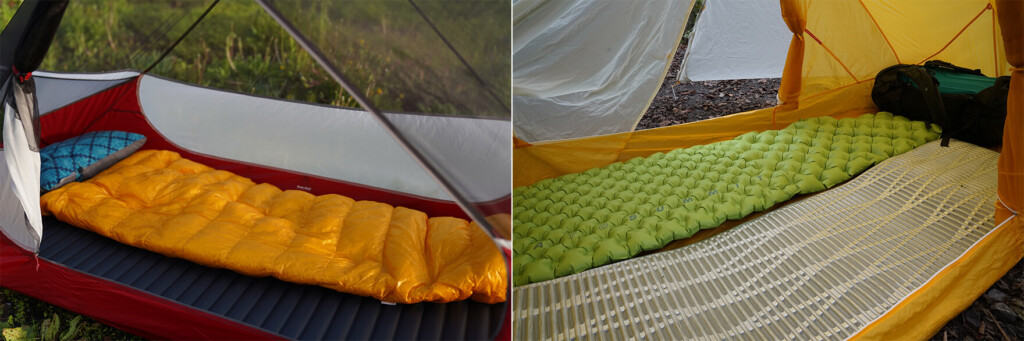
Generally, for a one-person tent, the width of the short side of the living area is 70-80cm, which is just enough to fit a sleeping mat, and 90cm or more is plenty. Having enough space inside the tent to store luggage is very helpful
For this reason, if you are larger than average or need a little more space for comfort, choosing a tent that is one person larger than the number of people you plan to have is one option. Alternatively, some manufacturers offer tents that are wider and longer, such as "1.5 person" or "1-2 person" tents
When hiking solo, you may want to choose a tent that is as lightweight and compact as possible, but in cold seasons, you may want to keep all of your luggage inside the tent as much as possible. At times like these, the value of having more space is greater than you might imagine. When it comes to tent size, you should consider not only the number of people, but also the actual space and the usability you require
Point 3: Structure and type: Freestanding or non-freestanding, single-wall or double-wall?
Once you have decided on the season and size you will be using the tent for, the next thing to consider is the tent's structure and wall construction
In addition to the differences in suitable seasons mentioned above, mountain tents also differ in the pole structure (freestanding or non-freestanding), and the number of walls separating the inside from the outside (single wall or double wall). Combining these two axes, they can be categorized into four types: freestanding single wall, freestanding double wall, non-freestanding single wall, and non-freestanding double wall. Knowing the differences in each type's features is essential when choosing the best tent. Below, we'll explain the differences in each feature
Self-sustaining or non-self-sustaining?
freestanding which are used in many of the tents sold in Japan , are made by crossing multiple poles and fixing them to grommets (holes at the ends of the tent), and then pulling the tent up along the poles, which is a typical design of the so-called old-fashioned mountain tents.
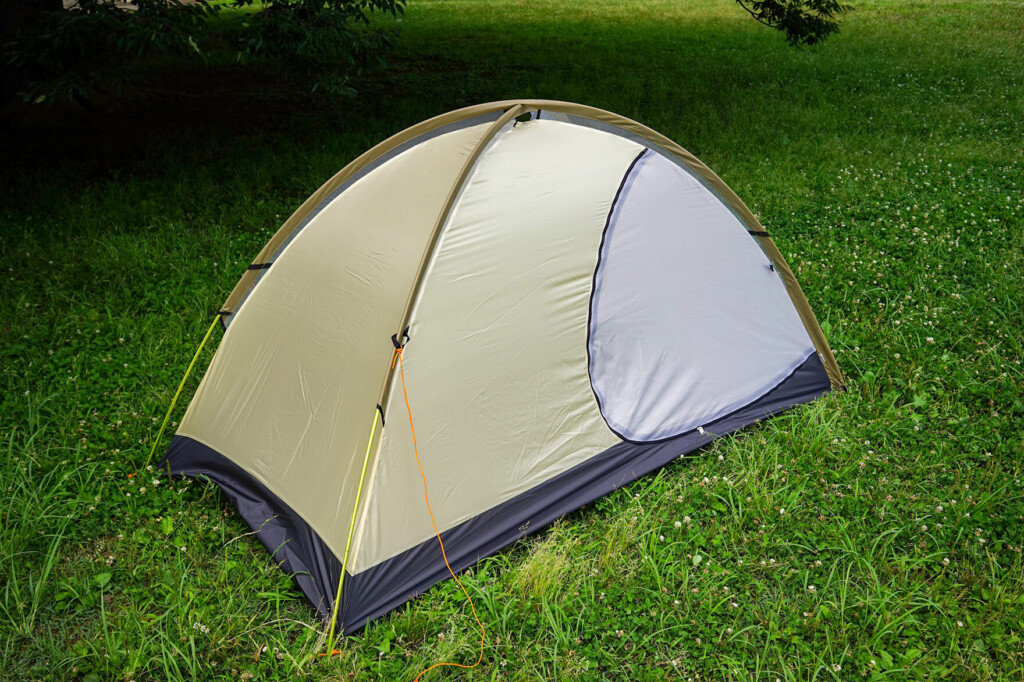
The biggest advantage is that you don't need to use pegs or other stakes to set it up, so even beginners can easily set it up . Also, not needing pegs means it can be set up smoothly in places where it's difficult to hammer in stakes, such as hard rock or soft sand . However, to make it more stable, you'll need to secure it firmly to the ground using pegs or guy lines, so that doesn't mean you don't need pegs at all.
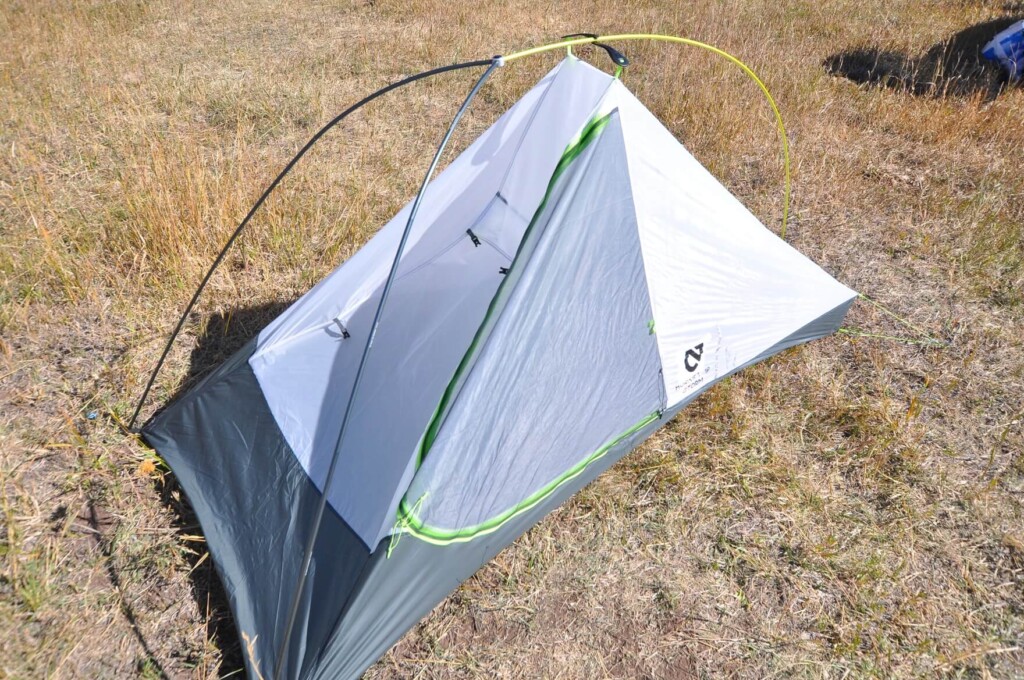
The other type, the "non-freestanding " tent, is one that can only stand up when at least four corners are secured with pegs and tension is applied from both ends to a short pole that is passed through the center of the tent (see photo below).
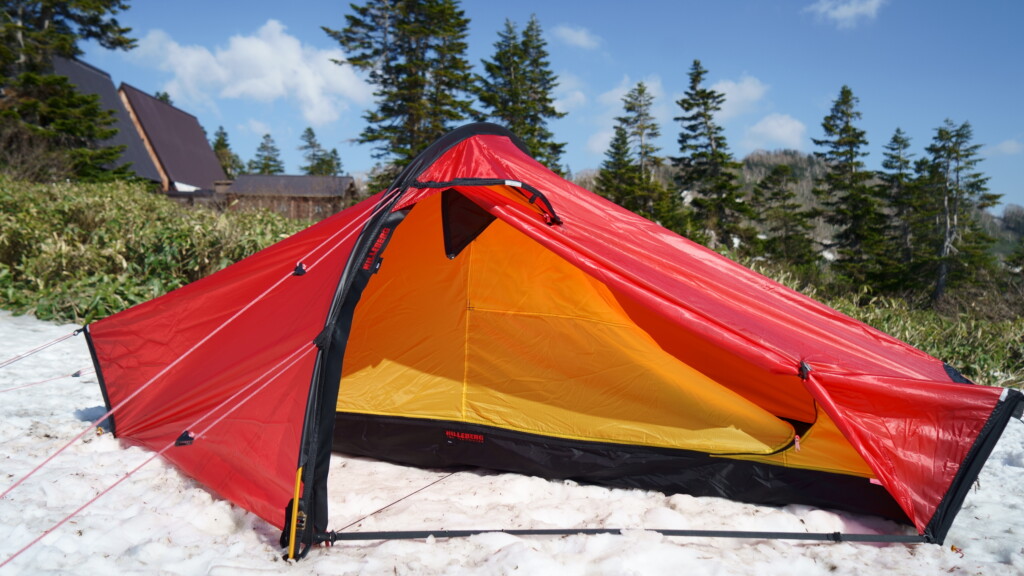
The biggest advantage of this type of tent is that it requires fewer poles, making it possible to create a lightweight and compact tent. Incidentally, it is not uncommon for extremely lightweight tents to use trekking poles instead of these poles to further reduce weight
However, this type of tent requires a certain amount of skill and familiarity to set up, such as the ability to firmly secure all four corners in any location and the ability to tension it in the correct direction, so it is popular among experienced travelers and ultralight hikers
Furthermore, recent models often feature what could be called " semi-freestanding " types that combine the best of both the freestanding and non-freestanding types (see photo below). These use Y-shaped poles connected by joints, with one side of the tent supported by two poles and the other by one pole and two pegs, achieving a good balance between ease of erection and lightness. As a result, the line between these two types has become much blurred compared to the past.
Single wall or double wall?
Both freestanding and non-freestanding tents come in two types: " double wall " tents, which have a two-layer structure consisting of an inner wall (inner tent) and an outer wall (fly) that separate the tent from the outside air, and " single wall " tents, which have only one layer.
Double-wall tents (pictured below) combine high waterproofing with breathability by separating the layers into a highly breathable inner tent and a highly waterproof rainfly. This makes it easier to stay comfortable in a variety of weather conditions with different temperatures and humidity (you can even pitch the tent without a rainfly in some cases). It also reduces the risk of condensation forming on the inside of the tent . Due to this ease of use, most three-season tents are double-wall. The downside is that they tend to be heavier than single-wall tents, but in reality, this difference is not so significant that it is of concern to the average hiker.
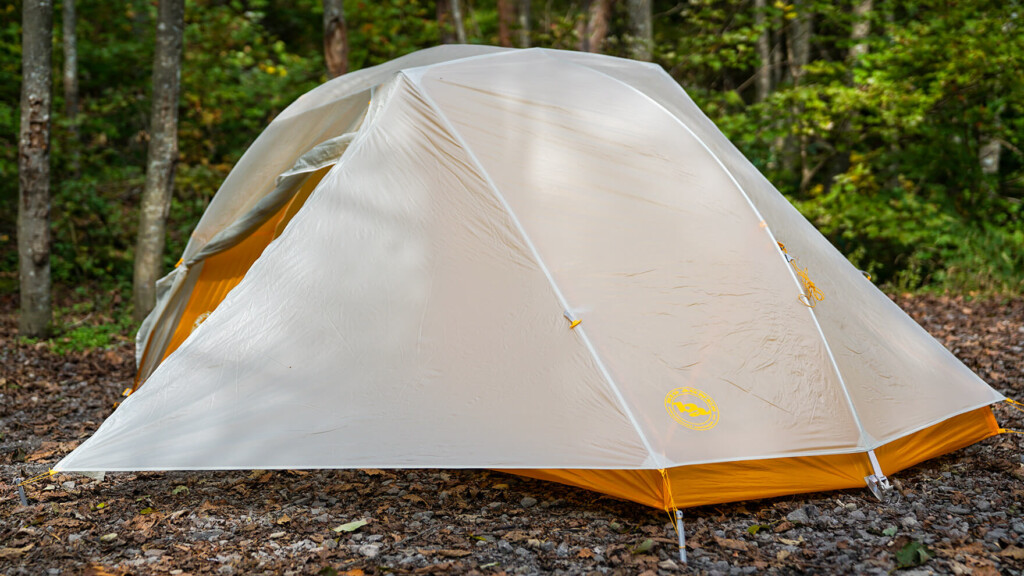
Double-wall tents are the standard for mountain tents
single-wall tents (see photo below) have a tent body and fly made from a single piece of waterproof, breathable fabric lighter, easier to pack down, and quicker to set up . However, because the entrance faces diagonally upwards, they can easily let in heavy rain, and the fabric's characteristics make them prone to condensation on the inner walls of the tent, so they are less versatile than double-wall tents. For this reason, they are best suited for fast and light hikers and alpine climbers in relatively dry regions or during dry seasons like winter.
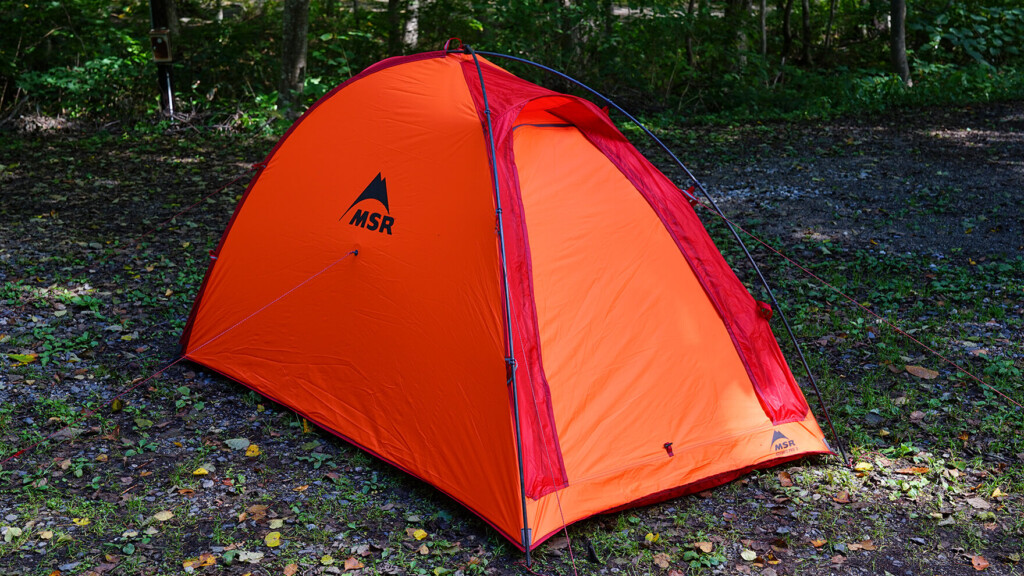
Single-wall tents are lightweight, compact, and quick to set up, making them a great choice when you want to perfect a particular style
Comparison of the features of each type, depending on whether it is a pole structure or a wall type
| kinds | Freestanding x double wall | Freestanding x Single Wall | Non-freestanding x double wall | Non-freestanding x single wall |
|---|---|---|---|---|
| image |  | 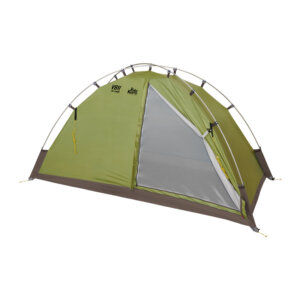 | 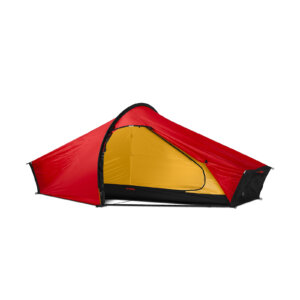 | 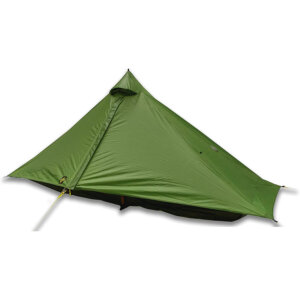 |
| Strengths |
|
|
|
|
| weakness |
|
|
|
|
| Recommended uses and styles |
|
|
|
|
Point 4: Ease of erection ~A good tent is quick and easy to set up and take down~
If the weather is nice and there's still plenty of time before sunset, it's fine to take your time setting up your tent. However, when hiking, it's not uncommon to find yourself having to quickly set up your tent when you've finally reached the campsite just before sunset, or when you have to set up in strong winds or heavy rain. In such situations, it would be so helpful to have a tent that can be set up and taken down easily and quickly. Anyone who has experienced a challenging tent-camping traverse would nod in agreement. Here, we'd like to consider the characteristics of a tent that is easy to set up
Generally speaking, freestanding tents can be set up quickly, but non-freestanding tents require more effort and space to set up, as they cannot be set up properly unless the pegs and guy lines are properly positioned and oriented, and it takes practice to use them effectively in any situation
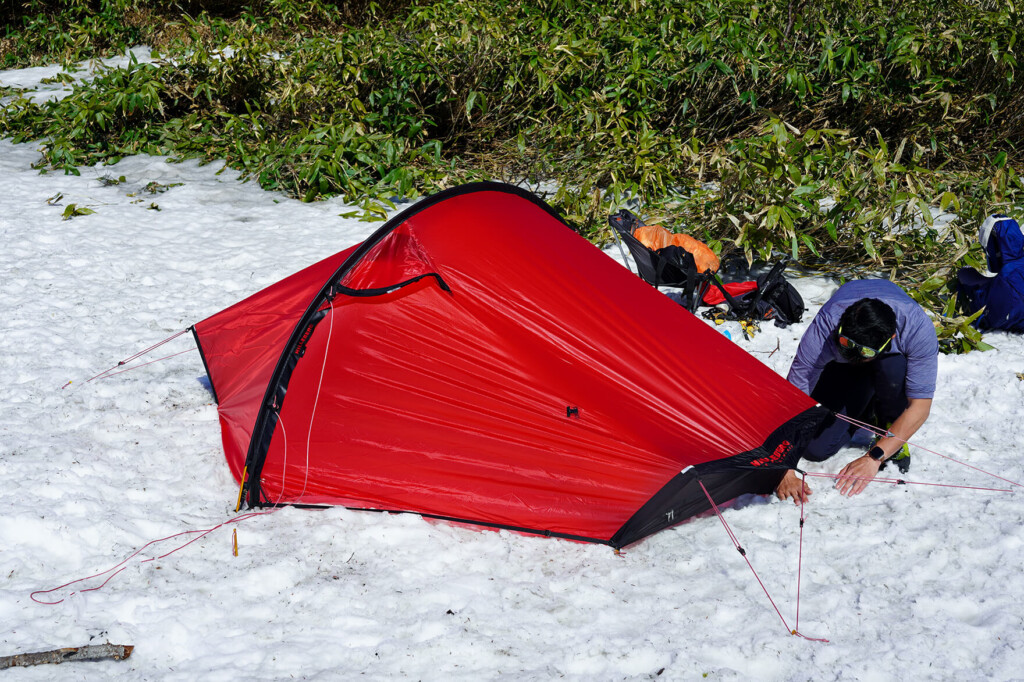
It is surprisingly difficult to pitch a non-freestanding tent neatly without wrinkles
In addition, the Heritage HI-REVO , which have "sleeve-type" poles, are designed to be easier to set up in a shorter amount of time (see photo below).
This is because one end of the sleeve (the thin, cylindrical part on the outside of the tent) through which the pole passes is closed, so when you push the pole through the sleeve from the open end, it stops at the tip, and once you've pushed it all the way through, you can set the pole up by simply fastening it into the grommet at hand. This means you can set up the tent quickly, without having to go to each of the four corners of the tent and fasten it into each grommet
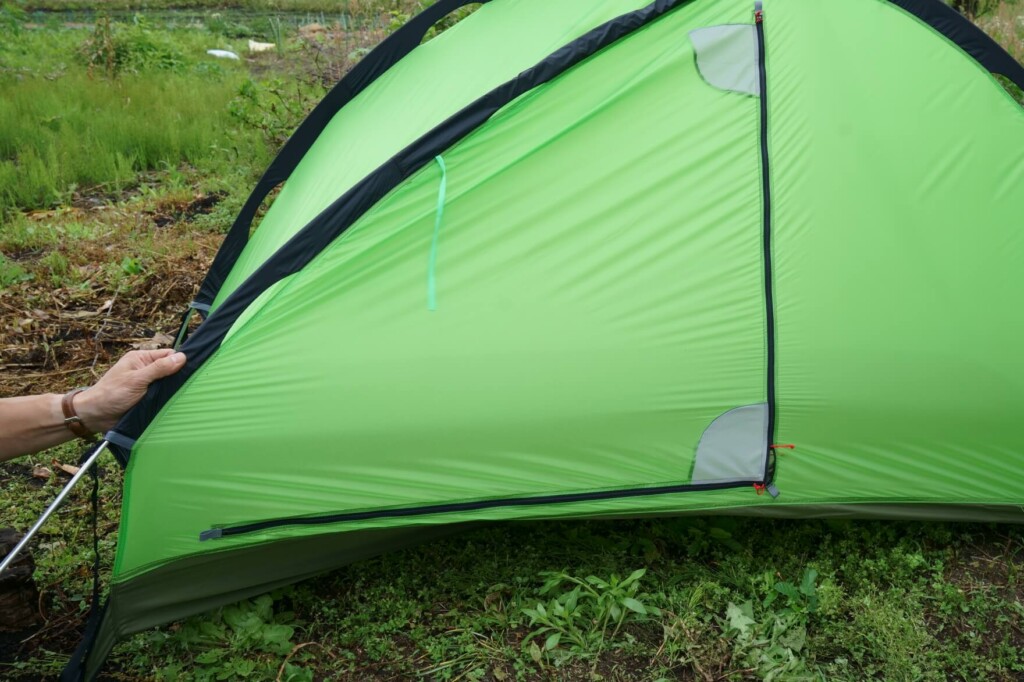
Setting up the pole is easy as you can simply push it into one side of the sleeve all the way to the tip
That being said, non-sleeve type (hanging type) tents are by no means particularly difficult to set up. Recent advances in tents have made it easier to attach connecting clips that are less likely to come off, and the poles are color-coded or pre-joined, making them easier to set up than in the past. Until recently, it was clear that sleeve types were easier to set up than hanging types, but now it's probably more of a matter of preference
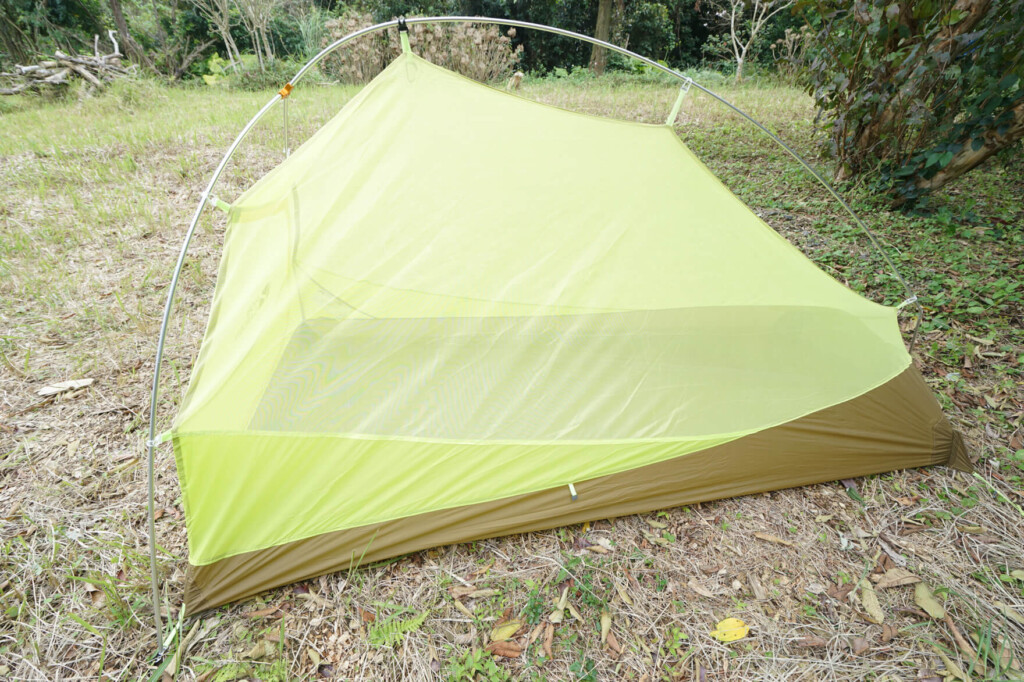
Another example that still stands out today as an easy-to-set-up tent is the pre-connected inner liner and fly tent, such as the Hilleberg Soulo or Acto
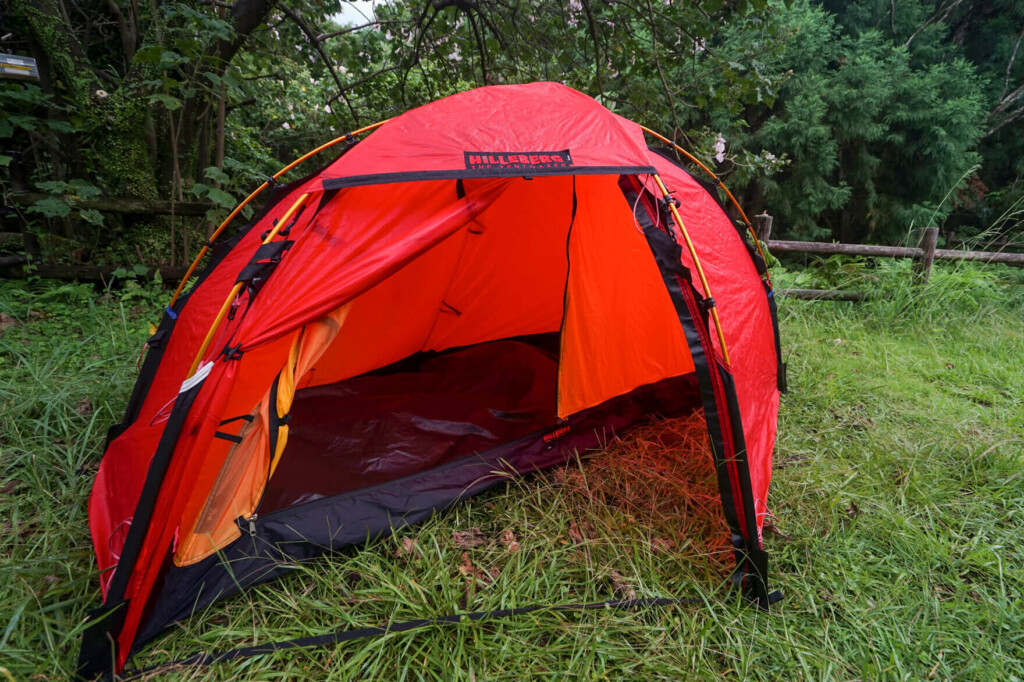
Hilleberg's integrated inner fly structure was a revolution in tent pitching, and is now used as a model by many manufacturers
With a regular double-wall tent, you have to set up the inner tent first, then put on the fly and secure it in place - a two-step process, but with this type of tent, the inner and fly are connected and integrated, so you can set up the entire tent in no time at all by simply setting the poles on the outer fly.Another great thing about setting it up this way is that you don't have to worry about the inner tent getting wet even in the rain or snow - it's a great system
In any case, no matter what tent you choose, you should set it up at home beforehand and become familiar with how to set it up. At the very least, you should try setting up the first tent you buy in your garden before going to the mountains. By doing this, you will be able to set it up calmly and without wasting time no matter what the situation, and you can prevent the worst-case scenario
Point 5: Comfort of living space ~The comfort of a tent is not just about the floor space~
The size of the interior space
Living space refers to the entire space used for sleeping, eating, talking, and changing clothes, and needless to say, it is an important factor that greatly affects how comfortable you will be in your tent
Of course, the first thing that determines a comfortable living space is the size of the tent's floor area, but a large area does not necessarily mean that the tent is "spacious." This is because mountain tents tend to have steep walls that rise from the ground in order to reduce weight and increase wind resistance, and even if the floor area is sufficiently large, the space at head height is narrow, so it cannot necessarily be said that the tent feels "spacious" to the naked eye
However, thanks to advances in materials and design, this problem has been greatly improved, and there are now more spacious tents that feel more open and comfortable. When choosing a tent in the future, whether or not the design ensures this spacious living space will be an important factor in choosing a tent that you won't regret later
The quickest way to find out how spacious a tent will be is, of course, to have the tent you're considering set up at a store and then go inside. However, this isn't possible with all tents. To get an idea of the interior space of a tent, it's a good idea to check the following three pieces of data from the specs:
- Interior floor space: While the interior floor space is a key factor in determining how much living space a tent can provide, it cannot be used to determine the overall size of the tent.
- Interior tent height: The height of the highest part of the tent. It should not be so low that your head hits the ceiling, but as mentioned above, this specification alone does not determine the overall size of the headroom.
- Slope of the side walls: The more vertical the walls, the more open the overhead space inside the tent will feel. When checking product images, look to see if the angle of the walls is close to vertical toward the tent ceiling.
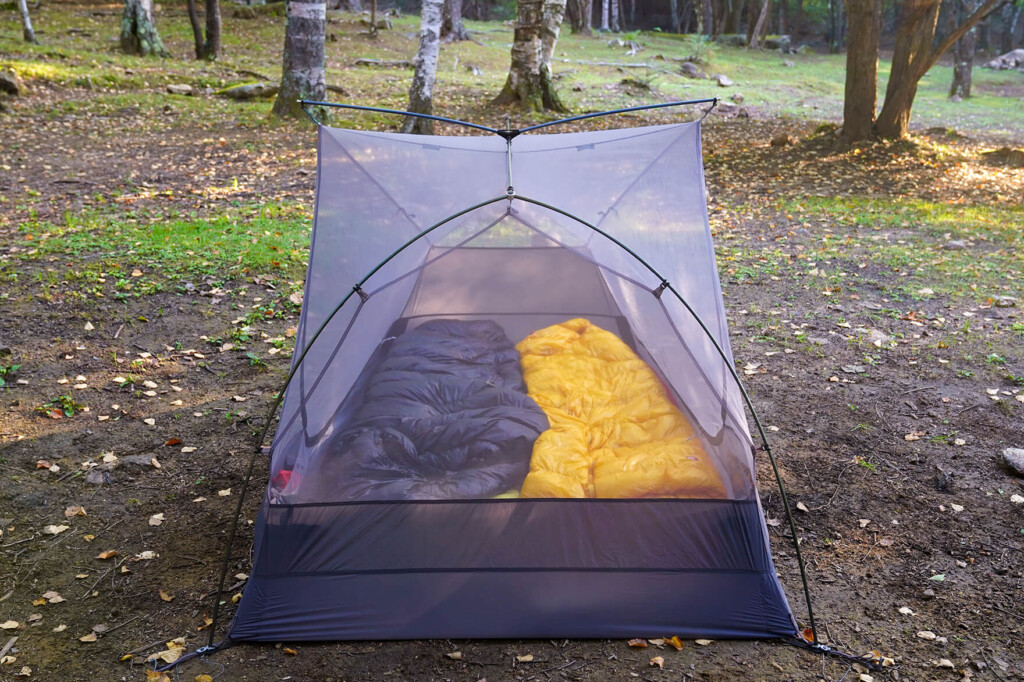
The latest high-performance tents have a large upper space, making them surprisingly comfortable to live in compared to conventional tents
Size of the front room
Another factor that affects the size of the living space is the size of the vestibule. The vestibule is the space between the tent fly and the inner tent, and a tent with a large vestibule can store many items such as backpacks, boots, and cooking utensils outside the tent, freeing up valuable interior space, resulting in a spacious living space (see photo below)
Of course, a vestibule not only adds space, but also prevents the inside of the tent from getting soaked with wet gear on rainy days
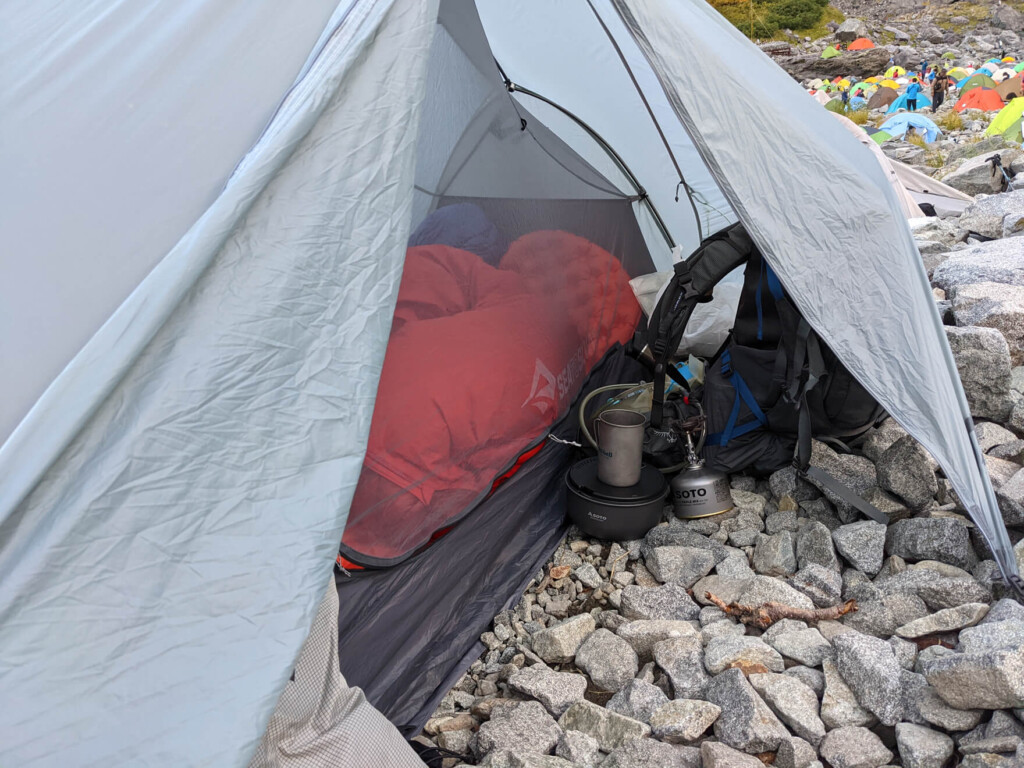
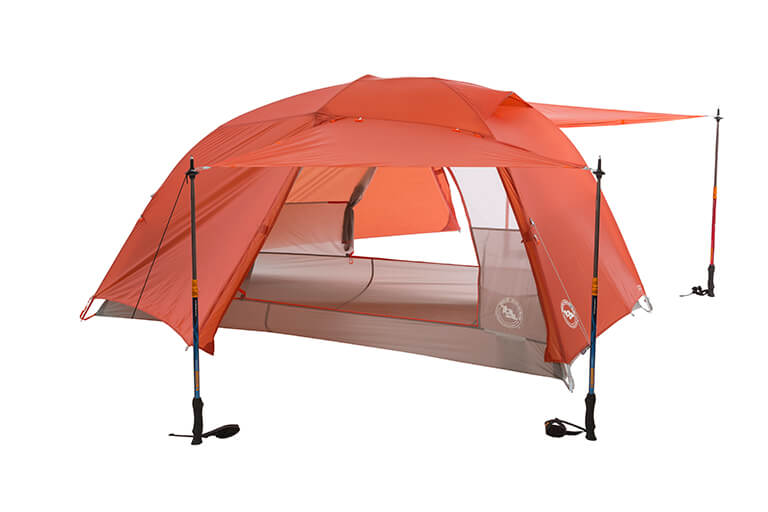
Most single-wall tents do not have a vestibule, as it is created between the fly and the inner lining (which is another reason why double-wall tents are more livable). Each manufacturer also comes up with a variety of ways to secure a vestibule. There are a wide variety of sizes and mechanisms, such as special poles that extend from the entrance to expand the vestibule, or systems that make it larger by extending trekking poles over the entrance of the tent (see photo below)
Number of entrances and exits
The number of entrances and exits also affects the size of the living space in a tent. In fact, especially for tents other than those for two people, the ease of entry and exit is an important factor that can affect the overall livability of the tent
If you're camping with friends, a model with two or more doors is obviously more convenient (see photo below). It's easy to imagine how stressful it would be for everyone if you had to step over them every time you went to the toilet. Having a door for each person and a vestibule for each person will make tent life more comfortable
In addition, if you open both doors fully, you can improve ventilation. Another major advantage is that if you are cooking near the entrance, you can move to the downwind side if the wind direction changes
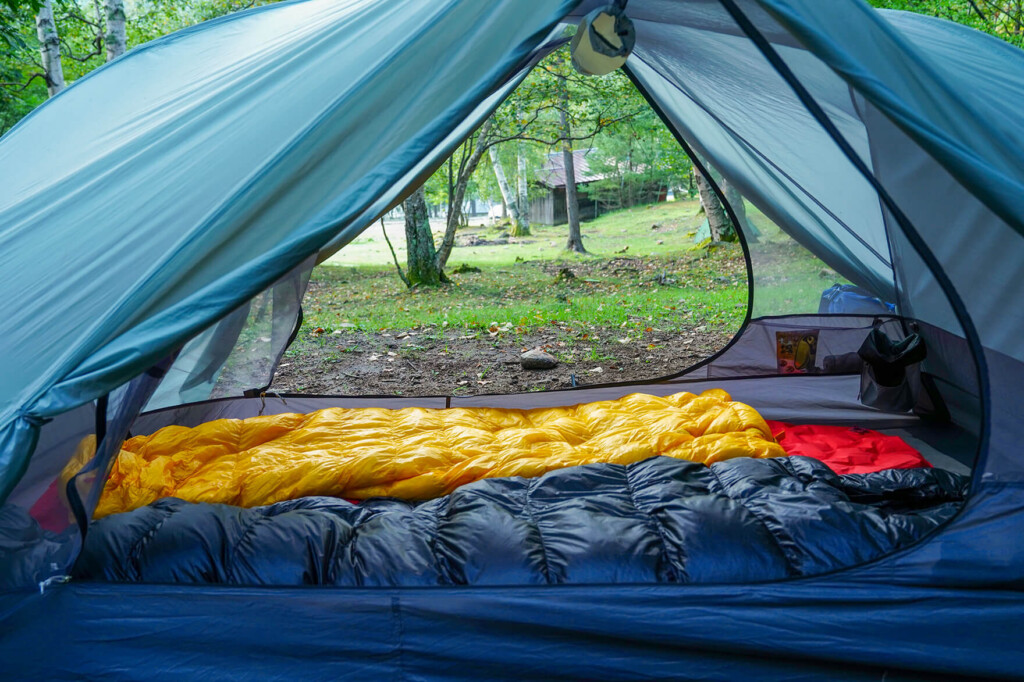
Of course, having more entrances will make the tent a little heavier (the weight of the zippers is not to be underestimated). When choosing a tent, you must always consider the priorities of weight and comfort. For example, if you are using it for solo hiking, the benefits are less, so it is perfectly reasonable to think that a tent with one entrance and exit is better and lighter. Whether you want to reduce weight or be comfortable, there is an optimal choice for every hiker
Entrance and exit locations
Personally, I'm particular about the location of the entrance/exit. Tents with entrances on the "long side" allow the entrance to be opened wider, which gives a sense of openness, ventilation, and ease of entry/exit, making them much more comfortable (see photo below). On the other hand, tents with entrances on the "short side" have relatively narrow entrances, which reduces ventilation and livability, so I don't really like them. However, the fact that it's harder for air to enter the tent also means that it has better wind resistance and insulation, making it a more reliable tent in colder seasons and against snow. For this reason, tents with entrances on the short side are often found in those that can withstand harsh winters, and are a worthwhile choice if you value the ability to withstand harsher environments
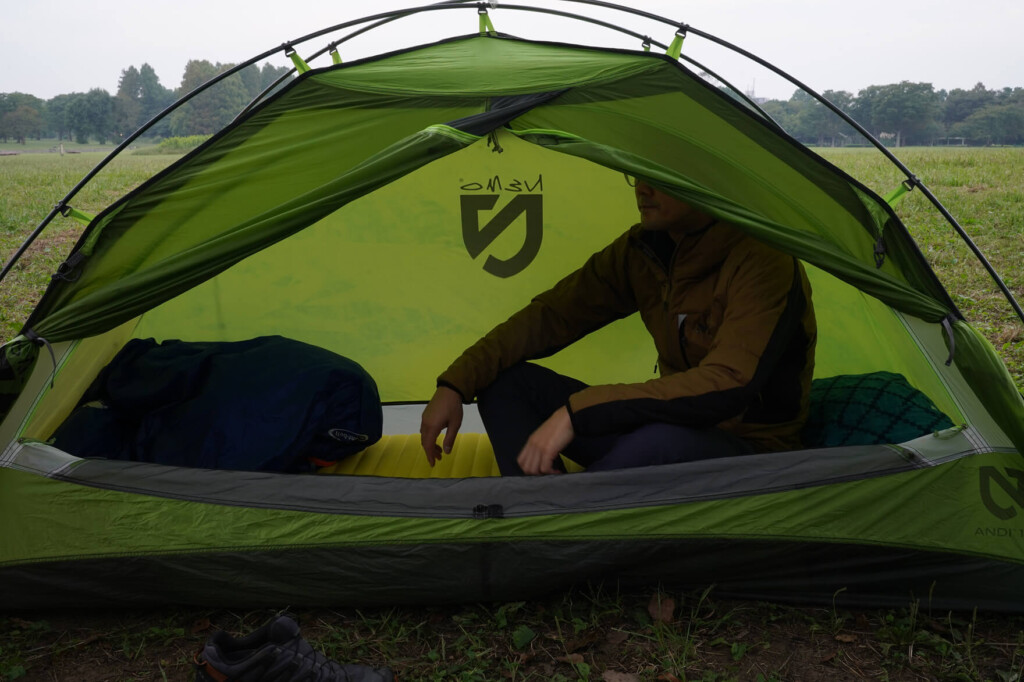
Interior pockets, gear loft
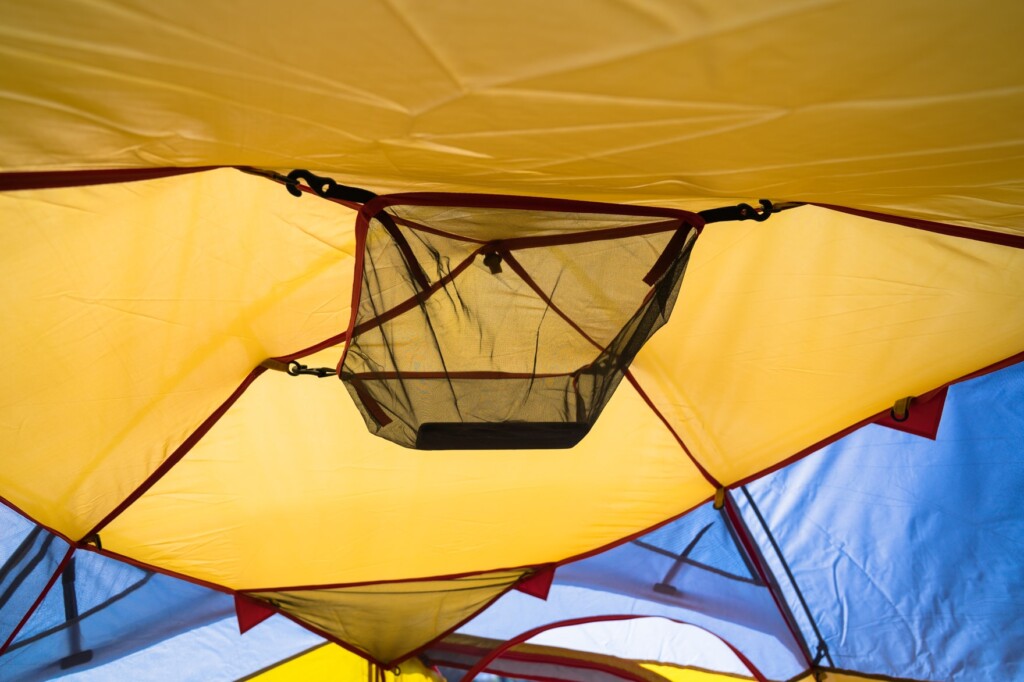
Inside a tent, it is much more comfortable to keep small items such as a headlamp, hand towel, and glasses in an easily accessible location. Some clever tents accommodate this need by providing side pockets or netting on the ceiling (see photo below), or by providing loops for threading thin cord through. If you have the space, it's a good idea to check whether the inside of your tent has these features
Point 6: Breathability and ventilation – Good ventilation is important not only for comfort but also for safety
In order to stay comfortable in a tent, in addition to having a large living space, good breathability and ventilation are also important
If you use a tent with poor ventilation in the middle of summer, it will feel like a sauna during the day, and at night, as the temperature drops, condensation will form, wetting your sleeping bag and clothing, which can be very unfortunate. Breathability and ventilation are important points for making it easier to cool the inside of the tent in the heat, and for reducing condensation in the cold
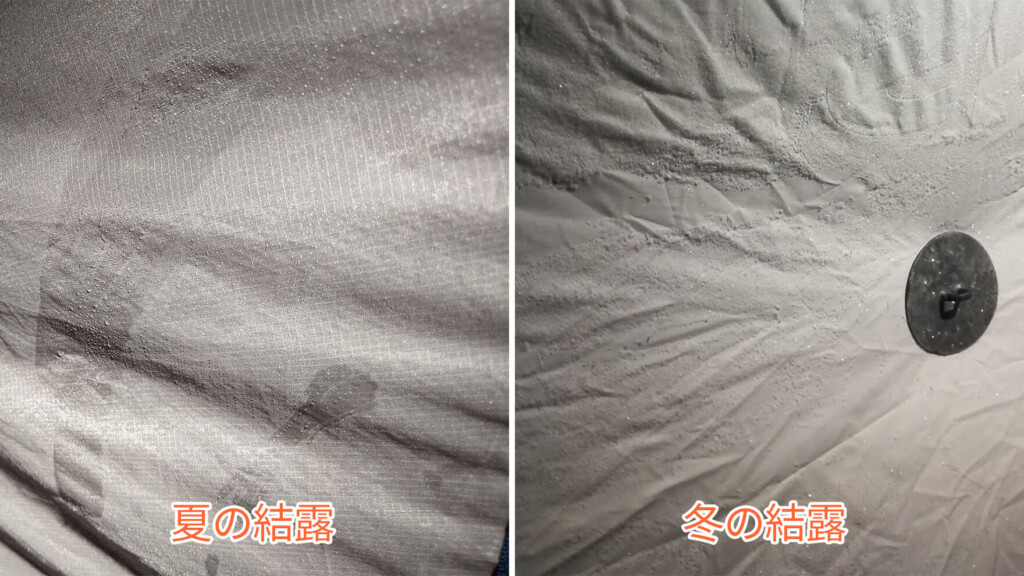
For breathability, three-season, double-wall, and mesh fabrics are advantageous
A tent's breathability depends on several factors, but if you're only considering breathability, the best tent overall is a three-season, double-walled tent with lots of mesh. The inner fabric of a double-walled tent is made of breathable fabric, allowing more air to pass through, and the thinner it is, the more breathable it is (i.e., a three-season tent). Furthermore, the more mesh panels used, the more breathable it becomes. Conversely, the waterproof and breathable fabric of a single-walled tent is less breathable than a double-walled one, and breathability is further reduced by condensation from the inside and raindrops from the outside
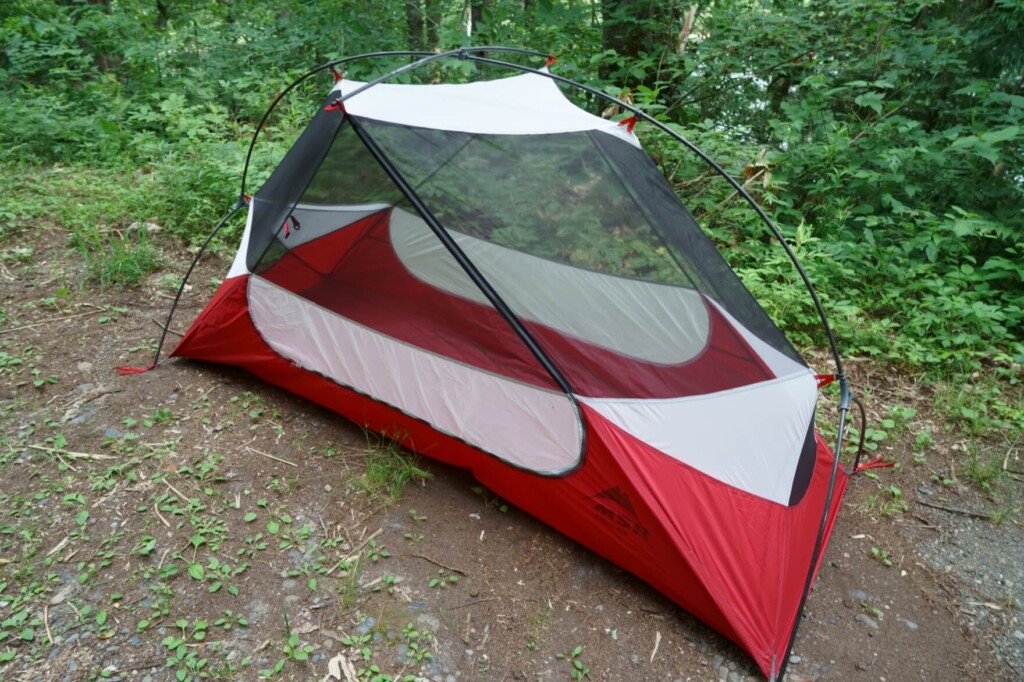
Tents with a lot of mesh areas in the inner tent are the best in terms of breathability alone
It goes without saying that air circulation will be even better if there are two or more entrances and exits, or if the entrance surfaces and ventilation vents are wide open
If there is no mesh panel, check the position, size, and efficiency of the ventilation (air vents)
Although mesh fabric is good for breathability, it also has to be said that it is weak in terms of protection from wind and rain and insulation. For this reason, tents designed to be comfortable for use in areas with drastic weather changes, such as Japan, tend to have little or no mesh material. In such cases, they usually have ventilation holes to maintain ventilation
However, the quality of airflow will vary depending on how this ventilation is installed. Ideally, it should be placed as high up as possible, facing in the direction of the airflow, and installed in a way that allows as much air as possible to enter and exit, but many tents still use the old-fashioned small, round tube-like ventilation (which does not allow for good airflow and is difficult to use), so it is not easy to find a tent with ideal ventilation. In any case, proper ventilation is an important factor for comfort, as it not only helps to alleviate heat, but also reduces condensation and helps maintain warmth in cold temperatures. If you are aiming for a tent that is even slightly comfortable, it is important to check it carefully
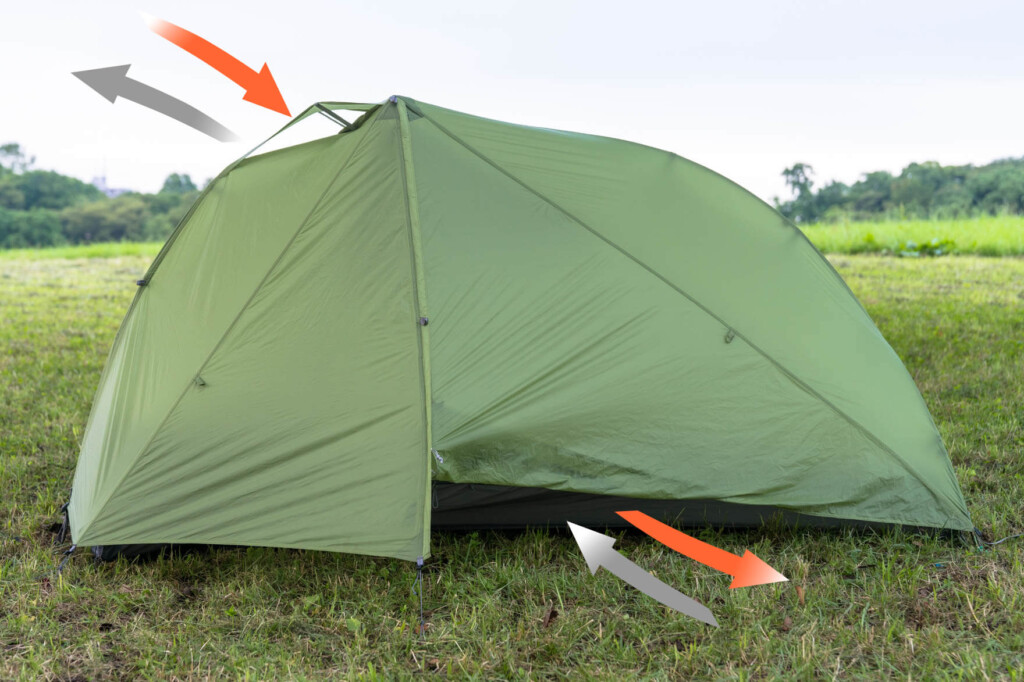
The SEA TO SUMMIT Alto Telos Tent has the smartest ventilation and airflow system I have ever come across
Point 7: Toughness (wind resistance, water resistance, durability, pole strength) - Find the best balance between weight and strength, not too strong and not too weak
In order to withstand strong winds, heavy rain, and blizzards that are never encountered in everyday life, tents must be extremely strong and made to withstand a variety of harsh weather conditions such as rain, snow, and wind
However, be careful of extremely cheap tents that are poorly made to look good, as they may actually be neglecting weather resistance and durability (comfortable, light, and strong tents will inevitably be expensive unless there is a special reason for it). It is never a waste to have at least a basic understanding of tent strength so as not to be fooled by such dubious tents
Incidentally, to protect your tent from bad weather, it's important to pay attention to the shape and material of the tent, but equally important is the location and orientation of the tent, as well as how you set it up, including properly securing the pegs and guy lines. For this reason, it's important to understand the basics of how to set up a tent safely, and practice down below until you're satisfied with how quickly and neatly you can set up your tent
Fabric material and thickness
One of the easiest ways to determine a tent's durability is to check the material and thickness of the fabric. Standard tents are made from nylon or polyester, and the thicker (denier) the floor, side walls, and rain fly, the more durable (and heavier) the tent will be. On the other hand, there are also models that use higher quality fabrics such as Dyneema, Silnylon, and Tyvek, which are more expensive but combine lightness and durability (see photo below); for lightweight tents, be sure to check the catalog to see if this has been taken into consideration
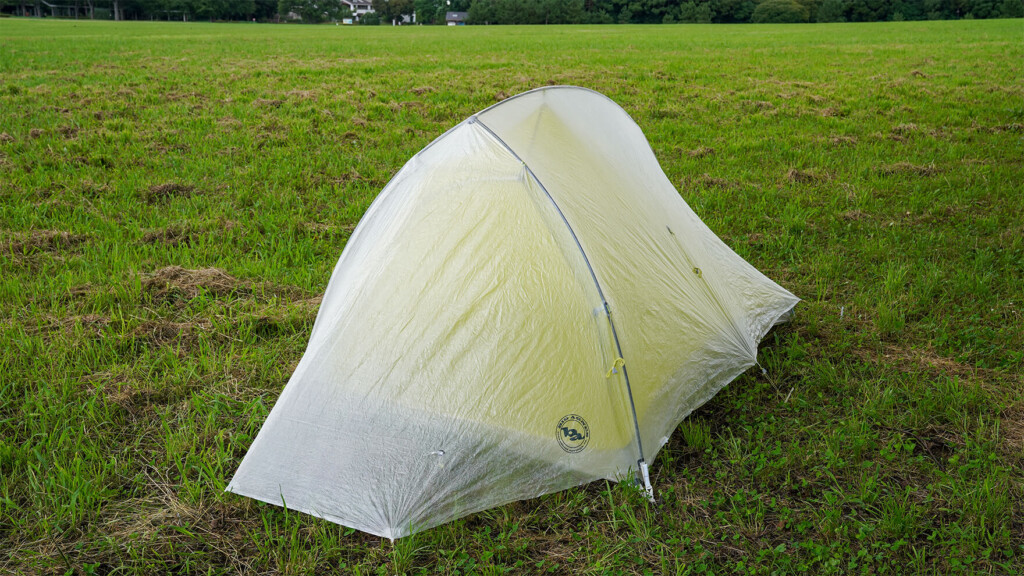
Lightweight tents made with thin fabrics tend to be prone to holes and tears. The floor in particular is prone to being torn by sharp rocks or trees on the ground, so as a guideline, we recommend considering using a footprint for extremely thin tents where the floor is less than 25 denier
pole
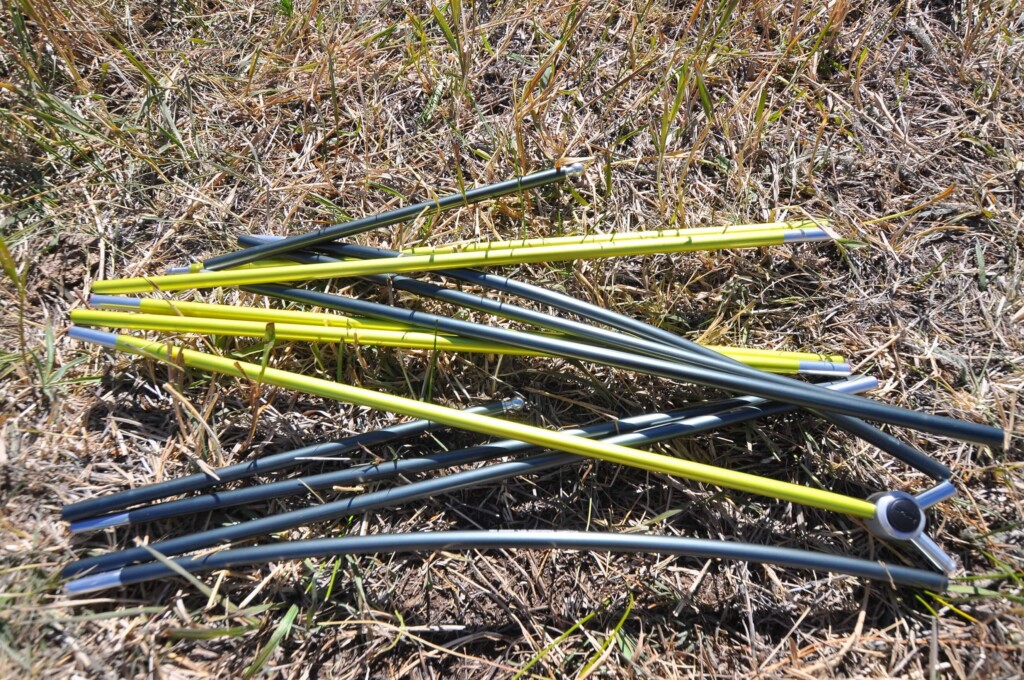
Tent poles are generally made of aluminum alloy or carbon fiber. While carbon fiber is lightweight, it can easily break when a strong force is applied to a single point, so I honestly don't recommend it. Aluminum alloy poles, on the other hand, offer many advantages, including being lightweight, strong, flexible, and affordable. Top brands such as EASTON and DAC produce many high-quality poles using their own aluminum alloy technology that are thin and lightweight while maintaining strength and durability. In terms of overall performance and ease of use, these aluminum alloy poles are clearly superior. If possible, we recommend checking which brand of poles the product you're considering uses and whether it's a trustworthy brand
By the way, the elastic cord that runs through the inside of the pole deteriorates over the years, and after 3 to 4 years it will often become so stretched that it loses its elasticity, so it's important to remember to replace it regularly
Pegs (stakes)
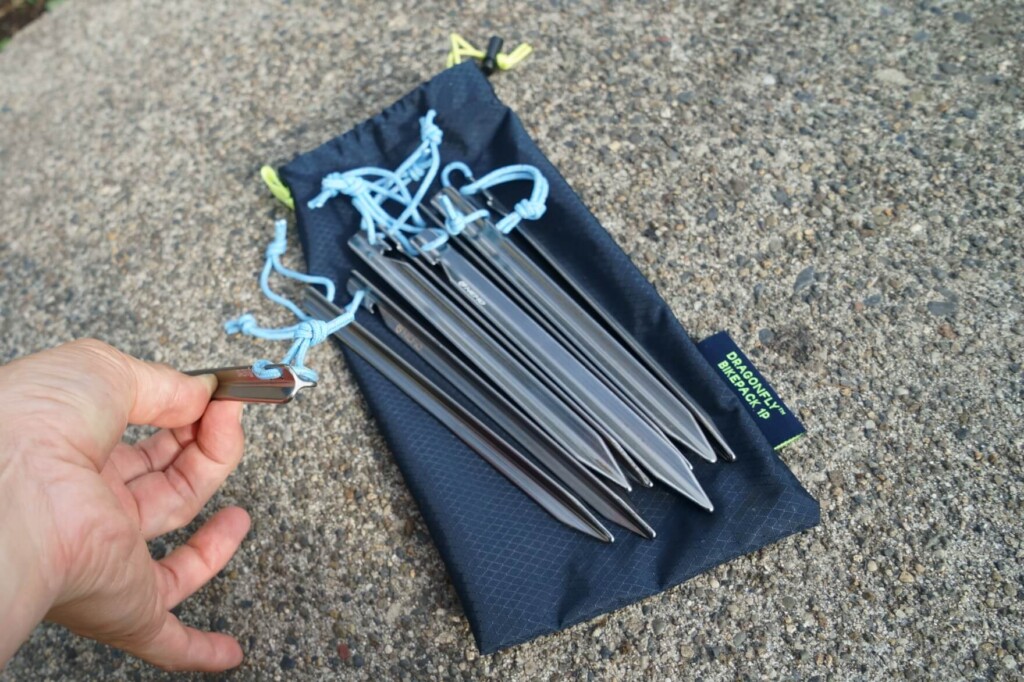
The stronger and lighter the pegs (pictured below) that you drive into the ground, the faster and more securely you can set up your tent. The original pegs that come with most models vary greatly in construction depending on the manufacturer, and some manufacturers' models come with unfortunate loose aluminum pegs that do not dig into the ground well and bend easily if you drive them in too hard
Furthermore, when using guylines in bad weather, the standard ones often aren't enough. For this reason, replacing the pegs with something other than the original ones is a viable option. The pegs you can use also differ depending on whether the ground is dirt or snow. So what kind of pegs are best? To discuss that would take far too much space (in fact, pegs are a very complex tool once you start thinking about them). Suffice it to say that you should choose ones that are "light," "easy to stick into the ground," and "hard to bend when hammered in."
Footprint
A footprint is a sheet that is placed under the tent and is about the same size as the floor, and it helps to extend the life of the tent by protecting the floor from sharp pebbles and preventing water from seeping in through the floor (see photo below). Some commercially available tents come with a footprint as standard, while others do not and require it to be purchased separately
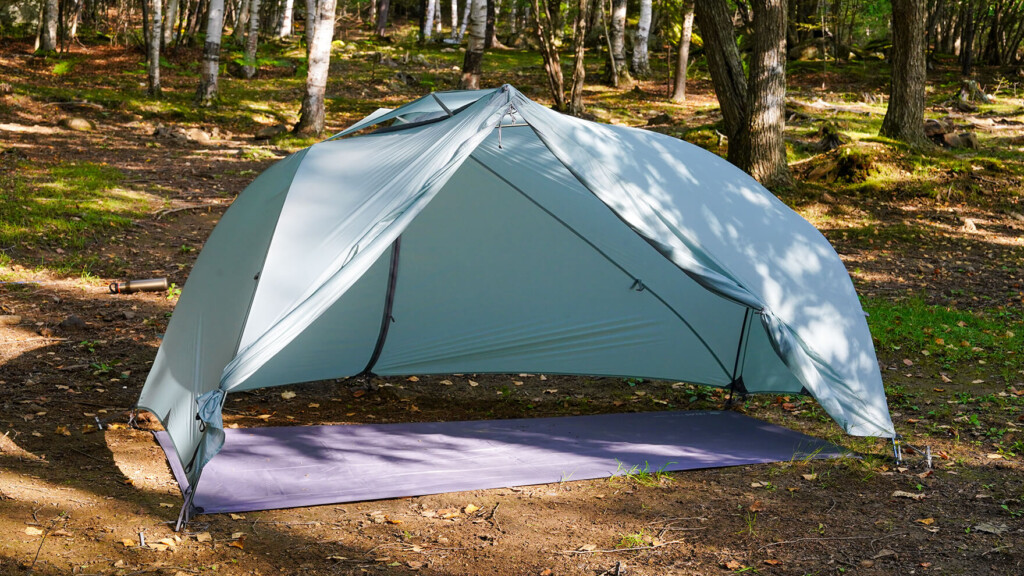
In the past, footprints were not a common item, or rather, the floor fabric of tents itself was thick and durable, so footprints were not necessary. In other words, footprints are not an essential tool. The reason that footprints are not included with traditional tents is probably due to the pride of being a long-established tent manufacturer
However, with the trend toward thinner and lighter tents in recent years, many models assume the use of a footprint to some extent, and in such cases, without a footprint, it is quite possible that a hole will be made in the tent floor on even slightly uneven ground. As mentioned earlier, be careful if the floor fabric is less than 25 denier. If such a thin tent does not come with a footprint as standard, you will either have to accept that it may tear and be prepared to have it repaired, or be prepared to spend extra money
Point 8: Weight - Be careful when comparing weights listed in catalogs -
Weight is a concern with any luggage. Tents are among the heaviest items in terms of weight per unit, so weight can be significantly improved depending on the item you choose, which is a particular concern
While it would be ideal to actually hold each tent and compare their weights, that's not always possible. This inevitably leads to checking the catalog specifications. It's important to note whether the weight listed there is the "total weight" or the "minimum weight (unit weight)." The former refers to the combined weight of almost everything that comes with the tent, including the tent itself, rain fly, poles, pegs, guy lines, stuff sack, and footprint (if included). The latter, on the other hand, only includes the tent itself, rain fly, and poles. An accurate comparison of weights cannot be made without collecting all of these items. In my experience, most manufacturers will list a minimum "minimum weight (unit weight)," so when comparing tents, I recommend comparing minimum weights
As a guideline, if a single-person mountain tent weighs at least 1,000 grams (or 1,300 grams or less for a two-person tent), it can be considered lightweight. Around 1,500 grams is a good balance of lightness and durability, and around 2,000 grams is a tough tent that you can rely on even in winter
In any case, there is often a trade-off between weight and durability when it comes to tents, so be sure to consider the balance in relation to your needs
summary
Tents, which must protect your life in harsh environments while also being extremely lightweight and comfortable to use, are items that incorporate many advanced and complex technologies designed for a variety of situations.To find the perfect tent for you, the smart approach is to decide your priorities and narrow down the options from the complexly intertwined various factors shown here
Of course, there's no need to worry if you can't do it right from the start. When I first started climbing mountains, I found the very conventional Arai tent very comfortable. However, as I experienced different seasons and activities, I began to realize the fun of using a tent that was more suited to the situation, and now I use multiple tents depending on the situation. In that sense, with tents, just like with other mountain gear, it's best to start with an conventional one and gradually add new models as needed over time. I hope you'll use this article as a reference when you do so
Related reading
 7 recommended tents for mountain climbing and hiking for those who want to try camping this year
 7 things you need to know to choose the best hiking tent
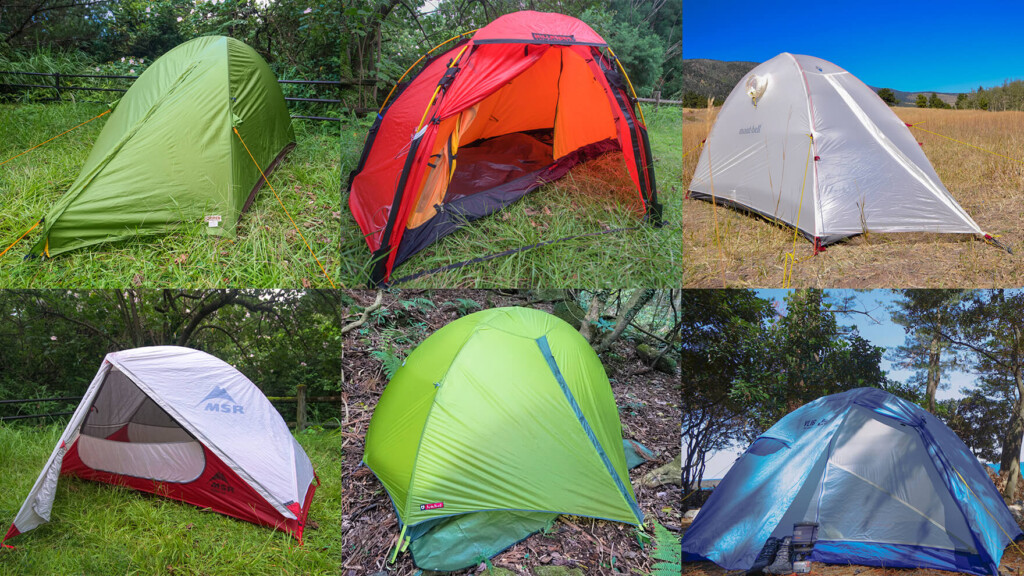 Comparison Review: From classics to new releases. A thorough comparison of recommended tents for mountain climbing and hiking
 [2023 Edition] The most important pieces for fast-packing for camping in a tent. The best lightweight tents and shelters and tips for choosing the right one without regrets